
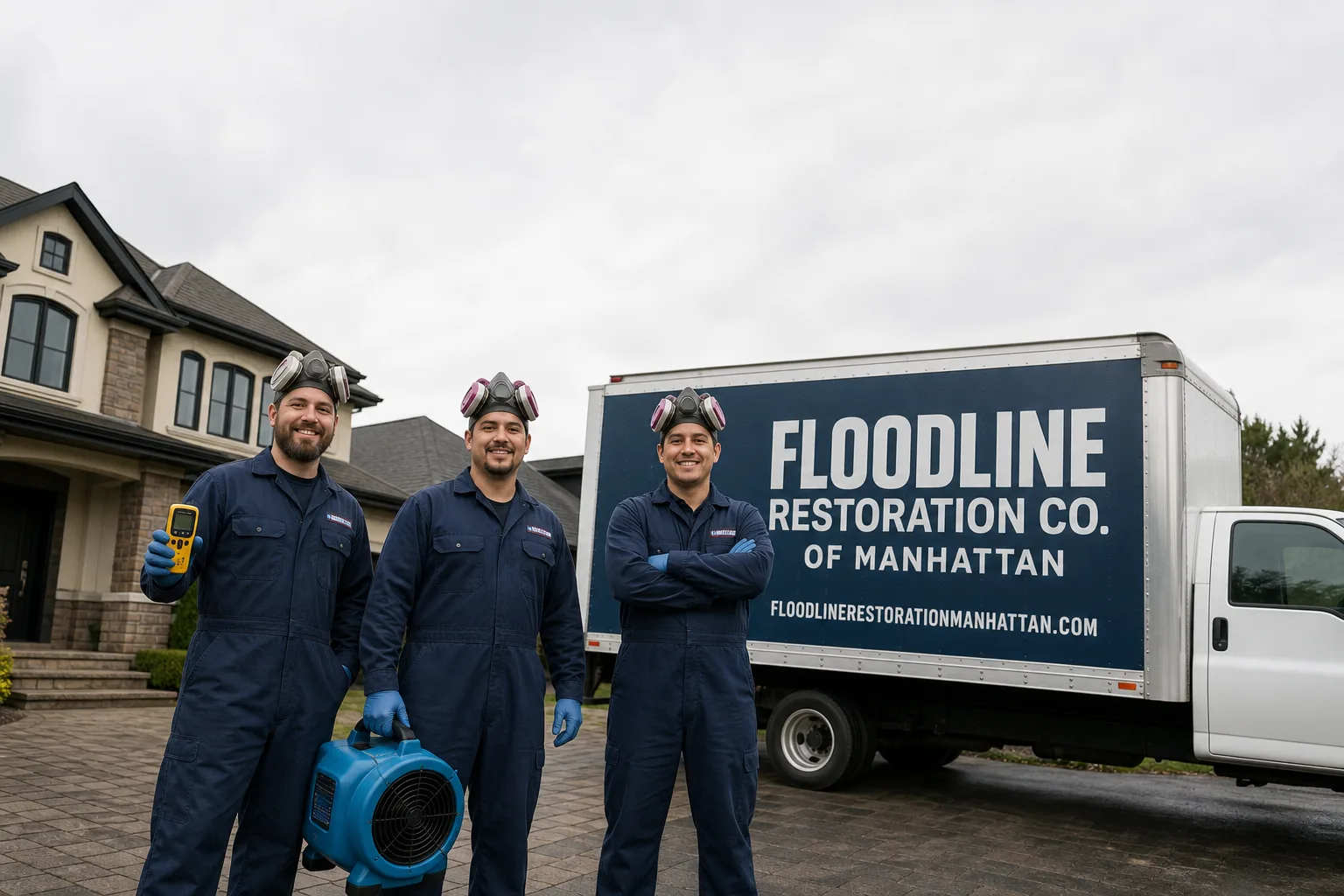
Free visual inspection and a written scope of work before any mitigation begins - photos, moisture readings, and drying logs go in your claim file
The scope we write is the scope we bill. Anything new gets shown to you, in writing, before we touch it.






 Before
 After
After Before
 After
After Before
 After
After24/7 Emergency Water Damage Restoration in Cliffside Park
Water damage in Cliffside Park typically costs between $2,800 and $7,400 to restore, with emergency extraction starting around $450 to $900 for a standard basement. Our crews answer live 24 hours a day and usually reach the Palisades ridge within 45 minutes, because the first hour determines whether you’re drying floors or replacing them. Call (917) 924-4221 the moment you see standing water or staining, and we’ll walk you through the first steps before the truck arrives. On upper-ridge blocks, that first hour matters even more, since water moving laterally out of the traprock escarpment keeps feeding a foundation long after the rain stops.
Understanding Water Damage Restoration Severity in Cliffside Park Properties
We classify water by category: Category 1 comes from a clean source like a burst supply line. Category 2 carries contaminants, think laundry overflow or sump failure. Category 3 is sewage or floodwater. The category drives the whole job: Category 1 often means extraction, drying, and repair. Category 3 means disposal of saturated materials, antimicrobial treatment, and air scrubbing. In Cliffside Park’s 1920s-era brick walk-ups, the category is only half the story. Original cast-iron drain lines rust through from the inside, and water follows the path of least resistance through deteriorated mortar joints and under original oak floors. Moisture mapping matters here because water traveling through a masonry party wall behaves differently than water on a flat slab. We run thermal imaging and hygrometers before we cut anything, so a Category 1 loss doesn’t get over-demolished and a Category 3 loss doesn’t leave contamination behind a wall cavity.
Why Cliffside Park Property Owners Choose Floodline Restoration Co. of Manhattan
- 45-minute response commitment to the Palisades: We dispatch local crews as soon as you call, and our live dispatcher tracks the truck so you know exactly when we’ll pull up.
- A real person answers, always: No phone tree, no recording. At 2 a.m. on a Sunday you’ll get a person who can talk through shutting off water and confirming whether it’s safe to stay.
- IICRC-certified crews (WRT and ASD): Our technicians train and certify in Water Damage Restoration and Applied Structural Drying, so the drying plan is built on standards, not guesswork.
- Free visual inspection and moisture assessment: We read the moisture map before we touch a wall, and you get a written scope of work before equipment goes in.
- Direct insurance billing: We document everything, bill the carrier, and talk to your adjuster so you don’t have to play messenger.
- One crew from extraction to rebuild: The same team that pulls water and runs dryers also handles baseboards, drywall, and finish work, which means no mid-job handoff to a crew you’ve never met.
Our Water Damage Restoration Process
Inspection & Assessment
We start with a full walkthrough, thermal imaging, and moisture readings from the basement to the roofline. On Palisades-adjacent properties we specifically check for lateral seepage from the rock face, because that changes the entire drying strategy.
Extraction & Stabilization
Commercial-grade extraction removes standing water fast. If the source involves a cracked parapet or failed drain line, we stabilize the area so water stops feeding the loss while the drying plan gets approved.
Drying & Dehumidification
Dri-Eaz LGR dehumidifiers and Phoenix air movers run on a moisture map, not a timer. Daily readings get logged, and the equipment moves as the drying front shifts within the structure.
Cleaning & Sanitization
We clean and treat affected surfaces based on water category and what the structure requires. HEPA filtration and air scrubbing run where contamination or mold spore counts demand it.
Cliff-Face & Masonry Treatment
If lateral seepage from the escarpment is the source, standard perimeter drains won’t solve it. We coordinate cliff-face drainage curtain solutions and masonry waterproofing specific to the Palisades geology.
Repairs & Restoration
Drywall, flooring, baseboards, and paint return to pre-loss condition. If your building’s HOA requires architectural approval, we provide the documentation and specs they ask for before finishing work begins.
Need Emergency Water Damage Restoration in Cliffside Park Now?
Crews minutes away, answering live 24 hours a day. The sooner we start, the less it costs.
Working With Your Insurance Company
We started Floodline Restoration Co. with the understanding that a restoration contractor is really an insurance contractor in disguise, which is why Curt Bowman built our documentation system before he built our drying fleet. From the first hour we photograph every affected room, log moisture readings daily, and write scopes of work that an adjuster can actually use. If your Cliffside Park co-op or HOA requires a specific filing format or approval chain, we adapt our paperwork to match. You shouldn’t have to translate between a contractor and a claims department, and with us you won’t. We bill the carrier directly and talk to the adjuster ourselves.
What We Provide Your Insurer
- Thorough documentation of the loss
- Photos of all damage, room by room
- Moisture readings and drying logs
- A detailed, line-item scope of work
- Direct coordination with your carrier
Built for Cliffside Park’s Loss Calendar
The Water Damage Restoration in Cliffside Park work we see follows the weather and the age of the buildings. January and February bring deep freezes that burst supply lines in uninsulated wall cavities of pre-war brick walk-ups, and freeze-thaw cycles attacking the cliff face create recurring seepage that keeps our crews busy into early spring. March and April mean snowmelt and spring rains running hard down the Palisades grade, and that’s when basements along the upper ridge start taking on groundwater. Summer brings convective storms that drop two inches in an hour, overwhelming the tight urban street grid and sending runoff over parapets and into ground-floor units. And nor’easter season from late October through December is the big one for Cliffside Park: wind-driven rain pummels the escarpment, finds every deteriorated mortar joint, and drives water through brick facades that have stood since the 1930s. Knowing the loss calendar matters because a drying plan built for a January freeze is different from one built for an October nor’easter.
Water Damage Restoration Across Cliffside Park’s Neighborhoods
Cliffside Park stretches from the commercial spine of Anderson Avenue west to the Palisades ridge, and each section of the borough fails differently. Along the upper ridge near Hamilton Park and the blocks off Palisade Avenue, we routinely diagnose lateral seepage from the traprock escarpment that flatland neighbors like Fairview never see. Those homes need cliff-face drainage solutions, not interior perimeter drains. Downslope near the Grantwood section and around Shaler Boulevard, stormwater collects and moves fast, so ground-floor units and walk-out basements flood during heavy convective storms. The pre-war rowhouses clustered near Walker Street and the numbered streets running east toward Edgewater are mostly 1920s to 1950s brick construction with original cast-iron waste lines, and those lines fail from the inside, creating slow category 2 leaks behind walls that homeowners don’t notice until baseboards start swelling. The modern high-rises along the river side of the borough have their own failure pattern: vertical water migration between stacked units from a burst riser or failed appliance on an upper floor, which becomes a multi-unit claim requiring HOA coordination and careful containment.
Specialized Water Damage Restoration Services We Offer in Cliffside Park
Emergency Water Extraction
Standing water moves fast through the tight floorplans of Cliffside Park’s pre-war buildings, and extraction needs to happen before water finds the path down through original hardwood into the joist bays. Our truck-mounted and portable extraction units pull water from carpet, hardwood, and hard surfaces, but the real work is finding what’s already wicked under the floor.
Structural Drying & Dehumidification
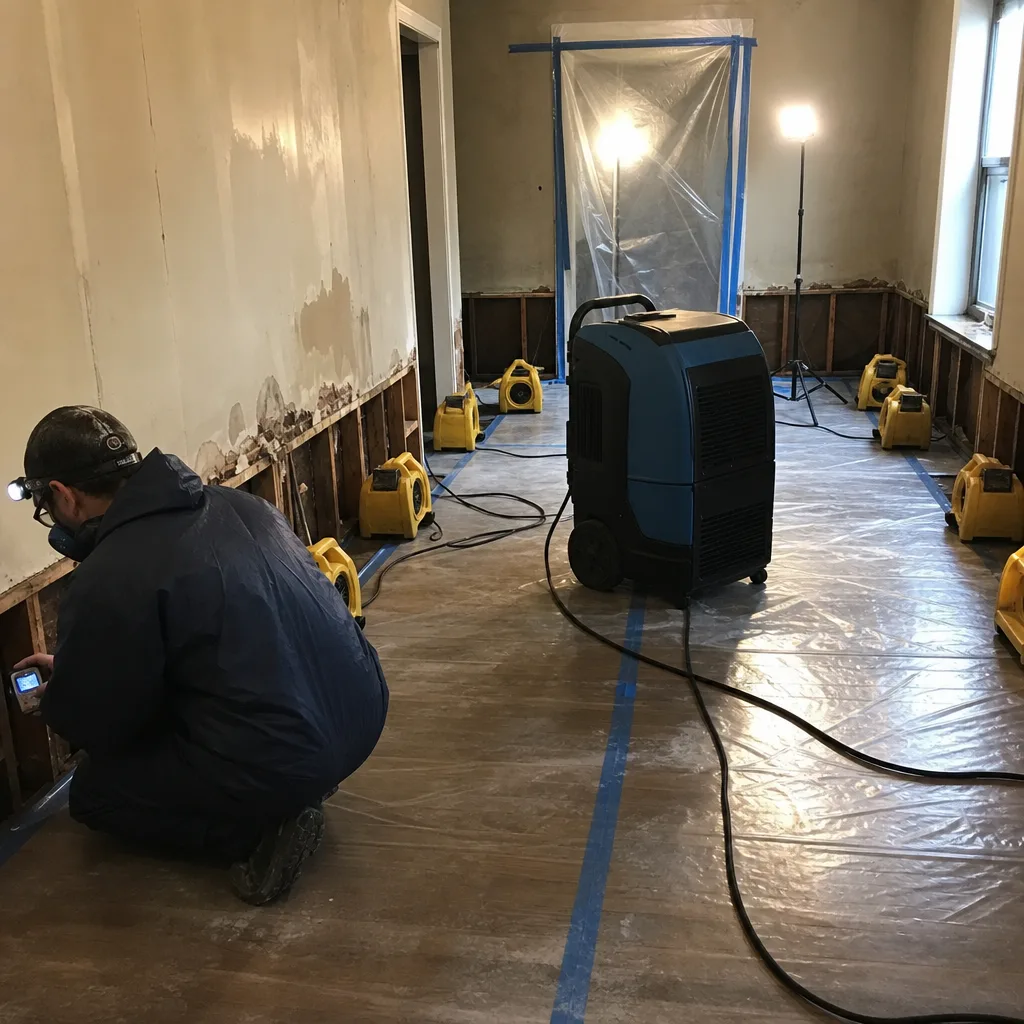
Drying a 1930s brick walk-up is different from drying a slab-on-grade ranch. Masonry walls hold moisture differently than drywall, and the Palisades escarpment can keep feeding a wall assembly long after the interior looks dry. We use Dri-Eaz LGR dehumidifiers and Phoenix air movers in a moisture-mapped configuration, with daily readings logged until the dry standard is met against the building’s pre-loss baseline.
Basement Water Removal
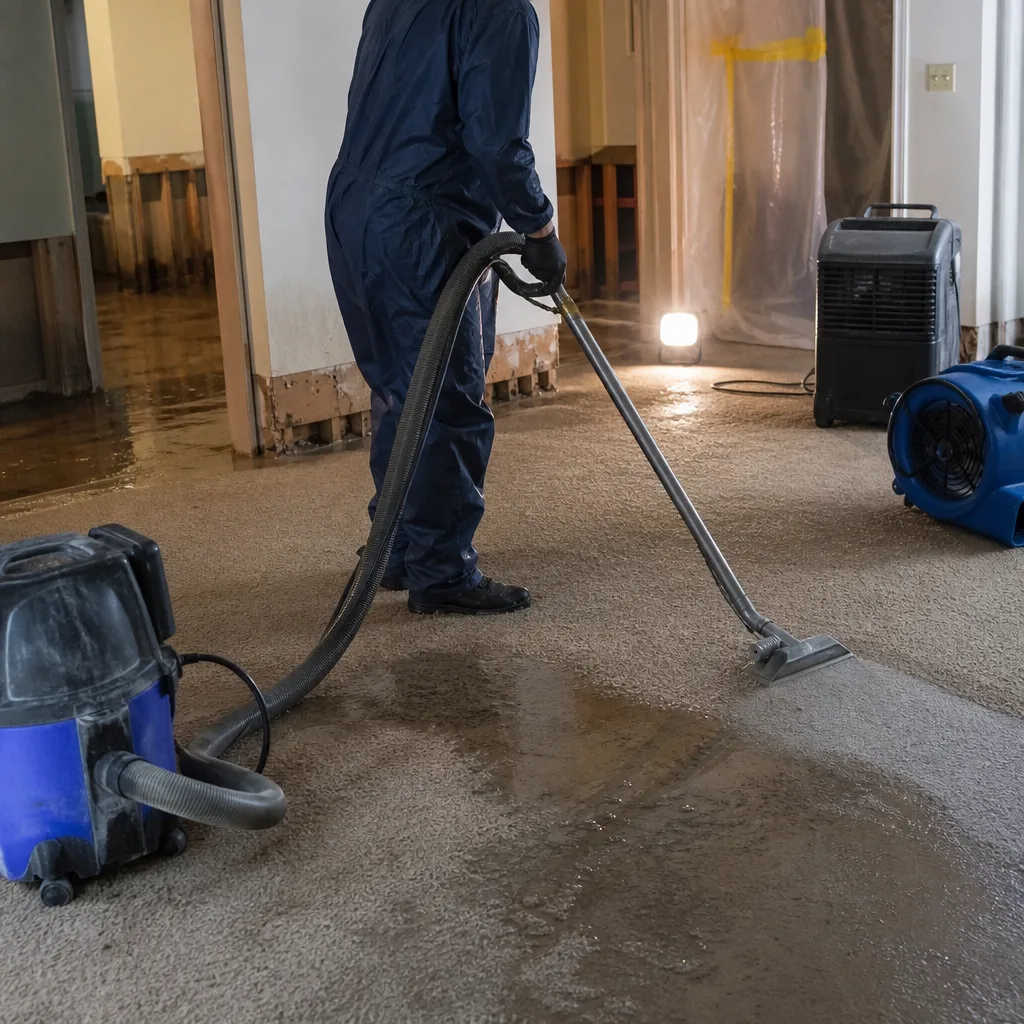
Cliffside Park basements on the ridge are the hardest to keep dry in Bergen County, because the water often isn’t coming from rain at all. It’s wicking laterally out of the exposed bedrock behind the foundation. We remove the standing water and then diagnose the true source before any drain system gets recommended.
Flood Cleanup
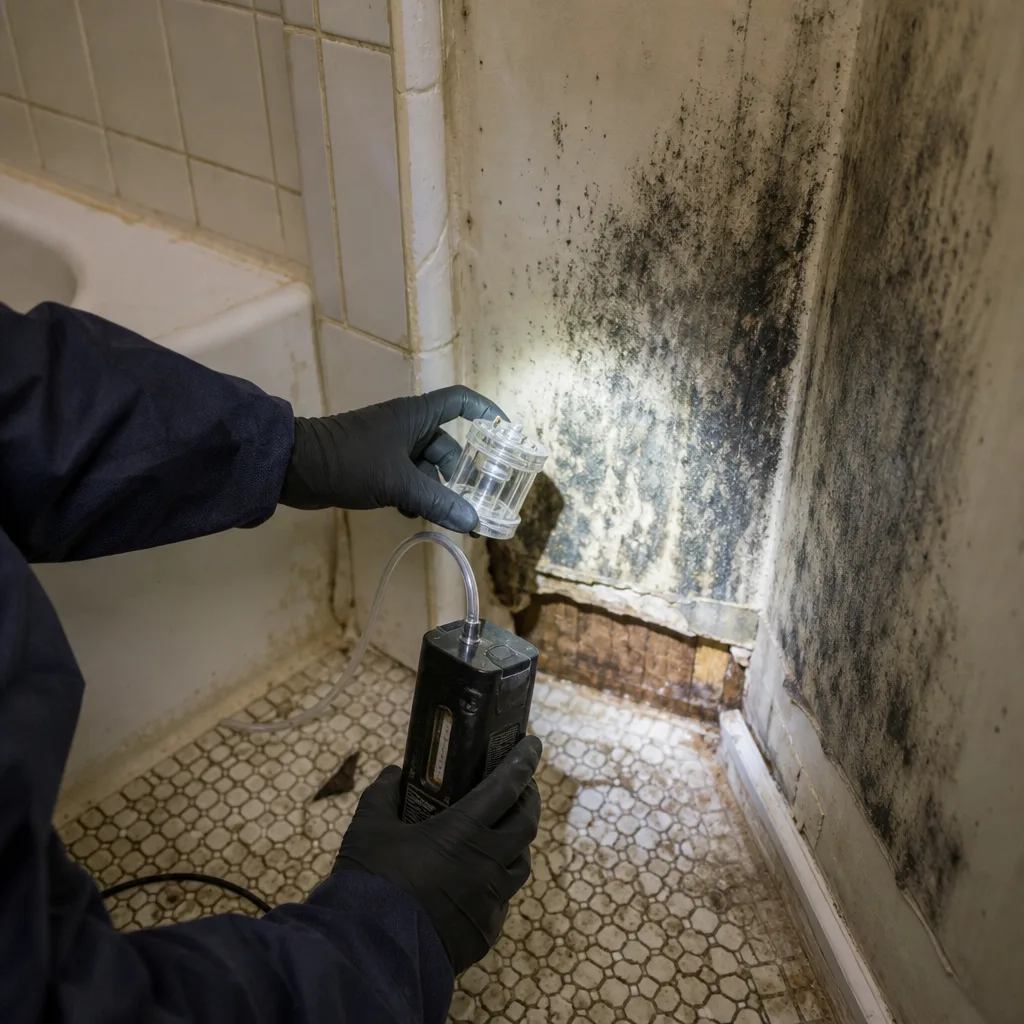
After a nor’easter or a summer downpour, floodwater in Cliffside Park carries whatever the street grid washed into it, which usually makes it category 2 or 3. We extract, treat, and dry in the right sequence, and we don’t cut out drywall until the moisture map tells us what actually got wet.
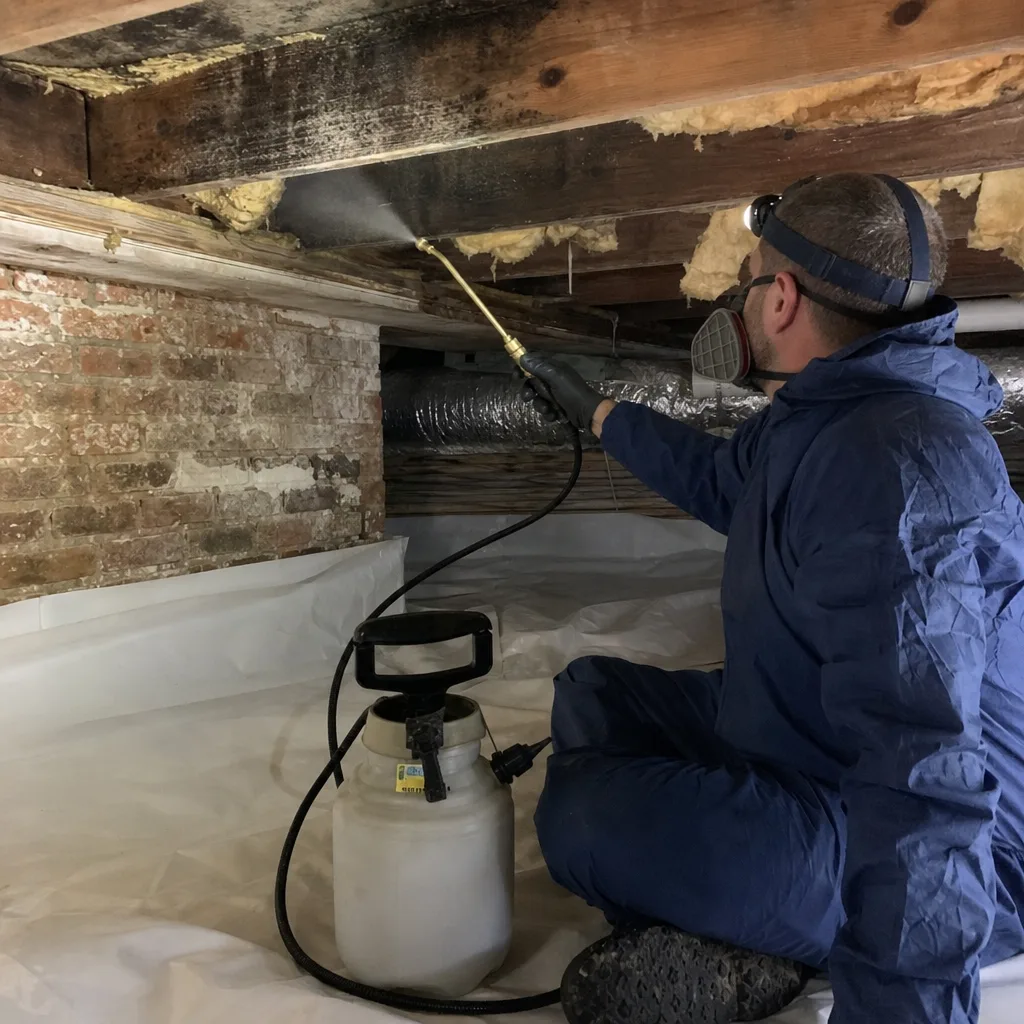
Burst Pipe Restoration
A frozen pipe in an uninsulated exterior wall of a 1920s co-op can flood three floors before anyone notices. We stop the water, extract what’s pooled, and dry the structure behind the lath and plaster, which in these buildings means careful management of original finishes that can’t simply be replaced from a big-box store.
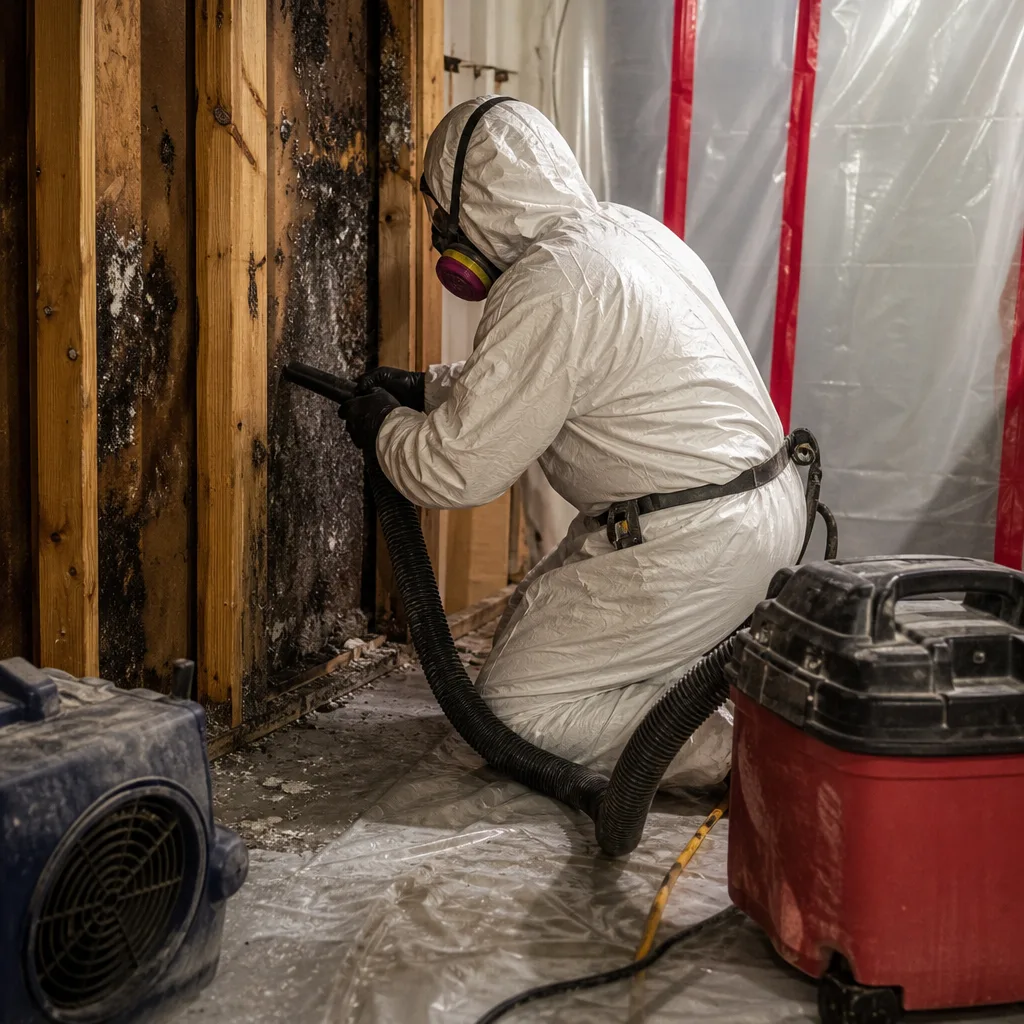
What happens when you call
- 1
A real person answersNo phone trees - you reach a local pro.
- 2
You get an upfront price rangeHonest numbers before anyone is dispatched.
- 3
A background-checked tech heads outLicensed & insured, dispatched right away.
- 4
You approve before work beginsNothing starts until you say go.
Water Damage Restoration Costs in Cliffside Park, NJ
A typical water damage restoration job in Cliffside Park runs $2,800 to $7,400 depending on square footage, water category, and how long the water sat. Emergency extraction alone ranges from $450 to $900 for a standard basement or single room, with structural drying adding $1,200 to $3,800 depending on how many air movers and dehumidifiers the space requires. Basement water removal tied to Palisades seepage often runs higher, $4,000 to $9,000, because the fix includes cliff-face drainage work rather than a simple sump or interior drain. The price moves with three things: the water category, whether HOA approval slows the process or requires specific documentation, and how much original material can be saved versus replaced. Insurance covers most sudden and accidental losses, but chronic seepage is usually an owner responsibility, which is why getting the actual source diagnosed correctly the first time matters. Call (917) 924-4221 and we’ll do a free visual inspection and give you a firm written scope before you commit to anything.
We Also Serve Cities Near Cliffside Park
Our crews handle Water Damage Restoration throughout the Palisades corridor and surrounding Bergen County towns, including Fairview, Edgewater, Ridgefield, and Palisades Park. Each has its own building stock and failure patterns, and we treat them accordingly.
Serving Cliffside Park, NJ - Our Local Coverage Area
We’re based in the Cliffside Park area and know this community well. Use the map below to see our service coverage - if you’re nearby, we can almost certainly help.
Cliffside Park Water Damage Restoration Questions, Answered
Why does my Cliffside Park basement keep getting water even when it hasn’t rained for days?
Because the water isn’t coming from rain, it’s coming from the Palisades escarpment itself. On upper-ridge blocks, groundwater moves laterally out of the traprock bedrock and wicks directly into foundation walls, a condition that standard interior perimeter drains cannot stop. The fix is usually a cliff-face drainage curtain installed on the uphill side, not another sump pit in the floor. Call us for a free inspection and we’ll confirm the actual source before recommending anything.
My building’s HOA requires approvals for any restoration work. How does Floodline handle that?
We prepare the documentation your HOA or architectural review board asks for, including a line-item scope of work, drying logs, and material specs, before finish work begins. In Cliffside Park we regularly work with co-op boards and management companies, and we understand that pre-war buildings often have specific requirements around what can be replaced and what must be preserved. We’ll coordinate directly with the board so you don’t have to be the messenger.
The leak came through the parapet on our 1930s co-op. Can you dry the brick masonry without damaging the original plaster?
Yes. We dry the masonry from the exterior side using controlled low-pressure airflow and dehumidification rather than blasting heat at original plaster, and we track moisture content in the wall assembly daily. On one Lawton Avenue walk-up after a nor’easter, we set Dri-Eaz LGR dehumidifiers and Phoenix air movers behind containment in two ground-floor units and used moisture mapping to follow category 2 water that had wicked under original oak floors, and the HOA kept our logs on file until the building met pre-loss condition. The key is not over-drying, which can crack old plaster and pull mortar joints apart.
How quickly do you respond to a burst pipe in a high-rise on the Palisades?
Our commitment is 45 minutes to the Cliffside Park area, and a burst pipe in a high-rise is a priority call because water moves down through stacked units. We answer live 24/7, so a real person takes the call and dispatches a crew immediately. Call (917) 924-4221 the moment you see water, even a small stain on the ceiling below a neighbor’s unit.
What’s the difference between category 1 and category 2 water in a Cliffside Park flood?
Category 1 comes from a clean source like a supply line, and it typically allows us to dry and repair rather than replace. Category 2 contains contaminants, think washing machine overflow or water that has sat long enough to grow bacteria. In Cliffside Park basements fed by the escarpment, we usually treat the water as category 2 or worse because it has passed through soil and rock before reaching your foundation.
Do I need full water damage restoration, or just a cleaning?
That depends on where the water went, not just where it pooled. If the moisture map shows water in wall cavities, under floors, or behind baseboards, cleanup alone won’t prevent mold and structural rot. We’ll do a free visual inspection and show you the readings before recommending anything, and you’ll get a written scope that separates necessary work from optional work.
How long does structural drying take in a Cliffside Park property?
Most drying jobs run three to five days with proper equipment and daily monitoring. Pre-war masonry can add a day or two because brick and plaster hold moisture longer than modern drywall, and the Palisades escarpment can keep feeding the wall from behind. We don’t rush it and we don’t bill for equipment days you don’t need; the moisture log tells us when the structure has hit the dry standard.
What should I do in the first 30 minutes after water damage in Cliffside Park?
Shut off the water source if you can do so safely. Shut off electricity to affected rooms if water is near outlets or the panel. Move what you can to dry ground. Then call (917) 924-4221 and talk to our dispatcher while the damage is still manageable. Do not run a household fan on it. Do not cut drywall. Do not assume it will dry out on its own, because in this borough it won’t.
Written by Curt Bowman, Owner at Floodline Restoration Co. of Manhattan, serving Cliffside Park since 2010.