
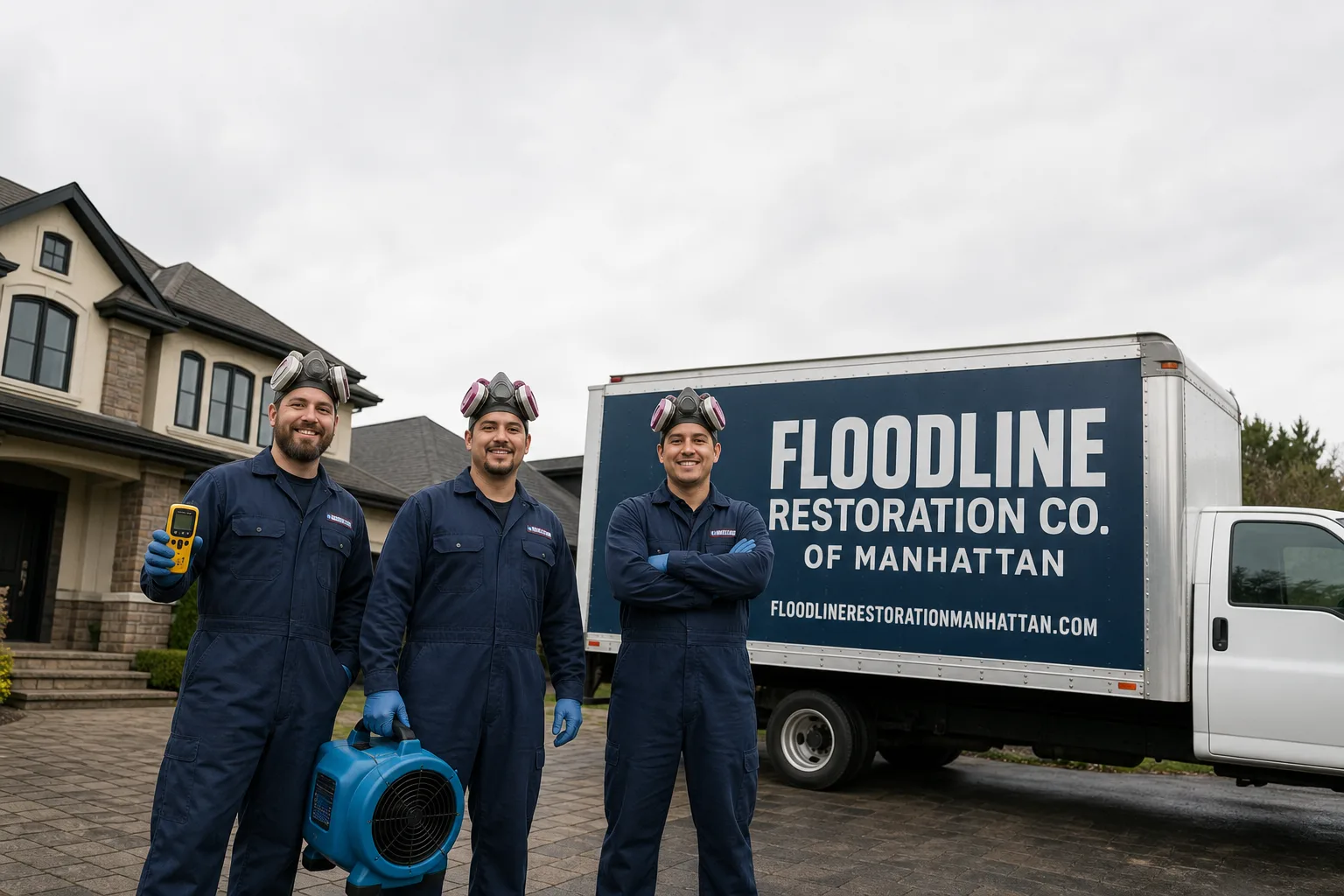
Free visual inspection and a written scope of work before any mitigation begins - photos, moisture readings, and drying logs go in your claim file
The scope we write is the scope we bill. Anything new gets shown to you, in writing, before we touch it.






 Before
 After
After Before
 After
After Before
 After
After24/7 Emergency Water Damage Restoration in Flatbush
Water damage in Flatbush moves fast, and so do we. A burst supply line in a 1920s rowhouse or a sewage backup in a below-grade basement apartment can go from contained to catastrophic in under six hours. Our crews are dispatched from the New York City office and reach Flatbush addresses around the clock, with a live dispatcher answering (917) 924-4221 at two in the morning the same way we answer at noon. The first hour determines whether you’re looking at drying and restoration or a full tear-out and rebuild, so we don’t make you wait. When water is moving through plaster walls, under hardwood, or into finished basement units, every hour adds cost and complication. Call now and we’ll have a certified crew at your door, moisture meters in hand, with a free visual inspection and a firm plan before the damage spreads another inch.
Understanding Water Damage Restoration Severity in Flatbush Properties
Flatbush’s housing stock doesn’t dry like modern construction. Most homes here were built between 1900 and 1940, which means original plaster-on-lath walls, cast-iron drain stacks, and wood framing that has absorbed a century of Brooklyn humidity. When Category 1 water from a burst supply pipe saturates a plaster wall, that wall holds moisture far longer than drywall would. We’ve seen walls read 45% moisture content two weeks after a “minor” leak because the lath behind the plaster kept feeding water back to the surface. Category 2 water, like washing machine overflows or sump failures, carries contaminants that require antimicrobial treatment; Category 3 water, which includes sewage backups in Flatbush from aging combined sewer laterals, is a biohazard requiring full containment, PPE, and often removal of porous materials. Before any walls get opened in a pre-1940 Flatbush home, we run lead-paint and asbestos compliance checks under EPA RRP rules, because the original plaster and pipe wrap in these buildings almost always test positive. Skipping that step isn’t just illegal; it puts residents and crews in contact with lead dust and asbestos fibers. Moisture mapping with thermal imaging tells us exactly where the water went, including the cavities you can’t see behind baseboards and under stairwells. That’s how we set a drying plan based on your home’s actual construction, not a generic schedule.
Why Flatbush Property Owners Choose Floodline Restoration Co. of Manhattan
- 45-minute response commitment: Once you call, a crew is dispatched immediately. We quote our Flatbush response times in minutes, not days.
- 24/7 live answer, never an automated system: A real dispatcher picks up every call, any hour. You tell us what happened; we send the right crew and equipment.
- IICRC-certified crews: Our technicians hold WRT (Water Damage Restoration Technician), FSRT (Fire & Smoke Restoration Technician), and AMRT (Applied Microbial Remediation Technician) certifications, trained to the standards these homes demand.
- Free visual inspection before any work begins: We assess the loss, map the moisture, and walk you through what needs to happen before a single wall is opened.
- Direct insurance billing: We document everything from hour one, submit industry-standard estimates, and talk to your adjuster directly. You’re not the messenger.
- One team from extraction to reconstruction: The same Floodline crew that extracts and dries your home is the one that rebuilds it, backed by our Water Damage Restoration process and the 90-Day Done Right Promise in writing.
Our Water Damage Restoration Process
Inspection & Assessment
We start with thermal imaging, moisture meters, and a full walkthrough of the affected area. In Flatbush homes, that means checking plaster walls, finished basement units, and the condition of original cast-iron drains and steam-heat boiler rooms before we set a plan.
Extraction / Stabilization
Standing water comes out first, using truck-mounted extraction units and submersible pumps for basement flooding. We remove saturated contents to a safe staging area and stabilize the structure. On Category 3 sewage losses, containment goes up before extraction begins.
Drying & Dehumidification
Professional-grade Dri-Eaz dehumidifiers, Phoenix air movers, and Injectidry floor mats are placed for maximum air movement through wall cavities and under flooring. On plaster-and-lath walls, we use extended dwell times with daily moisture readings, because these assemblies dry slower than drywall. Hygrometers and thermal cameras track progress until we hit the dry standard.
Cleaning & Sanitization
Affected surfaces are cleaned and sanitized with EPA-registered antimicrobials. Sewage losses get enzyme treatment and full biohazard decontamination; clean-water losses get a thorough cleaning of all salvageable surfaces.
Specialty Treatment
For Flatbush homes, this includes lead-safe work practices when opening pre-1940 surfaces, asbestos testing before disturbing pipe wrap or floor tile, and structural drying of original hardwood, plaster, and cast-iron systems. We treat the house you have, not the house a franchise model assumes.
Repairs & Restoration
Once the area hits pre-loss moisture levels, we rebuild. That means drywall or plaster patch, trim, flooring, paint, and any necessary mechanical repairs. The same crew that dried the property does the finish work. Done right, and backed in writing.
Need Emergency Water Damage Restoration in Flatbush Now?
Crews minutes away, answering live 24 hours a day. The sooner we start, the less it costs.
Working With Your Insurance Company
We’ve sat across the table from enough adjusters to know what they need, and we provide it from the first hour. That means photos of the loss before anything is moved, moisture readings from every room, equipment logs showing daily drying progress, and line-item scopes that match industry-standard estimating software. When your Flatbush home has a finished basement unit that flooded, we document tenant impact and housing-law compliance issues in the claim file, because those are recoverable costs your carrier needs to see. You won’t be chasing anyone for paperwork and you won’t be playing phone tag between your carrier and your contractor. We bill the insurance company directly, and if something’s wrong with the work, our 90-Day Done Right Promise says we fix it. No arguing.
What We Provide Your Insurer
- Thorough documentation of the loss
- Photos of all damage, room by room
- Moisture readings and drying logs
- A detailed, line-item scope of work
- Direct coordination with your carrier
Built for Flatbush’s Loss Calendar
Flatbush sees the same water disasters every year, and we plan our equipment staging around them. January and February bring deep freezes that burst supply lines in unheated extension walls and boiler rooms; we’ve responded to more frozen-pipe floods in Flatbush attached homes than any other single cause. Spring thaw and heavy March rainfall push groundwater into below-grade basement units, especially in the lower-lying blocks where the seasonal water table rises against original foundation walls. Summer convective storms overwhelm the combined sewer system, and that’s when we see the repeat sewage-backup blocks light up, with multiple calls from the same handful of streets in one afternoon-exactly why our Storm & Disaster Restoration in Flatbush stays ready. Fall nor’easters bring wind-driven rain through older roofing and flashing, saturating top-floor ceilings and running down through plaster walls. And all year round, cast-iron drain stacks and steam-heat systems that have been in service since the Coolidge administration decide it’s time to fail. When you call, the dispatcher knows what this week’s weather is doing to Flatbush basements, because she’s already taken three calls from your block.
Water Damage Restoration Across Flatbush’s Neighborhoods
Flatbush isn’t one place; it’s a patchwork of blocks built at different times for different owners, and the damage patterns change street to street. In the Riegelmann-era rowhouses along Beverly Road and Cortelyou Road, the original clay-tile sewer laterals have decades of root intrusion, and we keep enzyme treatments staged for the repeat backup calls that come out of those blocks after every heavy rain. Down along Flatbush Avenue, the commercial frames over storefronts hide old supply lines that run through decades of previous renovations, and a burst above a storefront rolls down through the apartments fast. In the Victorian Flatbush area around Ditmas Park, the detached frame houses with deep lots often have below-grade basement units that flood from groundwater before the sewer line is ever involved. Near the Brooklyn College campus, the post-war brick buildings have different failures: aging cast-iron supply risers, failing water heaters, and overworked sump pumps. Each area gets a different drying plan, because a plaster-and-lath house on Argyle Road and a brick frame on Nostrand Avenue simply don’t behave the same way when water gets into them. We’ve worked all these blocks and we know what to expect before we walk in the door.
Specialized Water Damage Restoration Services We Offer in Flatbush
Emergency Water Extraction
Standing water in a Flatbush basement needs to come out before it leaches into plaster, framing, and finished flooring. We run truck-mounted extraction with Dri-Eaz units and submersible pumps sized for below-grade spaces with limited access. The goal is to get the free water out and the drying equipment running in the same visit.
Structural Drying & Dehumidification
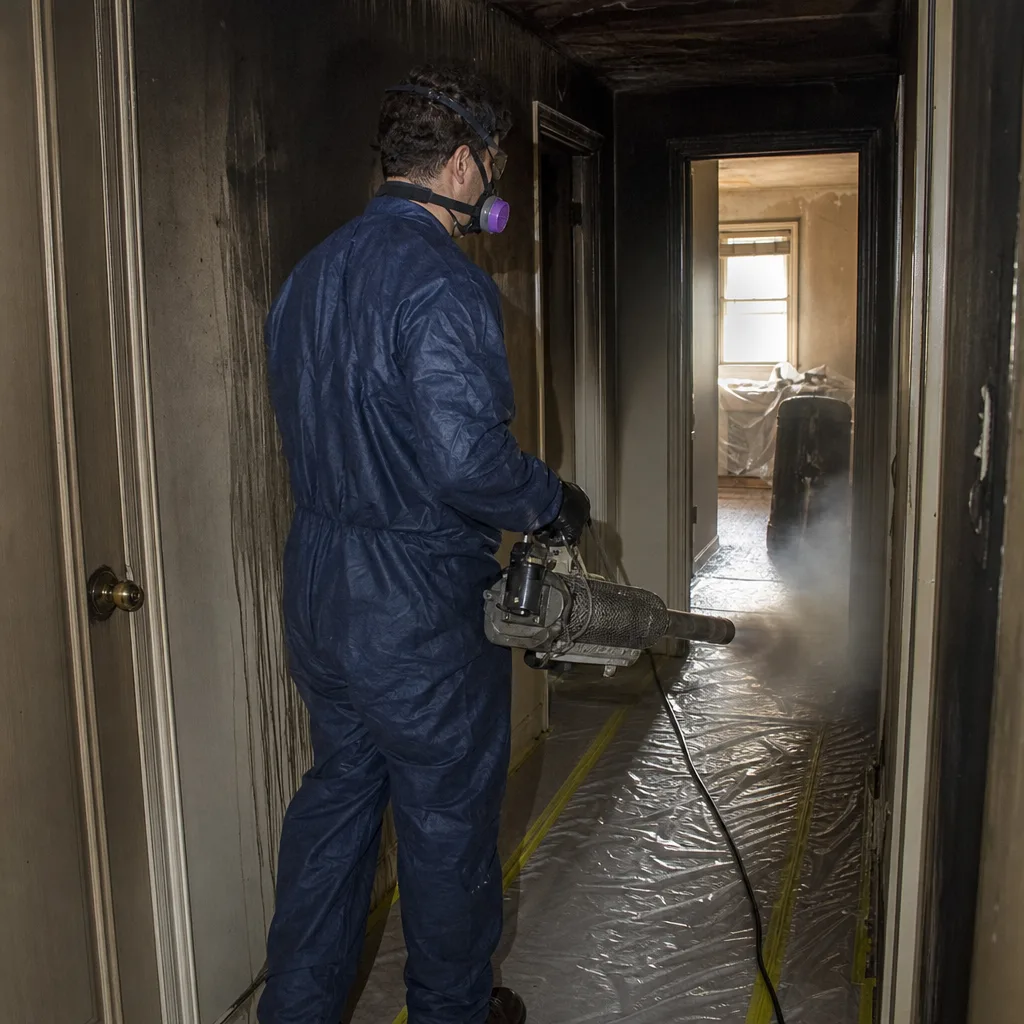
Drywall is forgiving; plaster-on-lath is not. Our drying plans for Flatbush’s original plaster walls use Phoenix air movers and low-grain refrigerant dehumidifiers for extended dwell times, with daily moisture readings until the assembly hits the dry standard. That prevents the hidden mold that shows up behind baseboards within 48 hours when someone tries to speed-dry a 1920s wall like a modern one.
Flood Cleanup
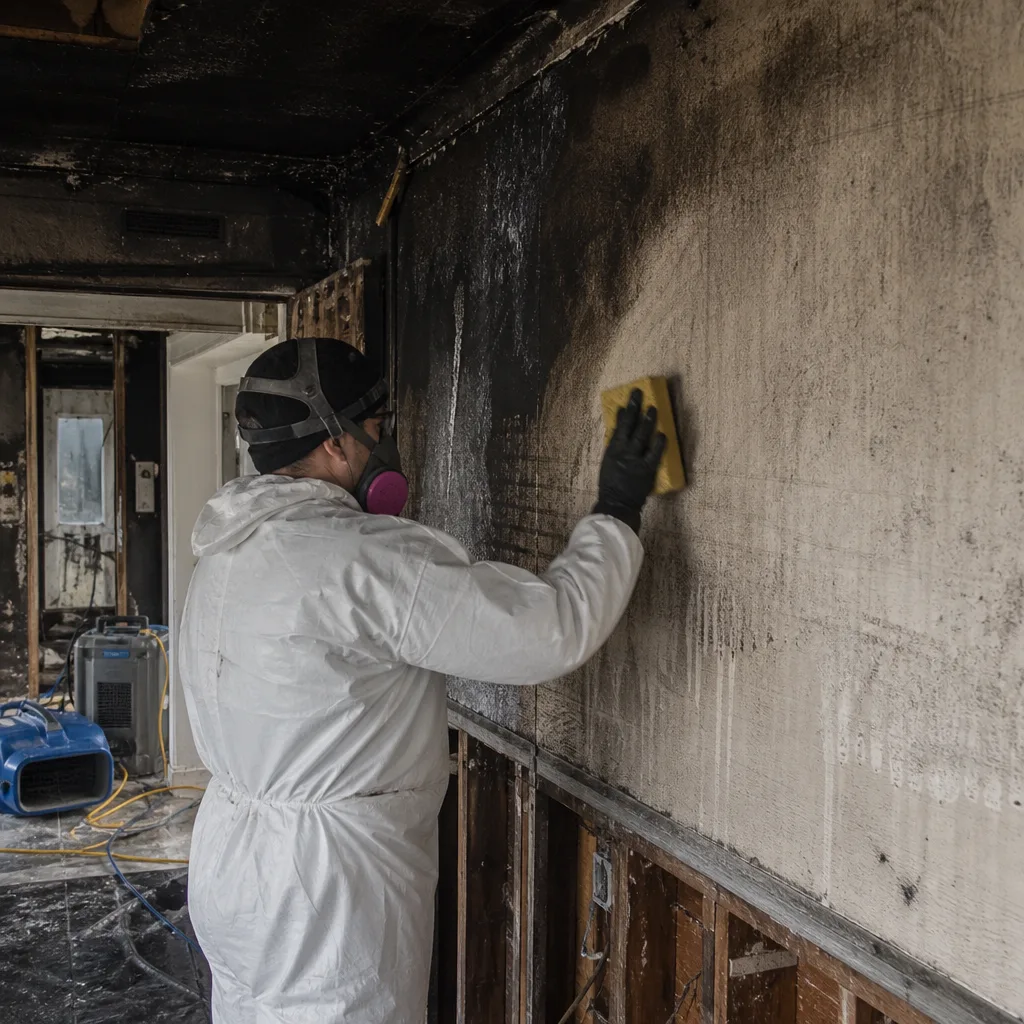
When nor’easters drive water into below-grade Flatbush apartments, this is contaminated water, not clean water. We remove saturated carpet, pad, and drywall, treat remaining surfaces with EPA-registered antimicrobials, and run containment where sewage is present. The flood line on the wall is where we start.
Burst Pipe Restoration
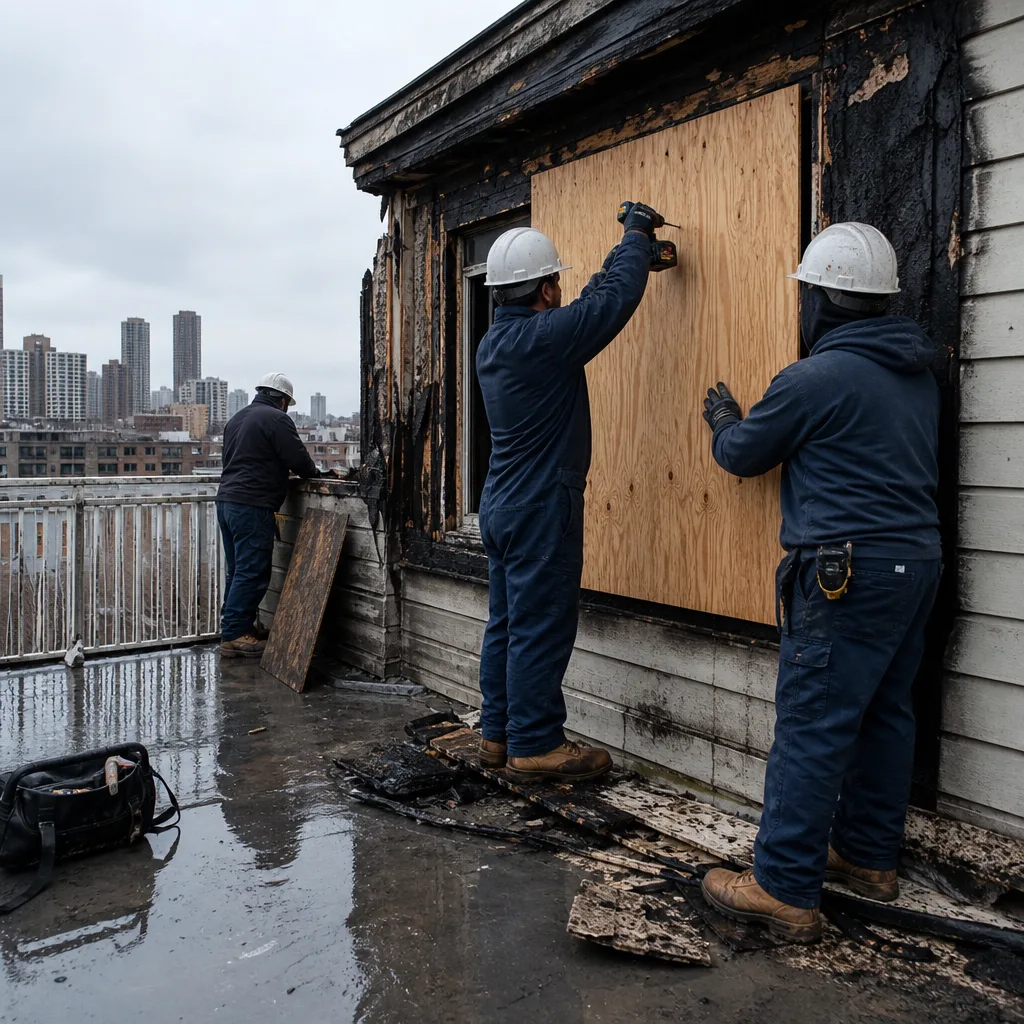
January freeze-ups on exterior walls and in boiler rooms send clean water through ceilings and walls across multiple floors. We trace the water path, extract from every affected room, and dry the structure without opening more walls than the moisture map says we need to. In pre-war homes, that means checking lead and asbestos compliance before we cut.
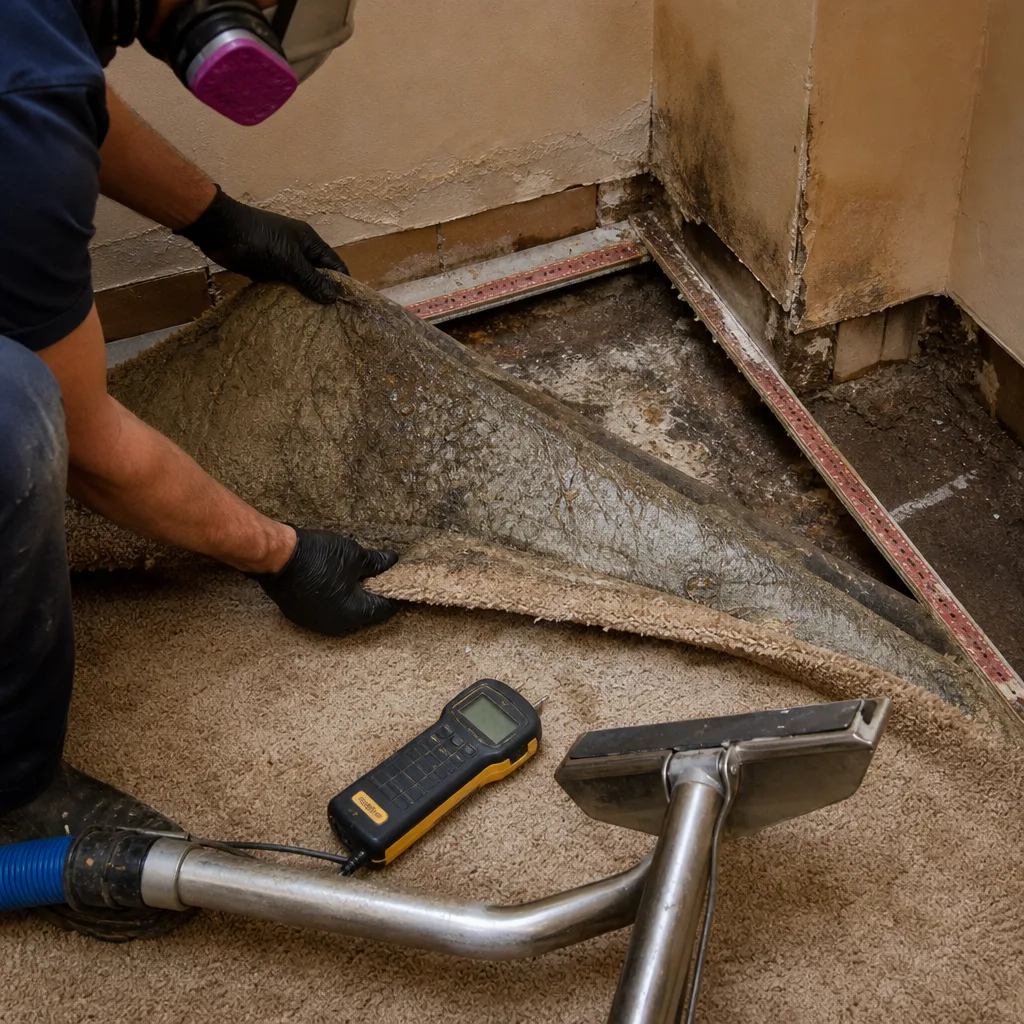
Basement Water Removal
Flatbush’s finished basement units sit below grade and take the brunt of every rain event and sewer surcharge. We extract, dry, and decontaminate these spaces with Category-specific protocols, and we document everything for the landlord or homeowner who now faces NYC housing-code compliance on top of the physical damage.
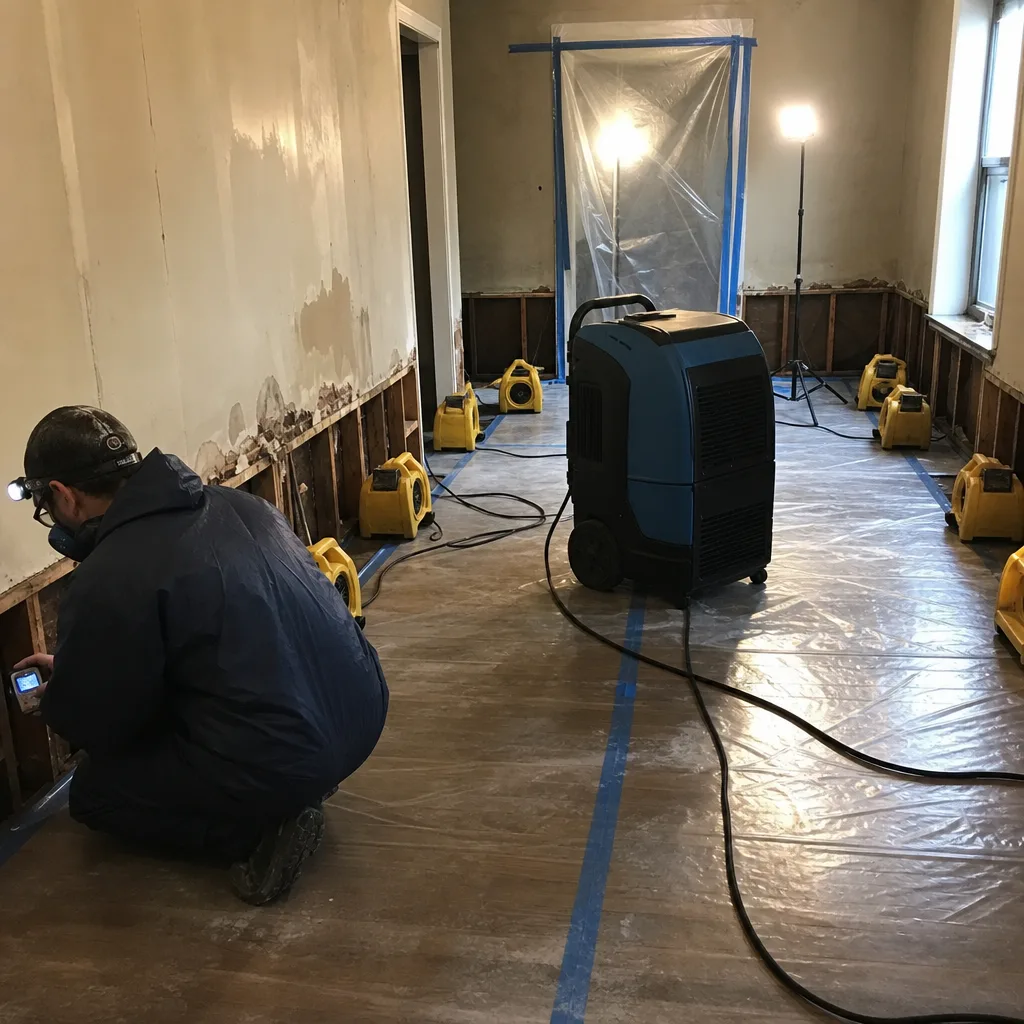
Ceiling & Roof Leak Water Damage
Wind-driven rain around old flashing and worn roofing runs down through plaster ceilings and walls, often days after the storm. We dry the cavity, not just the ceiling surface, and coordinate any necessary roof or flashing repair with the restoration scope so the water doesn’t come back.
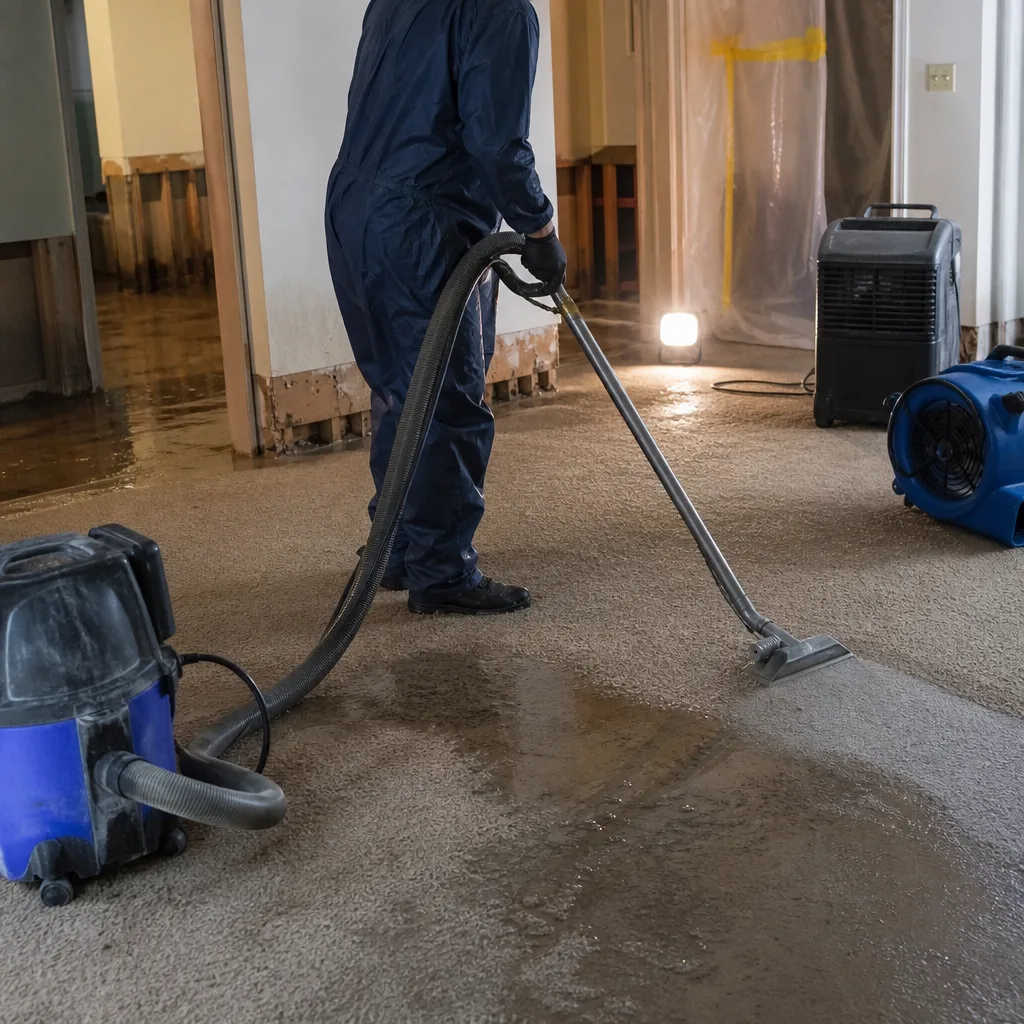
What happens when you call
- 1
A real person answersNo phone trees - you reach a local pro.
- 2
You get an upfront price rangeHonest numbers before anyone is dispatched.
- 3
A background-checked tech heads outLicensed & insured, dispatched right away.
- 4
You approve before work beginsNothing starts until you say go.
Water Damage Restoration Costs in Flatbush, NY
Most Flatbush water damage jobs fall into a few clear ranges. Emergency water extraction for a single-room loss in a typical rowhouse runs $1,200 to $3,500. Structural drying of a finished basement apartment after a clean-water pipe burst usually lands between $2,800 and $7,000, depending on how much plaster and flooring needs to come out. Sewage backup cleanup (Category 3) in a below-grade Flatbush unit typically runs $5,000 to $14,000, because that includes containment, biohazard decontamination, material removal, and often tenant-relocation coordination. Burst pipe restoration across multiple floors of a two-family home can run $6,000 to $18,000 when plaster repair and mechanical work are included. What moves the price: the age of the wall assembly, whether lead/asbestos testing and containment are required, the number of rooms, and whether the loss is Category 1, 2, or 3. Insurance covers most of these claims, and our free inspection gives you a firm line-item scope before any work starts. Call (917) 924-4221 for an exact quote for your Flatbush home.
We Also Serve Cities Near Flatbush
Our crews run from Flatbush into the surrounding neighborhoods every day. We respond to water damage in Fairview, Harrison, East Bronx, and Hunts Point with the same live dispatch, certified crews, and written guarantee. No matter which side of the line your home is on, the phone number is the same and the crew shows up just as fast.
Serving Flatbush, NY - Our Local Coverage Area
We’re based in the Flatbush area and know this community well. Use the map below to see our service coverage - if you’re nearby, we can almost certainly help.
Flatbush Water Damage Restoration Questions, Answered
Why does a sewage backup in a Flatbush basement apartment trigger tenant relocation obligations?
In Flatbush, most below-grade basement units are finished living spaces, and when a sewer backup floods one, NYC housing law treats it as a multi-unit residential loss. That means the landlord has legal obligations to notify tenants, provide alternative housing if the unit is uninhabitable, and remediate under Category 3 biohazard protocols. Delaying remediation can trigger NYC HPD violations and tenant displacement claims, which multiply the cost of the loss. We document the condition from hour one and coordinate with the landlord so the remediation and the legal compliance move together. Call (917) 924-4221 for a crew that knows this landscape.
Do I need asbestos testing before you open walls in my 1920s Flatbush rowhouse?
Yes, almost always. Pre-1940 Flatbush homes routinely contain asbestos in pipe wrap, floor tile, plaster additives, and duct insulation, and original plaster walls almost always carry lead paint. Opening those walls without testing and EPA RRP-compliant containment exposes residents and crews to lead dust and asbestos fibers, and it can halt a project on the spot. We run certified asbestos and lead testing before any invasive work, and our crews are trained to IICRC standards with the lead-safe work practices these homes require.
How fast can you dry plaster-and-lath walls after a burst pipe?
Plaster-and-lath walls dry on a different clock than drywall. A standard drywall cavity might hit the dry standard in 4 to 6 days; an original plaster assembly in a Flatbush rowhouse often takes 7 to 14 days, because the lath holds water and the plaster releases it slowly. We run Phoenix air movers and Dri-Eaz dehumidifiers with daily moisture readings, and we don’t close the wall until the readings show the cavity is at pre-loss moisture. Rushing that process is how hidden mold appears behind baseboards two months later. Call us at (917) 924-4221 and we’ll map your actual wall assembly before we set a timeline.
Why do the same blocks in Flatbush flood after every heavy rain?
Because the sewer laterals serving those blocks are original cast-iron and clay-tile lines, many installed between 1910 and 1930. They’ve had a century of root intrusion, bellying, and joint separation, and during any significant rain event the combined sewer system backs up into the lowest point on the block, which is almost always a below-grade basement apartment. We keep Category 3 PPE, extraction equipment, and enzyme treatment staged specifically for these repeat blocks, because a four-hour delay on a finished basement unit is the difference between cleaning and gutting. If your block keeps showing up in the local flood reports, we know it.
Can you restore a finished basement apartment without removing all the drywall?
Sometimes, when the water is Category 1 and we get there fast. Clean-water extraction within the first hours, followed by injectidry floor mats and cavity drying, can often save below-grade drywall that hasn’t wicked more than a few inches. But in Flatbush, many basement losses are Category 2 or 3 by the time we arrive, and those require removing saturated drywall to 24 inches and sometimes more. The free inspection will tell you which path your loss is on, and we’ll show you the moisture map so you can see it for yourself.
How fast can a crew actually get to my Flatbush home?
Our commitment is 45 minutes from your call to a dispatched crew, and we hold to that across Flatbush. The live dispatcher at (917) 924-4221 knows which trucks are where, and she’ll send the closest crew with the right equipment for your loss. In the middle of a nor’easter, response times can stretch when multiple blocks are calling at once, but we stage crews ahead of major weather events and run a dispatch board that moves with the call volume. We’ll tell you a real arrival time when you call, not a promise we can’t keep.
Will my insurance cover water damage in a Flatbush basement apartment?
Most standard homeowners policies cover sudden and accidental water damage, like a burst supply pipe or a water heater failure. Sewage backup is often excluded unless you carry a specific backup endorsement. Gradual seepage through foundation walls is generally excluded as a maintenance issue. We’ll document the source and the damage fairly, and we’ll talk directly with your adjuster. We don’t shade the report to help a claim, and we don’t inflate the scope to help ourselves.
What should I do in the first 30 minutes after discovering water damage in Flatbush?
Shut off the water source if you can do so safely, and call (917) 924-4221. Don’t use a shop vac on sewage-affected water; don’t turn on ceiling fans in a flooded room; don’t open walls yourself, especially in a pre-1940 home with lead paint and asbestos. Take photos of the standing water and any visible damage before moving anything. Then wait for the crew. The first hour of a water loss determines how much of your home we can save, so the fastest thing you can do is make the phone call.
On one block off Flatbush Avenue, our techs responded to a finished basement apartment flooded by a Category 3 sewage backup after a nor’easter overwhelmed the combined main, a case for Fire & Smoke Damage Restoration in Flatbush when secondary damage follows. We set containment and negative air, extracted black water with our truck-mounted Dri-Eaz unit, removed saturated carpet and drywall to 24 inches, then ran Injectidry floor mats and Phoenix air movers with daily moisture readings until the slab hit pre-loss condition, all while coordinating tenant relocation with the landlord before the four-hour delay triggered an HPD violation. That’s the job; we’re built for it.
Call (917) 924-4221 for a free estimate. Our Water Damage Restoration in Flatbush team answers live, 24 hours a day, every day. Current standing offers: $50 off any repair over $250, the $89 seasonal tune-up, and a 5% senior and veteran discount, always. Done right, and backed in writing.
Written by Curt Bowman, Owner at Floodline Restoration Co. of Manhattan, serving Flatbush and the surrounding New York City neighborhoods.