
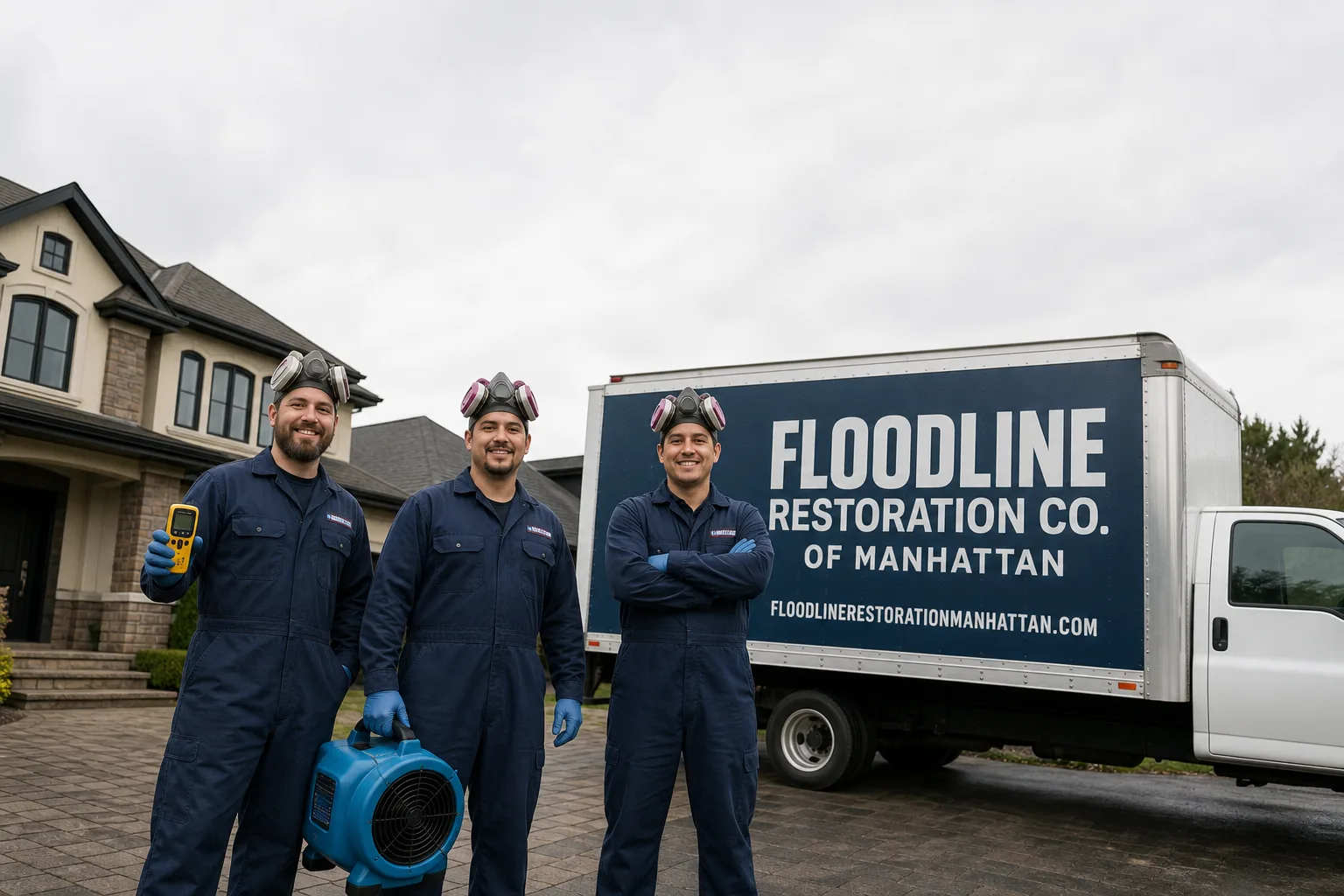
Free visual inspection and a written scope of work before any mitigation begins - photos, moisture readings, and drying logs go in your claim file
The scope we write is the scope we bill. Anything new gets shown to you, in writing, before we touch it.






 Before
 After
After Before
 After
After Before
 After
After24/7 Emergency Water Damage Restoration in Fort Lee
Water damage restoration in Fort Lee costs $1,200 to $6,400 for a typical high-rise unit loss, with multi-unit cascading failures from a single burst riser running $12,000 to $40,000 when concrete slab assemblies are involved. Our crews reach Fort Lee calls inside 45 minutes, any hour, and the phone is answered by a live dispatcher at 2 a.m. just as readily as at 2 p.m. Call (917) 924-4221 and you’ll speak to a person who can have extraction running the same visit.
If you’re standing in a Fort Lee condo right now watching water spread across a hardwood floor or hearing it drip inside a wall, the first hour determines how much of this gets rebuilt versus just dried. Category 1 water from a clean supply line degrades to Category 3 within 72 hours as it picks up contaminants from drywall, carpet backing, and the spaces between floors. In a Palisades high-rise, that water also migrates downward through the slab, meaning the unit below yours is already in the loss even if its ceiling looks dry. The sooner we’re on scene with professional-grade extraction and mapping equipment, the fewer walls we open and the less your insurer ultimately pays.
Understanding Water Damage Restoration Severity in Fort Lee Properties
Water losses are classified by the IICRC into three categories, and in Fort Lee’s building stock, the category matters more than the volume. Category 1 is clean water from a supply line or faucet. Category 2 carries significant contamination, typically from a dishwasher discharge or an overflowing washing machine. Category 3 is grossly contaminated water containing sewage, river water, or backed-up drain waste. A corroded cast-iron stack that lets go in a 1970s Palisade Avenue tower produces Category 3 immediately, and that water moving through a concrete slab carries pathogens into every material it touches.
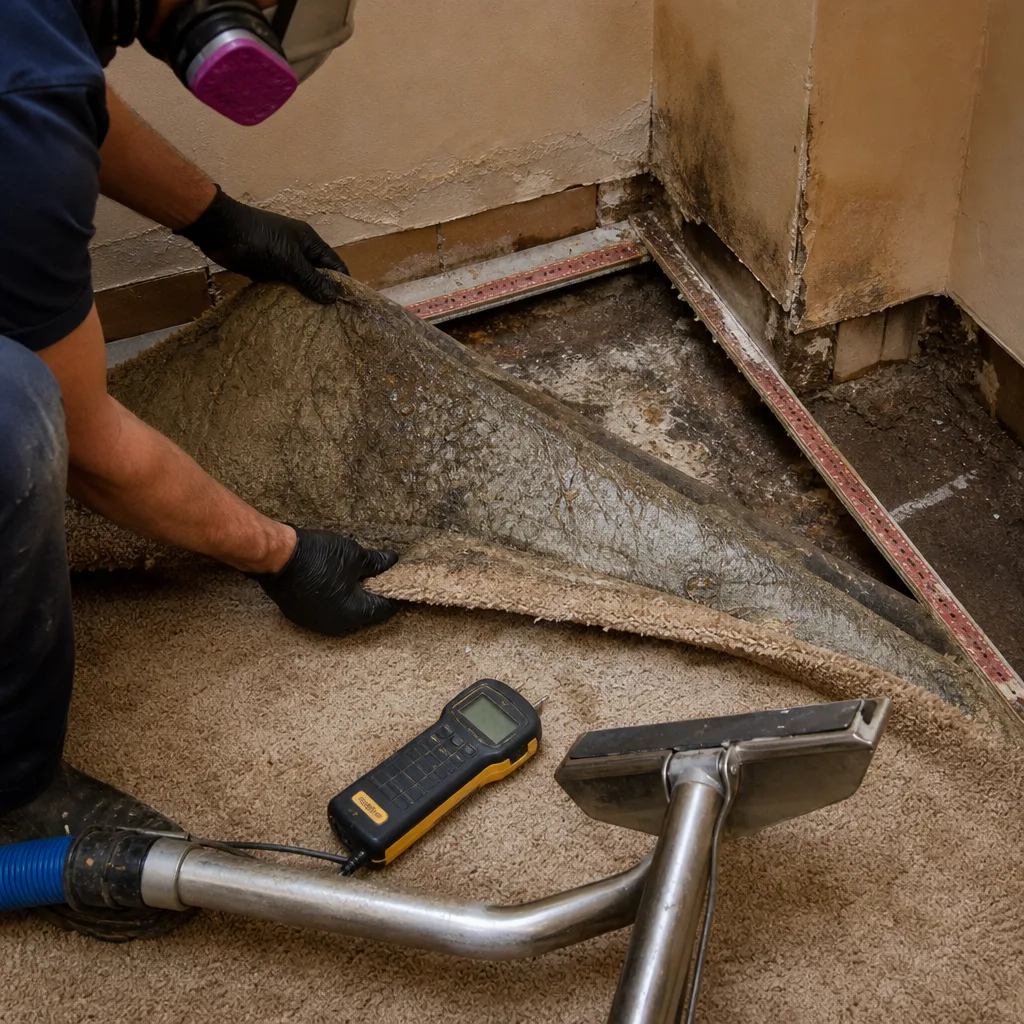
Severity also depends on where the water travels. In a single-family home, a slab leak spreads laterally into one living space. In Fort Lee’s high-rises, water follows the path of least resistance through chase walls, elevator shafts, electrical conduits, and the corrugated voids inside concrete floor assemblies. We run moisture mapping with thermal imaging and penetrating meters to locate water trapped between floors, because surface readings lie. A vinyl plank floor can read 6% moisture content while the plywood substrate below holds 28% and is actively growing mold two days after the event.
Why Fort Lee Property Owners Choose Floodline Restoration Co. of Manhattan
- 45-minute response commitment - a certified crew is dispatched from our Fort Lee-area staging the moment a live person takes your call, and we commit to arriving inside 45 minutes. We’ll be there when we say.
- 24/7 live answer, never an answering machine - Curt Bowman built this company in 2010 around a dispatch board, not a sales desk. Pick up the phone at any hour and you’ll get a person who can authorize work right then.
- IICRC-certified technicians - our crews hold WRT and FSRT certifications and follow RIA and IFA standards on every job, from initial extraction to final clearance testing.
- Free visual inspection with no obligation - we assess the loss, map the moisture, and give you a written scope before any work begins. No pressure, no rushed sign-off.
- Direct insurance billing - we communicate directly with your adjuster, provide the documentation they need, and bill the carrier. You don’t play messenger.
- One team from extraction to reconstruction - the same crew that runs the first extraction handles daily moisture readings, rebuilds drywall, refinishes flooring, and stands behind the Water Damage Restoration work with the 90-Day Done Right Promise in writing.
Our Water Damage Restoration Process
Inspection & Assessment
We arrive, walk the loss with you and, when applicable, your building super. Thermal imaging and penetrating moisture meters identify water in wall cavities and between floors of Fort Lee’s concrete slab assemblies. You get a written scope and a square deal: no surprises on the bill.
Extraction & Stabilization
Standing water comes out first using truck-mounted and portable extraction units sized to fit through 1970s high-rise doorways and freight elevators. We place containment where Category 2 or 3 water moved through common areas, protecting neighbors and meeting building management requirements.
Drying & Dehumidification
We set professional-grade Dri-Eaz and Phoenix air movers and desiccant or refrigerant dehumidifiers in a calculated airflow pattern, not scattered randomly. Daily moisture readings are logged on the tech’s clipboard and provided to you and the carrier until the IICRC dry standard is met.
Cleaning & Sanitization
Affected surfaces are cleaned with professional antimicrobial solutions appropriate to the category of water. For Category 3 losses in Fort Lee towers, we remove contaminated drywall, base trim, and carpet where cordoned, then sanitize the concrete and framing before rebuilding begins.
Ceiling, Cavity & High-Rise Specialty Treatment
Where water traveled through chase walls or the void spaces between floors, we open only what we must, document what we found, and apply targeted drying systems like Injectidry panels that push dry air into concealed cavities without tearing out entire ceilings.
Repairs & Restoration
We rebuild what was removed: drywall, trim, flooring, paint. The same crew that extracted the water finishes the job, and Curt Bowman’s 90-Day Done Right Promise covers the work in writing. If it’s not done right, we make it right - no arguing, no paperwork battles.
Need Emergency Water Damage Restoration in Fort Lee Now?
Crews minutes away, answering live 24 hours a day. The sooner we start, the less it costs.
Working With Your Insurance Company
The line the water left is where we start, and we believe your insurance carrier deserves the same straight documentation you get. From the first hour on site, our techs photograph every affected surface room by room, log moisture readings with time stamps, and build an industry-standard line-item estimate that matches what the adjuster expects to see. We talk to your adjuster directly, coordinate the approval path for the typical Fort Lee multi-party claim where a building’s master policy and three individual unit policies may all be involved, and we bill the carrier once scope is agreed.
The 90-Day Done Right Promise backs the work whether insurance pays the claim or you do. That comes from Curt Bowman and the K.E.Y.S. values code: Krafted right, Every time, Your home first, Standing behind it. We don’t hand you a phone number for a callback queue. We hand you a written scope, a moisture log, and a name you can hold accountable.
What We Provide Your Insurer
- Thorough documentation of the loss
- Photos of all damage, room by room
- Moisture readings and drying logs
- A detailed, line-item scope of work
- Direct coordination with your carrier
Built for Fort Lee’s Loss Calendar
Fort Lee’s water damage calendar doesn’t follow the seasons so much as the freeze-thaw line and nor’easter tracks. January and February bring deep freezes that burst supply lines in unheated mechanical rooms and along the Palisades ridge’s exposed northern corridors, especially in buildings still running original galvanized risers from the 1960s. A single frozen riser on the 11th floor sends water through the slab into ten units below before anyone knows. Spring thaw reveals the roof membrane failures that winter masked, and wind-driven rain from March nor’easters presses water through aging curtain-wall joints and window glazing seals in 1970s towers. Summer brings rapid thunderstorm cells that overwhelm Fort Lee’s combined storm drains and send Category 2 water into below-grade parking garages and boiler rooms where it wicks up into first-floor units. Fall’s hurricane remnants wrap around the Hudson Valley wind corridor and drive rain horizontally into north-facing facades. We plan crews around this calendar so the phone never hands you to a recording.
Water Damage Restoration Across Fort Lee’s Neighborhoods
The corridor along Palisade Avenue runs through the densest concentration of 1960s and 1970s high-rise towers in Fort Lee, and those buildings account for the majority of our multi-unit riser losses. Response access through the rear service entrances off side streets is tight, and our techs know which freight elevators require building staff to hold them. Near Main Street and the 07024 ZIP, older brick low-rise co-ops and converted multifamily buildings present a different set of conditions: shared wet walls between units, original copper from the 1950s, and basements where water finds every crack in the foundation slab. Over by Lemoine Avenue and the GWB approach, post-1980s condominium complexes with newer PEX lines still suffer from rooftop mechanical failures and window-seal leaks when the wind comes up the river. And along the Fort Lee Historic Park area near the river’s edge, townhouse and low-rise communities see basement seepage and groundwater intrusion when the Hudson River rises and back-pressure works into foundation drains. Each neighborhood has its own failure pattern, and our crews know them from years of calls.
Specialized Water Damage Restoration Services We Offer in Fort Lee
Emergency Water Extraction
Standing water comes out first, fast, with extraction equipment sized to fit through a 1970s freight elevator and down a high-rise hallway without gouging the baseboards. In Fort Lee condominiums, we coordinate with the super before hauling equipment through common areas and place floor protection the entire route.
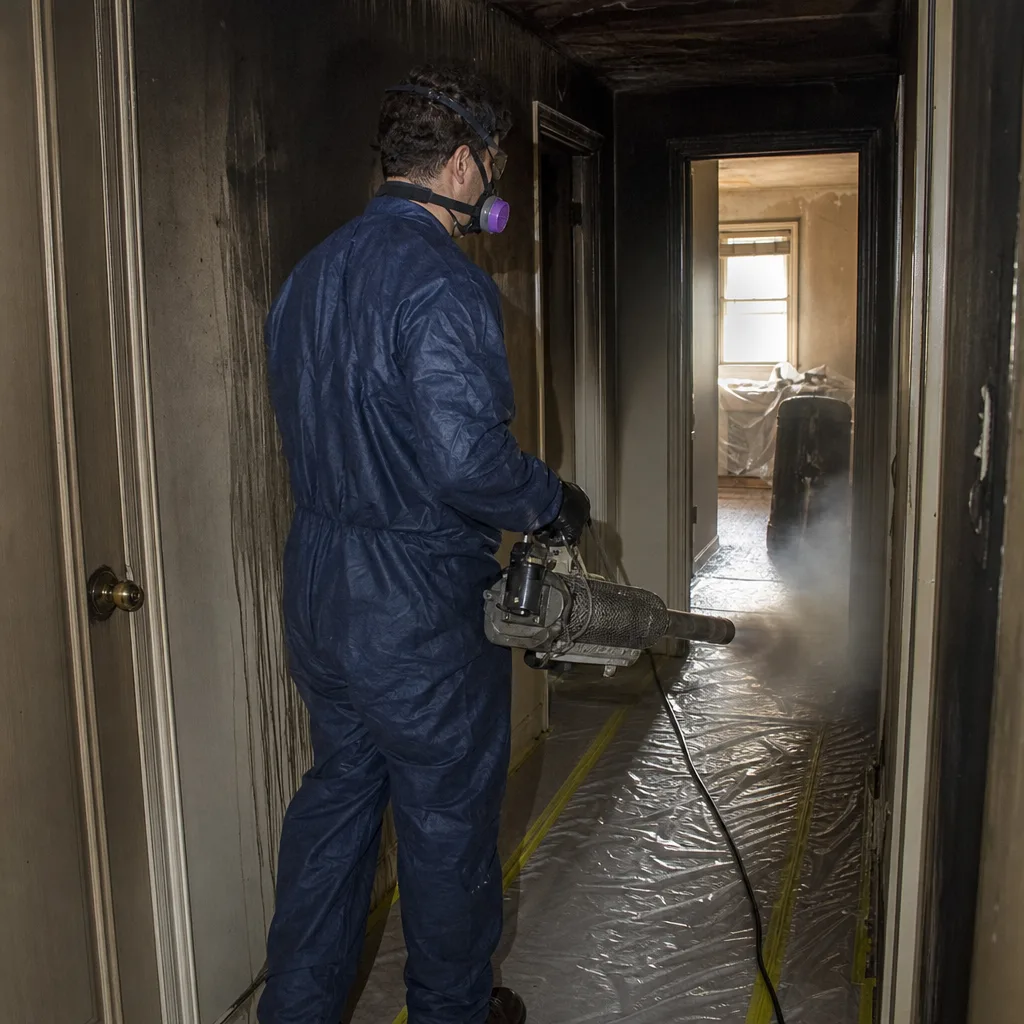
Structural Drying & Dehumidification
Drying a Fort Lee high-rise unit means working against concrete, not just wood. We use Dri-Eaz and Phoenix dehumidifiers paired with XPOWER air movers in calculated spacing, and Injectidry systems to dry wall cavities and under-slab voids without ripping out entire ceilings. Daily readings are logged and handed to you and the carrier.
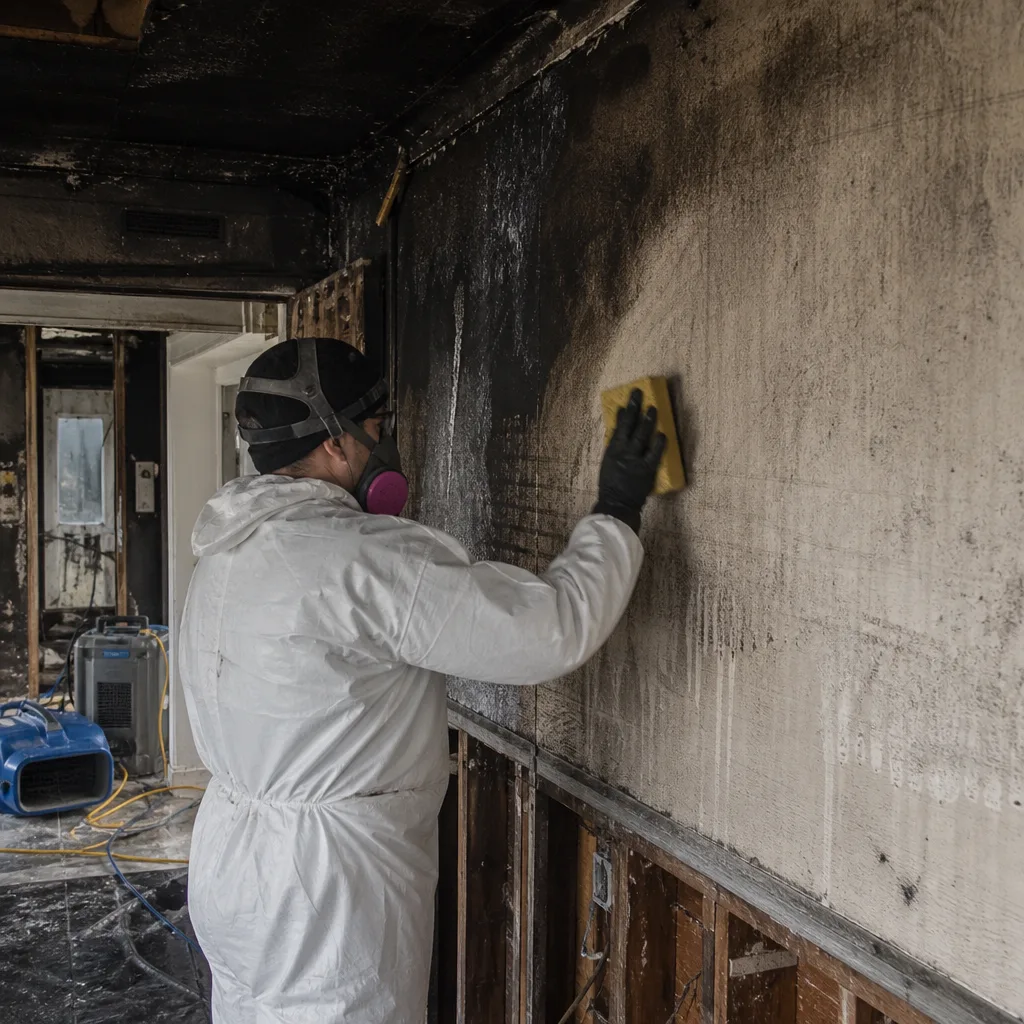
Burst Pipe Restoration
A frozen or failed supply riser in an older Fort Lee tower is the single most common call we get between December and March. We handle extraction, dry the affected floors, work with the building’s plumber or yours to isolate the line, and rebuild the damage. The same crew that pumped the water out handles the drywall, trim, and paint.
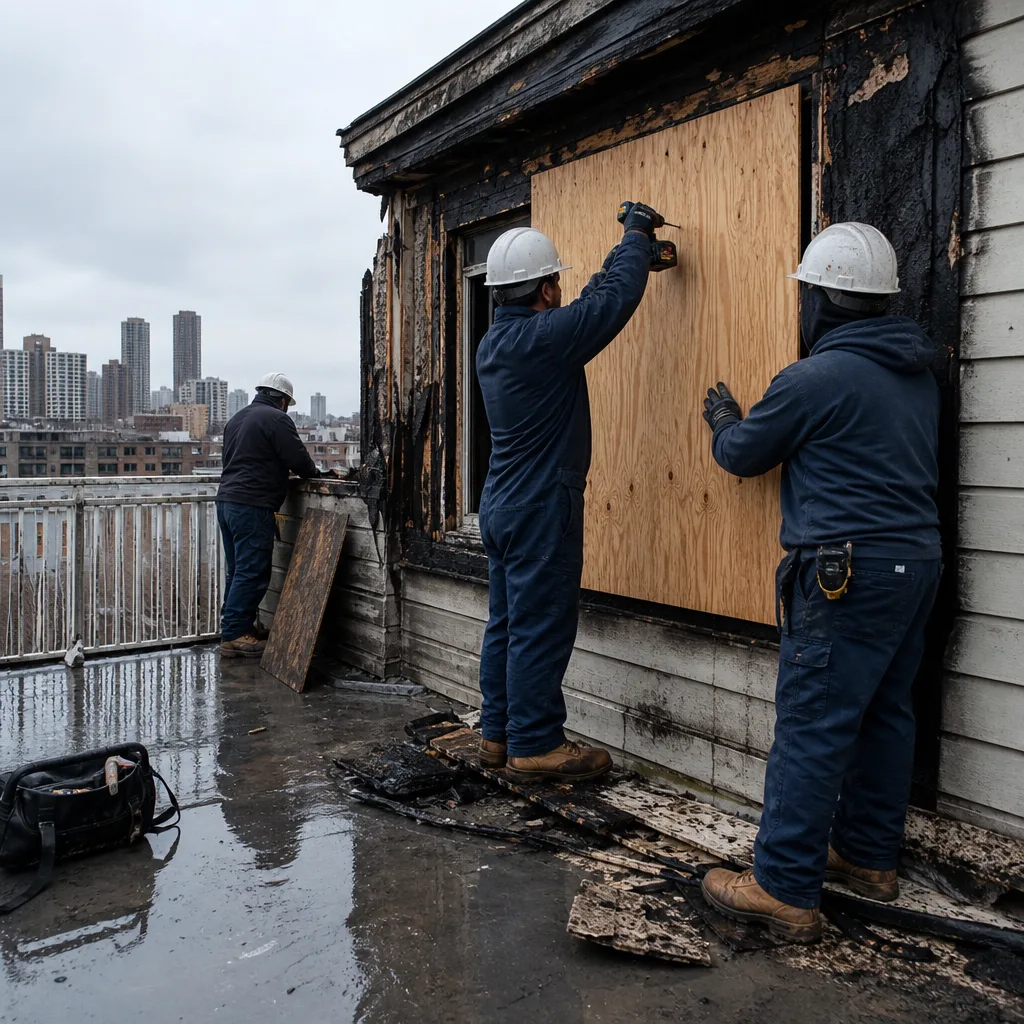
Basement Water Removal
Below-grade spaces in Fort Lee’s low-rise multifamily buildings and older co-ops trap water from groundwater seepage, failed sump pumps, and backed-up drain lines. We extract, sanitize, and dry to the IICRC standard, then advise on the practical waterproofing steps that actually work in Bergen County’s clay-heavy soil.
What happens when you call
- 1
A real person answersNo phone trees - you reach a local pro.
- 2
You get an upfront price rangeHonest numbers before anyone is dispatched.
- 3
A background-checked tech heads outLicensed & insured, dispatched right away.
- 4
You approve before work beginsNothing starts until you say go.
Water Damage Restoration Costs in Fort Lee, NJ
What you’ll pay depends on the category of water, how far it traveled, and whether concrete slab assemblies need to be opened. Here are honest ranges for the Fort Lee market:
- Basic Category 1 extraction and drying in a single high-rise unit: $1,200-$3,500
- Category 3 sewage or drain backup cleanup with containment and material removal: $3,500-$8,000
- Multi-floor riser failure with concrete slab drying and rebuild across multiple units: $12,000-$40,000+
- Ceiling and roof-leak water damage from window gasket or membrane failure: $900-$4,500 depending on cavity access
- Rebuild work after drying (drywall, trim, paint, flooring): priced in a written scope, typically 40-60% of total claim
The free visual inspection removes the guesswork. We map the moisture, give you a written scope, and the price we quote is the price we do the work for. No change orders mid-job without your sign-off. Insurance covers most of these losses when the failure is sudden and accidental; your deductible still applies, and we have current standing offers to help: $50 Off Any Repair Over $250, and a Senior & Veteran 5% Discount, always. Call (917) 924-4221 and we’ll get you a firm number.
We Also Serve Cities Near Fort Lee
Our Fort Lee crews also respond to water damage calls in Fort Lee‘s neighboring Bergen County communities, including Leonia, Palisades Park, Edgewater, and Ridgefield. Same 45-minute response commitment, same live phone answer, same written scope before work begins.
Fort Lee Water Damage Restoration Questions, Answered
Who authorizes water damage restoration in a Fort Lee high-rise condo when multiple units are affected?
The building super is almost always the first call, not the unit owner, because the failure point (a riser, drain stack, or common-wall pipe) is a common element covered by the master policy. We coordinate authorization from the super or property manager, the affected unit owners, and any renters’ insurers before opening walls, while we run containment and begin stabilization to stop the water from migrating further. Call (917) 924-4221 and we’ll walk the chain with you.
Why does water damage in a Fort Lee tower often spread below the floor I can see?
Fort Lee’s high-rises are built with concrete slab assemblies that contain corrugated voids, chase walls, and sleeve penetrations between floors. Water enters these concealed spaces and travels downward long before a ceiling shows staining. Moisture mapping with penetrating meters finds that hidden water, which surface readings alone will miss. Left unaddressed, it becomes mold inside 48 hours.
If my Fort Lee condo’s water came from a neighboring unit’s burst pipe, who handles the category of water?
The category of water is determined by its source, not its final location. A clean supply line from your neighbor’s unit is Category 1 when it enters your space, but it degrades as it sits and picks up contaminants. If a drain stack or waste line failed and brought Category 3 water through your ceiling, your insurer and the building’s insurer both need that documentation, which we provide in line-item format from hour one.
How do you dry a Fort Lee high-rise unit when you can’t open windows or vent through the facade?
Refrigerant and desiccant dehumidifiers pull moisture from the air and send dry air back into the space, no exterior venting required. Supplementing with Injectidry panels pressurizes wall cavities and under-slab spaces so trapped water evaporates into the room where the dehumidifier can remove it. We dry high-rise units this way every week in Fort Lee; it’s our standard approach when building rules prohibit window venting.
What’s the first step after a water loss in a Fort Lee co-op or condo before restoration can start?
Call the super, then call us. We’ll arrive, shut off the source if the building hasn’t, photograph everything, and run initial moisture readings. Then we coordinate the authorization path while running extraction. The first hour of extraction is the single biggest factor in how much of your hardwood, drywall, and cabinetry can be saved versus replaced.
How fast can a crew actually get to Fort Lee for a water emergency?
Our commitment is 45 minutes or less for Fort Lee calls, day or night. A live dispatcher answers the phone, confirms the address, and dispatches the nearest certified crew. We stage equipment near the borough specifically so high-rise losses don’t wait on bridge traffic or a call center in another state.
Do I really need full restoration, or can I just dry the carpet and move on?
In a single-family home, maybe you dry the carpet and move on if the water is clean and you catch it immediately. In a Fort Lee concrete building, water trapped under tile or hardwood or inside a wall cavity grows mold unseen. We’ll inspect free, tell you honestly whether you need full restoration or spot mitigation, and put it in writing either way. No pressure, no oversell.
Will my insurance cover water damage restoration in Fort Lee?
Most sudden and accidental water losses are covered by standard condo unit policies and building master policies, though your deductible applies and gradual long-term leaks may be excluded. We photograph everything from the first hour, provide moisture logs and line-item scopes, and talk to your adjuster directly so you’re not the one explaining IICRC dry standards over the phone. Ask us for details at (917) 924-4221.
Why Fort Lee’s High-Rise Damage Calls For a Different Kind of Restoration Company
In Fort Lee, the first call after a water-loss event almost always goes to the building super, not the homeowner. A failed riser in a 1970s Palisades tower can affect three condos, a common hallway, and a rental unit, each with a different insurer, all at once. A restoration contractor who doesn’t understand that dynamic will stall out waiting for authorization while the moisture keeps migrating through the concrete. We understand it because we live in it every week.
We arrived at a 14-story condominium on Palisade Avenue where a corroded cast-iron drain stack had let go, sending Category 3 water through the concrete slab into three units below. Our techs set containment on the hallway before opening walls, ran moisture mapping with Dri-Eaz sensors to find water in the subfloor between floors, and coordinated authorization with the building super, two condo owners, and a renter’s insurer so structural drying could start the same afternoon. That’s the difference between a restoration company that knows Fort Lee and one that’s guessing at the phone number for the management office.
The same applies to equipment. Suburban-sized drying gear doesn’t fit through a 1970s high-rise doorway or into a freight elevator with a 32-inch door. We run compact professional-grade units from Dri-Eaz, Phoenix, and XPOWER that move real air volume but fit Fort Lee’s clearances. The work is the same quality we’d bring anywhere; the logistics just require local familiarity.
Serving Fort Lee, NJ - Our Local Coverage Area
We’re based in the Fort Lee area and know this community well. Use the map below to see our service coverage - if you’re nearby, we can almost certainly help.
Call Floodline Restoration Co. of Manhattan for Water Damage in Fort Lee
If water is moving through your Fort Lee home, condo, or building right now, call (917) 924-4221. You’ll get a live person. You’ll get a crew dispatched to arrive inside 45 minutes. You’ll get a written scope before work begins, direct insurance billing, and the 90-Day Done Right Promise behind every repair. Done right, and backed in writing. That’s the only way we know how to work.
Written by Curt Bowman, Owner at Floodline Restoration Co. of Manhattan, serving Fort Lee and surrounding Bergen County communities.