
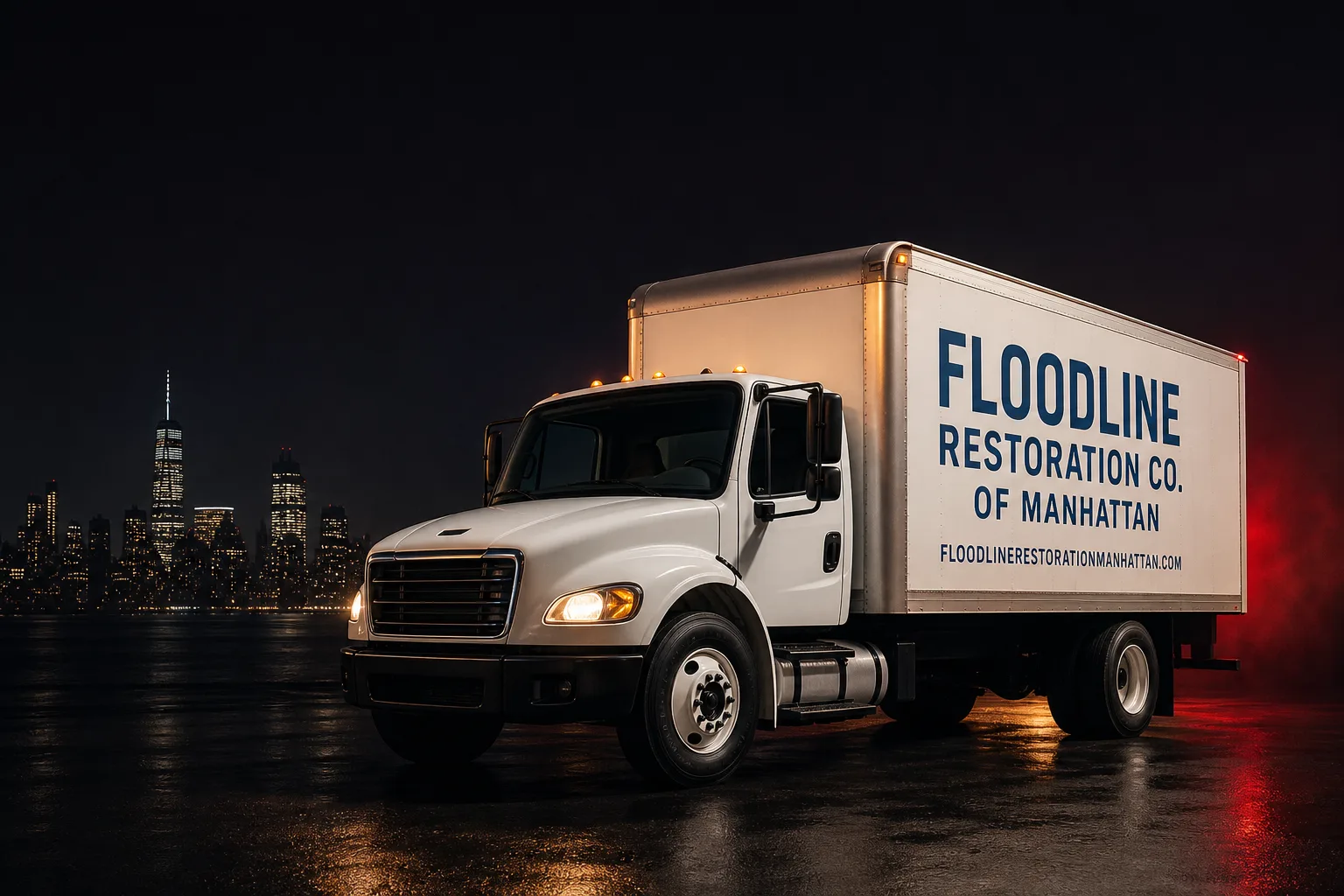
Free visual inspection and a written scope of work before any mitigation begins - photos, moisture readings, and drying logs go in your claim file
The scope we write is the scope we bill. Anything new gets shown to you, in writing, before we touch it.






 Before
 After
After Before
 After
After Before
 After
After24/7 Emergency Water Damage Restoration in Garment District
Water damage restoration in Garment District means answering fast when a century-old pipe lets go three floors above a showroom full of next season’s samples. That’s exactly what we do. Floodline Restoration Co. of Manhattan dispatches certified crews into the Garment District around the clock, every day of the year. Call (917) 924-4221 and a live person picks up, not a recording, no matter if it’s 2 a.m. the week before New York Fashion Week. We reach the freight elevator within the hour, start extraction the same visit, and stay with the job until structural drying is verified and the last water-threatened fabric bolt is accounted for.
Why the first hour matters here more than anywhere else: in the Garment District’s open loft layouts, water spreads laterally across entire floors before anyone notices. Category 1 water from a clean pipe becomes a multi-floor loss quickly, and once it hits pattern archives, designer samples, and pre-war plaster, the clock is against you. A free visual inspection puts eyes on the damage now, not tomorrow.
Understanding Water Damage Restoration Severity in Garment District Properties
Garment District buildings are mostly 10-to-20-story pre-war commercial lofts built between 1910 and 1940. They carry original or minimally updated cast-iron and galvanized plumbing, steam-heat systems, and wet-column standpipes designed for light manufacturing, not for the climate-controlled showroom environments now occupying the space. That infrastructure changes how we read every water loss.
We classify water by category before we touch a wall. Category 1 is clean water from a broken supply line. Category 2 carries contaminants from equipment overflows or condensate. Category 3 is sewage or exterior flood water, the most hazardous. Severity also depends on how far water has migrated: in a loft with open floor plates and high ceilings, water can travel through wall cavities and under finished flooring into three or four adjacent showrooms before detection. We use thermal imaging and moisture mapping to find every wet pocket, and hydraulic hygrometers to track drying to a measurable dry standard. In these pre-war buildings, we’re often dealing with saturated lath-and-plaster walls that hold water longer than drywall and hide it from casual inspection.
Why Garment District Property Owners Choose Floodline Restoration Co. of Manhattan
- 45-minute response commitment to buildings in the Garment District, freight elevator scheduling included. We coordinate with building management while we’re en route.
- 24/7 live answer, every day. A person picks up at two in the morning. No automated tree, no call-back promise. We dispatch a certified crew the same call.
- IICRC-certified crews trained to WRT (Water Damage Restoration Technician) and ASD (Applied Structural Drying) standards, plus RIA and IFA training. Background-checked and uniformed on every job.
- Free visual inspection with written scope before any work starts. You’ll know what we found, what we recommend, and what it costs, in writing.
- Direct insurance billing with line-item estimates your adjuster can read. We handle the carrier communication so you don’t play messenger.
- One team from first extraction to finished rebuild. No mid-job handoff, no inherited crew, no new faces halfway through the claim.
Our Water Damage Restoration Process
Inspection & Assessment
We walk the loss with thermal imaging and moisture meters, mark the water line, and map how far water has migrated across the open loft floor. The scope is written and priced before we begin, and we document everything for your carrier.
Extraction & Stabilization
Professional-grade extraction removes standing water from floors, wall cavities, and under showroom fixtures. We stabilize the space with containment where needed to keep damage from spreading into lower floors.
Drying & Dehumidification
Dri-Eaz dehumidifiers and XPOWER air movers are placed according to the moisture map, not by guesswork. Daily readings are logged until the dry standard is met, and we adjust equipment placement as drying fronts move.
Cleaning & Sanitization
We clean and sanitize all affected surfaces and contents. For showroom and inventory spaces, this includes careful handling of fabric, paper patterns, and finished garments that may be water-affected.
Contents & Materials Salvage
In Garment District losses, this step is often the most important. We pack out, dry, and restore water-threatened fabric bolts, pattern archives, and pre-season samples while structural drying runs parallel to the work.
Repairs & Restoration
The same crew that ran extraction rebuilds what needs rebuilding: plaster repairs, flooring, trim, cabinetry. We hand you the moisture log and the 90-Day Done Right Promise in writing before we leave.
Need Emergency Water Damage Restoration in Garment District Now?
Crews minutes away, answering live 24 hours a day. The sooner we start, the less it costs.
Working With Your Insurance Company
We’ve handled water damage claims in the Garment District for long enough to know that the carrier wants documentation, not phone tag. From the first hour, we photograph every affected area room by room, log moisture readings daily, and write line-item estimates in the standard format adjusters expect. We send those directly to your carrier and speak to them on your behalf. You get copies of everything.
What We Provide Your Insurer
- Thorough documentation of the loss
- Photos of all damage, room by room
- Moisture readings and drying logs
- A detailed, line-item scope of work
- Direct coordination with your carrier
When a restoration company bills your carrier directly and stands behind the work in writing, the claim moves faster and the adjuster has fewer reasons to push back. We’ve been doing it that way since Curt Bowman founded this company in 2010.
Built for Garment District’s Loss Calendar
Water damage in the Garment District follows the weather, and the weather here is less forgiving than people think. January and February hard freezes put extreme stress on the exterior-facing plumbing and aging steam systems common in these pre-war loft buildings. Frozen-pipe bursts in the Garment District rarely stay on one floor: the open wet-column and standpipe design means a break sends water down through the building, and we’ve walked into losses where three showrooms took damage from a single freeze event.
Spring thaw brings a different pattern: old roof drains and parapet flashing start leaking, and decades-old galvanized supply lines weep inside wall cavities. Summer thunderstorms overwhelm the district’s combined sewer system, sending Category 3 water into basement-level storage and mechanical rooms. And every September, a different clock starts: the fashion calendar. A water loss the week before New York Fashion Week is an all-hands, 24-hour extraction and drying push, because a showroom that can’t receive buyers on schedule loses a season’s orders no matter how clean the drywall looks later. We know that. We plan around it.
Water Damage Restoration Across Garment District’s Neighborhoods
The Garment District runs from roughly West 34th to West 42nd Streets between Sixth and Ninth Avenues, and the building stock shifts block by block. The core showroom concentration between West 36th and West 39th, especially along Seventh Avenue and Broadway, is dominated by 12-to-20-story loft buildings with heavy freight elevator traffic and occupied showrooms on every floor. A pipe loss there means coordinating with building management for elevator windows, and we’ve learned to stage equipment at the loading dock while we wait our slot. Along West 35th Street toward Penn Station, the buildings are older and more mixed-use, with more legacy plumbing and more mechanical rooms tucked into subfloors. The side streets off Eighth Avenue carry a dense cluster of smaller loft buildings and converted commercial spaces, where access to the water column sometimes means working through a neighbor’s service closet. Near Ninth Avenue, buildings are slightly lower, and natural airflow is marginally better, but the street canyon still limits passive drying. We know these response routes. We dispatch crews into this district every day, not once a year.
Specialized Water Damage Restoration Services We Offer in Garment District
Emergency Water Extraction
Standing water in an open loft floor doesn’t stay where it lands. We extract fast using truck-mounted and portable units, pulling water from floors, wall cavities, and under showroom fixtures. In Garment District buildings, speed on extraction often determines whether the loss is one floor or three.
Structural Drying & Dehumidification
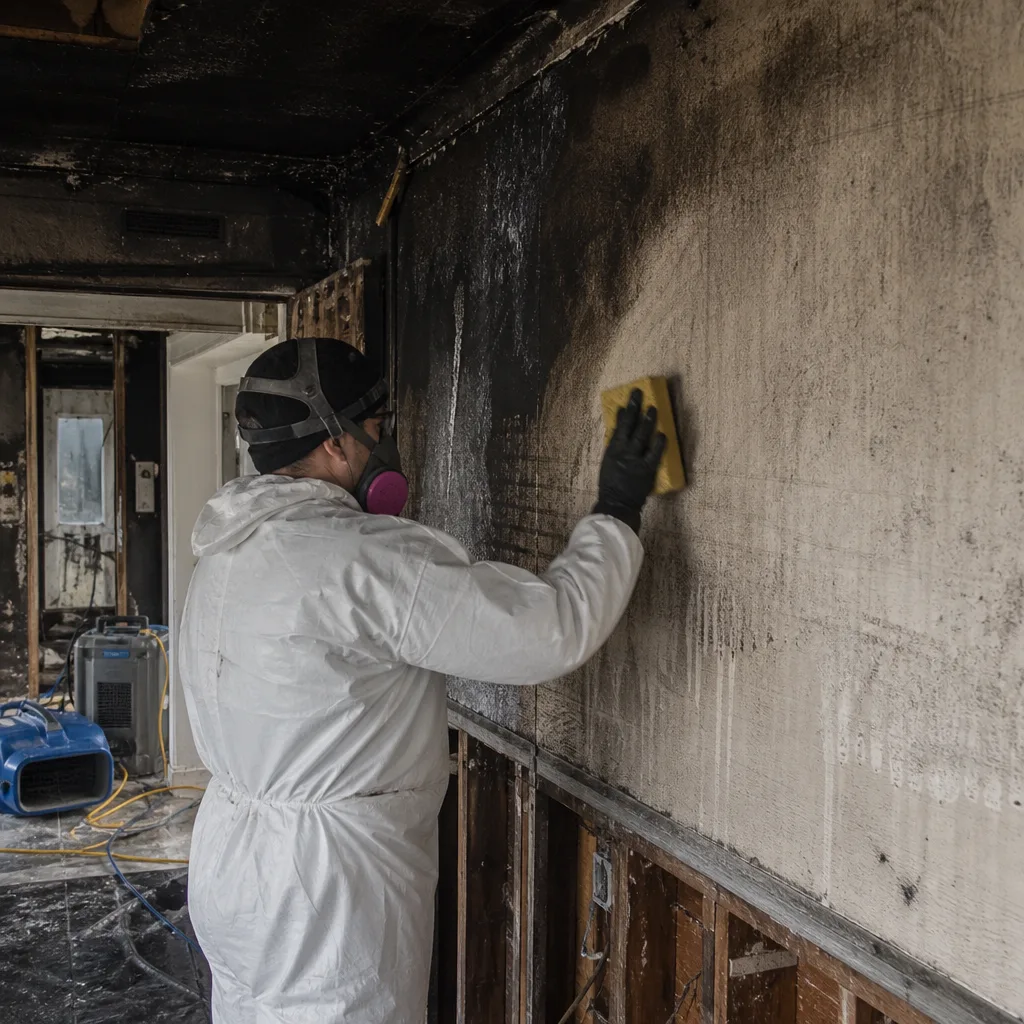
Dri-Eaz and Phoenix dehumidifiers paired with XPOWER air movers run on a moisture map, not a timer. We take daily readings in every affected room and log them until the dry standard is met. In pre-war plaster and dense building clusters, that discipline is the difference between a clean dry-out and mold in the wall cavity.
Flood Cleanup
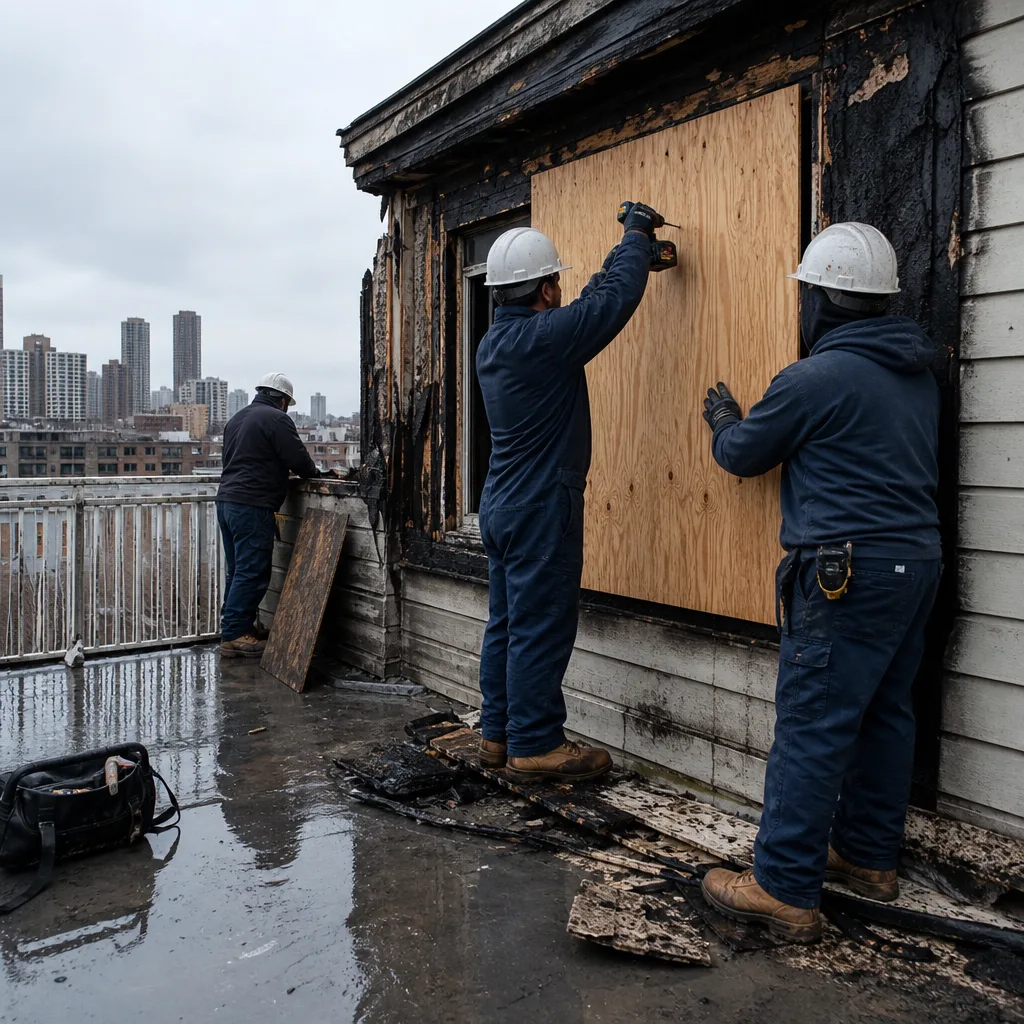
Category 3 flood water carries contaminants that require containment and sanitization. We seal off the affected area, remove contaminated material, and treat all surfaces. For Garment District showrooms and storage spaces, this includes careful handling of inventory that may be salvageable.
Burst Pipe Restoration
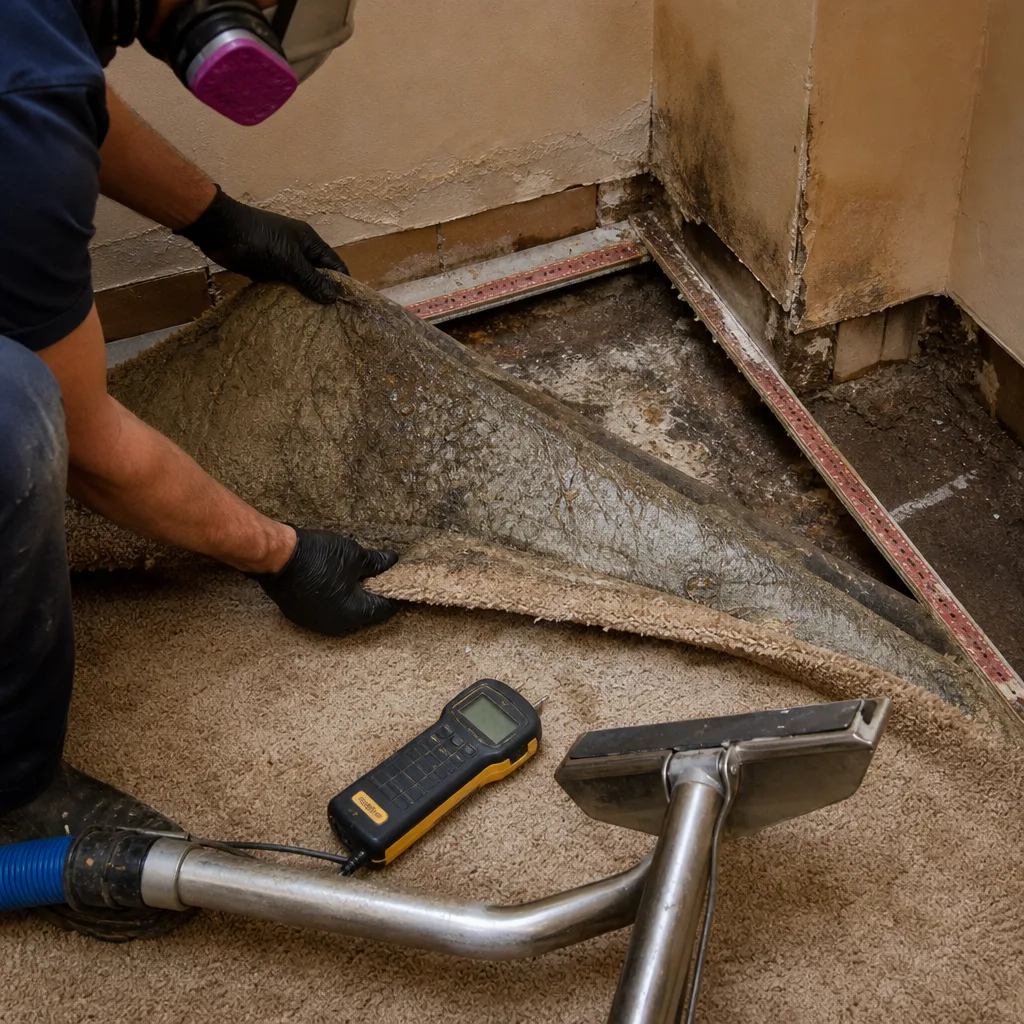
When a freeze bursts a supply line or a wet column fails, the water is usually Category 1, but the spread is wide. We repair the pipe, extract the water, dry the structure, and rebuild what got destroyed. You don’t get a plumber and then a separate restoration company: one crew handles the whole job.
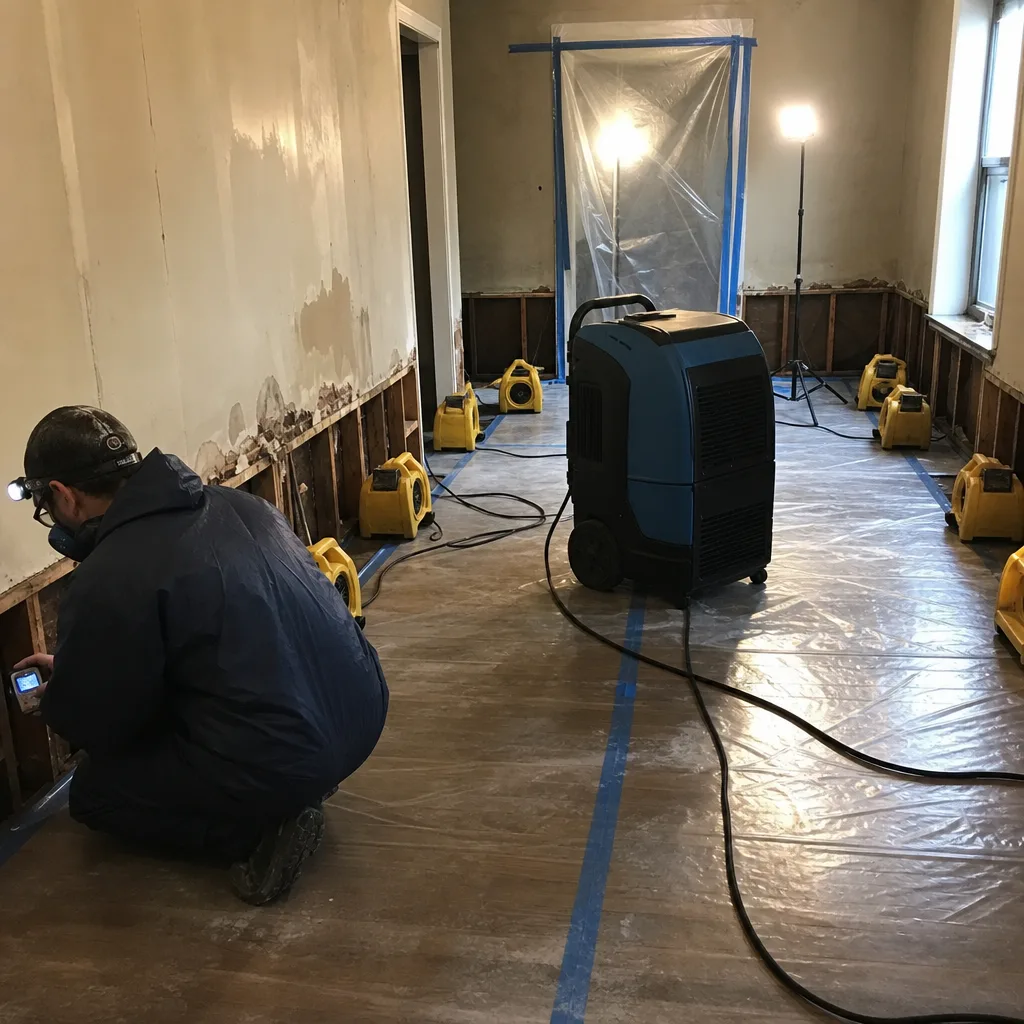
Basement Water Removal
Basement storage and mechanical rooms in the Garment District take water from sewer backups, foundation seepage, and overhead pipe failures. We extract, dry, sanitize, and coordinate with building management on shared spaces.
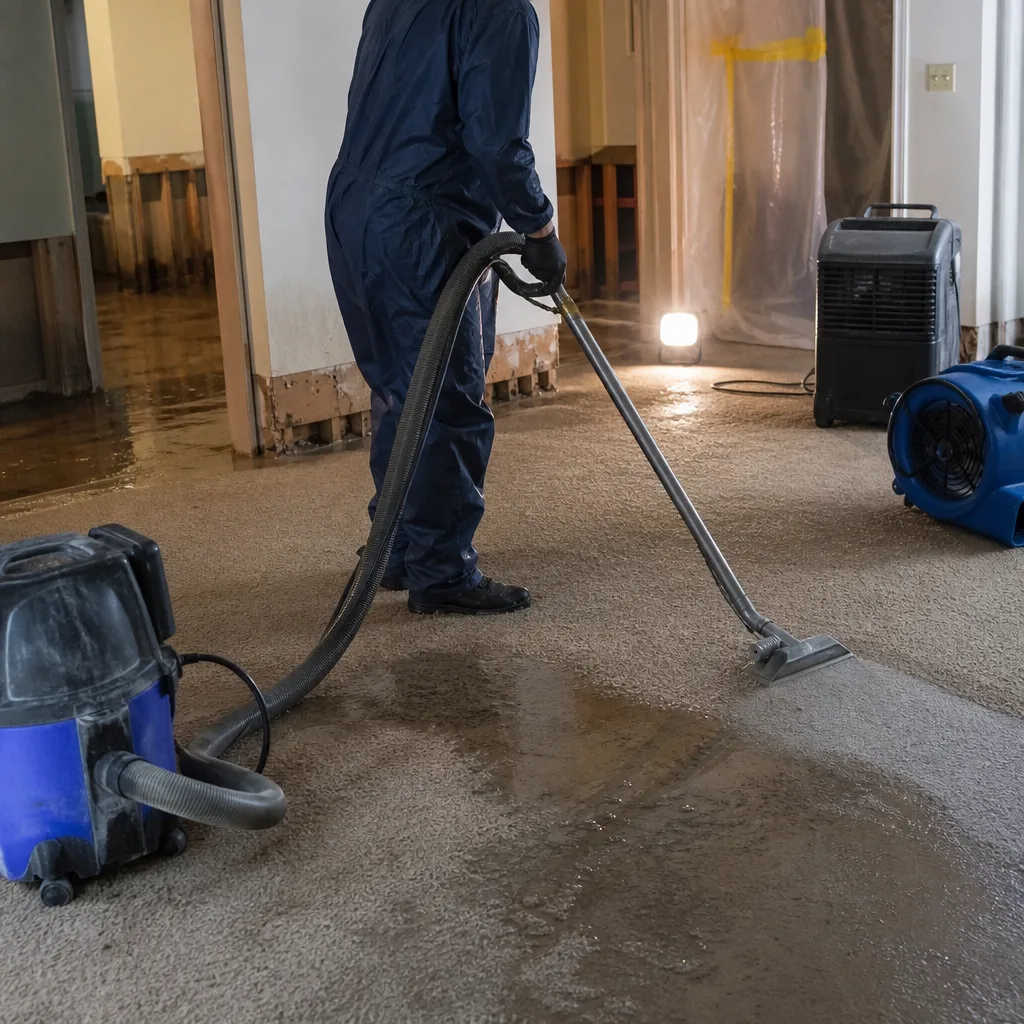
Pack-out & Contents Restoration
In this district, contents are often the larger loss: fabric bolts, pattern archives, finished samples, and designer inventory. We pack out water-affected items, document the chain of custody, dry and restore what can be saved, and store what can’t be returned until the structure is ready.
What happens when you call
- 1
A real person answersNo phone trees - you reach a local pro.
- 2
You get an upfront price rangeHonest numbers before anyone is dispatched.
- 3
A background-checked tech heads outLicensed & insured, dispatched right away.
- 4
You approve before work beginsNothing starts until you say go.
Water Damage Restoration Costs in Garment District, NY
A typical emergency water extraction and structural drying job in Garment District runs $2,800 to $6,500 depending on how many rooms took water and how far it migrated through the loft floor. Burst pipe restoration with drying and rebuild usually lands between $3,500 and $9,000. Basement water removal with sanitization after a sewer backup typically runs $1,800 to $4,000. Pack-out and contents restoration for a showroom with fabric and paper archives is priced by volume and condition, usually starting around $1,500 for a small pack-out and running higher for multi-floor losses.
What moves the number: square footage affected, how many floors water traveled to, whether walls are drywall or original plaster, and how quickly you call. Insurance-covered losses are the most common scenario, and we bill your carrier directly for covered work. For out-of-pocket work, we give you the written scope before any equipment gets plugged in. The free visual inspection is the fastest path to a firm number. Call (917) 924-4221 and we’ll put eyes on it.
We Also Serve Cities Near Garment District
Floodline Restoration Co. of Manhattan runs 24/7 Water Damage Restoration crews into Fairview, Harrison, East Bronx, and Hunts Point, alongside our regular work throughout Garment District. If your building sits just outside the district line, call us anyway. We’re already in the neighborhood.
Serving Garment District, NY - Our Local Coverage Area
We’re based in the Garment District area and know this community well. Use the map below to see our service coverage - if you’re nearby, we can almost certainly help.
Garment District Water Damage Restoration Questions, Answered
How quickly do you respond to a burst pipe in a Garment District loft building, given freight elevator restrictions?
We commit to a 45-minute response to Garment District buildings, freight elevator scheduling included. We call building management while we’re en route and stage equipment at the loading dock, so when the elevator opens, we go up with everything we need. Call (917) 924-4221 and we’ll tell you who’s coming and when.
What happens to fashion samples and pattern archives if water gets into a showroom?
Water can ruin fabric and paper within hours. We treat them as priority contents: pack out what’s threatened, dry and restore what’s salvageable, and document the chain of custody for your insurer. In a Garment District showroom, this is often the most valuable part of the loss, and we handle it with the care it deserves.
Can you restore original cast-iron or galvanized plumbing after a freeze burst, or do we need full replacement?
Often we can repair the failed section, especially if the burst is localized. We assess the pipe’s condition and the building’s overall plumbing state, then give you a straightforward recommendation: repair what’s sound, replace what’s compromised. We won’t sell you a repipe you don’t need.
How do you handle drying when neighboring buildings block airflow in the Garment District?
We don’t rely on natural drying. Dri-Eaz dehumidifiers and XPOWER air movers are placed from the moisture map, with daily readings logged to the dry standard. In the district’s canyon-like building clusters, that mechanical drying is what prevents hidden moisture pockets in plaster walls and under flooring.
Do you work around fashion calendar deadlines, like the week before New York Fashion Week?
Yes. We understand the business calendar in this district. If a loss hits the week before showings, we run all-hands extraction and drying, extended hours, and we coordinate with building management on access windows. The showroom opens on schedule, or as close to it as the damage allows.
How long does structural drying actually take in a pre-war loft building?
Three to five days is typical for most Garment District losses, assuming we start extraction the same visit. Plaster walls and dense building clusters can extend that slightly. We take daily readings and hand you the moisture log before we leave, so you’re not guessing whether it’s dry.
Will insurance cover this, and who deals with my adjuster?
Most water damage in Garment District commercial and residential spaces is covered, minus your deductible. We document everything from the first hour, write line-item estimates, and coordinate directly with your adjuster. You don’t play messenger.
What should I do in the first 30 minutes after I find water in my Garment District space?
Call us at (917) 924-4221 first. If it’s safe, shut off the water supply. Don’t walk through standing water in a commercial building where wiring may be wet, and don’t move heavy fixtures. Take photos if you can. We’ll handle the rest.
Written by Curt Bowman, Owner at Floodline Restoration Co. of Manhattan.