
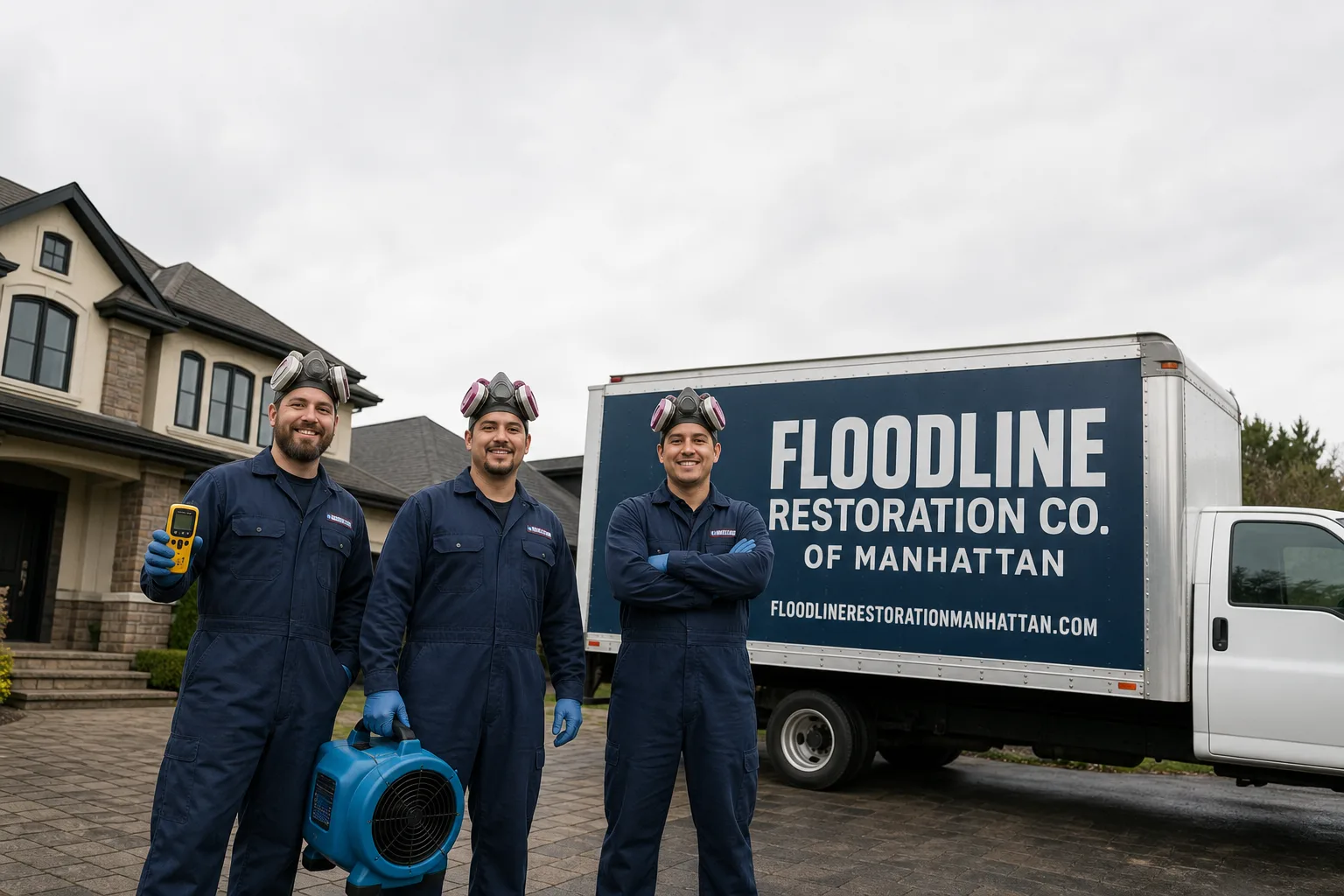
Free visual inspection and a written scope of work before any mitigation begins - photos, moisture readings, and drying logs go in your claim file
The scope we write is the scope we bill. Anything new gets shown to you, in writing, before we touch it.
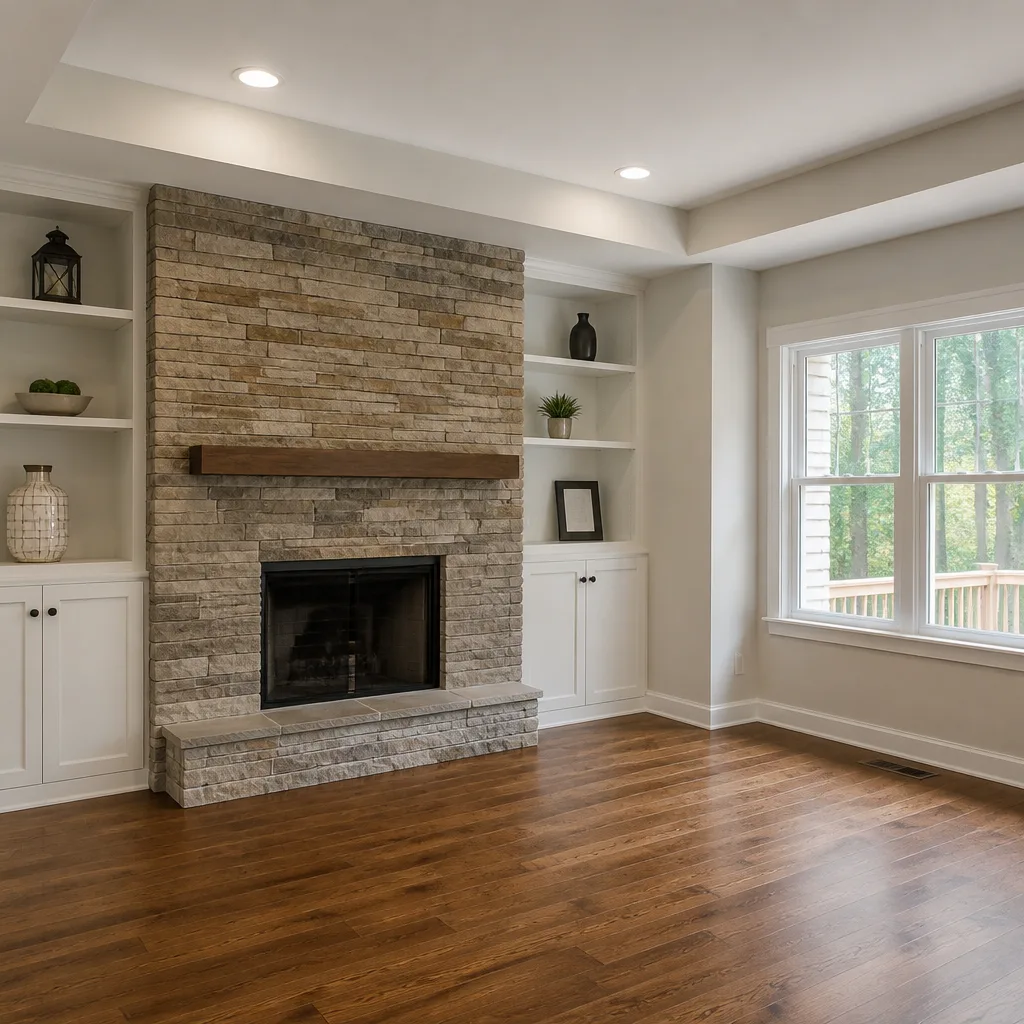
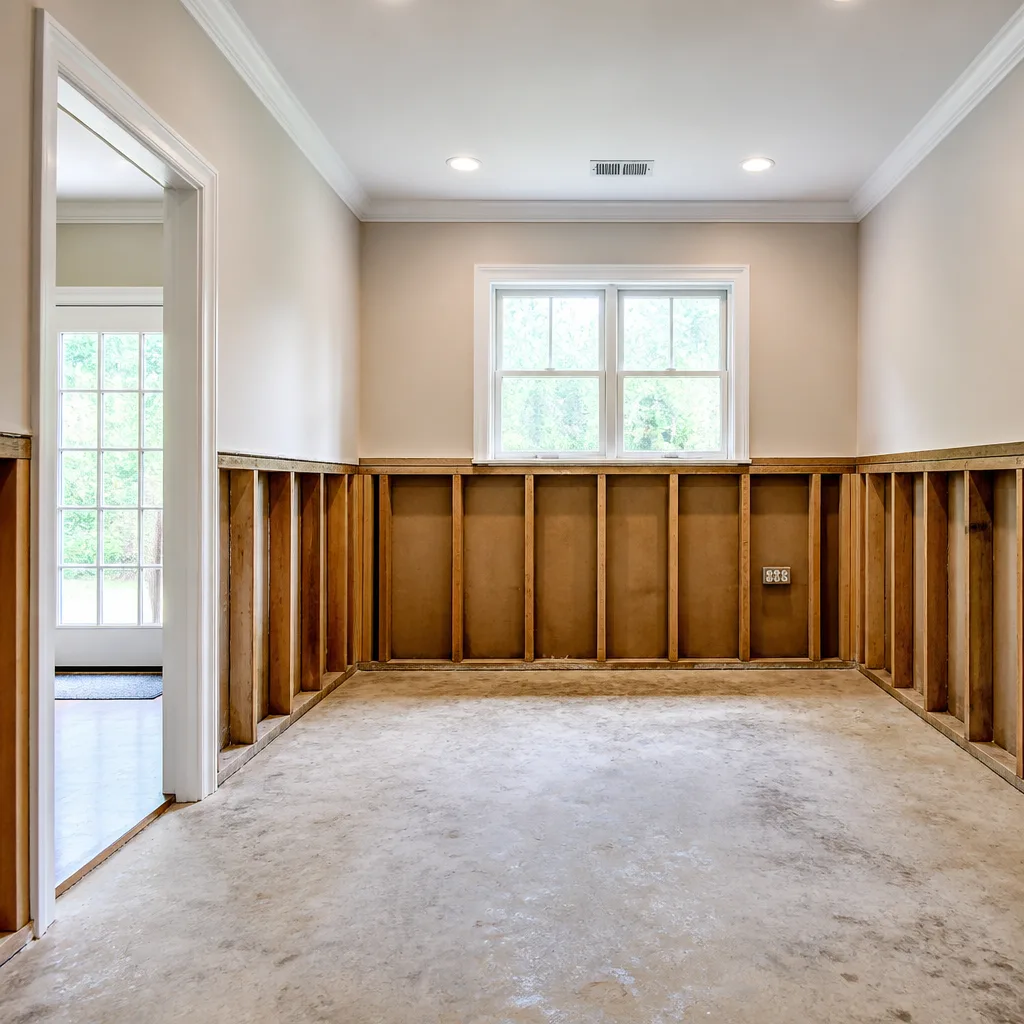

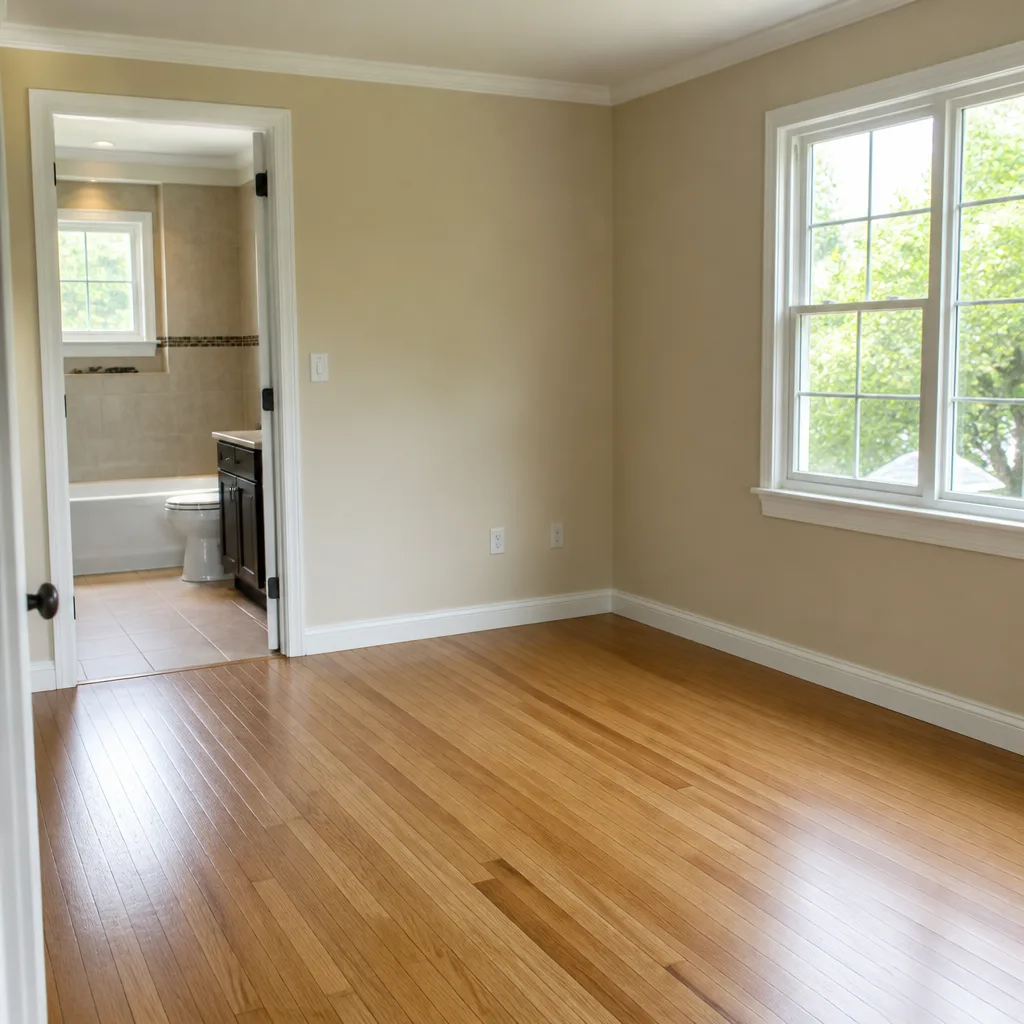

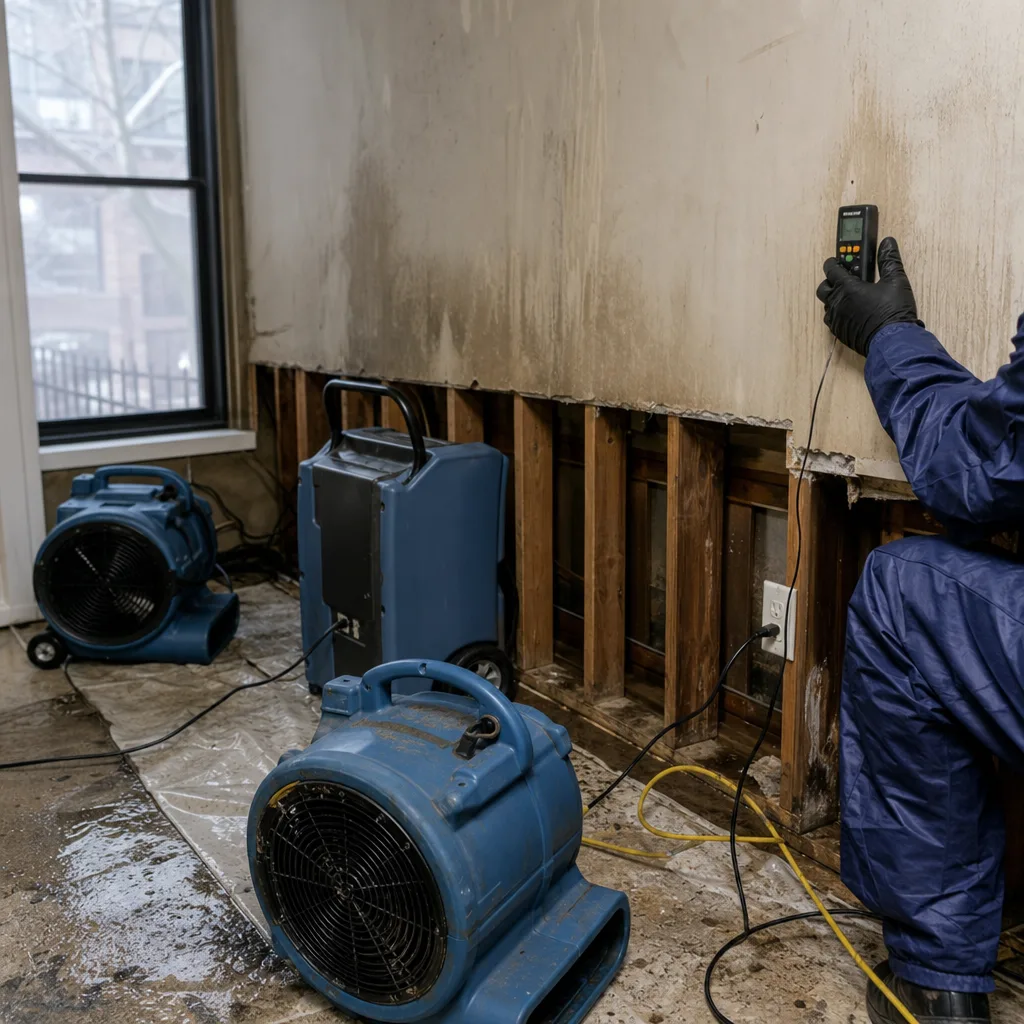 Before
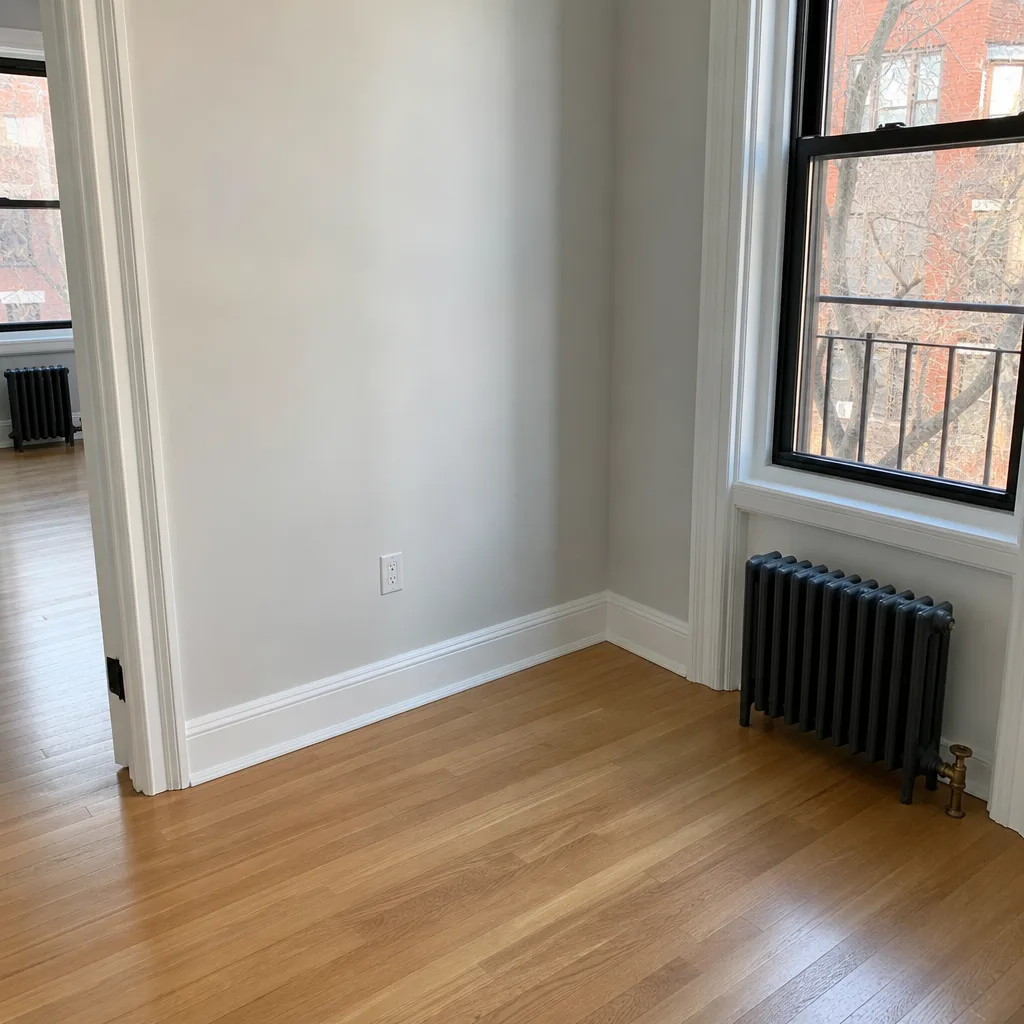 After
After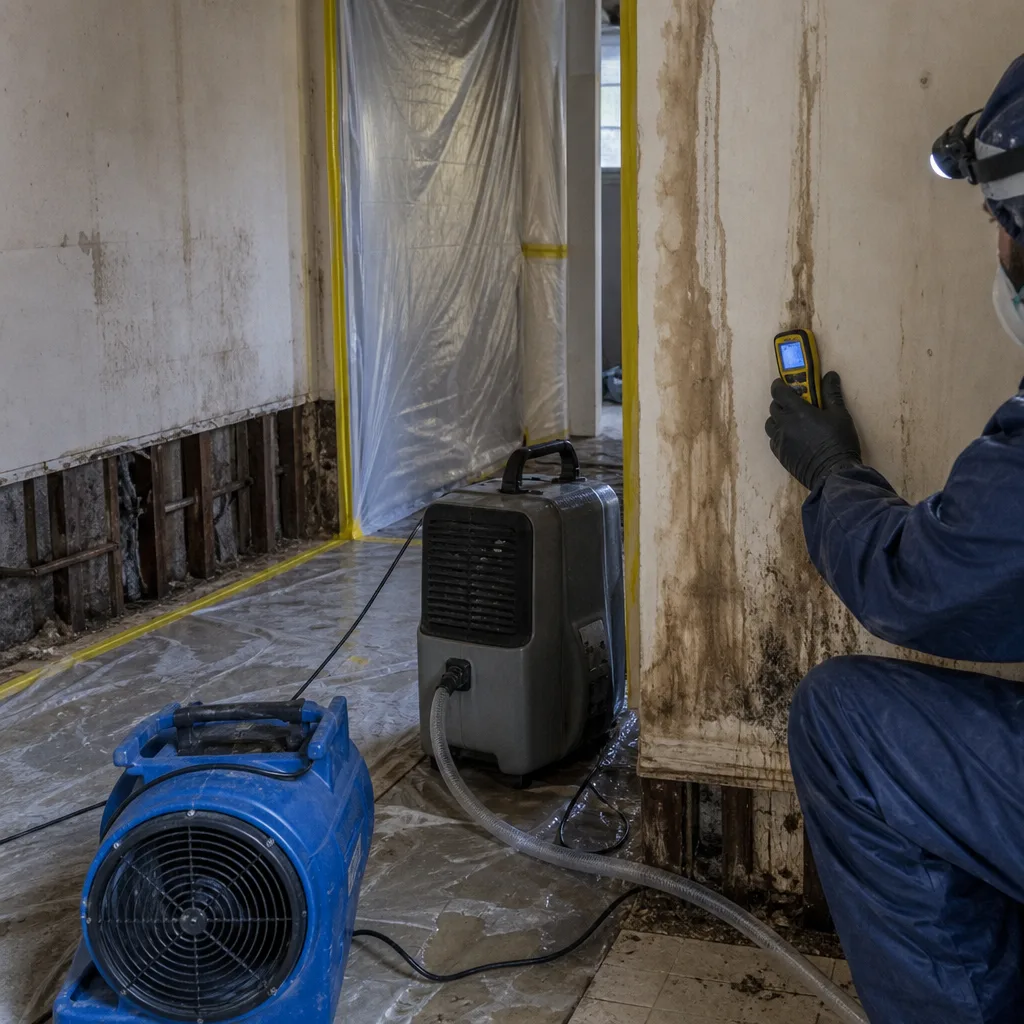 Before
 After
After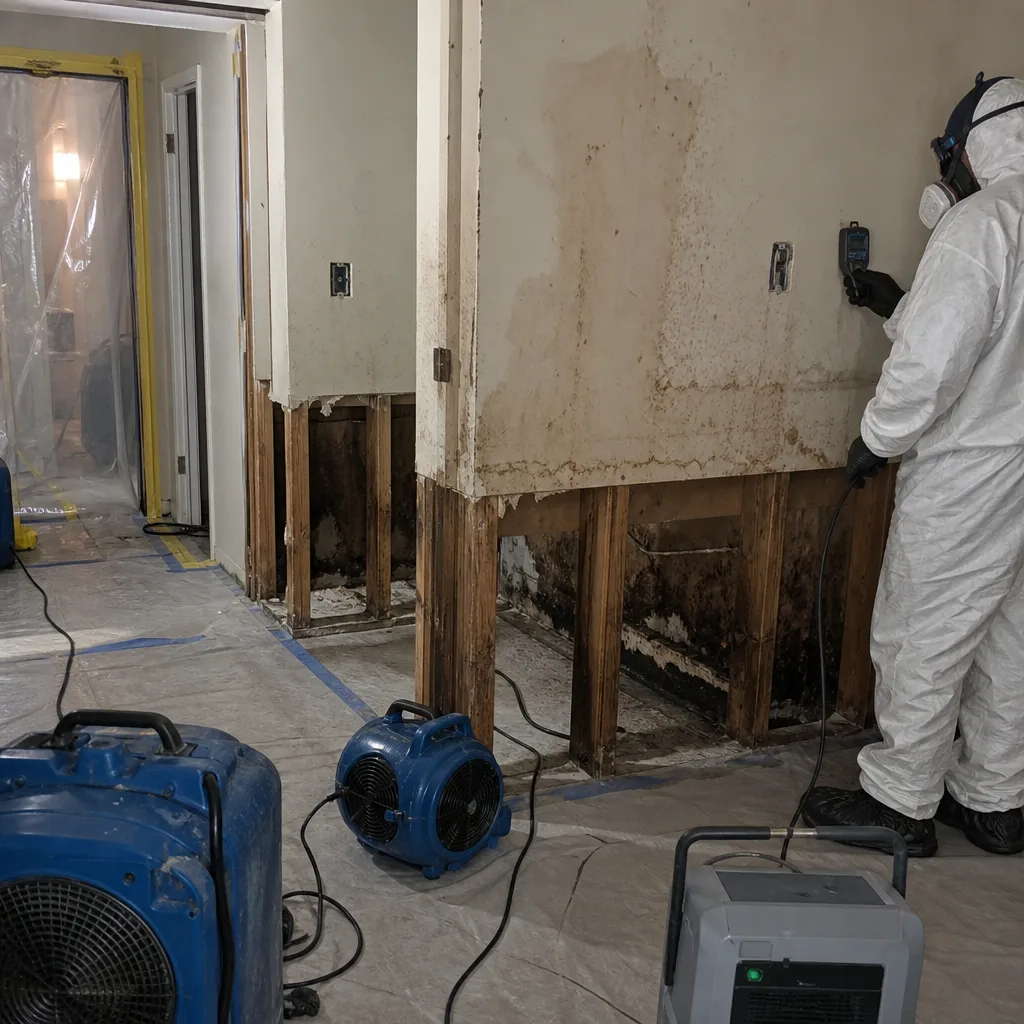 Before
 After
After24/7 Emergency Water Damage Restoration in Getty Square
Water damage restoration in Getty Square typically runs $2,800-$7,500 for a basement flood, and our crews reach most Getty Square properties within 45 minutes of your call. When the Saw Mill River jumps its daylighted channel or a century-old supply line lets go at 2 a.m., you need extraction running the same visit, not a callback in the morning. Call (917) 924-4221 now and a live dispatcher at Floodline Restoration Co. of Manhattan will put a certified crew in motion to Getty Square immediately, with commercial drying equipment on the truck. The first hour after water hits matters more than most homeowners realize: plaster-over-lath walls in these old brick buildings wick moisture upward fast, and mold can establish in wall cavities before the floor even looks dry. We answer live 24/7, every day, and we send background-checked, uniformed technicians who know Getty Square’s buildings and its flood corridor.
Understanding Water Damage Restoration Severity in Getty Square Properties
Water damage restoration starts with categorizing the water itself. Category 1 is clean water from a burst supply line or a failed water heater. Category 2 carries significant contamination, and Category 3, the kind we see when the Saw Mill or Hudson pushes into basements along Main Street and Warburton Avenue, contains sewage, river silt, and bacteria that demand Sewage Cleanup in Getty Square with full antimicrobial treatment and containment. Getty Square’s housing stock makes severity worse. Buildings here run late 19th to early 20th century, mostly 3 to 6 stories of brick masonry with plaster-over-lath walls, original cast-iron or galvanized plumbing, and no vapor barriers. Water trapped inside those thick masonry walls does not dry on its own. Moisture mapping with thermal imaging shows us what the eye cannot: saturation migrating upward through lime plaster, hidden reservoirs behind lath, and cast-iron pipes sweating inside closed cavities. Structural drying on these buildings requires commercial-grade air movers and LGR dehumidifiers run to a documented dry standard, not a box fan and a promise. Category 2 or 3 water in a Getty Square basement is a restoration job, not a cleanup job, and the building age means the clock runs faster, not slower.
Why Getty Square Property Owners Choose Floodline Restoration Co. of Manhattan
- 45-minute response commitment for Getty Square calls. Our dispatchers know the Saw Mill flood corridor and route crews from the New York City office directly to Main Street, Warburton Avenue, and surrounding blocks.
- 24/7 live answer from a real person. No automated system. You talk to a dispatcher at any hour who can send a certified crew to Getty Square immediately.
- IICRC-certified technicians. Our crews hold WRT and ASD certifications, with AMRT for mold-adjacent water losses, and they know Getty Square’s plaster-and-masonry construction.
- Free visual inspection. We assess the damage and give you a written scope before any work starts, so there are no surprises on the bill.
- Direct insurance billing. We work with your carrier from the first photo to the final drying log. You never play messenger.
- One team from extraction to reconstruction. The same Floodline Restoration Co. crew that extracts the water handles daily moisture readings, antimicrobial treatment, and rebuilds what needs rebuilding.
Our Water Damage Restoration Process
Inspection & Assessment
We walk the loss with you, document every affected room, and map moisture with hygrometers and thermal imaging. You get a written scope of work before anything moves forward.
Extraction & Stabilization
Truck-mounted and portable extraction units pull standing water from floors, basements, and wall cavities. We shut down affected circuits and stabilize any compromised areas immediately.
Drying & Dehumidification
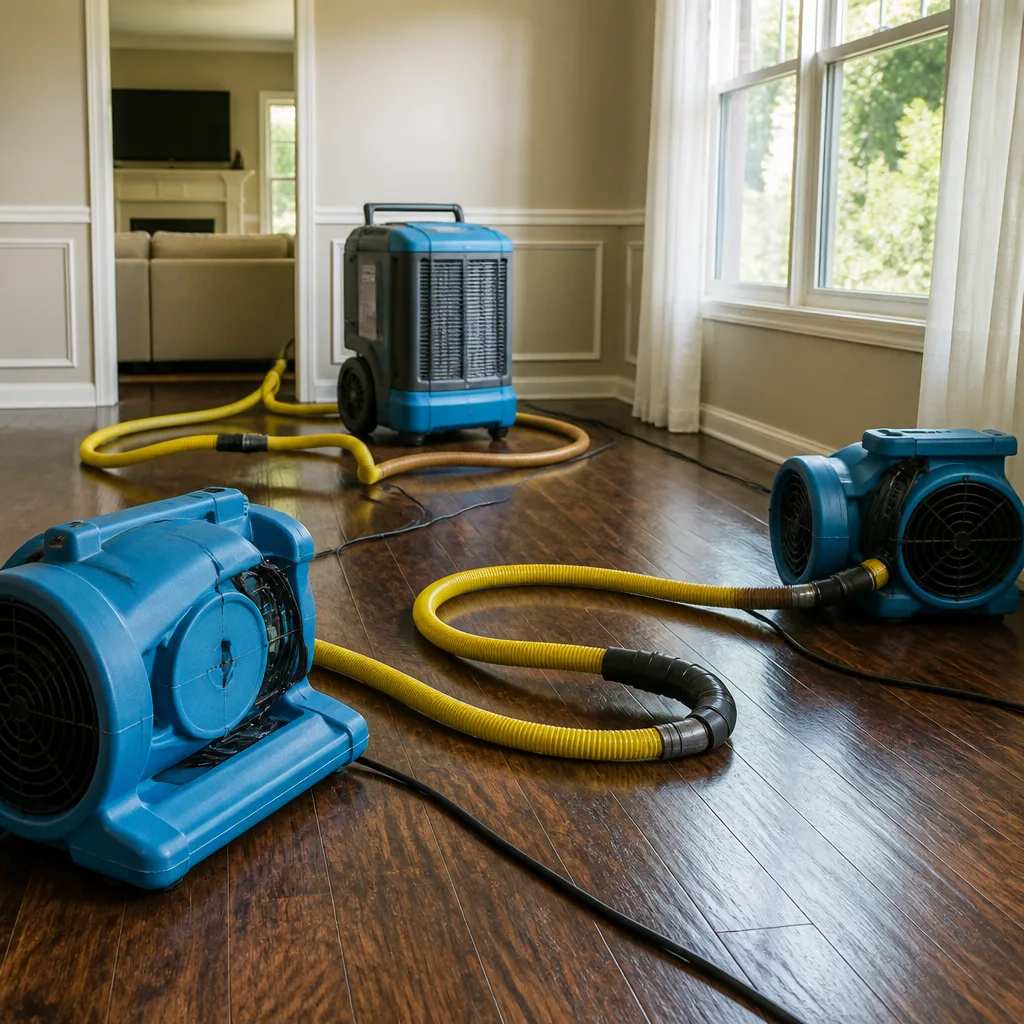
We set Dri-Eaz LGR dehumidifiers and Phoenix or XPOWER air movers in a calculated layout, then take daily moisture readings until the building hits a true dry standard, not a guess.
Cleaning & Sanitization
HEPA filtration scrubs the air while we clean and treat affected surfaces. Category 2 and 3 losses get full antimicrobial treatment with containment barriers in place.
Anti-Microbial & Mold Prevention
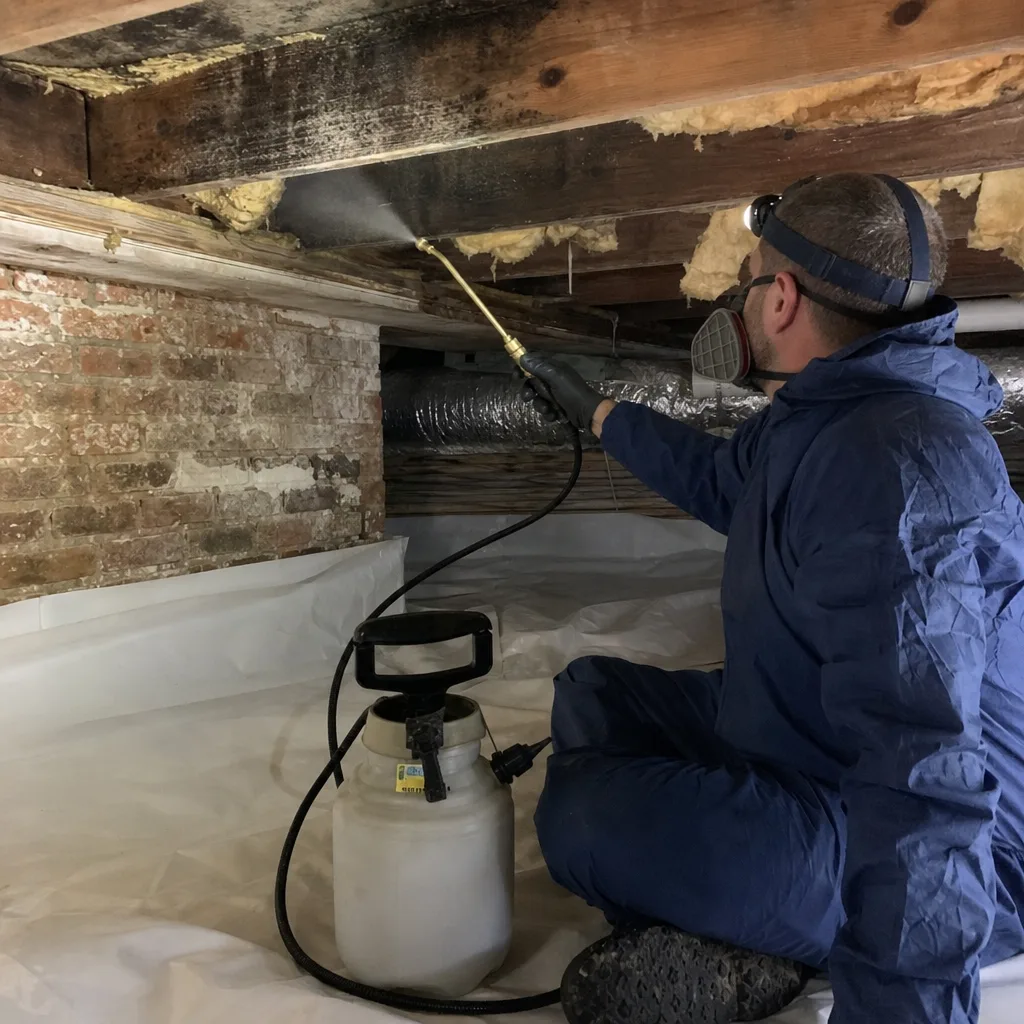
Because Getty Square’s brick buildings trap moisture inside wall cavities, we apply preventive antimicrobial treatments to plaster, lath, and framing before rebuild begins.
Repairs & Restoration
The same Floodline Restoration Co. crew handles reconstruction: drywall, plaster, flooring, trim, and paint. We do not hand the job off to a third party, and the 90-Day Done Right Promise covers the work in writing.
Need Emergency Water Damage Restoration in Getty Square Now?
Crews minutes away, answering live 24 hours a day. The sooner we start, the less it costs.
Working With Your Insurance Company
Floodline Restoration Co. handles the claim paperwork from hour one. We photograph every loss room by room before touching anything, log moisture readings daily, and submit line-item scopes in the format adjusters expect. Direct communication between our team and your carrier means you do not sit on hold or translate restoration terms into insurance terms. Getty Square homes carry specific flood and water damage considerations because of the Saw Mill and Hudson proximity, and we know how to document river-driven intrusion so carriers process it correctly. Our own photo documentation and drying logs become your claim file. When we rebuild, the same documentation supports every line item, so nothing gets lost between mitigation and reconstruction.
What We Provide Your Insurer
- Thorough documentation of the loss
- Photos of all damage, room by room
- Moisture readings and drying logs
- A detailed, line-item scope of work
- Direct coordination with your carrier
Built for Getty Square’s Loss Calendar
Getty Square’s water damage season never really ends, but the shape of it changes. January and February bring deep freezes that split aging cast-iron and galvanized supply lines in unheated basements and along exterior walls of these 3 to 6 story brick buildings. March through May thaw saturates the ground around foundations, and spring rain pushes seepage through original stone and brick foundation walls, a slow leak that becomes a standing-water problem by the time anyone notices. Summer brings the thunderstorms that hit the Saw Mill corridor hardest: the daylighted channel fills fast and backwater from the Hudson compounds it, which is how basement-level spaces along Main Street and Warburton Avenue take on several inches of water before a storm even peaks, making our Storm & Disaster Restoration in Getty Square essential. Fall nor’easters drive wind-blown rain against aging brick and old window openings, and the localized urban flood corridor effect here means tropical remnants funnel water into the daylighted river channel while Hudson backwater pushes upstream at the same time. We plan our Getty Square staffing around this calendar because we know what each season brings.
Water Damage Restoration Across Getty Square’s Neighborhoods
Getty Square is not one building type. It is a dense grid of late-19th and early-20th-century mixed-use brick blocks clustered around the Saw Mill daylighting, and each corridor has its own loss pattern. Along Main Street, the old commercial blocks sit lowest, and we commonly respond to basement flooding in storefront buildings where the river channel surges before anyone has time to move inventory. Warburton Avenue runs closer to the Hudson, and we see backwater intrusion there when a nor’easter holds Hudson water upstream while rain has nowhere to drain. The residential blocks off South Broadway and near St. Mary’s Church tend to be rowhouse-scale brick with smaller basements: burst supply lines and water heater failures are the usual calls, but those plaster-over-lath interiors still dry slowly and hide mold well. And the blocks around Chicken Island, where the old mill infrastructure once stood, still hold water after heavy rain because the land was filled long ago. Water Damage Restoration calls in Getty Square are rarely one cause, and that is why we send crews who know the block, not just the address. For property owners across this area, Water Damage Restoration in Getty Square comes down to response speed and local knowledge.
Specialized Water Damage Restoration Services We Offer in Getty Square
Emergency Water Extraction
Standing water in a Getty Square basement sits against brick and lime mortar that soak it up like a wick. We run truck-mounted and portable extraction units to pull water fast, then set containment and drying equipment the same visit. For Saw Mill surges, crews stage extraction gear at the curb before the storm peaks because the channel fills faster than most owners expect.
Structural Drying & Dehumidification
Thick masonry walls do not dry by airing out the room. We calculate a drying layout with Dri-Eaz LGR dehumidifiers, Phoenix, and XPOWER air movers, then log daily moisture readings until the walls, joists, and subfloor hit an industry dry standard. In Getty Square’s old brick buildings, this usually means several days of active drying, not one fan overnight.
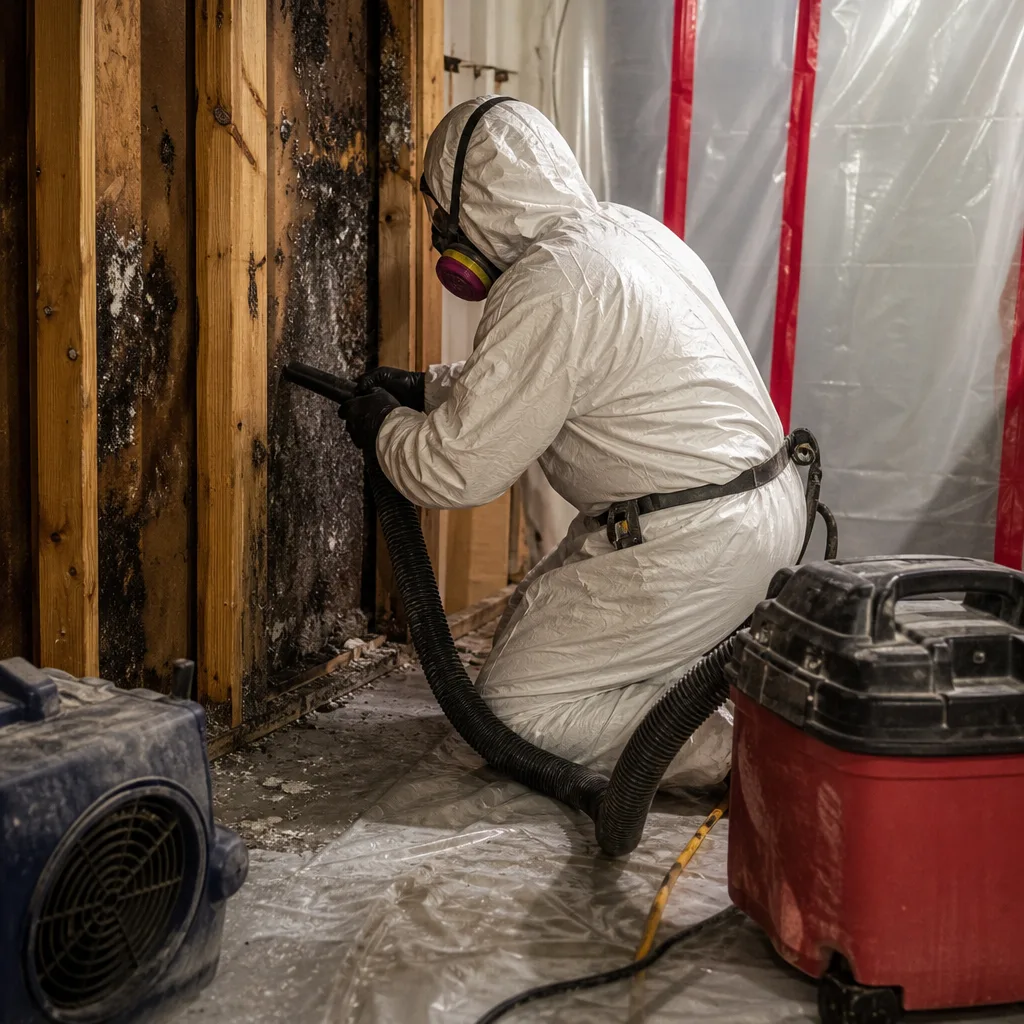
Flood Cleanup
River water from the Saw Mill or Hudson carries silt, sewage, and contaminants that classify it as Category 3, requiring Fire & Smoke Damage Restoration in Getty Square-level containment protocols. We remove debris, pump out the water, pressure-clean affected surfaces, and apply antimicrobial treatment with containment barriers in place. You get a sanitized space, not just a drained one.
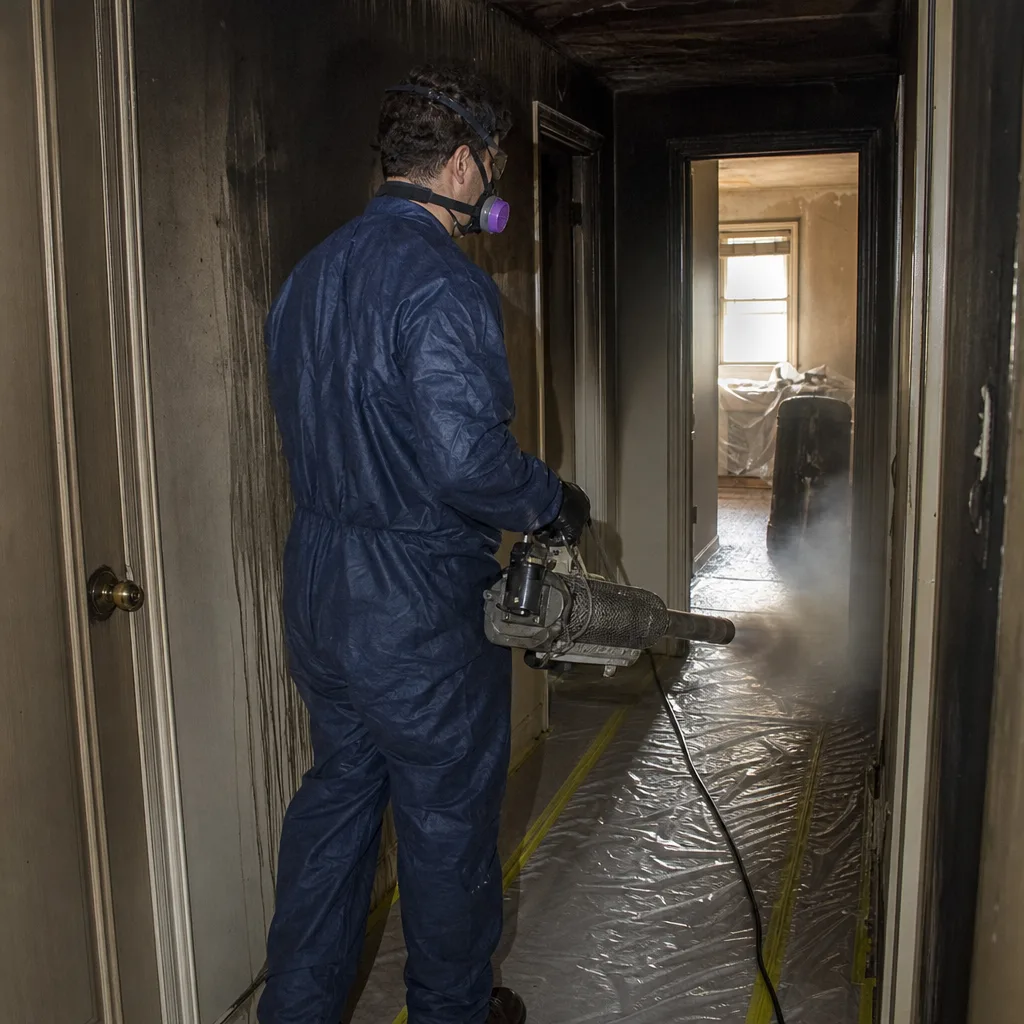
Burst Pipe Restoration
Deep freezes split the original cast-iron and galvanized lines common in Getty Square housing stock. We locate the break, stop the source, extract the released water, and dry the affected cavities. Because these old buildings lack vapor barriers, we pay close attention to what the water soaked before it pooled.
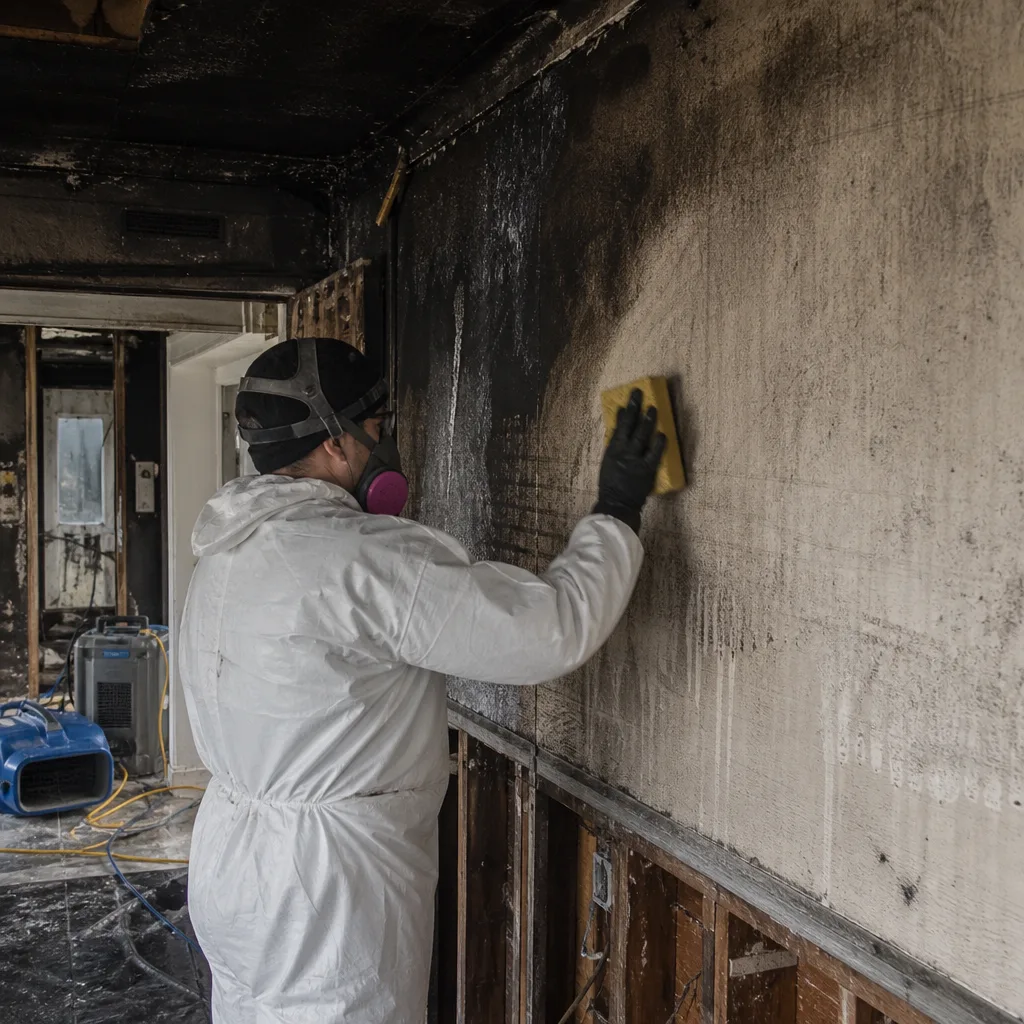
Basement Water Removal
Basements along Main Street and Warburton Avenue take on water from two directions: the Saw Mill channel rising and Hudson backwater pushing in. We pump it out, map the moisture in the foundation walls and floor, and set drying equipment sized for brick and masonry. The goal is a basement that is dry to the core, not dry on the surface.
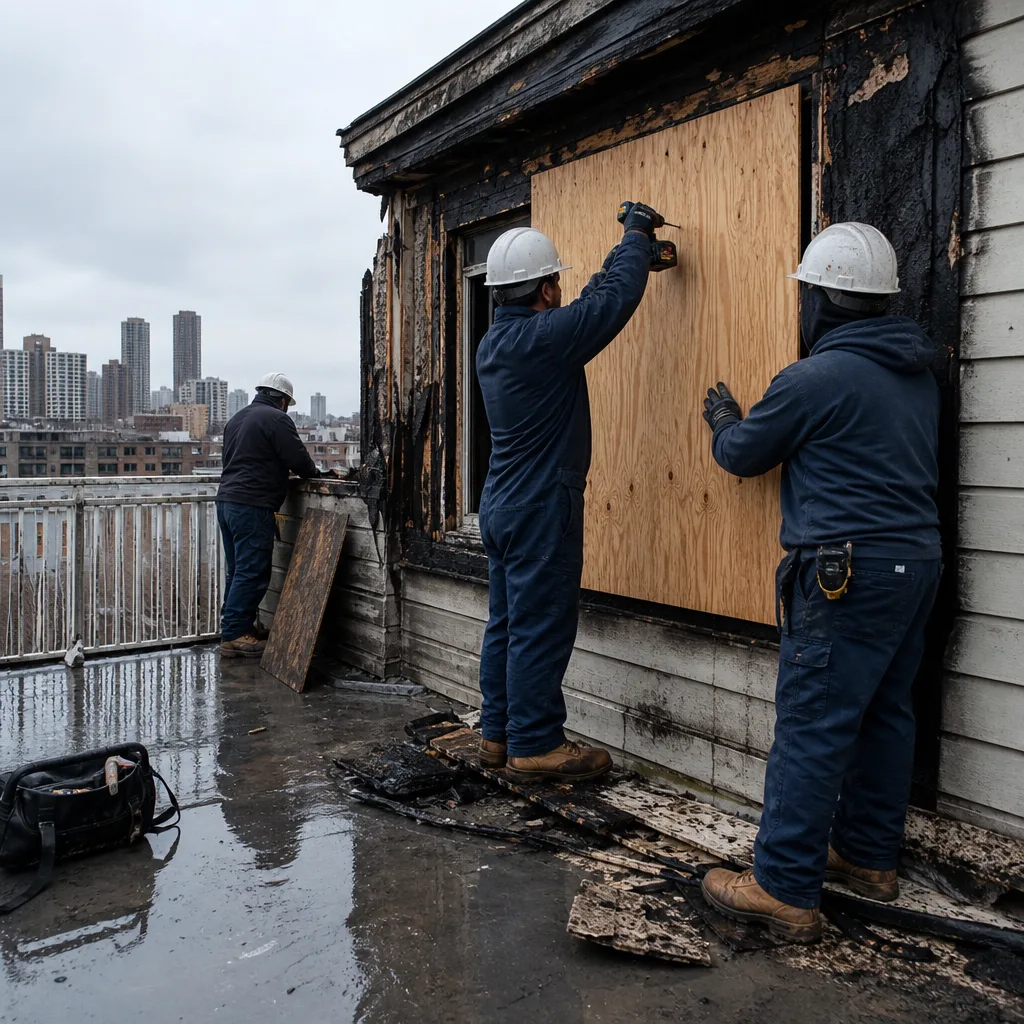
What happens when you call
- 1
A real person answersNo phone trees - you reach a local pro.
- 2
You get an upfront price rangeHonest numbers before anyone is dispatched.
- 3
A background-checked tech heads outLicensed & insured, dispatched right away.
- 4
You approve before work beginsNothing starts until you say go.
Water Damage Restoration Costs in Getty Square, NY
Water damage restoration costs in Getty Square run in real ranges, and you deserve to see them before you call. A straightforward basement water removal and drying job typically falls between $2,800 and $6,500, depending on square footage, water category, and how long the water sat. Burst pipe restoration with wall cavity drying usually runs $3,200-$7,000 in these plaster-and-masonry buildings because drying takes longer than in modern framed construction. Flood cleanup from a Saw Mill or Hudson surge commonly reaches $6,000-$14,000 when Category 3 water, containment, antimicrobial treatment, and structural drying are all necessary. The factors that move the price: water category, affected square footage, whether wall cavity access or demolition is needed, and how long the water stood before extraction started. We begin with a free visual inspection and give you a written scope before work starts, so there is never a surprise on the bill. Call (917) 924-4221 and we will help you understand what your specific loss will cost before you commit to anything.
We Also Serve Cities Near Getty Square
Floodline Restoration Co. of Manhattan serves Getty Square and the surrounding communities, including Fairview, Harrison, East Bronx, and Hunts Point. If your property sits just outside the immediate square, call us and we will route a crew from our New York City dispatch office to you the same way.
Serving Getty Square, NY - Our Local Coverage Area
We’re based in the Getty Square area and know this community well. Use the map below to see our service coverage - if you’re nearby, we can almost certainly help.
Getty Square Water Damage Restoration Questions, Answered
How quickly can water from the Saw Mill River flood our basement on Main Street after heavy rain starts?
The daylighted Saw Mill channel fills faster than most property owners expect, and basements along Main Street can take on several inches of water before the storm peaks. In the right conditions, you may have less than an hour from heavy rain onset to standing water, which is why Getty Square crews stage extraction equipment at the curb when a major storm is forecast. Call us at the first sign of water, not after the storm passes. Call (917) 924-4221 for immediate dispatch.
What category of water is typical in Getty Square basement floods from the Saw Mill or Hudson?
Category 3, almost always. The Saw Mill carries urban runoff, roadside contaminants, and, during surges, sewage overflows. Hudson backwater adds another layer of contamination. This water requires full extraction, debris removal, antimicrobial treatment, and containment, not a simple pump-out and fan-dry. A Category 3 loss in one of these old brick basements is a restoration and sanitization job, and we handle it with the correct protocols and certifications.
Why does mold spread faster in Getty Square’s old brick buildings than in newer construction?
The late 19th- and early 20th-century buildings here have plaster-over-lath walls, thick brick masonry, and no vapor barriers. Water soaks into the lime plaster and the brick itself, and without vapor barriers there is nothing to slow the migration of moisture through the wall assembly. That trapped moisture feeds mold colonies inside cavities, often invisible from the room side. In Getty Square, mold can establish within 48 to 72 hours of a water event because the wall system holds water so effectively. Moisture mapping and daily drying logs are essential here, not optional.
Do we need a permit for water damage restoration that involves structural drying or wall removal in Getty Square?
Most extraction and drying work does not require a permit, but any wall removal, structural alteration, or rebuild work in Getty Square may trigger local building department review given the age of the building stock and the mixed-use status of many Main Street and Warburton Avenue properties. Floodline Restoration Co. pulls permits when needed and handles the paperwork with the city directly, so you do not stand in line at the building department. We tell you before work starts if a permit will be required.
How do you prevent re-wetting after extraction when another storm passes through Getty Square?
Two ways. First, we dry and stabilize the space to a verified standard, which means the masonry and framing are not still absorbing water when the next storm hits. Second, we check ground-floor entryways, doors, and any post-storm track or panel damage as part of our scope. Wind-driven rain through a compromised entryway re-wets a basement that we just dried, which is how property owners end up with a second emergency call. We include that check before we leave, and our 90-Day Done Right Promise backs the work in writing.
How quickly can you actually get to a Getty Square property?
Our commitment is 45 minutes from your call to a crew arriving at your Getty Square address. We dispatch from the New York City office with equipment already loaded, and because we know the Main Street and Warburton Avenue corridors and the Saw Mill flood pattern, we do not waste time navigating. For pre-storm mobilization during nor’easters or heavy rain forecasts, we position crews in Getty Square before the water rises. Call (917) 924-4221 and ask for current response time.
Can we stay in the home during water damage restoration in Getty Square?
It depends on the water category, the extent of damage, and where the affected areas sit relative to your living space. A Category 1 burst pipe in a finished basement may allow you to stay upstairs while we work below. A Category 3 flood from the Saw Mill that affected your main level or contaminated your HVAC system usually requires temporary relocation at least until containment comes down and air scrubbing is complete. We give you a straight answer during the inspection, and we document everything for your carrier either way.
What certifications do your water damage restoration technicians hold?
Our technicians are certified to IICRC, RIA, and IFA standards, with WRT and ASD certifications for water damage and structural drying, plus AMRT for mold-adjacent losses. They are background-checked and uniformed, and they train on the equipment we actually run, Dri-Eaz, Phoenix, XPOWER, and B-Air. In Getty Square’s old brick buildings, that training matters more than it does in a modern sheetrock house.
Written by Curt Bowman, Owner at Floodline Restoration Co. of Manhattan, serving Getty Square and the surrounding communities with water damage restoration, flood cleanup, and structural drying.