
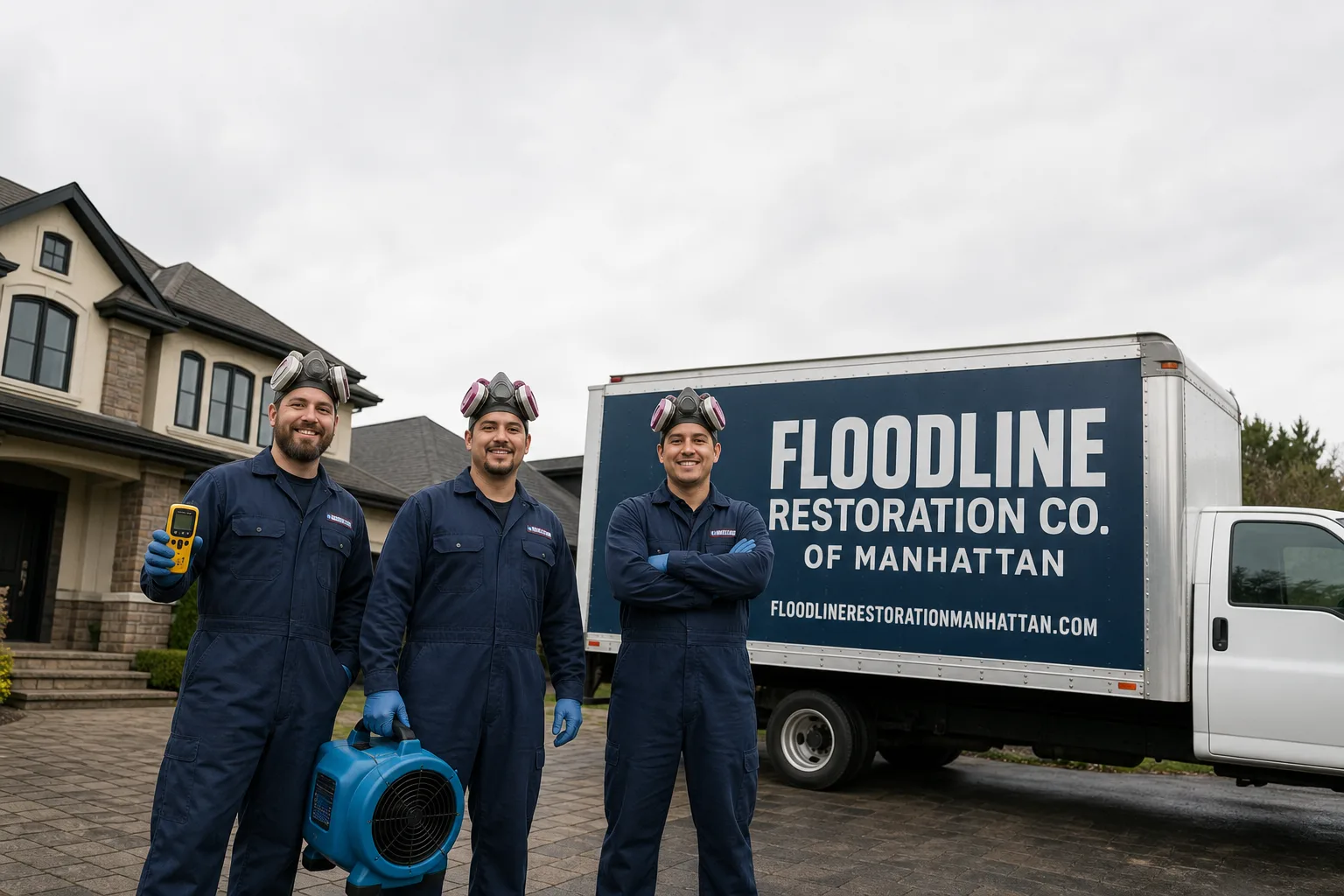
Free visual inspection and a written scope of work before any mitigation begins - photos, moisture readings, and drying logs go in your claim file
The scope we write is the scope we bill. Anything new gets shown to you, in writing, before we touch it.






 Before
 After
After Before
 After
After Before
 After
After24/7 Emergency Water Damage Restoration in Millwood
Water damage restoration in Millwood typically costs between $2,200 and $6,800 for a basement flood, and the first 24 to 48 hours decide whether you’re looking at drying or a full mold remediation. That’s the window where floodwater inside cool, damp stone basements moves from nuisance to structural threat, especially in Millwood where the terrain drains slowly and the tree canopy keeps homes shaded. We answer the phone with a live dispatcher at any hour, night or day. Call (917) 924-4221 and a uniformed, background-checked crew can be on site in Millwood within 45 minutes, with a free visual inspection and the extraction equipment already rolling.
Understanding Water Damage Restoration Severity in Millwood Properties
Water damage is classified by contamination level, and that classification dictates everything about how a Millwood job gets handled. Category 1 water is clean, straight from a supply line or a failed water heater. It carries no immediate health risk, but waiting lets it degrade to Category 2, which is gray water with soaps, detergents, or filtered groundwater, the kind that pools around a washing machine overflow or a failed sump. Category 3 is black water, sewage, or floodwater that has picked up soil and bacteria, and it requires full containment, antimicrobial treatment, and often removal of porous materials like drywall and carpet pad. Most Millwood basements fall into the Category 1 or 2 range when a supply line bursts or a French drain backs up during a nor’easter, but any standing water left beyond 48 hours invites the same microbial growth regardless of category. We use moisture mapping across the entire affected area, not just the visible puddle, because water travels along slab edges, behind baseboards, and up the wicking surfaces of fieldstone and poured concrete. In split-levels and ranches built from the 1950s through the 1970s, the floor assemblies trap humidity under vinyl plank and laminate, so a floor that feels dry to the touch can still be reading 22% moisture content underneath.
Why Millwood Property Owners Choose Floodline Restoration Co. of Manhattan
- 45-minute response commitment. Millwood jobs get a crew dispatched from the metro office the moment the call ends. We don’t schedule a window, we give you a time and hit it.
- 24/7 live answer, always a person. Two in the morning, a holiday, the middle of a nor’easter. A dispatcher picks up. No menu tree, no voicemail, no call center script.
- IICRC-certified technicians. Our crews hold WRT and ASD certifications and train to RIA and IFA standards. We carry Dri-Eaz and Phoenix equipment calibrated for the tight wall cavities and fieldstone foundations common in Millwood.
- Free visual inspection, no obligation. We come out, read the moisture, tell you straight what needs to happen, and hand you a written scope before any work begins. No pressure, no inflated estimate you have to haggle down.
- Direct insurance billing. We work with your carrier, send the adjuster our moisture logs, photos, and line-item scope, and bill them directly. You’re never the messenger between two desks.
- One team, first extraction to finished rebuild. The same certified crew that reads the moisture map on day one handles daily readings, dries the structure, and rebuilds what needs rebuilding. No mid-job handoff to a subcontractor you’ve never met.
Our Water Damage Restoration Process
Inspection & Assessment
We arrive, walk the full affected area with thermal imaging and penetrating moisture meters, and map every reading. In Millwood basements with fieldstone walls, we check behind the masonry face and along the sill plate because that’s where hidden water travels.
Extraction / Stabilization
Standing water comes out first. We use truck-mounted or portable extraction units, including the Dri-Eaz HVE 3000 for tight clearances behind furnaces and water heaters in older Millwood mechanical rooms.
Drying & Dehumidification
Phoenix LGR 7000 dehumidifiers and XPOWER air movers get placed on a calculated layout. In a Millwood split-level, that layout accounts for dead air spaces under stairwells and the low-clearance crawlspace pockets where joists meet the slab.
Cleaning & Sanitization
We clean affected surfaces and apply antimicrobial treatments only where tested water category and material type call for it, always within DEP watershed rules for Millwood. No blanket biocide spraying, no shortcuts.
Structural Drying Verification
Daily moisture readings get logged against the dry standard for each material. You get the log. Your adjuster gets the log. We don’t call it dry until the numbers say it’s dry, not when the air feels less humid.
Repairs & Restoration
Once the structure meets the dry standard, our rebuild team replaces what cannot be saved. In Millwood homes, that often means new drywall on studs, baseboards, flooring, and occasionally joist repair where old plank framing took on water.
Need Emergency Water Damage Restoration in Millwood Now?
Crews minutes away, answering live 24 hours a day. The sooner we start, the less it costs.
Working With Your Insurance Company
Most water damage claims in Millwood fall under a standard homeowners policy if the cause was sudden and accidental, like a burst supply line or a failed water heater. Gradual seepage through a fieldstone foundation usually is not covered, but the repair work after a covered event is. We document from the first hour: photos of every affected room, moisture readings taken at the start and daily until dry, and a line-item scope of work written in the estimating language adjusters expect. We communicate directly with your carrier’s adjuster, including a walkthrough if the adjuster comes out to Millwood, so you are not left interpreting exclusions or arguing about the drying standard. Curt Bowman built Floodline Restoration Co. of Manhattan in 2010 with a simple principle: the homeowner should never become the project manager between a mitigation crew and an insurance desk. We bill the carrier directly whenever coverage applies, and your out-of-pocket portion is agreed in writing before we start.
What We Provide Your Insurer
- Thorough documentation of the loss
- Photos of all damage, room by room
- Moisture readings and drying logs
- A detailed, line-item scope of work
- Direct coordination with your carrier
Built for Millwood’s Loss Calendar
Millwood’s water damage season runs year-round, but the causes shift with the weather. January and February bring deep freezes that split copper supply lines in unheated crawlspaces and exterior wall cavities, the kind of break that pours water for hours before anyone notices a ceiling stain on a colonial off Millwood Road. March and April thaw the snowpack on the hillsides around the Kensico Reservoir, and the shallow bedrock under Millwood’s lots pushes groundwater toward foundation walls, filling basements with Category 2 seepage. Summer thunderstorms stall over the Hudson Valley and drop two to four inches in an afternoon, overwhelming the older drainage systems along Route 100 and flooding garage slabs and walkout basements. Fall brings nor’easters and the remnants of tropical storms. The dense canopy of mature oaks and tulip poplars hangs over residential lots. A single branch can puncture a roof deck, and the rain becomes an interior flood within minutes. We plan for this calendar. The crews who answer a Millwood call know what month it is and what that month usually means.
Water Damage Restoration Across Millwood’s Neighborhoods
Millwood is a hamlet shaped like a long corridor, and the building stock shifts along that corridor in ways that matter for restoration. The Route 100 and Millwood Road stretch carries the older mid-century colonials and ranches with fieldstone basements and single-car garages, the homes most likely to have original plank framing and slow-draining foundation slabs. The side streets running east toward the Kensico Reservoir include larger parcels with older farmhouses and split-levels, many of them on slopes that direct surface water toward the back foundation. The neighborhoods west of Route 133 sit on tighter lots, with townhome-style units and shared wall cavities where Category 3 water can wick into a neighbor’s drywall before anyone sees a stain. The roads around Seven Bridges and the reservoir-adjacent lanes have the oldest trees and the most storm-related roof penetrations. We have worked each of these areas enough to know the difference between a fieldstone basement near the reservoir that will take three days to dry and a poured-concrete split-level west of Route 100 that might be dry in two. That local knowledge changes where we place equipment and how aggressively we chase the readings.
Specialized Water Damage Restoration Services We Offer in Millwood
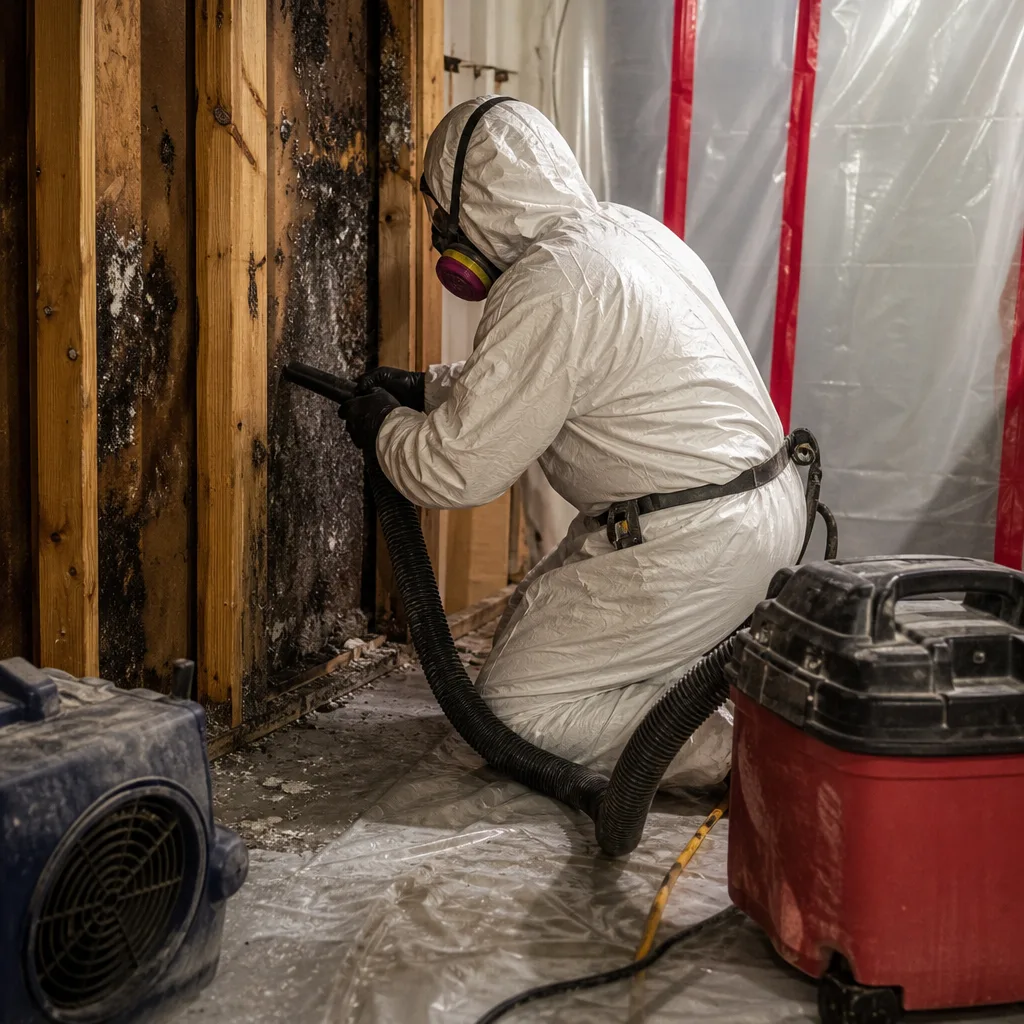
Basement Water Removal
Basement water removal in Millwood usually starts with us reading the water category and then setting up containment if needed. In fieldstone basements without floor drains, we pump extracted water into holding tanks and log every gallon for the DEP-mandated discharge report that this watershed requires. No other restoration company we’ve seen in Westchester treats that step as seriously, and it matters in this hamlet specifically. A typical basement pump-out here runs $1,400 to $3,200 depending on square footage and how far the water has wicked up the drywall.
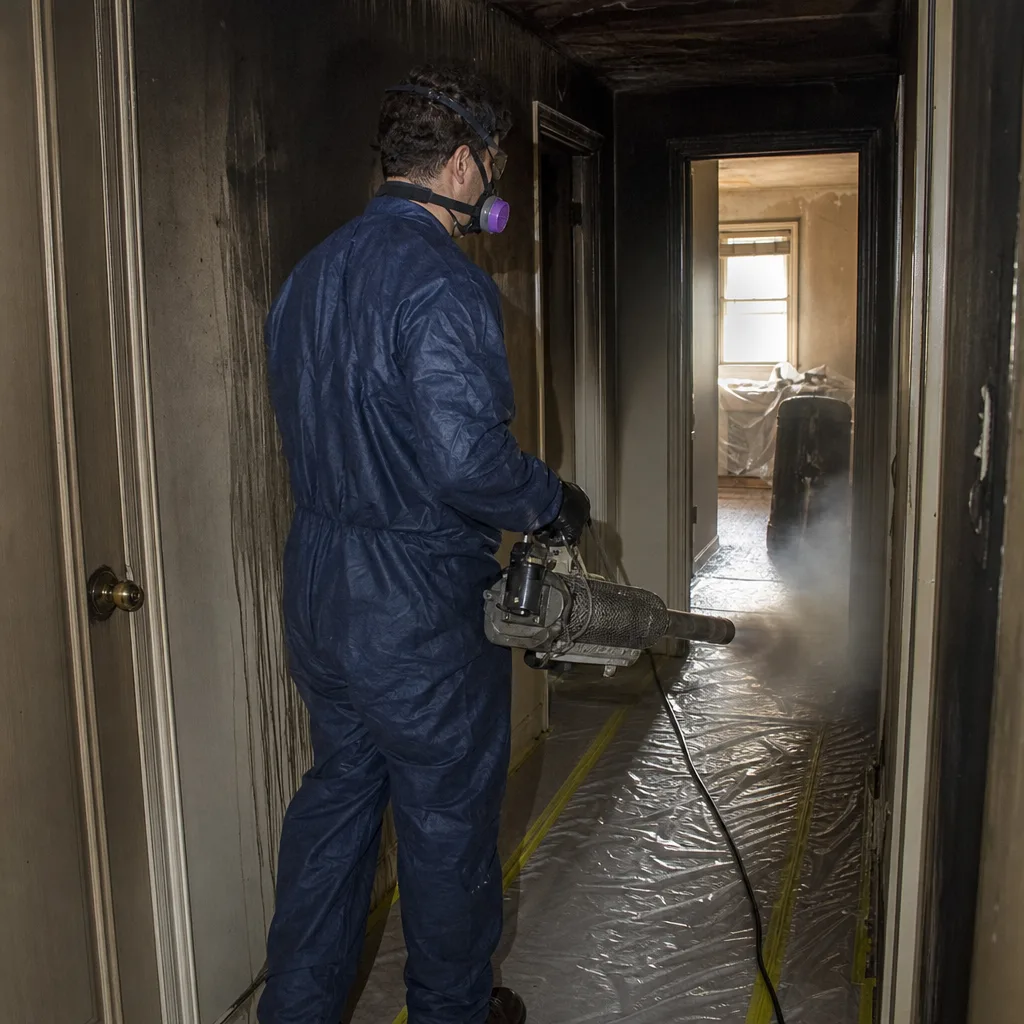
Burst Pipe Restoration
A burst copper supply line behind a Millwood furnace or in a first-floor wall cavity puts out several gallons per minute. By the time you see the ceiling stain on a first-floor split-level, the joist bays below are already saturated. We do burst pipe restoration as a single continuous job, extraction first, then drying, then any drywall or flooring replacement, all by the same Floodline crew. Millwood burst pipe jobs run $2,800 to $6,500 when a ceiling or finished basement wall is opened.
Structural Drying & Dehumidification
Structural drying is where the science lives. We run Phoenix LGR 7000 dehumidifiers and XPOWER air movers on calculated layouts, not a fan farm pointed at the wet spot. In Millwood split-levels, the lower-floor slab traps humidity under vinyl plank and laminate; without positive pressure and proper dehumidification, the floor crowns weeks after the air feels dry. We leave daily moisture readings with the homeowner and the carrier, and we run the equipment until the dry standard is met, not until the rental clock runs out.
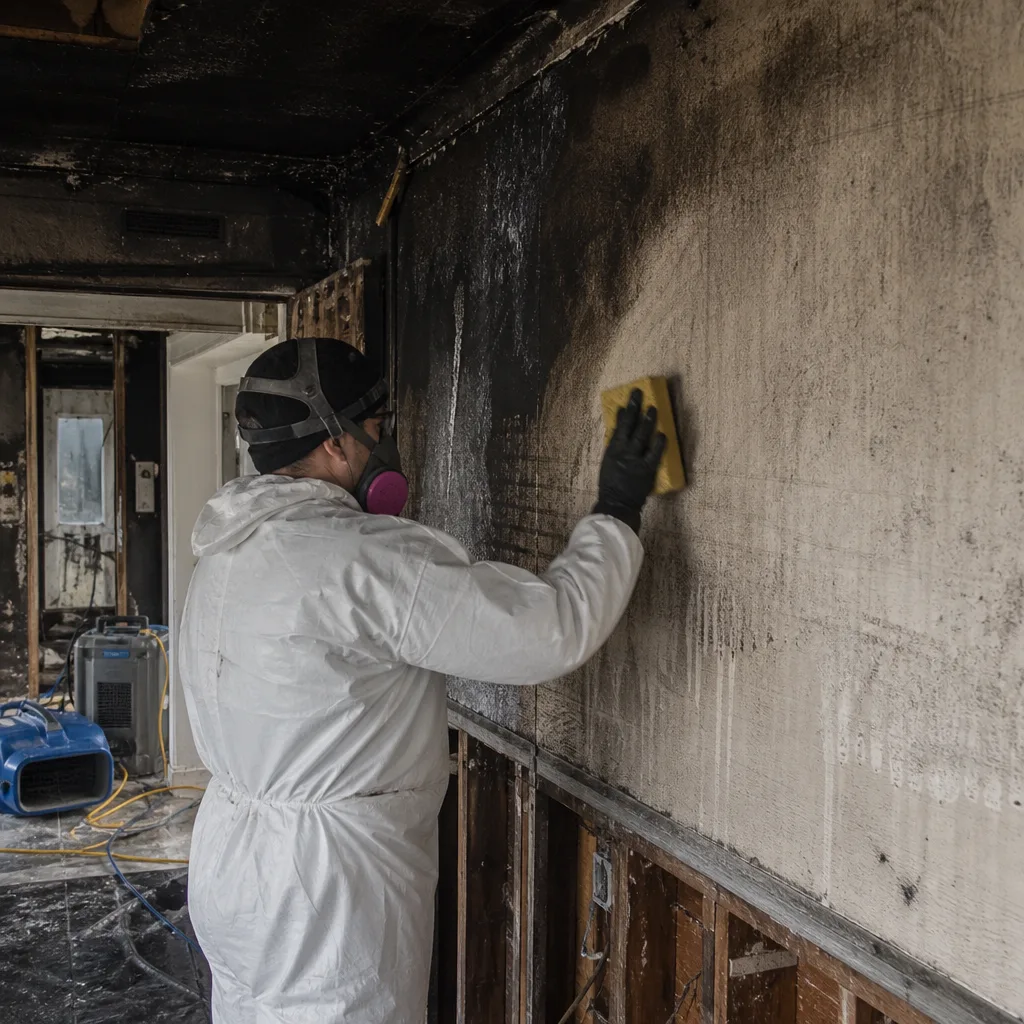
Flood Cleanup
When a nor’easter or a summer downpour puts a foot of Category 3 water in your Millwood basement, flood cleanup starts with extraction and containment and proceeds to removal of saturated porous materials. Carpet pad, drywall, insulation, and sometimes sections of subfloor need to go. We handle disposal within DEP watershed rules, including wastewater containment where open water touched sub-slab spaces.
What happens when you call
- 1
A real person answersNo phone trees - you reach a local pro.
- 2
You get an upfront price rangeHonest numbers before anyone is dispatched.
- 3
A background-checked tech heads outLicensed & insured, dispatched right away.
- 4
You approve before work beginsNothing starts until you say go.
Water Damage Restoration Costs in Millwood, NY
Millwood sits at the higher end of Westchester’s water damage pricing because the building stock is older and the DEP watershed compliance adds steps that neighboring Chappaqua and Mount Kisco jobs do not require. A straightforward Category 1 water heater leak with limited flooring damage runs $1,800 to $3,400. A full basement flood with Category 2 water, finished walls, and structural drying runs $3,800 to $6,800. A Category 3 sewage or stormwater flood that requires containment, full porous material removal, and microbial treatment runs $6,000 to $12,000 and sometimes beyond, depending on finish materials and whether joist repair is needed. Insurance covers the covered portion; the free visual inspection we offer gives you a written line-item scope before you commit, so the final number is not a surprise. Call (917) 924-4221 and we will schedule that inspection at the next available slot, or sooner if there is standing water.
We Also Serve Cities Near Millwood
Our Millwood crews also cover Water Damage Restoration calls in Chappaqua, Mount Kisco, Ossining, and Briarcliff Manor. The same certified technicians, the same 45-minute response commitment, and the same written 90-Day Done Right Promise apply. If you are in a neighboring town and water just broke into the house, call the number below.
Serving Millwood, NY - Our Local Coverage Area
We’re based in the Millwood area and know this community well. Use the map below to see our service coverage - if you’re nearby, we can almost certainly help.
Millwood Water Damage Restoration Questions, Answered
Does the NYC DEP watershed rule change how you dry a Millwood basement?
Yes. Millwood sits inside the Kensico Reservoir watershed, which means NYC DEP regulations restrict what we can put down a drain or leave on the ground, and they require containment and documented disposal of Category 3 water. We carry spill kits on every Millwood mitigation, pump extracted water into holding tanks when there is no floor drain, and log every gallon for the discharge report. It adds cost and complexity compared to a Chappaqua or Mount Kisco job, but it protects the reservoir and keeps the job legal. Call (917) 924-4221 if you want to know exactly how the watershed affects your specific basement.
How do you dry a fieldstone basement without destroying the mortar?
Fieldstone mortar is porous and will wick water up from the ground and from standing floodwater. We dry fieldstone by running dehumidification and controlled air movement over the surface rather than blasting heat at the walls, and we check moisture at multiple mortar depths with penetrating meters. Drying takes longer than a poured-concrete wall, sometimes four to six days, but we protect the mortar joints and only apply antimicrobials where the water category and DEP rules allow.
Why did my split-level floor crown after another company’s water extraction?
Because the air felt dry but the slab and the underside of the vinyl plank were not. Split-level lower floors in Millwood sit on concrete slabs that hold moisture, and vinyl plank traps it from above. If the company runs fans without taking daily moisture readings at the slab level, the floor will crown weeks later. We use hygrometers and penetrating probes at every drying job and log the numbers until the dry standard is met, which is why our Water Damage Restoration in Millwood jobs do not come back with crowned floors.
Can you handle burst pipe water removal behind a furnace with only 24 inches of clearance?
We do it regularly in Millwood mechanical rooms. The Dri-Eaz HVE 3000 extraction unit is designed for tight clearances, and we run low-profile air movers in the dead space behind furnaces and water heaters. In older colonials and ranches, the gap between the furnace and the wall is often under two feet, and a standard truck-mounted wand cannot reach. We bring the right equipment and the patience to work in those spaces.
What’s the difference between Category 1, 2, and 3 water in a Millwood flood?
Category 1 is clean water from a supply line or water heater, no immediate health risk. Category 2 is gray water with soaps, detergents, or filtered groundwater, common in washing machine overflows and sump failures. Category 3 is black water, sewage, or stormwater that has picked up soil and bacteria. In Millwood, a nor’easter basement flood is usually Category 3 because the water runs over ground and through older drains. Categories dictate containment and antimicrobial treatment, and DEP watershed rules apply to all three.
How fast can someone actually get to Millwood?
Our commitment is 45 minutes from the time the call ends to a crew arriving at your door in Millwood. During a major storm event when every home in the Route 100 corridor is calling, we may be slightly longer, but we tell you honestly on the phone. A live dispatcher answers 24 hours a day, every day. Call (917) 924-4221 and we will start moving equipment before the call is over.
Will my insurance cover Millwood water damage restoration?
If the cause is sudden and accidental, usually yes: a burst pipe, a failed water heater, a washing machine hose, or a storm-driven roof puncture. Gradual seepage through fieldstone or a long-term leak with visible staining may be denied. We photograph everything from the first hour, write the scope in carrier-standard language, and coordinate directly with your adjuster. You are not left alone with the paperwork.
Can we stay in the house during drying and restoration?
In most Millwood cases, yes, you can stay in the home while we dry a contained area. The dehumidifiers are loud and the air movers run 24 hours a day, so the affected room may be uncomfortable, but the rest of the house stays livable. For Category 3 floodwater with sewage or heavy contamination, we may recommend you stay elsewhere for the first 24 to 48 hours until containment and initial treatment are complete.
Written by Curt Bowman, Owner at Floodline Restoration Co., serving Millwood since 2010.