
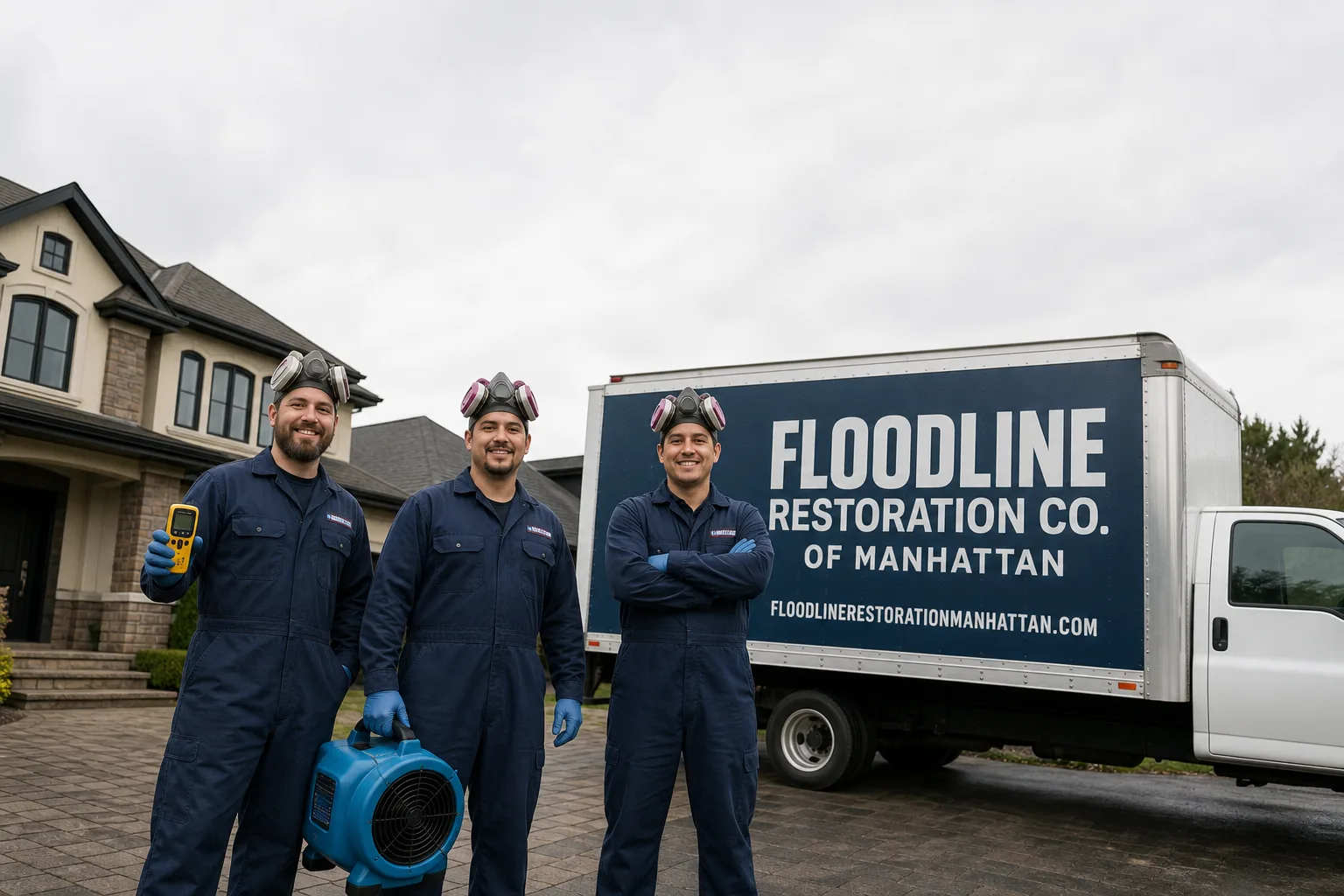
Free visual inspection and a written scope of work before any mitigation begins - photos, moisture readings, and drying logs go in your claim file
The scope we write is the scope we bill. Anything new gets shown to you, in writing, before we touch it.






 Before
 After
After Before
 After
After Before
 After
After24/7 Emergency Water Damage Restoration in Tappan
Water damage in Tappan doesn’t wait for business hours, and neither do we. When a supply line bursts at 2 a.m. off Oak Tree Road or a sump pump fails during a nor’easter near the Sparkill Creek, our live dispatcher answers on the second ring and a certified crew is rolling toward your home that same hour. The first hour matters because water from a burst pipe or failed pump starts wicking into lime mortar, horsehair plaster, and wide-plank flooring immediately, and every hour it sits, the repair scope grows. Call (917) 924-4221 now. We’ll walk the property with you, run moisture mapping on the spot, and give you a straight answer about what can be saved, what needs to come out, and what it will cost before any work begins. Most Tappan emergency calls see extraction running the same visit.
Understanding Water Damage Restoration Severity in Tappan Properties
Water damage restoration in Tappan is not one-size-fits-all, because the water itself isn’t one-size-fits-all. The IICRC classifies intrusion water into three categories, and the category dictates the entire drying and cleaning protocol. Category 1 water comes from a clean source, a burst supply line or an overflowing tub. Category 2 carries significant contamination, think washing machine discharge or sump pump overflow. Category 3, often called black water, includes sewage backups and stormwater that has entered through foundation breaches. We’ve handled all three in Tappan homes ranging from 18th-century Dutch colonials near the DeWint House to 1960s capes off Western Highway. In older homes, Category 1 water can behave differently than it would elsewhere: clean water that reaches a fieldstone foundation with cracked lime mortar has found a pathway directly into masonry that holds moisture for weeks. Our crews classify the water, map the moisture across every affected surface, and build the drying plan around what the materials actually are, not what a national playbook says they should be. For Tappan’s housing stock, that step is the difference between a home that dries and a home that keeps wicking moisture back from the foundation for months afterward.
Key takeaways:
- Water category determines what can be dried versus what must be removed
- Tappan’s fieldstone foundations and lime mortar wick moisture far longer than modern materials
- Moisture mapping before demolition is essential in historic homes, where original materials may be salvageable
- Structural drying must account for masonry intrusion paths, not just interior surfaces
Why Tappan Property Owners Choose Floodline Restoration Co. of Manhattan
- 45-minute response commitment: When water is moving through your house, we don’t schedule you for “sometime tomorrow.” A crew is dispatched from our New York City office to Tappan immediately, and most jobs see boots on the ground within 45 minutes of your call.
- 24/7 live answer, always: A real person picks up at any hour, including holidays. No automated trees, no callback queues, no “leave a message and we’ll get back to you.”
- IICRC-certified crews: Our technicians hold WRT and ASW certifications through IICRC standards, trained additionally to RIA and IFA protocols. The person who reads your moisture map is the same person who runs the drying equipment.
- Free visual inspection: We walk the damage with you before quoting anything. You’ll see what we see, in plain language.
- Direct insurance billing: We bill your carrier directly and coordinate with your adjuster. You don’t play messenger, and you don’t front money waiting on a reimbursement.
- One team from extraction to reconstruction: The same crew that extracts the water and runs the drying logs also handles the rebuild. No mid-job handoff, no inherited strangers in your home.
Our Water Damage Restoration Process
Inspection & Assessment
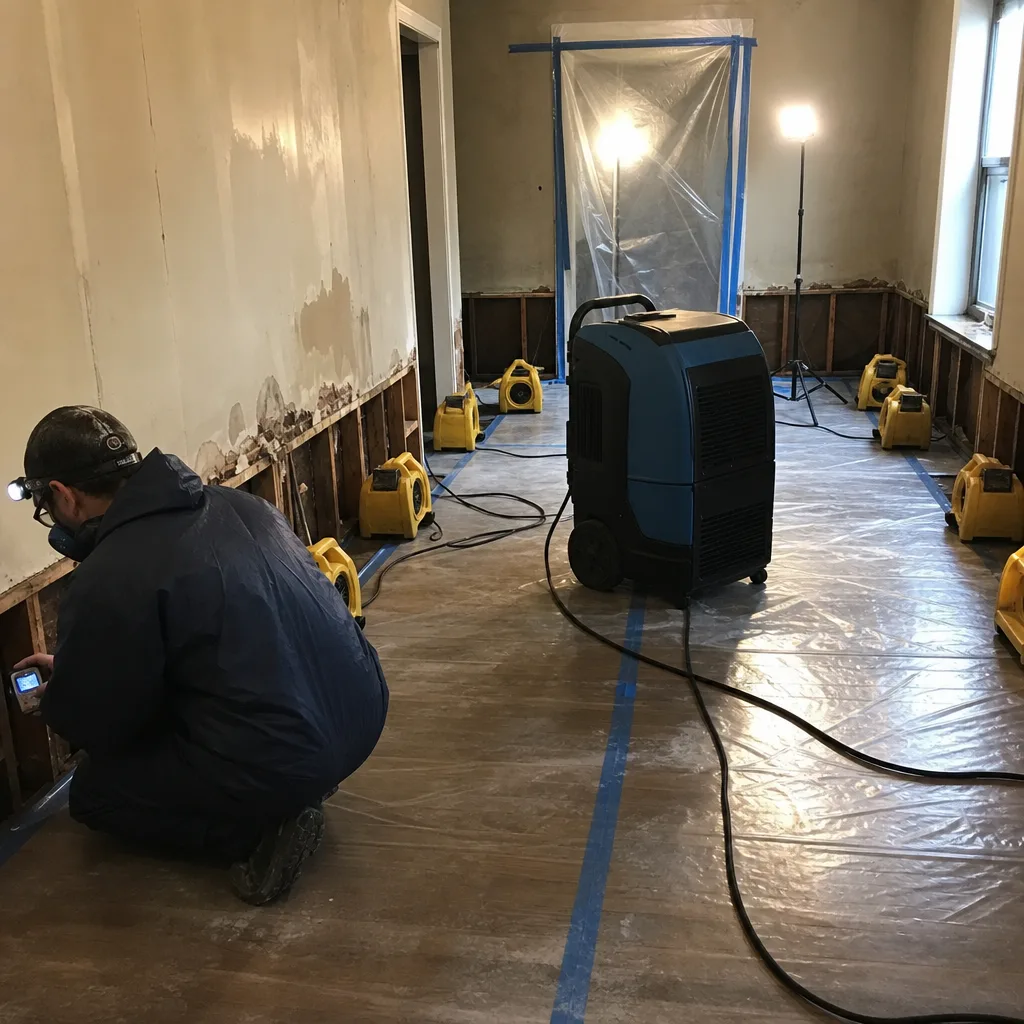
We walk the entire affected area with thermal imaging cameras and penetrating moisture meters. On a Tappan home with fieldstone walls, we’re checking behind surfaces and into masonry joints, not just sampling the drywall. You get a written scope before any work starts, agreed up front.
Extraction & Stabilization
Standing water comes out fast using truck-mounted and portable extraction units. We also stabilize the envelope, tarping roof breaches, isolating the water source, and containing the affected area so damage doesn’t spread while drying begins.
Drying & Dehumidification
Dri-Eaz and Phoenix dehumidifiers go to work alongside XPOWER air movers, positioned according to the moisture map rather than placed randomly around the room. Daily moisture readings are logged, and the drying plan is adjusted until the dry standard is met. For lime mortar foundations, this phase runs longer than modern homes because masonry releases moisture slowly.
Cleaning & Sanitization
All affected surfaces are cleaned and treated according to the water category. Category 1 jobs get thorough cleaning. Category 3 jobs get full antimicrobial treatment and disposal of porous materials that cannot be sanitized. HEPA air scrubbers run during this phase when airborne contaminants are present.
Preservation of Historic Materials
In Tappan’s older homes, we evaluate original materials like horsehair plaster and wide-plank flooring before recommending removal. When materials can be dried and saved, we save them. When they can’t, we document the loss thoroughly for your insurer and, where applicable, for SHPO compliance.
Repairs & Restoration
The same crew that ran the drying log now handles rebuild: drywall, trim, flooring, paint, and any masonry repairs at the intrusion source. We hand you a complete moisture log and the 90-Day Done Right Promise in writing before we consider the job closed.
Need Emergency Water Damage Restoration in Tappan Now?
Crews minutes away, answering live 24 hours a day. The sooner we start, the less it costs.
Working With Your Insurance Company
Most Tappan homeowners have never filed a water damage claim before, and the process can feel like a second job. It shouldn’t. From the first hour, we photograph every affected room, log moisture readings daily, and build a line-item scope of work in the format your carrier expects. Our team communicates directly with your adjuster, so the estimate, the drying log, and the rebuild scope all speak the same language they’re trained to review. You get copies of everything. We bill your insurer directly for covered work, and we walk you through what’s covered versus what falls outside your policy before any additional work is approved. For claims involving Tappan’s older homes, our documentation of original materials and pre-existing conditions often makes the difference between a lowball settlement and getting the full cost of proper restoration paid.
What We Provide Your Insurer
- Thorough documentation of the loss
- Photos of all damage, room by room
- Moisture readings and drying logs
- A detailed, line-item scope of work
- Direct coordination with your carrier
Built for Tappan’s Loss Calendar
Water damage in Tappan follows a seasonal rhythm, and after 42 years serving this region, we know exactly when each type of call spikes. January and February bring deep freezes that burst supply lines in unheated crawl spaces and exterior wall cavities, especially in mid-century homes where pipes run through uninsulated bays. March and April send snowmelt and spring rain into the topographic bowl east of Clausland Mountain, where groundwater finds every crack in a rubble foundation and overwhelms sump pumps in lower-lying streets. Summer thunderstorms dump an inch of rain in an hour, turning the Sparkill Creek watershed’s narrow drainage corridors into overflow zones that back up into basements. Fall nor’easters combine saturated ground with high winds, sending water through roof penetrations and chimney flashing on Tappan’s older colonials. The common thread across every season is that water in a Tappan home follows masonry pathways first. We plan our drying strategies around that reality every month of the year.
Water Damage Restoration Across Tappan’s Neighborhoods
Tappan’s housing stock changes character within a few blocks, and so do its water problems. The historic core around the Tappan Historic District, near the 1700 DeWint House and the Reformed Church on Kings Highway, holds genuine colonial-era structures with rubble foundations, hand-hewn timber framing, and original interior materials that require preservation-minded drying. A few blocks west, the postwar neighborhoods off Western Highway and Oak Tree Road are mostly 1950s and 60s capes and ranch homes, where the failures we see most often are failed sump pumps, aging copper supply lines, and water heaters giving out in finished basements. Homes along the lower elevations near the Sparkill Creek watershed and Tappan’s eastern slope toward Clausland Mountain catch runoff from above, and their basements flood more often during heavy precipitation events than homes on higher ground. The 10983 zip code stretches across all these conditions, which means a restoration crew working Tappan has to read each house as its own project, not as a template. We’ve worked every corner of this town, and we treat each home’s construction era and site drainage as the starting point for everything we do.
Specialized Water Damage Restoration Services We Offer in Tappan
Emergency Water Extraction
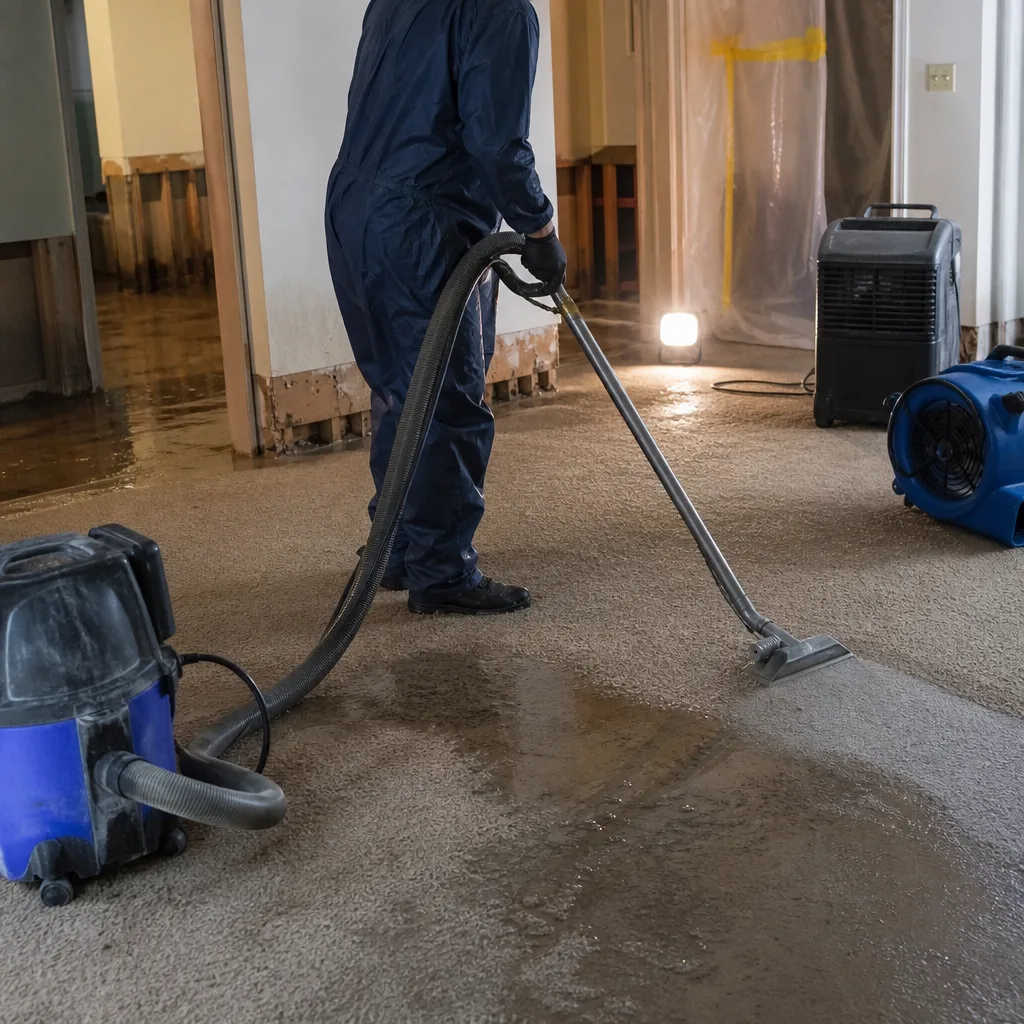
Standing water is doing structural damage by the hour. Our crews arrive with truck-mounted extraction units and portable wands that remove thousands of gallons per hour from basements, crawl spaces, and living areas across Tappan. Speed matters most here: the faster water comes out, the less drywall, flooring, and original material has to be replaced.
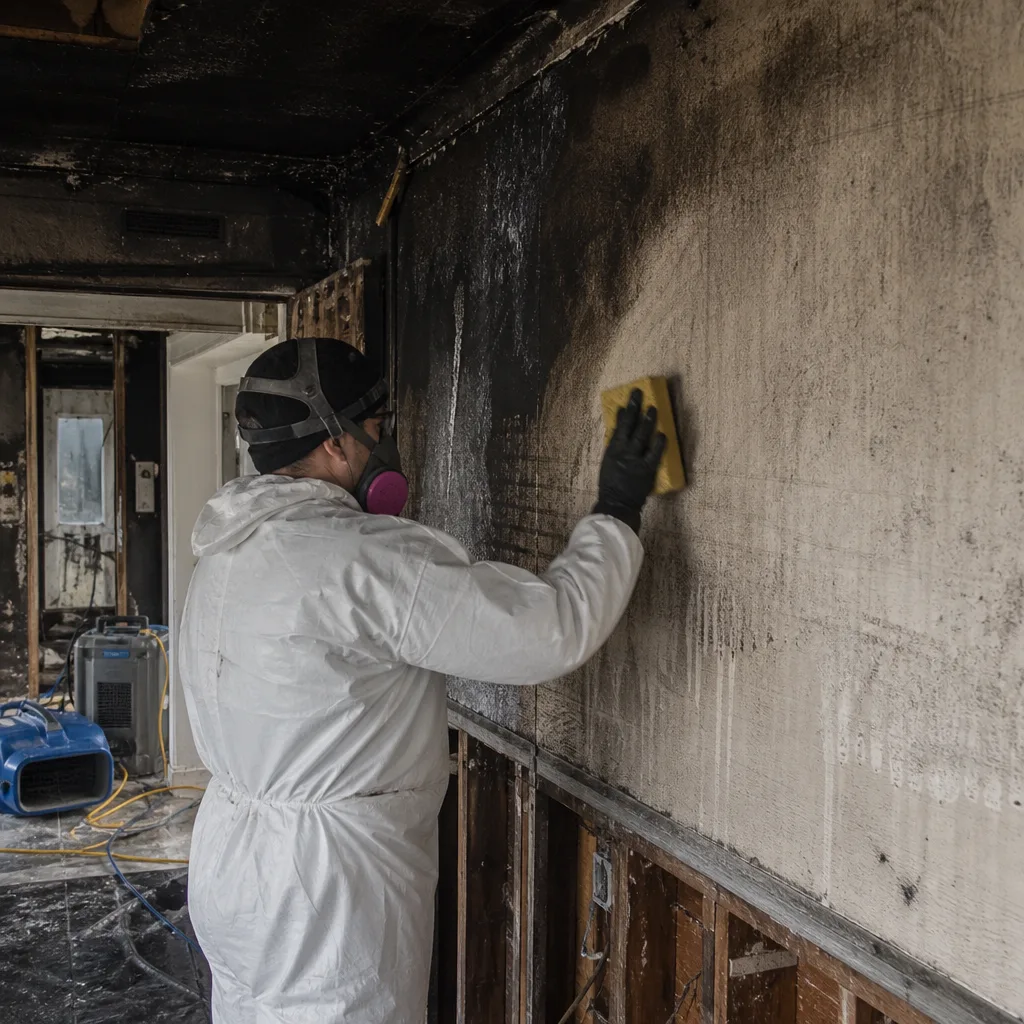
Structural Drying & Dehumidification
Drying a Tappan home properly means more than pointing fans at wet drywall. Our Dri-Eaz and Phoenix dehumidifiers are sized to the cubic footage of each affected room, and our XPOWER air movers are positioned according to moisture-mapped readings. In fieldstone foundations, we monitor masonry moisture content for days or weeks, not just until the drywall feels dry to the touch.
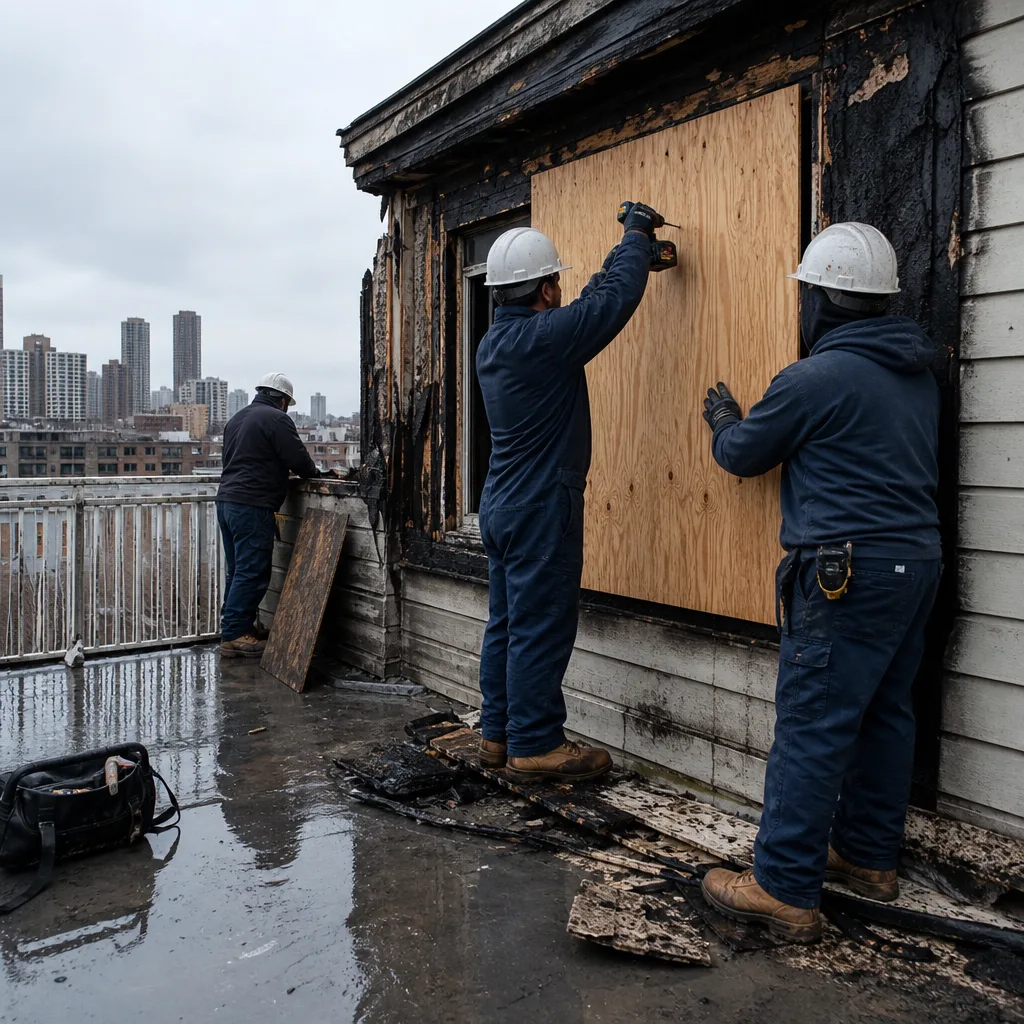
Flood Cleanup
Tappan Storm & Disaster Restoration scenarios like stormwater and creek overflow from the Sparkill Creek watershed bring a different contamination profile than a clean pipe break. Flood cleanup in Tappan means Category 3 protocols: full containment, antimicrobial treatment, disposal of saturated porous materials, and verification that the structure meets the dry standard before rebuild begins.
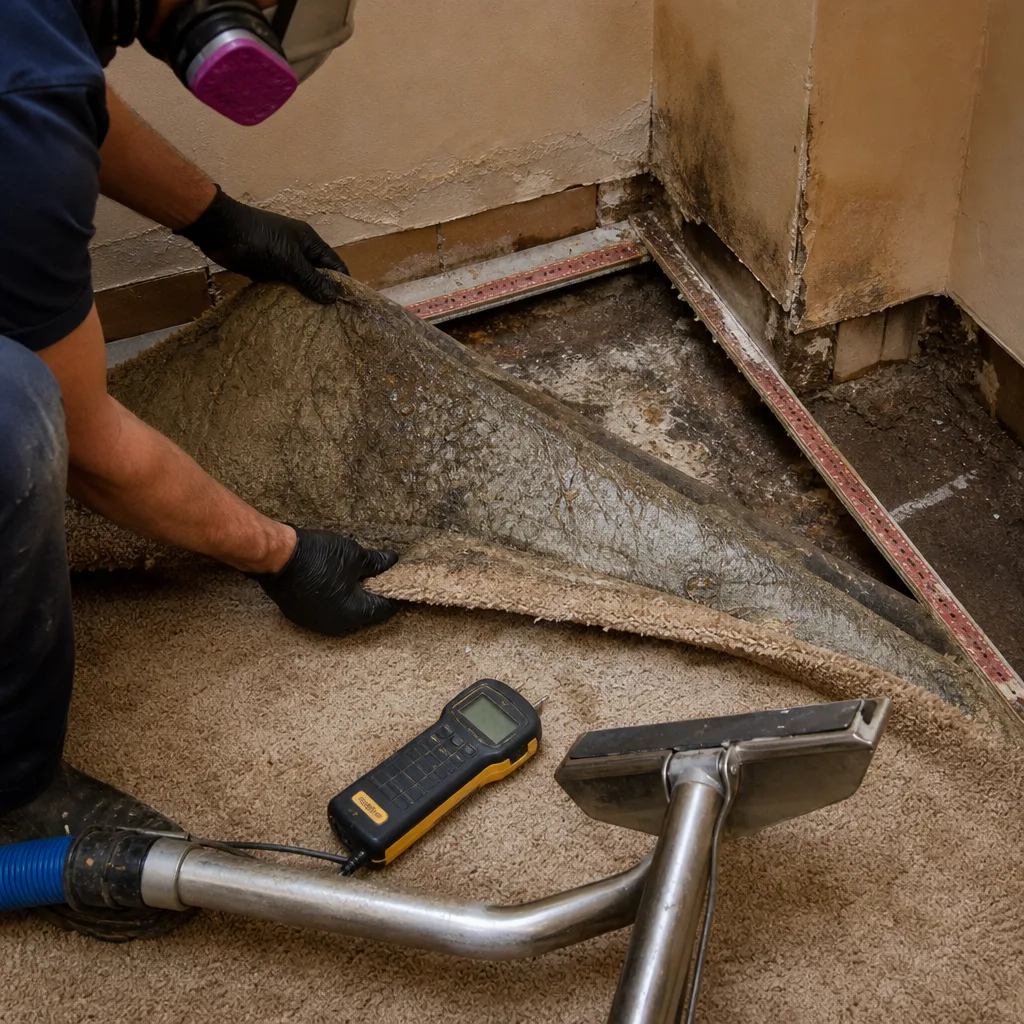
Burst Pipe Restoration
A frozen supply line that lets go inside a wall cavity can run for hours before anyone notices. We trace the full water path with thermal imaging, not just the visible stain on the ceiling below, and we dry inside wall cavities, under flooring, and along framing members before closing anything back up.
Basement Water Removal
Tappan basements present a specific set of challenges: rubble foundations with active moisture pathways, sump systems that fail during the exact storms they were installed for, and finished spaces full of drywall and carpet that hold water greedily. We remove the water, dry the structure, and document the masonry intrusion source so the repair addresses why the water got in, not just what it touched.
What happens when you call
- 1
A real person answersNo phone trees - you reach a local pro.
- 2
You get an upfront price rangeHonest numbers before anyone is dispatched.
- 3
A background-checked tech heads outLicensed & insured, dispatched right away.
- 4
You approve before work beginsNothing starts until you say go.
Water Damage Restoration Costs in Tappan, NY
Water damage restoration in Tappan runs a wide range because the town’s housing stock runs a wide range. A straightforward Category 1 extraction with limited drying in a modern ranch home typically runs $1,800 to $3,500. When water sat for more than 24 hours, when Category 3 contamination is involved, or when a Tappan colonial needs horsehair plaster and wide-plank flooring addressed as part of the mitigation, the price moves into the $6,000 to $15,000 range and beyond for full rebuilds. What moves the price most: how long the water sat before extraction started, whether original materials can be dried or must be removed, and whether the masonry source needs repair at the same time. We provide a free visual inspection and a written scope before any work begins, so you’ll never be surprised by a number after the fact. Call (917) 924-4221 and we’ll walk your Tappan property with you.
We Also Serve Cities Near Tappan
Our Water Damage Restoration team works throughout the surrounding Rockland County area, including Tappan and its neighbors: Orangeburg, Sparkill, Piermont, and Blauvelt. If water is moving through your home and you’re anywhere in the area, call us. We’ll be there when we say.
Serving Tappan, NY - Our Local Coverage Area
We’re based in the Tappan area and know this community well. Use the map below to see our service coverage - if you’re nearby, we can almost certainly help.
Tappan Water Damage Restoration Questions, Answered
How does water damage restoration differ for Tappan’s historic homes with rubble or fieldstone foundations compared to modern houses?
In Tappan’s historic homes, fieldstone and rubble foundations with lime-mortar joints absorb and hold moisture in ways poured-concrete or block foundations do not. Restoration in these homes must treat the masonry as an active moisture pathway, not a neutral boundary. We monitor masonry moisture content for extended periods, address exterior cracks that allowed the water in, and dry interior materials with the understanding that the foundation itself is wicking moisture back toward the living space. This extends drying timelines and changes equipment placement compared to a modern home, where the envelope is more watertight and drying is more contained.
What should I do if my Tappan home has water-damaged horsehair plaster or original wide-plank flooring?
Do not rip it out before documenting scope and checking preservation requirements. Horsehair plaster and original wide-plank flooring in Tappan’s historic homes can often be dried and saved if addressed promptly, but only if the drying strategy is designed for those materials. Before any original material is removed, we photograph it, document its condition, and create a written scope. In Tappan’s historic core, removal of original materials without proper documentation can put you in a difficult position with SHPO or local landmark review. We handle that documentation as part of every job in the historic district, and we coordinate with preservation officials when a project requires it. Call (917) 924-4221 before you start pulling plaster.
Why does my Tappan basement flood more often than homes in neighboring Nanuet?
Tappan sits in a topographic bowl east of Clausland Mountain, within the Sparkill Creek watershed. When heavy precipitation falls, runoff from the mountain slope concentrates and funnels toward the lower residential streets of Tappan. Add fieldstone and rubble foundations with lime-mortar joints that wick groundwater readily, and you get basements that flood more often than homes on the flatter, better-drained ground typical of Nanuet. This isn’t a minor quirk, it’s a defining characteristic of Tappan’s geography and older housing stock. Our restoration work here always includes tracing the water back to its source, whether that’s a failed sump pump or a masonry crack letting groundwater in.
How quickly can mold start growing in my Tappan home after a water leak?
Mold colonization can begin on porous materials within 24 to 48 hours after water intrusion, especially in the humid conditions common in Tappan basements. In a fieldstone basement with high relative humidity, that window can be on the shorter end. This is why immediate extraction and aggressive dehumidification are non-negotiable. If you’ve had a leak for more than two days, there’s a real chance mold is already active, even if you can’t see it. A free visual inspection with moisture mapping will tell us what’s happening behind the walls. Call (917) 924-4221 and we’ll check it honestly.
What is the difference between Category 1, 2, and 3 water, and why does it matter in Tappan?
Category 1 is clean water from a supply line or tub overflow. Category 2 carries significant contamination, like washing machine overflow or sump pump discharge. Category 3 is grossly contaminated water, including Sewage Cleanup - Tappan jobs and stormwater that has entered through foundation cracks or a flooded creek. The category dictates the entire protocol: what gets cleaned, what gets treated, what gets disposed. In Tappan, spring thaw and heavy rain around the Sparkill Creek watershed regularly push Category 3 water into basements through fieldstone foundations. Those jobs require full containment, antimicrobial treatment, and proper disposal of saturated porous materials. Knowing the difference before anyone starts cutting is what protects your home and your family’s health.
How quickly can you get a crew to my Tappan home?
Most Tappan calls see a certified crew on site within 45 minutes of your phone call. Our Water Damage Restoration team dispatches from our New York City office, and live dispatch means a real person routes the nearest available crew the moment you call (917) 924-4221. For water emergencies, we aim for extraction running the same visit.
Will my insurance cover water damage restoration in Tappan?
Most standard homeowner policies cover sudden and accidental water damage, like a burst pipe or a failed water heater, but not gradual seepage or lack of maintenance. Every policy is different, which is why our documentation matters. We photograph everything, log moisture readings daily, and build a line-item scope that gives your adjuster exactly what they need to approve the full cost of proper restoration. For historic homes in Tappan, our documentation of original materials and pre-existing conditions often makes the difference in how much of the rebuild gets covered. We bill your carrier directly and coordinate with them throughout the claim.
Can my family stay in the home during water damage restoration?
For Category 1 water with localized damage, you can often stay in the home while drying equipment runs, provided you can tolerate the noise and the temporary disruption. For Category 2 or Category 3 water, especially when Fire & Smoke Damage Restoration in Tappan or other disaster work has left structural vulnerabilities, or when sewage or stormwater is involved, we recommend relocating until containment is removed and the affected areas pass clearance. In Tappan’s older homes where plaster dust from demolition or antimicrobial treatments are part of the job, we’ll give you a straight recommendation rather than a vague answer. Your safety is the standard we’re held to.
Written by Curt Bowman, Owner at Floodline Restoration Co. of Manhattan, serving Tappan, NY with water damage restoration since 2010.