
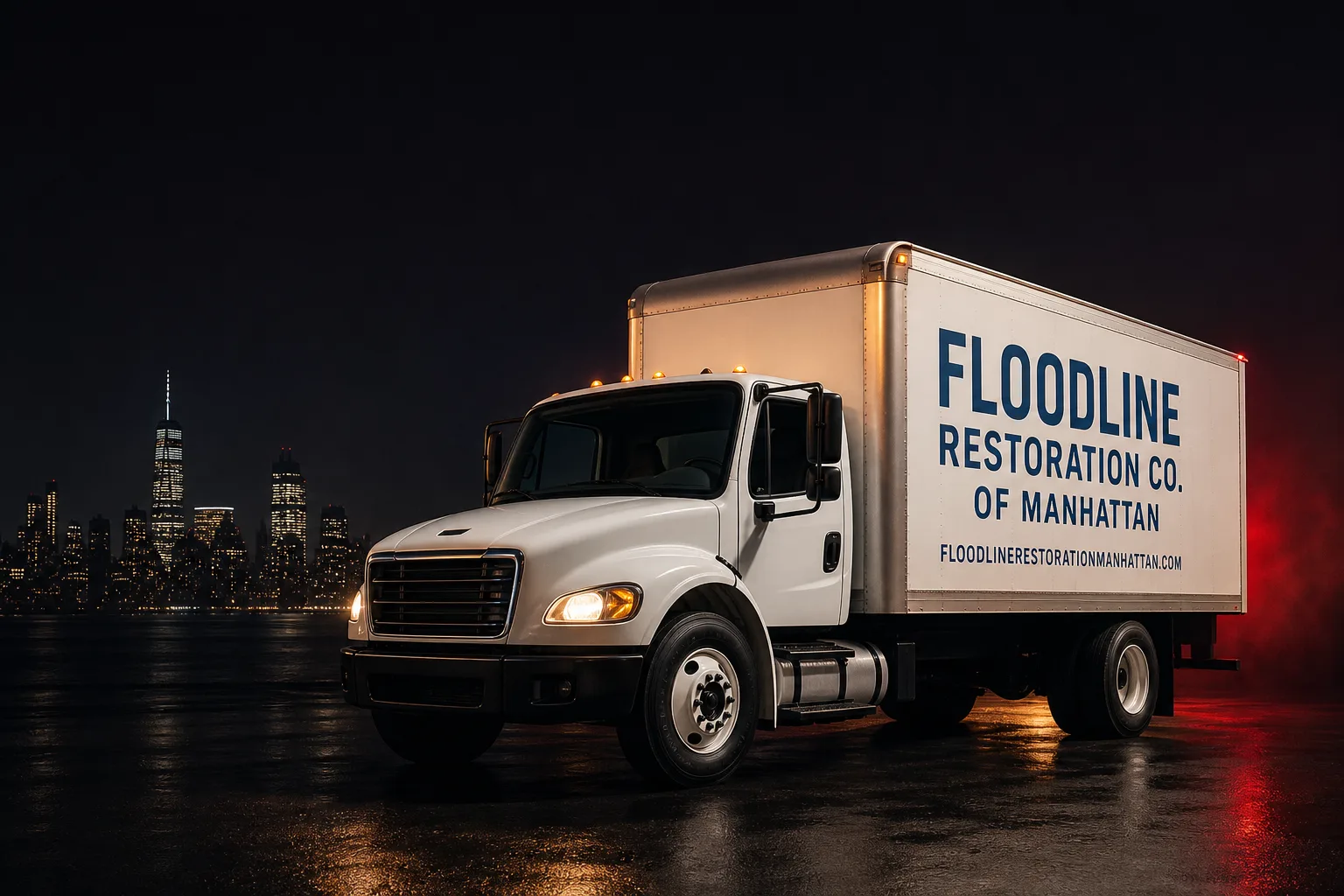
Free visual inspection and a written scope of work before any mitigation begins - photos, moisture readings, and drying logs go in your claim file
The scope we write is the scope we bill. Anything new gets shown to you, in writing, before we touch it.






 Before
 After
After Before
 After
After Before
 After
After24/7 Emergency Water Damage Restoration in Washington Square
Water damage restoration in Washington Square typically costs $1,800-$9,500 depending on water category, square footage affected, and whether Landmarks Preservation Commission review is triggered. A burst supply line in a pre-war apartment usually runs $2,400-$5,800; a sewer backflow through a garden-level floor can exceed $9,000 when containment and sanitization are required. We answer the phone live at (917) 924-4221 at any hour, and a certified crew can reach your building inside 45 minutes. The first hour decides whether horsehair plaster, wood lath, and original flooring can be saved or must be replaced. Every minute water sits in a Washington Square rowhouse, it wicks deeper into lime mortar, shared party walls, and 19th-century rubble-stone foundations. We start extraction the same visit and map moisture before we touch a wall.
Understanding Water Damage Restoration Severity in Washington Square Properties
Washington Square’s housing stock is among the oldest in Manhattan. Federal-style rowhouses on Washington Square North date to the 1830s. The tenement-era brick walk-ups along Sullivan, Thompson, and MacDougal Streets were built between 1880 and 1910. Nearly all retain original horsehair-plaster walls over wood lath, with cast-iron or brownstone details that standard drywall crews are not equipped to match. That changes how severity is classified and how restoration proceeds.
Category 1 water comes from a clean source like a burst supply line. Category 2 carries contaminants, such as washing-machine overflow or a tub drain backup. Category 3 water, what we see in sewer backflows from Washington Square’s combined sewer system, is grossly contaminated and requires full containment, removal, and sanitization. We assign category using IICRC standards, confirm with Phoenix moisture meters and thermal imaging, then write a drying plan specific to your building’s construction. A Category 2 loss in a 2020s drywall condo is routine. The same loss in a landmarked 1830s rowhouse requires LPC coordination before any plaster is cut.
Why Washington Square Property Owners Choose Floodline Restoration Co. of Manhattan
- 45-minute response commitment. We maintain crews staged near Washington Square, not an hour away in the boroughs. A live dispatcher confirms your address and a crew is rolling immediately.
- 24/7 live answer, every time. You call (917) 924-4221 at 2 a.m., a person picks up. Not a recording. Not a callback service. That’s been true since Curt Bowman founded the company around a dispatch board in 2010.
- IICRC-certified crews. Our technicians hold WRT and ASD certifications minimum, with ASDs for structural drying and AMRT where mold containment is involved. They’re background-checked and uniformed.
- Free visual inspection. We walk the loss with you, explain what we’re seeing, and hand you a written scope before any work starts. No pressure, no scare tactics.
- Direct insurance billing. We document from the first hour, send line-item estimates to your adjuster, and handle claims directly. You never play messenger between us and the carrier.
- One team, start to finish. From first extraction through plaster repair and refinishing, the same Floodline crew handles it. No mid-job handoff to a sub you’ve never met. We stand behind the 90-Day Done Right Promise in writing, no argument.
Our Water Damage Restoration Process
Inspection & Assessment
We arrive, walk the loss, and identify the water source and category. Phoenix moisture meters and thermal imaging map the full migration path, including through party walls and under original flooring. You get a plain-English explanation and a written scope.
Extraction & Stabilization
Standing water is removed immediately using truck-mounted and portable extraction. If a ceiling is saturated, we stabilize before water weight causes collapse. Any LPC-required notification happens before we cut or remove material.
Drying & Dehumidification
Dri-Eaz air movers, Injectidry floor-drying systems, and Phoenix dehumidifiers are placed according to the moisture map. Daily readings are logged until the dry standard is met. We hand you and your insurer that log.
Cleaning & Sanitization
For Category 2 and 3 water, we contain, clean, and apply antimicrobial treatments appropriate to the material. HEPA air scrubbers run where airborne contaminants are a concern. Hard surfaces are treated; salvageable plaster is dried, not replaced.
Specialty Treatment for Washington Square Properties
This is where our Water Damage Restoration work differs from a standard remediation. Original wood-lath and horsehair plaster are dried in place wherever possible using Injectidry panels. Period-matched materials are sourced before any repair.
Repairs & Restoration
Our own carpenters and finishers rebuild what can’t be saved, matching the district’s period standards. Lime-plaster repair, brownstone patching, and cast-iron detail work are done by tradespeople who know the LPC requirements. You get one crew, one warranty, and the 90-Day Done Right Promise in writing.
Need Emergency Water Damage Restoration in Washington Square Now?
Crews minutes away, answering live 24 hours a day. The sooner we start, the less it costs.
Working With Your Insurance Company
Most Washington Square water damage losses are covered under standard homeowner or co-op policies, but the claim lives or dies on documentation. We photograph everything before we move anything. Moisture readings are logged daily, and a drying log goes to your adjuster with the line-item scope. When LPC review is involved, we include the compliance documentation your carrier needs to approve period-matched replacement rather than standard repair. We coordinate directly with your adjuster so you don’t spend your day on hold. You get a square deal: a written scope before work starts, direct carrier billing, and no surprises on the bill.
What We Provide Your Insurer
- Thorough documentation of the loss
- Photos of all damage, room by room
- Moisture readings and drying logs
- A detailed, line-item scope of work
- Direct coordination with your carrier
Built for Washington Square’s Loss Calendar
January is the heavy hitter here. Freeze-thaw cycles work on original brick and lime mortar, and supply lines in uninsulated chases behind 1830s plaster walls burst when temperatures drop hard. We ran more burst-pipe calls on Washington Square North and along Fifth Avenue frontage in January last year than in any other three-month stretch. Spring thaw brings basement seepage through rubble-stone foundations, especially on garden-level units below grade. Summer thunderstorms overload the combined sewer system, and sewer backflow into basement units is a recurring issue. Nor’easters stress aging copper and lead flashings on dormers and parapets, so ceiling and roof leak water damage comes with the territory. The key fact: these buildings share party walls and drainage lines. Water rarely stays in one unit, and our Washington Square restoration work is built around that reality.
Water Damage Restoration Across Washington Square’s Neighborhoods
Washington Square is a compact district, but the building types shift block by block. Washington Square North’s Federal rowhouses demand the highest level of LPC compliance, and our crews know the notification process cold. The tenement-era walk-ups along Thompson, Sullivan, and MacDougal keep their original wood-lath ceilings, which means drying-in-place beats gut demolition almost every time. The pre-war elevator buildings along Fifth Avenue and Washington Square East have thicker floor assemblies, different chase layouts, and their own freeze-thaw stress points around roof bulkheads and terrace drains. The garden-level units scattered throughout the district sit below grade and take the brunt of sewer backflow during summer downpours. Each block has its own response route, its own construction quirks, and its own typical loss pattern. We know them because we work them every week.
Specialized Water Damage Restoration Services We Offer in Washington Square
Emergency Water Extraction
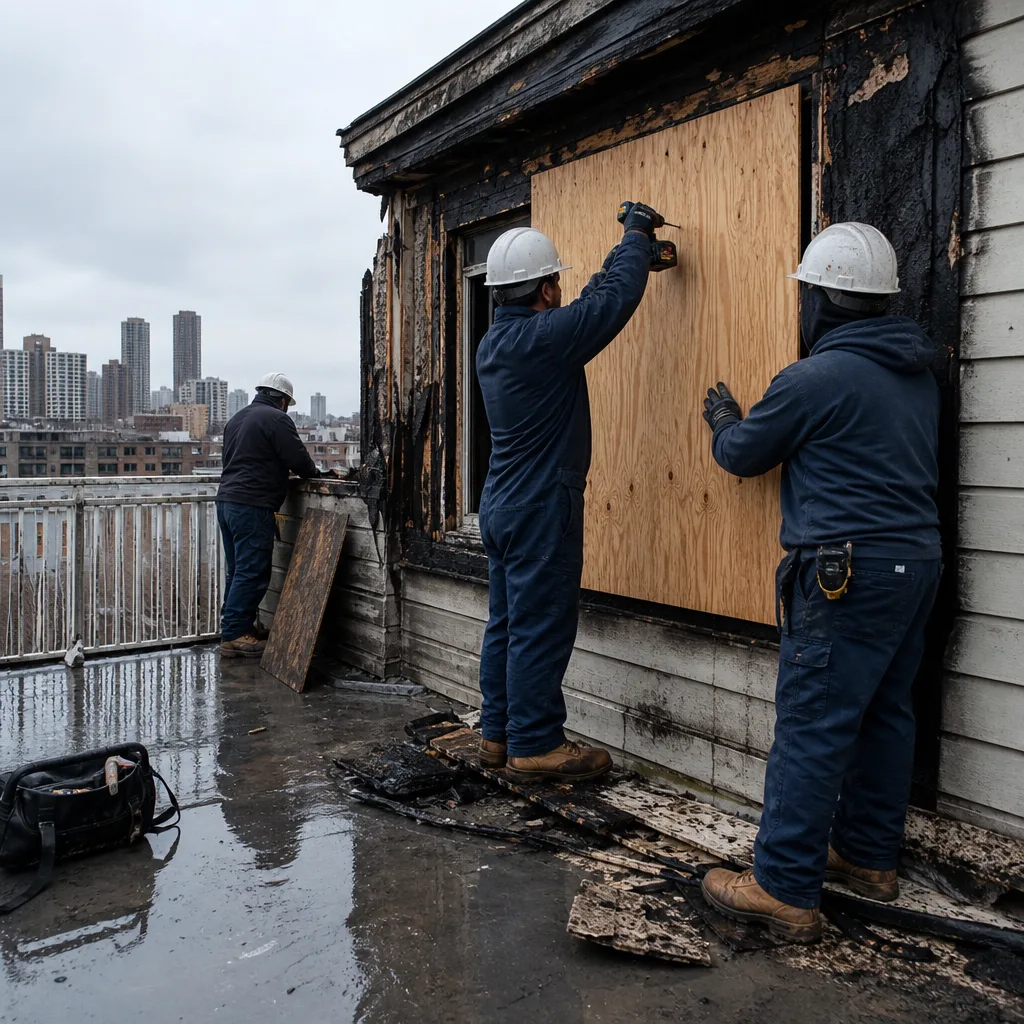
Standing water comes out before it migrates further through lath, lime mortar, or subfloor. Our extraction crews run truck-mounted and portable units, and we set containment around the affected area immediately. In Washington Square, fast extraction often means the difference between saving original flooring and replacing it.
Structural Drying & Dehumidification
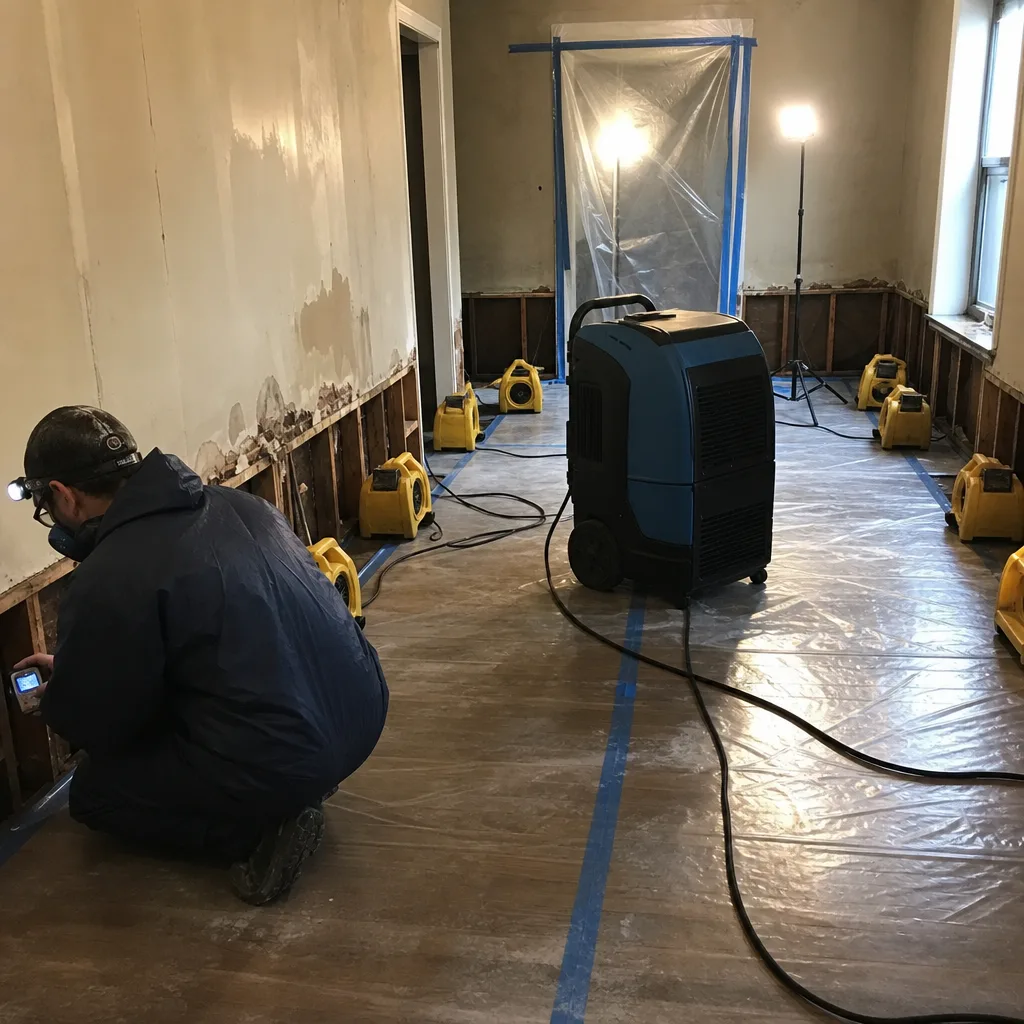
This is the heart of our work in Washington Square’s older buildings. Dri-Eaz air movers, Phoenix dehumidifiers, and Injectidry floor-drying systems are placed according to the moisture map, not guesswork. Daily readings are logged until the dry standard is met. For wood-lath and horsehair-plaster assemblies, aggressive drying can delaminate plaster keys. We dry slowly and deliberately when the structure requires it.
Flood Cleanup
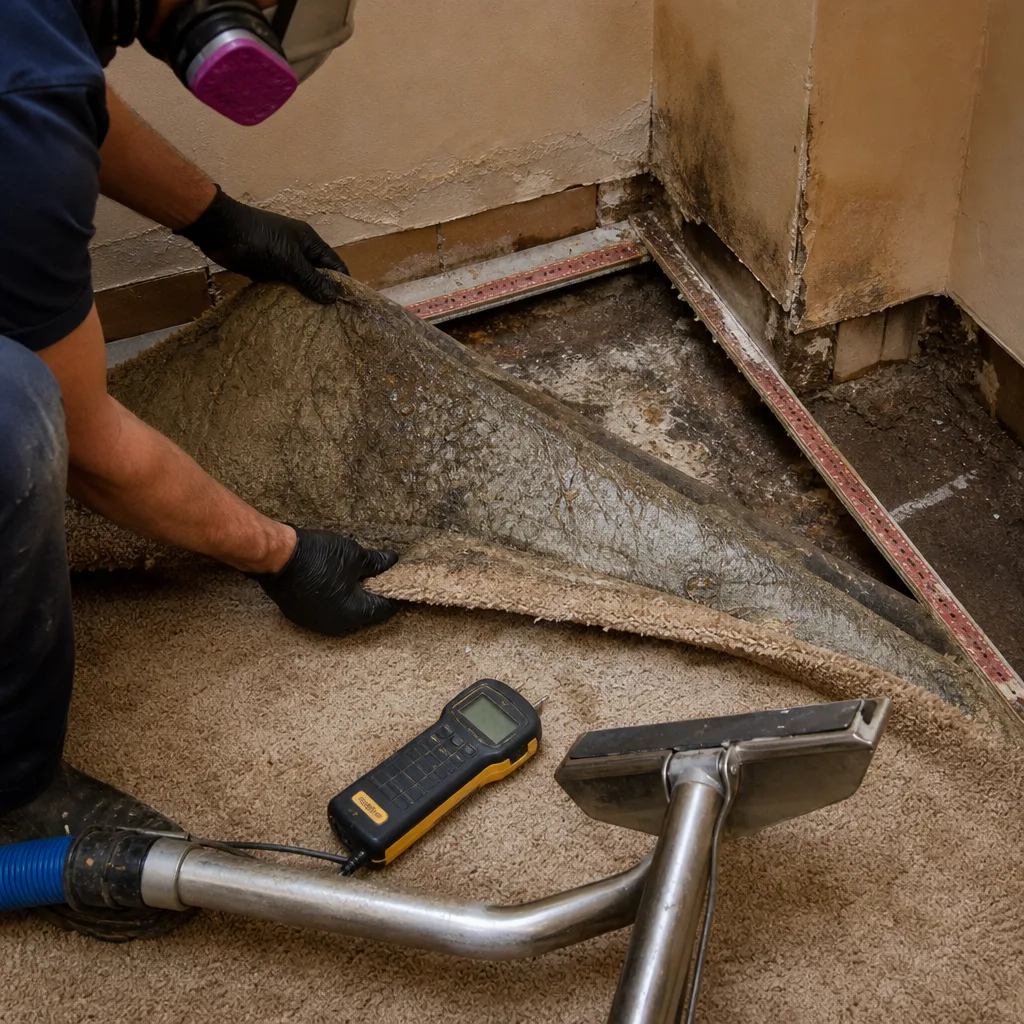
Storm surge, sewer backflow, and flash flooding all hit garden-level units here. We contain the affected area, remove contaminated water and materials, sanitize, and dry. When the LPC is involved, we document everything they need in their preferred format.
Burst Pipe Restoration
Frozen supply lines in uninsulated 19th-century chases are a Washington Square specialty. We locate the breach, stop the water, extract, dry, and restore. Category 1 water from a burst supply line is often the most salvageable loss if we arrive within the first hour.
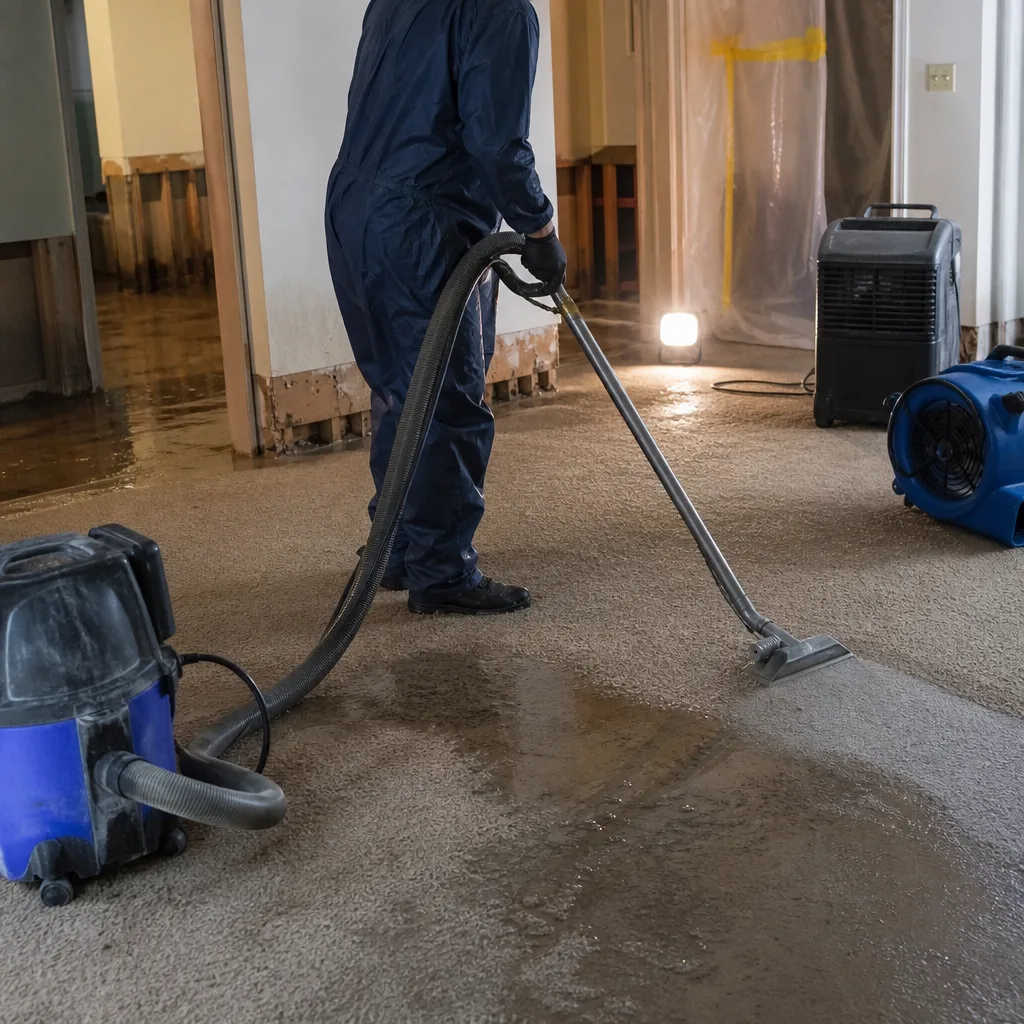
Basement Water Removal
Garden-level and basement units in this district sit behind old brick walls with failing parge coats and drainage lines that predate the modern sewer system. We remove the water, dry the space, and identify the intrusion point so it doesn’t happen again next storm.
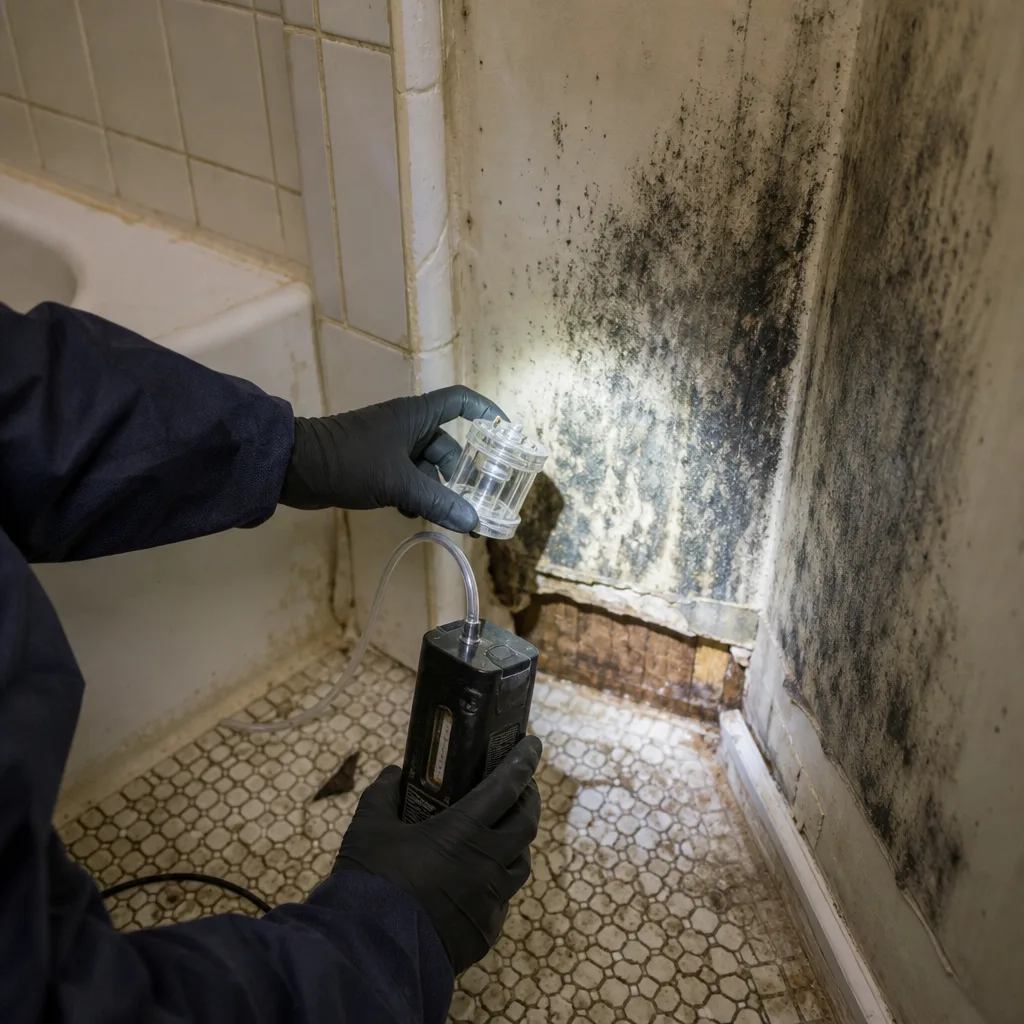
Ceiling & Roof Leak Water Damage
Aged flashings, cracked parapet caps, and blocked roof drains send water down through original plaster ceilings. We stabilize the ceiling, stop the source, dry the cavity, and repair with period-matched materials. In a landmarked building, patching with standard drywall is not an option. We know that before we cut.
What happens when you call
- 1
A real person answersNo phone trees - you reach a local pro.
- 2
You get an upfront price rangeHonest numbers before anyone is dispatched.
- 3
A background-checked tech heads outLicensed & insured, dispatched right away.
- 4
You approve before work beginsNothing starts until you say go.
Water Damage Restoration Costs in Washington Square, NY
Washington Square restoration work runs higher than the Manhattan average because the building stock is older, landmark compliance is mandatory, and salvage is more labor-intensive. A Category 1 burst-pipe loss in a single room typically runs $2,400-$5,800 including extraction, drying, and plaster repair. Ceiling and roof leak water damage on a Washington Square North rowhouse usually lands between $3,200 and $7,500 depending on ceiling height and plaster condition. Category 3 sewer backflow through a garden-level unit starts around $4,500 for a contained, single-room loss and climbs past $9,000 when multiple rooms and structural drying are required. The variables are water category, square footage, whether salvage or replacement is specified by the LPC, and how far moisture has migrated through party walls. We give you a written scope before work starts, and we bill your carrier directly where coverage applies. Call (917) 924-4221 for a free visual inspection and a firm number.
We Also Serve Cities Near Washington Square
Our crews handle water damage restoration throughout the area, including Fairview, Harrison, East Bronx, and Hunts Point. If you’re anywhere near Washington Square, we can reach you fast.
Serving Washington Square, NY - Our Local Coverage Area
We’re based in the Washington Square area and know this community well. Use the map below to see our service coverage - if you’re nearby, we can almost certainly help.
Washington Square Water Damage Restoration Questions, Answered
Do I need Landmarks Preservation Commission approval before you remove water-damaged plaster in a Washington Square rowhouse?
In most cases, yes. Any removal or replacement of original fabric in the Greenwich Village Historic District, including horsehair plaster over wood lath on an 1830s rowhouse, requires LPC review. We handle the notification and documentation so you don’t face a stop-work order or fine.
How do you handle water that has migrated into my neighbor’s unit through a shared party wall?
We don’t dry only the visible wet room. We moisture-map through the wall and into the neighbor’s side, then bring in the adjacent owner’s engineer or designated rep to sign off on the drying plan and logs. This is a common situation on Washington Square North where continuous party walls connect multiple landmarked properties.
Can you dry original wood-lath and horsehair-plaster ceilings, or do they have to be torn out?
Most can be dried in place. We use Injectidry panels and controlled dehumidification rather than aggressive air movement, which would delaminate the plaster keys. If the plaster is unsalvageable, we document it and coordinate period-matched replacement with the LPC. Tear-out is a last resort here, not the default.
What water category do you assign to a sewer backflow from the combined sewer under Washington Square?
Category 3, which is grossly contaminated. That requires full containment, removal of affected porous materials, sanitization, and HEPA air scrubbing. We treat it as a serious loss from the first hour, not a mop-and-fan job. Your insurance carrier gets the IICRC-standard documentation to support the claim.
Does Floodline Restoration have experience with the freeze-thaw masonry damage that causes water intrusion on Washington Square North?
Yes. We see the same pattern every winter: original brick and lime mortar absorb water, freeze, and spall, opening paths for water into wall cavities. Our restoration work addresses both the interior water damage and the masonry source. Curt Bowman has been documenting these failures since 2010, and the same crew reads the moisture map on day one and handles the final repair.
How fast can you actually get to a Washington Square address?
Usually inside 45 minutes. We stage crews near the district rather than dispatching exclusively from the New York City office, so the travel time is real, not optimistic. Call (917) 924-4221 and a live person confirms the address and starts the crew moving before you hang up.
How long does structural drying take in an older Washington Square building?
Three to five days is typical for original lath-and-plaster assemblies. It’s slower than a drywall condo because those materials hold moisture and drying too aggressively will damage them. We log daily readings and don’t sign off until the dry standard is met. The log goes to you and your insurer.
What should I do in the first 30 minutes after discovering water damage?
If it’s safe, shut off the water at the source and kill power to the affected area. Don’t cut into walls or ceilings. Then call us at (917) 924-4221. Fast extraction is the single biggest factor in how much of your original plaster, flooring, and woodwork survives.
Written by Curt Bowman, Owner at Floodline Restoration Co. of Manhattan. Mr. Bowman founded the company in 2010 and has led water damage restoration, mold remediation, and reconstruction work throughout Washington Square and surrounding Manhattan districts ever since.