

Free visual inspection and a written scope of work before any mitigation begins - photos, moisture readings, and drying logs go in your claim file
The scope we write is the scope we bill. Anything new gets shown to you, in writing, before we touch it.






 Before
 After
After Before
 After
After Before
 After
After24/7 Emergency Water Damage Restoration in Woodrow
Water damage restoration in Woodrow typically costs $2,100-$6,800 depending on the category of water, the square footage affected, and whether structural drying or full reconstruction is required. Most jobs we handle in the neighborhood are completed in a single visit using truck-mounted extraction and professional-grade drying equipment, with a written scope agreed before work starts. If you’re standing in water right now, call (917) 924-4221 and a live dispatcher will route a crew toward Woodrow immediately. The first hour determines whether you’re drying sheetrock or replacing it.
We answer the phone with a person at 2 a.m., not a recording. That’s not a marketing line. It’s how Floodline Restoration Co. has run its dispatch board since Curt Bowman founded the company in 2010. When a supply line lets go in a split-level off Bloomingdale Road at midnight, you’ll speak to someone who can name the equipment going on the truck and the route the crew will take to your door.
Understanding Water Damage Restoration Severity in Woodrow Properties
Water damage is classified by the source, not just the volume. Category 1 comes from a clean supply line or faucet. Category 2 carries some contamination, typically from a washing machine overflow or sump pump failure. Category 3 is grossly contaminated, the kind that comes from sewage backup or rising floodwater from Arthur Kill tidal edges. In Woodrow, we see a fourth local complication: groundwater that wicks through clay-heavy soil picks up organics and bacteria along the way, and it often behaves more like Category 2 or 3 than the clean water homeowners assume it is. Misclassifying that water is the single most common reason mold returns after a restoration job in this part of Staten Island.
Woodrow’s housing stock compounds the problem. The neighborhood is dominated by post-WWII Cape Cods, ranch homes, and split-levels built from the 1950s through the 1980s. Those homes often have unfinished or partially finished basements, kraft-faced insulation behind plaster walls, and original cast-iron or galvanized plumbing. Once water gets behind plaster, it wicks upward into insulation, spreading moisture beyond the visible stain. Moisture mapping with thermal imaging and hygrometers is the only way to see the full extent before drying begins. Guessing here is how a three-day job becomes a three-week mold remediation.
Why Woodrow Property Owners Choose Floodline Restoration Co. of Manhattan
- 45-minute response commitment: We keep crews staged across Staten Island so the drive to Woodrow stays short. Dispatch confirms ETA on the phone, and the lead tech calls when the truck rolls.
- 24/7 live answer, every time: A real dispatcher picks up, not a phone tree. You’ll never be told to leave a message when water is spreading through a basement on Amboy Road.
- Certified crews, named credentials: Our technicians hold IICRC certifications including WRT (Water Damage Restoration Technician), FSRT (Fire & Smoke Restoration Technician), and AMRT (Applied Microbial Remediation Technician), plus RIA and IFA training.
- Free visual inspection: We walk the damage with you, explain what we’re seeing, and hand you a written scope before any equipment comes off the truck. No pressure, no surprises on the bill.
- Direct insurance billing: We submit the claim, talk to your adjuster, and document every moisture reading so you never have to play messenger between a contractor and your carrier.
- One team, start to finish: The same background-checked, uniformed crew that extracts the water also rebuilds the wall. No mid-job handoff, no inherited subcontractors.
Our Water Damage Restoration Process
Inspection & Assessment
We moisture-map the entire affected area with thermal imaging and hygrometers, identify the water category, and give you a written scope of work before starting. Every reading from this first visit gets logged for your insurance file.
Extraction & Stabilization
Truck-mounted Dri-Eaz extraction units pull standing water while the crew addresses the source. We stabilize the area, remove unsalvageable materials, and set up containment if contamination is present.
Drying & Dehumidification
Phoenix dehumidifiers and XPOWER air movers run continuously, sized to the room’s cubic footage. We take daily readings until the dry standard is met and post-dryness verification is documented, not assumed.
Cleaning & Sanitization
All affected surfaces get antimicrobial treatment appropriate to the water category. HEPA scrubbing removes particulates, and salvageable contents are cleaned or packed out as needed.
Kraft-Faced Insulation & Plaster Treatment
In Woodrow’s 1950s-1980s homes, water wicks behind plaster and into kraft-faced insulation faster than most systems account for. We inspect wall cavities, cut only what’s necessary, and treat the cavity before it becomes a mold reservoir.
Repairs & Restoration
The same crew rebuilds drywall, replaces insulation, and restores the space to pre-loss condition. We hand you the completed moisture log and the 90-Day Done Right Promise in writing.
Need Emergency Water Damage Restoration in Woodrow Now?
Crews minutes away, answering live 24 hours a day. The sooner we start, the less it costs.
Working With Your Insurance Company
Insurance claims for water damage turn on documentation. The adjuster needs to see what the water touched, when we arrived, what we did, and how we verified the structure was actually dry. We build that file from the first hour, with room-by-room photos, moisture readings, and a line-item scope that matches industry-standard estimating software. Your adjuster can call our office directly, and we handle the back-and-forth. You never sit on hold waiting to explain what extraction means.
Most Woodrow homeowners we serve carry standard homeowners policies that cover sudden and accidental water damage, like a burst pipe. Coverage for slow seepage, groundwater intrusion, or maintenance-related failures is less predictable. We’ll help you understand which bucket your claim falls into before you commit to a repair path.
What We Provide Your Insurer
- Thorough documentation of the loss
- Photos of all damage, room by room
- Moisture readings and drying logs
- A detailed, line-item scope of work
- Direct coordination with your carrier
Built for Woodrow’s Loss Calendar
Woodrow’s water damage season never really ends, but it shifts shape through the year. January and February bring deep freezes that split supply lines in crawl spaces and unheated garages of 1960s ranch homes. The thaw in March and April saturates already clay-heavy soil, and basement seepage follows within days. Summer thunderstorms dump water faster than older drainage systems can carry it, and when the ground is already wet from tidal wetland influence, the runoff finds a foundation instead of a storm drain. Nor’easters in late fall test roofs and gutters on Cape Cods that haven’t been re-shingled in twenty years, and attic leaks migrate down through plaster ceilings into living spaces.
The pattern is predictable to anyone who’s worked here long enough. What catches homeowners off guard is the compounding effect: a small leak in September becomes damp insulation behind a wall, and by Thanksgiving the mold colony is established. In Woodrow’s humid coastal climate, the 48-hour mold window is more like a firm deadline than a guideline.
Water Damage Restoration Across Woodrow’s Neighborhoods
Woodrow sits in Staten Island’s southwestern interior, and the response routes vary as much as the homes. Off Bloomingdale Road, we see 1960s split-levels with partially finished basements where foundation shifts from clay-soil settlement create permanent entry points for groundwater. The splits in grade there are subtle enough that homeowners often don’t notice them until a wet season exposes the pattern.
Along Arthur Kill Road, the corridor running toward the tidal wetlands, basements in older ranch homes contend with both groundwater wicking and rising humidity. The air itself works against drying here, which is why we size dehumidifiers to cubic footage rather than square feet. Near Woodrow Road and the smaller residential blocks branching off it, post-WWII Capes with original plumbing test our leak-detection patience. And homes within a mile of the former Fresh Kills landfill boundary, now Freshkills Park, present a problem most contractors never encounter: pre-remediation-era subsurface drainage quirks where unusual soil settlement and grade issues redirect stormwater toward foundations instead of away from them. Contractors unfamiliar with the landfill-adjacent topography install drains that make the problem worse. We don’t.
The ZIP code here is 10312, and the response time from our Staten Island staging areas keeps most Woodrow calls under 45 minutes from dispatch.
Specialized Water Damage Restoration Services We Offer in Woodrow
Emergency Water Extraction
Standing water in a Woodrow basement doesn’t wait for business hours. We run truck-mounted Dri-Eaz extraction units that pull hundreds of gallons per hour, and the crew arrives ready to start the same visit. The goal is simple: get water out before it saturates plaster, wicks into kraft-faced insulation, and colonizes.
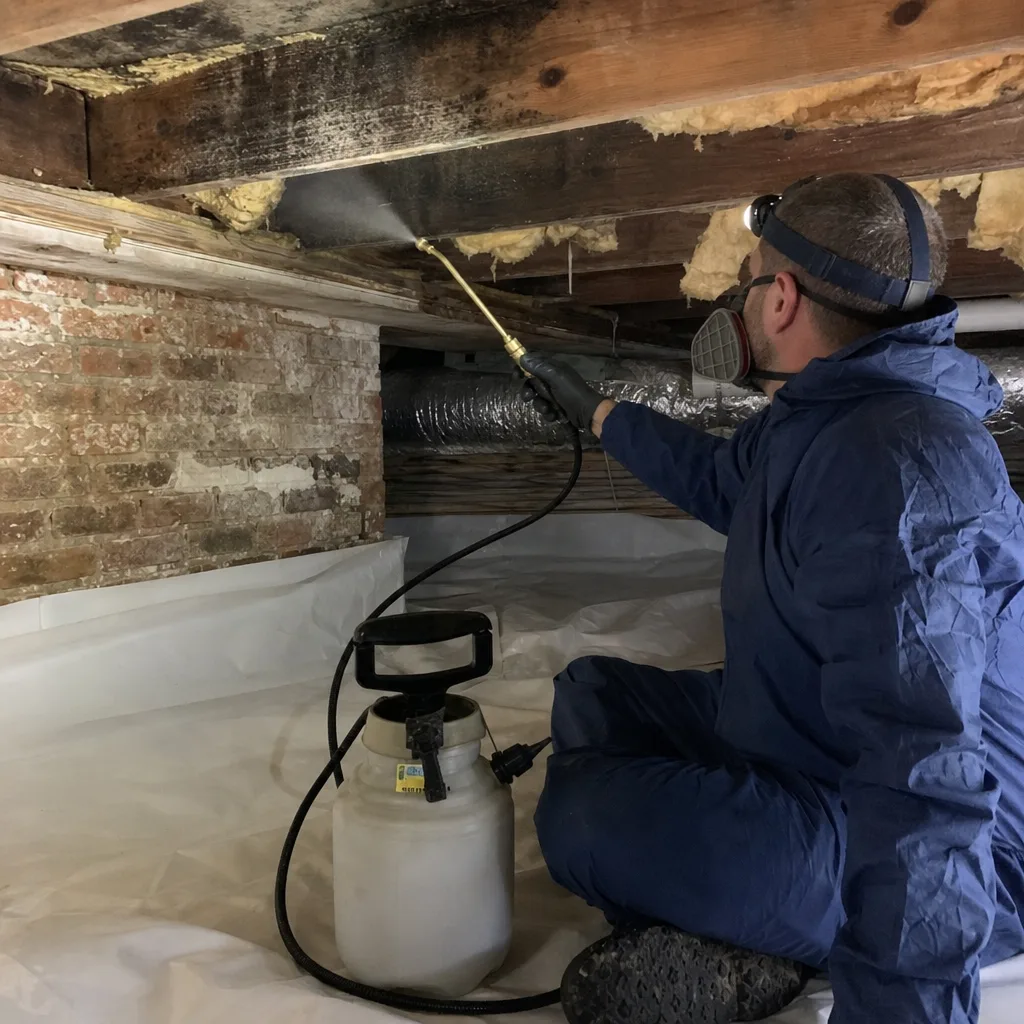
Structural Drying & Dehumidification
Drying a 1950s ranch basement in Woodrow means accounting for plaster walls, older framing, and the persistent humidity rising off clay-heavy soil. We moisture-map everything, place Phoenix dehumidifiers and XPOWER air movers to the room’s cubic footage, and take daily readings until the dry standard is met. You get the log. Your insurer gets the log. Nobody guesses.
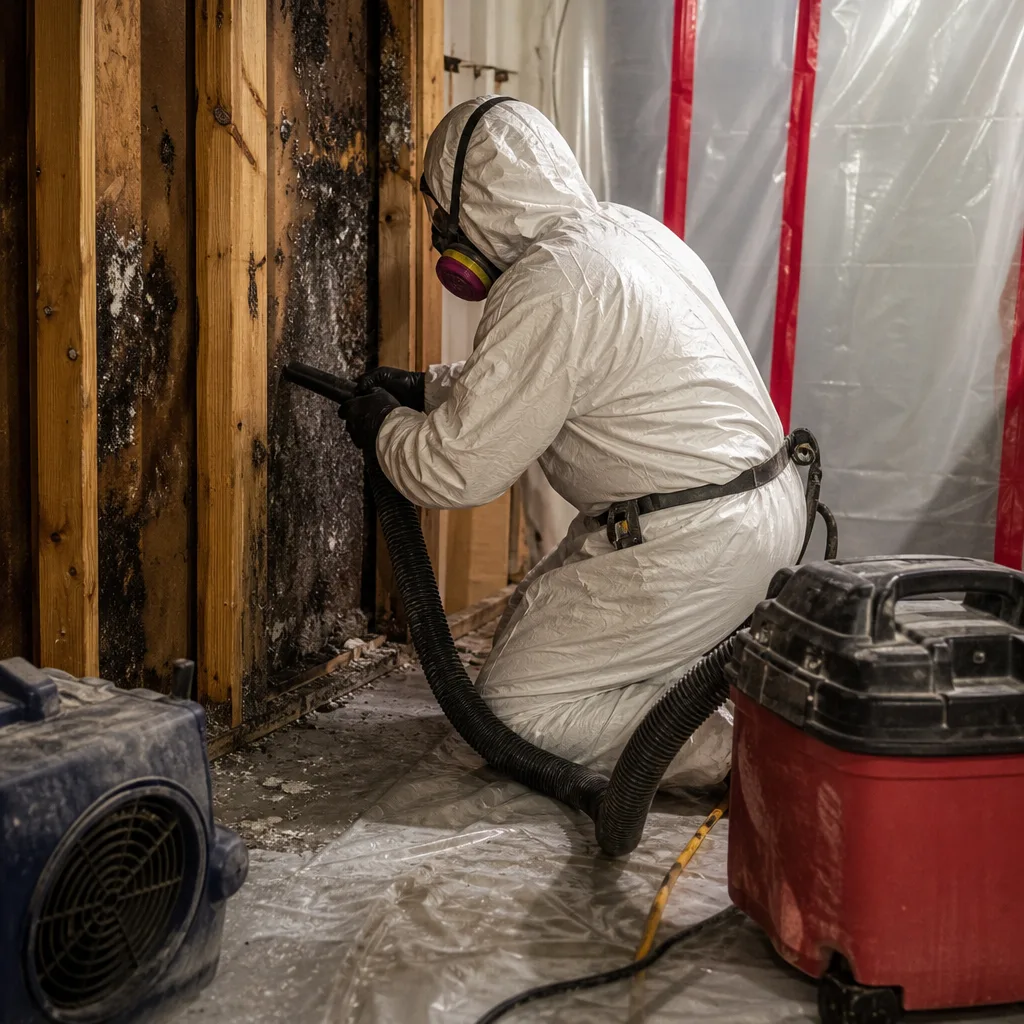
Flood Cleanup
When Arthur Kill tidal edges or summer storm remnants push water into Woodrow basements, the water is rarely clean. We treat flood events as contaminated until proven otherwise, contain the affected area, remove unsalvageable material, and disinfect before drying begins. The structural legacy of Hurricane Sandy taught Staten Island homeowners what happens when floodwater is handled like tap water.
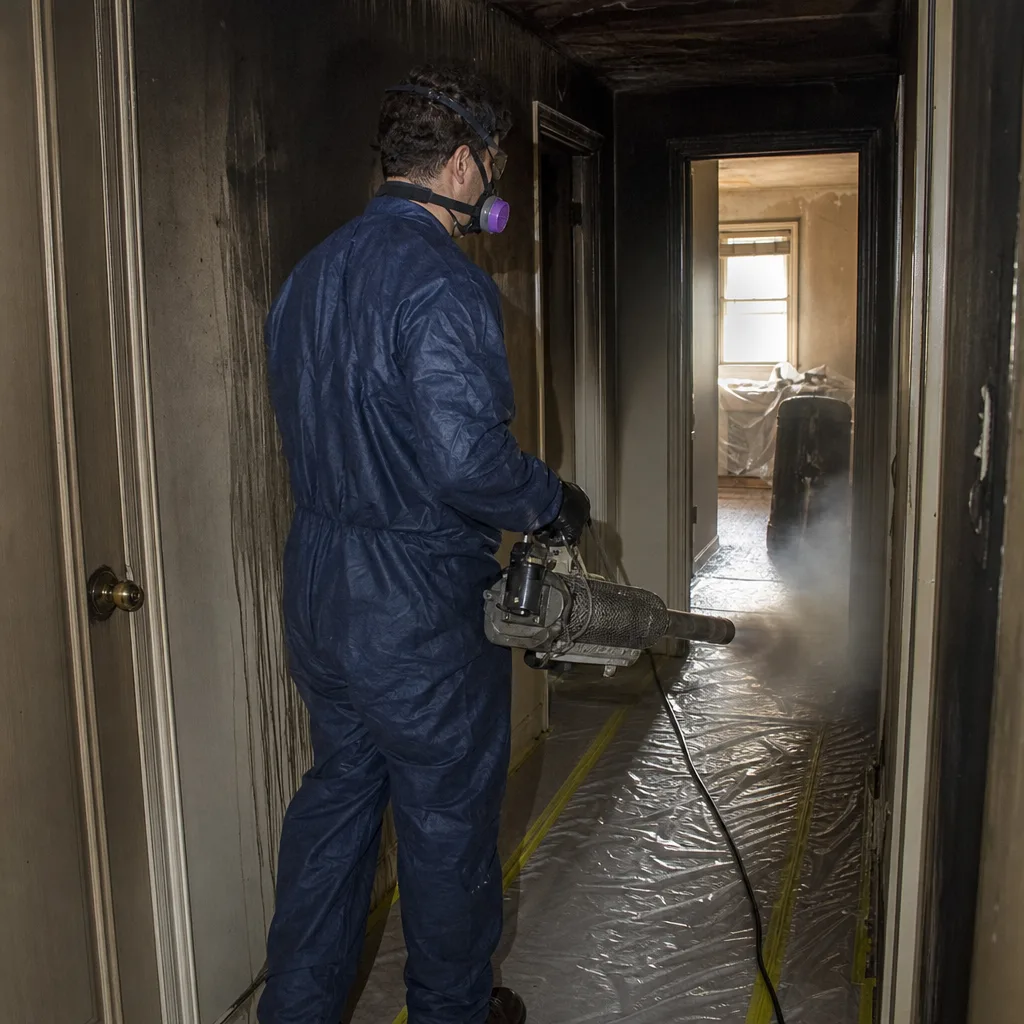
Burst Pipe Restoration
Our crew responded to a burst pipe in a 1960s split-level off Bloomingdale Road where clay-heavy soil had shifted the foundation and forced groundwater into the partially finished basement. After initial extraction with truck-mounted Dri-Eaz units, moisture mapping revealed wicking up kraft-faced insulation behind plaster walls, requiring containment and antimicrobial treatment before structural drying could begin. We restored the basement to pre-loss condition in one trip, with drying logs documenting every moisture reading for the homeowner’s insurance claim.
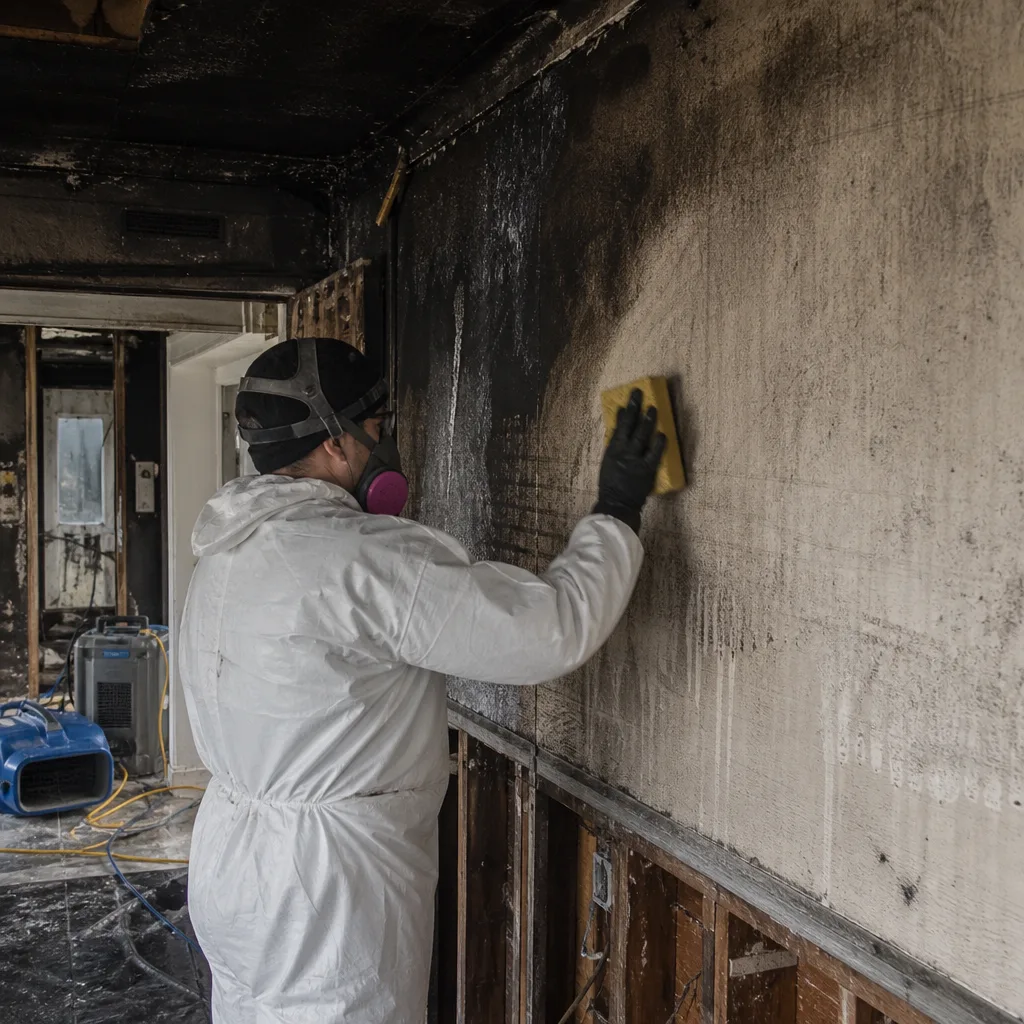
Basement Water Removal
Basements in Woodrow flood for specific, repeated reasons: the water table rises in spring, the soil can’t absorb what a summer thunderstorm dumps, and foundation cracks from decades of clay-soil movement let groundwater through. We don’t just pump the water out. We identify why it got in and build the repair plan around that cause, because a sump pump running on a timer won’t fix a grade anomaly near the old landfill boundary.
What happens when you call
- 1
A real person answersNo phone trees - you reach a local pro.
- 2
You get an upfront price rangeHonest numbers before anyone is dispatched.
- 3
A background-checked tech heads outLicensed & insured, dispatched right away.
- 4
You approve before work beginsNothing starts until you say go.
Water Damage Restoration Costs in Woodrow, NY
A typical water extraction and structural drying job in Woodrow runs $2,100-$4,800 for a single room or standard basement. Basement water removal with dehumidification and wall cavity treatment on a larger footprint typically lands between $3,500 and $6,800. Burst pipe restoration that includes drywall replacement and painting runs $4,000-$9,000 depending on how far water migrated behind plaster. Flood cleanup involving Category 3 water and pack-out starts around $5,500 and climbs with the scope of content cleaning and reconstruction.
What moves the price: the water category, how long the water sat before extraction started, whether walls are plaster or drywall, whether the basement is finished, and whether the subfloor or framing wicking extends beyond visible staining. Homes near the former Fresh Kills boundary sometimes reveal hidden drainage work costs when the grade issue gets corrected. You’ll always see a firm number in writing before work starts. Call (917) 924-4221 for a free visual inspection and a line-item scope. If you’re a senior or veteran, mention it and the 5% discount comes off automatically.
We Also Serve Cities Near Woodrow
Floodline Restoration Co. runs crews through Water Damage Restoration calls in Woodrow and the surrounding communities daily. We respond across Fairview, Harrison, East Bronx, and Hunts Point, with the same 45-minute commitment and the same written guarantee on every job.
Serving Woodrow, NY - Our Local Coverage Area
We’re based in the Woodrow area and know this community well. Use the map below to see our service coverage - if you’re nearby, we can almost certainly help.
Woodrow Water Damage Restoration Questions, Answered
How does Woodrow’s clay-heavy soil affect basement water removal compared to other Staten Island neighborhoods?
Clay soil drains slowly, so water from rain or groundwater wicking lingers against foundations longer in Woodrow than in sandier parts of Staten Island. That means basements stay wet longer, wicking rises higher into plaster and kraft-faced insulation, and drying times run longer. We size dehumidification to compensate.
Does living near the former Fresh Kills landfill change how water damage is scoped in my Woodrow home?
Yes. Homes within about a mile of the old landfill boundary sometimes sit on pre-remediation-era fill that has settled unevenly over decades. That uneven settlement creates grade issues that direct stormwater toward foundations, so any water damage scope has to check whether the drainage problem itself needs correction. Skipping that step means the next storm floods you again.
Are post-WWII Cape Cods in Woodrow more prone to Category 3 water after a nor’easter?
Cape Cods from the 1950s and 1960s often have basement entries, window wells, or crawl spaces that let storm surge and tidal water from Arthur Kill corridors enter during a nor’easter. That water is Category 3 by definition: grossly contaminated. We treat it as such, with containment and antimicrobial protocols, even if it looks like ordinary rainwater.
How fast can mold start in a Woodrow basement after a burst pipe?
Mold colonization can begin within 24 to 48 hours in Woodrow’s humid coastal climate, and it moves faster behind plaster walls and kraft-faced insulation where air doesn’t circulate. The 48-hour window is not a suggestion here. Getting extraction and drying started the same day is the difference between cleaning a basement and gutting one.
Why do some Woodrow homes need pack-out and containment during water damage restoration?
When water is Category 2 or 3, or when mold is already present, we contain the affected area with barriers and negative air pressure to stop spores from spreading to the rest of the house. Contents get packed out, cleaned, and stored until the structure is restored. In homes with older plaster and insulation, containment also protects living spaces from demolition dust and debris.
How fast can you actually get to Woodrow?
Our crews stage across Staten Island, which puts most Woodrow addresses within a 45-minute response window. The dispatcher confirms ETA when you call, and the lead tech calls when the truck rolls. Call (917) 924-4221 and we’ll tell you the exact ETA for your street.
Will my insurance cover water damage restoration in Woodrow?
Sudden and accidental damage like a burst pipe is typically covered under standard homeowners policies. Slow seepage, groundwater intrusion, and long-term maintenance failures may not be. We document everything from the first hour and coordinate directly with your adjuster, so you’ll know where your claim stands before you commit to a repair path.
Do I need full restoration or just a cleaning after a Woodrow basement flood?
If the water was Category 1 and dried within 48 hours, a thorough cleaning and dehumidification may be enough. If the water was contaminated, soaked into plaster or insulation, or sat for more than a day, you’re looking at structural drying at minimum. The only way to know is a moisture map. The visual inspection is free, and you’ll get an honest answer, not a sales pitch.
Written by Curt Bowman, Owner at Floodline Restoration Co. of Manhattan, serving Woodrow with certified water damage restoration crews and the 90-Day Done Right Promise.