
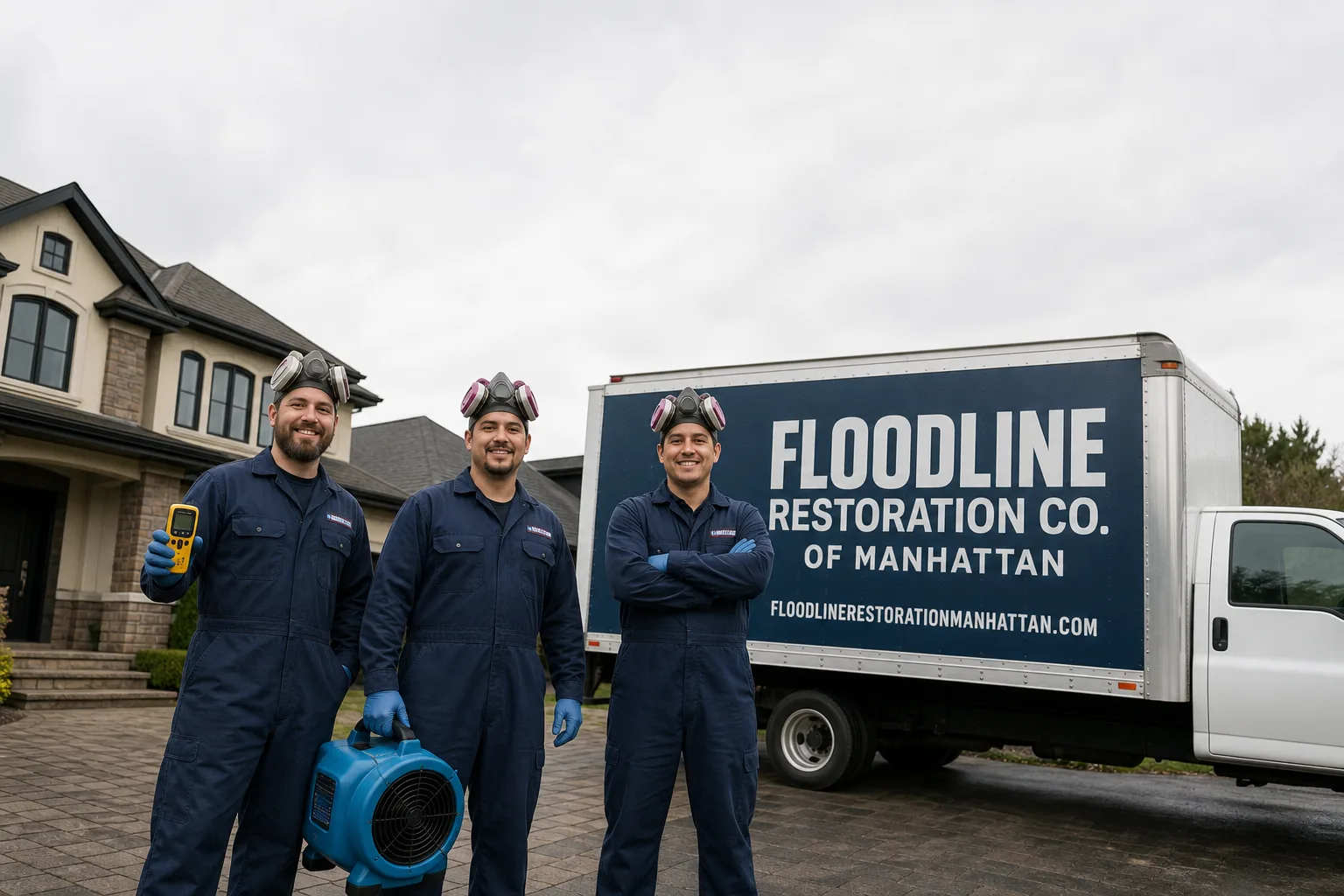
Free visual inspection and a written scope of work before any mitigation begins - photos, moisture readings, and drying logs go in your claim file
The scope we write is the scope we bill. Anything new gets shown to you, in writing, before we touch it.






 Before
 After
After Before
 After
After Before
 After
After24/7 Emergency Storm & Disaster Restoration in Fairview
Storm damage in Fairview doesn’t wait for business hours, and neither do we. Floodline Restoration Co. of Manhattan answers live at (917) 924-4221 around the clock, every day of the year. When a nor’easter tears through Dutchess County or an ice dam lets go at 3 a.m., a real dispatcher picks up, not a recording. We get a crew moving toward your street immediately and start extraction or board-up the same visit. The first hour matters most: standing water keeps soaking into drywall, framing, and insulation, and a punctured roof lets every passing shower add to the loss. A free visual inspection tells you exactly what you’re facing. Then we get to work.
Key Takeaways
- Live answer, 24/7: A person picks up at (917) 924-4221, even at 2 a.m.
- Same-visit stabilization: Board-up, tarping, or extraction starts when the crew arrives.
- Built for Fairview’s freeze-thaw cycle: We scope for the ice dams and rim-joist moisture other restoration companies miss.
- Direct insurance billing: We talk to the adjuster, send the documentation, and you skip the middleman role.
- Written guarantee: The 90-Day Done Right Promise comes with every job, no fine print.
Understanding Storm & Disaster Restoration Severity in Fairview Properties
Fairview’s housing stock runs heavily to 1940s-1970s Cape Cods and ranches with full basements, cast-iron or early copper supply lines, and rim joists that were never insulated to modern standards. That matters when storm water moves in. Category 1 water from a burst copper pipe inside a finished wall is a nuisance. Category 3 water from an April sump-pump failure carrying clay-heavy runoff is a health hazard requiring full containment. We moisture-map every affected surface, not just the visible patch. Ceiling staining on a Fairview ranch often means the drywall is saturated along the joist line and the insulation above is wicking moisture into the framing. That’s where hidden mold takes hold in older Dutchess County homes with minimal vapor barriers. Severity isn’t just about how deep the water got; it’s about what the water touched and what the house was built from.
Why Fairview Property Owners Choose Floodline Restoration Co. of Manhattan
- 45-minute response commitment: Our dispatch board sends the nearest certified crew the moment you hang up. In Fairview, that means help is on the way while the water is still rising, not after it’s had a day to soak in.
- A live person answers, 24/7: No call tree, no “leave a message.” A dispatcher picks up at any hour and stays on the line until a crew is assigned.
- Background-checked, uniformed technicians, IICRC-certified: WRT, FSRT, and AMRT-certified techs handle every phase, so the person who maps the moisture on day one is the same person who signs off on the rebuild.
- Free visual inspection: We assess the damage in plain terms, point out what’s urgent and what can wait, and give you a written scope before any work begins. No pressure, no surprise add-ons.
- Direct insurance billing: We document the loss from hour one, send the file to your carrier, and speak with the adjuster directly. You never play messenger.
- One team, full cycle: From extraction through drying to reconstruction, the same certified crew handles it. No mid-job handoff to a subcontractor you’ve never met.
Our Storm & Disaster Restoration Process
1. Inspection & Assessment
We walk the property with you and mark every wet surface. Thermal imaging finds water inside walls and ceilings, and hygrometers give us baseline moisture readings. You get a written scope before we start.
2. Extraction & Stabilization
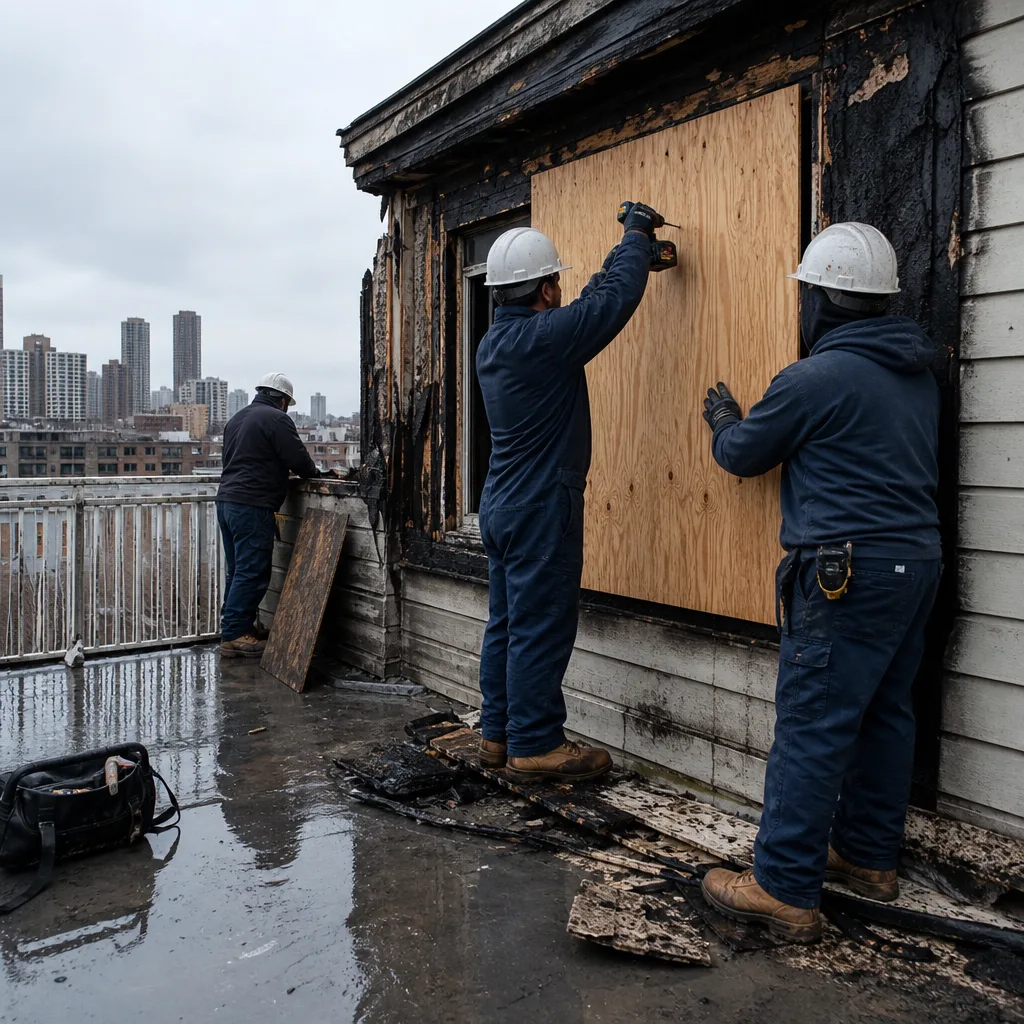
Standing water goes first, with truck-mounted extraction where access allows. If the roof is punctured or a window is gone, we board up or tarp the opening the same visit. The goal is to stop the loss from growing.
3. Drying & Dehumidification
Air movers and Dri-Eaz dehumidifiers go in based on a moisture map, not guesswork. We place equipment to chase water out of rim joists, sill plates, and wall cavities, not just dry the carpet. Daily readings are logged until the dry standard is met.
4. Cleaning & Sanitization
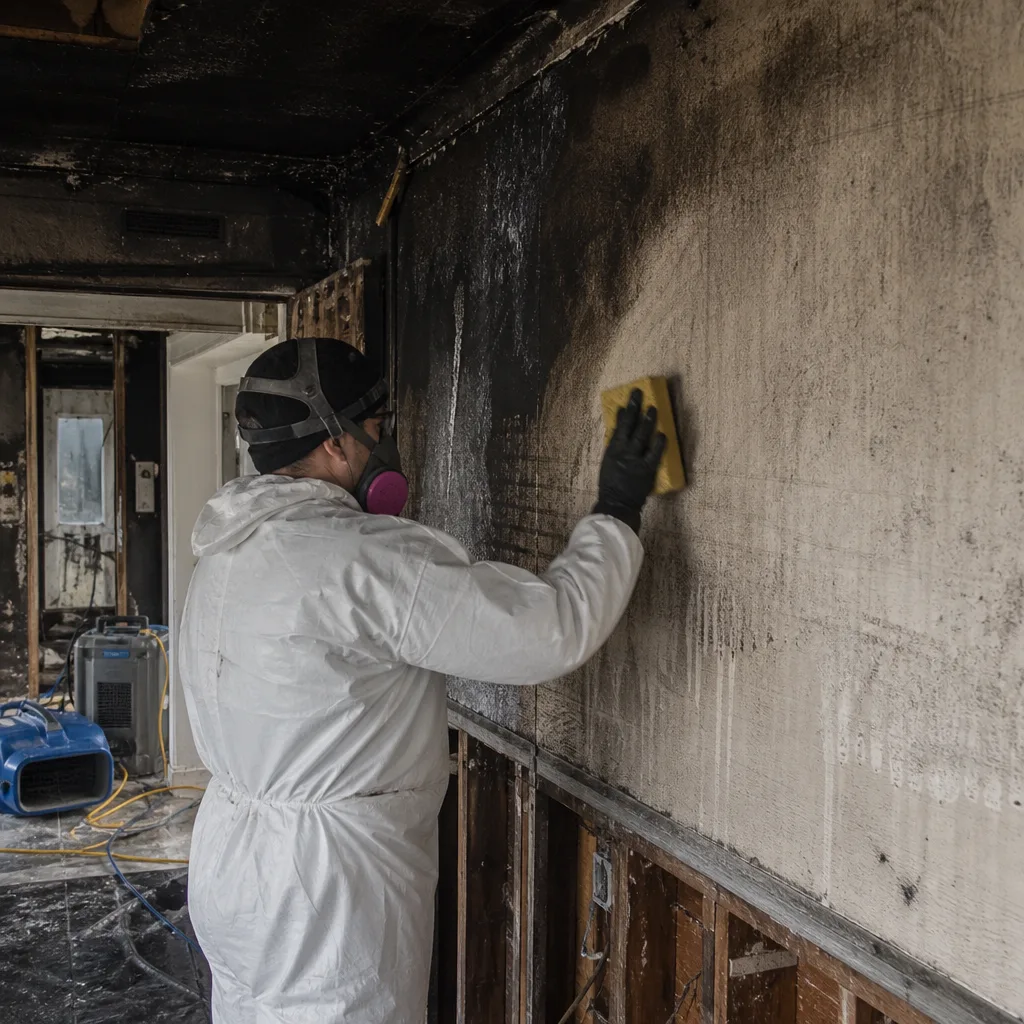
All affected surfaces get cleaned and treated. For Category 2 or 3 water events, we run HEPA air scrubbers and apply antimicrobial treatments where needed. The air you breathe matters as much as the surfaces you touch.
5. Ice Dam & Freeze-Thaw Specialty Treatment
This step is built for Fairview. We inspect the attic insulation and rim-joist air sealing that fed the ice dam or contributed to the leak in the first place. If we don’t address the cause, the same storm will come back next winter.
6. Repairs & Restoration
The same crew that dried the structure now rebuilds it: drywall, paint, flooring, trim. We finish what we started, and the 90-Day Done Right Promise comes with it in writing.
Need Emergency Storm & Disaster Restoration in Fairview Now?
Crews minutes away, answering live 24 hours a day. The sooner we start, the less it costs.
Working With Your Insurance Company
Most storm and disaster restoration work in Fairview is covered under standard homeowners policies, but the claim succeeds on documentation. That starts in the first hour, not after the demo crew leaves. We photograph every room, every wet wall, every patch of ceiling staining. We log moisture readings daily and keep them in a clean file for the adjuster. Our line-item scope matches industry-standard estimating formats, the language your carrier already uses. When the adjuster calls, we answer the phone. If the adjuster has questions, we walk them through the moisture map and the drying log. You stay out of the middle entirely.
What We Provide Your Insurer
- Thorough documentation of the loss
- Photos of all damage, room by room
- Moisture readings and drying logs
- A detailed, line-item scope of work
- Direct coordination with your carrier
Built for Fairview’s Loss Calendar
Fairview’s storm season runs on a clock set by the Hudson Valley’s freeze-thaw cycle. January through early March brings the real trouble: temperatures cycle across the freezing point every few days, which stresses supply lines until a cast-iron or early copper pipe lets go inside a wall. Low-pitched ranch rooflines hold snow long enough for ice dams to form along the eaves, and because these 1950s-60s homes leak heat through under-insulated attics, the melt water keeps feeding the dam until it wicks under the shingles. April snowmelt over clay-heavy valley soils sends water into full basements that were never designed for the volume, and the seepage season runs well past when homeowners think it’s over. Summer brings sudden thunderstorms that dump an inch or two on saturated ground and send runoff through cracked foundation walls. Nor’easters hit in late fall, stripping shingles and sending tree limbs through roofs. Every season has a signature loss pattern in Fairview, and our crews know each one. We don’t respond to these storms as generic emergencies; we come in expecting what Fairview’s houses do when water finds a way in.
Storm & Disaster Restoration Across Fairview’s Neighborhoods
Fairview sits in the mid-Hudson Valley, west of Poughkeepsie, and its residential streets follow the valley’s rolling terrain. Homes along Creek Road often back onto the stream corridor, where spring runoff fills basements faster than the clay-heavy soil can absorb it. The ranch neighborhoods off Salt Point Turnpike, built in the 1950s and 60s, show the classic low-pitched rooflines that feed ice dams. Cape Cods clustered near Dutchess Turnpike tend to have finished basement rooms that conceal moisture damage behind paneling and drywall until mold shows up on the baseboard. Over near Titusville Road, original cast-iron plumbing runs through uninsulated rim joists, and a January freeze can split a pipe inside a wall cavity before anyone sees the water. Our crews know these streets not because we memorized a map, but because we’ve pulled water out of these houses. The response route to Creek Road is different from the route to Titusville Road, and the failure patterns are different too. That’s the local knowledge you can’t fake with a franchise playbook.
Specialized Storm & Disaster Restoration Services We Offer in Fairview
Storm Damage Cleanup
When a nor’easter drops a limb through the roof or a summer squall floods the living room, cleanup is the first step and it sets the tone for everything after. We remove wet debris, extract standing water, and clear the mess before drying begins. On Fairview ranches, this usually means pulling saturated carpet and pad from the basement slab and cutting out wet drywall along the waterline. The line the water left is where we start.
Flood Damage Restoration
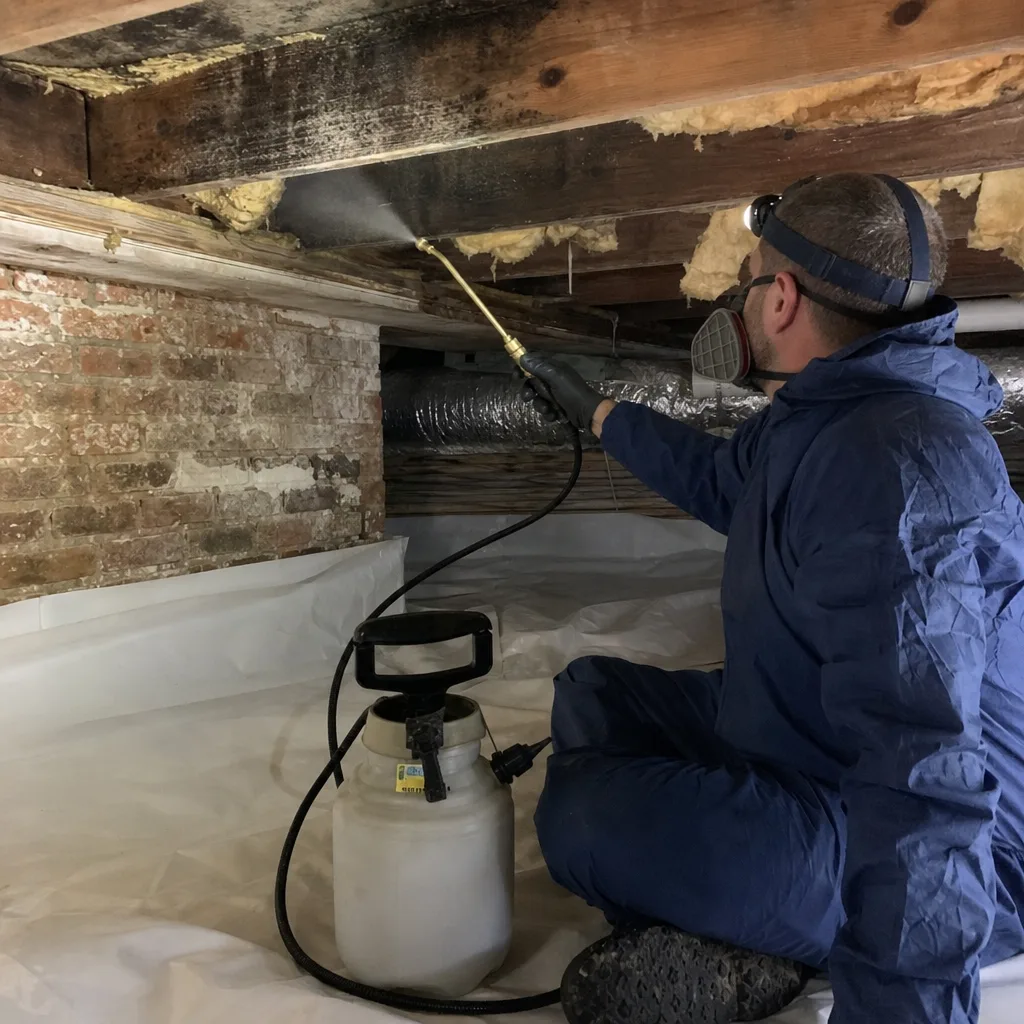
Fairview’s valley hydrology means basement flooding is a seasonal certainty, not a surprise. Clay-heavy soils drain poorly, and spring snowmelt pushes groundwater against foundation walls until it finds a seam. We extract, dry, and rebuild, but we also look at the drainage picture: is the grade sloping toward the house? Are the gutters moving water away or dumping it at the foundation? A restoration that ignores drainage just sets up next April’s flood.
Emergency Board-Up
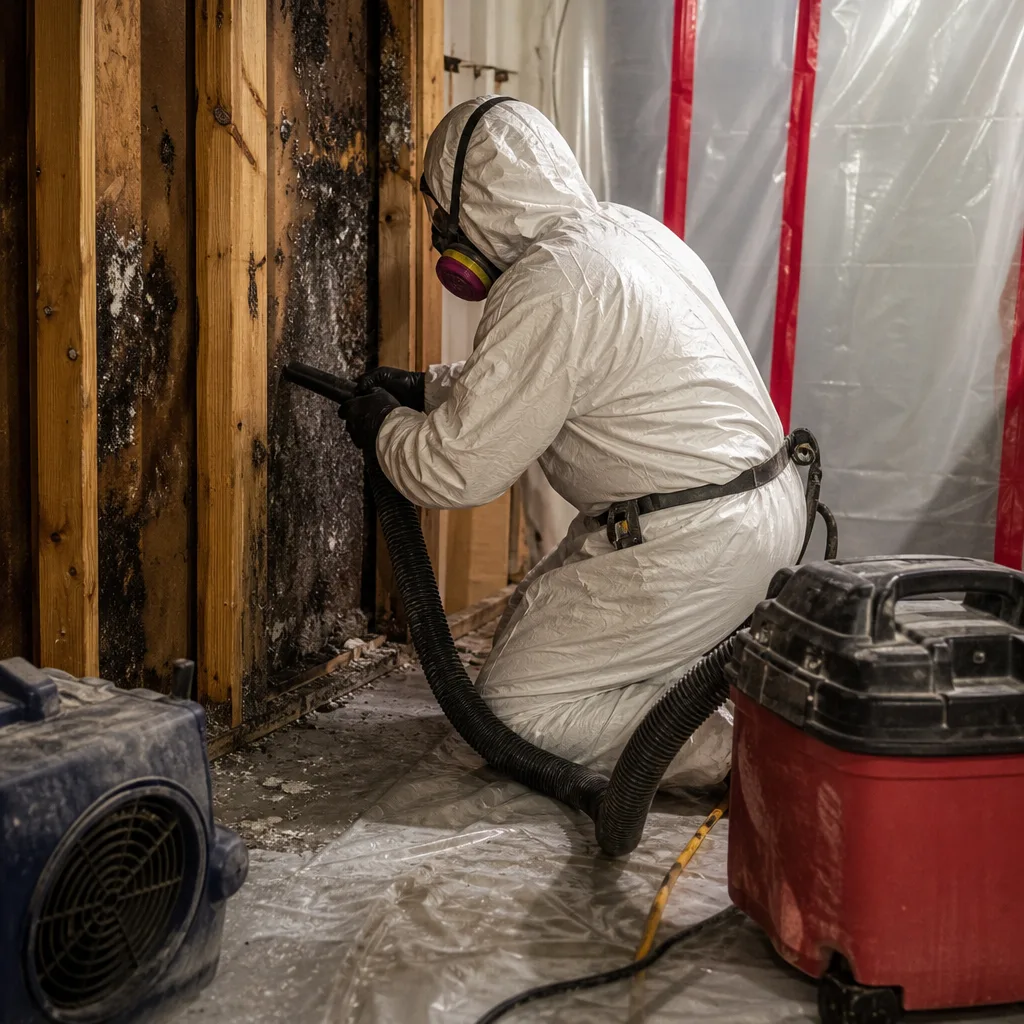
A broken window or a storm-punched wall leaves your home open to weather, animals, and people who have no business being there. We board up openings with plywood and framing screws the same visit, then schedule the permanent repair. On Fairview’s older homes with original single-pane windows, we cut the board-up to preserve the existing trim and frame so the final repair doesn’t turn into a full window replacement.
Roof Tarping
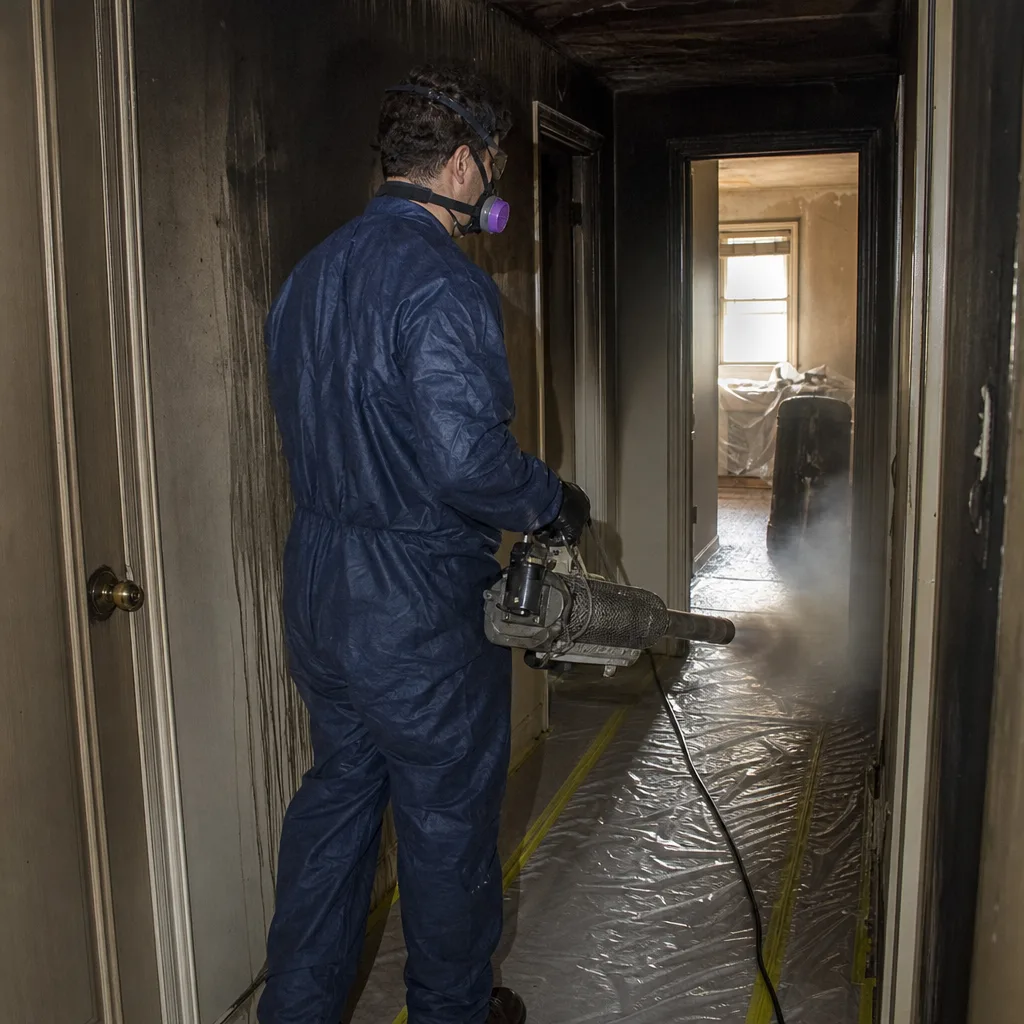
Fairview ranch roofs with low pitches are especially vulnerable to wind-lifted shingles and ice-dam backflow under the eaves. Once water has opened a path through the roof deck, every rainstorm sends more through. We tarp the affected area with fasteners that hold in valley wind, sealing the opening until a roofer can do permanent repairs. The tarp buys you time; it shouldn’t buy you another leak.
Debris Removal
Storm debris on a Fairview property is rarely just a dumpster job. A fallen limb that smashed a fence may have pulled a section of roof edge with it. A downed tree over a driveway may hide a damaged foundation vent or a cracked foundation wall. We clear the debris and check what it hit, then document it for your insurer. The removal is simple; the inspection underneath is the part that saves money later.
What happens when you call
- 1
A real person answersNo phone trees - you reach a local pro.
- 2
You get an upfront price rangeHonest numbers before anyone is dispatched.
- 3
A background-checked tech heads outLicensed & insured, dispatched right away.
- 4
You approve before work beginsNothing starts until you say go.
Storm & Disaster Restoration Costs in Fairview, NJ
Fairview storm work prices depend on the damage path, but you should know what to expect. A basic storm cleanup with extraction and drying in a single basement room typically runs $2,200 to $4,800. Full basement flood restoration with Category 3 water, containment, disposal of saturated materials, and rebuild commonly lands between $8,000 and $18,000. Emergency board-up and roof tarping run $450 to $1,200 for a single opening, often paid up front and reimbursed by your carrier. Ice dam remediation with ceiling repair and insulation air-sealing on a Fairview ranch usually falls between $3,500 and $8,500, depending on how long the water sat and how much insulation needs replacing. The variables are the same every time: how much material was saturated, how long the water sat, and whether the rim joists and wall cavities stayed wet behind the surfaces. We start with a free visual inspection and a written scope. You’ll see the number before we start, not after the drywall is open. Call (917) 924-4221 and we’ll come look.
We Also Serve Cities Near Fairview
Our crews routinely work Storm & Disaster Restoration jobs in Fairview and the surrounding Dutchess County communities. That includes Cliffside Park, Ridgefield, Edgewater, and Palisades Park. Same team, same guarantee, same live answer at 2 a.m.
Fairview Storm & Disaster Restoration Questions, Answered
Why does my Fairview ranch get ceiling stains every winter, even after the roof was repaired?
Because the low-pitched roofline on your 1950s-60s ranch holds standing meltwater long enough to wick backward under the shingles, and the attic above is warm enough to feed a new ice dam every year. The roof repair fixed the shingle, but it didn’t fix the heat loss that creates the dam. The fix is insulation air-sealing, not another roofing patch. If you keep seeing stains each winter, call (917) 924-4221 and we’ll scope the whole attic, not just the wet spot.
How do you handle cast-iron or early copper pipes that burst during a Fairview freeze-thaw cycle?
We extract and dry first, then we assess the pipe. Early copper can often be repaired with a soldered joint. Cast iron is brittle after decades of thermal cycling, and a split cast-iron section usually needs replacement, not patching. The freeze-thaw pattern in Fairview stresses both materials every winter. Our moisture map identifies whether the water spread into wall cavities and rim joists before the pipe was shut off. Call (917) 924-4221 for a free inspection and a straight answer on your options.
After snowmelt floods my Fairview basement in April, what’s the first step to prevent mold?
Extract the water, pull saturated materials, and get air movers and Dri-Eaz dehumidifiers running within the first 24 hours. In Fairview’s older full basements, mold takes hold quickly behind paneling and in rim-joist cavities that never fully dry on their own. We moisture-map the hidden framing, not just the floor. Then we look at the drainage picture so next April isn’t a repeat. Call (917) 924-4221 and we’ll have a crew there while the water is still rising.
Do I need to replace my 1960s ranch’s original roof deck after an ice dam soaks through?
Not necessarily. Wet plywood or plank decking can often be dried in place with targeted air movement if we catch it early and the wood hasn’t delaminated. If the deck has been getting wet every winter for years, it may be rotted at the eaves and need section replacement. The bigger question is why the water got through in the first place. An ice dam that formed once will form again unless the attic heat loss is addressed. Call (917) 924-4221 and we’ll assess both the deck and the insulation.
Why does my Fairview Cape Cod need a pack-out after a Category 2 water event from a leaking supply line?
Category 2 water means the water had come into contact with something before it soaked your floors, whether that’s a leaking appliance or a supply line running through an uninsulated rim joist. In a Fairview Cape Cod with finished basement rooms, the water travels behind drywall and along the sill plate. A pack-out gets your furniture, boxes, and personal items out of the affected rooms so we can dry the structure effectively. Leaving belongings in place just traps moisture against the walls and feeds mold growth. Call (917) 924-4221 and we’ll tell you what needs to be moved and what doesn’t.
How fast can someone actually get to my Fairview home in a storm?
We commit to a 45-minute response time for emergency calls in Fairview. A live dispatcher picks up at (917) 924-4221 around the clock, and the nearest available crew starts moving immediately. In a storm with multiple calls coming in, we triage by severity: active water intrusion and structural openings go first. You’ll get a straight answer on when a crew will arrive, and we’ll be there when we say.
Will my insurance cover ice dam and storm damage on a Fairview home?
Most standard homeowners policies cover sudden and accidental water damage, including damage from ice dams, burst pipes, and storm-driven rain. The key is documentation. We photograph everything from hour one, log moisture readings daily, and send the file to your adjuster directly. Deductibles and exclusions vary by policy, so we can’t quote your coverage, but we can hand your insurer a claim-ready file. Call (917) 924-4221 and we’ll document everything while it’s still fresh.
What should I do in the first 30 minutes after storm water gets into my Fairview home?
Call (917) 924-4221 first, not last. Then shut off the water if a pipe burst, cut power to the affected area if water is rising near outlets, and move valuables and electronics off the floor. Don’t walk through standing water if the electricity is still on. Don’t use a shop vac on a full room of water; let the extraction crew handle it. The first 30 minutes determine how much material can be dried and how much has to be cut out. We’ll walk you through it on the phone while the crew is on the way.
Are your technicians actually certified, or is that just a marketing line?
Our technicians are background-checked, uniformed, and certified to IICRC standards including WRT, FSRT, and AMRT, plus RIA and IFA training. Every job from extraction through reconstruction is handled by the same certified crew, not handed off to whoever is available. Curt Bowman built the company in 2010 around a dispatch board and trained crews, not salespeople. The person who signs the work order is the person accountable for the result.
How long does full drying and restoration take on a Fairview storm job?
It depends on the water category and how long it sat, but a typical basement seepage job in Fairview takes four to seven days for structural drying, with rebuild following after. Category 3 floods with containment and material removal run longer. We log daily moisture readings and show you the numbers until the dry standard is met. We won’t call it dry because the surface feels dry. Call (917) 924-4221 and we’ll give you a timeline that matches your job, not a generic estimate.
Storm & Disaster Restoration in Fairview: What to Do While You Wait
While the crew is on the way, there are a few things you can do safely. Move electronics, paperwork, and anything irreplaceable off the floor and out of the wet zones. Prop up furniture legs on blocks or foil. Open windows if the weather allows and it’s safe to do so. Don’t touch electrical panels if water is near them, and don’t walk through standing water that might be in contact with a live outlet. Take your own photos before we arrive for your records. The moment we get there, we take over: extraction, board-up, tarping, and the documentation your insurer will ask for. You don’t need to be a hero. You need to call (917) 924-4221 and let us do the rest.
Serving Fairview, NJ - Our Local Coverage Area
We’re based in the Fairview area and know this community well. Use the map below to see our service coverage - if you’re nearby, we can almost certainly help.
Contact Floodline Restoration Co. of Manhattan for Storm & Disaster Restoration in Fairview
If storm water, ice dams, or a burst pipe has found its way into your Fairview home, call (917) 924-4221 right now. A live person answers, day or night. We’ll get a certified crew to your street, start extraction or board-up the same visit, and give you a written scope before any work begins. Our Storm & Disaster Restoration team handles every phase from emergency response through drying and rebuild. We answer the phone at two in the morning because that’s when storms happen. Done right, and backed in writing.
Written by Curt Bowman, Owner at Floodline Restoration Co. of Manhattan, serving Fairview and the mid-Hudson Valley.