
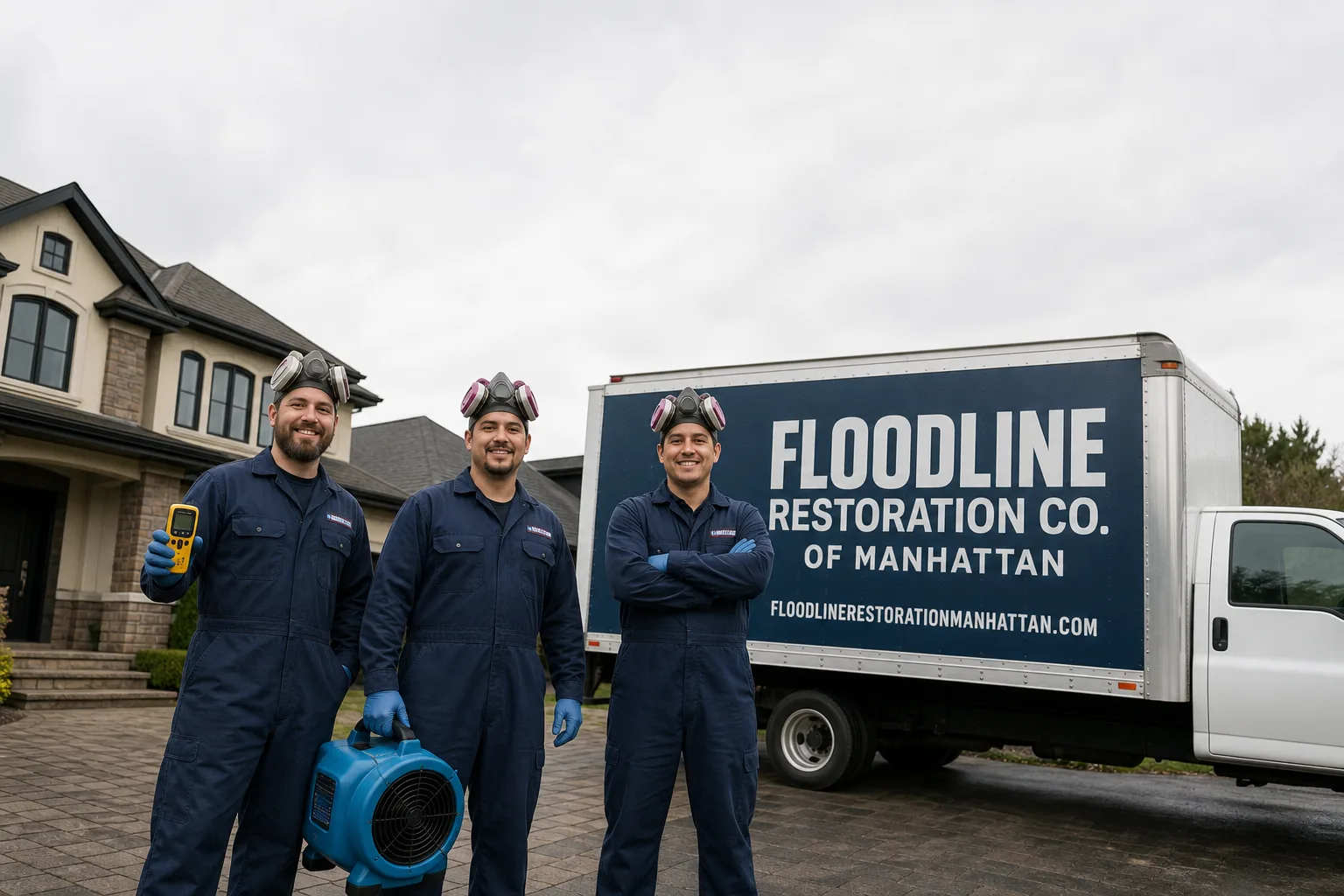
Free visual inspection and a written scope of work before any mitigation begins - photos, moisture readings, and drying logs go in your claim file
The scope we write is the scope we bill. Anything new gets shown to you, in writing, before we touch it.






 Before
 After
After Before
 After
After Before
 After
After24/7 Emergency Storm & Disaster Restoration in Fort Lee
Storm damage in Fort Lee doesn’t wait for business hours, and neither do we. A nor’easter rips through the Palisades at 2 a.m., wind-driven rain breaches a curtain-wall joint on the 14th floor, and within minutes water is migrating through the concrete slab into the unit below. That’s when you need a live person on the phone, not a recording. Call (917) 924-4221 any hour of any day and a dispatcher answers. A certified crew is dispatched to Fort Lee immediately, because the first hour after water intrusion determines whether you’re facing a dry-out or a full-scale mold remediation inside wall cavities you can’t see. We do a free visual inspection, set containment if needed, and start extraction the same visit. That’s how you stop a bad night from becoming a six-figure claim.
Understanding Storm & Disaster Restoration Severity in Fort Lee Properties
Storm damage in Fort Lee falls into distinct categories, and the building typology here shapes everything about the job. Water from a burst supply line or wind-driven rain is classified by contamination level: Category 1 is clean water from a broken pipe or supply line, Category 2 carries significant contamination (think washing machine overflow or sump failure), and Category 3 is grossly contaminated, like floodwater carrying sewage, debris, and whatever the storm pushed through the streets. In Fort Lee’s 1960s-80s concrete towers, the real enemy is Category 1 water that gets classified as minor on day one. It seeps through concrete slab assemblies, wicks up behind baseboards, and sits inside cavity walls where you can’t see it. By the time you smell it, it’s become a mold situation. That’s why we use thermal imaging and moisture mapping on every job, not just the obvious ones. We log readings with Dri-Eaz and Phoenix equipment daily until the structure meets the dry standard. In a high-rise, “looks dry” means nothing. The slab tells the truth.
Why Fort Lee Property Owners Choose Floodline Restoration Co. of Manhattan
- 45-minute response commitment to Fort Lee: We dispatch from just across the bridge, so a certified crew is on-site fast. Water migrating through concrete doesn’t wait for a slot on next week’s calendar.
- Live answer, 24 hours a day: A dispatcher picks up at 2 a.m., every time. No phone tree, no call-back later. The person you talk to starts the dispatch while you’re still on the line.
- IICRC-certified crews trained to WRT and ASD standards: Water damage restoration and applied structural drying are the specific certifications that matter here. Our techs carry them, plus RIA and IFA training.
- Free visual inspection before you commit: We look, we measure, we show you exactly what we found. Then you get a written scope. No pressure, no mystery line items.
- Direct insurance billing: We document from the first hour, communicate with your adjuster directly, and submit our line-item scope straight to your carrier. You never play messenger.
- One team from extraction to reconstruction: The same Floodline crew that sets containment and runs drying also handles the rebuild. No mid-job handoff to a crew you’ve never met.
Our Storm & Disaster Restoration Process
Inspection & Assessment
We arrive, we map the moisture with hygrometers and thermal imaging, we photograph everything, and we identify the exact path water has taken through walls, slab assemblies, and finishes. You get a written scope before any work starts.
Extraction & Stabilization
We remove standing water fast, set containment if contamination or mold is present, and stabilize any structural risk. In a Fort Lee high-rise, this often means coordinating freight elevator access and protecting common areas from equipment traffic.
Drying & Dehumidification
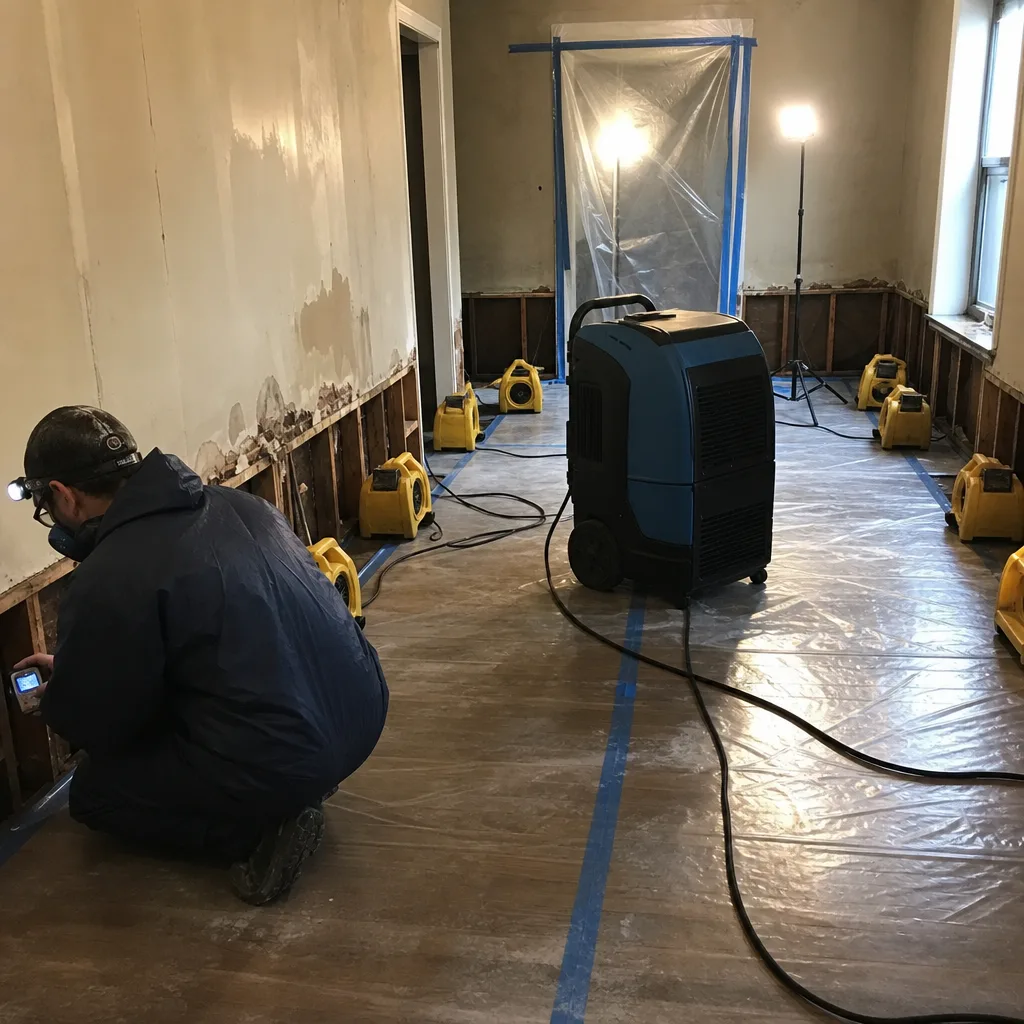
Dri-Eaz air movers and Phoenix dehumidifiers run continuously, with daily moisture readings logged until the concrete slab and framing meet the dry standard. In slab construction, that takes longer than in wood-frame homes. We don’t rush it.
Cleaning & Sanitization
We clean and sanitize affected surfaces, remove debris, and run HEPA air scrubbers where water has been sitting. This is where we stop mold before it starts, especially in cavity spaces you can’t see.
Storm-Specific Treatment
Wind-driven rain through curtain-wall joints leaves mineral deposits and contamination in wall cavities. We treat those surfaces, address damaged glazing seals where we can, and document everything for your carrier and your building management.
Repairs & Restoration
The same crew that handled the drying now handles the put-back: drywall, baseboards, paint, flooring, and any structural work the slab or framing requires. You’re not coordinating between three different contractors.
Need Emergency Storm & Disaster Restoration in Fort Lee Now?
Crews minutes away, answering live 24 hours a day. The sooner we start, the less it costs.
Working With Your Insurance Company
Here’s what we’ve learned doing Storm & Disaster Restoration in high-rise buildings: claims stall when documentation is thin. A Fort Lee condo loss often involves three separate unit owners, a building common area, and a rental tenant, each with a different carrier and a different adjuster. The contractor who shows up with a notebook and a wet vac is not going to move that claim. We document from the first hour, with room-by-room photos, moisture readings, and a written scope that matches industry-standard estimating software your adjuster already recognizes. We talk to your carrier directly. You don’t sit on hold explaining Category 2 water to someone who’s never seen your building.
What We Provide Your Insurer
- Thorough documentation of the loss
- Photos of all damage, room by room
- Moisture readings and drying logs
- A detailed, line-item scope of work
- Direct coordination with your carrier
Built for Fort Lee’s Loss Calendar
Fort Lee’s storm damage follows a pattern, and we’ve spent over 42 years learning it. January and February bring deep freezes that burst supply lines in the original galvanized piping still running through the borough’s older towers. That’s not a storm in the traditional sense, but it hits the same way: a 10th-floor rupture sends water through eight floors of drywall before anyone notices. Spring brings the thaw and the rain, which exposes every failed membrane on rooftop mechanical rooms and parapet walls. Summer thunderstorms hit fast and hard, overwhelming the drainage on aging high-rises and sending water through curtain-wall joints that haven’t been resealed since the Carter administration. Fall and winter bring nor’easters, and nothing tests a Fort Lee high-rise like sustained wind-driven rain pounding the Palisades ridge. We schedule for all of it, because we know the pattern.
The High-Rise Reality of Storm & Disaster Restoration in Fort Lee
Here’s the honest truth about Storm & Disaster Restoration in Fort Lee: this is not a single-family-home drying job with a longer elevator ride. Most of Fort Lee’s residential stock is mid- and high-rise condominium towers built between the 1960s and the 1980s. When a supply line ruptures on an upper floor, that water doesn’t stop at the unit’s ceiling. It travels through the concrete slab assembly, wicking laterally and vertically through the structure itself. We’ve seen a 9th-floor leak present as a 6th-floor ceiling stain two days later. The moisture had been traveling through the slab the whole time. That’s why “wait and see” is the worst possible strategy here. By the time you see it, it’s been there for days. And in a building where three different condo owners, a common area, and a rental tenant are all affected, the authorization process itself becomes part of the damage. A restoration contractor who doesn’t understand that dynamic stalls out waiting for signatures while the moisture keeps moving. We know how to work with building management, condo boards, and multiple adjusters simultaneously, because we’ve done it hundreds of times in Fort Lee.
Storm & Disaster Restoration Across Fort Lee’s Neighborhoods
Fort Lee is a compact borough, but the damage patterns shift block by block. Along Palisade Avenue, the older high-rises from the 1960s and 70s sit directly on the ridge line, fully exposed to wind-driven rain. These are the buildings where curtain-wall joints fail during nor’easters and water intrudes through the glazing. Around Center Avenue and the commercial corridor near Main Street, we see more mixed-use buildings with restaurant spaces below residential units, where a second-floor leak becomes a first-floor ceiling collapse. The towers near the George Washington Bridge approach handle both storm surge and the constant vibration of bridge traffic, which stresses aging pipe connections. And in the residential blocks east of Lemoine Avenue, the older mid-rise buildings with original cast-iron drains fail from the inside out: hard Bergen County water has been eating at those pipes for fifty years. Our crews know which freight elevators can take a Dri-Eaz dehumidifier without violating the building’s weight limit, because we’ve been through the loading docks of every major tower in this borough.
A Night on Palisade Avenue
Our crew responded to a wind-driven rain intrusion at a 1970s-era tower on Palisade Avenue during a sustained nor’easter. The wind forced water through deteriorated curtain-wall joints above a 12th-floor unit, and by the time we arrived, the moisture had already traveled into the concrete slab and was showing up as a patch on the ceiling of the unit below. We set containment on both floors, ran structural drying with Dri-Eaz air movers and dehumidifiers, and took moisture readings every 4 hours. The building super needed proof that the slab had returned to pre-loss condition before he’d sign off on the scope of work. We had the logs. We had the thermal imaging. And we had the dry standard met in five days. That’s the difference between a restoration company that understands concrete slab drying and one that’s guessing.
Specialized Storm & Disaster Restoration Services We Offer in Fort Lee
Storm Damage Cleanup
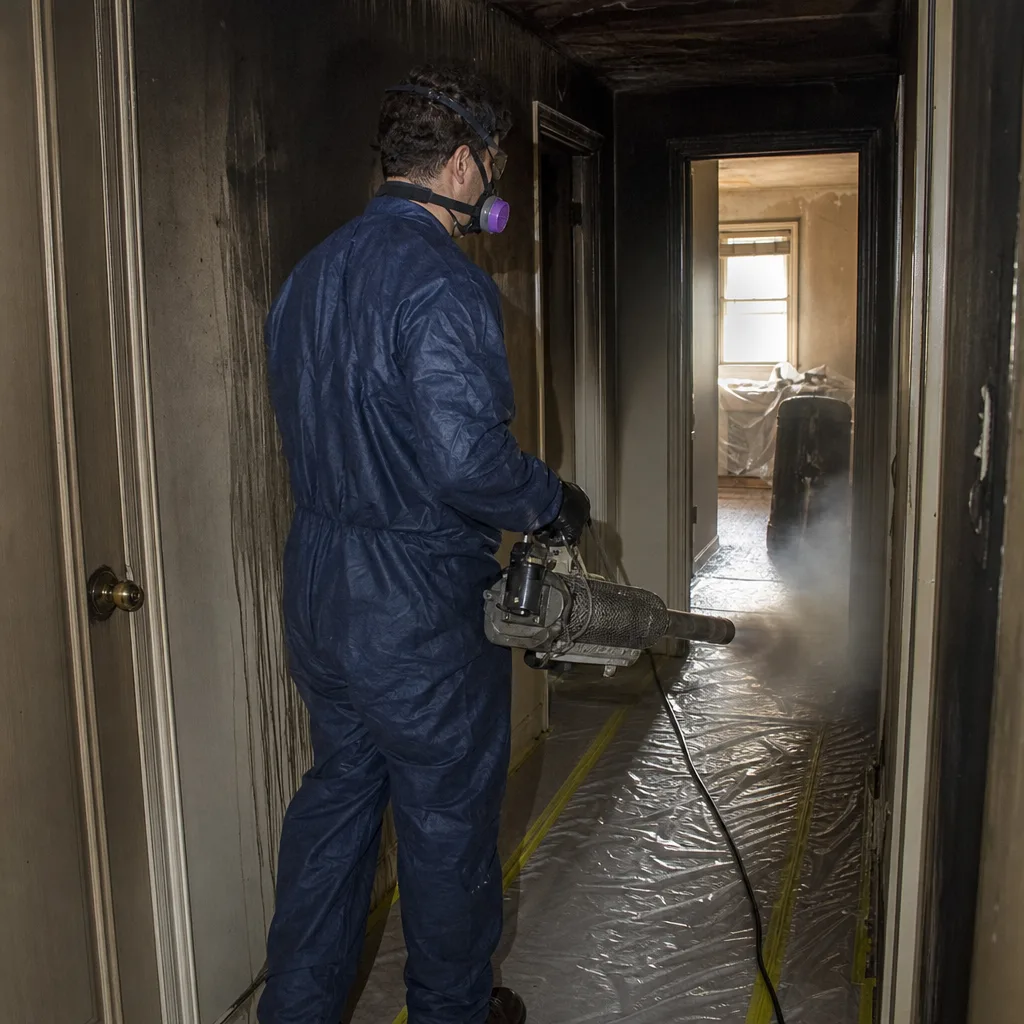
After a storm blows through Fort Lee, the damage is rarely obvious. Water hides inside wall cavities, behind baseboards, and under finished flooring in the slab. We clean what you can see and treat what you can’t, with air scrubbers running where contamination is present and HEPA filtration on every storm job.
Flood Damage Restoration
Whether it’s a burst supply line on the 15th floor or stormwater overwhelming the drainage on a Palisade Avenue tower, flood damage in Fort Lee moves through concrete. We extract, dry to the slab’s actual dry standard, and document every reading for the multiple insurers who will be involved.
Emergency Board-Up
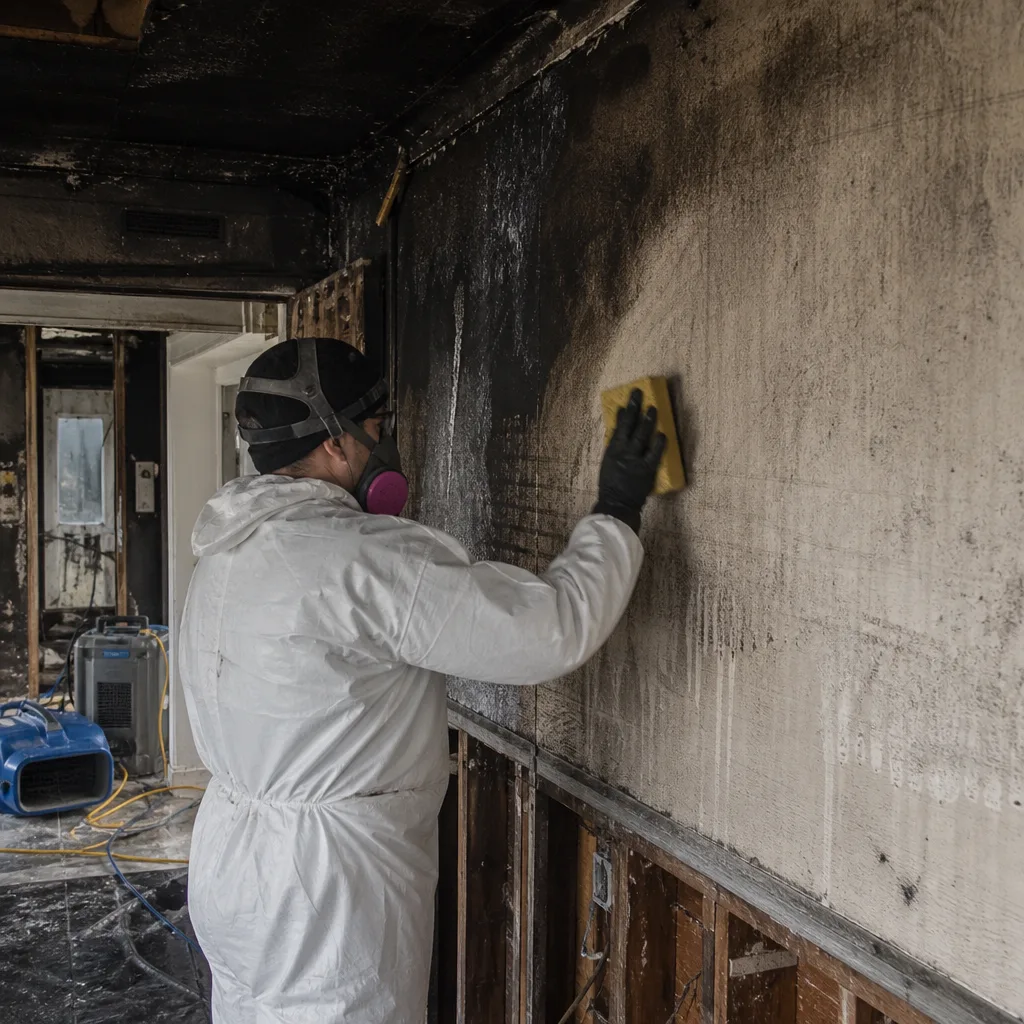
Broken windows and failed glazing seals after a nor’easter leave your unit open to the next storm. We board up fast, using materials that hold against Hudson Valley wind, then coordinate the permanent repair with your building’s management so you’re not waiting through another weather system.
Roof Tarping
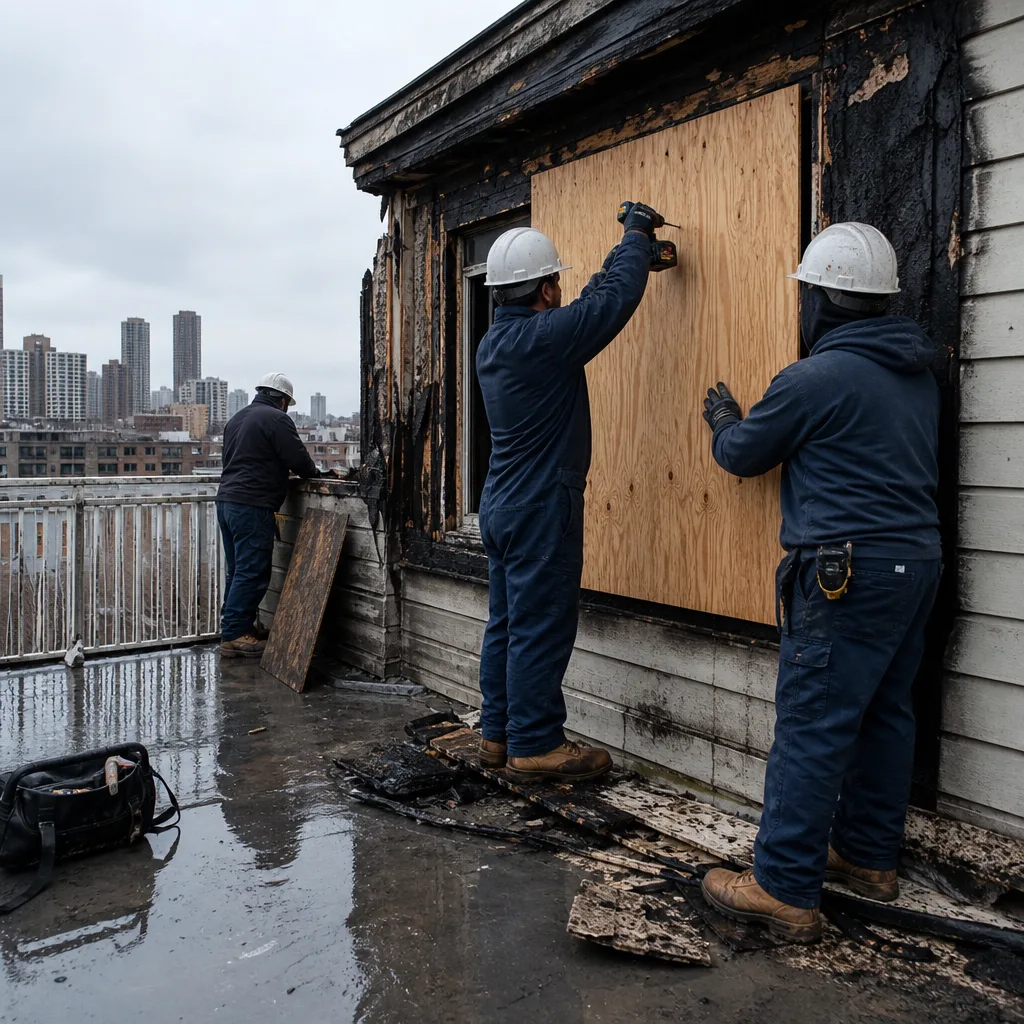
Rooftop mechanical rooms and parapet walls take the worst of Fort Lee’s freeze-thaw cycle. When a membrane fails and water starts coming in, we tarp the affected area to stop the bleeding, then scope the permanent repair in writing.
Debris Removal
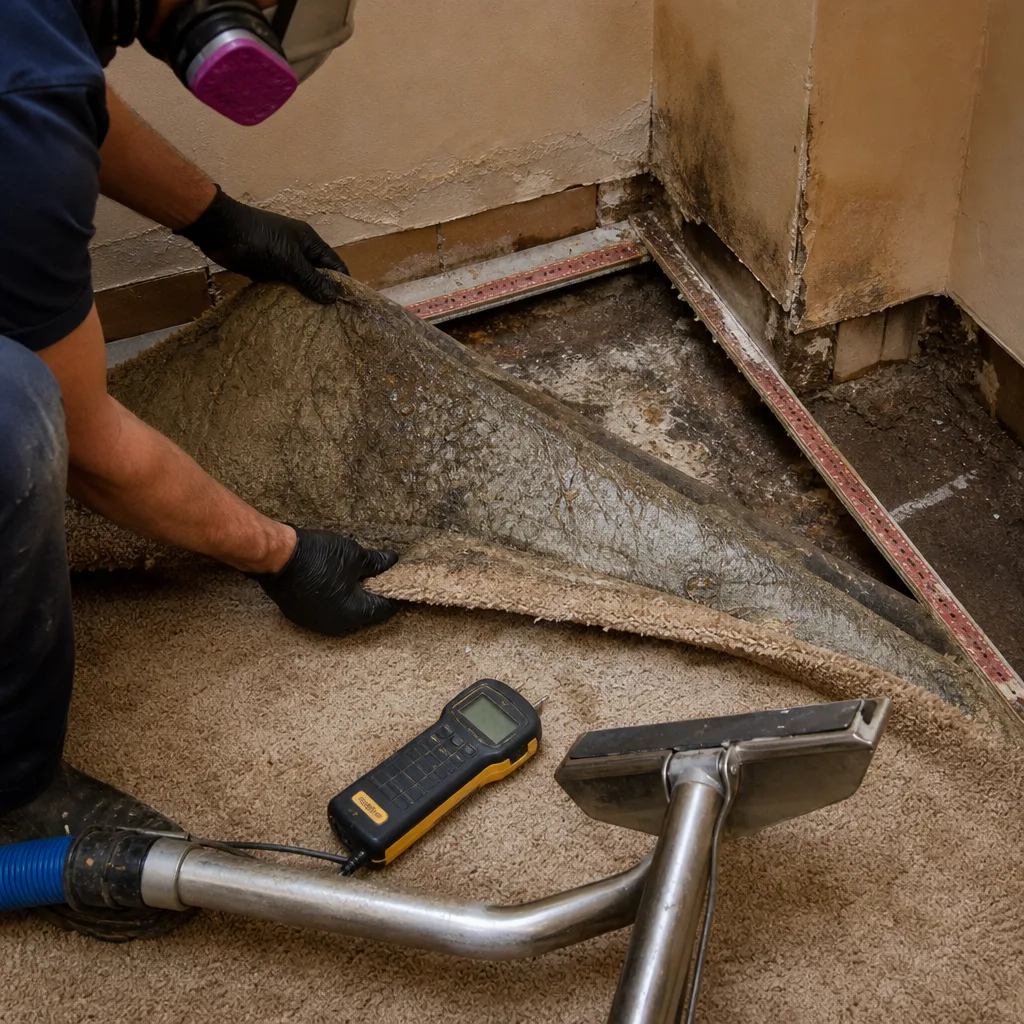
Storm debris in a high-rise isn’t just about hauling branches out of the yard. It’s about navigating freight elevators, protecting common areas, and removing saturated materials without spreading contamination through shared hallways. We handle it without making a second mess.
What happens when you call
- 1
A real person answersNo phone trees - you reach a local pro.
- 2
You get an upfront price rangeHonest numbers before anyone is dispatched.
- 3
A background-checked tech heads outLicensed & insured, dispatched right away.
- 4
You approve before work beginsNothing starts until you say go.
Storm & Disaster Restoration Costs in Fort Lee, NJ
Storm damage restoration in Fort Lee typically runs between $1,800 and $12,000 depending on how far the water traveled and how long it sat. A contained single-unit water intrusion with fast response and no slab penetration can often be handled for $1,800 to $3,500. Once moisture migrates into a concrete slab and affects multiple floors, you’re looking at $6,000 to $12,000 or more, because structural drying in concrete takes longer, uses more equipment, and requires daily monitoring. Emergency board-up and roof tarping in Fort Lee run $400 to $1,200 depending on access and materials. The honest answer is that the final number depends on the square footage affected, the contamination level, and how fast we get there. The free visual inspection is always the starting point. We give you a written scope with line items, your insurer gets the same document, and everyone knows the number before work begins. Call (917) 924-4221 and we’ll walk you through it.
We Also Serve Cities Near Fort Lee
Our crews work throughout northern Bergen County. We regularly handle storm and disaster restoration in Leonia, Palisades Park, Edgewater, and Ridgefield, plus the full Fort Lee metro area. If you’re on the Palisades or anywhere along Route 4, call us. Same live answer, same 45-minute response.
Serving Fort Lee, NJ - Our Local Coverage Area
We’re based in the Fort Lee area and know this community well. Use the map below to see our service coverage - if you’re nearby, we can almost certainly help.
Fort Lee Storm & Disaster Restoration Questions, Answered
How do you handle restoration in a Fort Lee high-rise where multiple condo units and the building common area are affected?
We coordinate with the building super, the condo board, and every affected owner’s insurer simultaneously, so no single authorization gap stalls the work while moisture keeps moving through the slab. We scope each affected unit separately, document the common areas, and present one coordinated written plan that covers everyone’s claim.
Why is structural drying different in Fort Lee’s 1960s-80s concrete towers than in a single-family home?
Concrete holds moisture longer than wood framing, and water travels laterally through slab assemblies, so readings taken at the visible stain don’t tell you what’s happening three feet away. We use thermal imaging and daily moisture readings, mapping the entire migration path, not just the point where water first appeared.
What do you do when wind-driven rain forces water through curtain-wall joints in an older Fort Lee high-rise?
We identify the exact entry points, set containment if moisture has penetrated wall cavities, dry the affected area to standard, and document the condition of the glazing seals. Then we work with building management on the building-side repair while treating the unit-side damage.
How does the freeze-thaw cycle on Fort Lee’s exposed rooftop mechanical rooms affect disaster restoration work?
Repeated freezing and thawing opens cracks in membrane roofs and parapet walls, and when spring rain comes, those cracks become water entry points that have been growing for months. Restoration work here often requires tarping, then coordinating a permanent membrane repair before interior drying can be fully completed.
Can you help with pack-out and content restoration for a water-damaged Fort Lee condo with tight hallways and freight elevator restrictions?
We handle pack-out, content cleaning, and storage for units where damage has made possessions unsalvageable on-site. Our crews work within your building’s freight elevator schedule and hallway size limits, so staging happens without blocking shared corridors.
How fast can you actually get to Fort Lee for a storm emergency?
Our commitment is 45 minutes from dispatch. We’re headquartered just across the bridge, and our crews know the access routes into the borough, including the loading-dock protocols at the major towers. Call (917) 924-4221 and we’ll give you an ETA while you’re still on the phone.
Will my insurance cover storm damage restoration in Fort Lee?
Most homeowner and condo policies cover sudden and accidental water intrusion from storms, but high-rise losses are often split between the building’s master policy and individual unit policies. We work with both, document from the first hour, and submit directly to every carrier involved.
What should I do in the first 30 minutes after I notice storm damage?
Call us at (917) 924-4221. Stop the source if you can do so safely, move valuables out of the water path, and take your own photos. Don’t wait for the building super to authorize anything, because the moisture in a Fort Lee concrete tower is already migrating. We’ll handle the authorization and the drying, but the clock is running from the moment water enters.
Written by Curt Bowman, Owner at Floodline Restoration Co. of Manhattan, serving Fort Lee and northern Bergen County with 24/7 storm and disaster restoration.