
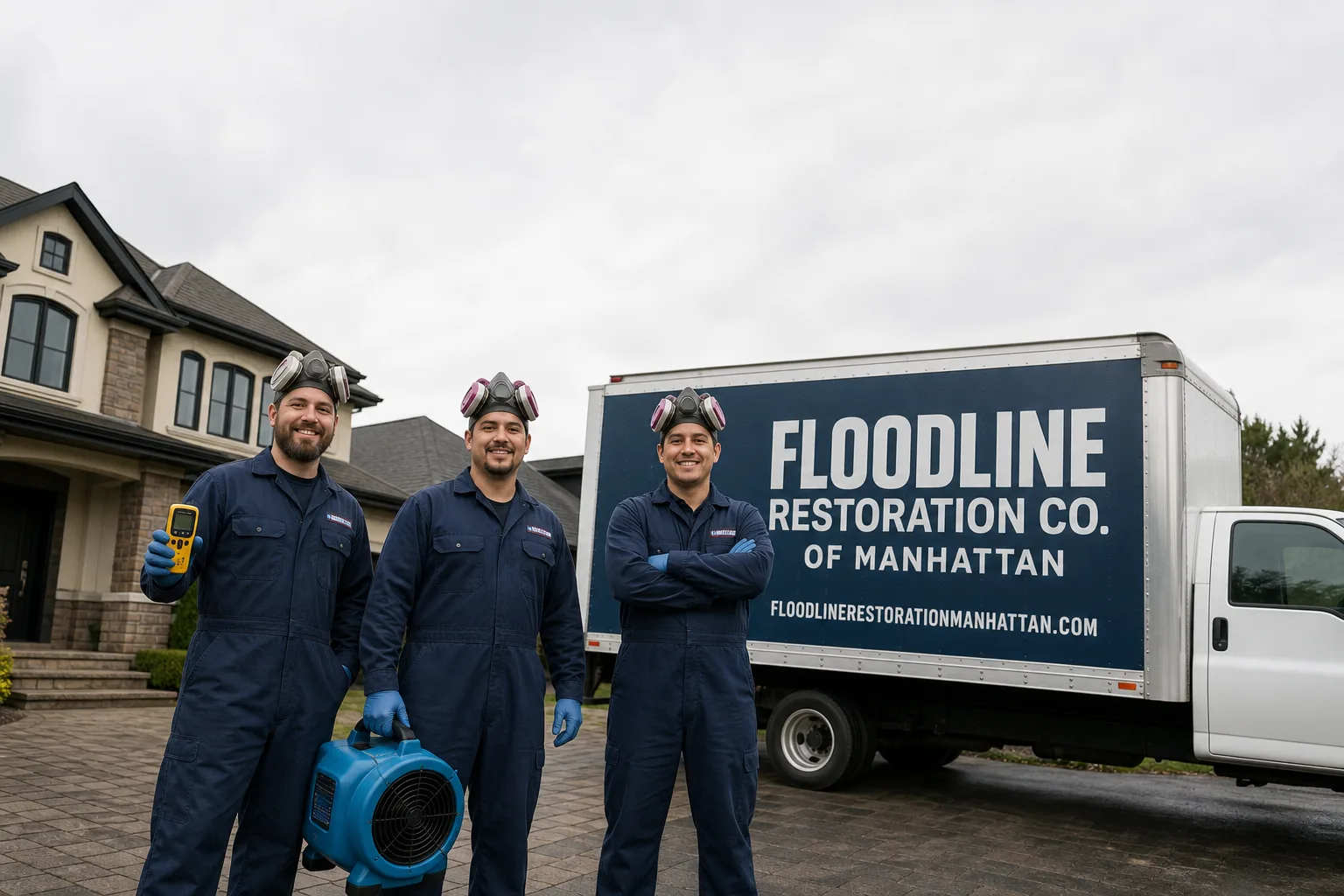
Free visual inspection and a written scope of work before any mitigation begins - photos, moisture readings, and drying logs go in your claim file
The scope we write is the scope we bill. Anything new gets shown to you, in writing, before we touch it.






 Before
 After
After Before
 After
After Before
 After
After24/7 Emergency Storm & Disaster Restoration in Glen Cove
Storm and disaster restoration in Glen Cove means moving fast when Hempstead Harbor sends water where it doesn’t belong. A live dispatcher answers at (917) 924-4221 any hour, every day of the year. We’re not an answering service and we don’t route you to a call center. The person who picks up starts a certified crew toward your address immediately. Nor’easter surge, wind-driven rain through a torn roof, a tree limb through a second-floor window: the first hour determines whether you’re drying a room or rebuilding a wall. Our teams arrive within 45 minutes across Glen Cove, walk the damage with a thermal camera and moisture meter, and give you a straight answer about what you’re facing. We’ve been doing this since 2010, and we’ve worked enough of Glen Cove’s older plaster-and-lath homes to know that what you see on the surface rarely tells the whole story. Free visual inspection, no pressure, and a written scope before any work begins.
Understanding Storm & Disaster Restoration Severity in Glen Cove Properties
Storm damage in Glen Cove rarely behaves like storm damage in a newer Nassau subdivision. That’s because much of the city’s housing stock predates modern building science. Original plaster-on-wood-lath walls, no vapor barriers, clay tile drainage, and galvanized plumbing that was old when Eisenhower was president: all of it changes how water moves and where it hides. We classify storm water the same way the IICRC teaches it. Category 1 is clean water from a broken supply line or rain before it touches anything. Category 2 carries contaminants, which is typical when water has passed through roofing, drywall, or floor coverings. Category 3, the dangerous one, is what a nor’easter storm surge leaves in a Landing Road basement: harbor water loaded with salt, fuel residue, and whatever Long Island Sound picked up on the way in. That Category 3 yardstick, not the visual water line, tells us what gets torn out and what can be saved. Moisture mapping with thermal imaging and hygrometers tells us what’s trapped where the eye can’t see. In Glen Cove’s older buildings, that’s usually behind the lath.
Why Glen Cove Property Owners Choose Floodline Restoration Co. of Manhattan
- 45-minute response commitment. A certified crew is dispatched the moment you hang up, with a real arrival window, not “sometime today.”
- A real person answers, 24/7. At 2 a.m. during a nor’easter, you get a live dispatcher who knows Glen Cove’s streets, not a recording.
- IICRC-certified crews. Our techs hold WRT, FSRT, and AMRT certifications. They carry Dri-Eaz, Phoenix, and XPOWER equipment, and they know how to use it in a 1920s lath-and-plaster house.
- Free visual inspection. We walk the property, document what we find, and hand you a written scope before any work starts. No obligation.
- Direct insurance billing. We talk to your adjuster, send line-item documentation, and bill the carrier directly. You don’t play middleman.
- One crew from first cut to final coat. Extraction, drying, and the rebuild stay with the same team. No mid-job handoff, no “subcontractor surprise.”
Our Storm & Disaster Restoration Process
Inspection & Assessment
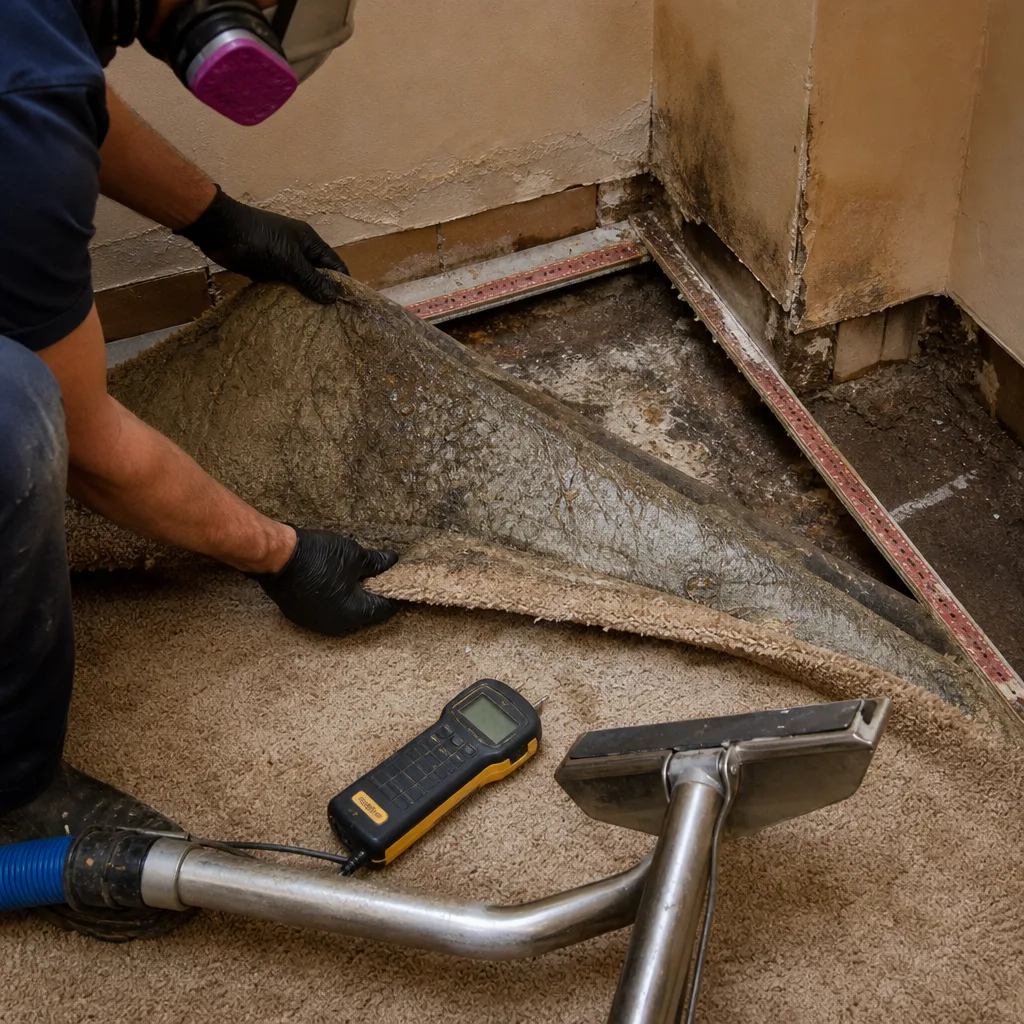
We start with thermal imaging and moisture meters, not guesses. On a nor’easter call near downtown Glen Street, our techs opened a plaster-and-lath wall in a pre-war cottage expecting standard water damage. The readings showed multi-year mold colonies behind the lath. That’s the kind of thing you only find when you look properly.
Extraction & Stabilization
Standing water comes out first with truck-mounted extractors. Then we stabilize what the storm compromised: emergency board-up on broken windows, roof tarping over exposed decking, and temporary structural bracing where wind forced a wall out of plumb.
Drying & Dehumidification
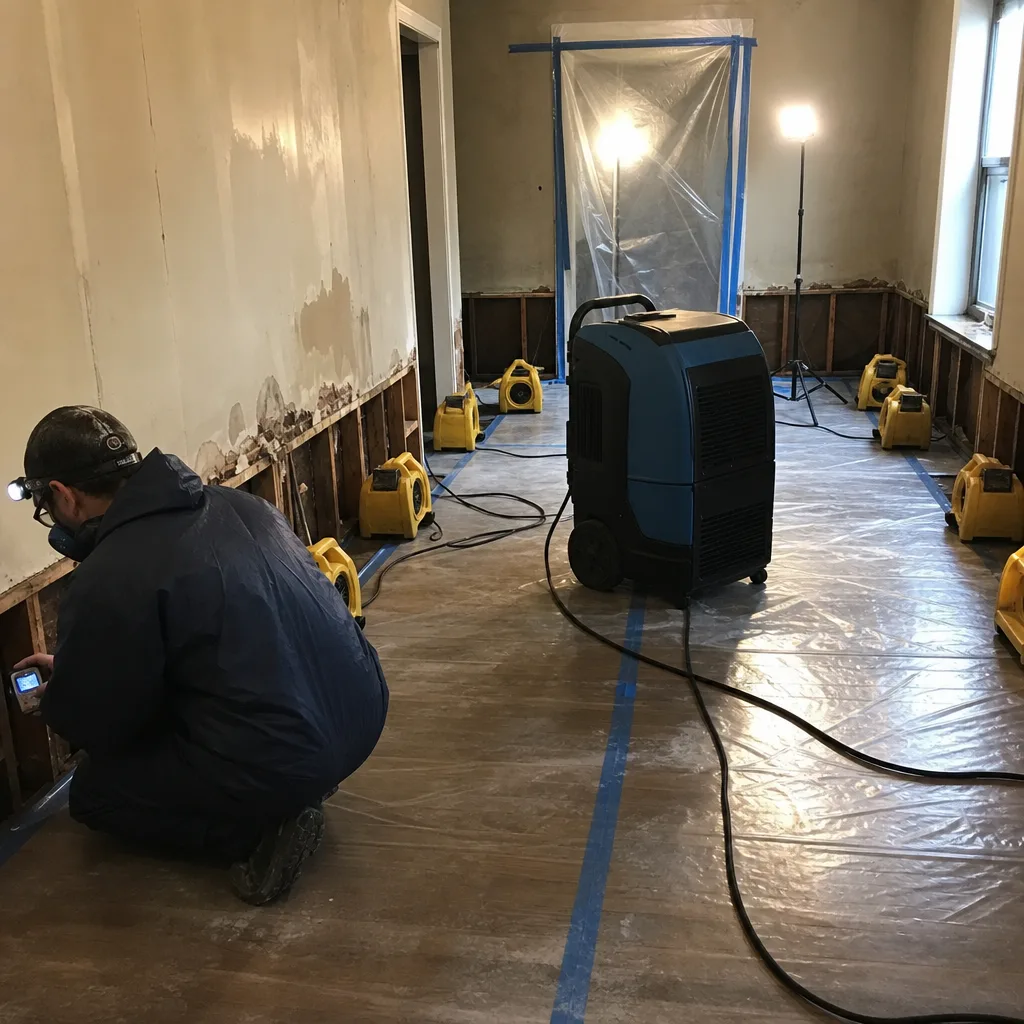
For Glen Cove’s older homes, we set containment and ran Dri-Eaz dehumidifiers and XPOWER air movers. Daily moisture readings get logged until the dry standard is met. Plaster-and-lath needs longer profiles than gypsum board; we don’t rush it and we document every reading.
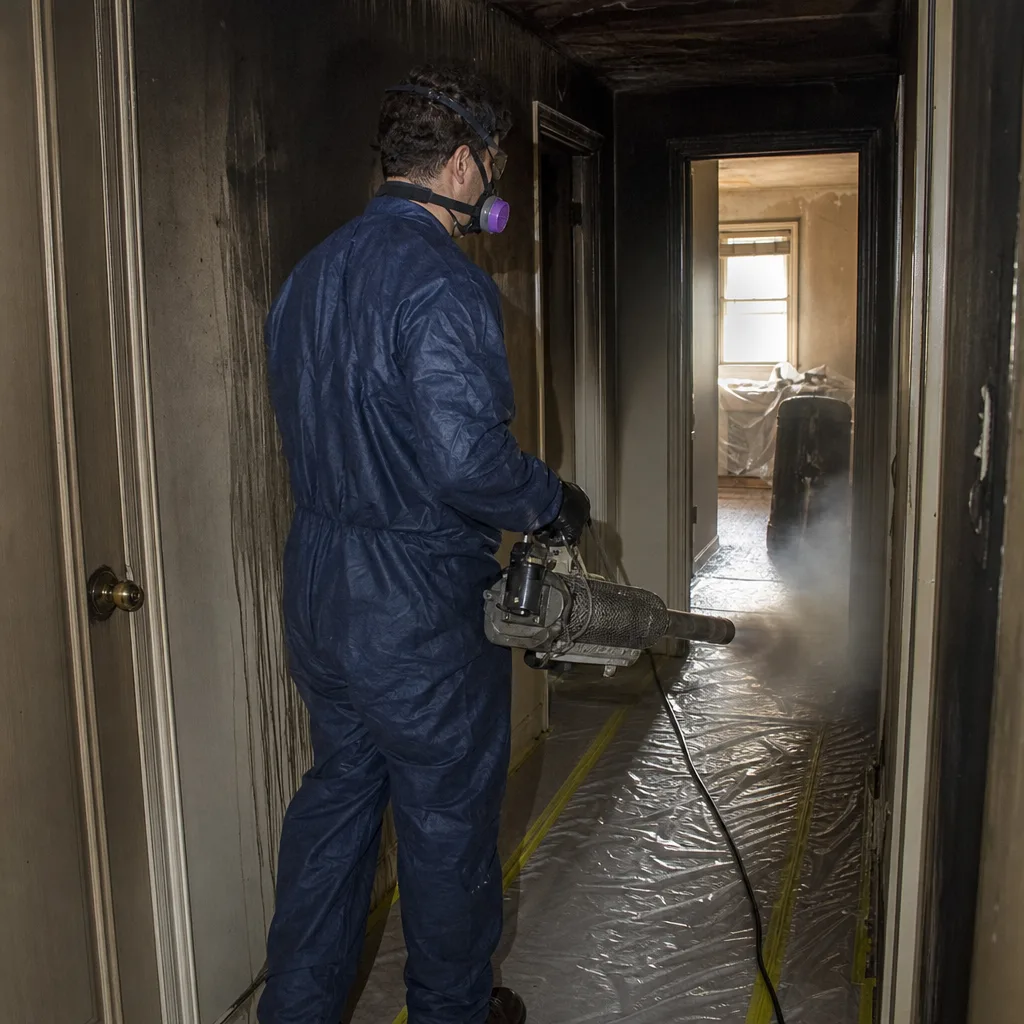
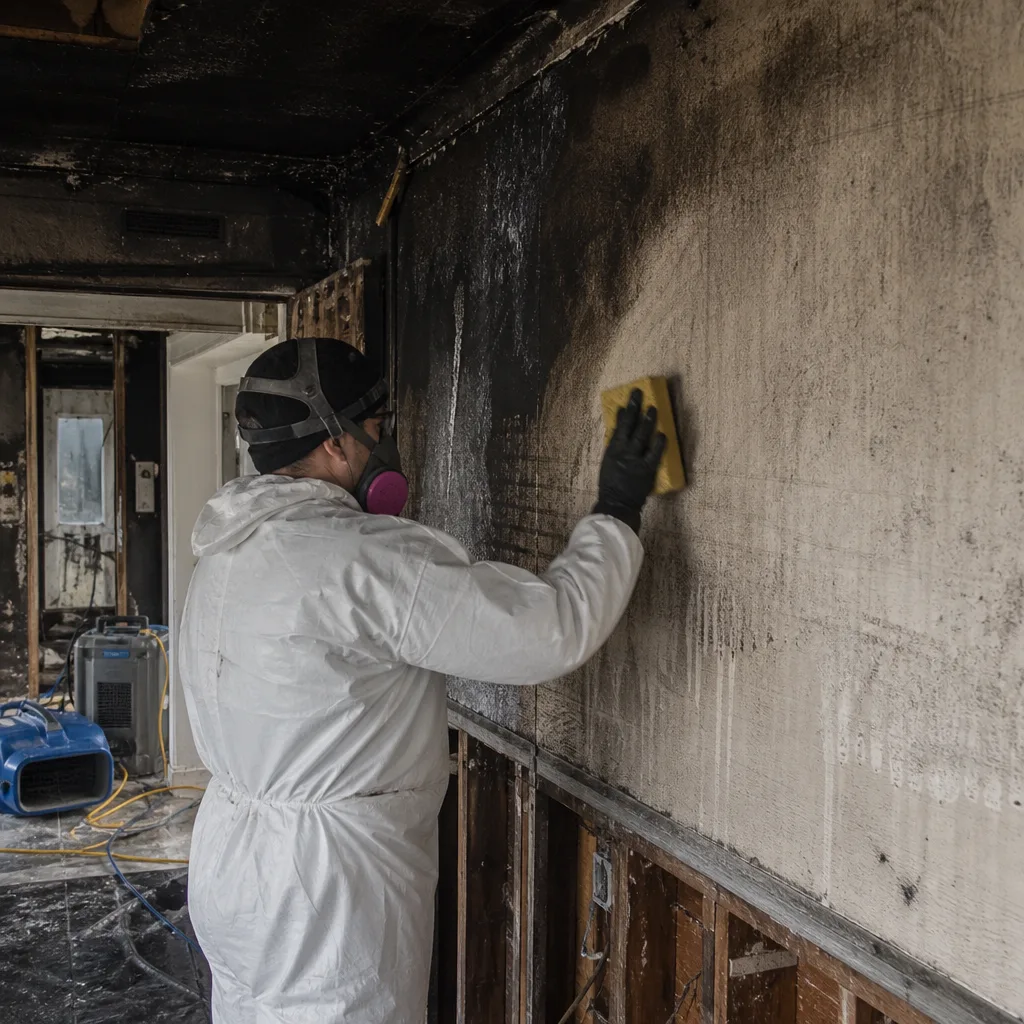
Cleaning & Sanitization
After drying comes Glen Cove Sanitization Services including antimicrobial treatment, HEPA vacuuming of affected cavities, and pack-out of salvageable trim and contents. In Category 3 situations, disposal is line-itemed and photographed for your carrier.
Specialty Treatment
Storm-specific work includes salt residue neutralization from surge water, corrosion control on exposed framing fasteners, and cavity drying behind original lath where no vapor barrier exists to slow migration.
Repairs & Restoration
The same crew that mapped the moisture on day one handles Reconstruction & Cleanup - Glen Cove, rebuilding what needs rebuilding. Plaster patching, trim replacement, flooring, cabinetry, paint. We finish the job and stand behind it with the 90-Day Done Right Promise in writing.
Need Emergency Storm & Disaster Restoration in Glen Cove Now?
Crews minutes away, answering live 24 hours a day. The sooner we start, the less it costs.
Working With Your Insurance Company
Storm damage claims in Glen Cove move faster when documentation starts in the first hour. We photograph every affected room before we move anything, log moisture readings from day one through final clearance, and write a line-item scope your adjuster can actually read. We’ve handled hundreds of Long Island sound-front claims, including the complicated ones where Harbor-facing homes show both current storm damage and older, hidden damage from prior events. That distinction matters for coverage. Our team coordinates directly with your carrier, provides the drying logs and equipment placement records they ask for, and bills them directly. You get a copy of everything. If your adjuster has questions, they call us, not you.
What We Provide Your Insurer
- Thorough documentation of the loss
- Photos of all damage, room by room
- Moisture readings and drying logs
- A detailed, line-item scope of work
- Direct coordination with your carrier
Built for Glen Cove’s Loss Calendar
Glen Cove’s storm damage season doesn’t follow a neat calendar. January deep freezes burst supply lines in unheated crawl spaces under those Victorian additions. Spring thaw saturates ground around aging foundations, and basement seepage finds every crack in the clay tile drainage that’s been there since the Coolidge administration. Summer thunderstorms dump two inches in an hour and overwhelm storm drains in the low blocks near downtown. Then comes nor’easter season, when the fetch across Long Island Sound pushes water up Hempstead Harbor and onto the Landing Road corridor. Those harbor-facing blocks get wind-driven rain penetration that inland Nassau towns never feel. What makes Glen Cove different is the age of what’s getting wet. A 90-year-old plaster wall absorbs water differently than drywall over fiberglass insulation. Drying takes longer. Hidden cavities hold more. The calendar and the construction conspire together.
Storm & Disaster Restoration Across Glen Cove’s Neighborhoods
The waterfront blocks along Landing Road and the harbor side of town take surge flooding and salt spray that never reaches the rest of Nassau County. Those homes, many of them older, pre-war construction with full basements, need rapid extraction and complete cavity drying because harbor water is always Category 3. The downtown grid near Glen Street runs tight: narrow alleys, rear-load garages, no-parking zones. Emergency board-up and roof tarping have to be staged carefully, or the crew loses twenty minutes circling for a place to put the truck. The Gold Coast-era estates on the perimeter present a different problem: large roof areas, mature trees close to the house, and an original build quality that looks imposing but hides the same lath-and-plaster cavities. Each neighborhood in Glen Cove asks for a different response plan, and our crews know the streets well enough to arrive with the right equipment the first time.
Specialized Storm & Disaster Restoration Services We Offer in Glen Cove
Flood Damage Restoration
Harbor surge through a Landing Road basement is not a mop job. We extract, categorize, dry, and rebuild whatever the water touched. Given how many Glen Cove homes carry hidden moisture from past storms, we map every cavity, not just the visible damage.
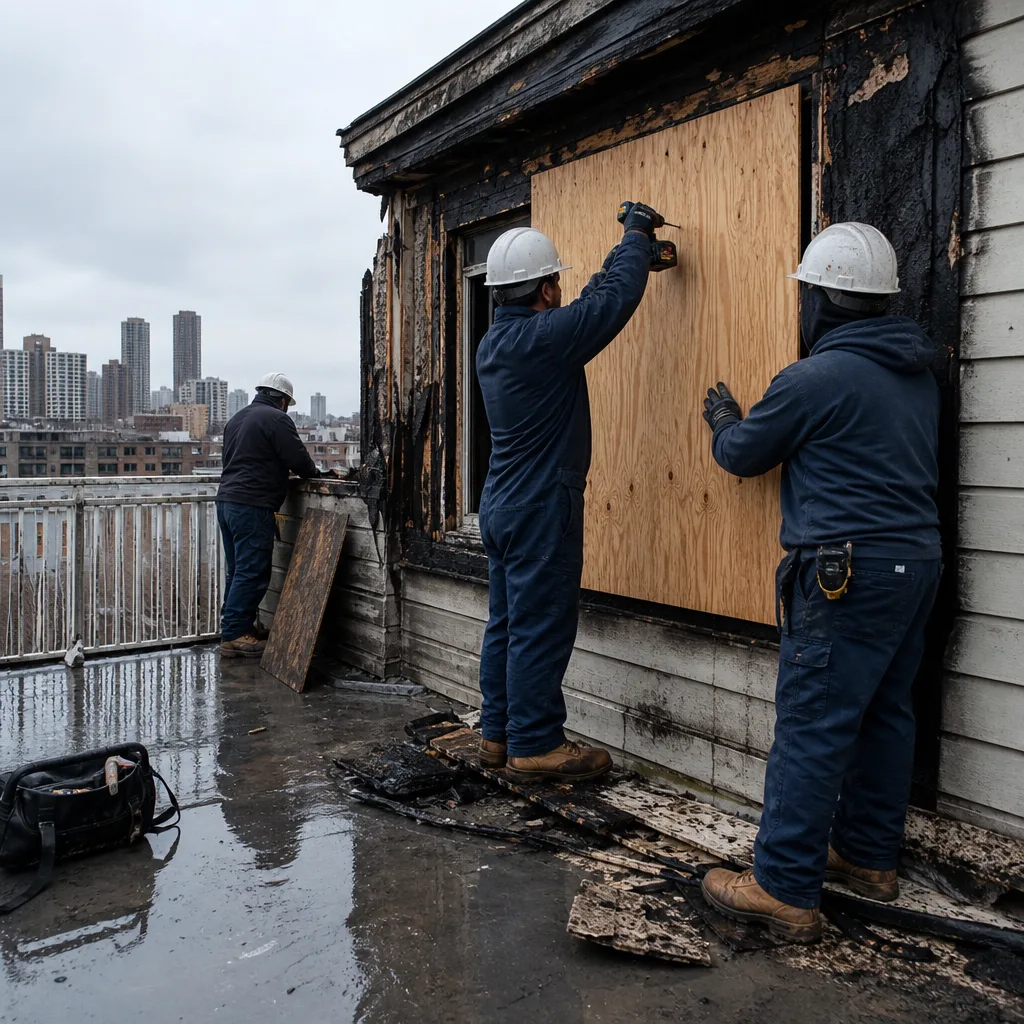
Emergency Board-Up
A broken window or kicked-in door on a downtown Glen Street rowhome becomes a security and weather problem within the hour. We board up tight, photograph everything for the claim, and use fasteners that won’t destroy the original jamb. Tight alley access is something we plan for, not discover.
Roof Tarping
Wind-driven rain through missing shingles keeps doing damage long after the storm passes. We tarp with heavy-duty material, seal the edges properly, and schedule the permanent repair. For Glen Cove’s older roof decks, we use fasteners that don’t leave the sheathing worse than we found it.
Storm Damage Cleanup
Wind and water leave a yard and a house full of trouble. We remove storm debris, clear downed limbs from the structure, and handle the interior damage from anything that got wet. Our Storm & Disaster Restoration team works from first cut to final coat, no handoffs.
Debris Removal
Storm-blown branches, shingles, siding fragments, and harbor trash end up against Glen Cove foundations and in window wells. We clear it, document it for your carrier, and check that nothing against the house is holding moisture against the sill plate.
What happens when you call
- 1
A real person answersNo phone trees - you reach a local pro.
- 2
You get an upfront price rangeHonest numbers before anyone is dispatched.
- 3
A background-checked tech heads outLicensed & insured, dispatched right away.
- 4
You approve before work beginsNothing starts until you say go.
Storm & Disaster Restoration Costs in Glen Cove, NY
A typical emergency board-up in Glen Cove runs $350 to $800 depending on openings and access. Roof tarping for a nor’easter-damaged section usually lands between $500 and $1,400, more for steep pitches on those Gold Coast estates. Full flood damage restoration with extraction, drying, and rebuild starts around $2,800 and can reach $25,000 or more on a Category 3 harbor surge that gets into original plaster walls and built-ins. What moves the price in Glen Cove specifically is what’s behind the surface: lath-and-plaster drying takes longer, cavity mold remediation adds containment and air scrubbing, and tight downtown access slows material staging. Insurance typically covers most storm-related damage once the cause is documented. The free visual inspection gives you a firm scope with line-item pricing before anything gets torn out. Call (917) 924-4221 and we’ll put numbers on paper.
We Also Serve Cities Near Glen Cove
Our crews regularly run storm calls in Glen Cove and the surrounding communities. We serve Sea Cliff, Port Washington, Manhasset, and Great Neck with the same 45-minute response commitment and the same live 24/7 dispatch. If you’re just outside Glen Cove and the harbor pushed water into your house, call the same number.
Serving Glen Cove, NY - Our Local Coverage Area
We’re based in the Glen Cove area and know this community well. Use the map below to see our service coverage - if you’re nearby, we can almost certainly help.
Glen Cove Storm & Disaster Restoration Questions, Answered
Why does storm damage in Glen Cove’s older homes often involve hidden mold that wasn’t from the latest storm?
Because much of Glen Cove’s housing stock received incomplete remediation after Hurricane Sandy in 2012, and the original plaster-and-lath walls have no vapor barriers. Water from that era stayed trapped inside cavities, and mold colonies have been growing there ever since. A new storm just introduces more moisture. That’s why we moisture-map every cavity on older Glen Cove homes, not just the wet-looking spots.
How does the Hempstead Harbor fetch make wind-driven rain penetration different in Glen Cove than a few miles inland?
Hempstead Harbor channels Long Island Sound’s open-water energy directly into Glen Cove’s waterfront. Wind-driven rain hits harbor-facing walls at higher velocity and for longer durations than inland locations see in the same storm. That pressure drives water through siding, around window frames, and into wall cavities. Inland homes see ordinary rain. Glen Cove’s harbor blocks see wind-pressure rain, and it ends up behind the siding.
What category of water is typical after a nor’easter storm surge hits a Glen Cove basement, and why does it matter for what you tear out?
Biohazard & Crime Scene Cleanup - Glen Cove expertise matters here. Category 3 harbor surge water carries salt, fuel residue, sewage from overwhelmed systems, and whatever Long Island Sound picked up. Category 3 means anything porous that the water touched gets removed and disposed of, not dried. Carpet, pad, drywall, insulation, and sometimes base cabinets. Knowing this early saves you from a rebuild that fails in two years.
Can you board up a narrow alley-load townhome near downtown Glen Cove before the next high tide?
Yes. We keep board-up equipment sized for tight access and our crews know the downtown grid. We park smart, stage materials efficiently, and get the opening sealed fast. Call (917) 924-4221 and we’ll have someone there quickly.
What does structural drying look like in a Glen Cove Victorian with original plaster walls?
Slower than drywall, with more instrumentation. We set Dri-Eaz dehumidifiers and XPOWER air movers, then take daily moisture readings from inside the wall cavities, not just the surface. Plaster-and-lath holds water in the wood strips and in the plaster keys. Drying takes longer, and the readings tell us when it’s actually done. We log every number and send the log to your carrier.
How fast can someone actually get to a Glen Cove storm damage call?
Within 45 minutes, usually faster. A live dispatcher answers 24/7 and has a crew headed your way while you’re still on the phone. The sooner extraction starts, the less structural damage you carry.
Will insurance cover storm damage restoration in Glen Cove?
Most storm-related damage is covered once the cause is documented. Wind damage, hurricane or nor’easter surge, and rain penetration through a storm-compromised roof are standard covered perils. We photograph everything, write the line-item scope, and speak with your adjuster directly. You get copies of what we send them.
What should I do in the first 30 minutes after storm water gets into my Glen Cove home?
Shut off power to affected areas if you can do so safely without standing in water. Move valuables up and out. Call (917) 924-4221. Don’t run the HVAC, don’t open walls yourself, and don’t throw anything away until it’s documented for your carrier. The faster we start extraction, the smaller the final scope.
Written by Curt Bowman, Owner at Floodline Restoration Co. of Manhattan, serving Storm & Disaster Restoration in Glen Cove with the 90-Day Done Right Promise. Founded in 2010 and committed to putting every job in writing.