
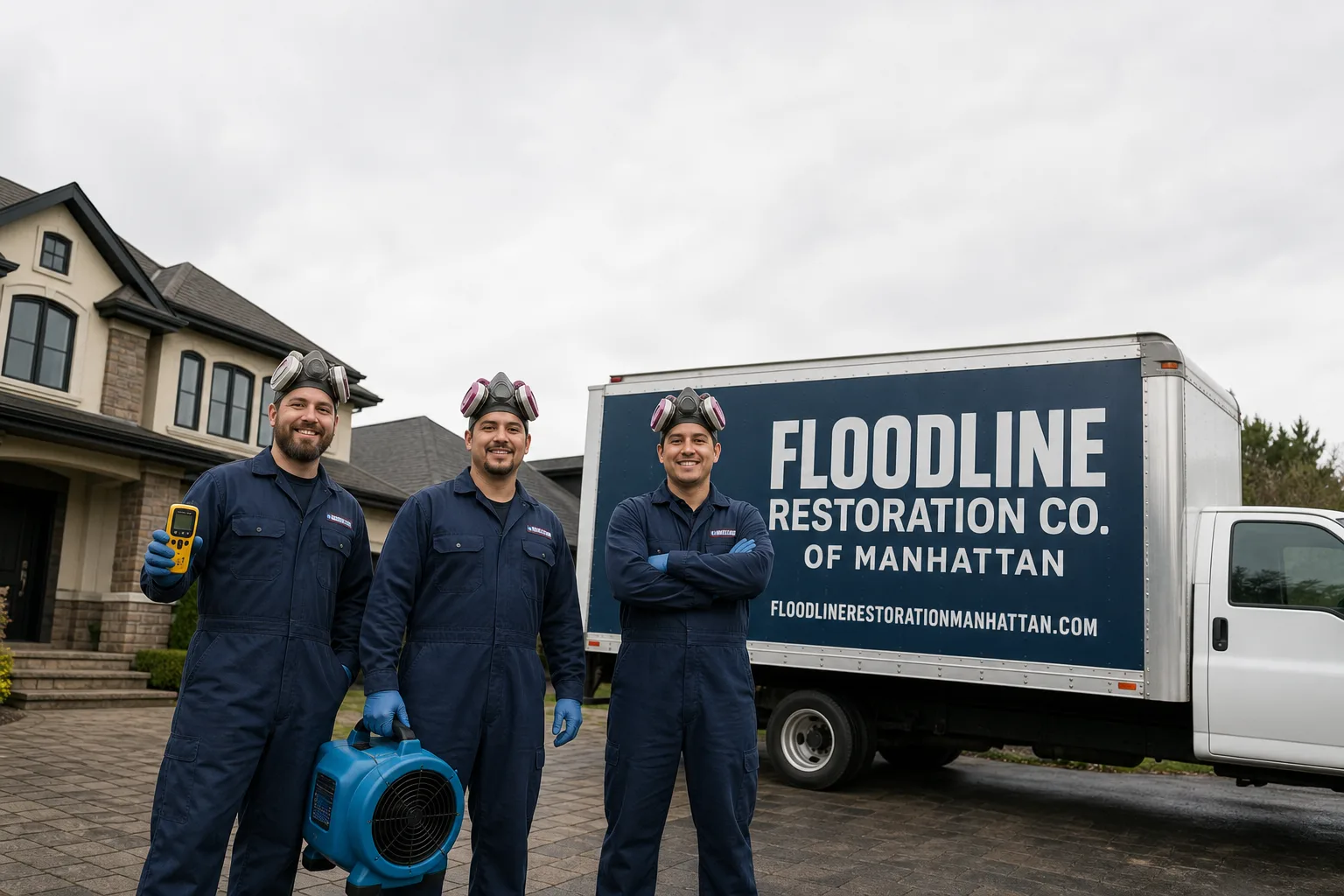
Free visual inspection and a written scope of work before any mitigation begins - photos, moisture readings, and drying logs go in your claim file
The scope we write is the scope we bill. Anything new gets shown to you, in writing, before we touch it.






 Before
 After
After Before
 After
After Before
 After
After24/7 Emergency Storm & Disaster Restoration in Manhasset
Storm damage in Manhasset doesn’t wait for business hours, and neither do we. Floodline Restoration Co. of Manhattan runs a live dispatch desk 24 hours a day, 7 days a week, so when a nor’easter drives surge up from Manhasset Bay into your finished basement at 2 a.m., a real person answers the phone and a certified crew gets moving. Call (917) 924-4221 the moment you see water where it shouldn’t be. The first hour decides whether you’re drying plaster-and-lath walls or replacing them. Our teams arrive for a free visual inspection, assess the hidden saturation zones that Manhasset’s pre-war construction loves to conceal, and start extraction the same visit. Board-up, tarping, and water removal begin immediately because water in a 1930s brick Colonial doesn’t just soak the floor. It wicks into stone foundation walls, climbs behind plaster, and feeds mold growth within 24 to 48 hours. We’ve answered this call in Manhasset for long enough to know exactly where the damage hides.
Understanding Storm & Disaster Restoration Severity in Manhasset Properties
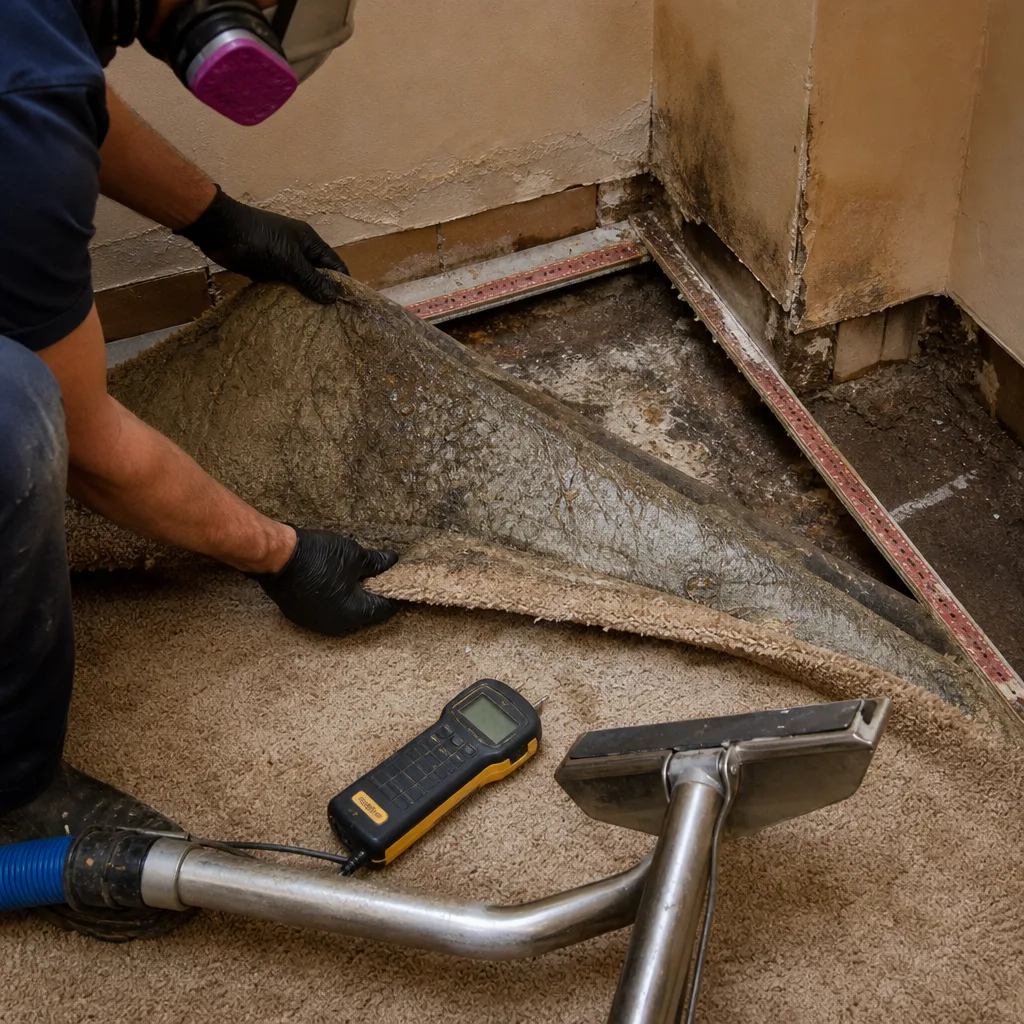
Not all storm water is equal. The IICRC classifies floodwater into three categories. Category 1 is clean water from a burst supply line or rain entering through a roof breach. Category 2 carries contaminants from sump failures, washing machine overflow, or bay surge that has picked up soil and debris. Category 3 is grossly unsanitary water from sewage backups or standing floodwater that has sat long enough to harbor bacteria. Manhasset’s coastal position means we regularly deal with all three, sometimes in the same basement. The real complication here is the housing stock. Plaster-and-lath walls in 1920s-1950s Colonials and Tudors hold moisture behind multiple layers of paint and wallpaper, making Category 2 water behave like a slow-release sponge. Moisture mapping with thermal imaging and penetrating meters reveals saturation that visual inspection misses. Our structural drying protocols use Dri-Eaz and Phoenix dehumidifiers and air movers calibrated to the dry standard for each material, because oak flooring from 1931 dries differently than the subfloor beneath it. Severity in Manhasset is not just about how much water arrived. It’s about what the water entered.
Why Manhasset Property Owners Choose Floodline Restoration Co. of Manhattan
- 45-minute response commitment to Manhasset addresses. Our dispatch board is built around crews staged for this area, not a sales desk routing calls from another county.
- 24/7 live answer, every time. A person picks up at 2 a.m. Not a recording. Not a callback queue. You tell us what you see, and we tell you what happens next.
- IICRC-certified crews trained to WRT, FSRT, and AMRT standards. Our technicians hold water damage, fire and smoke, and applied microbial remediation certifications, and they carry moisture mapping equipment from the first visit.
- Free visual inspection before any work begins. We show you what we found, explain what it means, and put the scope in writing. No pressure, no vague estimates.
- Direct insurance billing. We talk to your carrier so you don’t play messenger. Our adjusters know flood claims in Manhasset’s high-value housing stock because we’ve handled them for years.
- One team from first extraction to finished rebuild. Curt Bowman built Floodline Restoration Co. of Manhattan around a crew, not a call center. The same certified technicians who set the drying equipment also handle the reconstruction, so nobody inherits a half-finished job.
Our Storm & Disaster Restoration Process
Inspection & Assessment
We arrive, walk the property, and map the visible and hidden damage. For Manhasset homes, this means probing the subgrade drainage around Munsey Park’s stone-and-mortar foundations, because hidden saturation is almost always larger than what the basement floor shows. We document everything for your carrier before any equipment rolls in.
Extraction & Stabilization
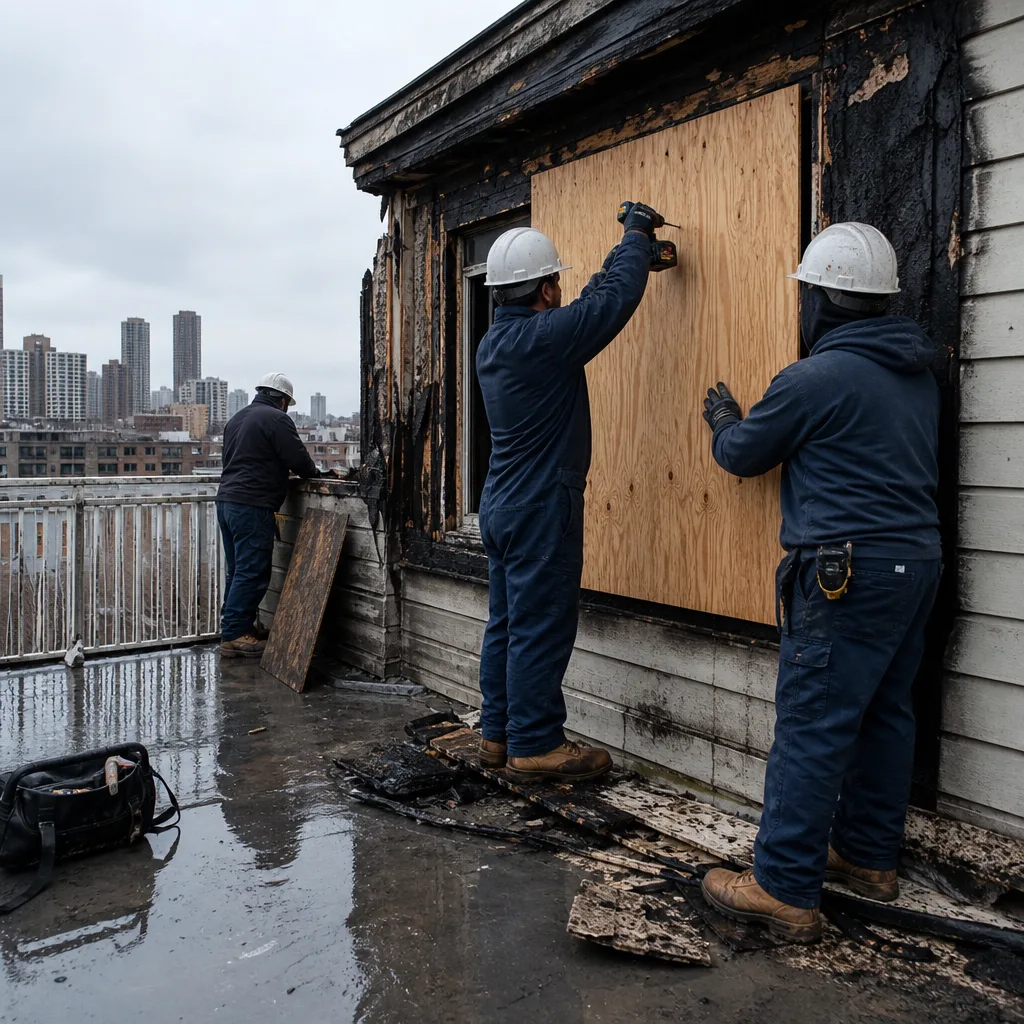
Standing water comes out first. Truck-mounted extraction units and submersible pumps pull water faster than a homeowner’s shop vac ever will. We stabilize the site with emergency board-up and roof tarping so no more water enters, then start the structural drying plan.
Drying & Dehumidification
Dri-Eaz and Phoenix dehumidifiers and air movers go in according to a calculated drying chamber plan. We place hygrometers throughout the affected zones and record daily readings until every material reaches the pre-loss moisture standard. For plaster-and-lath walls with hidden saturation, we use Injectidry systems to dry cavities from the inside out.
Cleaning & Sanitization
Category 2 and 3 water requires antimicrobial treatment and structural cleaning. We use HEPA filtration and air scrubbing where contamination or mold risk is present, and we follow IICRC standards for the type of water that entered the property.
Specialty Storm Treatment
Manhasset’s salt-air environment means corroded garage hardware often fails during storm season, leaving homes exposed. We handle the specialty work: galvanized and coated replacement springs, stainless hinges and fasteners, and nylon rollers that resist bay humidity. Board-up gets done right regardless of what the storm did to your existing hardware.
Repairs & Restoration
Once the structure is dry and stabilized, we repair. Period-appropriate plaster matching, original hardwood floor restoration, custom millwork, and full reconstruction. The same crew that read the moisture map on day one writes the rebuild scope. Nobody gets handed off.
Need Emergency Storm & Disaster Restoration in Manhasset Now?
Crews minutes away, answering live 24 hours a day. The sooner we start, the less it costs.
Working With Your Insurance Company
Flood claims in Manhasset involve high-value homes and adjusters who scrutinize line items. We’ve been through thousands of them. From the first hour, we document the loss with photos, moisture readings, and thermal imaging that show exactly what happened behind the walls and under the floors. Your adjuster receives a line-item scope of work, not a vague estimate. We submit documentation directly to your carrier, handle the adjuster calls, and bill the insurance company directly where coverage applies. You never have to translate between a restoration crew and an insurance company again. That’s the point of hiring a full-cycle firm. We stand behind every line item with the 90-Day Done Right Promise, in writing, so if something isn’t right, we make it right without arguing.
What We Provide Your Insurer
- Thorough documentation of the loss
- Photos of all damage, room by room
- Moisture readings and drying logs
- A detailed, line-item scope of work
- Direct coordination with your carrier
Built for Manhasset’s Loss Calendar
The seasons dictate the kind of storm damage we see in Manhasset. Winter brings nor’easters that drive bay surge into low-lying streets off Plandome Road and Beach Road, flooding finished basements and crawlspaces. January deep freezes burst supply lines in unheated attached garages and exterior walls of 1920s Colonials. Spring thaw saturates the soil around Munsey Park’s original gravity drains, and Foundation leaks that seemed minor in October become visible water in April. Summer thunderstorms arrive fast and hard, overwhelming older roof drainage and sending water down through ceilings before homeowners can react. Then there’s the coastal constant: salt-laden humidity from Manhasset Bay accelerates corrosion on exposed metal year-round. Garage springs, hinges, and tracks fail faster here than they do ten miles inland. Our Storm & Disaster Restoration team tracks this calendar because we work in it every month.
Storm & Disaster Restoration Across Manhasset’s Neighborhoods
Manhasset is not one housing type. Munsey Park’s 1930s brick Colonials sit on original stone-and-mortar foundations with gravity drains that back-flood during nor’easters before any surface water shows. Our crews probe those subsurface drainage zones first, because the hidden saturation area under a finished basement floor is almost always larger than the visible puddle suggests. Plandome and the streets off Plandome Road hold many of the same pre-war estate homes, with plaster-and-lath walls that hide moisture until stains appear on the second floor. The Flower Hill area and properties along Manhasset Bay face direct storm-surge exposure, where Category 2 water moves in fast and saturates everything below grade in under an hour. North Strathmore and Strathmore Village add postwar Capes and split-levels with aging mechanical systems and finished basements vulnerable to sump failure during heavy rain. Each neighborhood has its own failure pattern, and we read the house before we write the scope. A crew that treats every Manhasset home the same way will miss what matters.
Specialized Storm & Disaster Restoration Services We Offer in Manhasset
Storm Damage Cleanup
Debris, mud, and contaminated standing water get removed with commercial extraction and cleanup equipment, not a mop and bucket. We work room by room, documenting every affected area for your carrier, and we don’t stop at the visible line. In Manhasset’s older homes, the cleanup zone extends into wall cavities and under slab floors where the water traveled unseen.
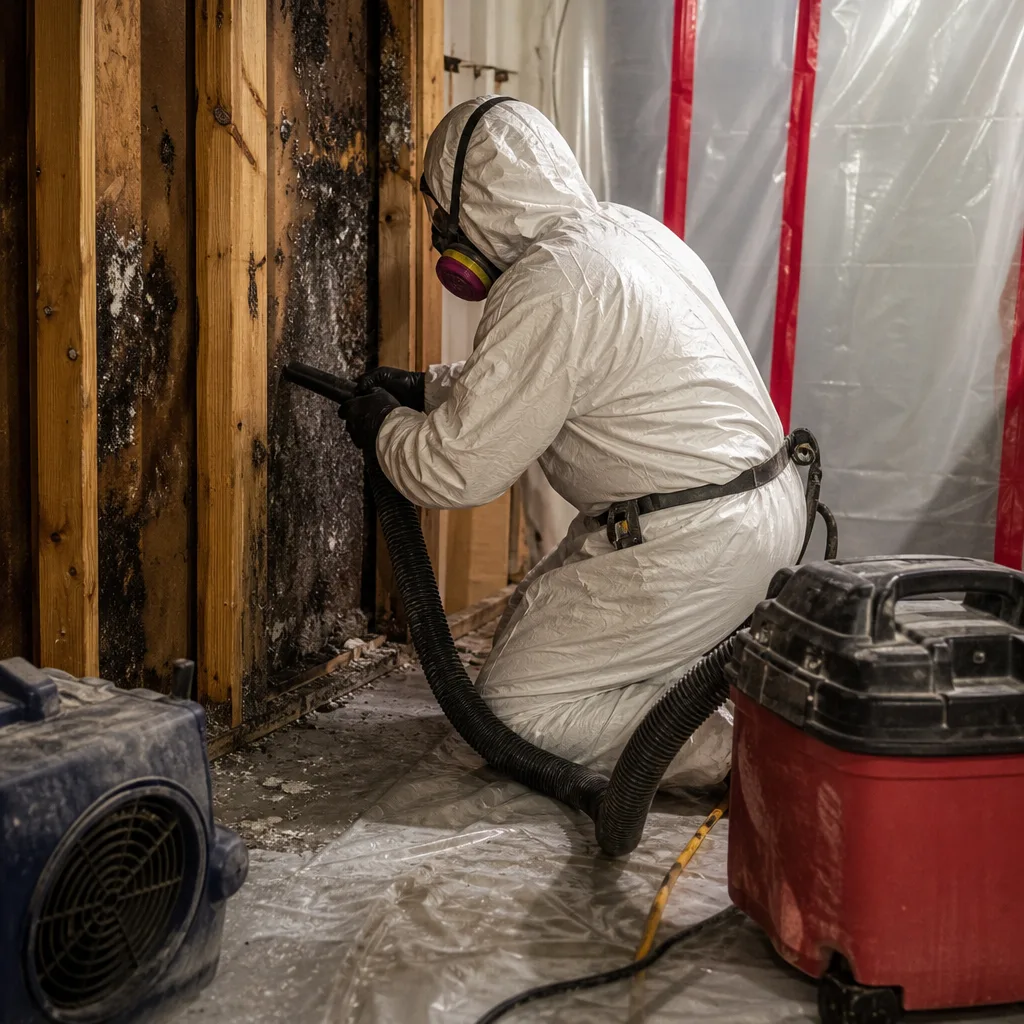
Flood Damage Restoration
Bay surge and nor’easter flooding bring Category 2 or 3 water into finished basements and garages. We extract, treat for contamination, dry to the IICRC standard, and rebuild what can’t be saved. The moisture log we hand you and your carrier shows every reading from day one to the final dry standard. If it’s not done right, our 90-Day Done Right Promise puts it in writing.
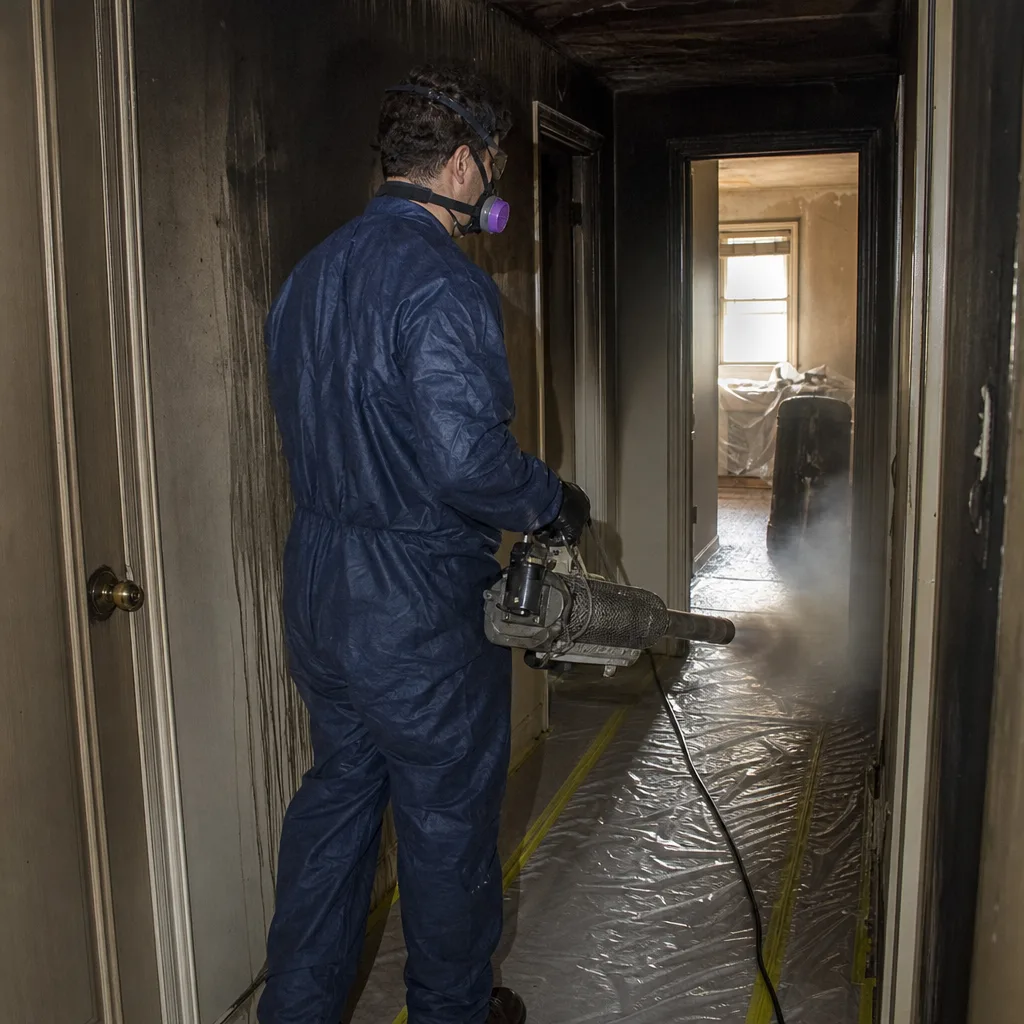
Emergency Board-Up
Storm damage rarely waits for daylight, and neither do we. Broken windows from wind-thrown debris and failing garage hardware leave a Manhasset home open to rain and intruders. We board up with plywood and fasteners rated for exposure, and we secure garage openings even when salt-corroded tracks and springs have failed mid-cycle. This is a board-up town during storm season, and we treat every vulnerability as urgent.
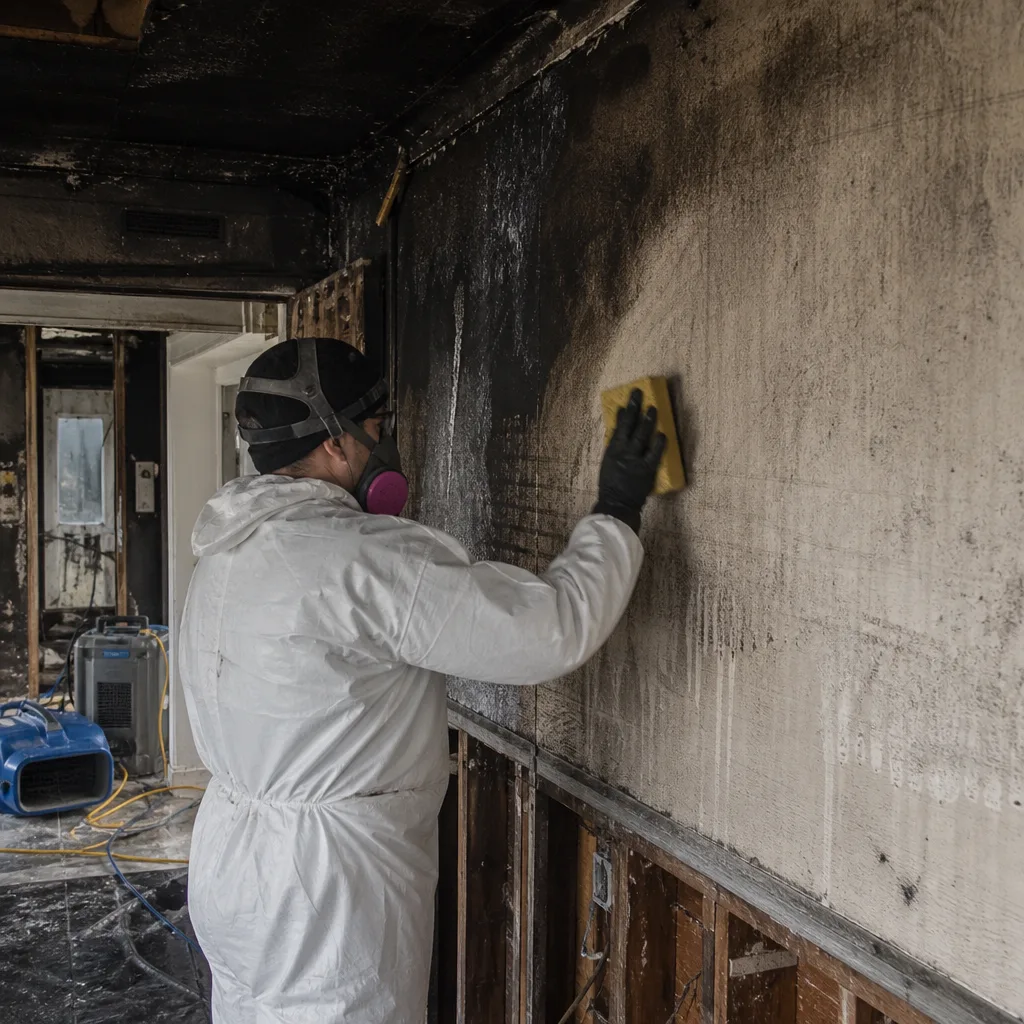
Roof Tarping
Wind damage from nor’easters pulls shingles off Manhasset’s older roofs and opens the decking underneath. We tarp over the damaged area so no more water gets in while your claim is assessed. Fast tarping is the difference between a localized repair and a whole-ceiling replacement when the next rain arrives.
Debris Removal
Fallen limbs, wind-blown construction material, and storm wreckage get cleared from the property before they cause more damage or delay the restoration work. We haul it off and document what we removed for your carrier. The site has to be safe and accessible before drying equipment goes in, and we handle that as part of the same visit.
What happens when you call
- 1
A real person answersNo phone trees - you reach a local pro.
- 2
You get an upfront price rangeHonest numbers before anyone is dispatched.
- 3
A background-checked tech heads outLicensed & insured, dispatched right away.
- 4
You approve before work beginsNothing starts until you say go.
Storm & Disaster Restoration Costs in Manhasset, NY
Manhasset’s market prices fall in line with Nassau County’s high-value housing stock, but specific jobs vary widely by scope. A standard emergency board-up for a single broken window or door runs $200 to $500. Roof tarping for wind damage typically ranges $400 to $900 depending on roof height and pitch. Storm water extraction from a finished basement runs $1,200 to $3,500 when Category 2 water is involved, and full structural drying with dehumidifiers and air movers adds $800 to $2,500 depending on affected square footage and whether Injectidry cavity drying is needed. Hidden saturation behind plaster-and-lath walls or under slab floors in Munsey Park pushes costs toward the higher end because access requires opening walls and injecting drying systems. Insurance covers most storm and flood damage when the policy includes wind and water coverage, and we handle direct billing so your out-of-pocket is the deductible, not the full scope. The free visual inspection we offer gives you a firm written estimate before any work begins. Call (917) 924-4221 and we’ll put numbers on paper, not over the phone.
We Also Serve Cities Near Manhasset
Our crews cover the North Shore communities around Manhasset, including Manhasset and its surrounding towns. Storm damage doesn’t respect village lines, so we respond across Great Neck, Port Washington, Little Neck, and Glen Oaks with the same live dispatch and certified crews.
Serving Manhasset, NY - Our Local Coverage Area
We’re based in the Manhasset area and know this community well. Use the map below to see our service coverage - if you’re nearby, we can almost certainly help.
Manhasset Storm & Disaster Restoration Questions, Answered
How does Manhasset’s bay-front exposure change storm damage restoration compared to inland Nassau County?
Bay-front exposure means surge-driven flooding arrives faster and hits harder than the rain-driven basement seepage common inland. Manhasset Bay funnels nor’easter surge directly into low-lying streets, bringing Category 2 water into finished basements within minutes. The restoration work is more aggressive: faster extraction, longer drying cycles because of elevated bay humidity, and more extensive subsurface inspection to catch saturation in stone foundations and slab floors that inland crews rarely encounter.
Will your crew match period plaster-and-lath walls in my Munsey Park brick Colonial?
Yes. We carry plaster materials and finishing techniques specific to the 1920s-1950s construction standard, and our rebuild scope accounts for matching texture, thickness, and paint absorption rates so the repaired wall doesn’t telegraph where the water line was. For insurance claims, we document the plaster condition in detail so the carrier accepts period-appropriate repair rather than a drywall patch.
How do you handle invisible water damage behind original stone-and-mortar foundation walls in Manhasset?
We probe before we scope. Our crews use moisture meters and thermal imaging to map saturation through stone-and-mortar foundations, because hidden water behind those walls is the most common source of repeat claims in Manhasset’s pre-war homes. We open the baseboard area when needed, inject with Injectidry drying systems, and log daily readings until every zone reads pre-loss condition. The moisture log goes to you and your carrier.
Can you board up my house quickly after a storm when garage hardware is already corroded from salt air?
We can, and we do it often. Salt air from Manhasset Bay accelerates corrosion on uncoated springs, hinges, and tracks, so hardware that’s been weakening for years often snaps during storm season. We board up the garage opening regardless of what the existing hardware is doing, and we can install galvanized or coated replacement springs and stainless hinges so the next storm doesn’t leave you exposed again. Call (917) 924-4221 for immediate dispatch.
What’s the first thing your crews check when a Manhasset basement floods during a nor’easter?
The subgrade drainage path. In Munsey Park’s original stone-and-mortar foundations, gravity drains back-flood before any surface water is visible, and the hidden saturation zone behind the foundation wall is almost always larger than the finished basement damage suggests. We map the saturation first, then write the scope. Contractors who skip that step miss half the water and leave you with mold and structural damage six months from now.
How fast can a crew actually get to my Manhasset address?
We commit to a 45-minute response time for Manhasset addresses. Our dispatch desk is live around the clock, and our crews stage in and around the North Shore so emergency calls don’t route through a call center in another state. When you call (917) 924-4221, a person answers and a crew starts moving.
Will my insurance cover storm and flood damage restoration in Manhasset?
Most standard homeowners policies cover wind-driven storm damage, and flood coverage depends on your specific policy and whether the water entered from outside or from a failed sump or sewer line. We work directly with your adjuster, submit the documentation and line-item scope, and bill the carrier directly so you’re not advancing thousands of dollars while the claim processes. The deductible is typically your only out-of-pocket, and we’ll confirm that before any work begins.
How long does full storm damage restoration take in a Manhasset home?
Extraction and emergency stabilization happen the same day. Structural drying for a typical finished basement in Manhasset runs 3 to 7 days, depending on the water category, the affected square footage, and whether hidden cavities behind plaster-and-lath need Injectidry treatment. Repairs and reconstruction add time based on the scope, but we give you a written timeline with the estimate so you know exactly what to expect. The moisture log tracks progress every day until the dry standard is met.
Written by Curt Bowman, Owner at Floodline Restoration Co. of Manhattan. Building trusted storm restoration for Manhasset homeowners, one job at a time.