
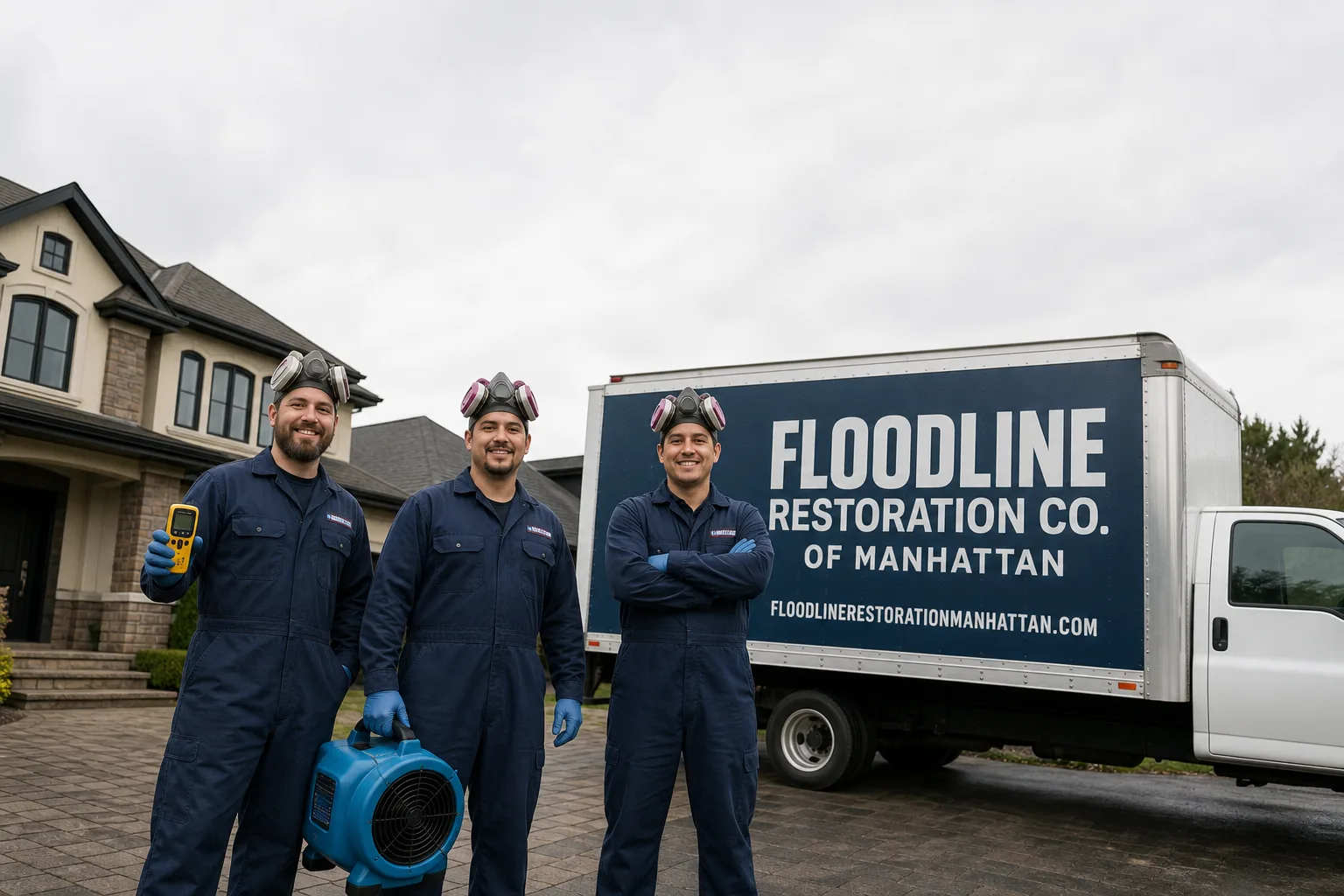
Free visual inspection and a written scope of work before any mitigation begins - photos, moisture readings, and drying logs go in your claim file
The scope we write is the scope we bill. Anything new gets shown to you, in writing, before we touch it.






 Before
 After
After Before
 After
After Before
 After
After24/7 Emergency Storm & Disaster Restoration in Great Neck
Storm damage on a peninsula moves fast. When a nor’easter pushes surge water up Manhasset Bay or wind tears a section of roof off a 1920s Tudor on Baker Hill Road, the difference between a contained loss and a gut renovation is measured in hours, not days. Floodline Restoration Co. of Manhattan answers the phone with a live dispatcher 24 hours a day, every day, and our crews reach Great Neck properties quickly because we’re already staged in the metro area. Call (917) 924-4221 the moment you see water, wind damage, or a compromised opening. The first hour decides how much we can save.
Our Storm & Disaster Restoration team handles everything from emergency board-up and roof tarping to full structural drying and rebuild, so you never play messenger between a mitigation crew and a reconstruction contractor. We work the whole claim. We bill your carrier directly. And we stand behind the result in writing.
Understanding Storm & Disaster Restoration Severity in Great Neck Properties
Great Neck’s housing stock changes the math on storm damage. These are not modern track homes with standard gypsum and vinyl. The peninsula’s 1920s through 1950s Colonial Revivals, Tudor Revivals, and Gold Coast estates carry horsehair plaster walls, original hardwood floors, custom millwork, and clay-tile or slate roofs. All of those materials respond differently to water than modern construction does, and they demand period-sensitive drying strategies rather than gut-and-replace approaches.
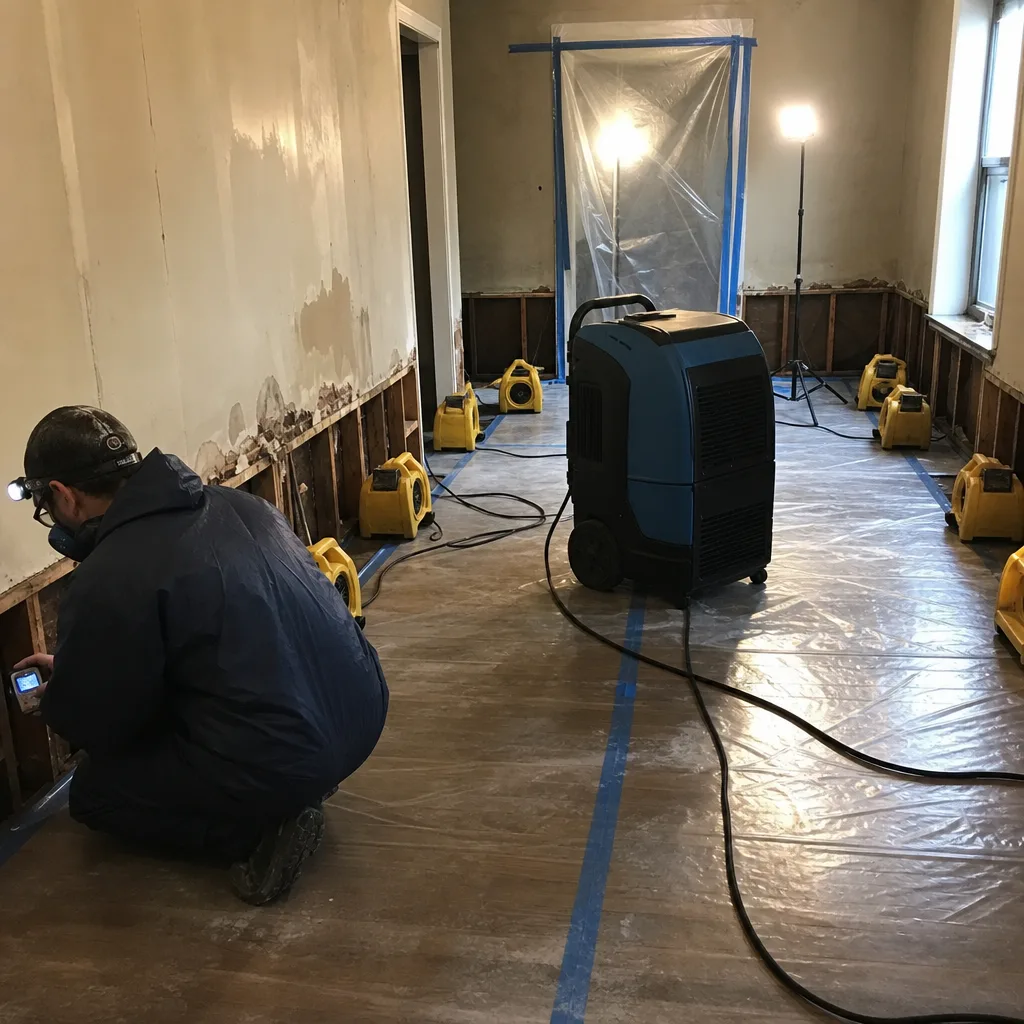
We categorize intrusion water the way the IICRC standard dictates: Category 1 is clean supply-line water; Category 2 is grey water with contaminants; Category 3 is black water, which includes seawater, ground flooding, and anything that has touched sewage. A nor’easter surge pushing bay water into a Kings Point basement is Category 3 every time. That means full containment, biohazard-level cleanup, antimicrobial treatment, and replacement of porous materials that cannot be dried to standard. We use thermal imaging and invasive moisture meters to map how far water has wicked into plaster and behind built-ins, because a Great Neck basement that looks dry at the surface often isn’t. Structural drying with Dri-Eaz LGR dehumidifiers and XPOWER axial air movers runs until daily moisture logs show the dry standard, not until the floor feels dry to the hand.
Why Great Neck Property Owners Choose Floodline Restoration Co. of Manhattan
- 45-minute response commitment on emergency calls. When you have a window knocked out on Middle Neck Road or a flooded basement in Great Neck Estates, we dispatch immediately and tell you honestly when we’ll arrive.
- A live person answers at 2 a.m. No automated system, no callback queue. A real dispatcher picks up, every call, every hour.
- IICRC-certified crews trained for coastal losses. Our technicians hold WRT (Water Damage Restoration Technician), FSRT (Fire & Smoke Restoration Technician), and AMRT (Applied Microbial Remediation Technician) certifications, so the crew that dries your home is the crew that treats the contamination.
- Free visual inspection before any work is authorized. We walk the loss, we show you what we see, and you approve a written scope. No work starts until you understand it.
- Direct insurance billing. We bill your carrier directly and handle adjuster communication. You are not the messenger.
- One team from first extraction to finished rebuild. The same certified crew that sets containment on day one hands you the finished room. No mid-job handoff, no inherited subcontractor.
Our Storm & Disaster Restoration Process
Inspection & Assessment
We walk the entire property with thermal imaging and moisture meters, not just the visible damage. In Great Neck’s older homes, we check cavities behind plaster, under hardwood, and around steel lally columns where saltwater hides. You get a written scope with line items.
Extraction & Stabilization
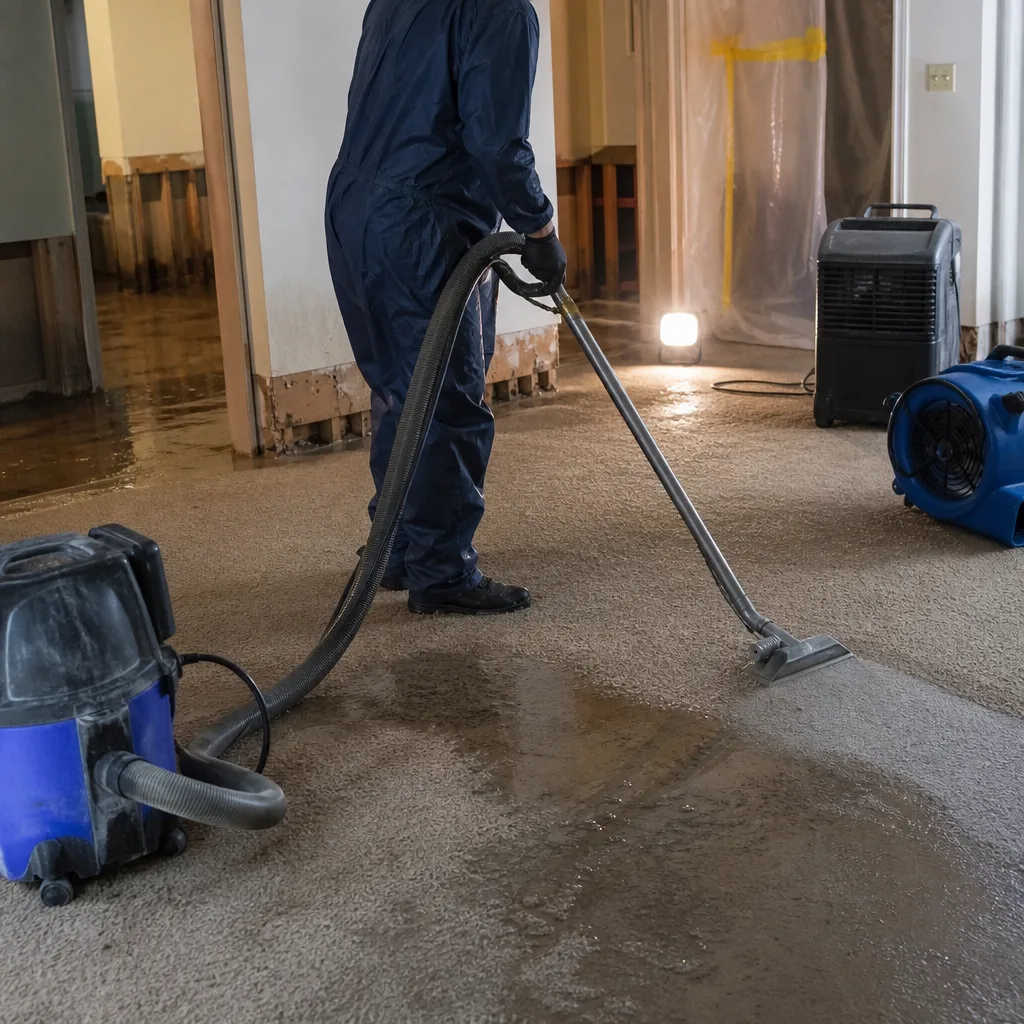
Standing water comes out with truck-mounted and portable extraction units. We set emergency board-up on broken windows and roof tarping on compromised sections the same visit, because an open envelope in a coastal wind event invites more damage by the hour.
Drying & Dehumidification
Professional-grade Dri-Eaz dehumidifiers, Phoenix axial air movers, and Injectidry systems go in on day one. Daily moisture readings are logged and shared with you and your carrier until the structure hits the dry standard.
Cleaning & Sanitization
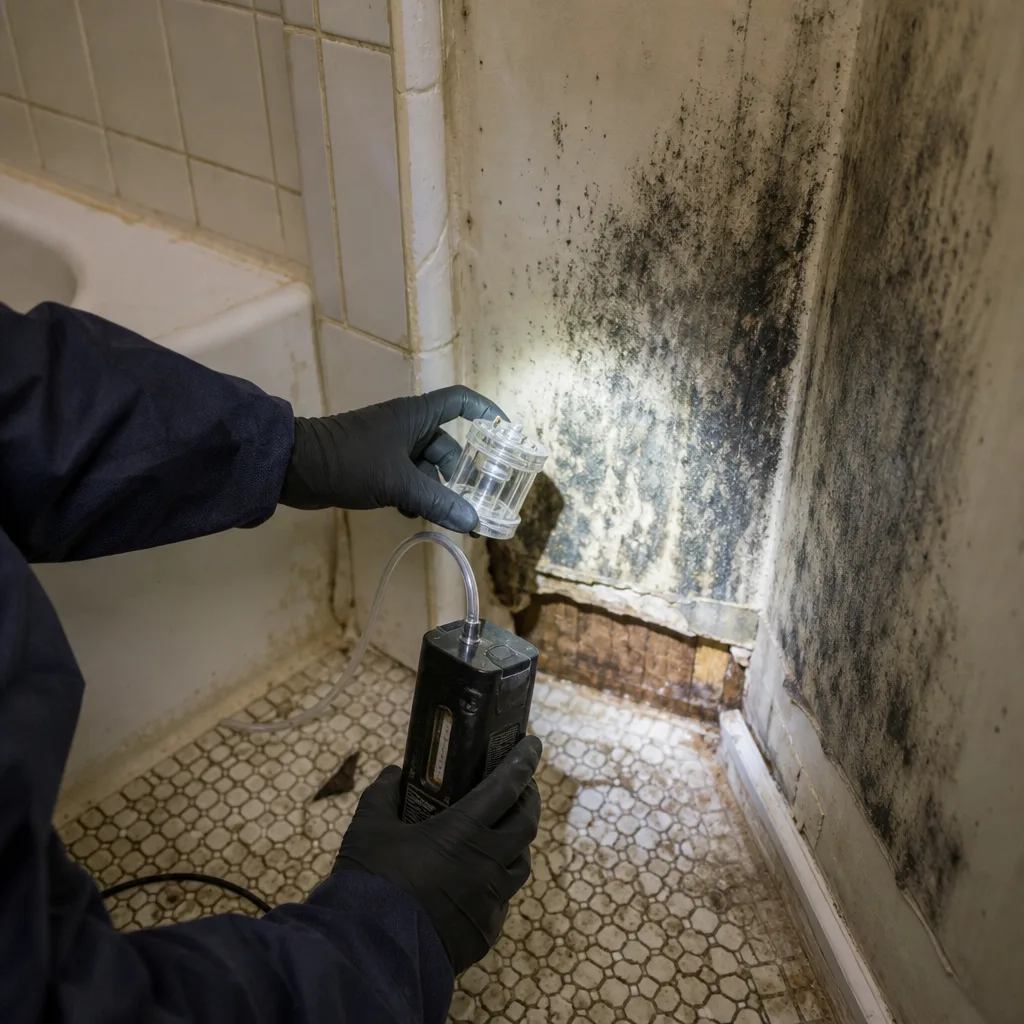
Category 2 and 3 water require antimicrobial treatment and our sanitization services in Great Neck. We also run HEPA air scrubbers during mitigation to control airborne contaminants, which matters in older homes where plaster dust and spore loads accumulate.
Corrosion & Specialty Treatment
Saltwater intrusion in Great Neck attacks metal fast. We inspect HVAC equipment, electrical panels, steel lally columns, and garage-door hardware for salt bloom and pitting, then replace what cannot be saved before it fails later.
Repairs & Restoration
The same crew handles reconstruction and cleanup in Great Neck, matching period trim, plaster profiles, and flooring where the home’s age demands it. You get a finished space and the 90-Day Done Right Promise in writing.
Need Emergency Storm & Disaster Restoration in Great Neck Now?
Crews minutes away, answering live 24 hours a day. The sooner we start, the less it costs.
Working With Your Insurance Company
Great Neck carries a specific insurance burden that inland Nassau towns never face. Much of the peninsula’s housing stock sits in FEMA-designated Special Flood Hazard Areas, which means most storm-loss claims here run through Write Your Own policies under the National Flood Insurance Program. Those claims demand elevation certificates, zone documentation, and a level of paperwork that a contractor working Glen Cove or Garden City rarely touches. We handle that every week. From the first hour on site, we photograph every affected room, log moisture readings daily, and build a line-item scope that matches what adjusters expect. We talk to your carrier directly. When the adjuster calls with questions, they call us, not you.
What We Provide Your Insurer
- Thorough documentation of the loss
- Photos of all damage, room by room
- Moisture readings and drying logs
- A detailed, line-item scope of work
- Direct coordination with your carrier
Built for Great Neck’s Loss Calendar
Great Neck’s storm damage follows a rhythm, and we plan crews around it. Deep winter brings nor’easters that push surge water over the bulkheads and into bay-side basements from Kings Point down through the Village of Great Neck. January and February also freeze and burst supply lines in unheated crawlspaces under those 1930s Colonials, which then freeze again before anyone notices. Spring thaw saturates the ground around the peninsula’s shallow water table, and basement seepage becomes a daily call from March through May. Summer thunderstorms drop two inches an hour on impervious ground and flash-flood the low-lying streets near Udalls Mill Pond and the LIRR corridor. Fall hurricane remnants track up the Long Island Sound and remind every waterfront homeowner why elevation certificates matter. The pattern never changes; only the severity does. We’re ready for all of it, year-round.
Storm & Disaster Restoration Across Great Neck’s Neighborhoods
The peninsula’s neighborhoods each fail differently in a storm, and our response routes reflect that. Kings Point and the waterfront sections of Great Neck Estates take the worst surge damage, with saltwater intrusion into basements and crawlspaces that corrodes mechanicals within days. Baker Hill Road and the higher streets behind it see more wind-driven roof damage and tree fall than flooding. The Village of Great Neck’s tightly packed prewar homes, especially around Middle Neck Road and Steamboat Road, share party walls that let water migrate between units, which means containment has to be set quickly. South of Northern Boulevard, the homes around Cutter Mill Road sit lower and take groundwater rise earlier than the rest of the peninsula. When you call us from any of these neighborhoods, the dispatcher already knows what we are likely walking into, because we have worked those blocks. Our Storm & Disaster Restoration in Great Neck crews know the peninsula’s failure modes street by street.
Specialized Storm & Disaster Restoration Services We Offer in Great Neck
Flood Damage Restoration
When Manhasset Bay or Little Neck Bay pushes water into a Great Neck basement, we treat it as Category 3 from the start. Extraction, containment, antimicrobial treatment, and structural drying run concurrently, and we inspect every steel lally column, panel, and piece of HVAC equipment for salt corrosion. Saltwater floods are a mechanical failure problem as much as a drying problem, and we address both.
Emergency Board-Up
A broken window or breached door on a Great Neck night is an invitation for water, animals, and worse. We board and secure openings the same visit, using plywood and fasteners sized for the wind loads the peninsula sees during nor’easters. Board-up is not a stopgap; done right, it holds until permanent repairs are scheduled.
Storm Damage Cleanup
Wind-loosened slate and clay tiles, downed limbs, and debris scattered across yards and driveways are common after any coastal storm here. We clear, haul, and secure, and we check the roof and garage-door tracks for damage while we’re on site, because wind events in Great Neck often leave opener chains and door hardware half-working.
Roof Tarping
For the Tudor Revivals and Colonial Revivals that dominate Great Neck’s side streets, temporary roof tarping stops water intrusion after slate or shingle loss. We fasten tarps to hold through the next blow, not just to cover until morning, and we photograph the damage for your carrier.
Debris Removal
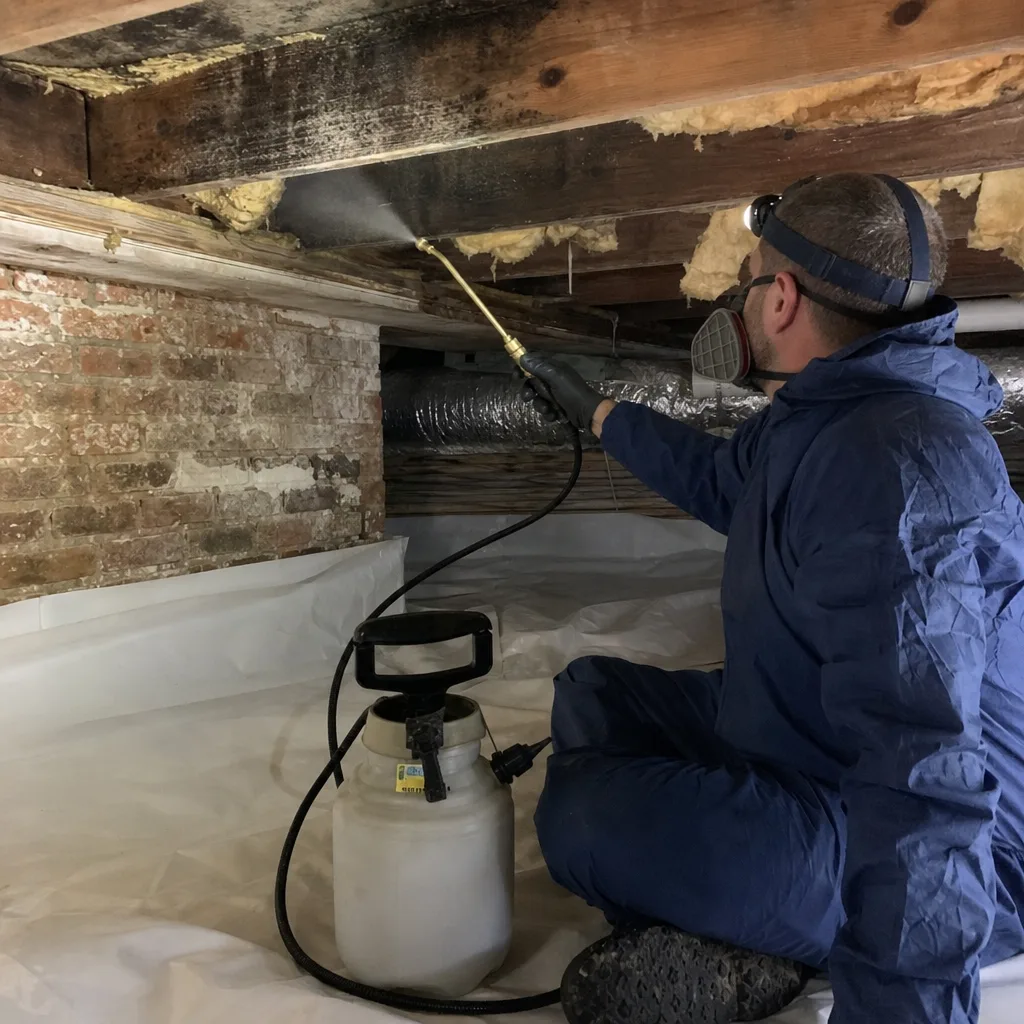
Storm debris on the peninsula is not just yard waste; it is often soaked plaster, damaged millwork, and building materials that need proper disposal. We haul it, document it for the claim, and keep the site clean enough that drying equipment works efficiently.
Wind Damage Repair
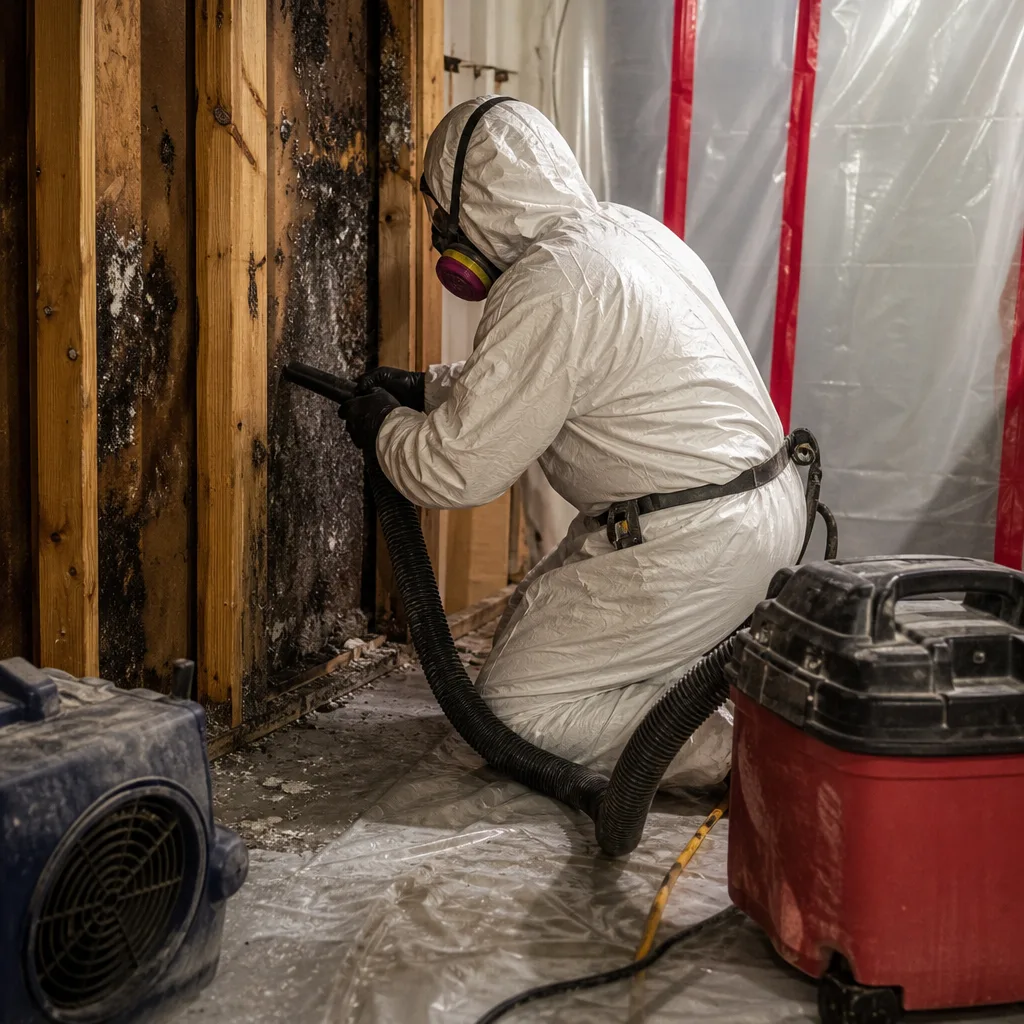
High winds off the bays shift rooflines, loosen siding, and strip flashing on older homes. We repair wind damage to match the existing period construction, which matters on a peninsula where a mismatched patch on a 1920s Colonial stands out from the street.
What happens when you call
- 1
A real person answersNo phone trees - you reach a local pro.
- 2
You get an upfront price rangeHonest numbers before anyone is dispatched.
- 3
A background-checked tech heads outLicensed & insured, dispatched right away.
- 4
You approve before work beginsNothing starts until you say go.
Storm & Disaster Restoration Costs in Great Neck, NY
Storm and disaster restoration costs in Great Neck run higher than inland Nassau because the work is harder and the materials are more particular. Emergency board-up typically runs $300 to $900 depending on openings and access. Roof tarping for a slate or tile roof runs $700 to $1,800, with steep pitch and height adding to the number. Flood extraction and structural drying in a standard Great Neck basement run $2,500 to $6,500, and saltwater jobs trend toward the top of that range because of the corrosion treatment and mechanical inspections involved. Full Category 3 flood restoration with rebuild work commonly lands between $8,000 and $40,000 depending on square footage, finishes, and whether period plaster and millwork must be replicated. Most Great Neck storm losses are insurance-covered; we provide the free visual inspection to establish scope and then bill your carrier directly. Call (917) 924-4221 and we will tell you what you are looking at before any work is authorized.
We Also Serve Cities Near Great Neck
Floodline Restoration Co. of Manhattan covers the full North Shore corridor. In addition to Great Neck, our storm and disaster restoration crews respond daily in Little Neck, Glen Oaks, Manhasset, and Bellerose. Same live dispatch, same written scope, same 90-Day Done Right Promise.
Great Neck Storm & Disaster Restoration Questions, Answered
How fast can you get to Great Neck in an emergency?
We commit to a 45-minute response on emergency calls across the Great Neck peninsula. Dispatch is coordinated from our New York City office, and crews are staged to reach Kings Point, Great Neck Estates, the Village, and the streets off Middle Neck Road quickly.
How does saltwater from Great Neck’s bays change the restoration approach compared to freshwater flooding?
Saltwater is always treated as Category 3 contamination, which means full containment, antimicrobial treatment, and disposal of porous materials. But more importantly for Great Neck, salt corrodes. Every steel lally column, electrical panel, HVAC component, and garage-door spring in the flood path gets inspected for pitting and salt bloom, and anything compromised is replaced rather than patched. Freshwater floods inland do not carry that corrosion burden.
My garage door springs snapped after a coastal storm, is that covered by my flood insurance?
Flood insurance under NFIP covers direct physical damage from floodwater. If surge water reached the garage and the springs failed as a result of corrosion from that event, it may be covered, but if the springs failed due to long-term salt-air exposure without a specific flood event, that would typically be a maintenance item. We document the condition and the cause for your carrier either way. Call (917) 924-4221 and we will help determine what the evidence supports.
Do I need an elevation certificate before starting storm restoration in Great Neck?
Not before starting emergency mitigation. Drying, board-up, and tarping should begin immediately. But if you are in a Special Flood Hazard Area and the claim involves substantial damage, your carrier will likely require an elevation certificate before reconstruction is approved. We coordinate with surveyors who work the peninsula regularly and can fold that documentation into the claim file.
What emergency services can you do right after a nor’easter hits Kings Point?
Board-up, roof tarping, standing water extraction, and structural drying can all begin the same visit. We also photograph everything before we touch it, set containment where needed, and check the saltwater corrosion risk on the mechanicals right away because in Kings Point the panel and lally columns are the first things to fail after a surge.
How long does it take before mold starts growing after a Great Neck basement flood?
Mold can begin colonizing within 48 to 72 hours in a warm, wet basement. Saltwater intrusion actually slows the clock slightly because of the salinity, but once the area is dry and humid conditions return, the growth window opens. That is why our crews start extraction and drying the same visit, and why daily moisture logs matter more than how the floor feels.
Can we stay in our home during storm restoration?
It depends on the extent of the loss and the category of the water involved. Most Category 1 and 2 losses allow you to remain in unaffected parts of the home. Category 3 floodwater, especially saltwater surge, often means the affected area must be contained and the air scrubbed, which can make staying difficult. We tell you honestly on the first visit whether staying is safe and sensible.
What certifications do your Great Neck crews hold?
Our technicians are background-checked, uniformed, and trained to IICRC, RIA, and IFA standards. WRT, FSRT, and AMRT certifications are standard across our storm crews, and the same certified technician who reads the moisture map on day one handles the daily readings until the dry standard is met.
What should I do in the first 30 minutes after storm damage?
If there is standing water, shut off electricity to the affected area at the breaker if you can do so without stepping into the water. Do not enter a flooded basement if the panel or any wiring is submerged. Then call (917) 924-4221. The dispatcher will walk you through what to photograph and what not to touch until a certified crew arrives.
Serving Great Neck, NY - Our Local Coverage Area
We’re based in the Great Neck area and know this community well. Use the map below to see our service coverage - if you’re nearby, we can almost certainly help.
The Saltwater Reality of Great Neck Restoration
Great Neck’s narrow peninsula position between Manhasset Bay and Little Neck Bay means even a glancing nor’easter can push Category 2 or 3 saltwater into basements and crawlspaces. And saltwater intrusion corrodes HVAC equipment, electrical panels, and steel lally columns years faster than the freshwater flooding seen in inland Nassau towns. It is the single most important difference between restoring a Great Neck home after a storm and restoring one in Garden City or New Hyde Park. Homeowners inland do not open their electrical panel three days after a flood and find white salt bloom on the breakers. Homeowners here do, and we see it on nearly every surge-related loss.
After a winter nor’easter pushed surge water into a 1930s Colonial Revival on Baker Hill Road in Great Neck Estates, our techs found the basement’s steel lally columns pitted with rust and the electrical panel showing white salt bloom within 72 hours. We set containment and began structural drying with Dri-Eaz LGR 7000XLi dehumidifiers and XPOWER air movers, then cut out the corroded panel breakers and replaced the lally columns with new steel before applying antimicrobial treatment to the foundation walls. That is what a saltwater loss in Great Neck actually looks like, and the homeowner would not have known the extent of it without a crew trained to look for it.
Corrosion is not limited to the basement. Salt-laden spray and surge water cause garage-door springs to snap within five to seven years instead of the ten to fifteen typical inland. Galvanized tracks and hinges rust through at the fastener points, causing doors to bind or jump the track during wind events. Opener chains and screws seize from corrosion, leaving homeowners locked out exactly when they need to board up for a storm. We replace failed springs with coated or stainless options, swap rusted hardware for galvanized or stainless fasteners, and recommend corrosion inspections on bay-side homes so the door does not fail in the middle of the next nor’easter. A garage door that will not open during a storm is not an inconvenience; it is a lost exit and a breach waiting to happen.
Call Floodline Restoration Co. of Manhattan at (917) 924-4221 for a free visual inspection after any Great Neck storm loss. We answer live, we show up fast, and we put the scope in writing before any work begins. Done right, and backed in writing.
Written by Curt Bowman, Owner at Floodline Restoration Co. of Manhattan, serving Great Neck and the North Shore with storm and disaster restoration since 2010.