
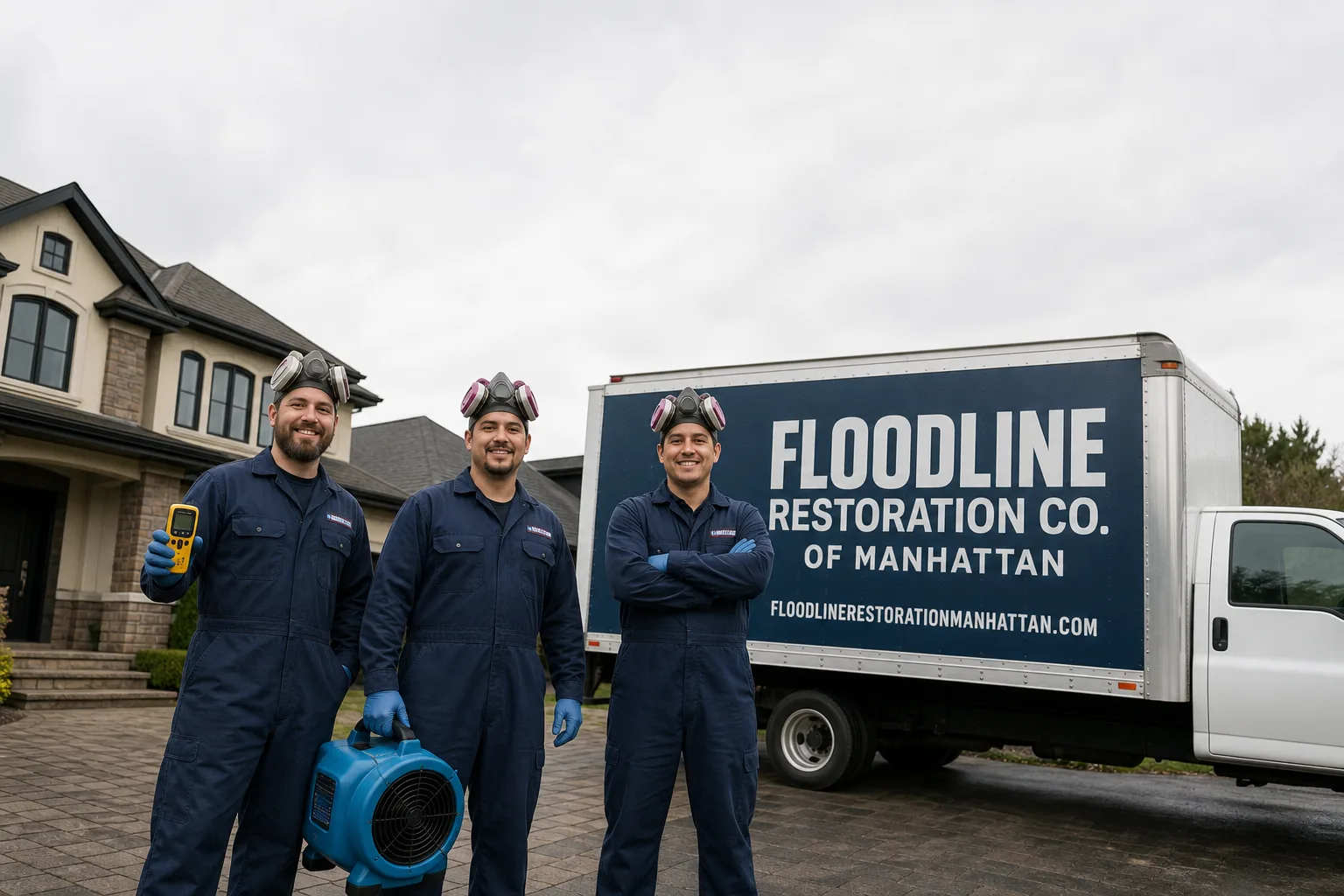
Free visual inspection and a written scope of work before any mitigation begins - photos, moisture readings, and drying logs go in your claim file
The scope we write is the scope we bill. Anything new gets shown to you, in writing, before we touch it.






 Before
 After
After Before
 After
After Before
 After
After24/7 Emergency Storm & Disaster Restoration in Hackensack
Storm and disaster restoration in Hackensack typically costs between $3,200 and $18,000 depending on the extent of flood intrusion, structural damage, and required rebuild work. Most emergency response calls in the city are dispatched within 45 minutes, with extraction equipment running the same visit. Floodline Restoration Co. answers the phone live at (917) 924-4221 around the clock, every day including holidays. When storm water sits in a Hackensack basement along the River Street corridor, the damage compounds by the hour: drywall wicks moisture upward, hardwood flooring cups and delaminates, and the brackish water left by tidal surge begins corroding cast-iron waste lines that predate the Eisenhower administration. The first hour sets the ceiling on how much of the home can be saved. We send uniformed, background-checked crews from our New York City dispatch office into Hackensack immediately, with a free visual inspection before any work begins.
Understanding Storm & Disaster Restoration Severity in Hackensack Properties
Storm damage in Hackensack breaks into three categories that dictate the entire restoration approach. Category 1 water comes from roof leaks, broken supply lines, or window intrusion during a nor’easter. It starts clean but degrades quickly once it contacts building materials. Category 2 water contains significant contaminants and is common when rainfall pushes through saturated soils into 1920s-era basements. Category 3 water is what we see along the tidal Hackensack River and lower Main Street after storm surge pushes north from Newark Bay. It carries sewage, brackish salinity, silt, and bacteria from the river and municipal systems. Any Category 3 intrusion requires full containment, removal of contaminated porous materials, antimicrobial treatment on structural framing, and clearance testing before rebuild. Hackensack’s older housing stock complicates this further. Homes built between the 1920s and 1950s frequently have finished basements directly on slab or over shallow crawlspaces, with framing that absorbs water quickly and dries unevenly. The high groundwater table near the river means even after surface extraction, moisture continues migrating upward through concrete for days.
Why Hackensack Property Owners Choose Floodline Restoration Co. of Manhattan
- 45-minute response commitment in Hackensack – When storm water is rising or a tree limb has opened your roof, waiting until morning is not an option. Our dispatch board routes crews into Hackensack immediately.
- A live person answers, 24/7 – At 2 a.m. you reach a dispatcher, not a recording. That dispatcher has already alerted a certified crew while you’re still explaining the damage.
- IICRC-certified crews with WRT and ASD credentials – Our technicians hold Water Restoration Technician and Applied Structural Drying certifications. They carry thermal imaging cameras, hygrometers, and moisture meters on every truck.
- Free visual inspection and written scope – Before any work starts, you get a line-item scope in writing. No surprises, no scope creep, no pressure.
- Direct insurance billing – We coordinate with your adjuster directly and bill the carrier where coverage applies. You never play messenger between us and your insurance company.
- One team from extraction to rebuild – The same crew that reads the moisture map on day one handles daily readings, logs the data, coordinates with your carrier, and rebuilds what needs rebuilding. No mid-job handoff.
Our Storm & Disaster Restoration Process
Inspection & Assessment
We arrive, walk the entire property, and document every affected surface. Thermal imaging and hygrometers map the moisture envelope inside walls and ceilings so we know exactly what needs to come out and what can be saved.
Extraction & Stabilization
Standing water goes out first, including brackish surge water from the Hackensack River. We board up broken windows, tarp roof damage, and remove structural hazards before they worsen. Debris is cleared and documented for your carrier.
Drying & Dehumidification
Dri-Eaz and Phoenix air movers with low-grain refrigerant dehumidifiers pull moisture from framing, drywall, and flooring. We log daily moisture readings and do not pack up until the dry standard is met, verified room by room.
Cleaning & Sanitization
Category 3 water demands antimicrobial treatment on exposed framing and concrete. Contaminated drywall, insulation, and flooring are removed before sanitization. HEPA air scrubbers run throughout the process to control airborne particulates.
Storm-Specific Treatment
Saltwater residue from tidal surge is the Hackensack-specific variable. Brackish water accelerates corrosion of 1920s-era galvanized supply lines and cast-iron waste pipes. We inspect and test these systems before rebuild begins.
Repairs & Restoration
Once the structure reads dry and clean, we rebuild. Drywall, trim, flooring, electrical, plumbing checks, paint. The job is not done until it is done right, and the 90-Day Done Right Promise is in your hands.
Need Emergency Storm & Disaster Restoration in Hackensack Now?
Crews minutes away, answering live 24 hours a day. The sooner we start, the less it costs.
Working With Your Insurance Company
Storm damage claims are where people get burned by restoration companies that under-document, over-scope, or leave the homeowner to argue with an adjuster alone. We do it differently. From the first hour on site, our crews photograph every affected area, log moisture readings with dates and locations, and write a detailed line-item scope of work using industry-standard estimating software. Curt Bowman built Floodline Restoration Co. around a dispatch board, not a sales desk, and that shows in how claims are handled. We communicate with your adjuster directly, submit documentation as it is collected, and bill your carrier where coverage applies. You receive a copy of everything. When the job is done, you have a complete moisture log, photo file, and written scope to support your claim. No paperwork battles. No arguing over what was damaged and what was not.
What We Provide Your Insurer
- Thorough documentation of the loss
- Photos of all damage, room by room
- Moisture readings and drying logs
- A detailed, line-item scope of work
- Direct coordination with your carrier
Built for Hackensack’s Loss Calendar
Hackensack’s storm losses run on a calendar that local restoration crews know by heart. January and February bring deep freezes that burst supply lines in unheated basements and kill boiler systems in pre-war homes along Union Street and State Street. March and April deliver nor’easters, heavy wet snow, and the first river surge events of the year as snowmelt combines with coastal storms. May through August is thunderstorm season, when short-burst flash flooding overwhelms the city’s combined storm-sanitary infrastructure and groundwater intrusion rises in the 07601 flood zones along the Hackensack River. September through November is peak hurricane season, when tropical remnants push tidal surge up from Newark Bay and flood ground-floor units in brick apartment buildings along the river corridor. Each season carries a different water category, a different drying strategy, and a different insurance claim profile. A city with this much older housing stock and this much river frontage does not get one-time storm events. It gets recurring losses stacked on top of prior remediations.
Storm & Disaster Restoration Across Hackensack’s Neighborhoods
The damage profile changes block by block in Hackensack. Along River Street and the lower Main Street corridor, finished basements and garden-level apartments take on brackish Category 3 surge water during coastal storms, and the restoration work involves full containment, antimicrobial treatment, and often complete basement gutting. In the residential streets around Fairmount, older two-family homes with original cast-iron plumbing face rainfall-driven groundwater intrusion through foundational cracks, a slow Category 1 or 2 problem that worsens during the wet spring months. Near Foschini Park and the areas around Johnson Park, homes sit slightly higher but still experience surface water pooling and window-well flooding during heavy downpours. Around the campus at Hackensack Meridian Health and the commercial spine of Main Street, mid-rise buildings with flat roofs take wind and water damage during nor’easters, requiring emergency board-up, tarping, and interior drying on upper floors. The common thread across every Hackensack neighborhood is age: pre-1978 construction means lead and asbestos protocols are routine before structural drying or rebuild can begin.
Specialized Storm & Disaster Restoration Services We Offer in Hackensack
Flood Damage Restoration
When the Hackensack River tops its banks or tidal surge pushes north from Newark Bay, flood restoration in Hackensack is not a single-visit job. It is extraction, containment, controlled demolition of contaminated materials, structural drying, antimicrobial treatment, and rebuild. Our Storm & Disaster Restoration team carries Dri-Eaz air movers, Phoenix dehumidifiers, and XPOWER air scrubbers on every response. We work the moisture map from day one and do not stop until the structure reads dry to pre-loss conditions.
Storm Damage Cleanup
Downed trees, blown-in debris, water-soaked contents, collapsed ceilings. Storm cleanup in Hackensack means clearing the damaged material safely, documenting everything for your carrier, and stabilizing the structure before secondary damage sets in. We have handled repeated storm cycles in the city’s older housing stock and know how to work around original framing without causing additional damage.
Emergency Board-Up
A broken window or compromised door during a Hackensack storm is an open invitation to water, animals, and trespassers. We board up openings with properly sized plywood, secured professionally so it holds against continued wind. This is not a temporary patch job. It is structural stabilization that buys time for the full restoration scope to be written and approved.
Roof Tarping
Nor’easters and summer thunderstorms tear shingles off Hackensack’s older roofs constantly. Tarping stops the bleeding immediately. The tarp is measured, secured, and documented for your insurance claim. It protects the interior while your adjuster evaluates the roof itself. Good tarping prevents a roof leak from becoming a full interior drywall and flooring restoration.
Debris Removal
Fallen branches, blown insulation, waterlogged furniture, ruined carpet. Debris removal after a Hackensack storm is part of the documented scope of work, with photographs and inventories so your claim reflects what was actually lost. We remove debris, separate salvageable items, and dispose of the rest properly.
What happens when you call
- 1
A real person answersNo phone trees - you reach a local pro.
- 2
You get an upfront price rangeHonest numbers before anyone is dispatched.
- 3
A background-checked tech heads outLicensed & insured, dispatched right away.
- 4
You approve before work beginsNothing starts until you say go.
Storm & Disaster Restoration Costs in Hackensack, NJ
Storm damage restoration in Hackensack runs anywhere from $1,800 for a contained roof leak with minor drywall repair to $35,000 or more for a full basement gut-and-rebuild after Category 3 river surge flooding. Here are the typical ranges we see in the local market. Water extraction and drying alone: $2,500 to $6,000 depending on square footage. Emergency board-up and tarping: $450 to $1,800. Structural drying with daily monitoring: $1,200 to $3,500. Basement flood restoration with full demolition and rebuild: $8,000 to $25,000. Repair of damaged cast-iron or galvanized plumbing after surge exposure: $1,500 to $5,000. The factors that move the price are the water category, the age of the home, whether asbestos or lead abatement is required, and how quickly restoration begins. Insurance coverage depends on your policy and the specific cause. A free visual inspection gets you a firm, written scope with no obligation, no inflated numbers, and no vague estimates. Call (917) 924-4221 and we will walk the property with you.
We Also Serve Cities Near Hackensack
Our crews regularly respond to storm damage in Storm & Disaster Restoration in Hackensack and the surrounding area. We also serve Maywood, Bogota, Teterboro, and South Hackensack with the same 45-minute response commitment, live 24/7 dispatch, and IICRC-certified crews.
Hackensack Storm & Disaster Restoration Questions, Answered
How does tidal surge from the Hackensack River change the water category during a storm in Hackensack?
Tidal surge from the Hackensack River automatically makes flood water Category 3 contaminated water, not Category 1 or 2. Brackish surge carries sewage, bacteria, salt, and silt from Newark Bay into basements along the River Street corridor. Any porous material touched by this water is removed, not dried, and framing receives antimicrobial treatment before rebuild can begin. Call (917) 924-4221 for an exact assessment of your specific exposure.
Why do Hackensack homes built before 1978 need extra steps before structural drying can begin?
Pre-1978 construction means lead paint and asbestos-containing materials are likely present in the building envelope. Before we cut into walls or ceilings for drying, we test for these materials and follow containment protocols. It adds a step, but it protects your family and keeps the restoration compliant. This is a standard part of our written scope on older Hackensack homes.
What should I look for if my Hackensack basement was previously remediated after Irene or Sandy?
We see spray-foamed cracks, mismatched drywall patches, and improperly dried framing in Hackensack basements that were remediated after Irene in 2011 and Sandy in 2012. These shortcuts hold on the surface but fail when the next surge event arrives. If your basement was worked on after either storm, ask us to inspect the previous remediation quality during our free assessment. We identify layered failures before they become new water damage.
Can my original cast-iron or galvanized plumbing survive another Hackensack flood?
Cast-iron waste lines and galvanized supply lines from the 1920s through 1950s corrode internally over time, and brackish flood water accelerates that corrosion. Salt residue left inside wall cavities after surge events eats at these pipes from the outside too. We inspect plumbing thoroughly after flood events and recommend replacement where internal scaling or external corrosion makes failure likely. It is far cheaper to replace proactively than to fix a post-restoration burst.
How soon after Hackensack floodwater recedes does mold start on wet drywall?
Mold colonization on wet drywall can begin within 24 to 48 hours in Hackensack’s hot, humid summers, often faster in closed-up basements. The clock starts the moment water recedes. That is why our emergency response is built around the first hour after you call. The faster extraction and drying begin, the less demolition is needed and the lower the final cost. Call (917) 924-4221 immediately.
How fast can you actually get to my Hackensack property?
Our dispatch board routes crews into Hackensack within 45 minutes of your call, day or night, including holidays. We are not a franchise with a call center in another state. Our New York City dispatch office coordinates directly with crews stationed to serve the Hackensack area, and a live person answers when you call (917) 924-4221.
Will my homeowner’s insurance cover storm and flood restoration in Hackensack?
Standard homeowner’s policies cover wind damage, roof leaks, and rain-driven intrusion through storm-created openings. Flood damage from river surge or rising groundwater requires a separate flood insurance policy, typically through FEMA’s National Flood Insurance Program. We document everything, coordinate directly with your adjuster, and bill your carrier where coverage applies. Our scope of work is written to support your specific policy language.
Do I need full restoration or just a cleaning after storm water gets in?
If the water came from a roof leak or clean supply line and was extracted within hours, a professional drying and sanitization may suffice. If the water came from the Hackensack River, storm surge, or any Category 3 source, full restoration with controlled demolition is the only correct approach. We give you an honest assessment in writing, with photos and moisture data to back it up. No overselling. No shortcuts. The free inspection gives you the facts.
Serving Hackensack, NJ - Our Local Coverage Area
We’re based in the Hackensack area and know this community well. Use the map below to see our service coverage - if you’re nearby, we can almost certainly help.
Call Floodline Restoration Co. of Manhattan for Storm & Disaster Restoration in Hackensack
One call to (917) 924-4221 puts a live dispatcher on the line, alerts a certified crew headed toward your Hackensack property, and starts the documentation your insurance carrier will need. The 90-Day Done Right Promise stands behind every job we complete in Hackensack: if it is not right, we make it right. In writing. No arguments. No paper battles. That is the deal we have offered for over 42 years, and it is the same deal you get whether you live on River Street near the flood zone or up by the middle schools. We also offer $50 off any repair over $250, an $89 seasonal tune-up, and a standing 5% discount for seniors and veterans. Estimates are free.
Written by Curt Bowman, Owner at Floodline Restoration Co. of Manhattan, serving Hackensack property owners with full-cycle storm and disaster restoration from first extraction to finished rebuild.