
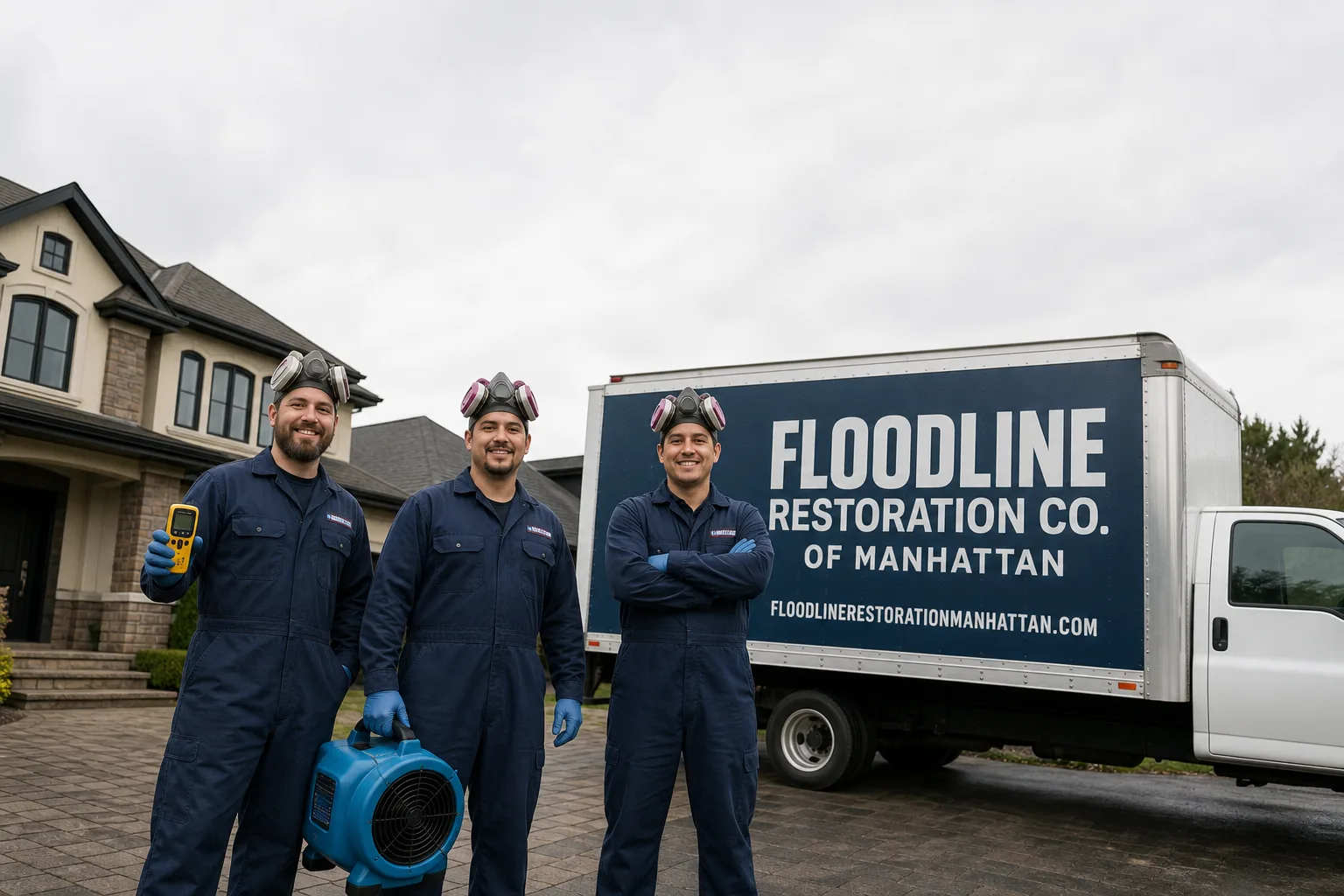
Free visual inspection and a written scope of work before any mitigation begins - photos, moisture readings, and drying logs go in your claim file
The scope we write is the scope we bill. Anything new gets shown to you, in writing, before we touch it.






 Before
 After
After Before
 After
After Before
 After
After24/7 Emergency Storm & Disaster Restoration in Jackson Heights
When a nor’easter tears through Jackson Heights or a summer storm overwhelms your building’s roof drains, you need a crew that answers the phone and gets moving. Floodline Restoration Co. of Manhattan dispatches certified storm damage teams to Jackson Heights around the clock. Call (917) 924-4221 any hour, day or night, and a live dispatcher picks up, not a recording. The first hour after water intrusion or wind damage is when secondary damage takes hold, which is why we commit to a 45-minute response inside Jackson Heights for emergency calls. A free visual inspection tells us exactly what you’re facing.
Understanding Storm & Disaster Restoration Severity in Jackson Heights Properties
Storm damage in Jackson Heights rarely stays contained. The neighborhood’s pre-war brick co-ops, garden apartments, and attached row houses share walls, risers, and roof membranes. When a flat roof drain clogs during a heavy convective storm, the water that pools on the roof becomes Category 1 water, but as it travels through original cast-iron risers and settled plaster, it picks up decades of dust, rust, and debris. By the time it shows up as a ceiling stain on the third floor, we’re often dealing with Category 2 water, which requires containment and antimicrobial treatment before structural drying begins. Moisture mapping with thermal imaging and hygrometers tells us how far water has migrated behind walls, under original wood flooring, and into party walls that separate one co-op unit from the next. In Jackson Heights, severity is shaped by building age. The original galvanized supply lines from the 1920s and 1930s corrode from the inside out, and a freeze-thaw cycle in January can turn a pinhole leak into a burst that floods every unit in a stack before anyone locates the shutoff valve. We read the moisture map on day one and log readings daily until the dry standard is met.
Why Jackson Heights Property Owners Choose Floodline Restoration Co. of Manhattan
- 45-minute response commitment: For emergency storm calls in Jackson Heights, we commit to having a crew rolling to you within 45 minutes of your call. Realistic, not marketing talk.
- 24/7 live answer, never an automated system: A person answers our phones at 2 a.m. on a Sunday. That person can dispatch a crew. Founded in 2010, built around a dispatch board, not a sales desk.
- IICRC-certified crews: Our technicians hold WRT, FSRT, and AMRT certifications and train to RIA and IFA standards. They show up background-checked and uniformed.
- Free visual inspection: We walk the loss with you before any money changes hands. You get a straight read on what’s wet, what’s salvageable, and what needs to go.
- Direct insurance billing: We bill your carrier directly and coordinate with the adjuster. You never play messenger between us and the insurance company.
- One team from extraction to reconstruction: The same certified crew that pumps the water out is the crew that rebuilds the wall. No mid-job handoff, no inherited subcontractors.
Our Storm & Disaster Restoration Process
Inspection & Assessment
We arrive, walk the property, and map the damage. Thermal imaging and moisture meters tell us where water has traveled, even where you can’t see it. For co-op buildings, we coordinate with the managing agent on access from the first hour.
Extraction & Stabilization
Standing water comes out first, using truck-mounted and portable extraction units. For wind damage, this step includes emergency board-up and roof tarping to stop further weather intrusion. We stabilize before we dry.
Drying & Dehumidification
We set air movers and Dri-Eaz dehumidifiers in a calculated layout, then monitor daily with hygrometers. In Jackson Heights pre-war buildings with original wood flooring, we dry in place where the floor can be saved and remove only what cannot.
Cleaning & Sanitization
After Category 2 or 3 water, we clean all affected surfaces with professional-grade antimicrobials. HEPA vacuuming removes storm debris and fine particulates that ordinary cleaning leaves behind.
Containment & Specialty Treatment
Where water has migrated into party walls or through common risers, we set containment to stop cross-contamination to adjacent units. This matters in Jackson Heights row houses, where a loss in one attached home can become a loss in two.
Repairs & Restoration
We rebuild what the storm took out: drywall, flooring, trim, and paint. The same crew that did the extraction handles the finish work, so the scope doesn’t drift and the quality stays consistent.
Need Emergency Storm & Disaster Restoration in Jackson Heights Now?
Crews minutes away, answering live 24 hours a day. The sooner we start, the less it costs.
Working With Your Insurance Company
Storm damage claims in Jackson Heights get complicated fast, especially in co-op buildings where the shareholder’s policy, the co-op’s master policy, and the restoration scope all have to line up. We’ve handled enough of these to know what carriers need. From the first hour, we document everything: photos of the loss room by room, moisture readings from day one, drying logs that show the dry standard was met, and a line-item scope of work that a claims adjuster can actually review without a fight. We talk to your adjuster directly and bill the carrier directly. You get a copy of everything, and our 90-Day Done Right Promise, the Keystone Standard, is in writing before we finish. If it’s not done right, we make it right. No paperwork battles, no arguing.
What We Provide Your Insurer
- Thorough documentation of the loss
- Photos of all damage, room by room
- Moisture readings and drying logs
- A detailed, line-item scope of work
- Direct coordination with your carrier
Built for Jackson Heights’s Loss Calendar
Jackson Heights has a storm damage calendar, and we plan our crews around it. January and February bring deep freezes that burst original galvanized supply lines in pre-war co-op stacks, flooding multiple units before shutoff valves can be reached. March and April bring thaw cycles that widen cracks in brick facades and parapet walls, letting wind-driven rain into top-floor units along 34th and 35th Avenues. July and August bring convective storms that dump inches of rain in an hour, overwhelming flat-roof drains on block-long garden apartment buildings and sending water into the same walls that saw it last summer. And October through November brings nor’easters that combine wind and rain, testing old roofs, old windows, and old brickwork all at once. A building that takes storm water year after year without proper structural drying is a building with hidden mold inside its walls. We keep moisture logs on every job so the evidence is there, season after season.
Storm & Disaster Restoration Across Jackson Heights’s Neighborhoods
The Jackson Heights Historic District, running through the 70s and 80s Streets between Roosevelt Avenue and Northern Boulevard, is the heart of our work here. These 1920s-through-1940s cooperative garden apartment complexes sit behind planted courtyards, and any exterior restoration work, including storm damage repair to facades, parapets, and common areas, requires NYC Landmarks Preservation Commission approval and historically appropriate materials. That’s a regulatory layer you won’t find in Astoria or Elmhurst, and we’ve navigated it enough times to know the submission process, the material specs, and the realistic timeline. Along Roosevelt Avenue, the commercial frontages and attached row houses above them take wind and water differently than the garden apartments do, so board-up and tarping specs shift. Over near Travers Park and the corridor toward 35th Avenue, the pre-war brick row houses share party walls, so a wind-driven rain event in one home can migrate into the one next door. And in the blocks east of Junction Boulevard, the large pre-war co-op buildings concentrate liability across dozens of units from a single burst riser or clogged roof drain. Every area has its own failure pattern, and our crews know which one they’re walking into before they arrive.
Specialized Storm & Disaster Restoration Services We Offer in Jackson Heights
Storm Damage Cleanup
After a nor’easter or a summer flash flood, Jackson Heights basements and ground-floor garden apartment units take on standing water mixed with whatever the storm carried in: sewage, debris, and silt. We extract, remove storm debris, remove unsalvageable materials, and sanitize every affected surface before drying begins. In co-op buildings, we work with the managing agent to make sure common areas are safe for residents while we work.
Flood Damage Restoration
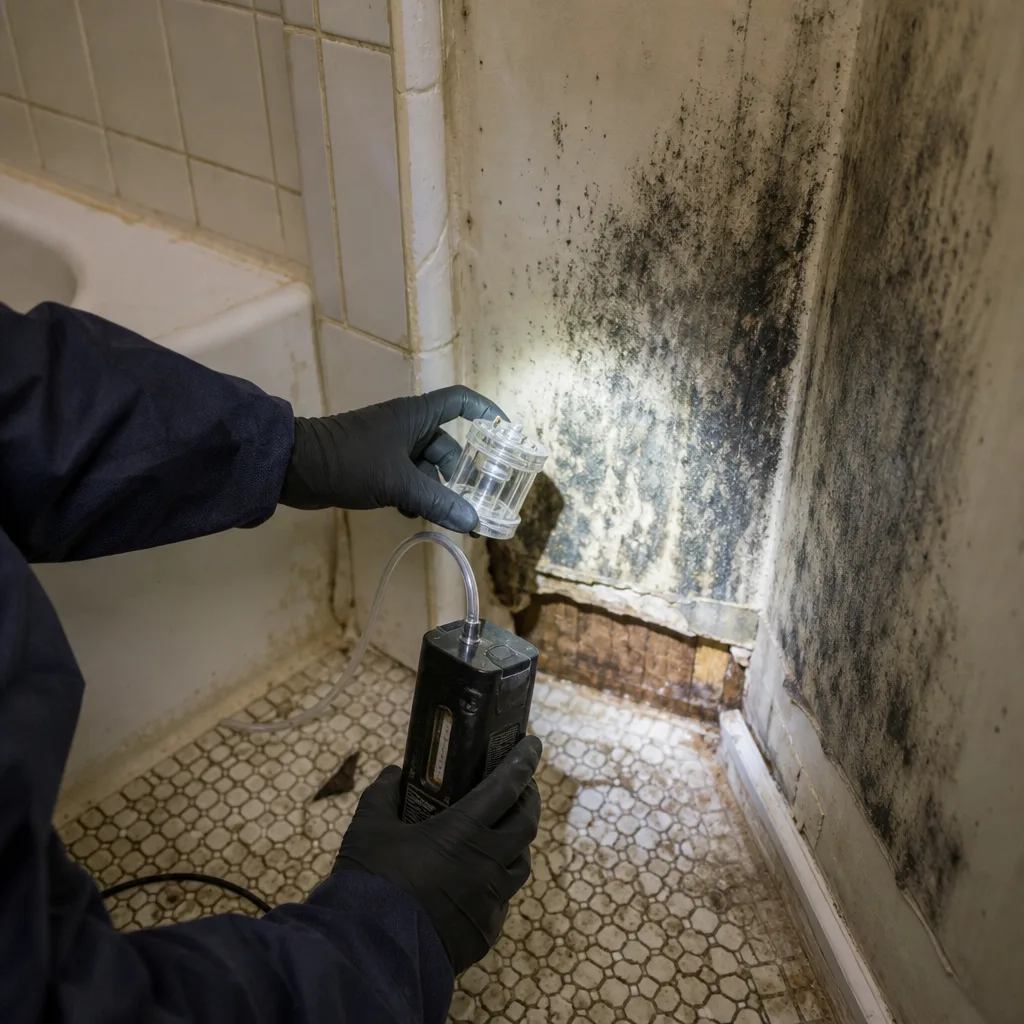
Flat-roof drains that clog during heavy rain send water down through original cast-iron risers into every floor below. Our flood damage work starts with water extraction, moves to moisture mapping inside walls and under flooring, then runs structural drying with Phoenix and Dri-Eaz equipment until daily readings confirm the dry standard. In Jackson Heights, we dry original wood flooring in place whenever it can be saved, which matters in Historic District units where replacement flooring has to match what was there in 1928.
Emergency Board-Up
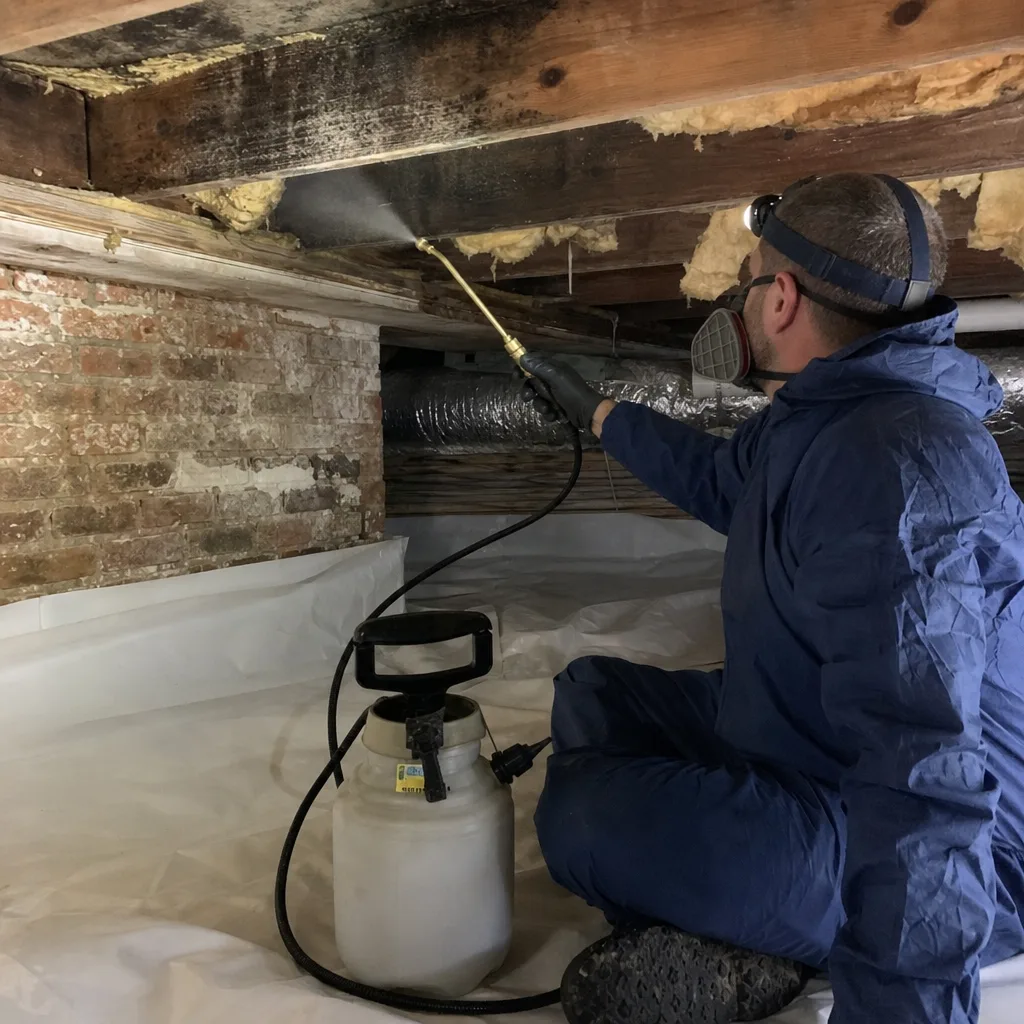
Broken windows from wind-blown debris, damaged entry doors, and compromised ground-floor storefronts need board-up before the next band of weather hits or before anyone unauthorized walks in. We respond to Jackson Heights board-up calls day and night, using code-compliant materials and methods that work on pre-war brick openings as well as modern storefront frames.
Roof Tarping
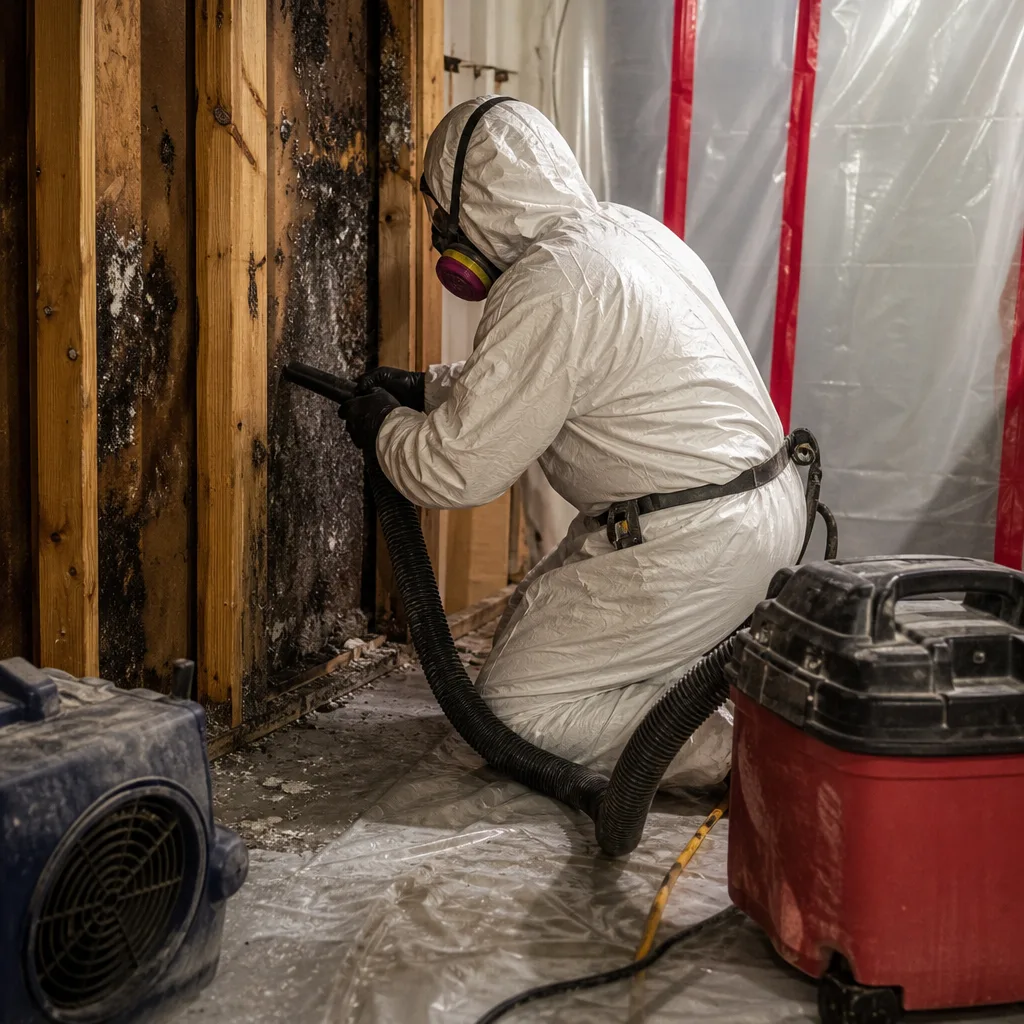
Flat and minimally-sloped roofs on Jackson Heights pre-war apartment blocks fail at the drains and at parapet wall seams. When a storm opens a hole, we tarp it quickly so the next rain doesn’t turn a small repair into a building-wide loss. Tarping is stabilization, not a repair, and we say so plainly before we put one on.
Debris Removal
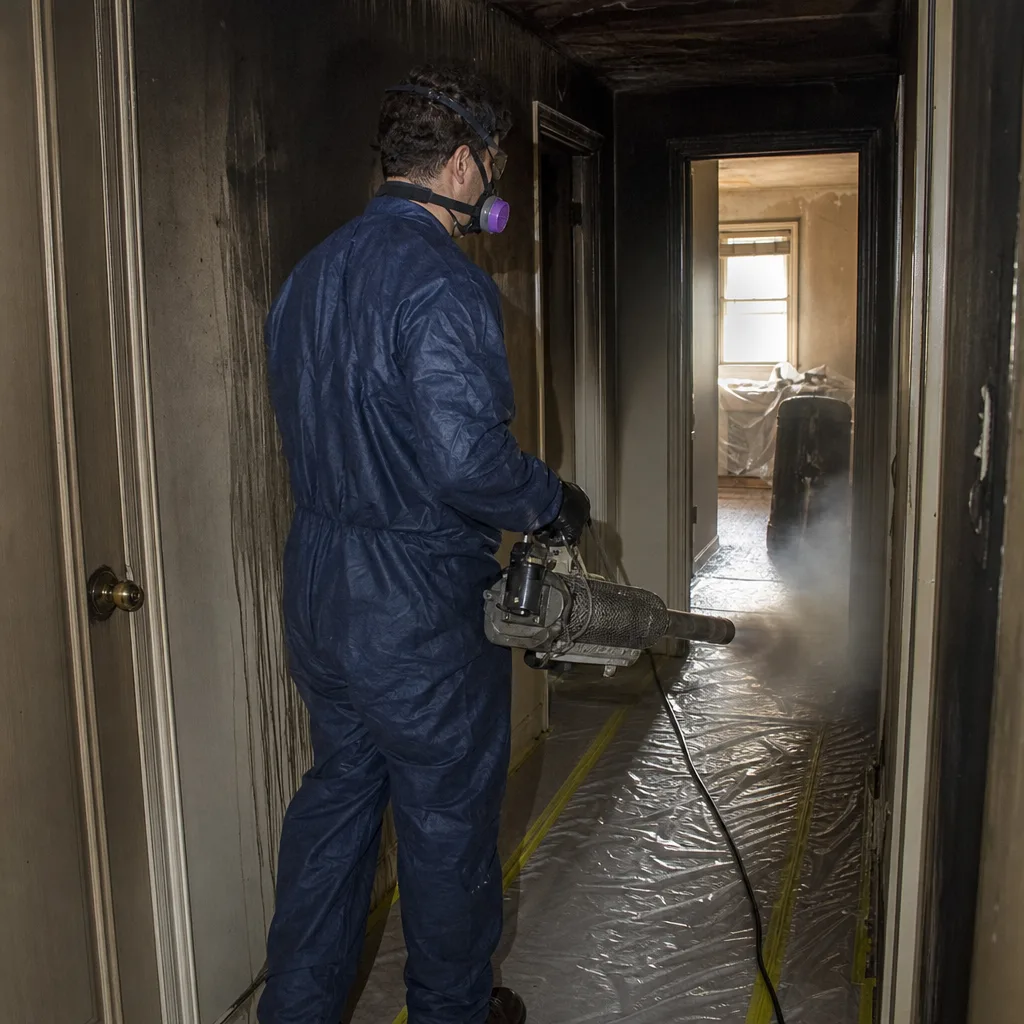
Storm debris in Jackson Heights is not just tree branches, it’s brick chips from parapet walls, pieces of cornice, broken slate, and whatever the wind carried off the roof decks. We remove it safely, separate materials for proper disposal, and document everything for the insurance claim before any repair work begins.
What happens when you call
- 1
A real person answersNo phone trees - you reach a local pro.
- 2
You get an upfront price rangeHonest numbers before anyone is dispatched.
- 3
A background-checked tech heads outLicensed & insured, dispatched right away.
- 4
You approve before work beginsNothing starts until you say go.
Storm & Disaster Restoration Costs in Jackson Heights, NY
Storm damage restoration in Jackson Heights is priced by scope, not by guesswork. Emergency board-up and tarping typically runs $400 to $1,200, depending on how many openings need securing and how much roofing material is involved. Water extraction and structural drying for a single flooded garden apartment unit usually lands between $1,800 and $4,500. Flood damage restoration that includes full containment, removal of wet drywall and insulation, and rebuild of a ceiling or wall in a pre-war co-op unit commonly runs $6,000 to $14,000. A burst supply line that floods three floors of a co-op stack can reach $25,000 to $40,000 once extraction, drying, mold prevention, and reconstruction across multiple units are in the scope. Our free visual inspection gives you a real number before any work starts. We bill your carrier directly, and the 90-Day Done Right Promise means the price we agree on is the price that stands.
We Also Serve Cities Near Jackson Heights
Our storm and disaster restoration crews respond to Jackson Heights and the surrounding neighborhoods. We regularly serve East Elmhurst, Elmhurst, Corona, and Woodside. Call (917) 924-4221 and a live dispatcher will send the nearest available certified crew to your location, wherever you are in the area.
Serving Jackson Heights, NY - Our Local Coverage Area
We’re based in the Jackson Heights area and know this community well. Use the map below to see our service coverage - if you’re nearby, we can almost certainly help.
Jackson Heights Storm & Disaster Restoration Questions, Answered
Does restoration work inside a Jackson Heights co-op apartment require approval from the co-op board before our crew can start?
Yes, in almost every Jackson Heights co-op building, restoration work inside a unit or in common areas requires the co-op board’s managing agent to grant access and approve the scope before we can begin. The board needs to know what we’re doing, where we’re working, and how long it will take. We handle this coordination for you, and we’ve worked with enough Jackson Heights managing agents to know what they need to see before they sign off.
How quickly can mold start growing after a steam pipe bursts in a Jackson Heights prewar building?
Mold can begin growing within 24 to 48 hours after water sits on drywall, wood, or insulation. A steam pipe burst can push hot, humid water into wall cavities where you cannot see it. After any significant water event in a Jackson Heights pre-war building, our moisture mapping identifies the affected area, and we typically recommend antimicrobial treatment as part of the drying process to prevent mold before it starts.
What does the NYC Landmarks Preservation Commission require for storm damage repair on a Jackson Heights Historic District facade?
Any exterior restoration work on a building within the Jackson Heights Historic District requires LPC approval and the use of historically appropriate materials. That means matching original brick, following original cornice details, and using restoration methods that preserve the building’s 1920s-to-1940s character. We prepare the LPC submission, document the storm damage, and build the repair plan around what the commission will approve.
Can we dry out original wood flooring in a Jackson Heights garden apartment after a category 2 water loss, or does it need to be removed?
Original wood flooring can often be dried in place after a Category 2 water loss, provided the water was not sewage-contaminated and we get to it before cupping or buckling becomes permanent. We use Injectidry mat systems and Dri-Eaz dehumidifiers to pull moisture out of the wood while it stays down, and we monitor daily with moisture meters. If the floor cannot be saved, we document the loss for your insurer and quote replacement flooring that matches the era of your unit.
How do you prevent contaminated water from spreading to adjacent units in a Jackson Heights attached row house?
We set up containment barriers and negative air pressure at the perimeter of the affected unit before we start moving water or air. In Jackson Heights row houses with shared party walls, water from one unit can travel into the structural cavities of the neighboring home. Containment keeps contaminated air and moisture from crossing those shared walls during restoration, and we clean the affected area before we break containment.
How fast can you get to Jackson Heights for a storm emergency?
We commit to a 45-minute response for emergency storm calls in Jackson Heights. A live dispatcher answers 24/7, and our crews are stationed to cover the neighborhood. Call (917) 924-4221.
Will my insurance cover storm and flood damage in Jackson Heights?
Most standard homeowner policies cover storm damage from wind, rain, and broken pipes, though flood damage from rising water often requires a separate flood policy. Co-op shareholders have a master policy from the co-op corporation plus their own unit coverage, and the two policies have to coordinate. We work directly with your adjuster, document everything from the first hour, and bill your carrier directly so you don’t have to chase the claim.
What should I do in the first 30 minutes after storm water enters my Jackson Heights home?
Call us at (917) 924-4221. Then shut off electricity to the affected area if it is safe to do so, photograph the damage, and avoid walking through standing water if you don’t know whether it’s clean. Do not use a household vacuum to remove water. A live dispatcher will get a crew rolling to Jackson Heights immediately.
When a nor’easter overwhelmed the aged flat-roof drains on a block-long co-op garden complex off 35th Avenue, our techs had to wait for the board’s managing agent to grant floor-by-floor access before placing a single dehumidifier. Once inside, we used moisture mapping to trace Category 2 water migration through original cast-iron risers, set containment on three floors, and ran structural drying with Dri-Eaz units until moisture readings returned to pre-loss condition. That’s the reality of restoration in Jackson Heights, and our Storm & Disaster Restoration team knows it from the first call. For property owners in Jackson Heights, that experience means a restoration crew that does not need to learn the neighborhood’s buildings on your dime. Call (917) 924-4221 for a free estimate.
Written by Curt Bowman, Owner at Floodline Restoration Co. of Manhattan.