
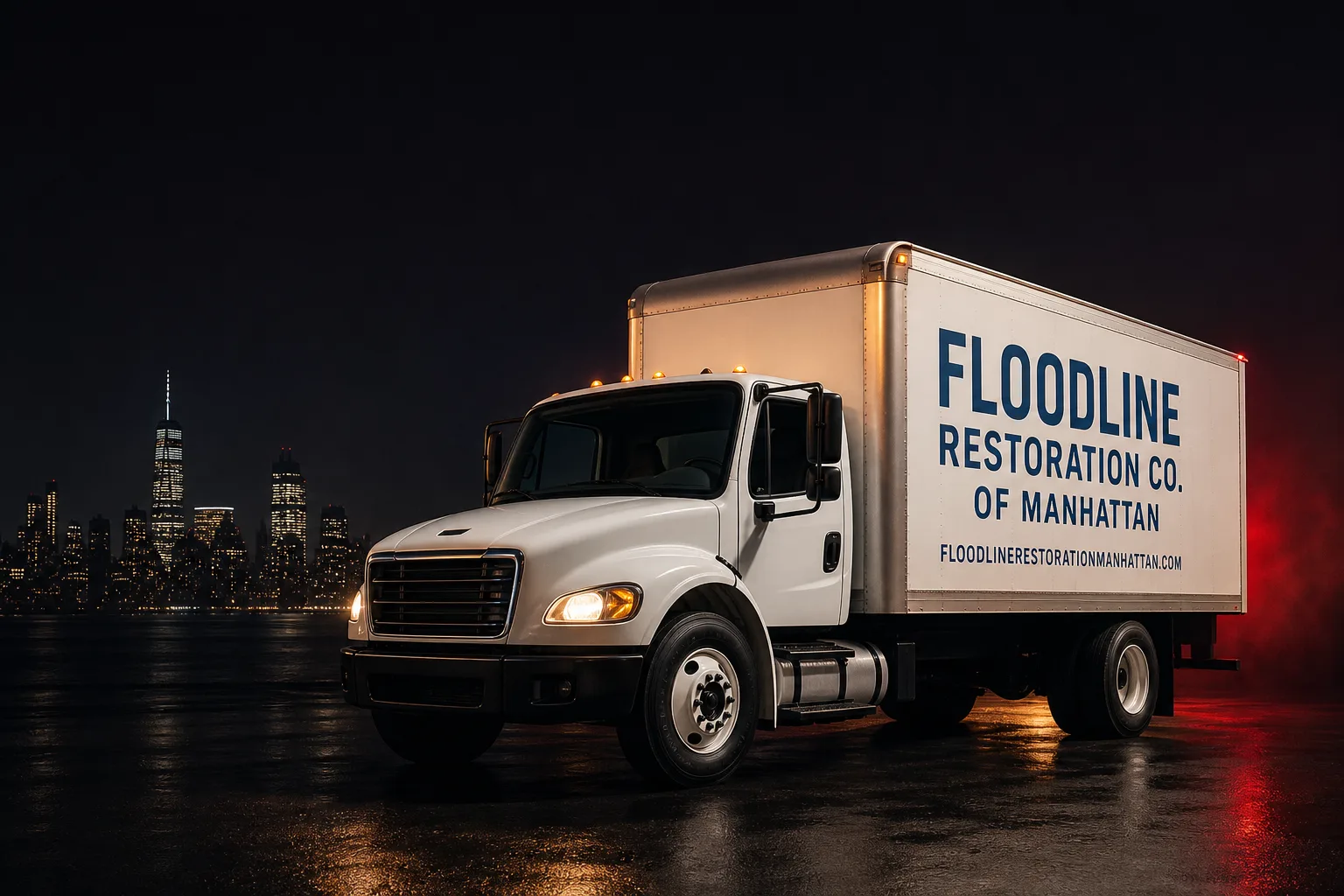
Free visual inspection and a written scope of work before any mitigation begins - photos, moisture readings, and drying logs go in your claim file
The scope we write is the scope we bill. Anything new gets shown to you, in writing, before we touch it.






 Before
 After
After Before
 After
After Before
 After
After24/7 Emergency Storm & Disaster Restoration in Lower Manhattan
Storm damage in Lower Manhattan moves fast, and so do we. Floodline Restoration Co. of Manhattan answers live at (917) 924-4221 around the clock, every day of the year. A certified crew reaches most Lower Manhattan addresses within 45 minutes of your call. The first hour after storm water enters a building determines whether you’re looking at drying or demolition. Salt water from surge events begins corroding electrical components, rusting structural steel, and saturating masonry within minutes. We start extraction on the same visit, not the next day. The visual inspection is free, and you’ll know exactly what you’re facing before any work begins.
Key Takeaways:
- Live dispatchers answer 24/7, not a recording or answering service.
- 45-minute average response to Lower Manhattan buildings.
- Free visual inspection with moisture mapping on arrival.
- Direct insurance billing, photo documentation, and written scope before work starts.
- 90-Day Done Right Promise in writing on every job.
Understanding Storm & Disaster Restoration Severity in Lower Manhattan Properties
Storm water is never just water. Restoration professionals classify flood water into three categories, and Lower Manhattan sees all of them. Category 1 is clean water from a broken supply line. Category 2 carries significant contamination from sump failures or washing machine overflow. Category 3 is black water: storm surge carrying sewage, harbor sediment, fuel residue, and salt. Any surge event south of Chambers Street carries Category 3 risk because the Hudson and East River both push into the peninsula from two sides. That means full containment, antimicrobial treatment, and disposal of saturated porous materials, not just drying.
The building stock here makes severity worse. Converted 19th-century masonry lofts and Battery Park City towers built on landfill hold moisture in ways sheetrock construction does not. Thick brick party walls wick water upward for weeks. Sub-grade mechanical rooms sit at or below the water table. We use thermal imaging and penetrating moisture meters to map water that never shows on a surface reading. If you only dry what you can see, you leave the mold behind the wall. We do not leave it behind. That is the point of the 90-Day Done Right Promise.
Why Lower Manhattan Property Owners Choose Floodline Restoration Co. of Manhattan
- 45-minute response commitment. Our dispatch board tracks every truck in real time. When you call from the Financial District or Battery Park City, we know which crew is closest and we send them.
- 24/7 live answer from a real person. At 2 a.m. during a nor’easter, a live dispatcher picks up. Never an automated system. Curt Bowman built the company around that principle in 2010, and it hasn’t changed.
- IICRC-certified crews trained to WRT, FSRT, and AMRT standards. Water damage, fire and smoke, and applied microbial remediation all require different protocols. Our technicians carry the certs and the field hours to match.
- Free visual inspection with moisture mapping. Before you agree to anything, you get a written read on where the water went and what it touched.
- Direct insurance billing. We talk to your adjuster, not through you. Photo documentation, drying logs, and line-item scopes go straight to the carrier.
- One team from extraction to reconstruction. No handoff to a different crew mid-job. The same uniformed technicians who pull the water also rebuild the wall. That’s our Storm & Disaster Restoration approach, and it’s how the 90-Day Done Right Promise stays enforceable.
Our Storm & Disaster Restoration Process
Inspection & Assessment
We walk the full damage path with thermal imaging cameras and penetrating moisture meters. In Lower Manhattan, that includes checking upper-floor mechanical rooms, because post-Sandy relocations mean the damage source is not always where the water is. You get a written scope before we touch anything.
Extraction & Stabilization
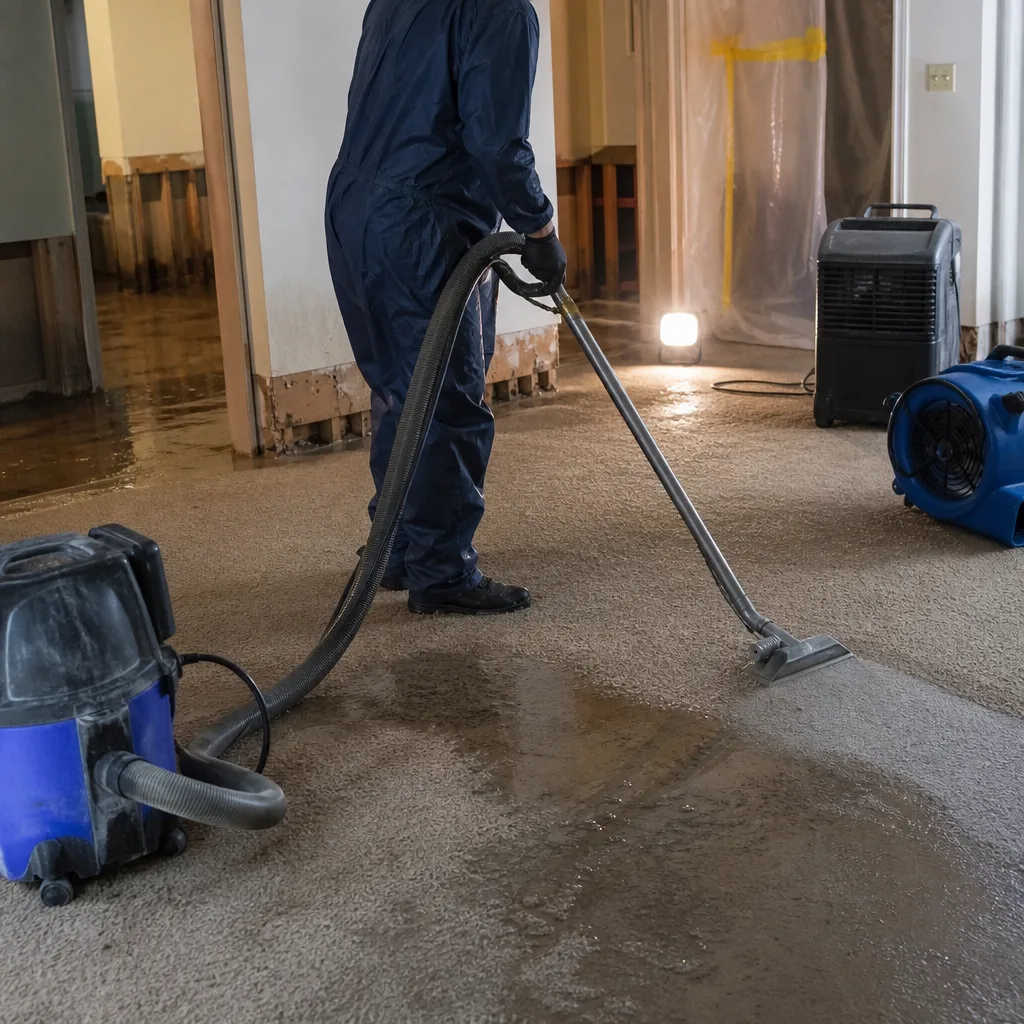
Submersible pumps and truck-mounted extraction units pull standing water fast. If walls or windows are breached, we install emergency board-up and roof tarping on the same visit to stop further water entry and secure the property.
Drying & Dehumidification
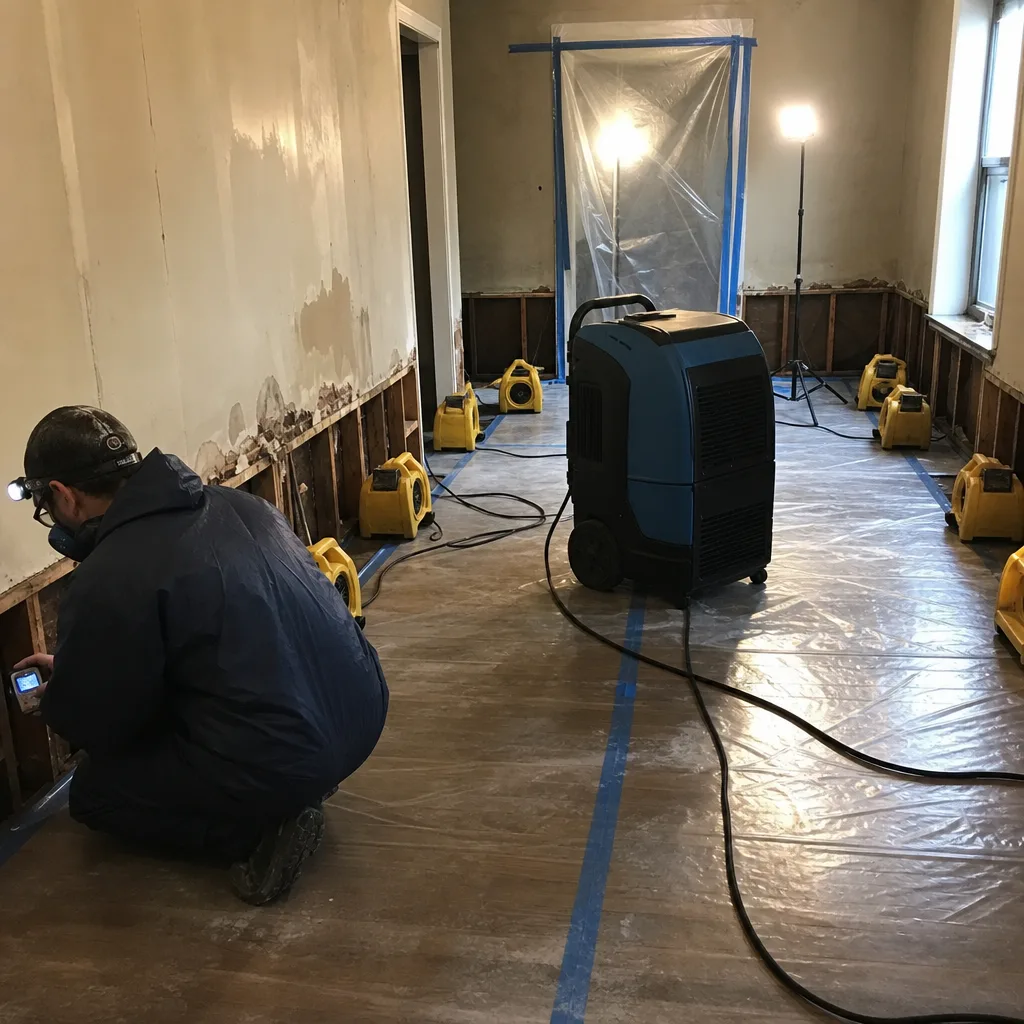
Dri-Eaz and Phoenix low-grain refrigerant dehumidifiers plus high-velocity air movers create the vapor pressure differential that pulls trapped water out of masonry, subflooring, and framing. Daily moisture readings are logged until the dry standard is met, not when the surface feels dry.
Cleaning & Sanitization
For Category 3 events, full containment with negative air pressure and HEPA air scrubbers prevents cross-contamination during remediation. Hard surfaces receive antimicrobial treatment. Porous materials that cannot be salvaged are removed under protocol.
Specialty Treatment for Coastal Storm Damage
Salt corrosion on structural steel, electrical paneling, and elevator equipment requires specific neutralization treatments. We treat these surfaces before they degrade further. Buildings near the Battery Park City waterfront get particular attention to wiring harnesses and switchgear exposed to salt spray.
Repairs & Restoration
Drywall, flooring, cabinetry, paint, and trim return to pre-loss condition. Because we handle reconstruction in-house, the crew that dried your walls is the crew that rebuilds them. There’s no mid-job handoff and no arguing about who did what.
Need Emergency Storm & Disaster Restoration in Lower Manhattan Now?
Crews minutes away, answering live 24 hours a day. The sooner we start, the less it costs.
Working With Your Insurance Company
Storm and flood claims in Lower Manhattan are more complicated than in most of the city. FEMA flood zone designations, post-Sandy building modifications, and co-op and condo board involvement all shape what a carrier will pay. We handle the documentation from the first hour so you do not have to fight for it later. Photos of every affected room before work starts. Moisture readings and drying logs for every day on site. A line-item scope of work written in insurance-standard format. We coordinate directly with your adjuster, and the senior and veteran discount of 5% applies to any out-of-pocket portion.
What We Provide Your Insurer
- Thorough documentation of the loss
- Photos of all damage, room by room
- Moisture readings and drying logs
- A detailed, line-item scope of work
- Direct coordination with your carrier
Built for Lower Manhattan’s Loss Calendar
Lower Manhattan’s storm loss calendar runs on its own rhythm. January and February bring deep freezes that burst supply lines in older converted buildings, flooding spaces just above the water table. March and April thaw the frozen ground and push groundwater into basements and sub-grade parking, especially under Battery Park City’s landfill sections where the water table sits high year-round. Summer thunderstorms drop an inch of rain in an hour, overwhelming flat-roof drains on older warehouses and sending water through elevator shafts and plumbing chases. August through October is nor’easter and hurricane season, when storm surge from the Hudson, East River, and New York Harbor funnels directly into the peninsula with nothing to slow it. We plan crews around this calendar because the calls always come.
Storm & Disaster Restoration Across Lower Manhattan’s Neighborhoods
Response routes matter in Lower Manhattan. The Financial District’s narrow streets and pedestrian plazas mean our crew vans stage on side streets and carry equipment in on carts. High-rise service elevators require building management coordination before extraction equipment can go up. TriBeCa’s converted cast-iron lofts present a different challenge: 150-year-old masonry party walls that hold water for weeks, plus residential units stacked above commercial spaces that may not even know about the water below. Battery Park City’s planned towers sit on landfill with groundwater intrusion as a chronic condition, so we look for signs of recurring water even when the storm seemed small. South Street Seaport and the blocks along the FDR Drive take the first hit from any East River surge, and those buildings often have legacy mechanical systems in lower levels that predate post-Sandy hardening. We know which buildings have posted flood barriers, which have relocated switchgear, and which still have everything in the basement. That knowledge saves hours.
Specialized Storm & Disaster Restoration Services We Offer in Lower Manhattan
Flood Damage Restoration
This is the core of what we do after any storm event in Lower Manhattan. Salt water intrusion, whether from surge or groundwater, requires immediate extraction followed by aggressive structural drying. We run Dri-Eaz and Phoenix dehumidifiers at low grain refrigerant settings designed for masonry and high-humidity coastal air. Daily moisture logs go to you and your carrier.
Emergency Board-Up
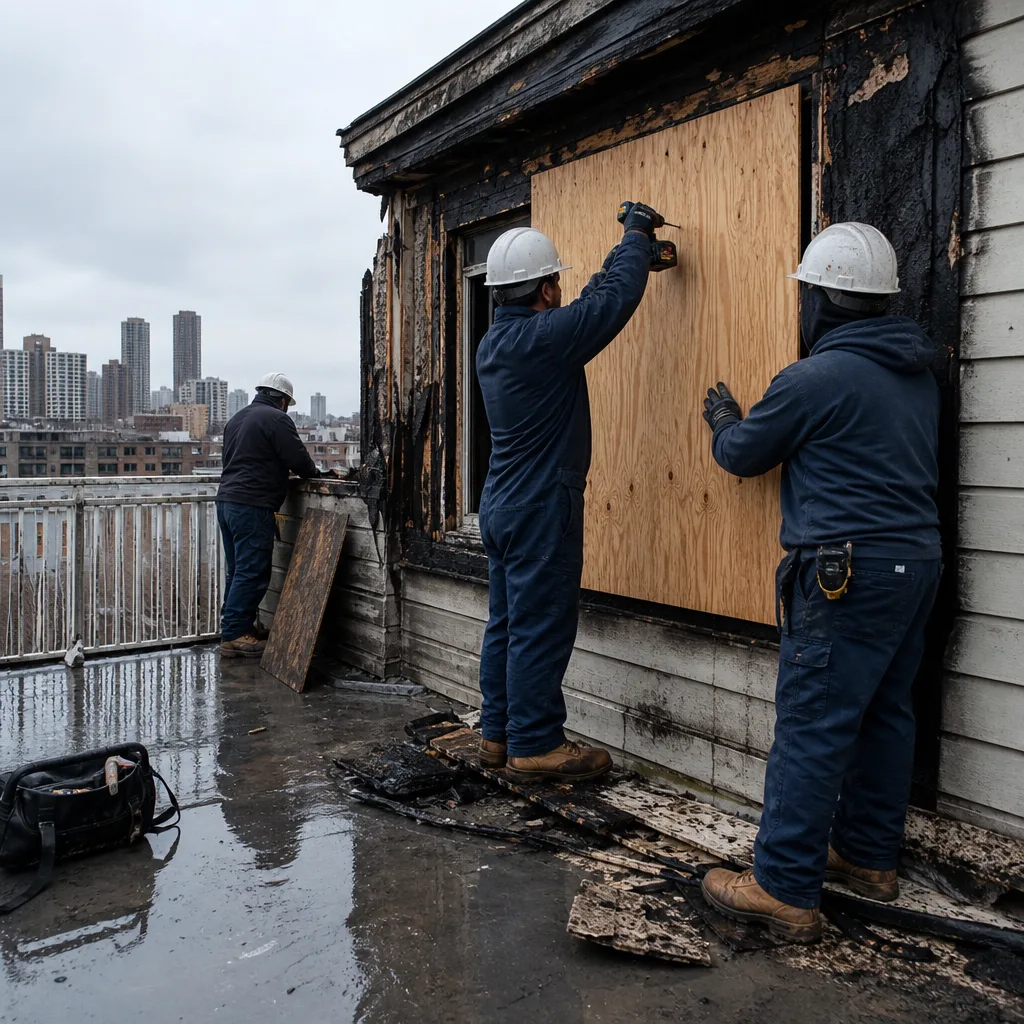
Broken windows and breached doors after wind events leave your property open to theft, rain, and further damage. We arrive with plywood, fasteners, and the right tools to secure entry points quickly. For buildings with custom glass storefronts or historic window frames in TriBeCa and the Seaport district, we measure and cut on site to avoid further damage.
Roof Tarping
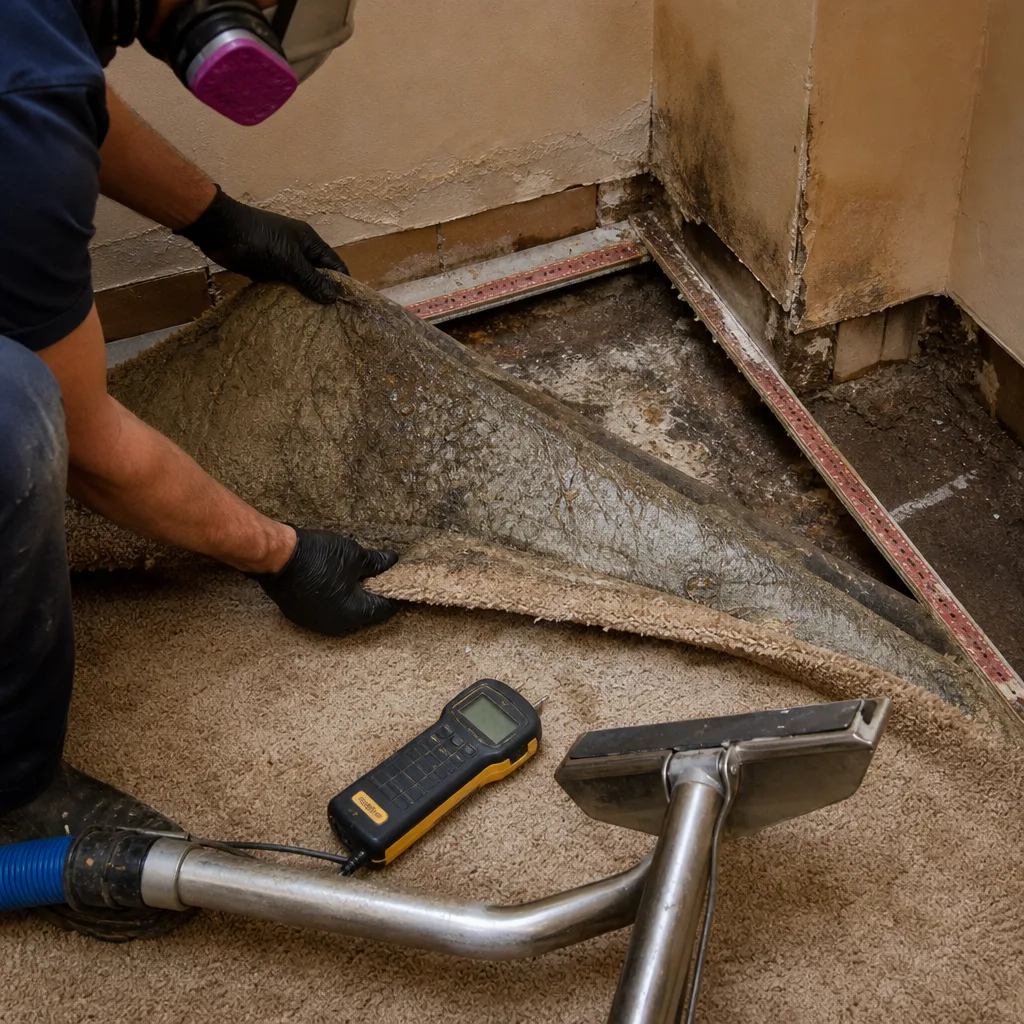
Wind damage to flat and low-slope roofs on Lower Manhattan warehouses and converted lofts needs immediate covering. We tarp damaged sections on the same visit to stop active water intrusion. Tarps are temporary but we install them as if they were permanent, with proper anchoring for high-wind conditions near the waterfront.
Debris Removal
Storm debris blocking access to your building, loading dock, or mechanical rooms creates safety issues and delays restoration. We clear it, document what was removed for insurance purposes, and dispose of it properly. On Category 3 jobs, debris removal happens under containment protocols to prevent contamination spread.
Storm Damage Cleanup
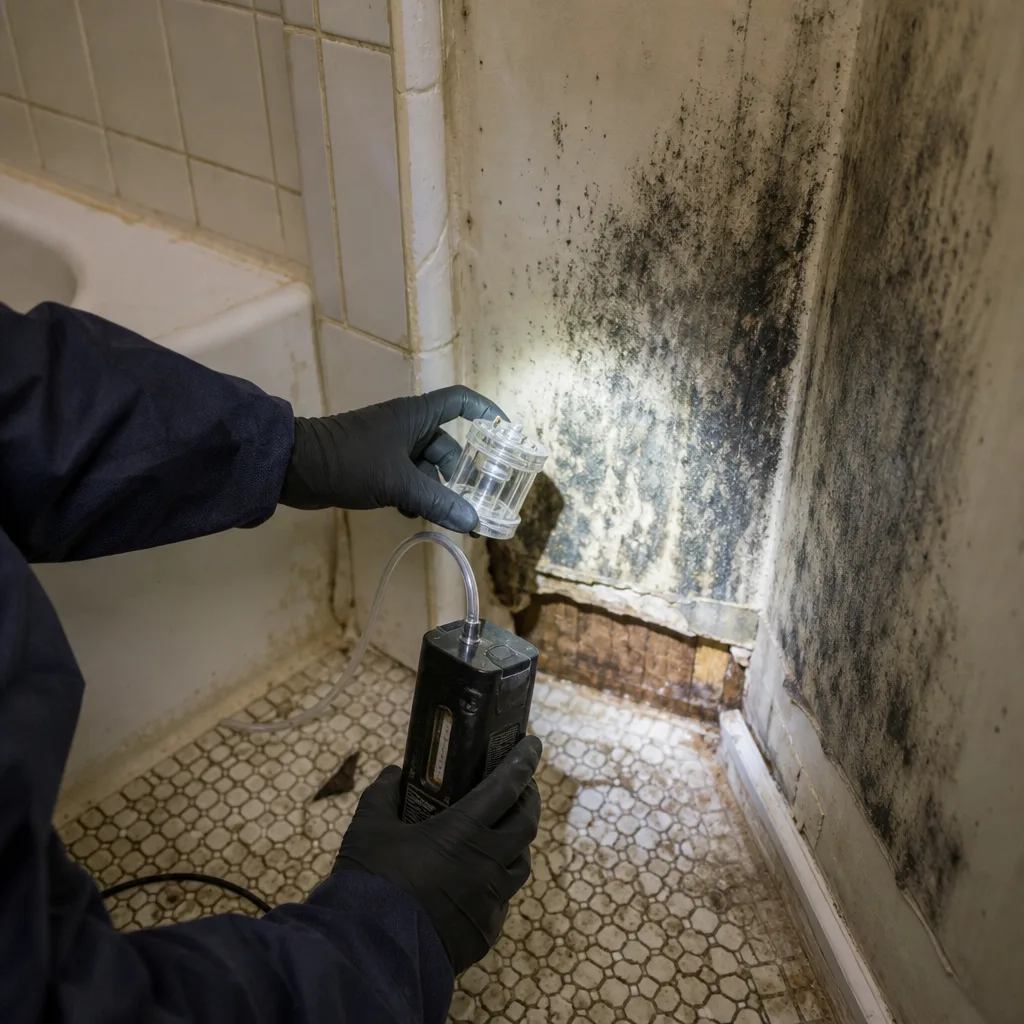
After the water is out and the structure is stabilized, we clean every surface the storm touched. Antimicrobial treatments on hard surfaces, HEPA vacuuming on soft goods, and full air scrubbing to remove airborne particles. The goal is a property you can occupy without respiratory concerns.
What happens when you call
- 1
A real person answersNo phone trees - you reach a local pro.
- 2
You get an upfront price rangeHonest numbers before anyone is dispatched.
- 3
A background-checked tech heads outLicensed & insured, dispatched right away.
- 4
You approve before work beginsNothing starts until you say go.
Storm & Disaster Restoration Costs in Lower Manhattan, NY
Storm restoration costs in Lower Manhattan run higher than the borough average, driven by building types and access constraints. A typical water extraction and drying scope in a Battery Park City apartment runs $3,800 to $9,500 depending on square footage and saturation depth. Full Category 3 remediation with containment, antimicrobial treatment, and disposal in a Financial District high-rise runs $12,000 to $35,000. Emergency board-up typically runs $450 to $1,800 depending on the number of openings. Roof tarping for a flat commercial roof runs $900 to $3,000. What moves the price: elevator building access times, masonry drying requirements, post-Sandy building systems that complicate shutoffs, and whether the loss requires Category 3 protocols. The free visual inspection gives you a firm written number before any work begins, and the $50 off any repair over $250 applies to qualifying jobs.
| Service | Typical Lower Manhattan Range |
|---|---|
| Water extraction & drying (apartment) | $3,800 - $9,500 |
| Category 3 full remediation (high-rise unit) | $12,000 - $35,000 |
| Emergency board-up | $450 - $1,800 |
| Roof tarping (flat/low-slope) | $900 - $3,000 |
| Debris removal (storm event) | $600 - $2,500 |
We Also Serve Cities Near Lower Manhattan
Our crews regularly work the neighborhoods and cities surrounding Lower Manhattan, including Fairview, Harrison, East Bronx, and Hunts Point. If your property sits in one of these areas and took storm damage, call the same live dispatcher at (917) 924-4221 and we’ll route the nearest available crew.
Lower Manhattan Storm & Disaster Restoration Questions, Answered
Why did my Lower Manhattan building’s elevator machinery get damaged when the flood was only in the basement?
In most Lower Manhattan residential towers, elevator machinery and electrical switchgear were relocated to upper floors or rooftops after Hurricane Sandy in 2012. That means water entering at basement level can travel through conduit and chase pathways upward to reach equipment that used to sit in the basement. A crew that only checks the basement will miss damage three floors up. We trace the full path of water migration, not just the point of entry.
How long does structural drying take in a TriBeCa loft with 19th-century brick party walls after a Category 3 flood?
Expect 7 to 21 days of active drying, not the 3 to 5 days typical of modern sheetrock construction. Thick masonry party walls in TriBeCa’s converted cast-iron buildings absorb water deeply and release it slowly. Low-grain refrigerant dehumidifiers and daily moisture readings are required until the dry standard is met. Rushing this step leaves trapped moisture that turns into mold inside the wall cavity within weeks. Call (917) 924-4221 for an exact timeline based on your building’s construction.
My Battery Park City condo’s basement is wet days after the storm passed. Is this still storm surge?
Often it is not. Battery Park City was built on Hudson River landfill, and the water table beneath those sections sits high enough that groundwater intrusion is a chronic condition, independent of any named storm. Storm events can temporarily raise that water table further, pushing water into sub-grade spaces that stayed dry before. This is why moisture mapping matters: treating groundwater intrusion as storm surge means missing the chronic source and setting up for recurring water. We test, map, and document the difference.
What Category 3 black water protocols are specific to Lower Manhattan’s Financial District?
Financial District buildings that flooded with Hudson or East River water during surge events received Category 3 contamination: sewage, harbor sediment, fuel residue, and salt. Protocols require full containment with negative air pressure, HEPA air scrubbing, antimicrobial treatment on all hard surfaces, and disposal of saturated porous materials. Additionally, salt contamination demands specific neutralization treatments on structural steel and electrical components before they corrode further. These protocols are standard for us in every Financial District surge response.
Do I need a different restoration crew if my building has deployable perimeter flood barriers?
You need a crew that knows the barriers exist and how they affect water entry patterns. Deployable flood barriers change where water collects when they partially fail or when water rises through drainage systems instead of over the barriers. Post-Sandy buildings with these systems often have sump pumps and drainage systems that work in tandem with the barriers. A crew unfamiliar with the setup will misread the water path. Our technicians have worked buildings with these systems throughout Lower Manhattan and understand the interaction between barrier systems, pumps, and sub-grade water entry.
How fast can someone actually get to my Lower Manhattan building?
Our average response time to Lower Manhattan addresses is 45 minutes. During major storm events when call volume peaks, response times can stretch, but live dispatch keeps you informed in real time. The phone is answered by a person at every hour, and crews are staged throughout Lower Manhattan, not dispatched from a distant borough. Call (917) 924-4221 and you’ll know exactly when we arrive.
Will my insurance cover storm damage in Lower Manhattan, including flood?
Standard homeowner policies cover wind damage and water from a failed roof or window. Flood insurance is separate and is required by mortgage lenders for properties in FEMA Flood Zone AE, which covers much of Lower Manhattan including Battery Park City and the Financial District waterfront. If your building carries flood coverage through NFIP or private insurance, surge damage is covered. We document everything from the first hour in insurance-standard format and coordinate directly with your adjuster to maximize your claim. The senior and veteran 5% discount applies to any out-of-pocket portion.
What should I do in the first 30 minutes after storm water enters my Lower Manhattan property?
Call (917) 924-4221 first. Then, if safe to do so, shut off electricity to affected areas at the breaker, not by touching wet outlets or panels. Do not walk through standing water if it may be in contact with electrical systems. Move valuables and documents to dry areas. Take photos of the water line and any visible damage with your phone. Do not attempt to pump the water yourself if it came from outside, as it likely carries Category 3 contamination. The first 30 minutes determine how much of your property can be saved. We’re on the phone and on our way.
Serving Lower Manhattan, NY - Our Local Coverage Area
We’re based in the Lower Manhattan area and know this community well. Use the map below to see our service coverage - if you’re nearby, we can almost certainly help.
Storm & Disaster Restoration in Lower Manhattan, Built Around the Floodline
Unlike any other Manhattan neighborhood, Lower Manhattan’s storm restoration work is dictated by FEMA Flood Zone AE and the legacy of Hurricane Sandy. Most residential towers south of Chambers Street have relocated boilers, switchgear, and elevator machinery to upper floors, so post-storm damage pathways now originate from systems nowhere near the flooded floor. A crew that expects basement-level shutoffs will waste critical hours searching an empty mechanical room while water spreads overhead. We know which buildings relocated equipment, which installed deployable perimeter flood barriers, and which still run legacy systems in sub-grade spaces. That knowledge is the difference between a correct diagnosis and a costly miss.
During the last nor’easter, our crew responded to a converted cast-iron loft in TriBeCa where surge water pushed Category 3 black water into a sub-grade mechanical room. We deployed containment and Dri-Eaz air movers within the first hour, then used moisture mapping to trace hidden water trapped in the thick masonry party walls. Because the building’s electrical switchgear had been relocated to the second floor after Sandy, we avoided a dangerous misdiagnosis and were able to begin structural drying without delay. That’s what 42 years of doing this work in this city looks like: a square deal, a written scope, and a crew that stands behind it. Lower Manhattan property owners call us because we know the difference between storm surge and groundwater, between a dry wall and a dry building, and between a quick fix and the 90-Day Done Right Promise. Call (917) 924-4221 for a free visual inspection and a firm written estimate.
Written by Curt Bowman, Owner at Floodline Restoration Co. of Manhattan, serving Lower Manhattan since the company’s founding in 2010.