
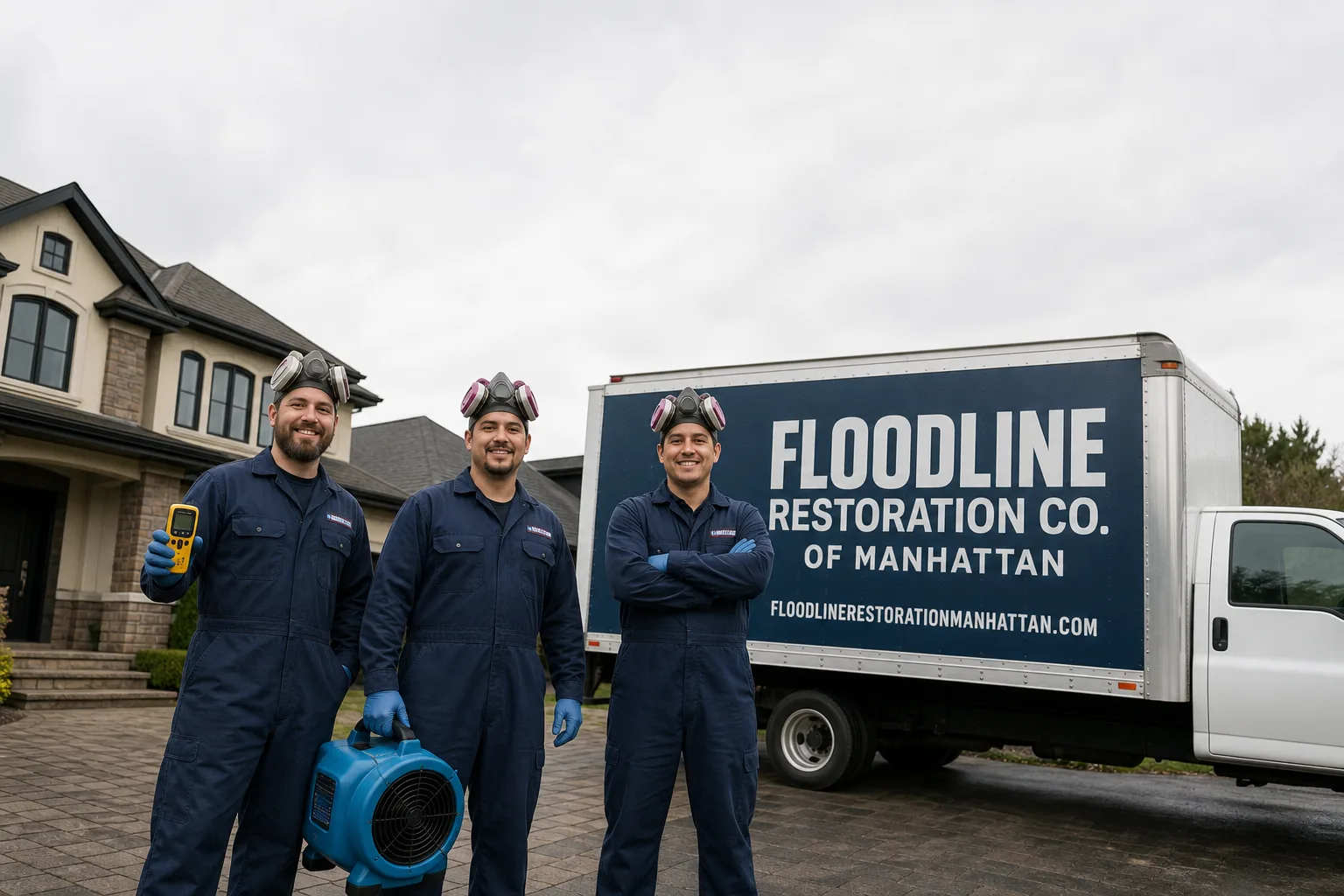
Free visual inspection and a written scope of work before any mitigation begins - photos, moisture readings, and drying logs go in your claim file
The scope we write is the scope we bill. Anything new gets shown to you, in writing, before we touch it.






 Before
 After
After Before
 After
After Before
 After
After24/7 Emergency Storm & Disaster Restoration in Meatpacking District
Storm & disaster restoration in Meatpacking District typically runs $2,800-$11,500 for emergency water extraction and structural drying, and $14,000-$60,000+ for full flood damage restoration with rebuild. When a nor’easter pushes the Hudson over its edge or a summer thunderstorm overloads the district’s aging drainage, the first hour determines whether you’re dealing with drying or demolition. We answer live at (917) 924-4221, 24 hours a day, and dispatch certified crews into Meatpacking District immediately. The water rising through your sub-grade cold-storage chamber or the wind forcing rain past a compromised original cast-iron façade won’t wait for office hours.
Need Emergency Storm & Disaster Restoration in Meatpacking District Now?
Crews minutes away, answering live 24 hours a day. The sooner we start, the less it costs.
Understanding Storm & Disaster Restoration Severity in Meatpacking District Properties
The Meatpacking District’s building stock changes how storm damage behaves. Those late-19th and early-20th century brick-and-timber structures with thick masonry party walls and original cast-iron façades hold water differently than anything built after 1960. In our industry we classify flooding water three ways: Category 1 is clean water from a burst supply line or roof leak. Category 2 carries contaminants from a sump failure or washing-machine overflow. Category 3 is black water, and in Meatpacking District that means Hudson storm surge, sewage backup, or groundwater that has traveled through the Belgian-block void spaces under Gansevoort and Little West 12th Streets. Category 3 in a sub-grade former cold-storage chamber behind a luxury retail finish is a serious health event, not just a cleanup. Moisture mapping with thermal imaging and hygrometers is the only way to know how far water has wicked into those thick masonry walls. Skip the mapping, and you’re guessing. Guessing is how mold gets a 24-to-48-hour head start.
Why Meatpacking District Property Owners Choose Floodline Restoration Co. of Manhattan
- 45-minute response commitment: When water is moving through a Meatpacking District basement, one of our crews is en route within 45 minutes of your call, equipment loaded and extraction plan already forming.
- 24/7 live answer, always: A real dispatcher picks up at 2 a.m., not a recording. You’ll never leave a voicemail and wait for a callback while the water rises.
- IICRC-certified crews: Our technicians hold WRT, FSRT, and AMRT certifications. On a landmarked cast-iron building, that training is the difference between preservation and irreversible damage.
- Free visual inspection: Before any work begins, we walk you through what we see, what it means, and what the options are. No charge, no obligation.
- Direct insurance billing: We bill your carrier directly and handle adjuster communication. You never play messenger between Floodline and the insurance company.
- One team, start to finish: The same certified crew that extracts the water handles the drying logs, the rebuild, and the final walkthrough. No mid-job handoff, no inherited crews.
Founded in 2010 by Curt Bowman, our Storm & Disaster Restoration team has spent 42 combined years earning a reputation in lower Manhattan: do the job as if your own name is on the building. Curt’s crews are background-checked, uniformed, and trained to IICRC, RIA, and IFA standards. Every job, every time, is backed by our 90-Day Done Right Promise. If it’s not done right, we make it right. In writing. No arguing.
Our Storm & Disaster Restoration Process
Here’s how we work in Meatpacking District, step by step.
1. Inspection & Assessment
We walk the entire affected area, including spaces you may not know about, like sub-grade chases and former cold-storage voids. Thermal imaging and moisture meters map exactly where water has traveled through masonry, flooring, and wall cavities. You get a written scope before work starts.
2. Emergency Board-Up & Roof Tarping
If wind or flood has opened your Meatpacking District building to the elements, we secure it fast. Board-up on original cast-iron storefronts requires working around landmark details without damaging the façade. We do it carefully, and we know what NYC’s Landmarks Preservation Commission expects.
3. Extraction & Stabilization
Professional-grade Dri-Eaz and XPOWER extraction units pull standing water out fast. In sub-grade chambers and basement voids common to this district, we use Injectidry floor mats to draw moisture from beneath tiles and hardwoods. The goal is simple: stop the water before it migrates further.
4. Drying & Dehumidification
Phoenix and B-Air dehumidifiers and high-velocity air movers are positioned based on the moisture map, not guesswork. Daily hygrometer readings track progress until we reach the dry standard. In Meatpacking District’s thick masonry walls, this phase takes significantly longer than in framed residential construction.
5. Cleaning & Sanitization
For Category 2 and 3 water events, we clean and sanitize all affected surfaces with appropriate antimicrobial treatments. HEPA air scrubbers run during the work to keep contaminants from spreading into your living or retail space. Debris removal is included in the scope, handled with district-appropriate waste protocols.
6. Repairs & Restoration
We rebuild what the storm took. Drywall, flooring, trim, paint, plus the hidden systems: insulation, vapor barriers, and drainage. In a landmarked Meatpacking District building, we work with the LPC where needed and restore original materials whenever possible. The same crew that dried the building rebuilds it. That’s the Floodline difference.
Need Emergency Storm & Disaster Restoration in Meatpacking District Now?
Crews minutes away, answering live 24 hours a day. The sooner we start, the less it costs.
Working With Your Insurance Company
Storm damage in Meatpacking District means dealing with two realities at once: a FEMA AE flood zone designation and, often, landmark review requirements. Your carrier needs documentation that satisfies both. We handle that burden for you. From the first hour, our crews photograph every affected area, log moisture readings floor by floor, and build a line-item scope that speaks the insurer’s language. We communicate directly with your adjuster, so you’re not relaying questions at midnight. If your policy covers flood insurance through the NFIP, we know the documentation standards those claims demand. If it’s a wind or sewer backup claim under your homeowner’s policy, we know those too. You get a written scope before work starts, a drying log you can hand to your carrier, and direct billing that keeps you out of the payment middle.
What We Provide Your Insurer
- Thorough documentation of the loss
- Photos of all damage, room by room
- Moisture readings and drying logs
- A detailed, line-item scope of work
- Direct coordination with your carrier
Built for Meatpacking District’s Loss Calendar
Meatpacking District storm damage follows a rhythm. January and February bring deep freezes that burst supply lines in old brick buildings where pipes run through unheated chases. March and April mean spring thaw and the first basement seepage of the year as groundwater levels rise under Gansevoort and Little West 12th. June through August thunderstorm flash flooding tests the district’s aging drainage and overloads street-level catch basins, sending Category 2 water into sub-grade spaces. September through November is nor’easter season: wind-driven rain finds every gap in original cast-iron flashing, and storm surge pushes the Hudson toward the AE flood zone’s edge. The seasonal pattern means one thing: the same Meatpacking District addresses call us back year after year, because the Belgian-block void problem was never fixed by the last crew. We approach every call with that history in mind.
Need Emergency Storm & Disaster Restoration in Meatpacking District Now?
Crews minutes away, answering live 24 hours a day. The sooner we start, the less it costs.
Storm & Disaster Restoration Across Meatpacking District’s Neighborhoods
The district is small but its flood patterns vary block by block. Gansevoort Street runs directly over those 19th-century brick vaults, and its buildings take the worst groundwater intrusion during heavy rain. Little West 12th Street between Washington and 9th Avenue sits at a slight low point, and its converted cold-storage buildings have sub-grade chambers that fill first. 14th Street and Hudson Street corner buildings catch wind-driven rain on three exposures, hitting original cast-iron façades hard in nor’easters. Washington Street co-ops and condos built in the old market halls deal with roof drainage onto lower floors during summer downpours. Each pocket has a signature loss pattern. Dispatch routes are built around that knowledge, and crews arrive already knowing what to expect from the building type at the address.
Specialized Storm & Disaster Restoration Services We Offer in Meatpacking District
Flood Damage Restoration
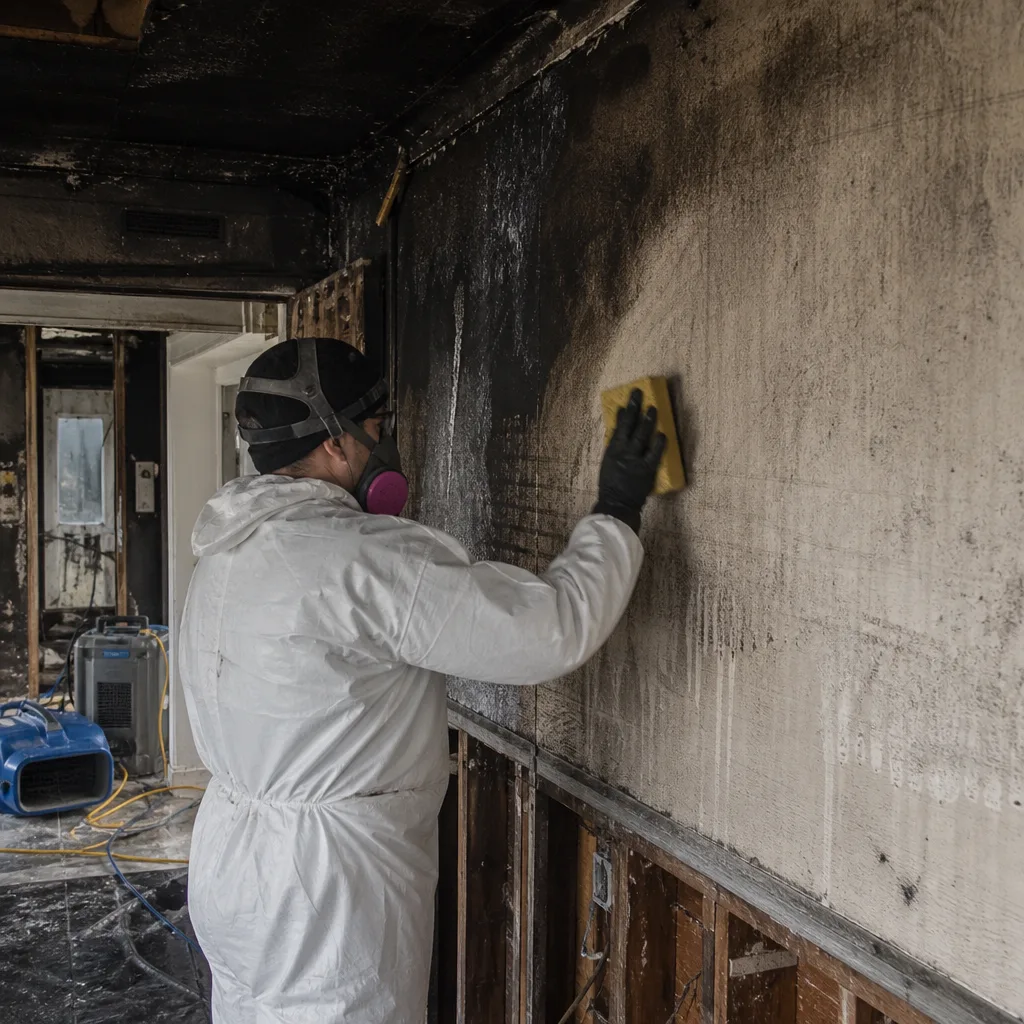
Groundwater in the Meatpacking District is a chronic problem, not a one-time event. We extract, dry, and restore floors, walls, and sub-grade spaces with equipment matched to masonry construction. Dri-Eaz dehumidifiers and Phoenix air movers run until the dry standard is met, and Injectidry mats pull moisture from beneath hardwoods that standard fans can’t reach. Category 3 flooding means full containment, antimicrobial treatment, and careful disposal of contaminated materials.
Emergency Board-Up
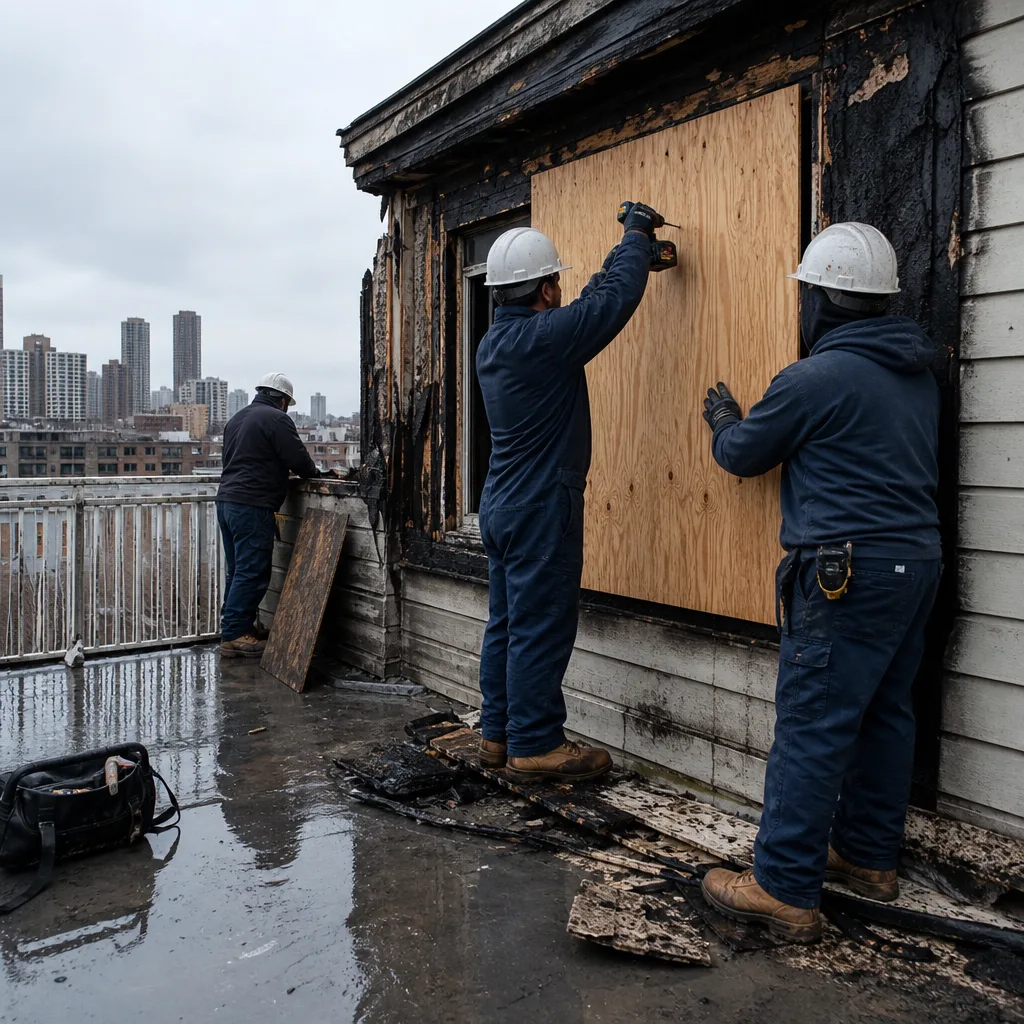
When wind or flooding compromises a landmarked storefront, time matters. We board up original cast-iron openings without damaging the surrounding masonry, using methods that respect LPC requirements. Temporary protection keeps rain and unauthorized entry out while permanent repairs are scoped. On Gansevoort Street buildings with original details, this work demands a steady hand and the right materials.
Storm Damage Cleanup
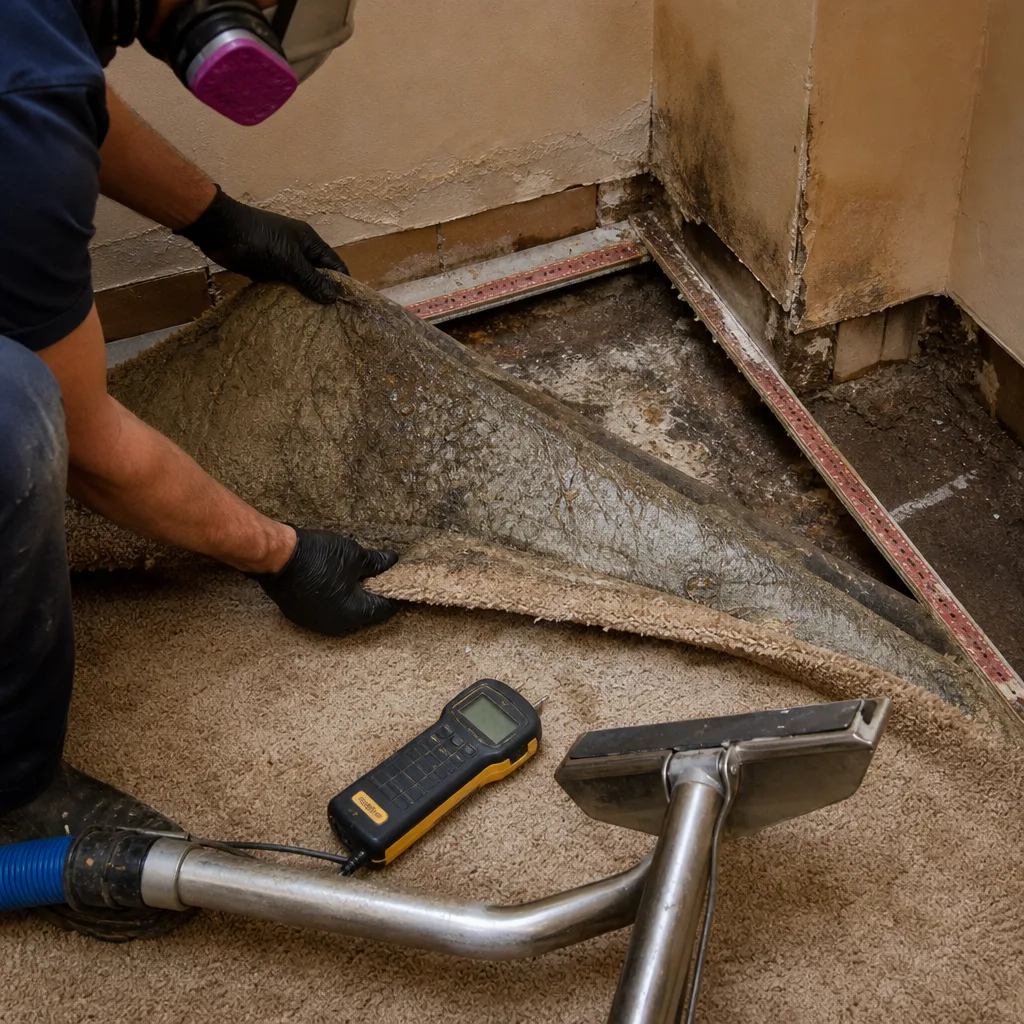
Debris removal after a nor’easter or microburst often reveals deeper problems: soaked insulation behind brick, water pooled in abandoned chases, damaged roof membranes. We clear the debris, map the moisture, and address the hidden damage in one visit. Most jobs are completed in a single visit using our professional-grade equipment, so you’re not waiting days for a follow-up crew.
Roof Tarping
A damaged roof over a Meatpacking District building can’t wait. We tarp flat roofs and low-slope roofs common to the district’s converted industrial buildings, securing the membrane and preventing water from traveling down through multiple floors. On historic structures, tarping is designed as a temporary measure that protects original materials without causing new damage. The tarp buys time for a proper roof repair scope with your carrier.
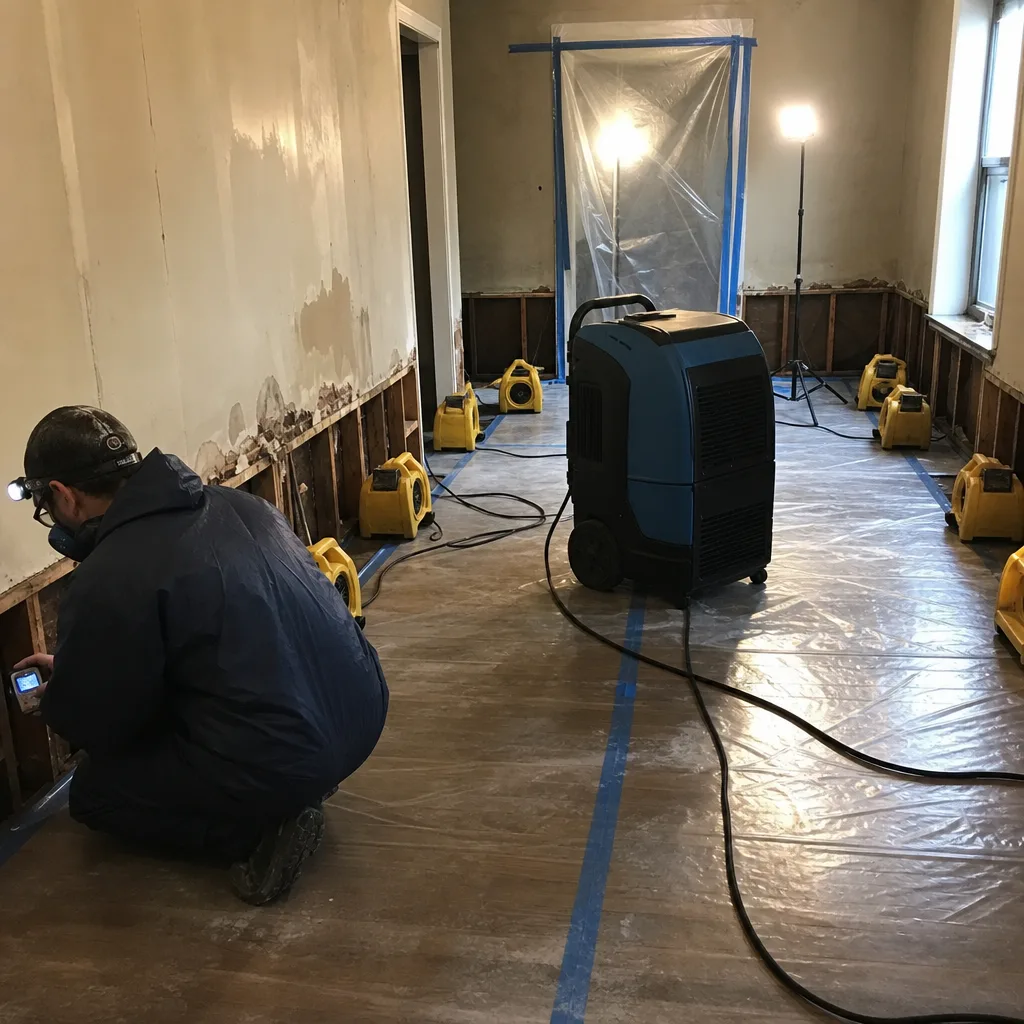
Debris Removal
Storm debris in the Meatpacking District often includes materials with contamination issues: soaked ceiling tiles, flooded flooring, drywall that has absorbed Category 3 water. We remove and dispose of all of it under appropriate protocols, coordinating with building management where required. You won’t be left with a pile in the street or a Dumpster blocking a landmarked storefront.
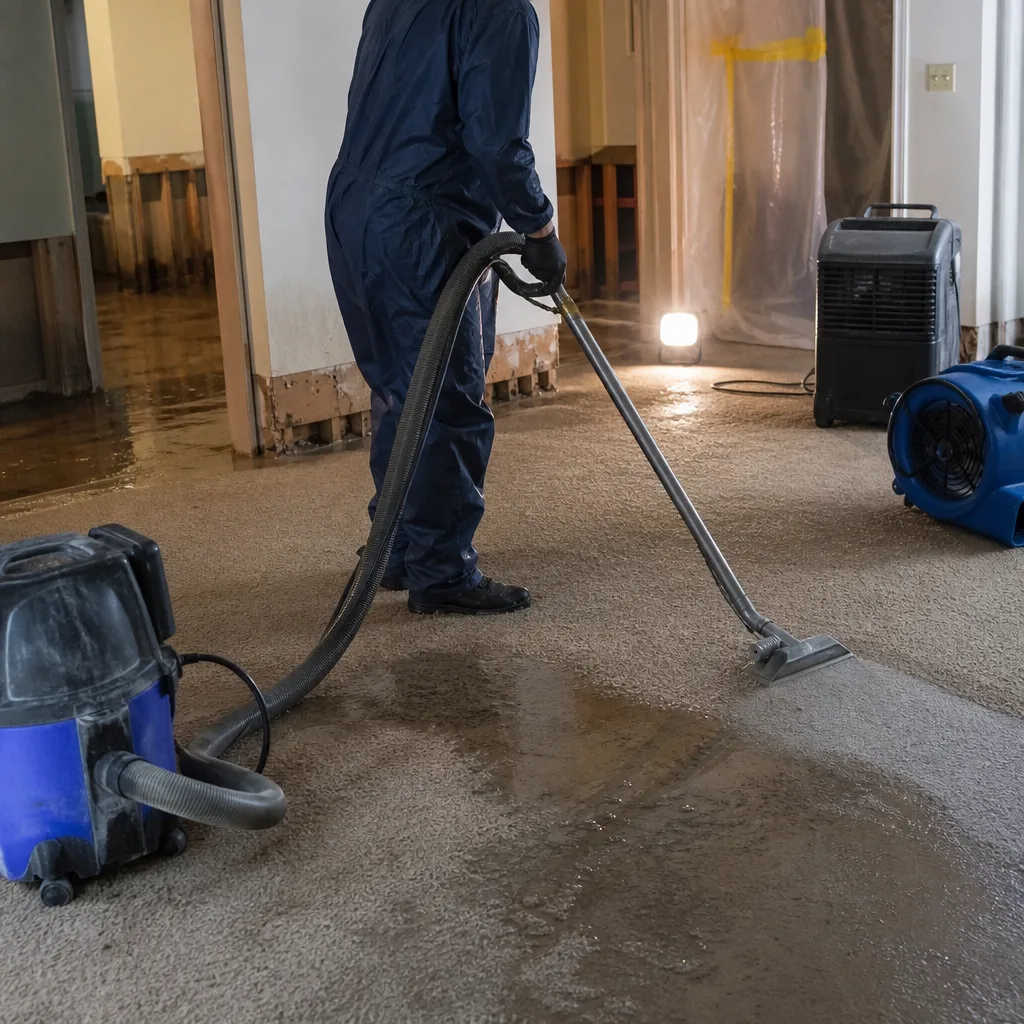
Wind Damage Repair
Wind-driven rain gets behind original flashing and into the box gutters built into older Meatpacking District buildings. We repair the damage, dry the hidden wall cavities, and restore finishes. Where original materials can be preserved, we preserve them. Where they can’t, we match them as closely as current code allows.
What happens when you call
- 1
A real person answersNo phone trees - you reach a local pro.
- 2
You get an upfront price rangeHonest numbers before anyone is dispatched.
- 3
A background-checked tech heads outLicensed & insured, dispatched right away.
- 4
You approve before work beginsNothing starts until you say go.
Storm & Disaster Restoration Costs in Meatpacking District, NY
Let’s talk real numbers for the Meatpacking District market. Emergency water extraction runs $2,800-$5,500 depending on the square footage and how many sub-grade spaces are involved. Structural drying adds $1,500-$4,000, and in this district’s thick masonry walls, expect the drying phase to run longer than average. Debris removal and Category 2 cleanup is typically $1,800-$4,200. Full flood damage restoration with rebuild starts around $14,000 and can reach $60,000+ when landmark details, below-grade voids, and historic materials are in play. Emergency board-up runs $800-$2,500 depending on the storefront size. Roof tarping is $600-$1,800 for flat roofs common in the district. What moves the price: whether the water reached a sub-grade cold-storage chamber, how much original cast iron and masonry needs careful handling, and whether LPC review is required. The free visual inspection gives us the information to give you a firm, written scope before any work begins. Call (917) 924-4221.
We Also Serve Cities Near Meatpacking District
From our New York City dispatch office, our crews also respond across Fairview and Harrison, and into East Bronx and Hunts Point when storm damage spreads beyond the district. If you’re nearby and dealing with flood or wind damage, call the same live dispatch line: (917) 924-4221.
Need Emergency Storm & Disaster Restoration in Meatpacking District Now?
Crews minutes away, answering live 24 hours a day. The sooner we start, the less it costs.
Meatpacking District Storm & Disaster Restoration Questions, Answered
How does the Meatpacking District’s landmark status affect storm restoration work on converted industrial buildings?
Landmark status changes the restoration plan before we even start extraction. The NYC Landmarks Preservation Commission has jurisdiction over many Meatpacking District buildings, from original cast-iron façades to interior structural features. Any restoration work that alters, replaces, or removes protected fabric needs LPC approval or at minimum careful documentation. In practice, that means we may need to salvage original masonry, preserve cast-iron elements rather than replace them, and submit materials and methods for review. It slows the rebuild phase and can raise costs, but it also preserves the value of your property. We’ve worked on enough landmarked buildings in this district to know the process, and we coordinate with your building’s architect or LPC consultant. Call (917) 924-4221 to talk through your specific building.
Why do the same Meatpacking District addresses flood season after season?
The answer is under the Belgian blocks. The void space beneath the cobblestone streets, along with 19th-century brick vaults that run under parts of Gansevoort and Little West 12th Streets, channel groundwater directly into building basements. Standard perimeter waterproofing on the inside face of a foundation doesn’t stop water that’s traveling through those voids and entering from below. The only long-term solutions involve exterior excavation, sub-slab drainage, or targeted injection grouting, and those are civil projects most homeowners don’t undertake. So the same addresses call us back season after season. It’s a district-wide condition, not a personal failure. Call (917) 924-4221 and we’ll show you the moisture map for your basement.
What are those sub-grade cold-storage chambers we keep finding under converted Meatpacking District buildings?
Before this district became hotels, condos, and boutiques, it was the city’s meat market. Buildings had sub-grade cold-storage chambers for hanging meat, cooled by ammonia refrigeration systems that ran through chases underground. When developers converted these buildings, many of those chambers and chases were never removed. They were floored over or drywalled around, except they weren’t sealed against groundwater. That’s why you may find an abandoned vault or a brick-lined chamber under your finished basement. These spaces trap moisture, harbor mold after any flood event, and take longer to dry because they’re surrounded by thermal-mass masonry and soil. We find them on a regular basis in this district, and we know how to dry them properly. Call (917) 924-4221 for a free inspection if you suspect one exists under your building.
How much slower does structural drying take in Meatpacking District masonry buildings compared to nearby neighborhoods?
Plan on roughly double the time of a comparable brownstone basement five blocks inland. The thick brick party walls and original masonry hold water like a sponge, and the high humidity from the Hudson River slows evaporation. Add in a sub-grade cold-storage chamber with limited airflow, and a drying job that takes 3 days in Chelsea can take 6 to 8 days in Meatpacking District. That’s why we set daily moisture readings and wait for the dry standard before we rebuild. Rushing this phase is how you get mold behind new drywall six months later. Our crews know this district’s drying curves, and we’ve seen the difference firsthand. Call (917) 924-4221 and we’ll give you an honest timeline.
Can you handle emergency board-up and roof tarping on a landmarked Meatpacking District storefront without damaging original cast iron?
Yes. We use non-invasive anchoring systems that don’t drill into original cast iron, and we pad any contact points between the board-up materials and historic surfaces. For roof tarping, we avoid adhesive systems that could pull off original flashing or membrane materials. The goal is to secure the building without creating a second restoration problem. We’ve boarded up storefronts on Gansevoort Street and Little West 12th Street where the LPC was involved, and we photograph everything before, during, and after for your records and your landmark consultant. Call (917) 924-4221 and we’ll be there fast.
How fast can a crew actually get to my Meatpacking District address?
We keep a 45-minute response commitment for emergency calls in Meatpacking District. Our dispatch is live 24 hours a day, and our trucks are staged close enough to reach most addresses in the district quickly. When you call (917) 924-4221, a real person answers, asks the right questions, and dispatches a crew. Most jobs are completed in a single visit, and extraction is running the same visit we arrive.
Will my insurance cover storm damage in a Meatpacking District building?
It depends on your policy and the source of the water. If you have flood insurance through NFIP or a private carrier, storm surge and groundwater intrusion are generally covered up to your policy limits. If the damage is from wind-driven rain or a sewer backup, your homeowner’s or commercial policy may cover it, often under specific riders. We document everything from the first hour, photograph room by room, and provide line-item scopes and drying logs that meet carrier standards. We bill directly and coordinate with your adjuster, so you never play messenger. Call (917) 924-4221 and we’ll work through your policy with you.
What should I do in the first 30 minutes after I discover storm flooding in Meatpacking District?
First, call (917) 924-4221. That’s the only first step that matters for minimizing damage and starting the insurance claim properly. After that, if it’s safe to do so, shut off electricity to the affected area, and if you can reach your main water shut-off and the water is from a burst pipe, shut that off too. Do not enter standing water that may be Category 3; it can carry sewage and bacteria. Move valuables and documents to a dry level if possible, but don’t waste time on cleanup. The water is moving through masonry and into sub-grade spaces while you wait. A trained crew with extraction equipment can stop that progression in the first hour. A wait-and-see hour gives mold a head start and doubles the drying time in this district’s thick walls. Call us now.
Serving Meatpacking District, NY - Our Local Coverage Area
We’re based in the Meatpacking District area and know this community well. Use the map below to see our service coverage - if you’re nearby, we can almost certainly help.
The Meatpacking District’s Hidden Flood Pathway
Here’s what a generic restoration page can’t tell you: the Meatpacking District’s century-old Belgian-block cobblestones hide subsurface void spaces and 19th-century brick vaults under Gansevoort and Little West 12th Streets. These voids channel groundwater directly into building basements during heavy rain. Standard perimeter waterproofing won’t address it, because the water isn’t seeping through the foundation walls. It’s traveling through those underground channels and entering from beneath the slab. That’s why restoration crews keep returning to the same Meatpacking District addresses season after season, and it’s why we approach every storm call in this district with that specific reality in mind. The line the water left on the wall is where we start.
On a storm-surge call at a converted cold-storage building on Little West 12th Street, our crew found water pooling in a sub-grade former ammonia refrigeration chase buried beneath a luxury retail finish. We set containment, ran Injectidry floor mats and Dri-Eaz dehumidifiers, and logged moisture readings daily until the thick masonry walls reached pre-loss condition. That drying took nearly twice as long as a comparable brownstone basement just five blocks inland. That’s not a delay; that’s the honest timeline for this district’s construction. If someone tells you they can dry a Meatpacking District basement in three days, they’re skipping steps.
Three local failure modes recur in this district. First, assuming standard perimeter waterproofing will stop groundwater intrusion. It won’t, because the cobblestone void spaces and brick vaults under Gansevoort Street channel water directly into basements. Second, delaying tear-out of original masonry and cast-iron chase spaces behind high-end finishes. Category 3 water lingers in thermal-mass walls and triggers mold within 24 to 48 hours. Third, overlooking the dual liability of LPC landmark constraints and FEMA AE flood-zone requirements. A restoration plan that fails historic preservation review or misses required flood-mitigation protocols will stall mid-project and cost more to redo.
Floodline Restoration Co. of Manhattan knows this district’s challenges because we’ve worked inside them. Curt Bowman founded this company in 2010 on a simple promise: answer the phone with a person, show up when we say, do the job correctly the first time, and stand behind the work in writing. That promise is the 90-Day Done Right Promise, backed by the K.E.Y.S. values code: Krafted right, Every time, Your home first, Standing behind it. It’s given in writing, with no paperwork battles and no arguing. For Meatpacking District property owners who have lived with this district’s quirks for twenty years and plan to stay, that’s a square deal.
We’re also the company that bills your insurance carrier directly, so you never play messenger. The background-checked, uniformed technicians who read the moisture map on day one are the same ones who hand you the drying log and rebuild what needs rebuilding. That full-cycle approach is rare in this trade, and it’s why Storm & Disaster Restoration in Meatpacking District is not just a service listing for us. It’s a neighborhood we know block by block.
If you’re facing storm or disaster damage in Meatpacking District right now, call (917) 924-4221 for a free estimate. A live person answers, day or night. We’ll be there when we say.
Written by Curt Bowman, Owner at Floodline Restoration Co. of Manhattan, serving New York City since 2010.