
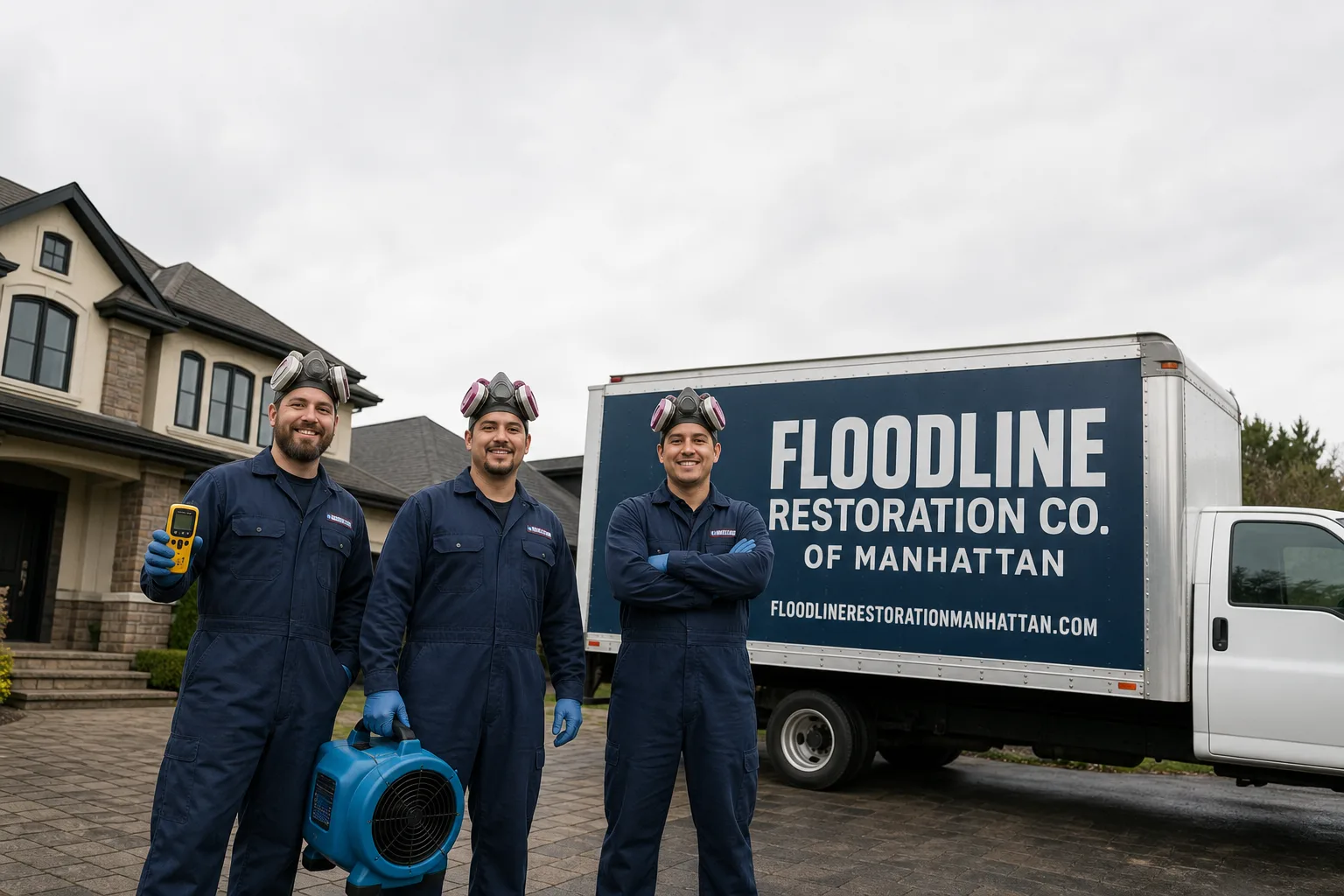
Free visual inspection and a written scope of work before any mitigation begins - photos, moisture readings, and drying logs go in your claim file
The scope we write is the scope we bill. Anything new gets shown to you, in writing, before we touch it.






 Before
 After
After Before
 After
After Before
 After
After24/7 Emergency Reconstruction & Cleanup in Meatpacking District
Reconstruction and cleanup after water, fire, or storm damage in the Meatpacking District requires a crew that knows this neighborhood’s buildings from the inside out. Floodline Restoration Co. of Manhattan answers live 24 hours a day, and we dispatch crews into the Meatpacking District immediately after your call. Reach us at (917) 924-4221 any hour. The first hour matters because water moves fast through old brick and timber structures, and the sooner extraction starts, the less gets torn out and rebuilt.
When a nor’easter pushes the Hudson over its banks or a century-old supply line lets go in a converted cold-storage building, you get a live dispatcher on the phone, not a recording. A background-checked, uniformed crew arrives fast, starts extraction the same visit, and keeps the job in one pair of hands from first cut to final coat of paint.
Understanding Reconstruction & Cleanup Severity in Meatpacking District Properties
Reconstruction and cleanup in the Meatpacking District runs on a severity scale most homeowners never see until a wall gets opened. Category 1 water is clean, from a broken supply line or an overflowing sink. Category 2 carries contamination from a washing machine or sump failure. Category 3 is what we see after Hudson River surge or a sewage backup: water carrying silt, bacteria, and whatever the street drains in. In this district’s sub-grade spaces, what reads as Category 1 on the surface often sits above Category 3 water pooled in an old cold-storage void below the slab.
The thickness of these pre-war brick walls changes every drying calculation. Masonry party walls with original cast-iron columns hold moisture and release it slowly, which means structural drying takes days longer than it would in a wood-framed building a few blocks inland. Our crews use moisture mapping and thermal imaging to find hidden water before it becomes a mold problem, then log daily readings until the dry standard is met and the claim file is complete.
Why Meatpacking District Property Owners Choose Floodline Restoration Co. of Manhattan
- A real person answers, 24/7. When you call Floodline Restoration Co. of Manhattan at 2 a.m., a live dispatcher picks up and starts coordinating a crew for the Meatpacking District immediately.
- 45-minute response commitment. We dispatch crews based in the area so someone is at your building fast, not three hours after you leave a voicemail.
- IICRC-certified technicians. Our crews carry WRT, FSRT, and AMRT certifications, which means they’re trained for water, fire, and microbial remediation on old masonry and cast iron.
- Free visual inspection. Before anyone writes a scope, we look at what’s actually wet, bowed, sooted, or mold-stained, including what’s behind the drywall.
- Direct insurance billing. We bill your carrier directly and document everything from day one so you don’t play messenger between us and the adjuster.
- One team, extraction to reconstruction. The same crew that sets up air movers on day one handles the drywall, flooring, and finishing work. No mid-job handoff.
Our Reconstruction & Cleanup Process
Inspection & Assessment
We start with a room-by-room inspection using thermal imaging and hygrometers to find moisture behind finishes, under slabs, and inside the cold-storage voids common to converted Meatpacking District buildings. Every finding goes into the job file before demolition begins.
Extraction & Stabilization
We remove standing water and wet material that can’t be saved, then install containment and stabilizers as needed. In buildings with landmarked interiors, we protect original fabric that isn’t damaged so preservation review stays simple.
Drying & Dehumidification
Dri-Eaz and Phoenix dehumidifiers plus high-volume air movers run until the dry standard is hit. Thick masonry walls in this neighborhood release water slowly, so we log readings daily and adjust equipment placement based on what the moisture map tells us.
Cleaning & Sanitization
We scrub and disinfect all affected surfaces with antimicrobial treatments appropriate to the water category. HEPA air scrubbers run throughout to keep spores and soot particles from spreading into clean rooms above.
Ammonia & Industrial Chase Treatment
When tear-out reveals old refrigeration chases, buried drains, or ammonia lines, we pause reconstruction and bring in contamination protocols specific to those sur-prises. This is a standard Meatpacking District discovery, and it should never be treated as a generic construction problem.
Repairs & Restoration
Drywall, flooring, paint, and finishes go back in once the structure is dry and clean. Our Reconstruction & Cleanup team handles this phase in-house, so there’s no gap between remediation and rebuild, and no new crew reading someone else’s notes.
Need Emergency Reconstruction & Cleanup in Meatpacking District Now?
Crews minutes away, answering live 24 hours a day. The sooner we start, the less it costs.
Working With Your Insurance Company
Most Meatpacking District property owners have never filed a flood or water claim before, and the process is easier with a contractor who speaks adjuster. We document the loss from the first hour: photos of every affected room, moisture readings that show how far water migrated, and a line-item scope that separates emergency work from rebuild. Your adjuster needs this level of detail to approve a fair settlement, and we send it directly to your carrier so you don’t have to translate.
What We Provide Your Insurer
- Thorough documentation of the loss
- Photos of all damage, room by room
- Moisture readings and drying logs
- A detailed, line-item scope of work
- Direct coordination with your carrier
Built for Meatpacking District’s Loss Calendar
The Meatpacking District has a flood season and a pipe-freeze season, and they overlap in ways that keep restoration crews busy year-round. January deep freezes burst supply lines in old buildings where the domestic water lines run through unheated chases buried behind luxury finishes. That’s a Category 1 water loss on paper, but in a converted cold-storage building with sub-grade voids, what starts as a clean break often becomes a Category 3 contamination problem before anyone finds it.
Spring thaw and heavy rain push groundwater under Belgian-block cobblestones on Gansevoort and Little West 12th Streets, where 19th-century brick vaults channel water straight into basements. Summer thunderstorms are fast and hard, overwhelming the district’s aging combined drains. Nor’easters in fall and early winter bring the Hudson over its edge, and that coastal surge is what separates this neighborhood from Chelsea and the West Village: we plan for it, log it, and dry around it in ways a generic restoration crew never anticipates.
Reconstruction & Cleanup Across Meatpacking District’s Neighborhoods
The blocks around Gansevoort Street are dense with converted market buildings and high-end retail, which means response routes come through the Belgian-block intersections and parking cuts on the north side of the district. We’re familiar with the freight entrances and loading positions on Little West 12th Street, where a boutique hotel complex recently needed full retail pack-out after groundwater pushed through those street vaults.
Along Washington Street, restoration work often runs above active restaurant and retail spaces, which means our crews coordinate containment and negative-air setups carefully so a perfume shop doesn’t close because of construction dust from the condo above. Over by the High Line’s southern entrance, older mixed-use buildings with landmarked cast-iron façades require us to preserve exterior fabric while gutting interiors. West of Hudson Street, the properties nearest the river sit lowest in elevation and carry the highest Nor’easter surge exposure, so we treat every below-grade space there as a standing flood risk even when the current loss is a ceiling leak.
Specialized Reconstruction & Cleanup Services We Offer in Meatpacking District
Full-Service Reconstruction
When we rebuild a Meatpacking District condo or retail space, we work within the constraints of the building’s history. Original cast-iron columns stay in place, masonry walls get dried to standard before finishes go back, and every replacement material is documented for your Landmarks Preservation Commission file. We don’t treat this neighborhood’s buildings as if they were new construction.
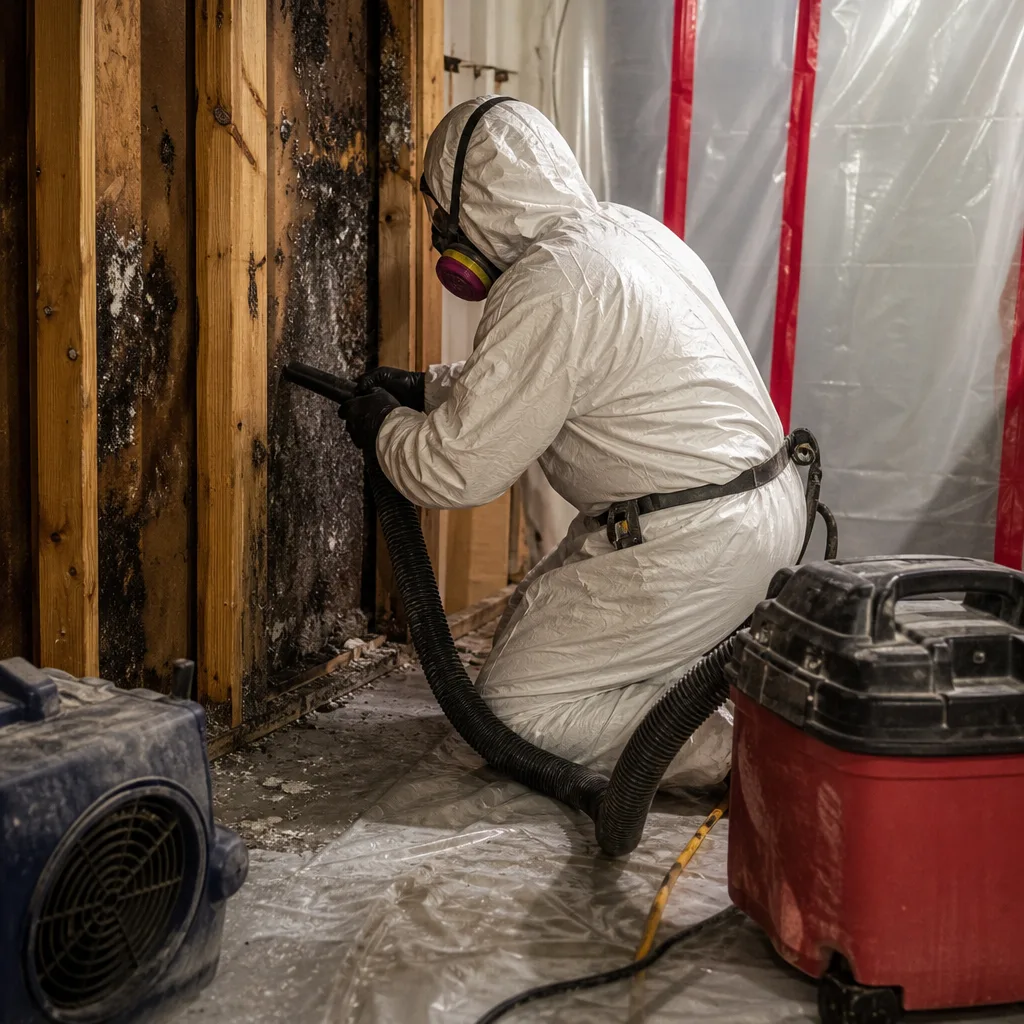
Contents Restoration & Pack-Out
Furniture, art, inventory, and personal property get packed out, inventoried, cleaned, and stored or restored. In a district full of high-value retail goods and gallery pieces, the pack-out process matters as much as the drying. We photograph every item and log it before it moves.
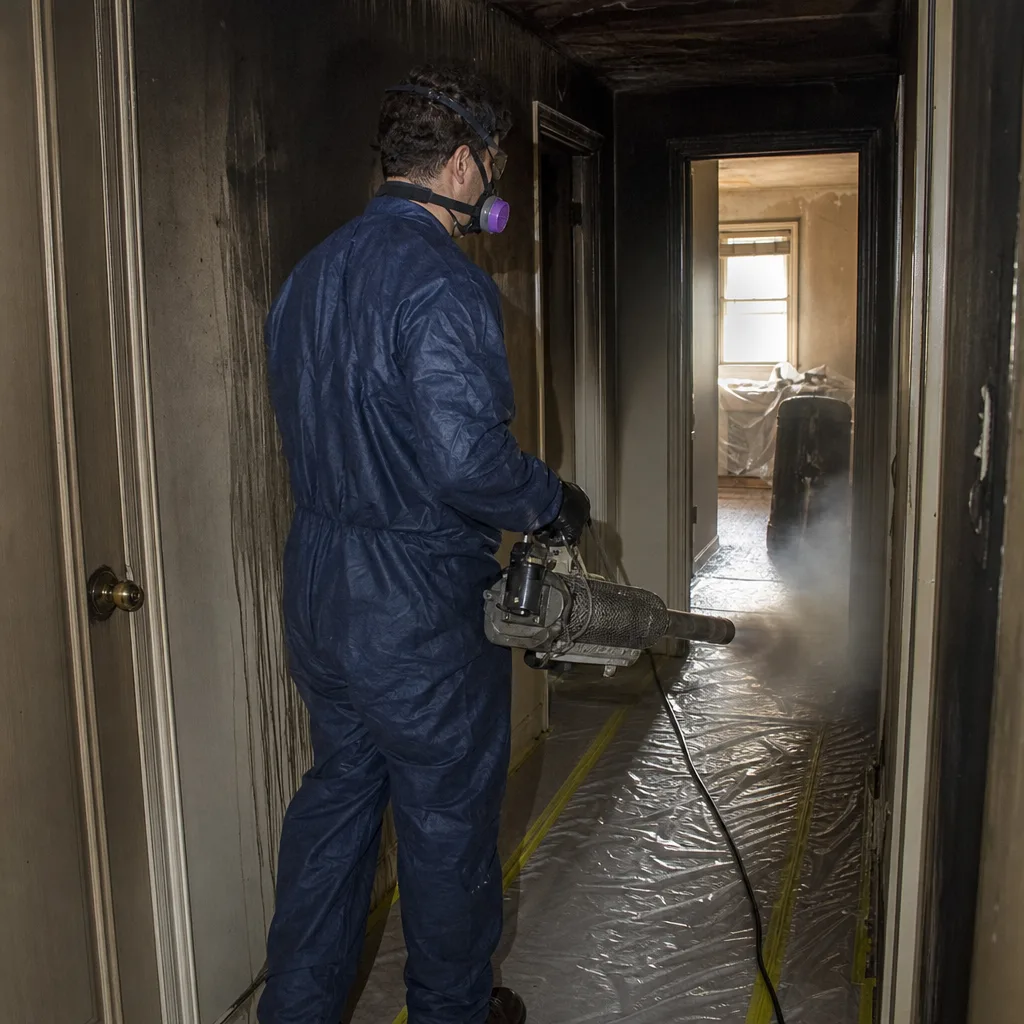
Insurance Claim Documentation
For Meatpacking District claims involving storm surge or hidden cold-storage damage, documentation wins. We log moisture readings daily, photograph every tear-out stage, and provide your adjuster with a line-item scope that includes surprises like buried industrial chases and sub-grade voids. Direct billing to your carrier means you’re not the accountant in the middle.
What happens when you call
- 1
A real person answersNo phone trees - you reach a local pro.
- 2
You get an upfront price rangeHonest numbers before anyone is dispatched.
- 3
A background-checked tech heads outLicensed & insured, dispatched right away.
- 4
You approve before work beginsNothing starts until you say go.
Reconstruction & Cleanup Costs in Meatpacking District, NY
Reconstruction and cleanup in the Meatpacking District runs higher than the outer boroughs because the buildings demand more labor and more caution. A small Category 1 water loss in a single condo typically falls between $3,500 and $8,500 for extraction, drying, and drywall repair. A full Category 3 mitigation with pack-out, demolition of contaminated drywall, antimicrobial treatment, and structural drying in a flagship retail or hotel space usually lands between $18,000 and $55,000 before rebuild, depending on how far groundwater traveled through the brick vault drains.
The biggest price movers in this district are the hidden spaces: cold-storage voids, buried industrial chases, and the landmarked finishes you can’t replace from a box store. When those are involved, the free visual inspection becomes a working map. We’ll give you a written scope with line items and let the price sit still before anyone cuts a hole. Call (917) 924-4221 to schedule yours.
We Also Serve Cities Near Meatpacking District
Floodline Restoration Co. of Manhattan handles Reconstruction & Cleanup in Meatpacking District and responds to surrounding areas including Fairview, Harrison, East Bronx, and Hunts Point. Our dispatch board covers the full radius, so a crew is usually minutes from your building when time matters most.
Meatpacking District Reconstruction & Cleanup Questions, Answered
Why does my Meatpacking District basement keep getting wet even after I had perimeter waterproofing installed?
Perimeter waterproofing alone doesn’t address the 19th-century brick vaults that run beneath Gansevoort and Little West 12th Streets. Those buried passageways channel groundwater directly into basements through the cobblestone void space, and standard interior or exterior waterproofing won’t seal that pathway. Our crews find and address the vault entry points during reconstruction.
How do you dry out a building with thick masonry walls and original cast-iron columns without damaging the landmark fabric?
We use low-grain refrigerant dehumidifiers from Dri-Eaz and Phoenix, placed according to a moisture map, not guesses. Slow, controlled drying protects cast iron from condensation-driven rust. We log daily readings until the wood and masonry hit the dry standard, so you have a written record for the Landmarks Preservation Commission if they ask.
What happens when you open up a wall in a Meatpacking District loft and find an old ammonia refrigeration chase?
We stop demolition and treat the space as a contamination zone. Old ammonia chases may hold residual chemical residue and moisture, and they require specialized cleaning before we rebuild. This is one of the reasons our Reconstruction & Cleanup team handles the job end-to-end, not a rotating cast of subcontractors.
After a flood, how do you decide what drywall has to be removed versus what can be dried in place in these old brick buildings?
We cut out drywall that has absorbed Category 2 or Category 3 water, because it can’t be safely dried and reused. Drywall that only got wet from clean water and reads within a recoverable moisture range can sometimes be dried with air movement, but in the thick masonry envelopes of Meatpacking District buildings, we tend to be aggressive with removal because slow drying invites mold behind the wall.
Does the Landmarks Preservation Commission really restrict what I can replace after water damage in my Meatpacking District condo?
Yes. Buildings in the Gansevoort Market Historic District and neighboring landmarked zones fall under LPC review, which limits replacement materials for façades, windows, and interior features. We document what we remove, keep original material where feasible, and give you the file an LPC reviewer expects to see.
How fast can someone actually get to my Meatpacking District building?
We commit to a 45-minute response window in the Meatpacking District. Our crews know the freight entrances off Washington and the loading zones near the High Line, so we’re not circling the block looking for a place to park equipment. Call (917) 924-4221 and a live dispatcher starts the clock.
Will my insurance cover reconstruction after a flood in the Meatpacking District?
Standard property policies often exclude flood damage unless you carry separate flood coverage through the NFIP or a private carrier. Water from a broken supply line is usually covered. We document the source, the spread, and the structural drying process so your adjuster has exactly what they need to make a coverage decision.
What should I do in the first 30 minutes after I find water damage in my Meatpacking District property?
Call Floodline Restoration Co. of Manhattan at (917) 924-4221 first, while the water is still spreading. Shut off the water main if you can reach it safely. Do not enter standing water in a sub-grade space that may have live electrical circuits. Take photos from a dry threshold if possible. Then wait for the crew, who will start extraction and documentation on arrival.
Serving Meatpacking District, NY - Our Local Coverage Area
We’re based in the Meatpacking District area and know this community well. Use the map below to see our service coverage - if you’re nearby, we can almost certainly help.
Contact Floodline Restoration Co. of Manhattan
When water, fire, or storm damage hits your Meatpacking District property, call (917) 924-4221. A live dispatcher answers 24 hours a day, and a uniformed, background-checked crew will be on the way inside 45 minutes. We bill your insurer directly, document every step, and stand behind the work with the 90-Day Done Right Promise, in writing. Our Reconstruction & Cleanup team serves this neighborhood full-time, and we know the brick vaults, the cobblestones, and the old cold-storage rooms better than any outside crew ever will. Call now for a free visual inspection and a written scope.
Written by Curt Bowman, Owner at Floodline Restoration Co. of Manhattan, serving the Meatpacking District with full-cycle restoration since 2010.