
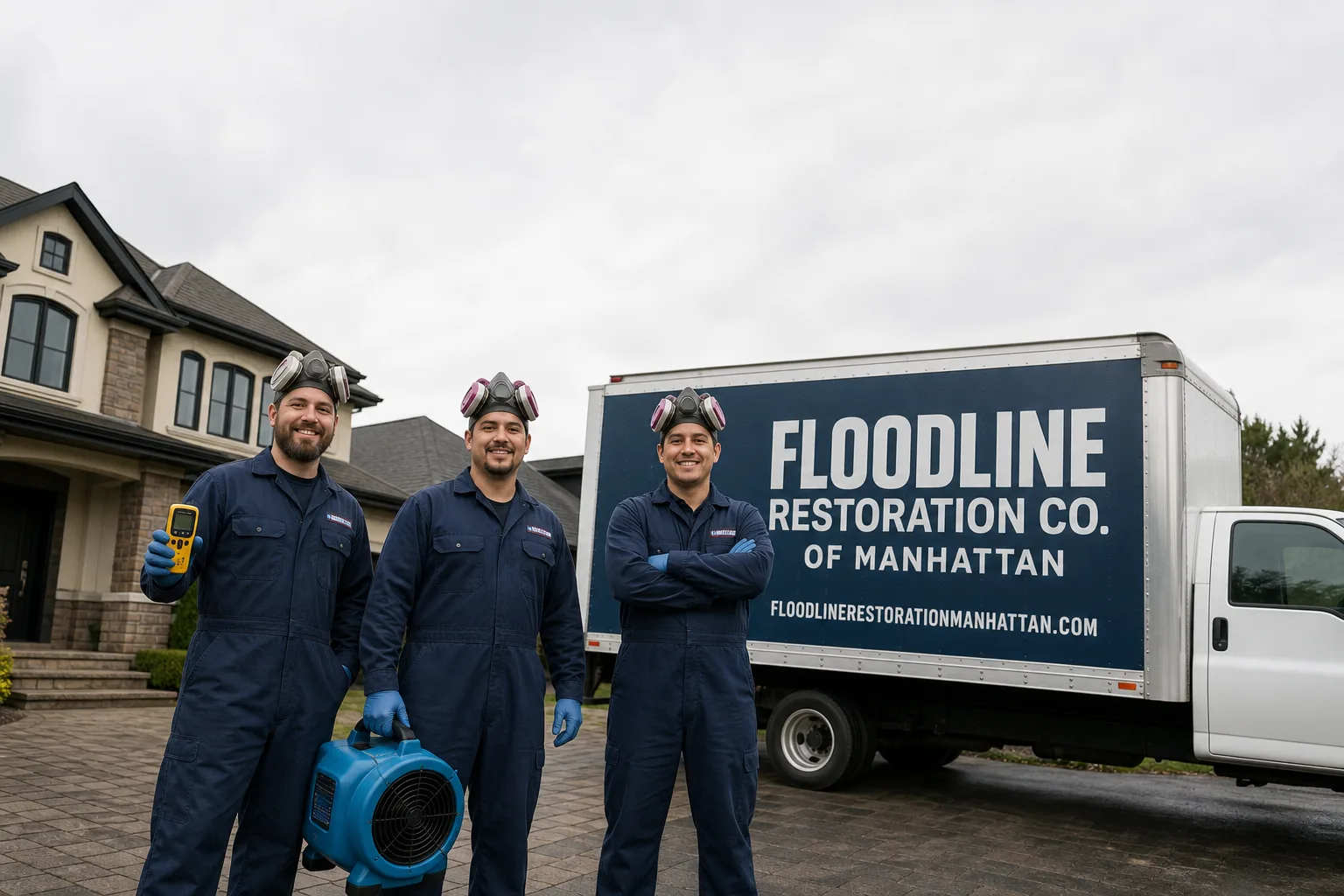
Free visual inspection and a written scope of work before any mitigation begins - photos, moisture readings, and drying logs go in your claim file
The scope we write is the scope we bill. Anything new gets shown to you, in writing, before we touch it.






 Before
 After
After Before
 After
After Before
 After
After24/7 Emergency Storm & Disaster Restoration in Sea Cliff
Storm damage in Sea Cliff doesn’t wait for business hours, and neither do we. If a nor’easter just tore shingles off your Victorian or wind-driven rain is pushing through your cottage walls, call (917) 924-4221 right now. A live dispatcher answers at 2 a.m. the same way they answer at 2 p.m. We dispatch certified crews into Sea Cliff immediately, and the first hour determines whether you’re dealing with a cleanup or a reconstruction. Water moves fast through original plaster-and-lath, and salt air has already weakened the hardware holding your home together. Every call gets a free visual inspection. The sooner we start extraction, the less this costs you.
Understanding Storm & Disaster Restoration Severity in Sea Cliff Properties
Sea Cliff’s housing stock turns routine storm damage into structural events. Most of these homes were built as Methodist camp-meeting cottages and summer resort structures between the 1870s and 1900s, then converted to year-round use without full weatherization. When Category 3 storm water enters, it doesn’t pool on a concrete slab. It channels behind original cedar shiplap sheathing and settles into lath cavities where no surface fan reaches. We classify the water, map moisture with thermal imaging and hygrometers, and set structural drying protocols matched to the wall assembly, not just the room. Wind-driven rain at bluff elevation exposes the same problem from above: water enters through original attic vents, dormers, and unflashed roof intersections that newer housing stock simply doesn’t have. Soot and smoke from storm-related electrical fires travel differently here too, migrating through balloon framing channels that connect basement to attic without fire stops. Severity in Sea Cliff isn’t a question of how much water came in. It’s a question of where the walls were built to hide it.
Why Sea Cliff Property Owners Choose Floodline Restoration Co. of Manhattan
- 45-minute response commitment. We stage crews near Sea Cliff because bluff roads and narrow village streets slow outside responders. When you call, we tell you exactly when we’ll be there, and we show up.
- A live person answers, 24/7. No recording, no call-back queue. A dispatcher picks up and coordinates the crew, the equipment, and the first extraction.
- IICRC-certified crews. Our technicians hold WRT, FSRT, and AMRT certifications. They know what a water-damaged lath wall requires, and they know what not to touch.
- Free visual inspection. Before any work begins, we document what we see, explain what it means, and give you a written scope. No charge for the assessment.
- Direct insurance billing. We bill your carrier directly and speak with your adjuster on your behalf. You never play messenger between Floodline and the insurance company.
- One team from extraction to reconstruction. The same certified crew that reads the moisture map on day one handles daily readings, hands the log to you and your carrier, and rebuilds what needs rebuilding. No mid-job handoff to a crew you’ve never met.
Our Storm & Disaster Restoration Process
Inspection & Assessment
We arrive, walk the property inside and out, and identify every water pathway, corrosion point, and structural concern. Thermal imaging shows us what’s hiding behind plaster. You get a written scope before any work starts.
Extraction & Stabilization
We remove standing water and secure the structure. For storm damage, this includes emergency board-up and roof tarping so the next rain doesn’t compound the first one. Standing water comes out with professional-grade extraction units.
Drying & Dehumidification
Dri-Eaz air movers and Phoenix dehumidifiers go in, positioned for Sea Cliff’s wall assemblies, not a textbook floor plan. Daily moisture readings track progress against the dry standard. We hand you the log.
Cleaning & Sanitization
Storm water is Category 3, which means contaminated. We apply antimicrobial treatments to affected surfaces and run HEPA air scrubbers where mold risk is present. Every affected surface gets cleaned, not just the visible ones.
Corrosion Treatment & Hardware Assessment
Salt air near Hempstead Harbor has been working on your hinges, rollers, tracks, and opener chains for years. After a storm, we inspect every component, replace what’s seized, and coat what’s salvageable.
Repairs & Restoration
We rebuild what the storm took. Plaster, framing, flooring, garage door hardware, roofing. The same crew that started the job finishes it, and the 90-Day Done Right Promise covers the result in writing.
Need Emergency Storm & Disaster Restoration in Sea Cliff Now?
Crews minutes away, answering live 24 hours a day. The sooner we start, the less it costs.
Working With Your Insurance Company
Storm damage claims in Sea Cliff move faster when documentation starts in the first hour. We photo-document every room, every wall cavity, every piece of hardware before and after. Our moisture readings and drying logs give your adjuster the evidence they need to approve the full scope, not a partial one. We write industry-standard estimates in the format carriers expect, and we communicate with your adjuster directly so you don’t have to translate trade language into insurance language. If your carrier pushes back, our documentation answers the questions. We’ve handled thousands of coastal claims, and we know what evidence moves a decision.
What We Provide Your Insurer
- Thorough documentation of the loss
- Photos of all damage, room by room
- Moisture readings and drying logs
- A detailed, line-item scope of work
- Direct coordination with your carrier
Built for Sea Cliff’s Loss Calendar
Sea Cliff’s storm damage runs on a schedule that has very little to do with rain. January deep freezes burst supply lines inside exterior walls that were insulated as an afterthought in the 1920s. The freeze-pipe losses spike in the first hard cold snap, when cottage-conversion walls hit temperatures they were never designed to hold. Spring thaw turns the steep grade into a channel: snowmelt runs downhill toward older fieldstone foundations that have no modern waterproofing membrane, and basement flooding begins fast. Summer thunderstorms dump flash rain on the bluff, and the water finds its way down. Nor’easters in September through March combine wind-driven rain at elevation with coastal surge at the waterfront, hitting Sea Cliff homes from both directions in the same storm. Every season has a signature loss pattern here, and we’ve responded to all of them enough times to know what the next call looks like before the phone rings.
Storm & Disaster Restoration Across Sea Cliff’s Neighborhoods
The response routes matter in Sea Cliff because the geography changes the damage pattern. Homes along Prospect Avenue and the steeper streets running down toward Hempstead Harbor take the brunt of nor’easter surge, with basement flooding that starts before the first floor shows water. The cottages clustered near the old camp-meeting grounds off Sea Cliff Avenue are the freeze-pipe casualties, walls full of original cedar shiplap that traps meltwater behind plaster. The Victorian frames along the bluff edge near Crescent Beach and the harborfront get full wind exposure, which means roof tarping and emergency board-up come first. Down in the flats near the village center, where some postwar in-fill housing sits alongside the older stock, plumbing is PVC and wiring is Romex, so storm losses there are simpler. But the classic Sea Cliff damage call comes from a wood-frame cottage on a graded street above the harbor. That’s the job our crews know by heart.
Specialized Storm & Disaster Restoration Services We Offer in Sea Cliff
Storm Damage Cleanup
When a nor’easter tears through Sea Cliff, the cleanup starts with what the wind left behind: downed limbs, broken glass, debris against the foundation, and water where the roof should have held. We remove the debris, document the damage for your carrier, and get the structure stabilized before the next front arrives. Salt spray accelerates what moisture starts, so we treat surfaces quickly.
Flood Damage Restoration
Flooding in Sea Cliff moves downhill fast. By the time water is visible on a first floor, it’s been saturating the basement and seeping behind foundation walls for hours. Our crews extract with Dri-Eaz equipment, map the moisture with thermal imaging, and run structural drying protocols meant for lath-and-plaster assemblies, not drywall. The water line on the wall is where we start.
Emergency Board-Up
Broken windows and compromised doors on a bluff above Hempstead Harbor can’t wait until tomorrow. We board up openings the same visit, keeping the next tide’s wind-driven rain out of your house. Board-up is temporary but it has to be done right, and we secure every opening so the next storm doesn’t turn a repair into a gut.
Roof Tarping
Wind damage to older Sea Cliff roofs opens the attic to everything coming next. We tarp the affected sections the same day, anchored to withstand the next blow. Original slate and cedar shake roofs can’t take a standard tarp job; our crews know how to seal them without causing more damage.
Debris Removal
Storm debris in Sea Cliff isn’t just branches. It’s broken slate, torn flashing, and sometimes pieces of a neighbor’s porch. We clear the property, document what came off your structure for the insurance claim, and leave the site secure.
What happens when you call
- 1
A real person answersNo phone trees - you reach a local pro.
- 2
You get an upfront price rangeHonest numbers before anyone is dispatched.
- 3
A background-checked tech heads outLicensed & insured, dispatched right away.
- 4
You approve before work beginsNothing starts until you say go.
Storm & Disaster Restoration Costs in Sea Cliff, NY
A typical storm damage cleanup in Sea Cliff runs $1,800 to $4,500, depending on how much water came in and where it went. Flood extraction with full structural drying of lath-and-plaster walls runs $4,000 to $9,000 because the drying protocol is longer and more equipment-intensive than a drywall home. Emergency board-up runs $450 to $1,200 per opening. Roof tarping runs $600 to $2,000 depending on roof pitch and access. The variable that moves every number is what’s behind the plaster: if we find soaked cedar shiplap or compromised knob-and-tube wiring, the scope expands and the price moves with it. Insurance typically covers the full scope for covered storm events, and we bill your carrier directly. The free visual inspection gives you a firm written number before any work begins. Call (917) 924-4221 to schedule it.
We Also Serve Cities Near Sea Cliff
Our storm and disaster restoration crews serve Sea Cliff and the surrounding North Shore communities, including Glen Cove, Port Washington, Manhasset, and Great Neck. If you’re anywhere along the Hempstead Harbor shoreline, we can reach you fast.
Sea Cliff Storm & Disaster Restoration Questions, Answered
How does Sea Cliff’s steep bluff change the order of failure during a nor’easter?
Basement flooding starts before first-floor damage. The steep grade sends stormwater downhill so fast that gravity pushes water against older fieldstone foundations before any standing water collects on the first floor. We’ve seen finished basements flooded while the upstairs carpets were still dry. That’s the Sea Cliff signature, and it changes where we start extraction. Call (917) 924-4221 the moment you see water on a lower level.
Why do freeze-pipe bursts in Sea Cliff require full structural drying instead of just surface extraction?
Because the burst happens inside an exterior wall that was framed in the 1890s, insulated as an afterthought, and sheathed in original cedar shiplap. The water travels the shiplap seams and settles behind the lath before it ever shows through the plaster. Surface extraction at the visible leak point leaves moisture in the wall assembly, and mold follows within 48 hours. Full structural drying means opening the wall, mapping the moisture, and running air movers until the wood hits the dry standard. Call us for a free visual inspection and we’ll show you exactly where the water went.
What does salt air do to garage-door opener chains near Hempstead Harbor?
Salt air corrodes opener chains, springs, hinges, and tracks on bluff homes within 5 to 7 years, compared to 12 to 15 years inland. The chain seizes, the springs snap under load, and the tracks bind mid-cycle. After a storm, the damage compounds: salt spray accelerates every weakened component. We install galvanized or coated springs, replace chains, and fit nylon rollers where it makes sense. If your opener is grinding, call (917) 924-4221 before it fails entirely.
How do you handle mold risk in Sea Cliff Victorian walls after a flood when we can’t see behind the plaster?
We use thermal imaging and moisture meters to map what’s hidden in the lath cavity, then we treat the wall as a single system. HEPA air scrubbers run during remediation, and we apply antimicrobial treatment to every affected surface before we repair the plaster. In Sea Cliff’s converted cottages, we assume category 3 water reached what we can’t see, and we dry to the hidden standard, not the visible one. If the lath is soaked, we remove it, treat the framing, and replace it. No staining left, no mold left behind.
Can you restore a Sea Cliff cottage after wind-driven rain if the original wiring is still knob-and-tube?
Yes, but the wiring changes the sequence. Water that reaches outlets or light fixtures on knob-and-tube circuits means we have to verify dryness circuit-by-circuit before any power is restored. Our electricians work alongside the drying crew, and the carrier’s documentation includes the wiring assessment. The work follows IFA standards, and nothing gets re-energized until the moisture map clears it. We’ve done this on dozens of Sea Cliff cottages. Call (917) 924-4221 for a free inspection.
How fast can you actually get to a Sea Cliff house during a storm?
Our commitment is 45 minutes from the call to a crew at your door, storms permitting. We stage crews near Sea Cliff because the village streets are narrow and bluff roads slow outside responders. When you call (917) 924-4221, a live dispatcher tells you exactly when we’ll arrive.
Will my insurance cover storm and disaster restoration in Sea Cliff?
Most standard homeowner policies cover storm damage, flood from storm surge, and freeze-burst pipes, though flood from rising water may require a separate flood policy. We document everything from the first hour, bill your carrier directly, and coordinate with your adjuster so you’re not left negotiating a coastal claim alone. Bring us the policy number and we’ll handle the rest.
What should I do in the first 30 minutes after storm damage in Sea Cliff?
Call (917) 924-4221 first. Then, if it’s safe, shut off the main water valve if pipes are involved. Do not touch anything electrical if water has reached outlets, especially in older homes with original wiring. Take photos of everything you can see. Don’t start pulling up flooring or opening walls; you need documentation before demolition. Our crew can be there within 45 minutes.
Sea Cliff’s Coastal Edge: What Fails First and What We Do About It
The salt air coming off Hempstead Harbor is the quiet killer in Sea Cliff. It works on garage-door hardware the same way it works on a car parked too near the water: springs, hinges, rollers, tracks, fastener points, and opener chains all corrode years before they should. On the bluffs above the harbor, we routinely replace garage-door springs that failed after five or six years of salt exposure, when the same spring inland would have lived past twelve. The failure pattern is consistent: chain seizure on the opener, then spring fatigue under the added load, then a door out of its tracks mid-cycle. A nor’easter pushes it over the edge. Storm surge and wind-driven rain get into the hardware, and the door seizes while the wind is still loading the house. Our crews install galvanized springs, stainless steel fasteners, and nylon rollers, and we run corrosion inspections on garage-door systems as part of every storm response. If your opener chain has been grinding or your door shudders on the way up, call (917) 924-4221. We’ll tell you whether it can be saved or whether it needs replacing before the next storm finishes it off.
The Same Nor’easter, Two Different Floods
In Sea Cliff, the same nor’easter that drives wind-driven rain at bluff elevation sends stormwater channeling downhill so fast that basement flooding begins before the first floor even shows water. This is a failure sequence unique to the village’s steep grade and pre-modern foundation membranes. Flat Glen Cove doesn’t see this. In Glen Cove, a nor’easter pushes water and the first floor takes it first. In Sea Cliff, gravity does the work before the rain finishes falling. The water concentrates at the foundation base, pressure builds against fieldstone walls that were laid without a waterproofing membrane, and the basement takes water even if the upstairs never leaks. That’s why our Sea Cliff response starts at the lowest level, even when the visible damage is upstairs. By the time a homeowner notices a damp basement, the water has been moving through the foundation wall for hours.
One House on Prospect Avenue, and What It Taught Us
Our crew responded to a converted Methodist camp-meeting cottage on Prospect Avenue after a January nor’easter. The freeze had burst supply lines inside an exterior wall that was insulated only as an afterthought, and when we opened the plaster-and-lath we found original cedar shiplap sheathing trapping decades of seasonal moisture. We ran structural drying with Dri-Eaz air movers and a Phoenix dehumidifier, then applied antimicrobial treatment before restoring the wall to pre-loss condition. The homeowner told us the cottage had been in her family since the 1940s, and in all that time, no one had ever opened that wall. What we found inside changed the whole scope: the shiplap had been holding moisture long before this storm ever hit. That’s the job Sea Cliff gives us, and it’s the job we’re built for. We don’t hand it off. We don’t guess. We open the wall, show you what’s there, and put it back right.
Serving Sea Cliff, NY - Our Local Coverage Area
We’re based in the Sea Cliff area and know this community well. Use the map below to see our service coverage - if you’re nearby, we can almost certainly help.
Contact Floodline Restoration Co. of Manhattan for Sea Cliff Storm & Disaster Restoration
If your Sea Cliff home has taken water, wind, or freeze damage, call (917) 924-4221 now. A live dispatcher answers, a certified crew is on the way within 45 minutes, and the first visual inspection is free. We bill your insurance carrier directly, document everything from the first hour, and stand behind the result with the 90-Day Done Right Promise. The line the water left is where we start. Ask about our current offers: $50 off any repair over $250, the $89 seasonal tune-up, and our senior and veteran 5% discount, always available.
Written by Curt Bowman, Owner at Floodline Restoration Co. of Manhattan, serving Sea Cliff and the North Shore.