
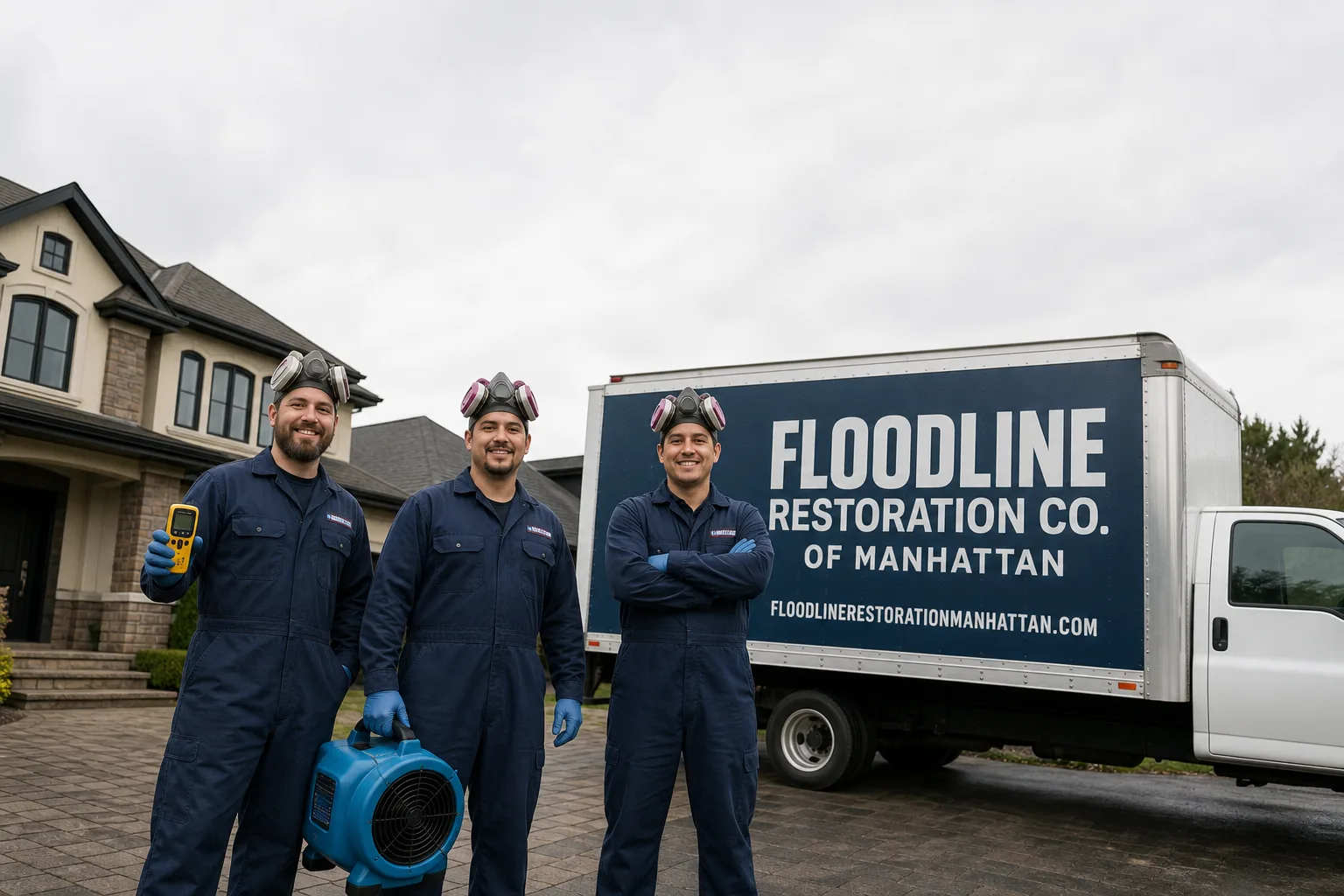
Free visual inspection and a written scope of work before any mitigation begins - photos, moisture readings, and drying logs go in your claim file
The scope we write is the scope we bill. Anything new gets shown to you, in writing, before we touch it.






 Before
 After
After Before
 After
After Before
 After
After24/7 Emergency Storm & Disaster Restoration in Theater District
Storm damage inside a landmarked Broadway theater doesn’t wait for business hours, and neither do we. Floodline Restoration Co. answers live at (917) 924-4221 around the clock, every day of the year. When a nor’easter tears open a roof membrane above an orchestra section or a January freeze-thaw cycle splits a supply line in a sub-basement costume vault, the first hour determines whether you’re facing a cleanup or a production shutdown. Our crews dispatch inside the Theater District within minutes of your call, arrive for a free visual inspection, and start extraction the same visit. The line the water left is where we start.
Understanding Storm & Disaster Restoration Severity in Theater District Properties
Storm damage in Theater District buildings falls into distinct categories, and the building stock here makes the categories bite harder than in most of the metro area. Category 1 water from a broken supply line inside a 1920s mixed-use structure is clean at the source but turns Category 2 within 48 hours as it picks up contaminants from plaster dust, aged pipe interiors, and the accumulated residue of a century-old building. Category 3 water, the kind that comes from a backed-up storm sewer or a failed roof drain during a summer cloudburst, carries bacteria and needs full containment, not just mopping.
The severity in Theater District is structural, not superficial. Older masonry buildings with cast-iron supply lines and gravity-fed sprinkler systems channel water in ways that generic commercial drying protocols miss. Water finds the hydraulic lift pit under a stage, the fly-system counterweight pockets behind a proscenium, the deep sub-basements where costume vaults and set storage sit. Moisture mapping has to account for those cavities, or you get hidden saturation that turns to mold after the 48-hour window closes. That’s why our technicians use thermal imaging and hygrometers in combination, not just surface readings, to find where the water actually went.
Why Theater District Property Owners Choose Floodline Restoration Co. of Manhattan
- 45-minute response commitment – When an 11 PM curtain call is followed by a burst pipe, you don’t have until morning. Our crews reach Theater District jobs within 45 minutes of the call.
- 24/7 live answer, never an automated system – A real dispatcher picks up at 2 AM. Not a recording. Not a callback queue. A person who knows the trade and can start moving crews.
- IICRC-certified crews on every job – Our technicians hold IICRC certifications including WRT (Water Restoration Technician) and FSRT (Fire & Smoke Restoration Technician), plus specialized training for commercial and entertainment-venue drying.
- Free visual inspection before any commitment – We walk the damage with you, show you the moisture readings, and give you a written scope before work starts.
- Direct insurance billing – We bill your carrier directly and coordinate with your adjuster. You never play messenger between us and the insurance company.
- One team from first extraction to final reconstruction – The same certified crew that reads the moisture map on day one handles daily readings, dries the structure, and rebuilds what needs rebuilding. No mid-job handoff.
Our Storm & Disaster Restoration Process
Inspection & Assessment
We arrive with thermal imaging cameras and hygrometers, map the full extent of water migration, and identify what’s immediately structural versus what can be dried in place. In Theater District buildings, this includes checking hydraulic lift pits and fly-system counterweight pockets that standard inspections miss.
Extraction & Stabilization
Standing water comes out first, using professional-grade extraction equipment. If storm damage has opened the building envelope, we stabilize with emergency board-up or roof tarping so no more water gets in while we work.
Drying & Dehumidification
Dri-Eaz and Phoenix dehumidifiers and XPOWER air movers go in, positioned based on the moisture map, not guesswork. We log daily readings until the dry standard is met, and we hand that log to you and your carrier.
Cleaning & Sanitization
Category 2 and Category 3 water require antimicrobial treatment and sanitization. We treat affected surfaces and materials, and we run HEPA air scrubbers where needed to keep the air clean during work.
Entertainment-Venue Specialty Drying
In Theater District work specifically, we inspect stage hydraulic lift pits, fly-system counterweight pockets, and sub-basement storage cavities that generic drying protocols overlook. This is the difference between a job that’s actually dry and a job that looks dry.
Repairs & Restoration
The same crew handles reconstruction, from plaster repair on landmarked fabric to full rebuild of damaged mechanical rooms. We coordinate with the NYC Landmarks Preservation Commission where historic fabric is involved.
Need Emergency Storm & Disaster Restoration in Theater District Now?
Crews minutes away, answering live 24 hours a day. The sooner we start, the less it costs.
Working With Your Insurance Company
Storm damage claims in Theater District come with a clock on them. The insurance carrier needs documentation from the first hour: photos of the damage before anything is moved, moisture readings from the initial assessment, and a clear scope of what the repair will include. We handle that documentation from the first visit forward. Our team takes room-by-room photos, logs moisture readings daily, and prepares a line-item scope in the format adjusters expect. We coordinate directly with your carrier, including the production-interruption clauses that are unique to Theater District commercial work. Storm & Disaster Restoration under our team is handled from first call to final invoice, so you’re not piecing together paperwork while the damage waits.
What We Provide Your Insurer
- Thorough documentation of the loss
- Photos of all damage, room by room
- Moisture readings and drying logs
- A detailed, line-item scope of work
- Direct coordination with your carrier
Built for Theater District’s Loss Calendar
Theater District’s storm damage follows the calendar. January deep freezes stress the aging cast-iron and galvanized supply lines in pre-war buildings, and the freeze-thaw cycle works on rooftop mechanical penthouses and ornate terra-cotta facades all winter. A roof drain that freezes solid on a Tuesday night can back up meltwater into the structure by Thursday afternoon. Spring thaw brings seepage into sub-basement mechanical rooms and set storage, where the water has nowhere to go in a landmarked building’s footprint. Summer thunderstorms hit Midtown hard, with cloudbursts overwhelming roof drains on flat commercial roofs and sending Category 3 water into elevator pits and stairwells. Nor’easters in the fall and winter are the big ones for Theater District: wind-driven rain finds every gap in a 1920s parapet, and a torn roof membrane above an orchestra section means water is sitting on plaster ceilings by the time the first act ends. Our crews know this calendar because we live it every year. Theater District is where we work, not a territory we visit.
Storm & Disaster Restoration Across Theater District’s Neighborhoods
The blocks between West 40th and West 54th Streets are not a monolith, and the damage patterns change street by street. Along West 44th and West 45th Streets, the dense cluster of landmarked Broadway houses means a single roof breach can threaten multiple productions in adjacent theaters. We route crews into those blocks with an understanding that the job isn’t just water removal, it’s protecting an active performance schedule. Around Times Square proper, the mixed-use buildings with street-level retail and upper-floor offices present a different challenge: a burst pipe on the eighth floor can migrate through six floors of commercial space before the first drop reaches the lobby. Up toward West 53rd and West 54th, the larger hotel structures and newer tower construction have fire suppression systems and mechanical rooms on multiple levels, which means storm damage often starts as an HVAC or roof drain failure, not a visible pipe burst. In the residential co-ops and condos scattered through the district, the issue is shared walls and vertical risers: water from one unit moves down the stack and becomes three units’ problem before the first call comes in.
Specialized Storm & Disaster Restoration Services We Offer in Theater District
Emergency Board-Up
When wind damage or a fallen crane component leaves a Theater District building envelope open, the first priority is securing it. We board up broken windows on West 46th Street storefronts or a hotel entrance on Seventh Avenue with the same urgency we’d bring to a Broadway house. Boarding isn’t just security against weather, it’s security against the curious public in one of the densest pedestrian corridors in the city.
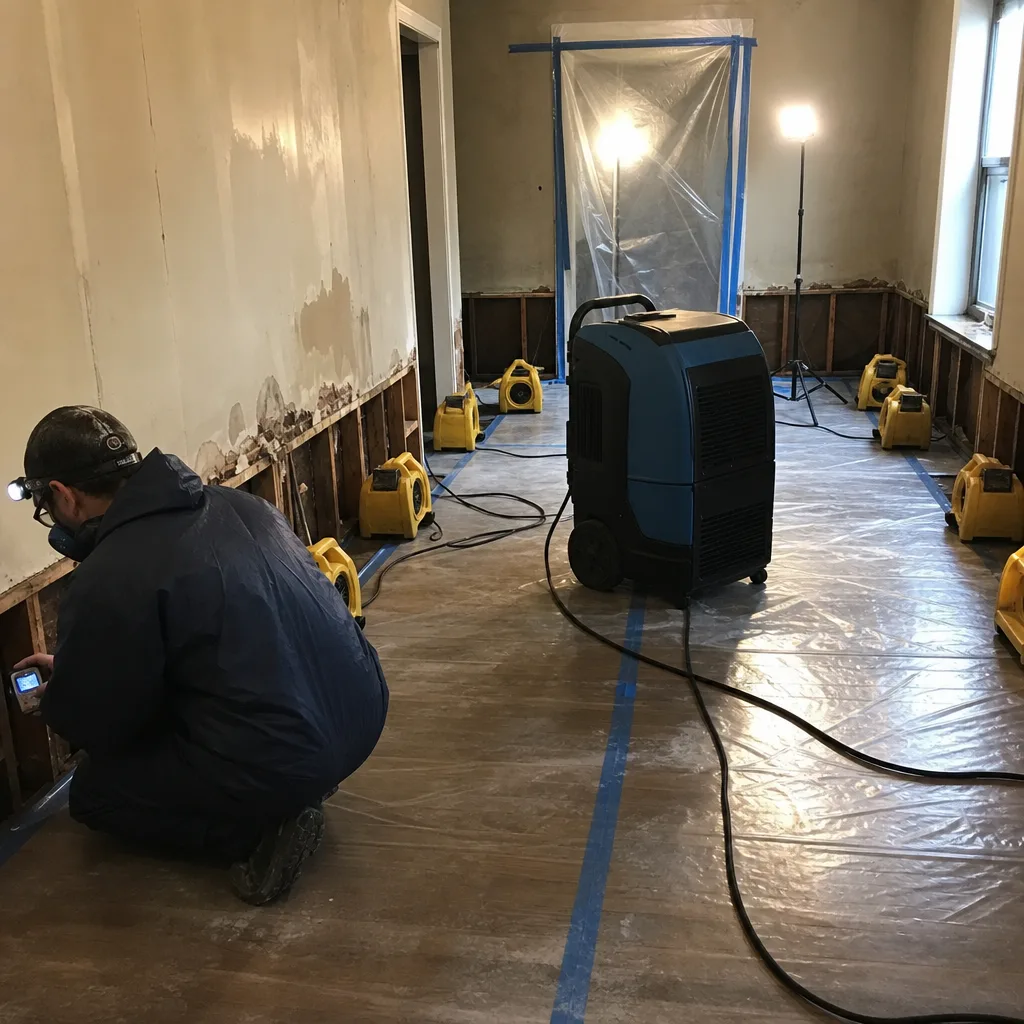
Flood Damage Restoration
Flooding in Theater District buildings rarely starts where it ends. A burst supply line above a stage-left fly-system counterweight pocket sends water down channels the original builders never intended for drainage. We trace the actual path using moisture mapping and pull water from hydraulic lift pits, sub-basement vaults, and mechanical rooms before structural drying begins. Getting the hidden cavities dry is the difference between a job that stays finished and a mold call in six months.
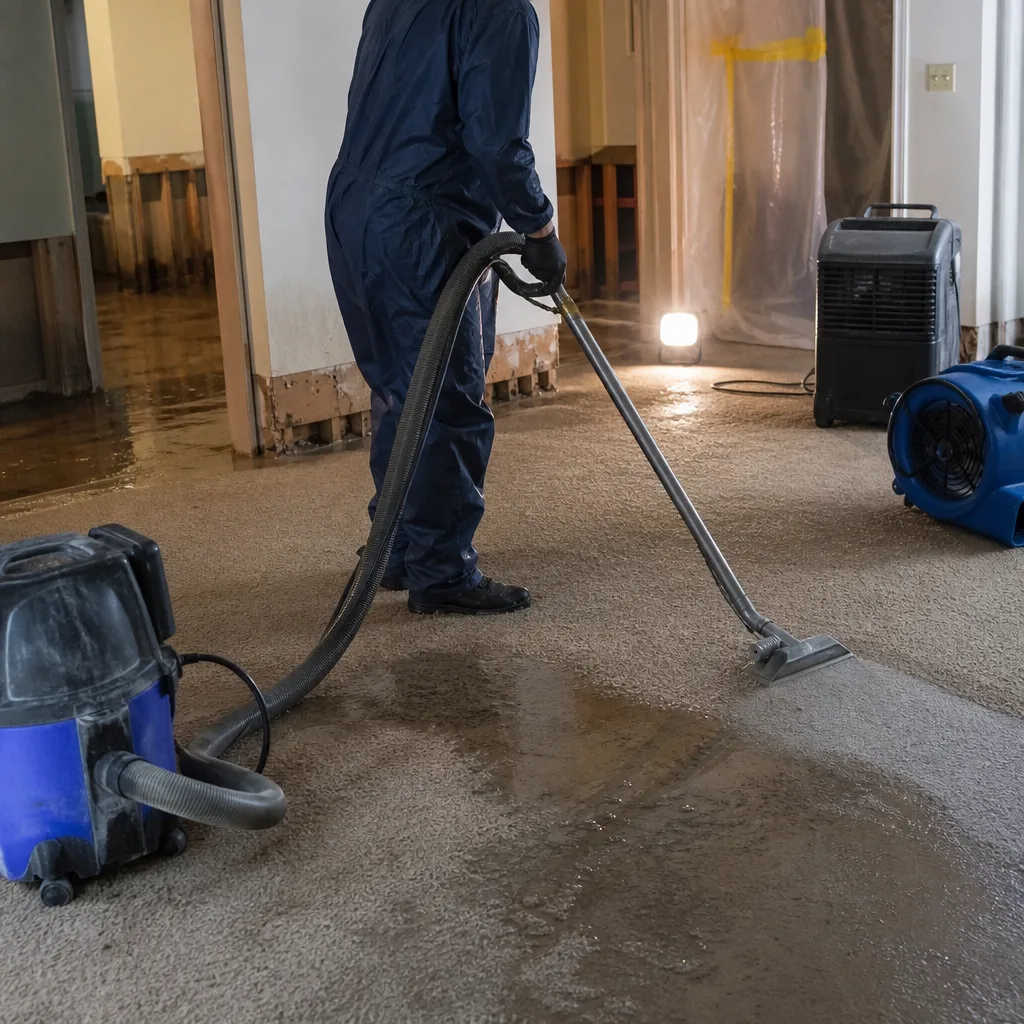
Storm Damage Cleanup
After a nor’easter, the debris on a Theater District roof or in an alley loading zone is as much a liability as the water inside. We remove wind-blown debris, clear clogged roof drains before they become interior flooding, and clean the Category 2 and 3 water that followed the storm in. The cleanup has to move fast in this district: a blocked loading zone on a weekday costs a production real money.
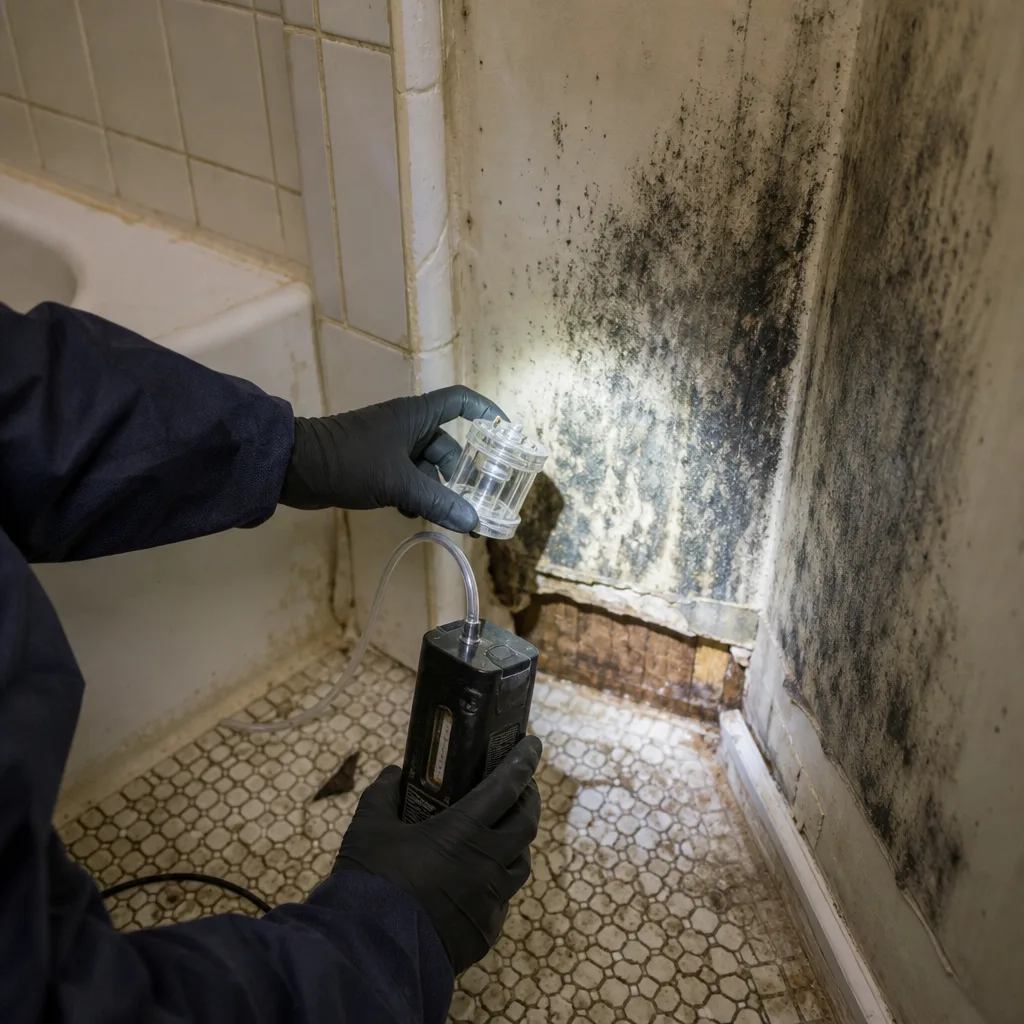
Roof Tarping
A torn roof membrane above a 1920s theater’s stage rigging loft can’t wait for a full roof replacement. We tarp the breach within hours of the call, using weighted and anchored systems that hold through the next wind event. In Theater District, that tarp often buys a production the weeks it needs to schedule a permanent repair without losing a performance night.
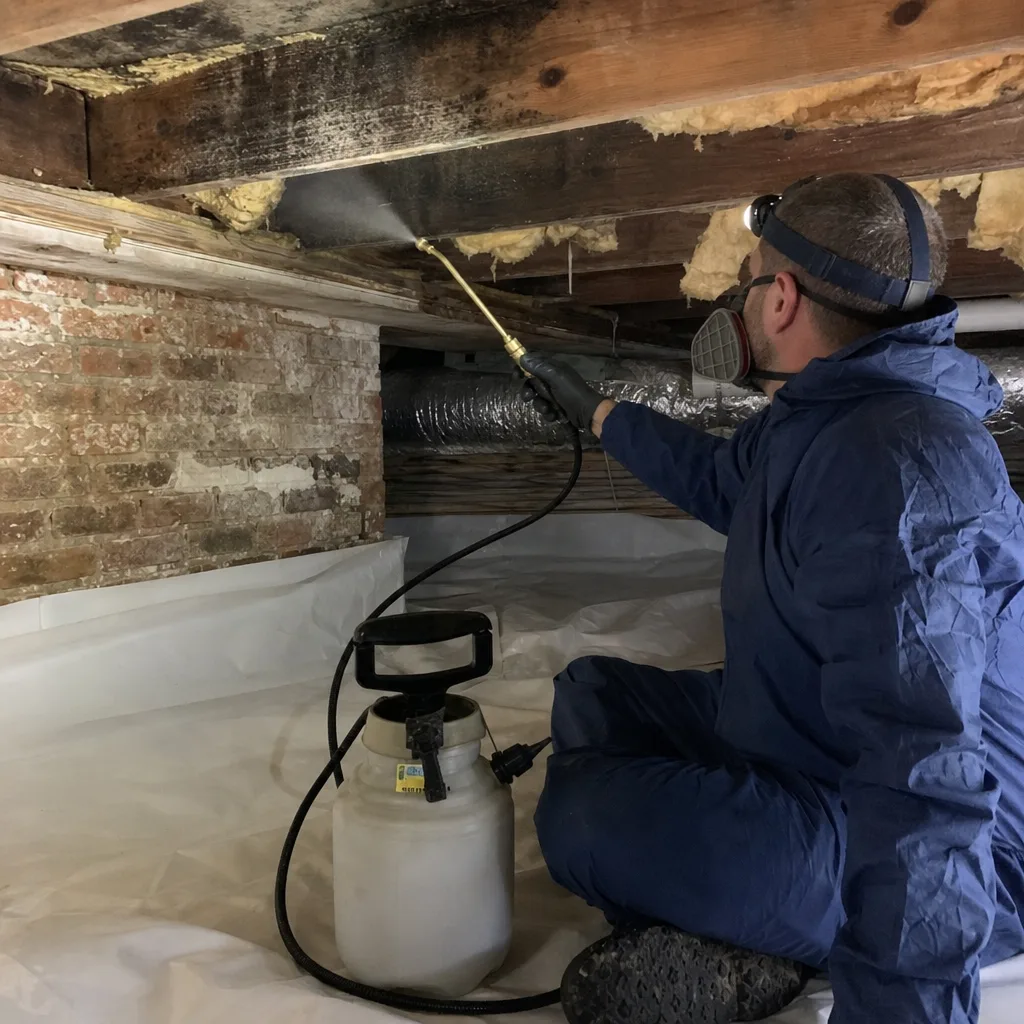
Debris Removal
Storm debris in the Theater District is never just leaves and branches. It’s broken terra-cotta from a facade, sections of membrane from a flat roof, or a hotel sign that came loose on West 49th Street. We remove it safely, document it for your insurance claim, and keep the sidewalk clear for the public that never stops moving through this part of Manhattan.
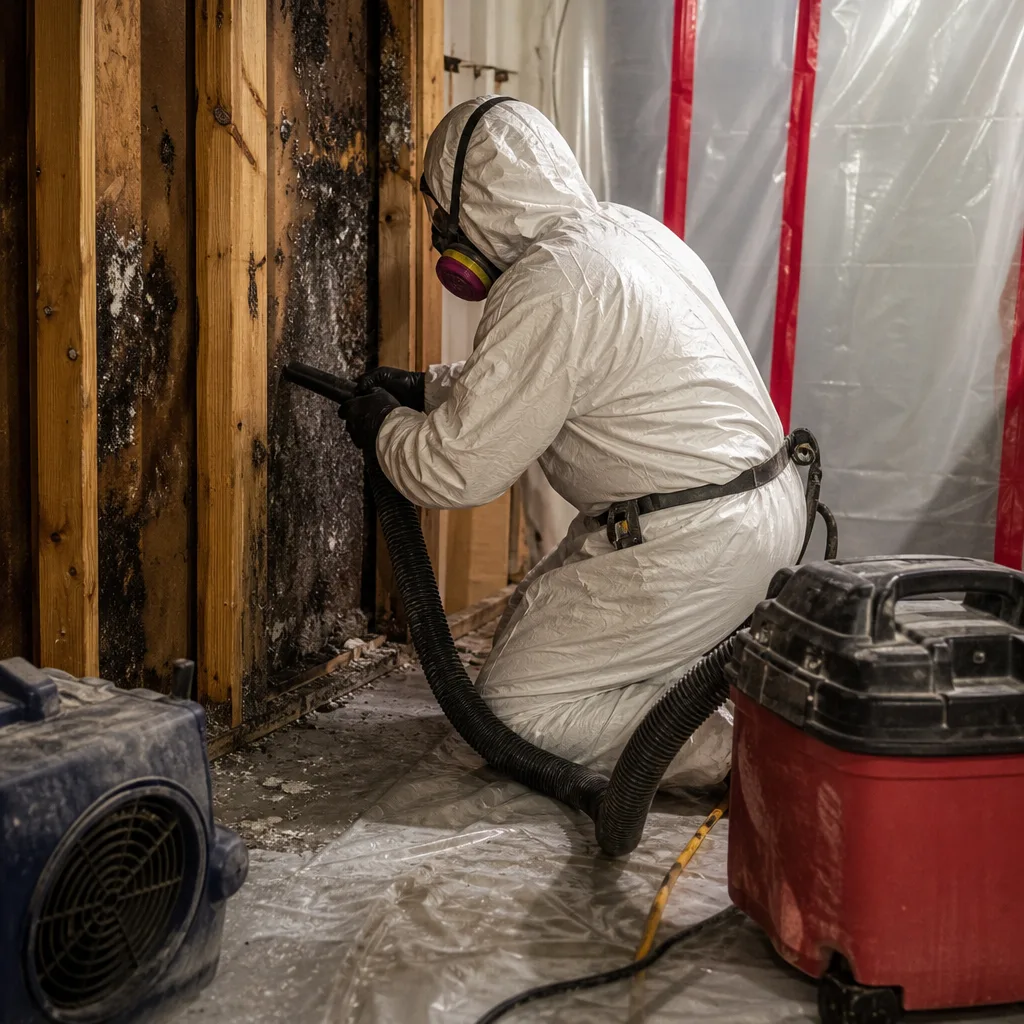
What happens when you call
- 1
A real person answersNo phone trees - you reach a local pro.
- 2
You get an upfront price rangeHonest numbers before anyone is dispatched.
- 3
A background-checked tech heads outLicensed & insured, dispatched right away.
- 4
You approve before work beginsNothing starts until you say go.
Storm & Disaster Restoration Costs in Theater District, NY
Storm damage cleanup in Theater District typically runs $1,200 to $3,500 for a contained water event in a single commercial unit or residential space. A more involved flood damage restoration job, the kind that reaches sub-basements or stage machinery, runs $6,000 to $18,000 depending on the square footage and the Category of water involved. Emergency board-up work starts around $400 for a single storefront opening and runs up from there for multi-story facade breaches. Roof tarping on a flat Midtown roof usually falls between $1,500 and $4,500, driven by access difficulty and the size of the breach. Debris removal pricing depends on volume and disposal fees, but a typical post-storm cleanup on a mixed-use Theater District property falls between $800 and $2,500. What moves the price most is how fast we get there: the sooner extraction starts, the less structural drying is needed, and the lower the final invoice. If you want a firm number, call (917) 924-4221 and we’ll walk the property free of charge and put the scope in writing before any work starts.
We Also Serve Cities Near Theater District
The same live-answer dispatch and certified crews that serve Theater District also cover Fairview, Harrison, East Bronx, and Hunts Point. If you’re just outside the district and storm damage has you watching the ceiling, call (917) 924-4221 and we’ll tell you honestly how fast we can reach you.
Theater District Storm & Disaster Restoration Questions, Answered
How do you dry a Broadway stage without shutting down the next performance?
We work inside the overnight window between the evening curtain call and the 10 AM rehearsal call. Containment goes up around the affected area, XPOWER air movers and Dri-Eaz dehumidifiers run through the load-out hours, and we pull water from the hydraulic lift pit while documenting moisture readings for the house’s adjuster before the morning call. The stage stays workable, and the production stays on schedule.
What happens if a roof drain fails during a January freeze-thaw cycle above an orchestra seat?
A frozen roof drain backs up meltwater that eventually saturates the plaster ceiling above the seating. We respond by stabilizing the area first, containing the water that is still moving, and starting structural drying with targeted air movement and dehumidification. In a landmarked theater, the plaster repair has to be coordinated with LPC requirements before we close anything up, but the drying starts immediately.
Can you pack out costumes and set pieces if a sprinkler discharge floods the sub-basement?
Yes. We treat costume vaults and set storage as priority content areas. Our crews are trained in content pack-out for entertainment-venue materials, meaning we document everything, move it to a drying or storage area, and treat the pieces that can be saved. The goal is to protect the production’s assets while we dry the structure around them.
Why do you need to inspect the fly-system counterweight pockets after a roof leak?
Because water that enters the stage house follows channels the original builders never intended for drainage. Fly-system counterweight pockets sit directly along the path water takes from a roof breach into the stage machinery below. If we don’t inspect and dry those pockets specifically, hidden saturation turns to mold after the 48-hour window, and the damage comes back in the middle of a production run.
How do LPC landmarks requirements change your drying process in a theater?
Any historic fabric we touch in a landmarked Theater District building has to be handled according to NYC Landmarks Preservation Commission standards. That means we can’t simply cut out wet plaster the way we might in a modern building. We dry in place where possible, document everything for LPC review, and coordinate repairs with the commission’s requirements. The drying is aggressive, but the documentation and repair approach are patient.
How fast can you actually get to Theater District?
Our 45-minute response commitment is real. We have crews positioned to reach the Theater District fast because we know a burst pipe at 2 AM on West 45th Street can’t wait for morning traffic. When you call (917) 924-4221, a dispatcher confirms the address and starts a crew moving while you’re still on the phone.
Will my insurance cover storm damage in Theater District?
Most property insurance policies cover sudden storm damage, including wind-driven water intrusion and burst supply lines. What your specific policy covers depends on the cause and the Categories involved. We bill your carrier directly, handle the documentation from the first visit, and coordinate with your adjuster so you’re not left interpreting policy language on your own.
What should I do in the first 30 minutes after storm damage?
Call (917) 924-4221 first. Then, if it’s safe to do so, take photos of the damage where it’s visible, but don’t enter standing water or move anything that could be contaminated. The first call starts the clock, and in a Theater District building, the clock is the most expensive thing in the room.
Serving Theater District, NY - Our Local Coverage Area
We’re based in the Theater District area and know this community well. Use the map below to see our service coverage - if you’re nearby, we can almost certainly help.
One More Thing About Theater District Restoration Work
There’s a reason this page talks so much about Broadway houses and theater buildings. The Theater District’s defining restoration challenge is the concentration of active productions inside landmarked pre-1930s masonry buildings, where a single overnight water event can trigger production-interruption clauses worth hundreds of thousands of dollars per dark night. A contractor who doesn’t understand that is a liability. We understand it because we work inside it. When a cast-iron supply line burst above a 1920s theater’s stage-left fly-system counterweight pocket on West 45th Street, our crew arrived during the 2 AM load-out window. We set up containment around the proscenium, used XPOWER air movers to drive drying behind the plaster line, and pulled Category 2 water from the hydraulic lift pit while documenting moisture readings for the house’s insurance adjuster before the morning’s first rehearsal. That’s the standard the work demands, and it’s the only way we know how to do it.
Call Floodline Restoration Co. of Manhattan at (917) 924-4221 for a free estimate on storm and disaster restoration anywhere in Theater District. A live person answers. A certified crew shows up. And the work gets done right, backed in writing.
Written by Curt Bowman, Owner at Floodline Restoration Co., serving Theater District with storm and disaster restoration backed by the 90-Day Done Right Promise.