
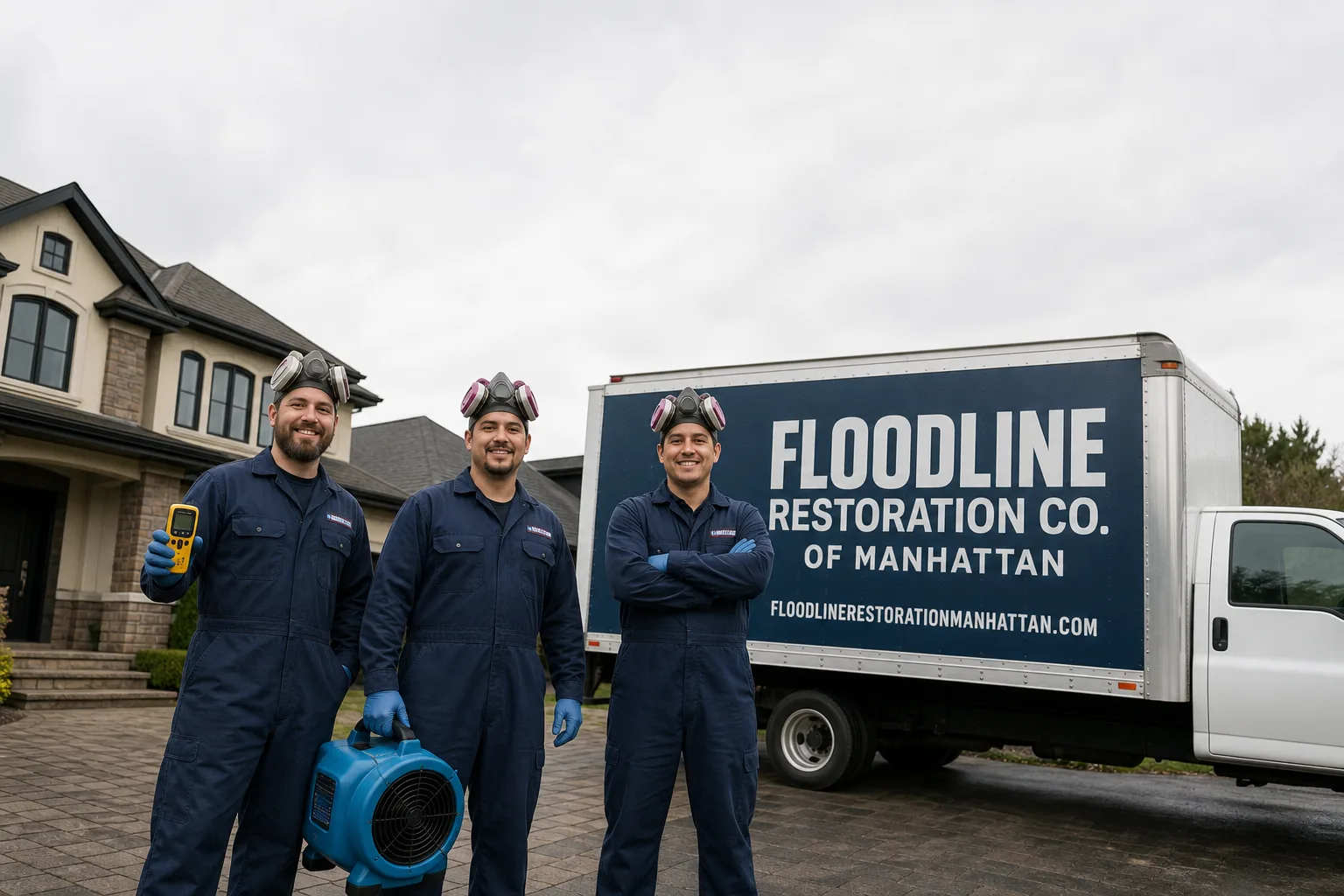
Free visual inspection and a written scope of work before any mitigation begins - photos, moisture readings, and drying logs go in your claim file
The scope we write is the scope we bill. Anything new gets shown to you, in writing, before we touch it.






 Before
 After
After Before
 After
After Before
 After
After24/7 Emergency Water Damage Restoration in Congers
Water damage in Congers rarely announces itself politely. Whether it’s a burst supply line in a 1960s split-level off Lake Road or four inches of Category 2 water pushing up through a basement slab after a nor’easter, the first call we make back is the one that matters. Floodline Restoration Co. answers live, every hour, every day. Call (917) 924-4221 and a dispatcher picks up. Not a recording. We’ll have a certified crew from our New York City office dispatched to your Congers address, and extraction starts the same visit. The first hour is when you stop the water from claiming drywall, baseboards, and subfloor. The sooner we start, the less you lose.
Understanding Water Damage Restoration Severity in Congers Properties
Water damage isn’t one problem. The restoration industry classifies water into three categories, and Congers sees all of them. Category 1 is clean water from a supply line or appliance. Category 2 is gray water, which carries some contamination. Category 3 is black water from sewage, a backed-up footer drain, or rising floodwater from Congers Lake. We hold IICRC certifications in water restoration (WRT), fire and smoke restoration (FSRT), and applied microbial remediation (AMRT), so the crew that walks your basement knows the difference by sight, by source, and by how the water behaves on the materials it touches.
The age of Congers housing stock adds another layer. Most of the hamlet is 1950s through 1970s cape cods, ranches, and split-levels sitting on poured concrete or concrete block. Those block foundations were rarely waterproofed when they were built. When water moves through Category 2 or 3 material into wall cavities, the drying standard isn’t “feels dry to the touch.” It’s moisture mapping with penetrating meters, daily readings, and a drying log that shows the wood, drywall, and block returning to a stable dry standard. That’s the job. Not a fan and a pat on the shoulder.
Why Congers Property Owners Choose Floodline Restoration Co. of Manhattan
- Fast local dispatch: We commit to a 45-minute response window for Congers calls during active water events, and we’ll be there when we say.
- Live answer, 24/7: A real dispatcher picks up at 2 a.m. You never leave a message and wait for a callback while water keeps moving.
- Certified crews: IICRC WRT, FSRT, and AMRT certifications mean the person holding the moisture meter has the training to read it correctly on your specific foundation type.
- Free visual inspection: We’ll walk the damage, show you what we’re seeing, and give you a straight written scope before any work begins.
- Direct insurance billing: We document, we photograph, we log, and we talk to your carrier so you’re not the one playing messenger.
- One crew, start to finish: Extraction, drying, and reconstruction stay with the same Floodline team. No mid-job handoff to a subcontractor you’ve never met.
Our Water Damage Restoration Process
Inspection & Assessment
We find every wet surface. Thermal imaging and penetrating moisture meters show us what’s soaked behind drywall and inside concrete block, not just what’s puddled on the floor. You get a written scope before work starts.
Extraction & Stabilization
We remove standing water with truck-mounted and portable extraction equipment. If water is still entering from a failed footer drain or rising water table, we stabilize with containment and a dewatering plan before drying begins.
Drying & Dehumidification
Dri-Eaz dehumidifiers and XPOWER air movers go in on day one. We take daily readings and keep a written log until the dry standard is met. In Congers, with ambient humidity from two lakes and clay soils that hold water, this phase takes as long as the moisture map says it takes.
Cleaning & Sanitization
Affected surfaces get cleaned, treated, and sanitized. Where Category 2 or 3 water touched porous material, we remove and dispose of it properly. Antimicrobial agents are applied where the source, the material, and the severity call for it.
Moisture Verification & Specialty Treatment
We don’t pack up because the floor looks dry. We keep readings until hygrometers and penetrating meters confirm the structure is stable. In block foundations, that means checking inside wall cavities, not just the surface.
Repairs & Restoration
The same Floodline crew rebuilds what was removed. Drywall, trim, flooring, paint. The Keystone Standard means the job isn’t done until the damage is undone, and every repair is backed by our 90-Day Done Right Promise in writing.
Need Emergency Water Damage Restoration in Congers Now?
Crews minutes away, answering live 24 hours a day. The sooner we start, the less it costs.
Working With Your Insurance Company
Homeowners in Congers tell us the same thing: the water was bad, but the thought of the insurance back-and-forth was worse. We handle the documentation from the first hour so your claim has a backbone. Photos of every affected room, moisture readings and drying logs, a line-item scope of work that tells the carrier exactly what happened and exactly what it takes to fix it. We talk to the adjuster directly. We bill the carrier directly. You’re not stuck in the middle translating between your restoration crew and your insurance company. A square deal: no surprises on the bill.
What We Provide Your Insurer
- Thorough documentation of the loss
- Photos of all damage, room by room
- Moisture readings and drying logs
- A detailed, line-item scope of work
- Direct coordination with your carrier
Built for Congers’s Loss Calendar
Congers takes its water in seasons. January and February bring the deep freezes that burst supply lines in exterior walls and unheated crawl spaces. March and April are thaw season, when saturated clay soil around foundations lets go of its ice and pushes groundwater toward the weakest point in the basement. July and August thunderstorm downbursts overwhelm the hamlet’s storm drainage, and low-lying homes near Congers Lake watch the water rise from the outside in. Then comes fall: nor’easters that park over Rockland County and dump rain for days, testing footer drains that have not been touched since the 1960s. Our crews plan for Congers’s calendar because we’ve worked it for over 42 years as a company. That’s why a live dispatcher picks up at 2 a.m. and why our trucks are staged for this borough’s particular weather.
Water Damage Restoration Across Congers’s Neighborhoods
Congers is not one housing type, and water does not hit every corner the same way. Homes along Lake Road and the streets that run down toward Congers Lake sit in the lowest elevation contours, where the water table stays close enough to basement slabs that seepage is a year-round background condition, not a one-time event. Our crews know those blocks well. We respond there for chronic dampness that turns into mold and for storm events that turn a seeping wall into standing water inside an hour. Up around the higher ground toward the Congers Park and the northern side of the hamlet, the houses run to ranches and capes built on better-drained ground, but the same vintage. Those homes age differently: cast-iron supply lines corroding from the inside, oversized roof planes that dump water against the foundation when gutters clog in the fall. Along Route 303 and the roads that feed in from Valley Cottage, commercial and residential properties sit shoulder to shoulder, and a failed sprinkler line or restroom supply can flood a downstairs office the same way a burst pipe floods a family room. The response route changes with the street. The standard doesn’t.
Specialized Water Damage Restoration Services We Offer in Congers
Emergency Water Extraction
We show up with extraction equipment that moves water fast, and we start pulling it out the same visit. The goal in the first hour is to get the water off your floors, out of your baseboards, and away from anything that can wick it upward. In Congers, where Category 2 water often enters through the slab, extraction is only the first move. The second is figuring out where the water came from and whether it’s still coming.
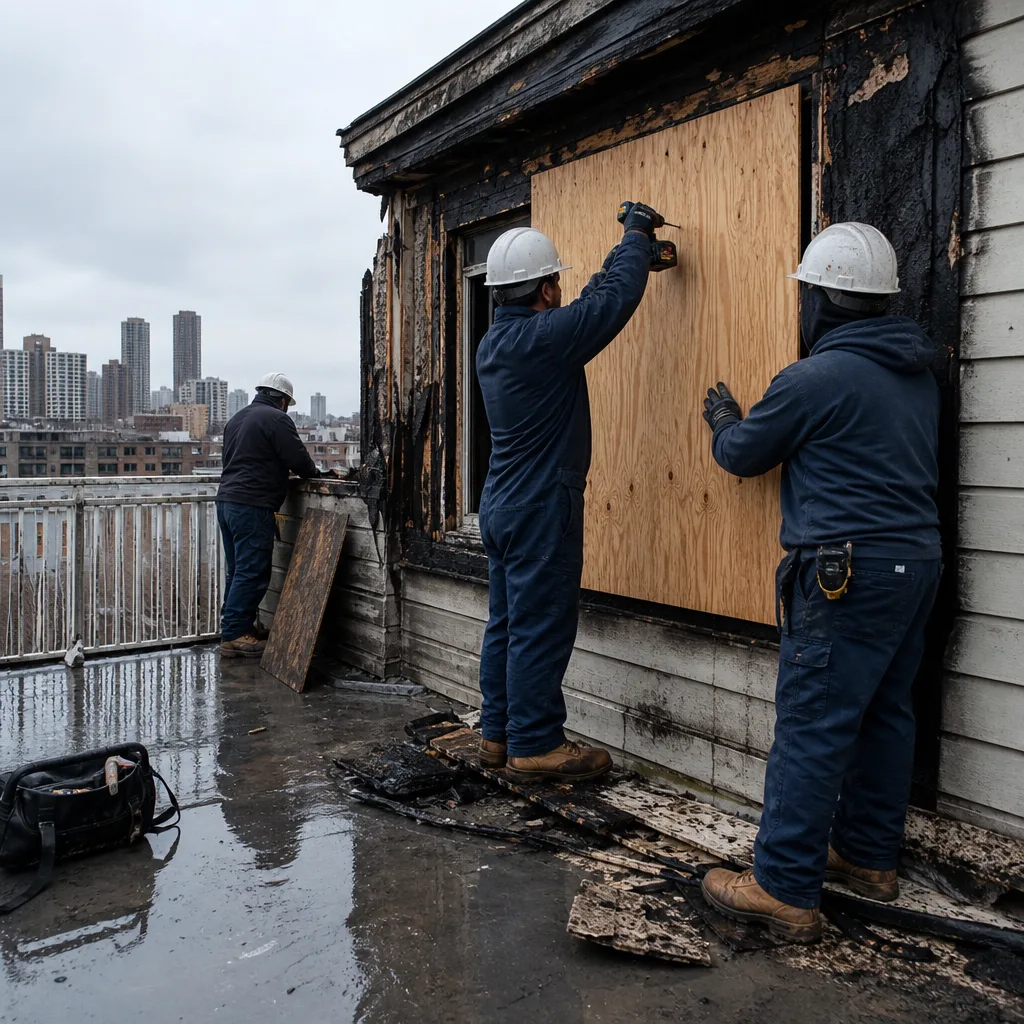
Structural Drying & Dehumidification
This is the phase that separates a real restoration from a pump-out. Dri-Eaz dehumidifiers pull moisture from the air; XPOWER air movers push dry air across wet surfaces. We take readings. We log them. We adjust equipment placement until the meters tell us the material is dry, not until the air feels less humid. On a concrete-block wall in a Congers basement, that takes as long as it takes. The standard is the standard.
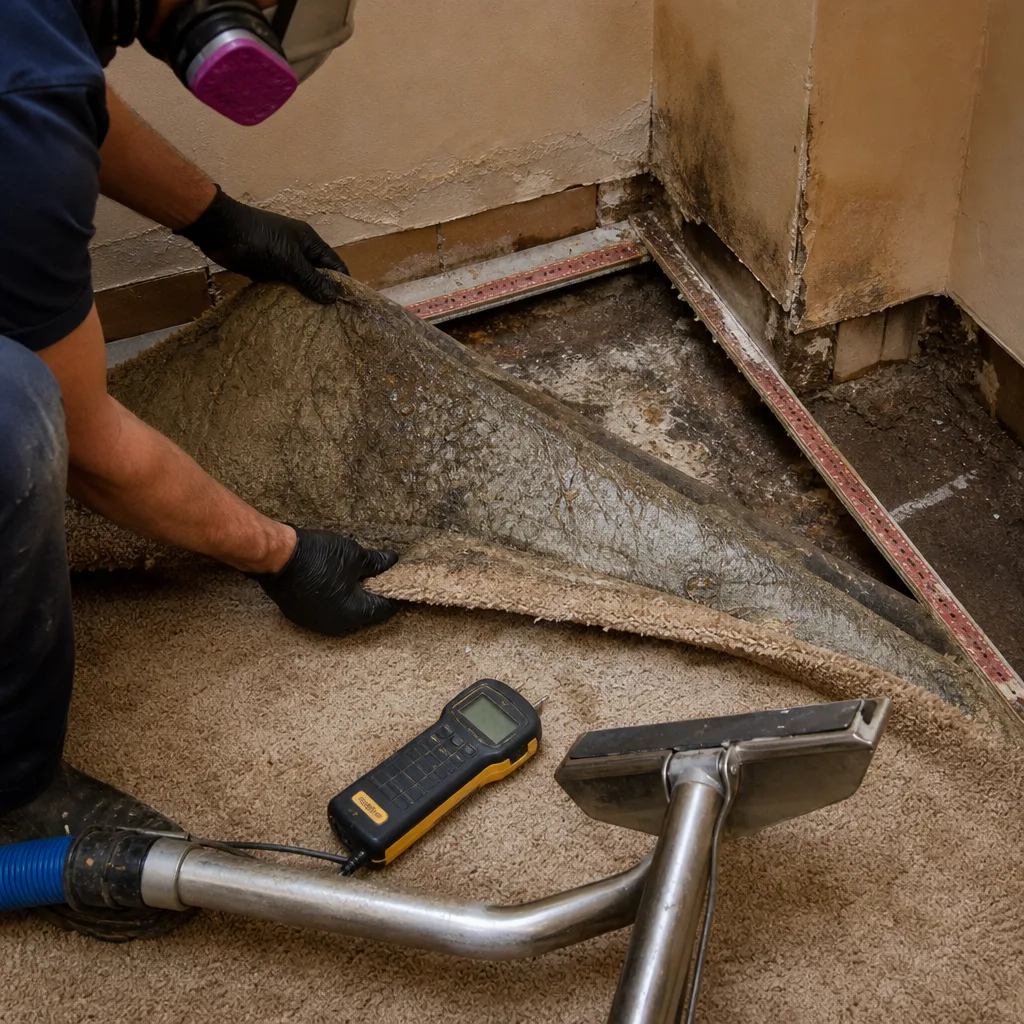
Flood Cleanup
When water comes from outside, from Congers Lake, from a swollen creek, or from storm drainage that backed up, it carries silt, bacteria, and whatever else was in the water’s path. Flood cleanup means removing contaminated material, sanitizing what remains, and disposing of the rest properly. We’re certified for that work, and we don’t take shortcuts on a Category 3 site.
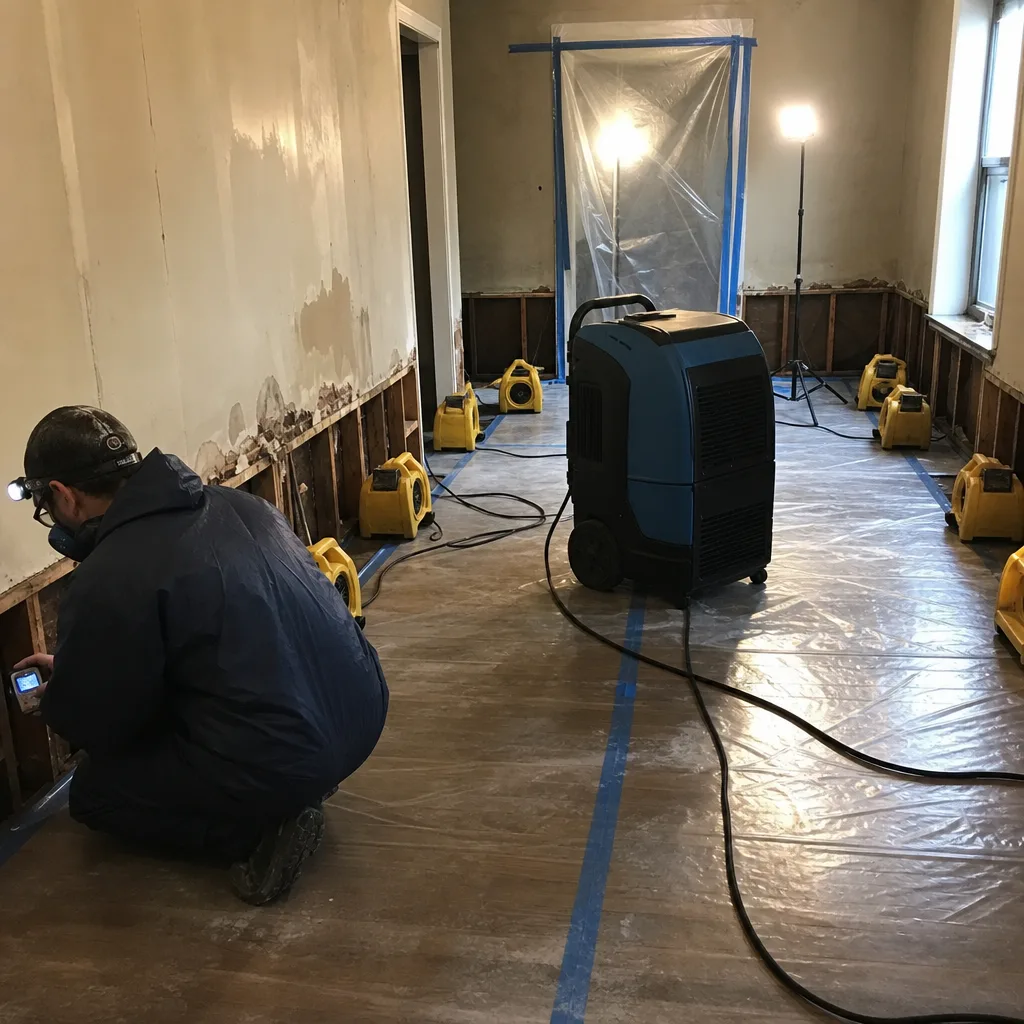
Burst Pipe Restoration
A frozen pipe that ruptures in a Congers winter can empty gallons per minute into a finished basement or a first-floor kitchen. We isolate the source, extract the water, dry the structure, and repair the damage. The same crew handles your drywall, your trim, and your flooring. You’re not waiting on a second company to show up after the drying crew leaves.
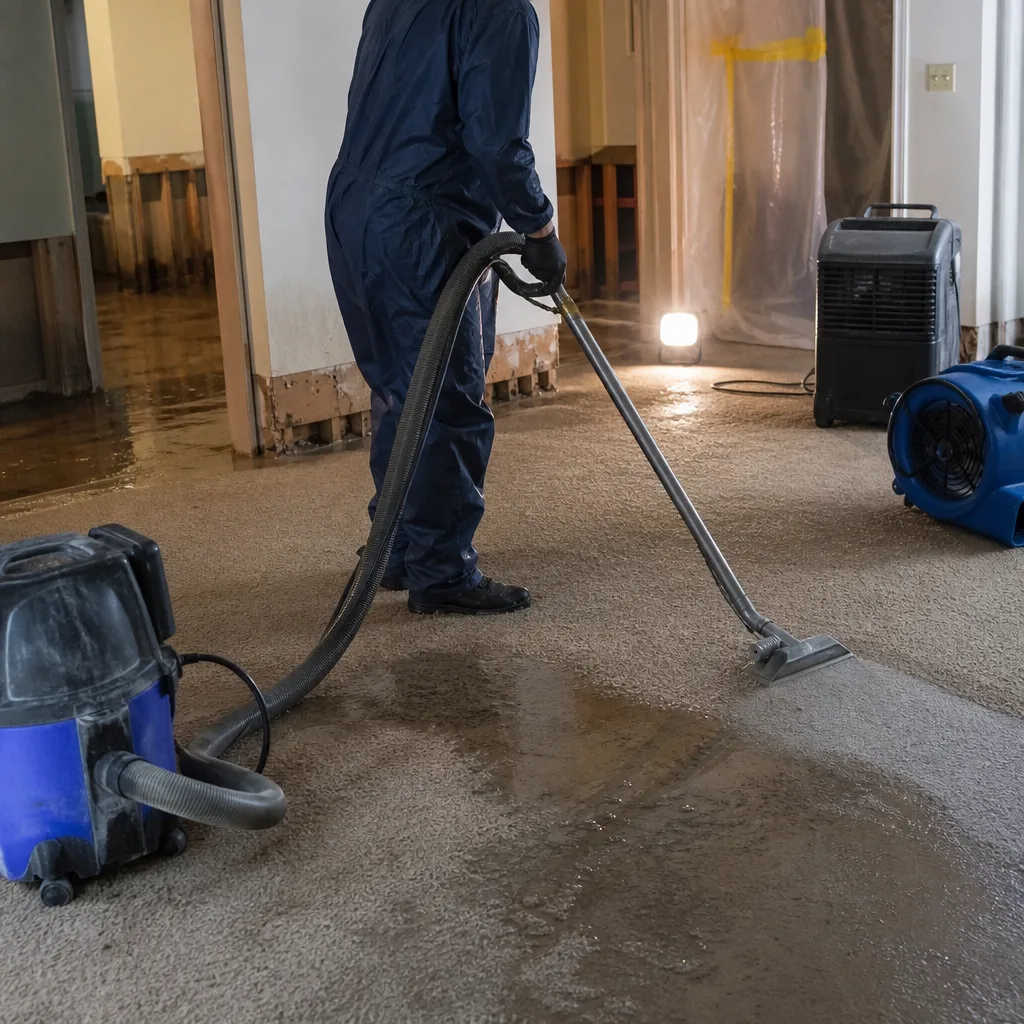
Basement Water Removal
Congers basements collect water for reasons that go deeper than a single storm. Failed footer drains from the 1950s, block foundations that were never waterproofed, and a water table that sits high for weeks after rain. We remove the water, yes. Then we map the moisture in the block, check the drain tile, and tell you what’s actually causing the problem. A wet basement is a symptom. We treat the symptom first, because that’s the emergency, and then we tell you what the underlying cause looks like and what it costs to fix.
What happens when you call
- 1
A real person answersNo phone trees - you reach a local pro.
- 2
You get an upfront price rangeHonest numbers before anyone is dispatched.
- 3
A background-checked tech heads outLicensed & insured, dispatched right away.
- 4
You approve before work beginsNothing starts until you say go.
Water Damage Restoration Costs in Congers, NY
Here are straight numbers for the Congers market. Basement water removal with extraction and basic drying on a 600 to 800 square foot basement typically runs $2,400 to $4,800. Full structural drying after Category 2 or 3 water intrusion, with containment, dehumidification, air movers, and daily monitoring, typically lands between $4,500 and $9,000 depending on how much drywall and insulation must be removed. A burst supply line repair with restoration of a finished room generally runs $3,500 to $7,500. What moves the price: the category of water, how long it sat, how much wall and floor material must come out, and whether a dewatering plan is needed to keep the slab dry while the clay drains. Insurance covers most sudden and accidental events. Chronic seepage from a failed footer drain often isn’t covered, which is why we give you a written scope with numbers before you commit. Call (917) 924-4221 for a free inspection and an exact quote. Seniors and veterans always get 5% off. Any repair over $250 gets $50 off.
We Also Serve Cities Near Congers
Our crews run the same roads you do. We answer calls in Valley Cottage, New City, Haverstraw, and West Nyack with the same live dispatch, the same certifications, and the same 90-Day Done Right Promise. If you’re in one of those towns and standing in water, call the same number. A person answers.
Serving Congers, NY - Our Local Coverage Area
We’re based in the Congers area and know this community well. Use the map below to see our service coverage - if you’re nearby, we can almost certainly help.
Congers Water Damage Restoration Questions, Answered
Why does my Congers basement stay damp even after the standing water is pumped out?
Because the water table in low-lying parts of Congers, especially near Congers Lake and Lake DeForest, can stay within inches of your basement slab for weeks after rain. The standing water was pumped out, but the ground around your foundation is still saturated, and moisture keeps pushing through the concrete block. Without a dewatering plan and moisture mapping, the slab wicks that water right back into the air. Call (917) 924-4221 and we’ll show you the readings on the block, not just the puddle that was on the floor.
Is a wet basement in Congers always a Category 3 “black water” situation?
No. If the water came from a clean supply line or a burst pipe, it’s Category 1. If it came up through the slab from groundwater, it’s usually Category 2 because it’s picked up soil, minerals, and whatever else water carries through the ground. Category 3 is for sewage or floodwater from outside that carried contamination in with it. The source matters, and we classify it before we touch it.
How long does structural drying actually take in a Congers split-level with concrete-block walls?
Plan on five to ten days for a typical split-level, and sometimes longer. Concrete block in a Congers basement with a high water table doesn’t dry on a calendar. It dries on moisture readings. We’ve had jobs on Lake Road where the drying logs showed block walls above 20% moisture three days into the process, not because of the original floodwater, but because the water table had risen into the wall cavities. We adjust, we wait, we log, and we don’t pack up until the meters say the standard is met.
Do I need a permit in Rockland County to replace footer drain tile or waterproof my Congers foundation?
In most cases, yes. Work that involves excavation, foundation waterproofing, or replacing footer drain tile falls under Rockland County building code, and you’ll typically need a permit from the Town of Clarkstown. We’ll tell you what’s required for your specific job and we can coordinate the permit as part of the scope. We don’t skip this step.
Why do I see white powder on my basement walls after a flood in Congers?
That white powder is efflorescence. It’s mineral salts left behind when water passes through concrete or concrete block and evaporates on the surface. It’s not mold, but it is a signal. It means water is moving through your foundation walls, and it has been for a while. If you see efflorescence after a flood, the block was carrying moisture before the flood. We can treat the surface, but the real fix is addressing the water path behind it.
How fast can you actually get someone to my Congers house?
Our commitment is a 45-minute response window for active water events in Congers. A live dispatcher answers your call, we get your address, and a crew moves. We’ll be there when we say. That’s been the standard for over 42 years.
Will my insurance cover water damage restoration in Congers?
Sudden and accidental events, like a burst pipe or a storm-driven flood, are typically covered under a standard homeowner’s policy. Chronic seepage from a failed footer drain or a high water table usually isn’t. We document everything, bill your carrier directly, and give you a written scope so you know where you stand with the insurer. Call (917) 924-4221 and we’ll walk you through it.
What should I do in the first 30 minutes after water damage in my Congers home?
If it’s safe, shut off the water at the source. Kill the power to the affected area if water is near outlets or appliances. Then call us. Don’t walk through standing water if you don’t know the source. Don’t open walls or pull up carpet on Category 2 or 3 water without containment. We’ll tell you what’s safe while the crew is on the way.
If you’re standing in water in Congers right now, or if you just found damp drywall and you’re not sure how long it’s been there, call (917) 924-4221. A live person answers. We’ll give you a free inspection, a written scope, and a straight answer about what it costs. If we do the work, it’s done right, and it’s backed by the 90-Day Done Right Promise in writing. That’s how Water Damage Restoration should work, and that’s how we do it for homeowners across Congers.
Written by Curt Bowman, Owner at Floodline Restoration Co., serving Congers since 2010.