
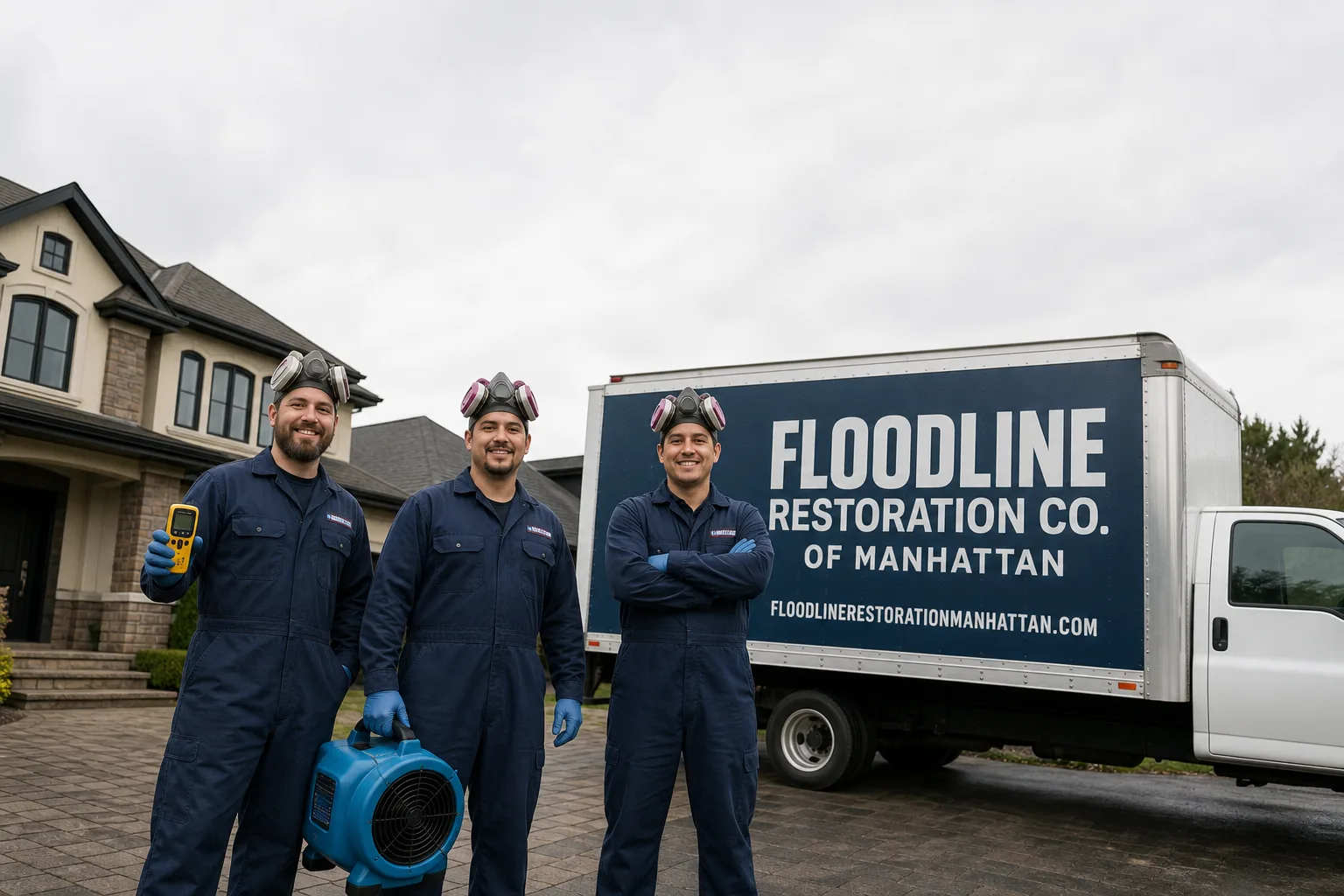
Free visual inspection and a written scope of work before any mitigation begins - photos, moisture readings, and drying logs go in your claim file
The scope we write is the scope we bill. Anything new gets shown to you, in writing, before we touch it.
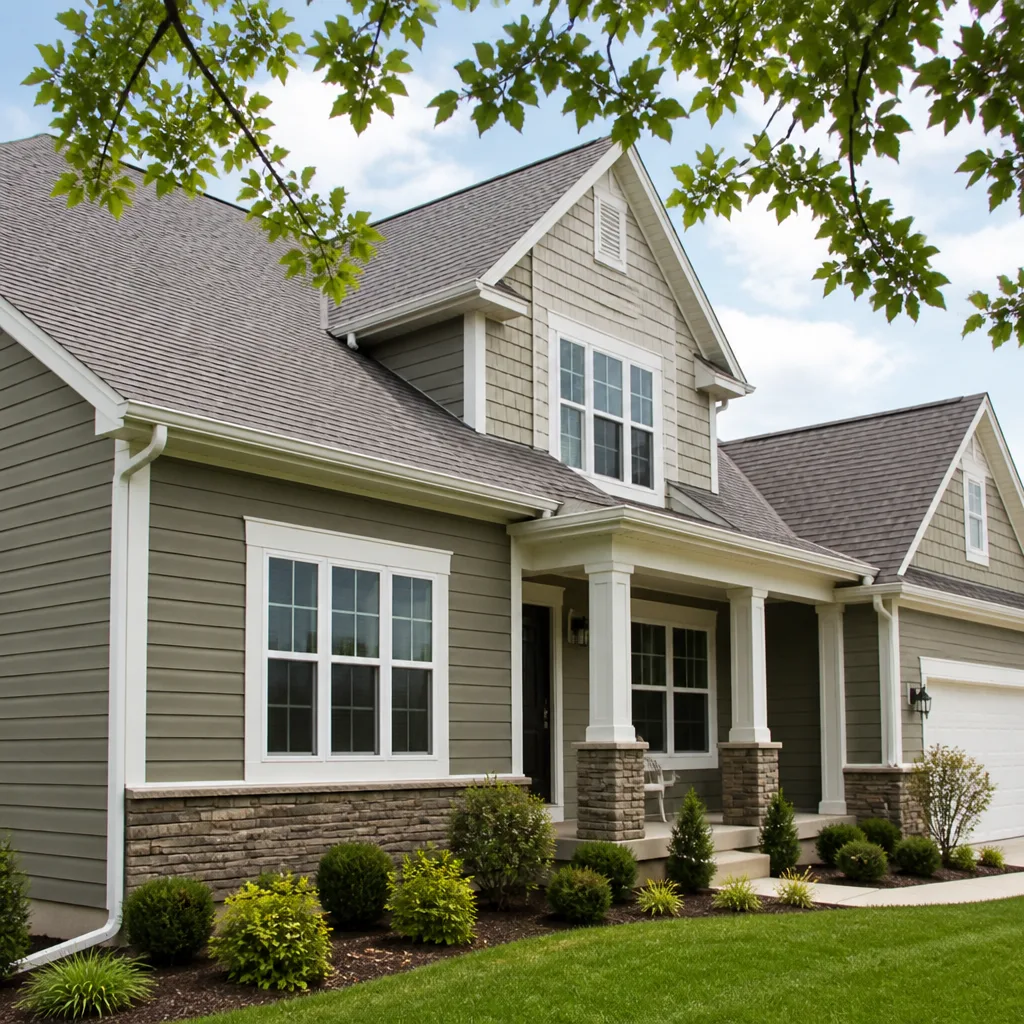
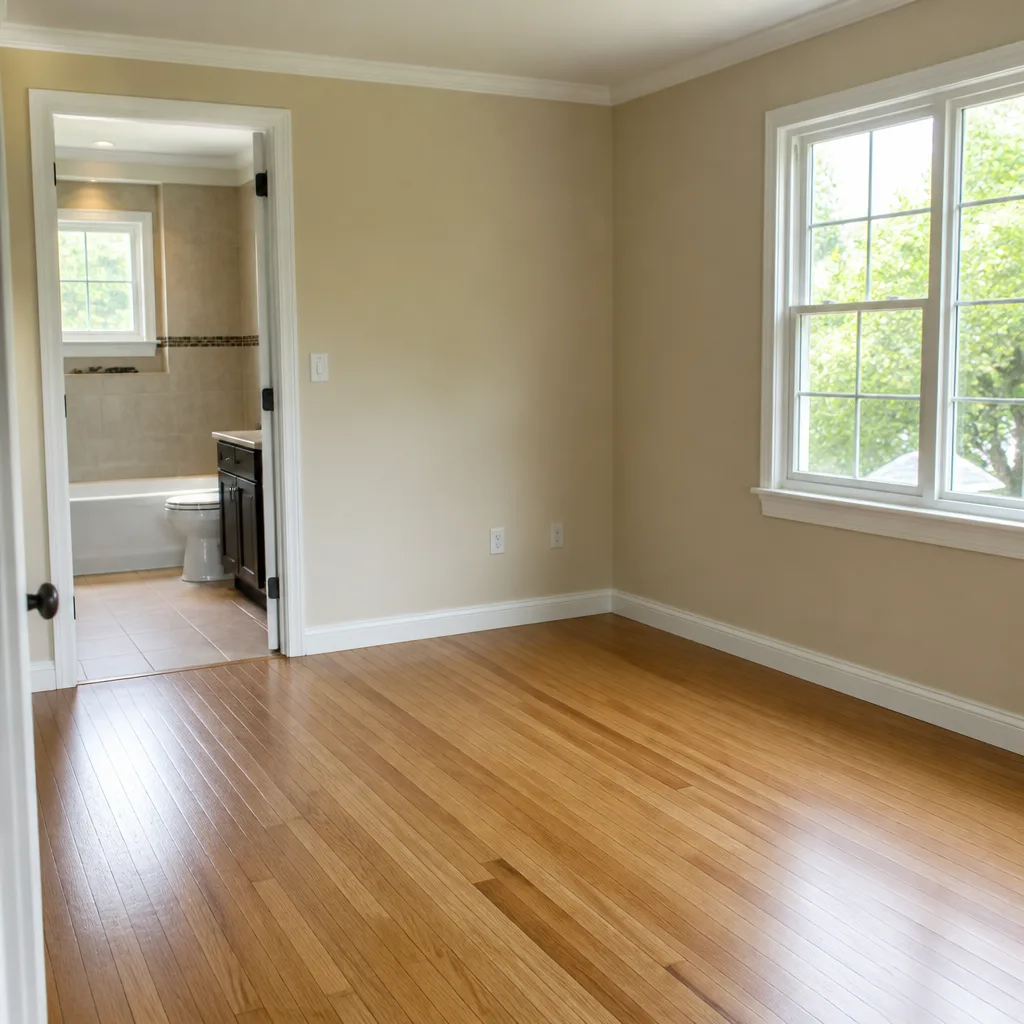
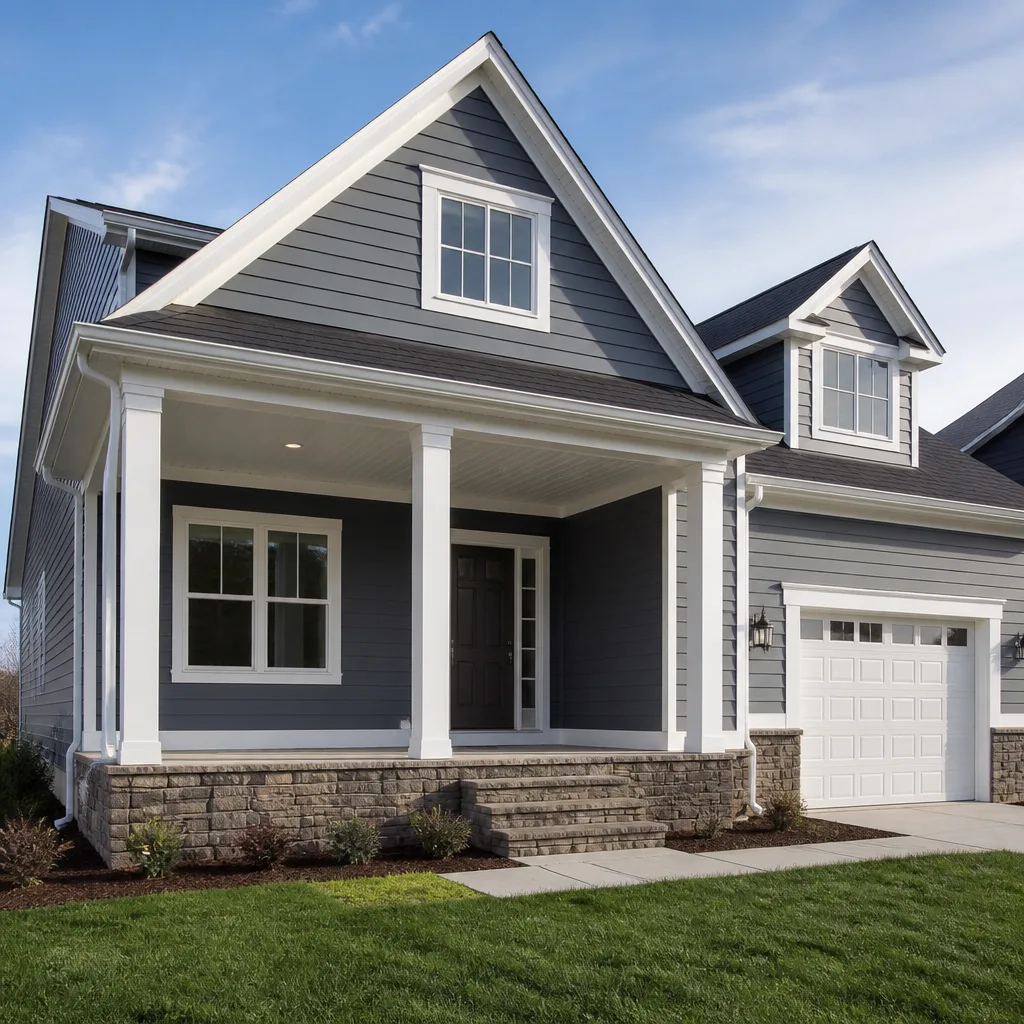
 Before
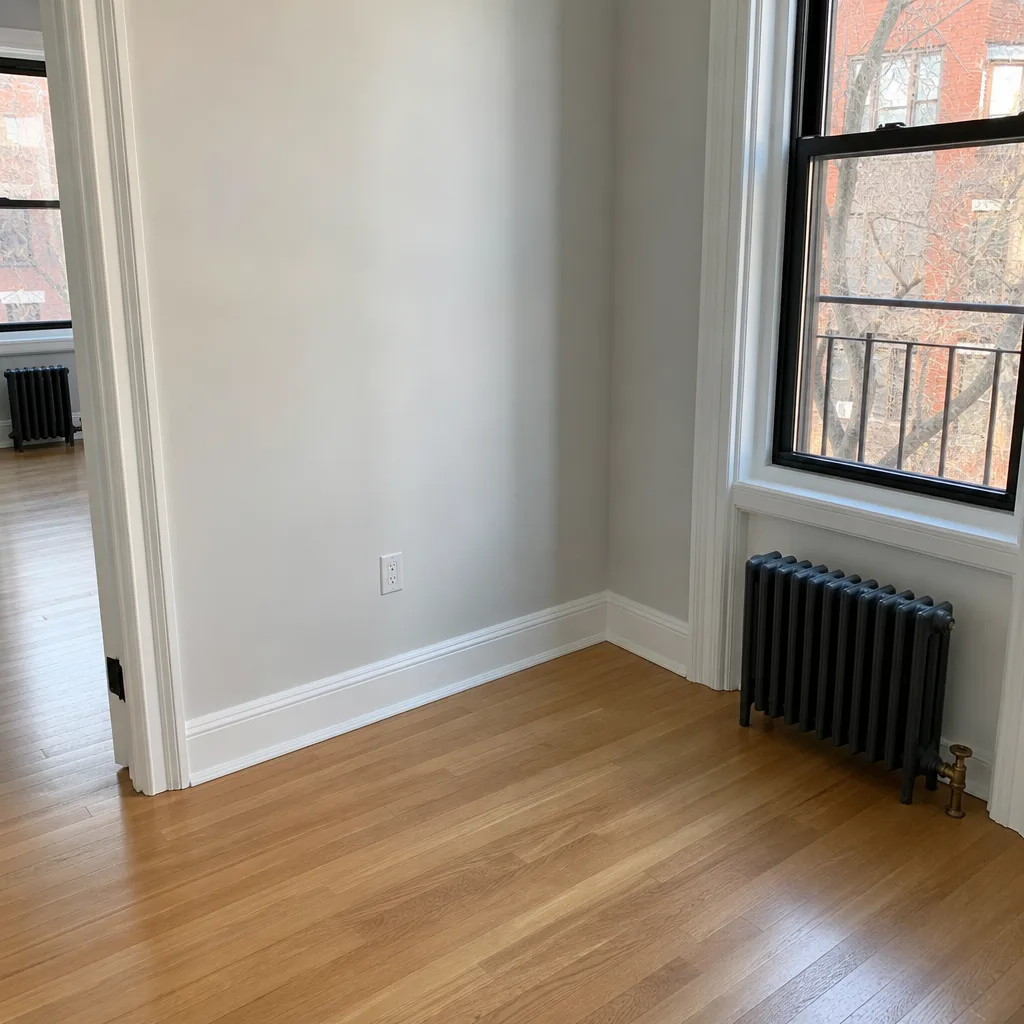 After
After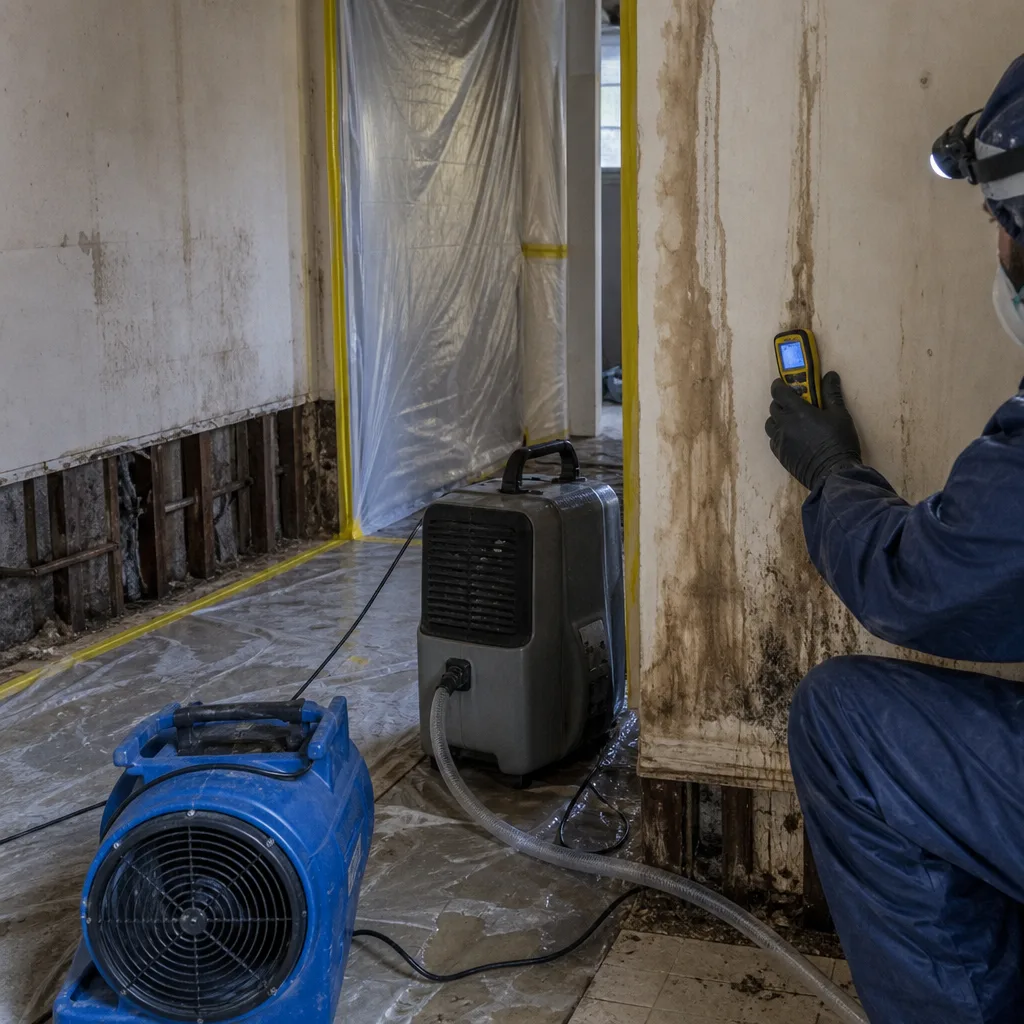 Before
 After
After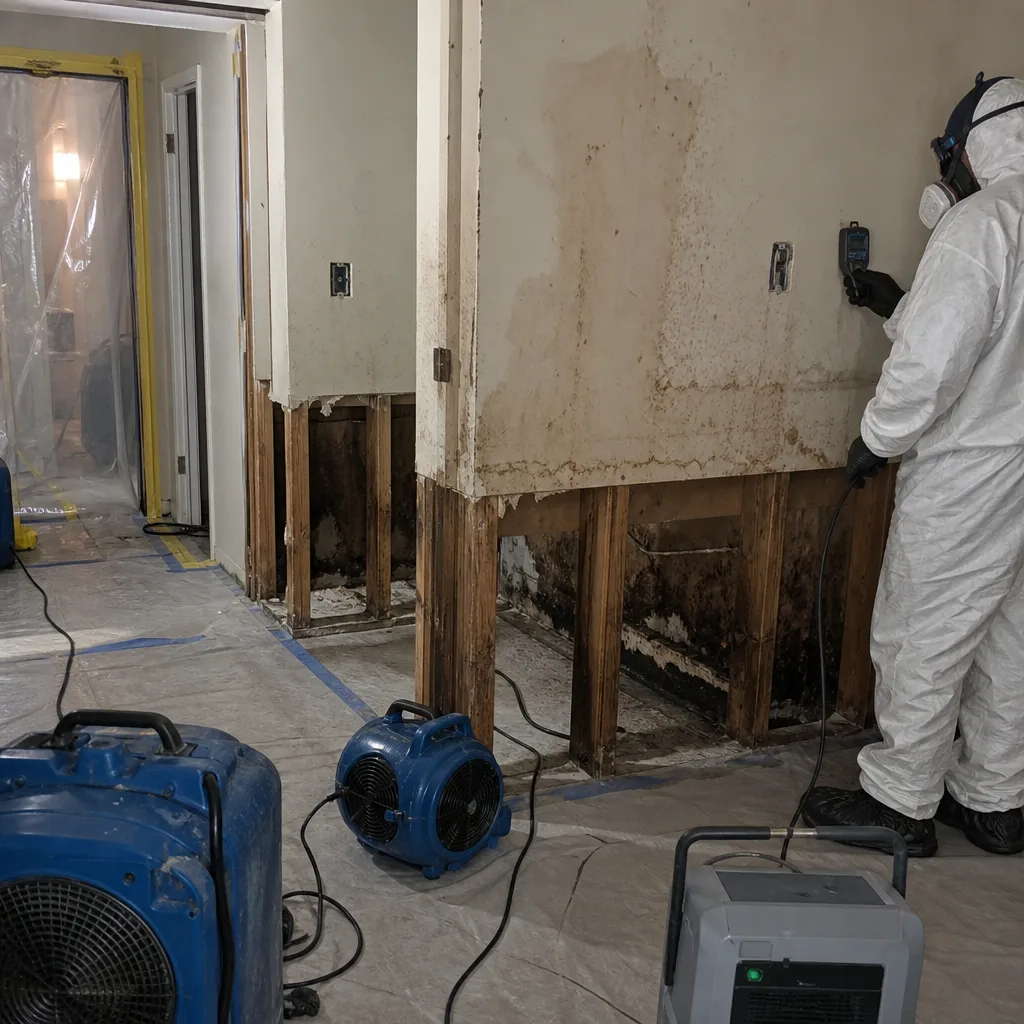 Before
 After
After24/7 Emergency Water Damage Restoration in Corona
Water damage restoration in Corona typically costs between $2,400 and $7,800 depending on how far the water traveled, what it touched, and whether the cellar apartment is legal occupancy. We answer the phone at (917) 924-4221 with a live person, any hour, and a crew can be on-site within 45 minutes. The first hour is the difference between drying a floor and rebuilding a foundation wall. Standing water in a Corona row house cellar doesn’t wait, and neither should you.
When water sits in a below-grade space, it moves through plaster and lathe, wicks up brick, and finds the wooden floor joists within hours. In Corona’s attached brick row houses, that water also pushes into the neighboring unit. We start extraction the same visit, map moisture with thermal imaging, and set professional-grade drying equipment before we leave. Not next day. Same visit.
Understanding Water Damage Restoration Severity in Corona Properties
Water damage is classified by what’s in the water, not how deep it is. Category 1 comes from a clean source like a burst supply line. Category 2 carries detergents or biological contaminants. Category 3, the kind we see most often in Corona basements, is sewage, Flushing Creek backflow, or storm water that has passed through exterior soil. The distinction matters because Category 3 water requires containment, full removal of saturated porous materials, and antimicrobial treatment before drying even starts. A pump can’t fix Category 3.
Corona’s housing stock makes this problem worse. Most homes here were built between 1915 and 1945 with original cast-iron drain stacks and clay sewer laterals that were sized for a smaller city. When those laterals backflow during a storm, the water comes up through floor drains and toilets as Category 3. In a 1920s attached brick row house, that water moves horizontally through common walls and vertically through the joist cavities. Moisture mapping in these buildings requires reading multiple floors and both sides of every shared wall before we can determine the true dry-out boundary.
Why Corona Property Owners Choose Floodline Restoration Co. of Manhattan
- 45-minute response commitment in Corona: Our dispatch board is built around Queens geography. We know which routes move and which don’t at 2 a.m. on Roosevelt Avenue.
- A live person answers, always: Not an automated system. Not a callback queue. A dispatcher who can send a truck to 104th Street right now.
- IICRC-certified crews, WRT standards: Every technician carries Water Restoration Technician certification and works to IICRC S500 standards for structural drying. No trainees running a water job alone.
- Free visual inspection with written scope: We walk the damage with you, explain what we see, and hand you a line-item scope before any work begins. No surprises on the bill.
- Direct insurance billing: We handle the carrier communication, send the photos and drying logs, and bill them directly. You don’t play messenger.
- One crew from extraction to rebuild: The same team that sets the first air mover is the team that hangs the new drywall. No mid-job handoff to a subcontractor you’ve never met.
Our Water Damage Restoration Process
Inspection & Assessment
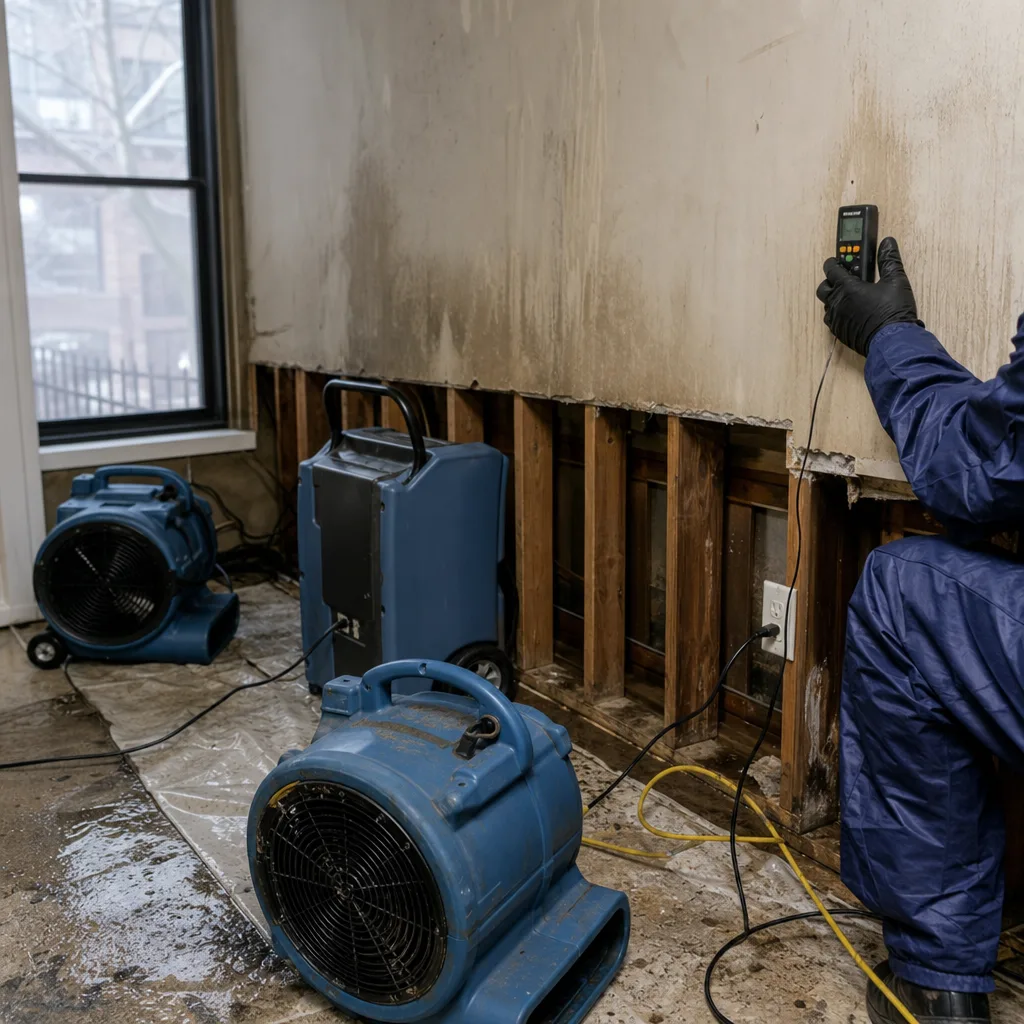
We inspect the entire affected area, map moisture with thermal imaging, and classify the water category. In Corona row houses, this includes checking both shared walls and the floor assembly above the cellar. You get a written scope before anything gets cut.
Extraction & Stabilization
We bring in truck-mounted and portable extraction units to pull standing water fast. If Flushing Creek backflow is involved, we set up containment first so contaminated air doesn’t move through the building. The goal is to stop damage from spreading in the first hour.
Drying & Dehumidification
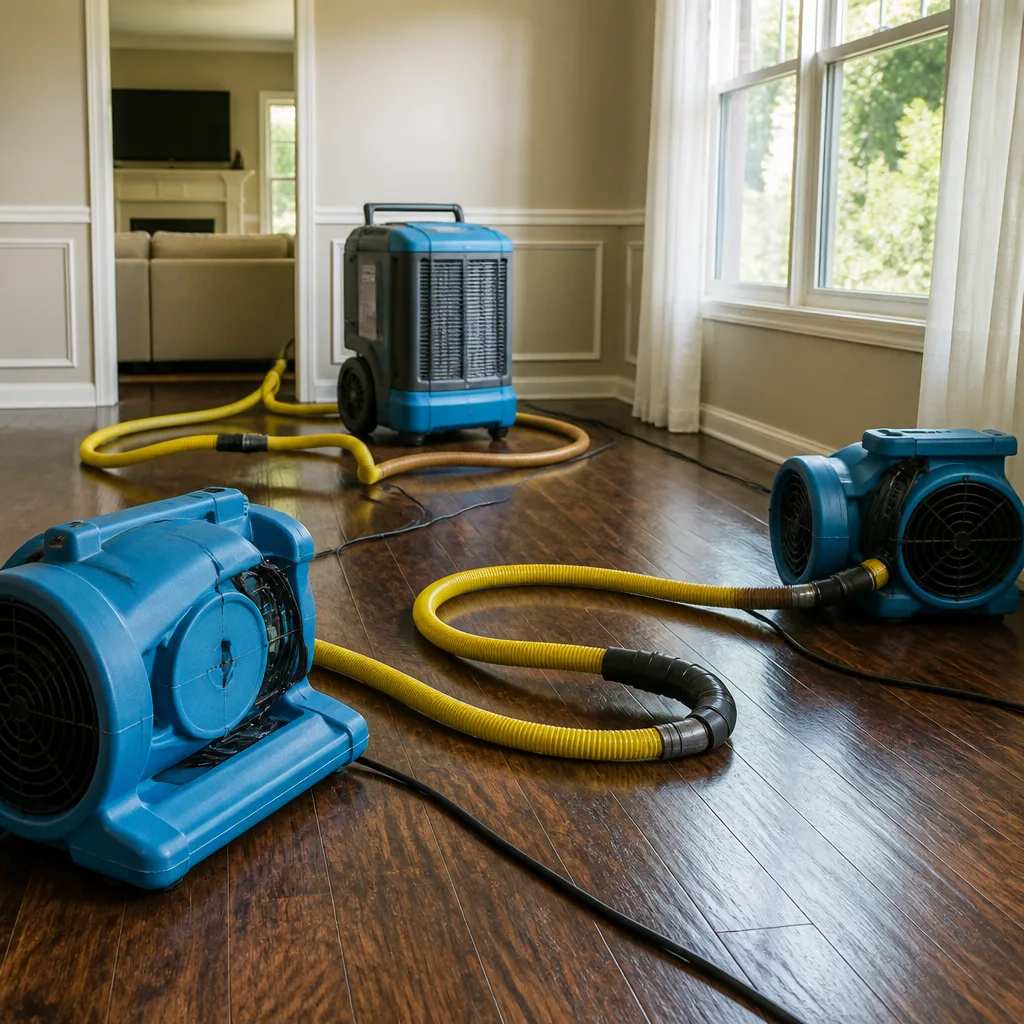
Professional-grade Dri-Eaz and Phoenix air movers and dehumidifiers are placed based on moisture readings, not guesswork. We use Injectidry systems for wall cavities and under-floor drying. Daily readings track progress until the dry standard is met.
Cleaning & Sanitization
For Category 2 and 3 water, applied antimicrobial treatment follows extraction. HEPA air scrubbers run during all disturbed work. We document every chemical used and why, so your carrier has exactly what it needs.
Building Department Coordination
When we find an illegally converted cellar apartment, we pause restoration and coordinate with the NYC Department of Buildings before demolition begins. This step saves landlords from fines and tenants from unsafe conditions. It’s a Corona-specific reality we handle daily.
Repairs & Restoration
From new drywall to rebuilt staircases and restored floors, our reconstruction team finishes the job. The 90-Day Done Right Promise covers the work in writing. You get the Keystone Standard: if it’s not done right, we make it right.
Need Emergency Water Damage Restoration in Corona Now?
Crews minutes away, answering live 24 hours a day. The sooner we start, the less it costs.
Working With Your Insurance Company
We handle claims the way a restoration company should: with documentation from the first hour, industry-standard pricing, and direct communication with your adjuster. Every water job in Corona gets photographed room by room before anything is moved. We log moisture readings daily, not weekly. Those logs are what your carrier uses to approve the drying scope. We speak their language because we’ve been doing this for over 42 years as an industry, and our team has worked Queens claims weekly since 2010.
The 90-Day Done Right Promise also matters to your insurer. When a carrier sees a written guarantee and a company that stands behind its work, the claim file closes clean. We bill direct, so you’re not floating the deductible plus the contractor’s invoice while waiting on a check.
What We Provide Your Insurer
- Thorough documentation of the loss
- Photos of all damage, room by room
- Moisture readings and drying logs
- A detailed, line-item scope of work
- Direct coordination with your carrier
Built for Corona’s Loss Calendar
January in Corona brings deep freezes that split copper supply lines in unheated cellar spaces and exterior walls of pre-war row houses. The water runs for hours before anyone notices because the cellar apartment tenant is at work. By the time the landlord gets a call, the water is ankle deep and wicking through joists. February is worse; that’s when the ground is frozen and exterior water has nowhere to go but into the foundation.
Spring thaw is when we see the first wave of hydrostatic pressure in Corona’s low-lying lots. Groundwater pushes through brick foundations that have never been waterproofed, creating slow basement seepage that goes unnoticed for weeks. Summer thunderstorms are the dangerous season here. Short-duration, high-intensity rainfall overwhelms the storm sewers along 108th Street and Northern Boulevard, and Flushing Creek backflow turns basements into Category 3 hazards in under an hour. Autumn nor’easters bring the same pattern with longer duration. Corona’s original cast-iron drain stacks simply can’t move water fast enough when the municipal system is already underwater.
Water Damage Restoration Across Corona’s Neighborhoods
The block you live on changes the water problem you get. North of Roosevelt Avenue, the attached brick row houses off 104th Street and 37th Avenue sit closest to the Flushing Creek drainage basin and flood first. These are the blocks where we see sewage backflow coming up through cast-iron stacks during even moderate storms. The cellars are uniformly below grade, often converted to living space, and the walls between units are unbroken brick that wicks water sideways into a neighbor’s apartment overnight.
East of 111th Street, toward Flushing Meadows Corona Park, the housing shifts to larger multi-family buildings with more complicated drainage systems. Water travels further before it presents, which means the damage is more widespread by the time a tenant reports it. Around Northern Boulevard and Junction Boulevard, the commercial mix means we’re often working around active storefronts and parked trucks, requiring more careful containment and air management. Down toward the Grand Central Parkway overpass area, the attached houses sit slightly higher, but the sewer laterals are older and more prone to root intrusion and collapse. Each pocket of Corona has a signature failure mode, and the crew that knows them gets there faster with the right equipment in the truck.
Specialized Water Damage Restoration Services We Offer in Corona
Emergency Water Extraction
We run truck-mounted and portable extraction units into Corona cellars and bring standing water down fast. For Category 3 water from Flushing Creek backflow or sewer lines, we set up containment before extraction starts so contaminated air doesn’t reach the upper floors.
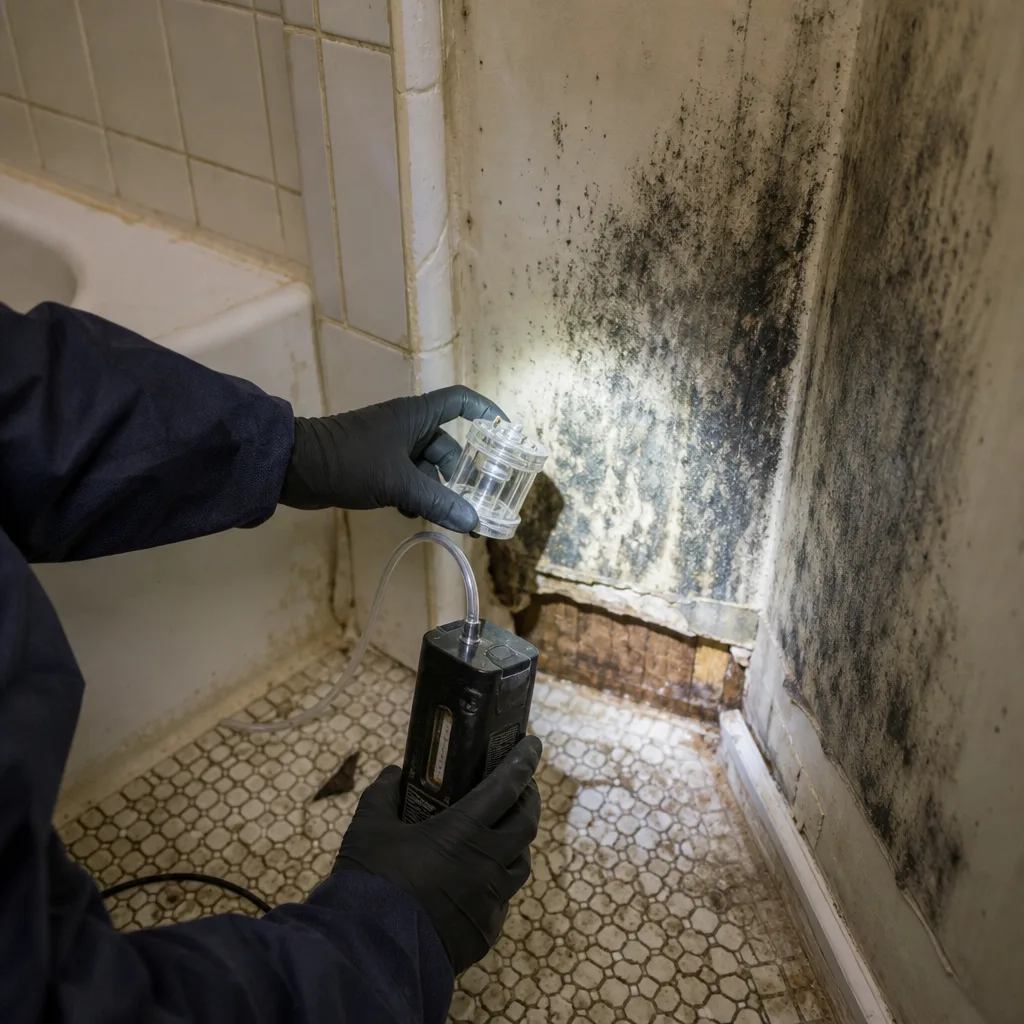
Structural Drying & Dehumidification
Corona’s pre-war brick row houses don’t dry like newer construction. The brick and plaster hold moisture differently than drywall over studs. We use Dri-Eaz and Phoenix dehumidifiers sized to the cubic footage, Injectidry for wall cavities, and daily moisture readings until the dry standard is documented.
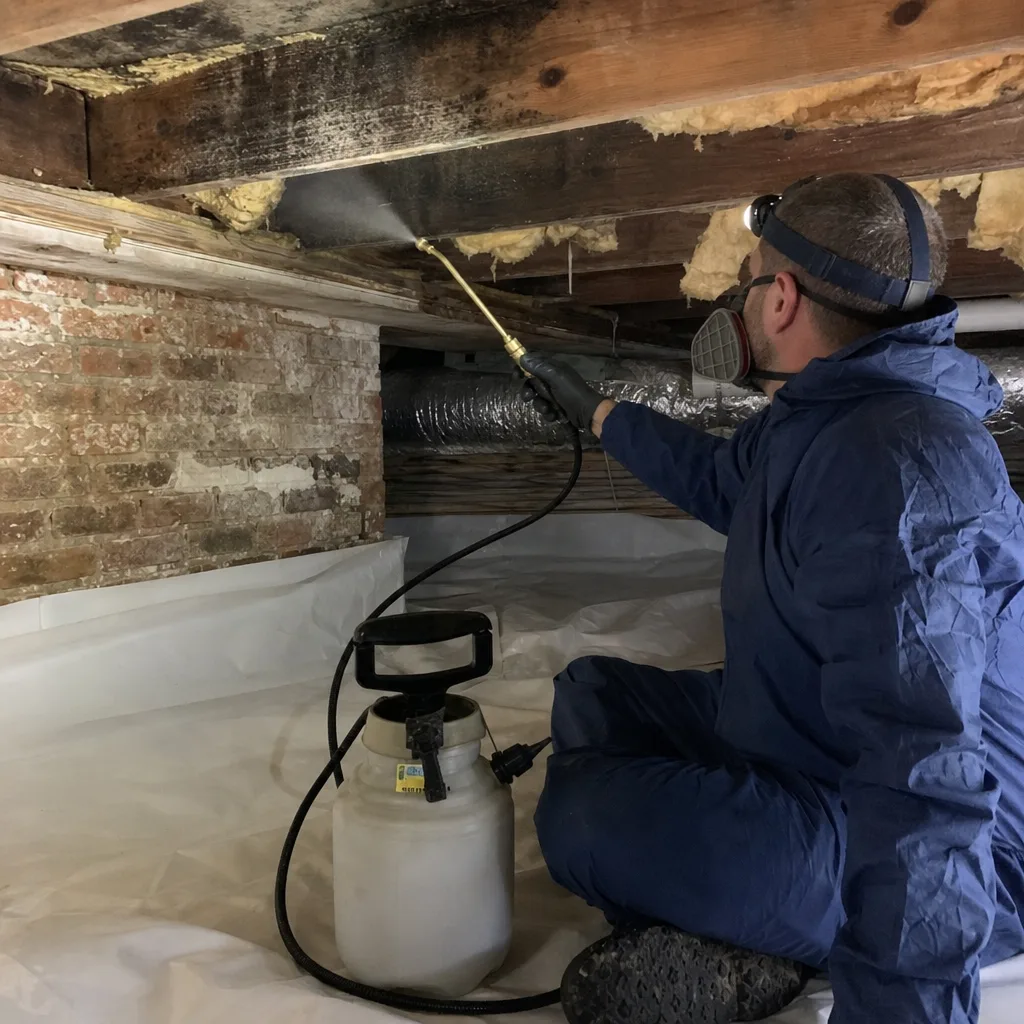
Basement Water Removal
Basement water in Corona is rarely just water. We check for sewage backflow, evaluate the legality of the occupancy, and if the space was lived in, coordinate with the Department of Buildings. The line the water left is where we start. Where it came from determines how we finish.
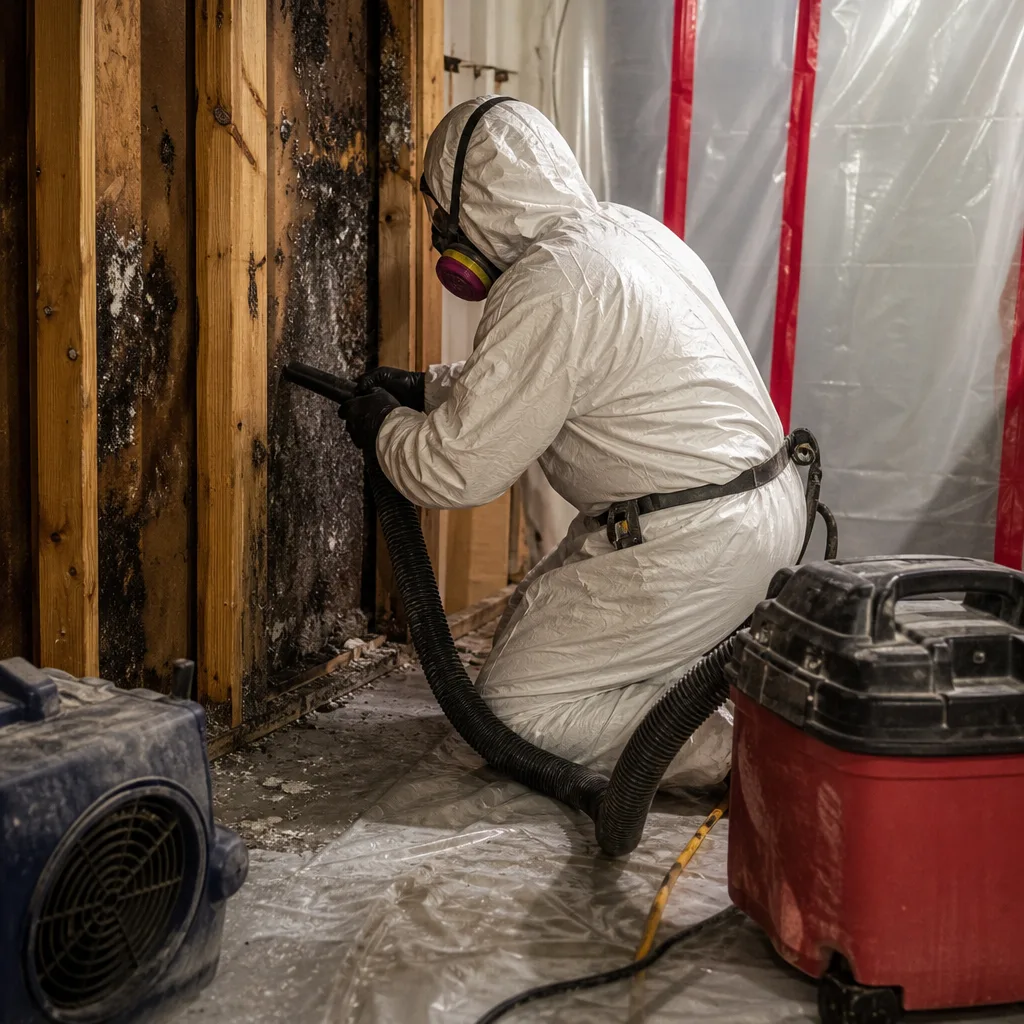
Flood Cleanup
Flash flooding from summer storms brings silt and debris into ground-level spaces. We remove the mud, sanitize the surfaces, and dry the structure. If the water came from outside and touched the ground, it’s treated as contaminated until proven otherwise.
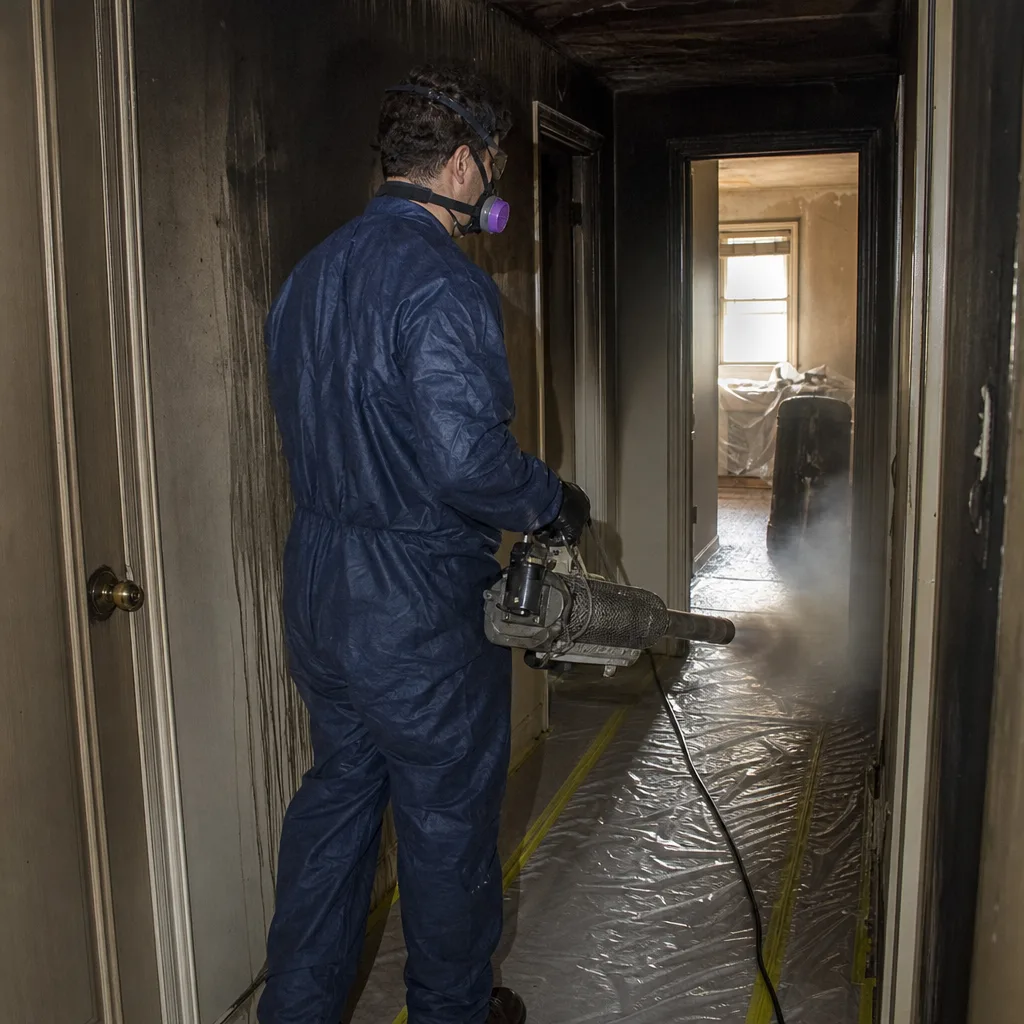
Burst Pipe Restoration
A split supply line in a 1920s Corona row house can flood three floors before the water reaches a drain. We trace the break, stop the water, extract, and get air moving. The same crew that dries the ceiling opens the wall and rebuilds it when it’s ready.
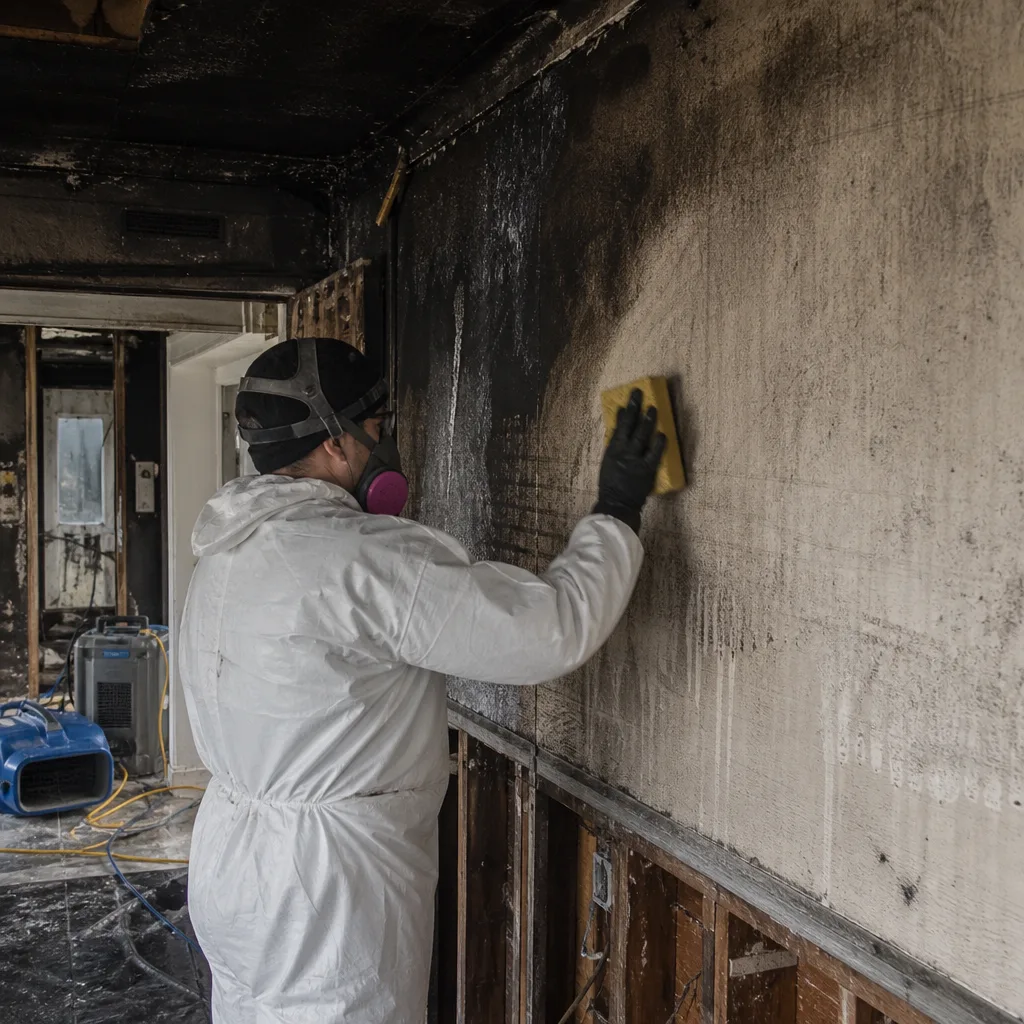
Ceiling & Roof Leak Water Damage
Flat roofs over Corona’s attached homes collect water and find paths through old flashing. When a leak presents as a stain on a top-floor ceiling, the water has usually been traveling through the roof assembly for days. We don’t patch the ceiling and walk away. We find where the leak started, dry the cavity, and rebuild what got damaged.
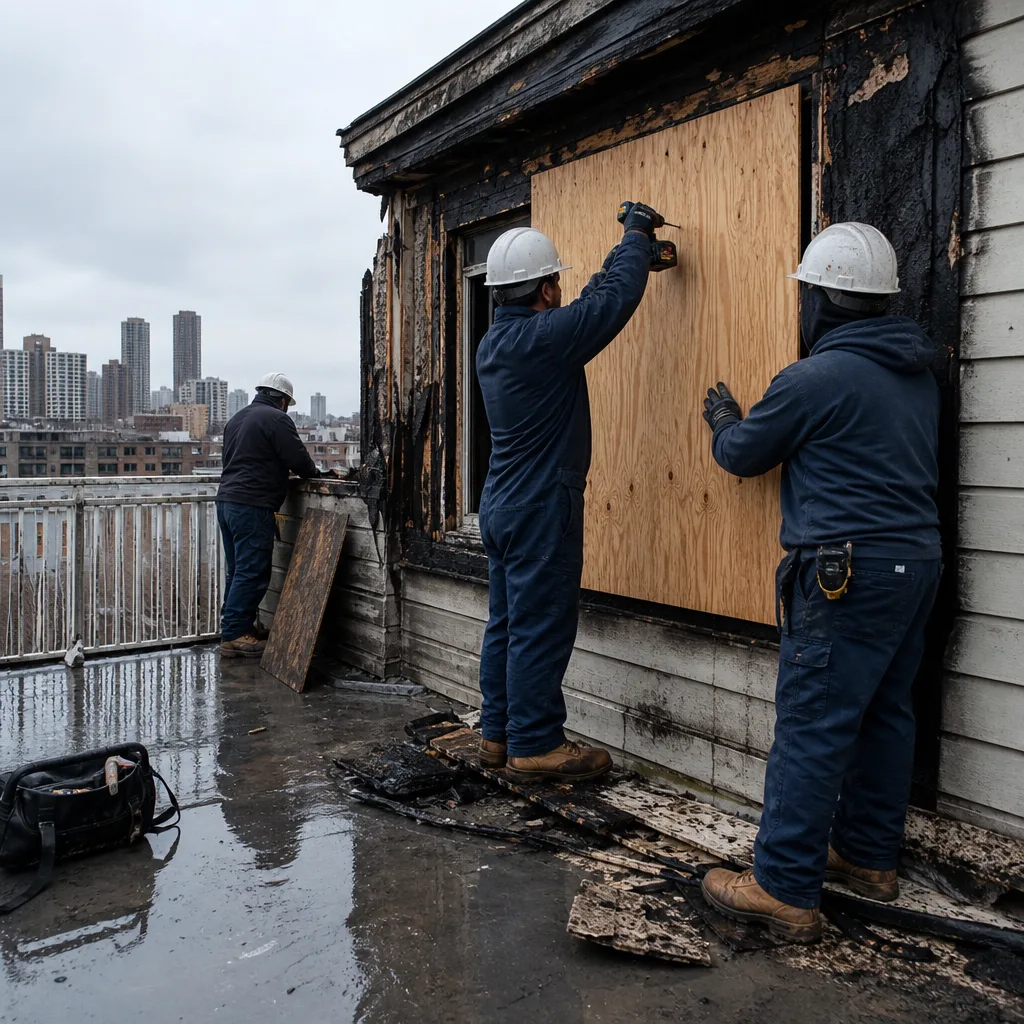
What happens when you call
- 1
A real person answersNo phone trees - you reach a local pro.
- 2
You get an upfront price rangeHonest numbers before anyone is dispatched.
- 3
A background-checked tech heads outLicensed & insured, dispatched right away.
- 4
You approve before work beginsNothing starts until you say go.
Water Damage Restoration Costs in Corona, NY
Straight numbers, the way we give them on site:
- Category 1 clean-water extraction and drying in a small basement: $2,400-$3,900
- Category 2 or 3 sewage backflow cleanup with containment: $4,800-$8,600, higher if the contamination reached finished living space
- Full basement water removal with structural drying across multiple rooms: $5,200-$7,800 for a typical Corona row house cellar
- Burst pipe restoration with wall opening and rebuild: $3,500-$6,400 depending on how many floors the water traveled
- Ceiling and roof leak drying with plaster repair: $1,800-$4,200 when caught early
What moves the price is what the water touched. If it hit antique plaster, original hardwood, or finished living space, the restoration scope grows. If it’s a Category 3 event in a Corona cellar apartment that can’t legally be restored to occupancy, the project changes entirely because Department of Buildings coordination and potential deconversion enter the picture. The free visual inspection gives you a firm number before work starts, and direct insurance billing means the carrier pays us, not you up front.
We Also Serve Cities Near Corona
Our crews run water damage restoration across Queens every day from Corona north into Elmhurst, east toward Rego Park and Jackson Heights, and around East Elmhurst. If you’re in one of those neighborhoods and have water in the basement at 3 a.m., call the same number. We’ll be there when we say.
Serving Corona, NY - Our Local Coverage Area
We’re based in the Corona area and know this community well. Use the map below to see our service coverage - if you’re nearby, we can almost certainly help.
Corona Water Damage Restoration Questions, Answered
How do I know if the water in my Corona basement is Category 3 and needs special handling?
Category 3 water contains sewage, storm runoff, or Flushing Creek backflow, and the only way to know for sure is to treat it as contaminated until proven otherwise. In Corona, any water that came up through a floor drain, toilet, or sewer lateral during a storm should be handled as Category 3. Call (917) 924-4221 and we’ll classify it on site before anything gets cut.
Can you legally restore my illegally converted basement apartment in Corona after a flood?
No, and any contractor who promises otherwise is lying to you. When we find a cellar apartment that lacks the required egress, ceiling height, or permits, we pause reconstruction and coordinate with the NYC Department of Buildings before demolition begins. Local Law 49 enforcement makes this a legal requirement, not a choice. We handle the coordination so the restoration moves forward as far as the law allows.
How fast can you get water out of a Corona row house cellar before mold sets in?
Mold starts in 24 to 48 hours, but in Corona’s attached row houses, the real clock is shorter because moisture moves through shared brick walls and into neighboring units. We answer live and target on-site extraction within 45 minutes of your call to (917) 924-4221. Same-visit extraction is the standard, not the exception.
What’s different about drying a 1920s brick row house in Corona versus a newer building?
Brick and plaster hold water differently than drywall over studs. The wall cavities in pre-war Corona homes are deeper, the materials are denser, and the shared walls between attached homes mean moisture readings on both sides. We use Injectidry systems inside the cavities and size dehumidification to the actual cubic footage of those older, larger rooms. Drying takes longer and requires daily readings to certify it’s done.
Will my Corona landlord’s insurance cover water damage to my basement apartment?
In most cases, the landlord’s policy covers the structure, not the tenant’s belongings. If you have renters insurance, that covers your furniture and personal property. We bill the landlord’s carrier directly for structural restoration and document everything so the claim file is clean. If you’re a tenant, call (917) 924-4221 and we’ll explain exactly what your landlord’s policy will cover before we start work.
Do I need full water damage restoration or just a cleaning in my Corona basement?
If water touched drywall, plaster, wood, or any porous material, you need restoration, not just a cleaning. A surface mop-up leaves moisture in the walls and floors where mold will grow within days. The free visual inspection gives you a straight answer: we’ll tell you if it’s a dry-out job or a rebuild job, and you’ll get the scope in writing before work starts.
How long does structural drying take in a typical Corona row house?
Most Corona basements dry in three to five days when the Category 1 or 2 water is caught early and the right equipment is placed correctly. Plaster walls on brick take longer than drywall, and a cellar with shared walls can add a day on each side. We log daily moisture readings and hand you the drying log. Until the dry standard is met, the equipment stays running.
What should I do in the first 30 minutes after finding water in my Corona home?
Call (917) 924-4221 first. Then, if you can do it safely, turn off the electricity to the affected area and move items you care about to higher ground. Don’t enter standing water if there’s any chance it’s from a sewage backup. Don’t open walls, don’t use a shop vac to pull Category 3 water, and don’t wait for the landlord to call you back. The first hour matters more than any hour after.
Written by Curt Bowman, Owner at Floodline Restoration Co. of Manhattan, serving Corona and Queens County.