
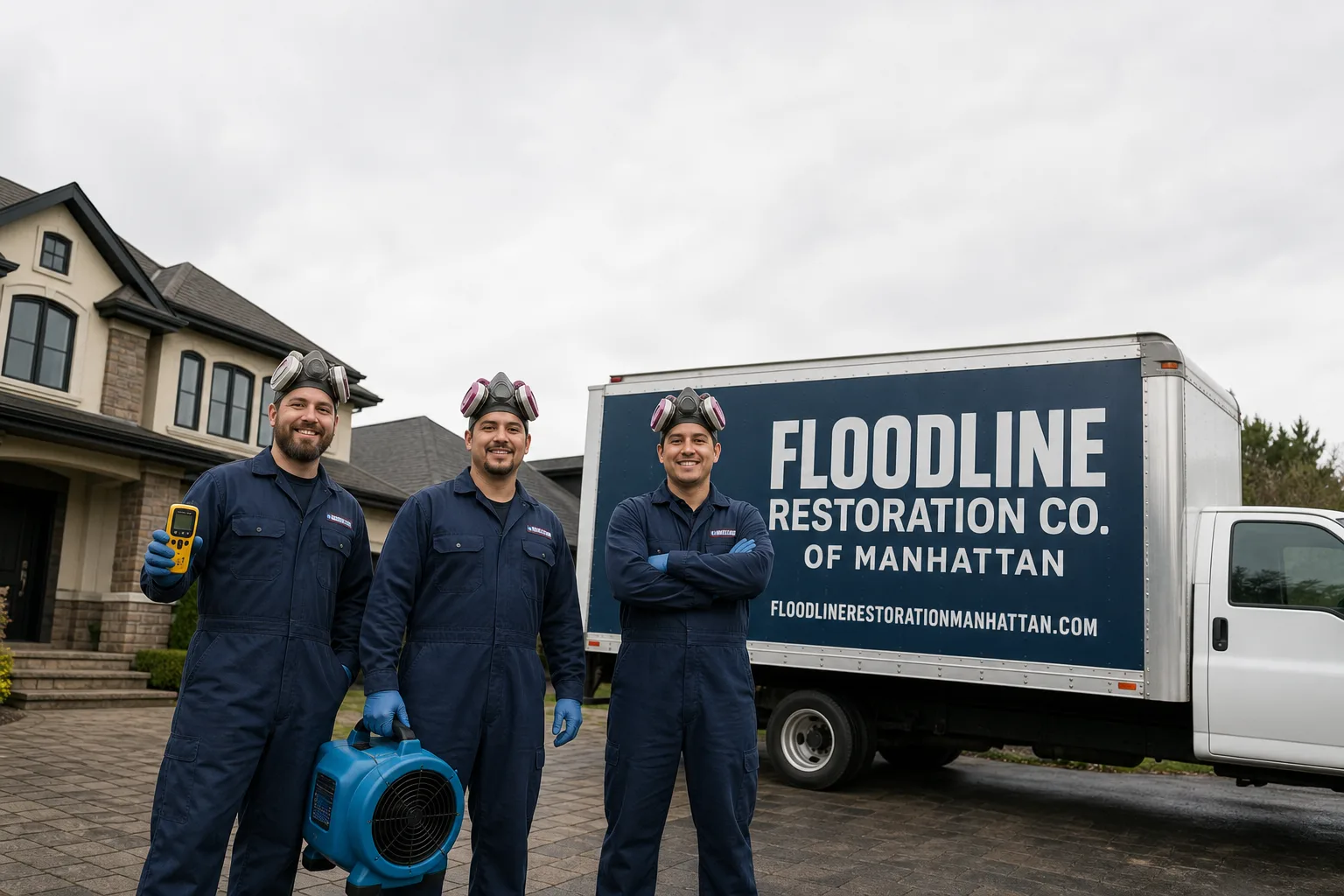
Free visual inspection and a written scope of work before any mitigation begins - photos, moisture readings, and drying logs go in your claim file
The scope we write is the scope we bill. Anything new gets shown to you, in writing, before we touch it.






 Before
 After
After Before
 After
After Before
 After
After24/7 Emergency Water Damage Restoration in Forest Hills
Water damage in Forest Hills moves fast, and so do we. A burst supply line in a 1920s co-op on Queens Boulevard or a backed-up basement off Metropolitan Avenue needs extraction running within hours, not days. Our crews reach Forest Hills homes around the clock, with a live dispatcher answering (917) 924-4221 at two in the morning, and a certified team on site the same visit. The first hour matters: standing water wicks into lath-and-plaster walls, oak flooring, and the original millwork that makes this neighborhood’s older housing stock irreplaceable. The sooner extraction starts, the less material you lose and the smaller the restoration bill. Call now for a free visual inspection. We’ll be there when we say.
Understanding Water Damage Restoration Severity in Forest Hills Properties
Not all water is the same, and Forest Hills building stock makes the distinction sharper than most places. Category 1 water is clean, usually from a burst supply line or failed radiator feed. Category 2 carries contaminants, like washing-machine overflow or sump-pump discharge. Category 3 water is sewage, and it’s a regular call type in this neighborhood because the city’s combined sewer system backs up into basements here during heavy rain. The pre-war construction compounds the severity. Lath-and-plaster holds water differently than drywall, absorbing it deeper and drying slower. Cast-iron steam risers corrode from the inside out, and when they fail, they saturate ceilings two floors down. That means moisture mapping and structural drying in Forest Hills require different equipment, more time, and tradespeople who understand the original assemblies. We run Dri-Eaz LGR dehumidifiers and XPOWER air movers with daily psychrometric readings until the dry standard is met, not a moment before. Cutting drying short in a 1928 co-op means mold behind the plaster in six months. We stand behind it.
Why Forest Hills Property Owners Choose Floodline Restoration Co. of Manhattan
- 45-minute response commitment for emergency water damage in Forest Hills, with crews dispatched the moment you hang up.
- 24/7 live answer, every call. A real dispatcher picks up, not a recording, and a certified crew reaches your door the same visit.
- IICRC-certified crews with WRT and ASD designations who document every moisture reading and drying decision.
- Free visual inspection with a written scope of work before anything is opened, so you know exactly what you’re approving.
- Direct insurance billing. We work with your adjuster from the first hour, including co-op and condo claims.
- One team from extraction to reconstruction. No mid-job handoff, no inherited crew, no new faces halfway through.
Our Water Damage Restoration Process
Inspection & Assessment
We start with thermal imaging and penetrating moisture meters to map the full extent of the water, including what’s hiding inside walls and under finished floors.
Extraction & Stabilization
Commercial extractors pull standing water from floors, carpets, and wall cavities. We shut off the source, contain the area, and protect undamaged rooms from cross-contamination.
Drying & Dehumidification
Dri-Eaz LGR dehumidifiers and XPOWER air movers run continuously, with daily moisture readings logged and adjusted until every surface hits the dry standard.
Cleaning & Sanitization
HEPA air scrubbers run throughout the drying period. Hard surfaces get antimicrobial treatment, and porous materials are removed when they can’t be salvaged.
Specialty Treatment for Older Stock
This is the step that makes Forest Hills different. Inside Forest Hills Gardens, we coordinate LPC documentation and period-material sourcing before walls are opened. In 1920s co-ops, we match original plaster profiles and crown molding before any patch goes in.
Repairs & Restoration
The same crew that ran the drying rebuilds the wall, refinishes the floor, and matches the millwork. Done right, and backed in writing with the 90-Day Done Right Promise.
Need Emergency Water Damage Restoration in Forest Hills Now?
Crews minutes away, answering live 24 hours a day. The sooner we start, the less it costs.
Working With Your Insurance Company
A water loss in a Forest Hills co-op or single-family home is a claim process, not just a repair. We’ve handled hundreds of these locally, and we know what Queens adjusters need to see. Documentation starts in the first hour: photos of every affected room before mitigation, moisture readings at the source and perimeter, drying logs showing daily EC and MC readings, and a detailed scope of work with line items in industry-standard format. We send that packet directly to your carrier and handle adjuster phone calls from our office. You don’t play messenger between us and them. Direct insurance billing means the claim gets paid straight through, and we walk you through any depreciation or deductible questions before you owe a dollar you weren’t expecting.
What We Provide Your Insurer
- Thorough documentation of the loss
- Photos of all damage, room by room
- Moisture readings and drying logs
- A detailed, line-item scope of work
- Direct coordination with your carrier
Built for Forest Hills’s Loss Calendar
Forest Hills water damage follows a seasonal rhythm, and we plan crews around it. January deep freezes burst supply lines in pre-war buildings along Queens Boulevard when cast-iron risers let go after a cold snap. Spring thaw brings basement seepage through fieldstone foundations around the Gardens and the attached rowhouses off Metropolitan Avenue. Summer thunderstorms overwhelm the combined sewer system, sending Category 3 water into basements from 11375 to 11379. Nor’easters in the fall and winter drive rain under flat-roof membranes on pre-war co-ops, saturating original plaster ceilings before tenants notice a stain. Each season has a failure signature in this housing stock, and our crews know them all. That’s why our Water Damage Restoration team keeps equipment staged for Forest Hills response year-round, not just after major storms.
Water Damage Restoration Across Forest Hills’s Neighborhoods
Forest Hills isn’t one building type, and it isn’t one response route. In Forest Hills Gardens, crews work inside a landmarked district where the Tudor Revival homes were designed by Grosvenor Atterbury and built around 1910, which changes everything from wall-opening approvals to plaster and millwork sourcing. The Queens Boulevard corridor runs through pre-war brick co-ops from the 1920s and 1930s, many with original cast-iron steam systems still in service and original galvanized supply lines at the end of their lifespan. Around Austin Street and the commercial blocks off 71st Avenue, mixed-use buildings combine storefronts with residential units above, so a single burst pipe affects two businesses and four apartments before we arrive. The residential streets of the Van Court section and the blocks east of Yellowstone Boulevard feature attached brick rowhouses where water travels party-wall to party-wall, and drying one unit without addressing the neighbor’s wet wall is a waste of air movement. Each area has its own access patterns, building materials, and typical loss profile, and we route crews accordingly.
Specialized Water Damage Restoration Services We Offer in Forest Hills
Emergency Water Extraction
Standing water gets extracted with truck-mounted and portable extractors rated for high-volume loss. In a Forest Hills co-op, that means getting water out of the unit, the hallway, and the shaftways before the board meetings start and mitigation becomes a committee decision.
Structural Drying & Dehumidification
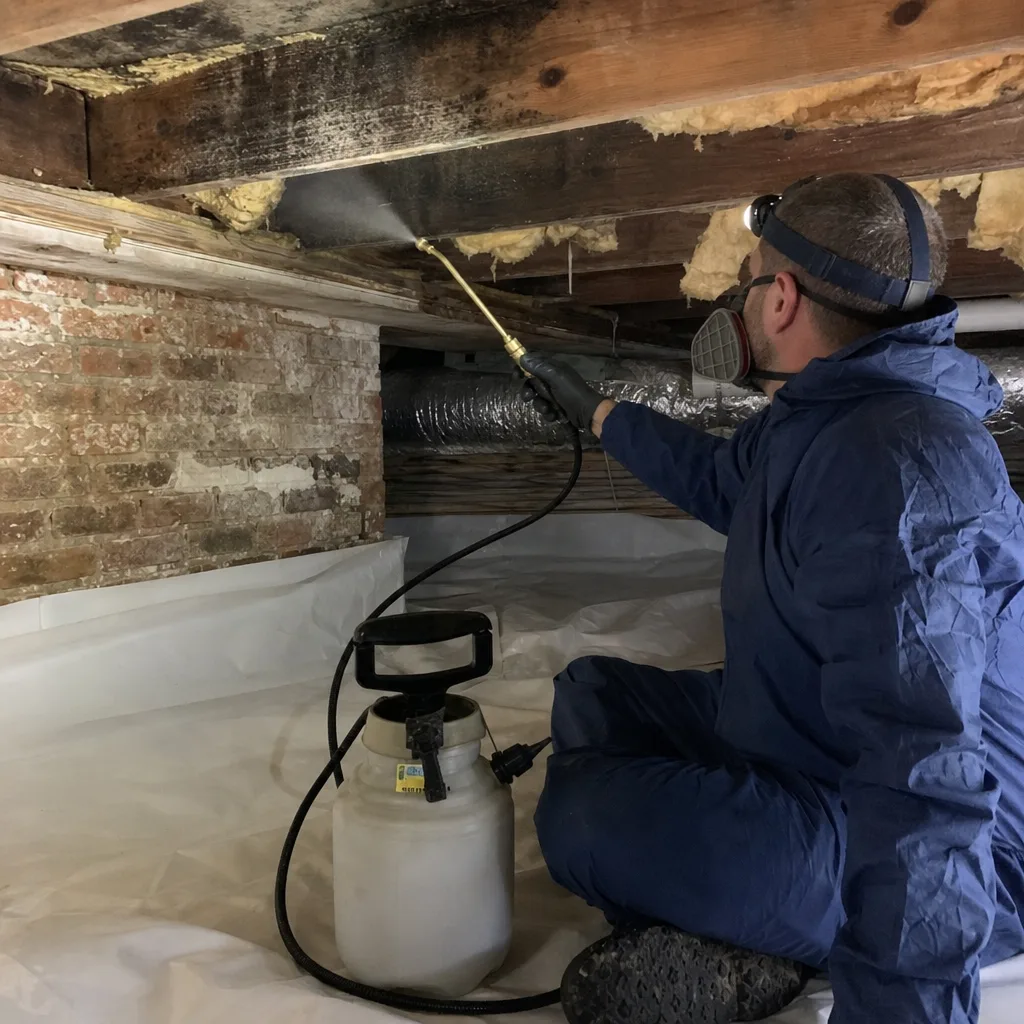
Pre-war plaster, oak strip flooring, and original millwork all dry at different rates. We run Dri-Eaz LGR dehumidifiers and XPOWER air movers with daily moisture readings logged and adjusted until the dry standard is met, keeping the co-op board and your carrier informed at every step.
Flood Cleanup
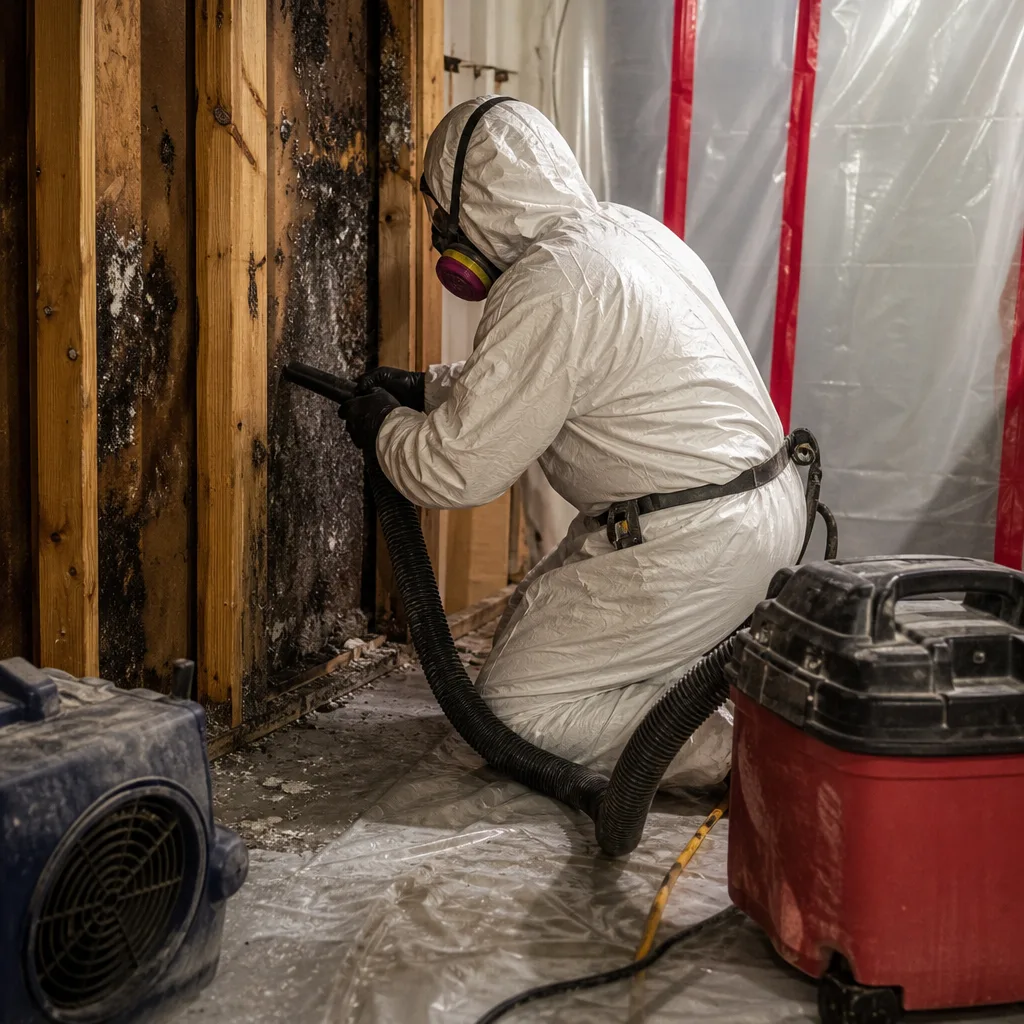
Sewer backups during Queens downpours are a recurring Forest Hills problem. Category 3 water requires full containment, HEPA air scrubbing, and antimicrobial treatment before any drying begins. We handle it the way the contamination demands, not the way a shortcut would allow.
Burst Pipe Restoration
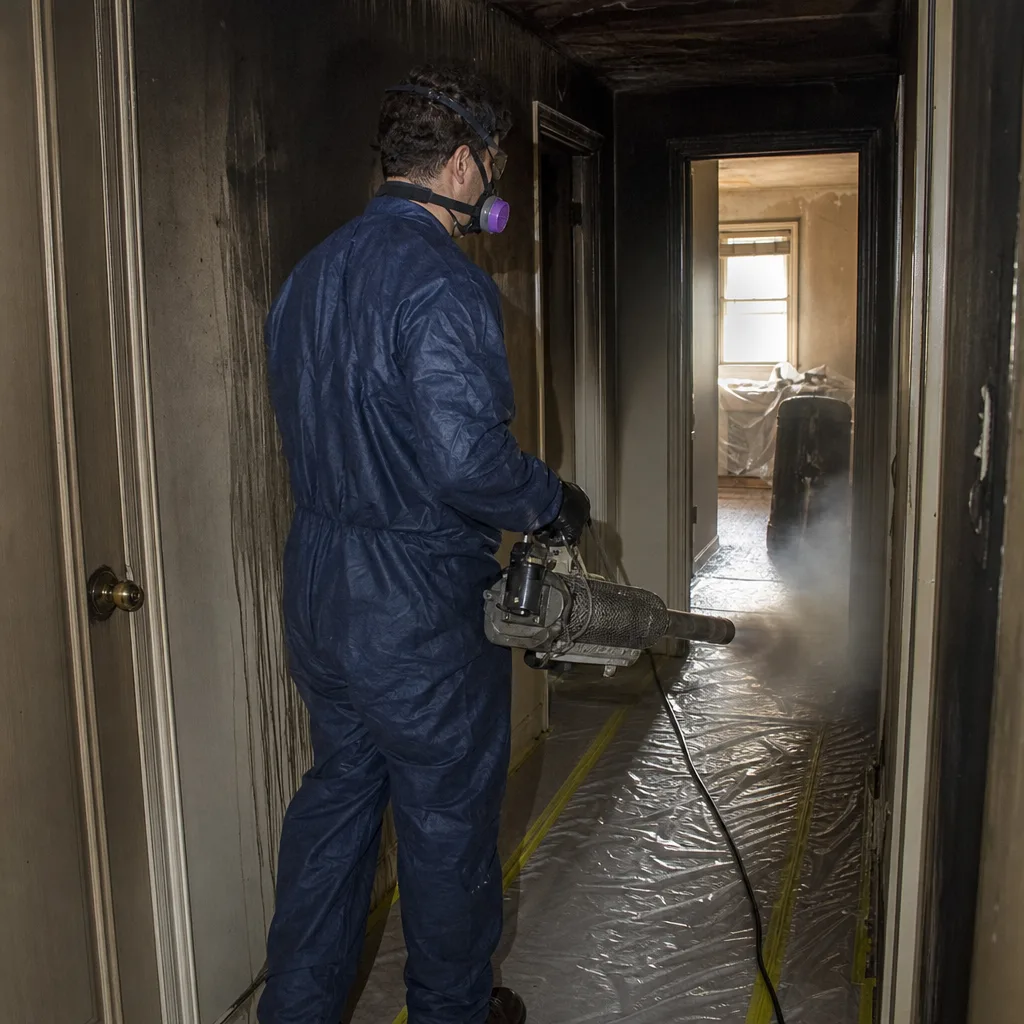
When a supply line or radiator feed lets go in a 1920s building, the water travels down interior wall cavities and across original ceilings. We trace the full path with thermal imaging, then dry and restore every affected surface, including periods where walls must be opened and plaster patches matched to the original profiles.
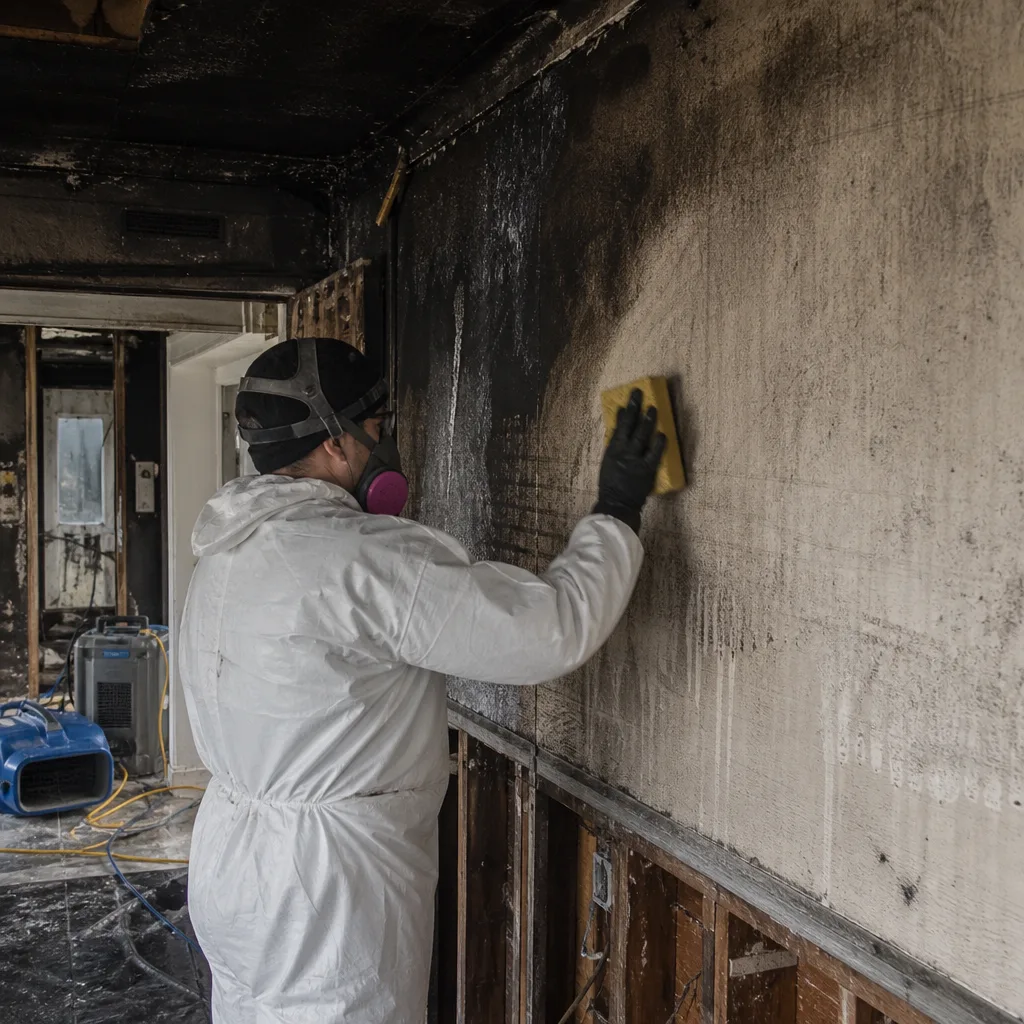
Basement Water Removal
Basements throughout Forest Hills flood from sewer backups, groundwater seepage, and failed sump pumps. We extract, sanitize, dry the structure, and identify the source so the same basement doesn’t flood again next storm. The ladder, the line the water left on the wall, is where we start, and we work our way down.
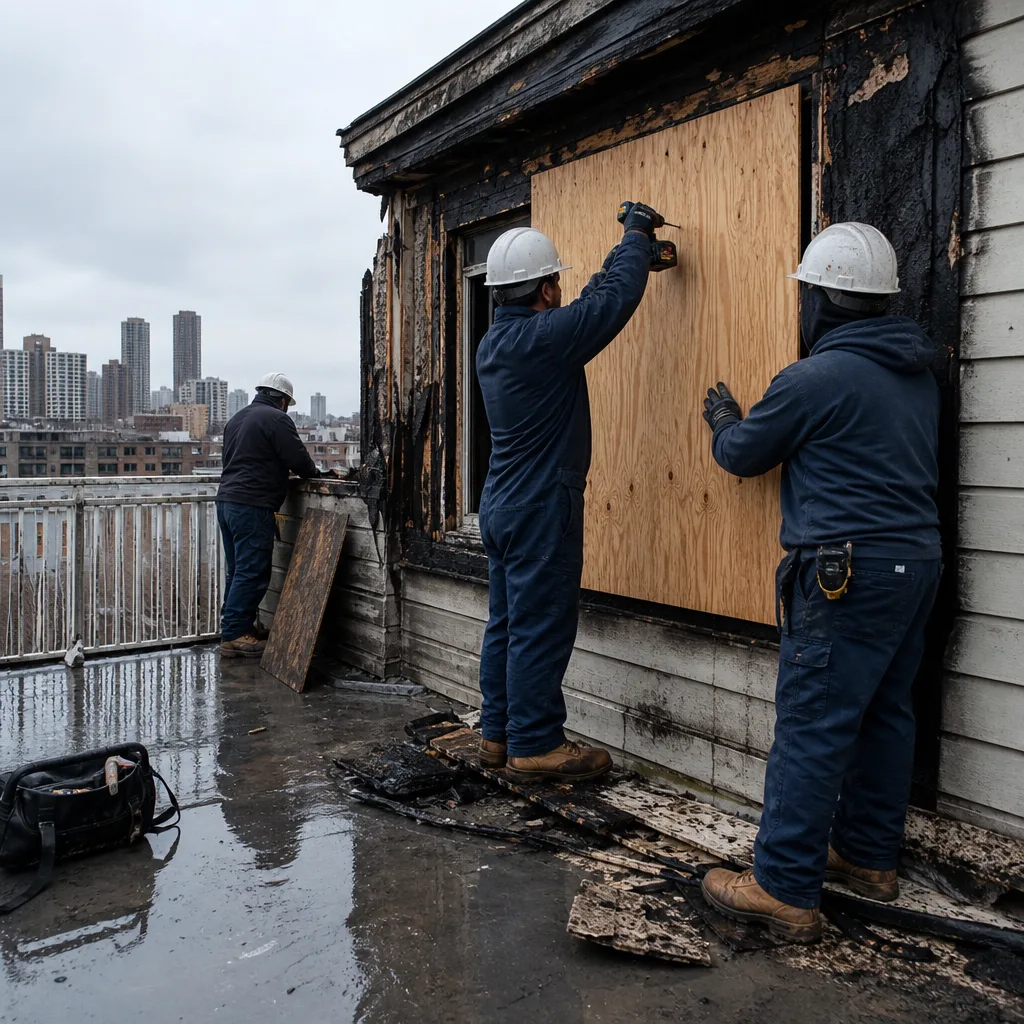
Ceiling & Roof Leak Water Damage
Flat-roofed pre-war buildings on Queens Boulevard are prone to ponding water and ice dams. When that water reaches original lath-and-plaster ceilings, we contain the area, dry from both sides, and restore the ceiling with matched materials. We don’t patch and paint over a wet cavity. That’s the kind of job that fails in six months. We stand behind it.
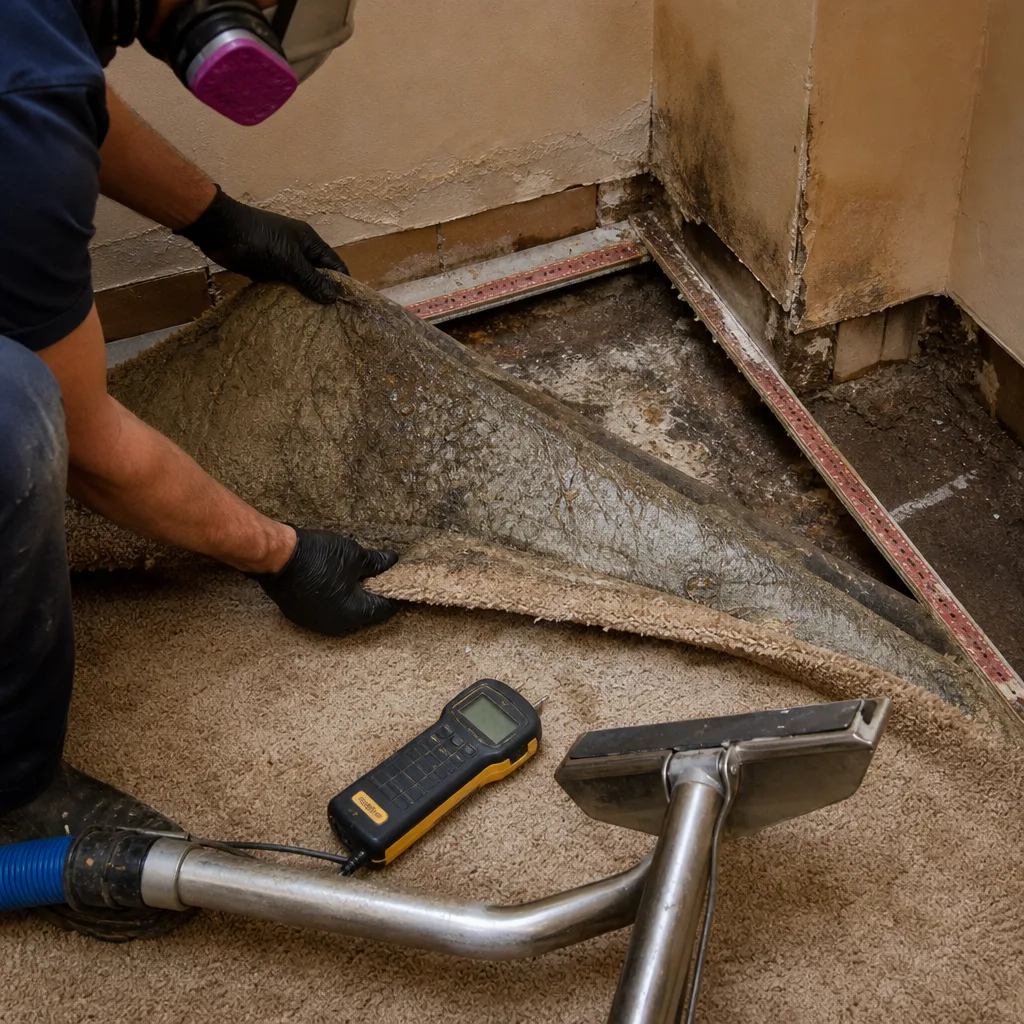
What happens when you call
- 1
A real person answersNo phone trees - you reach a local pro.
- 2
You get an upfront price rangeHonest numbers before anyone is dispatched.
- 3
A background-checked tech heads outLicensed & insured, dispatched right away.
- 4
You approve before work beginsNothing starts until you say go.
Water Damage Restoration Costs in Forest Hills, NY
Forest Hills pricing reflects the housing stock, and that’s the honest answer. A straightforward water extraction and drying job in a modern unit here runs about $1,800 to $3,800. The same square footage in a 1920s co-op with lath-and-plaster walls and original millwork might run $4,500 to $9,000 because the drying takes longer and the restoration materials cost more. Ceiling water damage from a roof leak on a pre-war flat roof typically lands between $2,200 and $5,500 once the plaster is dried out and matched. Inside Forest Hills Gardens, expect to add $1,500 to $4,000 for LPC documentation and period-material sourcing on any job that opens a wall or replaces a finish. That’s the cost of doing it right in a landmarked district, and it’s non-negotiable. The free visual inspection is how you get a firm scope. We walk the loss, document everything, and price it in writing before work begins. Insurance pays most of these claims through direct billing, and we’ll walk you through your deductible before anything is opened. A square deal: no surprises on the bill.
We Also Serve Cities Near Forest Hills
Our crews answer calls for water damage restoration throughout central Queens, including Forest Hills and the surrounding communities of Rego Park, Kew Gardens, Corona, and Middle Village. Same 45-minute response, same certified crews, same 90-Day Done Right Promise. If you’re anywhere in the area and water is where it shouldn’t be, call us.
Forest Hills Water Damage Restoration Questions, Answered
Does water damage restoration in Forest Hills Gardens always need Landmarks Preservation Commission approval?
Yes, if any wall, ceiling, or finish material is opened, removed, or replaced in a Forest Hills Gardens property, LPC sign-off is required before that work proceeds. That includes cutting out damaged lath-and-plaster, replacing trim or millwork, and sometimes even changing hardware. Our crew files the documentation and coordinates the period-material sourcing so the structural drying timeline doesn’t stall while the paperwork moves. We’ve done this enough times inside the Gardens that it’s standard practice for us, not an exception.
How do you dry lath-and-plaster ceilings in 1920s Forest Hills co-ops without making the cracks worse?
We dry lath-and-plaster from both sides when the wall or ceiling cavity is accessible, and we control the rate of drying so the plaster doesn’t shrink too fast and crack. Dri-Eaz LGR dehumidifiers maintain a steady humidity draw, and we take moisture readings every 12 hours to keep the plaster’s moisture content within a range that allows drying without warping. Patching comes after the dry standard is met, and only with material matched to the original profile. Standard gypsum patch on a horsehair ceiling fails within a season. We don’t do that.
What happens when a Queens Boulevard pre-war apartment has a Category 3 sewage backup into the basement?
Category 3 water carries sewage, and that changes the job from drying to contamination control. The affected basement gets full containment, HEPA air scrubbing, and antimicrobial treatment. Porous materials like carpet, drywall, and most insulation get removed and disposed of properly. Only then does drying begin. We also document everything for your insurer, because Category 3 claims are handled differently and need clear proof of contamination, remediation, and disposal.
Can you restore a water-damaged custom millwork door frame without replacing the whole section?
In most cases, yes. We dry the frame in place using Injectidry systems and low-humidity dehumidification to pull moisture out of the wood without warping it further. Then we assess what can be stabilized and refinished versus what has to be dutch-repaired or rebuilt. In Forest Hills Gardens, we source matching profiles and wood species through our period-material suppliers, and we file the LPC documentation for any portion that is removed or replaced. The goal is always to keep original material where it can be saved.
How quickly can you start water extraction after a nor’easter leaks through a flat roof in Forest Hills?
Call (917) 924-4221 and a live dispatcher answers immediately. Our crews reach Forest Hills within 45 minutes on average, and extraction starts on the same visit. For a roof leak into occupied units, speed matters because the water keeps coming until the roof is tarped or the interior is contained. We bring both the extraction equipment and the containment materials on the first truck, so we don’t leave and come back after the damage spreads.
How long does structural drying take in a pre-war Forest Hills building?
Drying times depend on the material and the depth of saturation. A modern drywall unit might dry in three to five days. Original lath-and-plaster in a 1920s co-op typically takes seven to fourteen days because the material holds water deeper and dries slower. We take moisture readings every 12 hours and adjust the equipment daily. The drying log goes to you and your carrier, and we don’t stop until the dry standard is met, not a day before.
Will my insurance cover water damage restoration in Forest Hills?
Most standard homeowner and co-op policies cover sudden and accidental water damage, like a burst supply line or a roof leak from storm damage. Sewer backups often require a specific endorsement, and gradual leaks that developed over months are frequently excluded. We review your policy with you, document the loss from the first hour, and bill your carrier directly so you don’t front the claim. If coverage is denied, we’ll show you exactly why and what your options are before any work proceeds.
What should I do in the first 30 minutes after discovering water damage in Forest Hills?
Shut off the water source if you can safely reach it. Turn off electricity to the affected area from the breaker panel. Move furniture and valuables out of the water. Then call us at (917) 924-4221. Don’t use a shop vac on standing water if sewage is possible, and don’t run household fans on an active leak. The documentation timeline starts now, so take a few photos before anything is moved. Then let us take it from there. We’ll be there when we say.
Serving Forest Hills, NY - Our Local Coverage Area
We’re based in the Forest Hills area and know this community well. Use the map below to see our service coverage - if you’re nearby, we can almost certainly help.
Forest Hills Water Damage Restoration, Done Right and Backed in Writing
Water damage in Forest Hills is different from water damage in Rego Park, Kew Gardens, or anywhere else because the buildings are older, the materials are irreplaceable, and in the Gardens, the landmark rules don’t bend. We’ve built our process around that reality. Our crews are background-checked, uniformed, and certified to IICRC standards. We run professional-grade equipment from Dri-Eaz, Phoenix, XPOWER, B-Air, and Injectidry. We answer the phone with a live person at every hour. And every job is backed by the 90-Day Done Right Promise, a written guarantee with no paperwork battles and no arguing. Floodline Restoration Co. of Manhattan, led by Curt Bowman, has handled water losses in this neighborhood with the same crew from first extraction to final rebuild. Call (917) 924-4221 for a free estimate, and we’ll walk you through the scope before anything is opened. The line the water left is where we start.
Written by Curt Bowman, Owner at Floodline Restoration Co. of Manhattan, serving Forest Hills since 2010.