
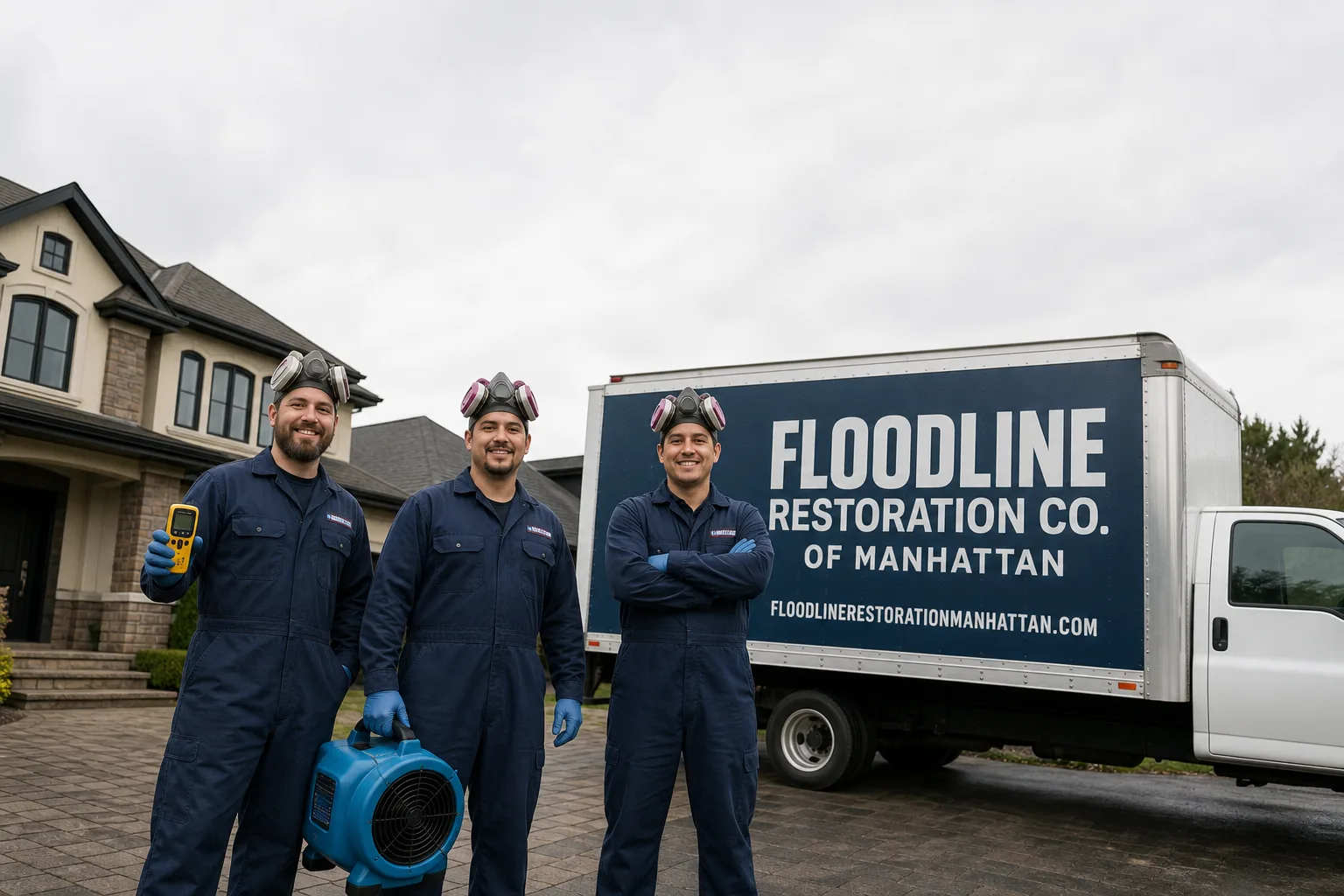
Free visual inspection and a written scope of work before any mitigation begins - photos, moisture readings, and drying logs go in your claim file
The scope we write is the scope we bill. Anything new gets shown to you, in writing, before we touch it.






 Before
 After
After Before
 After
After Before
 After
After24/7 Emergency Water Damage Restoration in Great Neck
Water damage in Great Neck typically costs $1,800-$12,000 to restore, depending on the water category, square footage affected, and whether saltwater corrosion has reached mechanical systems. Our crews reach most Great Neck addresses within 45 minutes and start extraction on the same visit, not the next day. Call (917) 924-4221 right now and a live dispatcher answers, not a recording.
Great Neck is a peninsula flanked by Manhasset Bay and Little Neck Bay on three sides. That geography means water doesn’t just come from burst pipes. It comes up through the ground, over the bulkheads on a nor’easter, and into basements that were dry for sixty years until one storm changed the water table. The first hour after intrusion matters more here than inland. Salt water starts corroding lally columns, electrical panels, and HVAC equipment almost immediately. Fresh water wicks into horsehair plaster and old-growth flooring faster than most homeowners realize. One call to (917) 924-4221 gets a certified crew moving toward your street while the water is still rising.
We do free visual inspections. We carry professional-grade Dri-Eaz and Phoenix equipment. And we handle everything from extraction to dry-out to reconstruction, so you never inherit a new crew halfway through the job.
Understanding Water Damage Restoration Severity in Great Neck Properties
Water restoration work splits into three categories. Category 1 is clean water from a supply line or faucet. Category 2 carries some contamination, like a washing machine overflow or sump pump failure. Category 3 is grossly contaminated water, which is what Great Neck homeowners face after Long Island Sound surge events, sewage backups, or groundwater intrusion through saturated soil. Each category changes the scope of work: what gets cut out, what gets sanitized, what gets replaced.
Great Neck’s housing stock raises the stakes. The 1920s Tudor Revivals and Colonial Revivals that line streets near Kings Point and the village waterfront were built with horsehair plaster over lath, not drywall. That plaster absorbs water differently. It holds moisture longer. It hides mold growth behind finished walls until the damage is far worse than the stain suggests. The same goes for original old-growth hardwood floors, which cup and buckle when dried too fast with standard air movers. Proper restoration here means moisture mapping before any drying begins, with daily readings logged until every material hits the dry standard.
Saltwater intrusion is its own category of damage. We regularly see bay-side basements where the visible water receded in a day, but salt residue kept corroding steel lally columns and wiring for weeks. That’s why Great Neck jobs need a different protocol than inland Nassau work. The severity isn’t just about how much water. It’s about what the water carried and what it touched.
Why Great Neck Property Owners Choose Floodline Restoration Co. of Manhattan
- 45-minute response commitment. We dispatch from our New York City office and crews reach Great Neck fast. You’ll know when we’re arriving, not just that we’re “on the way.”
- 24/7 live answer, every time. A real person picks up at two in the morning. No phone tree, no callback queue, no recorded greeting.
- Certified crews, properly trained. Our technicians hold IICRC WRT and FSRT certifications and receive ongoing instruction to RIA and IFA standards. They know what Category 3 water means here.
- Free visual inspection, no obligation. We look, we document, we give you a straight answer. Then you decide.
- Direct insurance billing. We bill your carrier directly and coordinate with your adjuster so you never play messenger. For Great Neck’s NFIP Write Your Own policies, that documentation discipline matters.
- One team from extraction to reconstruction. Water Damage Restoration at Floodline means the same certified crew handles day-one extraction and the final coat of paint. No handoffs, no inherited crews, no mid-job finger-pointing.
Our Water Damage Restoration Process
Inspection & Assessment
We walk the property, identify the water category, and use thermal imaging and moisture meters to map the full extent of intrusion, including what’s hidden behind plaster walls and under flooring. You get a written scope before we start physical work.
Extraction
Submersible pumps and truck-mounted extraction units remove standing water from basements, crawlspaces, and finished rooms. We start this on the first visit, not the next day.
Drying & Dehumidification
Dri-Eaz and Phoenix air movers and dehumidifiers run on a moisture-mapped layout. Daily readings get logged and shared with you and your carrier until every surface hits the dry standard. Old-growth floors and custom millwork get slower, controlled drying to prevent cupping.
Cleaning & Sanitization
Affected surfaces get cleaned with appropriate antimicrobial treatments. Category 3 losses require containment, controlled demolition of saturated materials, and sanitization protocols that match IICRC standards.
Specialty Treatment for Saltwater Corrosion
On bay-side properties, we inspect lally columns, electrical panels, HVAC equipment, and fasteners for salt corrosion. Where salt has compromised mechanical or structural components, we document it and replace what safety requires, not just what looks wet.
Repairs & Restoration
From plaster repair and flooring replacement to full room reconstruction, the same crew finishes the job. Period-appropriate restoration of Tudor and Colonial Revival details is standard practice for us in Great Neck, not an upsell.
Need Emergency Water Damage Restoration in Great Neck Now?
Crews minutes away, answering live 24 hours a day. The sooner we start, the less it costs.
Working With Your Insurance Company
Most Great Neck water damage claims touch a flood insurance policy, a homeowners policy, or both. We’ve handled enough NFIP Write Your Own claims in this community to know what adjusters need: documentation that starts on day one and never stops. Photos of the standing water before extraction. Moisture readings at baseline and every 24 hours after. A line-item scope that describes exactly what was cut out, why, and what it costs to put back.
We bill your carrier directly. We speak with your adjuster so you don’t have to. And if a carrier pushes back on a line item, we provide the documentation to justify it. That’s the difference between a contractor who shows up with a bucket and one who understands how Great Neck flood claims actually get settled.
What We Provide Your Insurer
- Thorough documentation of the loss
- Photos of all damage, room by room
- Moisture readings and drying logs
- A detailed, line-item scope of work
- Direct coordination with your carrier
Built for Great Neck’s Loss Calendar
Water damage here follows a seasonal rhythm. January and February bring deep freezes that split supply lines in uninsulated crawlspaces and exterior walls, the same pipes that have fed Great Neck homes since the Coolidge administration. March and April bring thaw, groundwater, and basement seepage through old fieldstone foundations. June through August means thunderstorms that drop two inches of rain in an hour, overwhelming sump pumps and storm drains on low-lying streets near the bays.
Then comes nor’easter season. September through December, a storm tracking up the Long Island Sound corridor can push salt water over bulkheads in Kings Point and along the village waterfront, filling basements with Category 3 surge before homeowners finish dinner. Since Sandy, many Great Neck residents understand this risk acutely. We staff for it year-round, because the storm calendar doesn’t check a calendar before it hits.
Water Damage Restoration Across Great Neck’s Neighborhoods
Great Neck isn’t one housing market. It’s a collection of villages and unincorporated areas, each with its own building stock and failure patterns. In Kings Point, the Gold Coast-era estates along the waterfront carry the highest surge risk on the peninsula. These properties often have finished walk-out basements with mechanical rooms, home theaters, and wine storage. When Long Island Sound comes over the bulkhead, the damage is comprehensive, and salt corrosion on steel and electrical systems is our first concern after extraction.
The village of Great Neck and surrounding streets, including Middle Neck Road corridor properties, skew toward 1920s and 1930s Colonials with fieldstone foundations and original plaster. Here, groundwater intrusion through foundation cracks and rising water tables after heavy rain are the recurring issues. We see finished basements where moisture wicked up through the slab and into drywall, with no visible standing water. Thermal imaging catches what the eye can’t.
Out toward Little Neck Bay on the east side of the peninsula, the streets off East Shore Road face the same nor’easter surges as Kings Point but with slightly smaller lots and older mechanical systems. Many of these homes still run cast-iron drain lines that fail under repeated water loading. Saddle Rock and the neighborhoods along the Long Island Expressway’s northern edge deal less with surge and more with burst supply lines and appliance failures in raised ranches and mid-century split-levels.
Knowing which neighborhood you’re in changes our response plan. That’s why we keep local crews familiar with Great Neck’s streets rather than dispatching teams from a depot fifty miles away who’ve never seen a Tudor plaster wall.
Specialized Water Damage Restoration Services We Offer in Great Neck
Emergency Water Extraction
Standing water in a Great Neck basement needs to come out fast, whether it’s two inches from a burst pipe or two feet from a nor’easter surge. We run truck-mounted extraction and submersible pumps that pull water out on the first visit. The goal is simple: stop absorption into plaster, flooring, and framing before the damage becomes reconstruction.
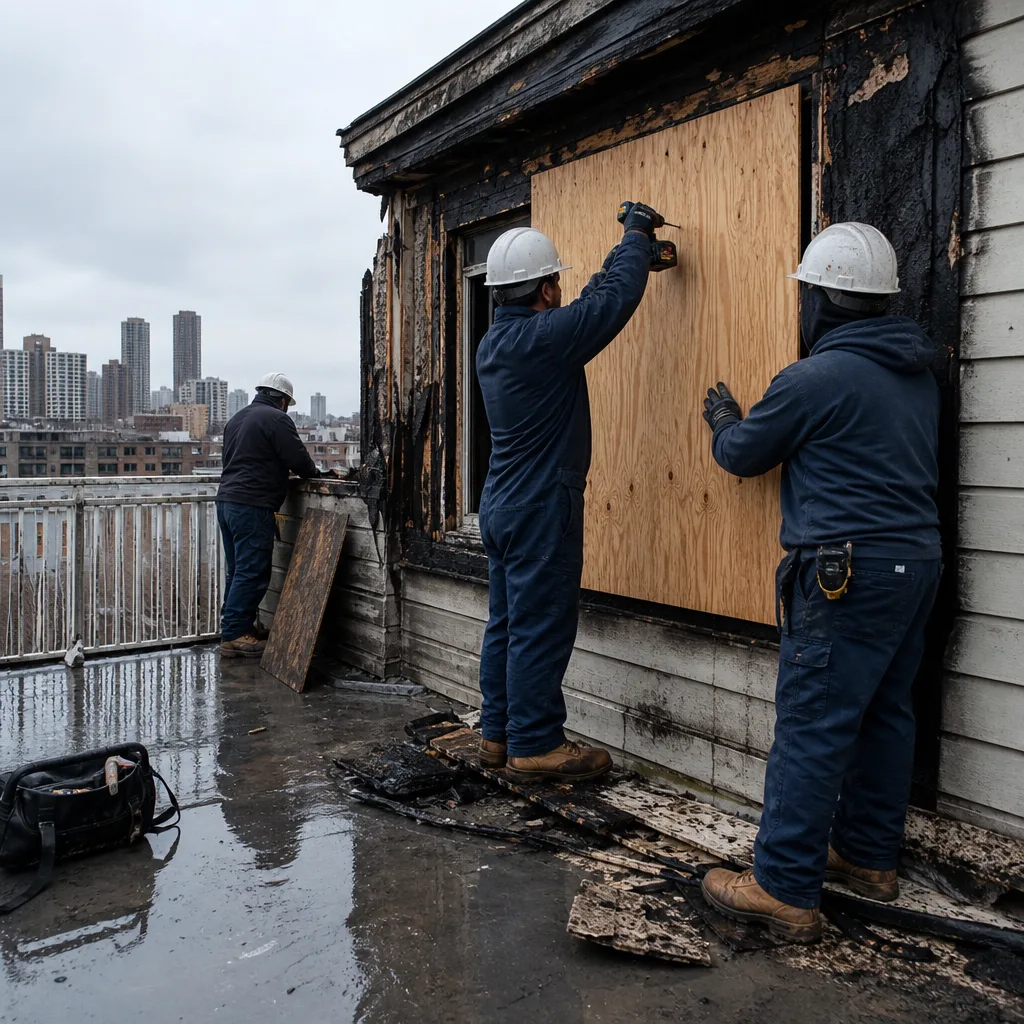
Structural Drying & Dehumidification
Here’s where Great Neck’s older construction demands patience. Original horsehair plaster and old-growth hardwood can’t be blasted with standard air movers and called done. We follow a moisture-mapped drying plan using Dri-Eaz and Phoenix equipment, with daily readings logged until the structure reaches the dry standard. Drying too fast causes cupping and cracks. Drying too slow invites mold. The log tells us when we’ve hit the mark.
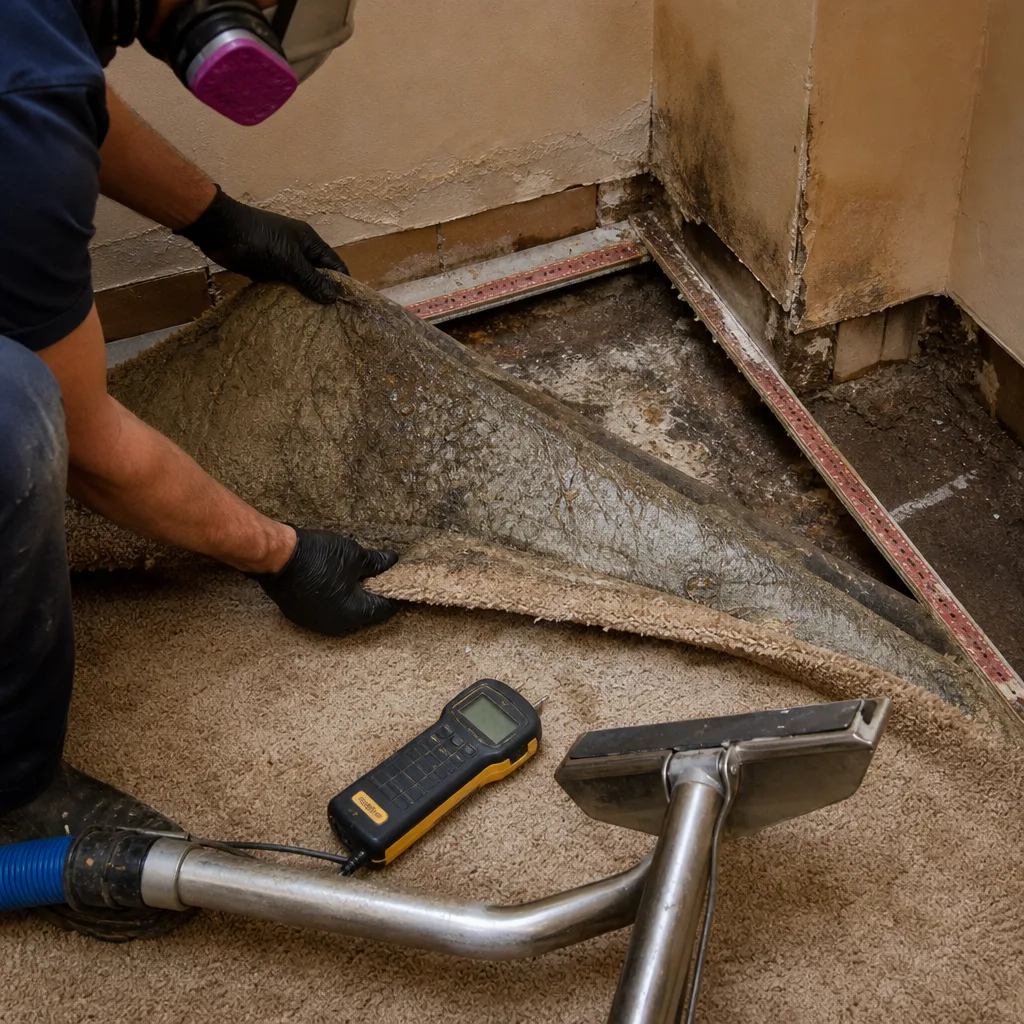
Flood Cleanup
Flood Cleanup in Great Neck means Category 3 water, whether from the Sound, the bays, or a sewage backup. We contain the affected area, remove saturated materials, sanitize, and document everything for your flood claim. Saltwater floods add corrosion inspection on top of standard cleanup, particularly in waterfront basements where lally columns and electrical panels hide damage behind finished walls.
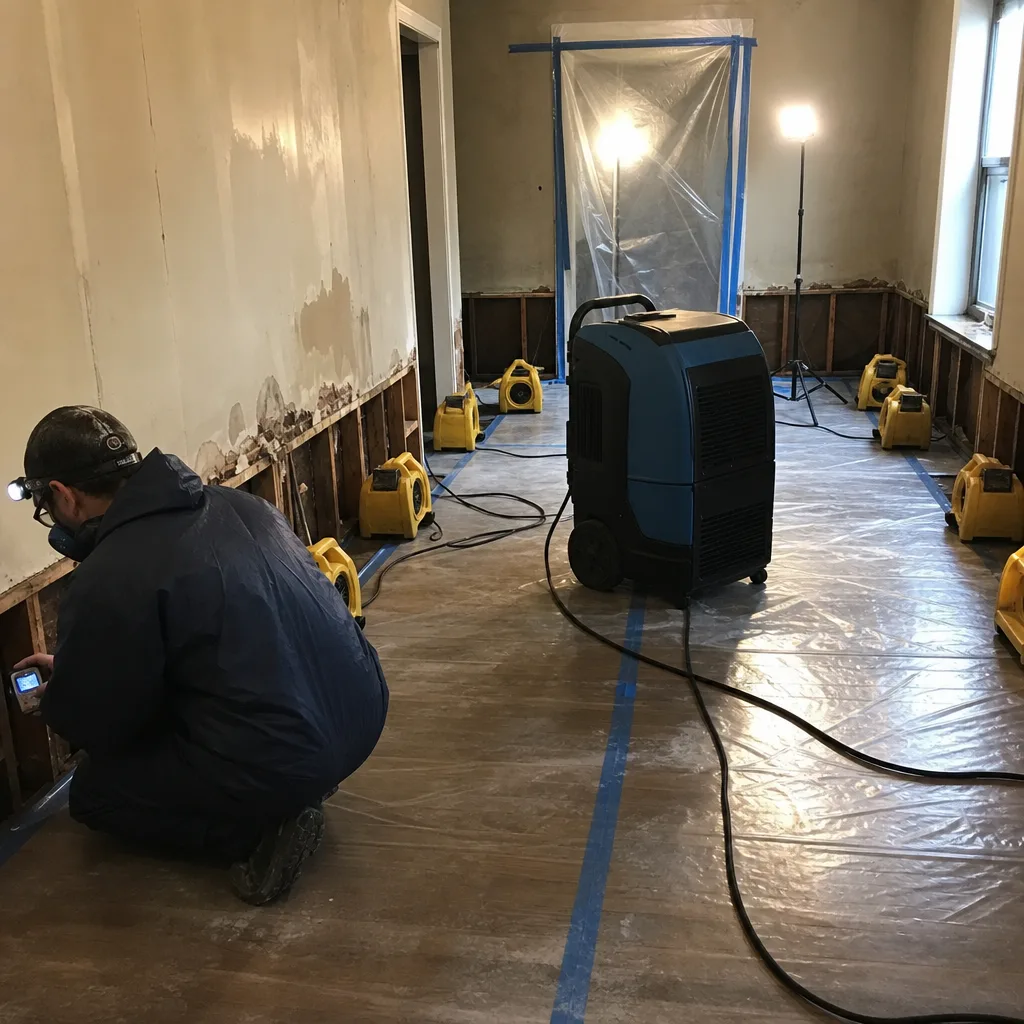
Burst Pipe Restoration
January freezes split supply lines in Great Neck’s older homes regularly. When a pipe blows, the water keeps running until someone finds the shutoff, which can mean drywall ceilings, soaked plaster, and ruined hardwood across multiple rooms. We extract, dry, and repair the damage, then coordinate with a licensed plumber for the pipe repair itself if you don’t already have one on site.
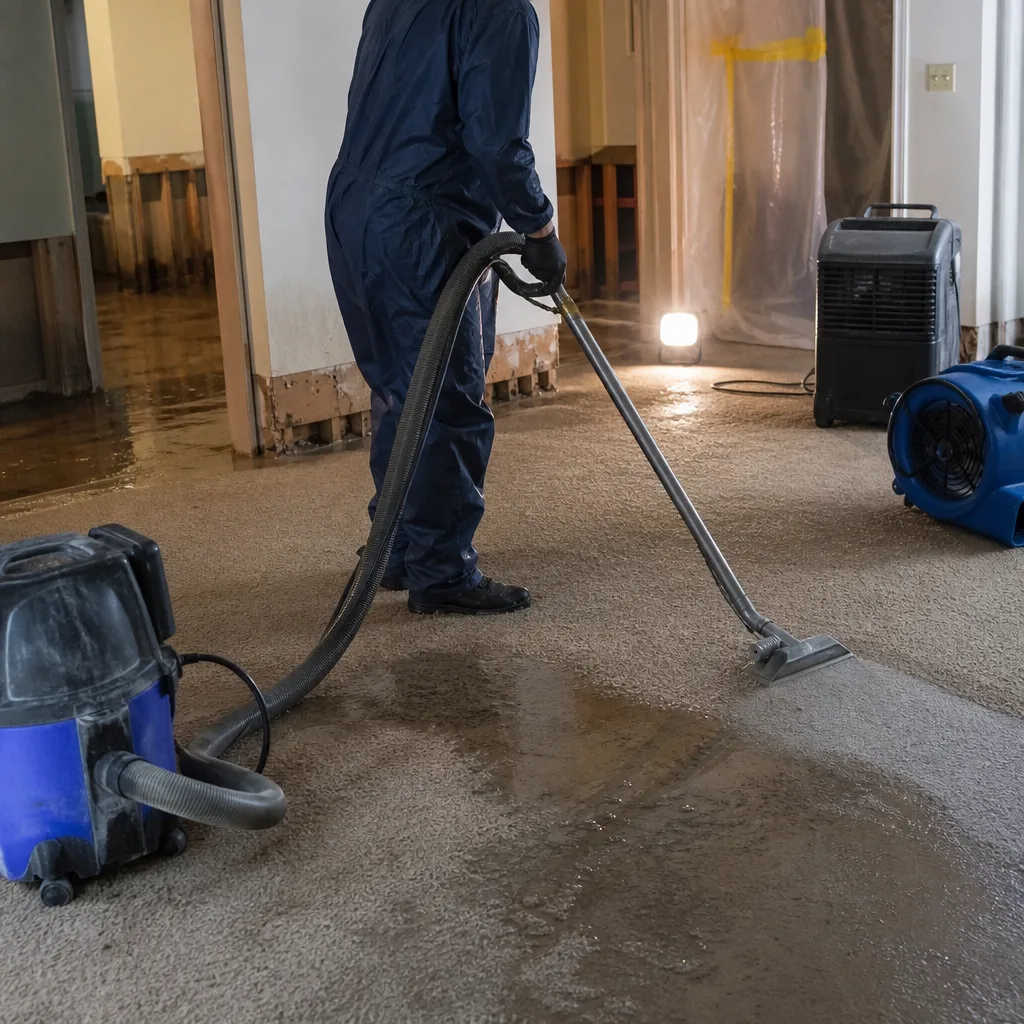
Basement Water Removal
Basement Water Removal is the most common call we get from Great Neck, and it’s rarely just about the water you can see. Groundwater intrusion through foundation cracks, failed sump pumps, and bay-side surge all fill basements differently. We remove the standing water, map the moisture, and identify the source so the basement doesn’t fill again next week. For finished basements, that means cutting out saturated drywall and insulation before mold gets a foothold.
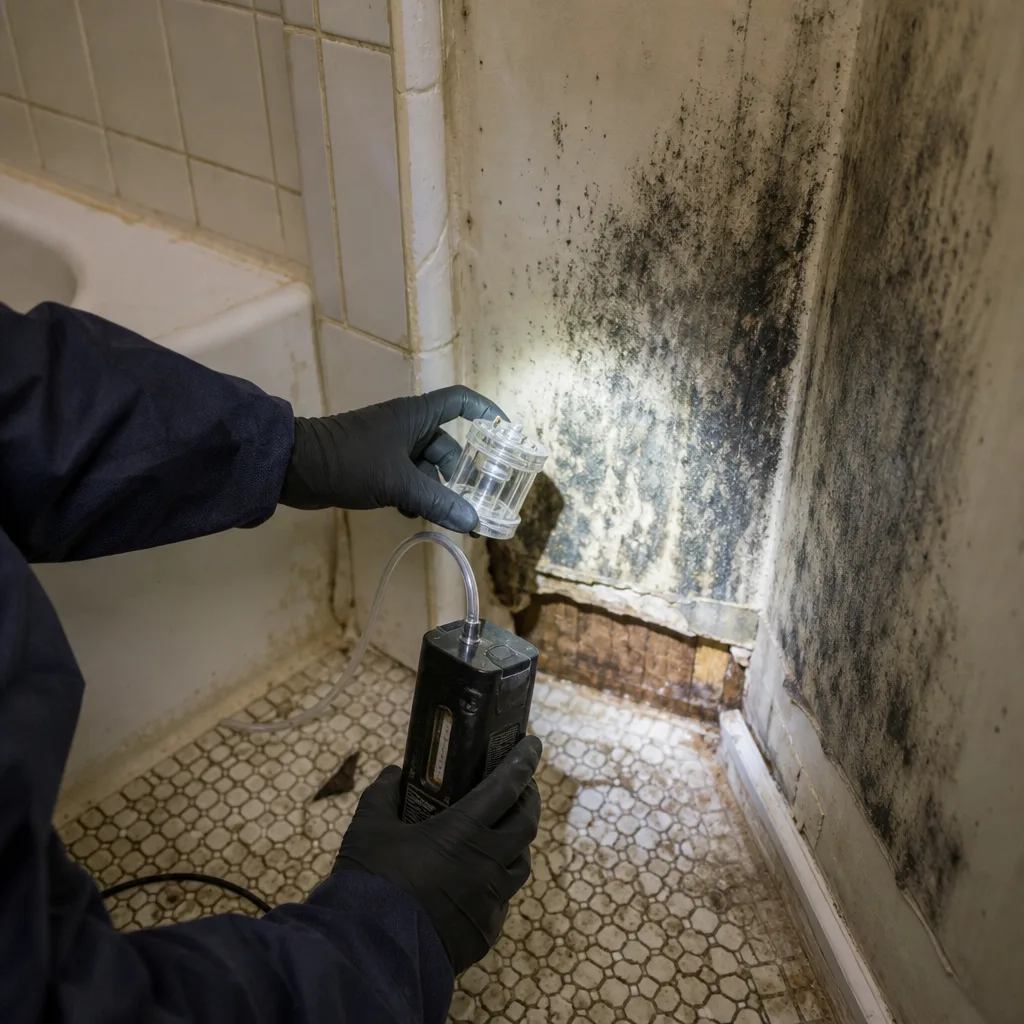
Ceiling & Roof Leak Water Damage
Slate and clay-tile roofs on Great Neck’s older Colonials and Tudors leak in ways asphalt shingles don’t. Water finds its way through cracked tiles, pools in the attic, and saturates plaster ceilings below. By the time the ceiling stain shows, the insulation above is often soaked. We trace the water path with moisture meters, dry the affected areas, and repair the finish work to match the original room.
What happens when you call
- 1
A real person answersNo phone trees - you reach a local pro.
- 2
You get an upfront price rangeHonest numbers before anyone is dispatched.
- 3
A background-checked tech heads outLicensed & insured, dispatched right away.
- 4
You approve before work beginsNothing starts until you say go.
Water Damage Restoration Costs in Great Neck, NY
Honest numbers for Great Neck work: a straightforward Category 1 burst-pipe cleanup with extraction and drying in one or two rooms runs $1,800-$4,500. A Category 2 basement job with carpet removal, drywall cutting, and structural drying typically falls between $3,500-$8,000, depending on the square footage and whether a sump pump replacement is involved. Category 3 saltwater surge restoration in a Kings Point finished basement is the expensive end: $8,000-$25,000 or more when salt corrosion demands electrical panel replacement, lally column remediation, and custom millwork restoration.
What moves the price most in Great Neck: the water category, how long the water sat before extraction started, whether plaster walls need controlled demolition, and whether salt corroded mechanical systems. Insurance covered most of the claims we handle here, either through homeowners policies for burst pipes or NFIP flood policies for surge events. Call (917) 924-4221 for a free inspection and a written scope with firm numbers.
We Also Serve Cities Near Great Neck
Our crews regularly work in Great Neck and the surrounding communities, including Little Neck just over the Queens line, Glen Oaks, Manhasset along the bay, and Bellerose. Same 45-minute response commitment, same certified crews, same equipment standards, every address.
Serving Great Neck, NY - Our Local Coverage Area
We’re based in the Great Neck area and know this community well. Use the map below to see our service coverage - if you’re nearby, we can almost certainly help.
Great Neck Water Damage Restoration Questions, Answered
How does Great Neck’s FEMA flood zone status change the scope of a water damage restoration project?
FEMA flood zone status changes the documentation and insurance side of the job more than the physical work. Most of Great Neck sits in a Special Flood Hazard Area, so water damage claims here run through NFIP Write Your Own carriers, which require elevation certificates, pre-loss condition photos, and detailed drying logs. Our restoration work includes that documentation from the first hour, so your claim isn’t denied for paperwork gaps.
Why are Kings Point and village waterfront basements more prone to catastrophic water damage than inland parts of Great Neck?
Kings Point and the village waterfront sit at the lowest elevations on the peninsula, directly exposed to storm surge from Long Island Sound. When a nor’easter pushes water over bulkheads, salt water floods basements faster than pumps can respond, and the salt residue keeps corroding steel and electrical systems long after the visible water is gone. Inland streets deal with groundwater and pipe failures; waterfront streets deal with the Sound itself.
Can my 1920s Tudor’s horsehair plaster walls be saved after flooding, or do they have to be replaced with drywall?
In most cases, yes, the plaster can be saved if we start drying before mold colonizes, usually within 24 to 48 hours of the water event. Horsehair plaster wicks water slowly, so controlled drying with Dri-Eaz dehumidifiers and air movers works. We cut out only the saturated base layer, save the original finish coats where possible, and patch with lime-based plaster rather than drywall compound. If the wall was saturated for days, full replacement may be the only safe option.
What does a Category 3 water loss from Long Island Sound surge mean for my custom millwork and hardwood floors?
Category 3 water contains sewage, salt, and organic matter, so anything porous that got wet needs either controlled drying with antimicrobial treatment or removal and replacement. Custom millwork and old-growth hardwood can often be saved if extraction starts quickly and drying is slow and measured. Salt content complicates the equation: we test for chloride residue, and if salt has penetrated the wood, replacement is usually the only path to pre-loss condition.
How do drying logs help with my flood insurance claim in Great Neck?
Drying logs prove to your carrier that the restoration followed industry standards and that the structure actually reached the dry standard before reconstruction began. For NFIP claims, adjusters expect daily moisture readings, equipment placement records, and documented dry-standard targets. We hand the log to you and send a copy to your carrier with the final scope, which makes the claim move faster and reduces back-and-forth.
How fast can a crew actually reach my Great Neck house?
Most Great Neck addresses get a crew within 45 minutes of your call. We dispatch from our New York City office, and our teams know the peninsula well enough to route around Middle Neck Road traffic and the LIE. A live person answers at (917) 924-4221 any hour, day or night, and extraction starts on our first visit.
Can we stay in our house during the restoration?
For Category 1 and most Category 2 losses, yes, usually with the affected areas contained. For Category 3 surge or sewage losses, particularly when mold is present or electrical panels got wet, we recommend relocating until the affected areas are contained, sanitized, and cleared for re-entry. Salt-corroded electrical panels are a safety risk that needs replacement before a room is safe to occupy.
What should I do in the first 30 minutes after discovering water damage?
Call (917) 924-4221 first. Then, if safe, shut off the main water valve and cut electrical power to the affected area. Don’t enter standing water in a basement with an energized panel. Don’t try to turn on fans or use a shop vac on contaminated water. Photos of the standing water and visible damage help your adjuster, but don’t delay the call to take them. We’ll document everything when we arrive, and you’ll have the photos we take for your claim.
Written by Curt Bowman, Owner at Floodline Restoration Co. of Manhattan, serving Great Neck and the North Shore with emergency water damage restoration, structural drying, and full reconstruction.