
Free visual inspection and a written scope of work before any mitigation begins - photos, moisture readings, and drying logs go in your claim file
The scope we write is the scope we bill. Anything new gets shown to you, in writing, before we touch it.






 Before
 After
After Before
 After
After Before
 After
After24/7 Emergency Water Damage Restoration in Ho-Ho-Kus
Water damage restoration in Ho-Ho-Kus typically costs $2,800-$9,400 depending on the water category and square footage affected, with emergency extraction starting around $400-$800 for a single basement room. Our crews reach Ho-Ho-Kus homes within 45 minutes, any hour, any day, and start extraction on the same visit. Call (917) 924-4221 the moment you see standing water or a spreading stain. The first hour decides whether you’re drying plaster or replacing it. When the Hohokus Brook overruns its banks or a supply line lets go at 2 a.m., a live dispatcher answers and a certified crew heads your way, not a recording that tells you to leave a message.
We’re Floodline Restoration Co., and our Water Damage Restoration team has worked the Brook-adjacent streets of Ho-Ho-Kus long enough to know what these older homes do when water gets inside them. Plaster-and-lath walls trap moisture. Stone foundations wick groundwater for weeks. Finished basements rebuilt after Irene hide mold behind drywall that looks fine from the outside. The sooner we put eyes and moisture meters on the loss, the smaller the scope stays.
Understanding Water Damage Restoration Severity in Ho-Ho-Kus Properties
We classify every loss by water category before we touch a wall. Category 1 is clean water from a burst supply line or an overflowing tub. Category 2 carries some contamination, typical of sump pump failures or washing machine discharge. Category 3 is sewage or river water from the Hohokus Brook, and it changes everything: full containment, antimicrobial treatment, and disposal of porous materials rather than drying them. Ho-Ho-Kus homes make category assessment particularly important because so many are pre-war construction with plaster-and-lath walls and stone or rubble-block foundations. Plaster absorbs moisture slowly but releases it slower, which means a Category 2 event that would dry out in a week in a drywalled house can take twice as long here if it’s not mapped and logged correctly from day one.
Moisture mapping matters more on these streets than in newer Bergen County subdivisions. We use thermal imaging cameras and penetrating moisture meters to find water inside wall cavities, under baseboards, and behind built-ins where no staining shows yet. Structural drying in a 1920s colonial with a finished basement requires different air movement than a 1990s addition; the older sections of these homes have dead air spaces that hold humidity. If the dry standard isn’t met on the log, the job isn’t done, and we don’t hand you the moisture log until it is.
Why Ho-Ho-Kus Property Owners Choose Floodline Restoration Co. of Manhattan
- 45-minute response commitment to Ho-Ho-Kus. We dispatch from the metro office and our teams know the routes into the borough, including the lower sections near the Brook, without guidance. When water is moving, speed is scope.
- A live person answers, 24/7. Not an answering service, not a callback queue. A dispatcher picks up at 3 a.m. and a crew is rolling. Curt Bowman built the company around that board in 2010, and it hasn’t changed.
- Certified crews, IICRC standards. Our technicians hold WRT, ASD, and AMRT certifications and train to RIA and IFA guidelines. Background-checked and uniformed, every visit.
- Free visual inspection with a written finding. We walk the loss, read the moisture, and tell you what we found and what we’d do, no charge. Then you decide.
- Direct insurance billing. We work from your policy, document to carrier standards, and coordinate with your adjuster. You never play courier between us and the insurance company.
- One team from extraction to reconstruction. The same certified crew that pulls the water also hangs the drywall. No mid-job handoff, no stranger showing up with a different truck and a different idea of scope.
Our Water Damage Restoration Process
Inspection & Assessment
We arrive, walk the loss with you, and start with thermal imaging and moisture meters before moving anything. In Ho-Ho-Kus’s older homes, we look specifically for moisture trapped in plaster wall cavities and water wicking through stone foundation walls. You get a clear read on category, affected square footage, and what the drying window looks like.
Extraction & Stabilization
Submersible pumps and truck-mounted extractors pull standing water fast. On a flooded basement near the Brook, we typically remove several hundred gallons before drying equipment even goes in. Stabilization includes moving or protecting contents and cutting no more drywall than necessary.
Drying & Dehumidification
We set Dri-Eaz and Phoenix air movers with low-grain refrigerant dehumidifiers and Injectidry systems for wall cavities and under-floor spaces. Daily readings are logged on paper, shared with you and your carrier, and adjusted until every zone hits the dry standard. Plaster takes what it takes; we don’t rush it and we don’t call it early.
Cleaning & Sanitization
Category 2 and 3 water gets antimicrobial treatment on affected surfaces and HEPA air scrubbing where mold spores or sewage bacteria are a concern. In finished basements with prior flood history, this step often includes opening hidden cavities to confirm what’s growing behind them.
Floodplain-Specific Treatment
Ho-Ho-Kus homes with stone or rubble-block foundations need more than surface drying. We check for groundwater wicking, install or verify sump redundancy where the property already fought this battle, and map vapor barrier condition before any rebuild starts. Skipping this step is why so many Brook-adjacent basements fail twice.
Repairs & Restoration
We reconstruct what needed removing, from baseboards to full finished basements. Because the same crew did the extraction and drying, the rebuild starts from a true dry standard, not a guess. Everything is backed by the 90-Day Done Right Promise, in writing.
Need Emergency Water Damage Restoration in Ho-Ho-Kus Now?
Crews minutes away, answering live 24 hours a day. The sooner we start, the less it costs.
Working With Your Insurance Company
Most Ho-Ho-Kus homeowners we serve carry flood insurance through the NFIP or a private carrier, and storm-related losses along the Hohokus Brook are claim territory we know thoroughly. We document from the first hour: photographs before anything moves, moisture readings on paper, a line-item scope that matches carrier estimating standards, and drying logs that show daily progress until the dry standard is met. Our project managers talk directly to your adjuster, which means you aren’t transcribing scope notes between two parties who speak different languages. Where the damage traces to a burst pipe or supply line failure rather than surface flooding, standard homeowners coverage typically applies, and we bill the carrier directly for covered work. The 90-Day Done Right Promise applies regardless of who pays the bill.
What We Provide Your Insurer
- Thorough documentation of the loss
- Photos of all damage, room by room
- Moisture readings and drying logs
- A detailed, line-item scope of work
- Direct coordination with your carrier
Built for Ho-Ho-Kus’s Loss Calendar
Ho-Ho-Kus doesn’t have one water damage season. It has several, and they follow the weather and the calendar in ways homeowners here learn over decades. January and February bring deep freezes that split supply lines in unheated crawl spaces and exterior wall chases, a particular risk in the borough’s 1920s and 1930s homes where original copper runs through uninsulated framing. March and April deliver thaw and spring rains; with the ground already saturated from winter, the Hohokus Brook rises and basement seepage through stone foundations starts. July and August thunderstorms dump inches in an hour, overwhelming sump pumps and sending surface water over foundation sills. September through November is nor’easter season, and that’s when the Brook claims its biggest wins, overtopping banks along the lower sections of the borough and pushing Category 3 floodwater into finished basements. If your home sits in or near the Brook’s active floodplain, the realistic expectation in Ho-Ho-Kus is not if water returns, but when, and the answer is that you’ll cycle through professional restoration every few years. The homes that fare best are the ones whose owners call early and let a certified crew run the drying properly, not the ones that try to fan it out and move on.
Water Damage Restoration Across Ho-Ho-Kus’s Neighborhoods
The borough is small, just over one square mile, but water behaves differently from one end to the other. Homes near the Hohokus Brook’s lower sections, off Hollywood Avenue and around the area closest to the Waldwick border, flood when the Brook overruns its banks, and those losses are typically Category 3 with full containment required. The central streets around the Ho-Ho-Kus train station see more burst pipe and supply line failures, driven by freeze-thaw cycles in the older framing, and those are usually Category 1 or 2, meaning faster drying and less demolition. Homes in the northern section closer to Ridgewood sit slightly higher and slope toward the Saddle River watershed, where basement water entry often traces to groundwater seepage rather than surface flooding, a different drying problem entirely. Across all of it, the common thread is the housing stock itself: plaster walls, stone foundations, and finished basements that were built before modern moisture management was standard. We know the routes and the typical loss patterns on each street, which means the first visit spends more time on extraction and less on orientation.
Specialized Water Damage Restoration Services We Offer in Ho-Ho-Kus
Flood Cleanup
When the Hohokus Brook tops its banks, the water entering your home is Category 3, carrying sediment, bacteria, and whatever the current picked up upstream. Flood cleanup in Ho-Ho-Kus means full containment, removal of saturated porous materials, antimicrobial treatment, and structural drying to a documented standard, not just mopping until it looks dry. We’ve worked these streets after Irene and Ida, and we know what these basements hold.
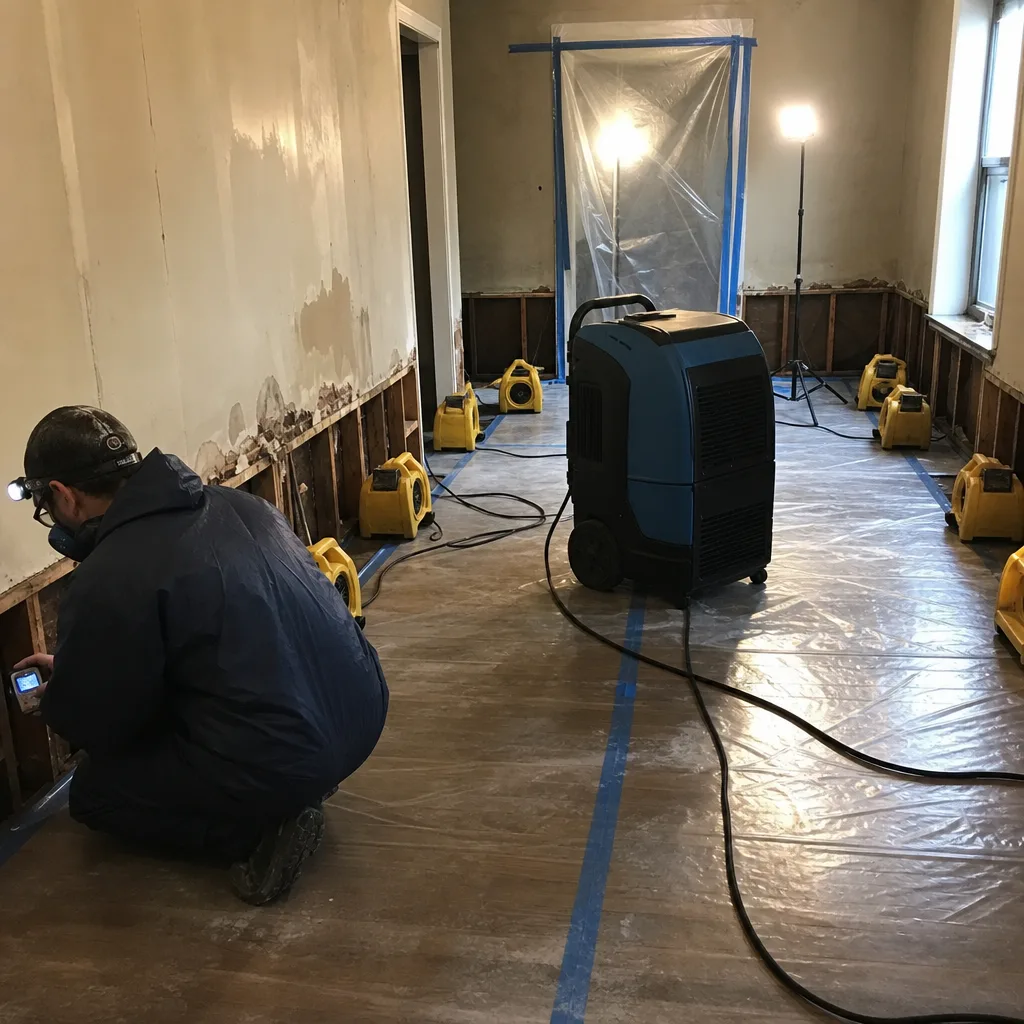
Structural Drying & Dehumidification
Plaster-and-lath walls and stone foundations demand a longer, more deliberate drying curve than drywall over stud framing. We run Dri-Eaz and Phoenix dehumidifiers with daily moisture readings and adjust airflow until every zone clears the dry standard. In Ho-Ho-Kus’s older construction, this is the step that separates a one-time restoration from a recurring mold problem.
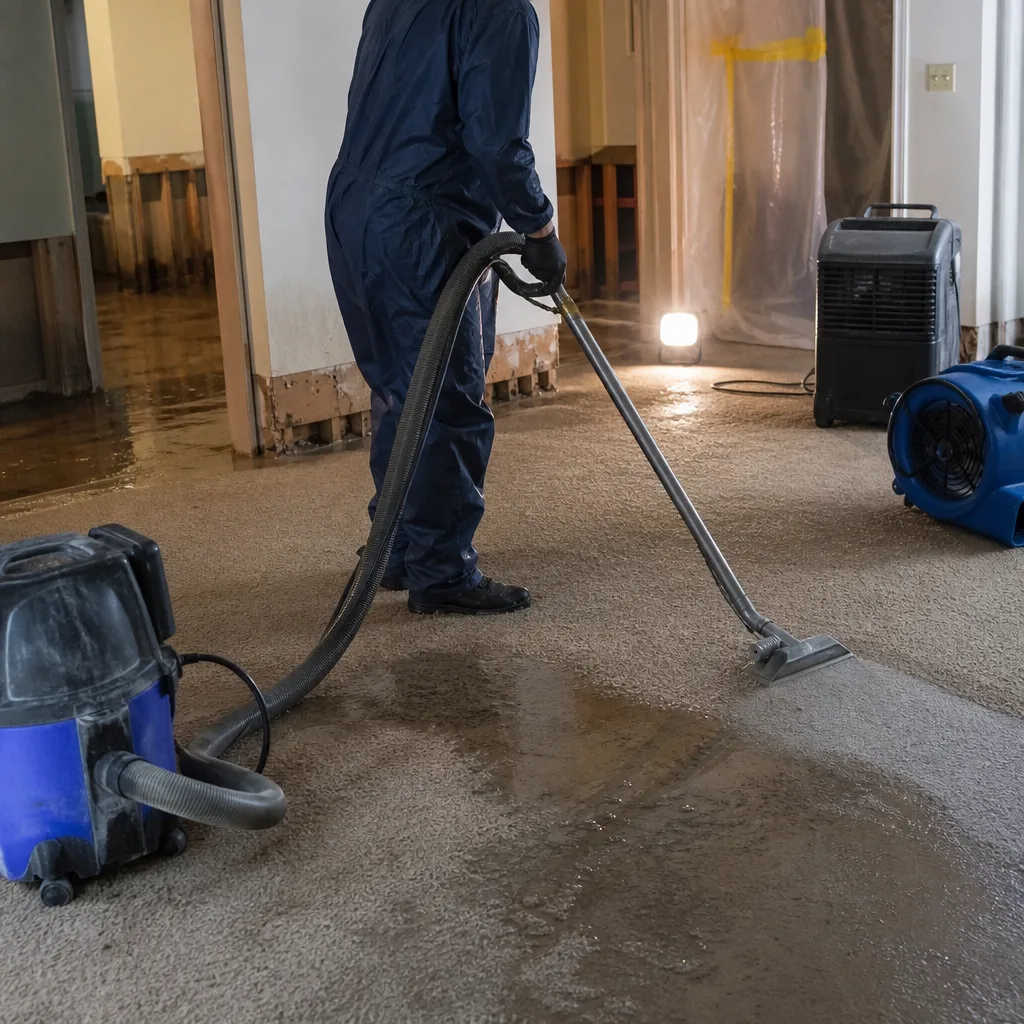
Basement Water Removal
Finished basements here are where the damage concentrates: recreation rooms, laundry areas, storage built into the foundation’s low point. We pump standing water, remove soaked carpet and pad, open no more drywall than needed, and dry the structural envelope before anything gets rebuilt. If a prior owner rebuilt after Irene without a vapor barrier, we find it and we tell you what it means.
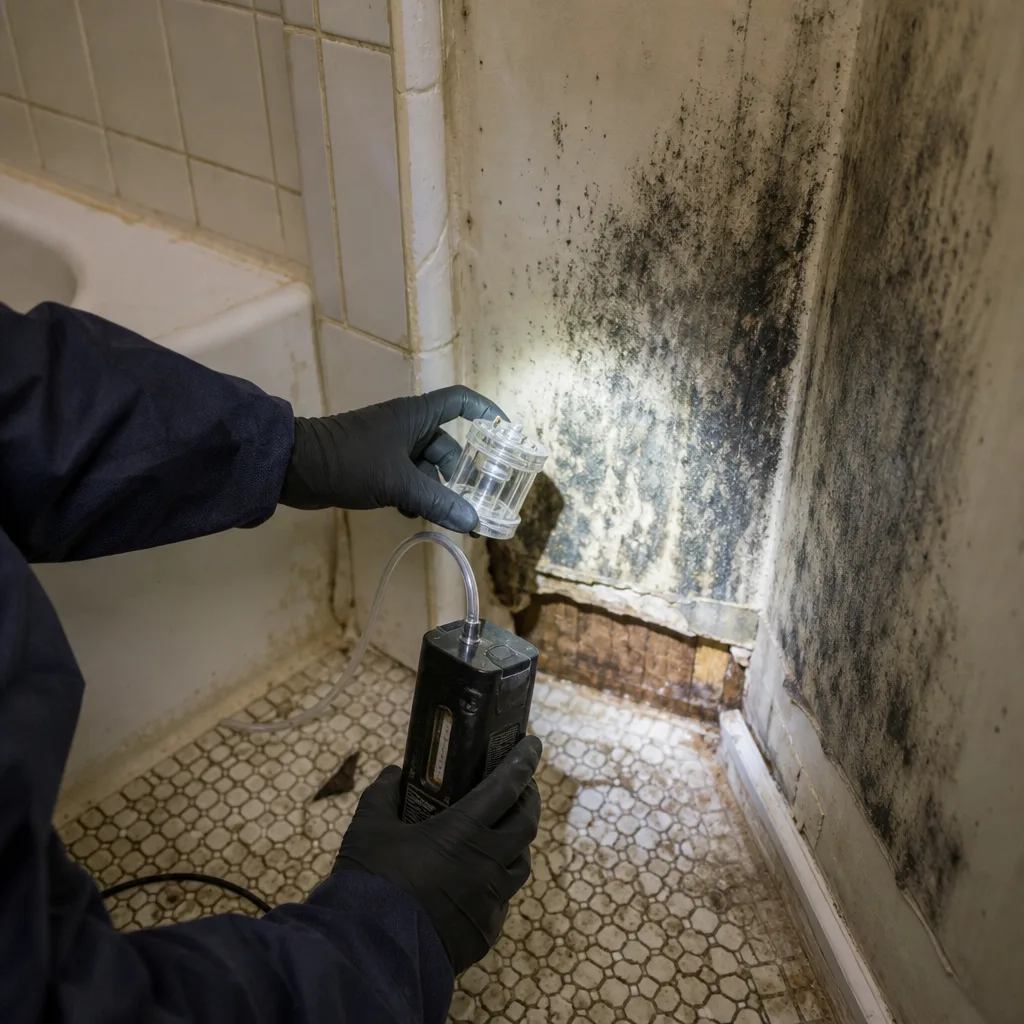
Emergency Water Extraction
Fast extraction cuts the total loss every time. Our truck-mounted extractors pull hundreds of gallons in the first hour, and the difference between a basement pumped at midnight and one pumped the next morning is often the difference between drying and demolition. Call when you see it, not when it settles.
Burst Pipe Restoration
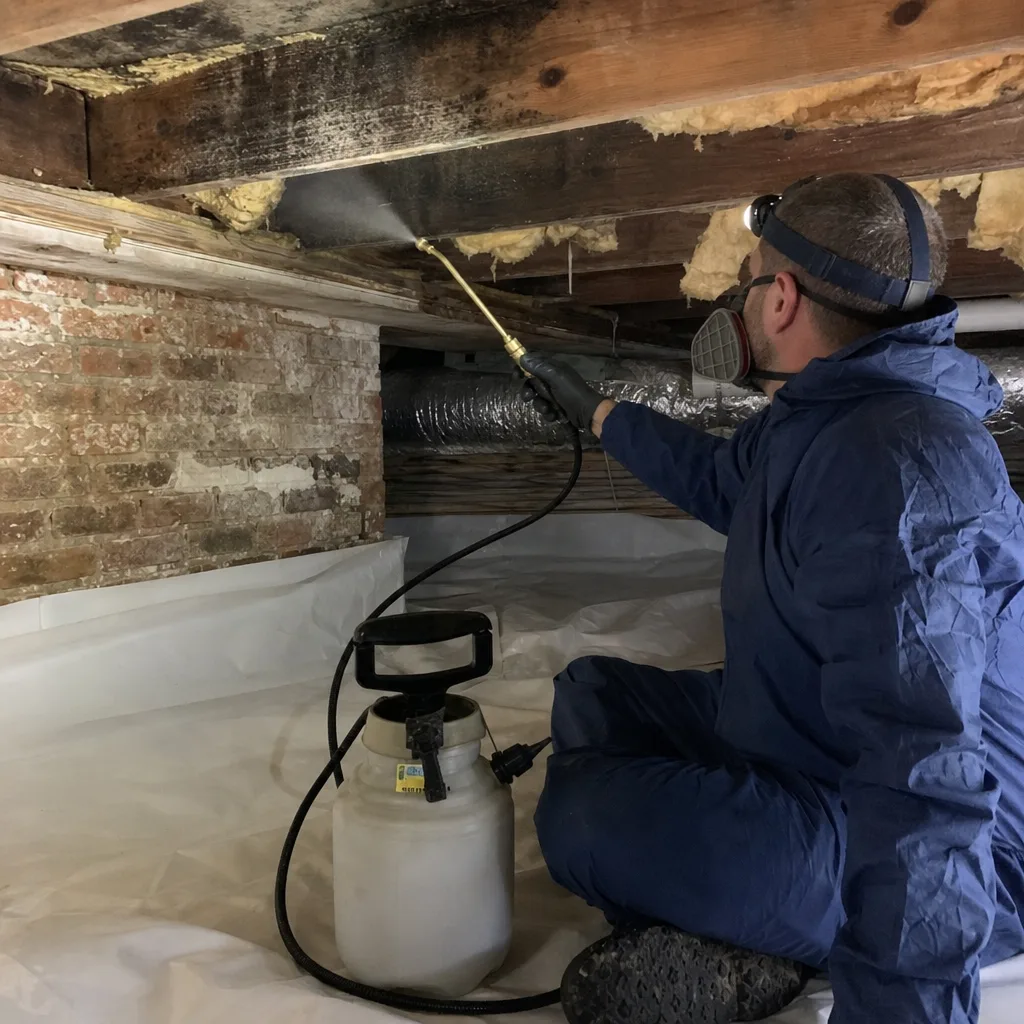
Winter in Ho-Ho-Kus means freeze-thaw cycles that split original copper supply lines inside walls and ceilings. These are usually Category 1 losses, which is the good news: clean water, faster drying, less demolition. The bad news is that the water travels before you find it, and plaster hides the migration path. Moisture mapping finds it.
What happens when you call
- 1
A real person answersNo phone trees - you reach a local pro.
- 2
You get an upfront price rangeHonest numbers before anyone is dispatched.
- 3
A background-checked tech heads outLicensed & insured, dispatched right away.
- 4
You approve before work beginsNothing starts until you say go.
Water Damage Restoration Costs in Ho-Ho-Kus, NJ
A typical Category 1 basement extraction in Ho-Ho-Kus runs $400-$800 for the water removal itself, with structural drying adding $1,500-$3,500 depending on square footage and how long the water sat. Category 3 flood cleanup from Hohokus Brook overflow runs higher, usually $4,000-$12,000 for a finished basement, because it includes containment, antimicrobial treatment, and disposal of saturated materials. Plaster walls cost more to dry than drywall, full stop, and stone foundations that wick groundwater extend the drying timeline, which moves the price. Mold remediation triggered by hidden colonies behind old drywall adds $2,000-$6,000 depending on extent. We give free visual inspections and a written scope before any work starts, so the number you’re quoted is the number we bill, minus whatever changed because we found something inside a wall. Insurance typically covers most storm-related losses under flood policies or standard homeowners coverage for pipe breaks, and we bill carriers directly. Call (917) 924-4221 for an exact quote on your loss, estimates are free.
We Also Serve Cities Near Ho-Ho-Kus
Our crews regularly work in Alpine, Bergenfield, Bogota, and Carlstadt, where older housing stock and high water tables create similar loss patterns. If you’re in one of these neighboring boroughs and water just entered your home, the same live dispatcher answers and the same certified crews respond.
Serving Ho-Ho-Kus, NJ - Our Local Coverage Area
We’re based in the Ho-Ho-Kus area and know this community well. Use the map below to see our service coverage - if you’re nearby, we can almost certainly help.
Ho-Ho-Kus Water Damage Restoration Questions, Answered
How does Ho-Ho-Kus’s older housing stock affect water damage restoration compared to newer construction?
Plaster-and-lath walls absorb water slowly but release it slower, which extends drying timelines and hides moisture inside wall cavities that look dry from the surface. Stone and rubble-block foundations wick groundwater for weeks after surface flooding recedes, so drying a 1920s colonial in Ho-Ho-Kus takes longer and requires more deliberate moisture mapping than a 1990s drywalled house. Call (917) 924-4221 and we’ll explain what your specific walls and foundation mean for the drying plan.
What makes flood cleanup along the Hohokus Brook different from other water damage jobs in Bergen County?
Brook overflow is Category 3 water, carrying sediment, bacteria, and debris, which means full containment and antimicrobial treatment are required before drying starts. Homes in the floodplain also tend to have prior flood history, often with finished basements rebuilt after Irene or Ida without proper vapor barriers, so our scope of work frequently includes opening hidden cavities and correcting past mistakes. Call us for a free inspection and we’ll tell you exactly what category your water is and what it means.
Why do finished basements in Ho-Ho-Kus often hide mold after a storm, even if the owner thinks they dried it out?
Because drywall and baseboards can look dry to the touch while moisture persists inside wall cavities and behind vapor barriers that were never installed correctly after a prior flood. Plaster walls compound the problem by trapping moisture deep in the material, and Ho-Ho-Kus’s stone foundations keep feeding the space groundwater long after the surface is dry. We use moisture meters and thermal imaging to find what eyes miss, and the 90-Day Done Right Promise means we stand behind the result.
How soon should I call for water extraction in Ho-Ho-Kus after the Hohokus Brook floods?
Call immediately, even if the water is still rising or has just started receding. The first hour after water enters determines whether you’re drying plaster or replacing it, and every hour of saturation extends the drying timeline and expands the scope. Our crews reach Ho-Ho-Kus within 45 minutes and start extraction on the same visit, any hour of the day or night. (917) 924-4221.
Can older Ho-Ho-Kus homes with stone foundations ever be fully dried after repeated flooding?
Yes, but only if the drying plan accounts for groundwater wicking and the foundation’s porosity, not just the air in the room. Full drying requires monitoring moisture levels inside the stone and mortar, not just the wall surfaces, and often takes longer than homeowners expect. We log readings daily and share the log with you and your carrier, so the dry standard is documented before any rebuild starts.
How fast can a crew actually reach my home in Ho-Ho-Kus?
Our response commitment is 45 minutes from your call to our arrival at your door. We dispatch from the metro office with crews who know the Ho-Ho-Kus routes, including the lower sections near the Brook, without consulting a map. A live person answers the phone at 2 a.m. and a crew is rolling within minutes.
Will my insurance cover water damage restoration?
Storm-related flooding from the Hohokus Brook typically falls under flood insurance through NFIP or a private carrier, while burst pipes and supply line failures usually fall under standard homeowners coverage. We document from the first hour to carrier standards, provide drying logs and line-item scopes, and coordinate directly with your adjuster. Call (917) 924-4221 and we’ll walk through what your policy covers before any work begins.
What should I do in the first 30 minutes after discovering water in my Ho-Ho-Kus home?
Shut off the water source if it’s a plumbing failure and safe to reach, cut power to the affected area at the breaker, and move valuables up and out of the water. Don’t run fans or household dehumidifiers on Category 3 water, because that spreads contaminants into the air. Then call us at (917) 924-4221. A real person answers, and a certified crew is on the way.
Written by Curt Bowman, Owner at Floodline Restoration Co., serving Ho-Ho-Kus and Bergen County with certified water damage restoration since 2010.