
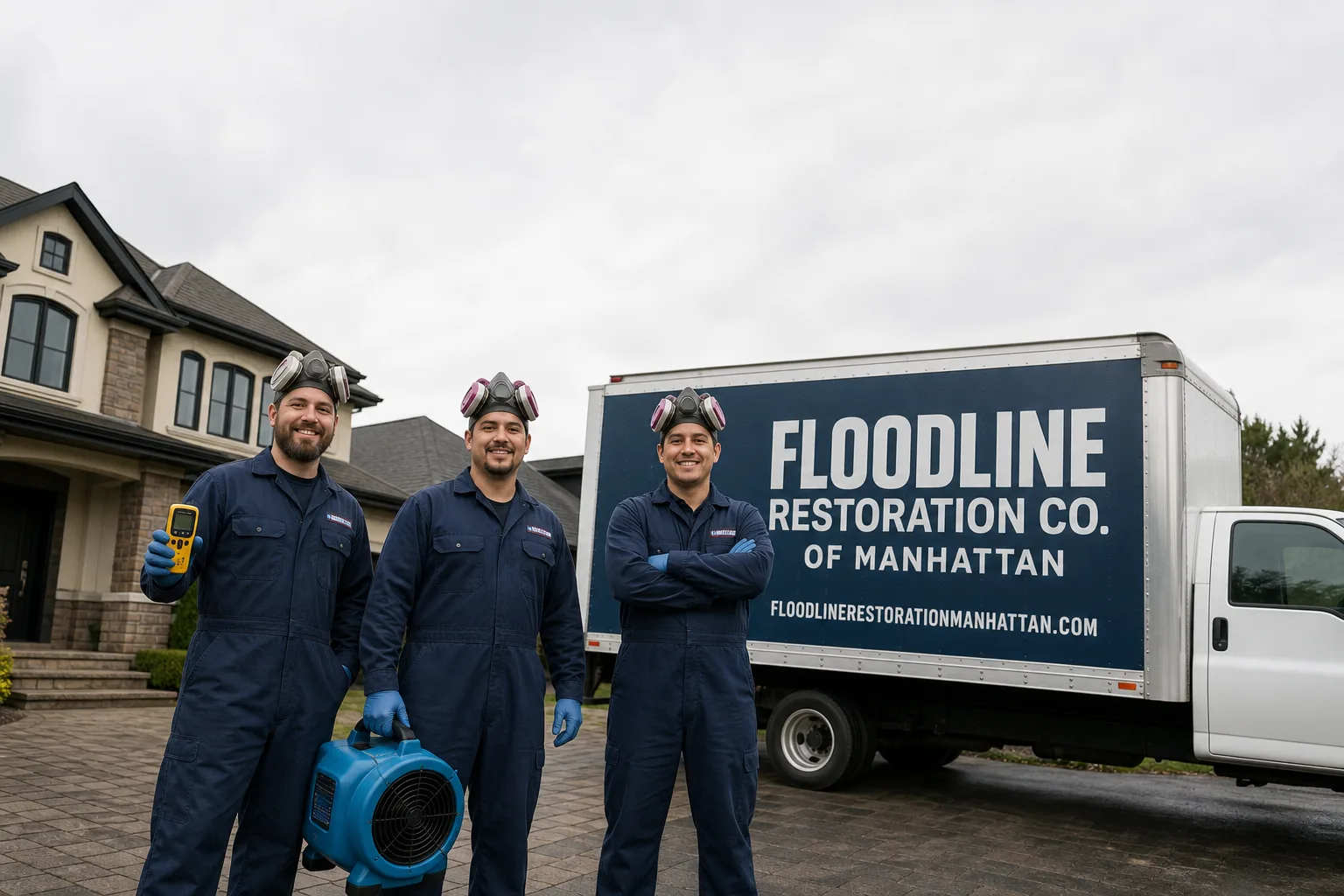
Free visual inspection and a written scope of work before any mitigation begins - photos, moisture readings, and drying logs go in your claim file
The scope we write is the scope we bill. Anything new gets shown to you, in writing, before we touch it.






 Before
 After
After Before
 After
After Before
 After
After24/7 Emergency Water Damage Restoration in Little Neck
Water damage restoration in Little Neck typically costs between $1,800 and $6,500 for a standard basement or first-floor event, and our crews reach most Little Neck addresses within 45 minutes of your call. We answer the phone live at (917) 924-4221 at two in the morning the same way we do at noon, because bay water and burst supply lines don’t keep business hours. The first hour matters more than most homeowners realize: standing Category 3 water from Little Neck Bay is working its way into plaster, sill plates, and unvented crawl spaces from the moment it enters.
We dispatch crews from our New York City office directly into Little Neck, Great Neck, and the surrounding Queens and Nassau edge. The visual inspection is free, and we’ll give you a written scope before any equipment comes off the truck.
Understanding Water Damage Restoration Severity in Little Neck Properties
Little Neck’s housing stock changes how water behaves once it’s inside. Most homes here are detached Colonials, Tudors, and Cape Cods built between the 1920s and 1950s, and they share one trait that matters more than any other during a water loss: original plaster-over-lath walls. Plaster absorbs water like a sponge and releases it slowly, which means a flood that would show obvious staining on modern drywall can hide inside a Little Neck wall cavity for weeks before anyone sees a mark.
We classify water by source and contamination level. Category 1 is clean water from a burst supply line or failed water heater. Category 2 carries significant contamination, typically from washing machine overflows or sump pump failures. Category 3 is grossly contaminated, and bay surge from Little Neck Bay is firmly in this class: saltwater, sewage backflow from the older combined stormwater and sewer lines near Northern Boulevard, and whatever the tide carried in. Each category determines the drying protocol, the antimicrobial treatment, and what gets removed versus what we can save.
Moisture mapping is non-negotiable on these older homes. We use thermal imaging and in-wall probes to find water trapped behind intact-looking plaster before we ever set an air mover, because the plaster itself provides a false “dry” reading on the surface.
Why Little Neck Property Owners Choose Floodline Restoration Co. of Manhattan
- 45-minute response commitment for Little Neck addresses, with a live dispatcher confirming your crew’s ETA before you hang up.
- A real person answers, 24/7. No phone tree, no answering service that takes a message. You talk to someone who can dispatch.
- IICRC-certified crews trained to WRT and ASD standards, with RIA and IFA-certified technicians on every job. Uniformed, background-checked, and badged.
- Free visual inspection with moisture readings and a written scope of work before any mitigation begins. No pressure, no surprise line items.
- Direct insurance billing. We document everything from hour one, send the estimate and drying log to your carrier, and deal with the adjuster directly.
- One crew from extraction to reconstruction. The same team that extracts the water also rebuilds the wall. No mid-job handoff, no inherited subcontractor.
Our Water Damage Restoration Process
Inspection & Assessment
We arrive within 45 minutes, map the affected area with thermal imaging and penetrating moisture meters, and determine the water category. In Little Neck’s plaster-and-lath homes, this means probing behind wall surfaces, not just reading surface humidity. You get a written scope and a firm price before work begins.
Extraction & Stabilization
Standing water comes out first, using truck-mounted and portable extraction units. For Category 3 bay water, we remove contaminated materials and establish containment before drying starts. We also shut off water at the source and stabilize any sagging ceiling or compromised flooring.
Drying & Dehumidification
Dri-Eaz air movers and Phoenix dehumidifiers are placed according to the moisture map, not in a generic grid. On plaster walls, we often open small channels behind baseboards to let trapped wall-cavity moisture escape instead of tearing out whole sections. Daily moisture readings are logged against the dry standard.
Cleaning & Sanitization
HEPA air scrubbers run throughout the drying phase, and affected surfaces are cleaned with antimicrobial treatments appropriate to the water category. For Category 3, we follow IICRC protocols for contaminated material removal and surface disinfection before reconstruction begins.
Plaster-Specific Treatment
This is the step most national franchises miss in Little Neck. We test for hidden moisture behind original lath, check for mold concealment inside unvented wall cavities, and document whether residual moisture from Hurricane Sandy-era flooding is still present beneath the current loss. Treatment decisions are based on what’s actually inside your walls.
Repairs & Restoration
The same crew that extracted the water handles the rebuild: plaster repair, trim, flooring, painting, and any structural repairs. We hand you a complete moisture log and a written 90-Day Done Right Promise before we leave. If it’s not done right, we make it right.
Need Emergency Water Damage Restoration in Little Neck Now?
Crews minutes away, answering live 24 hours a day. The sooner we start, the less it costs.
Working With Your Insurance Company
Water damage claims in Little Neck get complicated fast, especially when bay flooding and pre-existing moisture meet in the same wall cavity. We document everything from the first hour: photos of standing water before extraction, thermal images showing the moisture boundary, daily drying logs with actual readings, and a line-item scope that separates your current loss from any older condition the adjuster may flag. Our Water Damage Restoration team deals directly with your carrier so you’re not the one translating between a mitigation company, a separate rebuild contractor, and an adjuster on a deadline. It keeps the claim moving and keeps the story straight.
What We Provide Your Insurer
- Thorough documentation of the loss
- Photos of all damage, room by room
- Moisture readings and drying logs
- A detailed, line-item scope of work
- Direct coordination with your carrier
Built for Little Neck’s Loss Calendar
Little Neck gets hit from three directions, and each season brings its own water damage profile. January and February bring deep freezes that burst supply lines in uninsulated 1920s and 1930s basements, often while the homeowner is away for a week or more. The result is a full-basement Category 1 or 2 loss that’s had days to wick up into the plaster before anyone opens the basement door.
Spring is thaw season, when groundwater rises against old fieldstone and brick foundation walls and finds every crack. The older combined stormwater and sewer system along the low-lying streets near Northern Boulevard backs up under heavy rain, and sump pumps that ran fine for a decade suddenly can’t keep up. Summer thunderstorms dump an inch of rain in an hour, overwhelming the storm drains and sending sheet water into below-grade entries and window wells.
Late summer and fall bring the nor’easters, and that’s when Little Neck Bay becomes the problem. Storm surge pushes tidal water over bulkheads and into the lowest residential blocks, and nothing in a typical homeowner’s preparation stops that volume of Category 3 water. We see it every year on the same bay-side streets, and we’ve learned exactly where the hidden moisture settles afterward.
Water Damage Restoration Across Little Neck’s Neighborhoods
Little Neck runs narrow and long between the Long Island Expressway and Little Neck Bay, and the water damage profile changes block by block. The bay-side streets west of Little Neck Parkway, from the water up toward Northern Boulevard, sit low and take the worst of any nor’easter surge. Those homes, mostly 1920s and 1930s Colonials and Tudors with original foundations, need full Category 3 protocol whenever the bulkheads overtop.
Around the 11362 zip code’s interior, near Marathon Parkway and the blocks around P.S. 221, the homes are a mix of 1940s Capes and postwar Colonials with slightly newer basements but the same plaster-over-lath construction. Losses here are driven less by bay surge and more by burst pipes, failed water heaters, and groundwater seepage after sustained rain. The drying approach still has to account for plaster’s slow moisture release.
East toward Glen Oaks and the Nassau line, where Little Neck gives way to Great Neck territory, we see more split-levels and raised ranches from the 1950s. They dry faster than the older stock, but the unvented crawl spaces common under those floors hold moisture stubbornly and need careful treatment or the damp smell never really leaves.
Homes along Northern Boulevard, from the Douglaston edge through the commercial corridor past Little Neck Parkway, sit close enough to the bay’s influence to take street-level flooding when the older combined sewer system surcharges. That’s Category 2 or 3 water depending on whether sewage was involved, and we treat it accordingly.
Specialized Water Damage Restoration Services We Offer in Little Neck
Flood Cleanup
Bay surge and storm flooding in Little Neck bring saltwater, silt, and whatever the tide carried past the bulkheads. That’s Category 3 water by definition, and it requires more than a wet vac. We extract, remove contaminated materials, apply antimicrobial treatment, and dry the structure to the IICRC dry standard with daily logs.
Basement Water Removal
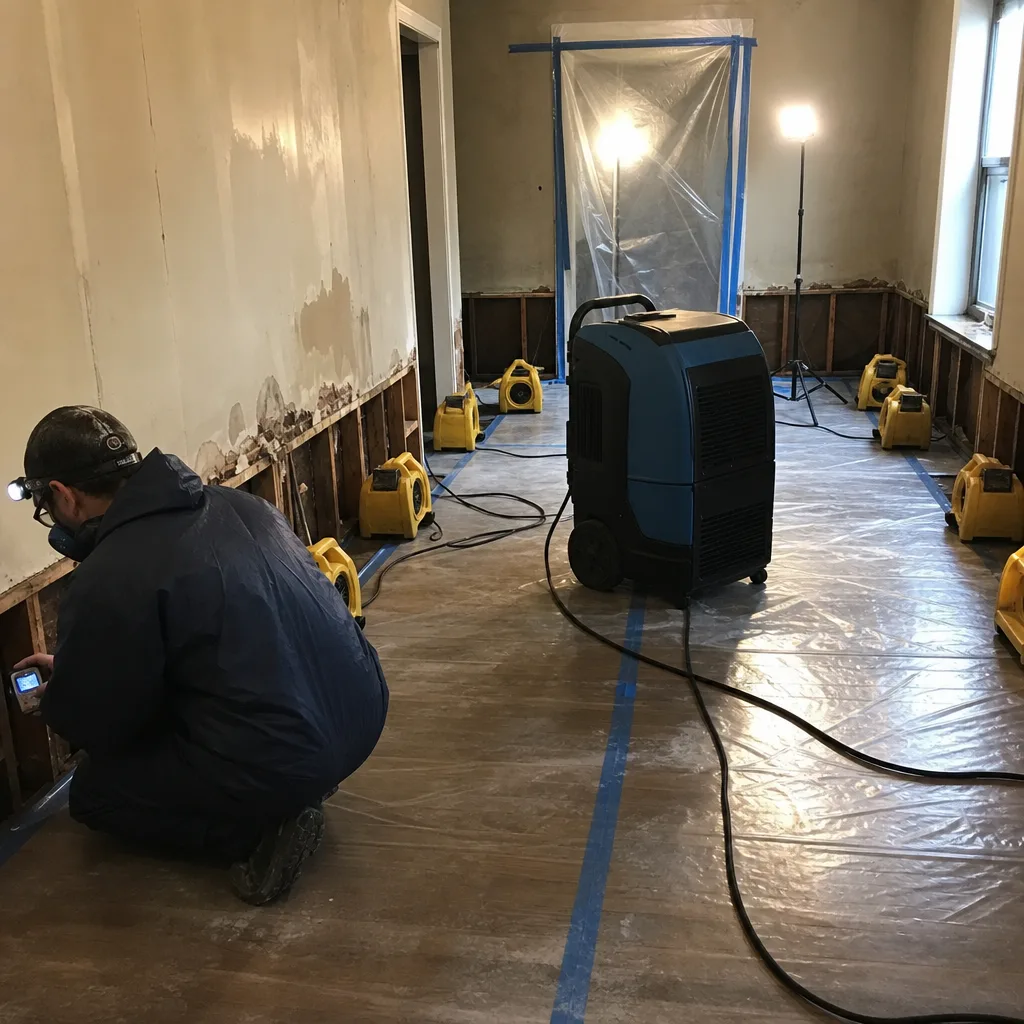
Most Little Neck basements are full-height but built before modern waterproofing. When groundwater or a failed sump pump puts six inches of water across a 1930s basement floor, we extract it fast and then map the walls to see how far the moisture wicked upward into the plaster. The floor may be wet for six inches; the walls are often wet for three feet.
Structural Drying & Dehumidification
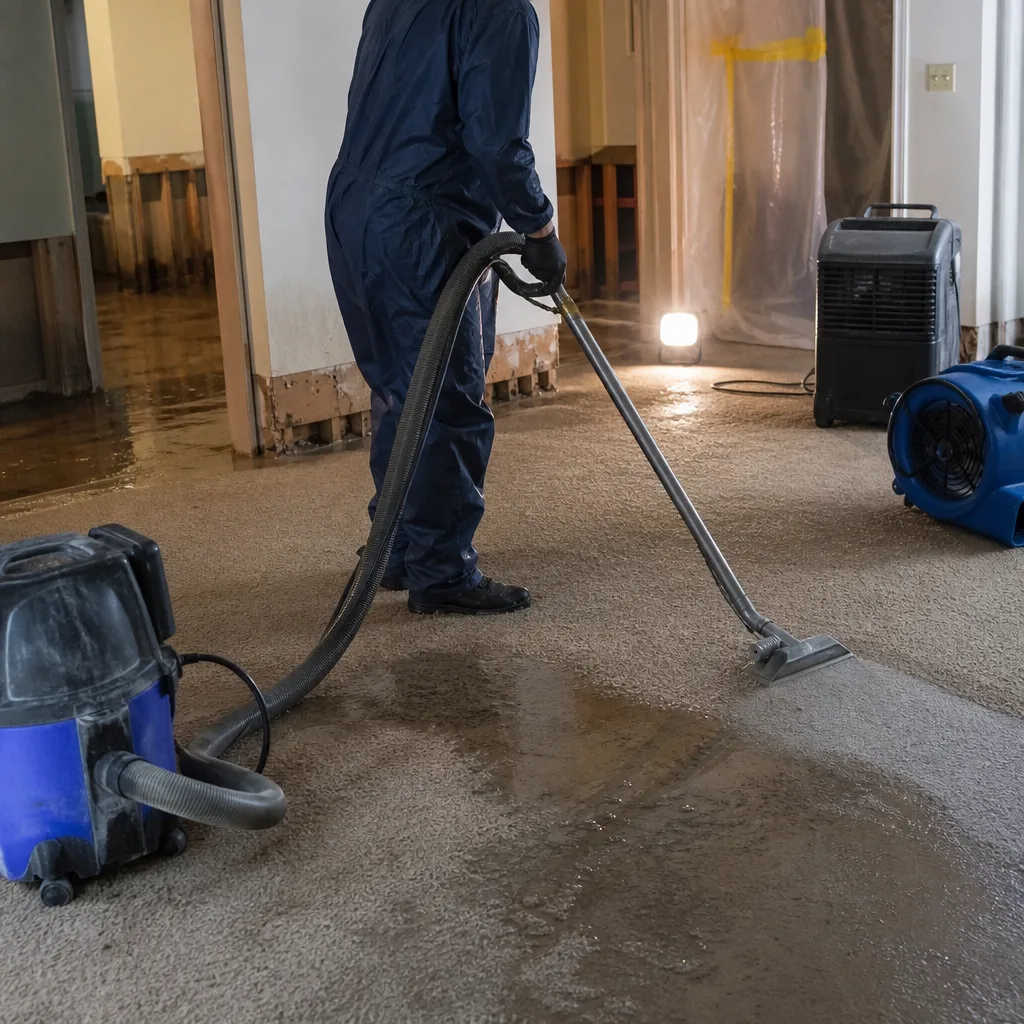
Plaster-and-lath construction holds moisture differently than drywall. We run XPOWER air movers and Phoenix dehumidifiers on a placement plan driven by the moisture map, and we take daily in-wall readings until every probe reads at or below the dry standard for the material. Tearing out original plaster is a last resort; most of the time, we can dry it in place if we catch it early enough.
Emergency Water Extraction
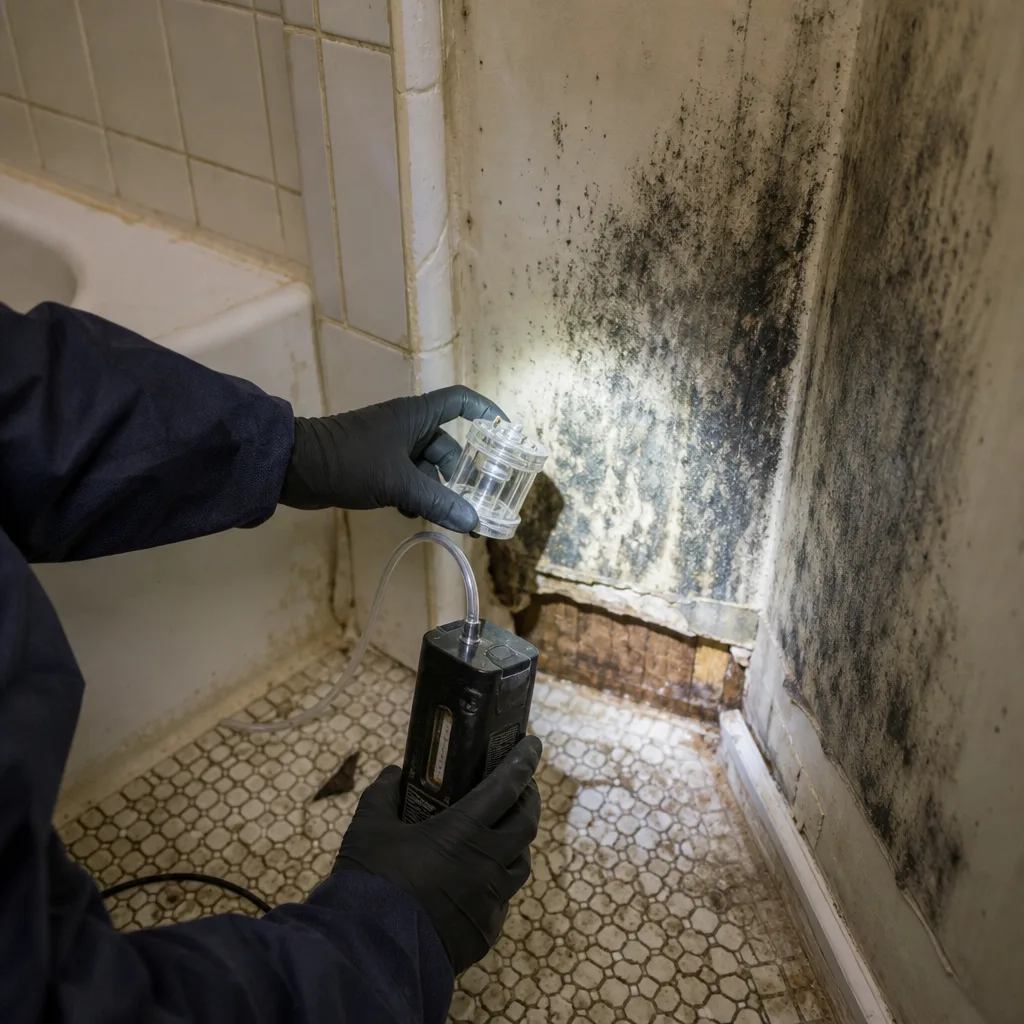
Standing water is doing damage every minute it sits. Our Little Neck crews arrive with truck-mounted extraction and portable units sized for the job, and we’re usually pulling water within the first hour. For burst-pipe losses in winter, we also handle the plumbing stabilization so the water doesn’t come back while drying is underway.
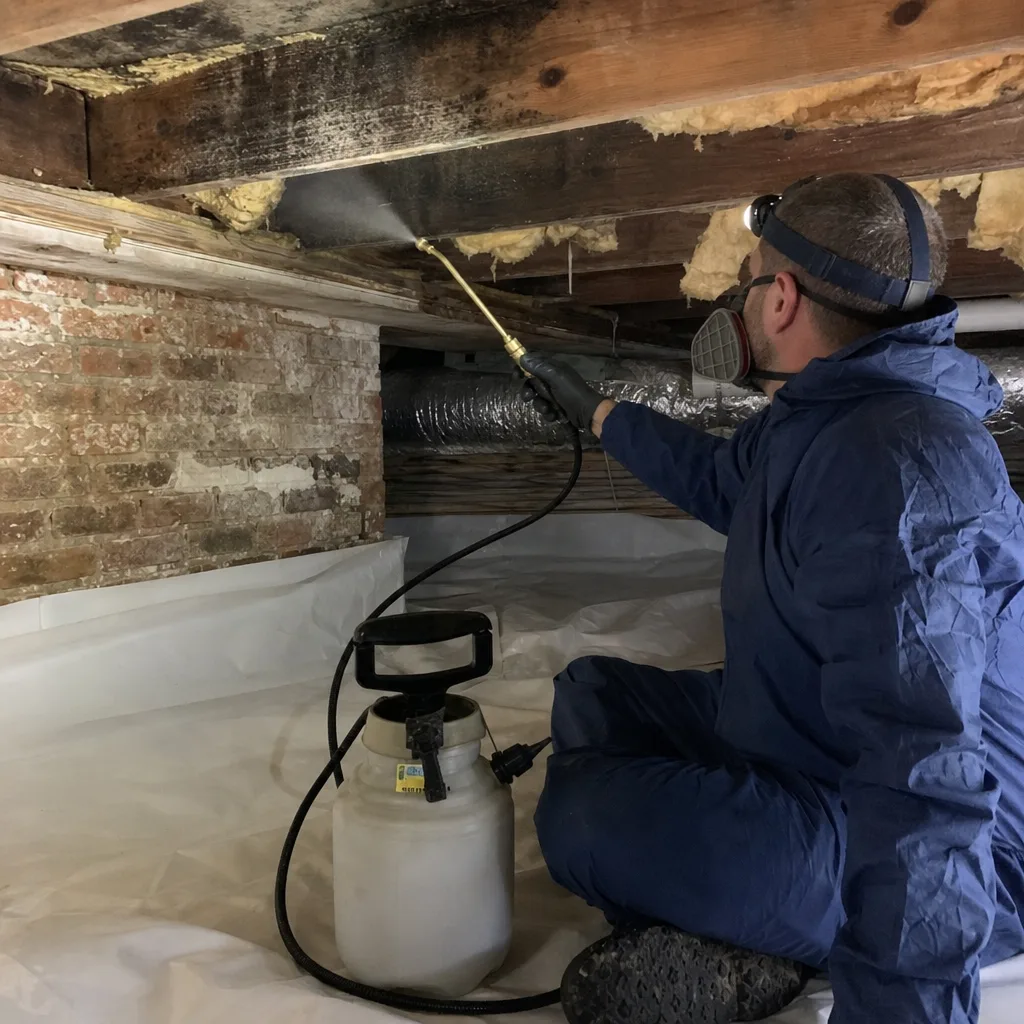
Ceiling & Roof Leak Water Damage
Ice dams in January and wind-driven rain during nor’easters put water through roofing and into ceiling bays above Little Neck’s original plaster ceilings. We find the water path, stop the source, contain the damage, and dry the ceiling cavity before the plaster sags beyond saving.
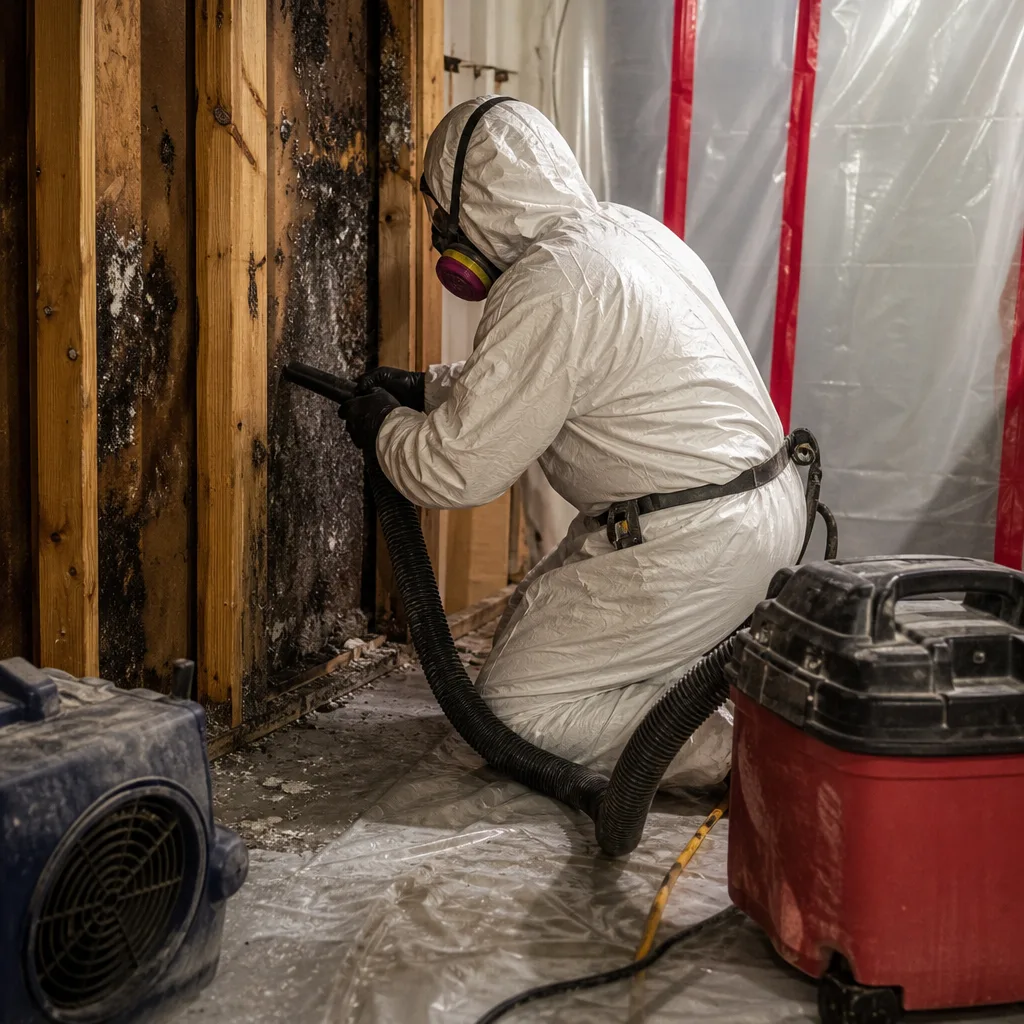
What happens when you call
- 1
A real person answersNo phone trees - you reach a local pro.
- 2
You get an upfront price rangeHonest numbers before anyone is dispatched.
- 3
A background-checked tech heads outLicensed & insured, dispatched right away.
- 4
You approve before work beginsNothing starts until you say go.
Water Damage Restoration Costs in Little Neck, NY
A typical basement water removal and structural drying job in Little Neck runs $1,800 to $4,200 when it’s Category 1 water from a burst pipe or water heater failure, assuming we can dry the plaster in place and no major reconstruction is needed. Flood cleanup with Category 3 bay water lands differently: $4,000 to $8,500 or more once you account for contaminated material removal, antimicrobial treatment, containment, and a longer drying cycle in older plaster construction. A full basement loss involving the 1920s-era lath and original flooring can stretch toward $12,000 on the worst nor’easter jobs.
What moves the price: the water category, how far the moisture wicked into the walls before we arrived, whether the plaster can be salvaged or must come out, and whether the unvented crawl spaces under a 1930s floor are holding water. Insurance typically covers sudden and accidental discharge from pipes and water heaters, but bay surge flooding falls under a separate flood policy, and we’ll walk you through exactly which parts of a claim your carrier will likely accept. Call (917) 924-4221 for a free visual inspection and a firm written scope; the estimate costs nothing and you’ll know exactly where you stand.
We Also Serve Cities Near Little Neck
Our crews work the entire Little Neck peninsula and the surrounding edge, including Little Neck proper, Great Neck, Glen Oaks, Bellerose, and Oakland Gardens. If you’re on the border and not sure whether we cover your street, call and ask. The person who answers can tell you in thirty seconds.
Serving Little Neck, NY - Our Local Coverage Area
We’re based in the Little Neck area and know this community well. Use the map below to see our service coverage - if you’re nearby, we can almost certainly help.
Little Neck Water Damage Restoration Questions, Answered
How do you know if water from a Little Neck Bay storm surge is still trapped behind my 1950s plaster walls?
We use thermal imaging and penetrating moisture meters that read through the plaster into the wall cavity, not just across the surface. On Little Neck’s plaster-over-lath homes, surface readings stay deceptively low while the cavity behind stays wet. If you smell a persistent musty odor, see paint bubbling weeks after a storm, or notice baseboards pulling away from the wall, call (917) 924-4221 for a moisture assessment.
Does water damage restoration in Little Neck cost more because of the older plaster and lath construction?
Yes, typically 15-25% more than a comparable drywall home because the drying process takes longer and requires in-wall probing and careful salvage work on original plaster. The tradeoff is that preserving original lath means you keep the character of your 1930s or 1940s home instead of ending up with a gutted drywall box. Our drying logs document every reading so you and your insurer see exactly where the cost went.
After Hurricane Sandy, we had our basement dried out. Why would mold still be a problem now?
Most Sandy-era dryouts on Little Neck’s older homes addressed the standing water and the visible walls, but not the hidden moisture trapped inside unvented wall cavities and crawl spaces behind original plaster. Mold colonies can persist there for a decade at low levels, reactivating when the next water event feeds them. We routinely find residual Sandy-era moisture still present beneath ‘new’ damage on bay-side blocks, and we treat the whole moisture history, not just the current stain. Call (917) 924-4221 and we’ll check what’s behind your walls.
Is bay flood water in Little Neck treated differently than a burst pipe in a Colonial here?
Completely. Bay surge is Category 3 water: saltwater, sewage backflow from the older combined stormwater and sewer lines near Northern Boulevard, and whatever debris the tide carried in. It requires full antimicrobial treatment and contaminated material removal. A burst pipe releasing clean water is Category 1 and can often be dried in place with less aggressive intervention. The drying protocol, the equipment setup, and the scope of demolition are all driven by the category.
How long does structural drying actually take in an unvented 1930s Little Neck basement?
Plan on three to five days for a typical plaster-and-lath basement, sometimes longer in unvented crawl spaces that trap moisture. We take daily in-wall readings and don’t call the job done until every probe is at or below the dry standard for that material. On a 1930s Tudor near Northern Boulevard, our crew documented readings dropping from 34% to 11% over three days of structural drying, which kept the original lath intact and avoided a full pack-out.
Can we stay in our Little Neck home during water damage restoration?
For a Category 1 or smaller Category 2 loss contained to the basement, yes, in most cases. For Category 3 bay flooding, we may recommend relocating during the first 48 hours of extraction and antimicrobial treatment, especially if you have respiratory sensitivities or the HVAC system was affected. We’ll give you a straight answer during the initial inspection, not a sales pitch.
What certifications do your Little Neck water damage technicians hold?
Our crews are certified to IICRC standards including WRT and ASD, with RIA and IFA-certified technicians on every job. Every technician is background-checked and uniformed. You’ll know exactly who’s in your home, and we’ll show you the certification if you ask.
What should I do in the first 30 minutes after discovering water in my Little Neck home?
Call (917) 924-4221 first, because extraction is the single most time-sensitive step. If it’s safe to reach your breaker panel, shut off power to the affected area. Don’t enter standing water if there’s any chance it’s in contact with electrical outlets or appliances. Don’t use a household vacuum to remove water. And don’t try to pull up carpet yourself on a plaster home; the real problem is usually in the walls, and we need to map the moisture before anything gets disturbed.
Written by Curt Bowman, Owner at Floodline Restoration Co. of Manhattan, serving Little Neck and the surrounding Queens and Nassau communities since 2010.