

Free visual inspection and a written scope of work before any mitigation begins - photos, moisture readings, and drying logs go in your claim file
The scope we write is the scope we bill. Anything new gets shown to you, in writing, before we touch it.






 Before
 After
After Before
 After
After Before
 After
After24/7 Emergency Biohazard & Crime Scene Cleanup in Little Italy
Biohazard and crime scene cleanup in Little Italy typically runs $1,800-$6,500 for a standard trauma or unattended death scene, with hoarding cleanouts ranging from $3,000-$15,000 depending on volume and material classification. Our crews reach Mulberry Street, Mott Street, and the surrounding blocks within 45 minutes, day or night. Call (917) 924-4221 and a live dispatcher answers, not a recording.
When blood, bodily fluids, or decomposition material sits inside a pre-war tenement, the clock starts immediately. Those century-old horsehair plaster walls and hand-laid tin ceilings absorb biological material fast. The longer contact time, the deeper the penetration into the masonry and lath behind the plaster. Our Biohazard & Crime Scene Cleanup crews stage containment before anything else, so the loss doesn’t spread through shared party walls into the adjacent address. Free visual inspection. Written scope before work starts. No surprises on the bill.
Understanding Biohazard & Crime Scene Cleanup Severity in Little Italy Properties
In Little Italy’s 5-6 story brick tenements, most built between the 1880s and 1920s, biohazard severity isn’t just about what you can see. Blood and bodily fluid wick into horsehair-bound plaster, crawl behind baseboards, and travel along the continuous masonry joints that connect neighboring buildings. Category 3 water, which includes blood, bodily fluids, and decomposition fluids, is classified as grossly contaminated and often requires Water Damage Restoration - Little Italy expertise to fully remediate. When it enters the wall cavity of a pre-1920 structure, the contamination path often runs horizontal through the party wall before it ever shows on a surface reading. That’s why we use moisture mapping with thermal imaging on every loss here, then run negative-air containment with HEPA air scrubbers before anyone touches the affected material. In newer sheetrock construction, you cut out the damaged drywall and move on. In Little Italy, you’re often preserving hand-laid tin ceilings and original plaster because the Landmarks Preservation Commission or a co-op board won’t sign off on gutting a protected interior. Severity gets a multiplier here, and the right protocol is the only thing standing between a contained trauma scene and a cross-address contamination event.
Why Little Italy Property Owners Choose Floodline Restoration Co. of Manhattan
- 45-minute response commitment to anywhere in Little Italy. Our dispatchers track crew locations in real time, and the closest uniformed team heads your way the moment you call (917) 924-4221.
- Live answer, 24 hours a day. A person picks up at 2 a.m. No phone tree, no callback, no recorded message telling you to leave a voicemail.
- IICRC-certified crews trained to RIA and IFA standards. For biohazard work, that means ASD (Applied Structural Drying) and AMRT (Applied Microbial Remediation Technician) protocols, not a general contractor winging it.
- Free visual inspection before any work begins. We assess the scene, identify what’s affected, and hand you a written scope. You approve the line items before a single tool comes off the truck.
- Direct insurance billing. We document the loss from the first hour, send the file to your carrier, and coordinate with your adjuster directly. You never play messenger.
- One team from containment to finished repair. The same certified crew that sets up negative air stays through antimicrobial treatment, structural drying, and any rebuild. No handoff, no inherited subcontractors.
Our Biohazard & Crime Scene Cleanup Process
Inspection & Assessment
We walk the scene, identify all affected materials, and document everything with photos. Thermal imaging shows us how far biological material has traveled inside walls and under flooring, especially through the continuous masonry that Little Italy’s tenements share.
Containment & Stabilization
Negative-air barriers go up before remediation starts, sealing off the affected rooms from the rest of the unit and any adjacent property through the party wall. This is not optional in a pre-1920 building. HEPA air scrubbers run continuously from this point forward.
Removal & Pack-Out
Contaminated porous materials, including affected plaster sections and any saturated lath, are removed under containment and double-bagged for regulated transport. Salvageable contents get documented and packed out for cleaning or disposal per IICRC standards.
Cleaning & Sanitization
Hard surfaces are cleaned with EPA-registered antimicrobial agents, then treated with hospital-grade disinfectants appropriate for bloodborne pathogen remediation and Sanitization Services - Little Italy standards. Every exposed stud, joist, and masonry surface gets treated, not just the visible areas.
Structural Drying & Clearance Testing
Dri-Eaz dehumidifiers and Phoenix air movers run behind containment until moisture readings confirm the dry standard is met. Daily readings are logged and shared with you and your carrier. Post-remediation verification testing confirms biological remediation goals were achieved.
Repairs & Restoration
We rebuild what had to come out through our Commercial Restoration in Little Italy, matching original details where required by the Landmarks Preservation Commission or your co-op board. Tin ceilings get preserved in place whenever possible, plaster patches are done by hand, and paint gets matched to the existing walls.
Need Emergency Biohazard & Crime Scene Cleanup in Little Italy Now?
Crews minutes away, answering live 24 hours a day. The sooner we start, the less it costs.
Working With Your Insurance Company
Biohazard and crime scene cleanup claims get complicated quickly, and in Little Italy they get complicated differently. When biological material crosses a party wall into an adjacent tenement, two insurance carriers may be involved. When original plaster and tin work needs preservation or the Landmarks Preservation Commission has jurisdiction over the interior, the adjuster needs documentation that survives scrutiny. We handle it from the first hour: photos of every affected surface, thermal imaging reads that show hidden contamination paths, and a line-item scope that names specific materials and protocols. Our crew communicates with your adjuster directly. You get the file, your carrier gets the file, and the work proceeds without you acting as go-between.
What We Provide Your Insurer
- Thorough documentation of the loss
- Photos of all damage, room by room
- Moisture readings and drying logs
- A detailed, line-item scope of work
- Direct coordination with your carrier
Built for Little Italy’s Loss Calendar
Biohazard and crime scene cleanup in Little Italy doesn’t follow a neat seasonal calendar the way storm damage does, but the building conditions that make these losses worse do. January deep freezes burst supply lines in aging tenement risers, sending Category 3 water through floors that have been absorbing contamination for decades. Spring thaw pushes groundwater into century-old cellars through deteriorated foundation mortar. Summer thunderstorms overwhelm flat tar-and-gravel roofs that pond water, saturating the interior walls. Nor’easters drive wind-blown rain through deteriorating mortar joints and brownstone parapets, feeding hidden mold behind walls that may have been sealed since the Coolidge administration. And in September, the Feast of San Gennaro transforms Mulberry Street into an 11-day pedestrian corridor, which means staging containment dumpsters or equipment trailers anywhere near that block requires navigating NYC DOT street-use permits that are functionally unavailable during the festival window. Our scheduling for late-summer biohazard work in Little Italy bakes that blackout period in. Every experienced local crew does, because the alternative is letting an unattended death or hoarding condition wait eleven days for a dumpster that can’t legally be parked.
Biohazard & Crime Scene Cleanup Across Little Italy’s Neighborhoods
The work changes block by block in Little Italy. On Mulberry Street between Canal and Broome, you’re dealing with the densest concentration of San Gennaro festival infrastructure, which means late-summer jobs need equipment staging planned weeks ahead. The upper blocks of Mott Street, stretching toward Houston, hold many of the neighborhood’s oldest surviving tenements, with original cast-iron soil stacks and horsehair plaster running the full building height; blood contamination there tends to travel vertically through floor bays before it ever shows on a wall surface. Elizabeth Street has a higher ratio of ground-floor commercial spaces with residential units above, which brings restaurant grease, sewage backups, and mixed-use biohazard concerns into the same footprint. On the quieter cross streets like Broome and Grand, small pre-war walk-ups without elevators force our crews to carry HEPA scrubbers and dehumidifiers up narrow stairwells, often while working around occupied units. And the blocks near the Federal-style rowhouses just off the southern edge of the district have a different ceiling construction entirely, which changes how we run negative-air barriers and where we place drying equipment. We’ve seen all of it. We plan for it differently depending on which block you’re on.
Specialized Biohazard & Crime Scene Cleanup Services We Offer in Little Italy
Trauma & Unattended Death Cleanup
When a body goes undiscovered in a Little Italy tenement, decomposition fluids move through wood, plaster, and masonry in ways no surface cleaning will reach. We set containment before any remediation begins, because in a pre-1920 building, the biological load almost certainly traveled beyond the room where the death occurred. Floors get pulled at the seams where decomposition fluid collected, subflooring gets treated with antimicrobials, and the air gets scrubbed with HEPA filtration until post-remediation testing clears the space.

Hoarding Cleanup
Hoarding conditions in a 5-story brick tenement create a different biohazard profile than in a suburban house. The floor may be structurally compromised beneath years of accumulated material. The plumbing may have failed into the cavity. The sheer volume changes how we stage the pack-out, especially on Mulberry Street where dumpster permits vanish during festival season. We sort, document, and work with family members and social workers where needed, while handling the biological contamination that almost always comes with the job.
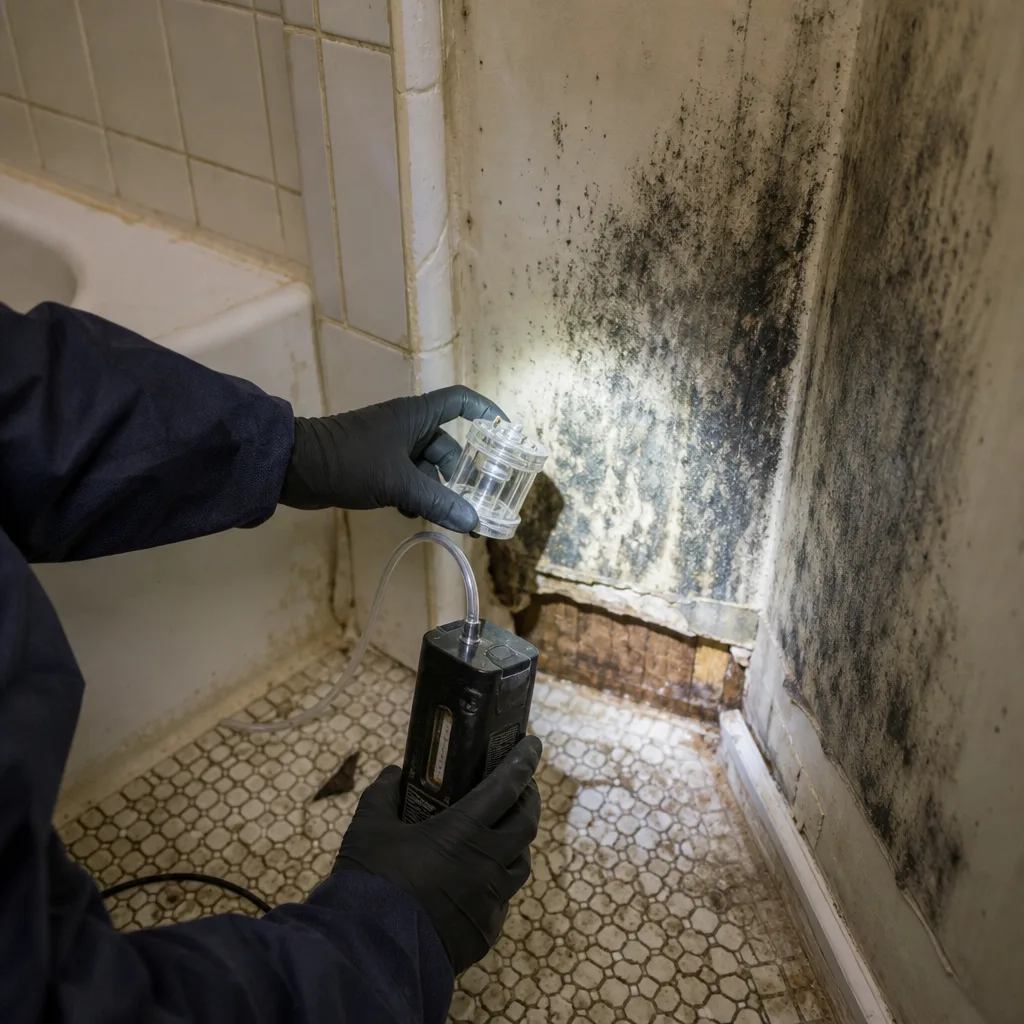
Blood & Bodily Fluid Cleanup
Bloodborne pathogens require more than bleach and a mop. We follow IICRC and RIA protocols for Category 3 contamination, which means full PPE, containment, regulated waste handling, and antimicrobial treatment of every exposed surface including the hidden ones. In a Little Italy tenement, that means checking for transmission through plaster lath into the wall cavity of the building next door. When the party wall is continuous masonry, blood can travel horizontally along mortar joints and show up as a stain three feet away in the neighboring unit.
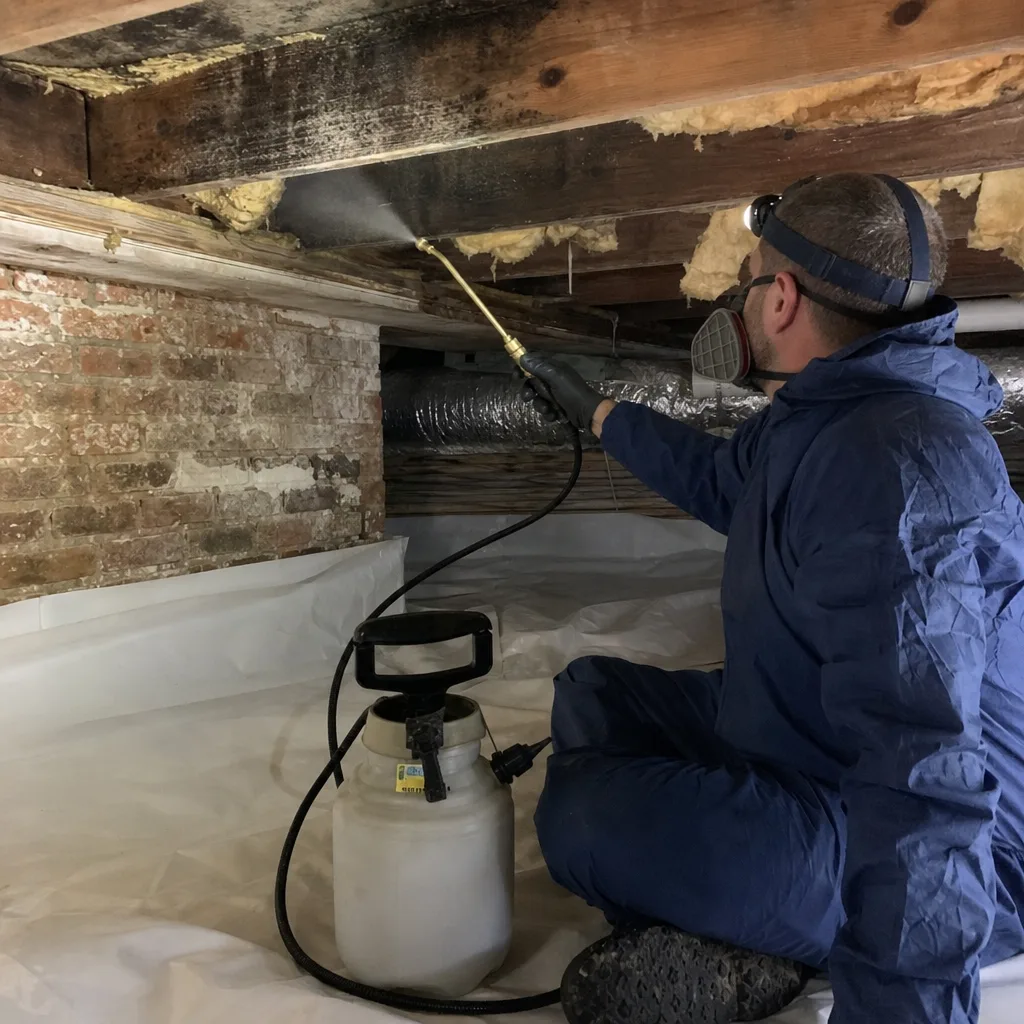
Infectious Disease Disinfection
When a tenant with a confirmed infectious disease has been in a unit, the building owner has a legal and ethical obligation to disinfect properly. We use EPA-registered disinfectants applied according to label dwell times, targeting the same high-touch and porous surfaces that standard janitorial services miss. In multi-family tenements, we focus on the shared vertical spaces too: stairwells, banisters, vestibule doors, and the mailboxes in the entry hall.
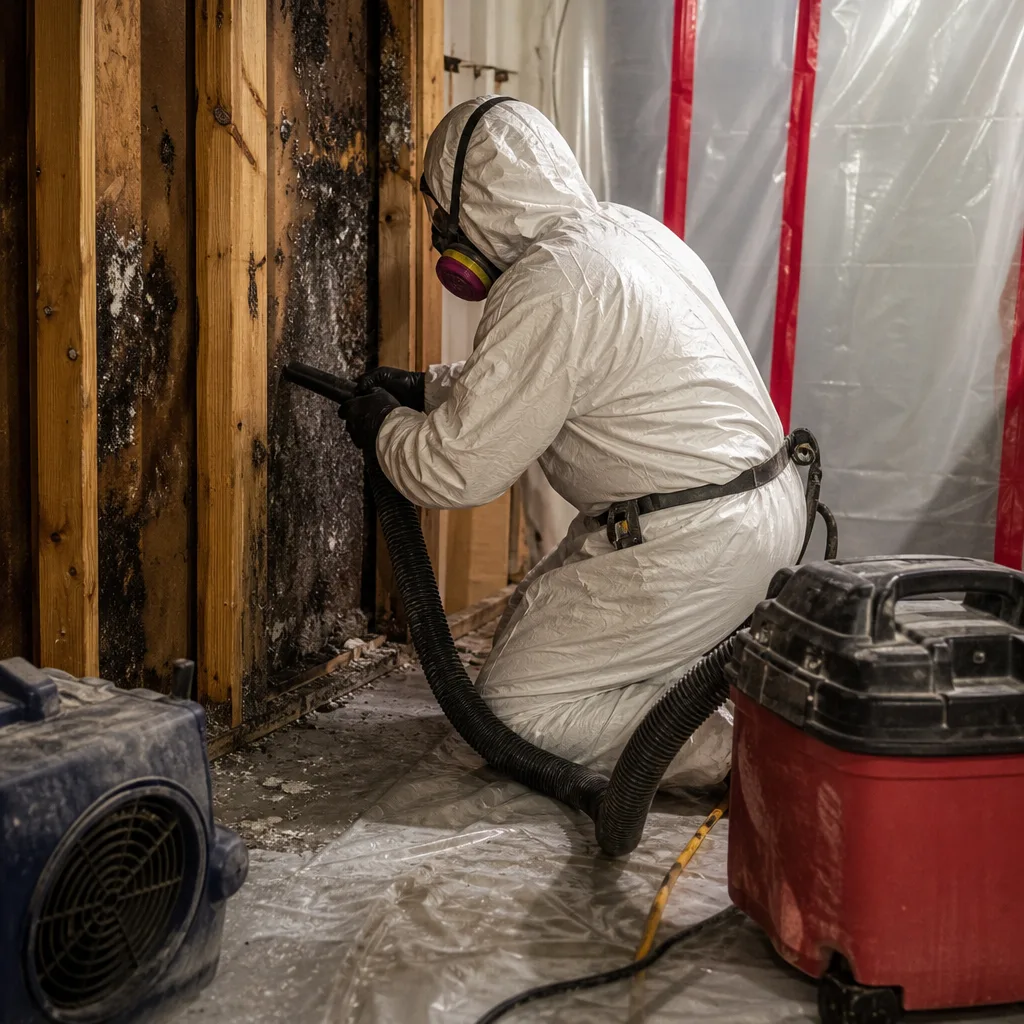
Tear Gas & Chemical Cleanup
Tear gas or chemical contamination affects a unit differently than biological material, but it still requires containment and ventilation protocols. Residue binds to painted surfaces, textiles, and especially to old plaster, which holds odor far longer than drywall. We set up air exchange with HEPA filtration and treat every porous surface with appropriate neutralizers, then verify the indoor air quality is habitable before you return.
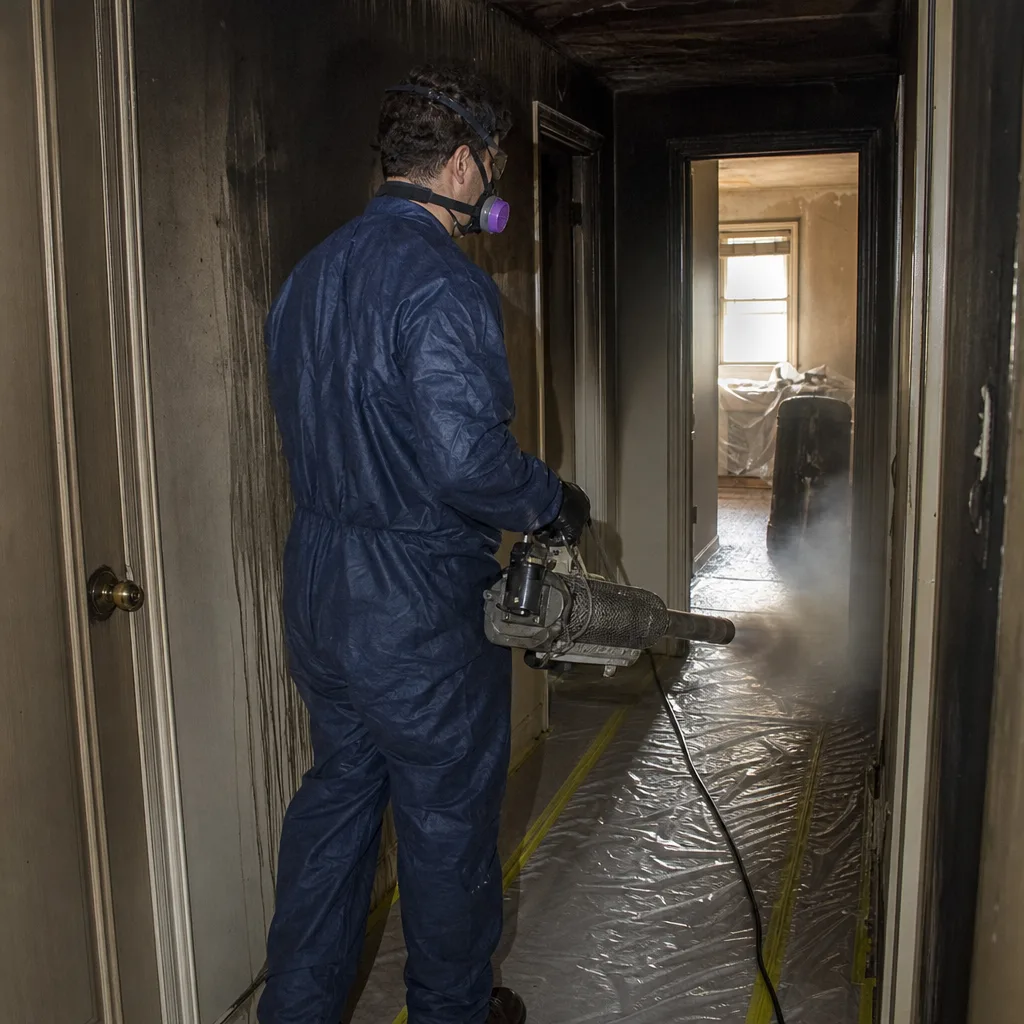
What happens when you call
- 1
A real person answersNo phone trees - you reach a local pro.
- 2
You get an upfront price rangeHonest numbers before anyone is dispatched.
- 3
A background-checked tech heads outLicensed & insured, dispatched right away.
- 4
You approve before work beginsNothing starts until you say go.
Biohazard & Crime Scene Cleanup Costs in Little Italy, NY
A trauma or unattended death cleanup in Little Italy typically runs $1,800-$6,500, with most jobs landing around $2,800-$4,000 for a standard single-room scene in a pre-war unit. Hoarding cleanouts start around $3,000 and can reach $15,000 for severe accumulation spread across multiple rooms. Blood and bodily fluid cleanup following an injury or assault usually falls in the $1,500-$4,000 range. Infectious disease disinfection for a full one-bedroom runs $800-$2,500. What moves the price in Little Italy specifically: whether contamination crossed a party wall, whether original tin or plaster requires preservation rather than removal, whether the Landmarks Preservation Commission needs to review the work, and whether the job hits the San Gennaro permit blackout window. Insurance typically covers these losses under most homeowners and commercial policies, though you should confirm with your carrier or let us do it for you. The free visual inspection gives you a written scope with exact numbers before anything starts.
We Also Serve Cities Near Little Italy
In addition to Biohazard & Crime Scene Cleanup in Little Italy, our crews respond to biohazard and trauma scenes in Fairview, Harrison, East Bronx, and Hunts Point with the same 45-minute commitment and 24-hour live dispatch.
Little Italy Biohazard & Crime Scene Cleanup Questions, Answered
Why does Little Italy require special containment when cleaning a trauma scene in a pre-1920 tenement?
Because the continuous masonry party walls in Little Italy’s pre-1920 tenements mean biological material can travel horizontally into the adjacent building through shared mortar joints and plaster lath. Standard containment seals only the room where the trauma occurred. Our crews extend containment to account for the cross-party-wall pathway, running negative air with HEPA scrubbing until thermal imaging and surface testing confirm the contamination did not migrate. Call (917) 924-4221 for a free assessment of your specific building.
Can you restore original tin ceilings and horsehair plaster after an unattended death cleanup?
Yes. Hand-laid tin ceilings and horsehair-bound plaster can often be preserved in place, treated with antimicrobials, and restored rather than demolished. That said, our scope of work has to account for preservation from the start, because the drying equipment setup and containment placement change when original materials must stay intact. We’ve preserved original ceilings on Mott Street and Mulberry Street jobs where the co-op board or the LPC required it. Call us for a free visual inspection and we’ll tell you what’s salvageable.
Does the Feast of San Gennaro really affect crime scene cleanup scheduling?
It does. For roughly eleven days each September, the street-use permits that would allow dumpsters, equipment trailers, or scaffolding on or near Mulberry Street become nearly impossible to obtain from NYC DOT. That means biohazard and cleanup jobs in the festival corridor either get staged before the shutdown or wait until it lifts. We build the blackout period into every late-summer timeline in Little Italy, and we’ll tell you upfront if your job falls inside that window. Call (917) 924-4221 to see what’s possible given your block and the calendar.
How do you handle Category 3 water in a Little Italy tenement where the soil stack is cast iron and the walls are horsehair plaster?
Cast-iron soil stacks in pre-war Little Italy buildings crack or rust through eventually, and when they leak into a wall cavity, the Category 3 water moves through the horsehair-bound plaster and the lath behind it. We cut access points at the base of the affected wall, set containment, and run moisture mapping until we know the full travel path. The cast iron gets replaced or lined by a licensed plumber if it’s the source, and the contaminated plaster gets removed or treated depending on depth. Daily drying logs track progress until the dry standard is met. Call (917) 924-4221 for a free inspection.
Do older Little Italy tenements present more biohazard risk in hoarding cleanouts than newer buildings?
Yes, and for structural reasons. Hoarded units in century-old Little Italy tenements sit on floors that were not designed for decades of accumulated material weight. Plumbing failures inside the hoard go unnoticed longer, sending Category 3 water through hundred-year-old wood members and into the units below. The horsehair plaster and masonry construction holds biological contamination differently than drywall, which means the cleanup protocol has to be more aggressive from the first hour. We’ve handled hoarding cleanouts on Mulberry Street and Mott Street where the contamination had reached the neighboring building through the party wall before we ever arrived.
How fast can someone actually get here from your dispatch?
Our commitment is 45 minutes from your call to a crew on site anywhere in Little Italy. The dispatcher who answers at (917) 924-4221 tracks the nearest available team in real time and routes them directly to you. At 2 a.m., you’re still talking to a live person, not a recording. The sooner containment starts, the less biological material moves into walls, floors, and the units around you.
What should I do in the first 30 minutes after discovering a biohazard or crime scene?
Secure the area and keep people and pets out of the affected space. Do not attempt to clean it yourself, both for health safety and because improperly handled biohazard material can spread contamination and compromise your insurance claim. Call us at (917) 924-4221. We’ll dispatch a crew to assess the scene, set containment, and document everything for your carrier. Do not use household cleaners, do not run the HVAC, and do not enter without proper PPE if blood or bodily fluids are present.
Will insurance cover crime scene cleanup in Little Italy?
Most homeowners and commercial policies cover biohazard and crime scene cleanup as a covered loss, often under the property damage or additional living expense provisions. The key is documentation, which is why we photograph every surface, run thermal imaging, and write a line-item scope that names specific materials and IICRC protocols. We coordinate directly with your adjuster and bill the carrier directly. Call (917) 924-4221 and we’ll help you understand your policy’s coverage before we start any work.
The Party-Wall Problem No National Franchise Understands
Here’s what makes Little Italy different from every other neighborhood we serve. The tenements here were built before modern framing. The wall between your unit and your neighbor’s is not two separate walls with a gap between them. It’s a continuous masonry assembly, sometimes three bricks thick, with plaster applied directly to the brick or to lath strapped on top. When a trauma scene or an unattended death occurs in one unit, blood and decomposition fluids don’t stop at the wall. They wick through the plaster, find the lath, and travel along the mortar joints into the apartment next door. The neighbor’s wall stains. Their apartment smells. Their insurance company gets a claim. Their landlord wants to know who’s paying. Your landlord wants to know if the LPC has jurisdiction. You’ve now got two carriers, possibly two landlords, and a city agency in the room before we’ve even finished the containment. This is not a hypothetical. We once handled a Category 3 water-loss cleanup in a fifth-floor Mulberry Street tenement where a hoarding condition turned a simple overfilled tub into a cross-jurisdictional biohazard. Our techs set containment before moisture mapping revealed effluent traveling through the horsehair-bound plaster wall into the neighboring building’s kitchen, requiring pack-out, antimicrobial treatment, and structural drying on both sides of the party wall. Because the landlord couldn’t prove pre-loss condition on the ceiling’s hand-laid tin, our scope of work had to preserve it in place while air movers and dehumidification ran for six days behind a negative-air barrier. That’s the job. That’s Little Italy. That’s why we do our own moisture mapping, our own drying, and our own rebuild, and why we don’t hand any of it off to a subcontractor who’s never seen a tin ceiling they didn’t want to tear down.
Serving Little Italy, NY - Our Local Coverage Area
We’re based in the Little Italy area and know this community well. Use the map below to see our service coverage - if you’re nearby, we can almost certainly help.
Call Floodline Restoration Co. of Manhattan
If you’re dealing with a biohazard or crime scene in Little Italy, call (917) 924-4221 now. A live dispatcher answers, day or night. We’ll have a certified crew at your door within 45 minutes, with containment equipment, HEPA scrubbers, and the training to handle a pre-war building the right way. Free visual inspection. Written scope before anything starts. Direct insurance billing. And every job is backed by the 90-Day Done Right Promise, in writing, no arguing. We stand behind it.
Written by Curt Bowman, Owner at Floodline Restoration Co. of Manhattan, serving Little Italy and the surrounding New York City area.