
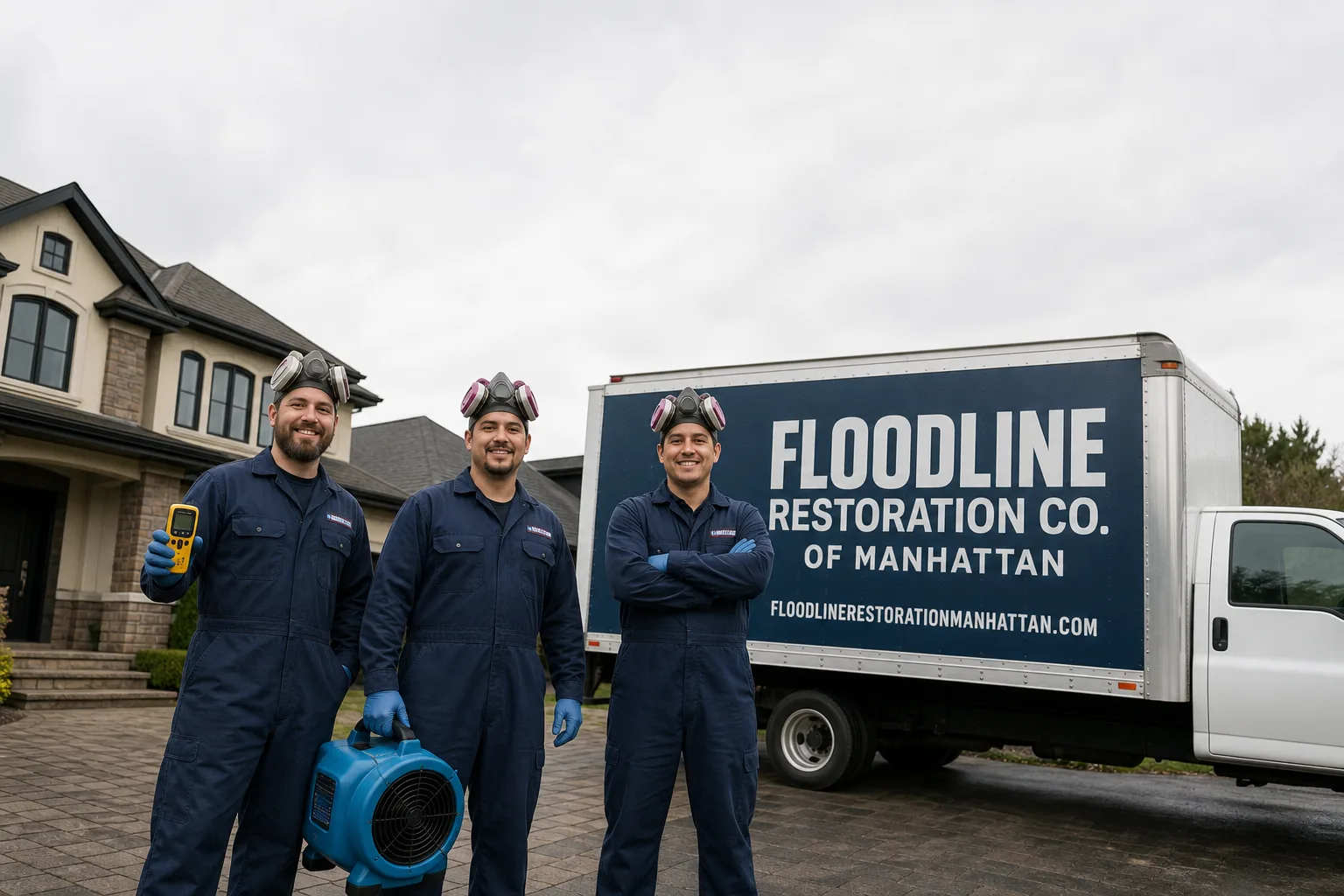
Free visual inspection and a written scope of work before any mitigation begins - photos, moisture readings, and drying logs go in your claim file
The scope we write is the scope we bill. Anything new gets shown to you, in writing, before we touch it.






 Before
 After
After Before
 After
After Before
 After
After24/7 Emergency Commercial Restoration in Harrington Park
Commercial restoration in Harrington Park is not a daytime service. Water, fire, and storm damage inside a retail space, medical office, or multi-unit building moves fast, and every hour of delay widens the bill and lengthens the shutdown. Our crews are on call around the clock, and a live dispatcher at (917) 924-4221 picks up at 2 a.m., not a recording. A certified team can be rolling toward LaRoche Avenue, Elm Street, or anywhere else in the borough within 45 minutes, with moisture meters, containment, and extraction equipment loaded. The first hour after a pipe break or flood event is when the damage is still controllable: category 1 water has not yet turned category 2, drywall has not yet wicked moisture up a foot, and inventory has not yet absorbed enough water to be written off. We provide a free visual inspection before any work begins, so you know what you are looking at and what it will take to fix it. Done right, and backed in writing.
Understanding Commercial Restoration Severity in Harrington Park Properties
Not every water intrusion is the same animal. Restoration professionals classify water into three categories, and Harrington Park commercial buildings built between 1950 and 1975 often straddle the line between category 2 and category 3 quicker than newer construction. Category 1 is clean water from a supply line or ice maker. Category 2 carries contamination: dishwasher discharge, sump pump overflow, or gray water that has sat long enough to grow bacteria. Category 3 is black water, the kind that comes up from a sewage backup or a Pascack Brook flood that pushes into a crawlspace-adjacent basement. In a slab-on-grade or block foundation building, water does not just pool on the surface. It travels horizontally through the block and under the slab, collecting in pockets that a moisture meter will find long after the visible puddle is gone. That is why we moisture-map every commercial loss in Harrington Park, including dry areas that look unaffected. Without that step, hidden reservoirs feed mold growth within 48 to 72 hours in the poorly ventilated crawlspaces and basement utility rooms common to mid-century Bergen County construction. Cut corners on documentation in this borough, and the claim gets scrutinized harder. We learned that on repeat-flood properties years ago.
Why Harrington Park Property Owners Choose Floodline Restoration Co. of Manhattan
- 45-minute response commitment. From the moment you call (917) 924-4221, we aim to have a uniformed, background-checked crew dispatched to your Harrington Park property within 45 minutes. Commercial losses do not wait for Monday morning.
- 24/7 live answer, every time. A real person picks up the phone at three in the morning. Not an answering service with a script. A dispatcher who can send a crew. That has been the rule since Curt Bowman founded Floodline in 2010.
- IICRC-certified crews, properly coded. Our technicians hold the certifications that matter for commercial restoration: Water Damage Restoration Technician (WRT), Fire & Smoke Restoration Technician (FSRT), and Applied Microbial Remediation Technician (AMRT). No apprentices learning on your dime.
- Free visual inspection, written scope. We walk the loss with you, explain what we see, and hand you a line-item scope of work before anybody moves a piece of equipment. No surprises on the bill.
- Direct insurance billing. We coordinate with your carrier, send the photos, the drying logs, and the moisture readings, and bill the insurer directly for covered work. You never play messenger between us and the adjuster.
- One team from extraction to reconstruction. The same certified crew that reads the moisture map on day one handles daily readings, hands the log to you and the carrier, and rebuilds what needs rebuilding. No mid-job handoff to a subcontractor you never met.
Our Commercial Restoration Process
Inspection & Assessment
We arrive, walk the property, and identify the source and category of the loss. Thermal imaging and moisture meters map out where water has traveled, including under slab and through block. You get a written scope and a firm number before any work starts.
Extraction & Stabilization
Standing water is removed using truck-mounted and portable extraction units. If the building is structurally compromised from fire or flood, we shore it up and secure the space first. Speed matters here: the longer water sits, the more it migrates.
Drying & Dehumidification
Professional-grade Dri-Eaz and Phoenix air movers and low-grain dehumidifiers are placed according to the moisture map, not guesswork. Daily hygrometer readings track the dry-down until the dry standard is met, and every reading gets logged for your insurer.
Cleaning & Sanitization
Surfaces are cleaned, sanitized, and treated with antimicrobials where the loss warrants it. For category 3 losses, including sewage and floodwater, we use HEPA air scrubbers and containment to prevent cross-contamination of unaffected areas.
Specialty Treatment for Commercial Spaces
This is where commercial restoration diverges from residential. We handle document drying, inventory recovery, electronics cleaning, and the specialized needs of retail fixtures, office equipment, and HOA common areas. Pack-out and pack-in are coordinated so you can reopen faster.
Repairs & Restoration
The final phase puts your space back together: drywall, flooring, paint, and reconstruction of what was removed. Because our own crews handle this, not a sub, the work aligns with the same scope and the same standards we promised at the first walkthrough.
Need Emergency Commercial Restoration in Harrington Park Now?
Crews minutes away, answering live 24 hours a day. The sooner we start, the less it costs.
Working With Your Insurance Company
Harrington Park commercial claims get looked at harder than most. The borough sits in the Pascack Valley, where the Pascack Brook watershed has flooded certain addresses more than once in a single decade. Insurers and Bergen County officials know these properties by address, and they read every drying log and scope-of-work photo with a skeptical eye. That is why our documentation starts the moment we arrive, before we move a single piece of equipment. We photograph pre-loss conditions, record moisture readings every six hours during drying, and write a line-item scope that matches industry-standard estimating software. You deal with your adjuster, we deal with your adjuster too, and you get a copy of everything we send them. No hidden walls between you and the facts of your own claim.
What We Provide Your Insurer
- Thorough documentation of the loss
- Photos of all damage, room by room
- Moisture readings and drying logs
- A detailed, line-item scope of work
- Direct coordination with your carrier
Built for Harrington Park’s Loss Calendar
Harrington Park’s commercial restoration needs follow a seasonal rhythm, and locals who have owned property here for twenty years know it by heart. January and February bring the deep freezes that burst supply lines, especially the original galvanized steel pipes still running through 1950s and 60s commercial buildings along LaRoche Avenue and the Harriot Avenue corridor. Nor’easters from November through March dump wet snow that freezes at the roofline, creating ice dams that back water under shingles and into ceiling spaces. Spring thaw pushes groundwater up against block and slab foundations, and the Pascack Brook, swollen with snowmelt, does what it has done for decades: finds the low spots. Summer thunderstorms roll through fast and drop inches in an hour, overwhelming roof drains and surface drainage, while the hot humid weeks that follow turn any unresolved moisture into mold within 48 hours inside a poorly ventilated crawlspace. It is not a question of whether Harrington Park commercial buildings will face a loss. It is a question of which season causes it. Our dispatch board is built for all of them.
Commercial Restoration Across Harrington Park’s Neighborhoods
Harrington Park is compact, roughly two square miles, but the loss patterns change block by block. The retail and commercial strip along LaRoche Avenue sits close to the water table, and the buildings there tend to be older mixed-use structures with basements used for storage and offices. Water comes up, not just in. Along Elm Street and the residential side streets feeding off it, the post-war ranch and split-level houses and converted professional offices share block or slab foundations that wick moisture from the surrounding soil, so a failed roof drain or a burst pipe often means water migrating sideways through the block before it ever shows on the floor. Properties near the Pascack Brook corridor, especially in the western portion of the borough around Highland Avenue, are the repeat-flood addresses. Some have flooded multiple times in a decade. Contractors who work these streets know to document pre-loss conditions meticulously, because the adjuster arriving for the third claim on the same property is not in a generous mood. Multi-unit and HOA buildings clustered near the borough’s northern boundary along the Old Hook Road approach have their own pattern: shared walls, shared mechanical systems, and a board of trustees that needs clear documentation and a firm scope before approving work. We know what to expect by street, which means we arrive with the right plan already forming.
Specialized Commercial Restoration Services We Offer in Harrington Park
Multi-Unit & HOA Restoration
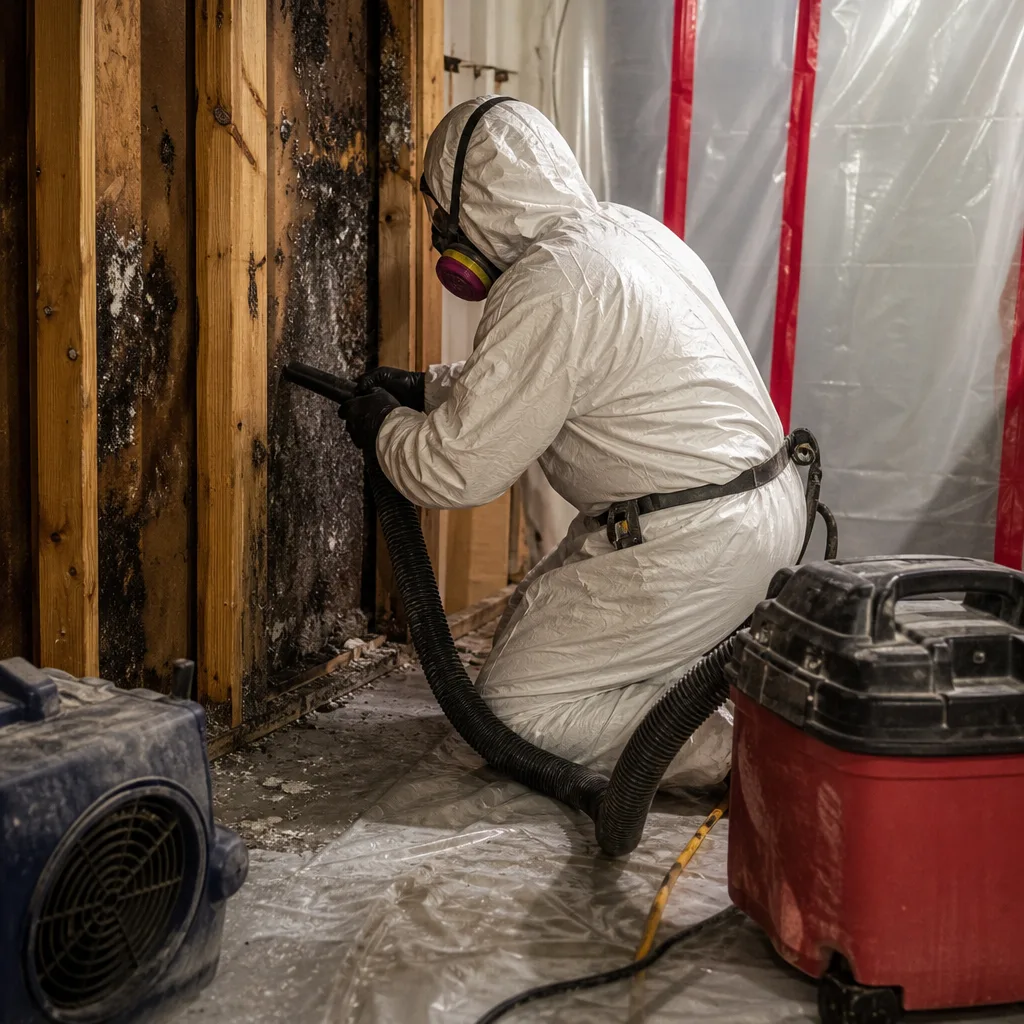
Condominium associations and multi-unit commercial buildings in Harrington Park present a specific headache: one burst pipe in a second-floor unit becomes a first-floor ceiling loss, a common-area loss, and a board meeting all in one afternoon. We handle the entire building, establish containment so unaffected units stay dry and occupied, and provide the board with one documentation package for all affected units. Our Commercial Restoration team has managed losses in buildings with shared mechanical chases and original copper risers, where water travels between floors faster than in single-tenant structures.
Office & Retail Restoration
Retail and office spaces along LaRoche Avenue and the surrounding commercial blocks need to reopen fast. Every closed day is lost revenue, and a tarp on the roof does not inspire customer confidence. We stage equipment around business hours where the building can tolerate it, prioritize drying the customer-facing spaces first, and pack out inventory and equipment to a secure off-site facility when structural drying requires it. We recently handled a commercial water loss in a retail strip along LaRoche Avenue where an original galvanized supply line let go overnight and soaked a basement office and storage area. Category 2 water extraction, containment, air movers, structural drying for four days, and moisture readings every six hours. The slab foundation was wicking residual moisture, so we added a low-grain dehumidifier and a second antimicrobial treatment before final clearance. The store never fully closed.
Industrial Facility Cleanup
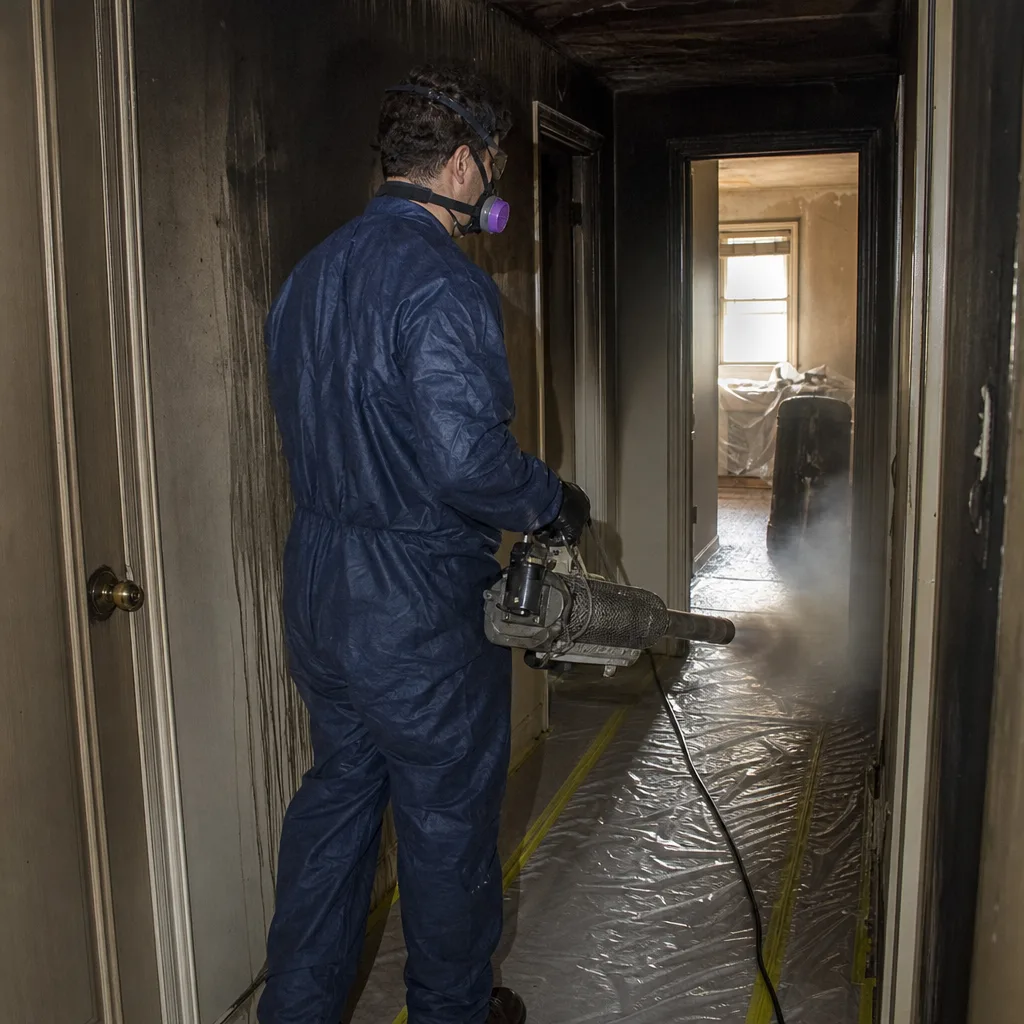
Industrial and light manufacturing spaces in Harrington Park are not glamorous, but they contain expensive equipment, chemical storage, and safety-sensitive electrical systems. A flood in an industrial space means more than water on the floor: it means knowing which equipment can be dried in place, which must be removed and cleaned, and where the power must be cut before our crew enters. We coordinate with your facilities manager, mark safe zones, and restore operations in stages.
Large-Loss Response
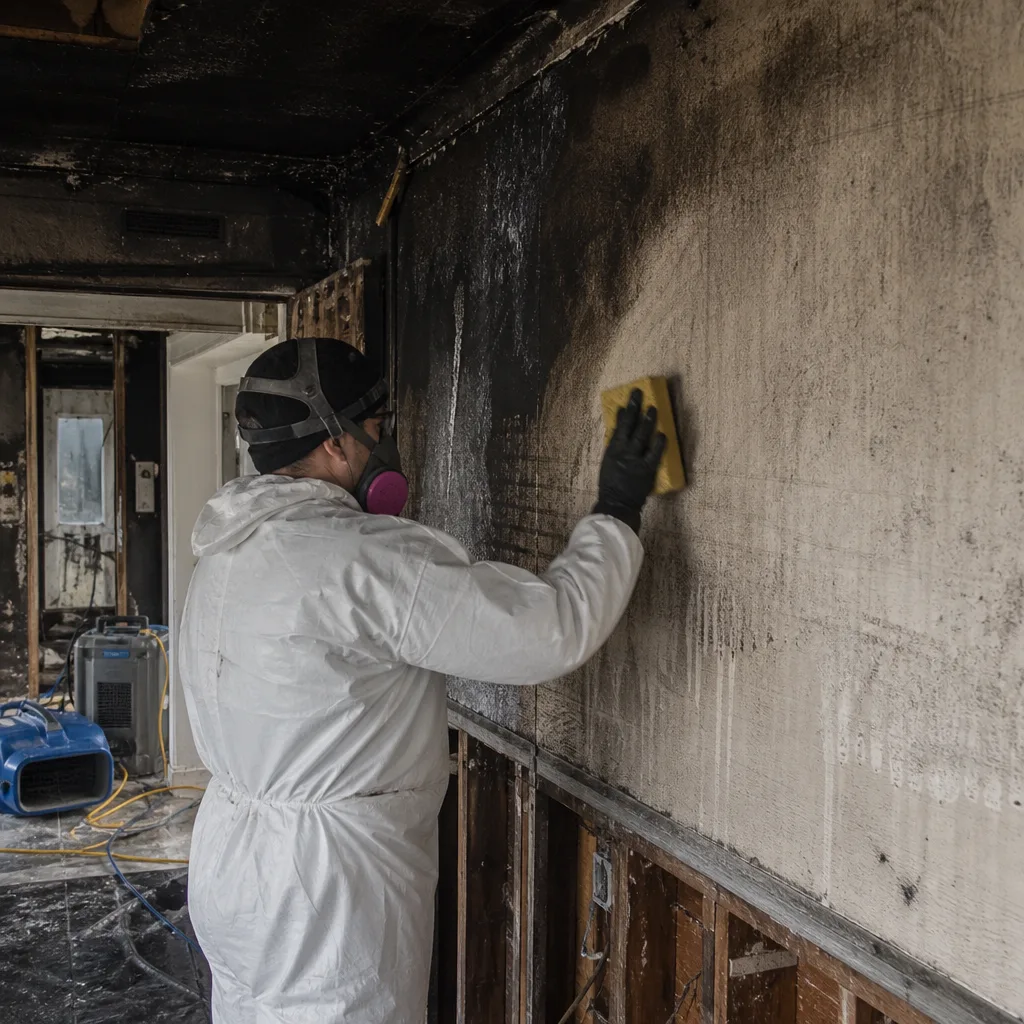
When a fire or flood hits a whole commercial building, the scope changes from a repair job to a project. Floodline runs a dispatch board, not a sales desk, which means a large-loss call from a Harrington Park property manager goes straight to a coordinator who can pull crews from our full roster, not a single overwhelmed technician. We bring in additional drying capacity, establish a command schedule for daily readings, and keep the adjuster updated with photos and data as the job progresses.
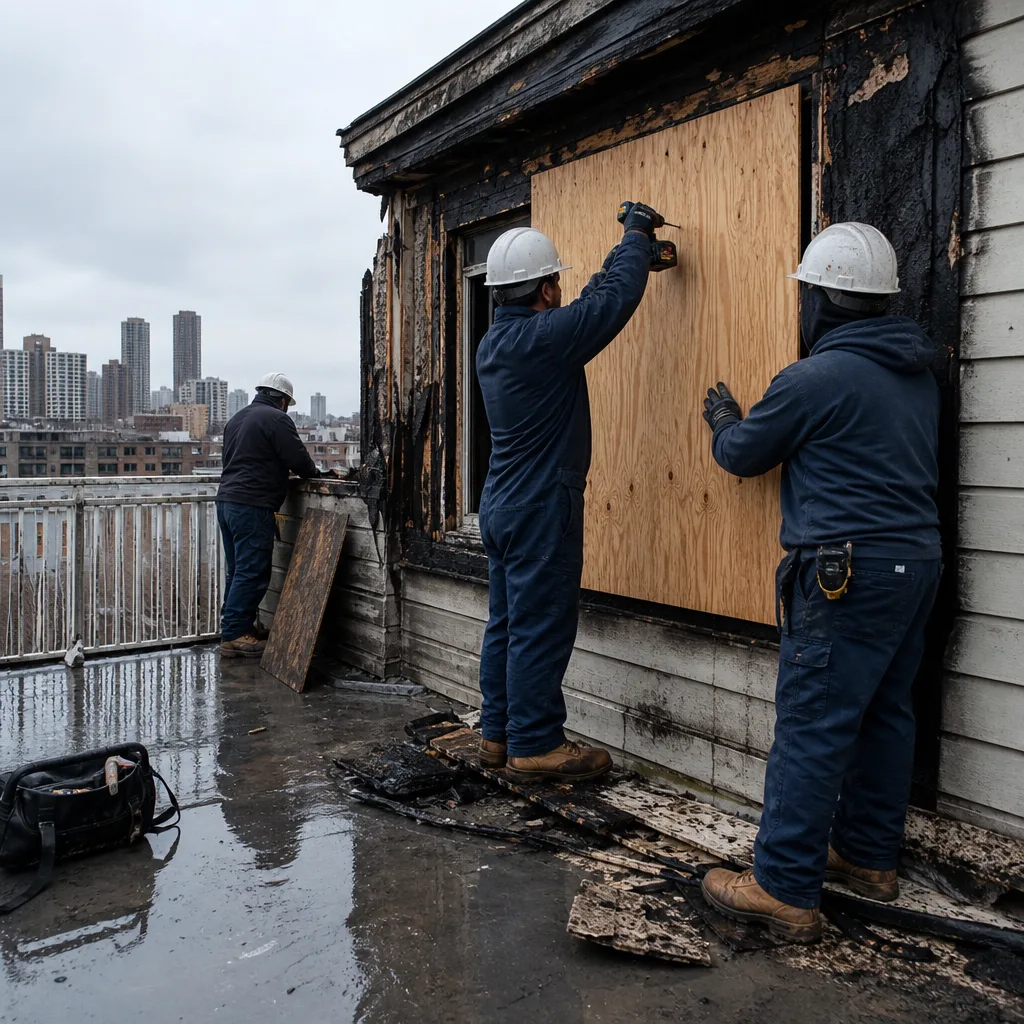
Business Interruption Minimization
The goal of commercial restoration is not just drying the building. It is getting the business running again. For office buildings, retail spaces, and HOA common areas in Harrington Park, that means phased work scopes that let some portions of the property open while others are under containment. For a medical office, it means priority on exam rooms and patient flow. For an HOA, it means getting the lobby and elevators back online first. The line the water left is where we start, but the schedule for reopening is where we focus.
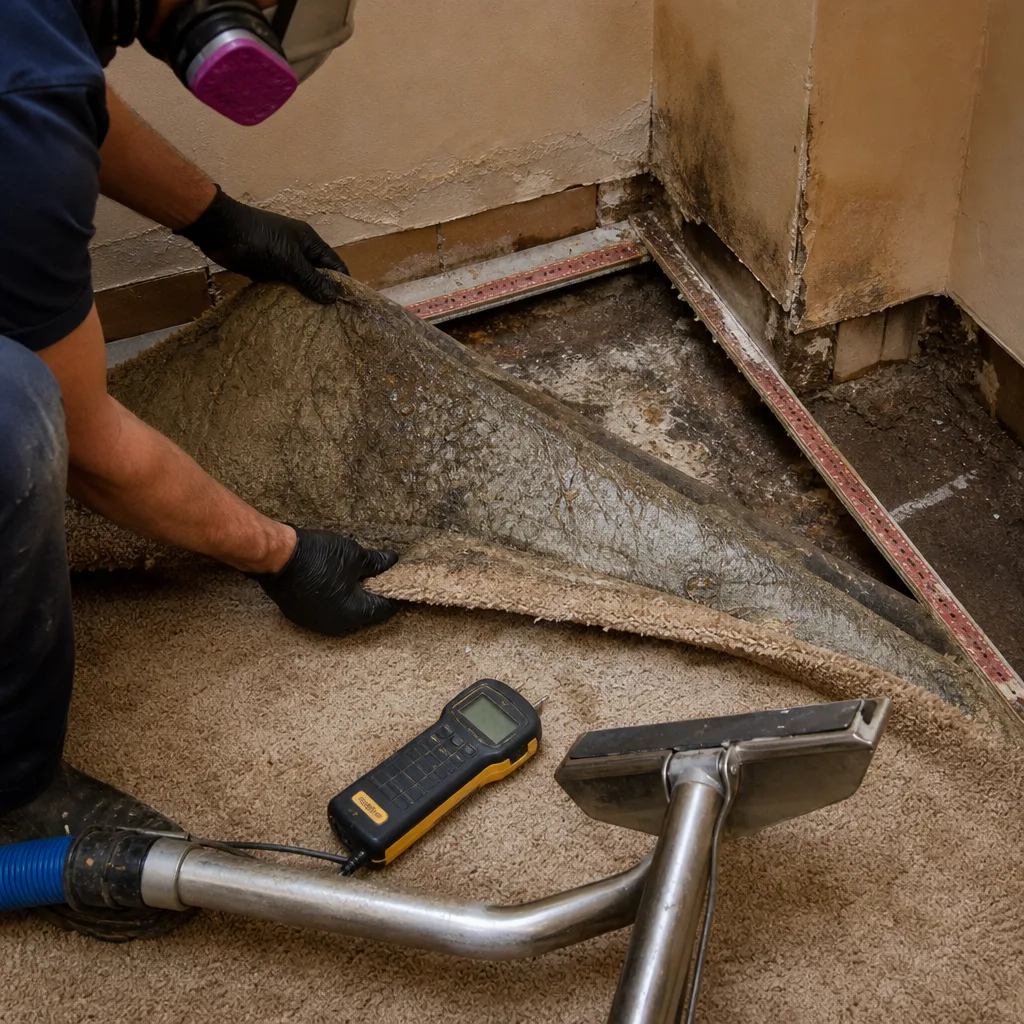
Document & Inventory Recovery
Paper records, patient files, legal documents, retail inventory, electronics. Water does not discriminate. We handle pack-out of documents and inventory from Harrington Park commercial spaces, prioritize what can be salvaged by freeze-drying or desiccant drying, and provide a clear inventory list so nothing disappears into the process. For category 3 losses where black water has contaminated porous goods, we give you an honest assessment of what can and cannot be economically recovered. No sugarcoating, because the decision matters.
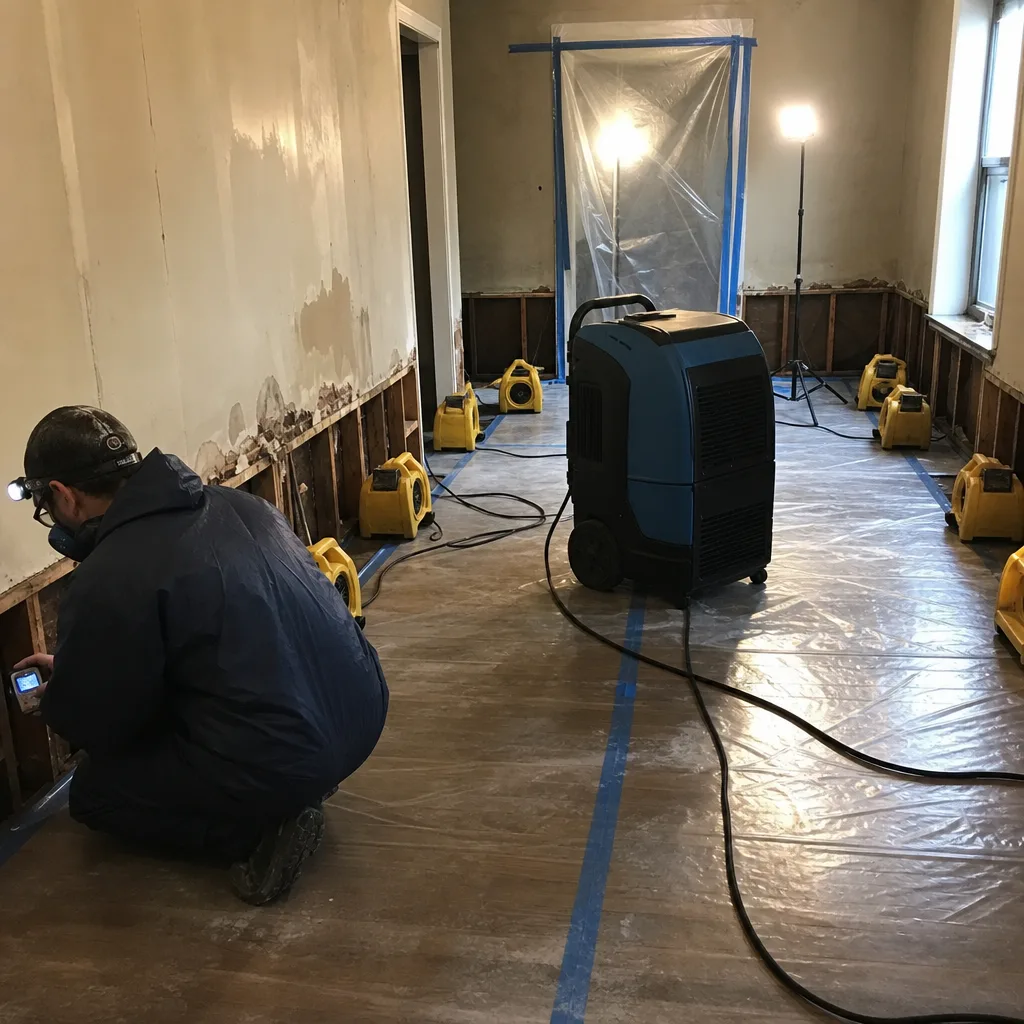
What happens when you call
- 1
A real person answersNo phone trees - you reach a local pro.
- 2
You get an upfront price rangeHonest numbers before anyone is dispatched.
- 3
A background-checked tech heads outLicensed & insured, dispatched right away.
- 4
You approve before work beginsNothing starts until you say go.
Commercial Restoration Costs in Harrington Park, NJ
What does commercial restoration cost in Harrington Park? For a small office water loss, a typical bill runs $2,800 to $6,500 including extraction, drying, and minor repairs. A larger retail or office loss with significant drywall removal, flooring replacement, and structural drying lands between $9,000 and $28,000. A full commercial fire restoration with smoke mitigation, content cleaning, and partial reconstruction runs $35,000 to $90,000 or more, depending on square footage and the extent of structural damage. Multi-unit HOA water losses commonly fall between $12,000 and $45,000 when multiple units and common areas are affected. What moves the price? The category of water, how fast extraction started, whether the building is slab-on-grade or has a basemement, and whether the damage touched finished commercial space or unfinished storage. Insurance-covered losses mean your out-of-pocket is the deductible, and we bill directly. A free visual inspection turns uncertainty into a written scope with a firm number, not a range from a stranger on the phone. Call Commercial Restoration in Harrington Park to discuss a specific loss, and we will give you a straight answer.
We Also Serve Cities Near Harrington Park
Floodline crews regularly respond to commercial losses in the neighboring Bergen County communities of Norwood, Westwood, Closter, and Haworth. The same certified teams, the same 45-minute response commitment, and the same direct insurance billing apply across the northern Pascack Valley.
Serving Harrington Park, NJ - Our Local Coverage Area
We’re based in the Harrington Park area and know this community well. Use the map below to see our service coverage - if you’re nearby, we can almost certainly help.
Harrington Park Commercial Restoration Questions, Answered
How does a commercial space in Harrington Park with a slab foundation complicate water extraction and drying after a Pascack Brook flood?
Water travels horizontally through block and under slab, not just across the floor surface. In Harrington Park commercial buildings with slab or block foundations, floodwater from the Pascack Brook watershed moves into hidden cavities below the visible slab line. Drying only what you can see leaves a hidden reservoir under the surface that keeps feeding moisture upward for weeks. We use moisture meters and thermal imaging to map the full extent of subsurface water, then place dehumidifiers and air movers to pull moisture from the entire affected mass, not just the puddle. Drying logs document the process for insurers who know these addresses and expect real data. Call (917) 924-4221 if you are dealing with a recent flood or suspect hidden moisture.
When should a Harrington Park commercial property replace original galvanized supply lines instead of repairing a leak?
Galvanized steel pipe installed in 1950s and 60s commercial buildings in Harrington Park is past its service life. If a line has already burst once, it is corroding from the inside and will burst again, often at a worse time. A rule of thumb: if the visible pipe shows rust scaling, flaking, or reduced water pressure after the repair, replace the run. Retrofitting to PEX or copper is more expensive up front but eliminates the repeat-loss cycle that insurers flag. Your free visual inspection includes a frank look at the supply lines we expose during the job, with a written recommendation on repair versus replacement.
Why do restoration contractors in Harrington Park pull permits immediately for water damage on commercial properties?
Bergen County building officials know the flood-prone addresses in Harrington Park, especially along the Pascack Brook corridor. When a commercial water loss involves structural drying, drywall removal, or any electrical replacement, a permit is legally required, not optional. Pulling one immediately does three things: it keeps the work compliant, it creates a public record that syncs with your insurance claim, and it signals to your adjuster that the restoration is being done properly. Contractors who skip permits on commercial water damage are doing you no favor. Your insurer can cite unpermitted work as a reason to reduce or deny a claim on a repeat-loss property.
What extra steps do you take to prevent mold in poorly ventilated crawlspaces of 1950s-era commercial buildings in Harrington Park?
We treat crawlspace-adjacent losses as mold-risk jobs from the first visit. After extraction, we install containment and HEPA air scrubbers to prevent cross-contamination. We apply antimicrobial treatment to all affected framing and surfaces. Then we dry with low-grain dehumidifiers, taking readings every six hours until the dry standard is met, not just until the floor feels dry. In the poorly ventilated crawlspaces common to 1950s and 60s commercial construction in Harrington Park, we often leave dehumidifiers running 24 to 48 hours longer than the visible surfaces suggest, because slab and soil moisture keeps feeding humidity into the space. Annual crawlspace inspections are a smart follow-up for any commercial property within the watershed.
Can you salvage business records and inventory from a category 3 water loss in a Harrington Park commercial basement?
Yes, but timing is everything. Category 3, or black water, contains sewage, bacteria, and pathogens from the Pascack Brook floodplain or a sewer backup. Porous goods like paper records, cardboard boxed inventory, and upholstered furniture absorb that contamination within hours. Papers can often be salvaged through freeze-drying or desiccant drying if pack-out starts within 24 hours. Non-porous inventory like sealed electronics, metal fixtures, and some plastics can be cleaned and decontaminated. What waits longer than a day in black water is usually beyond economic recovery. We give you a written item-by-item assessment during the inspection, so you make a salvage decision with facts, not guesses. Call (917) 924-4221 and ask for a free visual inspection before you throw anything away.
How fast can someone actually get to my Harrington Park commercial property?
We aim for 45 minutes from your call to a dispatched crew rolling toward your address in Harrington Park. Emergency calls come into a live dispatcher at (917) 924-4221, day or night, and that dispatcher can send a team immediately. For non-emergency commercial assessments, we schedule same-day or next-morning visits and confirm the time in writing. We will be there when we say.
Will my insurance cover commercial restoration in Harrington Park?
Most commercial property policies cover sudden and accidental water damage, fire, and storm losses, subject to your deductible and policy limits. Flood damage from the Pascack Brook requires a separate flood policy, which many Harrington Park commercial owners near the corridor already carry. Gradual leaks, neglected maintenance, and long-standing moisture problems are typically excluded. We photograph everything from the first hour, document pre-existing conditions, and provide the drying logs and line-item scopes your adjuster needs to process the claim. You never play messenger between us and your carrier.
What should I do in the first 30 minutes after discovering water damage in my Harrington Park commercial building?
If it is safe to do so, shut off the water source or the main valve. Kill electrical power to the affected area at the breaker, especially if standing water is present. Do not enter a room where water is touching live outlets or appliances. Move undamaged inventory and documents out of the wet zone if you can do it safely. Do not attempt to dry flooded carpet or flooring yourself, and do not open walls; the moisture trapped inside will cause more damage. Then call (917) 924-4221. The first 30 minutes determine how much of the loss is recoverable, and a live dispatcher is picking up around the clock.
Written by Curt Bowman, Owner at Floodline Restoration Co. of Manhattan, serving Harrington Park since 2010.