
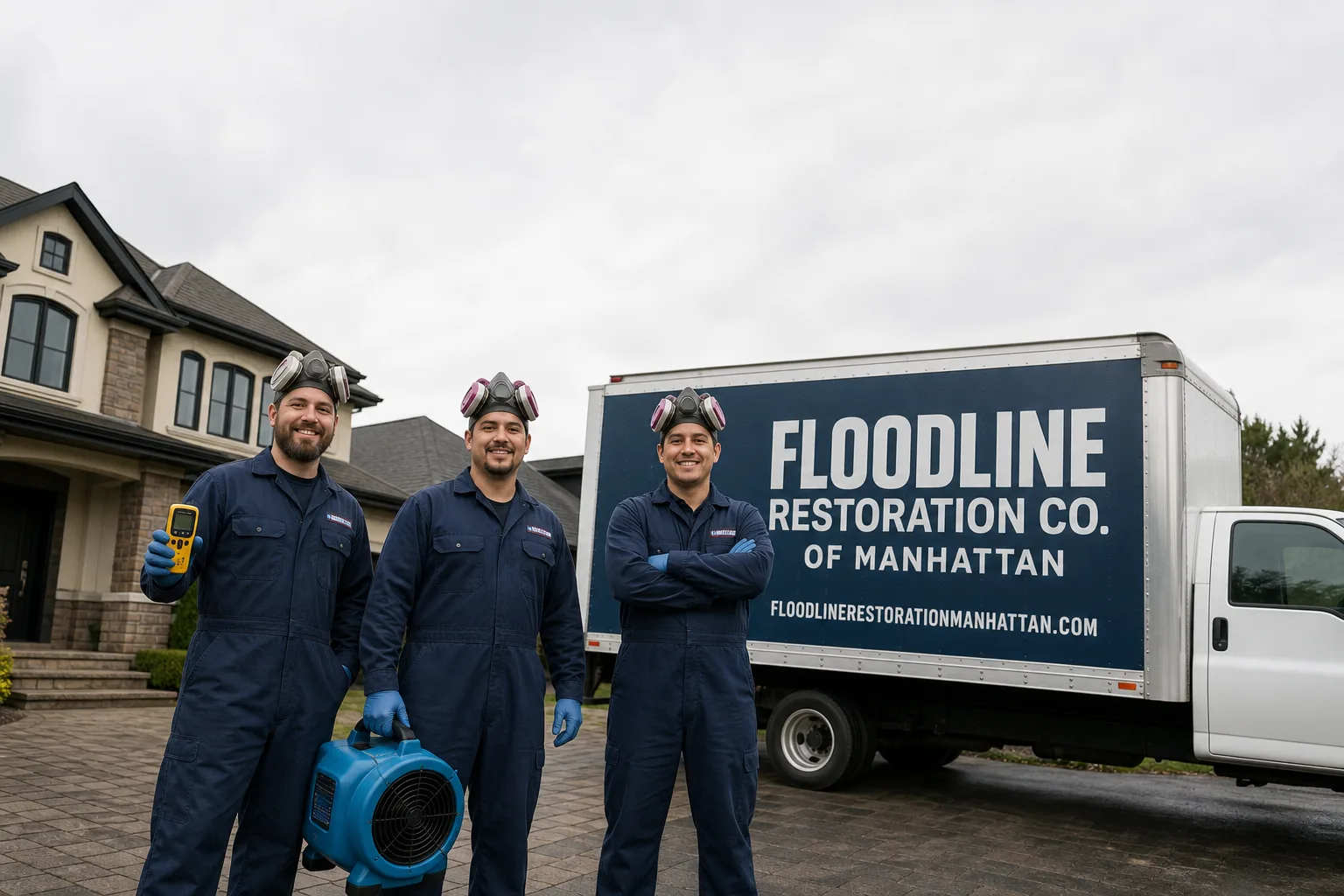
Free visual inspection and a written scope of work before any mitigation begins - photos, moisture readings, and drying logs go in your claim file
The scope we write is the scope we bill. Anything new gets shown to you, in writing, before we touch it.






 Before
 After
After Before
 After
After Before
 After
After24/7 Emergency Commercial Restoration in Katonah
Commercial water, fire, or storm damage in Katonah rarely waits for business hours. A failed cast-iron drain line in a 1900s storefront on Katonah Avenue can send Category 3 water through retail stock before anyone notices, and a nor’easter downing a mature oak onto a commercial roof needs mitigation started immediately. Our Commercial Restoration crews answer live, 24 hours a day, and dispatch into Katonah from the New York City office with a 45-minute response commitment. Call (917) 924-4221 the moment you see water, smoke, or structural damage. The first hour determines whether wet plaster gets dried in place or cut out, whether inventory is salvageable, and whether your business stays closed for days or weeks. A real person picks up at 2 a.m. Not a recording. The faster we start extraction and drying, the less this costs you.
Understanding Commercial Restoration Severity in Katonah Properties
Katonah’s commercial buildings demand a severity assessment that generic restoration checklists miss. The hamlet’s historic core was rebuilt uphill between 1897 and 1903 after the original village was inundated by the New Croton Reservoir expansion, which means most storefronts and upper-floor offices along Katonah Avenue and Parkway sit on balloon-framed structures with original chestnut framing, lime plaster, and cast-iron drain lines. Water from a pipe break travels vertically through balloon-framed wall cavities, wicking up through lime plaster and crossing into upper tenant spaces before the first visible stain appears downstairs. We classify the water the moment we arrive: Category 1 from supply lines, Category 2 from failed drainage and appliance discharge, Category 3 from sewage or reservoir-backed stormwater carrying contaminants. For fire losses, we assess soot residue type (dry protein, wet smoke, or fuel oil soot) because each requires a different cleaning chemistry, and smoke migration through open stud bays in pre-war construction always outruns the visible fire line. Moisture mapping, not visual inspection, is what tells us how far the damage actually extends.
Why Katonah Property Owners Choose Floodline Restoration Co. of Manhattan
- 45-minute response commitment - crews staged in the metro area reach Katonah fast, and we start extraction the same visit.
- 24/7 live answer - a human dispatcher, never an automated system, picks up at any hour of any day.
- IICRC-certified crews - our technicians hold WRT, FSRT, and AMRT certifications and train to RIA and IFA standards.
- Free visual inspection - we assess the loss and write a scope before any work begins, so you decide with real information.
- Direct insurance billing - we work with your carrier and adjuster from the first hour to the final invoice.
- One team from extraction to reconstruction - no handoff to an unfamiliar subcontractor mid-job, ever.
Our Commercial Restoration Process
Inspection & Assessment
We arrive, inspect the visible damage, and run thermal imaging and moisture meters across affected surfaces. For Katonah properties, we check for balloon-framed cavities, knob-and-tube wiring runs, and cast-iron drain lines before touching anything.
Extraction & Stabilization
Standing water comes out with truck-mounted extraction units. We board up openings, tarp roofs, and contain affected areas to stop further exposure. Inventory gets moved or protected immediately.
Drying & Dehumidification
Dri-Eaz and Phoenix dehumidifiers run alongside XPOWER air movers, with daily moisture readings logged until the dry standard is met. In Katonah’s watershed zone, we lean harder on controlled drying than chemical treatment.
Cleaning & Sanitization
HEPA vacuuming and mechanical cleaning remove soot, residue, and contaminants from salvageable surfaces. We follow NYC DEP watershed rules on any biocide use, which most of the time means mechanical removal instead of fogging.
Document & Inventory Recovery
For commercial losses in Katonah, we inventory affected stock, stabilize paper records, and work with your insurer on contents claims. Electronics and documents get handled by restoration specialists, not discarded.
Repairs & Restoration
Rebuild follows the same crew: plaster repair, millwork replacement, structural drying verification, and finish work matched to the building’s era. You get a written scope, a moisture log, and the 90-Day Done Right Promise.
Need Emergency Commercial Restoration in Katonah Now?
Crews minutes away, answering live 24 hours a day. The sooner we start, the less it costs.
Working With Your Insurance Company
Commercial restoration claims in Katonah move faster when documentation starts in the first hour. We photograph every affected room before and during mitigation, log moisture readings daily, and write line-item scopes that match industry-standard estimating software your adjuster recognizes. Curt Bowman built Floodline Restoration Co. around a dispatch board and a direct-billing model, which means you are not playing messenger between your carrier and the restoration crew. Our team speaks directly with adjusters, provides drying logs as they are generated, and uploads photos to the carrier’s portal so the claim does not stall waiting on paperwork. You get the 90-Day Done Right Promise in writing, no arguing, and your insurer gets a clean, defensible scope.
What We Provide Your Insurer
- Thorough documentation of the loss
- Photos of all damage, room by room
- Moisture readings and drying logs
- A detailed, line-item scope of work
- Direct coordination with your carrier
Built for Katonah’s Loss Calendar
Commercial restoration in Katonah follows a seasonal rhythm that anyone running a business here learns to respect. January and February bring deep freezes that split supply lines in older buildings along Route 117 and Goldens Bridge Road, especially in unheated storage areas and vacant upper floors. March and April thaw snowpack into the Muscoot Reservoir watershed, pushing groundwater up through cracks in foundations on low-lying parcels near the reservoir arms. Summer thunderstorms send flash runoff through Katonah’s densely wooded terrain, overwhelming drainage and flooding basements and loading docks. And nor’easters in the fall and winter alike drop mature oaks and maples onto commercial roofs everywhere from the hamlet center to the Bedford estate edges. When a tree opens a roof, water follows within minutes, and so does the need for tarping, extraction, and structural drying, all coordinated while power is still out and tenants are asking when they can reopen. Each season has a signature failure mode. Our crews plan for all of them.
Commercial Restoration Across Katonah’s Neighborhoods
Katonah’s commercial fabric is not one uniform grid. The historic core on Katonah Avenue and Parkway, rebuilt between 1897 and 1903, concentrates 1890s-1910s balloon-framed storefronts with original chestnut framing and cast-iron drains. Water and smoke travel vertically through these structures, so a first-floor retail loss often means moisture readings in upper apartment or office space. Along Route 117 toward Bedford Hills, newer commercial buildings have modern materials but sit closer to reservoir-fed drainage, raising flood risk during heavy rain events. Goldens Bridge Road properties, including office and medical spaces, tend toward mid-century construction where water migrates through concrete slabs and hidden utility chases rather than open stud bays. Out near the Cross River Reservoir, light industrial and storage facilities face large-lot drainage challenges, where snowmelt and stormwater pond against loading areas and enter through roll-up door seals. Each of these areas requires a different moisture-mapping approach and a different expectation for drying time. We know the roads, the building eras, and the drainage patterns.
Specialized Commercial Restoration Services We Offer in Katonah
Office & Retail Restoration
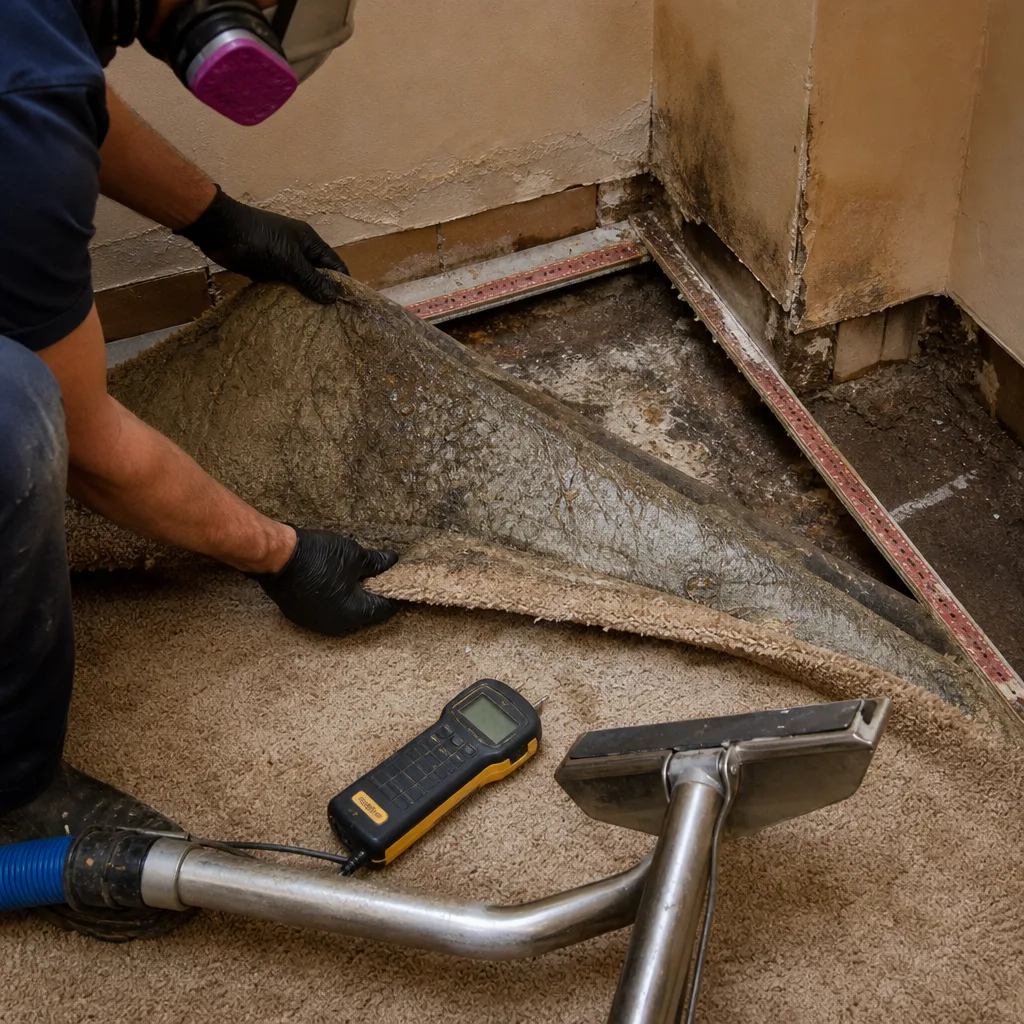
Storefronts on Katonah Avenue and professional offices in the hamlet core need more than water removal. We protect inventory, stabilize original plaster walls, and dry in place where the structure allows. Retail stock exposed to Category 2 or 3 water is logged, photographed, and either restored or declared a loss with documentation your carrier will accept. The goal is reopening for business, not a drawn-out rebuild.
Multi-Unit & HOA Restoration
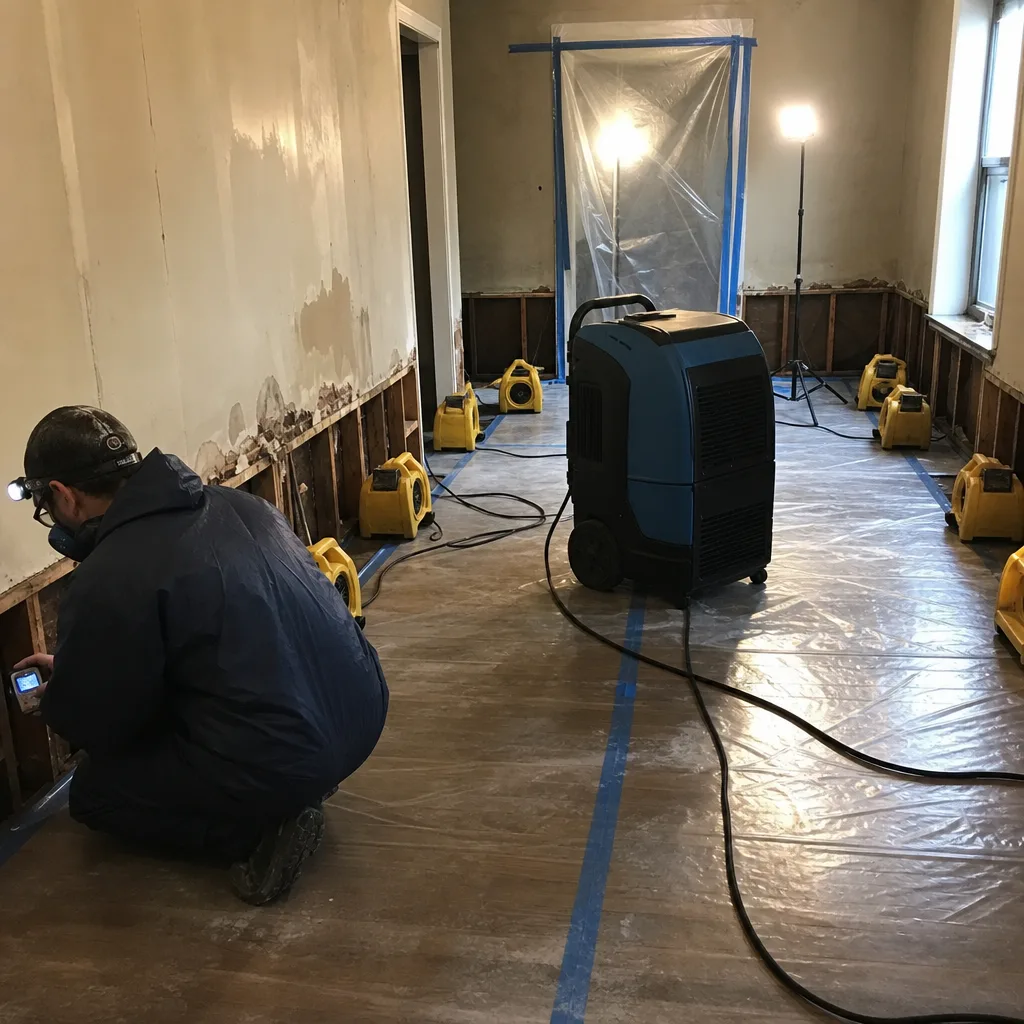
Mixed-use buildings over Katonah storefronts and multi-tenant commercial properties in the historic core carry extra complexity. A single pipe break in an upper unit wicks through original lime plaster into lower units before anyone notices. We map moisture across the full building, communicate with multiple tenants and the HOA board, and sequence work so one unit’s mitigation does not displace the others. Tenants stay when the structure allows; we tell you straight when it does not.
Industrial Facility Cleanup
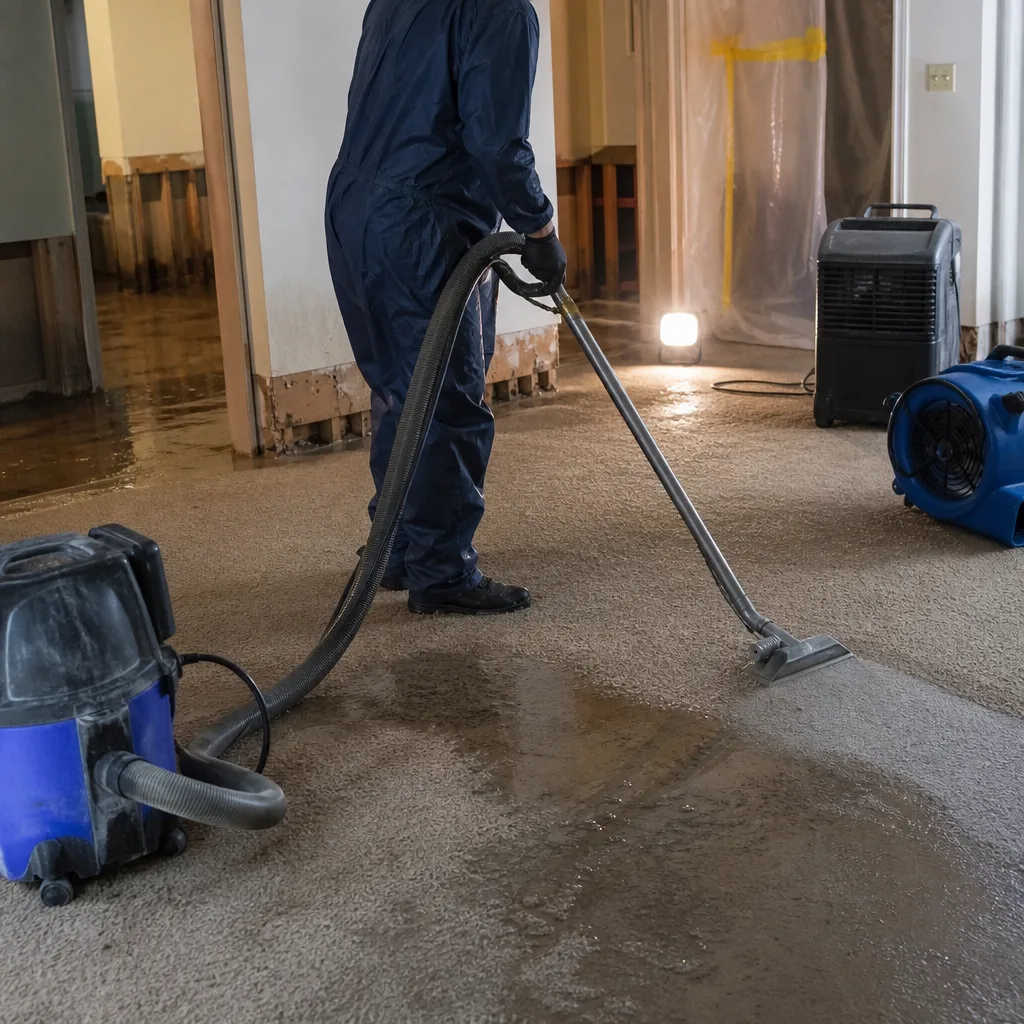
Warehouse and light industrial properties near the Cross River Reservoir and along Route 117 face different loss patterns: roll-up door seal failures during storms, extensive slab wicking, and large square footage that requires multiple Dri-Eaz and Phoenix units running continuously. We stage drying equipment based on cubic footage and air movement calculations, not guesswork. Daily moisture readings verify progress until the dry standard is met, and containment keeps dust and contaminants out of active areas.
Large-Loss Response
When a nor’easter drops a mature oak through a Katonah commercial roof, the loss is measured in thousands of square feet, not rooms. Floodline Restoration Co. runs large-loss response with a dedicated project manager, multiple crews, and equipment staged for continuous operation. We coordinate with your insurer from the first hour, handle board-up and tarping, and start extraction while the estimate is still being written. Business interruption shrinks when mitigation starts on the same visit.
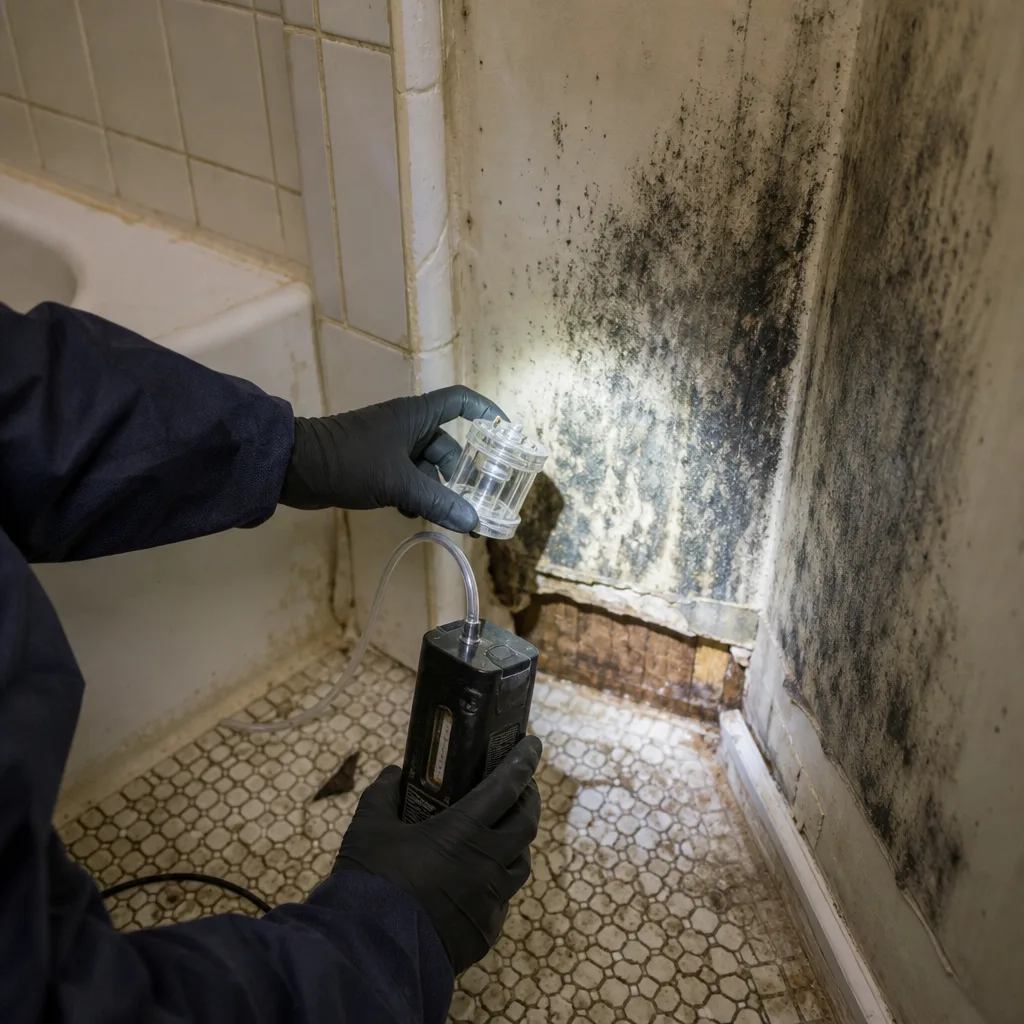
Business Interruption Minimization
Every day a Katonah business stays closed costs revenue. Our crews are trained to work around operating hours where safe, contain affected areas so partial operations can continue, and prioritize drying speed with industrial-grade equipment. The 45-minute response commitment exists for exactly this: the faster equipment runs, the sooner your doors reopen. We document everything for your business interruption claim in parallel with the property claim.
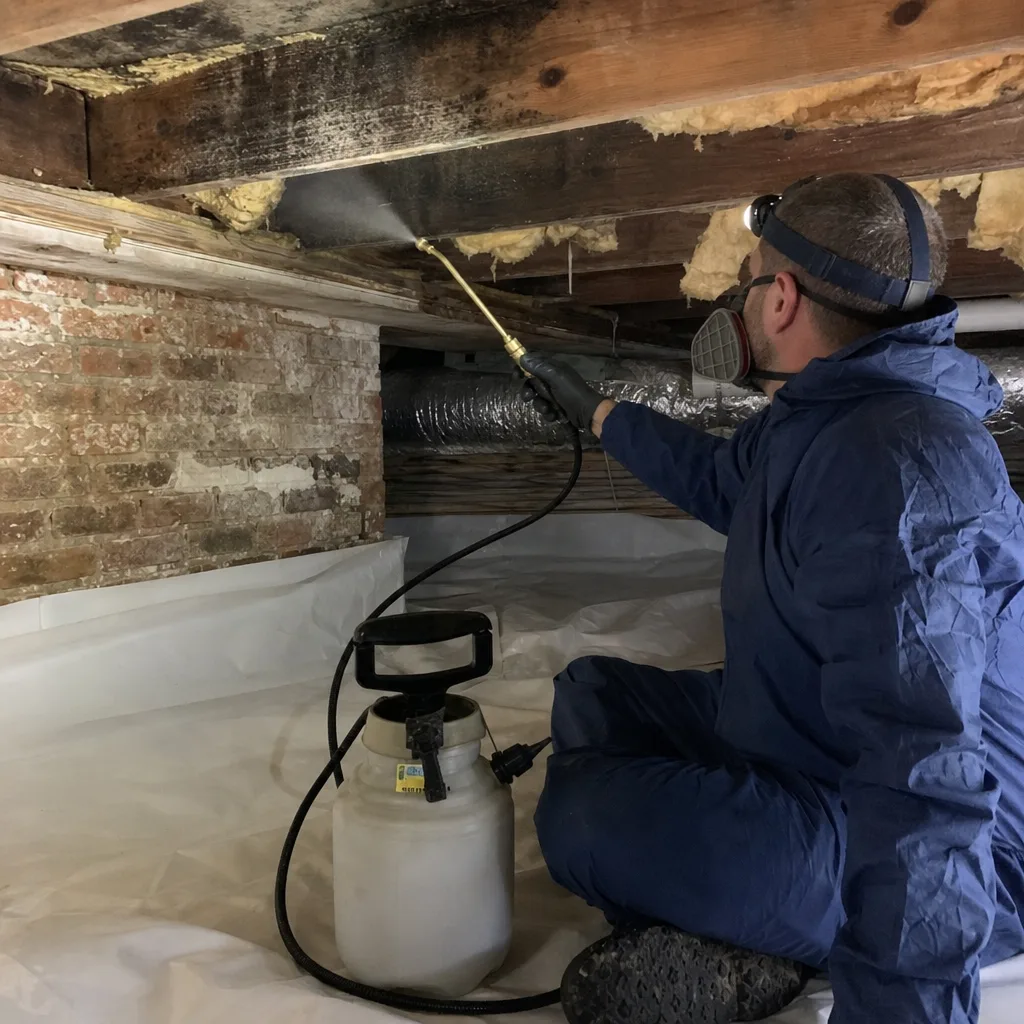
Document & Inventory Recovery
For Katonah offices, retail stockrooms, and professional practices, paper records, electronics, and inventory often matter as much as the structure. We stabilize water-damaged documents using freeze-drying and controlled-air techniques, inventory affected stock for contents claims, and work with your carrier on salvage versus replacement decisions. In the watershed zone, mechanical recovery and HEPA vacuuming replace chemical treatments that are restricted here.
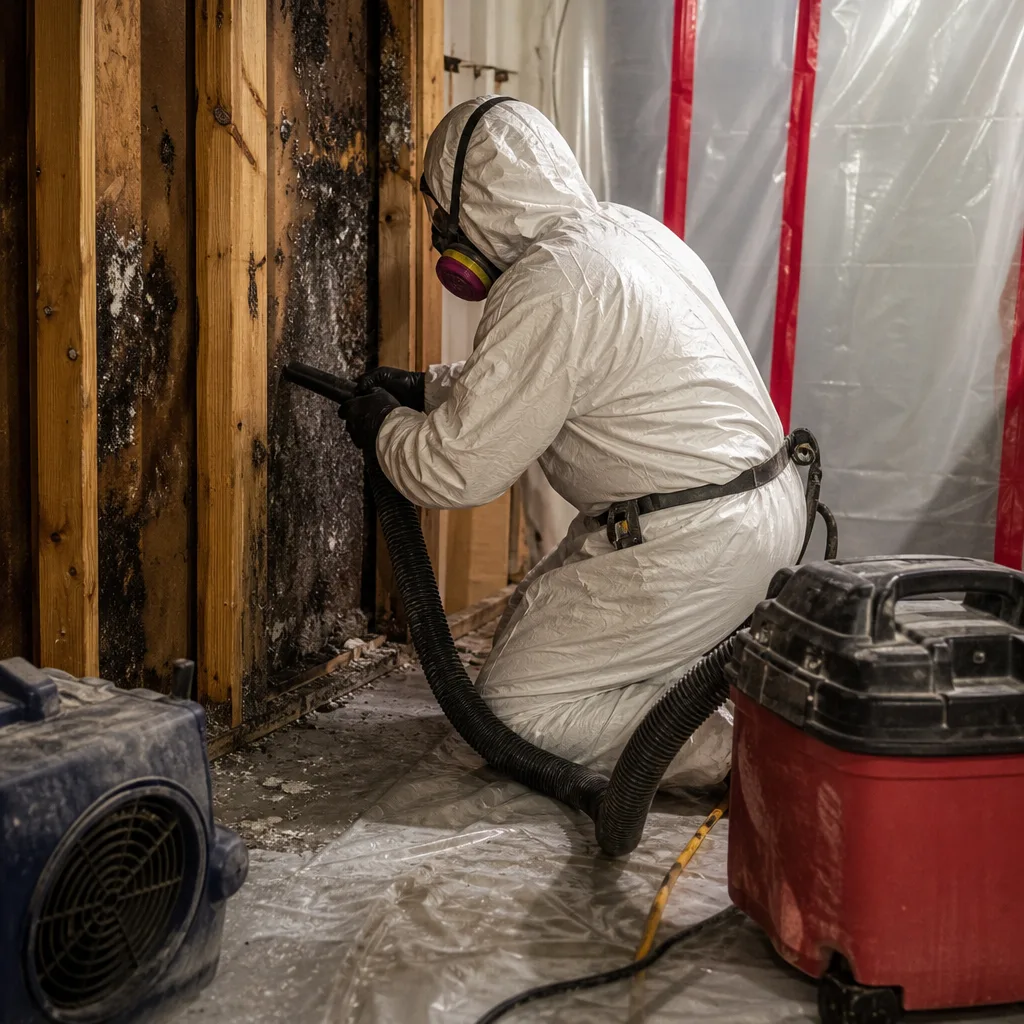
What happens when you call
- 1
A real person answersNo phone trees - you reach a local pro.
- 2
You get an upfront price rangeHonest numbers before anyone is dispatched.
- 3
A background-checked tech heads outLicensed & insured, dispatched right away.
- 4
You approve before work beginsNothing starts until you say go.
Commercial Restoration Costs in Katonah, NY
Commercial water damage restoration in Katonah typically runs $4,200-$9,800 for a moderate retail or office loss involving extraction, drying, and sanitization of 500 to 1,500 square feet. A small Category 1 supply-line break in a single storefront might land near $2,800-$4,000, while a Category 3 sewage or stormwater loss through a commercial basement runs $8,000-$18,000 or more depending on contamination extent and whether drywall and insulation get removed. Fire and smoke restoration on a Katonah Avenue storefront, including soot cleaning, odor treatment, and finish repairs, commonly starts at $6,500 and can exceed $25,000 for structural rebuilding. Large-loss storm response with roof tarping and multi-unit mitigation runs above $30,000 in most cases. What moves the price: whether the building is pre-war balloon-framed (imagine more containment, more careful demolition, potentially knob-and-tube complications), whether drainage contamination is Category 2 or 3, and what portion of inventory and documents require specialty recovery. Insurance covers most commercial losses; the free inspection and written scope we provide before work starts is how you know the path from damage to done. Call (917) 924-4221 for an exact quote, estimates do not cost you anything.
We Also Serve Cities Near Katonah
Our crews regularly work in Katonah and the surrounding communities: Bedford Hills, Shenorock, Mount Kisco, and Yorktown Heights. Dispatch is coordinated from our New York City office, and the live answer is always the same phone number, day or night.
Serving Katonah, NY - Our Local Coverage Area
We’re based in the Katonah area and know this community well. Use the map below to see our service coverage - if you’re nearby, we can almost certainly help.
Katonah Commercial Restoration Questions, Answered
Does the Croton watershed change how you clean Category 2 or 3 water from a Katonah retail space?
Yes. Katonah sits inside the NYC DEP Croton watershed, so chemicals and biocides that restoration companies routinely use in other Westchester towns are restricted or banned here. We use mechanical removal, HEPA vacuuming, and controlled drying in place of antimicrobial fogging wherever possible. Any biocide use is selected carefully for watershed compliance, and we document everything for your insurer.
A pipe burst in our 1900s Katonah Avenue storefront and water soaked the original plaster. Can you dry it in place?
In most cases, yes. Original lime plaster in Katonah’s 1890s-1910s stock is surprisingly resilient to moisture and responds well to Injectidry panel drying. We map the moisture profile first, place containment, and run Phoenix dehumidifiers and XPOWER air movers to pull moisture out without demolition. If sections have delaminated or the lath behind is saturated, we cut those areas and patch with compatible materials.
Our building sits on a low-lying parcel near the Muscoot Reservoir. What should we expect for commercial basement flooding in spring?
Spring snowmelt and heavy rain push groundwater up through foundation cracks and floor seams on low-lying Katonah parcels, especially those near the reservoir arms. Expect recurring basement water intrusion any time the water table rises. The fix is a two-part approach: immediate extraction and drying after each event, plus a drainage assessment to address the source. We can do both, and we write up a flood-preparedness plan for your building so you are not starting from zero each spring.
Our Katonah office lost power during an ice storm and water entered through a downed tree opening. How fast can you start mitigation?
We answer live 24/7 and commit to a 45-minute response in the Katonah area. A crew arrives the same visit, tarps the roof opening, extracts standing water, and places drying equipment even while power is out, using generator-fed units where needed. Documentation for your insurer starts on arrival.
We run a multi-unit commercial property in the historic core. Can you handle fire and water restoration without forcing tenants out?
Yes, in most cases. We contain the affected zone, run HEPA air scrubbers to protect adjacent spaces, and sequence work so occupied units remain habitable. Balloon-framed Katonah buildings mean smoke and water travel vertically, so we moisture-map upper and lower units even if the visible damage stays in one. Tenants stay when the structure is safe; we tell you plainly when a unit needs to be vacated temporarily.
What certifications do your Katonah commercial restoration techs carry?
Our crews hold IICRC certifications including WRT (Water Restoration Technician), FSRT (Fire and Smoke Restoration Technician), and AMRT (Applied Microbial Remediation Technician). They also train to RIA and IFA standards and maintain continuing education credits. Every tech on a Katonah job is background-checked and arrives in uniform.
How long does commercial drying take on a Katonah storefront?
Most commercial drying jobs in Katonah run 3 to 5 days when the building uses modern drywall and insulation. Pre-war lime plaster over original framing can take 5 to 7 days, sometimes longer if the lath and plaster are thick and the weather is humid. We log daily moisture readings and hand you the log for your carrier. The dry standard is a measurement, not a calendar day.
What should I do in the first 30 minutes after discovering commercial water damage in Katonah?
Call (917) 924-4221 first. Then shut off the water source if you can safely reach it, and if electrical panels or outlets are wet, do not enter the area until we assess it. Do not spray antimicrobials or biocide foggers, watershed rules in Katonah mean many products are prohibited and misapplication can draw DEP scrutiny. Move inventory away from water only if the floor is stable and safe. The sooner we start, the less damage spreads.
Written by Curt Bowman, Owner at Floodline Restoration Co. of Manhattan, serving Katonah commercial properties with watershed-compliant restoration and the 90-Day Done Right Promise.