
Free visual inspection and a written scope of work before any mitigation begins - photos, moisture readings, and drying logs go in your claim file
The scope we write is the scope we bill. Anything new gets shown to you, in writing, before we touch it.
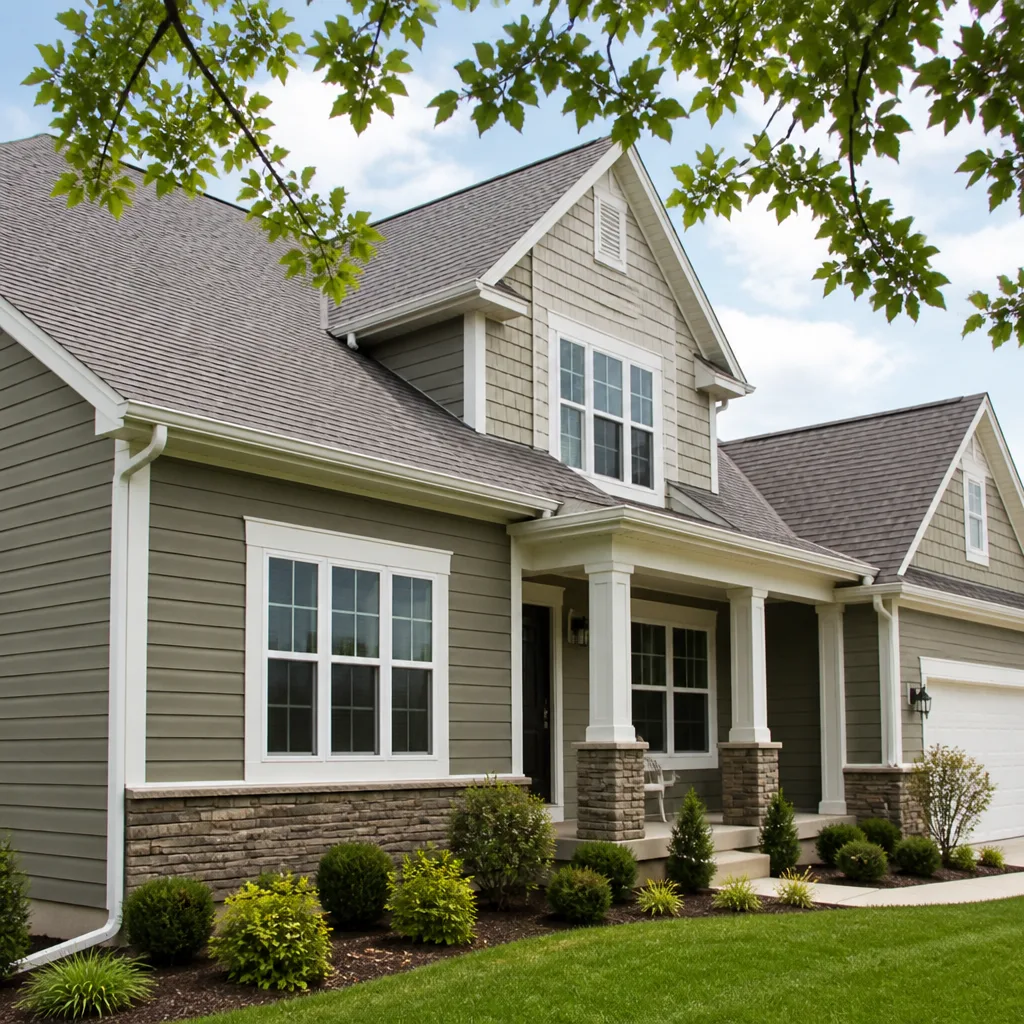
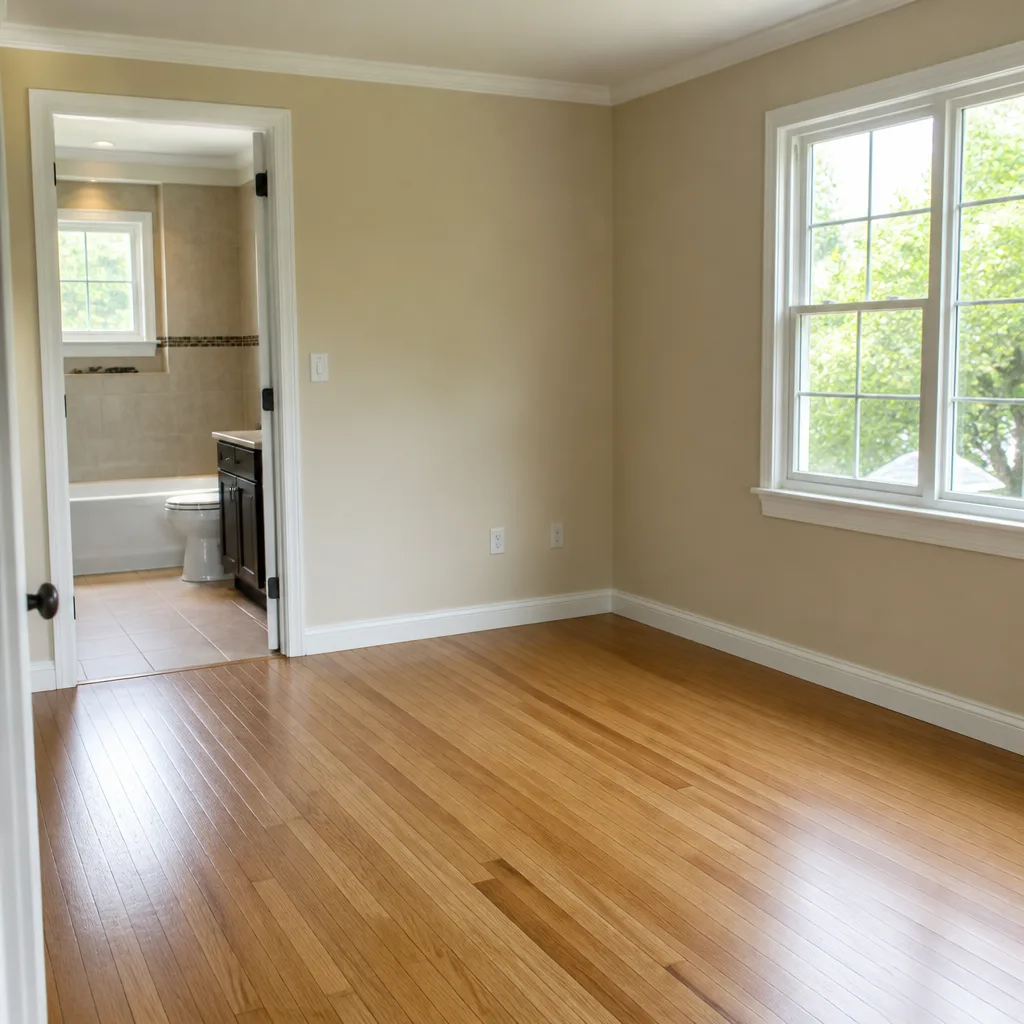
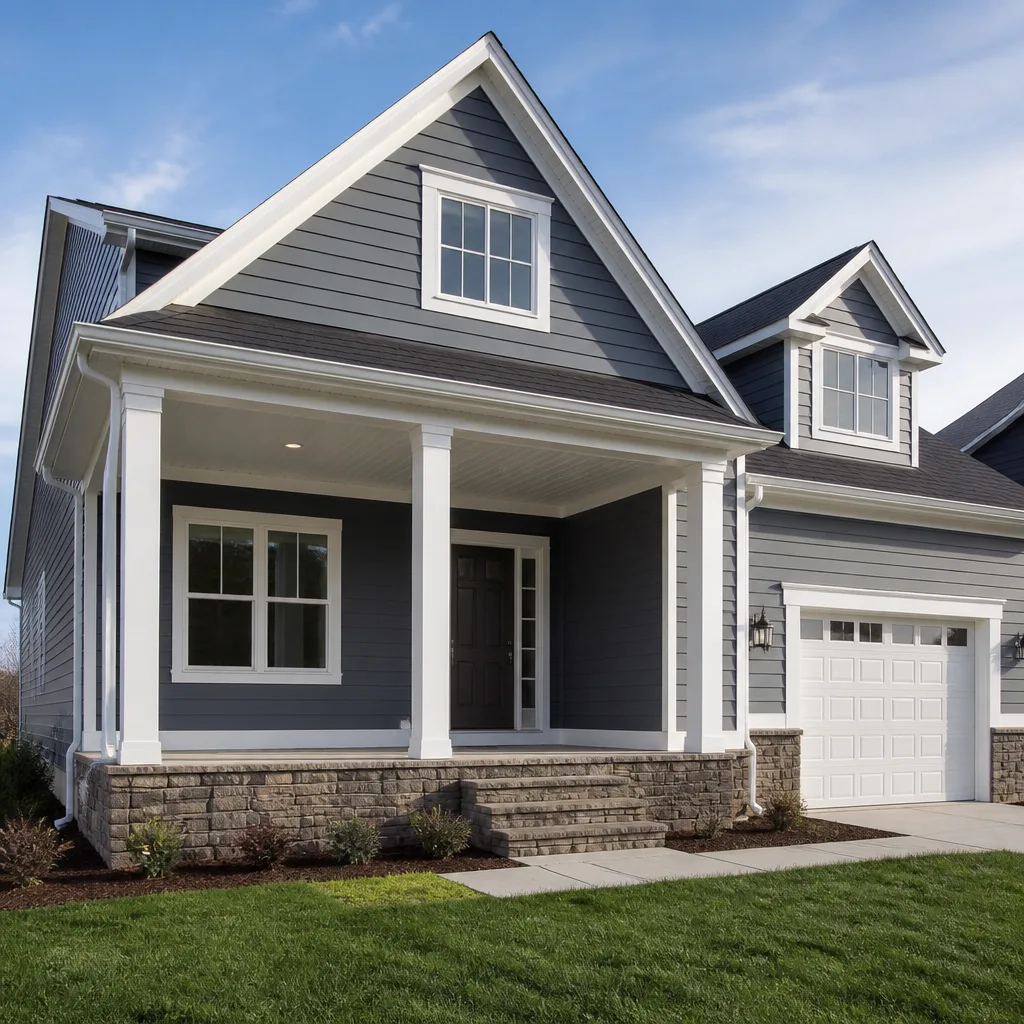
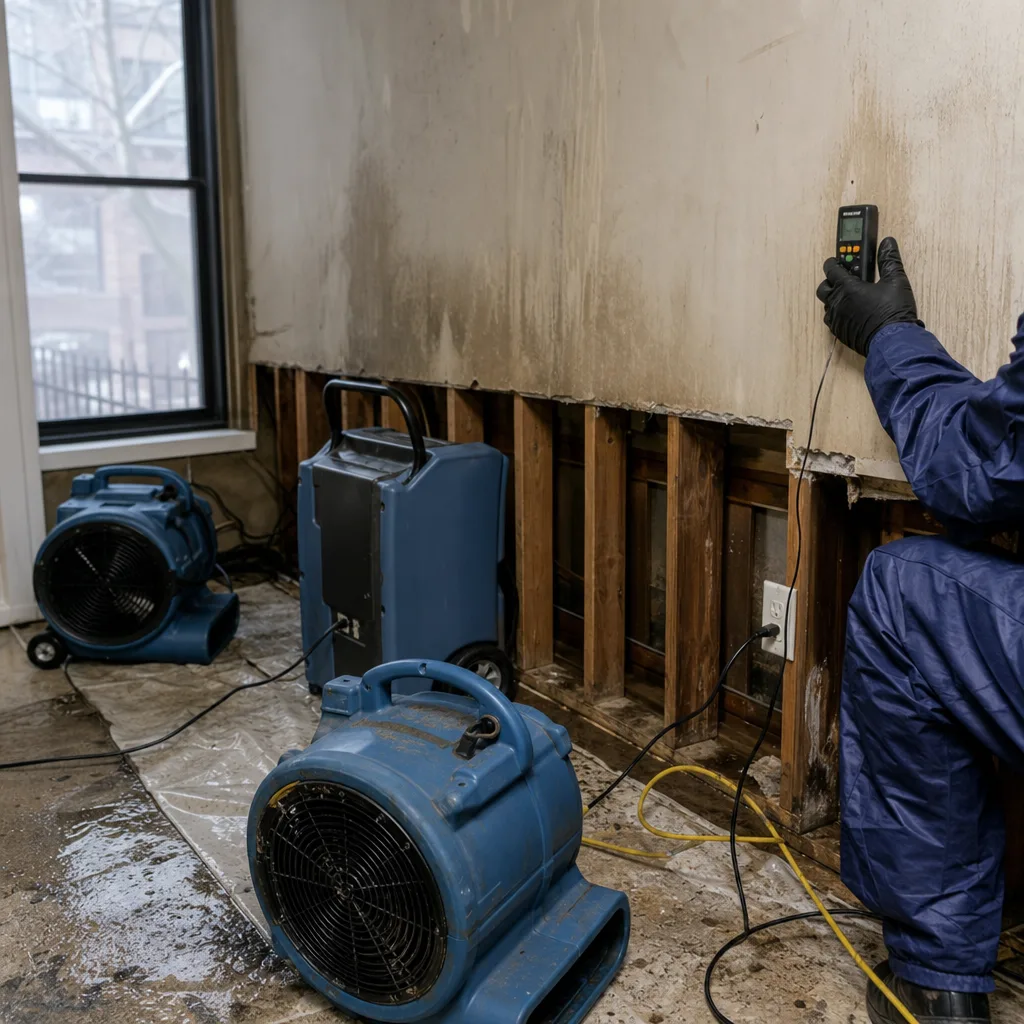 Before
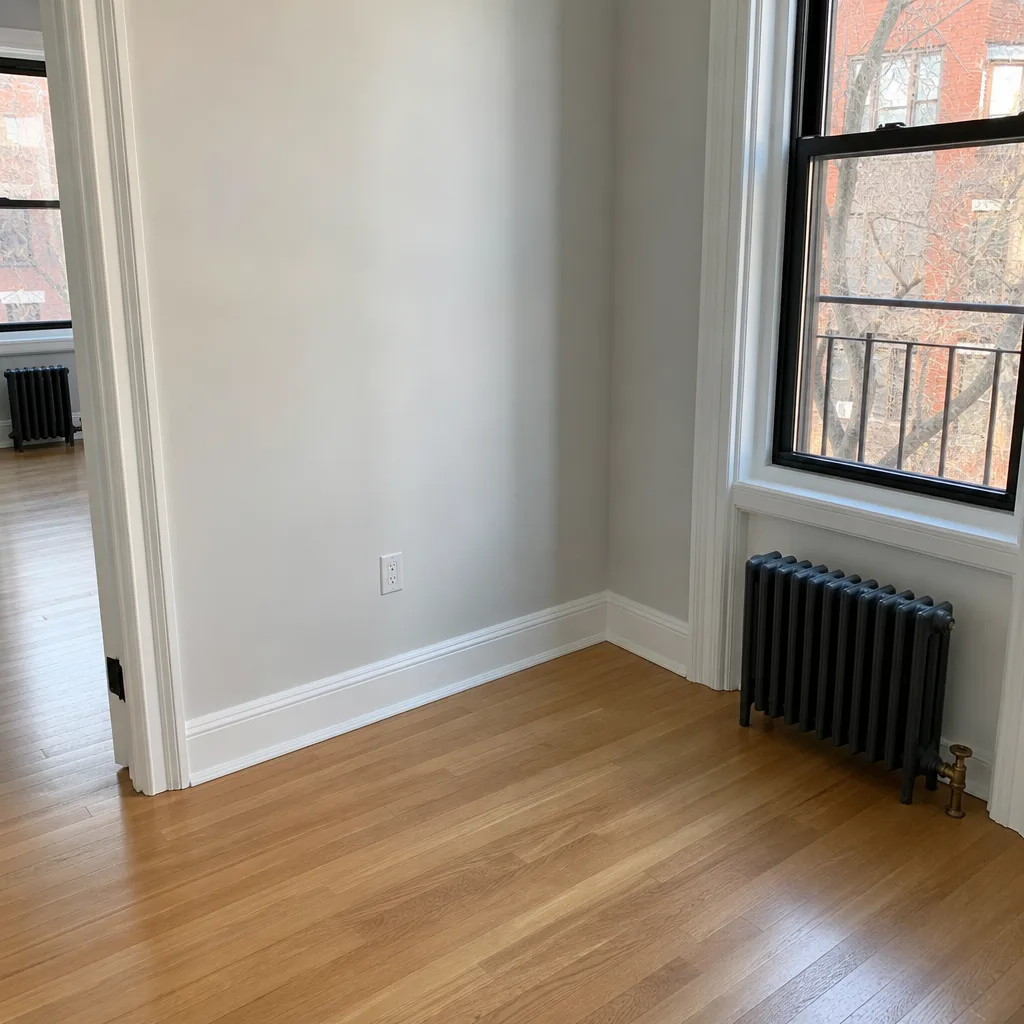 After
After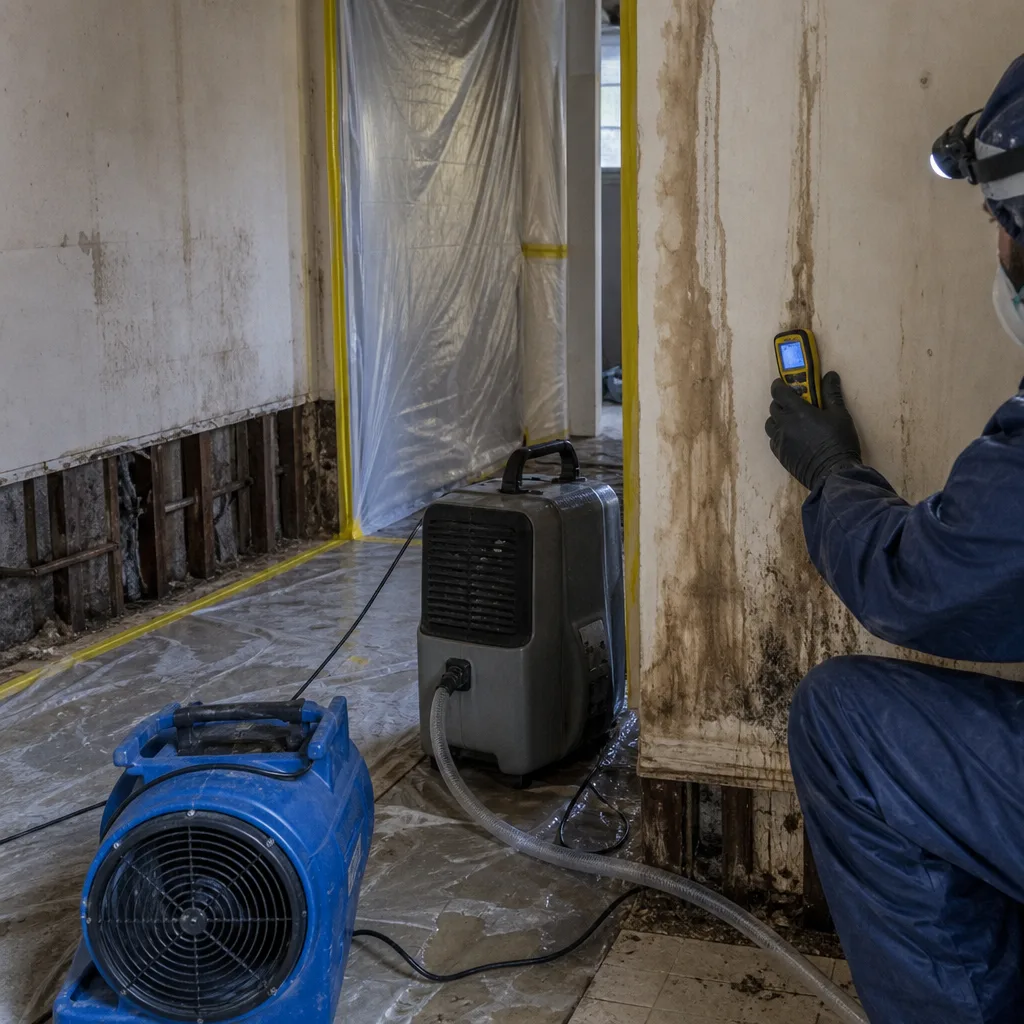 Before
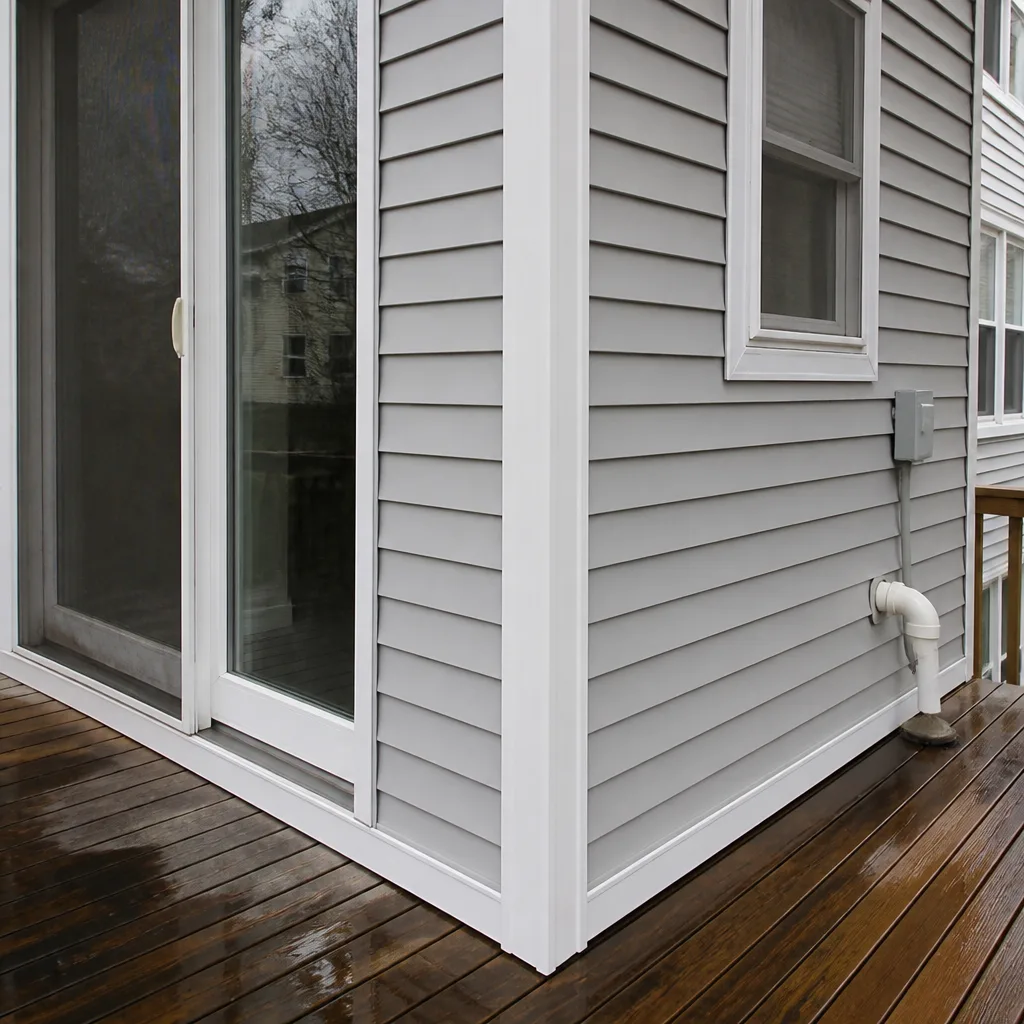 After
After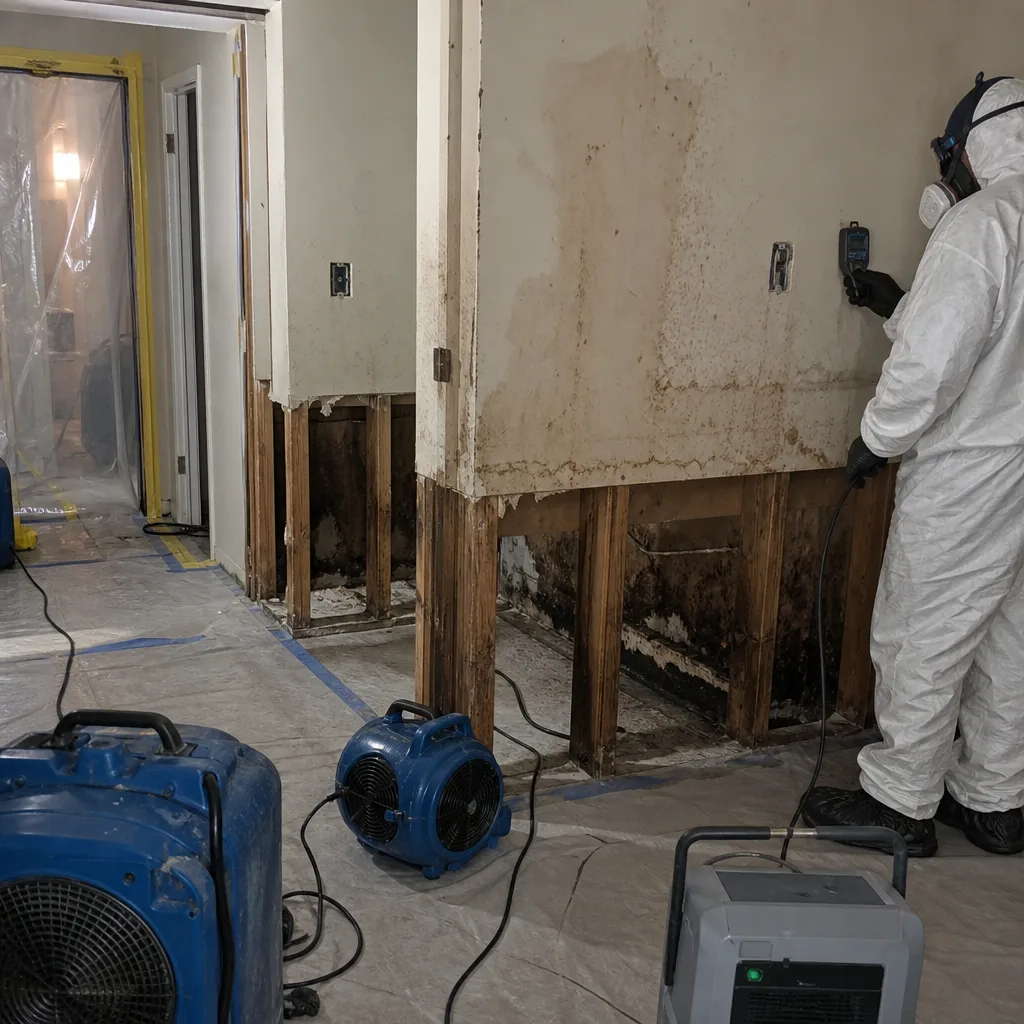 Before
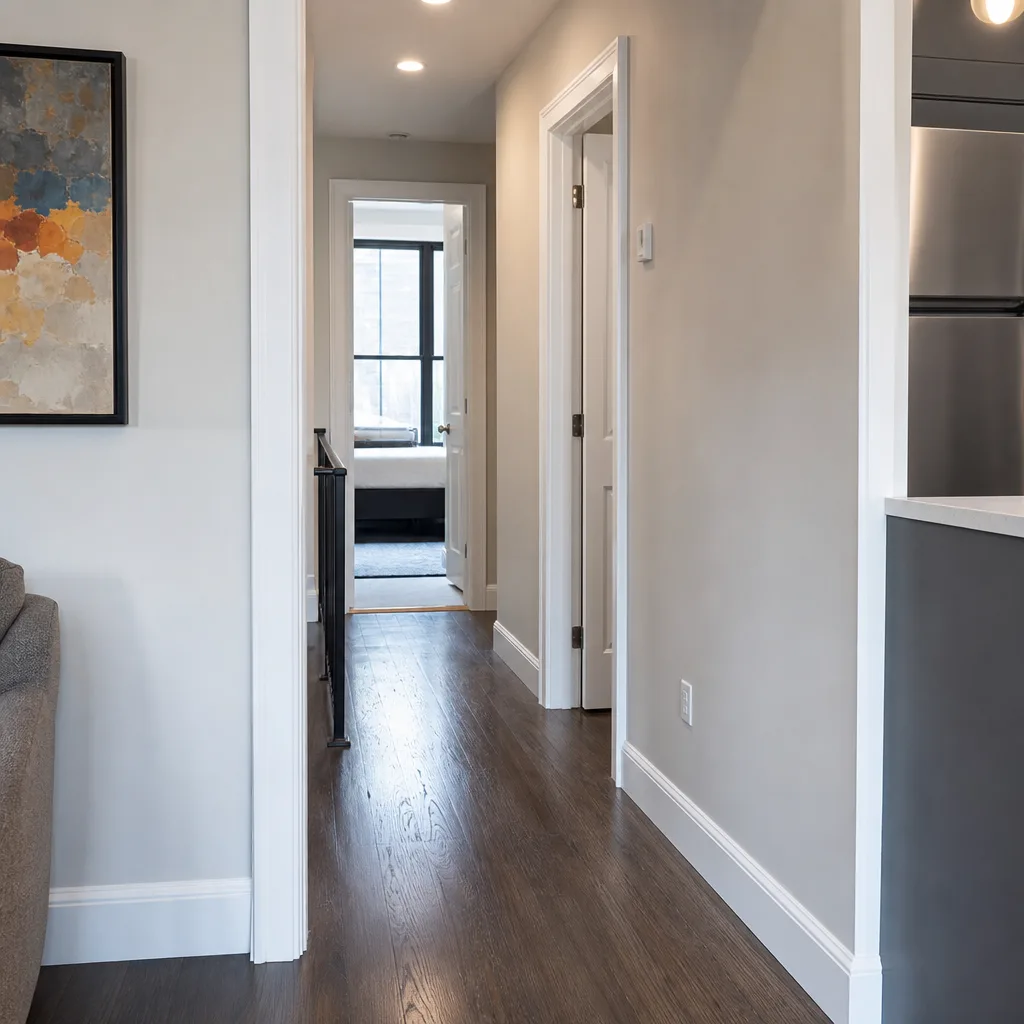 After
After24/7 Emergency Fire & Smoke Damage Restoration in Fort Lee
Fire and smoke damage restoration in Fort Lee, NJ typically runs $2,800 to $9,400 depending on the size of the burn, how far smoke migrated through the building, and whether sprinkler water soaked into the concrete slab. Most high-rise condo jobs we handle in Fort Lee get a board-up and mitigation crew on site within 45 minutes of the first call, because we know the clock starts the moment the fire is out. Smoke and soot keep working their way into drywall, insulation, and HVAC ducting long after the flames die. Call (917) 924-4221 any hour, day or night, for a free visual inspection and a straight answer on what needs to happen next. A live dispatcher answers. Not a recording.
If you’re standing in a Fort Lee condo tower right now looking at a scorched kitchen or a water-soaked ceiling from the sprinkler system, the next hour matters. Smoke residue is acidic. It etches chrome fixtures, yellows appliance finishes, and bonds with painted surfaces within days. The sooner we set up containment and start pulling contaminated air through HEPA filtration, the more of your possessions we save. We coordinate with building management and your insurer from the first visit, so you’re not left holding the phone between three parties while the damage spreads.
Understanding Fire & Smoke Damage Restoration Severity in Fort Lee Properties
Fire damage severity falls into distinct categories, and Fort Lee’s housing stock changes how each one plays out. A light smoke event from a grease flare-up leaves thin soot residue on upper walls and ceilings. A full-room burn produces thick, oily soot that bonds with surfaces and demands chemical sponge cleaning plus thermal fogging for deodorization. The most complex jobs on this page involve protein fires, where nearly invisible residue from burned food carries an odor that lingers for months in shared HVAC systems unless treated at the source.
In Fort Lee’s high-rise condominium towers from the 1960s through 1980s, smoke and soot travel through shared HVAC chases and elevator shafts. A small fire on the 14th floor of a Parker Avenue tower can push smoke into units on floors 11 through 17. Soot residue types matter here: dry smoke wipes with a dry sponge, while wet smoke from smoldering synthetics requires solvent-based cleaning. Then there’s the sprinkler discharge, which introduces Category 2 water into concrete slab assemblies. Moisture mapping with thermal imaging and penetrating meters tells us how far that water went before we ever pull baseboards. We don’t guess. We measure.
Drying a fire unit in Fort Lee means drying through concrete, not just across it. Slab-to-slab moisture readings show us whether the unit below took on water too. If it did, both units need drying at once, or mold starts in the lower ceiling cavity within 48 to 72 hours. Our Fire & Smoke Damage Restoration team cuts access panels, maps the spread, and documents everything for the building’s engineer and your adjuster.
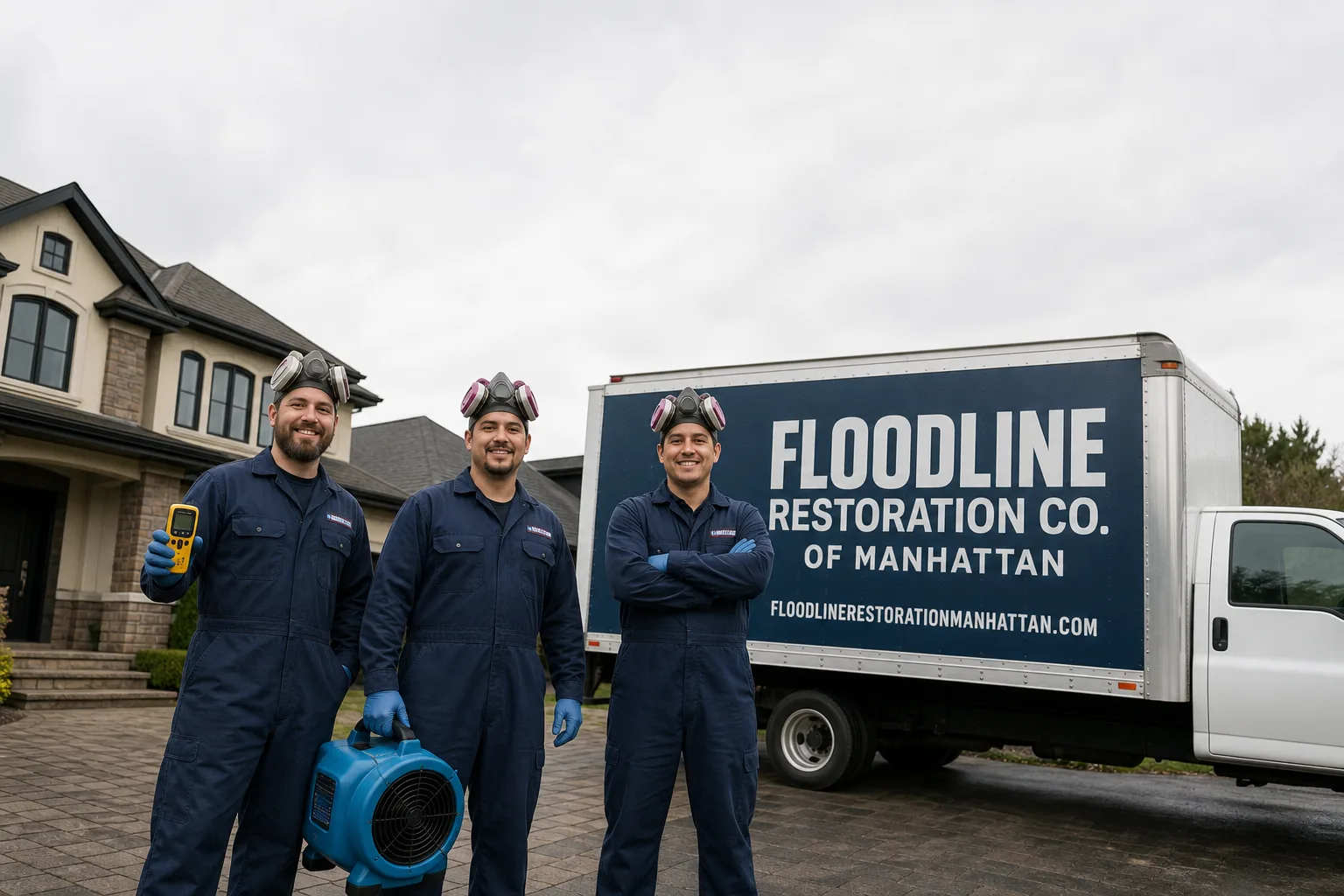
Why Fort Lee Property Owners Choose Floodline Restoration Co. of Manhattan
- 45-minute response commitment: We’ll have a certified crew dispatched to your Fort Lee address within 45 minutes of your call. Our dispatchers know the Route 4 and Palisades Avenue corridors, so we route around traffic, not into it.
- 24/7 live answer: A real person picks up the phone at 3 a.m. on a Sunday. No phone tree, no callback form. You tell us what you’re seeing, and we tell you what happens next.
- IICRC-certified crews: Our technicians hold FSRT and WRT certifications and know the fire-plus-water dynamics of Fort Lee’s older towers. They’ve worked slab assemblies, curtain wall leaks, and shared-vent containment before. This is what we do here.
- Free visual inspection: We walk the unit, we map the damage, we give you a written scope. If you don’t need full remediation, we’ll say so. A square deal, no surprises on the bill.
- Direct insurance billing: We bill your carrier directly and talk to your adjuster ourselves. You are not a messenger. You’re a homeowner waiting for your home back.
- One team from extraction to reconstruction: The same certified crew that sets containment on day one runs the daily moisture readings, hands you the drying log, and rebuilds what needs rebuilding. No mid-job handoff to a crew you’ve never met.
Our Fire & Smoke Damage Restoration Process
Inspection & Assessment
We arrive, walk the unit with you and the building super, and document everything. Thermal imaging shows us heat damage behind walls. Hygrometers and penetrating meters map moisture in the slab and drywall. You get a clear picture of what we found and what we recommend, in words you understand.
Extraction & Stabilization
Sprinkler discharge water comes out first. Truck-mounted extractors pull standing water from floors, while we start emergency board-up and tarping on any broken windows or burn-through roof sections. If a window in a Fort Lee tower unit is blown out, the wind off the Palisades will keep feeding the damage until it’s sealed.
Drying & Dehumidification
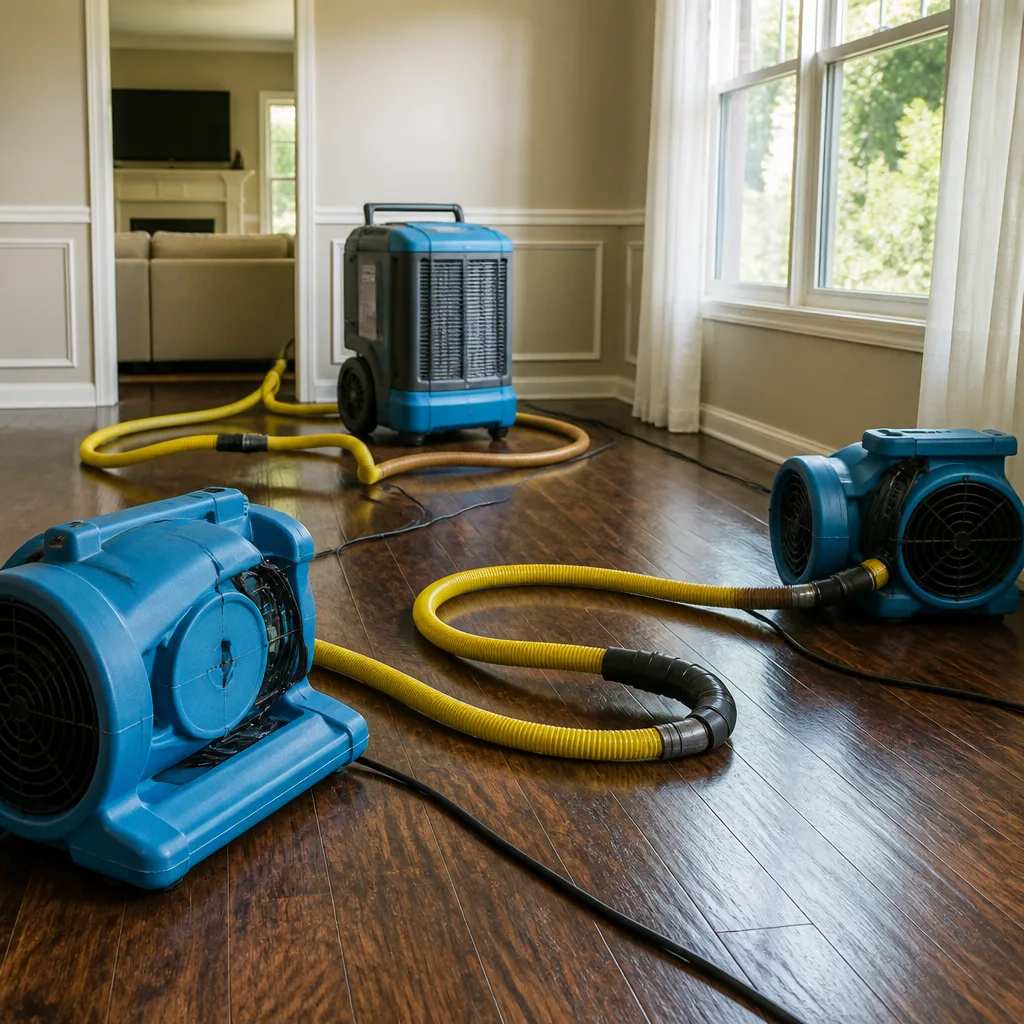
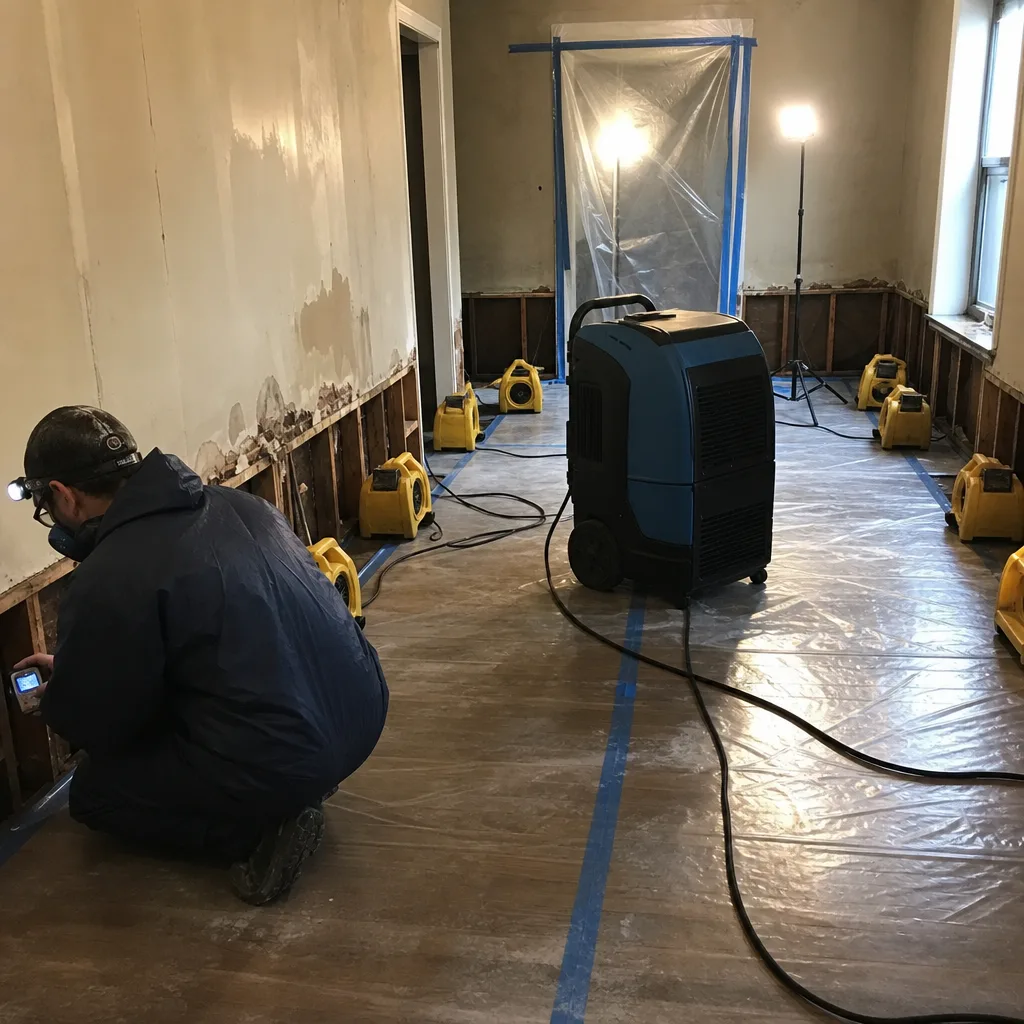
We place Dri-Eaz and Phoenix dehumidifiers plus XPOWER air movers in a calculated pattern, sealed to the fire unit so we’re not pushing smoke-laden air into the corridor. Daily moisture readings go into a log you and your adjuster both receive. We dry until the numbers say dry, not until the calendar says done.
Cleaning & Sanitization
Soot and smoke residue come off hard surfaces with dry sponges and chemical agents matched to the residue type. Soft goods get packed out to our cleaning facility for ultrasonic and immersion cleaning. Cavity spaces get antimicrobial treatment once they’ve reached the dry standard.
Odor Removal & Deodorization
This is where Fort Lee’s high-rises demand more than a suburban playbook. Smoke odor that traveled through shared HVAC chases requires more than spraying the burn unit. We deploy hydroxyl generators and thermal fogging, and we treat the mechanical rooms and corridor returns so the building’s condo board sees a real containment plan.
Repairs & Restoration
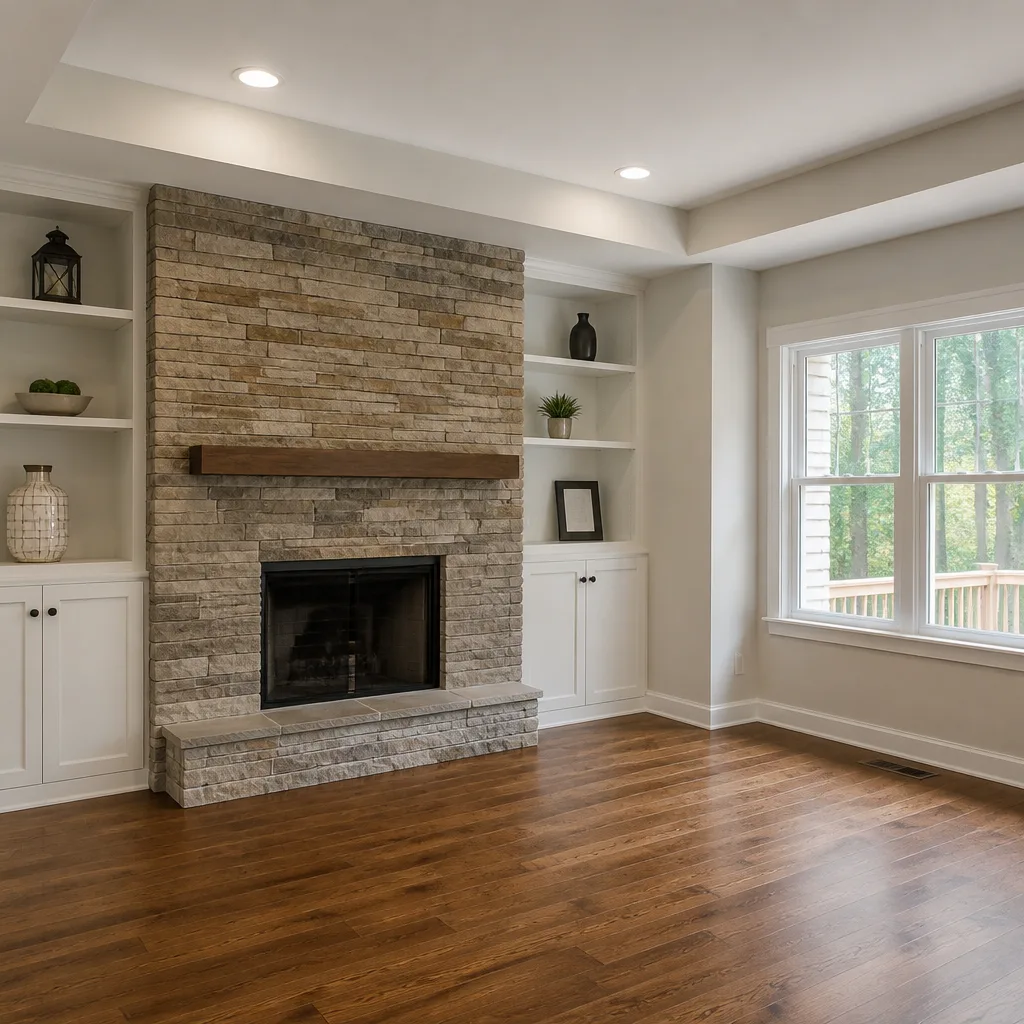
Once the unit is dry and clean, our reconstruction team rebuilds. Baseboards, sheetrock, paint, trim, flooring. The same crew that read the moisture map on day one. The 90-Day Done Right Promise applies, in writing, with no arguing.
Need Emergency Fire & Smoke Damage Restoration in Fort Lee Now?
Crews minutes away, answering live 24 hours a day. The sooner we start, the less it costs.
Working With Your Insurance Company
Fire claims in Fort Lee’s high-rise buildings are rarely simple. There’s often the unit owner’s policy, the building’s master policy, the condo board’s property manager, and sometimes a neighboring unit owner’s carrier all looking at the same loss. We handle the documentation from the first hour so the claim moves without you becoming a full-time claims manager. Our adjusters get a line-item scope of work backed by photos, moisture readings, and a drying log that shows what we did, when we did it, and why. We bill the carrier directly. If the adjuster has questions, they call us, not you.
What We Provide Your Insurer
- Thorough documentation of the loss
- Photos of all damage, room by room
- Moisture readings and drying logs
- A detailed, line-item scope of work
- Direct coordination with your carrier
Built for Fort Lee’s Loss Calendar
Fort Lee’s fire damage calls spike in predictable waves tied to the borough’s housing stock and weather. January and February bring space-heater fires in older tower units where residents fight drafty curtain-wall windows with plug-in units the wiring wasn’t built for. The Palisades ridge sits fully exposed to the Hudson Valley wind corridor, and those northeast winds push cold air through aging window glazing seals, driving people to overheat their apartments with electric heat. We see breaker failures and overloaded outlet fires every winter.
Spring brings thaw-and-rain leakage into rooftop mechanical rooms where freeze-thaw cycling has cracked the membrane, and that water finds electrical rooms and rooftop elevator equipment. A fire from an electrical short in a wet mechanical room is nasty: soot, scorched wiring, and water all at once. Summer thunderstorms in the NJ metro can knock out power to entire tower blocks, leading to candle fires and generator misuse in hallways and balconies. Every one of these events in Fort Lee means building management, multiple insurers, and a restoration firm that understands high-rise logistics. That’s the job we do here.
Fire & Smoke Damage Restoration Across Fort Lee’s Neighborhoods
We know the response routes and the building types. In the high-rise corridor along Palisade Avenue and Parker Avenue, we’re typically dealing with 1960s and 70s era condominium towers where fire and smoke move vertically through mechanical chases and elevator shafts. Access for equipment means staging in loading docks, coordinating with the building super for service elevator availability, and planning our containment so corridor air stays clean for residents who never had a fire. The Palisade Avenue towers above Main Street demand a specific sequence: contain the burn unit, seal corridor returns, treat shared mechanical rooms.
Down toward the Parker Avenue and Center Avenue areas, we’re often in mid-rise buildings from the same era. Same vertical smoke migration, just fewer floors. The challenge there is parking. We stage our trucks and equipment carts without blocking resident parking, because a restoration crew that annoys the building’s residents is a crew that gets delayed. Over by the Leonia border and up toward Fort Lee’s northern edges, we see more older single-family homes and smaller multi-family buildings where a kitchen fire stays contained to one unit, but the smoke still gets into attic spaces and wall cavities. The Palisades ridge elevation means wind-driven rain gets into any burn-through opening fast, so board-up and tarping happen on the first visit, every time, in every neighborhood.
Specialized Fire & Smoke Damage Restoration Services We Offer in Fort Lee
Smoke & Soot Removal
Soot residue in a Fort Lee tower unit is never just cosmetic. It’s acidic, and it starts etching chrome and tarnishing copper within hours. We match cleaning method to residue type: dry sponges for dry smoke, solvent agents for wet smoke, and careful hand cleaning on sensitive surfaces. In high-rise units, we pay close attention to shared walls and ceiling cavities, because your neighbor’s unit didn’t have a fire, but their air did.
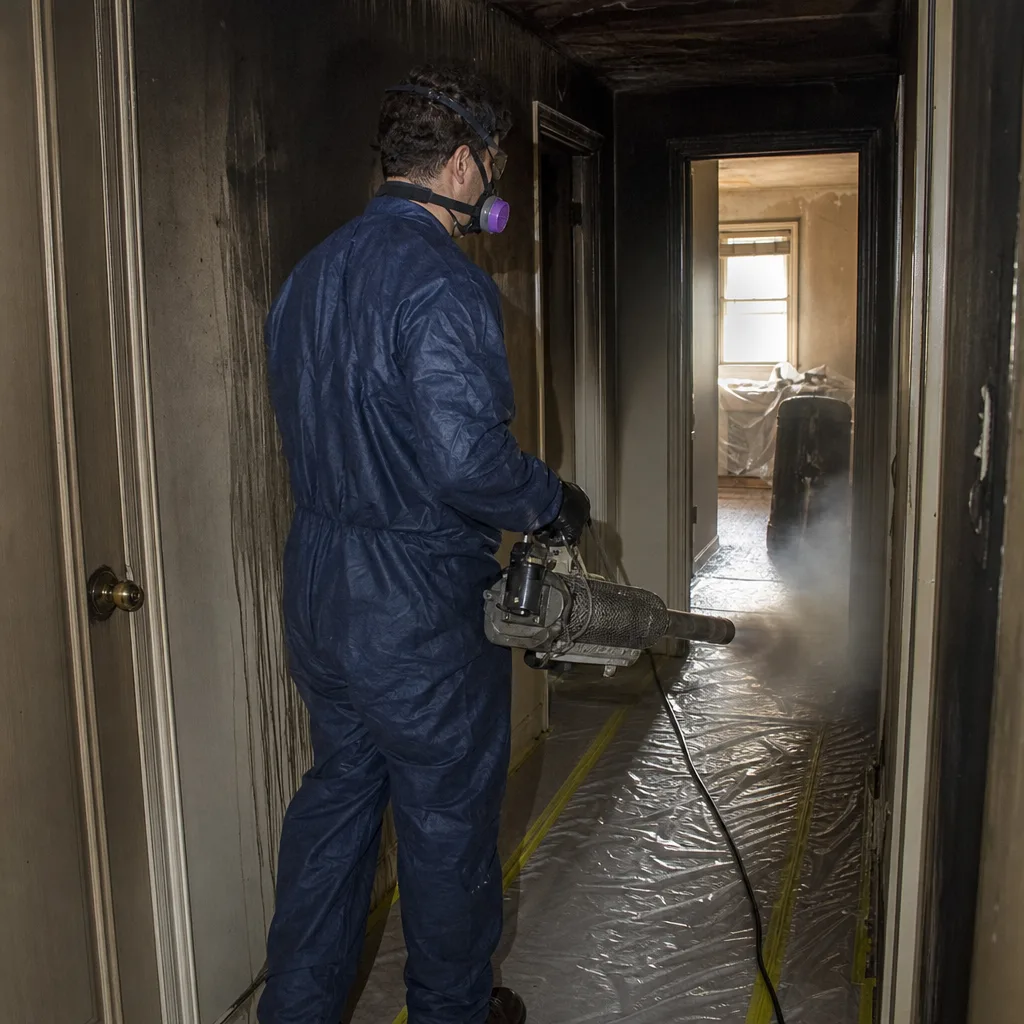
Odor Removal & Deodorization
Smoke odor in a Fort Lee high-rise travels through shared HVAC chases and elevator shafts. The burn unit may be on the 14th floor, but the odor complaint comes from the 12th. We start odor treatment in the mechanical rooms and corridor returns, not just the burn unit. Hydroxyl generators run in sealed containment, and thermal fogging pushes deodorizer into the same wall cavities and duct runs the smoke used. That’s how a Fort Lee condo board signs off on the mitigation plan.
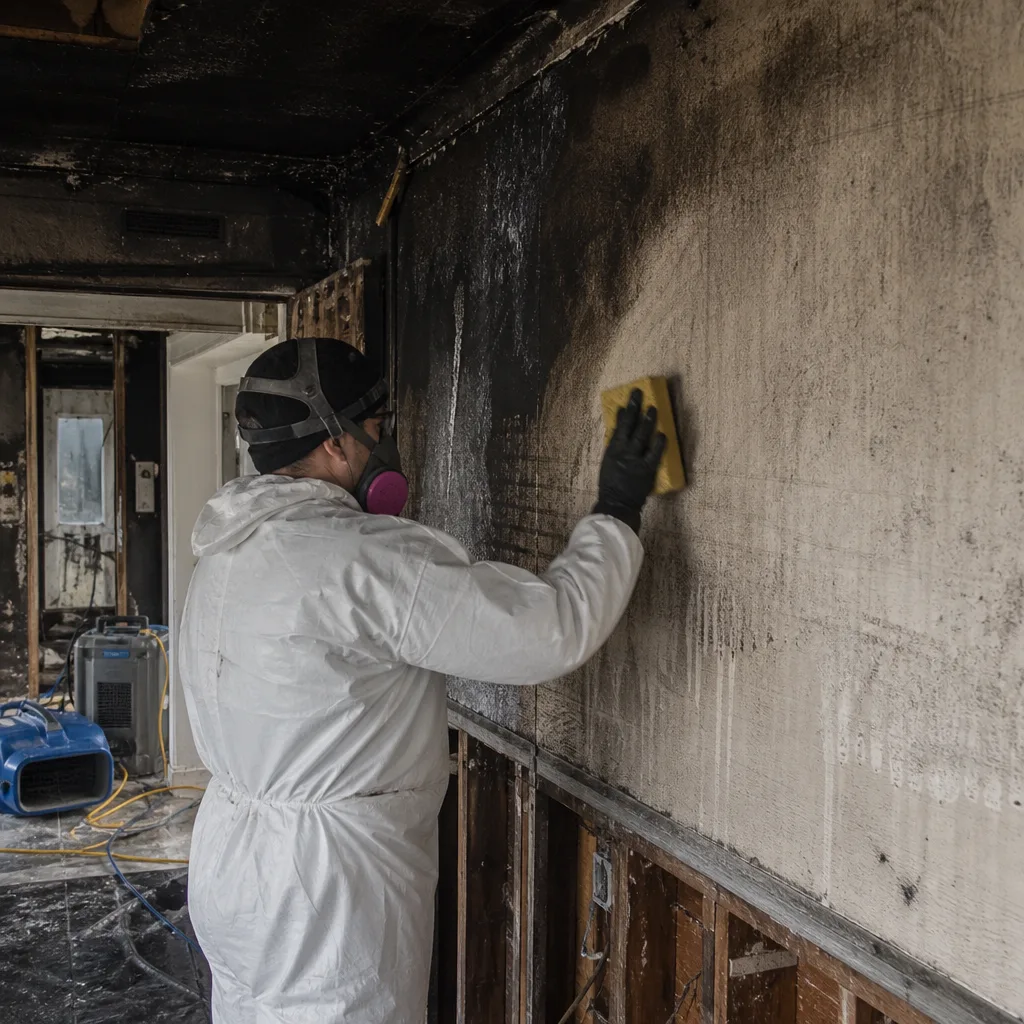
Fire Damage Cleanup
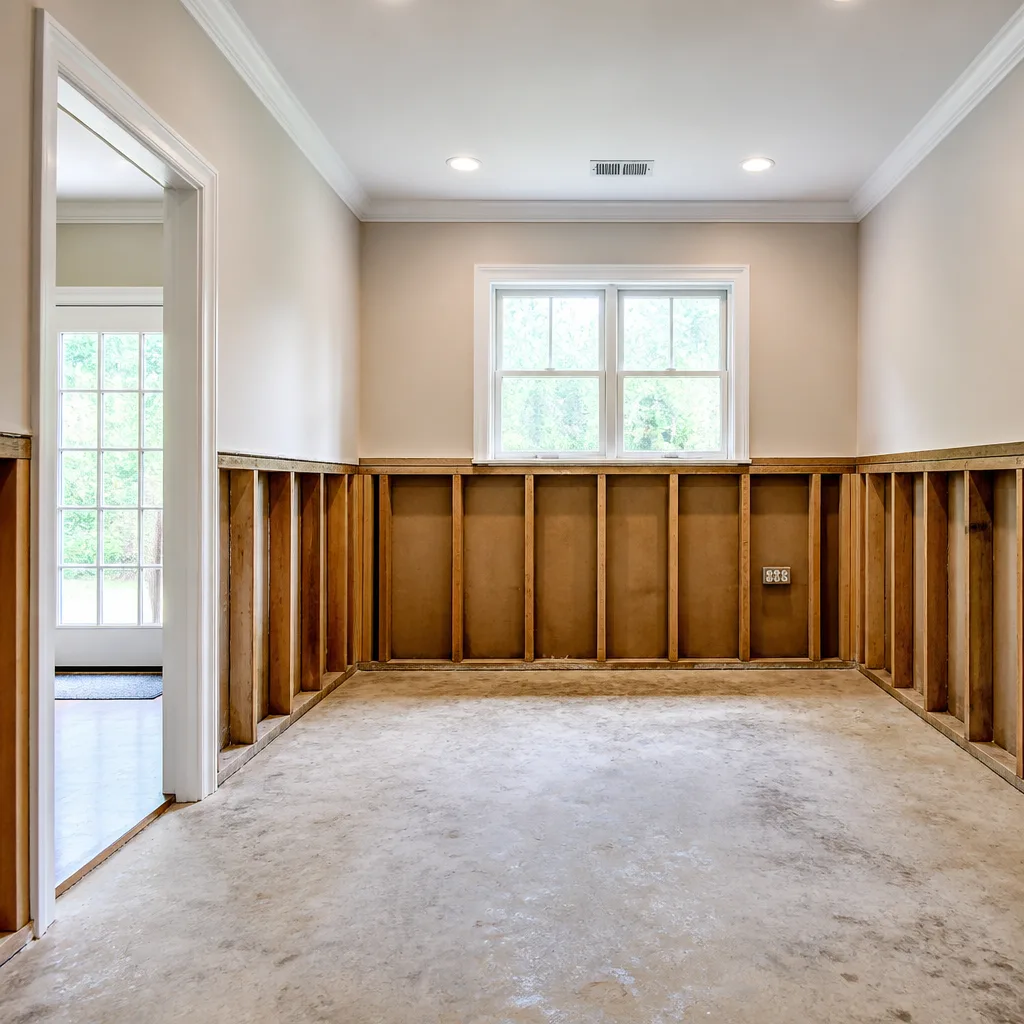
We remove charred drywall, compromised insulation, and the unsalvageable. What can be saved gets cleaned and stabilized. In Fort Lee’s older towers, we’re careful with the original building materials, because replacing a 1970s-era metal lath and plaster wall costs more than you’d think and requires building engineer approval. We preserve what’s structurally sound and document the rest for your adjuster.
Contents Cleaning & Pack-Out
After a Parker Avenue kitchen fire, we packed out the salvageable contents to our cleaning facility while containment was still running on the 14th floor. Clothes, cookware, electronics, books. Each item gets cleaned and deodorized off-site, then stored until the unit is ready. Your building’s condo board will want to see an IICRC-certified firm handling the pack-out. We are one.
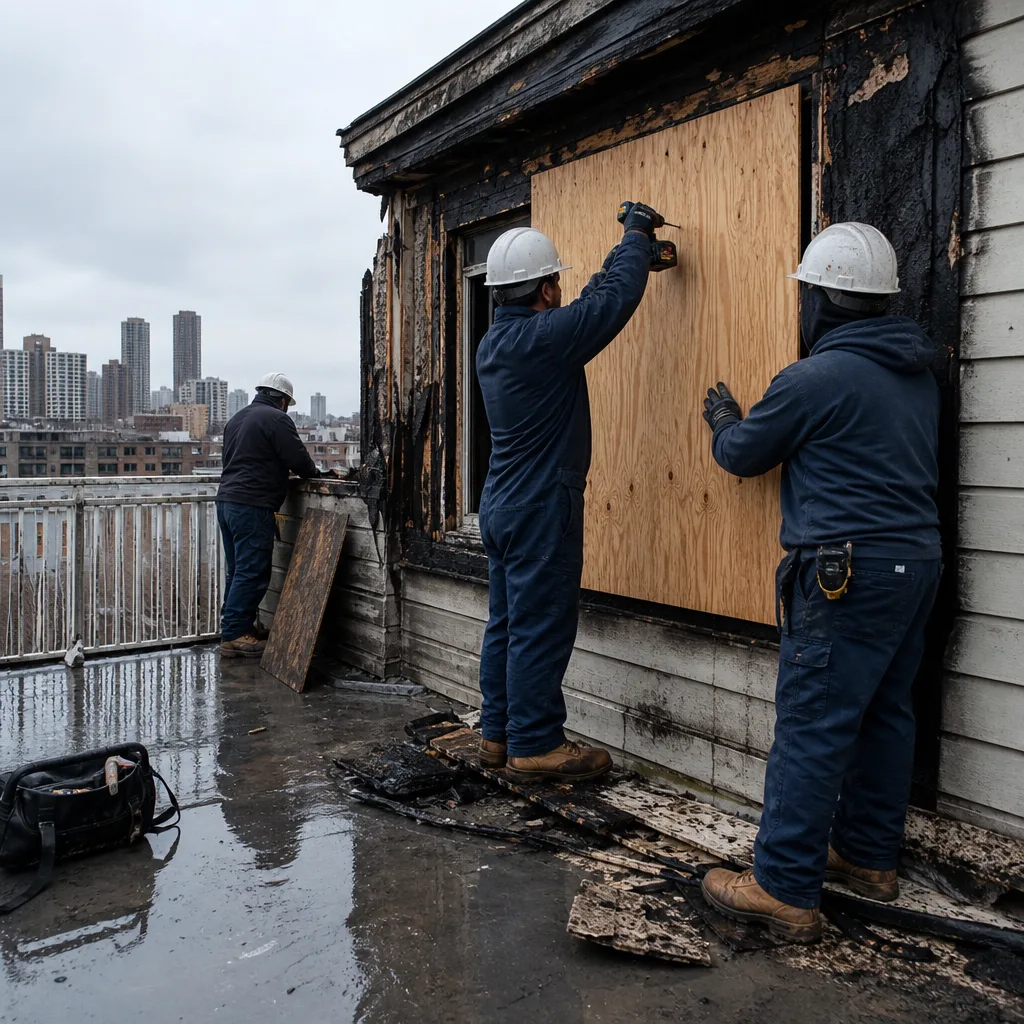
Emergency Board-Up & Tarping
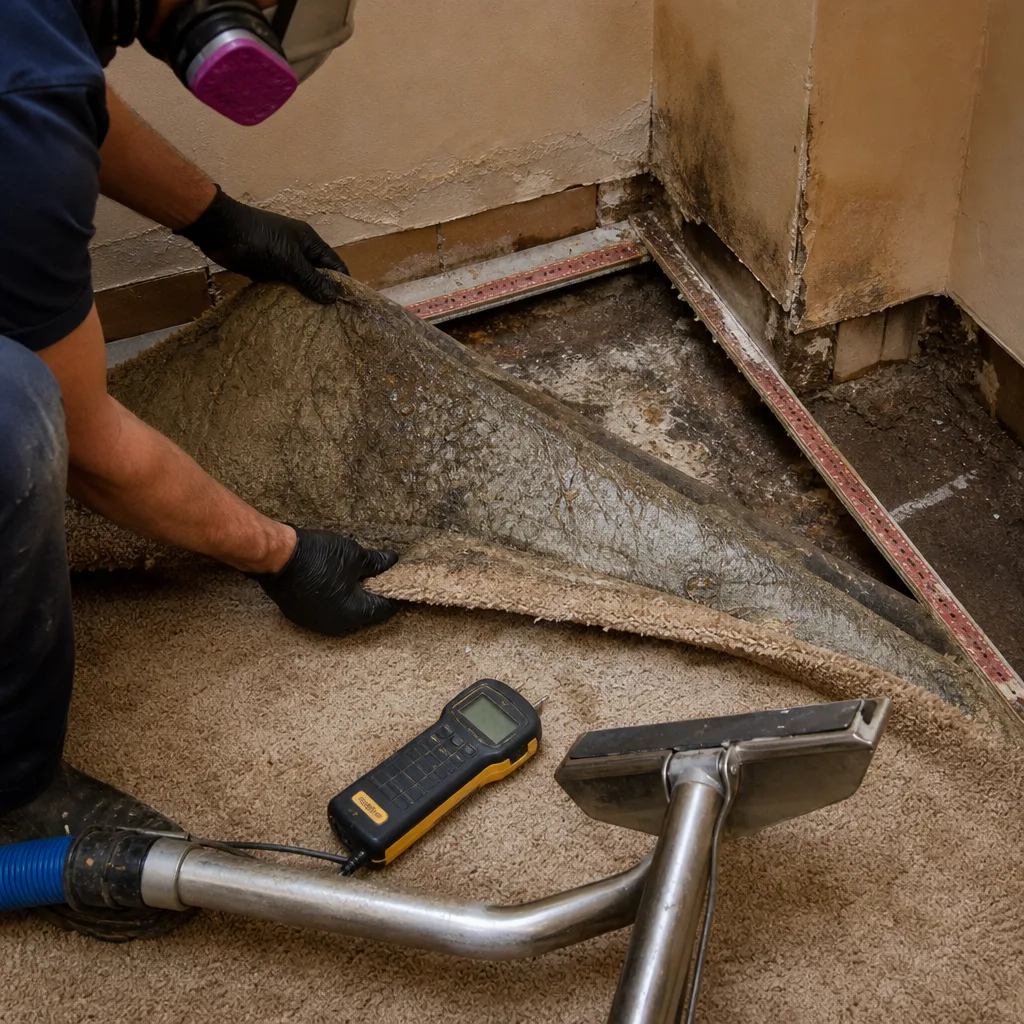
Blown-out windows and burn-through openings in a Fort Lee tower get the Palisades wind driving through them. We board up and tarp on the first visit, every time, because every hour of exposure means more water in the building and more units affected. We coordinate with the building super for access and make sure the board-up holds against the wind corridor that defines this ridge.
What happens when you call
- 1
A real person answersNo phone trees - you reach a local pro.
- 2
You get an upfront price rangeHonest numbers before anyone is dispatched.
- 3
A background-checked tech heads outLicensed & insured, dispatched right away.
- 4
You approve before work beginsNothing starts until you say go.
Fire & Smoke Damage Restoration Costs in Fort Lee, NJ
Fort Lee pricing runs different from the New Jersey suburban average because high-rise containment and concrete slab drying add labor and equipment hours. A small kitchen fire with light smoke damage in a single unit typically runs $2,800 to $4,500. A mid-size fire with smoke migration through shared HVAC and sprinkler water in the slab runs $5,500 to $9,400. Full-unit reconstruction after a serious burn in a Fort Lee tower starts around $12,000 and goes up based on finish level and building requirements. Those are honest ranges for this market, not numbers we made up to win a phone call.
What moves the price: how far smoke traveled through the building, whether we’re drying one unit or three, what the building’s engineer requires for access and restoration, and how much content needs pack-out and cleaning. Most Fort Lee fire claims we handle are insurance-covered, and we bill the carrier directly. If you’re paying out of pocket, the $50 Off Any Repair Over $250 and the Senior & Veteran 5% discount apply. The free visual inspection gives you a firm scope in writing before any work starts. Call (917) 924-4221 and we’ll walk you through what you’re actually looking at.
We Also Serve Cities Near Fort Lee
Our crews work throughout the Bergen County corridor. You’ll find us regularly in Leonia, Palisades Park, Edgewater, and Ridgefield. Same 45-minute response commitment, same high-rise expertise, same live dispatcher answering at 2 a.m. We serve Fort Lee and every town around it.
Serving Fort Lee, NJ - Our Local Coverage Area
We’re based in the Fort Lee area and know this community well. Use the map below to see our service coverage - if you’re nearby, we can almost certainly help.
Fort Lee Fire & Smoke Damage Restoration Questions, Answered
Why does Fort Lee require coordination with the building super before fire damage cleanup can start in a condo tower?
Because in a Fort Lee high-rise, the fire unit’s damage is rarely confined to that unit. Smoke travels through shared HVAC chases and elevator shafts. Sprinkler water migrates through concrete slabs into units below. The building super controls access to mechanical rooms, service elevators, and riser shutoffs. If restoration starts without super sign-off, containment gets placed wrong, shared systems get overlooked, and the condo board will stop the job. We call the super on the first visit, every time.
How do you handle smoke odor that has traveled through the shared HVAC system in a Fort Lee high-rise?
We treat the shared HVAC, not just the burn unit. That means sealing corridor return-air vents in the affected zone, running hydroxyl generators inside containment, and deodorizing the mechanical rooms where the smoke passed through. If you only treat the fire unit, the odor keeps recirculating through the building’s shared system and the complaints keep coming. Fort Lee condo boards know this. That’s why they want a firm that starts in the mechanical rooms.
Can you dry out a Fort Lee condo unit after a fire sprinkler discharge without tearing out the ceiling in the unit below?
Often yes. We map moisture through the concrete slab with penetrating meters and thermal imaging. If the water stayed within the slab’s capillary layer, we dry it with low-grain refrigerant dehumidifiers and air movement without opening the unit below. If the slab is saturated through, we’ll cut access panels in the lower unit’s ceiling to prevent mold. The key is measuring first, not tearing out first. Our moisture log tells you and your adjuster exactly what we found.
What is the biggest delay you see on fire restoration jobs in Fort Lee’s older towers?
Waiting for three parties to authorize work while the damage keeps moving. In a Fort Lee high-rise, you might have the unit owner’s insurer, the building’s master policy carrier, and the condo board all needing to sign off. Meanwhile, the sprinkler water keeps wicking through the slab, and smoke odor keeps settling into the HVAC. We start emergency board-up and containment immediately, document everything, and push the authorization process forward so the mitigation isn’t stalled by paperwork.
Why do Fort Lee condo boards require an IICRC-certified firm for fire and smoke damage pack-out?
Because pack-out in a high-rise affects the whole building. Corridors get used for staging. Service elevators get tied up. Smoke-damaged contents can carry odor into shared spaces. An IICRC-certified firm demonstrates the training to handle these logistics without creating a building-wide problem. Our technicians hold FSRT and WRT certifications and have done this work in Fort Lee towers for years. Building boards trust us because we show up with a plan, not a clipboard.
How fast can you actually get to a Fort Lee address after a fire?
Our commitment is 45 minutes for dispatch to your Fort Lee address. In practice, crews working the Palisades Avenue corridor often arrive faster. A live dispatcher answers the phone any hour, and we route based on where our crews already are. Call (917) 924-4221. You’ll talk to a person who can tell you exactly when we’ll be at your door.
Will my insurance cover fire and smoke damage restoration in Fort Lee?
Most Fort Lee condo and homeowners policies cover fire and smoke damage, including sprinkler discharge water. The question is usually about scope, not coverage. That’s why our documentation matters. We provide room-by-room photos, moisture readings, drying logs, and a line-item scope of work that your adjuster can verify against. We bill your carrier directly, and we talk to the adjuster ourselves. You’re not the messenger.
What should I do in the first 30 minutes after a fire in my Fort Lee condo?
Call your building super first if you’re in a tower. They need to shut down shared systems and secure the area. Then call us at (917) 924-4221. Don’t wipe soot off anything. Dry wiping smears the residue and makes professional cleaning harder. Don’t turn on ceiling fans or use the kitchen exhaust fan, which pushes smoke into shared vents. Open windows if it’s safe, close doors to contain the burn area, and wait for our crew. The first hour determines how much we can save.
Call (917) 924-4221 now for a free fire and smoke damage inspection in Fort Lee. A live dispatcher answers, a certified crew is dispatched within 45 minutes, and you get a written scope before any work begins. Done right, and backed in writing.
Written by Curt Bowman, Owner at Floodline Restoration Co. of Manhattan, serving Fort Lee and the surrounding Bergen County area.