
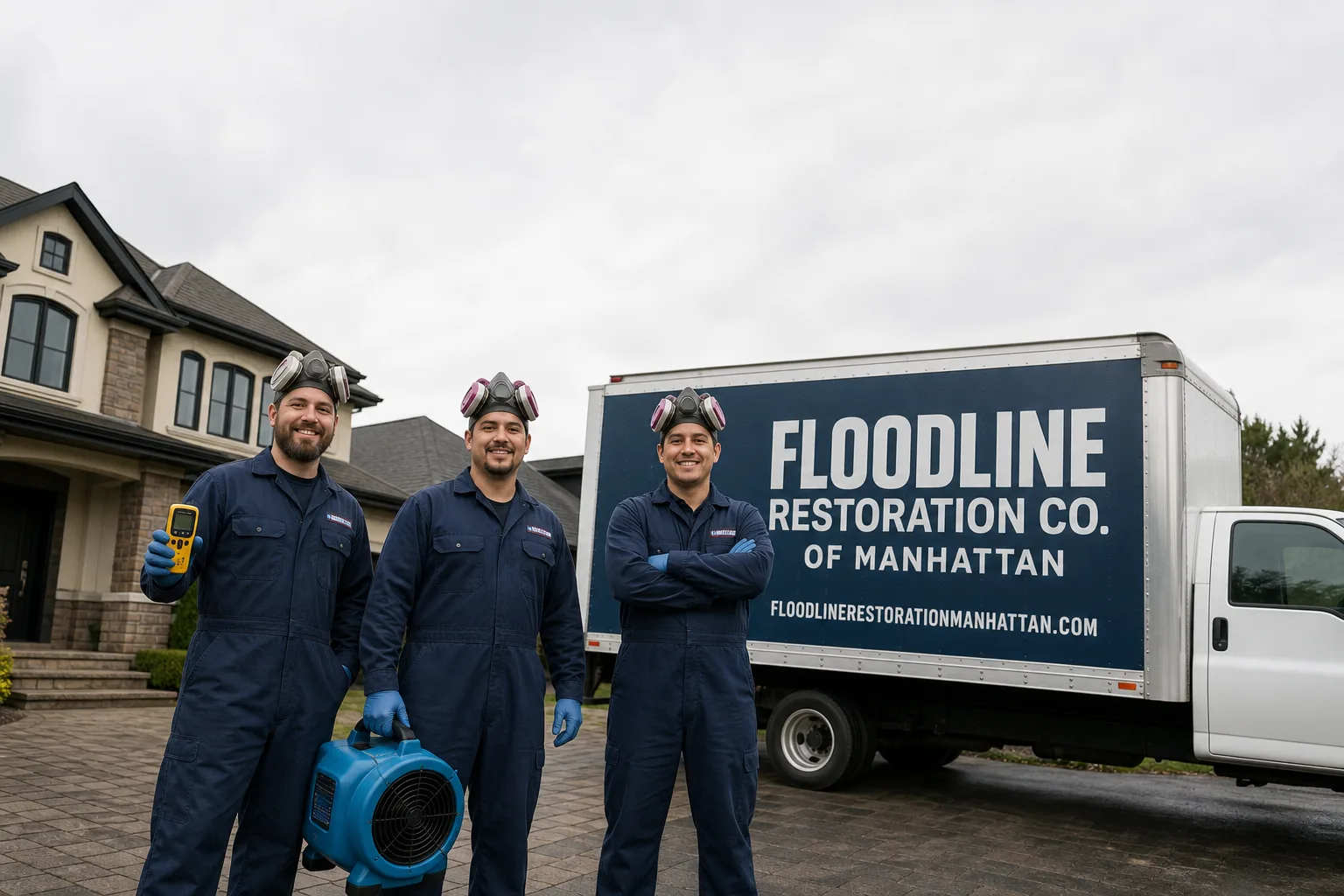
Free visual inspection and a written scope of work before any mitigation begins - photos, moisture readings, and drying logs go in your claim file
The scope we write is the scope we bill. Anything new gets shown to you, in writing, before we touch it.






 Before
 After
After Before
 After
After Before
 After
After24/7 Emergency Fire & Smoke Damage Restoration in Jackson Heights
Fire damage in a Jackson Heights co-op or rowhouse moves fast. Soot etches into original plaster and oak flooring within hours, and smoke odor bonds to surfaces in less than a day. Our crews reach Jackson Heights properties within 45 minutes of your call, any hour, any day. The dispatcher who answers at 2 a.m. is a live person who can have a certified crew on 35th Avenue, 82nd Street, or Roosevelt Avenue before first light. Call (917) 924-4221 for a free visual inspection. The first hour after the fire is out determines how much we can save, and how much smell and soot stays out of your walls for good.
We are Floodline Restoration Co. of Manhattan. For over 42 years our teams have answered fire calls across the city, and in our Jackson Heights service area the work carries a complication most restoration firms never mention: much of this neighborhood sits inside the NYC Landmarks Preservation Commission-designated Historic District. Exterior repairs and common-area work on the 1920s-1940s cooperative garden apartment buildings must use historically appropriate materials and pass LPC review. Co-op boards, not individual owners, control access to your own apartment after a fire. We know both layers. We plan for them from the first call.
Understanding Fire & Smoke Damage Restoration Severity in Jackson Heights Properties
Fire damage in Jackson Heights is rarely a simple burn repair. The neighborhood’s housing stock, built largely by the Queensboro Corporation between the 1910s and 1940s, is pre-war brick and plaster over wood lath. That construction holds smoke differently than modern drywall. Soot residue from a kitchen fire in a garden apartment complex migrates through original plaster walls, up steam riser chases, and into adjacent units through shared floor and ceiling cavities. We classify soot residue by type: dry protein soot from cooking fires, oily hydrocarbon soot from furnace puff-backs, and acidic wet soot from plastics and synthetics burning. Each type requires different cleaning chemistry, different agitation, and a different drying protocol. Wet soot, left untreated, etches chrome, corrodes cast-iron pipes, and permanently stains oak strip flooring. In attached brick row houses along 34th Avenue or 90th Street, a fire in one unit pushes smoke and often Category 3 water from firefighting efforts into party walls, migrating into the neighbor’s property. Severity in Jackson Heights is rarely about the size of the fire. It is about the age of the building, the path of the smoke, and the number of units sharing a wall or a floor.
Why Jackson Heights Property Owners Choose Floodline Restoration Co. of Manhattan
- 45-minute response commitment. A live dispatcher answers, a local crew leaves immediately, and we are on your block in Jackson Heights within 45 minutes of the call. Not a callback window. A commitment.
- 24/7 live answer from a real person. No automated menus, no answering service that promises a call back. You speak to a person who can dispatch a crew. At 2 a.m. on a Sunday.
- IICRC-certified fire and smoke techs. Our crews hold FSRT and WRT certifications and train to RIA and IFA standards. We carry the certs because the work demands them, not because they look good on a truck.
- Free visual inspection. We assess the damage, map the smoke migration, and hand you a written scope before any work begins. No charge for the inspection, no pressure to sign.
- Direct insurance billing. We bill your carrier directly, document every line item, and coordinate with your adjuster. You do not play messenger between us and the insurance company.
- One team from first response to final coat of paint. The same crew that sets containment and runs air scrubbers also handles the rebuild. No hand-off to a subcontracted crew you have never met.
Need Emergency Fire & Smoke Damage Restoration in Jackson Heights Now?
Crews minutes away, answering live 24 hours a day. The sooner we start, the less it costs.
Our Fire & Smoke Damage Restoration Process
Inspection & Assessment
We begin with a full visual and thermal imaging survey of the affected unit, the shared hallways, and any adjacent unit the smoke reached. We map soot deposition, identify the smoke path through original plaster and chases, and test surfaces to determine soot type. You get a written scope with line items, not a number scribbled on a pad.
Stabilization & Containment
We set containment around affected areas using 6-mil poly and negative air pressure so soot does not spread to clean rooms. In Jackson Heights co-ops, this step often requires board approval for common-area staging. We coordinate that approval while we begin work inside your unit where access is granted.
Drying & Dehumidification
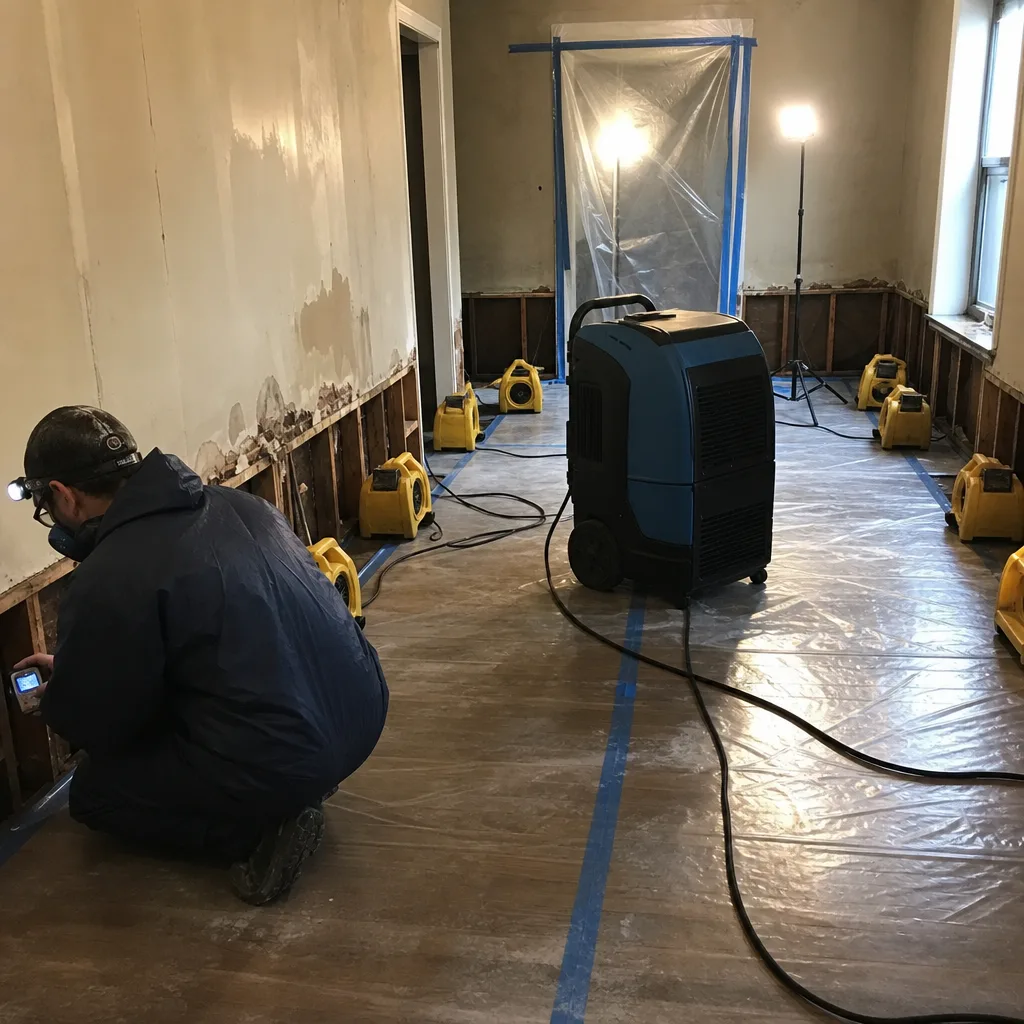
Firefighting water must come out of the structure fast. Phoenix and Dri-Eaz dehumidifiers and XPOWER air movers run until the dry standard is met, with moisture readings logged every 12 hours. On original plaster and oak floors, slow controlled drying prevents cracking and cupping.
Cleaning & Sanitization
We clean soot from every surface, using dry sponge methods on delicate plaster, HEPA vacuuming on fabrics, and antimicrobial treatment on all fire-affected surfaces. Contents that can be salvaged are packed out, cleaned, and stored until your unit is ready.
Odor Removal & Deodorization
Smoke odor in Jackson Heights prewar buildings settles into plaster, oak, and cast-iron. We use hydroxyl generators and thermal fogging, not masking sprays. In co-op buildings with shared ventilation, we seal riser openings to keep odor from re-entering after the job ends.
Repairs & Restoration
When cleaning is done, the same crew handles our Reconstruction & Cleanup in Jackson Heights: new plaster, refinished oak flooring, historically appropriate trim in landmarked areas, and any structural work the fire required. The 90-Day Done Right Promise applies to every bit of it, in writing.
Working With Your Insurance Company
Fire claims in Jackson Heights are more complex than in newer areas because the co-op corporation and the unit owner often carry separate policies covering different parts of the loss. The fire damage inside your apartment is typically your responsibility; the common hallway, the roof, and the exterior are the co-op’s. We document both scopes from the first hour so your carrier and the board’s carrier each get a clean, defensible claim package. We photograph every room, log every moisture reading, and list every line item with current Jackson Heights material costs. When an adjuster questions a charge, we answer the adjuster directly. You stay out of the middle.
What We Provide Your Insurer
- Thorough documentation of the loss
- Photos of all damage, room by room
- Moisture readings and drying logs
- A detailed, line-item scope of work
- Direct coordination with your carrier
Built for Jackson Heights’s Loss Calendar
Jackson Heights Biohazard & Crime Scene Cleanup and fire losses follow a pattern tied to the neighborhood’s aging systems and seasonal weather. Winter is the peak for heating-related fires: steam radiator lines in prewar co-op buildings are 80-plus years old, and a failed riser or a cracked cast-iron section can send scalding water and steam through multiple floors, shorting wiring and starting a smolder inside plaster walls. Nor’easters and summer convective storms overload the flat roofs on the big garden apartment complexes, which lets water into electrical panels and aging wiring, causing short-circuit fires that then dump soot into original plaster walls. Kitchen fires, the most common fire in Jackson Heights, happen year-round but cluster in the evening hours when cooking oil meets unattended stoves. The attached row houses along side streets off Northern Boulevard and 35th Avenue carry the rowhouse pattern: a kitchen fire pushes smoke through the party wall into the next house before firefighters even arrive. Every one of these patterns repeats season after season. We plan for them, and our dispatch board is staffed for them, every day of the year.
Fire & Smoke Damage Restoration Across Jackson Heights’s Neighborhoods
Jackson Heights divides into distinct restoration zones, and we respond to each with a different operational plan. The landmarked garden apartment blocks in the core of the Historic District, along 34th Avenue, 35th Avenue, and the numbered streets in the 70s and 80s, require co-op board coordination and LPC review for any exterior or common-area work. Response time to these blocks is the same as anywhere else, but mobilization is often phased: our crews stage supplies curbside while the managing agent arranges floor-by-floor access. The attached brick row houses along 90th Street, 37th Avenue, and the blocks near Travers Park carry the party-wall dynamic: a fire in one rowhouse means we set containment, check the neighbor’s side, and document smoke migration across the shared wall before scope is final. Closer to Roosevelt Avenue and the commercial strips near 74th Street, mixed-use buildings put residential units above storefronts, and a restaurant fire below can push smoke through floor assemblies into apartments above. Each zone demands a different approach to access, containment, and the speed at which we can begin mitigation. We have done the work in all of them.
Specialized Fire & Smoke Damage Restoration Services We Offer in Jackson Heights
Fire Damage Cleanup
We remove charred material, damaged drywall and plaster, compromised insulation, and fire-damaged framing. In Jackson Heights co-ops, this often means cutting out original lath and plaster while preserving what is sound, then coordinating debris removal through the board’s service elevator or stairwell hours. We keep the dust contained and the common areas clean.
Smoke & Soot Removal
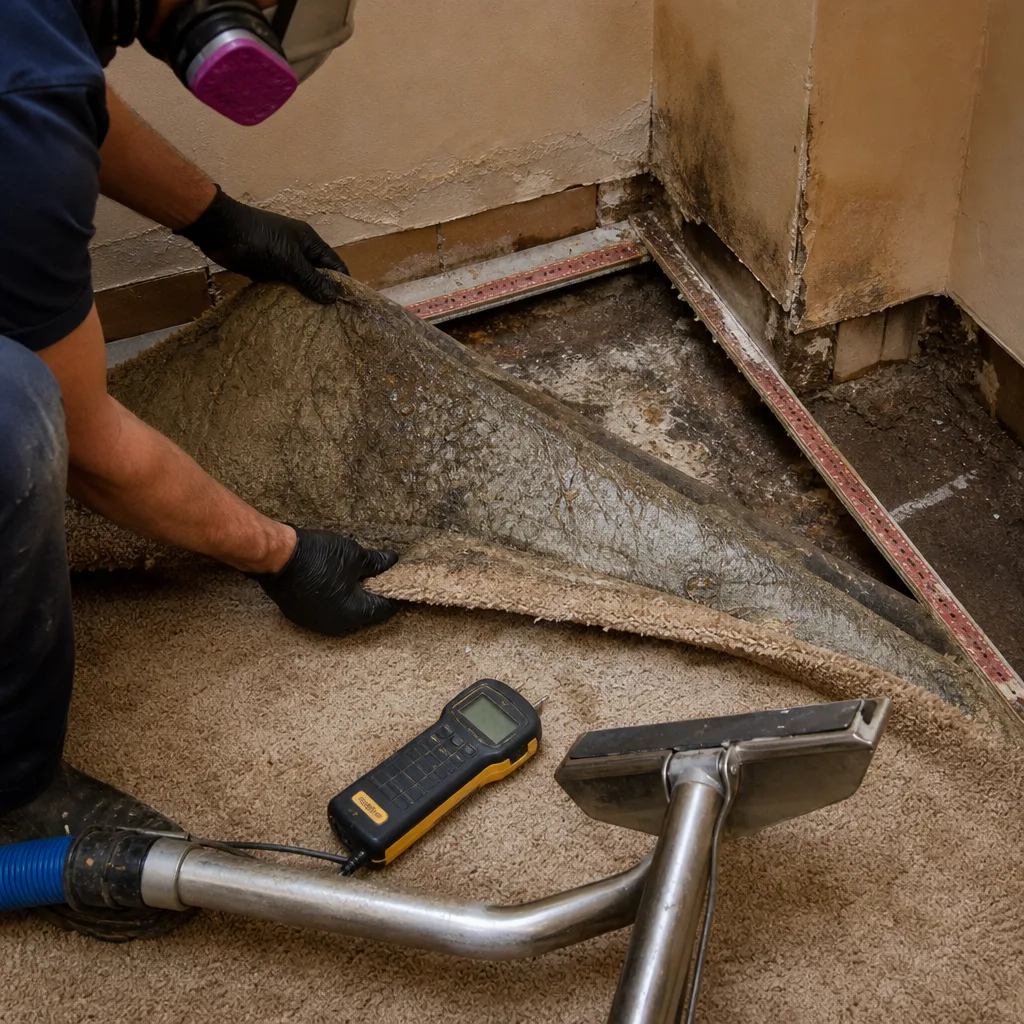
Soot removal in prewar buildings is a chemistry problem first and a labor problem second. We test the surfaces, match the cleaning method to the soot type, and use dry sponge, HEPA vacuum, and specialized cleaning agents to lift soot from original plaster, oak millwork, and porcelain. Rubbing wet soot the wrong way sets it into the finish. We know the difference and work accordingly.
Odor Removal & Deodorization
Smoke odor in Jackson Heights garden apartments settles into original plaster, oak strip flooring, and shared riser chases. We use hydroxyl generators, which are safe for occupied spaces, and thermal fogging for deeper penetration. In co-op buildings, we seal riser openings and shared ventilation points to keep odor from returning from adjacent units. This is the service where the LPC and co-op access issues bite hardest: odor control needs to start early, and delays let the smell set.
Contents Cleaning & Pack-Out
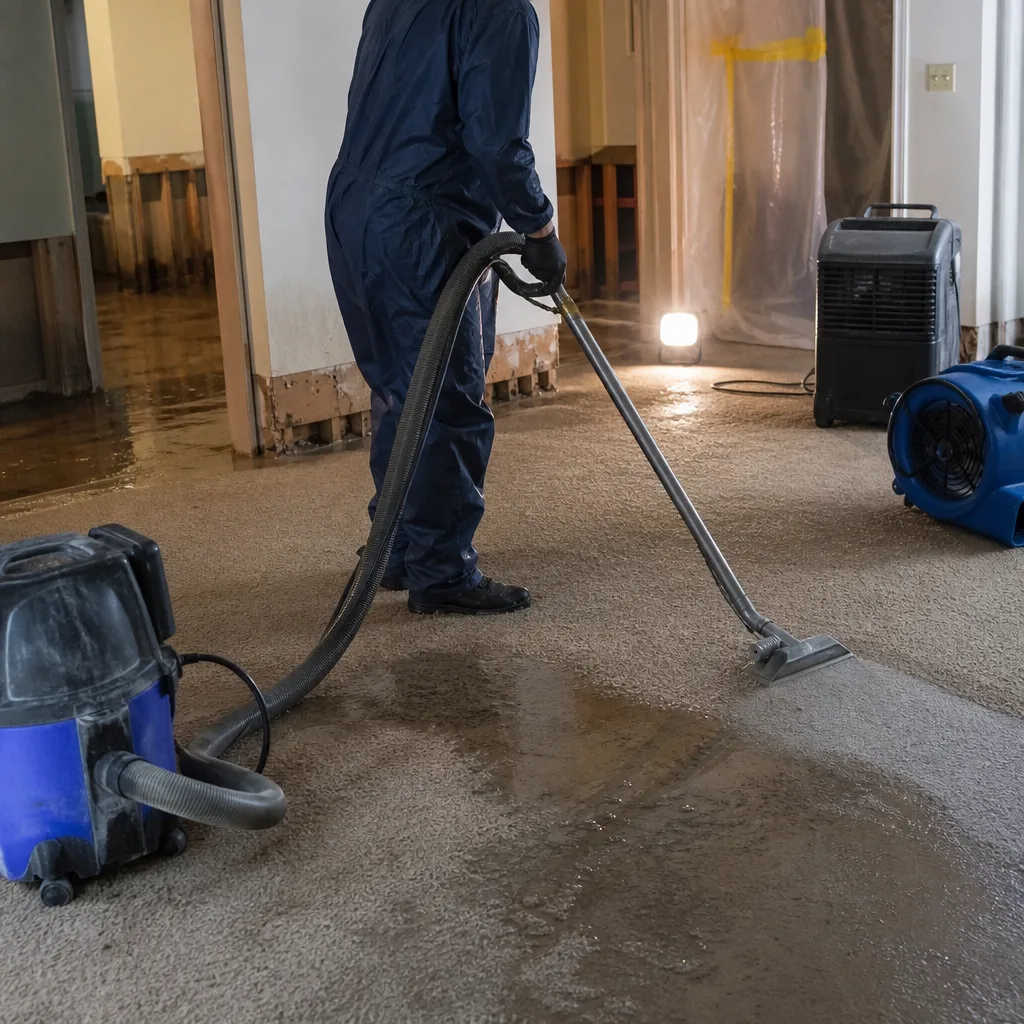
Salvageable contents from a Jackson Heights fire often include furniture, rugs, clothing, books, and kitchenware. We pack out, inventory, clean at our facility, and store until your unit is restored. For items with smoke damage only, we can often clean on site using HEPA and dry cleaning methods. The decision to pack out is yours, and the pricing is line-itemed before anything leaves your apartment.
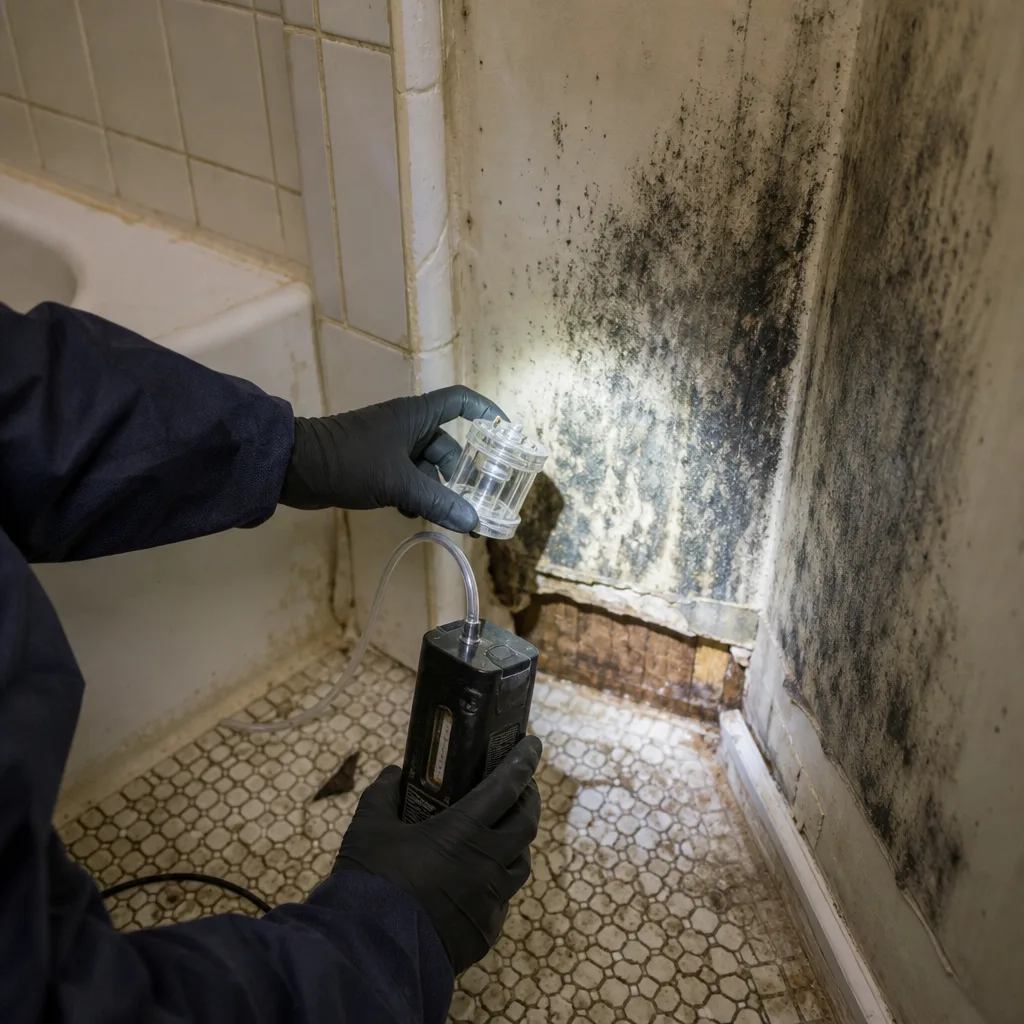
Emergency Board-Up & Tarping
A fire that breaks a window or opens a roof leaves a unit exposed to weather and intrusion. We board up and tarp immediately, using materials that will not damage original brick or landmarked trim. In the Historic District, temporary protection must not alter the building’s exterior appearance, so we use pressure-mounted coverings and non-destructive fasteners until permanent LPC-approved materials are ready.
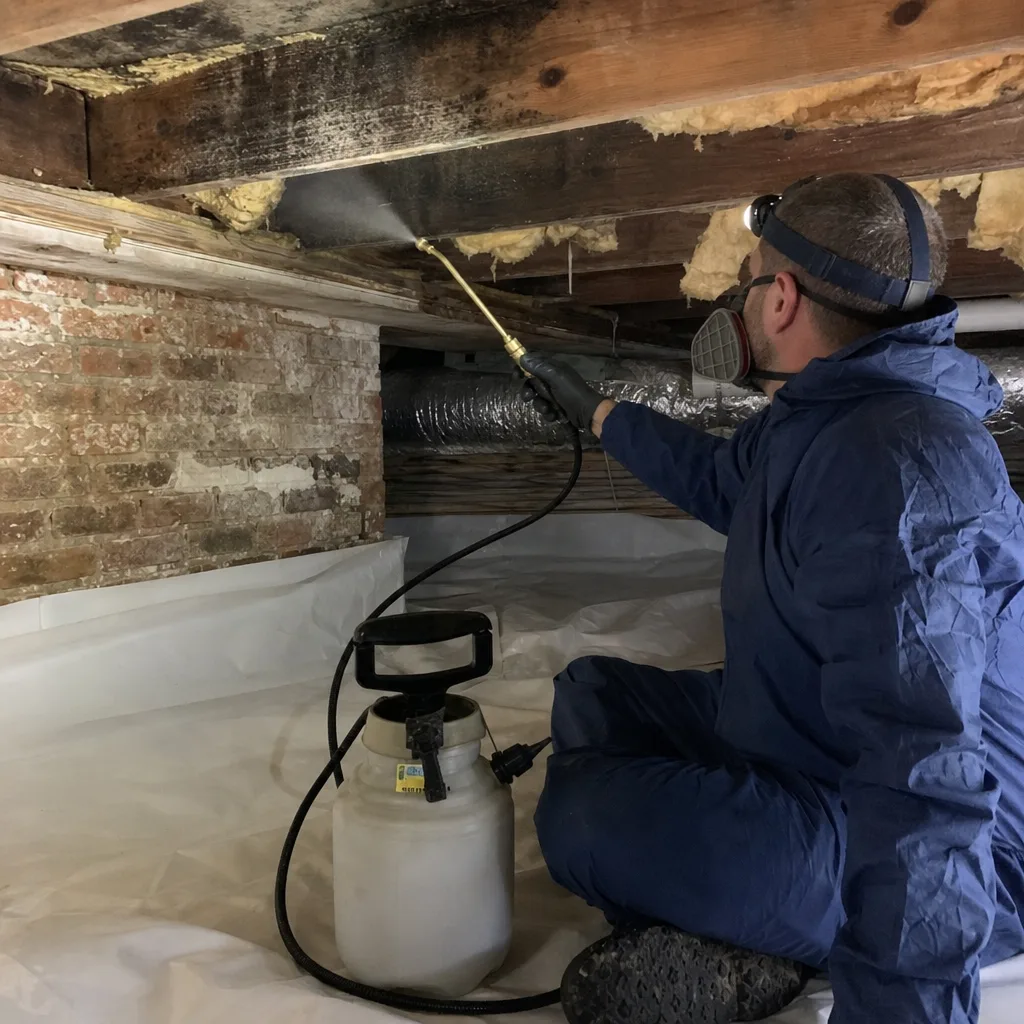
Structural Fire Repair
When a fire burns through a floor, a wall, or a roof section in a Jackson Heights building, the repair goes beyond cleanup. We rebuild with materials that match the building’s age and character: plaster over wood lath where that is what existed, oak strip flooring milled to match the original, and trim profiles replicated where off-the-shelf stock would look wrong. The goal is a repair that looks like it was never touched, and passes the board’s eye.
What happens when you call
- 1
A real person answersNo phone trees - you reach a local pro.
- 2
You get an upfront price rangeHonest numbers before anyone is dispatched.
- 3
A background-checked tech heads outLicensed & insured, dispatched right away.
- 4
You approve before work beginsNothing starts until you say go.
Fire & Smoke Damage Restoration Costs in Jackson Heights, NY
Fire and smoke restoration in Jackson Heights costs more than in newer neighborhoods because the work involves older materials and more coordination. A typical smoke odor removal and soot cleaning in a one-bedroom co-op unit runs $2,800-$5,500. Full fire damage cleanup including pack-out of contents, structural drying, and rebuild of a burned kitchen in a Jackson Heights co-op runs $18,000-$45,000 depending on the size of the affected area and the LPC requirements on exterior or common-area work. Emergency board-up and tarping is $450-$1,200. Contents cleaning and pack-out for a two-bedroom unit typically runs $3,000-$7,500. The same work in a nearby attached rowhouse is often 15-25% higher because party-wall migration and structural damage across shared walls expand the scope. Every job starts with a free visual inspection and a written line-item scope. The estimate is firm, and we bill your insurer directly. Call (917) 924-4221 for exact numbers on your situation.
We Also Serve Cities Near Jackson Heights
Our crews serve the surrounding neighborhoods with the same 45-minute response commitment: East Elmhurst, Elmhurst, Corona, and Woodside. If your building is on the border, call and we will tell you which response zone you fall in.
Jackson Heights Fire & Smoke Damage Restoration Questions, Answered
How does LPC landmarking change fire damage restoration on a Jackson Heights co-op exterior?
LPC landmarking means any exterior repair on the building, including fire-damaged trim, parapet coping, garden-level ironwork, or brick repointing, must use historically appropriate materials and pass LPC review before final approval. Off-the-shelf replacement trim or standard carpentry will not pass. We work with LPC-reviewed material suppliers and can file the necessary applications for the board, but the review adds time to the exterior portion of any fire restoration in the Historic District.
Can we start dehumidification in our unit right after the fire in a Jackson Heights co-op building?
No, not always. In most Jackson Heights co-ops, the board or managing agent must grant access for equipment staging, and in a large garden apartment building that approval is often phased floor by floor. This can add days to the start of mitigation, which is exactly when soot sets into plaster and odor bonds to surfaces. Call us immediately after the fire, and we can start coordination with the managing agent while we prepare equipment, so the delay is as short as possible.
Does a kitchen fire in an attached Jackson Heights rowhouse affect the neighbor’s unit?
Yes, it frequently does. The attached brick row houses in Jackson Heights share party walls, and smoke and firefighting water migrate through the shared wall cavities, floor joists, and roof framing. We document the neighbor’s side, set containment, and coordinate the shared scope across both owners so one claim does not miss the adjacent damage. Ignoring the party wall is how a $15,000 kitchen fire becomes a $60,000 two-unit job later.
How do you get smoke odor out of original plaster and oak floors in a 1930s Jackson Heights co-op?
You do not mask it. Smoke odor in original plaster and oak requires hydroxyl generation or thermal fogging to break down the odor molecules, combined with deep cleaning of the surfaces. On original plaster, we use dry sponge methods and HEPA vacuuming before any treatment. On oak strip floors, we clean the surface, then treat the subfloor if smoke got below. Expect three to seven days of odor treatment in a 1930s co-op unit, longer if the smell reached shared riser chases.
What happens if the fire damaged original steam pipes in a Jackson Heights garden apartment building?
A fire that damages the original steam riser or radiator lines in one of these prewar buildings is a co-op-wide issue, not a unit issue. The board must approve the repair, the building may need riser shutdowns, and the work often requires original cast-iron replacement or welded repair rather than a modern retrofit. We coordinate with the board’s plumber and the managing agent, and we document the damage for the co-op’s master policy while your unit claim covers your interior damage.
How fast can someone actually get to Jackson Heights after a fire?
Our crews reach Jackson Heights within 45 minutes of your call, day or night. A live dispatcher answers and a local crew leaves immediately. The faster we arrive, the less soot etches into your plaster and oak, the less odor bonds to your walls, and the less you pay in the end. Call (917) 924-4221 and we are on our way.
Will my insurance cover fire and smoke restoration in a Jackson Heights co-op?
Your unit policy typically covers damage inside your apartment, including smoke, soot, fire damage, and the firefighting water that came in. The co-op’s master policy covers the building structure and common areas. We bill your carrier directly, provide the line-item scope and photo documentation they need, and coordinate with the co-op’s adjuster for common-area claims. You do not play messenger between the two insurers.
Do I really need full restoration, or just a cleaning after a small kitchen fire in Jackson Heights?
That depends on where the smoke went. Even a small kitchen fire in a prewar Jackson Heights building can push soot into original plaster walls, behind cabinets, and into shared riser chases, where it sets within hours. A surface cleaning that misses those paths will leave odor that returns in weeks. A free visual inspection tells you honestly whether you need a cleaning or full restoration. We do not oversell this work, and the written scope shows you exactly what was found.
Serving Jackson Heights, NY - Our Local Coverage Area
We’re based in the Jackson Heights area and know this community well. Use the map below to see our service coverage - if you’re nearby, we can almost certainly help.
Call Floodline Restoration Co. of Manhattan for Fire & Smoke Damage Restoration in Jackson Heights
A fire in a Jackson Heights co-op or rowhouse is a problem with two clocks: the soot clock and the board clock. The soot clock starts the moment the fire is out, and every hour that passes makes the cleaning harder and the smell more permanent. The board clock starts when the managing agent opens their email, and it can cost you a week before equipment crosses the threshold. We run both clocks from the first call. A live person answers at (917) 924-4221, any hour. The inspection is free. The scope is written before work starts. The 90-Day Done Right Promise is in your hand when we leave. If it is not done right, we make it right. That is the Keystone Standard, and it has been for over 42 years. Call now, and we will be there in 45 minutes.
Written by Curt Bowman, Owner at Floodline Restoration Co. of Manhattan, serving Jackson Heights with fire and smoke restoration and full reconstruction.