
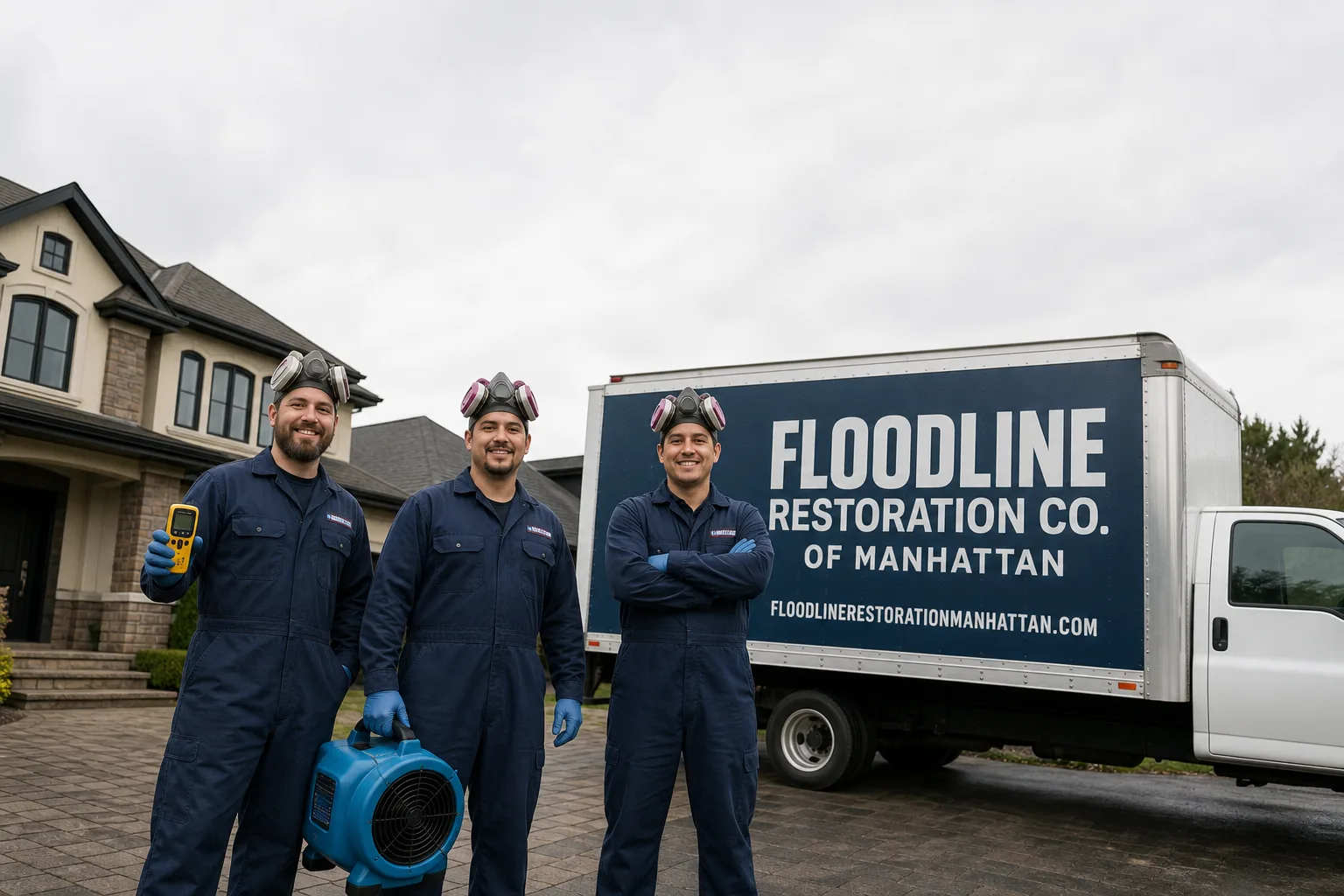
Free visual inspection and a written scope of work before any mitigation begins - photos, moisture readings, and drying logs go in your claim file
The scope we write is the scope we bill. Anything new gets shown to you, in writing, before we touch it.






 Before
 After
After Before
 After
After Before
 After
After24/7 Emergency Fire & Smoke Damage Restoration in Little Ferry
Fire damage in Little Ferry doesn’t wait for business hours, and neither do we. Smoke keeps moving through wall cavities and ductwork long after the flames are out, and the first hours determine how much of your home can be saved rather than gutted. Our live dispatchers answer at 2 a.m. the same way they answer at noon, and we can typically have a certified crew on site in Little Ferry within 45 minutes of your call. If you’re standing in a house that just caught fire, or you’ve discovered soot streaking across ceilings two rooms away from a kitchen fire, call (917) 924-4221 right now. The initial visual inspection is free, and we’ll walk the property with you before anyone touches a wall.
Here’s what matters in the first hour: smoke residue is acidic and it etches surfaces permanently if it sits. In Little Ferry’s older Cape Cods and ranches, the original plaster and lath act like a sponge for smoke odor. We start board-up and stabilization immediately, then move to smoke and soot containment before it spreads through the HVAC system. The faster we start, the less demolition you face.
Understanding Fire & Smoke Damage Restoration Severity in Little Ferry Properties
Fire damage falls into distinct categories, and Little Ferry’s housing stock adds a layer most contractors outside Bergen County miss. A grease fire in a 1950s Cape Cod on Mehrhof Road produces wet, protein-based soot that bonds to painted plaster and requires aggressive chemical cleaning followed by sealing. An electrical fire in the shallow crawl space of a split-level off Route 46 generates fine, dry soot that penetrates every porous surface and travels through framing bays into rooms that never saw flame. Each type demands different cleaning methods, different air scrubbing protocols, and different drying strategies.
But here’s what makes fire restoration in Little Ferry different from fire restoration almost anywhere else: the borough sits at near-sea-level elevation along the tidal Hackensack River. Many homes here took on saltwater during Hurricane Sandy, and a meaningful number of those homes were remediated incompletely or not at all. When our crews pull back fire-damaged drywall, we often find the 2012 flood line still there: dried salt residue, compromised insulation, and mold colonies that have been quietly spreading for over a decade. A fire job in Little Ferry frequently becomes a fire-plus-water-plus-mold job the moment demolition exposes the wall cavities. Techs who treat it as smoke-only set homeowners up for recurring odor and structural failure within two years.
We document everything we find, because your FEMA Write-Your-Own flood insurance and your homeowner’s fire claim may both apply to the same wall.
Why Little Ferry Property Owners Choose Floodline Restoration Co. of Manhattan
- 45-minute response commitment: When you call with a fire emergency in Little Ferry, we commit to having a crew dispatched and rolling toward you within 45 minutes. Live dispatch means no waiting for a callback.
- 24/7 live answer, always a person: You will never reach a recording at 3 a.m. A real dispatcher picks up, takes your address, and starts moving crews. Founded in 2010 by Curt Bowman, the company was built around a dispatch board, not a sales desk.
- IICRC-certified technicians: Our crews hold FSRT (Fire & Smoke Restoration Technician) and WRT (Water Damage Restoration Technician) certifications. That dual credential matters in Little Ferry, where fire damage and hidden water damage routinely occupy the same wall cavity.
- Free visual inspection: Before any work begins, we walk the property with you, explain what we’re seeing, and give you a written scope. No obligation, no pressure, no fine print.
- Direct insurance billing: We bill your carrier directly and document everything from hour one with photos, moisture readings, and line-item scopes. You never play messenger between us and your adjuster.
- One team from extraction to reconstruction: The same crew that removes the soot rebuilds the wall. No mid-job handoff, no inherited subcontractors, no arguing about who did what.
Every job we do is backed by the 90-Day Done Right Promise, our Keystone Standard. It’s in writing. If it’s not done right, we make it right. No paperwork battles, no arguing. That’s how we’ve earned the trust of homeowners in Little Ferry who’ve been burned by contractors before, both literally and figuratively.
Our Fire & Smoke Damage Restoration Process
Inspection & Assessment
We walk the full property, not just the burn room. In Little Ferry homes, that means checking for hidden smoke migration through wall cavities, attic spaces, and the shallow crawl spaces typical of 1940s-1960s construction. We also look for signs of older water damage behind the fire line, because Sandy-era intrusion changes the remediation plan.
Emergency Board-Up & Stabilization
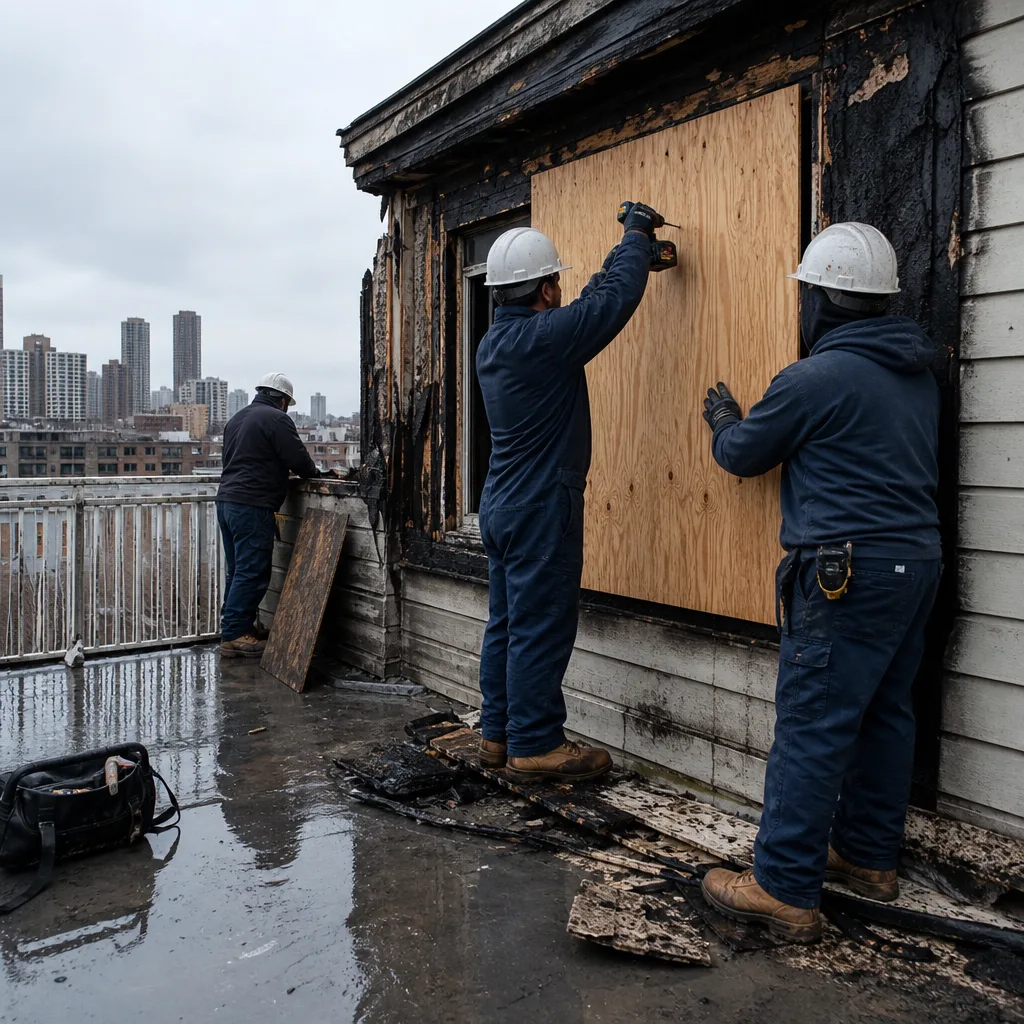
If the fire compromised windows, roofing, or entry points, we seal the structure immediately. Little Ferry’s exposure to Hackensack River tidal winds means tarping and board-up have to withstand nor’easter gusts, not just casual weather. A week of rain through an open roof doubles mitigation cost.
Smoke & Soot Removal
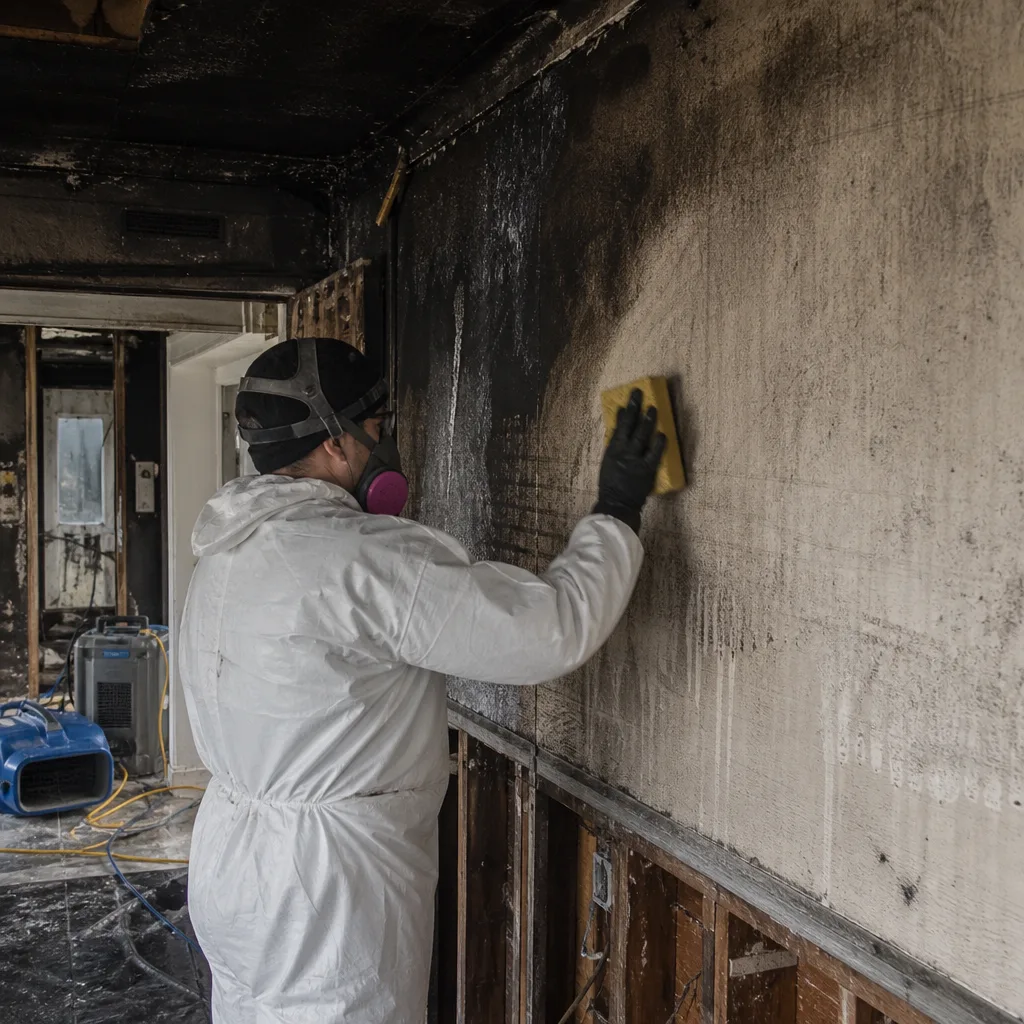
We set up containment and run HEPA air scrubbers while we clean surfaces. Soot types are matched to the cleaning method: dry sponge for fine soot, chemical wet-cleaning for protein-based residue. In Little Ferry’s older homes, this stage often reveals the original plaster’s condition and whether sealing or replacement is the right call.
Odor Removal & Deodorization
After surfaces are clean, we treat the structure itself. Thermal fogging and hydroxyl generators reach odor molecules inside wall cavities and subfloor assemblies. In homes with post-Sandy salt-laced framing, we run drying equipment longer and verify with moisture meters before closing anything up.
Contents Cleaning & Pack-Out
Furniture, clothing, and personal items get logged, cleaned, and stored. If the job requires demolition, we pack out first. For items that matter, we use ultrasonic cleaning for smaller contents and soda blasting for heavier soot deposits on solid materials.
Structural Fire Repair & Reconstruction
Framing members get assessed for char depth and structural integrity. Damaged sections are sistered or replaced. Then we rebuild: drywall, plaster, trim, paint, flooring, and cabinetry as needed. The same crew that did the mitigation does the rebuild. Our Fire & Smoke Damage Restoration team stays through the final walkthrough.
Need Emergency Fire & Smoke Damage Restoration in Little Ferry Now?
Crews minutes away, answering live 24 hours a day. The sooner we start, the less it costs.
Working With Your Insurance Company
Most Little Ferry homeowners facing fire damage are also facing their first serious insurance claim. You don’t have to handle it alone, and you shouldn’t. Our team documents the loss from the first hour: photographs of every room, moisture readings from wall cavities, drying logs updated daily, and a line-item scope of work written in the format adjusters expect. We communicate directly with your carrier and your adjuster, including FEMA Write-Your-Own flood claims when the damage traces back to water intrusion. We are not public adjusters and we don’t pretend to be. What we do is give your insurer the documentation they need to process the claim without weeks of back-and-forth. The result is a faster decision and fewer disputes over scope.
What We Provide Your Insurer
- Thorough documentation of the loss
- Photos of all damage, room by room
- Moisture readings and drying logs
- A detailed, line-item scope of work
- Direct coordination with your carrier
Built for Little Ferry’s Loss Calendar
Fire losses in Little Ferry follow a pattern, and if you’ve lived here for twenty years you’ve probably seen it play out on your block. Winter brings space heaters pushed too close to furniture in homes with aging electrical systems, and December through February accounts for the majority of structure fires in Bergen County’s older housing stock. Spring and fall bring the nor’easter season, when the Hackensack River’s tidal surge can push water into basements and crawl spaces, and homeowners running sump pumps and temporary wiring during flood cleanup face electrical fire risk. Summer heat drives up air-conditioning load on panels and circuits that were installed when a 60-amp service was sufficient. We schedule around that calendar because we live in it. When you call in January with a heater fire in a 1950s ranch, we already know what the wall cavities are likely to show us.
Fire & Smoke Damage Restoration Across Little Ferry’s Neighborhoods
Little Ferry is compact: roughly 1.6 square miles between Route 46 and the Hackensack River. But the building stock changes block by block, and so does the fire damage pattern. Over near Mehrhof Road and the residential streets south of Route 46, you’ll find postwar Cape Cods and ranches with original plaster, balloon framing where present, and shared wall-cavity airflow between floors. Smoke from a kitchen fire in those homes travels straight up through the stud bays and shows up as soot staining on second-floor ceilings far from the source. The homes clustered near the bend of the river along Lakeview Avenue and the western edge of town sit closest to the tidal wetlands and carry the heaviest Sandy history; fire restoration there means expecting salt residue and elevated moisture readings behind any wall we open. Up near the industrial corridor by Moonachie and the Teterboro line, mixed residential and light-commercial properties mean smoke migration through connected spaces and shared party walls is more common. And throughout the borough, the shallow crawl spaces common to homes built in the 1940s and 1950s trap smoke odor and humidity in a way full basements never do. We route crews to each of these areas knowing what to expect, because we’ve worked every one of them.
Four decades of restoration work in Bergen County teaches you the difference between a house on a high point near Route 46 and a house three blocks from the river. Little Ferry is Fire & Smoke Damage Restoration in Little Ferry done right, not done generically.
Specialized Fire & Smoke Damage Restoration Services We Offer in Little Ferry
Smoke & Soot Removal
Soot is not just dirt. It’s acidic, it’s microscopic, and it embeds itself in porous materials within hours. In Little Ferry’s older homes, original plaster and lath are particularly vulnerable because decades of paint create layers for soot to burrow into. We clean with species-appropriate methods: dry chemical sponges for fine soot on finished surfaces, wet cleaning with alkaline solutions for protein-based residue from kitchen fires, and abrasive blasting for heavy buildup on structural wood. Every surface gets tested before and after.
Odor Removal & Deodorization
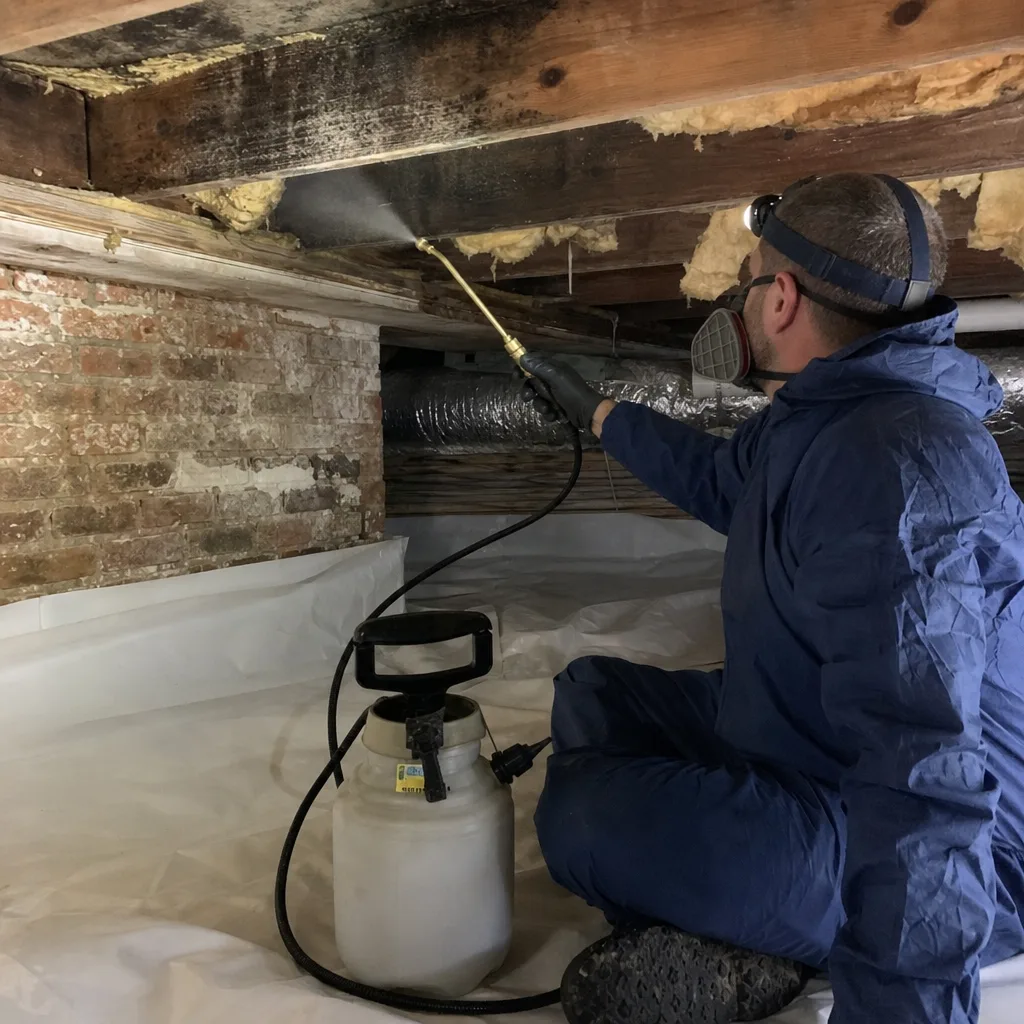
Smoke odor is molecular. It lives inside wall cavities, under floorboards, and inside HVAC ductwork long after the visible soot is gone. In a 1950s Cape Cod in Little Ferry, the original subfloor and wall cavities are full of gaps and chases that act as odor reservoirs. We use thermal fogging and hydroxyl generators to penetrate those spaces, and we run HEPA air scrubbers continuously during containment. The goal is not masking: it’s eliminating the odor at the source so it doesn’t return the first humid week in August.
Structural Fire Repair
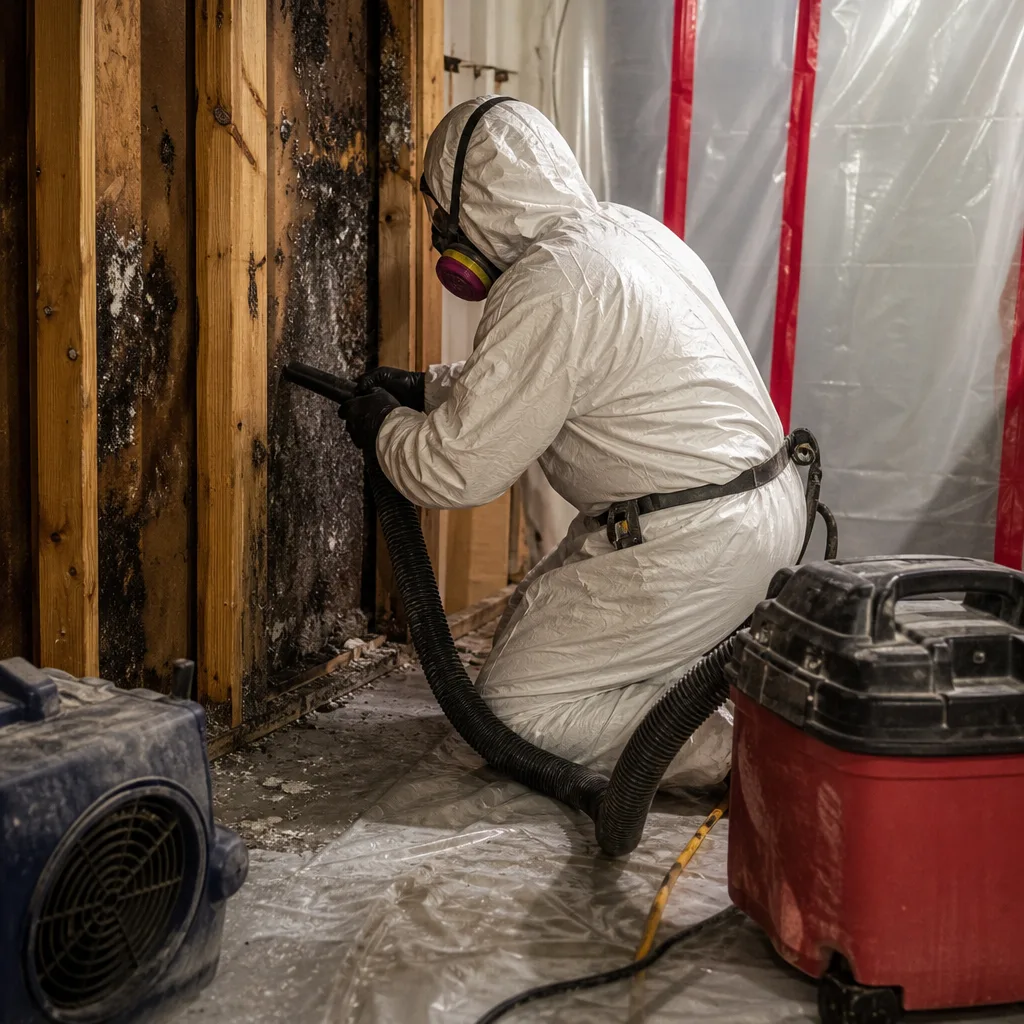
When framing members are charred or compromised, they get sistered or replaced. We assess char depth on every affected member. In Little Ferry homes built between the 1940s and 1960s, the lumber is often old-growth fir or pine that burns differently than modern dimensional lumber. We’ll match the repair to the existing construction, and we’ll also inspect for what the fire exposed. Pulling back a burned section of wall in a Sandy-era home often reveals salt damage or mold that predates the fire. We fix it all, because the repair only holds if everything behind it is sound.
Contents Cleaning & Pack-Out
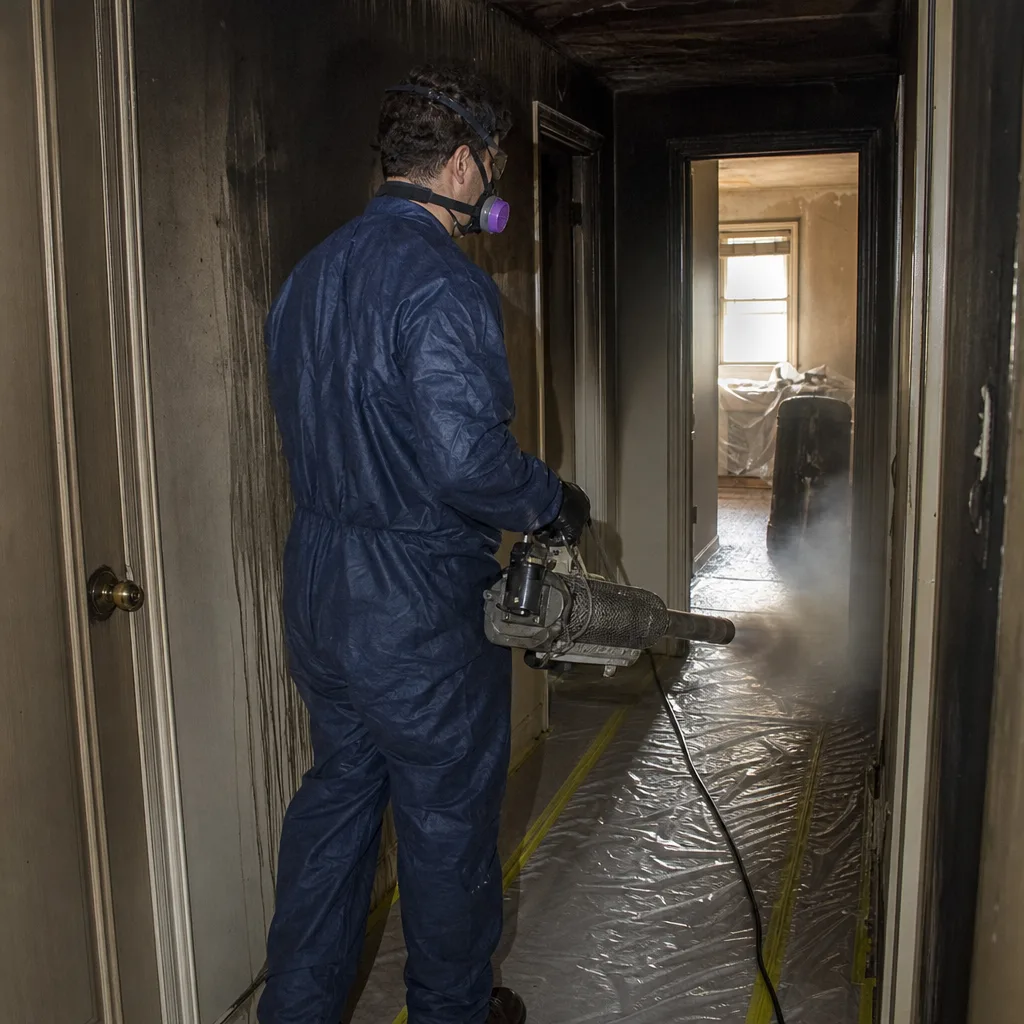
Your belongings matter more than the drywall. We inventory, pack, and transport contents to a cleaning facility when the job requires it. That includes electronics, clothing, furniture, and paper goods. Ultrasonic cleaning handles smaller items; soda blasting and hand cleaning handle larger ones. Every item gets logged before it leaves and logged again when it returns. Little Ferry homeowners carrying both fire and flood insurance appreciate the documentation, because contents claims with two carriers get complicated fast.
Emergency Board-Up & Tarping
A burned house is a vulnerable house. Looters, animals, and weather all find their way in through a broken window or a burned section of roof. We board and tarp within hours, not days. The Hackensack River’s tidal wind pattern means tarps must be anchored to survive a nor’easter; a loose tarp is worse than no tarp. We secure the building so your insurance claim doesn’t grow a weather-related second claim on top of the fire.
What happens when you call
- 1
A real person answersNo phone trees - you reach a local pro.
- 2
You get an upfront price rangeHonest numbers before anyone is dispatched.
- 3
A background-checked tech heads outLicensed & insured, dispatched right away.
- 4
You approve before work beginsNothing starts until you say go.
Fire & Smoke Damage Restoration Costs in Little Ferry, NJ
What does fire damage restoration actually cost in Little Ferry? Here are honest ranges based on the work we see most often in this borough. A small kitchen grease fire with smoke damage confined to one room and no structural loss typically runs $2,800 to $6,500, assuming the walls are opened and sealed, not just cleaned. A whole-house smoke event from an electrical fire with no major burn damage but odor saturated through a 1950s ranch runs $6,000 to $15,000, with the variance driven by whether original plaster can be saved or must be replaced. Structural fire repair involving framing replacement and partial rebuild runs $15,000 to $45,000 and up, depending on how much square footage is involved. Odor removal and deodorization as a standalone scope runs $1,800 to $4,000. These are Little Ferry market prices, not national averages. What moves the number most: square footage affected, whether the structure is still salvageable, whether Sandy-era damage is discovered during demolition, and whether contents need pack-out and off-site cleaning. Your insurance is designed to cover most of this. We offer a free visual inspection, and from that inspection you get a written scope with a firm number. No surprises on the bill, ever. That’s a square deal, the only kind we make.
We Also Serve Cities Near Little Ferry
Our crews work throughout the Hackensack Meadowlands corridor. If you’re in South Hackensack, Ridgefield Park, Moonachie, or Teterboro, the same 24/7 dispatch, the same IICRC-certified technicians, and the same 90-Day Done Right Promise apply. Call and a live person answers, whether the fire is in Little Ferry or three miles down Route 46.
Little Ferry Fire & Smoke Damage Restoration Questions, Answered
After a house fire in Little Ferry, should we worry about old Hurricane Sandy water damage resurfacing?
Yes, and you should expect it. Little Ferry took some of the worst tidal surge in Bergen County during Sandy, and many homes were remediated under insurance pressure and time constraints rather than to a true dry standard. When we open walls for fire restoration, we routinely find salt residue, deteriorated insulation, and mold that dates back to 2012. We document it, remediate it, and include it in the scope so your FEMA Write-Your-Own flood claim can be reopened or supplemented. Call (917) 924-4221 and we’ll inspect for both fire and hidden water damage.
Can you remove smoke odor from a 1950s Cape Cod without gutting the original plaster walls?
Often, yes, but it depends on how deeply the smoke penetrated. Original plaster is dense and doesn’t absorb odor as readily as gypsum drywall, but the gaps around outlets, baseboards, and the wall-to-ceiling transition let smoke into the framing behind it. We can preserve plaster in many cases by cleaning surfaces, then running hydroxyl generators or thermal fogging inside the sealed room, which penetrates the framing bays without demolition. If the plaster has already delaminated from the lath due to age or previous water exposure, that changes the calculation, because it can’t hold the seal. The free inspection gives you a definitive answer, not a guess.
How does FEMA Write-Your-Own flood insurance handle fire smoke damage in Little Ferry?
Flood insurance covers direct physical loss from flooding, not fire. But in Little Ferry, a fire restoration job that exposes pre-existing Sandy flood damage creates a situation where both policies may apply to the same wall. Your flood policy may owe for the saltwater damage and mold we uncover, while your homeowner’s policy covers the fire loss. We document both with photos, moisture readings, and written scope, then coordinate with your carriers. The key is proving the flood damage predated the fire, which our findings and your home’s history make clear. Our team negotiates directly with both adjusters.
Why do we need containment during a fire restoration job in a Little Ferry ranch?
Containment prevents cross-contamination. When we disturb soot-covered drywall or framing, we release fine particulate into the air. Without negative air pressure and physical barriers, that soot migrates to rooms that weren’t damaged and settles into carpet, furniture, and HVAC systems. In a ranch with forced-air heating, an open return in the wrong place can pull soot through the entire duct system within hours. Containment plus HEPA air scrubbing keeps the damage confined. It’s standard practice on every job we run in Little Ferry.
How soon after a fire can mold start on wet drywall in Little Ferry’s climate?
Within 24 to 48 hours in the warmer months, and Little Ferry’s near-sea-level humidity accelerates it. Firefighting water soaks drywall, insulation, and subflooring. Our crews run Dri-Eaz and Phoenix dehumidifiers with XPOWER air movers to dry the structure faster than mold can establish. In crawl spaces typical of 1940s Little Ferry homes, trapped humidity in low-clearance areas stalls drying, so we use Injectidry systems to pull moisture from wall cavities and floor assemblies directly. We don’t close a wall until moisture readings confirm the dry standard.
How fast can someone actually get to Little Ferry after I call?
Our commitment is 45 minutes from phone call to dispatch rolling, and most Little Ferry calls put a crew on your property within that window. Dispatch and scheduling are coordinated from our New York City office, but crews serve Little Ferry locally and know the streets, from Mehrhof Road to the river side of town. A live person answers your call at any hour, takes your address, and starts moving resources immediately.
Are your technicians actually certified for fire and smoke restoration?
Yes. Our crew members hold IICRC FSRT and WRT certifications, which cover fire and smoke restoration and water damage restoration respectively, plus additional training under RIA and IFA standards. Every technician on your property is background-checked and uniformed. We don’t send day labor to a fire job.
What should I do in the first 30 minutes after a fire in my Little Ferry home?
Get everyone out and call 911 if you haven’t already. Then call us at (917) 924-4221. Don’t re-enter the structure until the fire department clears it. Don’t turn on the HVAC system, because that pulls soot through the ductwork and into clean rooms. Don’t wipe soot off walls yourself; using the wrong cleaner or pressure can drive it deeper into porous surfaces. Don’t touch electrical panels or appliances. If it’s safe to do so, take photos of the damage from outside. We’ll handle everything after that, including board-up, documentation, and insurance coordination.
Serving Little Ferry, NJ - Our Local Coverage Area
We’re based in the Little Ferry area and know this community well. Use the map below to see our service coverage - if you’re nearby, we can almost certainly help.
Schedule Your Free Fire & Smoke Damage Restoration Inspection in Little Ferry
If your home in Little Ferry has fire damage, smoke odor, or soot staining, don’t wait. The longer soot sits, the more it etches, and the deeper the odor migrates. The longer water from firefighting sits, the more likely you are to meet the mold growing behind the wall. Call (917) 924-4221 now for a free visual inspection. A live person answers. We’ll walk the property with you, explain what we see, and give you a written scope before any work starts. We stand behind every job with the 90-Day Done Right Promise, in writing, and we’ve been doing restoration long enough to know what Little Ferry’s homes have been through. Let’s get yours done right.
Written by Curt Bowman, Owner at Floodline Restoration Co. of Manhattan, serving Little Ferry and the surrounding Bergen County communities.