
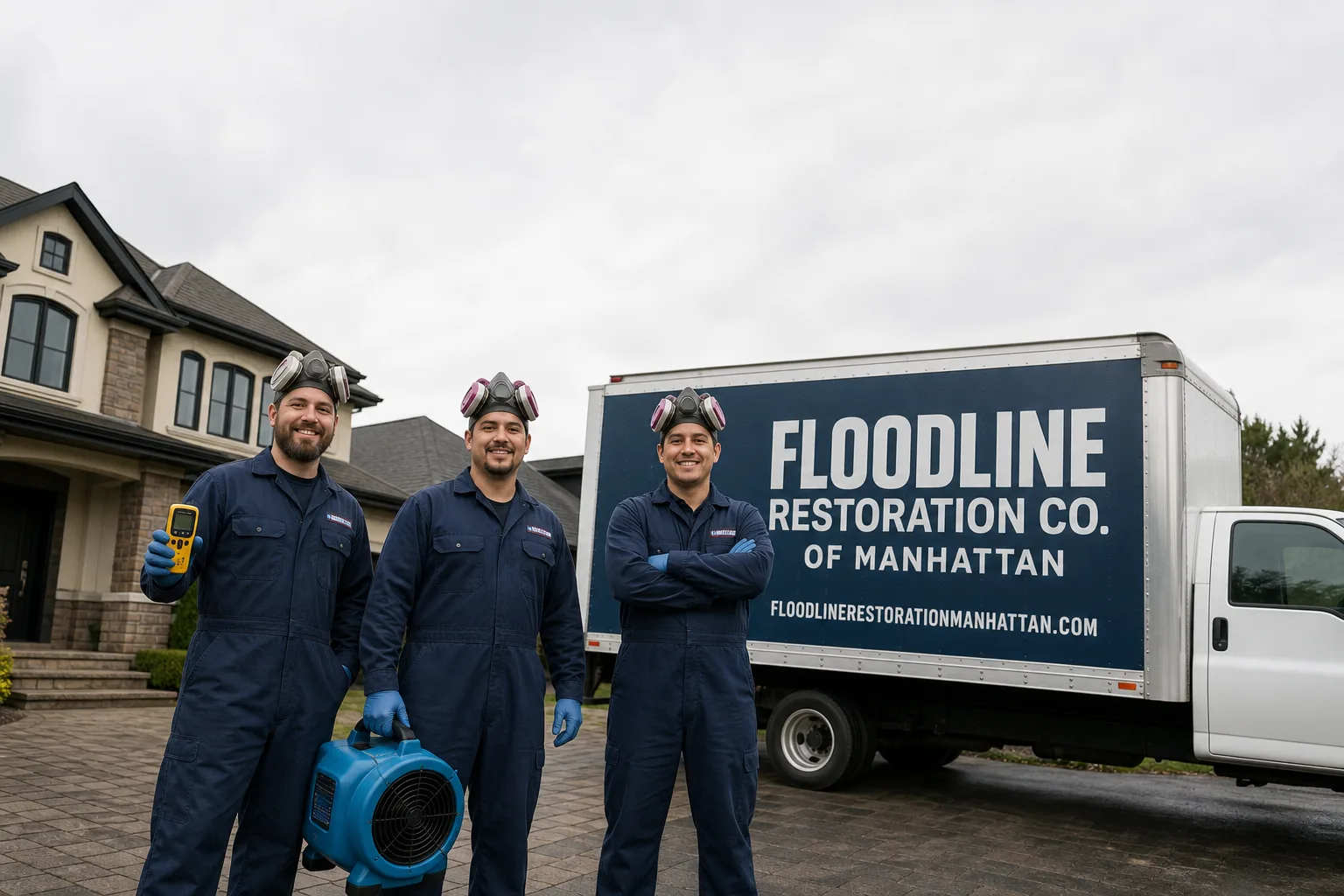
Free visual inspection and a written scope of work before any mitigation begins - photos, moisture readings, and drying logs go in your claim file
The scope we write is the scope we bill. Anything new gets shown to you, in writing, before we touch it.






 Before
 After
After Before
 After
After Before
 After
After24/7 Emergency Sewage Cleanup in Little Ferry
If you have sewage backing up into a Little Ferry basement right now, call (917) 924-4221. A live dispatcher answers, a certified crew reaches your street within minutes, not hours, and the extraction starts the same visit. In Little Ferry, we treat every sewage backup as a Category 3 event until proven otherwise, because the Hackensack River is two blocks away and pressure on the municipal system is a standing condition here. The first hour matters: sewage that sits in a crawl space or a shallow basement starts wicking up into 1950s subfloor framing within minutes, and what started as a pump-out becomes a tear-out. Don’t wait. We’ll be there when we say.
Understanding Sewage Cleanup Severity in Little Ferry Properties
Sewage cleanup is not one service. The Institute of Inspection, Cleaning and Restoration Certification (IICRC) divides water damage into three categories, and the category drives everything: what gets cleaned, what gets cut out, and what gets documented for insurance. Category 1 is clean water from a supply line. Category 2 is gray water, meaning it has some contamination, like a washing machine overflow. Category 3 is black water: sewage, river backflow, or any water pushed in from outside, and it carries pathogens, viruses, and heavy bacterial load. In Little Ferry, a basement backup can start as Category 2 and become Category 3 within 24 hours as bacteria multiply in warm, wet, low-airflow conditions. Worse, Little Ferry’s tidal geography means many backups are Category 3 from the first minute, because the Hackensack River backs up through floor drains and into crawl spaces, carrying salt, silt, and whatever the Meadowlands flood event picked up. Homes here are mostly 1940s to 1960s Cape Cods and ranches with shallow basements and crawl spaces that sit near or below grade. Those spaces collect black water like a basin, and the original framing has been absorbing moisture for sixty to eighty years. We moisture-map every cavity, log daily readings, and don’t stop until the dry standard is met and the area is sanitized. Done right, and backed in writing.
Why Little Ferry Property Owners Choose Floodline Restoration Co. of Manhattan
- 45-minute response commitment. When sewage is advancing through your house, speed is a structural decision. We dispatch a certified crew to Little Ferry immediately, and our response time is measured from the end of the call, not the next business day.
- 24/7 live answer, every call. You will never reach a recording at 2 a.m. A real dispatcher picks up, asks the right questions, and starts the job while you’re still on the phone.
- IICRC-certified crews on every job. Our technicians hold WRT and ASR certifications and train to RIA and IFA standards, so the crew that walks your property reads moisture like a map, not a guess.
- Free visual inspection. Before we touch anything, we walk the loss with you, point to what we’re seeing, and tell you straight what needs removal and what can be saved.
- Direct insurance billing. We document everything, put it in a line-item scope, and coordinate with your adjuster directly. You never play messenger between us and the carrier.
- One team from extraction to reconstruction. The same background-checked, uniformed crew that pumps the sewage returns to hang the drywall. No mid-job handoff, no inherited strangers.
Our Sewage Cleanup Process
Inspection & Assessment
We trace the water path through the floor drains, the crawl space, and the wall cavities. Thermal imaging and moisture meters identify exactly where black water has traveled, including behind drywall and under subflooring you can’t see.
Extraction & Stabilization
Professional-grade trash pumps and extraction units remove standing sewage. We contain the affected area with 6-mil poly barriers and negative air pressure so contaminated air doesn’t migrate into the rest of the house.
Drying & Dehumidification
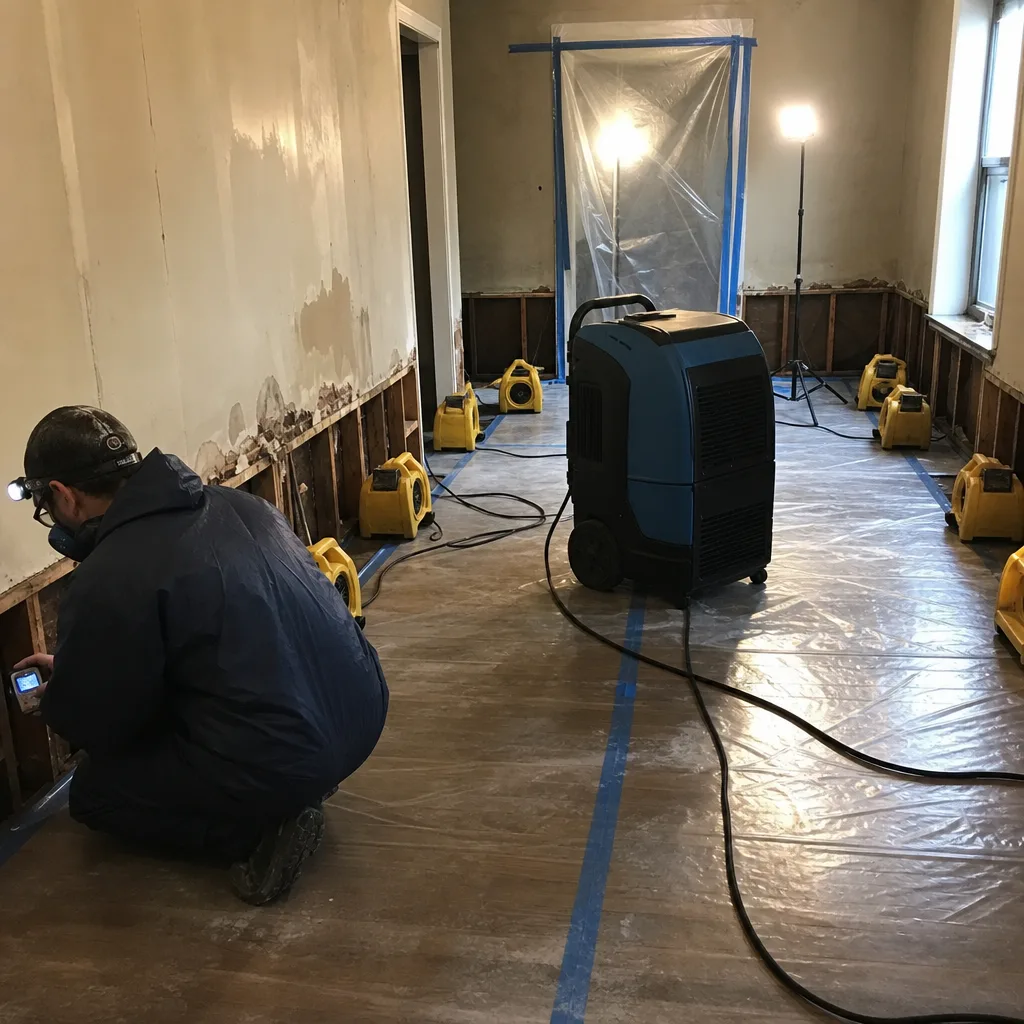
Dri-Eaz air movers and Phoenix dehumidifiers run around the clock, with daily moisture readings logged until every affected surface meets the dry standard. In Little Ferry’s humid Meadowlands air, this phase usually runs 3 to 5 days.
Cleaning & Sanitization
All affected surfaces get an EPA-registered antimicrobial treatment. Porous materials that soaked black water, including drywall, carpet pad, and insulation, are cut out and bagged for disposal. We don’t save what can’t be sanitized.
Crawl Space Sewage Removal
In Little Ferry’s low crawl spaces, we remove contaminated vapor barriers, treat the soil with antimicrobial agents, and install a fresh 10-mil or thicker vapor barrier after drying. The goal is a clean, dry space you can access without a respirator.
Repairs & Restoration
We rebuild what the sewage ruined: subfloor, framing, drywall, baseboard, and insulation, all scoped and priced in writing before we start. The 90-Day Done Right Promise covers every piece of it, in writing, no arguing.
Need Emergency Sewage Cleanup in Little Ferry Now?
Crews minutes away, answering live 24 hours a day. The sooner we start, the less it costs.
Working With Your Insurance Company
In Little Ferry, sewage and insurance go hand in hand, because so many losses trace back to storm-driven Hackensack River backflow. We handle documentation from the first hour: photos of every affected room, moisture readings taken before and after drying, and a detailed, line-item scope of work that matches what your adjuster needs. We talk to your carrier directly, send the field notes and drying log, and keep you out of the back-and-forth. For Write-Your-Own flood insurance claims under FEMA’s NFIP, clear documentation of the loss cause matters enormously, and we prepare every file as if an adjuster will review it at a desk in another state. Because they will.
What We Provide Your Insurer
- Thorough documentation of the loss
- Photos of all damage, room by room
- Moisture readings and drying logs
- A detailed, line-item scope of work
- Direct coordination with your carrier
Built for Little Ferry’s Loss Calendar
Little Ferry has a predictable rhythm to sewage losses, and we staff for it. Late summer brings thunderstorm flash events; the flat, low-lying streets between Main Street and the river can take an inch of rain in an hour and push it into basements. Nor’easters from October through April spike the calendar, especially when a full moon king tide coincides with the storm surge. Those are the calls where the Hackensack River backs up into the residential sewer system through outflow pipes and leaves black water in every basement on the block. January and February bring a quieter but nastier kind of loss: frozen service lines under older streets, thaw cycles that crack 70-year-old cast iron, and slow seepage into crawl spaces that goes unnoticed until odor climbs through the floorboards. August humidity is the worst for post-event drying, because air that’s already saturated at 80 percent makes unassisted drying nearly impossible. The pattern is steady. So are we.
Sewage Cleanup Across Little Ferry’s Neighborhoods
We run sewage cleanup calls across every corner of Little Ferry. Homes along Main Street and the blocks running east toward the Hackensack River see the highest frequency of storm-driven black water, simply due to proximity to the water and the borough’s near-sea-level grade. Over by Washington Elementary and the streets north of the Little Ferry Circle, we see more isolated plumbing backups: aging cast iron under post-war ranches, roots in old clay lateral lines, and septic issues in the few remaining homes that predate the municipal system. The streets around Mehrhof Road and the east side of the borough sit closest to the river and are first to flood when a nor’easter surge pushes in; those homes tend to have post-Sandy elevation work, but many retain the original crawl space framing and subfloor assemblies. On the blocks off Liberty Street and Route 46, commercial flat roofs and large parking areas drain fast into an older storm system, and restaurants and small businesses there call us for grease and sewage backups that commercial plumbers don’t touch. Down near the Little Ferry Hook and the Meadowlands edge, we’re on calls where storm surge and sewer pressure come up through the floor drains together. We know the streets, the age of the houses, and the failure patterns. That’s the difference between a crew that races here and a crew that knows here.
Specialized Sewage Cleanup Services We Offer in Little Ferry
Sewage Backup Cleanup
When a main line clogs and sewage backs into a Little Ferry tub or basement floor drain, we extract, sanitize, and dry the affected space, then identify the source. If the cause is a broken lateral, we’ll scope the line and give you a straight answer about repair versus replacement, with no soft sell.
Black Water Extraction
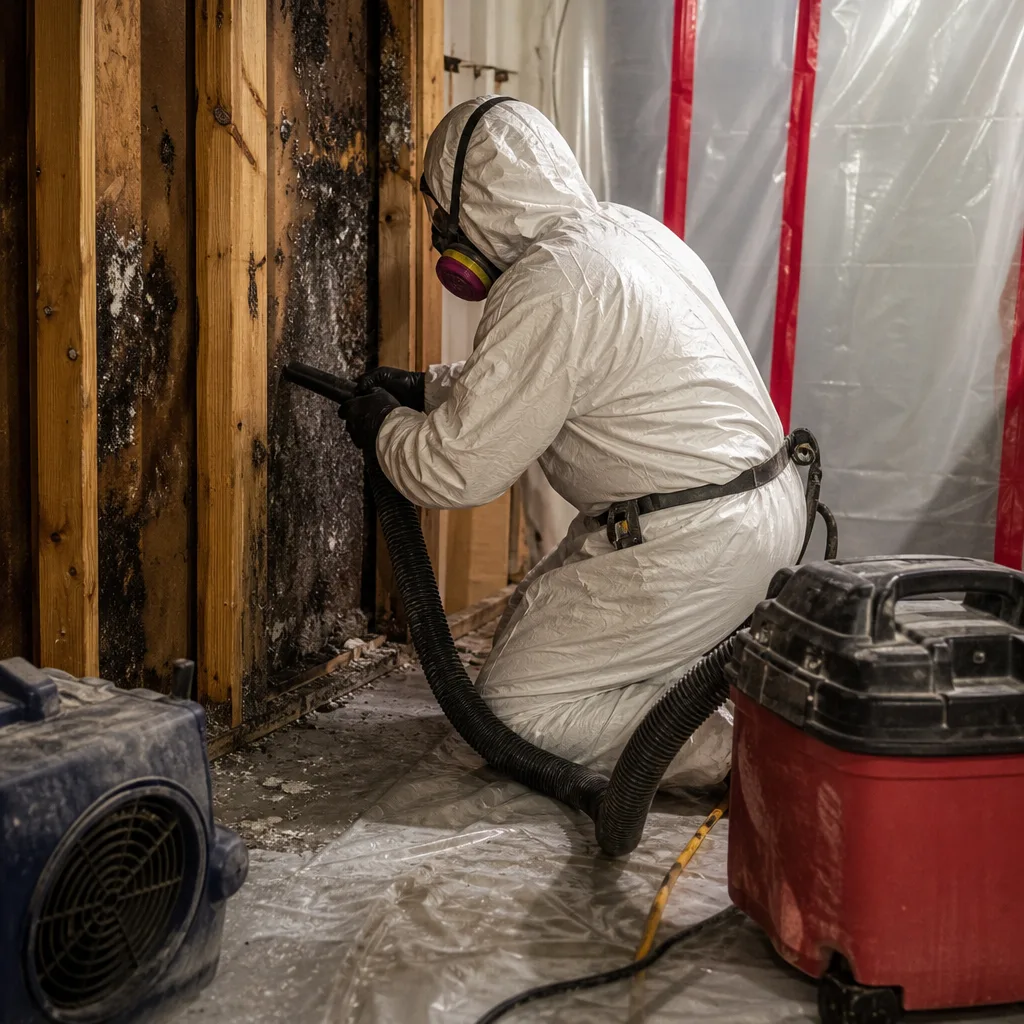
Black water from a Hackensack River surge isn’t ordinary plumbing water. It carries river sediment, road runoff, and whatever the Meadowlands flood picked up. We treat it as Category 3 from the first minute, extract with trash pumps, and dispose of all porous materials that touched it.
Crawl Space Sewage Removal
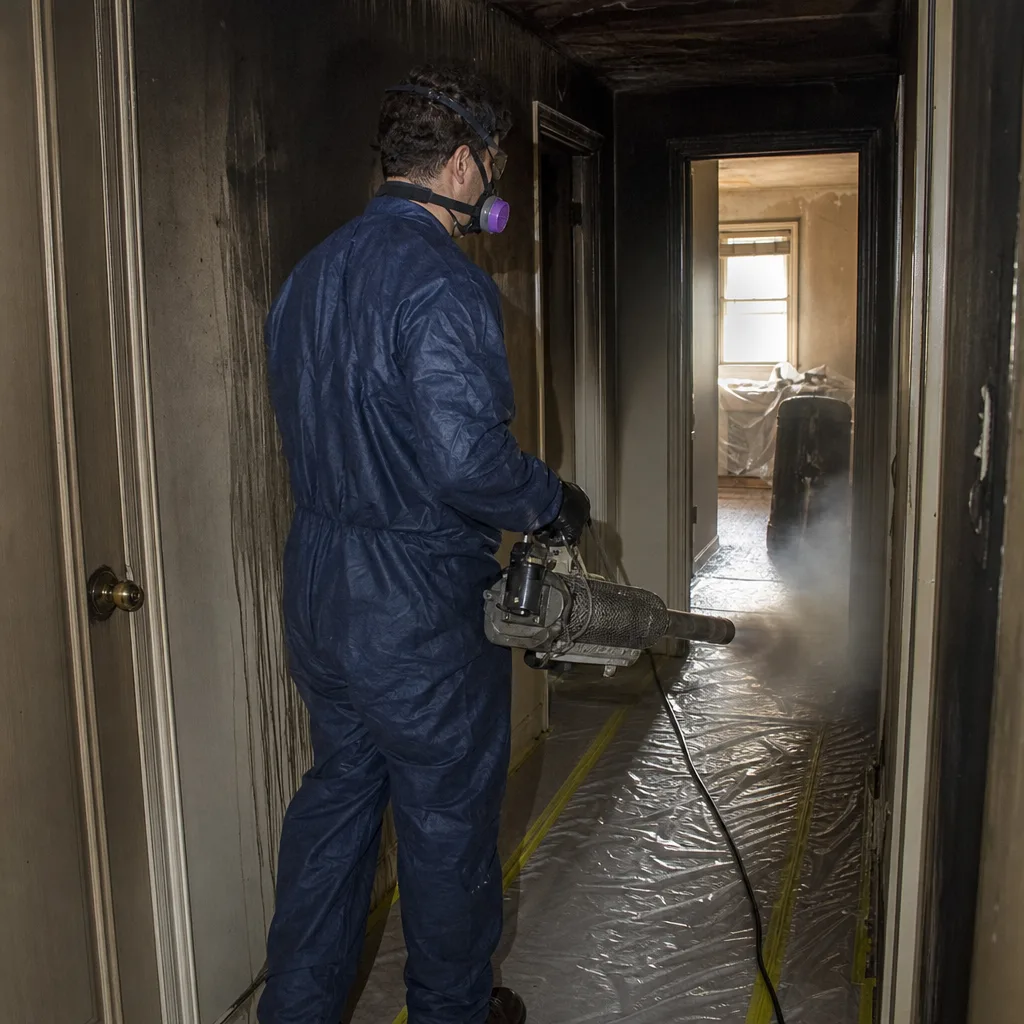
Little Ferry’s crawl spaces are the hardest-hit spaces in this borough. We pump out standing sewage, remove contaminated vapor barrier, treat the soil, run drying equipment until the space meets dry standard, and install new barrier. The space becomes safe to enter, and the smell above it goes away.
Toilet Overflow Cleanup
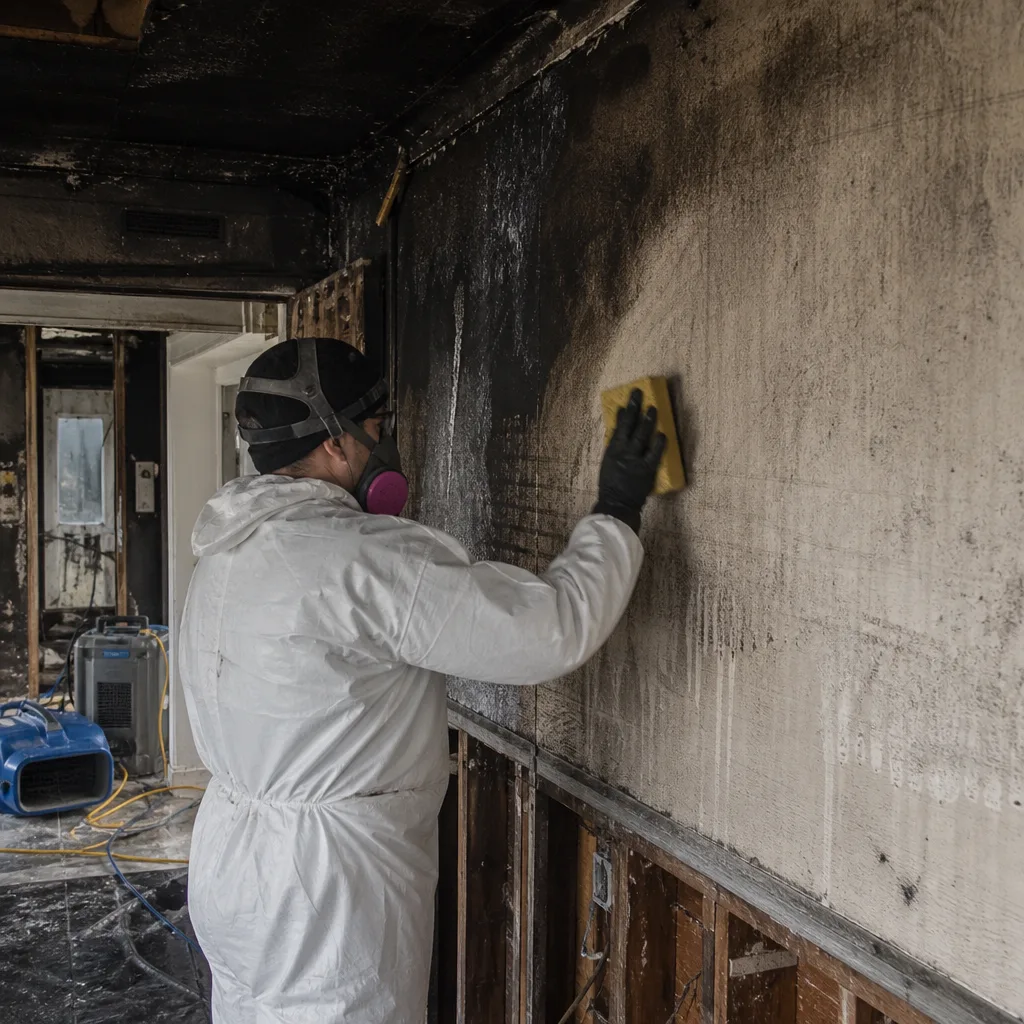
An overflow from a first-floor half bath in a 1950s Little Ferry ranch wicks fast into subflooring and down into the basement drop ceiling below. We remove the affected materials, dry the cavity, and rebuild. You get the bathroom back, plus the ceiling underneath, without a second contractor.
Septic Failure Cleanup
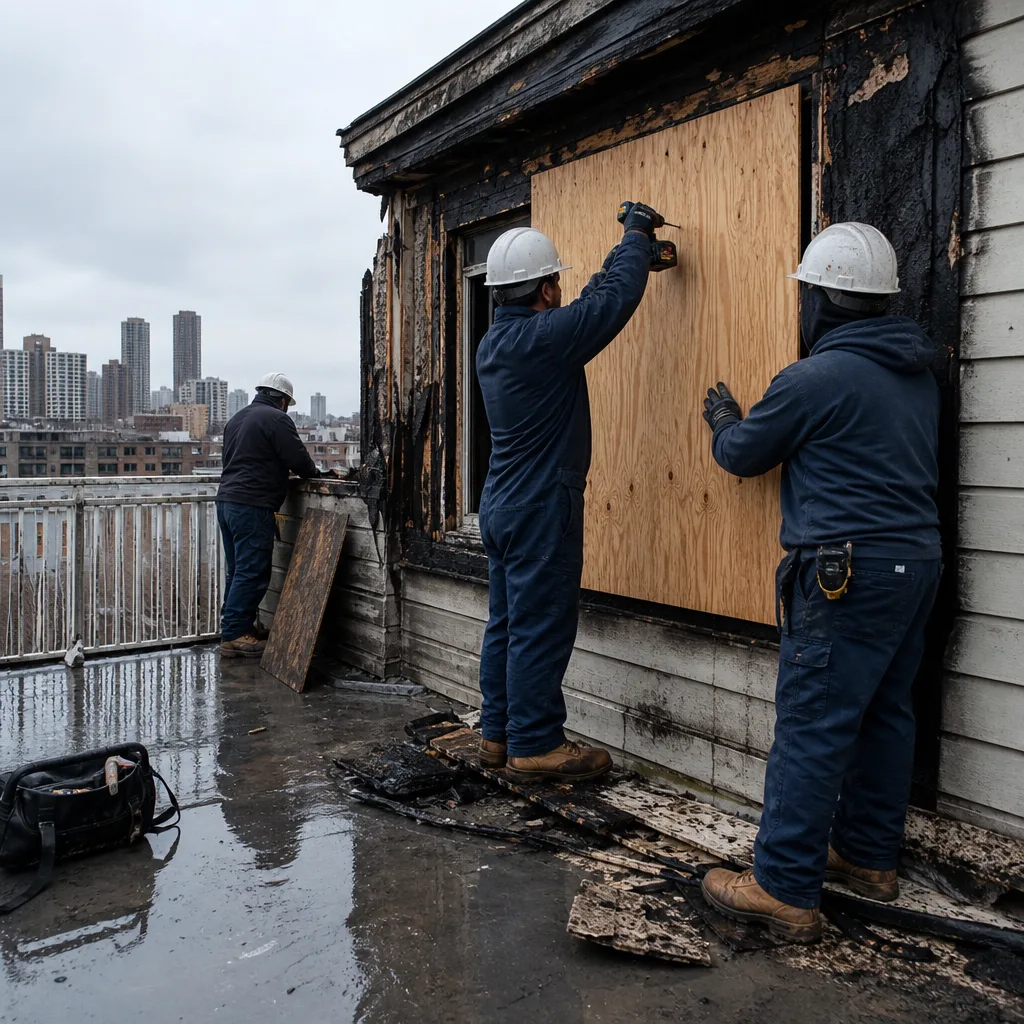
A few older Little Ferry properties still operate on septic systems, and when those fail, the wet spot in the yard and the smell in the house turn urgent. We handle the cleanup and sanitization side, and we coordinate with a licensed septic contractor if the tank or leach field itself needs repair.
Sanitization & Disinfection
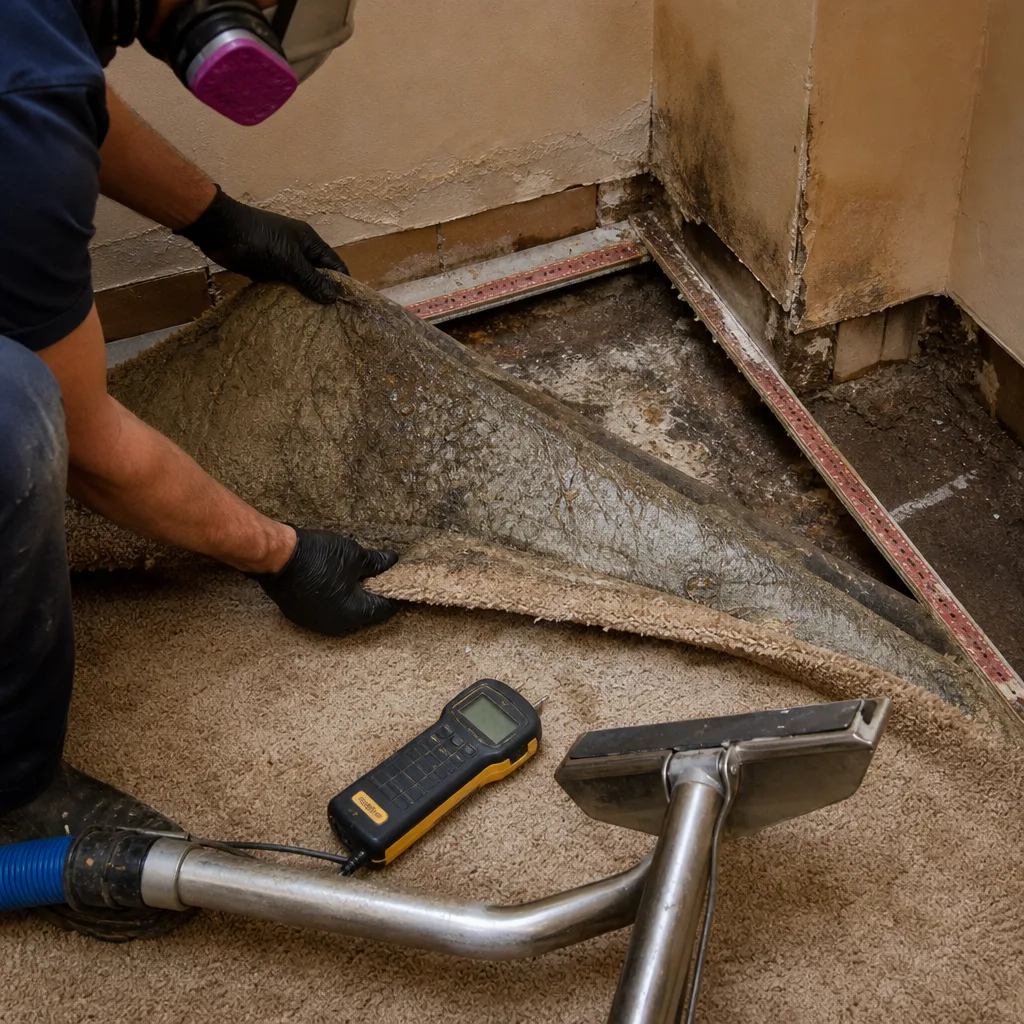
After any Category 3 event, we apply EPA-registered antimicrobial treatments to every affected surface, including framing, concrete, and soil. We don’t just dry and paint. We kill what’s living in the materials before we close the wall back up.
What happens when you call
- 1
A real person answersNo phone trees - you reach a local pro.
- 2
You get an upfront price rangeHonest numbers before anyone is dispatched.
- 3
A background-checked tech heads outLicensed & insured, dispatched right away.
- 4
You approve before work beginsNothing starts until you say go.
Sewage Cleanup Costs in Little Ferry, NJ
In Little Ferry, a standard sewage backup cleanup in a basement runs $2,800 to $6,500 depending on square footage and how much material must be removed. A toilet overflow contained to a single bathroom typically costs $1,400 to $2,800. Crawl space sewage removal, where we pump out black water, treat soil, and replace vapor barrier, runs $3,500 to $8,000, more if subfloor framing has to come out. A full storm-driven black water incursion where the Hackensack River pushed into the basement and saturated drywall, insulation, and flooring runs $8,000 to $18,000 or more, because porous materials in the water path almost always need disposal and rebuild. What moves the price: how far the water traveled, how long it sat before we got there, and whether original 1940s or 1950s materials absorbed it. Insurance covers most of these losses if documentation is clean from hour one, which is why we hand your carrier a complete file. For an exact quote, call (917) 924-4221 and we’ll walk the property free.
We Also Serve Cities Near Little Ferry
Our crews regularly respond to sewage cleanup calls in South Hackensack, Ridgefield Park, Moonachie, and Teterboro. If you’re in one of those towns and have black water coming up through a floor drain right now, call the same line: (917) 924-4221. We’ll be there when we say.
Little Ferry Sewage Cleanup Questions, Answered
How do I know if the sewage in my Little Ferry basement is from a local backup or a Hackensack River surge, and does it change the cleanup?
If the backup happened during or shortly after a nor’easter, king tide, or heavy rain, and your neighbors are seeing the same thing, it’s almost certainly river surge, not a private plumbing issue. The difference matters: river-driven black water is Category 3 from the first minute, requires full antimicrobial treatment, and often qualifies for flood insurance documentation, whereas an isolated toilet backup may stay Category 2 and allows some materials to be saved. We determine the source during the first inspection and adjust the scope accordingly. Call (917) 924-4221 and we’ll tell you straight which one you’re dealing with.
Why did my neighbor’s crawl space sewage cleanup leave no mold, but mine keeps smelling?
Because the neighbor’s crew likely removed the old contaminated vapor barrier, treated the soil, and replaced it, while your previous crew may have pumped the sewage and walked away. In Little Ferry’s humid, low crawl spaces, leaving contaminated soil under the house means odor keeps rising for years. We treat the soil, not just the water. Call (917) 924-4221 for a free look at what’s still down there.
Does a sewage backup after a nor’easter in Little Ferry count for FEMA flood insurance, or is it just plumbing?
It can count under a Write-Your-Own flood insurance policy if the sewage entered because of rising river water or storm surge, not because of a broken pipe unrelated to flooding. We document the loss cause carefully, including photos of the water entry point and weather conditions, so your adjuster can make the call. We handle that coordination directly.
Can you really restore a crawl space that has had standing sewage from a Hackensack River backup, or does it have to be ripped out?
In most cases, we can restore it. We pump the standing water, remove and dispose of contaminated vapor barrier, treat the soil with antimicrobial agents, dry the space with Dri-Eaz and Phoenix equipment, and install fresh vapor barrier. If the subfloor framing above absorbed black water, we cut out and replace only the saturated sections. Total rip-out is rarely needed if the space is addressed within the first 48 hours.
After Hurricane Sandy, my Little Ferry house was ‘remediated’ but it still smells musty when the sewer backs up, why?
Because the original remediation only dried the surface and did not open the wall cavities to remove the salt-laden black water that wicked into the framing. When a new sewage event reaches those same cavities, it rehydrates the old contamination, and the smell returns. That’s the layered damage history we handle on nearly every Little Ferry property built before 1960. Call (917) 924-4221 and we’ll open it up and show you what’s behind the wall.
How fast can a crew actually get to my Little Ferry house?
Our response commitment is 45 minutes from the end of the call. Dispatch is live 24 hours a day, and our crews run local to Little Ferry, so we’re not driving in from another county. The sooner extraction starts, the less wall cavity and framing gets saturated.
Will my insurance cover sewage cleanup and how much will I pay out of pocket?
Most homeowner policies cover sudden sewage backup if you have a sewer backup endorsement. Flood-driven sewage requires flood insurance. Your out-of-pocket is usually the deductible, and our direct billing with your carrier means we handle the paperwork. We’ll know more after the first inspection, which is free. Call (917) 924-4221.
Can we stay in the house during sewage cleanup and drying?
Usually not in the affected area, because Category 3 black water carries pathogens and we run negative air pressure to keep contamination from spreading. You may be able to stay in other parts of the house if we can seal the affected zone. We’ll tell you straight on the first visit.
Serving Little Ferry, NJ - Our Local Coverage Area
We’re based in the Little Ferry area and know this community well. Use the map below to see our service coverage - if you’re nearby, we can almost certainly help.
Sewage Cleanup in Little Ferry: The Tidal Black Water Difference
Here’s what homeowners in Little Ferry need to know that no national franchise will tell you. A sewage backup in this borough is often not an isolated plumbing failure. It’s storm-driven black water incursion, where the Hackensack River rises, overpowers the municipal sewer system, and pushes back up through floor drains, toilet rings, and cleanouts into the lowest part of your house. When that happens, the water is not just sewage. It’s river water, salt, road sediment, and whatever else the Meadowlands flood swept in. That means the cleanup protocol is different: full Category 3 treatment, antimicrobial on every surface, disposal of all porous materials, and documentation for a FEMA flood insurance claim under a Write-Your-Own policy. We were called to a 1950s Cape Cod on Mehrhof Road after a nor’easter pushed the Hackensack River over its banks. Our crew pulled back saturated drywall and found the homeowner’s post-Sandy “remediation” had only dried the surface. Behind the wall, a dark brown flood line from 2012 had never been properly removed. We set containment, ran Dri-Eaz air movers and a Phoenix dehumidifier around the clock, and documented every moisture reading for the homeowner’s Write-Your-Own flood claim. Because in Little Ferry, the old flood and the new one blur into the same scope of work.
Little Ferry sits at near-sea-level elevation directly adjacent to the tidal Hackensack River and its surrounding wetlands. Hurricane Sandy’s 2012 storm surge submerged much of the borough under several feet of water, and the streets have never fully shed the status of repeat-flood target. The housing stock is predominantly post-WWII Cape Cods, ranches, and small split-levels on low-lying lots with minimal elevation above grade. Many have crawl spaces or shallow basements that act as collection basins during any flood event. Post-Sandy, a portion of these homes were elevated or renovated, but many retain original subfloor assemblies and wall cavities that absorbed saltwater intrusion and remain chronically prone to hidden mold colonies years later. That’s the full picture, and it’s the reason we handle Sewage Cleanup in this town as a flood-loss specialty rather than a plumbing afterthought.
If you need Sewage Cleanup in Little Ferry, we’re the crew that knows the borough, the river, and the old framing hidden behind the drywall. We answer the phone live at (917) 924-4221, day or night. The line the water left is where we start.
Written by Curt Bowman, Owner at Floodline Restoration Co. of Manhattan, serving Little Ferry since 2010.