
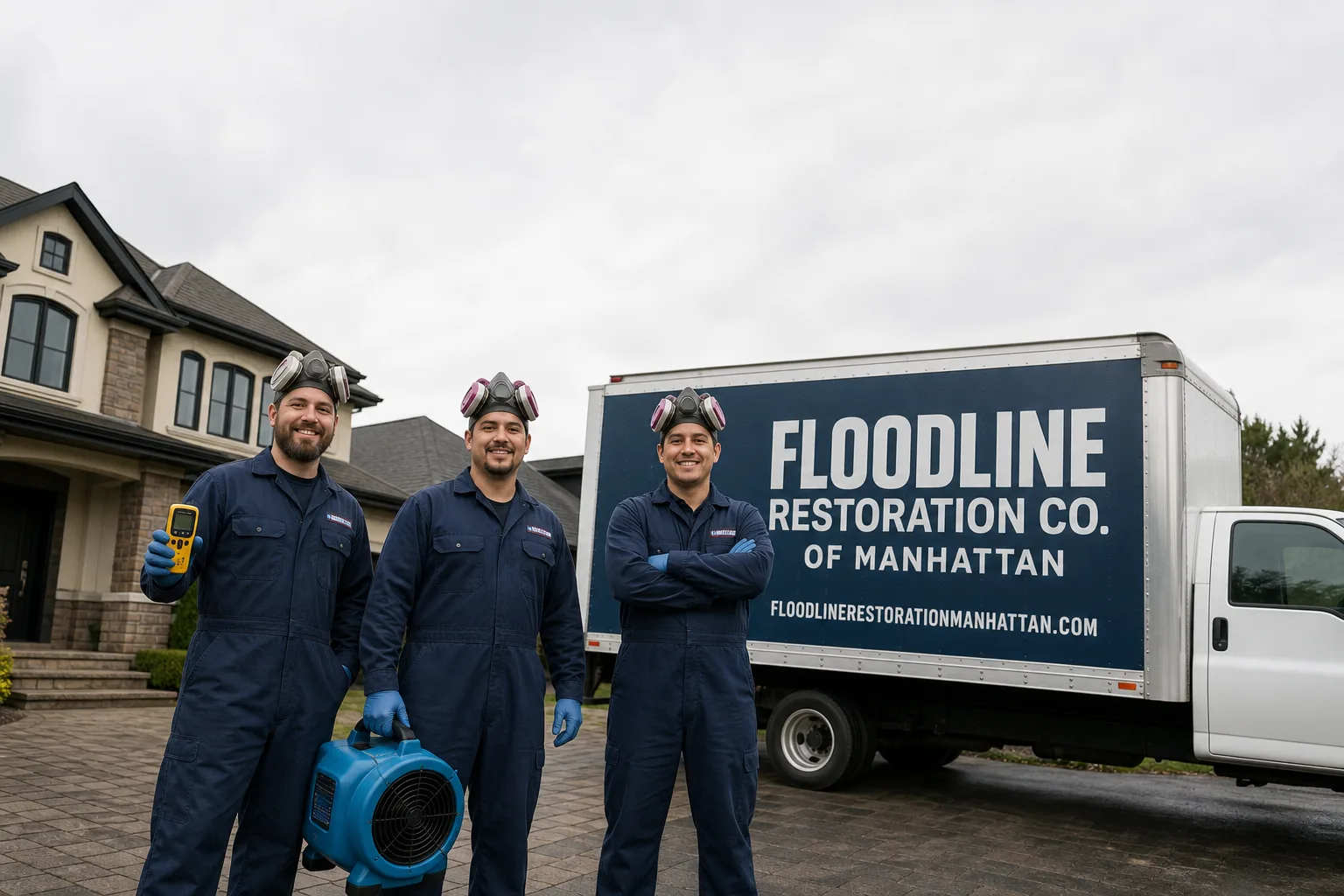
Free visual inspection and a written scope of work before any mitigation begins - photos, moisture readings, and drying logs go in your claim file
The scope we write is the scope we bill. Anything new gets shown to you, in writing, before we touch it.






 Before
 After
After Before
 After
After Before
 After
After24/7 Emergency Mold Remediation in Bedford
Mold remediation in Bedford, NY typically costs $1,800-$6,500 for a contained removal with clearance testing, and our crews can be on site within 45 minutes of your call. We answer live at (917) 924-4221 any hour of the day or night. A real dispatcher picks up, asks about your water source and square footage, and sends a certified crew toward Bedford while you’re still on the phone. The first hour matters because mold colonizes porous materials within 24 to 48 hours of a water event. In Bedford’s estate homes, where fieldstone foundations and original timber framing hold moisture longer than modern construction, that window closes faster than you’d think.
Understanding Mold Remediation Severity in Bedford Properties
Mold severity falls into three practical tiers, and Bedford’s housing stock maps onto them in predictable ways. Tier one is surface colonization: visible growth on painted plaster, trim, or ceiling paper, often following a roof leak or condensation on cold walls. Tier two is interstitial growth inside wall cavities, behind wainscoting, or under floorboards. This is the tier Bedford sees most, because horsehair plaster and lathe create dead air spaces where moisture lingers. Tier three is structural involvement: fungal growth feeding on timber frames, floor joists, or fieldstone mortar joints. On 18th- and 19th-century frames, tier three requires careful containment and controlled drying rather than demolition, because replacing old-growth timber with modern lumber changes the building’s movement and usually violates local preservation standards. We run moisture mapping with thermal imaging before we open any surface, and we establish negative-pressure containment on any job that disturbs colonized material. HEPA air scrubbers run the whole time, and we don’t remove containment until a third-party clearance test confirms spore counts are back to baseline for that room and the rooms around it.
Why Bedford Property Owners Choose Floodline Restoration Co. of Manhattan
We’ve worked on some of the oldest and most demanding houses in northern Westchester, and we’ve learned what historic construction will and won’t tolerate. That experience shapes every job we take in Bedford.
- 45-minute response commitment. When you call about mold in Bedford, we commit to having a certified crew dispatched within 45 minutes. On emergency water or sewage jobs, that speed stops the clock on mold growth.
- 24/7 live answer, always a person. No phone trees, no answering service script. A dispatcher who knows Bedford’s roads and neighborhoods picks up at 2 a.m. and starts the job.
- IICRC-certified crews. Our techs carry WRT (Water Damage Restoration Technician), FSRT (Fire & Smoke Restoration Technician), and AMRT (Applied Microbial Remediation Technician) certifications, and they’re background-checked and uniformed on every job.
- Free visual inspection. We don’t charge to walk the property, assess what we’re seeing, and tell you honestly whether you need full remediation or a targeted cleaning.
- Direct insurance billing. We prepare the scope, send it to your carrier, and coordinate with your adjuster directly. You don’t play messenger.
- One team, start to finish. Extraction, drying, mold removal, and any rebuild happen under one roof with one crew lead accountable to you. No mid-job handoff.
Our Mold Remediation Process
Inspection & Assessment
We start with a visual walkthrough inside and out, including the fieldstone foundation, crawl spaces, and attic framing. Thermal imaging and hygrometers find moisture you can’t see. If testing is warranted, we collect air and surface samples and send them to an independent lab.
Containment & Isolation
We set up negative-pressure containment around the affected area using poly sheeting and HEPA-filtered air scrubbers. This keeps spores from moving into clean rooms. In historic homes, we contain carefully around original trim and plaster that shouldn’t be disturbed.
Source Removal & Material Disposal
Colonized materials that can be removed are double-bagged and disposed of per IICRC standards. Salvageable surfaces, including original plaster and timber, are treated in place. We never default to ripping out historic material when controlled drying and treatment will save it.
Drying & Dehumidification
Dri-Eaz dehumidifiers and XPOWER air movers run continuously, with moisture readings logged every four to six hours. We track the dry standard room by room until the entire affected area measures dry to pre-loss condition.
Cleaning, Sanitization & Odor Treatment
HEPA-vacuuming of all exposed surfaces, followed by appropriate antimicrobial treatment on affected materials. We treat cavity spaces and joist ends that are common mold reservoirs in Bedford’s older construction.
Clearance Testing & Repairs
Independent post-remediation verification confirms airborne spore counts have returned to normal. Then we repair what was opened: plaster patching, wainscoting replacement, paint matching, and any structural work done to preservation-appropriate standards.
Need Emergency Mold Remediation in Bedford Now?
Crews minutes away, answering live 24 hours a day. The sooner we start, the less it costs.
Working With Your Insurance Company
Mold claims are among the most scrutinized in property insurance. Carriers want proof of the water source, a timeline connecting the water event to the mold, and documentation that the loss was mitigated promptly. We build that file from the first hour. Our techs photo-document the entire affected area before anything moves, record moisture readings at every step, and keep drying logs that show when each room hit its dry standard. We write a line-item scope of work in plain language and send it directly to your adjuster. When your carrier has questions, they call us, not you. On most covered losses, we bill the carrier directly for the remediation portion. You pay your deductible, and the process stays between us and the insurance company.
What We Provide Your Insurer
- Thorough documentation of the loss
- Photos of all damage, room by room
- Moisture readings and drying logs
- A detailed, line-item scope of work
- Direct coordination with your carrier
Built for Bedford’s Loss Calendar
Bedford sits higher than the Sound-side towns, and the winters land harder. December through February brings freeze-thaw cycles that crack fieldstone foundation mortar, letting groundwater wick into basement walls and crawl spaces. Ice dams form on historic slate roofs, and when they melt, water travels down inside wall cavities and soaks horsehair plaster from behind. March and April thaw saturates the ground around stone foundations, raising basement humidity and waking dormant mold. Summer and fall bring Nor’easter-driven rain and the occasional toppled oak or maple, and Bedford’s Town Tree Preservation Law means removal for access can take longer than the storm cleanup itself. Every one of these patterns is a mold precursor. In old houses, the mold isn’t a new problem. It’s an old moisture problem finally showing its face.
Mold Remediation Across Bedford’s Neighborhoods
Bedford’s hamlets and estates each have their own building character, and the mold problems follow the construction. Along Guard Hill Road and the estates east of the village, we see 18th-century stone manor houses where water moves through fieldstone mortar joints and rises into first-floor framing. Up near Katonah’s edge and along the Route 22 corridor, converted carriage barns and timber-frame structures carry moisture in their post-and-beam joints. Around Bedford Village itself, older clapboard and shingle houses with partial stone foundations trap humidity in basements and dirt-floor crawl spaces. In the newer luxury construction west of the village, the enclosures are tighter but the humidity management is often mismatched to the structure’s actual occupancy, and we find mold in attic sheathing and behind vapor barriers that were installed with good intentions and poor detailing. The response route matters too: our crews stage from the Saw Mill River Parkway interchange and reach most Bedford addresses within 45 minutes, even during winter weather.
Specialized Mold Remediation Services We Offer in Bedford
Mold Inspection & Testing
A Bedford inspection starts with the foundation and works upward. We collect air samples inside and outside to establish a baseline, run surface testing where growth is visible, and use moisture meters to find hidden water in plaster, joists, and subfloor. You get a written report that tells you what we found, what it means, and what actually needs to happen. If you’re buying a historic home, we recommend testing before close.
Mold Removal
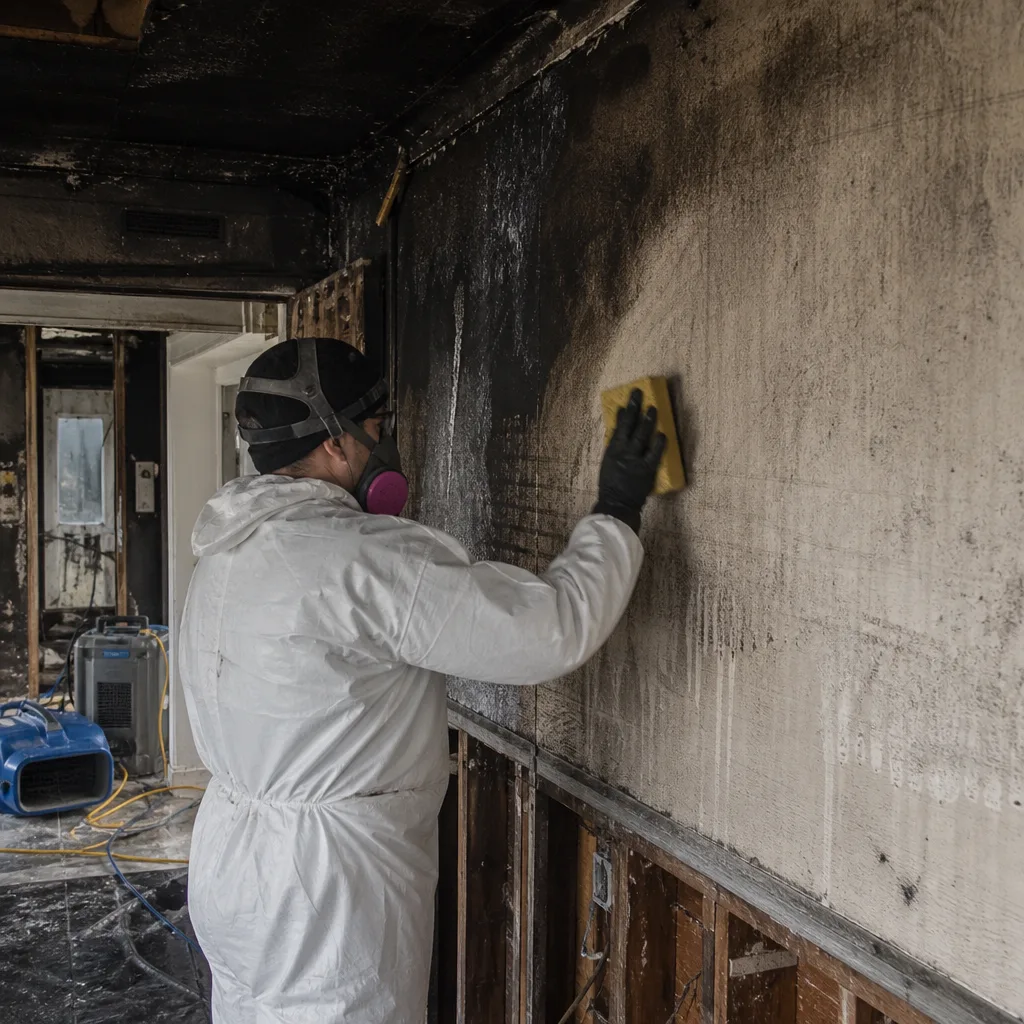
Removal in Bedford’s older homes is surgical. We treat and save original materials whenever possible: plaster that can be dried and cleaned, timber that can be sanded and treated in place, millwork that can be HEPA-vacuumed and refinished. We only remove what’s deteriorated past the point of structural or practical use. That approach keeps historic district approvals simpler and preserves the house’s original fabric.
Black Mold Remediation
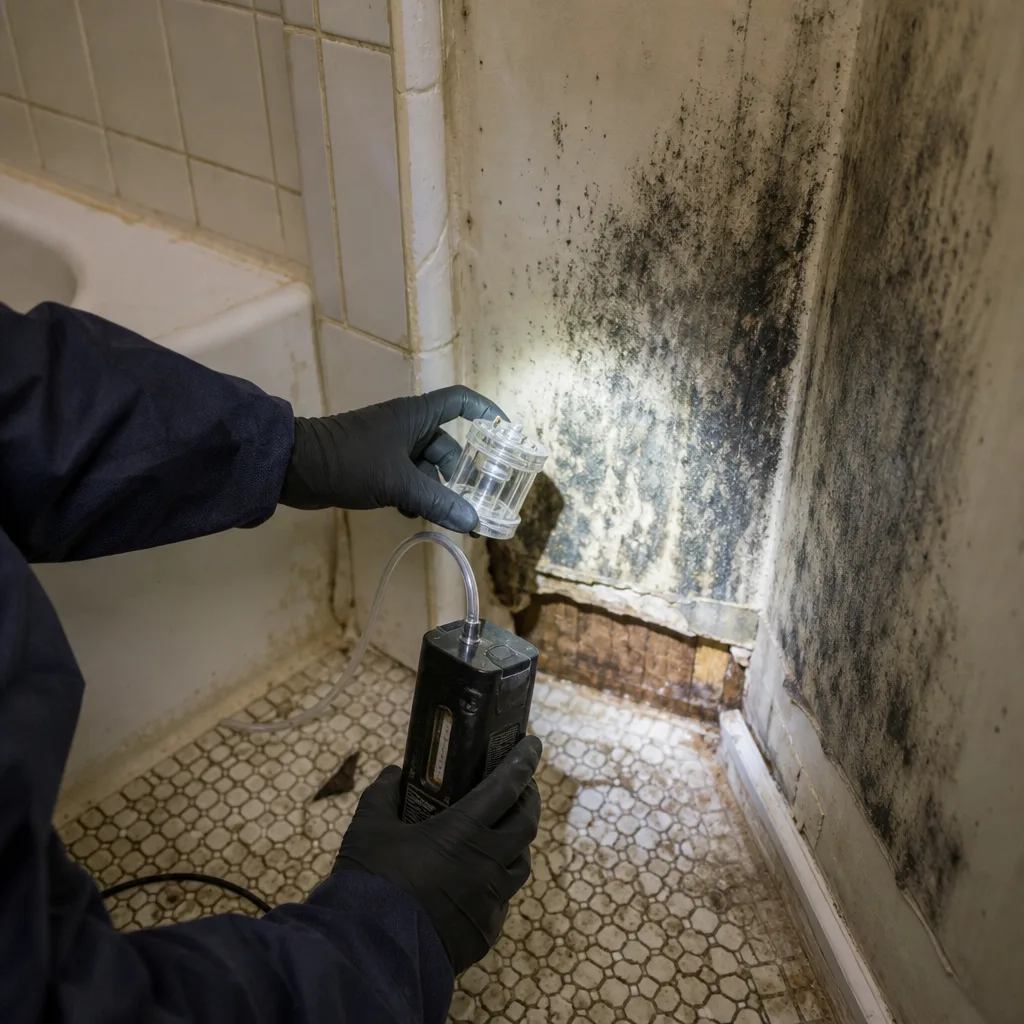
Stachybotrys, the species people call black mold, grows on continuously wet cellulose: plaster backing, paper-faced drywall, subfloor, insulation. In Bedford’s stone foundations and dirt crawl spaces, the conditions for it exist more often than homeowners want to believe. Full containment, HEPA air scrubbing, and clearance testing are standard on these jobs. We don’t cut corners on containment in an occupied home, and we don’t call a job done until the post-remediation air sample clears.

Air Quality Restoration
After remediation, the air in a home should be better than it was before the problem started. We run HEPA scrubbers during the job, clean the duct and cavity surfaces that carry spores, and address the humidity source that fed the mold. The finish line is a clearance test that shows the indoor air is back to a normal, healthy range for a house of that age and construction.

Crawl Space Treatment
Bedford’s dirt-floor crawl spaces under stone foundations are ground zero for mold. We treat the joists, rim band, and framing with appropriate antimicrobial products after drying, then install the vapor barrier and dehumidification that stops the next round. A crawl space that stays dry at the floor and at the joists doesn’t grow mold. One that’s left open will regrow within a season.

Moisture & Humidity Control
The long-term fix for Bedford mold is moisture control, not just removal. That means managing foundation drainage, crawl space ventilation, attic ventilation, and interior humidity. We install commercial-grade dehumidifiers where they’re needed, correct grade and downspout issues where we can, and recommend the right permanent systems for a house that’s been standing for two hundred years and should stand for two hundred more.
What happens when you call
- 1
A real person answersNo phone trees - you reach a local pro.
- 2
You get an upfront price rangeHonest numbers before anyone is dispatched.
- 3
A background-checked tech heads outLicensed & insured, dispatched right away.
- 4
You approve before work beginsNothing starts until you say go.
Mold Remediation Costs in Bedford, NY
Here’s what remediation actually costs in Bedford’s market. A contained crawl space treatment with vapor barrier and dehumidification runs $2,500-$6,000 depending on square footage and access. A single-room mold removal with containment, HEPA scrubbing, and clearance testing typically lands between $1,800 and $3,500. A whole-basement remediation on a stone-foundation estate with plaster walls and timber framing: $5,000-$14,000, widening with custom millwork or preservation-level repairs. Inspection and testing without remediation runs $400-$900, and we credit that toward the job if you hire us for the work. What moves the price: sq ft of affected area, building material age and type, containment complexity in occupied historic rooms, and whether the moisture source needs correction. Most water-related mold in Bedford is covered when the water event was sudden and reported promptly. Long-term seepage and neglect often aren’t. The free visual inspection gives you a firm written scope before any work starts.
We Also Serve Cities Near Bedford
Our Bedford crews also serve Mold Remediation in Bedford and the surrounding area regularly: Bedford Hills, Mount Kisco, Armonk, and Katonah. Same 45-minute commitment, same live dispatch, same written scope before any work begins.
Bedford Mold Remediation Questions, Answered
How do you handle mold remediation in Bedford homes with horsehair plaster walls?
We contain, dry, and treat horsehair plaster rather than removing it. Cutting out original plaster in a Bedford historic home often triggers preservation review and destroys material that can’t be replicated. We use moisture mapping to find the water source, run Dri-Eaz dehumidifiers and XPOWER air movers until the plaster reaches its dry standard, then HEPA-vacuum and apply antimicrobial treatment to the surface and the cavity behind it. The plaster stays. The mold goes. Call (917) 924-4221 for a free visual inspection.
What does Bedford’s Town Tree Preservation Law mean for mold remediation after a storm?
It means tree removal for access or debris clearance can require a town permit, and that takes time mold doesn’t give. If a toppled oak or maple has opened a roof or wall and water is getting in, we set containment and start drying inside while the tree question gets sorted outside. We don’t remove protected trees ourselves; we document the damage and coordinate with the town and your arborist so the water stops moving through the house while the permit works its way through.
Why do Bedford’s fieldstone foundations make mold worse than in neighboring towns?
Fieldstone mortar joints are porous and crack with freeze-thaw cycles, so groundwater wicks into basement walls and rises into framing. Mount Kisco and Armonk have more modern poured concrete and block foundations, which seal differently. Bedford’s stone foundations hold moisture against interior framing for months at a time, and that continuous damp is exactly what mold needs. We map that moisture with thermal imaging and treat the foundation wall, not just the surface growth.
Can you remediate mold in a converted carriage barn without ruining the original timber frame?
Yes. Timber frame mold is treated in place: we dry the frame to its dry standard, HEPA-vacuum every face, and apply appropriate antimicrobial treatment to the wood. We only remove material that’s structurally deteriorated beyond use. Original pegs, joinery, and beams stay intact. The same approach applies to converted outbuildings, wing additions, and any structure with exposed heavy timber.
How do you handle black mold in a Bedford estate’s crawl space with a dirt floor?
We contain the crawl space from the living space above, remove and dispose of colonized insulation and debris, treat the joists and rim band in place, then install a vapor barrier over the dirt and run a commercial dehumidifier sized to the space. Moisture readings are logged until the entire area measures dry. Clearance testing confirms the air is clean before we pull containment. We don’t just spray and walk away; the moisture source has to be corrected or the mold returns.
How fast can you actually get to a mold job in Bedford?
Our commitment is 45 minutes from your call to a dispatched crew. In practice, crews already working in Bedford, Bedford Hills, or Mount Kisco are often on site faster. We answer live at (917) 924-4221 around the clock, and we start containing and drying the same visit when it’s an active water event.
Will my homeowner’s insurance cover mold remediation?
It depends on the water source. If a sudden pipe break, ice dam, or storm created the water and the mold came from that, most Bedford policies cover the remediation. Long-term seepage, neglected leaks, and ventilation problems are often excluded. We document everything from the first hour and work with your adjuster directly, which materially improves the outcome on contested claims.
Do I really need full remediation, or just a cleaning?
That’s the right question to ask. Small surface growth on a painted wall with no moisture behind it can sometimes be cleaned without full containment. Growth that’s spread behind plaster, into cavities, or onto framing needs remediation with containment and clearance testing. Our free visual inspection gives you an honest answer. We’d rather tell you it’s a cleaning job than sell you a remediation you don’t need.
Serving Bedford, NY - Our Local Coverage Area
We’re based in the Bedford area and know this community well. Use the map below to see our service coverage - if you’re nearby, we can almost certainly help.
Local Bedford Mold Remediation, Done Right
Bedford’s fieldstone foundations and horsehair plaster walls create chronic moisture traps unseen in neighboring Mount Kisco or Armonk, and generic remediation approaches fail here. At a stone manor house off Guard Hill Road, our crew found category 2 water wicking through fieldstone foundation mortar after a severe ice dam melt. Using Dri-Eaz dehumidifiers and XPOWER air movers, we established containment around the plaster walls, ran moisture readings every four hours, and completed structural drying to pre-loss condition without disturbing the original horsehair plaster. That scope of work would have been off-the-shelf drywall replacement anywhere else in Westchester. In Bedford, it was preservation. If mold is showing in your home, call (917) 924-4221. We’ll inspect, answer straight, and give you a written scope before any work starts. Mold Remediation by Floodline Restoration Co. of Manhattan, standing behind it in writing.
Written by Curt Bowman, Owner at Floodline Restoration Co., serving Bedford and northern Westchester with restoration and preservation for over 42 years.