
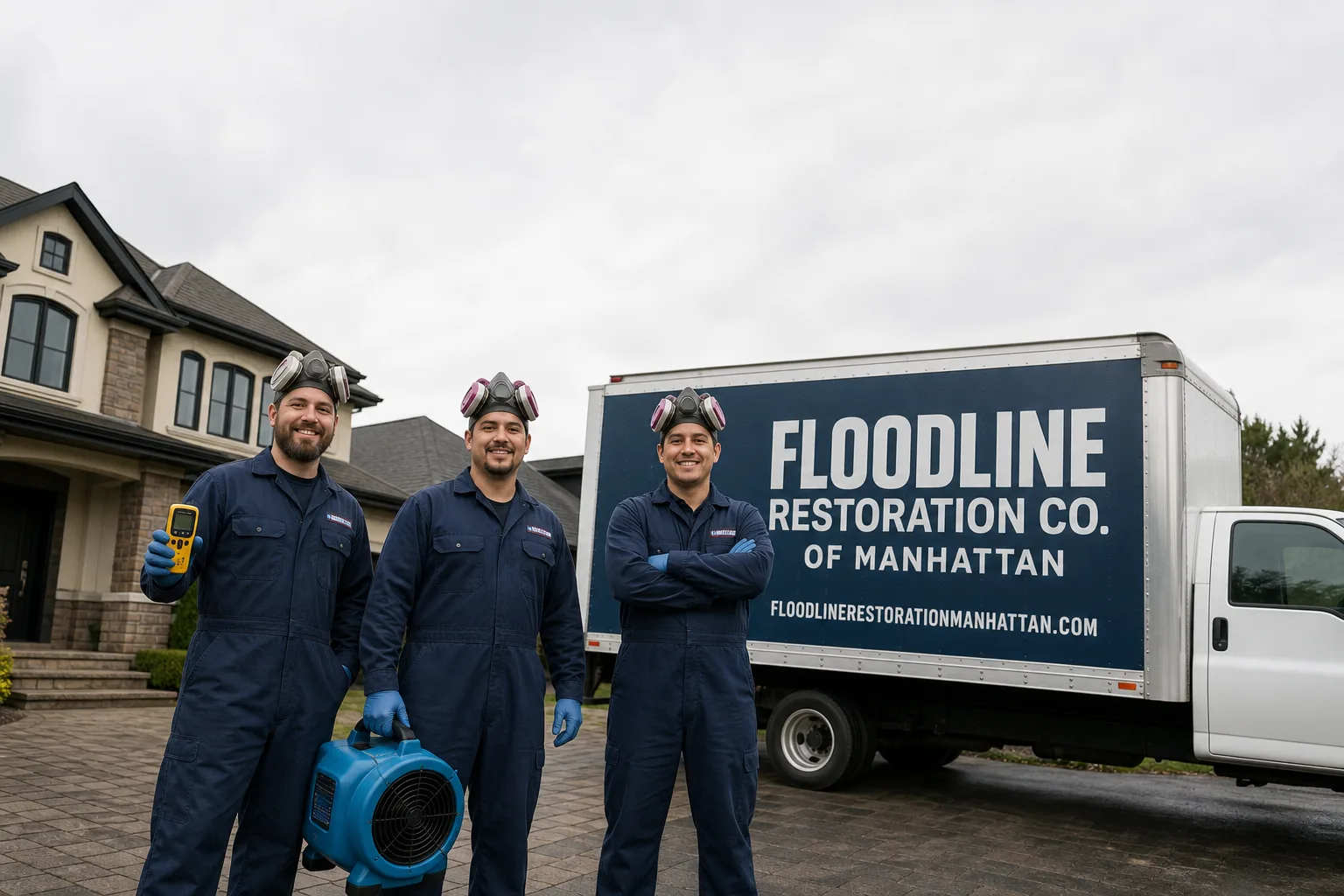
Free visual inspection and a written scope of work before any mitigation begins - photos, moisture readings, and drying logs go in your claim file
The scope we write is the scope we bill. Anything new gets shown to you, in writing, before we touch it.






 Before
 After
After Before
 After
After Before
 After
After24/7 Emergency Mold Remediation in Pemberwick
Mold remediation in Pemberwick is not a wait-and-see job. The Byram River has flooded this low-lying mill corridor for generations, and every time water enters a basement it starts feeding mold inside 24 to 48 hours. If you see dark patches spreading on plaster walls, smell that earth-damp odor in a crawl space, or found soft flooring near a foundation wall after rain, call (917) 924-4221 right now. A live dispatcher answers at any hour, and a Floodline Restoration Co. crew can reach Pemberwick streets quickly with HEPA scrubbers, moisture meters, and the written scope that tells you exactly what we found before any work starts. The first hour is when you stop a contained problem from becoming a whole-house one.
Understanding Mold Remediation Severity in Pemberwick Properties
Mold in Pemberwick homes rarely starts with a single source. The housing stock here grew up around the Byram River mills between roughly 1850 and 1930, which means compact cottages and two-family rentals sit on shallow stone or cinder-block basements. When the river tops its banks during a nor’easter or a late-summer convective storm, hydrostatic pressure pushes groundwater through foundation cracks and up through the slab. That water is not clean. It carries river sediment, storm-drain backflow, and whatever the uphill watershed picked up along the way. We classify it carefully: Category 1 is supply-line water, Category 2 carries contamination, and Category 3 is sewage or river backflow. Pemberwick basements see all three depending on the season. The mold that follows can sit in original plaster and lathe, behind baseboards, under wide-plank floors, and inside wall cavities. Severity turns on how long the moisture sat, how much organic material the water touched, and whether the first floor got mapped for hidden wicking. A basement that looks damp but manageable is often hiding first-floor mold along the sill plate.
Why Pemberwick Property Owners Choose Floodline Restoration Co. of Manhattan
- Live answer, every hour, every day: A dispatcher picks up at 2 a.m. Not a recording. You tell us what you see, and we dispatch a crew toward Pemberwick immediately.
- IICRC-certified crews on site: Our technicians carry WRT, FSRT, and AMRT certifications and follow the standards those codes require, including containment and clearance testing.
- Free visual inspection first: Before any work begins, we walk the property with you, mark the moisture map, and hand you a written scope. No pressure, no mystery line items.
- Direct insurance billing: We document the loss from the first hour, send the adjuster our readings and photos, and bill the carrier directly. You never play messenger.
- Same team, start to finish: The crew that sets up containment does the daily moisture readings, the antimicrobial treatment, and the rebuild. No mid-job handoff to a stranger’s crew.
- Equipment that actually dries old houses: Dri-Eaz dehumidifiers, Phoenix units, and XPOWER air movers sized for tight mill-cottage basements and original wood framing.
Our Mold Remediation Process
Inspection & Assessment
We start with thermal imaging and moisture meters on every floor, not just where you see mold. In Pemberwick, that means checking first-floor walls and subfloors even when the visible damage is in the basement. We mark the moisture map and hand you a written scope before any walls come open.
Containment & Source Control
We set up plastic containment and negative air pressure so spores do not travel through the house while we work. If the Byram River backflow is still driving water in, we address the entry point first, not around it.
Drying & Dehumidification
Dri-Eaz dehumidifiers and XPOWER air movers run around the clock. We take twice-daily moisture readings on framing, plaster, subflooring, and sill plates, and we log every number. The dry standard comes before anything gets rebuilt.
Cleaning & Antimicrobial Treatment
HEPA air scrubbers pull spores from the air while we remove contaminated materials. Original plaster and lathe get antimicrobial treatment if they can be saved; saturated drywall and compromised insulation come out.
Mold-Specific Treatment & Clearance
Every affected surface gets treated with antimicrobial and encapsulant where appropriate. After treatment, we run clearance testing to confirm the air inside the containment zone is clean before we break down the barriers.
Repairs & Restoration
The same Floodline crew rebuilds what came out: drywall, plaster, baseboard, subfloor, trim. Everything goes back with the 90-Day Done Right Promise in writing. If it is not done right, we make it right. No arguing.
Need Emergency Mold Remediation in Pemberwick Now?
Crews minutes away, answering live 24 hours a day. The sooner we start, the less it costs.
Working With Your Insurance Company
Mold claims in Pemberwick almost always start with water, and water claims almost always start with documentation. We photograph every surface before we touch it, log moisture readings room by room, and write a line-item scope that matches the carrier’s estimating format. Our team communicates with your adjuster directly, sends photos and drying logs as they happen, and pushes back when a carrier tries to exclude something that the policy language actually covers. You get copies of everything. The carrier gets copies of everything. You never stand between the two.
What We Provide Your Insurer
- Thorough documentation of the loss
- Photos of all damage, room by room
- Moisture readings and drying logs
- A detailed, line-item scope of work
- Direct coordination with your carrier
Built for Pemberwick’s Loss Calendar
Pemberwick’s mold season is not one season. It is every season, with different triggers. January and February bring freeze-thaw cycles that crack older stone foundations and let snowmelt find new paths inside. March and April bring snowmelt and spring rain, which raise the Byram River and push groundwater against basement walls. June through August brings convective thunderstorms that dump inches of rain in an hour, overwhelming storm drains along Pemberwick Avenue and the low streets near the river. September through November brings the remnants of tropical storms and early nor’easters, which combine high water with saturated ground. Mold starts in the humid weeks after every one of these events. Pemberwick homeowners who know the pattern call us after the water recedes, not after the musty smell takes over the whole first floor.
Mold Remediation Across Pemberwick’s Neighborhoods
Pemberwick is small, but the mold patterns change block by block. Along Byram Shore Road and the streets closest to the river, we find the most flood-driven intrusion, with water pushing up through basements and wicking into first-floor framing within days. In the older mill-village grid near Pemberwick Avenue, the original worker cottages sit close to grade, so basement moisture crawls up through sill plates and into living-space walls faster than in deeper foundations. The multi-family rentals tucked toward the Glenville line often have crawl spaces that were never properly vented or dried, making them ground zero for hidden mold. And up near the Merritt Parkway corridor, where some Pemberwick homes sit on slight grades, we see more localized leak-driven mold around chimneys, windows, and roof penetrations. Wherever the house sits, we read the moisture map before we write the scope.
Specialized Mold Remediation Services We Offer in Pemberwick
Mold Inspection & Testing
We inspect the whole house, not just the room where you found mold. In Pemberwick that means basement, first-floor walls, crawl space, attic framing, and anywhere the Byram River’s flood history or a cracked foundation might have pushed moisture. We test air and surface samples, map the moisture, and give you a written report that separates what needs remediation from what needs monitoring.
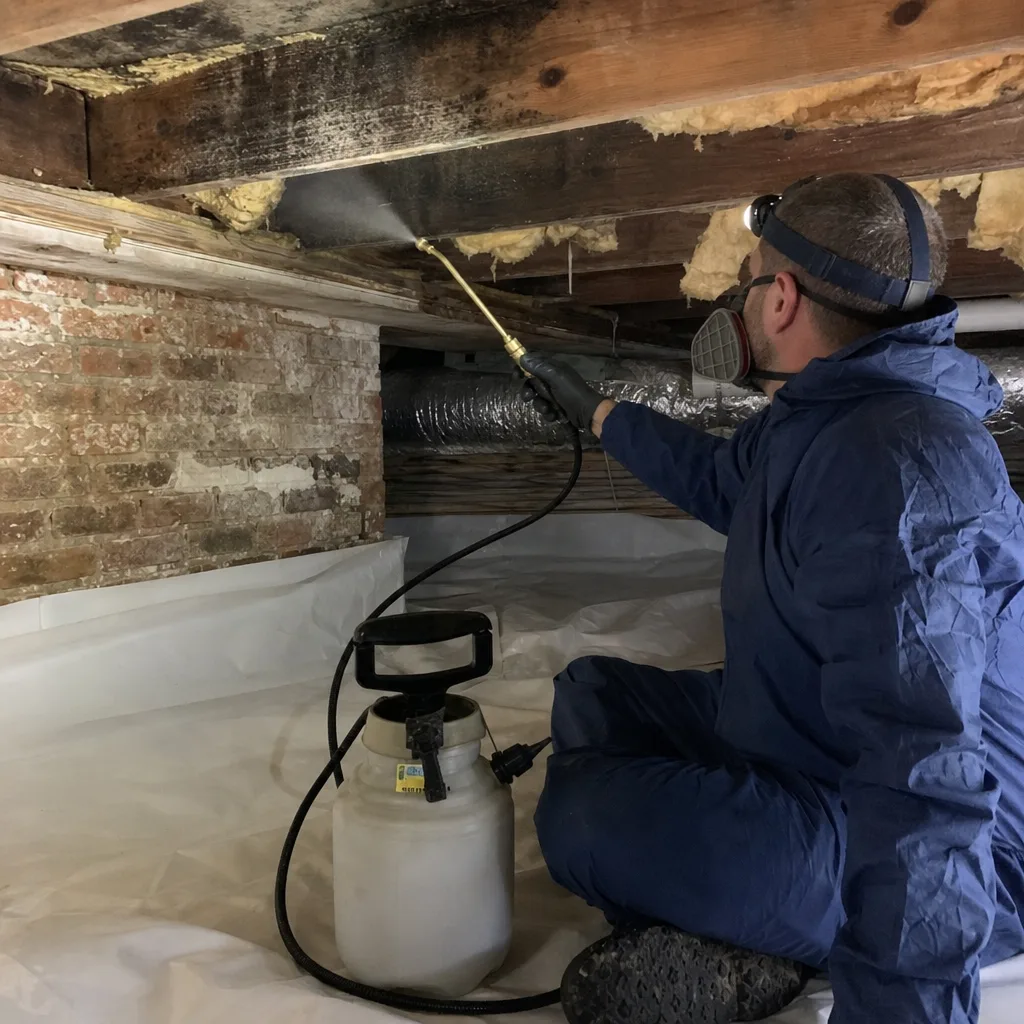
Mold Removal
Containment goes up before removal starts. We remove contaminated drywall, plaster, insulation, and flooring, bag it inside the containment zone, and run HEPA air scrubbers throughout. Pemberwick’s original plaster and lathe can sometimes be saved with antimicrobial treatment; saturated material comes out and gets rebuilt to match the house.
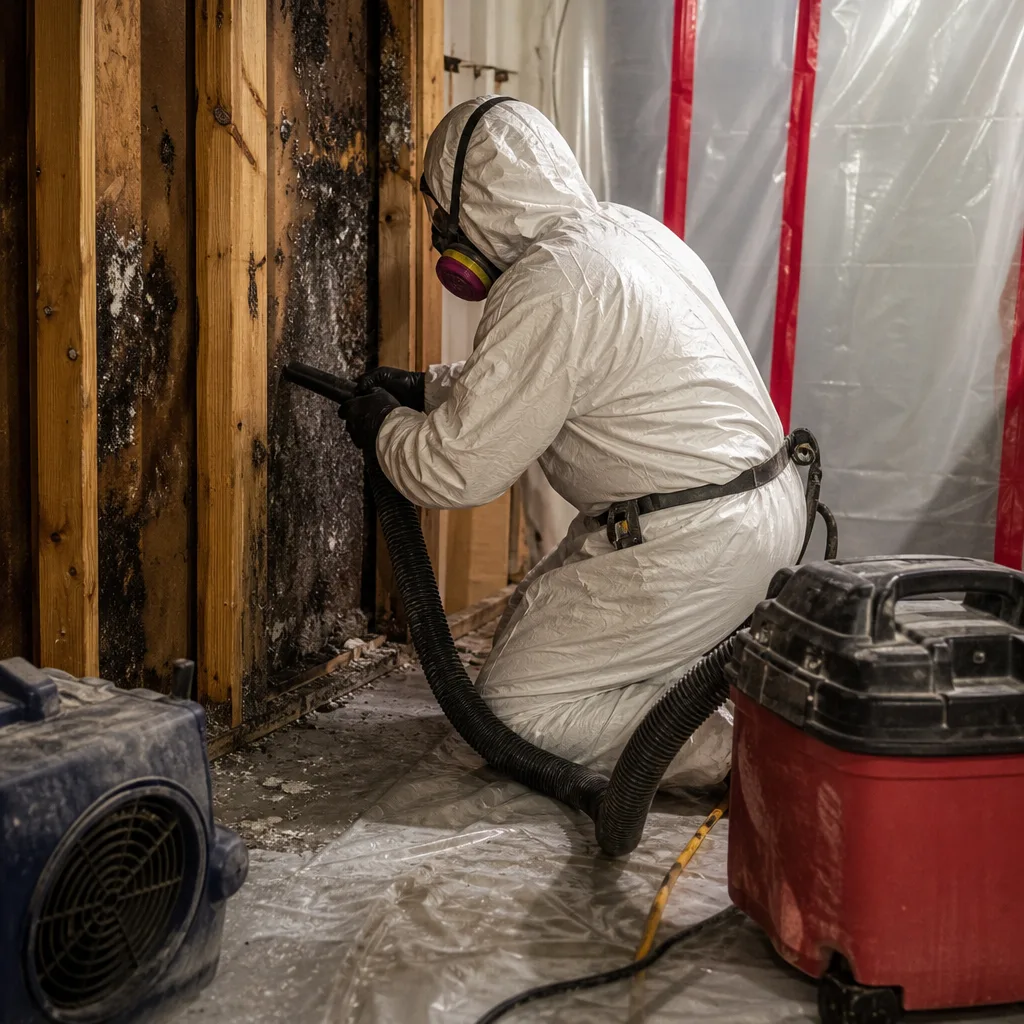
Black Mold Remediation
Stachybotrys and other toxigenic molds thrive in the long-damp organic materials common in old mill cottages. We treat black mold the same disciplined way we treat every remediation: containment, removal, antimicrobial application, drying to standard, and clearance testing before we finish. The process is not dramatic. It is thorough.
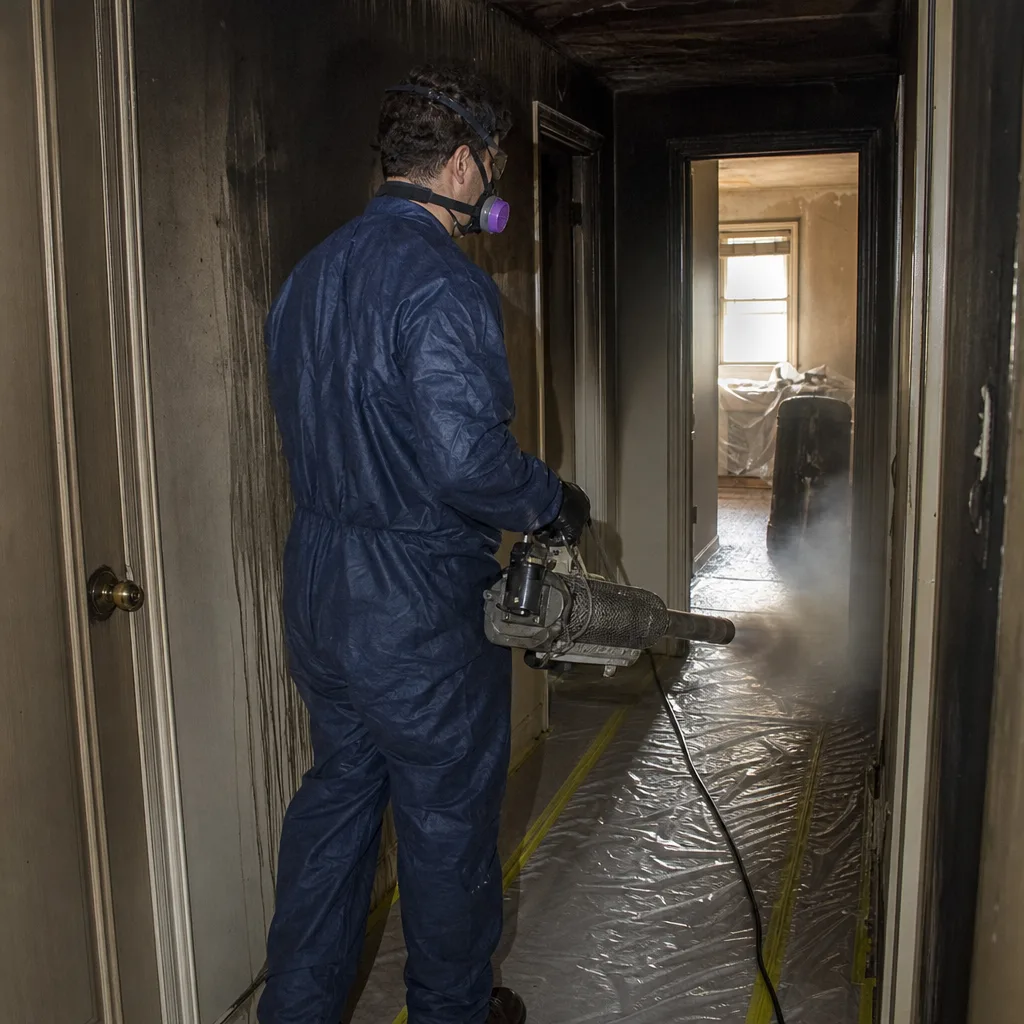
Air Quality Restoration
After remediation, the air has to be clean, not just the surfaces. We use HEPA air scrubbers and negative air machines to pull spores and particulates out of the living space, then run clearance tests that confirm the indoor air meets the standard before we hand you back the house.
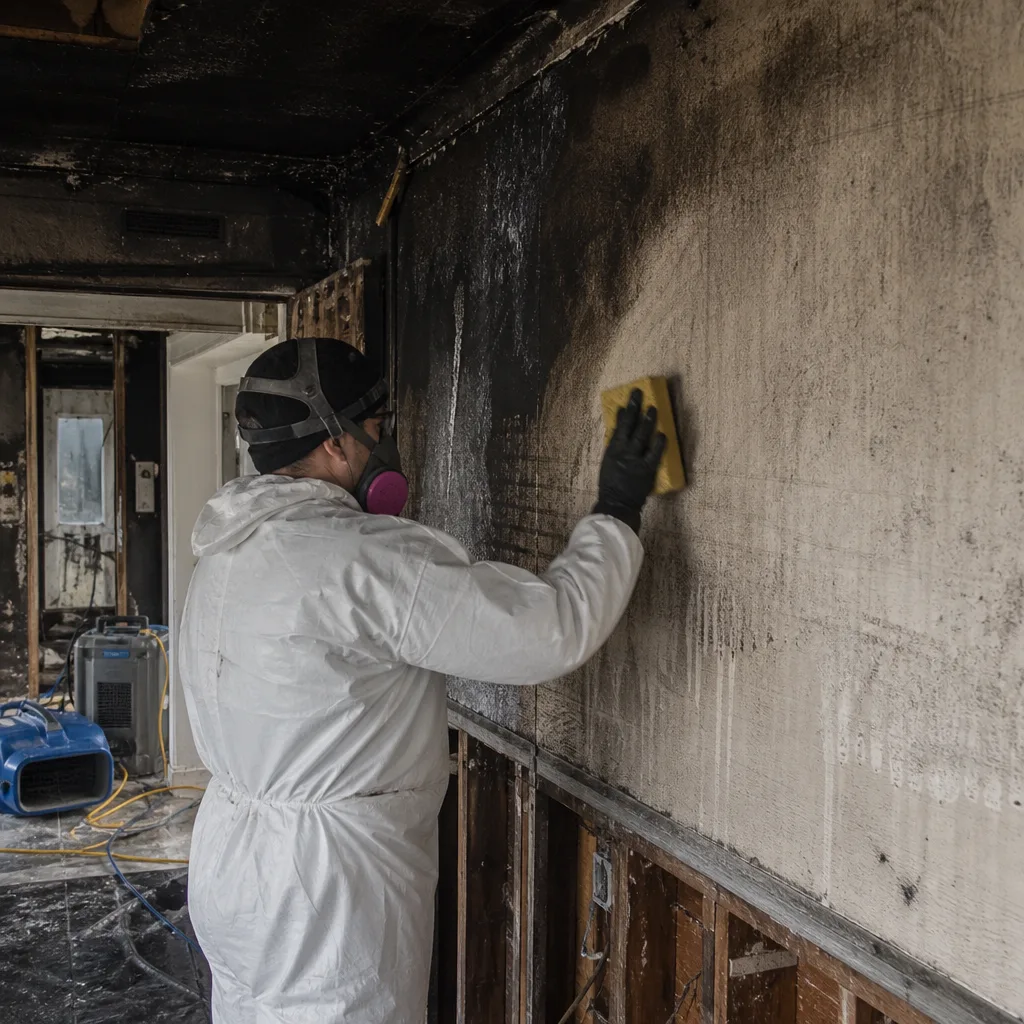
Crawl Space Treatment
Pemberwick’s shallow crawls trap moisture from below and humidity from above. We remove contaminated insulation, treat framing and subflooring, install moisture barriers where appropriate, and set drying equipment that fits the space. No section gets skipped because it is hard to reach.
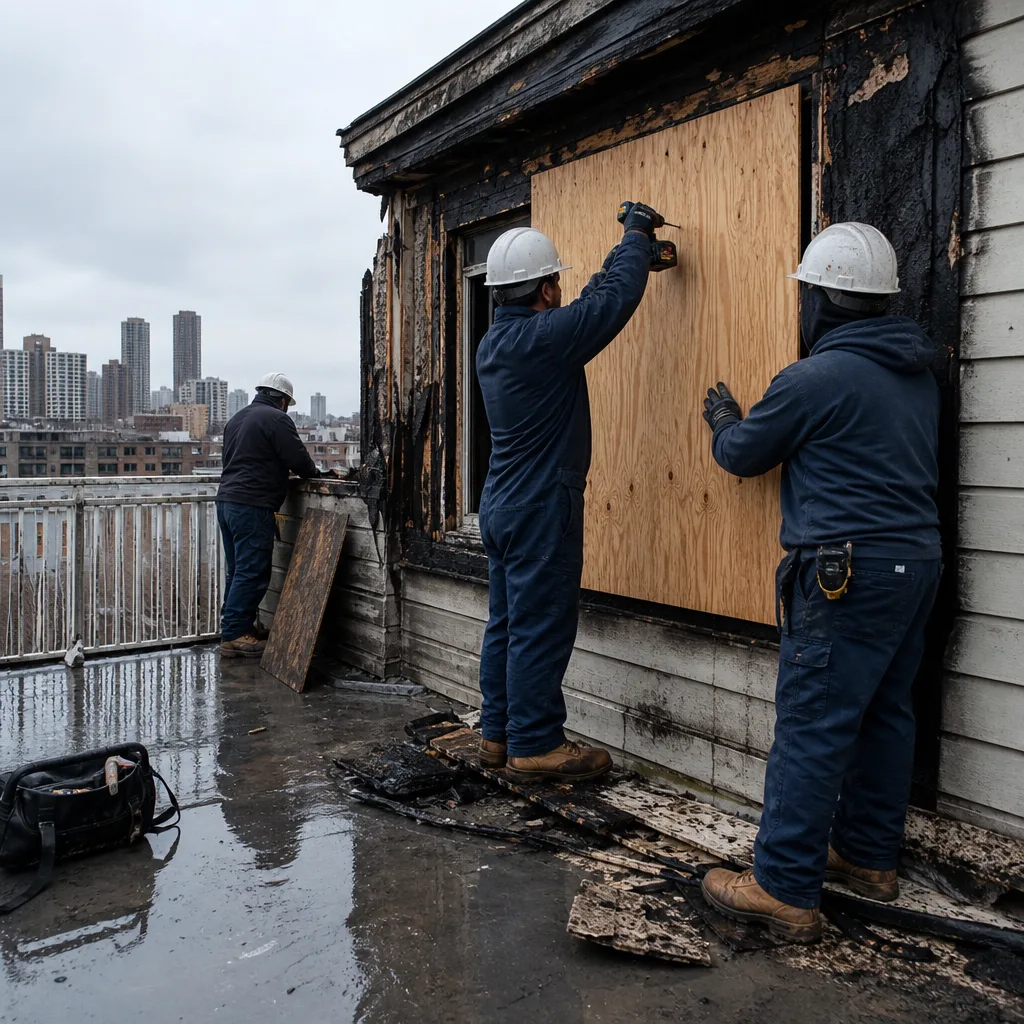
Moisture & Humidity Control
Mold always comes back to moisture. In Pemberwick, moisture comes back to the Byram River, shallow foundations, and storm-drain backflow. We identify the active source, dry it to standard, and give you a clear path for keeping it dry, whether that means a sump upgrade, a drainage correction, or better ventilation in a crawl space.
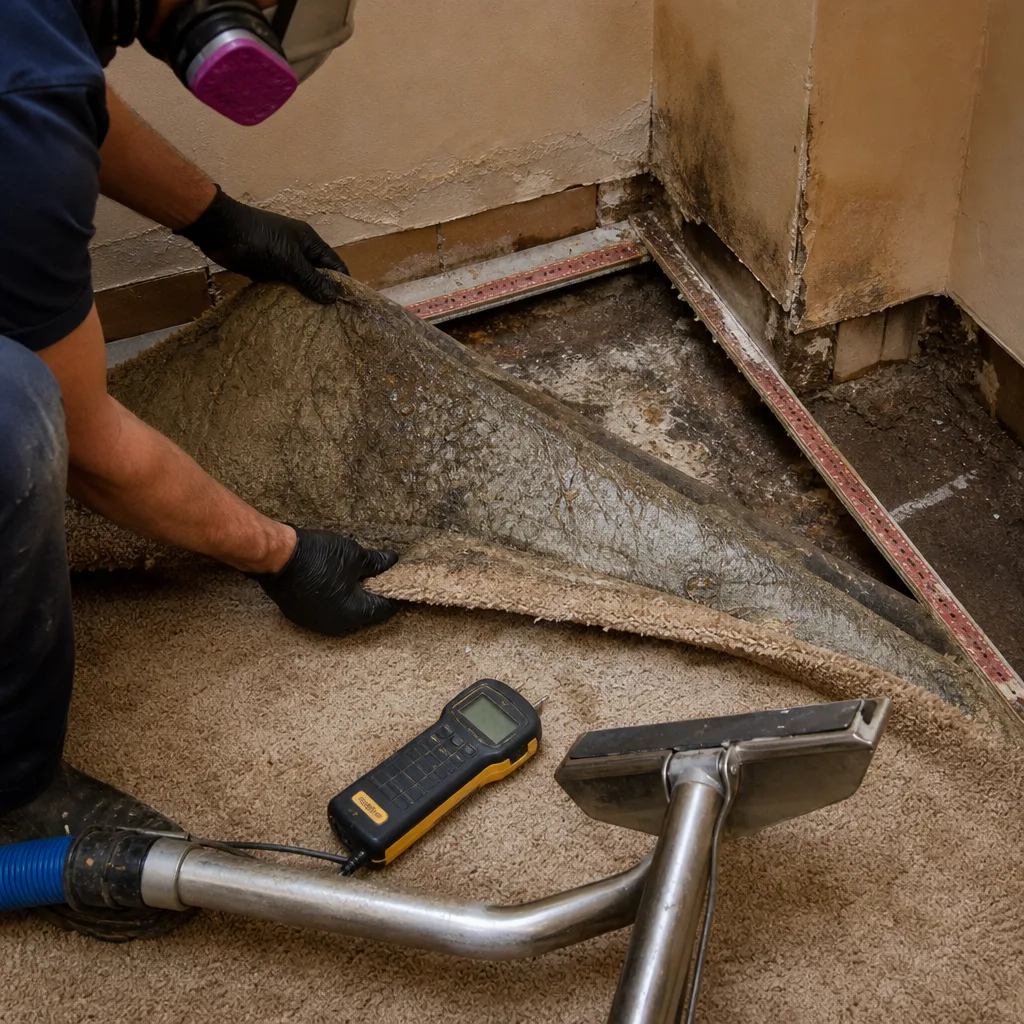
What happens when you call
- 1
A real person answersNo phone trees - you reach a local pro.
- 2
You get an upfront price rangeHonest numbers before anyone is dispatched.
- 3
A background-checked tech heads outLicensed & insured, dispatched right away.
- 4
You approve before work beginsNothing starts until you say go.
Mold Remediation Costs in Pemberwick, CT
A straightforward mold inspection and testing in Pemberwick runs roughly $350 to $700 depending on the number of samples and the size of the property. Small, contained remediation jobs, like a single bathroom wall or a modest crawl space section, typically land between $1,200 and $3,500. Full basement remediation with containment, HEPA scrubbing, removal of saturated materials, and clearance testing commonly runs $4,000 to $12,000. When the Byram River has flooded and first-floor walls are involved, a whole-house remediation and rebuild can push past $20,000, especially in older mill cottages with plaster and original framing. What moves the price: square footage affected, how long the moisture sat, whether Category 2 or 3 water was involved, and how much material has to come out. The free visual inspection gives us the information to write a firm, line-item scope before any work begins. Call (917) 924-4221 and we will walk the property with you and put the number on paper.
Need Emergency Mold Remediation in Pemberwick Now?
Crews minutes away, answering live 24 hours a day. The sooner we start, the less it costs.
We Also Serve Cities Near Pemberwick
Floodline Restoration Co. crews regularly handle mold remediation in Pemberwick and the surrounding communities: Byram and Glenville along the same river corridor, Greenwich and Indian Field within minutes of our response routes. Same live dispatch, same written scope, same 90-Day Done Right Promise on every job.
Pemberwick Mold Remediation Questions, Answered
Why does mold return in Pemberwick basements even after professional remediation?
Because the water does not stop. Remediation without fixing the hydrostatic pressure source, usually Byram River groundwater pushing against a shallow stone or cinder-block foundation, leaves the basement re-moisturized within weeks. Our Mold Remediation team treats the mold and the moisture entry point together, then verifies the dry standard holds before we sign off. If it does not hold, the 90-Day Done Right Promise means we come back and make it right.
Do I need first-floor mold inspection if my basement flood looks contained?
Yes, and in Pemberwick this is not optional. Water wicks up through original wide-plank subfloors into first-floor walls in these mill-era cottages, so visible basement damage often hides mold in first-floor framing, behind baseboards, and inside wall cavities. We moisture-map the first floor on every Pemberwick basement flood, every time.
How does Pemberwick’s housing age change the mold remediation process?
Older plaster and lathe walls hold moisture far longer than modern drywall, which extends drying timelines and changes what can be saved. Original wood framing absorbs water deeper than kiln-dried modern lumber. Our process accounts for both, with twice-daily moisture readings until every material reaches the dry standard, not just the air around it.
Can category 3 water from Byram River backflow into my basement be safely dried without removing materials?
No. Category 3 water, river backflow and storm-drain overflow, carries sewage and contaminants. Porous materials that absorbed that water, like insulation, carpet pad, and drywall, come out. Hard surfaces get cleaned, treated, and dried to standard. Trying to dry in place spreads contamination through the house.
What should I expect for mold remediation in a Pemberwick crawl space?
Expect containment, removal of contaminated insulation, treatment of framing and subflooring, and drying equipment sized for a tight space. Pemberwick crawl spaces often sit below grade and collect hydrostatic moisture from the same river-driven pressure that floods basements. We treat the moisture source, not just the visible mold.
How fast can you actually get to Pemberwick for mold remediation?
Our dispatch is live 24/7, and crews stationed near the Pemberwick area are typically on site within 45 minutes of your call. For active mold growth, the first visit includes containment set-up and initial moisture readings so the spread stops that day.
Will my insurance cover mold remediation in Pemberwick?
Most policies cover mold remediation when it is caused by a covered water event, like a burst pipe or sudden flood. The key is documentation from hour one, which is exactly what we provide. We send your adjuster photos, moisture logs, and the scope of work, and we bill the carrier directly.
What should I do in the first 30 minutes after I find mold in Pemberwick?
Call (917) 924-4221. Do not open walls, do not run fans, and do not try to bleach anything. Mold spreads through air movement, and disturbing it sends spores through the house. Close the door to the affected area if you can, shut off the HVAC if it is drawing from that space, and let us get there with proper containment.
Serving Pemberwick, CT - Our Local Coverage Area
We’re based in the Pemberwick area and know this community well. Use the map below to see our service coverage - if you’re nearby, we can almost certainly help.
What Pemberwick Homeowners Should Know About the Byram River and Their Walls
Pemberwick sits along the Byram River in a low-lying mill-village corridor with a documented flooding history. That is not a general statement about the region. It is the single most important fact about mold in this town. When the river floods, groundwater pushes through stone foundations and up through slabs, but the bigger problem is what happens next. The 19th-century worker cottages and multi-family rentals were built close to grade, with shallow basements and original wide-plank subflooring. Water saturated in a basement does not stay there. It wicks up through tongue-and-groove subflooring, through the sill plate, and into first-floor walls. By the time a homeowner sees mold on a parlor wall, the contamination has usually traveled through the floor assembly beneath it. That is why we moisture-map first-floor walls on every Pemberwick basement job. Skipping that step is how people pay for remediation twice.
We recently handled a mold outbreak in a worker cottage on Byram Shore Road where a late-summer storm backed Category 2 water through the stone foundation, saturating a cinder-block basement and wicking up through tongue-and-groove subflooring into the first-floor parlor. Our crew set up containment, removed saturated plaster and lathe, and ran Dri-Eaz dehumidifiers and XPOWER air movers with twice-daily moisture readings until the framing hit pre-loss condition. The homeowner never saw mold on the first floor. The moisture meter found it before it bloomed. That is the job in Pemberwick.
What generic mold pages miss about Pemberwick
Most mold remediation content tells you to look for dark spots and musty smells. That advice fails here. Pemberwick’s mold problem is structural. The Byram River watershed funnels runoff from inland Greenwich and Westchester during nor’easters and late-summer convective storms, causing flash flooding that backs water into low-elevation streets faster than municipal drainage can handle. Freeze-thaw cycles crack older stone foundations each winter, creating new entry points every spring. The combination means mold is not a one-time event. It is a recurring pressure on homes built before modern drainage existed. Our crews treat the house as a system: foundation, basement, subfloor, walls, ventilation. A remediation that stops at visible mold in a Pemberwick basement will fail. We do not do jobs that fail.
Written by Curt Bowman, Owner at Floodline Restoration Co. of Manhattan, serving Pemberwick and the surrounding communities. Founded in 2010, built around a dispatch board, not a sales desk.