
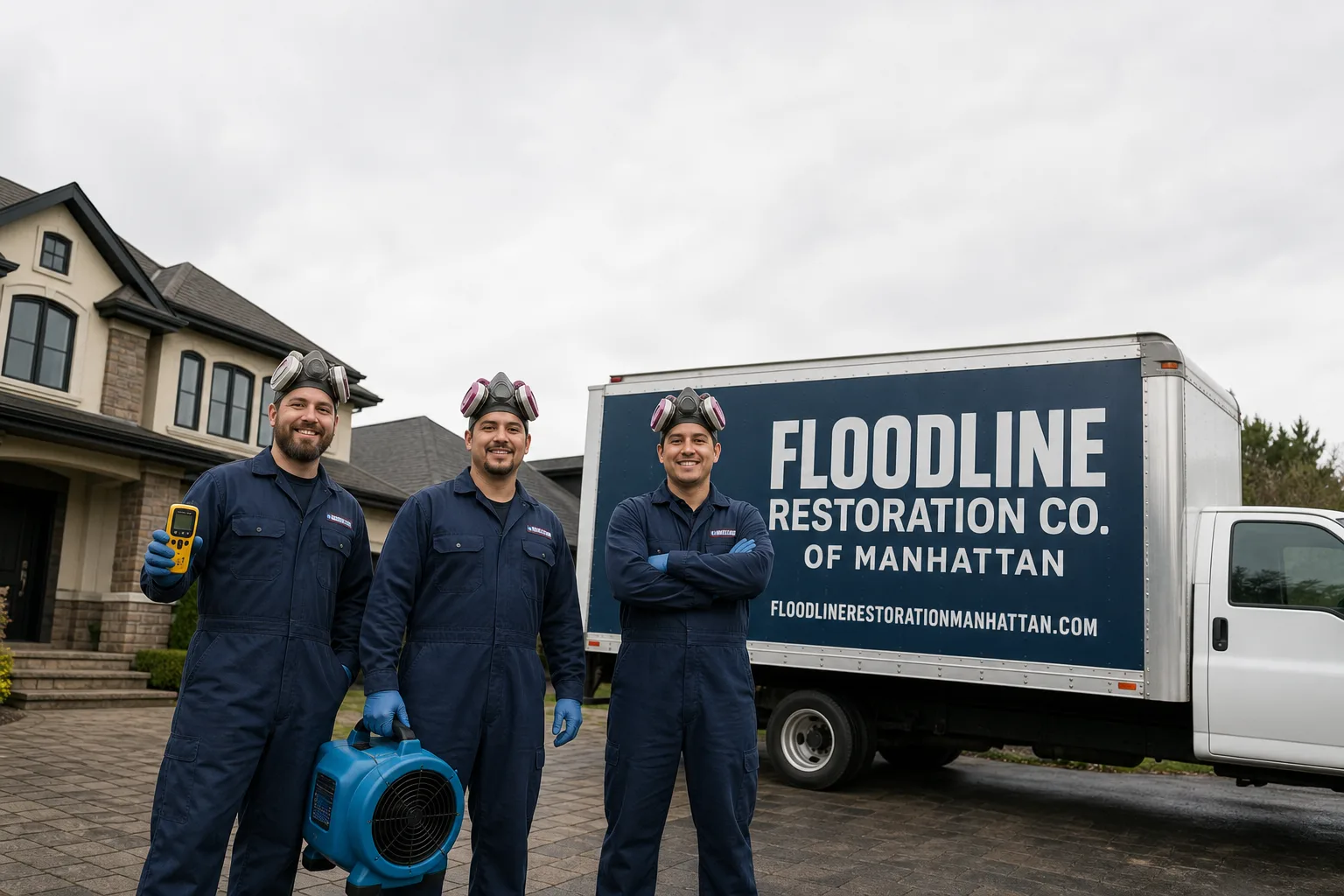
Free visual inspection and a written scope of work before any mitigation begins - photos, moisture readings, and drying logs go in your claim file
The scope we write is the scope we bill. Anything new gets shown to you, in writing, before we touch it.






 Before
 After
After Before
 After
After Before
 After
After24/7 Emergency Mold Remediation in Upper West Side
Mold in an Upper West Side pre-war apartment doesn’t wait for business hours, and neither do we. Floodline Restoration Co. of Manhattan answers live around the clock at (917) 924-4221, and our crews are stationed to reach Upper West Side buildings fast, usually inside 45 minutes. The first hour matters because mold colonies double their footprint every 24 to 48 hours once moisture feeds them, and in century-old co-ops with lath-and-plaster walls and shared riser closets, that growth moves between units faster than most people expect. We arrive, conduct a free visual inspection, contain the affected area, and map the moisture before the spores spread to adjoining apartments through floors, chases, and original plaster voids. You’ll speak with a person, not a recording, at two in the morning if that’s when the steam riser lets go.
Understanding Mold Remediation Severity in Upper West Side Properties
Mold remediation severity in Upper West Side buildings tracks closely with the age and construction of the housing stock. Most of the neighborhood’s co-ops and brownstones were built between 1900 and 1940, which means original lath-and-plaster walls, cast-iron risers, and often one-pipe or two-pipe steam heat. When a pipe fails inside a plaster wall, the water doesn’t puddle on drywall and announce itself the way it does in newer construction. It saturates the plaster keys, wicks upward through old framing, and feeds mold growth inside cavities that can hold moisture for weeks before staining appears on the surface. We classify the water source first: Category 1 is clean supply water, Category 2 carries contaminants from washing machines or condensation pans, and Category 3 is grossly unsanitary water from sewage or a failed steam riser that has pulled decades of pipe scale and bio-slime into the wall. Each category dictates a different level of containment, antimicrobial treatment, and clearance testing. In Upper West Side co-ops, we also read the building’s proprietary lease before scoping, because a riser leak and a branch-line leak are legally two different jobs with two different payers.
Why Upper West Side Property Owners Choose Floodline Restoration Co. of Manhattan
- 45-minute response commitment across Upper West Side. Our crews stage from multiple points around Manhattan so a certified technician reaches your building within 45 minutes of your call, day or night.
- 24/7 live answer, always a person. When you call (917) 924-4221 at 3 a.m., a live dispatcher picks up. No directories, no automated trees, no callbacks that never come.
- IICRC-certified crews with named credentials. Our technicians hold WRT, FSRT, and AMRT certifications, meaning water, fire, and mold work is done to a standard your insurer recognizes.
- Free visual inspection with written findings. We tell you what we found, where the mold is, and what must happen next, in plain English and in writing, before you commit to anything.
- Direct insurance billing, no messenger work for you. We bill your carrier directly, submit the photos and logs ourselves, and talk with your adjuster so you don’t have to.
- One team from first containment to final rebuild. The crew that sets up containment also does the daily moisture readings, the antimicrobial treatment, and the reconstruction. No mid-job handoff to strangers.
Our Mold Remediation Process
Inspection & Assessment
We start with a free visual inspection and a moisture survey using thermal imaging and penetrating hygrometers. In Upper West Side co-ops, this includes pulling the proprietary lease to establish who’s responsible for the source pipe, because that determines the entire scope.
Containment & Source Stabilization
Before any material is disturbed, we set up HEPA-filtered containment with negative air pressure so spores don’t travel through hallways, stairwells, or adjoining units. We stop the active water source at the same time.
Drying & Dehumidification
We deploy Dri-Eaz and Phoenix dehumidifiers with high-velocity air movers, placed according to a moisture map, not guesswork. Daily readings are logged and shared with you and the carrier until the dry standard is met.
Cleaning & Sanitization
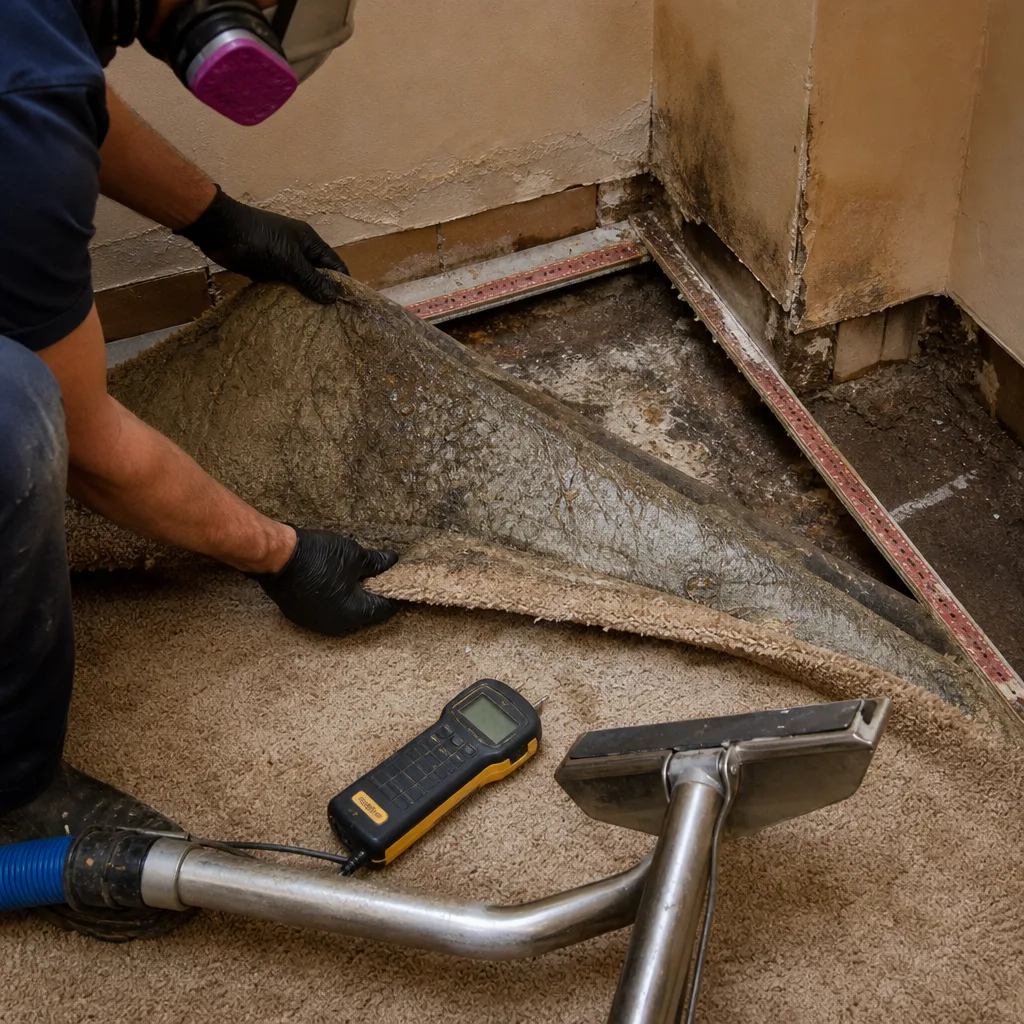
Affected surfaces are HEPA-vacuumed, wire-brushed where needed, and treated with EPA-registered antimicrobials rated to the water category. Porous materials that cannot be restored are removed under containment.
Air Quality Restoration & Clearance
We run HEPA air scrubbers for the duration of remediation, then perform post-remediation verification. On Upper West Side jobs, we often add a third-party clearance test because co-op boards frequently request it before approving unit re-occupancy.
Repairs & Restoration
We rebuild to match the apartment’s original character: replastering to match ornate crown moldings, salvaging herringbone parquet by drying in place, and restoring period finishes rather than swapping in generic sheetrock and off-the-shelf trim.
Need Emergency Mold Remediation in Upper West Side Now?
Crews minutes away, answering live 24 hours a day. The sooner we start, the less it costs.
Working With Your Insurance Company
Mold claims in Upper West Side co-ops almost always involve at least two policies: the building’s master policy and the unit owner’s HO-6 policy. Which one pays, and what it pays, often hinges on how the loss is documented in the first 48 hours. We photograph every affected surface room by room before mitigation starts, log moisture readings every day with dated entries, and write a line-item scope that uses industry-standard pricing codes your adjuster already knows. Then we talk to the adjuster directly. You don’t shuttle emails between your carrier and a contractor, and you don’t sit on hold explaining what a riser is to someone three time zones away. Curt Bowman built Floodline Restoration Co. in 2010 around a dispatch board, not a sales desk, and direct carrier coordination has been part of how we work from day one. The documented scope is yours before work begins, and the 90-Day Done Right Promise is yours in writing after it ends.
What We Provide Your Insurer
- Thorough documentation of the loss
- Photos of all damage, room by room
- Moisture readings and drying logs
- A detailed, line-item scope of work
- Direct coordination with your carrier
Built for Upper West Side’s Loss Calendar
Upper West Side mold losses follow a predictable rhythm, and it starts in the walls, not on the roof. January deep freezes stress the cast-iron and galvanized risers that run through every pre-war building on Central Park West, West End Avenue, and the cross streets. When a riser splits inside a plaster chase, water cascades through four to six stacked units before the super can shut the valve, and the mold clock starts in apartments that might sit empty for the day. Late winter brings the freeze-thaw cycle again, and on Riverside Drive the tall masonry walls shed ice that accumulates in cornices and seeps into top-floor units. Spring thaw saturates cellar walls in brownstones where original fieldstone foundations meet the water table. Summer thunderstorms overwhelm catch basins and back storm sewers into basements along Amsterdam and Columbus. Nor’easters in October and November push water through bulkheads and parapet flashing and into the top-floor co-ops, where old roof membranes have dried and cracked in the summer sun. When any of this happens, call us that day. Waiting a weekend is how a Category 1 leak becomes a Category 3 mold job.
Mold Remediation Across Upper West Side’s Neighborhoods
Each Upper West Side corridor presents a different job profile, and our crews read the building before they read the moisture meter. On Central Park West, we’re working inside grand pre-war towers like the Ansonia and the Belnord, where original plaster medallions, herringbone parquet, and hand-set tile make pack-outs and drywall swaps unacceptable; we dry in place and preserve finishes because the alternative destroys period rooms. In the brownstone rows of the West 70s, 80s, and 90s cross streets, we contend with shared party walls, shallow cellars, and original lath-and-plaster that holds moisture long after the surface feels dry. On Riverside Drive, the mold jobs we see most often start in failed steam risers and roof drainage, and they involve four, five, six units at once, each with its own owner, its own HO-6 policy, and often its own opinion about scope. Around the Columbia University fringe north of 110th Street, we handle a mix of co-ops and converted rental buildings where maintenance history is spotty and long-ignored condensation pans have been quietly feeding mold behind refrigerators for years. In every corridor, the same rule applies: containment, moisture mapping, and a written scope before demolition starts.
Specialized Mold Remediation Services We Offer in Upper West Side
Mold Inspection & Testing
We inspect the source, not just the stain. In Upper West Side buildings, that means tracing the water line back to the riser, the branch line, the radiator valve, the condensation pan, or the roof drain. We test where testing changes the scope; we don’t sell test kits as a scare tactic.
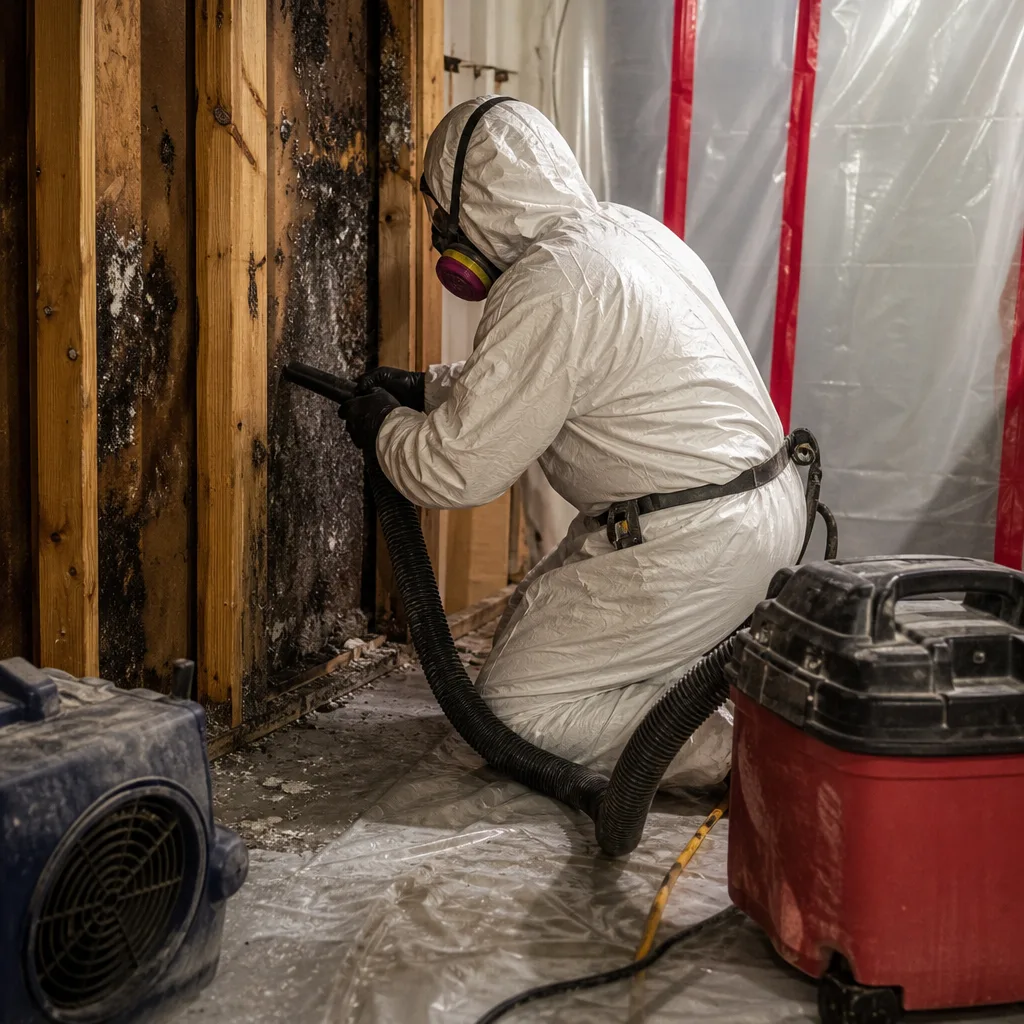
Mold Removal
Mold removal in pre-war apartments means cutting out saturated plaster and lath only where necessary, HEPA-vacuuming the cavity, and treating the framing with antimicrobial rated to the water category. We preserve what can be preserved and remove what can’t, and we tell you which is which before work starts.
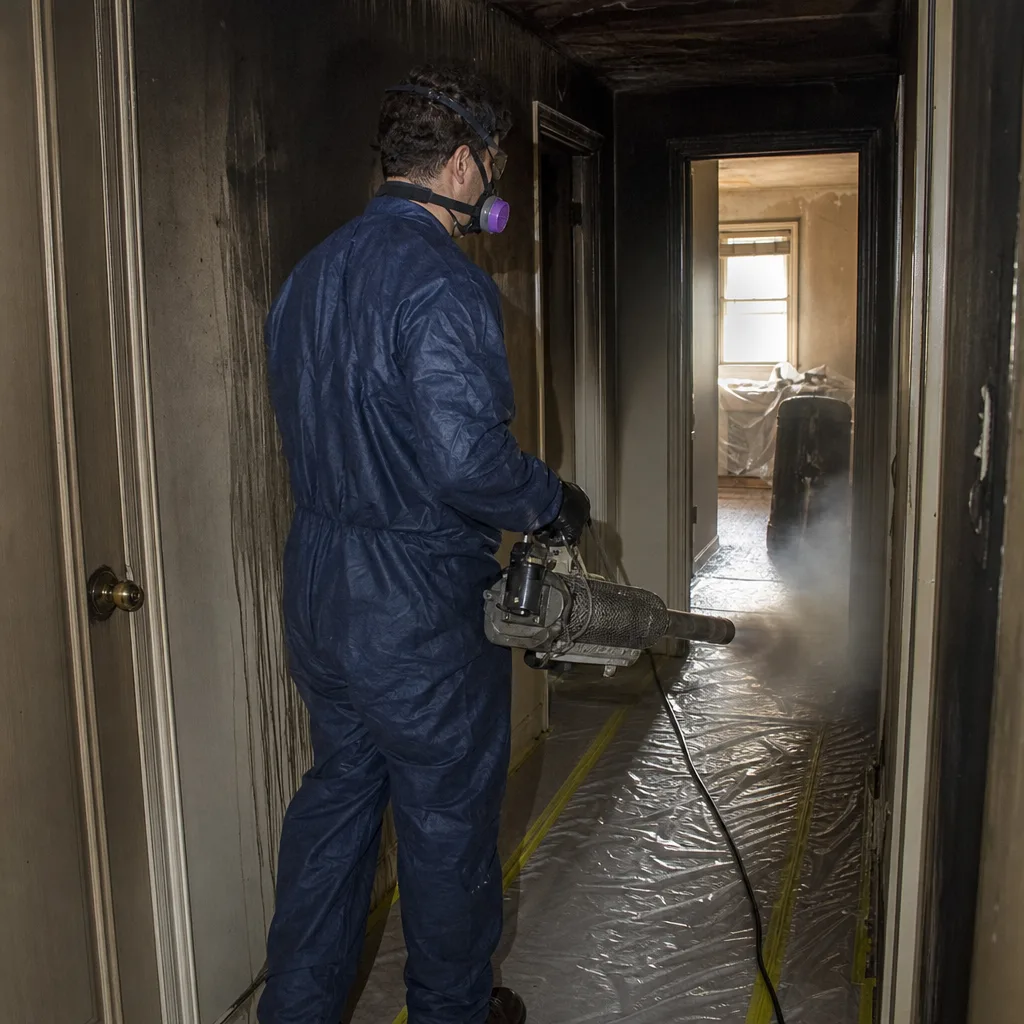
Black Mold Remediation
Stachybotrys chartarum, what people call black mold, grows where water has sat for a week or more on cellulose: plaster backing, old wallpaper, hidden stud cavities. Its presence dictates full containment, negative air pressure, and usually third-party clearance testing, which many Upper West Side co-op boards require anyway.
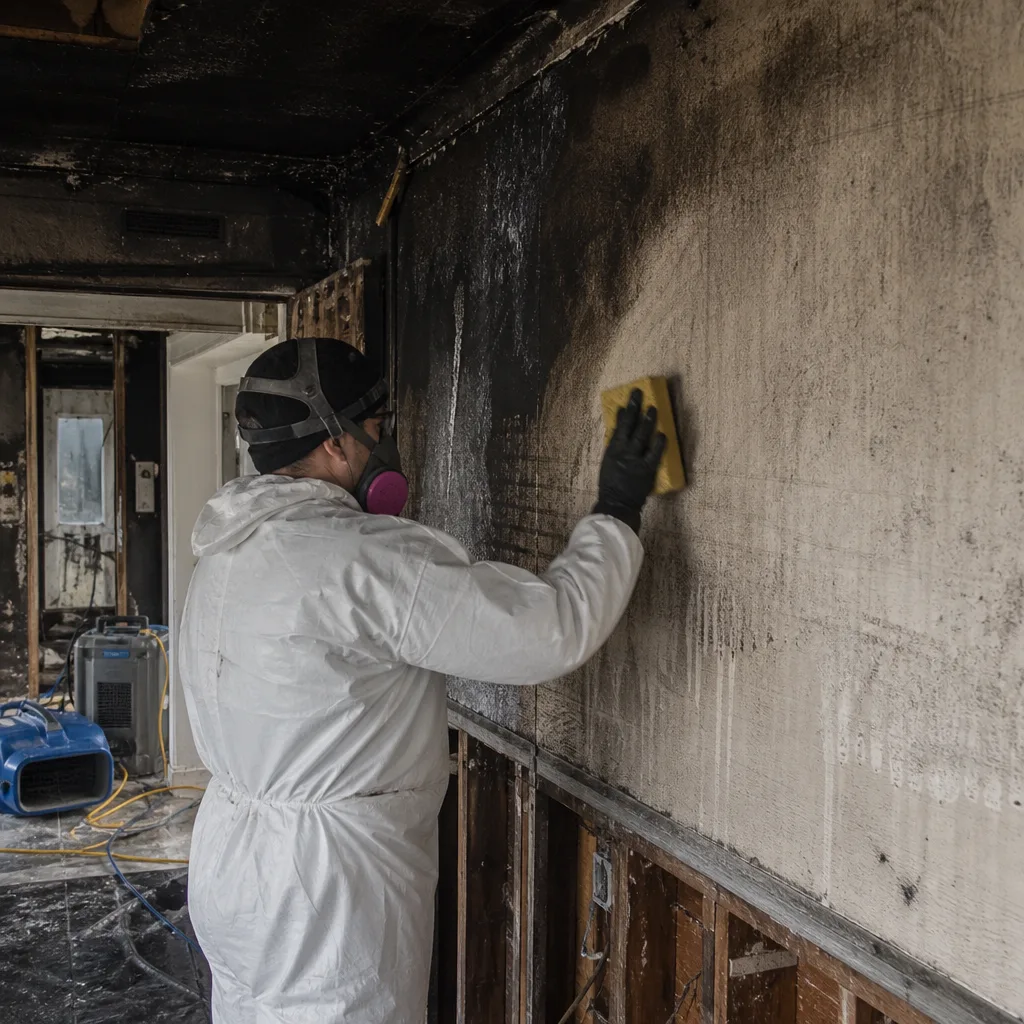
Air Quality Restoration
After remediation, we run HEPA air scrubbers until the exchange rate meets the standard for the unit’s square footage. Then we address the conditions that let mold grow: humidity, dead air, and condensation. Upper West Side apartments with original steam heat often run dry in winter and damp in summer, and humidity control is the long-term fix.
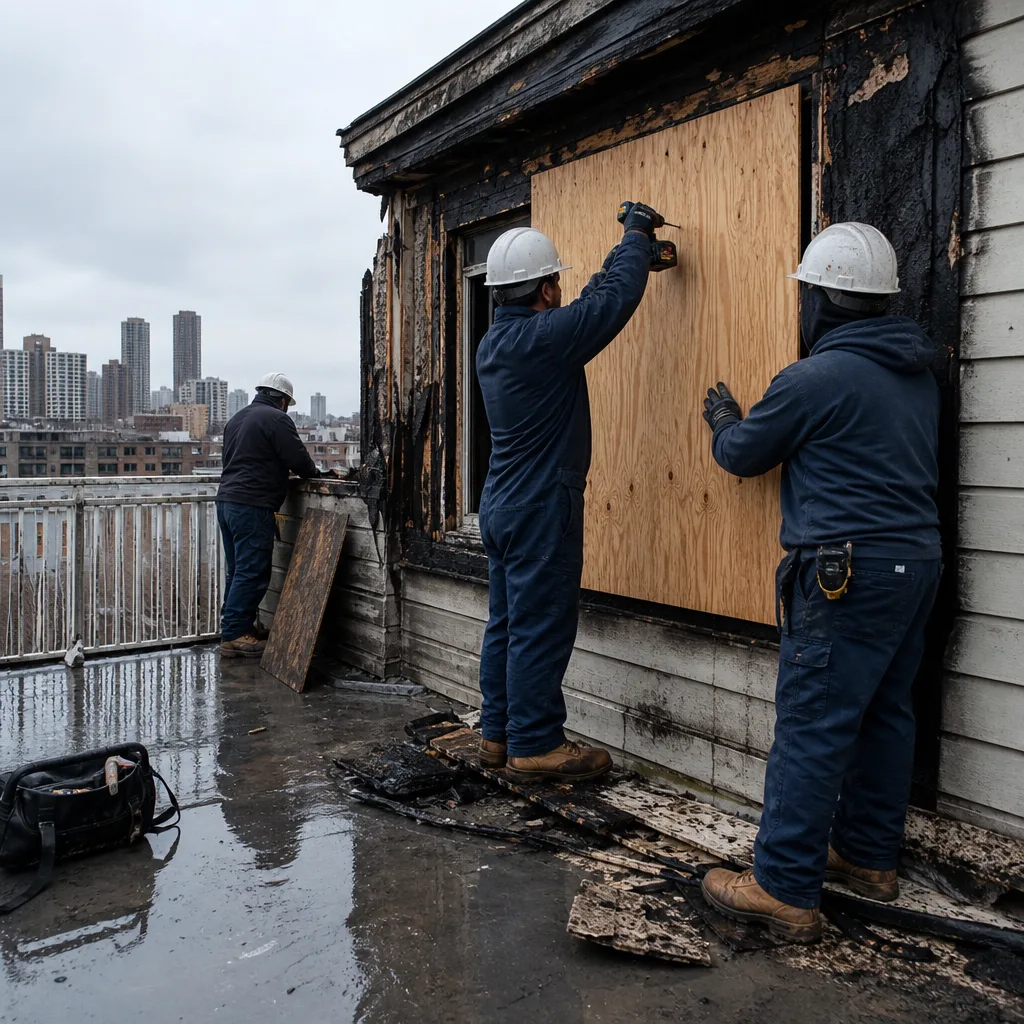
Crawl Space Treatment
Brownstone cellars and sub-cellar crawl spaces on the side streets trap humidity against century-old joists. We treat those spaces with antimicrobial, seal what’s sealable, and install dehumidification where the space needs it, then monitor until the wood reaches a safe moisture content.
What happens when you call
- 1
A real person answersNo phone trees - you reach a local pro.
- 2
You get an upfront price rangeHonest numbers before anyone is dispatched.
- 3
A background-checked tech heads outLicensed & insured, dispatched right away.
- 4
You approve before work beginsNothing starts until you say go.
Mold Remediation Costs in Upper West Side, NY
Mold remediation in Upper West Side runs higher than the national average, and the building stock is the reason. A straightforward mold removal in a single closet or behind one bathroom wall typically runs $1,500 to $3,500. A multi-room containment job in a pre-war co-op, the kind where you’ve got mold behind original plaster in two rooms and a hallway, usually lands between $6,000 and $18,000. Black mold remediation with full containment, negative air pressure, and third-party clearance testing starts around $4,000 for a single area and goes up from there. Crawl space and cellar treatment in brownstones runs $2,000 to $7,000 depending on square footage and the extent of the growth. What moves the price: whether you’re in a Central Park West tower with ornate plaster to preserve or a standard brownstone basement, how many units are involved, and whether the co-op board requires third-party clearance. Insurance covers most of it when the source is a sudden pipe failure; it covers less when the mold grew slowly from long-term condensation. The free inspection is how we give you a firm number, in writing, before anyone opens a wall.
We Also Serve Cities Near Upper West Side
Floodline Restoration Co. of Manhattan covers the Upper West Side and the surrounding neighborhoods, including Fairview, Harrison, East Bronx, and Hunts Point. If you own or manage property in any of these areas and you’ve got mold, water, or storm damage, call the same number and you’ll get the same live dispatcher: (917) 924-4221.
Upper West Side Mold Remediation Questions, Answered
Who pays for mold remediation in an Upper West Side co-op when the source is a burst riser pipe?
The co-op’s master policy typically pays for mold remediation when the source is a riser pipe, because risers are classified as building infrastructure. The building then pursues the repair, and your HO-6 covers the damage to your apartment’s contents and improvements. But the proprietary lease defines what counts as a riser in your specific building, and some leases classify branch lines differently than the standard model. We pull your co-op’s governing documents before scoping, which is how we avoid sending a bill to the wrong party and stalling approvals from the board. Call (917) 924-4221 and we’ll walk through your building’s lease language during the inspection.
Can original herringbone parquet be saved after Category 2 water damage in a pre-war apartment?
Often yes, if drying starts quickly and the parquet hasn’t cupped or delaminated from its substrate. We dry herringbone parquet in place using mat systems that pull moisture through the wood from above, with daily moisture readings until the floor reaches the dry standard for your species and thickness. Pre-war parquet laid over original mastic and subfloor can be dried and refinished, but it requires patience and daily monitoring, not a bag of fans and a phone call next week. How fast we start is the biggest factor, so call (917) 924-4221 the day you find the water, not the day the boards start lifting.
How do you prevent mold behind original lath-and-plaster walls without gutting them?
You dry the plaster and the cavity behind it, then control the conditions that let mold return. We use penetrating moisture meters to confirm the lath has reached a safe moisture content, inject dry air into the cavity where needed, and treat with antimicrobial before sealing. Then we address humidity and airflow: a dehumidifier sized for the unit, air movement across the wall surface, and sometimes ventilation improvements around the steam system. Gutting original plaster is a last resort, not the default, when a building’s character is part of its value. Call (917) 924-4221 for a free inspection and we’ll tell you what can be saved and what can’t.
What does Category 3 water mean for mold remediation in a Riverside Drive co-op?
Category 3 water is grossly unsanitary: sewage, river backflow, or steam riser condensate that has carried decades of pipe scale and bio-slime through the wall cavity. In a Riverside Drive co-op, Category 3 water means full containment with negative air pressure, removal of saturated porous materials, antimicrobial treatment rated for the category, and usually third-party clearance testing before re-occupancy. It also means coordinating with every affected unit owner, each carrying their own HO-6 policy. We handled a Riverside Drive job where a failed steam riser sent Category 3 water through four stacked units. We set containment, ran Dri-Eaz dehumidifiers, moisture-mapped century-old lath-and-plaster walls, coordinated with building management and three separate HO-6 insurers, and preserved the original herringbone parquet by drying it in place. No pack-outs, no unnecessary demolition, and each unit restored to pre-loss condition. Call (917) 924-4221 and we’ll do the same for your building.
Do Upper West Side buildings require specific containment protocols for mold work?
Many Upper West Side co-op boards and management companies require HEPA-filtered containment with negative air pressure for any mold remediation that disturbs more than a small patch of surface mold, and several require third-party clearance testing before approving re-occupancy. This goes beyond what city code strictly mandates, but boards have a duty to protect common areas and adjoining units, and they enforce it. We arrive with containment equipment on every mold job, not just the big ones, because it’s the right way to work and it’s what pre-war buildings in this neighborhood expect. Call (917) 924-4221 and we’ll coordinate the protocols with your building’s management from the first visit.
How fast can a crew actually reach an Upper West Side address?
Our standard is 45 minutes or less to most Upper West Side addresses, at any hour. We keep crews staged across Manhattan so a technician can reach Central Park West, West End Avenue, Riverside Drive, or the cross streets quickly. When you call (917) 924-4221 at 2 a.m., a live dispatcher routes the nearest crew, and you get a name and an ETA for the person arriving, not a vague promise. Once on site, we start containment and moisture mapping the same visit.
How long does mold remediation take in an Upper West Side apartment?
A single-room mold removal with containment typically takes 3 to 5 days from setup through clearance. A multi-room pre-war job with Category 2 or 3 water, the kind involving several units and original plaster preservation, often runs 2 to 3 weeks because drying century-old lath-and-plaster takes longer than drying drywall, and co-op board approvals for re-occupancy add time to the back end. We give you a written timeline at the start, and the daily moisture log shows you exactly where the job stands against it. Call (917) 924-4221 for a free inspection and realistic timeline for your specific building.
Can we stay in our apartment during mold remediation?
Depends on the size of the affected area and the containment setup. Small mold jobs behind one bathroom wall often allow you to stay, with containment sealing off the work area and HEPA scrubbers running continuously. Larger jobs, especially Category 3 or black mold remediation, typically require vacating for the duration. We tell you on the first visit, before any work starts, based on what the inspection and testing show. If you need to vacate, we coordinate timing with you and your carrier. Call (917) 924-4221 and we’ll give you a straight answer during the free inspection.
Serving Upper West Side, NY - Our Local Coverage Area
We’re based in the Upper West Side area and know this community well. Use the map below to see our service coverage - if you’re nearby, we can almost certainly help.
Mold Remediation in Upper West Side, Done Right and Backed in Writing
Mold in a pre-war Upper West Side co-op is never just a cleaning job. It’s a question of who’s liable under the proprietary lease, what surfaces can be preserved, and which insurer pays for which portion of the work. We’ve spent years learning how this neighborhood’s buildings fail and how to fix them without destroying what makes them worth living in. When you call Floodline Restoration Co. of Manhattan at (917) 924-4221, you get a live person, a fast crew, a written scope before work begins, direct insurance billing, and the 90-Day Done Right Promise in writing when the job is done. We stand behind it. No arguing, no paperwork battles, no mid-job handoffs. The line the water left is where we start, and we don’t leave until the apartment is dry, clean, tested, and restored to the way it should be.
Written by Curt Bowman, Owner at Floodline Restoration Co. of Manhattan, serving Upper West Side and the greater New York City area.