
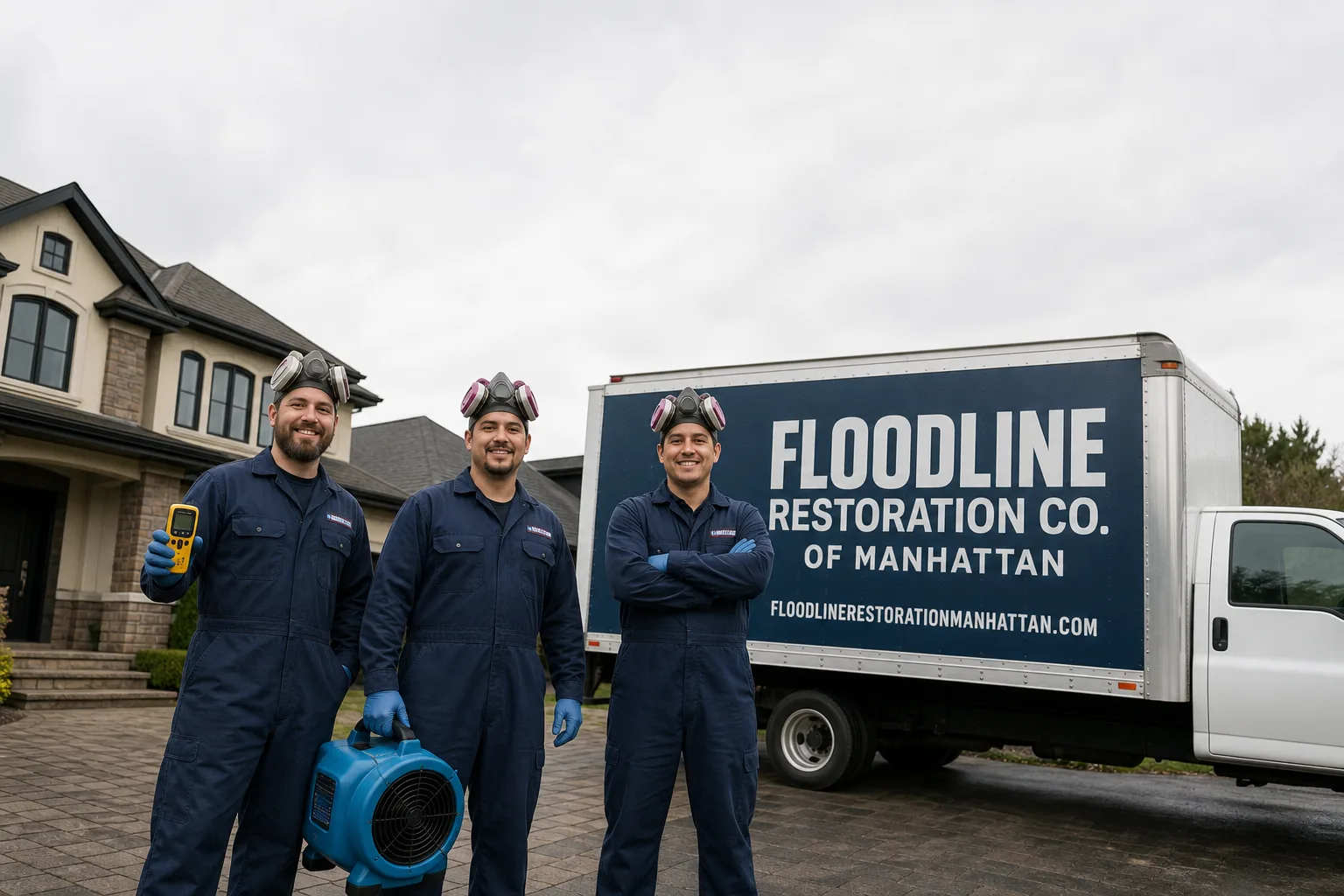
Free visual inspection and a written scope of work before any mitigation begins - photos, moisture readings, and drying logs go in your claim file
The scope we write is the scope we bill. Anything new gets shown to you, in writing, before we touch it.






 Before
 After
After Before
 After
After Before
 After
After24/7 Emergency Reconstruction & Cleanup in College Point
When a nor’easter pushes Flushing Bay into your basement or a supply line lets go at 2 a.m., you need a crew that answers the phone and gets moving. Floodline Restoration Co. of Manhattan dispatches reconstruction and cleanup crews into College Point around the clock. Call (917) 924-4221 and a live dispatcher picks up, not a recording. We’ll have a certified team at your door, often within 45 minutes, to start extraction and stabilization before saltwater, sewage, or soot sinks deeper into framing, plaster, and flooring. The first hour matters most: Category 3 floodwater begins wicking into porous materials immediately, and every hour of delay widens the tear-out zone and pushes the final rebuild further out. Our Reconstruction & Cleanup team handles the entire job from first extraction to finished walls, so you never hand off between a mitigation crew and a remodeler.
Understanding Reconstruction & Cleanup Severity in College Point Properties
College Point’s housing stock shapes every reconstruction job we take here. Most homes along 14th Avenue, 23rd Avenue, and the side streets running toward Powell’s Cove were built between the 1930s and 1960s: brick semi-detached houses, Cape Cods, and modest colonials with full or semi-finished basements resting on original foundations. That matters because water intrusion in these basements doesn’t just wet the floor. It climbs into original plaster walls, saturates old-growth wood framing, and soaks decades-old insulation that has no vapor barrier. We classify the water on every job: Category 1 is clean supply-line water, Category 2 carries contaminants, and Category 3, which we see more often here than almost anywhere else in Queens, is grossly contaminated floodwater carrying salt, sewage, and whatever Flushing Bay swept in. Category 3 changes the entire protocol. We don’t dry in place. We cut, bag, and remove affected drywall and insulation, apply antimicrobial treatments, and run containment with HEPA air scrubbers while structural drying proceeds with Dri-Eaz dehumidifiers and air movers. Moisture mapping on day one tells us where hidden pockets sit, and daily readings, logged and shared with you and your carrier, confirm when the dry standard is actually met.
Why College Point Property Owners Choose Floodline Restoration Co. of Manhattan
- 45-minute response commitment – We dispatch crews into College Point immediately, and we’ll be there when we say. The bay doesn’t wait, and neither do we.
- Live answer, 24/7 – A real person picks up the phone at any hour. No answering service, no call-back queue, no recording telling you to leave a message.
- IICRC-certified crews – Our technicians hold WRT, FSRT, and AMRT certifications and arrive uniformed, background-checked, and ready with a written scope before work starts.
- Free visual inspection – We assess the damage on-site and explain exactly what needs to happen, in plain language, before any tool comes off the truck.
- Direct insurance billing – We document everything from hour one, bill your carrier directly, and speak with your adjuster so you never play messenger.
- One team, start to finish – The same crew that runs extraction and drying handles the rebuild. No mid-job handoff, no inherited subcontractor, no finger-pointing.
Our Reconstruction & Cleanup Process
Inspection & Assessment
We start with thermal imaging and moisture meters to map the full extent of the damage, including what’s hiding behind finished walls. You get a written scope and a straight price before any work begins.
Extraction & Stabilization
Standing water comes out first. For Category 3 floodwater, which is common in College Point basements after tidal backflow, we cut and remove contaminated drywall and insulation, not try to dry them in place.
Drying & Dehumidification
We run Dri-Eaz air movers and dehumidifiers on a moisture map that tells us exactly where to place each unit. Daily hygrometer readings track progress until the dry standard is met, and you get the log.
Cleaning & Sanitization
Saltwater leaves residue that freshwater never does. We clean and sanitize all affected surfaces, treat for contaminants, and run HEPA air scrubbers to capture particulates before rebuild begins.
Legacy Mold & Cavity Treatment
College Point has a specific problem we know how to handle: post-Sandy Build It Back remediations that sealed over mold instead of removing it. We inspect cavities behind pre-2015 renovations and treat what we find before closing walls.
Repairs & Restoration
Pressure-treated lumber, stainless fasteners, and materials suited to a salt-air, flood-prone peninsula. We rebuild to pre-loss condition or better, and the 90-Day Done Right Promise covers it in writing.
Need Emergency Reconstruction & Cleanup in College Point Now?
Crews minutes away, answering live 24 hours a day. The sooner we start, the less it costs.
Working With Your Insurance Company
Insurance claims in College Point carry extra weight because FEMA flood documentation and Build It Back history often sit in the file. We’ve handled enough of these to know what adjusters need and what gets claims delayed. From the first hour, we photograph everything, room by room. We log moisture readings daily. We write a line-item scope that matches industry-standard estimating software so your carrier sees numbers they recognize. And we talk to your adjuster directly, so you’re not relaying messages between a mitigation crew and a claims office. Curt Bowman founded Floodline Restoration Co. in 2010 specifically to end the runaround homeowners get when one company dries and another rebuilds. One name, one file, one team accountable for the whole job.
What We Provide Your Insurer
- Thorough documentation of the loss
- Photos of all damage, room by room
- Moisture readings and drying logs
- A detailed, line-item scope of work
- Direct coordination with your carrier
Built for College Point’s Loss Calendar
College Point’s damage calendar follows the bay and the freeze cycle. January and February bring deep freezes that burst supply lines in uninsulated basement walls and crawl spaces, and those older 1930s and 1940s homes along the peninsula’s grid streets have plumbing running through exterior walls in ways newer builds never would. March and April’s thaw pushes groundwater up through foundation cracks, and the water table here sits close to the surface because the neighborhood is a peninsula, not high ground. Summer thunderstorms dump inches in an afternoon, overwhelming street drainage, and the low-lying blocks near Flushing Bay take water from the curb, not just the sky. Fall brings nor’easters, and nor’easters drive tidal surge up through storm drains from multiple directions at once. That’s the College Point signature: water coming from three sides, not one, and it’s why we treat every flood job here as a saltwater event until proven otherwise. Floodline Restoration Co. of Manhattan keeps crews staged and ready through every season, with equipment for extraction, structural drying, and full rebuild loaded and ready.
Reconstruction & Cleanup Across College Point’s Neighborhoods
College Point’s geography shapes how we route and what we expect to find. The blocks north of 14th Avenue, up by Powell’s Cove Park and Hermon A. MacNeil Park, sit closest to the water and take the hardest surge hits. Homes there, many of them 1940s brick semis with finished basements, flood from tidal backflow that backs up through storm drains before street water ever reaches the front step. Down along College Point Boulevard, the commercial strips and older attached housing deal with the same compound flooding, but the buildings are tighter to the street, so we see more sewage line backup mixed in with the bay water. East toward 130th Street and the edge of Whitestone, the housing shifts to 1950s and 1960s colonials and Capes with slightly higher elevations, but basement seepage during thaw season still pushes groundwater through fieldstone and block foundations. Over by 23rd Avenue near Flushing, the older pre-war stock shows the post-Sandy Build It Back pattern most strongly: partially remediated basements with hidden cavity mold that reactivates the moment new water enters. The ZIP codes across the peninsula, 11356 and 11357, cover a small area, and our crews know the response routes to each block.
Specialized Reconstruction & Cleanup Services We Offer in College Point
Full-Service Reconstruction
When the floodwater recedes and the drying is done, someone has to put the basement back together. We do it with the same crew that ran the extraction, using pressure-treated lumber for sill plates and bottom plates, stainless fasteners that won’t rust in the salt air, and drywall specified for a flood-prone environment. No handoff. No second contractor. No arguing about who did what.
Contents Restoration & Pack-Out
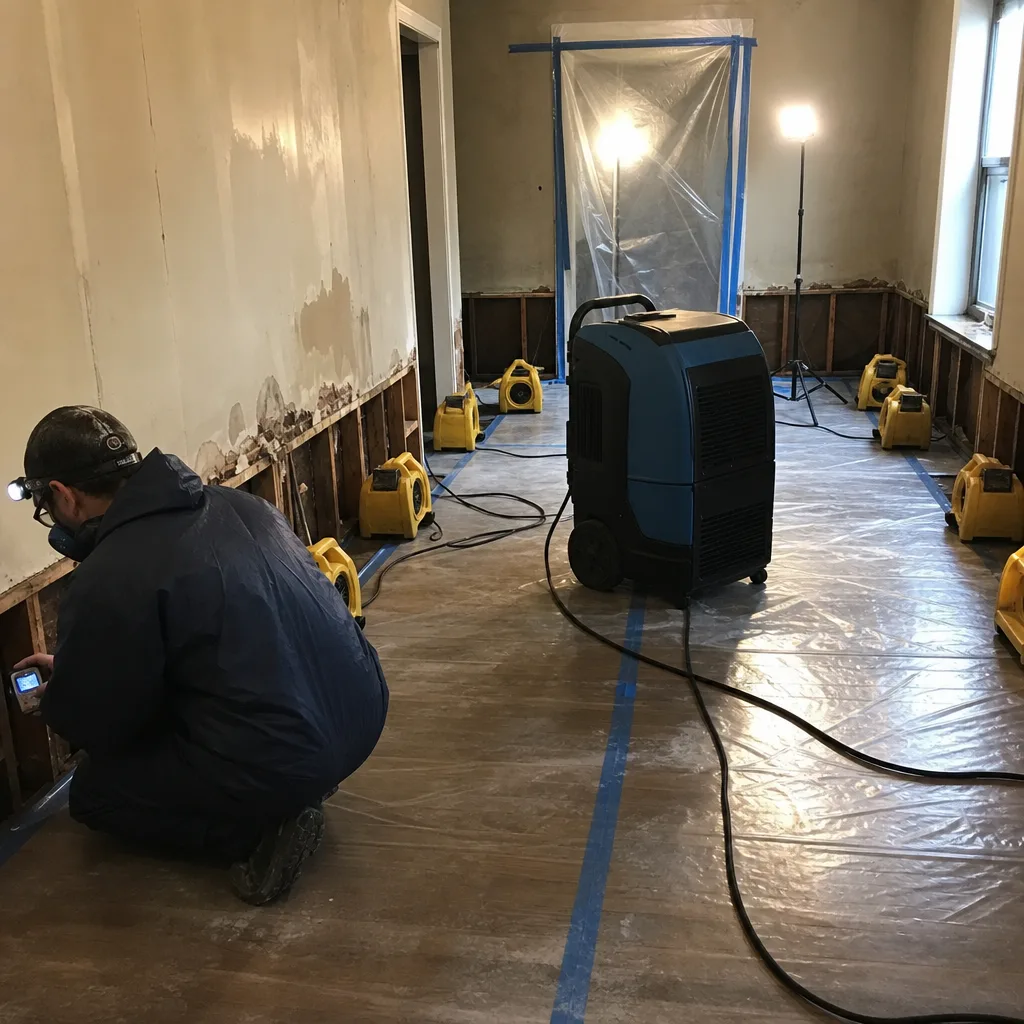
Category 3 water means we don’t try to save everything in place. We pack out contents, inventory them, clean and restore what can be restored, and store the rest until your space is ready. For College Point homeowners with decades of belongings in those finished basements, that pack-out list is often the difference between an insurance claim that reimburses properly and one that fights you.
Drywall & Flooring Repair
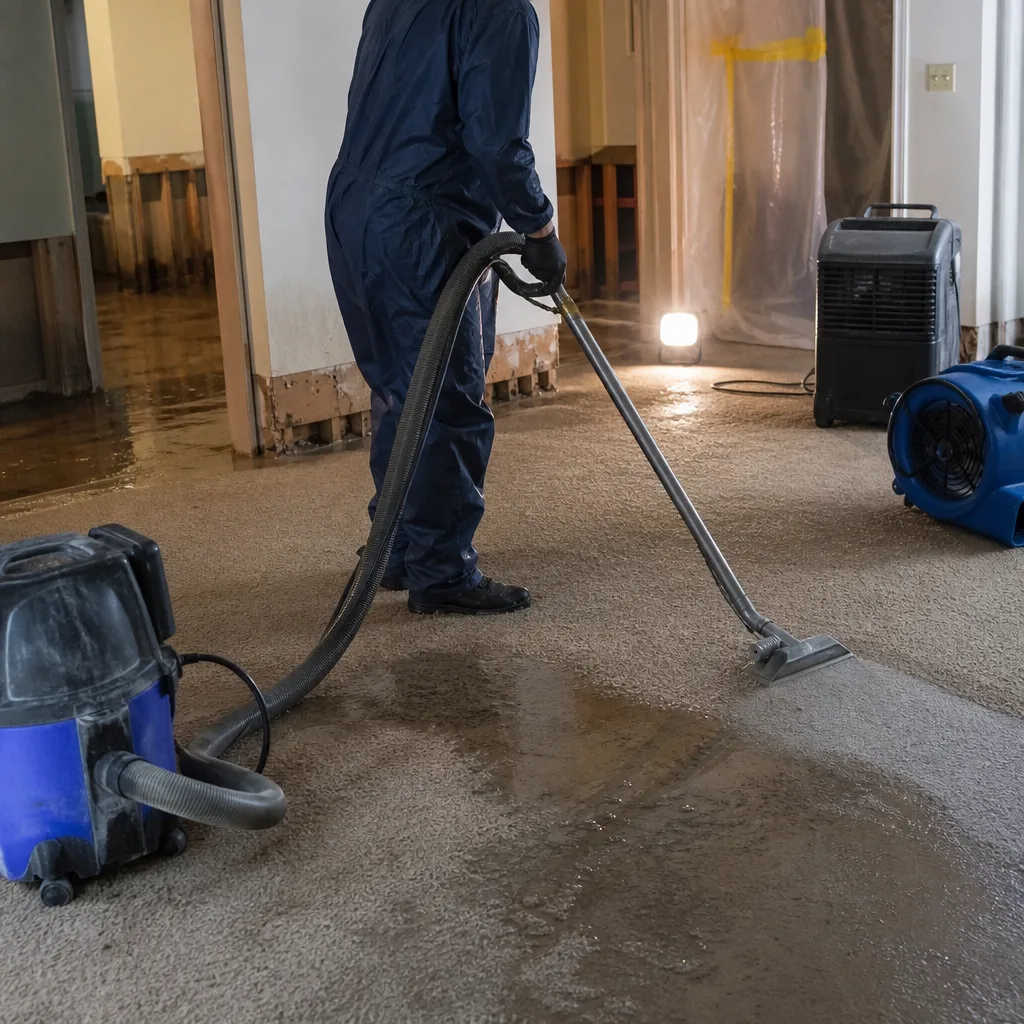
Saltwater strips drywall, warps hardwood, and delaminates laminate faster than freshwater ever does. We cut at the right height, replace insulation where needed, and reinstall flooring suited to a home that may flood again: tile, vinyl plank, and sealed concrete where it makes sense, hardwood where the elevation allows it.
Carpet & Upholstery Cleaning
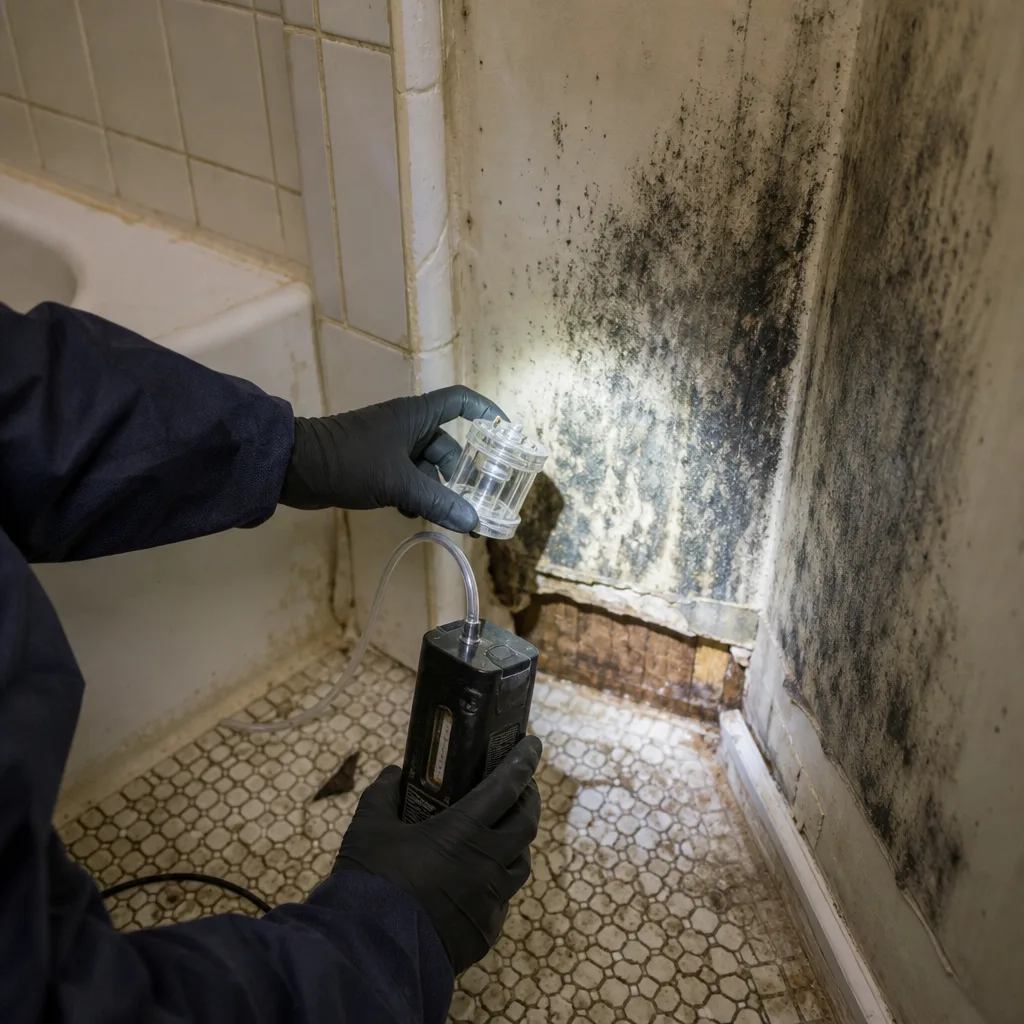
For the items that can be saved, professional-grade cleaning matters. We use hot-water extraction and appropriate antimicrobial treatments on carpets and upholstery that survived Category 1 or Category 2 events, and we tell you honestly when something needs replace instead of clean.
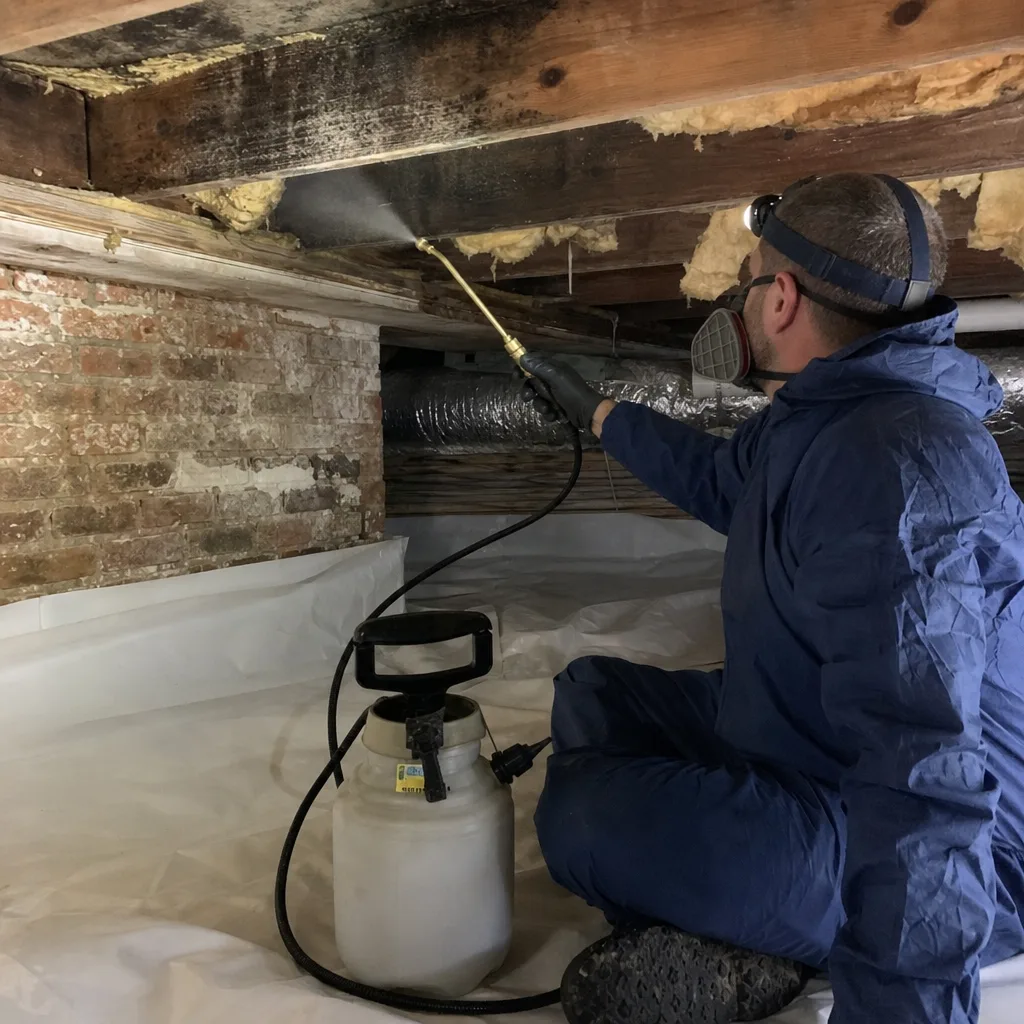
Post-Construction Cleanup
Rebuilds leave dust in places you wouldn’t think to look: duct interiors, behind baseboards, inside cabinet cavities. We finish every reconstruction with a full post-construction cleanup, running HEPA-filtered air scrubbers and wiping every surface so you’re moving back into a clean house, not a job site.
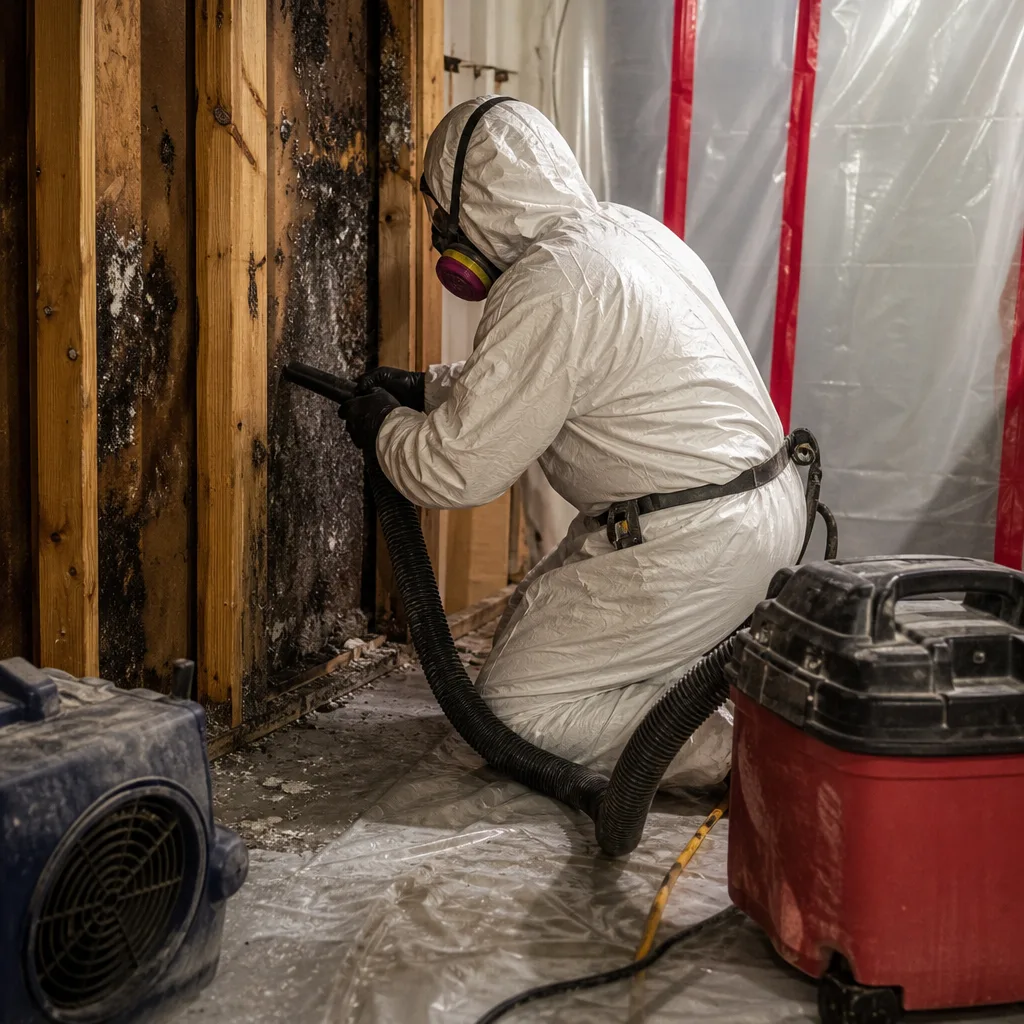
Insurance Claim Documentation
This is where College Point jobs get complicated and where we earn our keep. FEMA flood-loss claims, post-Sandy Build It Back files, and standard homeowners policies all require different paperwork. We produce it: photo documentation, moisture logs, line-item scopes, and direct adjuster communication that keeps your claim moving.
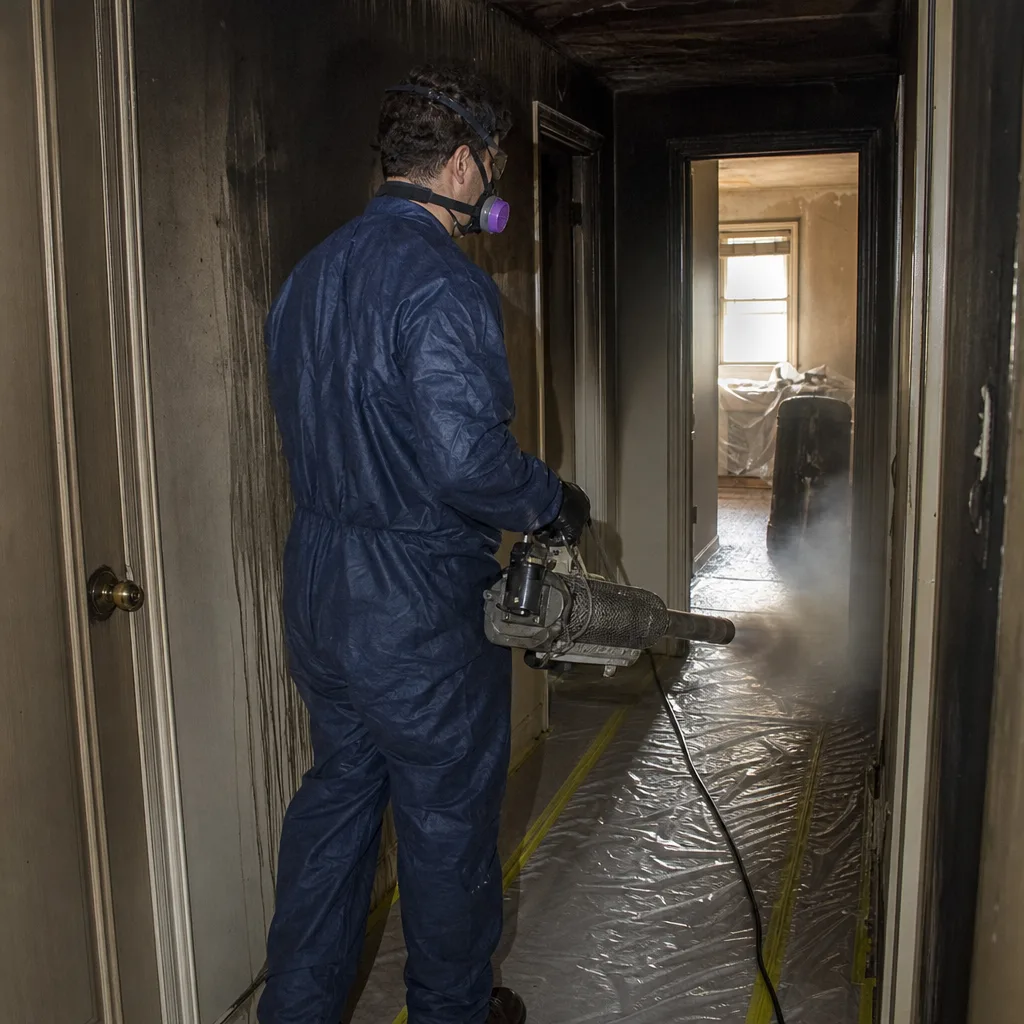
What happens when you call
- 1
A real person answersNo phone trees - you reach a local pro.
- 2
You get an upfront price rangeHonest numbers before anyone is dispatched.
- 3
A background-checked tech heads outLicensed & insured, dispatched right away.
- 4
You approve before work beginsNothing starts until you say go.
Reconstruction & Cleanup Costs in College Point, NY
Straight numbers for College Point’s market. Water extraction and structural drying for a typical finished basement here runs $3,500 to $7,500 depending on square footage and how long the water sat. Full reconstruction of a flooded 600-square-foot basement with drywall, insulation, flooring, and trim typically lands between $18,000 and $35,000. Saltwater Category 3 jobs run higher than freshwater because of the tear-out, antimicrobial treatment, and pack-out requirement. Mold remediation behind a post-Sandy wall cavity adds $2,000 to $6,000 on average. Most College Point claims with FEMA flood coverage or standard homeowners policies cover the majority of these costs, and we bill the carrier directly, so your out-of-pocket stays limited to the deductible. The free inspection is the fastest way to a firm number. Call (917) 924-4221 and we’ll put a written scope in your hands.
We Also Serve Cities Near College Point
Our reconstruction and cleanup crews cover the surrounding Queens communities every day. If you’re in Flushing, Whitestone, East Elmhurst, or Corona, the same live-dispatch team that serves College Point is minutes away. Call and a real person answers.
College Point Reconstruction & Cleanup Questions, Answered
How do you handle saltwater-contaminated floodwater in College Point basements differently from a freshwater leak?
We treat it as Category 3 immediately, even before testing confirms it. Saltwater floodwater carries sewage, bacteria, and whatever Flushing Bay swept in. We don’t attempt to dry affected drywall, insulation, carpet, or pad in place. We cut and bag contaminated materials, apply antimicrobial treatments to remaining surfaces, run containment with HEPA air scrubbers, and pack out contents for off-site cleaning. Freshwater leaks from a supply line allow in-place drying; saltwater surge does not. Call (917) 924-4221 and we’ll assess what can be saved.
What hidden mold risk do College Point homes have after the post-Sandy Build It Back program?
Many Build It Back remediations completed structural repairs without full mold abatement or cavity drying. That means dormant mold colonies may sit sealed behind finished walls in pre-2015 renovations. New water events reactivate those colonies within 48 hours. We open and inspect any ground-floor or basement cavity with a Build It Back history before closing walls, and we treat what we find. Legacy mold isn’t covered by your new claim’s typical scope alone; proper documentation ties it back to the current event. Call (917) 924-4221 for an inspection that won’t miss it.
My garage door springs and tracks look rusted after just a few years near the bay. Is that a reconstruction issue?
Yes, and it’s one specific to this peninsula. Salt air off Flushing Bay corrodes uncoated garage door springs, tracks, hinges, and fasteners in as little as three to five years. Pitted springs bind, rollers jump track, and doors can become dangerous to operate. We see the impact on garage doors attached to flood-damaged basements often. Our reconstruction scope includes galvanized or coated springs, stainless hardware, and nylon rollers when we rebuild, and we’ll inspect the door’s corrosion while we’re on site so you aren’t dealing with a spring failure six months after the basement is done.
How do you document reconstruction work for FEMA flood-loss claims in College Point?
We document from the first hour with photos, moisture readings, and a written line-item scope that follows the damage from extraction through rebuild. FEMA flood claims require proof of loss tied to the flood event, not pre-existing damage. We photograph the before, the during, and the after, and we log every drying reading daily. If post-Sandy Build It Back conditions are present, we document those separately so the claim stays clean. Your adjuster gets the full file, and we talk to them directly. Call (917) 924-4221 to start that documentation now, while the evidence is fresh.
Can you restore my 1950s brick semi-detached basement after storm surge without tearing out all the original plaster walls?
Sometimes, but not always. Plaster walls that took saltwater up 14 inches or more usually have wicking behind the plaster into lath and studs. We check with moisture meters and thermal imaging. If the plaster is salvageable, we drill, inject, and dry the cavity. If moisture has compromised the keys or the lath is saturated, that section comes out and we rebuild with materials matched to the house’s age. We’ll tell you straight, before we cut. The free visual inspection gives you the answer. Call (917) 924-4221.
How fast can you actually get to my College Point home?
We commit to 45 minutes or less for emergency calls within College Point. Our dispatchers are live, not recordings, and they know the peninsula’s routes. The same visit gets extraction started, and for Category 3 water, the same visit get tear-out under way. Speed changes the final bill because less soaked drywall and insulation means less to replace. Call (917) 924-4221 the moment you see water.
Will my insurance cover the full reconstruction and cleanup?
Most College Point policies cover the majority of reconstruction costs after a covered peril, but the fine print depends on whether the water came from a flood, a sewer backup, or a supply line. Standard homeowners policies exclude flood; FEMA flood policies cover it but have their own documentation rules. Sewer backup often needs an endorsement. We review your policy details with you during the inspection and bill the carrier directly, so you’re not fronting money while the claim processes. Photos, logs, and a clean line-item scope are what get claims paid, and we produce all three.
What should I do in the first 30 minutes after floodwater enters my College Point basement?
Turn off the main breaker if you can reach it safely without stepping in water. Do not enter standing water if any electrical outlet or appliance is submerged. Call (917) 924-4221. Move photos and documents to a dry spot if the path is safe. Don’t run a shop vac on saltwater or sewage. Don’t open walls yourself. The first 30 minutes decide whether we salvage or replace, so get us rolling before the water finishes migrating through the framing.
Serving College Point, NY - Our Local Coverage Area
We’re based in the College Point area and know this community well. Use the map below to see our service coverage - if you’re nearby, we can almost certainly help.
One Last Word on College Point’s Water
On a 1940s brick semi-detached off 14th Avenue, a post-nor’easter surge left a finished basement with saltwater intrusion up to 14 inches. Our crew performed Category 3 extraction, ran structural drying with Dri-Eaz air movers and dehumidifiers, then removed salt-corroded drywall and insulation. Behind a post-Sandy Build It Back renovation, we found legacy mold that had never been fully abated. We replaced framing with pressure-treated lumber and stainless fasteners, logged moisture readings daily, and restored the space to pre-loss condition. That job is what Reconstruction & Cleanup in College Point actually looks like: compound flooding from three sides, salt in everything, old homes with hidden history, and a crew that knows the difference between a freshwater leak and a Flushing Bay surge. College Point sits low, surrounded by water on three sides, and carries the fingerprints of Sandy in walls across the peninsula. The line the water left is where we start. Done right, and backed in writing.
When you need reconstruction and cleanup in College Point, call (917) 924-4221. A live person answers, and a crew that knows this peninsula gets moving.
Written by Curt Bowman, Owner at Floodline Restoration Co. of Manhattan, serving College Point with full-cycle reconstruction and cleanup.