
Free visual inspection and a written scope of work before any mitigation begins - photos, moisture readings, and drying logs go in your claim file
The scope we write is the scope we bill. Anything new gets shown to you, in writing, before we touch it.






 Before
 After
After Before
 After
After Before
 After
After24/7 Emergency Reconstruction & Cleanup in Lower East Side
Reconstruction and cleanup after a water, fire, or storm loss in Lower East Side demands a crew that understands pre-war tenement construction, not a generic restoration franchise. A burst supply line in a 1912 brick walk-up on Rivington Street behaves nothing like one in a modern high-rise, and the difference shows up in hidden moisture, shared walls, and the scope your insurance carrier will accept. If you’re looking at a ceiling stain spreading across horsehair plaster right now, call (917) 924-4221 and a live dispatcher answers, day or night. We’ll get a certified crew to your building the same visit, run thermal imaging and moisture mapping on adjacent units, and give you a written scope before any demolition starts. The first hour after a pipe burst or sewage backup is when salvage is won or lost, and in a tenement where water travels vertically through airshafts, that hour matters more than anywhere else in Manhattan.
Understanding Reconstruction & Cleanup Severity in Lower East Side Properties
Not all water damage is equal, and the Lower East Side’s building stock makes severity classification critical. Category 1 water comes from a clean supply line, a tub overflow without contaminants, or a radiator leak. Category 2 water carries some contaminants, like washing machine discharge or sump pump failure. Category 3 water is grossly contaminated: sewage backups, East River storm surge, or standing water that has picked up decades of debris from a basement floor. In a tenement, category misclassification is the single most expensive mistake a restoration crew can make. Treating a category 3 shared drain line backup as category 2 means incomplete antimicrobial treatment, and within weeks mold resurfaces behind horsehair plaster and lath. Our crews carry moisture meters and thermal imaging cameras on every call, map every affected unit before writing scope, and classify water according to IICRC standards. The age of your building matters too. Pre-1920 tenements have plaster walls that hold water differently than gypsum board, and they require longer structural drying times and different drying chamber setups. We have been reading moisture maps in these buildings long enough to know that a dry wall surface reading on day two does not mean the cavity behind it is dry.
Why Lower East Side Property Owners Choose Floodline Restoration Co. of Manhattan
- 45-minute response commitment for active water and sewage losses anywhere in the Lower East Side, from the East River to Essex Street.
- 24/7 live answer. A real dispatcher picks up at 2 a.m. Not a recording, not a call center in another state. The same person who pages the crew knows the LES grid.
- IICRC-certified crews trained to WRT, FSRT, and AMRT standards. Background-checked and uniformed on every job, led by the same project manager from first extraction to final paint.
- Free visual inspection with moisture mapping and thermal imaging on every call. We document what we find before we touch anything, so you know what you are dealing with.
- Direct insurance billing. We bill your carrier directly, handle adjuster communication, and provide daily drying logs and photo documentation your claim needs.
- One team, start to finish. We do not hand off extraction to one crew and reconstruction to another. The same certified team that extracts the water rebuilds the wall, so nothing gets lost between phases.
Our Reconstruction & Cleanup Process
Inspection & Assessment
We arrive, walk the unit and any adjacent units with moisture meters and thermal imaging. In tenement buildings, this means checking the airshaft-facing walls above and below the visible damage. We document pre-loss condition with photos and notes before any work begins.
Extraction & Stabilization
Standing water comes out with truck-mounted extraction units, and we contain the affected area to prevent cross-contamination through shared walls. If asbestos or lead testing is required in a pre-1920 building, we coordinate that before any demolition.
Drying & Dehumidification
We set Dri-Eaz and Phoenix dehumidifiers with XPOWER air movers, and we place them in the narrow floor plans where air movement matters most. Daily moisture readings get logged on a chart that goes to you and your carrier until dry standard is met.
Cleaning & Sanitization
We clean and sanitize all affected surfaces with EPA-registered antimicrobials where category 2 or 3 water is involved. Contents get cleaned, dried, and stored if pack-out is needed. Upholstery and carpet cleaning happen before we rebuild, not after.
Rebuild & Restoration
Drywall, lath and plaster repair, flooring replacement, paint, and finish carpentry happen in-house. We match plaster repair to original wall thickness and texture so the repair does not look like a patch in a 1915 apartment.
Final Walkthrough & Documentation
You walk the finished job with the project manager. We hand you the drying log, the scope of work, the photos, and the 90-Day Done Right Promise in writing. If it is not right, we make it right. No arguing, no paperwork battles.
Need Emergency Reconstruction & Cleanup in Lower East Side Now?
Crews minutes away, answering live 24 hours a day. The sooner we start, the less it costs.
Working With Your Insurance Company
Most Lower East Side policyholders have never filed a water or storm damage claim before, and the process is not intuitive. Floodline Restoration Co. of Manhattan has handled claims across every major carrier, and we know what adjusters need to approve a scope without dragging it out. We document the loss from the first hour, photograph every affected room and surface before demolition, log moisture readings daily until dry standard, and write line-item scopes in the format carriers recognize. We talk to your adjuster directly, so you are not playing messenger between a restoration crew and an insurance desk. The goal is a claim that gets approved because it is documented properly, not one you have to fight for. We also handle the paperwork for FEMA flood zone AE claims and know what storm surge damage looks like versus pre-existing wear on a 120-year-old masonry wall.
What We Provide Your Insurer
- Thorough documentation of the loss
- Photos of all damage, room by room
- Moisture readings and drying logs
- A detailed, line-item scope of work
- Direct coordination with your carrier
Built for Lower East Side’s Loss Calendar
The Lower East Side sees four distinct damage seasons, and the type of loss changes with the calendar. January and February bring deep freezes that split aging galvanized and cast iron supply lines in unheated tenement hallways and airshaft-facing walls. When a pipe lets go on the fifth floor of a walk-up, water finds the path of least resistance, and in these buildings that path is the airshaft and the stairwell. Spring thaw saturates the low-lying landfill soil east of Clinton Street, and basement seepage rises through old stone and brick foundations. Summer thunderstorms overwhelm the combined sewer system along the East River, sending category 3 backups into ground-floor bathrooms and basement apartments in Baruch and Wald Houses. Nor’easters in the fall and early winter drive wind-driven rain through aging flat roofs and around window frames, and the water wicks into the plaster and travels down. Each of these has a different scope, a different drying strategy, and a different insurance conversation. We have worked all of them, in these buildings, for years.
Reconstruction & Cleanup Across Lower East Side’s Neighborhoods
The Lower East Side is not one housing type. It is a patchwork of 1880s-law tenements, 1901-law walk-ups, mid-century NYCHA towers, and a handful of converted industrial lofts, and each responds to water differently. In the blocks around Orchard and Ludlow Streets, the oldest tenements have shared drain stacks that have not been replaced since the Coolidge administration. A backup there is not a plumbing issue; it is a multi-floor category 3 event. Over by Baruch Houses and the East River, tower blocks deal with elevator shaft water intrusion and aging mechanical risers. The blocks along East Broadway carry the heaviest commercial ground-floor mix, where a restaurant hood fire or a bakery supply line failure sends soot and water into the apartments above. We have run reconstruction and cleanup crews through every one of these streets, from Grand Street to Delancey, from the FDR to Allen Street, and we know the building types and the loss patterns that come with each. A crew that knows a walk-up on Rivington Street also knows that the nearest stairwell is too narrow for a full-size air scrubber, so we bring the right equipment instead of improvising.
Specialized Reconstruction & Cleanup Services We Offer in Lower East Side
Full-Service Reconstruction
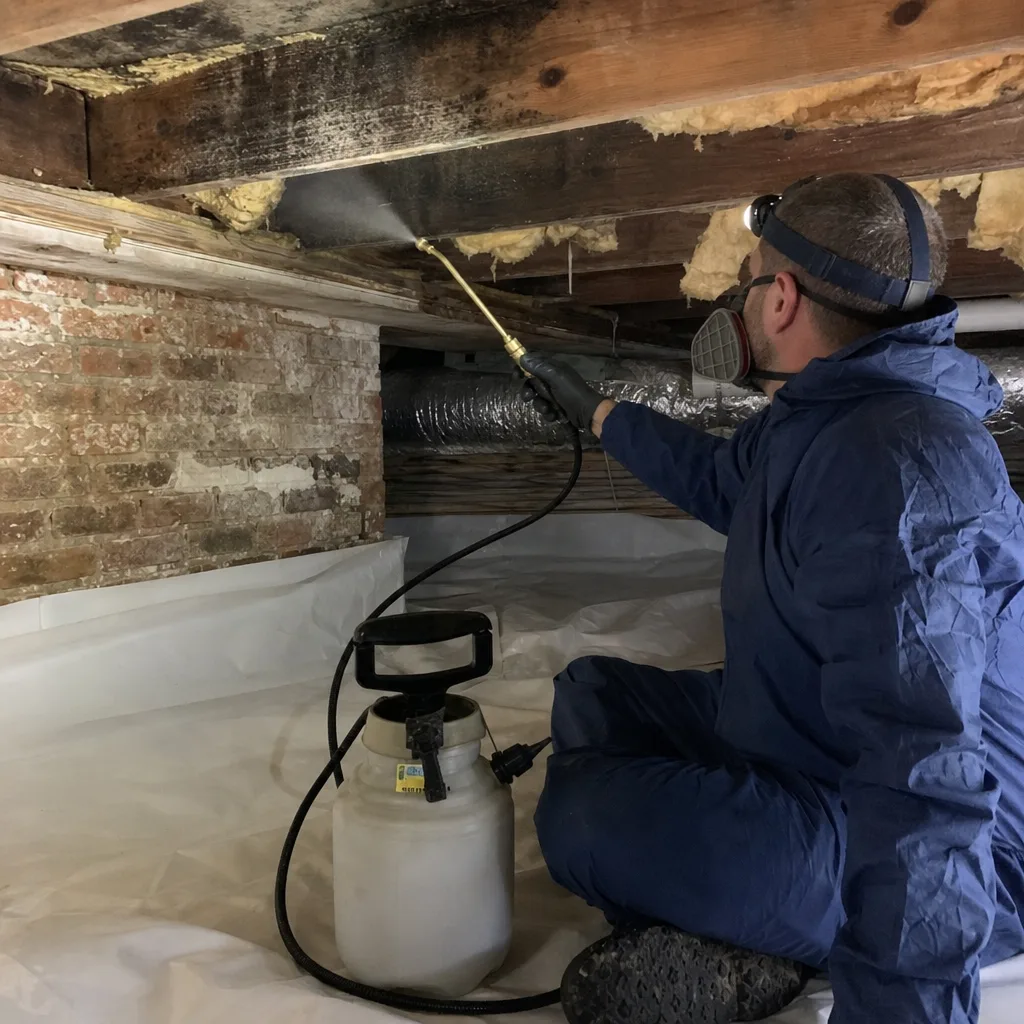
When water extraction and drying are done, you need the room put back. We handle it in-house: framing, drywall, plaster repair, trim, paint, flooring, and finish work. In tenement apartments, that means matching plaster thickness and wall texture so the repair does not announce itself, and coordinating with building management when work in a shared wall or airshaft affects other units. We also handle the structural repairs that older buildings sometimes need after a long water event, like sill plate replacement or floor joist sistering.
Drywall & Flooring Repair
Lower East Side tenements and post-war apartments have different wall and floor systems, and we repair both. Gypsum board goes back where gypsum board was. Lath and plaster gets repaired with the same materials and technique. Hardwood floors that buckled after a supply line break get sanded and refinished or replaced in sections, and we match the species and stain to the original. We do not lay floating vinyl over a wet subfloor and call it done; the subfloor gets moisture-tested first, every time.
Contents Restoration & Pack-Out
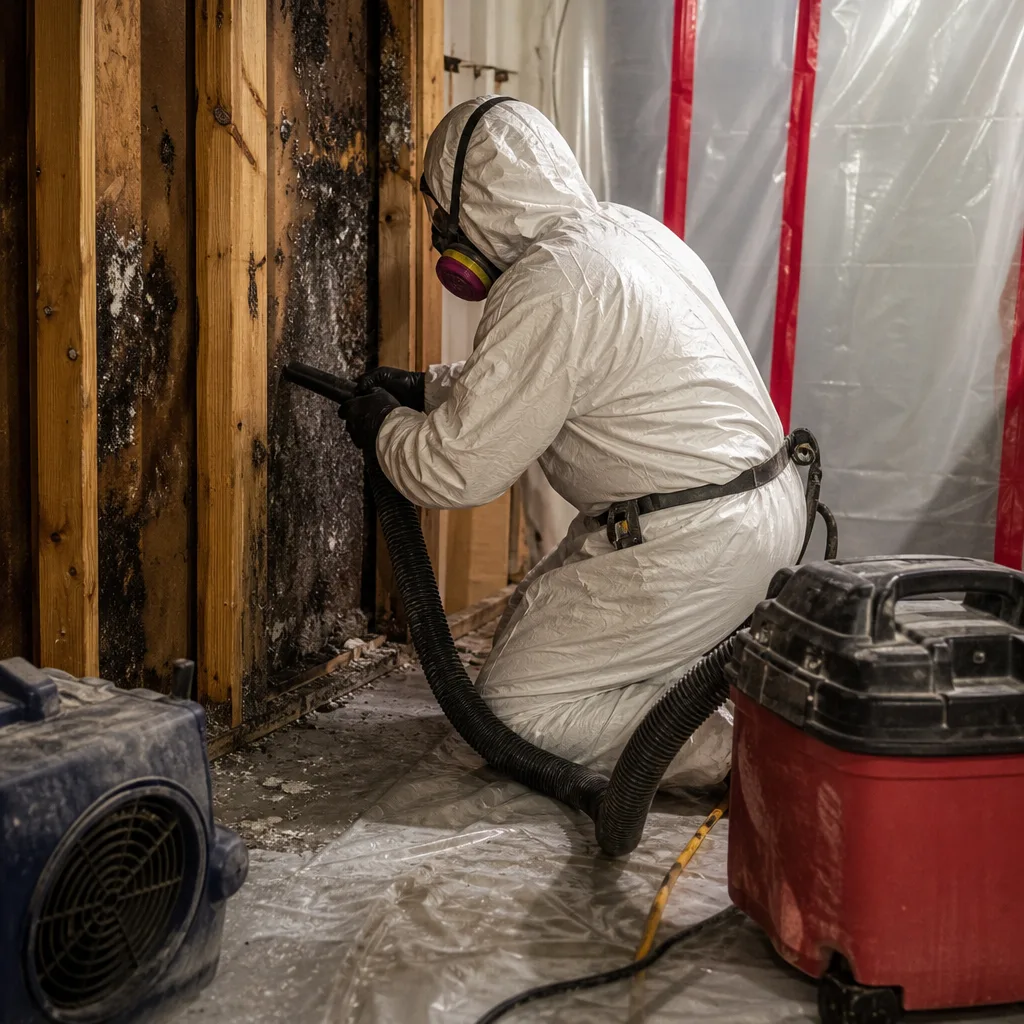
In a narrow fourth-floor walk-up with 700 square feet of living space, every square foot of floor matters during structural drying. We do contents restoration and pack-out when the apartment cannot accommodate both the occupants’ belongings and the drying equipment. We inventory, photograph, pack, and move contents to our climate-controlled storage, clean and restore what is salvageable, and bring everything back when the rebuild is done. The pack-out crew knows tenement stairwells, and we do not block fire egress or the airshaft with staging.
Carpet & Upholstery Cleaning
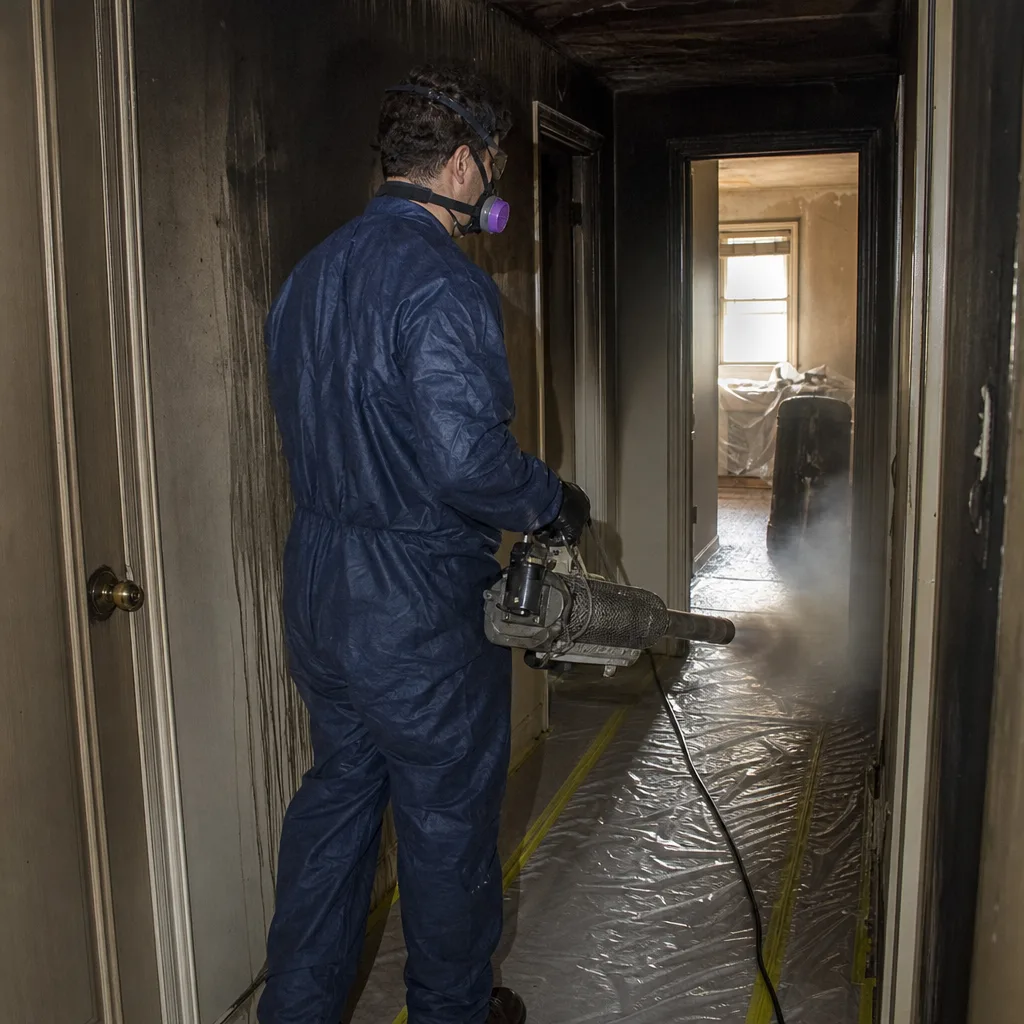
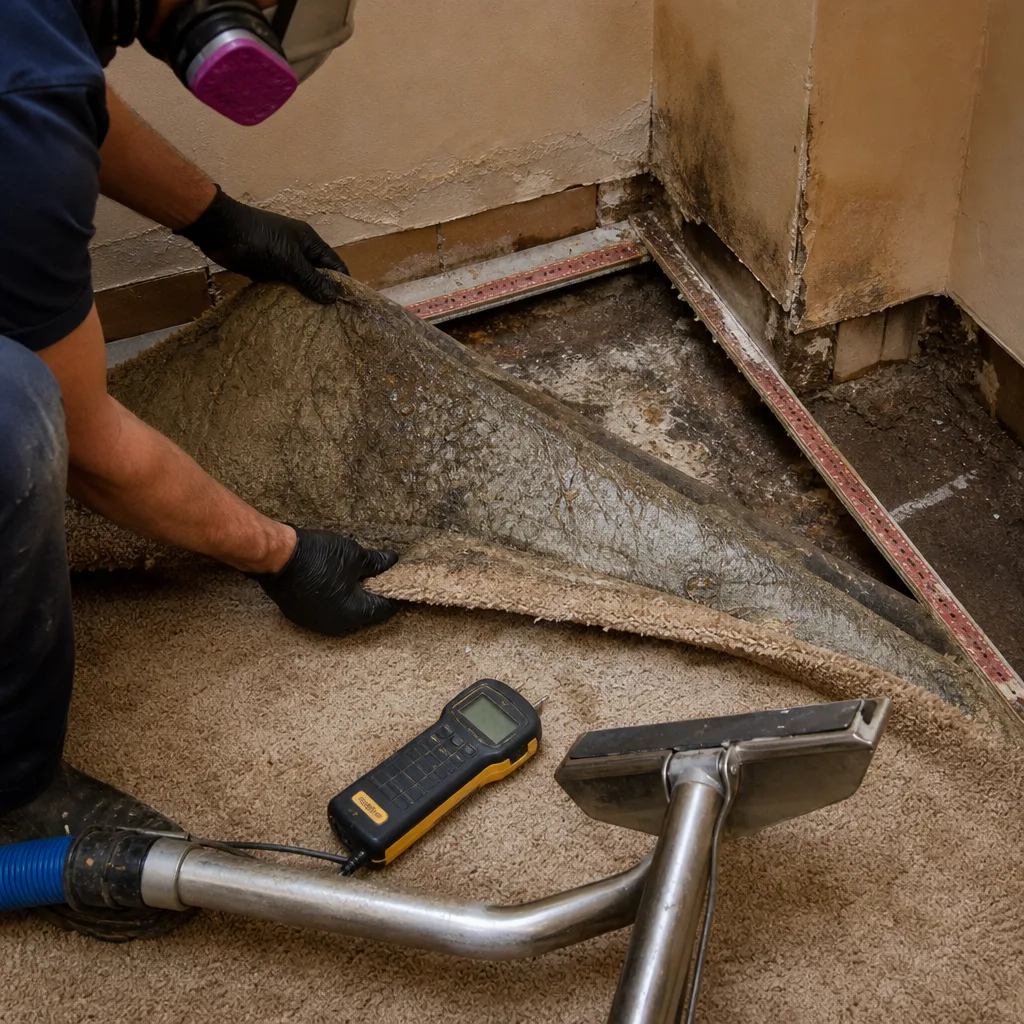
Water and smoke losses do not always mean replacement. Some carpets and upholstered pieces can be cleaned, dried, and restored to pre-loss condition. We run professional-grade extraction and hot water extraction cleaning with the same Dri-Eaz and Phoenix equipment we use on structural drying, and we tell you honestly when something is not worth saving. In a building where a category 2 water event touched the carpet, we treat it accordingly or replace it; we do not just shampoo over contaminated material.
Post-Construction Cleanup
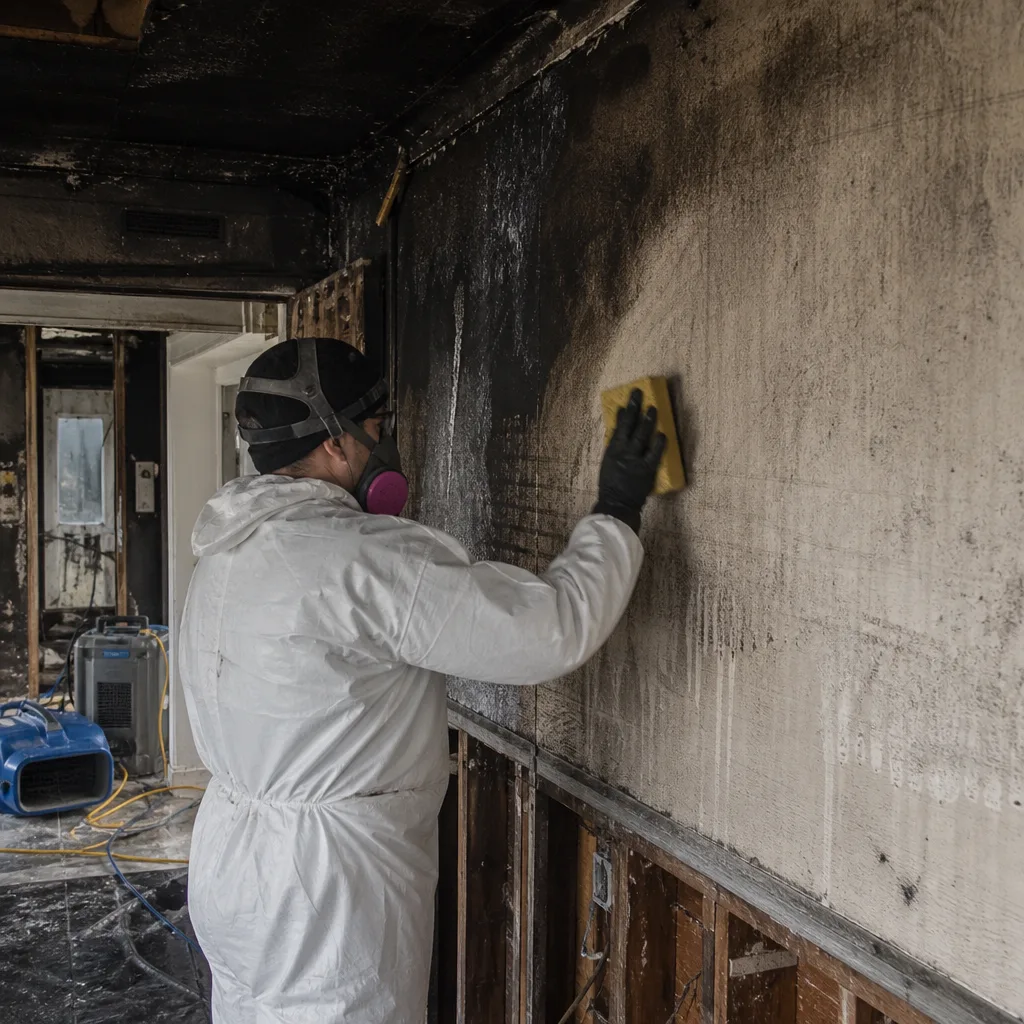
After a restoration or a renovation, the dust is not just cosmetic. Tenement apartments hold dust in plaster, in airshaft window wells, and in the gap between old floorboards and baseboards. We do post-construction cleanup that includes HEPA vacuuming, surface cleaning, air scrubbing, and the final detail work that makes the space livable. If your building had a renovation-related water event or a fire in an adjacent unit, this is the service that gets the air quality back where it should be and removes the fine particulates that settle into every crevice.
Insurance Claim Documentation
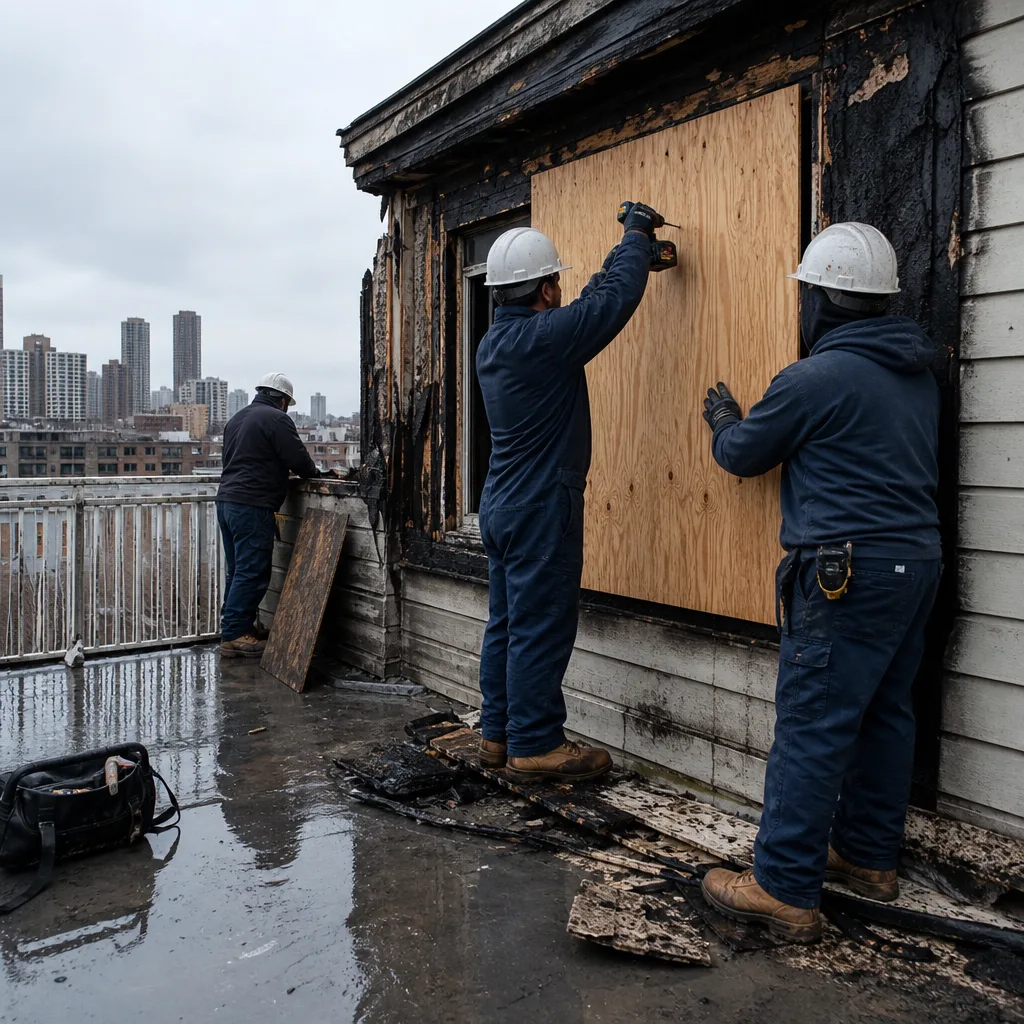
We produce documentation that stands up to adjuster review: initial moisture maps, daily drying logs, pre-loss condition photos, photo documentation of every stage of demolition and repair, and a line-item scope with industry-standard pricing. For Lower East Side properties in FEMA flood zone AE, we also document storm surge versus pre-existing condition, which matters when the claim is reviewed. You get a copy of everything, and your carrier gets a copy. No claim should fail because the paperwork was thin.
What happens when you call
- 1
A real person answersNo phone trees - you reach a local pro.
- 2
You get an upfront price rangeHonest numbers before anyone is dispatched.
- 3
A background-checked tech heads outLicensed & insured, dispatched right away.
- 4
You approve before work beginsNothing starts until you say go.
Reconstruction & Cleanup Costs in Lower East Side, NY
Reconstruction and cleanup pricing in Lower East Side reflects the building stock. A single-unit water extraction and drying job in a tenement apartment typically runs $1,800 to $4,200, depending on the category of water, the number of affected rooms, and whether adjacent units need containment or drying. Full drywall and flooring repair after a supply line burst in a one-bedroom walk-up generally lands between $6,500 and $15,000. Sewage backup remediation with full antimicrobial treatment and floor replacement in a ground-floor unit runs $9,000 to $22,000. Pack-out and contents restoration adds $1,500 to $6,000 depending on volume and cleaning complexity. What moves the price is the hidden moisture: when an airshaft leak has wicked into four units instead of one, the scope multiplies, and that is why moisture mapping before any demo is non-negotiable. Most of these jobs are covered by insurance. We bill directly, so your out-of-pocket is the deductible, not the full freight. The free visual inspection gives you a firm number before anything gets torn out.
We Also Serve Cities Near Lower East Side
Our crews cover the Lower East Side and the surrounding neighborhoods. We serve Fairview, Harrison, East Bronx, and Hunts Point with the same 24/7 live dispatch and the same certified crews. If your building sits just over the neighborhood line, call (917) 924-4221 and we’ll confirm coverage for your address.
Serving Lower East Side, NY - Our Local Coverage Area
We’re based in the Lower East Side area and know this community well. Use the map below to see our service coverage - if you’re nearby, we can almost certainly help.
Lower East Side Reconstruction & Cleanup Questions, Answered
How does the Lower East Side’s tenement airshaft design affect the scope of water damage reconstruction?
The 1901 Tenement House Act mandated airshafts for light and air, but those shafts also function as vertical water highways. A roof leak on the top floor of a walk-up wicks laterally into the horsehair plaster and travels down the shaft into the exterior walls of every floor below. A single-unit ceiling stain on the fifth floor routinely opens into a four-to-six-unit hidden cavity moisture job. That means the scope of reconstruction cannot be written from what you can see; it has to be written from what the moisture meters and thermal imaging find in the adjacent units. Call (917) 924-4221 and we’ll map the whole airshaft before we touch anything.
Do I need special inspections before rebuilding a water-damaged wall in a pre-1920 LES tenement?
Often, yes. Pre-1920 tenements commonly have asbestos in original plaster, pipe wrap, or flooring, and lead paint is a given on older surfaces. Local regulations require asbestos testing before demolition in many of these buildings, and lead-safe work practices apply when lead paint is disturbed. We coordinate the testing with certified labs and hold demolition until the results come back. It slows the first day, and it keeps the job legal and safe.
What is the difference between category 2 and category 3 water in a tenement pipe burst?
Category 2 water carries some contaminants, like washing machine discharge or radiator overflow. Category 3 water is grossly contaminated, like sewage, storm surge, or standing water that has picked up ground debris. In a tenement, a shared drain stack backup is category 3, and it requires full antimicrobial treatment, not just extraction and drying. Misclassifying it as category 2 is how mold ends up behind horsehair plaster weeks later. We classify by IICRC standards and document the reasoning.
Why does a Lower East Side roof leak require drying logs even if only one ceiling is stained?
Because the water that stained your ceiling almost certainly came down an airshaft, and the same airshaft feeds walls on the floors below. What presents as one ceiling stain is often hidden saturation across multiple units and multiple floor cavities. Drying logs document daily moisture readings in every affected area, which tells you and your carrier when the structure is actually dry. Without them, a “dry” wall can be reinstalled over a damp cavity, and the mold comes back. The log is your proof that the job was done right.
Can you do pack-out and contents restoration in a small LES walk-up without blocking the stairs or airshaft?
Yes. We pack out contents with a crew that knows tenement stairwells and narrow corridors. We stage in a way that keeps fire egress clear and never blocks an airshaft window or the shaft itself. Contents go to our climate-controlled storage with a full photo inventory, and they come back cleaned and restored when the rebuild is complete. In a 700-square-foot apartment, pack-out is often the difference between structural drying in three days and structural drying in ten.
How fast can a crew actually get to my Lower East Side apartment?
For active water, sewage, or fire losses, our commitment is 45 minutes from the time you call to a crew at your door anywhere in the Lower East Side. The dispatcher who answers is live, not a recording, and the crew is positioned for the LES grid. The faster extraction starts, the less demolition you need and the lower the final scope.
Will my insurance cover reconstruction and cleanup in a Lower East Side tenement?
Most standard homeowners and co-op/condo policies cover sudden and accidental water damage, sewage backup with the right endorsement, and fire. FEMA flood zone AE damage from storm surge is a flood insurance question, and coverage depends on your policy. We work with every major carrier, bill directly, and provide the documentation adjusters require. The free inspection gives us a documented starting point before you ever talk to your adjuster.
What should I do in the first 30 minutes after a pipe burst or sewage backup in my LES apartment?
Shut off the water at the supply valve if you can find it safely, cut power to the affected area if water is near outlets, move small valuables and electronics out of the water, and call (917) 924-4221. Do not use a shop vac on sewage. Do not open walls yourself. Take photos of the standing water and visible damage for your carrier. Then let us run extraction and moisture mapping while the damage is still fresh and the scope is still small.
Written by Curt Bowman, Owner at Floodline Restoration Co. of Manhattan, serving Lower East Side and the surrounding neighborhoods.