
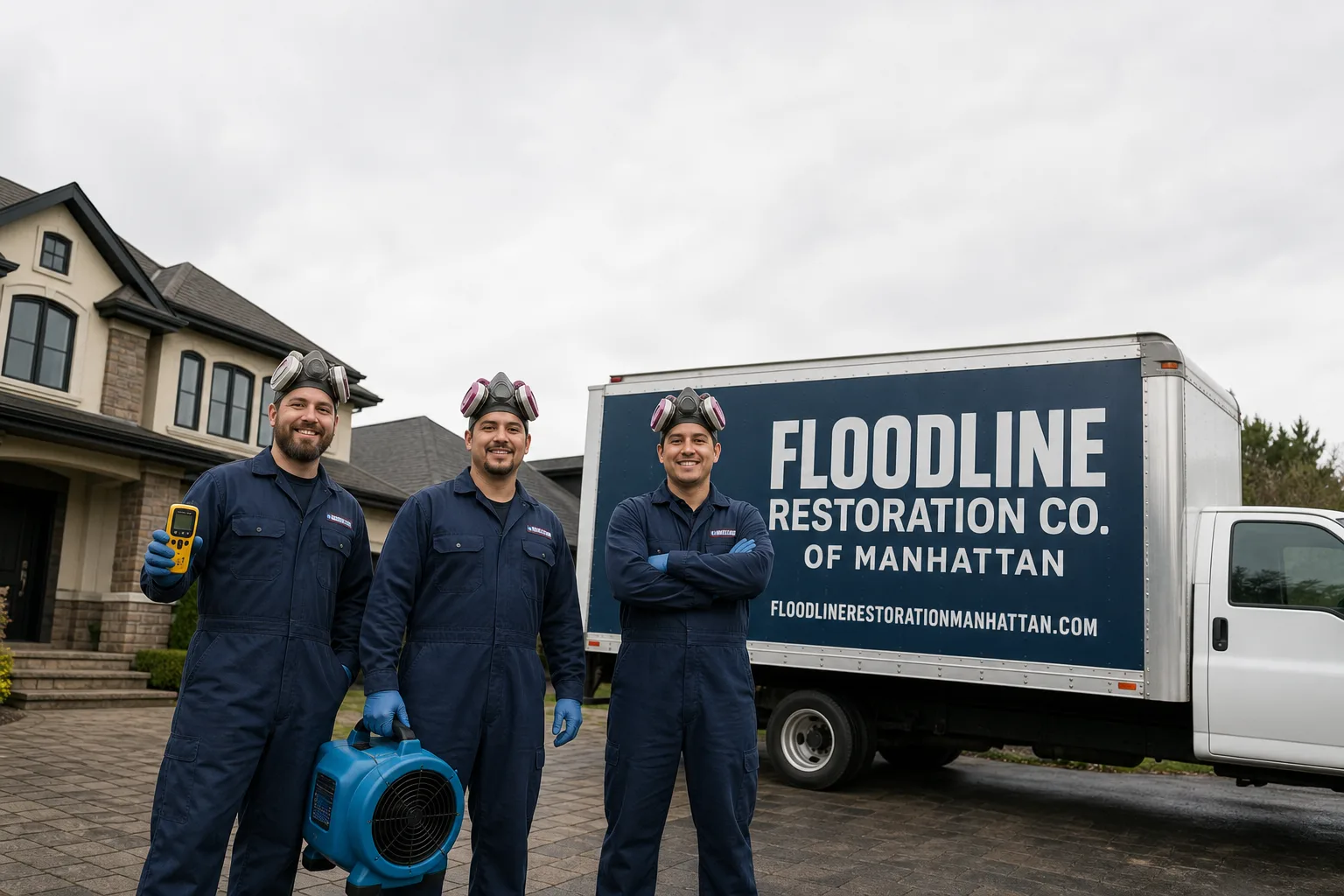
Free visual inspection and a written scope of work before any mitigation begins - photos, moisture readings, and drying logs go in your claim file
The scope we write is the scope we bill. Anything new gets shown to you, in writing, before we touch it.






 Before
 After
After Before
 After
After Before
 After
After24/7 Emergency Reconstruction & Cleanup in Woodside
Storm damage inside a Woodside rowhouse moves fast. Wind-driven rain gets behind original 1920s brickwork, soaks plaster and lath, and within 48 hours you’re looking at mold behind walls you can’t see. Our crews answer live at (917) 924-4221 every hour of every day, and we dispatch into Woodside immediately, usually within 45 minutes. The first call stops the bleeding. The first visit maps exactly where the water went. We don’t wait on callbacks, and we don’t ask you to leave a voicemail at two in the morning. A live dispatcher picks up, and a certified crew is on the way. When wind breaches a roof membrane or a window frame on one side of a party wall, the clock is already running on the units next door.
Understanding Reconstruction & Cleanup Severity in Woodside Properties
Woodside’s housing stock makes every loss site-specific. Most homes here went up between 1920 and 1945: brick rowhouses and two-to-three-family frames with plaster-and-lath interiors, original clay or cast-iron drains, and flat or low-slope roofs that pond water at the parapet. When wind-driven rain gets past a failed membrane, the water doesn’t pool on the floor where you can see it. It travels down inside the wall cavity, saturating plaster keys and wood lath, feeding mold before the paint even blisters. We classify the water the moment we arrive. Category 1 is clean supply-line water. Category 2 carries contaminants. Category 3, which we see constantly in finished basement apartments after a combined sewer backup, is sewage-laden and requires full containment, antimicrobial treatment, and disposal of porous materials, not just a fan and a mop. Moisture mapping with thermal imaging and Dri-Eaz sensors tells us whether the damage stopped at one room or is tracking through the party wall into the attached home next door. That distinction changes the scope entirely.
Why Woodside Property Owners Choose Floodline Restoration Co. of Manhattan
- 45-minute response commitment: When you call with water moving through a Woodside rowhouse, we commit to having a crew on-site within 45 minutes. Not a callback. Not a window. Boots on the ground.
- 24/7 live answer, every time: A real dispatcher answers the phone at 2 a.m. on a holiday. No automated tree, no “press 2 for emergencies.” You describe the damage, we dispatch.
- IICRC-certified crews: Our technicians hold IICRC certifications in Water Damage Restoration (WRT), Fire & Smoke Restoration (FSRT), and Applied Microbial Remediation (AMRT). Background-checked, uniformed, and trained to RIA and IFA standards as well.
- Free visual inspection: We walk the property, map the moisture, and show you exactly what we found before any work is authorized. You see the readings. You get the scope in writing.
- Direct insurance billing: We bill your carrier directly and stay on the phone with the adjuster so you don’t have to. Documentation from the first hour is built for claim approval, not just for our files.
- One team from extraction to rebuild: The same crew that extracts the water and runs the dry-out is the crew that hangs new drywall, refinishes floors, and reinstalls trim. No mid-job handoff to a subcontractor you’ve never met.
Our Reconstruction & Cleanup Process
Inspection & Assessment
We start with thermal imaging and hygrometer readings across every affected surface, including the party walls. The goal is to find water that hasn’t shown itself yet. You get a written scope and a firm line-item estimate before any demolition begins.
Extraction & Stabilization
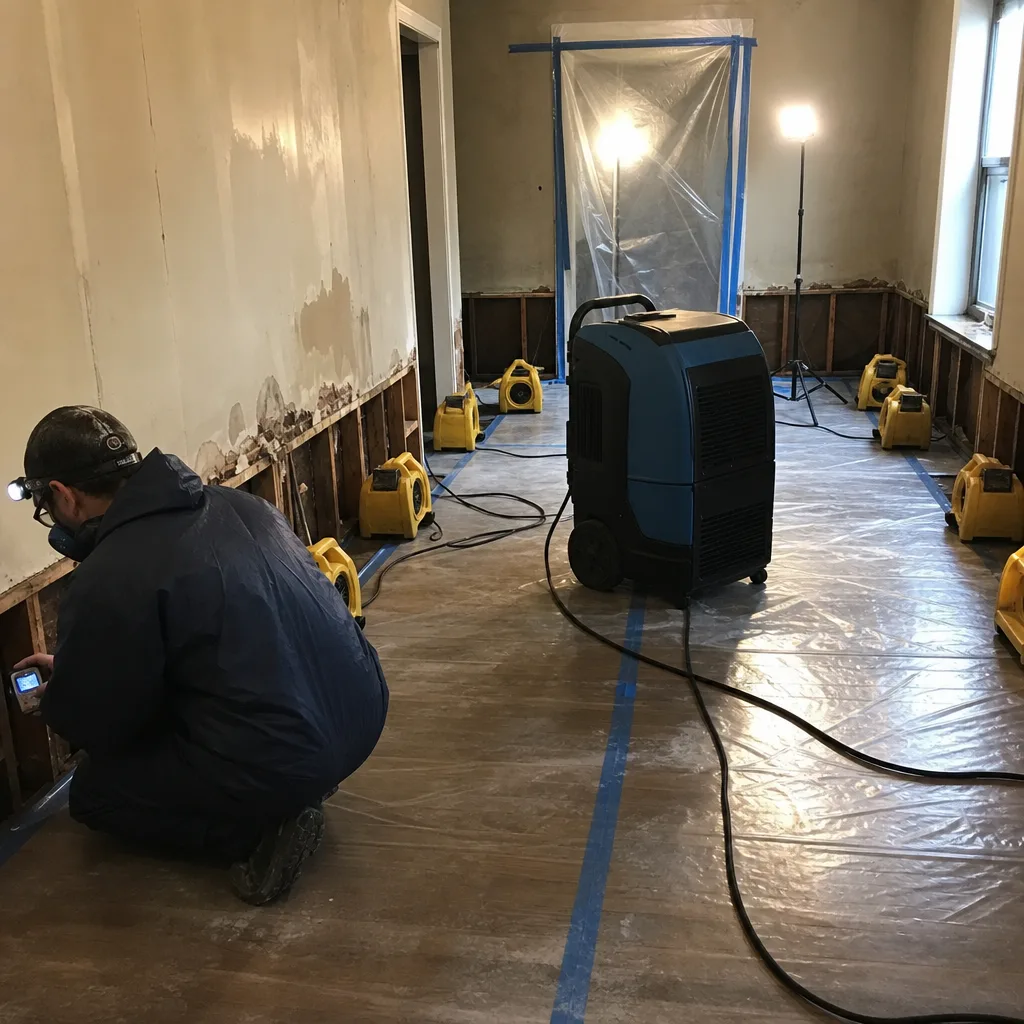
Standing water comes out with truck-mounted extraction. Damaged drywall, wet plaster, and saturated insulation are cut away to expose the framing. We set containment so whatever’s in the air doesn’t migrate into the rest of the house or the attached unit next door.
Drying & Dehumidification
Professional-grade air movers and LGR dehumidifiers from Dri-Eaz, Phoenix, and XPOWER run around the clock. Daily moisture readings are logged and shared with you and your insurer. We don’t stop until the dry standard is met and verified.
Cleaning & Sanitization
HEPA air scrubbers clear particulates. Hard surfaces get antimicrobial treatment. Soft goods and personal property are inventoried, cleaned, or packed out depending on the damage category and the restoration plan.
Structural Reinforcement & Specialty Repairs
In Woodside, this step includes wind-rated repairs to roof membranes, impact-rated door and window upgrades, and rebuilding of any masonry or framing compromised by storm pressure. The work is done to current NYC code.
Repairs & Restoration
New drywall goes up, floors are sanded and refinished or replaced, trim and paint return the rooms to finished condition. The 90-Day Done Right Promise, in writing, covers the work from the first day of dry-out through the final walkthrough.
Need Emergency Reconstruction & Cleanup in Woodside Now?
Crews minutes away, answering live 24 hours a day. The sooner we start, the less it costs.
Working With Your Insurance Company
A storm loss in Woodside rarely involves one policy. In a two-family rowhouse, the owner’s structural claim and the tenant’s contents and displacement claim run simultaneously, and adjusters start asking questions the moment the scope leaves the room. We’ve done this enough times to know exactly what stops a claim cold: missing photos, vague moisture readings, line items that don’t match the actual damage category. From the first hour, we document everything. Photos room by room. Daily drying logs with hygrometer data. A line-item scope that matches IICRC standards for the water category we actually found. Then we talk to your adjuster directly, answer their questions, and bill the carrier. You don’t play messenger. We handle the paperwork and keep the rebuild moving.
What We Provide Your Insurer
- Thorough documentation of the loss
- Photos of all damage, room by room
- Moisture readings and drying logs
- A detailed, line-item scope of work
- Direct coordination with your carrier
Built for Woodside’s Loss Calendar
Woodside’s damage calendar runs on weather patterns that punish old brick and flat roofs. January and February bring deep freezes that burst supply lines in uninsulated exterior walls, flooding kitchens and basements while homeowners are at work. Spring thaw pushes groundwater against foundations that were never waterproofed, seeping into below-grade finished apartments. Summer thunderstorms dump inches of rain in an hour onto streets whose combined sewers can’t keep up, and floor drains in basement units reverse themselves, bringing Category 3 water into living spaces. Autumn nor’easters are the worst for this neighborhood’s flat roofs. Wind gets under aging membrane seams, peels them back, and drives rain horizontally into parapet walls and window headers. The party-wall construction means one breached roof becomes a three-unit loss before the storm even passes. We staff for this calendar. Extra crews during nor’easter season, faster dry-out response during freeze-thaw cycles, and a deep understanding of what fails first in a 1920s Woodside rowhouse.
Reconstruction & Cleanup Across Woodside’s Neighborhoods
Different pockets of Woodside fail in different ways, and we route crews accordingly. Up around the 61st Street corridor and the blocks west of the BQE, the flat-roof two-families take the worst of nor’easter wind, with membrane loss and parapet leaks sending water down shared walls into three attached units at once. Over near the Woodside Avenue commercial strip and the older brick rows east toward 65th Place, we see more basement sewage backups during heavy rain, the combined sewer lines surcharging into floor drains in finished apartments. The blocks off Roosevelt Avenue under the 7 train have a high concentration of three-family homes with original clay waste lines; when a line collapses or roots choke it, the basement gets the entire building’s wastewater. Doughboy Park and the blocks around it are quieter on storm calls but see more freeze-burst supply lines in winter, the original galvanized piping finally giving out in unheated exterior walls. And in the semi-attached rows along 69th Street down toward Maspeth, wind-driven window leaks around original 1920s frames are the recurring call, rot hidden inside plaster walls until a corner of the ceiling finally gives way.
Specialized Reconstruction & Cleanup Services We Offer in Woodside
Full-Service Reconstruction
When a Woodside rowhouse takes storm damage, the rebuild has to account for old framing, shared walls, and code requirements that didn’t exist when the house went up. We handle the entire Reconstruction & Cleanup scope: demolition, structural repair, drywall, flooring, trim, paint, and finish work. One team, one written scope, one guarantee. No handing you off to a “rebuild partner” who never saw the moisture map.
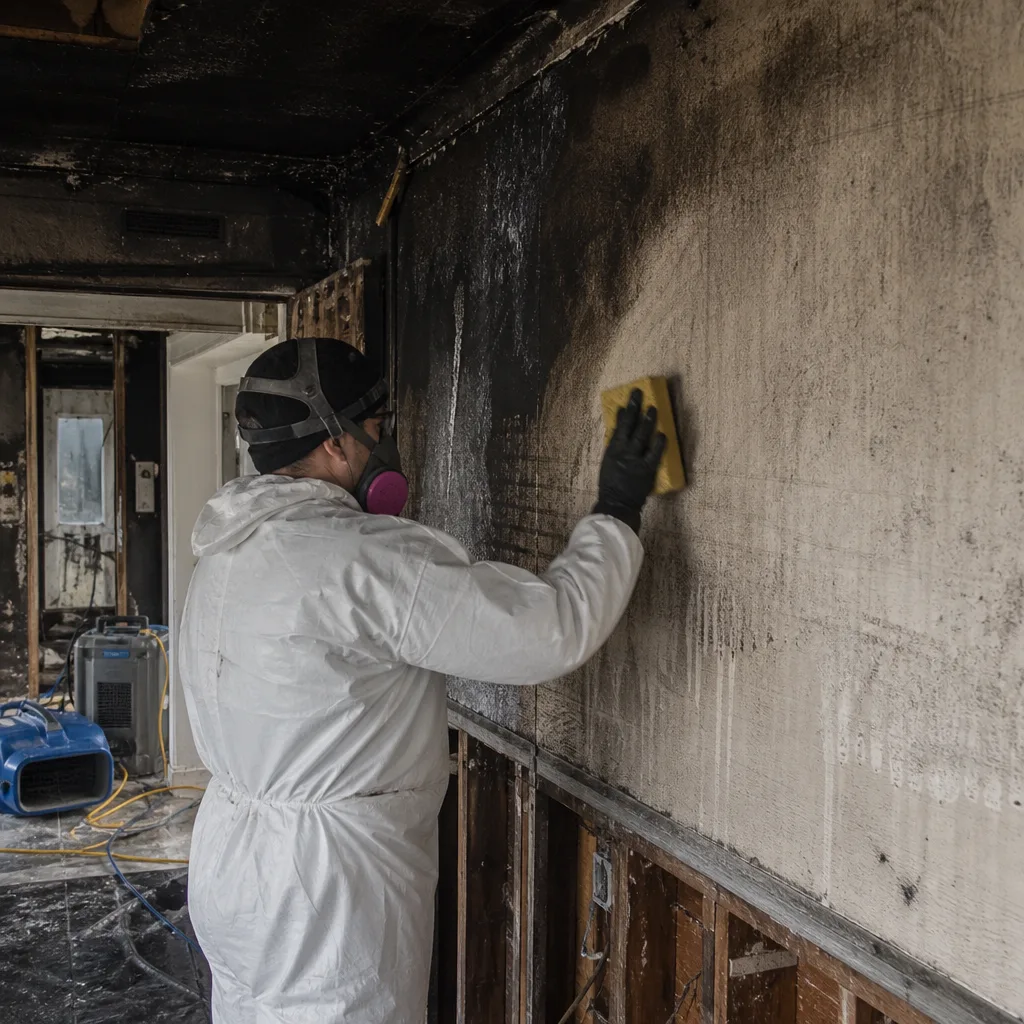
Drywall & Flooring Repair
Plaster-and-lath walls have to be treated differently than modern drywall. We cut back to solid material, inspect the framing behind it, and rebuild with materials that perform under Woodside’s humidity swings. Hardwood floors that took water get sanded and refinished only after the subfloor and joists are confirmed dry. We’ve saved original oak floors that other companies wrote off because we waited for the dry standard instead of rushing a patch job.
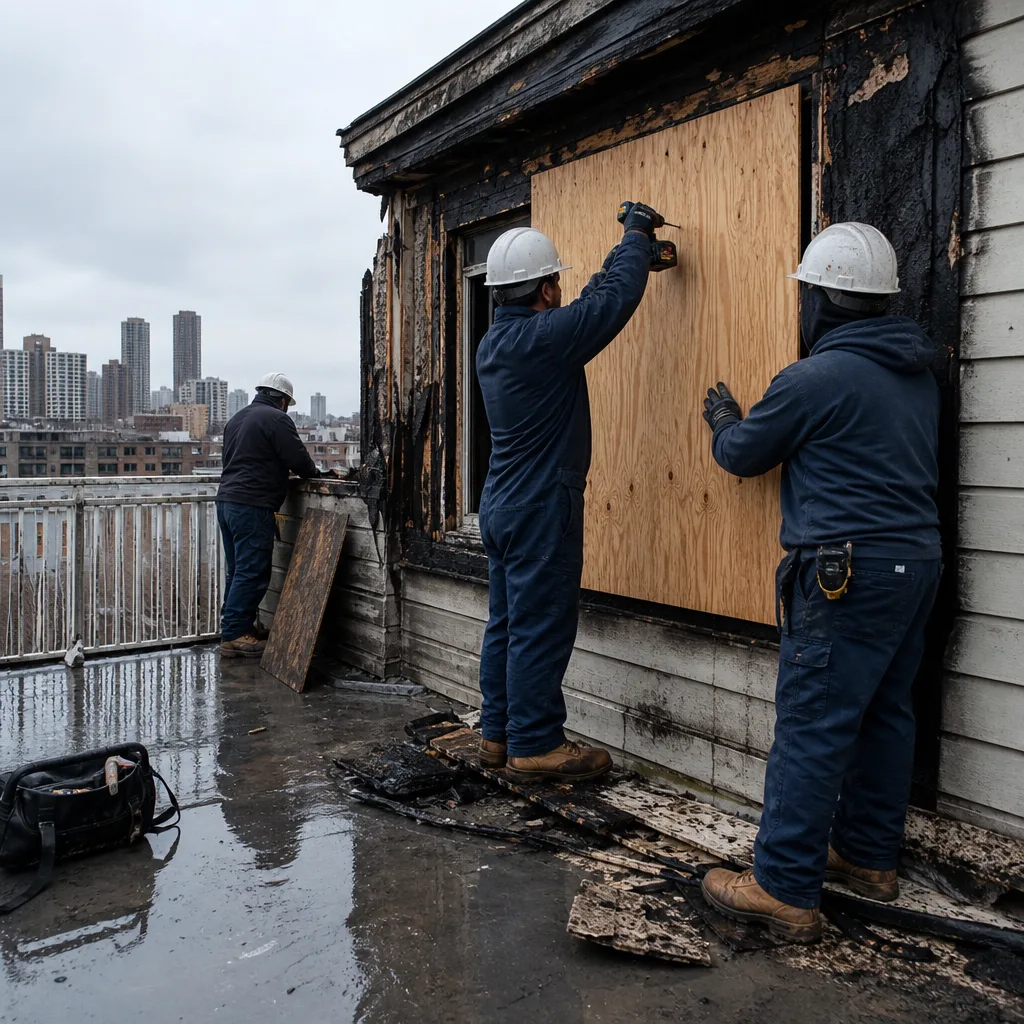
Contents Restoration & Pack-Out
In a two-family Woodside house, the tenant’s furniture, clothing, and personal effects are often the biggest part of the claim. We inventory everything, pack out what can be restored, clean and deodorize on-site where possible, and store the rest in a climate-controlled facility until the rebuild is done. The documentation we generate for contents is built for adjuster review, line by line.
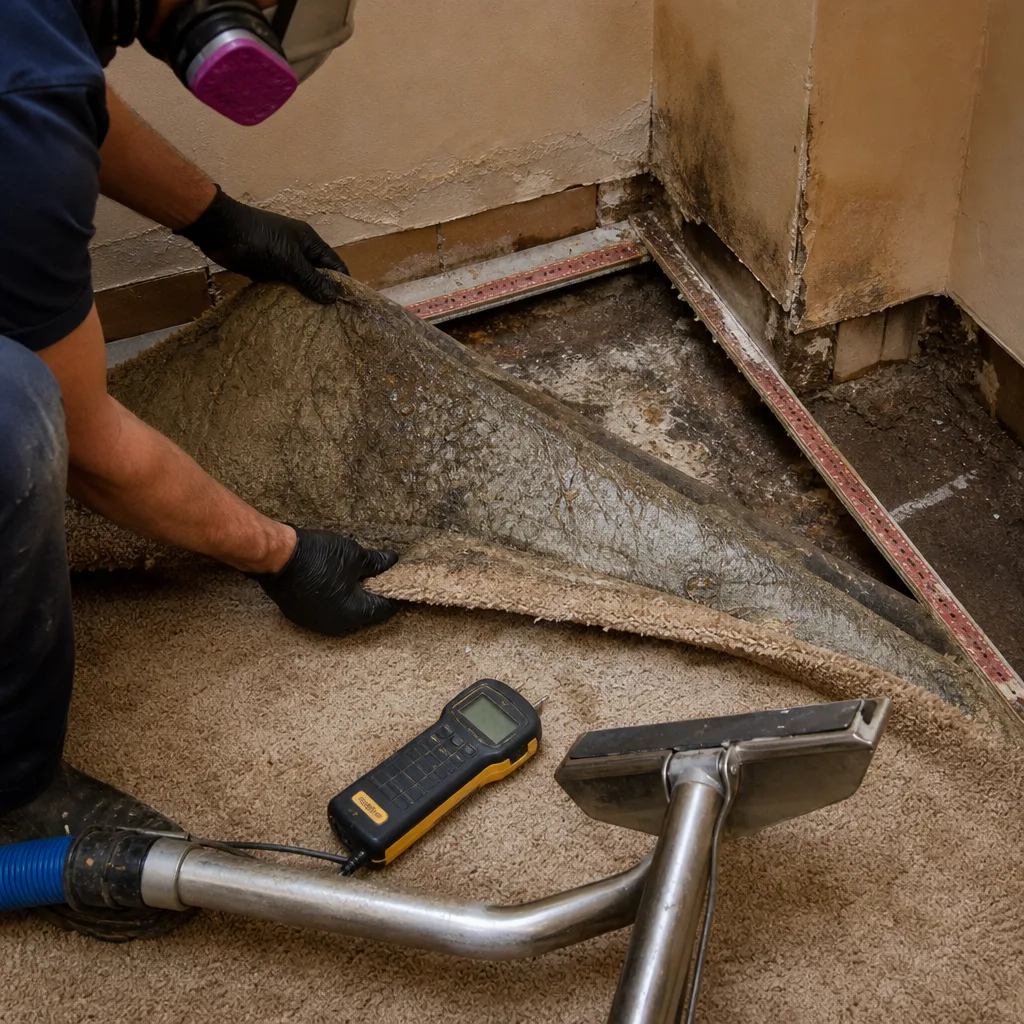
Carpet & Upholstery Cleaning
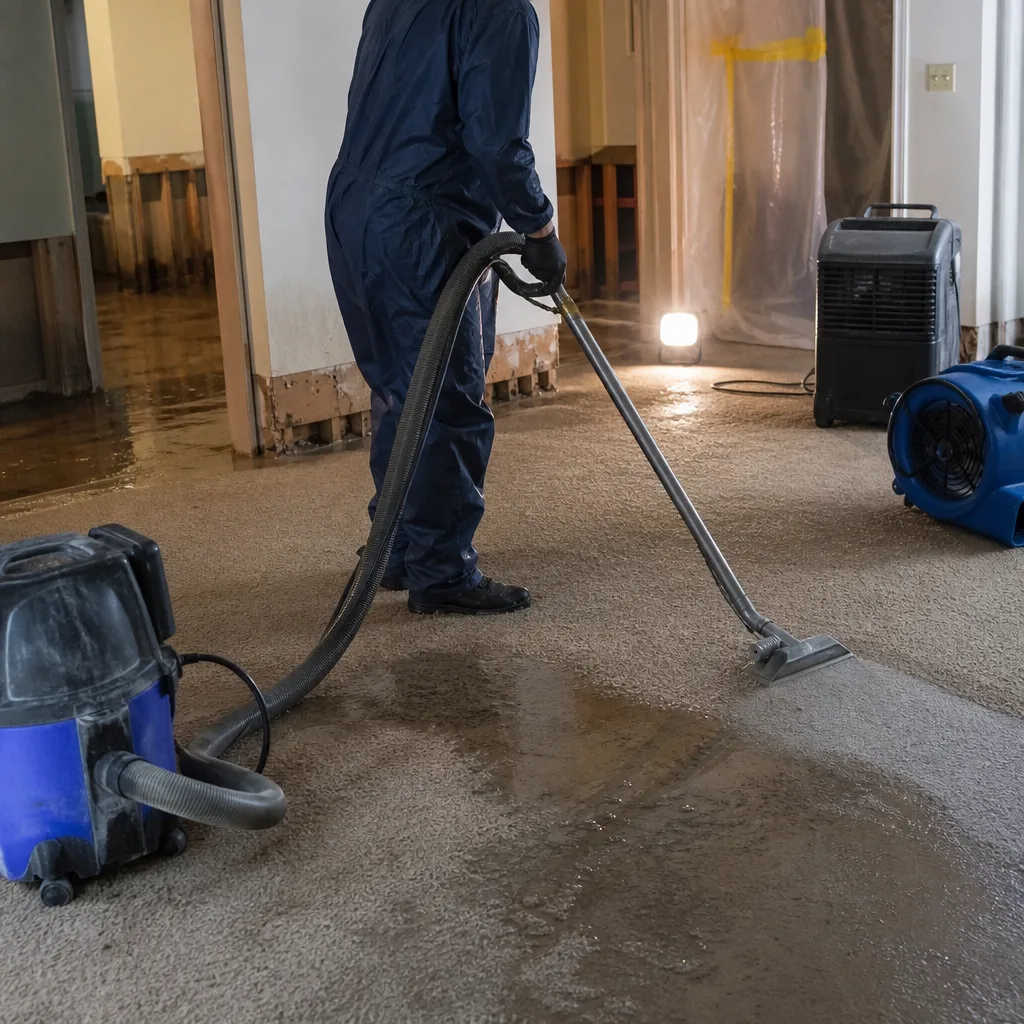
Category 1 water on a finished basement carpet can often be salvaged with professional extraction and drying, but only if we get to it within the first day or two. We use truck-mounted hot water extraction and professional-grade drying equipment. Upholstery that took smoke or soot damage gets HEPA-vacuumed, deodorized, and treated based on the fabric. If it can’t be saved to a safe standard, we document why for your insurer instead of returning a piece of furniture that’s still carrying mold spores.
Post-Construction Cleanup
After a rebuild, the dust isn’t just cosmetic. Drywall dust and construction debris settle into every surface, and in a house with old ductwork, that dust circulates for weeks. We run a full post-construction cleaning: HEPA air scrubbing, surface cleaning, duct and register cleaning, and a final walkthrough with you. You move back into a home that’s finished, not a job site with new drywall still dusting out of the vents. This service also handles the section of the claim that most adjusters underfund: the fine-particle cleanup after demo and rebuild.
What happens when you call
- 1
A real person answersNo phone trees - you reach a local pro.
- 2
You get an upfront price rangeHonest numbers before anyone is dispatched.
- 3
A background-checked tech heads outLicensed & insured, dispatched right away.
- 4
You approve before work beginsNothing starts until you say go.
Reconstruction & Cleanup Costs in Woodside, NY
Storm and water damage rebuilds in Woodside run on predictable ranges, though the exact number depends on how far the water traveled. Wind-driven roof leak repairs with membrane replacement and interior drywall restoration typically run $3,500 to $9,000 for a two-family rowhouse depending on how many units took water. A finished basement sewage backup requiring full Category 3 decontamination, drywall removal, and rebuild of the apartment usually lands between $8,000 and $22,000. Drywall and plaster repair after a single-unit water loss runs $1,200 to $4,500. Full contents pack-out and restoration for a tenant’s apartment adds $2,000 to $8,000. What moves the price is the water category, how many party walls got breached, and whether original plaster can be saved or must be replaced. The free inspection gives you a firm, line-item scope before you authorize anything. No open-ended estimates, and no surprises on the bill. The standing offers apply here too: $50 off any repair over $250, the $89 seasonal tune-up, and a 5% discount for seniors and veterans, always.
We Also Serve Cities Near Woodside
Our crews run the same routes into Sunnyside, Jackson Heights, Long Island City, and Maspeth. If your loss is in one of those neighborhoods, call the same live dispatcher at (917) 924-4221. We know the housing stock, the sewer patterns, and the insurance dynamics in each one.
Serving Woodside, NY - Our Local Coverage Area
We’re based in the Woodside area and know this community well. Use the map below to see our service coverage - if you’re nearby, we can almost certainly help.
Woodside Reconstruction & Cleanup Questions, Answered
How does a nor’easter in Woodside typically damage a flat-roof rowhouse, and what does your wind-rated repair involve?
A nor’easter gets under aging roof membrane seams and lifts them, letting wind-driven rain push horizontally into parapet walls, window headers, and the tops of shared party walls. The water runs down inside the wall cavity, soaking plaster and lath before any ceiling stain appears. Our repair involves stripping back to decking, replacing the compromised membrane with a mechanically fastened system, repairing any rotted parapet framing, and reinstalling or upgrading to wind-rated flashing details that meet current NYC code. The interior is dried, decontaminated, and rebuilt once the roof is sealed.
What happens when a sewage backup from the combined sewer floods a finished basement apartment in Woodside?
That water is Category 3, which means it carries sewage and requires full decontamination, not just drying. We set containment, remove all porous materials that absorbed the water including carpet, drywall, and insulation, run antimicrobial treatment on remaining hard surfaces, and then rebuild. Skipping containment allows sewage particulates to move through the rest of the house and into the attached units. This is a full restoration scope with documentation built for your insurer, because any adjuster who sees “basement flood” without a Category 3 protocol will deny the line items.
In a two-family rowhouse, how do you split the reconstruction work between the owner’s property damage and the tenant’s contents?
We document both separately from the first visit. Structural damage to walls, floors, ceilings, and building systems belongs on the owner’s policy. The tenant’s furniture, clothing, electronics, and displacement costs belong on the tenant’s renters policy. We photograph everything separately, keep the line items separated in the scope, and communicate with both adjusters directly. This is the single biggest reason Woodside claims stall: the split isn’t documented from hour one, and the owner’s rebuild gets held up while two carriers argue. We don’t let that happen.
Why does my Woodside brick rowhouse need impact-rated doors and window reinforcement before hurricane season?
Woodside’s attached rowhouses share party walls, which means a window or door failure on one unit lets wind pressure into the entire connected structure. Once the envelope is breached, the wind finds every gap in the old plaster, every crack in the parapet, and every seam in the neighboring roof. Impact-rated doors and reinforced window frames close the most common breach points. It’s a modest upgrade compared to the cost of a three-unit water loss after a single storm.
How soon after a wind-driven leak should I call for structural drying before mold takes hold in my plaster walls?
Call the same day. Mold spores germinate in 48 to 72 hours on wet organic materials, and plaster-and-lath walls hold moisture far longer than modern drywall. If we get air movers and dehumidifiers running within the first 24 hours, most of the wall cavity can be saved. Wait a week, and you’re looking at full plaster removal, framing treatment, and a much bigger claim. Call (917) 924-4221 as soon as you see water or even suspect it’s moving inside the wall.
Can you handle the whole job, or will I have to coordinate separate contractors for cleanup and rebuild?
We handle the entire scope. The same crew that extracts the water and runs the dry-out does the reconstruction. No mid-job handoff to a different company, no “that’s a different department” conversation. Our Reconstruction & Cleanup team is the same team that met you on day one, and Curt Bowman’s name is on the guarantee. The 90-Day Done Right Promise covers the full job, from first extraction to final walkthrough.
How fast can a crew actually reach my house in Woodside?
Our commitment is 45 minutes from your call to boots on the ground at your Woodside address. We dispatch from the New York City office, and crews run dedicated routes through Queens, so we’re usually inside that window even during a nor’easter when calls are coming in back-to-back. The dispatcher on the phone at (917) 924-4221 will tell you exactly which crew is rolling and their ETA, not a vague promise.
What should I do in the first 30 minutes after I discover water coming into my Woodside home?
Call us first at (917) 924-4221 while the water is still moving. Take photos of the visible damage if you can do it safely. Don’t run fans or a shop vac on water that might be sewage, don’t peel back wet plaster, and don’t open walls to “let them dry.” That can spread contaminants and ruin the documentation your adjuster will need. Keep people and pets out of the affected area, especially if there’s standing water in a basement. Then let us get there and start mapping the damage.
Written by Curt Bowman, Owner at Floodline Restoration Co. of Manhattan. For 24/7 emergency response in Woodside, call (917) 924-4221. A live dispatcher answers, and a certified crew heads your way within 45 minutes.