
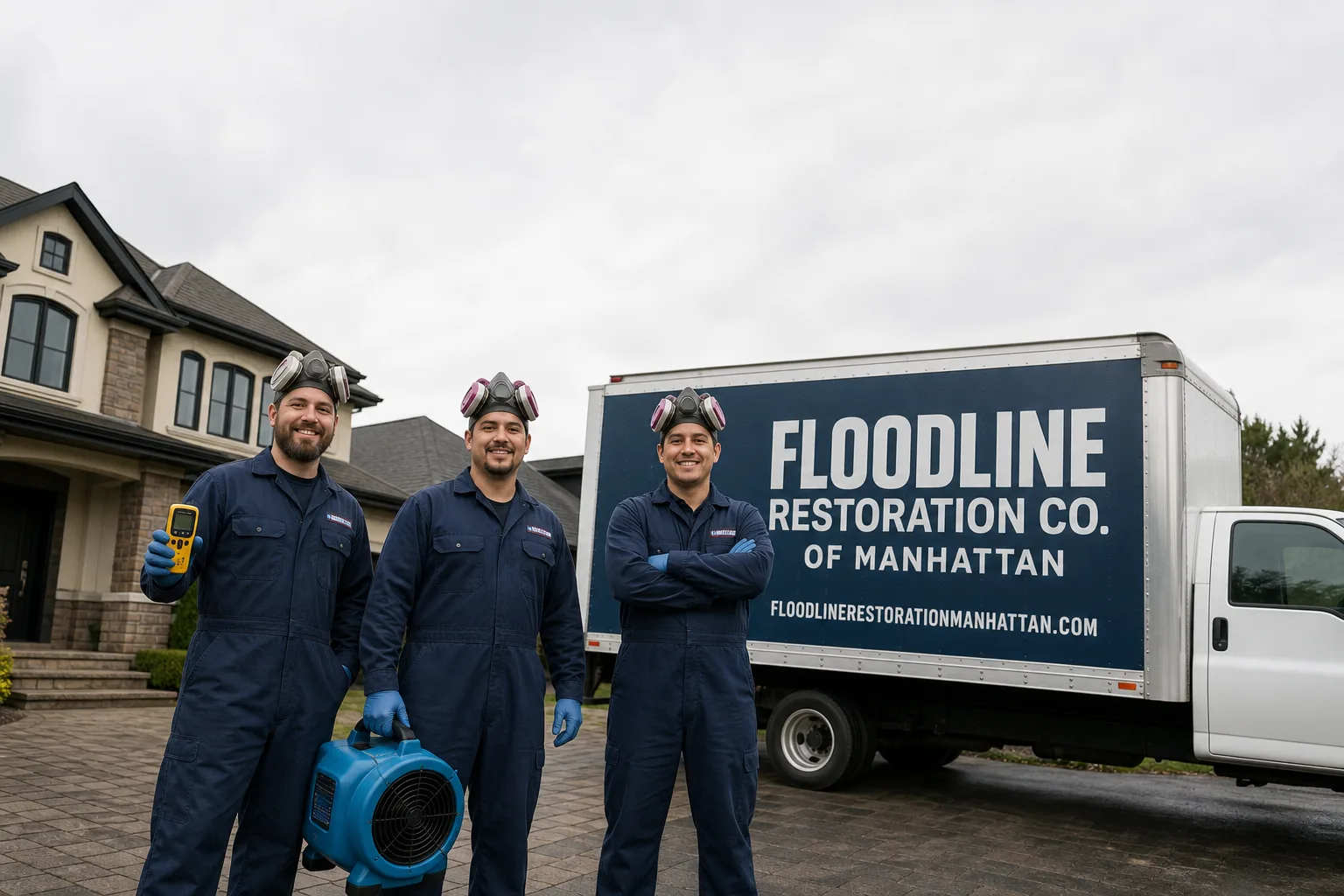
Free visual inspection and a written scope of work before any mitigation begins - photos, moisture readings, and drying logs go in your claim file
The scope we write is the scope we bill. Anything new gets shown to you, in writing, before we touch it.






 Before
 After
After Before
 After
After Before
 After
After24/7 Emergency Sewage Cleanup in Leonia
Sewage cleanup in Leonia typically costs $1,800-$4,200 for a basement backup and $450-$1,200 for a contained toilet overflow, with black water extraction making up the bulk of the labor. Our crews dispatch from the New York City office and reach most Leonia addresses within 45 minutes using pre-cleared arterial routes. Call (917) 924-4221 any hour. A live dispatcher answers, not a recording.
The first hour decides whether you’re looking at a cleanup or a rebuild. Category 3 water, what sewage is classified as by IICRC standards, carries bacteria, viruses, and parasites. In Leonia’s older homes, where plaster-and-lath walls and 1920s-era framing sit close to the floor, contaminated water wicks upward fast. Every hour the water sits, the demolition line climbs higher. A free visual inspection tells us exactly where that line is, and our written scope tells you what it costs before a single wall is opened.
Understanding Sewage Cleanup Severity in Leonia Properties
Leonia’s housing stock shapes how sewage damage behaves. Most homes here were built between the 1920s and 1950s: Colonials on Broad Avenue, Tudors up in the Hilltop section, Capes along Grand Avenue. These houses share two traits that matter during a sewage loss. First, plaster-and-lath walls absorb contaminated water differently than modern drywall. Drywall wicks and fails quickly, making damage obvious. Plaster holds water longer and hides it deeper, so moisture mapping with thermal imaging is the only way to know where the contamination actually ends. Second, pre-WWII foundations here often sit on clay-tile drain systems original to the house. When cast-iron waste lines crack during a freeze-thaw cycle, and they do, sewage doesn’t just pool on the floor. It follows the tile lines into the foundation perimeter, where it saturates soil and framing you can’t see.
We classify every loss before we touch it. A toilet overflow with clean supply water is Category 1 until it sits. A washing machine line that dumps gray water is Category 2. A backed-up sewer line, septic failure, or any water that has contacted feces is Category 3. The category dictates what gets removed, what gets treated with antimicrobials, and what gets dried in place. In Leonia, where basements are often finished with paneling over original masonry, Category 3 in a crawl space or behind a wall means cutting access points and running negative air. No shortcuts.
Why Leonia Property Owners Choose Floodline Restoration Co. of Manhattan
- 45-minute response commitment. We plan routes around Leonia’s cut-through traffic ban before the phone rings, because a truck stuck on a GPS shortcut isn’t helping anyone.
- 24/7 live answer. A dispatcher picks up at 2 a.m. Not a voicemail tree. You’ll speak to a person who can dispatch a crew immediately.
- IICRC-certified crews, including WRT and AMRT codes. The technician who maps your moisture reads is trained in water damage restoration and applied microbial remediation, not just cleanup.
- Free visual inspection. We walk the loss with you, take the readings, and hand you a written scope before any work begins. No surprises.
- Direct insurance billing. Floodline coordinates with your carrier directly and bills them for covered work. You’re not running messages between us and your adjuster.
- One team from extraction to reconstruction. The crew that sucks out the black water is the crew that rebuilds the wall. No mid-job handoff to a subcontractor you’ve never met.
Our Sewage Cleanup Process
Inspection & Assessment
We start with thermal imaging and moisture meters to map the full extent of the loss, including what’s hiding in plaster-and-lath assemblies and foundation walls. You get a category classification and a line-item scope in writing.
Extraction & Stabilization
Truck-mounted extractors pull standing black water fast. We set containment barriers and negative air pressure immediately, so contaminated air doesn’t push into living spaces while we work.
Drying & Dehumidification
Older Leonia homes need slower, lower-heat drying. Phoenix dehumidifiers and Injectidry mats run on mapped, measurable schedules. We log daily readings until the dry standard is met, not until the air feels dry.
Cleaning & Sanitization
All affected surfaces get treated with EPA-registered antimicrobials. We remove contaminated porous materials that can’t be properly cleaned: carpet, padding, saturated insulation, and any drywall or plaster that’s lost structural integrity.
Black Water & Crawl Space Treatment
For crawl spaces, which are common under Leonia’s older Capes and Colonials, we run specialized extraction and encapsulation protocols. Clay-tile drains get cleaned and inspected so the contamination source is addressed, not just the symptom.
Repairs & Restoration
We rebuild what we remove. Plaster repair, flooring, cabinetry, baseboards, paint. The crew that dried the space is the crew that puts it back together, and every bit of it falls under our 90-Day Done Right Promise.
Need Emergency Sewage Cleanup in Leonia Now?
Crews minutes away, answering live 24 hours a day. The sooner we start, the less it costs.
Working With Your Insurance Company
Most homeowners’ policies cover sewage damage caused by a sudden backup, but the adjuster will want proof of what happened, what was wet, and what you did about it. That proof has to be built in the first hours, not reconstructed a month later. We photograph every affected room before and during extraction. We log moisture readings daily and keep drying charts. We document which materials were removed and why. Then we hand that entire package to your adjuster and talk to them directly. Direct insurance billing means Floodline sends the claim paperwork to your carrier. You’re not chasing a check and hoping it covers the bill. Our estimates follow industry-standard pricing software adjusters recognize, which shortens the back-and-forth. For Leonia homeowners dealing with a sewage backup in a 1930s Colonial, the difference between a contested claim and a closed one is often the quality of the documentation, and documentation starts the minute we walk in.
What We Provide Your Insurer
- Thorough documentation of the loss
- Photos of all damage, room by room
- Moisture readings and drying logs
- A detailed, line-item scope of work
- Direct coordination with your carrier
Built for Leonia’s Loss Calendar
Leonia’s sewage losses follow a seasonal rhythm that a 42-year company sees coming. January and February are the worst. The freeze-thaw cycles that stress Bergen County’s older masonry foundations also stress the cast-iron waste lines running under them. A cracked line under a Broad Avenue Colonial during a deep freeze is a Category 3 backup waiting for the thaw. In February, we see old clay-tile drain systems in Leonia’s pre-WWII basements fail under snow melt and groundwater pressure, pulling sewage back into the house through floor drains. That’s not a plumbing problem; that’s a foundation seepage problem with sewage in it.
Spring brings nor’easters. When the ground is saturated and another storm drops three inches of rain, Leonia’s older storm and sanitary lines, some original to the 1920s subdivisions, get overwhelmed. Sewage backs up through basement floor drains and first-floor toilets. Summer is the quiet season for backups, but not for septic failures in the borough’s few remaining septic systems. Late fall, before the ground freezes, is when roots in aging clay pipes start to constrict flow, and the first big cold snap turns a slow drain into a stoppage. All of this is predictable. The response shouldn’t be.
Sewage Cleanup Across Leonia’s Neighborhoods
The Hilltop section, the area up toward Highwood Avenue and the higher elevations near the Palisades, tends to see cast-iron waste line failures in the older Tudors. These 1920s and 1930s homes sit on bedrock close to the surface, which means foundation shifts are common and pipes move with them. A crack at a bell joint in a waste line sends sewage into basements finished with plaster walls and original wood floors. Our crews know the sanctioned arterial routes up Wood Park and along Fort Lee Road, because taking a shortcut through residential streets here means a delay we can’t afford, and neither can your floor structure.
Down by the Grand Avenue corridor, the housing shifts to smaller Capes and colonials on tight lots. Crawl spaces are more common here, and a sewage backup in a crawl space is the worst kind, because the smell comes up through the floor before anyone sees the water. We run specialized crawl space sewage removal here, with confined-space protocols and HEPA-filtered negative air to keep contaminated air from circulating through the living space. Near the Overpeck Creek side of town, the water table runs higher, and basement floor drains can become entry points for sewage-laced groundwater during heavy rain. These jobs require black water extraction followed by aggressive drying and, often, drain backflow prevention so it doesn’t happen again in the next storm.
The streets around Wood Park and the areas off Broad Avenue have a mix of 1950s-era homes with block foundations and newer renovations. These basements often finished years ago, now hold furniture, stored belongings, and finished walls. A sewage backup here means content restoration and detailed sanitization and disinfection in addition to structural drying. The scope is bigger, the insurance claim is more complex, and the need for a written, line-item plan before demolition starts is exactly why we do free visual inspections on every Leonia call.
Specialized Sewage Cleanup Services We Offer in Leonia
Sewage Backup Cleanup
A backed-up main line is the most common emergency we handle in Leonia, especially during freeze-thaw cycles and nor’easter season. We extract, contain, dry, and rebuild, and we document everything in between. Our Sewage Cleanup team treats every backup as a Category 3 event until proven otherwise.
Toilet Overflow Cleanup
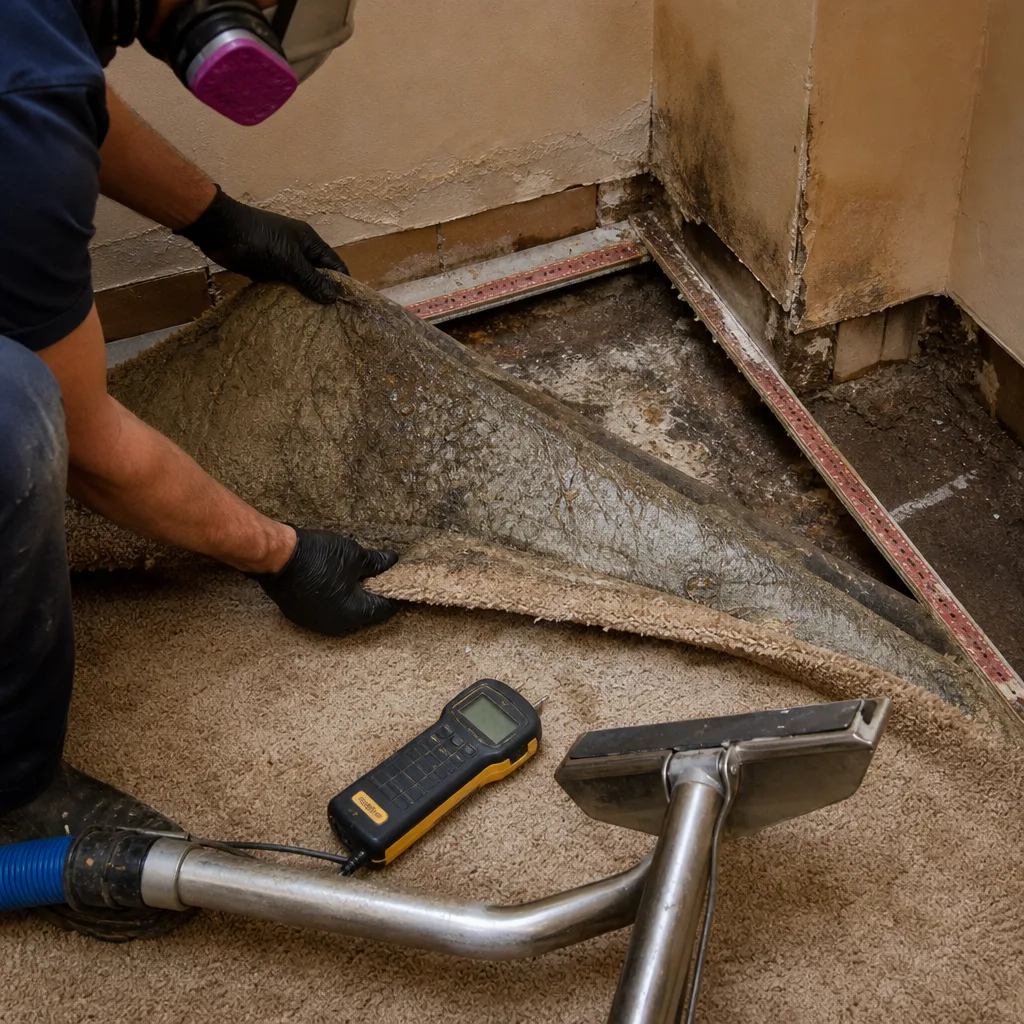
A toilet overflow can be Category 1 if the water is clean and caught immediately, but in Leonia’s older bathrooms, where flooring is often vinyl over wood subfloor, that water finds its way down fast. We check what’s underneath before we call it clean.
Septic Failure Cleanup
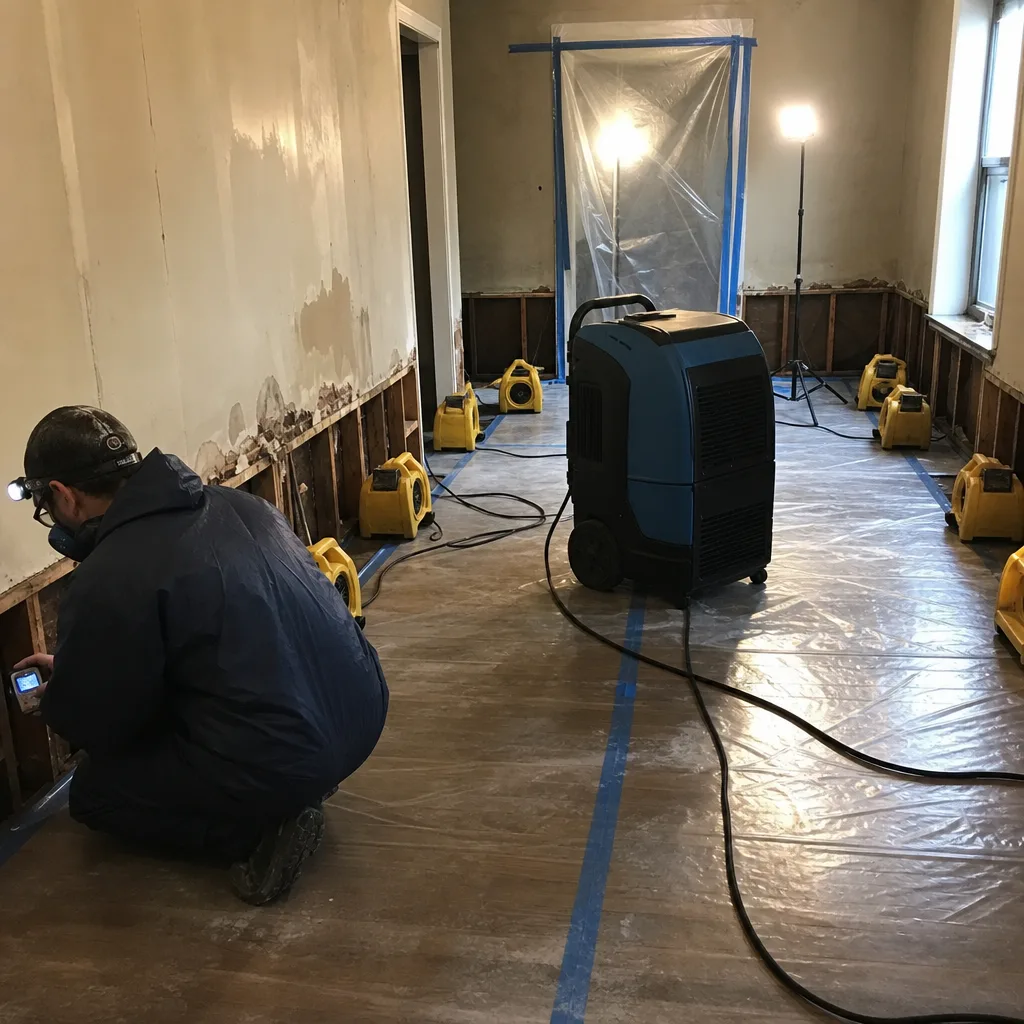
Leonia’s remaining septic systems are aging, and when one fails, the result is widespread contamination around the property, not just inside the house. We handle the interior cleanup, coordinate with your septic contractor on the source, and document the entire loss for your carrier.
Black Water Extraction
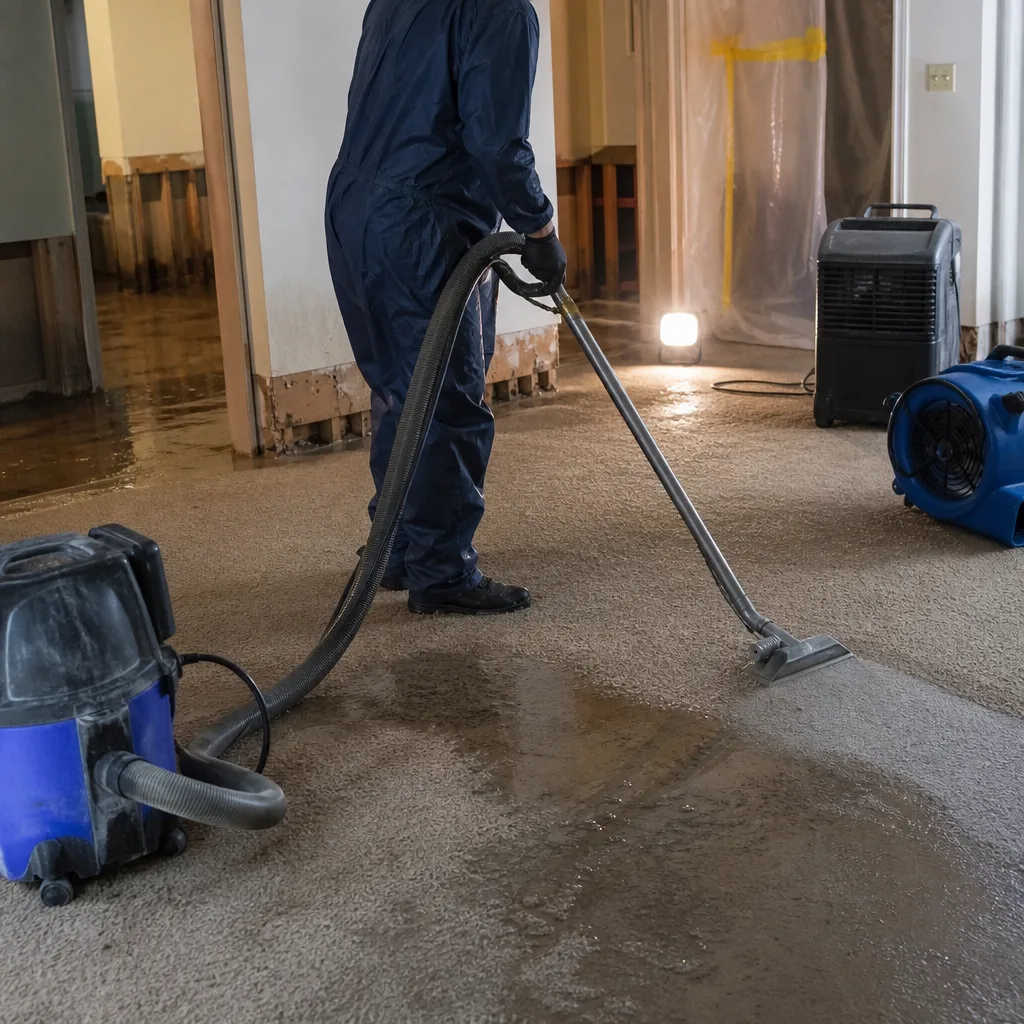
Category 3 water requires full PPE, containment, and extraction protocols that a mop and bucket can’t touch. We bring truck-mounted extraction, HEPA air scrubbers, and the training to know which materials stay and which get cut out and bagged for disposal.
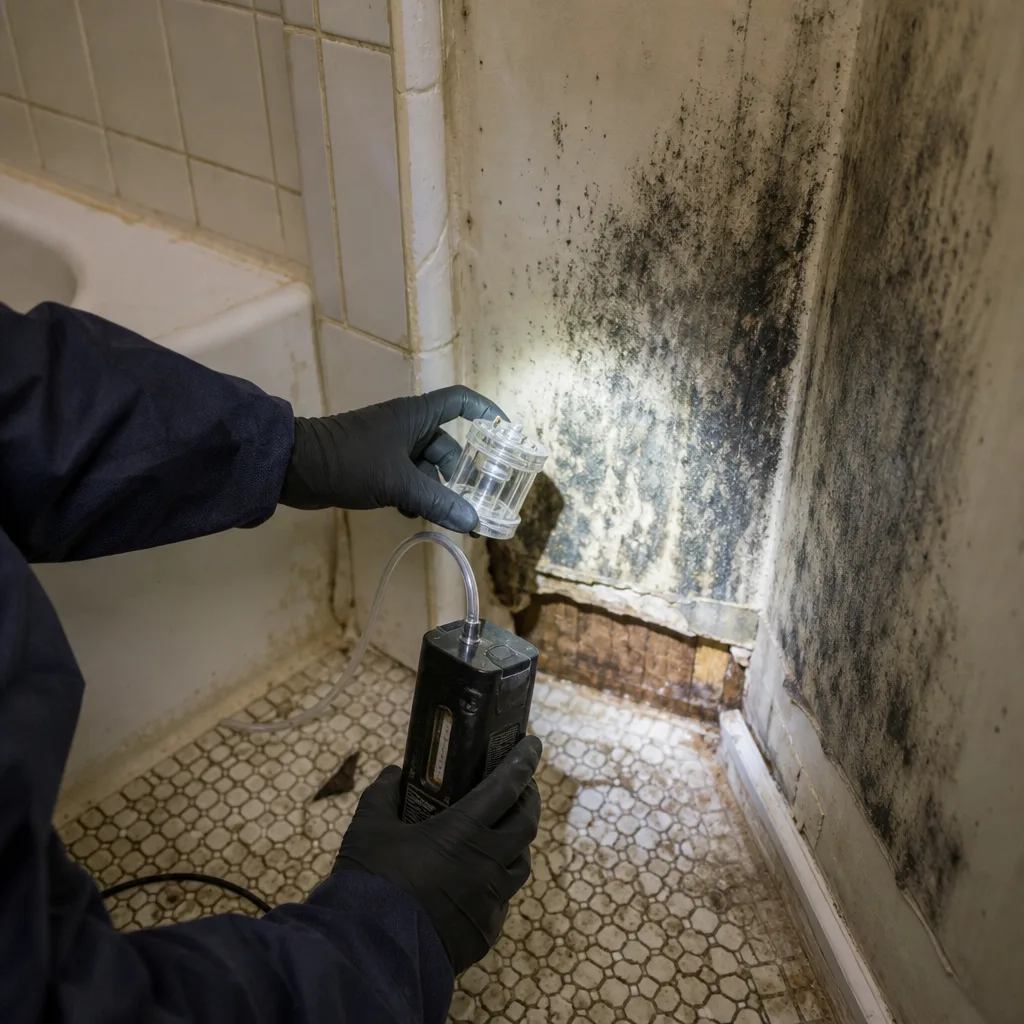
Sanitization & Disinfection
After the water is gone, the bacteria and potential viruses remain on every surface the sewage touched. We treat all affected areas with EPA-registered antimicrobials, fog hard-to-reach cavities, and verify with post-remediation testing that the space meets clearance standards.
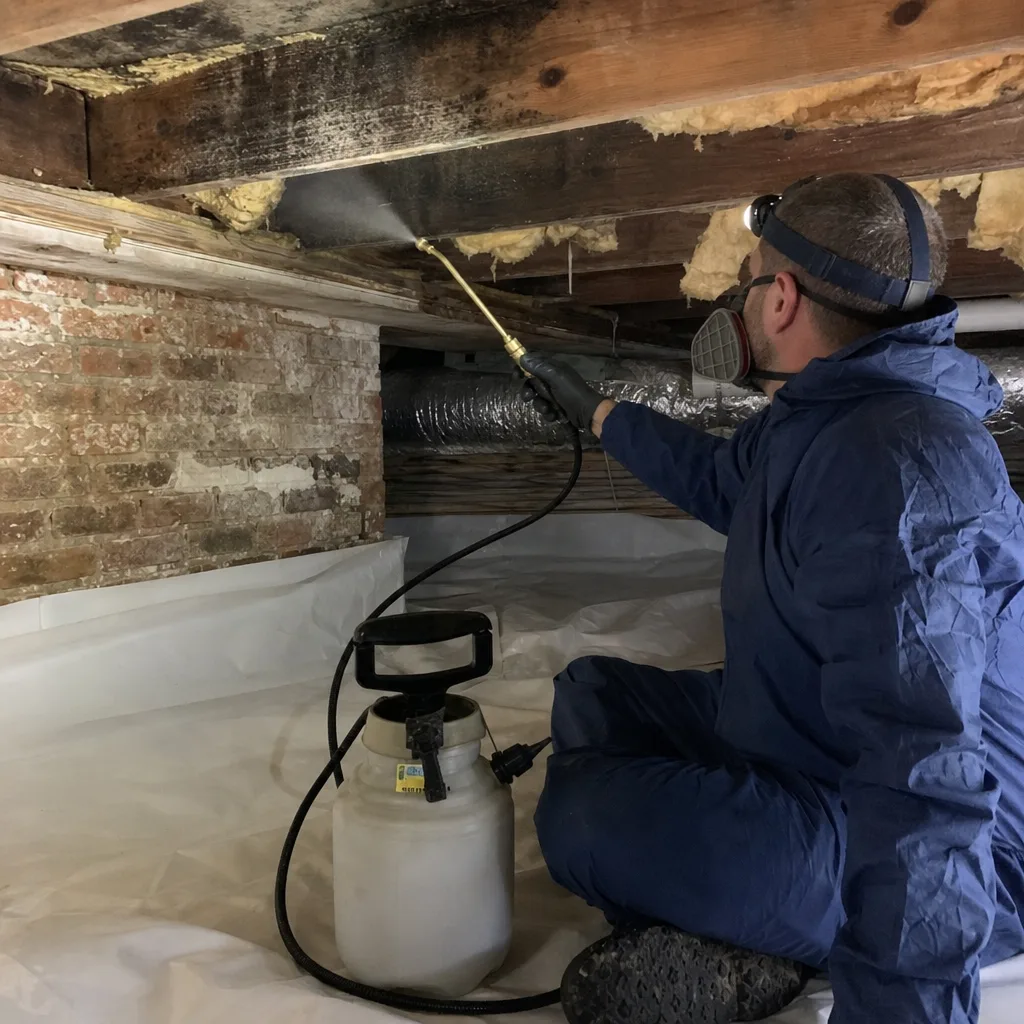
Crawl Space Sewage Removal
Sewage in a crawl space is one of the most labor-intensive cleanup jobs in Leonia’s older Capes and Colonials. We use confined-space protocols, extract contaminated water and saturated insulation, treat the soil, and run drying equipment until readings confirm the space is dry. This is not a job for a general handyman with a shop vac.
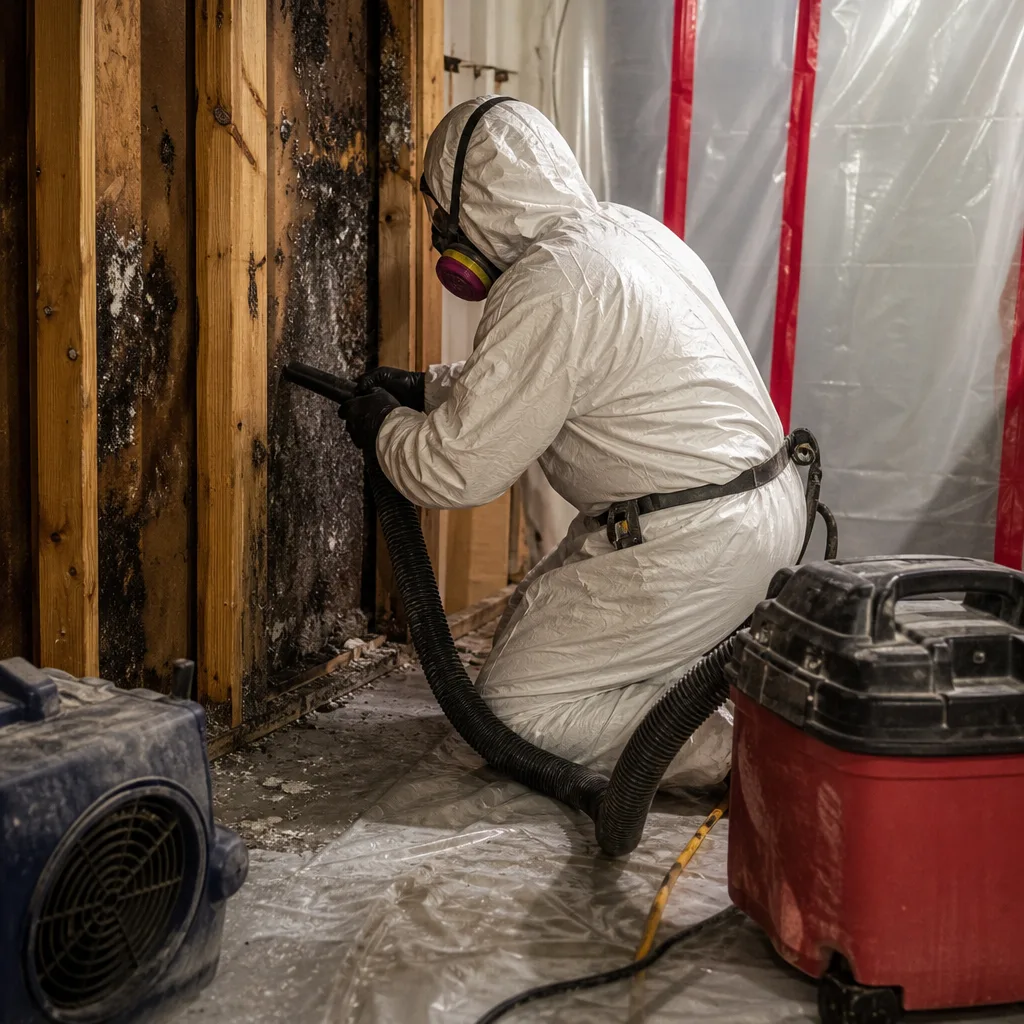
What happens when you call
- 1
A real person answersNo phone trees - you reach a local pro.
- 2
You get an upfront price rangeHonest numbers before anyone is dispatched.
- 3
A background-checked tech heads outLicensed & insured, dispatched right away.
- 4
You approve before work beginsNothing starts until you say go.
Sewage Cleanup Costs in Leonia, NJ
What should a Leonia homeowner actually expect to pay for sewage cleanup? A contained toilet overflow caught within the first hour often runs $450-$1,200. A basement backup with a few hundred square feet of affected flooring and drywall runs $1,800-$4,200. A full-category 3 loss in a finished basement with crawl space involvement, plaster-and-lath walls, and content restoration can reach $6,000-$12,000 or more, depending on what was stored down there and how high the water rose. What moves the price: the category of water, the square footage of contamination, the age of the walls (plaster is slower to dry and more expensive to repair than drywall), crawl space access, and whether contents need pack-out and restoration. Insurance typically covers sudden category 3 backups if you have the right endorsement, but a slow seep over months often gets classified as a maintenance issue. The free visual inspection takes the guesswork out. You get a written scope with line-item pricing before any work starts, and our direct insurance billing means the carrier pays for covered work directly. Call (917) 924-4221 for an exact quote. Estimates are free.
We Also Serve Cities Near Leonia
Floodline Restoration Co. of Manhattan provides Sewage Cleanup in Leonia and the surrounding Bergen County communities, including Fort Lee, Palisades Park, Ridgefield Park, and Englewood Cliffs. The same live dispatch, the same 45-minute response commitment, and the same written 90-Day Done Right Promise apply wherever we send a crew.
Serving Leonia, NJ - Our Local Coverage Area
We’re based in the Leonia area and know this community well. Use the map below to see our service coverage - if you’re nearby, we can almost certainly help.
Leonia Sewage Cleanup Questions, Answered
How does Leonia’s cut-through traffic ban affect emergency sewage cleanup response?
The borough’s 2018 ban on cut-through traffic means GPS apps will route your restoration truck down a residential street that local enforcement may close to through-traffic. A crew that relies on Waze or Google Maps can end up stopped or detoured for 20 minutes while sewage keeps soaking into your plaster-and-lath walls. Our dispatchers use pre-cleared arterial routes and know the approved corridors before the first call comes in. That’s why a 45-minute response is actually 45 minutes here, not an estimate.
Why do older Leonia Colonials need different drying after a category 3 sewage backup?
Leonia’s 1920s through 1950s housing stock was built with plaster-and-lath walls, not drywall. Plaster absorbs water slowly, holds it deep, and fails if dried with high heat. Standard high-heat structural drying can cause the plaster substrate to crumble or crack, which turns a sanitization job into a full plaster repair. We use thermal imaging to map where moisture actually sits inside the wall cavity, then run lower-heat drying with extended dwell times. Moisture logs document the whole curve until the dry standard is met.
What category of water is a toilet overflow in Leonia, and what must be removed?
A toilet overflow is Category 1 if the water is clean supply water and it’s caught immediately. If the bowl contained waste, or if the water sat for more than a few hours, it’s Category 3. Category 3 means porous materials that can’t be thoroughly cleaned, carpet, padding, upholstered furniture, saturated drywall or plaster, and some wood products, must be removed and disposed of. Non-porous surfaces get treated with antimicrobials. We classify the water category on site and put it in writing.
Is a permit required for sewage cleanup and repairs in Leonia?
Cleanup and emergency mitigation work doesn’t require a permit, but structural repairs, plumbing line replacement, and any electrical work do. We handle the restoration side and coordinate with your plumber on the line repair. The Leonia building department reviews repair scopes, and our line-item documentation meets what they and your insurer will ask for.
What should I do first when sewage backs up in my Leonia basement?
Stop using the water. Don’t flush toilets, run the washer, or take a shower. Every additional gallon that goes down a drain can come back up in the basement. Shut off the electrical breakers to the affected area if you can reach the panel safely without stepping in water. Keep children and pets out. Then call (917) 924-4221. We’ll walk you through the first 30 minutes on the phone and dispatch a crew that knows how to get to your street without hitting Leonia’s traffic restrictions.
How fast can someone actually get to a Leonia address?
Our commitment is a 45-minute response to any Leonia address, day or night. The real variable is whether the routing app would send a crew through a restricted residential street. Because we plan routes around the borough’s cut-through ban, we hit that 45-minute mark consistently. During a nor’easter, everything is slower, but we still use the same pre-cleared corridors and live dispatch to get moving faster than anyone who’s figuring out the map on the fly.
How long does sewage cleanup and drying take in a Leonia home?
Extraction and sanitization usually happen in a single visit. Drying is the longer tail. In a modern drywall home, structural drying might take three to five days. In a Leonia Colonial with plaster-and-lath walls, it often takes six to ten days because of the slower drying protocols those assemblies require. We take daily moisture readings and hand both you and your insurance carrier the drying log when the standard is met.
Can we stay in our Leonia home during sewage cleanup?
It depends on the extent of the contamination. A contained toilet overflow in one bathroom usually allows you to stay, with containment barriers isolating the affected area. A full basement backup with black water, negative air pressure, and demolition requires you to vacate the affected floor, and sometimes the whole house, while we work. We’ll tell you straight on the inspection, and your adjuster will see the same scope we give you.
Written by Curt Bowman, Owner at Floodline Restoration Co. of Manhattan, serving Leonia and the surrounding Bergen County communities.