
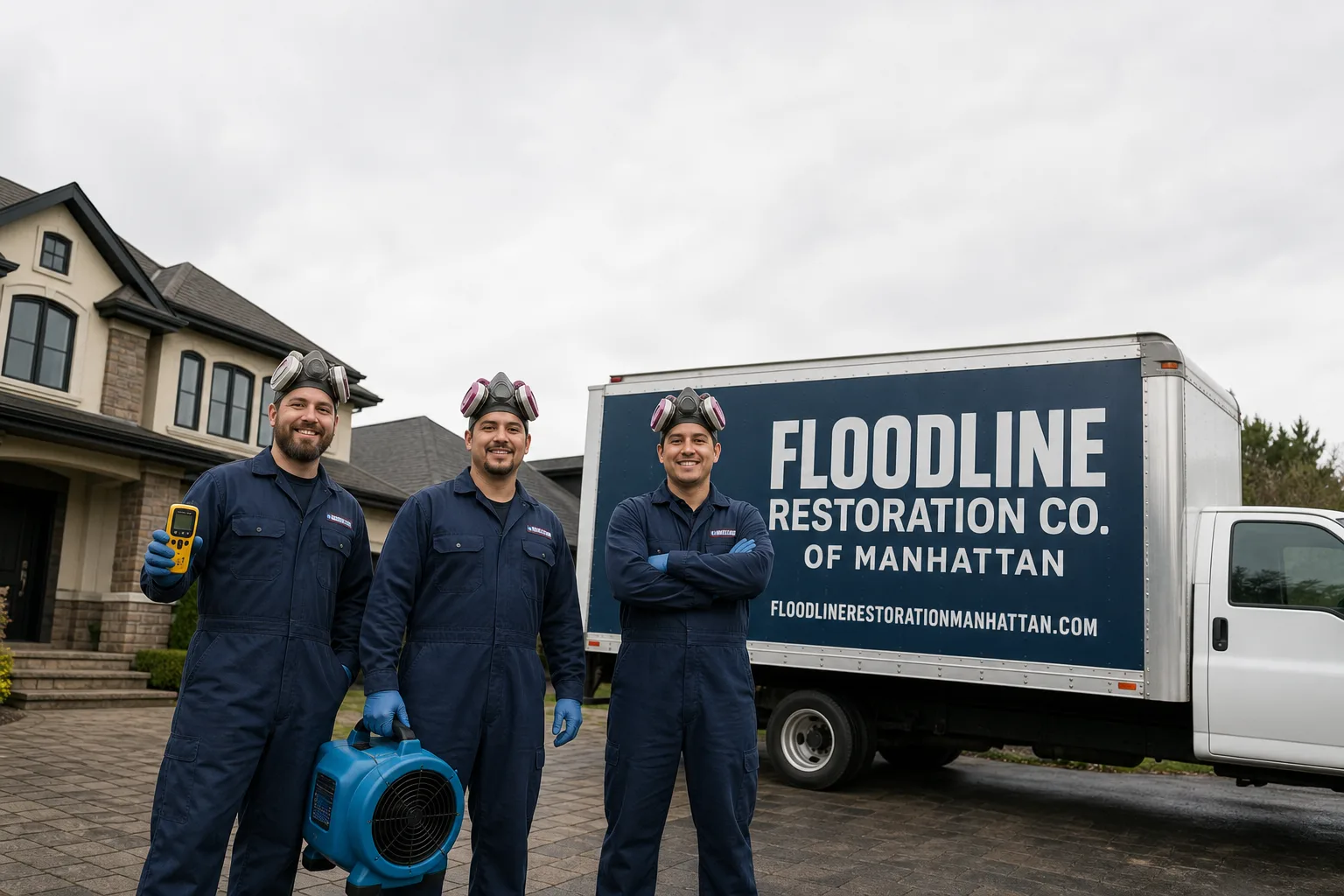
Free visual inspection and a written scope of work before any mitigation begins - photos, moisture readings, and drying logs go in your claim file
The scope we write is the scope we bill. Anything new gets shown to you, in writing, before we touch it.






 Before
 After
After Before
 After
After Before
 After
After24/7 Emergency Biohazard & Crime Scene Cleanup in Alpine
Biohazard and crime scene cleanup in Alpine, NJ typically runs between $3,500 and $12,000 for a contained single-room event, and $15,000 to $40,000 or more when blood, tissue fluids, or unattended-death material has wicked into 1800s horsehair plaster walls and balloon-frame cavities that need controlled demolition. Floodline Restoration Co. answers the phone live at (917) 924-4221 every hour of every day, and our Biohazard & Crime Scene Cleanup crews stage out of the New York City dispatch office with routes mapped specifically into Schuyler County so the Alpine address gets a same-visit response, not a callback. In this corner of the state, the nearest full-service biohazard contractors operate out of Corning, Elmira, and Watkins Glen, which means the clock is already running against you by the time most companies even put a truck on the road. We do not leave a biohazard scene sitting overnight in Alpine while a dispatcher figures out who is closest.
Understanding Biohazard & Crime Scene Cleanup Severity in Alpine Properties
Biohazard work is categorized by the source material: blood and bodily fluid fall under OSHA’s bloodborne pathogen standard, unattended death adds decomposition fluids and often insect activity, and hoarding scenes combine biohazardous waste with structural loading and aerosolized mold. The severity question in Alpine is different from almost anywhere else because of what the houses are made of. A mid-1800s wood-frame farmhouse with original horsehair plaster and a rubble-mortar foundation does not contain fluids the way modern drywall over closed framing does. Blood and tissue fluids follow gravity and capillary action into the plaster itself, down into balloon-frame wall cavities that run uninterrupted from basement sill to attic, and into stone that has been absorbing groundwater seasonally for 150 years. We moisture-map every affected wall cavity with thermal imaging and penetrating meters before we open anything, because in Alpine the contamination plume below what you can see is routinely worse than the visible stain. Category 3 water from a burst pipe or sewage backup layered on top of a biohazard scene is not a separate problem here, it is the same wall cavity, the same plaster, the same fieldstone, and it all has to be treated as one contaminated assembly.
Why Alpine Property Owners Choose Floodline Restoration Co. of Manhattan
- One team, first extraction to final rebuild. The same certified crew that contains the scene runs the demolition, the drying, the antimicrobial treatment, and the reconstruction. No mid-job handoff to an inherited subcontractor.
- Live answer at 2 a.m., every time. You call (917) 924-4221 and a person picks up. Not a recording, not a call center script. A dispatcher who knows the Alpine response routes.
- IICRC-certified crews trained for biohazard protocols. Our technicians carry current IICRC certifications and have worked Schuyler County’s older housing stock before, so they know what 1800s plaster does when it is wet and contaminated.
- Free visual inspection with a written scope before work starts. You see the line-item plan, the containment strategy, and the drying protocol in writing before we cut anything. No surprises on the bill.
- Direct insurance billing, photos and logs for your adjuster. We document the loss from the first hour, bill your carrier directly, and never leave you playing messenger.
- 90-Day Done Right Promise, in writing. If it is not done right, we make it right. That is the Keystone Standard, and we put it in writing on every Alpine job, no paperwork battles, no arguing.
Our Biohazard & Crime Scene Cleanup Process
Inspection & Assessment
We walk the Alpine property with thermal imaging and moisture meters, mapping the contamination plume through plaster, framing, and stone before any destructive work begins. You get a written scope and a firm price, not a vague estimate.
Extraction & Stabilization
Solid and liquid biohazard material is removed under regulated containment. If standing water or sewage is present, we extract it immediately with truck-mounted equipment so it stops driving contamination deeper into the structure.
Drying & Dehumidification
Balloon-frame cavities in Alpine farmhouses need aggressive drying. We run Dri-Eaz and Phoenix dehumidifiers with XPOWER air movers, and log daily moisture readings against the dry standard until every cavity tests dry.
Cleaning & Sanitization
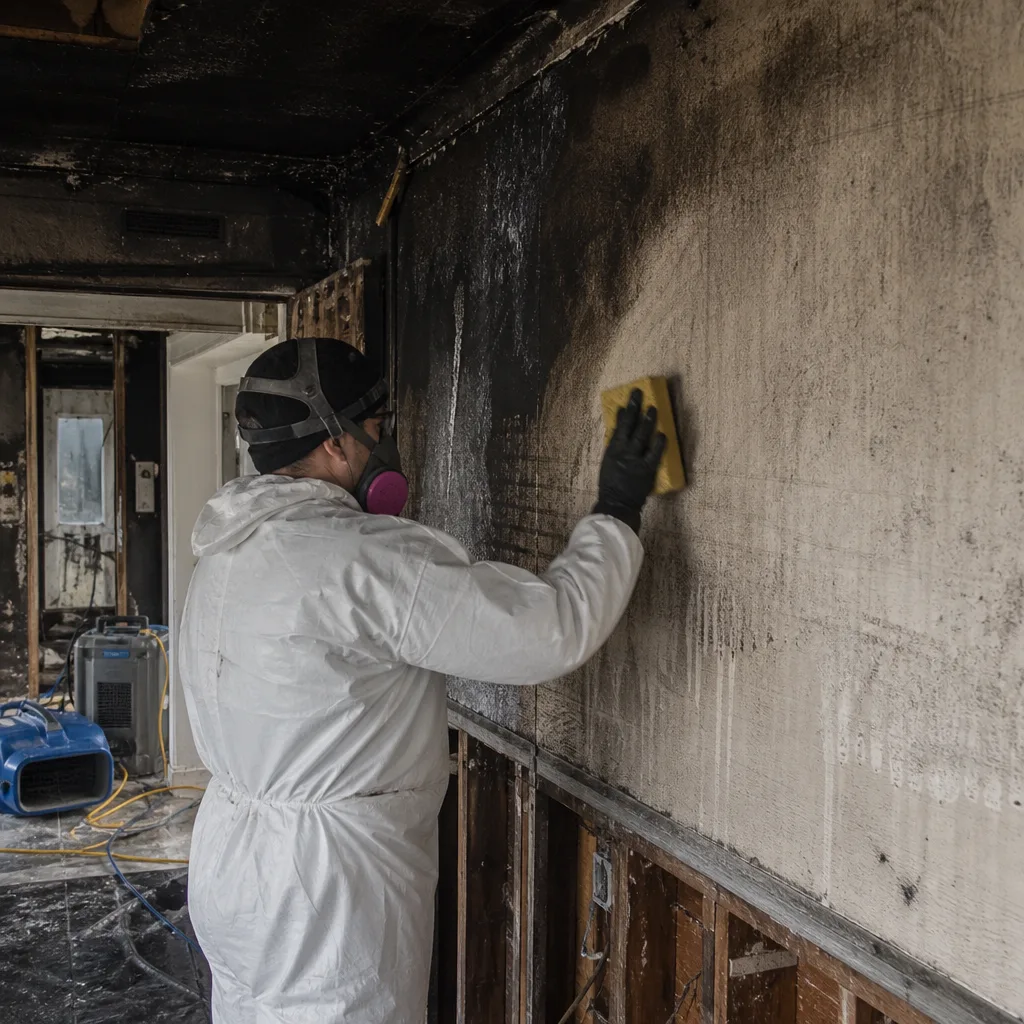
HEPA air scrubbers run the whole time we work. We apply hospital-grade antimicrobials to all affected framing, plaster, and masonry, and scrub every surface inside the containment zone.
Specialty Biohazard Treatment
For bloodborne pathogen scenes, we follow OSHA 29 CFR 1910.1030 protocols. Infectious disease disinfection gets a medical-grade disinfectant with documented dwell times. Odor neutralization includes hydroxyl generators, not masking agents.
Repairs & Restoration
We rebuild what we removed, matching period-appropriate plaster, trim, and finishes where the Alpine farmhouse calls for it. The job is not done until the room looks like the event never happened.
Need Emergency Biohazard & Crime Scene Cleanup in Alpine Now?
Crews minutes away, answering live 24 hours a day. The sooner we start, the less it costs.
Working With Your Insurance Company
Most Alpine biohazard and crime scene losses are covered under the property portion of a homeowner’s policy, often through the same peril that caused the scene. We document everything from the first hour: photos of every affected room, moisture readings from every wall cavity, drying logs when we run equipment, and a line-item scope of work your adjuster can actually read. We talk to your carrier directly, so you are not translating trade language over the phone. If the adjuster pushes back on a line item, we walk them through the Alpine-specific reality, which is that horsehair plaster and balloon-frame contamination is not a patch-and-paint situation. The written scope you approve before work starts is the same document your insurer sees. No side deals, no inflated rebuild numbers, no games.
What We Provide Your Insurer
- Thorough documentation of the loss
- Photos of all damage, room by room
- Moisture readings and drying logs
- A detailed, line-item scope of work
- Direct coordination with your carrier
Built for Alpine’s Loss Calendar
Alpine sits in the Schuyler County frost belt, where January cold snaps push pipes in unheated 1800s farmhouses past the breaking point and spring snowmelt channels straight into rubble-mortar basements that were never waterproofed. The biohazard connection is not obvious until you see it in person. A house left empty between November and April can hold a burst pipe for weeks. By the time the owner arrives for a spring visit, Category 3 water has saturated the original plaster and the same wall cavities where decomposition or bloodborne material may be present. That is the Alpine pattern: not a single dramatic event, but a slow, unobserved saturation that makes the contamination worse every day. Summer brings thunderstorms that overwhelm old farm drainage and push water under fieldstone foundations. Fall is the quiet season, and the best time to inspect basements and foundations before freeze-thaw cycling starts again. Each season produces a different entry route for water and contamination, and each one starts the same way: moisture moving through materials that have been absorbing it for a century and a half, with the nearest help an hour away.
Biohazard & Crime Scene Cleanup Across Alpine’s Neighborhoods
Alpine does not have subdivisions in the modern sense. The town is a scatter of farmhouses and outbuildings along County Route 10 and the side roads that climb the hills toward Odessa and Cayuta. The terrain dictates how we approach a job, because the steep driveways and tight turns that separate one farmhouse from the next mean our response planning happens before the truck leaves. A property off County Route 10 near the old town center is a different drive than a seasonal farmhouse up a long gravel lane that has not been plowed since the last snow. The older homes along the ridgeline above Cayuta Lake hold their own problems: north-facing fieldstone foundations that stay damp through April, balloon-frame walls exposed to hilltop wind, and original windows that have shifted out of square. Homes closer to the Watkins Glen side tend to sit lower and see more groundwater intrusion in spring. We plan containment and drying for the specific house, not a generic template. A farmhouse with a rubble-mortar basement and open wall cavities needs a different drying footprint than a mid-century frame house on a poured slab at the edge of town.
Specialized Biohazard & Crime Scene Cleanup Services We Offer in Alpine
Crime Scene Cleanup
Blood and bodily fluid on plaster, wood, and stone do not stay on the surface. In Alpine’s old farmhouses, fluids run into floor gaps, behind trim, and down into balloon-frame cavities. We contain the scene, remove contaminated materials under regulated protocol, run HEPA air scrubbers, and verify cleanliness before we rebuild. The goal is a room that is safe to live in, not just one that looks clean.
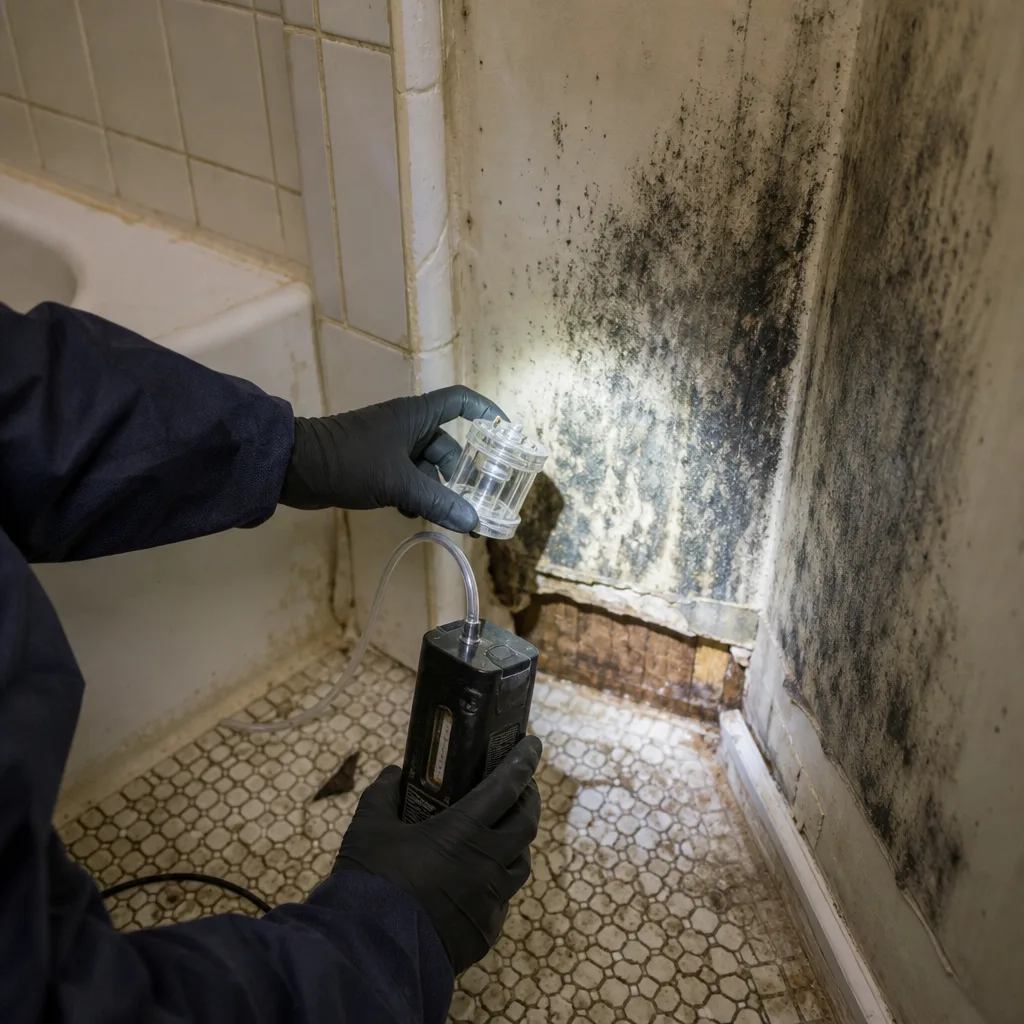
Trauma & Unattended Death Cleanup
This is the hardest call anyone in Alpine makes, and the one where time matters most. Decomposition fluids follow the same routes as water, which means an unattended death in a farmhouse with original plaster and open wall cavities has usually migrated farther than the visible staining suggests. We respond with discretion, work inside containment with negative air, and restore the property to a condition your family can re-enter without hesitation. Our crews have handled these scenes in Schuyler County for years and will handle yours with the same quiet professionalism.
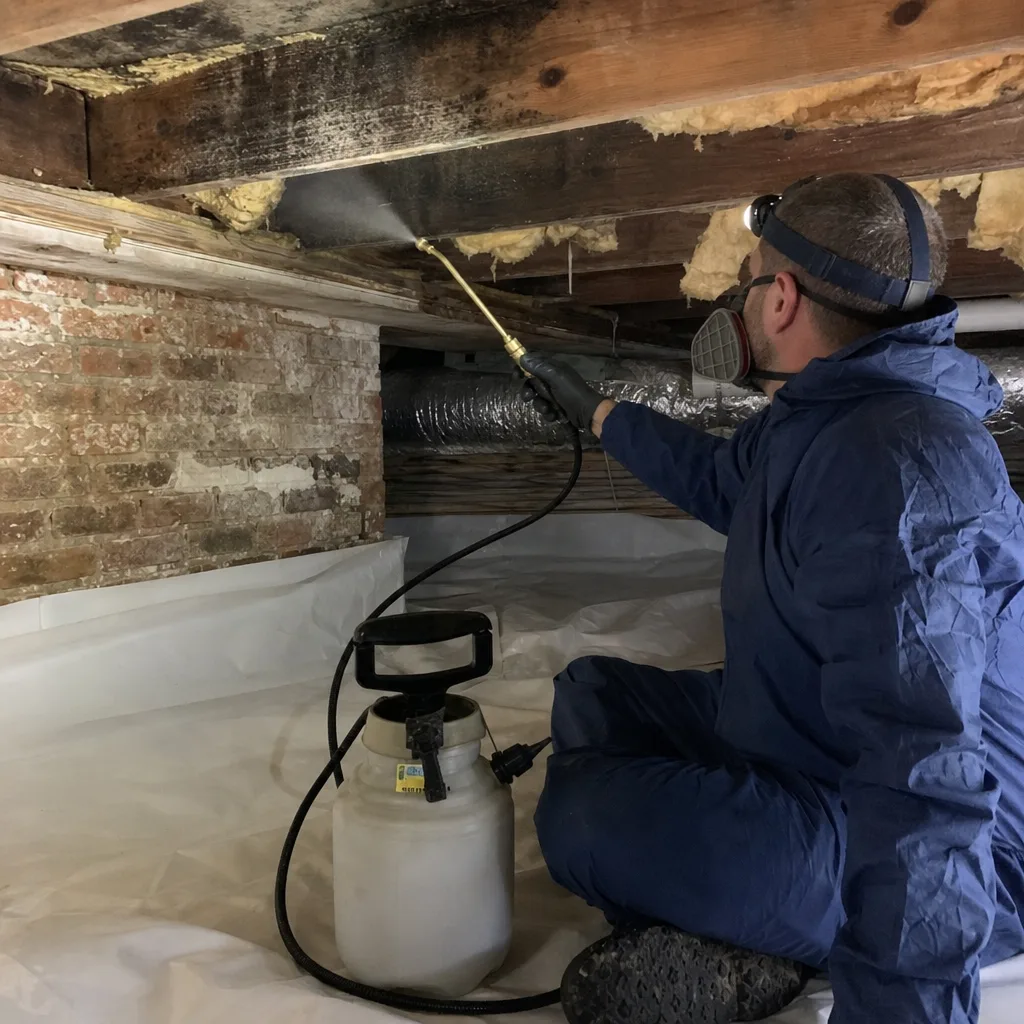
Hoarding Cleanup
Hoarding scenes in Alpine often combine biohazard material with structural damage from years of blocked drainage and undetected leaks. We sort and remove material in coordination with the family, separate salvageable items, and treat the underlying structure for mold and contamination before rebuilding.
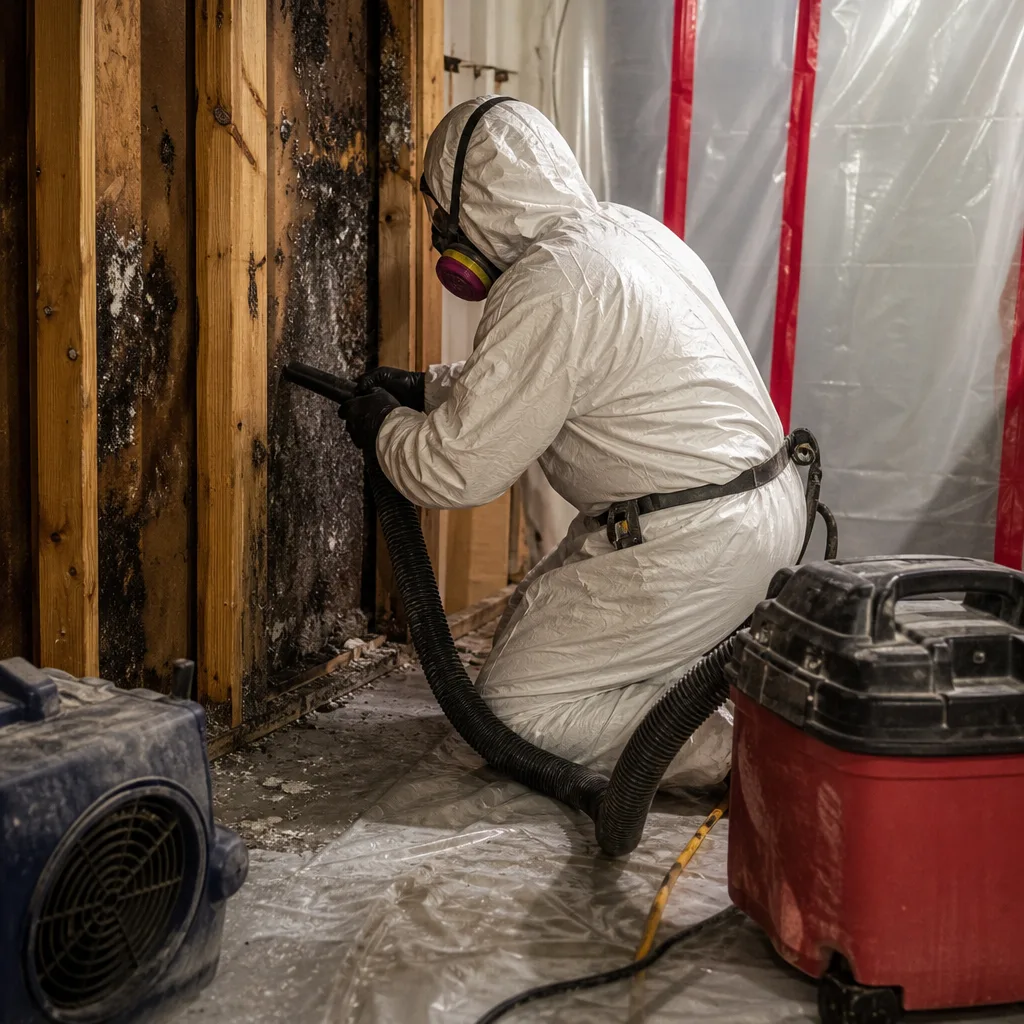
Blood & Bodily Fluid Cleanup
We follow OSHA bloodborne pathogen standards from the first minute. Contaminated porous materials in Alpine homes, meaning the original plaster and horsehair assemblies, are removed and replaced per protocol. Non-porous surfaces get hospital-grade disinfection with documented dwell times. Every step is logged and photographed for your insurance file.
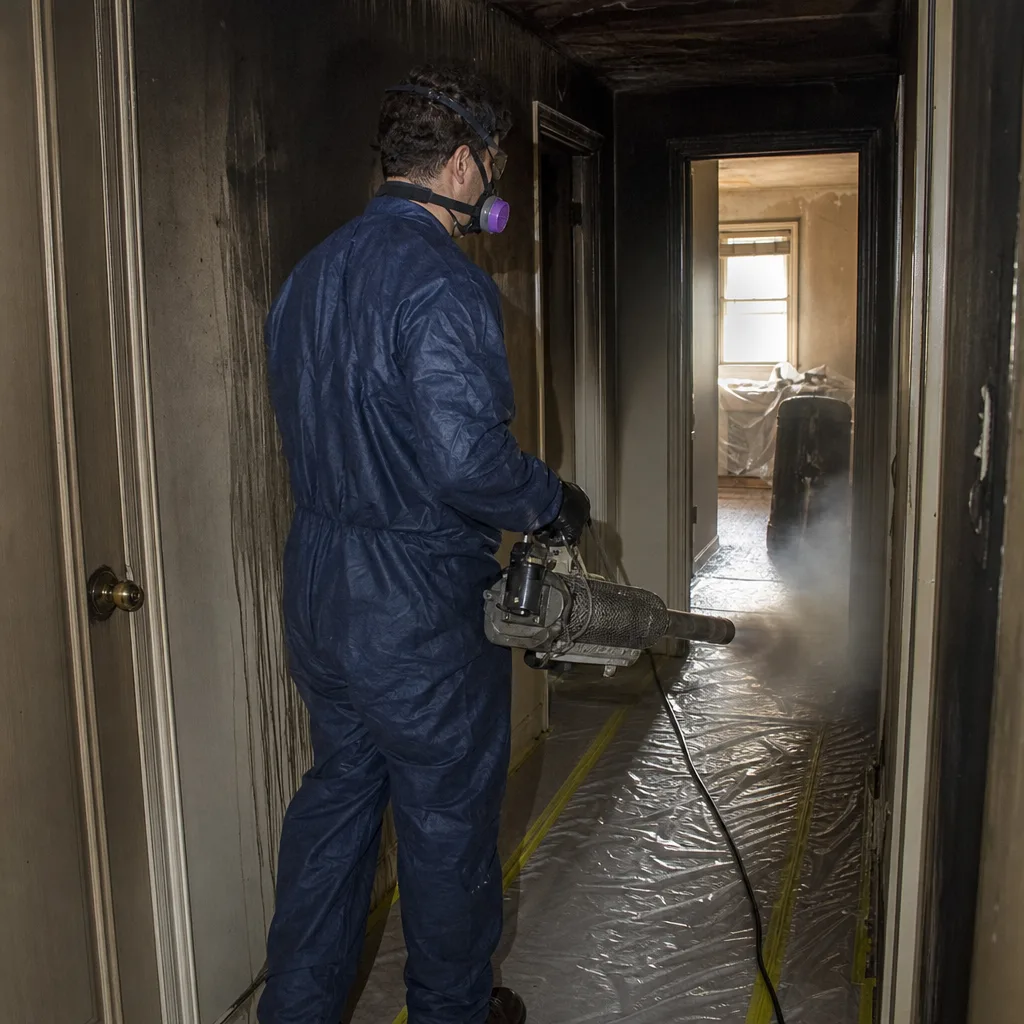
Infectious Disease Disinfection
After an illness, loss, or exposure event in an Alpine home, we apply EPA-registered disinfectants to all touchable and non-touchable surfaces, run HEPA scrubbers, and hand you a documented treatment report. For farmhouses with open wall cavities and original plaster, we include vapor treatment and cavity fogging where the structure allows it.
What happens when you call
- 1
A real person answersNo phone trees - you reach a local pro.
- 2
You get an upfront price rangeHonest numbers before anyone is dispatched.
- 3
A background-checked tech heads outLicensed & insured, dispatched right away.
- 4
You approve before work beginsNothing starts until you say go.
Biohazard & Crime Scene Cleanup Costs in Alpine, NJ
A contained blood cleanup in a single room of an Alpine home runs $1,800 to $4,500. An unattended death cleanup runs $4,000 to $10,000 depending on how long the scene sat, how far fluids migrated into plaster and framing, and whether wall removal is required. Hoarding cleanup and infectious disease disinfection typically land between $2,500 and $15,000 depending on square footage, contents volume, and the condition of the underlying structure. The wildcard in Alpine is age. When blood or decomposition fluid has wicked into horsehair plaster and balloon-frame cavities, the controlled demolition and rebuild of those walls adds $8,000 to $25,000, sometimes more on larger farmhouses. You can get an exact number with a free visual inspection. We give you a written scope with line items before work starts, and we bill your carrier directly. Call (917) 924-4221 to schedule the inspection, it costs you nothing and you will know exactly where you stand.
We Also Serve Cities Near Alpine
Our biohazard and crime scene cleanup crews cover the towns around Alpine, including Demarest, Cresskill, Closter, and Tenafly. If you live in one of those communities and are dealing with a trauma scene, an unattended death, or a contamination event, the same live dispatcher at (917) 924-4221 routes a team to you.
Alpine Biohazard & Crime Scene Cleanup Questions, Answered
How quickly can a biohazard cleanup crew actually reach an Alpine address if the nearest full-service contractors are in Corning, Elmira, or Watkins Glen?
Our dispatch is live around the clock and our crews stage with Alpine routes already planned, so the response time to your address is typically under two hours from the moment you call. The key difference is that we do not have to figure out Alpine logistics from scratch, our team has been running these rural Schuyler County roads for years and knows how to get a truck up a gravel lane in the dark. Call (917) 924-4221 and a person tells you exactly when the crew arrives.
If a death or biohazard event happens in an Alpine farmhouse during the winter when the property is empty for months, how does that change the cleanup?
The contamination has more time to migrate into horsehair plaster, wood framing, and rubble-mortar foundations, which means the scope of demolition and treatment is almost always larger than a scene discovered within days. We moisture-map every cavity to determine how far the fluids and any Category 3 water have moved, then build the containment and removal plan around what the meters show, not what the visible staining suggests.
Do Alpine’s 19th-century farmhouses need different containment than modern homes for blood and bodily fluid cleanup?
Yes. Balloon-frame construction means open wall cavities run from basement to attic, so standard room-level containment is not enough. We seal the affected cavities, run negative air with HEPA scrubbing, and treat the full vertical assembly so aerosolized pathogens cannot circulate through the open-stud structure into other rooms or the attic.
How do you verify that an Alpine crime scene cleanup is complete when horsehair plaster and fieldstone foundations hide moisture?
We use thermal imaging and penetrating moisture meters to read behind plaster and inside stone before, during, and after cleanup. The job is not done until every affected cavity tests at or below the dry standard and the antimicrobial treatment has been applied and logged. You get the readings on paper, not a verbal assurance.
Is tearing out walls always required for biohazard cleanup in Alpine’s old farmhouses, or can some materials be saved?
Not always. Porous materials that have absorbed blood or decomposition fluids, which in Alpine usually means original horsehair plaster and the lath behind it, must be removed because no surface treatment reaches what has soaked through. Non-porous surfaces and some dense framing can be saved if moisture mapping shows they are not holding contamination. We give you a material-by-material list with the written scope.
Will my homeowner’s insurance cover crime scene or unattended death cleanup in Alpine?
Most standard homeowner’s policies cover biohazard cleanup as part of the underlying loss or under a separate remediation provision. We document everything from the first hour, bill your carrier directly, and walk your adjuster through the Alpine-specific realities like horsehair plaster and balloon-frame contamination that drive the scope. Call (917) 924-4221 and we will help you understand what your policy covers before we start work.
Can we stay in our Alpine home during biohazard cleanup?
Usually not while containment is active. We run negative air and HEPA scrubbing inside sealed containment zones, and you should not re-enter until we clear the air and the treated surfaces. We will tell you exactly when the space is safe, and we can coordinate temporary accommodations through your insurer where the policy allows.
What should I do in the first 30 minutes after discovering a biohazard scene in my Alpine home?
Do not touch anything. Do not turn on fans or HVAC that could circulate airborne material. Keep people and pets out of the area. Call (917) 924-4221, tell the dispatcher what you found and the condition of the home, and we will walk you through the next steps while the crew is en route. In Alpine, where the house itself is an old structure with open wall cavities, the less you disturb the scene before containment, the smaller the cleanup will be.
Serving Alpine, NJ - Our Local Coverage Area
We’re based in the Alpine area and know this community well. Use the map below to see our service coverage - if you’re nearby, we can almost certainly help.
A Biohazard Scene Inside a 1800s Alpine Farmhouse: What Actually Happens
Alpine’s extreme isolation in Schuyler County means emergency response times from Corning, Elmira, or Watkins Glen routinely exceed an hour. For a biohazard scene, that hour is not a scheduling inconvenience, it is the difference between surface-level treatment and controlled demolition. Bloodborne pathogens and decomposition fluids in a mid-1800s balloon-frame farmhouse begin wicking into horsehair plaster within hours. Horsehair plaster is absorbent in a way modern drywall is not; it pulls liquid in and holds it, then slowly releases it back into the wall cavity as temperature and humidity shift. Behind that plaster, the balloon-frame cavity runs open from the rubble-mortar foundation all the way to the attic. Once contamination enters that cavity, air movement inside the wall carries aerosolized pathogens and odor through the entire open-stud structure. Our crew responded to an unattended death in a seasonal farmhouse on a rolling hillside off County Route 10, where weeks of an unsealed January roof leak had soaked original plaster walls. We set up containment and negative air immediately, ran moisture mapping, and documented readings showing Category 3 water saturating the balloon-frame cavities. We cut out the affected horsehair plaster and fieldstone-adjacent framing, applied antimicrobial treatment, and kept structural drying and drying logs going until the pre-loss condition was restored. The homeowner thought it was a one-room cleanup. It was not, because the walls themselves moved the contamination faster than anyone could have worked. That is the reality of Biohazard & Crime Scene Cleanup in Alpine; the house is old, the walls are open, and the nearest help is an hour away. Since 2010, Curt Bowman and the Floodline Restoration Co. team have worked Schuyler County’s oldest homes with the same standard: contain it right, document everything, dry what can be saved, remove what cannot, and put it back so you never have to think about it again.
Written by Curt Bowman, Owner at Floodline Restoration Co., serving Alpine and the surrounding Schuyler County communities.