
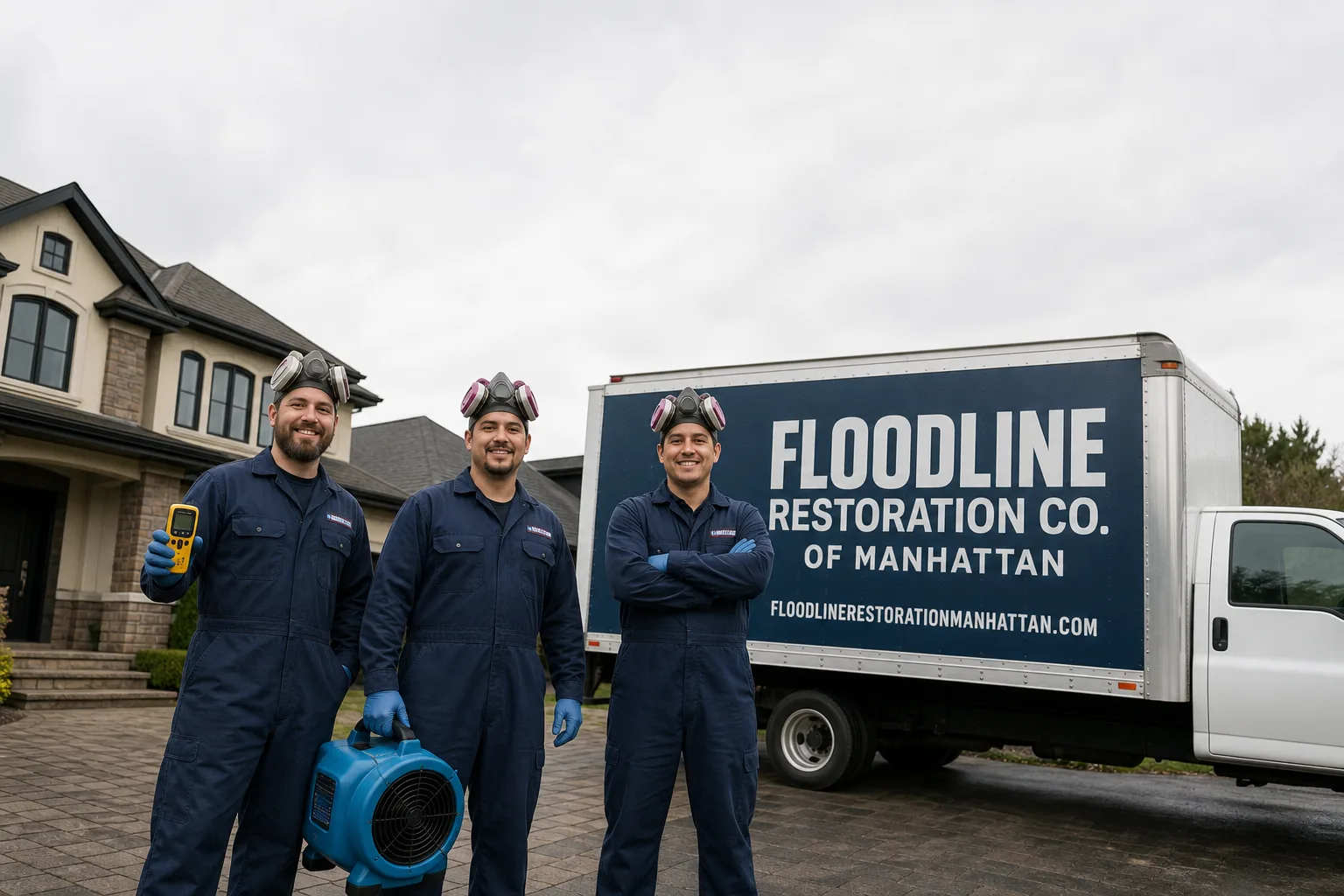
Free visual inspection and a written scope of work before any mitigation begins - photos, moisture readings, and drying logs go in your claim file
The scope we write is the scope we bill. Anything new gets shown to you, in writing, before we touch it.






 Before
 After
After Before
 After
After Before
 After
After24/7 Emergency Commercial Restoration in Flushing
Commercial restoration in Flushing starts the moment water, fire, or sewage compromises your building. We answer live at (917) 924-4221 around the clock, and a Floodline Restoration Co. crew can be on site in the Roosevelt Avenue, Northern Boulevard, or Kissena Boulevard corridors within about 45 minutes of your call. The first hour matters because Category 3 water from Flushing’s combined sewer overflows carries bacteria that colonize drywall, inventory, and electrical systems faster than clean water from a burst supply line. We do a free visual inspection, identify what can be saved, and start extraction the same visit. Not the next morning. Not after a callback. The same visit.
Understanding Commercial Restoration Severity in Flushing Properties
Flushing’s commercial buildings face a specific kind of water problem that most Queens neighborhoods don’t. The blocks between Main Street and Flushing Creek sit on historically filled tidal marshland. When a nor’easter or heavy summer storm pushes the combined sewer system past capacity, sewage-mixed water backs up through basement floor drains into retail units, restaurants, and office spaces. That’s Category 3 water, or black water, and it changes everything about the restoration sequence. You’re no longer talking about drying carpet and repainting. You’re talking about full biohazard containment, antimicrobial treatment, and cutting drywall to the studs wherever the water touched.
The 1920s through 1950s brick commercial buildings that line Roosevelt Avenue and Union Street complicate matters further. Plaster walls in those buildings hold moisture long after the visible water is gone. Without professional-grade dehumidification, mold colonization begins in 48 to 72 hours behind the plaster, where property owners can’t see it. Moisture mapping with thermal imaging and hygrometers tells us exactly where the water migrated, not just where it pooled. That’s the difference between a restoration that holds and one that peels apart six months later.
Why Flushing Property Owners Choose Floodline Restoration Co. of Manhattan
- 45-minute response commitment: Our crews stage from dispatch points near Flushing, so a certified team reaches downtown Flushing, Murray Hill, or Auburndale fast. The clock starts when you hang up.
- 24/7 live answer, always a real person: No automated menu, no message service. A dispatcher picks up at 2 a.m. and starts moving crews. We’ve run it this way since Curt Bowman founded the company in 2010.
- IICRC-certified crews: Our technicians hold WRT, FSRT, and AMRT certifications and arrive in uniform, background-checked. They understand Category 3 protocols, structural drying, and antimicrobial application.
- Free visual inspection: We’ll walk the loss with you, mark what’s salvageable, and give you a written scope before any work begins. No pressure, no inflated line items.
- Direct insurance billing: We coordinate with your carrier, send photos and moisture logs, and bill them directly. You’re not the messenger running estimates between Floodline and an adjuster.
- One team, extraction to reconstruction: The same crew that reads the moisture map on day one handles the rebuild. No mid-job handoff to a subcontractor you’ve never met.
Our Commercial Restoration Process
Inspection & Assessment
We map the full extent of the damage with thermal imaging and moisture meters. For a Category 3 loss near Flushing Creek, that means identifying every surface the sewage-mixed water touched, not just the obvious puddle.
Extraction & Stabilization
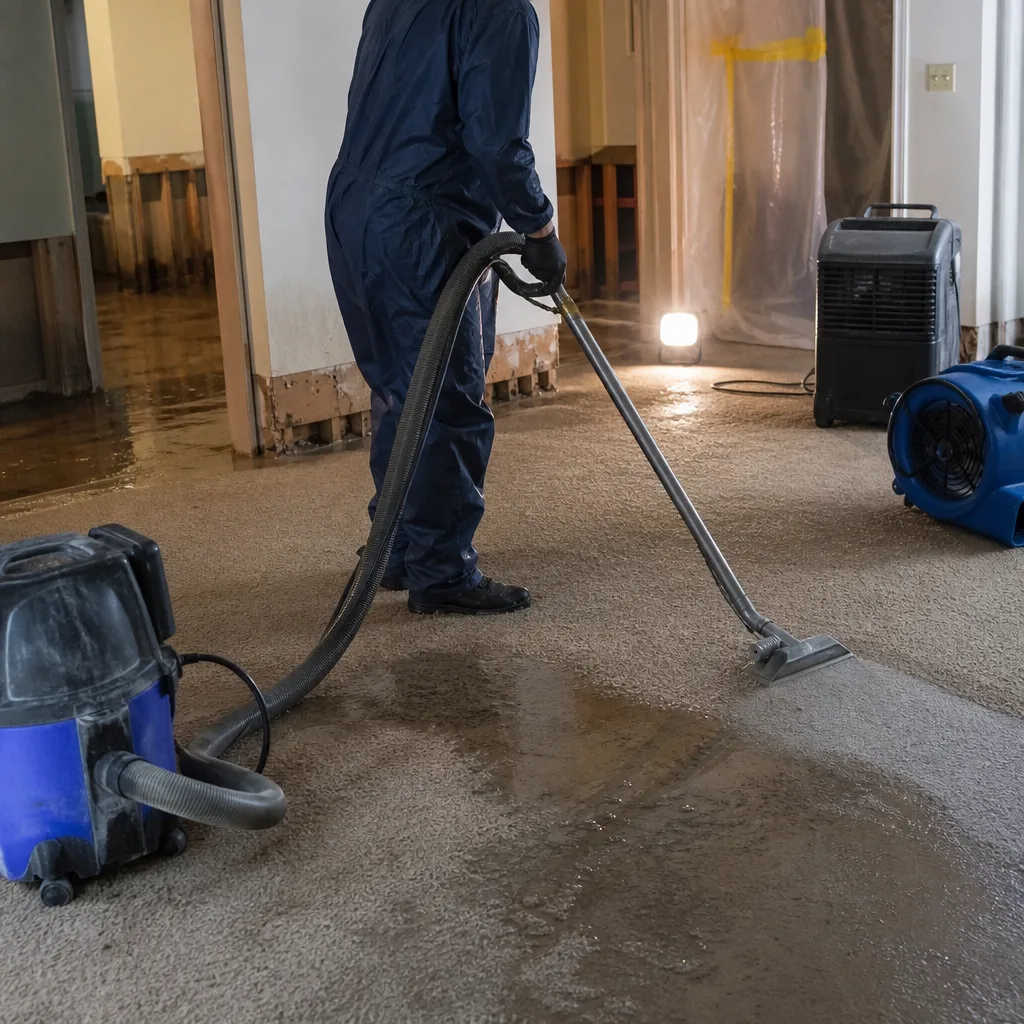
We pull standing water out with truck-mounted or portable extraction units, then stabilize the structure to prevent further spread. In Flushing’s flat, former-wetland lots, this step matters because water has almost nowhere to drain.
Drying & Dehumidification
Professional-grade Dri-Eaz and Phoenix air movers along with dehumidifiers run continuously, with daily moisture readings logged until the dry standard is met. We hand that log to you and your carrier.
Cleaning & Sanitization
For Category 3 water, we apply antimicrobial treatments and fogging under containment with HEPA air scrubbers running. This step is non-negotiable for sewage backup in basement retail spaces.
Content Recovery & Pack-Out
Inventory, documents, and equipment that can be saved get cleaned, dried, and documented. We photograph everything before, during, and after for your insurance file.
Repairs & Restoration
Drywall, flooring, electrical, and finishes get rebuilt by the same crew. You get a written 90-Day Done Right Promise before we call the job complete.
Need Emergency Commercial Restoration in Flushing Now?
Crews minutes away, answering live 24 hours a day. The sooner we start, the less it costs.
Working With Your Insurance Company
A commercial restoration claim in Flushing gets complicated fast. Your carrier needs documentation from the first hour, not a summary written three weeks later. We photograph every room, every piece of damaged inventory, every moisture reading. We write a line-item scope of work using industry-standard estimating software. And we talk to your adjuster directly, so you’re not translating restoration terminology over the phone. If the loss involves sewage backup, the Category 3 designation matters to your coverage, and our documentation makes that classification clear from the start. We bill the carrier directly and handle the paperwork. You handle your business.
What We Provide Your Insurer
- Thorough documentation of the loss
- Photos of all damage, room by room
- Moisture readings and drying logs
- A detailed, line-item scope of work
- Direct coordination with your carrier
Built for Flushing’s Loss Calendar
Flushing’s commercial restoration calls follow a seasonal rhythm. January and February bring deep freezes that burst supply lines in the 1920s and 1930s brick buildings along Main Street and Union Street, where original piping runs through unheated crawlspaces. Spring thaw fills basements and sub-grade retail spaces as groundwater rises through Flushing’s former marshland soils. Summer thunderstorms dump inches of rain in an hour, overwhelming combined sewers and pushing sewage back through floor drains. And nor’easters between September and April funnel coastal surge from Flushing Bay and Long Island Sound into the low-lying streets near Flushing Creek. Each season has its own failure mode, and each requires a different restoration sequence. We plan around that calendar because we know it.
Commercial Restoration Across Flushing’s Neighborhoods
Downtown Flushing, especially the blocks radiating from Main Street and Roosevelt Avenue, runs on a mix of pre-war brick commercial buildings and newer mixed-use development, and basement retail there sits directly in the combined sewer overflow zone. Murray Hill and Auburndale have more attached brick row houses converted to offices and clinics, where water migrates sideways through shared walls. The stretch along Northern Boulevard near the Flushing River handles heavier truck traffic and industrial spills alongside storm flooding. Across College Point Boulevard and the Kissena Corridor, multi-unit buildings share drainage infrastructure with residential properties, which means one blocked storm drain backs up half a block. Our response routes are built around these patterns, because a crew that knows the sewer geography gets to the right building faster.
Specialized Commercial Restoration Services We Offer in Flushing
Office & Retail Restoration
Basement-level retail near Flushing Creek takes the hardest hits during nor’easters. We restore storefronts, offices, and medical suites with the understanding that every day closed is revenue lost. Our crews run extraction, drying, and antimicrobial treatment concurrently, and we sequence the work so you can reopen a portion of your space while restoration continues elsewhere.
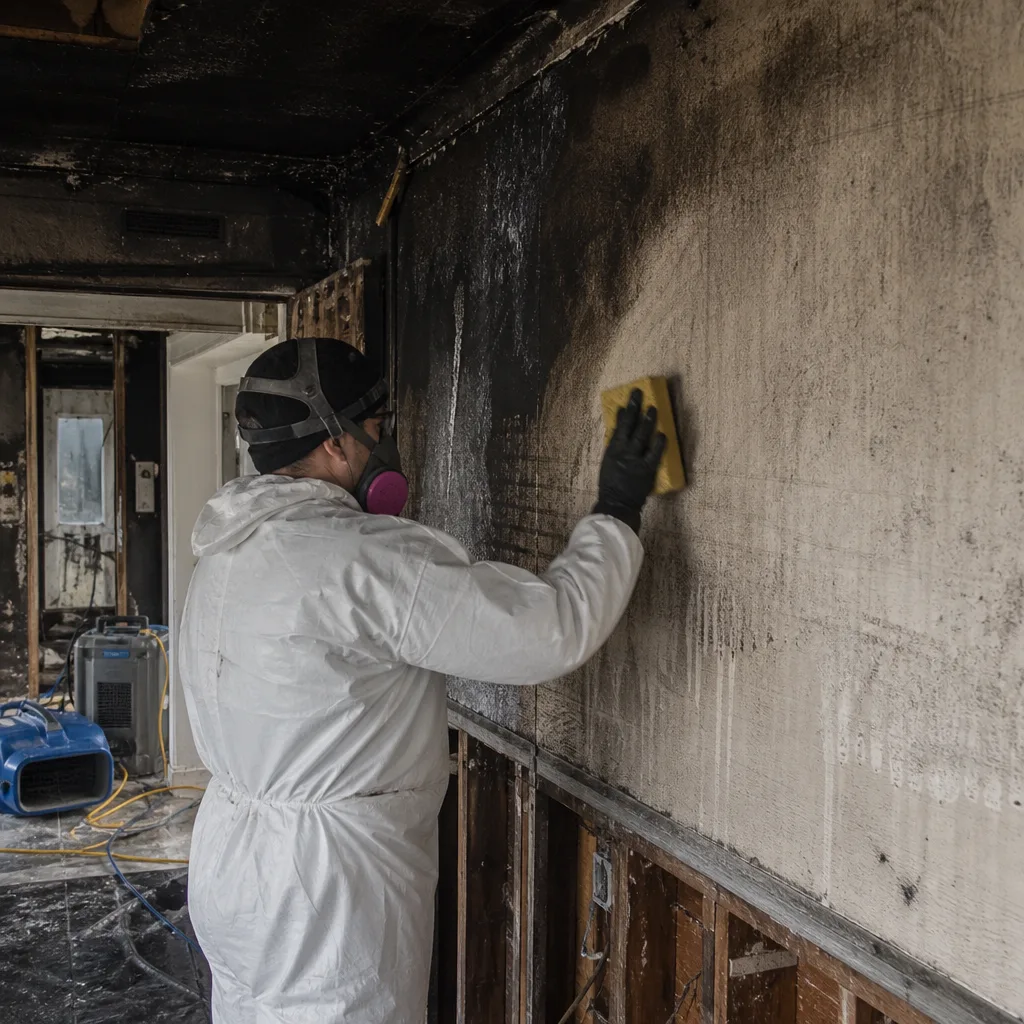
Multi-Unit & HOA Restoration
Flushing’s two- and three-family brick buildings, plus larger co-ops and condos, need a restoration partner who understands shared walls, shared drainage, and shared liability. We document each unit separately for each owner’s carrier, and we coordinate with building management so one unit’s sewage backup doesn’t become three units’ mold problem.
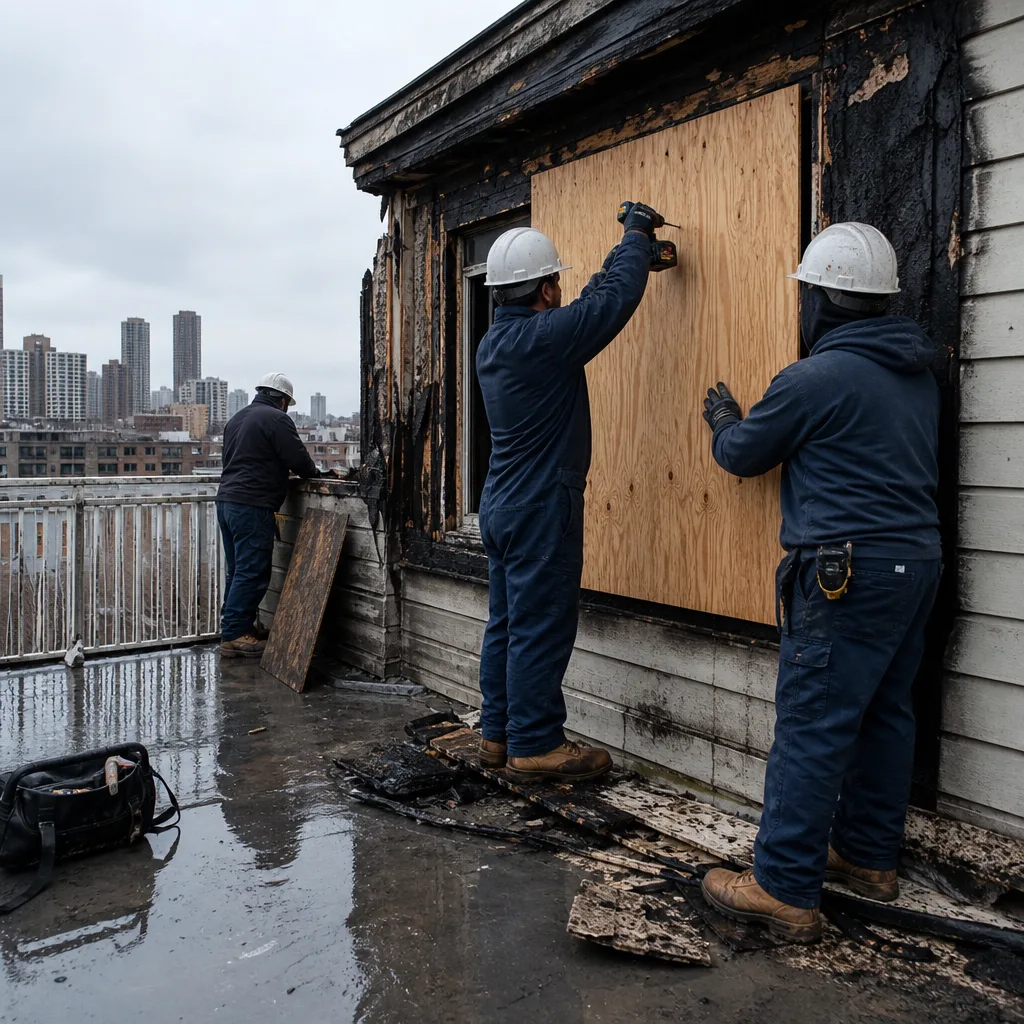
Industrial Facility Cleanup
The warehouse and light-industrial spaces along Flushing’s northern edge face a combination of storm surge from Flushing Bay and aging roof membranes. We handle large square footage losses with industrial-scale air movers and dehumidifiers, and we stage the work around your operations rather than shutting you down.
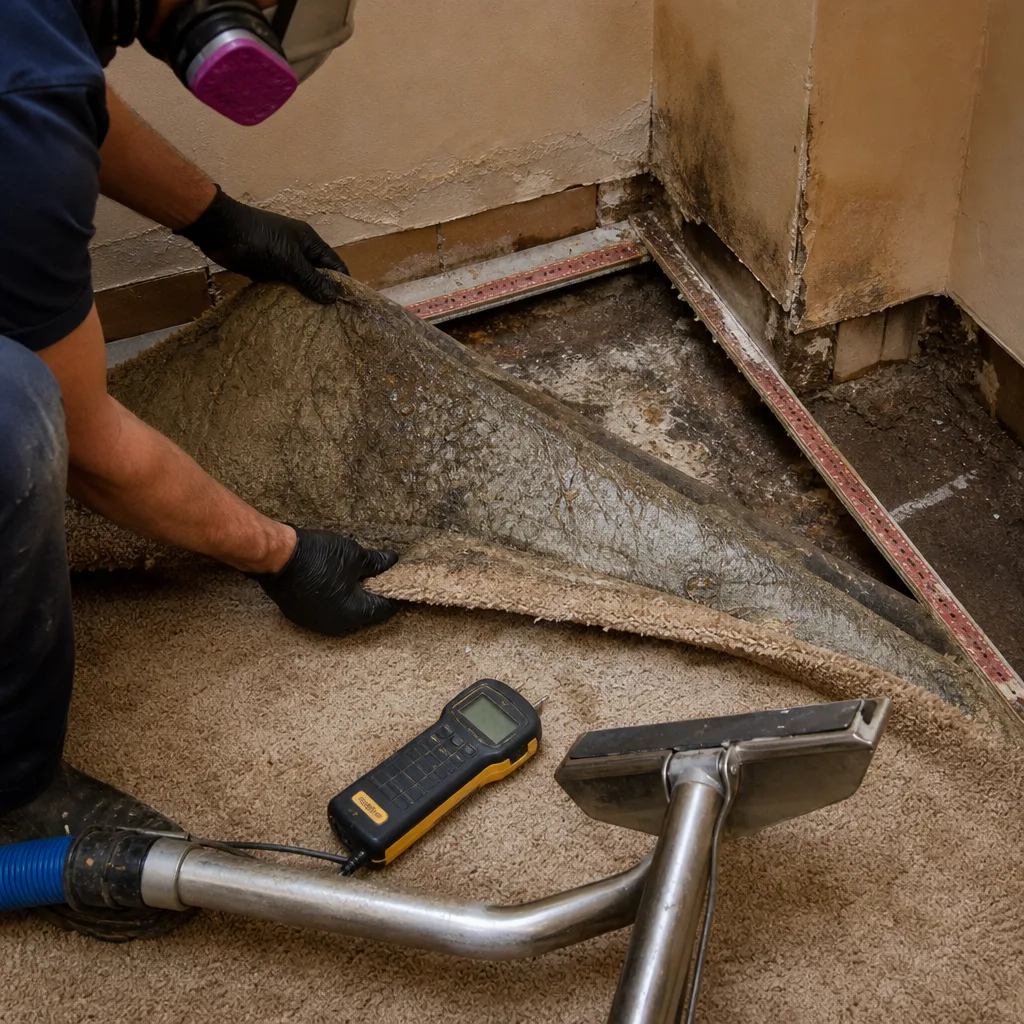
Large-Loss Response
When a whole commercial building takes water, the response has to be scaled to match. We deploy multiple crews, portable drying arrays, and a project manager who stays on site through the entire job. The Commercial Restoration team at Floodline handles losses from 5,000 to 100,000 square feet with the same written-scope discipline we use on a single storefront.
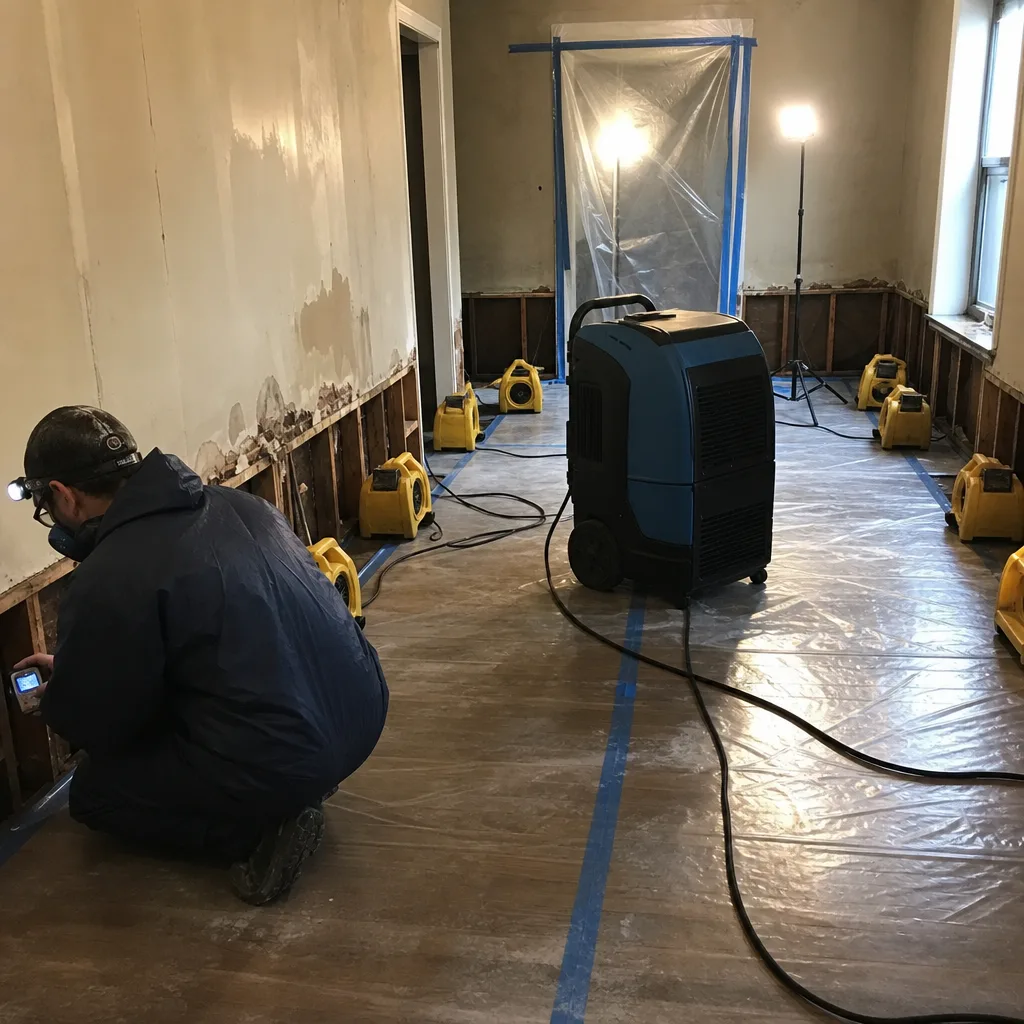
Business Interruption Minimization
Every hour your Flushing storefront or office is dark is an hour of lost revenue. We build our restoration sequence around getting you back open, whether that means temporary power and climate control, priority content recovery, or phased reconstruction that lets you operate in part of the space. The 90-Day Done Right Promise means we don’t finish until the job holds.
What happens when you call
- 1
A real person answersNo phone trees - you reach a local pro.
- 2
You get an upfront price rangeHonest numbers before anyone is dispatched.
- 3
A background-checked tech heads outLicensed & insured, dispatched right away.
- 4
You approve before work beginsNothing starts until you say go.
Commercial Restoration Costs in Flushing, NY
For a typical basement retail or office space in Flushing, water extraction and structural drying alone runs $3,000 to $8,000 depending on square footage and water class. A Category 3 sewage backup adds containment, antimicrobial treatment, and drywall tear-out, pushing the total to $8,000 to $25,000 for a 1,000 to 2,500 square foot space. Fire and smoke restoration in a Flushing storefront starts around $6,000 for a contained kitchen fire and ranges up to $40,000 or more for structural rebuilds. Insurance covers most of these costs when the cause is sudden and accidental, though sewage backup coverage depends on your specific endorsement. The fastest way to a firm number is the free visual inspection we do before any work starts. The written scope you sign is the price, and we stand behind that scope and the work itself for 90 days.
We Also Serve Cities Near Flushing
Our crews regularly handle commercial restoration in College Point, Whitestone, East Elmhurst, and Corona. Response times run a bit longer than our Flushing dispatch zone, but the same live answer, the same certified technicians, and the same 90-Day Done Right Promise apply.
Serving Flushing, NY - Our Local Coverage Area
We’re based in the Flushing area and know this community well. Use the map below to see our service coverage - if you’re nearby, we can almost certainly help.
Flushing Commercial Restoration Questions, Answered
Why does Flushing’s sewer system make commercial basement flooding Category 3 so often?
Flushing sits on filled tidal marshland at the mouth of Flushing Creek, and during heavy rain or nor’easters the combined sewer system exceeds capacity, sending sewage-mixed water back up through basement floor drains. That’s Category 3 water by IICRC definition, and it requires full biohazard protocols, not simple drying. Call (917) 924-4221 and we’ll start that protocol the same visit.
How fast does mold colonize behind plaster walls in Flushing’s older brick commercial buildings?
Mold can begin colonizing behind plaster walls within 48 to 72 hours in Flushing’s 1920s through 1950s brick buildings, especially along Roosevelt Avenue and Union Street where masonry holds moisture. Our moisture mapping and daily readings catch it before it spreads. Estimates are free.
What’s different about restoring a basement retail space near Flushing Creek versus one in Fresh Meadows?
A basement retail space near Flushing Creek sits in the combined sewer overflow zone, so floodwater there is often Category 3 sewage-mixed black water requiring containment and antimicrobial treatment. The same square footage in Fresh Meadows, on higher ground, is typically a clean-water pipe burst that dries faster. Geography dictates the restoration sequence. Call us for an assessment specific to your building.
Do you handle pack-out and document recovery for Flushing businesses after sewage backup?
Yes. We clean, dry, photograph, and restore inventory, documents, and equipment affected by sewage backup in Flushing commercial properties. Each item is logged for your insurance claim, and we coordinate the entire process directly with your carrier.
How do you keep Flushing storefronts open during large-loss restoration?
We sequence the work around your business hours, set temporary containment so you can operate part of the space, and deploy phased reconstruction where feasible. Our goal on every Flushing commercial loss is to minimize the days your doors are closed. Call (917) 924-4221 and we’ll lay out a plan that fits your lease and your revenue.
How fast can a crew reach my Flushing commercial property?
We commit to a 45-minute response inside the Flushing dispatch zone, including downtown, Murray Hill, Auburndale, and the Kissena Corridor. A live dispatcher takes your call any hour of any day, and the crew arrives in uniform with equipment on the truck.
Will insurance cover a sewage backup in my Flushing basement retail unit?
Coverage for sewage backup depends on your policy’s specific endorsements, which we’ll review with you during the free inspection. We photograph everything, classify the Category 3 water correctly, and work directly with your adjuster so the claim moves without you guessing at terminology.
What should I do in the first 30 minutes after a flood or sewage backup in my Flushing commercial space?
Cut power to the affected area if you can do so safely, move salvageable inventory and documents to dry ground, and call (917) 924-4221. Don’t walk through standing water that may be sewage-contaminated. The faster we arrive, the more we save, and the less your total restoration costs.
Written by Curt Bowman, Owner at Floodline Restoration Co. of Manhattan, serving Flushing since our founding in 2010.