
Free visual inspection and a written scope of work before any mitigation begins - photos, moisture readings, and drying logs go in your claim file
The scope we write is the scope we bill. Anything new gets shown to you, in writing, before we touch it.






 Before
 After
After Before
 After
After Before
 After
After24/7 Emergency Commercial Restoration in Northeast Yonkers
Commercial water, fire, or mold damage in Northeast Yonkers needs a response now, not tomorrow morning. Our crews dispatch to Northeast Yonkers commercial properties around the clock, with a live person answering at (917) 924-4221 at any hour. The first 60 minutes determine how much inventory, equipment, and original building material can be saved rather than replaced. We perform a free visual inspection, set containment if needed, and start extraction the same visit. Every hour of delay in a pre-war plaster building means moisture traveling further through lath, horsehair, and original wood framing. That is why we keep crews minutes from the Bronx River valley neighborhoods, ready to move when you call.
Understanding Commercial Restoration Severity in Northeast Yonkers Properties
Damage in Northeast Yonkers’s commercial stock rarely behaves the way newer drywall construction does. Buildings from the 1920s through 1950s were framed with plaster-and-lathe walls, original oak or pine floors over wood sleepers, and cast-iron waste and supply lines. When a cast-iron supply line lets go, water follows gravity through wall cavities and floor bays, saturating horsehair plaster and lath rather than puddling visibly. Standard drying protocols built around drywall timelines leave hidden moisture behind. We use thermal imaging and penetrating moisture meters to map what is actually wet, then set drying chambers sized to the building’s mass, not its square footage alone. For fire losses, puffback soot from oil-fired steam systems penetrates original plaster ceilings differently than gas furnace soot, requiring alkaline cleaning specific to oily residue. Mold in these buildings demands full containment and HEPA air scrubbing because shared wall cavities and old returns spread spores between tenant spaces faster than modern compartmentalized construction.
Why Northeast Yonkers Property Owners Choose Floodline Restoration Co. of Manhattan
- 45-minute response commitment - our Northeast Yonkers crews are dispatched from nearby staging so a certified technician reaches your door fast, not just “today.”
- A live person answers, 24/7 - a dispatcher picks up at 2 a.m., takes your address, and starts the callout. No recording, no callback queue.
- IICRC-certified crews - technicians hold WRT, FSRT, and AMRT certifications, trained to RIA and IFA standards, with background checks and uniforms on every job.
- Free visual inspection - we walk the loss with you, map the moisture, and give you a straight read on scope before any work is authorized.
- Direct insurance billing - we document everything, bill your carrier directly, and keep you out of the middle. If there is a deductible, you know it upfront.
- One team, extraction through reconstruction - the same crew that pulls water from original plaster ceilings is the crew that rebuilds them. No handoff, no inherited subcontractor.
Our Commercial Restoration Process
Inspection & Assessment
We arrive, walk your Northeast Yonkers property, and document the full loss with photos and written notes. Thermal imaging and penetrating moisture meters locate water trapped in plaster, lath, and framing that surface readings miss. You get a scope of work in writing before equipment rolls in.
Extraction & Stabilization
Truck-mounted and portable extraction units pull standing water from floors, wall cavities, and mechanical chases. In multi-floor commercial buildings, we check lower-level ceiling bays where water has migrated from an upper-floor pipe failure. Any unsalvageable saturated material is documented and removed.
Drying & Dehumidification
Dri-Eaz and Phoenix dehumidifiers paired with high-volume air movers create drying chambers calibrated to plaster’s long moisture release curve. Daily hygrometer readings are logged, and the log is shared with you and your adjuster. Drying stops only when every reading meets the dry standard, not when the surface looks dry.
Cleaning & Sanitization
We clean salvageable surfaces, apply antimicrobial treatment where water category or length of exposure calls for it, and run HEPA air scrubbers to pull particulates and spores from the air. For oily soot from boiler puffbacks, we use alkaline cleaning suited to residue that has bonded with original plaster.
Specialty Treatment: Document & Inventory Recovery
Records, furniture, electronics, and stock that can be salvaged are inventoried, packed out, and treated off-site where necessary. For Northeast Yonkers retail and office spaces, we prioritize separating salvageable inventory from debris in the first hours, which changes your claim numbers dramatically.
Repairs & Restoration
The same crew that did extraction and drying now repairs what was removed: plaster patching, paint matching to original walls, floor repair, trim replacement. Because we were there from hour one, the rebuild is based on first-hand knowledge of how this specific building behaved, not a guess from photos.
Need Emergency Commercial Restoration in Northeast Yonkers Now?
Crews minutes away, answering live 24 hours a day. The sooner we start, the less it costs.
Working With Your Insurance Company
Commercial claims in Northeast Yonkers move faster when documentation is complete from the first hour. We photograph every affected area before demo, log moisture readings daily, and produce line-item scopes that match the estimating format carriers expect. Our team communicates directly with your adjuster, answers their questions, and provides the technical detail adjusters need to approve plaster-and-lathe drying protocols rather than drywall shortcut math. You never act as a messenger between us and the carrier. If a dispute arises about whether a wall must be opened or a floor must be pulled, we go back with the data and make the case.
What We Provide Your Insurer
- Thorough documentation of the loss
- Photos of all damage, room by room
- Moisture readings and drying logs
- A detailed, line-item scope of work
- Direct coordination with your carrier
Built for Northeast Yonkers’s Loss Calendar
Northeast Yonkers’s commercial losses follow the weather and the age of its building stock. Winter brings deep freezes that burst cast-iron supply lines in unheated stairwells and rear additions, flooding multiple floors within minutes. The season’s nor’easters punch through old flat roofs on commercial strips, sending water down through original plaster ceilings and into retail displays below. Spring thaw sends snowmelt down the steep streets that drop toward the Bronx River valley, concentrating runoff against old stone foundations and pouring through basement walls. Summer thunderstorms overwhelm aging storm drains and roof leaders, producing rapid interior flooding on ground-floor commercial spaces. Year-round, oil-fired steam systems fail in ways specific to this housing stock: a pinhole in a radiator line, a faulty pressuretrol, or a puffback that coats a sales floor in soot. None of these are rare here. All of them respond better when the crew already knows the building types.
Commercial Restoration Across Northeast Yonkers’s Neighborhoods
Northeast Yonkers covers dense commercial corridors and tightly packed residential blocks from McLean Avenue through Crestwood and up toward the Sprain Brook Parkway. Along McLean Avenue, ground-floor storefronts sit under apartments built in the 1920s and 1930s, which means a second-floor pipe failure quickly becomes a first-floor commercial loss. We work retail storefronts there where display inventory, signage, and point-of-sale equipment all need triage in the first hour. In Crestwood, small offices and professional suites occupy converted pre-war houses whose original plumbing runs through plaster partitions and shared floor joists. A toilet supply line failure in one suite travels into the ceiling of the office below. Near Central Park Avenue, larger commercial tenants and mixed-use buildings present longer runs of sprinkler pipe and domestic supply lines, where a single fitting failure can saturate thousands of square feet of ceiling tile and carpet. And in the blocks where the terrain slopes hard toward the Bronx River valley, basement and lower-level commercial spaces take hydrostatic water through stone foundations every thaw cycle, making seasonal moisture management part of the ownership reality. Our crews know which streets have tight alley access, where parking for box trucks is workable, and how to stage equipment so restoration starts without fighting the block.
Specialized Commercial Restoration Services We Offer in Northeast Yonkers
Office & Retail Restoration
When a storefront or professional office on McLean Avenue or Central Park Avenue takes water, the priority is getting the business back open without sacrificing thoroughness. We extract, set drying containment that keeps foot traffic moving where possible, and clean or restore your existing fixtures, shelving, and furniture. Our goal is to preserve what can be preserved rather than write it off, because we know replacing commercial storefront interiors costs far more than saving them.
Multi-Unit & HOA Restoration
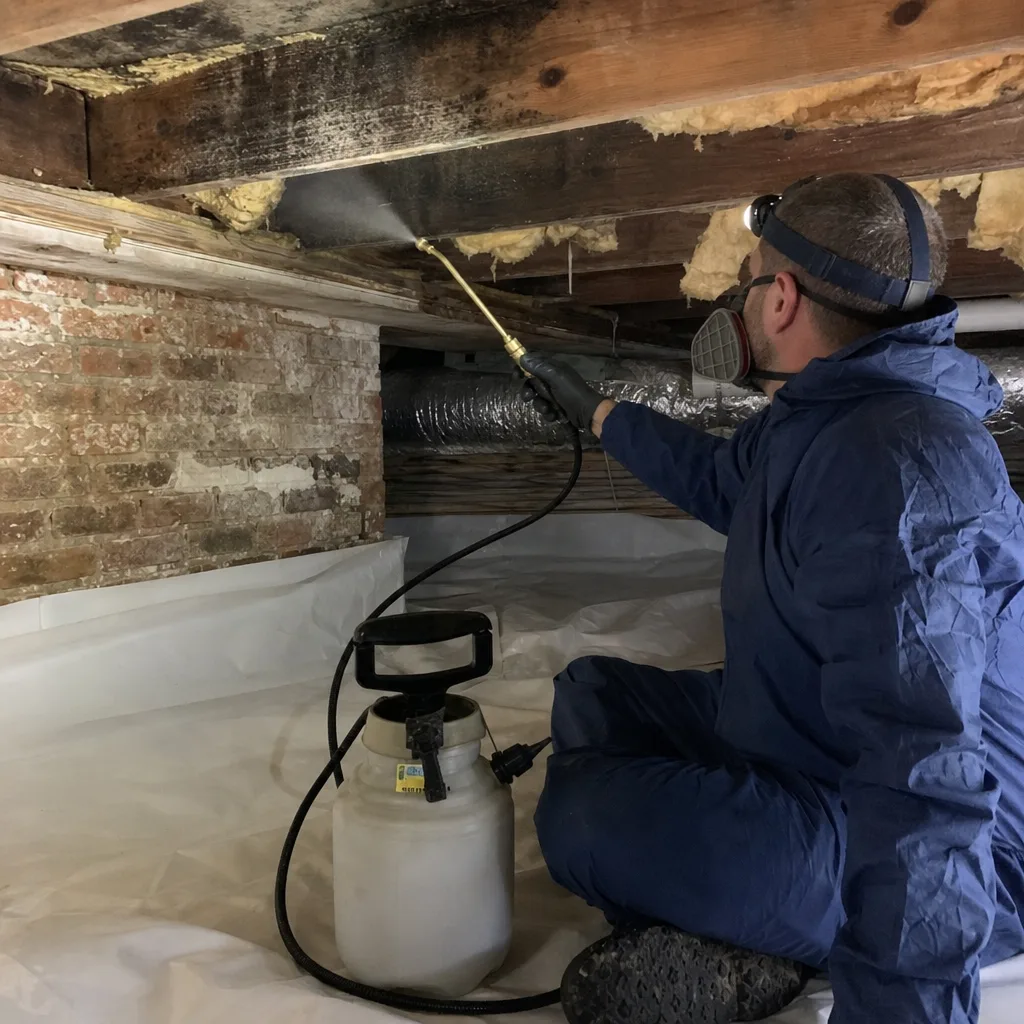
Mixed-use buildings and HOAs in Northeast Yonkers present a particular challenge: water from one unit becomes a loss in three others, and the HOA board needs actionable documentation quickly. We map the water path through shared framing, document every affected unit separately, and provide the board and the management company with one coordinated scope. Direct carrier billing keeps each owner out of the cross-claim mess. We have worked enough pre-war cooperatives and condo buildings in this area to know how owners expect updates: plain, factual, and in writing.
Industrial Facility Cleanup
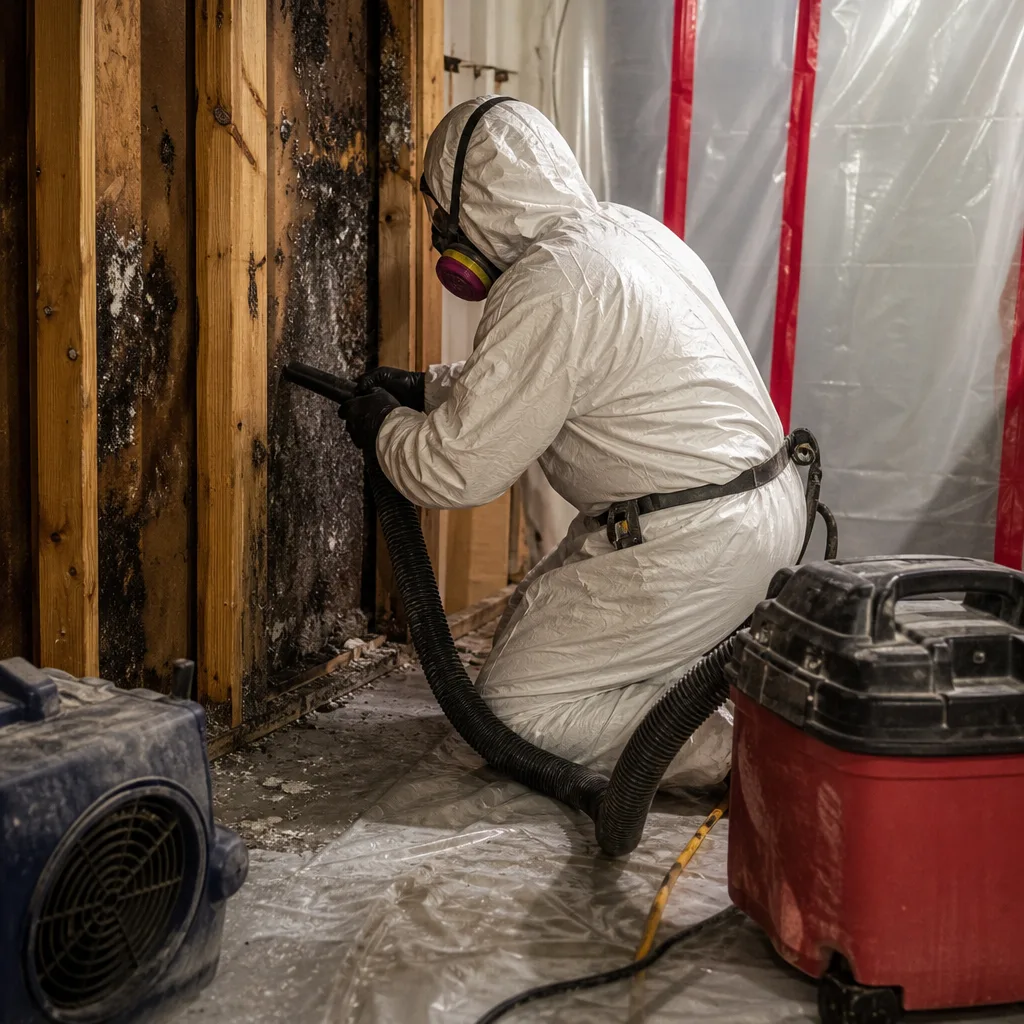
For industrial bays, warehouses, and service buildings in Northeast Yonkers, downtime is measured in dollars per hour. We bring truck-mounted extraction, high-capacity drying equipment, and the manpower to move inventory and racking. Oil soak, chemical residue, and saturated concrete slabs require different handling than office carpeting, and we set containment to keep production areas isolated from cleanup zones when possible. Our crews have handled industrial losses near the eastern industrial corridors without shutting down adjacent operations.
Large-Loss Response
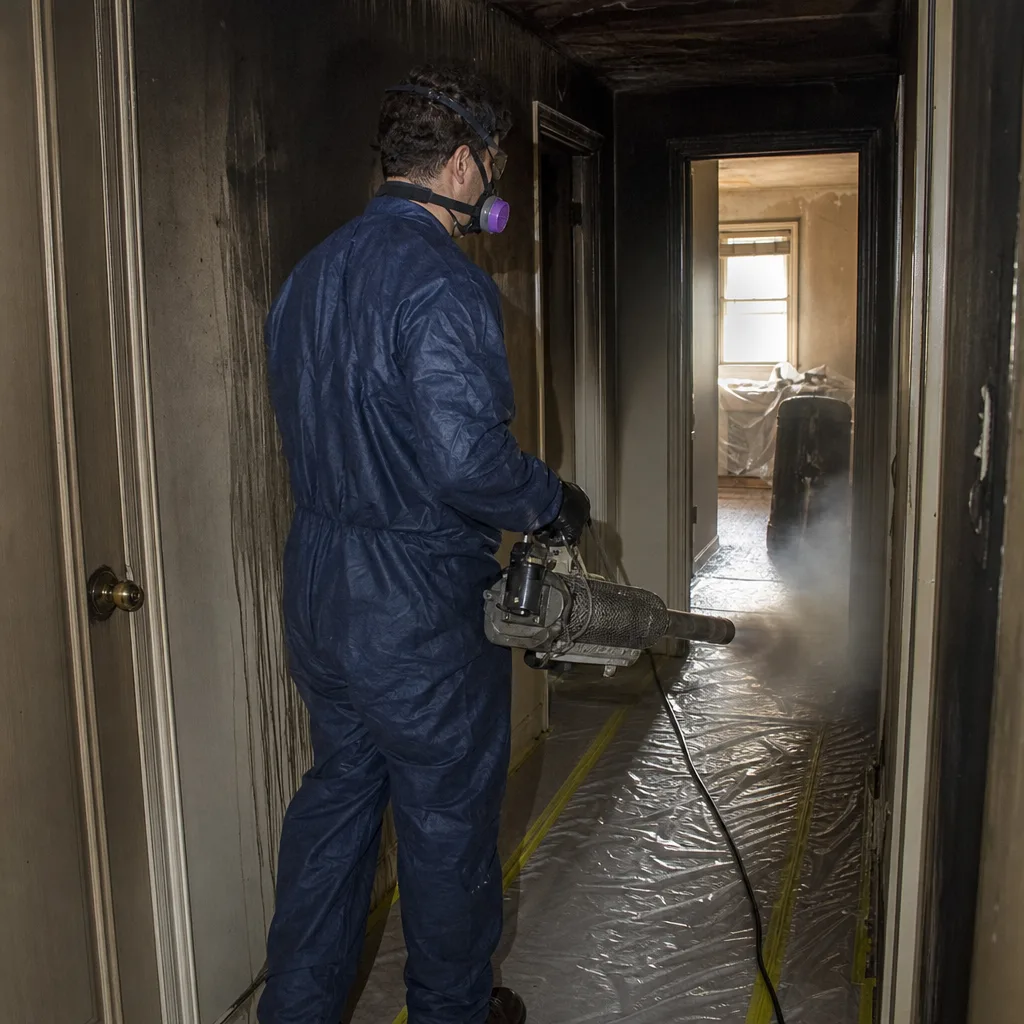
Large-loss events require rapid deployment and a command structure. We scale crews and equipment to the footprint, stage drying trailers where access allows, and provide daily updates to ownership, facility managers, and the carrier. A commercial large loss in Northeast Yonkers often means multiple floors, multiple tenants, and a board that needs to show owners the building is being handled. We have the equipment depth to run dozens of air movers and dehumidifiers on a single site, and the documentation system to keep the claim moving.
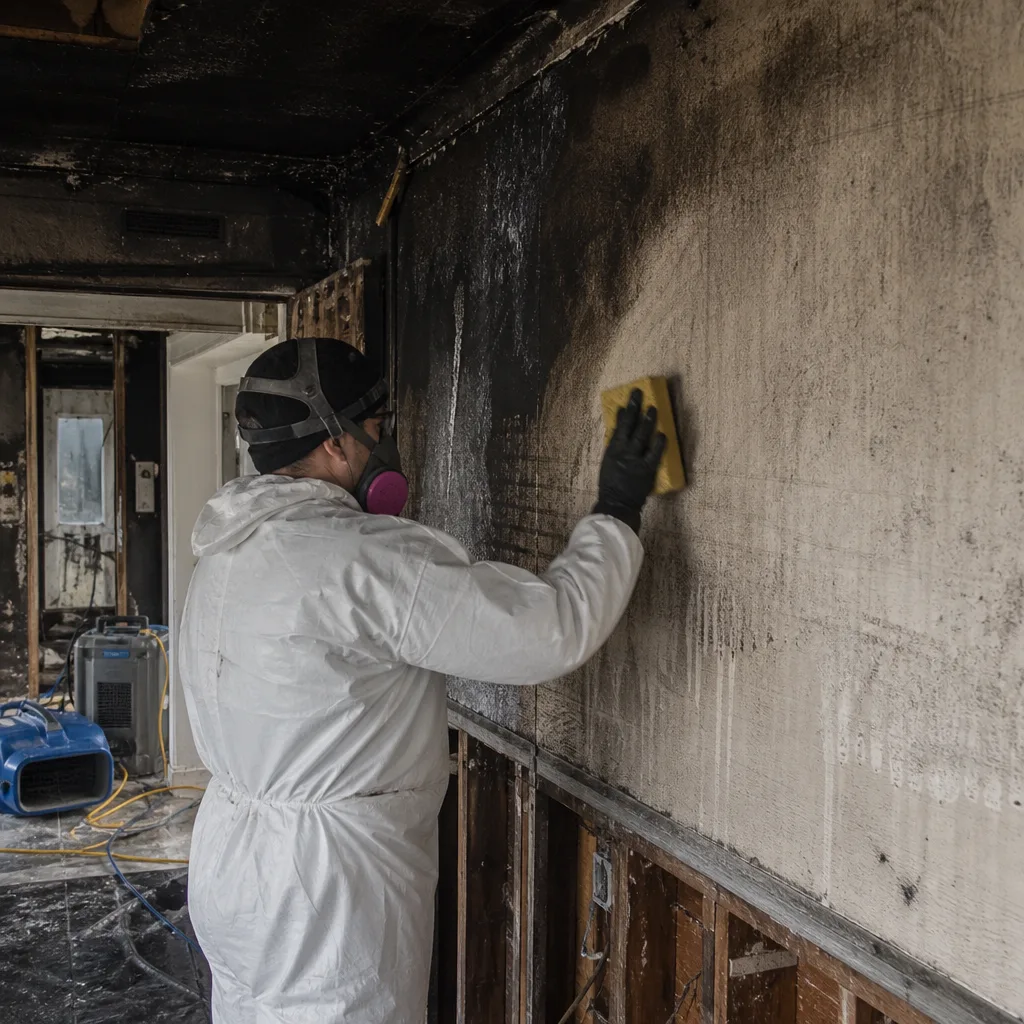
Business Interruption Minimization
The fastest path to getting a business interruption claim closed is re-opening. We sequence the work so the most revenue-critical areas dry and restore first: the sales floor before the back office, the client-facing entrance before the storage room. In retail and food-service settings where health department clearance is required after water events, we coordinate the sanitation and documentation needed for re-entry. Every day of avoided closure is real money, and we build the schedule around that.
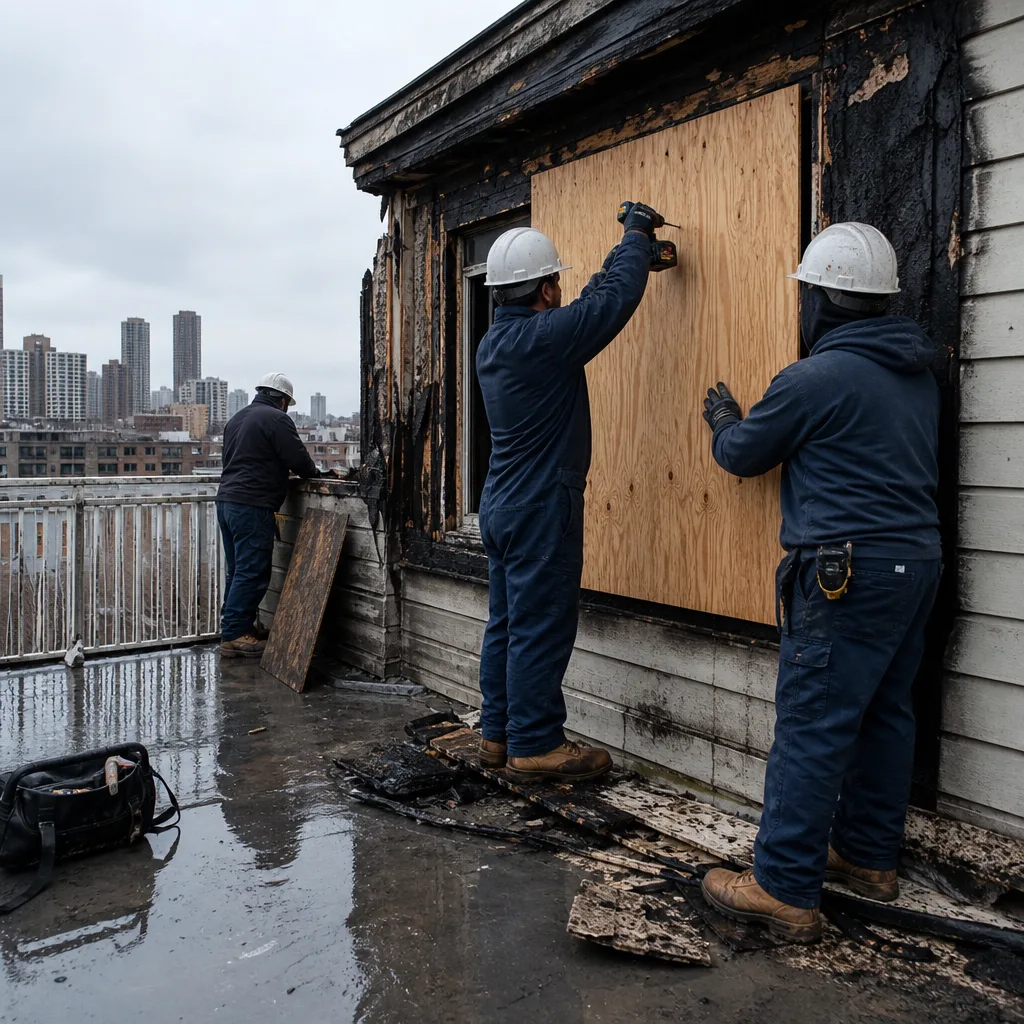
Document & Inventory Recovery
Paper files, electronics, samples, stock: commercial losses in Northeast Yonkers involve all of it. We handle document recovery through freeze-drying and desiccant drying where records are already saturated, and we inventory and pack out salvageable inventory before it becomes a mold liability. This is where our Commercial Restoration team earns its keep: knowing what can be saved changes the claim total from a five-figure write-off to a four-figure cleaning cost.
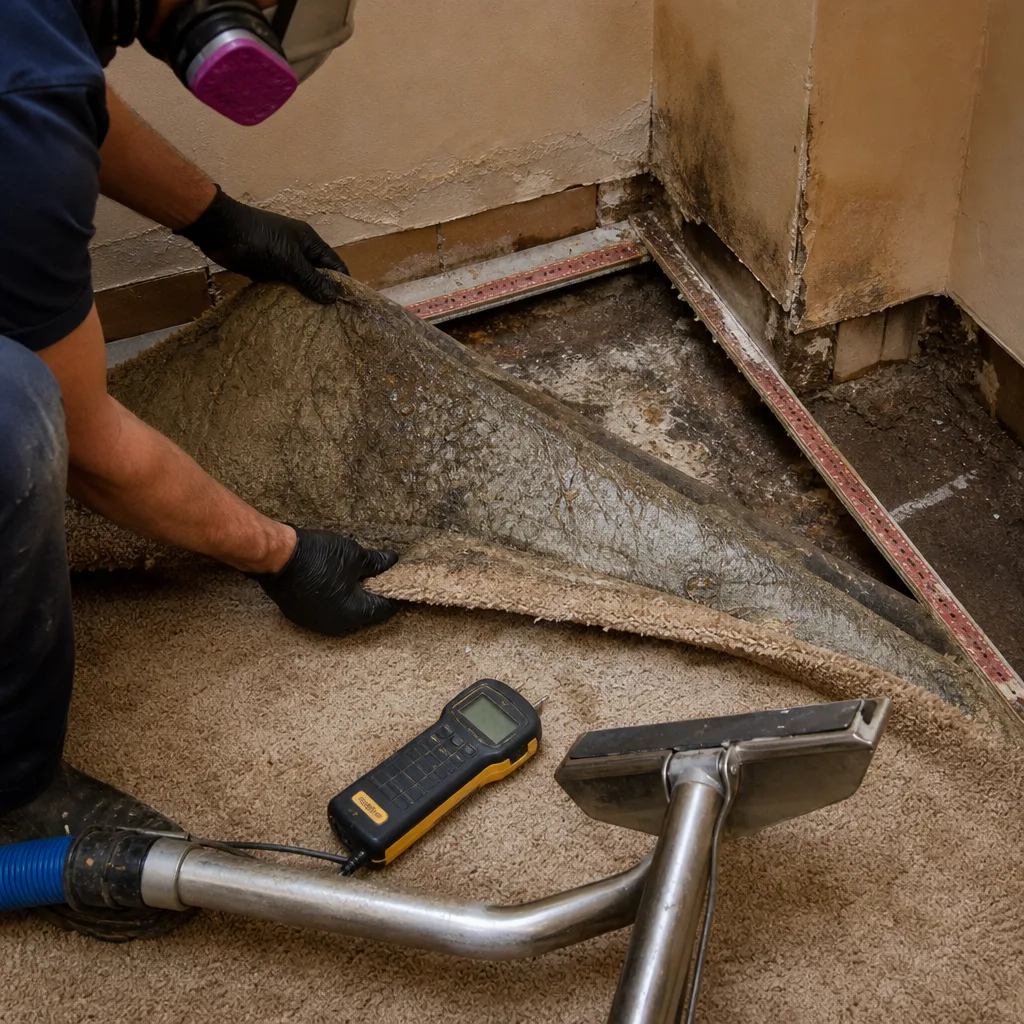
What happens when you call
- 1
A real person answersNo phone trees - you reach a local pro.
- 2
You get an upfront price rangeHonest numbers before anyone is dispatched.
- 3
A background-checked tech heads outLicensed & insured, dispatched right away.
- 4
You approve before work beginsNothing starts until you say go.
Commercial Restoration Costs in Northeast Yonkers, NY
Commercial restoration pricing in Northeast Yonkers reflects the building stock, not just the square footage. A single-room water extraction and drying in a pre-war storefront typically runs $2,500 to $5,500, depending on whether plaster walls must be opened and whether inventory needed packing out. Multi-floor pipe-burst losses in mixed-use buildings on McLean Avenue commonly land between $8,000 and $25,000 once containment, drying, plaster repair, and paint are included. Fire and soot losses tied to oil-fired steam systems tend to run higher: $15,000 to $40,000 for a puffback that coats multiple rooms, because oily soot cleaning on original plaster is labor-intensive and paint matching on old surfaces takes time. Mold remediation with full containment and clearance testing in a basement or shared-wall commercial space runs $4,000 to $12,000 depending on the extent of hidden growth behind lathe. The free visual inspection gives you a firm written scope before you commit, and we bill your carrier directly on covered losses. Call (917) 924-4221 for an exact quote; estimates are free.
We Also Serve Cities Near Northeast Yonkers
Our crews respond to commercial losses across the surrounding area, including Northeast Yonkers, as well as Fairview, Harrison, East Bronx, and Hunts Point. Same response standards, same equipment, same 90-Day Done Right Promise in writing.
Serving Northeast Yonkers, NY - Our Local Coverage Area
We’re based in the Northeast Yonkers area and know this community well. Use the map below to see our service coverage - if you’re nearby, we can almost certainly help.
Northeast Yonkers Commercial Restoration Questions, Answered
How does oil-fired steam heat in Northeast Yonkers commercial buildings complicate restoration after a pipe burst?
Oil-fired steam systems combine two damage types in one event. When a cast-iron radiator line or valve fails, the water floods the space, but the steam pressure also pushes oily residue and soot into the same wall cavities and plaster surfaces. Standard water extraction does not address the soot layer, which requires alkaline cleaning specific to oil residue. Missing it means the space looks restored until the oil odor and staining bleed through new paint. Our crews assess both moisture and soot migration in the first inspection, which is why our Commercial Restoration approach in Northeast Yonkers treats these as combined losses, never separate ones. Call (917) 924-4221 and we will walk the building with you.
Why do restoration crews need moisture mapping in Northeast Yonkers’s pre-war commercial buildings?
Because original plaster and lath hold water far longer than drywall, and the surface dries long before the cavity does. Moisture mapping with penetrating meters and thermal imaging shows exactly which wall sections, floor bays, and ceiling areas are still wet behind the finish. Drying without a map means stopping too early and leaving hidden moisture that feeds mold inside walls that look dry. In Northeast Yonkers commercial buildings with shared wall cavities, that hidden moisture becomes the next tenant’s mold problem. We map before we dry, and we log readings daily until the dry standard is met.
What is the difference between Category 2 and Category 3 water in a commercial restoration in Northeast Yonkers?
Category 2 water is contaminated: it may contain bacteria, cleaning chemicals, or waste from a drain backup. Category 3 water is grossly contaminated: sewage, river water from the Bronx River flooding, or storm runoff carrying street waste. Category 3 requires full PPE, containment, removal of affected porous materials, and antimicrobial treatment before drying begins. In Northeast Yonkers commercial basements that take storm runoff from the hillside streets during heavy rain, the water is often Category 3, not just wet. Treating it as clean water would leave unsanitary conditions in a building where employees and customers walk. We classify the water on arrival and set the protocol accordingly. Call (917) 924-4221 and we’ll assess what you are dealing with right now.
How quickly should a commercial property in Northeast Yonkers start structural drying after a pipe burst?
Within 24 hours, ideally within the first few. Mold begins colonizing soaked organic material like lath, horsehair plaster, and wood framing between 24 and 48 hours after water exposure. In Northeast Yonkers’s pre-war buildings, the cavity conditions are exactly what mold prefers: dark, still, and wet. Starting structural drying the same day with properly sized dehumidifiers and air movers keeps the loss limited to water damage instead of water damage plus mold remediation. Waiting a weekend is how a $4,000 loss becomes a $15,000 loss.
What kind of parking and access issues affect restoration work in Northeast Yonkers’s commercial districts?
Streets like McLean Avenue and sections near Central Park Avenue have dense storefront parking, alley-load configurations, and no staging room for equipment trucks. Our crews plan access before rolling out: we identify the loading zone or adjacent access point, stage what we need in waves, and keep extraction running while equipment comes in off a rear or side entrance where available. The point is that access is never an excuse for delay. We have worked enough Northeast Yonkers commercial blocks to know which approach each street requires, and we do not waste your time figuring it out on site.
Will my commercial insurance cover restoration costs in Northeast Yonkers?
Most commercial property policies cover sudden and accidental water damage, fire damage, and often mold remediation when it results from a covered loss. The catch is documentation: carriers want proof of what was wet, what was done, and why each step was necessary. We provide that from the first hour: photos, moisture logs, equipment records, and line-item scopes in the estimating format adjusters use. We bill the carrier directly on covered losses. If you have a deductible, we tell you upfront what your portion is. Call (917) 924-4221 and we will help you understand what your policy covers before any work begins.
How long does commercial drying take in a Northeast Yonkers plaster building?
Longer than in a drywall building. Where a modern drywall office might dry in 3 to 5 days, original plaster and lath walls in a 1930s commercial building can take 5 to 10 days to reach the dry standard, sometimes longer if the floor system is old pine over wood sleepers with no subfloor ventilation. We do not rush the clock. We run drying chambers sized to the material mass, take daily readings, and hand you and your carrier the log when it is done. Rushing a plaster building to a “looks dry” finish is how hidden mold becomes a future claim.
What should a commercial property owner in Northeast Yonkers do in the first 30 minutes after discovering water damage?
Shut off the water source if you can do so safely, kill power to affected areas if water is near outlets or equipment, move small electronics and documents out of the path, and call (917) 924-4221. Do not open walls to “air things out”; original plaster and lathe respond to controlled drying, not ambient air, and opening cavities without containment spreads dust and potentially spores through your space. Take photos of what you see. Then let our crew handle the rest. The first 30 minutes are about limiting what gets wet, not solving the whole problem.
Written by Curt Bowman, Owner at Floodline Restoration Co. of Manhattan, serving Northeast Yonkers commercial properties with the 90-Day Done Right Promise in writing. Floodline Restoration Co. is led by Curt Bowman and operates with live dispatch 24 hours a day, 7 days a week.