
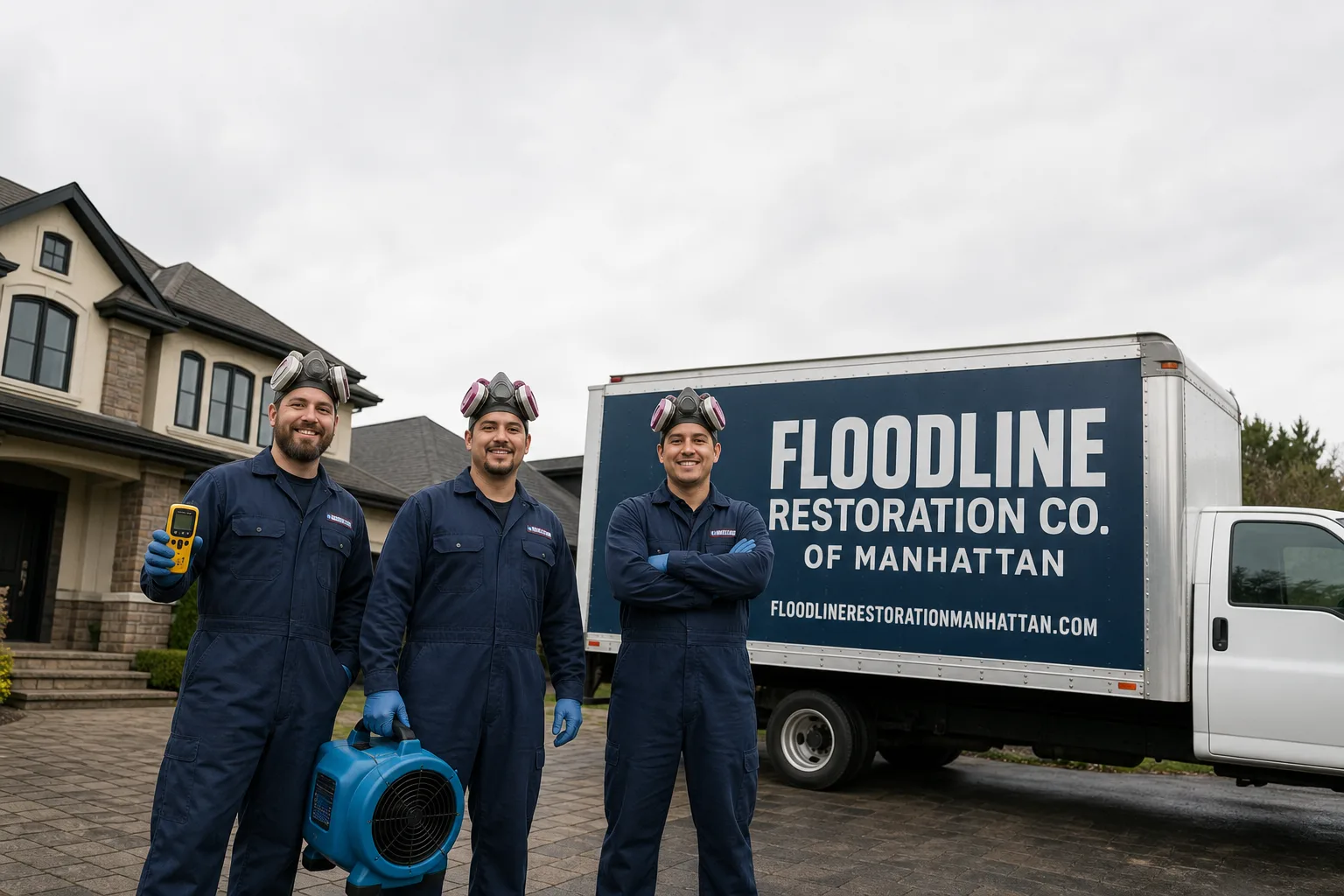
Free visual inspection and a written scope of work before any mitigation begins - photos, moisture readings, and drying logs go in your claim file
The scope we write is the scope we bill. Anything new gets shown to you, in writing, before we touch it.






 Before
 After
After Before
 After
After Before
 After
After24/7 Emergency Commercial Restoration in Park Avenue
Commercial restoration in Park Avenue runs on a different clock than anywhere else in New York. When a steam riser fails inside a pre-war co-op wall or a setback terrace membrane lets a nor’easter into a $12 million duplex, the building’s managing agent needs a crew that understands board approval, service-elevator scheduling, and the liability of hand-painted murals. We answer live at (917) 924-4221, every hour of every day, and our first truck reaches Park Avenue within 45 minutes for a free visual inspection. The first hour matters because saturated lath-and-plaster behind book-matched marble doesn’t wait for a board vote. We start documentation immediately, flag the shared-infrastructure questions before they become disputes, and get containment in place the moment access clears.
Understanding Commercial Restoration Severity in Park Avenue Properties
Park Avenue’s pre-war towers, built mostly between the 1920s and early 1940s, present restoration challenges that a suburban wood-frame job never does. Thick masonry walls hold moisture far longer than drywall over studs, which means a Category 2 water release from a failed steam trap can read dry on the surface while the plaster core stays saturated for weeks. We use moisture mapping with penetrating meters and thermal imaging to read what’s behind the limestone and lath. Category 3 water, the kind that comes from a shared cast-iron drain stack backing up, carries sewage and bacteria through the same wall cavities. That requires containment, air scrubbing, and clearance testing before anyone reoccupies the space. Fire and smoke in these buildings brings its own complication: soot migrates through original plaster cracks, radiator chases, and dumbwaiter shafts, spreading residue far beyond the burn room. Severity in Park Avenue is rarely about the square footage. It’s about what the square footage contains and who has to approve the work.
Why Park Avenue Property Owners Choose Floodline Restoration Co. of Manhattan
- 45-minute response commitment. Our crews stage near the Park Avenue corridor so a live dispatcher can put a truck in motion while you’re still on the phone.
- 24/7 live answer, never an automated system. A person picks up at 2 a.m. and knows the difference between a setback terrace leak and a steam riser failure. No phone trees, no recordings.
- IICRC-certified crews, trained to WRT, FSRT, and AMRT standards. The certifications are specific because the work is. Background-checked, uniformed, and familiar with co-op board protocols.
- Free visual inspection with a written scope. We document what we see, what we suspect, and what we recommend, before any equipment is placed or any invoice is generated.
- Direct insurance billing. We bill the carrier directly and handle adjuster communication. The owner or board never plays messenger between Floodline and the insurer.
- One team from extraction to reconstruction. The same certified crew that reads the moisture map on day one handles daily readings, dries the structure, and rebuilds what needs rebuilding. No mid-job handoff to an unknown subcontractor.
Our Commercial Restoration Process
Inspection & Assessment
We arrive within 45 minutes, walk the loss with the owner or managing agent, and run moisture readings with penetrating meters and thermal imaging. We photograph everything, including pre-loss condition of custom finishes, because board insurance claims in Park Avenue turn on that documentation.
Extraction & Stabilization
Standing water goes out immediately with truck-mounted extraction units. We stabilize the affected area, stop active water intrusion, and set temporary containment if Category 2 or 3 water is present.
Drying & Dehumidification
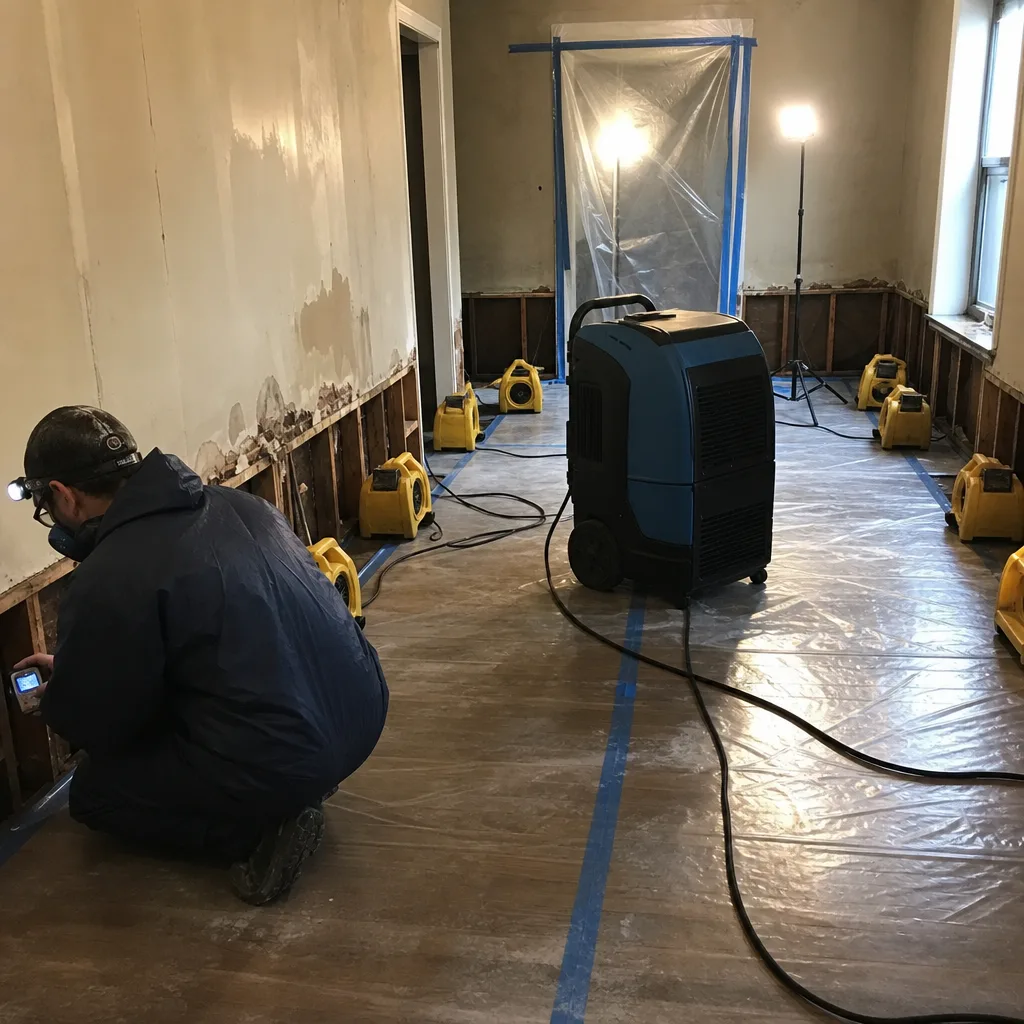
Dri-Eaz and Phoenix dehumidifiers run against a moisture map we update daily. On Park Avenue’s thick masonry, we extend drying calculations beyond standard wood-frame assumptions so hidden moisture doesn’t get sealed into walls.
Cleaning & Sanitization
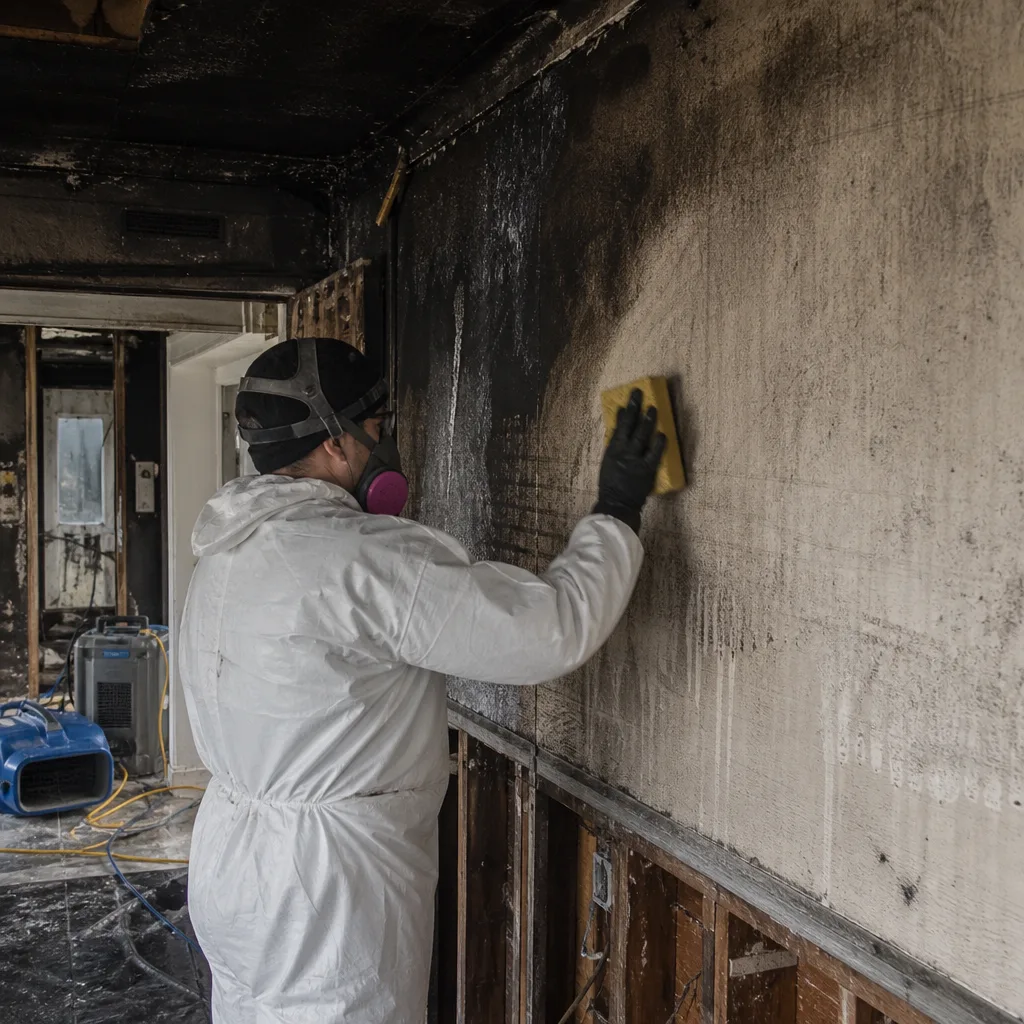
We clean and sanitize all affected surfaces, run HEPA air scrubbers where mold or soot is present, and log every action for the carrier. Antique parquet and hand-painted murals get artisan-grade treatment, not a general wipe-down.
Specialty Treatment for Park Avenue Interiors
Book-matched marble, original plaster crown moldings, and custom millwork require controlled drying and careful pack-out. We coordinate with the building’s managing agent for service-elevator access and weekday work windows, and we document every item before it moves.
Repairs & Restoration
We rebuild what was damaged, matching original materials where the building’s alteration agreement requires it. The same crew that dried the space completes the reconstruction, and the 90-Day Done Right Promise covers the result in writing.
Need Emergency Commercial Restoration in Park Avenue Now?
Crews minutes away, answering live 24 hours a day. The sooner we start, the less it costs.
Working With Your Insurance Company
Park Avenue claims get complicated because the loss often spans multiple policies: the co-op corporation’s master policy, the unit owner’s interior policy, and sometimes the managing agent’s liability coverage. We’ve handled all three at once. From the first hour, we document the loss with photographs room by room, moisture readings, and a running log of every action taken. We write estimates in industry-standard format and talk to adjusters directly, so the board and the owner don’t spend their afternoons explaining the difference between a steam riser and a supply line. If a claim is denied or short-paid, our documentation is built to support the appeal. A square deal means the bill matches the scope, no add-ons, no surprises.
What We Provide Your Insurer
- Thorough documentation of the loss
- Photos of all damage, room by room
- Moisture readings and drying logs
- A detailed, line-item scope of work
- Direct coordination with your carrier
Built for Park Avenue’s Loss Calendar
Park Avenue sees its restoration losses in seasonal waves that follow the weather and the age of the buildings. January deep freezes stress cast-iron supply lines and steam risers inside unconditioned wall cavities, and a single union fitting failure can saturate stacked units within minutes. Spring brings the thaw and the first roof drainage backups, as the original 1920s roof scuppers and leaders choke on winter debris. Summer thunderstorms routinely overwhelm those same drainage designs, sending water over parapet flashings and down through the brick. Nor’easters, the ones that hit in October and November, drive rain sideways into limestone facades and blow out aging terrace membranes at setback penthouses. We staff for all of it, year-round, because Park Avenue’s loss calendar doesn’t have an off-season.
Commercial Restoration Across Park Avenue’s Neighborhoods
Park Avenue isn’t one building type. The stretch from 34th to 42nd Street carries mid-century commercial towers with different systems than the pre-war co-ops above 60th. Around 72nd and 79th, the blocks are almost entirely limestone-clad residential co-ops with shared steam risers and service elevators. Down near 48th and 52nd, office and retail spaces sit in buildings with modern plumbing but older fire-suppression systems. The Grand Central corridor around 42nd brings retail and restaurant losses, often tied to water releases from upper-floor mechanical rooms. When we respond to a loss near 86th or 96th, we know the managing agent’s approval process will shape the timeline. Our job is to bring the same certified crew, the same equipment, and the same written scope to every one of those blocks.
Specialized Commercial Restoration Services We Offer in Park Avenue
Multi-Unit & HOA Restoration
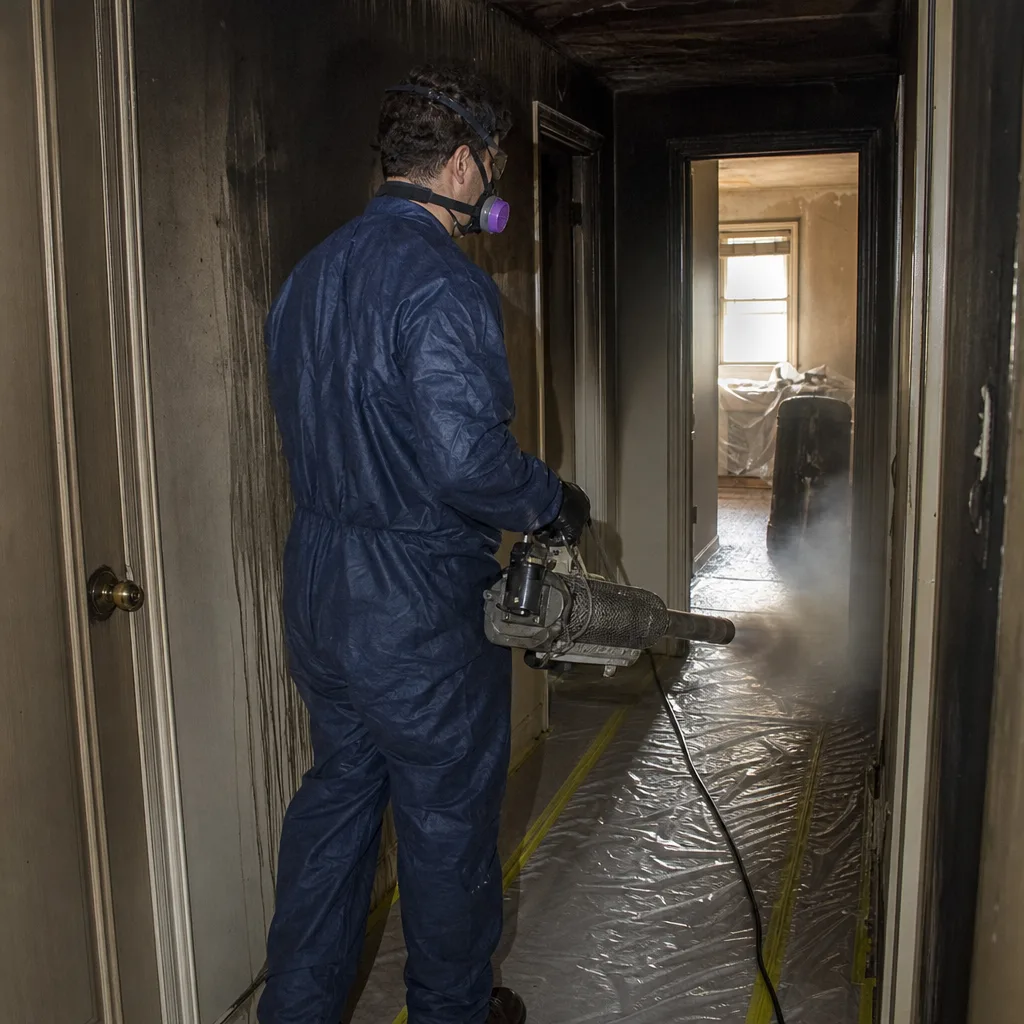
Park Avenue’s co-op towers are the defining challenge here. A steam riser failure or a shared drain stack backup saturates multiple units at once, and every unit owner looks to the board for answers. We scope the loss across all affected apartments, coordinate with the managing agent and board counsel, and run one restoration plan instead of four separate ones. Documentation covers the column, not just the unit.
Large-Loss Response
When a setback terrace membrane fails and water channels down through a duplex, the loss can span thousands of square feet and tens of millions in contents. We deploy multiple crews, set full containment, and run Dri-Eaz and Phoenix equipment on a moisture-mapped grid. The 90-Day Done Right Promise still applies, even on a six-figure job.
Business Interruption Minimization
For retail and office spaces along Park Avenue, every closed day is revenue lost. We prioritize source control and temporary containment so businesses can reopen in phases. We document the interruption for the carrier, write the scope to support a business-income claim, and move fast without cutting corners.
Office & Retail Restoration
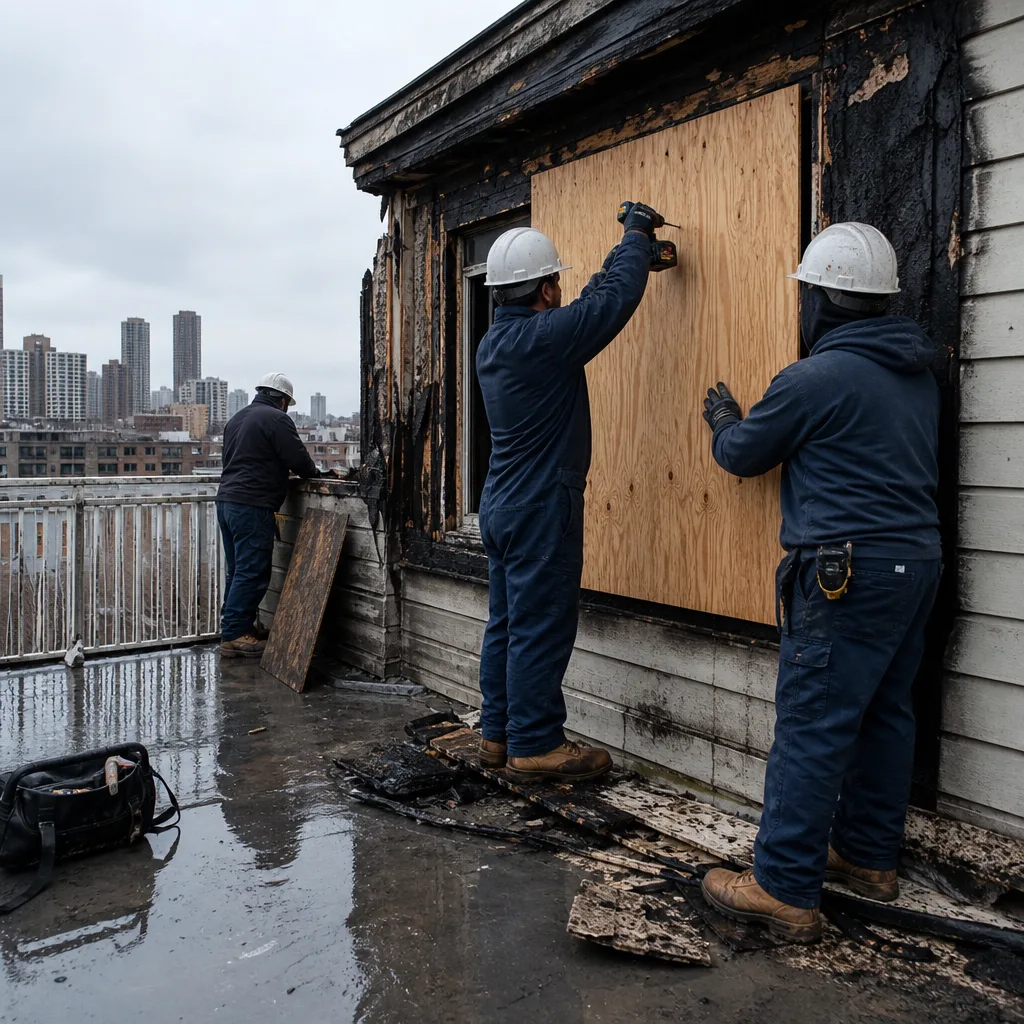
Water from a roof leader or a mechanical-room release can shut down a storefront or a professional office in an afternoon. We extract, dry, and sanitize to get the space back to work, and we schedule around business hours where the building allows. Direct insurance billing means the tenant isn’t fronting the claim.
Industrial Facility Cleanup
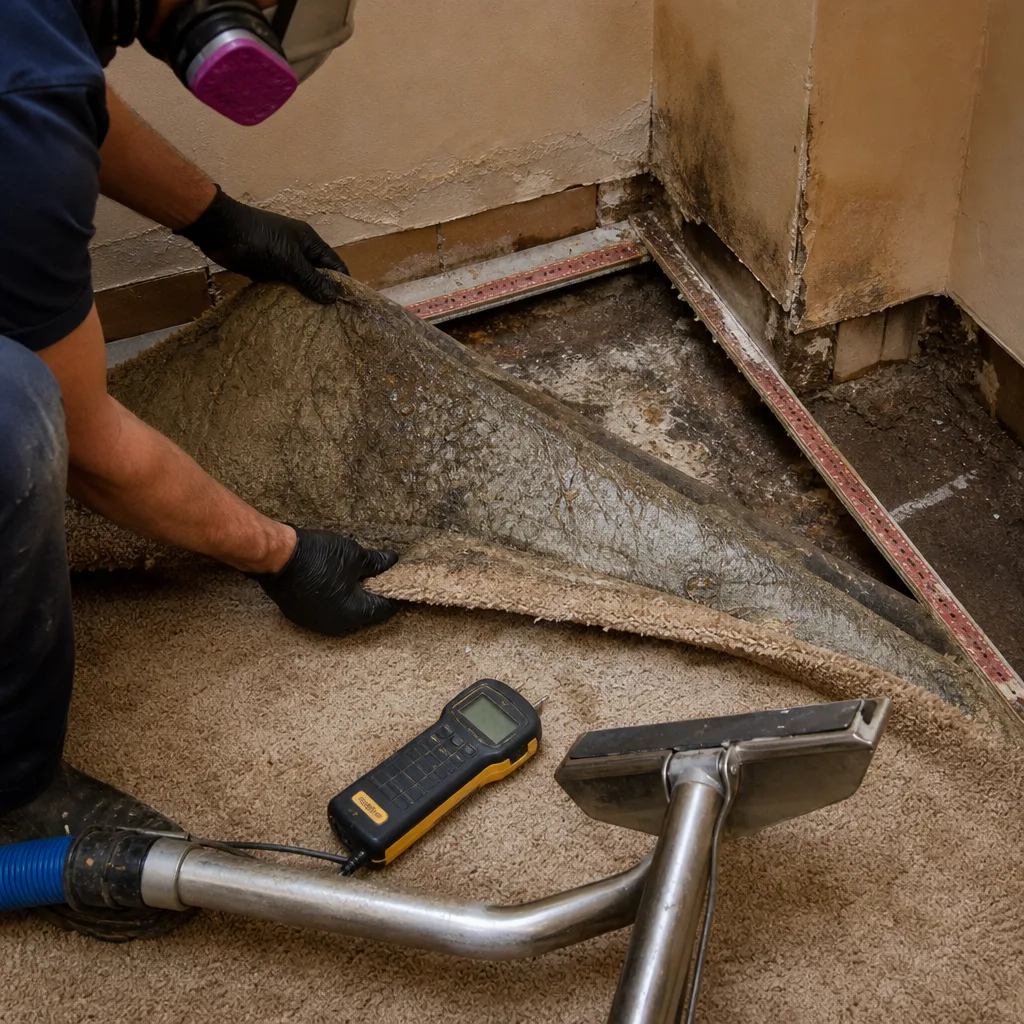
Industrial spaces in Park Avenue’s mid-century commercial blocks carry different risks: boiler rooms, freight elevators, and outdated sprinkler risers. We handle Category 3 water, soot, and contamination cleanup with full containment and clearance testing, documented for the carrier and any regulatory requirements.
What happens when you call
- 1
A real person answersNo phone trees - you reach a local pro.
- 2
You get an upfront price rangeHonest numbers before anyone is dispatched.
- 3
A background-checked tech heads outLicensed & insured, dispatched right away.
- 4
You approve before work beginsNothing starts until you say go.
Commercial Restoration Costs in Park Avenue, NY
Commercial restoration in Park Avenue runs higher than the borough average because the buildings demand it. A straightforward Category 1 water loss in a single retail space typically runs $4,000 to $12,000. A Category 2 loss involving lath-and-plaster drying and custom finish treatment runs $15,000 to $45,000. A large-loss event, like a steam riser failure saturating stacked units or a terrace membrane failure flooding a duplex, runs $75,000 to $300,000 or more depending on the contents and the extent of reconstruction. What moves the price: board approval delays, service-elevator scheduling constraints, the condition of custom finishes, and whether the loss is Category 1, 2, or 3. Insurance covers most of these claims, and we bill the carrier directly. The free inspection gives you a firm written scope before any work is authorized. Call (917) 924-4221 and we’ll walk the loss with you, no charge, no obligation.
We Also Serve Cities Near Park Avenue
Our crews respond daily across Fairview, Harrison, East Bronx, and Hunts Point. If your commercial property sits just outside the Park Avenue corridor, call (917) 924-4221 and we’ll dispatch the nearest available crew with the same 45-minute response commitment.
Park Avenue Commercial Restoration Questions, Answered
Who pays for water damage from a failed steam riser inside a Park Avenue co-op wall?
The co-op corporation’s master policy typically covers damage to the building structure, while the unit owner’s interior policy covers finishes, contents, and improvements. The steam riser itself belongs to the corporation, but the restoration scoping must be approved by the managing agent and often the board. We document everything before touching anything, so the claim is assigned correctly from the first hour. Call (917) 924-4221 and we’ll walk you through your specific building’s setup.
Why do restoration timelines run longer in Park Avenue pre-war buildings than in newer construction?
Thick masonry and lath-and-plaster hold moisture far longer than drywall over studs, so drying takes longer. On top of that, service-elevator-only access, weekday-only work windows, and board approval requirements add days to the front and back of every job. We plan for all of it and write the timeline into the scope before work starts.
Can your crew work weekends or evenings to speed up commercial restoration on Park Avenue?
Some Park Avenue buildings allow it and some don’t. We work with the managing agent to secure whatever access the building permits. In emergency situations where standing water is present, we can often get after-hours approval for extraction and equipment placement. We’re available 24/7, but the building’s rules govern when we can work.
What happens to antique parquet or hand-painted murals when a Category 2 water loss hits a Park Avenue unit?
We document pre-loss condition, then use controlled drying with penetrating meters to monitor moisture in the wood and plaster. Antique parquet is dried slowly to prevent cupping and cracking. Hand-painted murals are protected in place where possible, or packed out by conservators if the wall must be opened. The documentation supports the contents claim with the carrier.
How do you prevent mold after a facade leak in a Park Avenue setback penthouse?
We set containment at the first sign of water intrusion, run HEPA air scrubbers, and dry the masonry to the correct standard before any rebuilding happens. On Park Avenue’s thick walls, that means extended drying times and daily moisture readings. Mold needs moisture to survive. We remove the moisture, and we prove it with a logged dry standard.
How fast can you actually get to a Park Avenue property?
Our crews stage near the Park Avenue corridor and respond within 45 minutes of your call. A live dispatcher answers at (917) 924-4221 and puts a truck in motion immediately. In a Category 3 water release or an active facade leak, that first hour is the difference between a contained loss and a building-wide problem.
Does insurance cover commercial restoration on Park Avenue, and who deals with the adjuster?
Most commercial restoration losses on Park Avenue are covered by the co-op corporation’s master policy, the unit owner’s policy, or the tenant’s commercial policy, depending on the source of the water or fire. We bill the carrier directly and handle adjuster communication from first documentation to final invoice. You don’t play messenger.
What should I do in the first 30 minutes after a water release in a Park Avenue building?
Call us at (917) 924-4221 first. Then, if it’s safe, shut off the water at the nearest valve, move small valuables out of the affected area, and photograph everything. Don’t enter standing water if electrical systems may be involved. Call the building’s managing agent to report the loss. The faster we document and contain, the smaller the claim and the shorter the closure.
Serving Park Avenue, NY - Our Local Coverage Area
We’re based in the Park Avenue area and know this community well. Use the map below to see our service coverage - if you’re nearby, we can almost certainly help.
Commercial Restoration in Park Avenue, Done Right
Our Commercial Restoration team has handled losses in Park Avenue’s pre-war co-ops, mid-century office towers, and retail storefronts. We know the board approval process, the service-elevator constraints, and the liability that comes with $30 million duplexes and irreplaceable finishes. When you call Park Avenue dispatch at (917) 924-4221, a live person answers, a certified crew responds within 45 minutes, and the job is backed by the 90-Day Done Right Promise, in writing. The 90-Day Done Right Promise is the Keystone Standard: if it’s not done right, we make it right, no paperwork battles, no arguing. That’s the deal on every job we take, from a single retail space to a full-column steam riser loss. Call today for a free inspection and a written scope. We’ll be there when we say.
Written by Curt Bowman, Owner at Floodline Restoration Co. of Manhattan, serving Park Avenue and the surrounding area since 2010.