
Free visual inspection and a written scope of work before any mitigation begins - photos, moisture readings, and drying logs go in your claim file
The scope we write is the scope we bill. Anything new gets shown to you, in writing, before we touch it.






 Before
 After
After Before
 After
After Before
 After
After24/7 Emergency Commercial Restoration in Stuyvesant Town-Peter Cooper Village
Commercial water damage inside Stuyvesant Town-Peter Cooper Village doesn’t behave like a typical Manhattan leak. A pinhole in a 75-year-old steam riser can send Category 2 water down through identical wet-wall cavities on five floors before anyone notices a stain on the ceiling. Floodline Restoration Co. of Manhattan answers live 24 hours a day, seven days a week. Call (917) 924-4221 and a certified crew is dispatched into Stuyvesant Town-Peter Cooper Village immediately, because the first hour determines whether you’re drying drywall or replacing it.
We’re not a franchise with a call center. We’re Commercial Restoration specialists who have worked inside these 110 identical red-brick towers long enough to know that the reported unit is rarely the whole story. When you call at 2 a.m., a person picks up. The crew arrives fast, moisture-maps the full vertical stack, and starts extraction the same visit. Free visual inspection, no obligation, and a written scope before any work begins.
Understanding Commercial Restoration Severity in Stuyvesant Town-Peter Cooper Village Properties
Water damage in Stuyvesant Town-Peter Cooper Village falls into three technical categories that drive every decision we make. Category 1 is clean water, typically from a failed supply branch or a cracked copper line inside the wet wall. Category 2 is gray water with contaminants, common when a cast-iron drain stack cracks and soiled drainage flows into the cavity. Category 3 is black water, present when a sewage line fails or when below-grade mechanical rooms take on East River storm surge like they did during Hurricane Sandy. The category dictates whether materials are dried in place or removed entirely.
Because every building in this complex was constructed between 1947 and 1949 using uniform masonry and identical floor plans, severity spreads vertically in ways competitors miss. The aging galvanized and copper supply branches, paired with central steam-heating risers now developing pinhole failures inside shared wall cavities, mean one leak on an upper floor is almost never isolated. Moisture mapping with thermal imaging and penetrating meters tells us exactly how far water has traveled through stacked units. We log daily readings until the dry standard is met, then deliver that log to you and your carrier.
Why Stuyvesant Town-Peter Cooper Village Property Owners Choose Floodline Restoration Co. of Manhattan
- 45-minute response commitment after your call, with live dispatch tracking so you know exactly when the crew reaches the Stuyvesant Town-Peter Cooper Village campus.
- A real person answers, 24/7, never an automated phone tree. Dispatchers know the building management coordination process here and start it immediately.
- IICRC-certified crews trained to WRT and ASD standards, with additional experience specific to the stacked wet-wall failures that repeat across these identical towers.
- Free visual inspection on every loss, with a written scope agreed before any drying equipment is placed or any drywall is opened.
- Direct insurance billing with photo-documented assessments and daily moisture logs sent straight to your adjuster, so you never play messenger.
- One crew from first extraction to final reconstruction, so the team that reads the moisture map on day one rebuilds the wall on day ten. No mid-job handoffs.
Our Commercial Restoration Process
Inspection & Assessment
We arrive with thermal imaging cameras and penetrating moisture meters, then map the leak source and the full vertical path of water through the wet-wall cavity. In Stuyvesant Town-Peter Cooper Village, that means inspecting floors above and below the reported unit, not just the unit with the visible stain.
Extraction & Stabilization
Standing water is extracted with professional-grade submersible pumps and truck-mounted systems. We isolate the affected stack, shut down electrical circuits in the wet zone, and place containment to stop the spread before demolition begins.
Drying & Dehumidification
Dri-Eaz and Phoenix dehumidifiers paired with high-velocity air movers are positioned on every affected floor. A targeted drying plan is built for the cavity, not just the room. Daily readings are logged until the dry standard is verified.
Cleaning & Sanitization
Every affected surface is cleaned to IICRC standards with antimicrobial treatments where category dictates. Shadowboxing inspection and HEPA air scrubbing are standard on losses above Category 1, with clearance testing before containment comes down.
Large-Loss & Access Coordination
Because all access flows through centralized building management, we handle scheduling, insurance documentation, and multi-floor access requests directly with the landlord’s team. You do not become the messenger between us and the carrier or management.
Repairs & Restoration
The same crew that ran the drying log rebuilds what needs rebuilding, from drywall replacement to floor refinishing. Every detail is wrapped in our 90-Day Done Right Promise, in writing, with no argument if it isn’t right.
Need Emergency Commercial Restoration in Stuyvesant Town-Peter Cooper Village Now?
Crews minutes away, answering live 24 hours a day. The sooner we start, the less it costs.
Working With Your Insurance Company
Insurance claims for commercial restoration in Stuyvesant Town-Peter Cooper Village are rarely simple. The centralized landlord owns the structure, the tenant or managing agent owns contents and improvements, and the carrier’s adjuster needs documentation that separates the two clearly. We provide that from the first hour: photos of every affected room, thermal images showing the hidden moisture path, and moisture readings from each floor of the vertical stack. Our line-item scope of work is written to the same format carriers expect, and we coordinate directly with your adjuster so you never have to relay technical questions back and forth.
What We Provide Your Insurer
- Thorough documentation of the loss
- Photos of all damage, room by room
- Moisture readings and drying logs
- A detailed, line-item scope of work
- Direct coordination with your carrier
Built for Stuyvesant Town-Peter Cooper Village’s Loss Calendar
Stuyvesant Town-Peter Cooper Village sits against the East River, and the loss calendar here is dictated by that geography. January deep freezes put maximum pressure on 75-year-old supply branches and steam risers, and the cold snaps are when we see most catastrophic pipe failures. By March, ground thaw shifts aging drains and soil stacks, producing slow seepage in below-grade mechanical rooms. Summer thunderstorm season brings the heaviest hours of rain, and the campus’s FEMA flood-zone designation means storm surge is a documented history, not a hypothetical. Hurricane Sandy inundated the below-grade mechanical and HVAC infrastructure across the campus, and the flood-hardening upgrades since then mean those same rooms now contain more sensitive equipment than ever when water does find a way in.
Nor’easters in late fall bring wind-driven rain against 110 brick facades, finding entry at parapets, rooftop vents, and aging window frames. We think in terms of the campus calendar, not a generic Manhattan calendar, so crews are staged accordingly and the equipment needed for wet-wall drying is never far away.
Commercial Restoration Across Stuyvesant Town-Peter Cooper Village’s Neighborhoods
The campus is bounded by 14th Street to the north, Avenue C to the east, 23rd Street to the south, and First Avenue to the west, with the East River just beyond Avenue C. The buildings along Avenue C face the strongest wind-driven rain and the highest storm-surge risk, and their below-grade rooms were hit hardest during Sandy. The interior oval along First Avenue sees more traffic from retail spaces and community facilities at the ground level, where a small leak can interrupt business in hours. The playground corridors and the green spaces around Stuyvesant Oval create long runoffs during heavy rain, and the buildings flanking them see more surface-water intrusion at entry points. The southern edge near 20th Street, with its long uninterrupted facade, is where a failed steam riser on one floor can migrate into multiple stacked units before any visible damage appears on a ceiling.
Every section of the complex shares one thing: a wet-wall cavity whose location is identical whether you’re on East 14th or East 20th, on the river side or the avenue side. That repetition is the key to fast diagnosis and complete restoration here.
Specialized Commercial Restoration Services We Offer in Stuyvesant Town-Peter Cooper Village
Multi-Unit & HOA Restoration
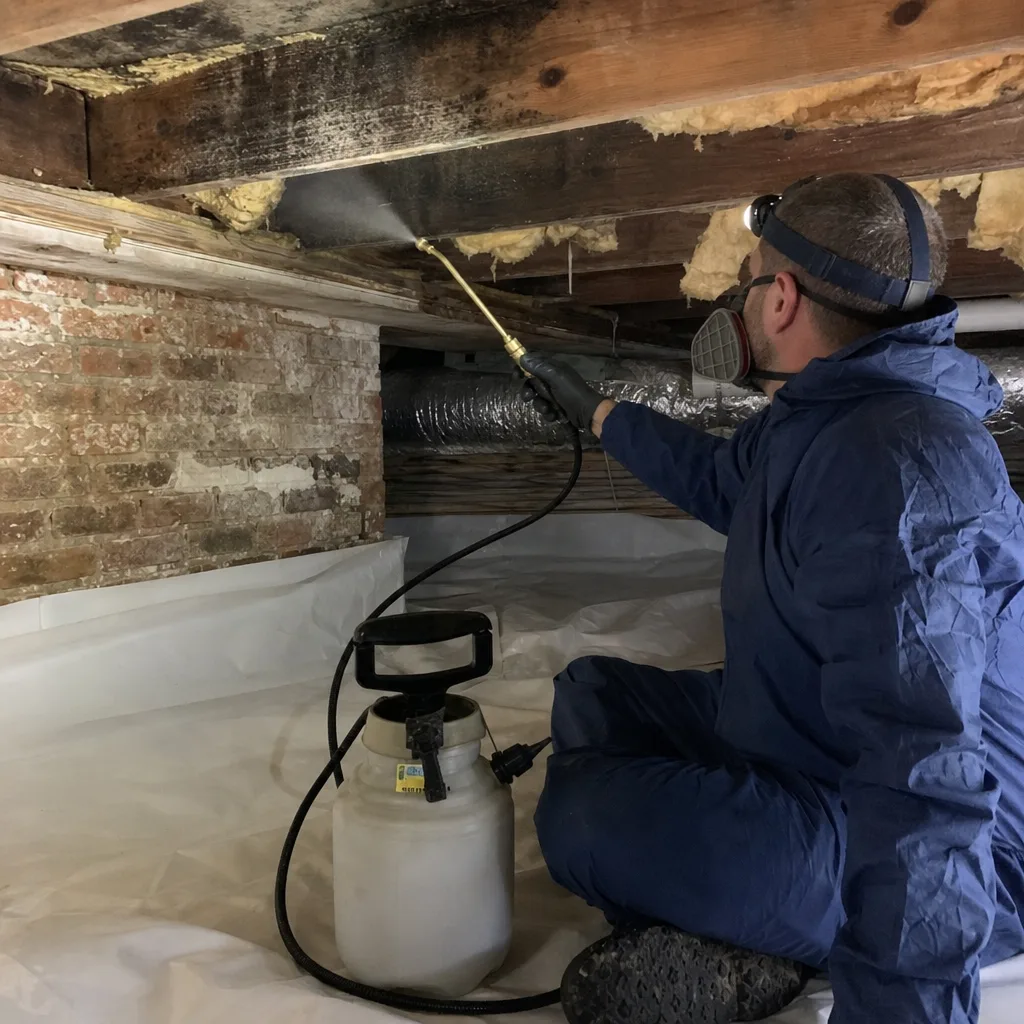
This is the dominant restoration work on this campus. Every loss is a multi-unit event, and we coordinate with the central management office as a single point of contact for access, schedules, and insurance. We treat the building as a system, not a collection of independent apartments.
Large-Loss Response
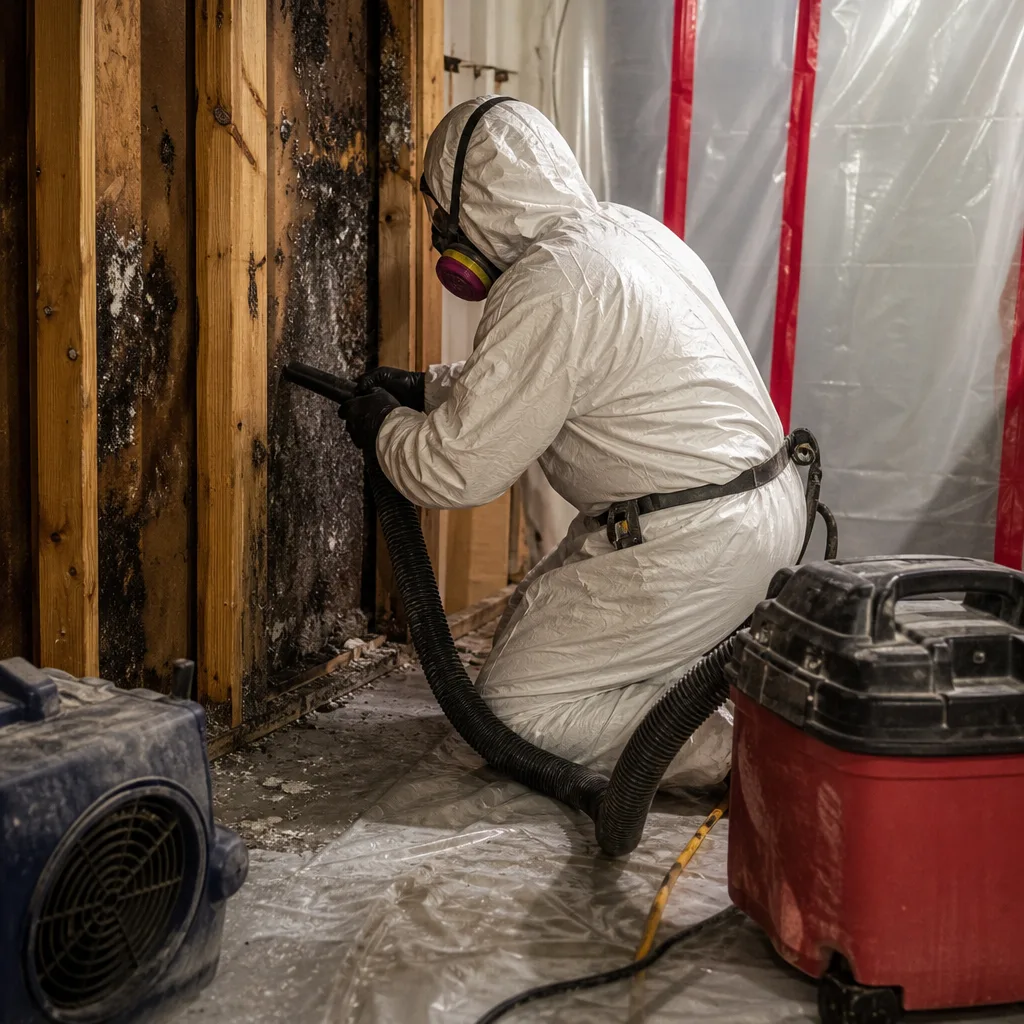
When a steam riser fails and floods a full seven-floor stack, you need a crew that can deploy drying teams on every affected floor simultaneously. We run large-loss restoration this way, with enough equipment staged and enough certified technicians to cover every floor in one mobilization.
Business Interruption Minimization
Ground-floor and below-grade commercial spaces in Stuyvesant Town-Peter Cooper Village depend on clean, dry space to stay open. We prioritize extraction and temporary drying so tenants can resume occupancy as fast as possible, and we document every hour of interruption for your business-income claim.
Office & Retail Restoration
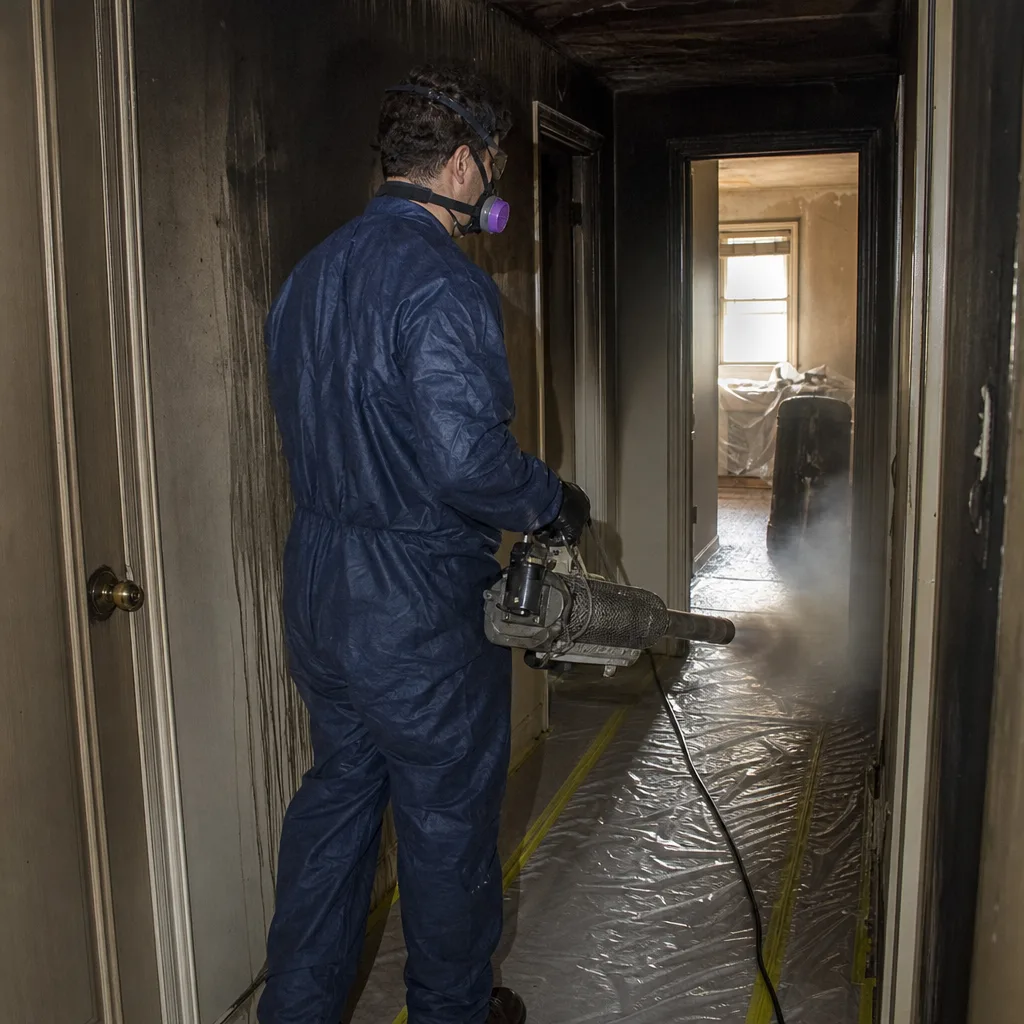
Storefronts and professional spaces along First Avenue and 14th Street face shorter tolerance for downtime. We sequence drying around open hours where possible and bring in floor-drying mats when a full shutdown isn’t practical.
Industrial Facility Cleanup
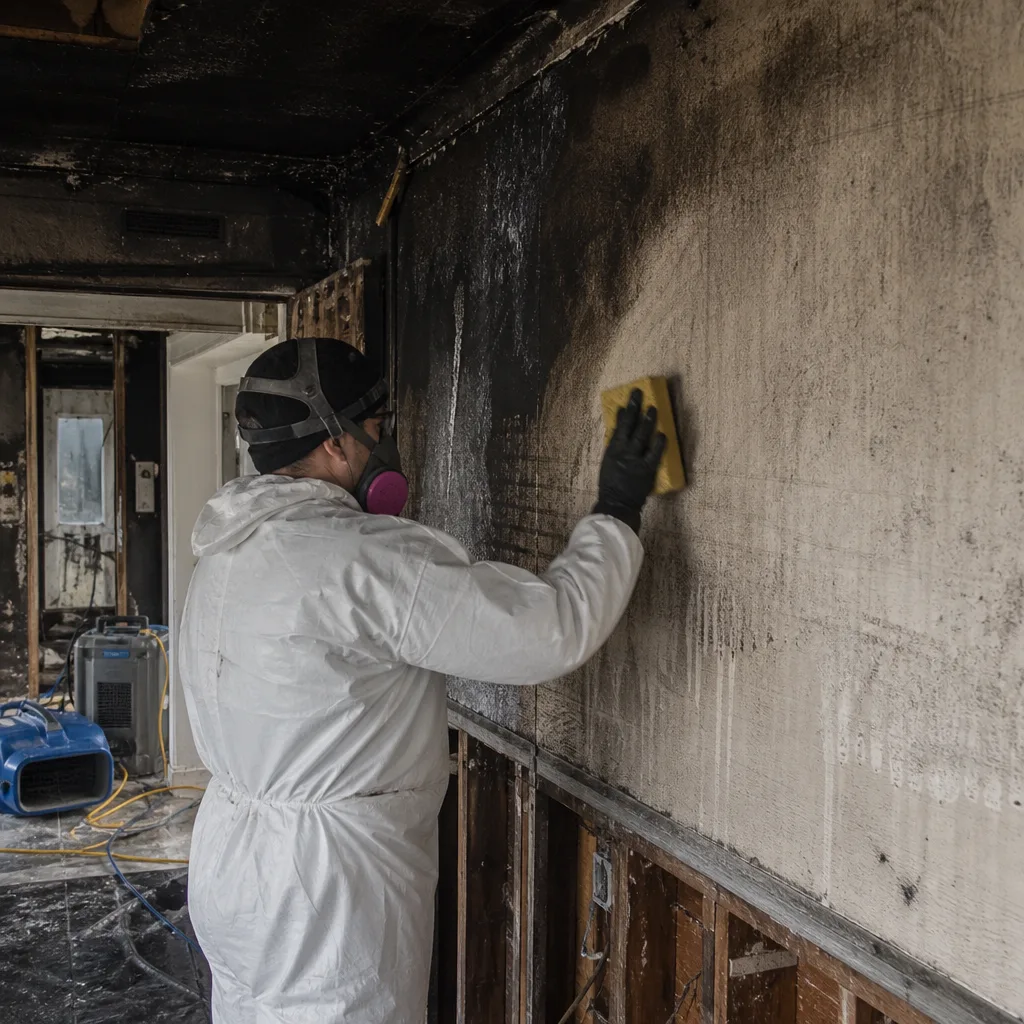
The campus’s central heating and mechanical plants, plus the below-grade pump and utility rooms, are critical infrastructure. We clean and restore these spaces with the same containment and air-scrubbing protocols we’d use in an occupied apartment, and we handle the coordination with plant management directly.
Document & Inventory Recovery
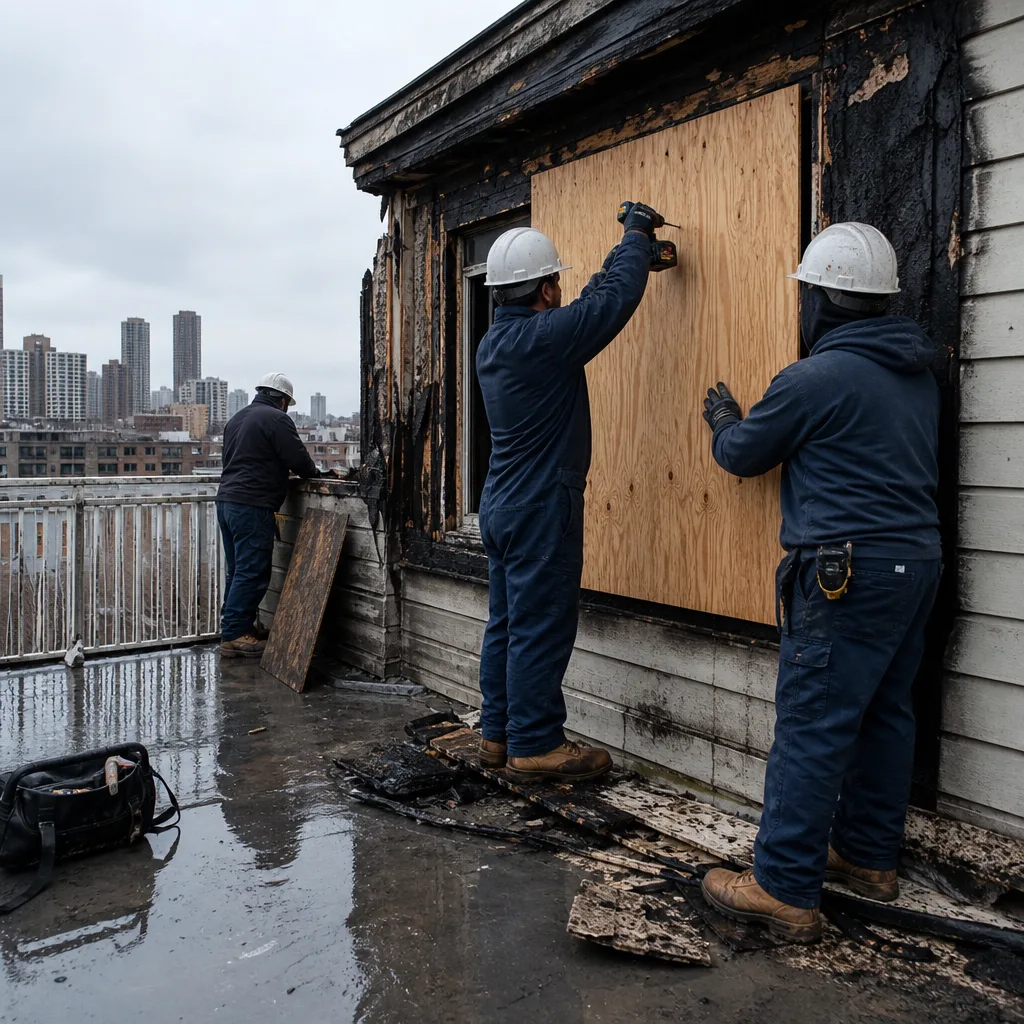
Building management offices, retail records, and tenant files get wet too. For paper records and electronic equipment, we provide document freezing and drying, plus inventory content restoration when a space floods.
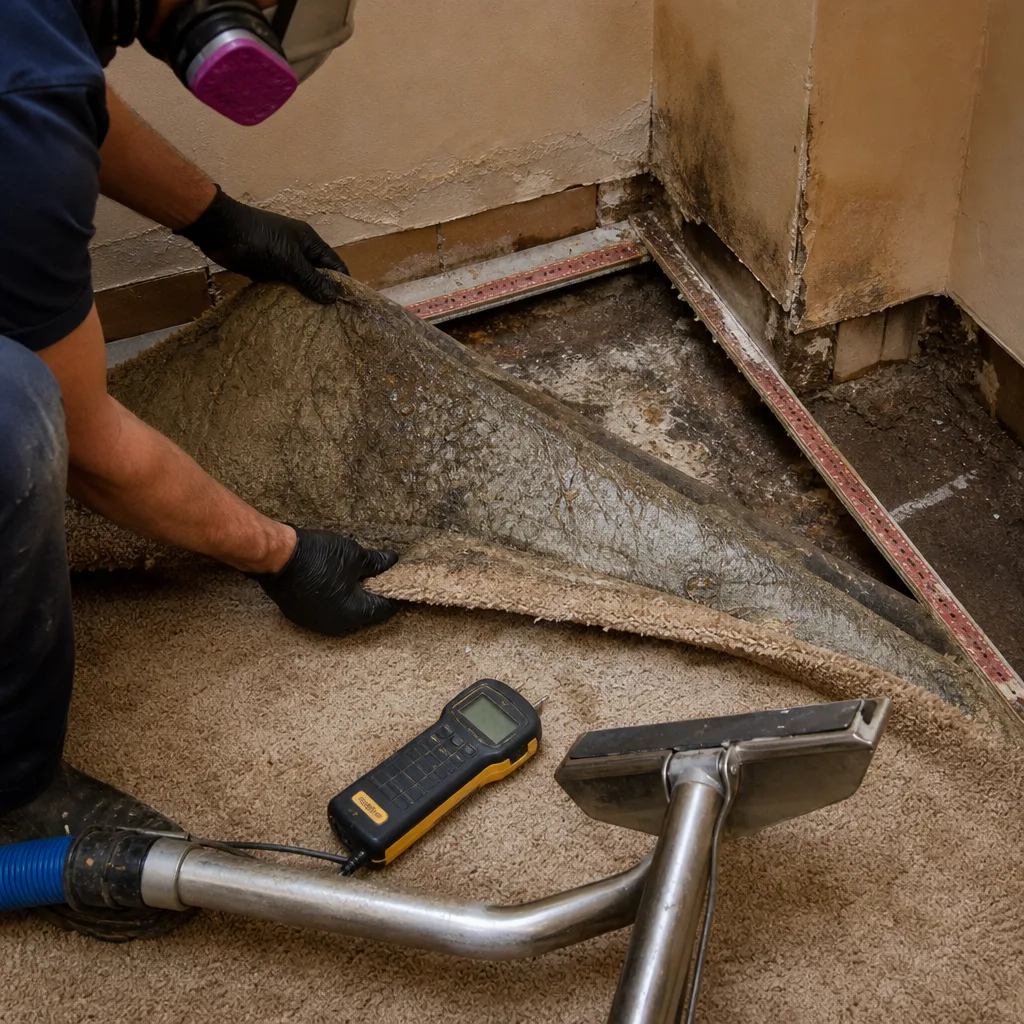
What happens when you call
- 1
A real person answersNo phone trees - you reach a local pro.
- 2
You get an upfront price rangeHonest numbers before anyone is dispatched.
- 3
A background-checked tech heads outLicensed & insured, dispatched right away.
- 4
You approve before work beginsNothing starts until you say go.
Commercial Restoration Costs in Stuyvesant Town-Peter Cooper Village, NY
Restoration pricing inside Stuyvesant Town-Peter Cooper Village is driven by stack access, category of water, and the number of floors affected. A single-unit Category 1 drying job typically runs $1,800 to $3,600. A Category 2 or 3 wet-wall loss requiring containment, controlled demolition, and multi-floor drying ranges from $4,500 to $12,000. A full-stack steam riser failure spanning five or more floors with reconstruction included commonly lands between $18,000 and $45,000. Large-loss events below grade or involving sandy water intrusion can go higher.
The biggest cost driver here is vertical spread. A tech who treats only the reported unit leaves hidden moisture behind, and the eventual mold remediation doubles the final bill. That’s why our free visual inspection includes vertical moisture mapping up and down the stack. Insurance typically covers the restoration portion, and we bill your carrier directly for covered work. Call (917) 924-4221 and we’ll give you a firm written scope before any drying starts.
We Also Serve Cities Near Stuyvesant Town-Peter Cooper Village
Our crews regularly respond to commercial restoration losses in Fairview, Harrison, East Bronx, and Hunts Point. The same live 24/7 dispatch and certified crews serve businesses across the surrounding area.
Serving Stuyvesant Town-Peter Cooper Village, NY - Our Local Coverage Area
We’re based in the Stuyvesant Town-Peter Cooper Village area and know this community well. Use the map below to see our service coverage - if you’re nearby, we can almost certainly help.
Stuyvesant Town-Peter Cooper Village Commercial Restoration Questions, Answered
How does centralized building management in Stuyvesant Town change the scope of a commercial restoration job?
It changes access, scheduling, and coordination. Every work order and unit access request flows through a single institutional landlord, so restoration cannot begin until management approves access. We handle that approval process directly, which means a slower permit doesn’t stall mitigation on our end.
If water damage is only reported in one unit, why do you inspect the identical wet walls on floors above and below?
Because the floor plans are identical across all 110 buildings, a leak in one shared wet-wall cavity has almost certainly been wicking downward through the same cavity on lower floors. We moisture-map every floor in the stack before closing a job, so hidden moisture is found and dried before mold starts.
What category of water is typical in a Stuyvesant Town steam-heat riser failure, and how does that affect drying vs. removal?
Most steam riser failures produce Category 1 water initially, but by the time it migrates through old drywall, insulation, and decades of dust in the cavity, it becomes Category 2. Category 1 in open areas can be dried in place. Category 2 inside a wet wall typically requires controlled demolition and removal of saturated materials.
How quickly can mold start after a wet-wall leak in these 1940s buildings?
Mold spores germinate in 24 to 48 hours in warm, dark, humid conditions. A wet-wall cavity in a 1940s masonry building is exactly that environment. If a leak has been active for more than two days, we assume mold is present until containment and air quality testing prove otherwise.
Does your crew need special training for the below-grade mechanical rooms that flooded during Hurricane Sandy?
Yes. Below-grade mechanical rooms in this campus sit in a FEMA flood zone and have been flood-hardened since Sandy, which means they now house sensitive electrical and HVAC equipment. Our techs are trained in Category 3 water intrusion protocols, decontamination of confined mechanical spaces, and coordination with plant management.
How fast can you actually get to Stuyvesant Town-Peter Cooper Village?
Our 45-minute response commitment applies to the entire campus, day or night. A live dispatcher answers your call and tracks the crew’s drive time. On emergency losses, extraction equipment is on site the same visit.
Will my insurance cover commercial restoration in a building managed by a centralized landlord?
Typically yes, but the claim structure depends on who owns what. The landlord’s policy usually covers the building shell and common systems, while the tenant or managing agent’s policy covers contents, improvements, and business interruption. We document the loss in a way that lets both carriers see exactly what’s covered, and we coordinate with both adjusters directly.
What should I do in the first 30 minutes after discovering water damage in my unit?
Call (917) 924-4221 first. Then, if safe, shut off electrical power to the affected area and move contents away from the wet zone. Do not open walls or ceilings yourself, and do not use household fans to dry the cavity. Water inside the wall needs professional extraction and drying equipment.
Written by Curt Bowman, Owner at Floodline Restoration Co. of Manhattan.