
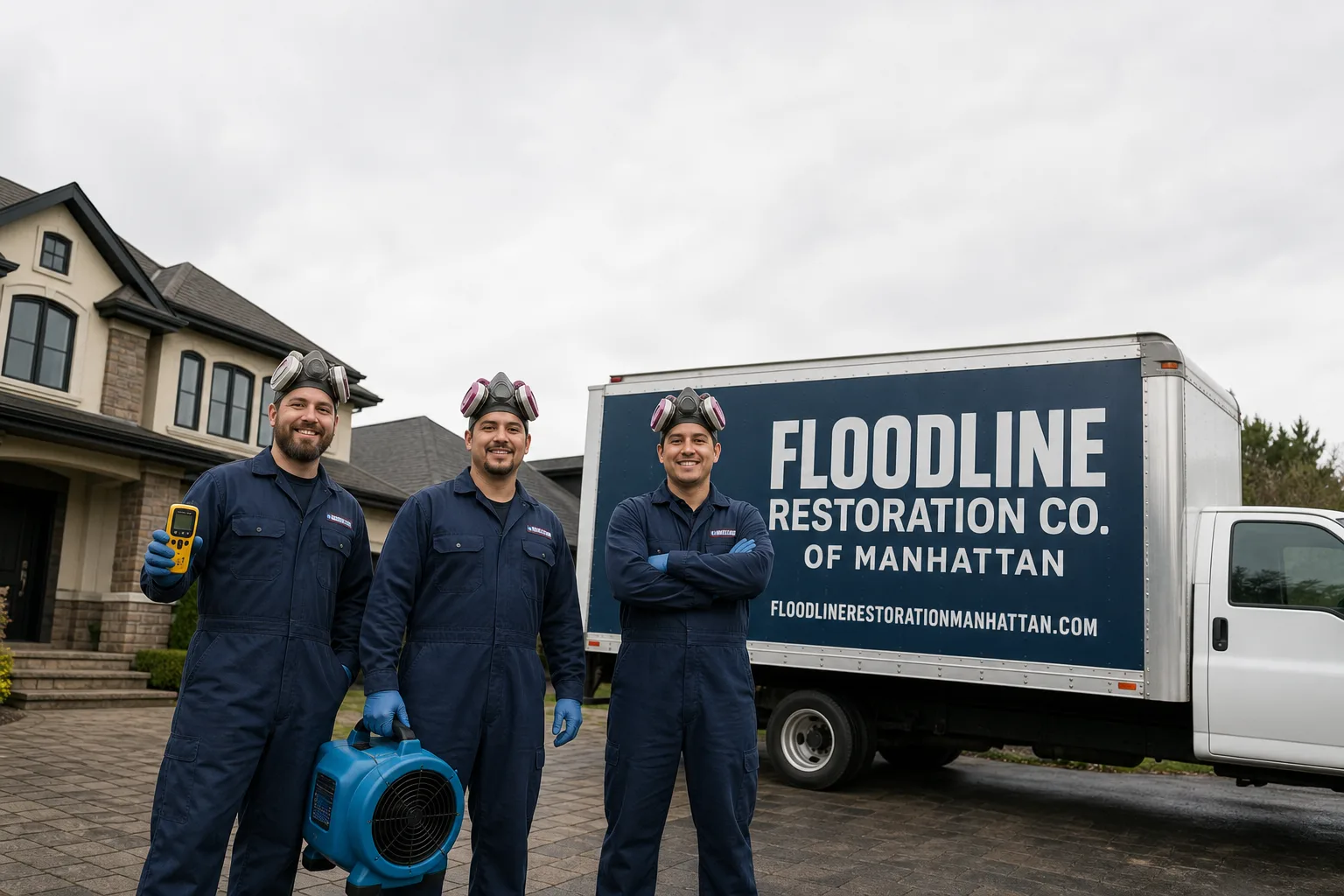
Free visual inspection and a written scope of work before any mitigation begins - photos, moisture readings, and drying logs go in your claim file
The scope we write is the scope we bill. Anything new gets shown to you, in writing, before we touch it.






 Before
 After
After Before
 After
After Before
 After
After24/7 Emergency Commercial Restoration in Theater District
Commercial restoration in Theater District means working against a clock most contractors never see: the hours between an 11 PM curtain call and a 10 AM rehearsal. A burst pipe, sprinkler discharge, or sewage backup in a pre-war Broadway house, hotel, or Restaurant Row kitchen doesn’t just damage property. It triggers production-interruption clauses, reservation cancellations, and revenue loss measured in thousands of dollars per hour. Our crews answer live at (917) 924-4221 around the clock, and we dispatch into Theater District immediately. The first hour determines whether water reaches the hydraulic lift pit, the fly-system counterweight pockets, or the costume vaults below the stage. Those are the cavities standard moisture mapping misses, and they’re the difference between a one-night closure and a dark week.
Understanding Commercial Restoration Severity in Theater District Properties
Theater District’s commercial stock runs almost entirely to masonry buildings constructed between 1900 and 1940: theaters, hotels, and mixed-use structures with cast-iron and galvanized supply lines, gravity-fed sprinklers, and deep multi-level sub-basements. When a Category 2 line bursts above a stage door, water doesn’t pool on a slab. It channels down through chase walls, into elevator pits, behind ornamental plaster, and along the steel beams that support the fly system. By the time it’s visible on an orchestra floor, it’s been traveling for an hour or more. Severity here is defined by where the water has gone, not just how much of it there is. Moisture mapping with thermal imaging and penetrating meters is standard on our jobs. In Theater District, we also map the voids: lift pits, counterweight pockets, trap rooms, and pipe chases. Category 3 water from a sewer backup demands full containment and disposal protocols, not just drying. The building age means plaster, lath, and terra-cotta absorb water and release it slowly, which is why drying logs matter more than drying equipment alone.
Why Theater District Property Owners Choose Floodline Restoration Co. of Manhattan
- 45-minute response commitment: We dispatch the moment you call. Our Theater District response time is built around the midnight-to-morning window, because we know that’s when the real damage budget is written.
- 24/7 live answer, never an automated system: A dispatcher picks up at 2 AM. You’ll know within the same call when a crew is rolling.
- IICRC-certified crews: WRT, FSRT, and AMRT certifications are standard on our trucks. So is experience with entertainment-venue construction, which is rarer and matters more here.
- Free visual inspection: We look before we quote. You get a written scope with line-item pricing before any work begins.
- Direct insurance billing: We handle the carrier directly, with photo documentation and drying logs from the first hour to final clearance.
- One team from extraction to reconstruction: The same certified crew that starts the mitigation finishes the rebuild. No mid-job handoff, no inherited subcontractors.
Our Commercial Restoration Process
Inspection & Assessment
We arrive, walk the full affected area, and map moisture with thermal imaging and hygrometers. On Theater District jobs, that includes the stage lift pit, fly-system pockets, and any sub-basement mechanical rooms or vaults.
Extraction & Stabilization
Standing water comes out first. We stabilize the source, contain the affected zones, and protect any historic fabric that must stay in place. For landmarked buildings, we document everything before we touch it.
Drying & Dehumidification
Dri-Eaz and Phoenix dehumidifiers, XPOWER air movers, and Injectidry systems run into concealed cavities that standard drying misses. We take daily moisture readings and log them until the dry standard is met.
Cleaning & Sanitization
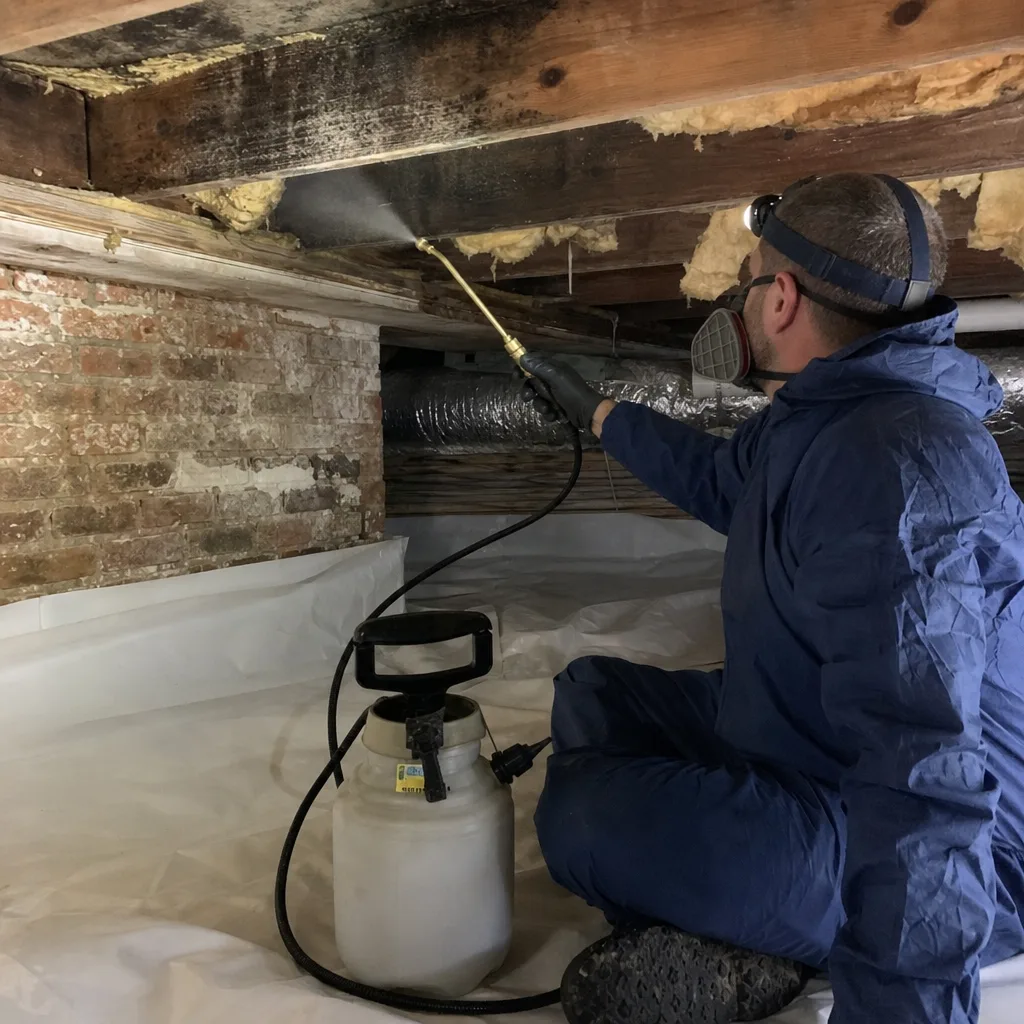
HEPA air scrubbers run during the entire mitigation. Surfaces are cleaned and treated to the category of water involved. For Category 3, that means full antimicrobial application and disposal protocols.
Specialty Treatment for Entertainment Venues
Costume vaults get desiccant drying and inventory triage. Hydraulic lift pits are drained, treated, and dried to manufacturer spec. Fly-system components are inspected for corrosion before reopening.
Repairs & Restoration
We rebuild what needs rebuilding, from plaster and paint to stage decking and rigging supports. Every job ends with a written 90-Day Done Right Promise and a full documentation packet for your insurer and Landmarks Preservation Commission.
Need Emergency Commercial Restoration in Theater District Now?
Crews minutes away, answering live 24 hours a day. The sooner we start, the less it costs.
Working With Your Insurance Company
Insurance claims in Theater District involve more than property damage. Production-interruption coverage, landmark compliance riders, and business income loss all enter the file. We document from the first hour: photos of every affected area, moisture readings time-stamped and logged, and a line-item scope that matches industry-standard estimating. Our team communicates directly with adjusters, so the property owner or production manager isn’t playing messenger. Direct billing means the carrier pays us directly on covered losses. You get the documentation, the drying logs, and the written scope. The carrier gets the same packet. No surprises on the bill, and no argument about what was done and why.
What We Provide Your Insurer
- Thorough documentation of the loss
- Photos of all damage, room by room
- Moisture readings and drying logs
- A detailed, line-item scope of work
- Direct coordination with your carrier
Built for Theater District’s Loss Calendar
Theater District’s restoration calendar tracks Midtown’s weather and Broadway’s schedule. January deep freezes stress the aging rooftop mechanical penthouses and ornate terra-cotta facades on pre-war theaters. A roof breach or ice dam can saturate plaster ceilings directly above orchestra seating. Spring thaw brings sub-basement seepage into mechanical rooms and costume vaults. Summer thunderstorms overwhelm the neighborhood’s combined storm and sanitary system, sending Category 3 backups into Restaurant Row basements. Nor’easters in late fall test every flat roof and parapet between Eighth Avenue and the Hudson. The one constant: downtime in Theater District is priced differently. A dark night on a Broadway house can run six figures in production-interruption exposure. That’s why our response time is measured in minutes, not hours.
Commercial Restoration Across Theater District’s Neighborhoods
Theater District runs roughly from West 40th to West 54th, between Sixth and Eighth Avenues, and each corridor has its own loss profile. On Restaurant Row, West 46th between Eighth and Ninth, kitchens and basements are packed into narrow townhouse footprints where a single drain backup floods the whole subterranean level within an hour. Along West 45th and West 44th, the Broadway houses sit shoulder to shoulder, and a water loss in one building’s stage door often means water migrating into a neighbor’s party wall or shared sub-basement chase. The hotel towers around Times Square and Seventh Avenue face different pressure: hundreds of guest rooms, each with a supply line, toilet, and sprinkler head, and a flooded corridor that must be dried before the housekeeping shift starts at sunrise. North of 50th, the mixed-use buildings with rehearsal studios and production offices above street-level retail present their own rhythm, often empty overnight and fully occupied by 9 AM. Our crews know the alleys, the loading docks, and the freight elevator access rules for each block. That local knowledge shortens every response.
Specialized Commercial Restoration Services We Offer in Theater District
Office & Retail Restoration
Flooded office floors and retail storefronts in Theater District sit above and beside active stages. We dry in place where possible, with air movers and dehumidifiers positioned to keep adjacent businesses running. After-hours work is standard, because we know the storefront’s revenue depends on tomorrow’s opening.
Multi-Unit & HOA Restoration
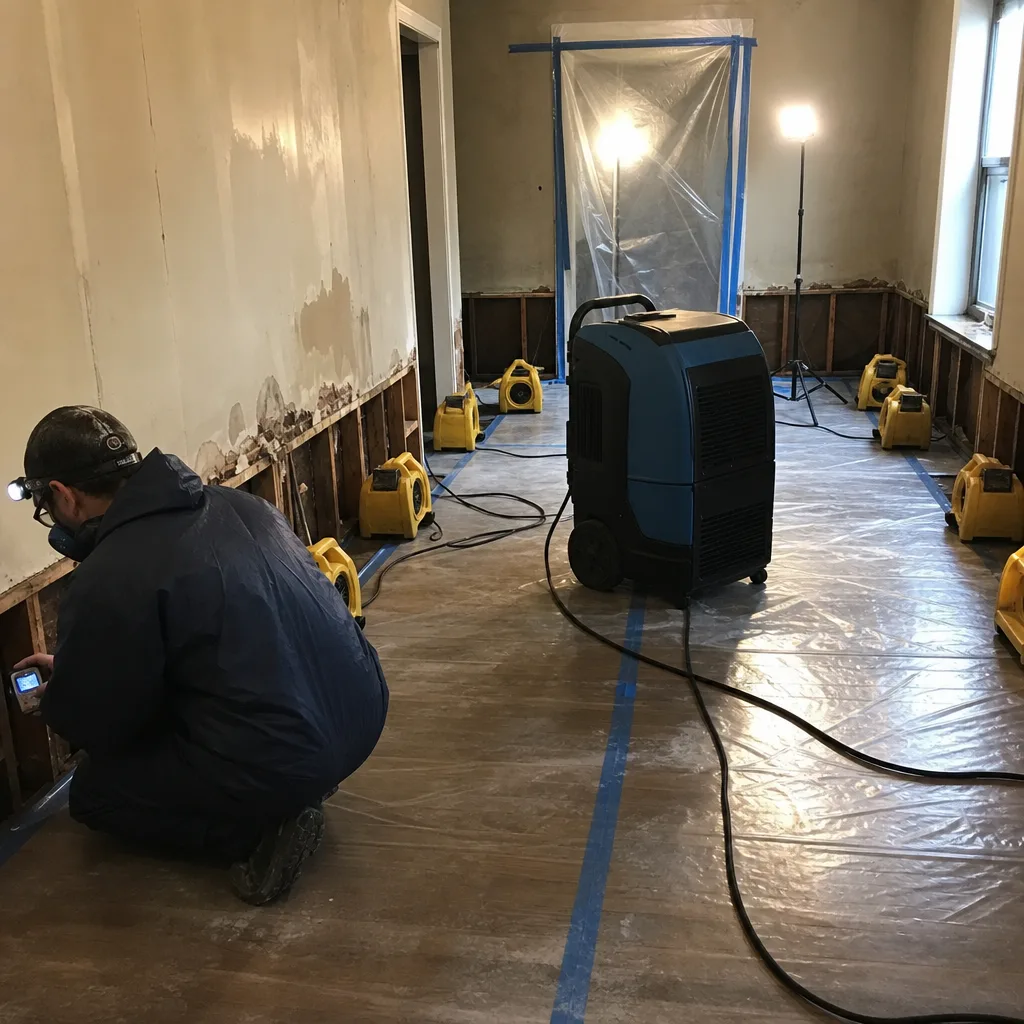
Mixed-use buildings in Theater District mean a water loss on floor six becomes a claim on floor five. We coordinate with building management, association boards, and unit owners, with clear documentation that separates common-area damage from individual-unit claims. Our written scope keeps the HOA’s carrier and each owner’s carrier aligned from day one.
Industrial Facility Cleanup
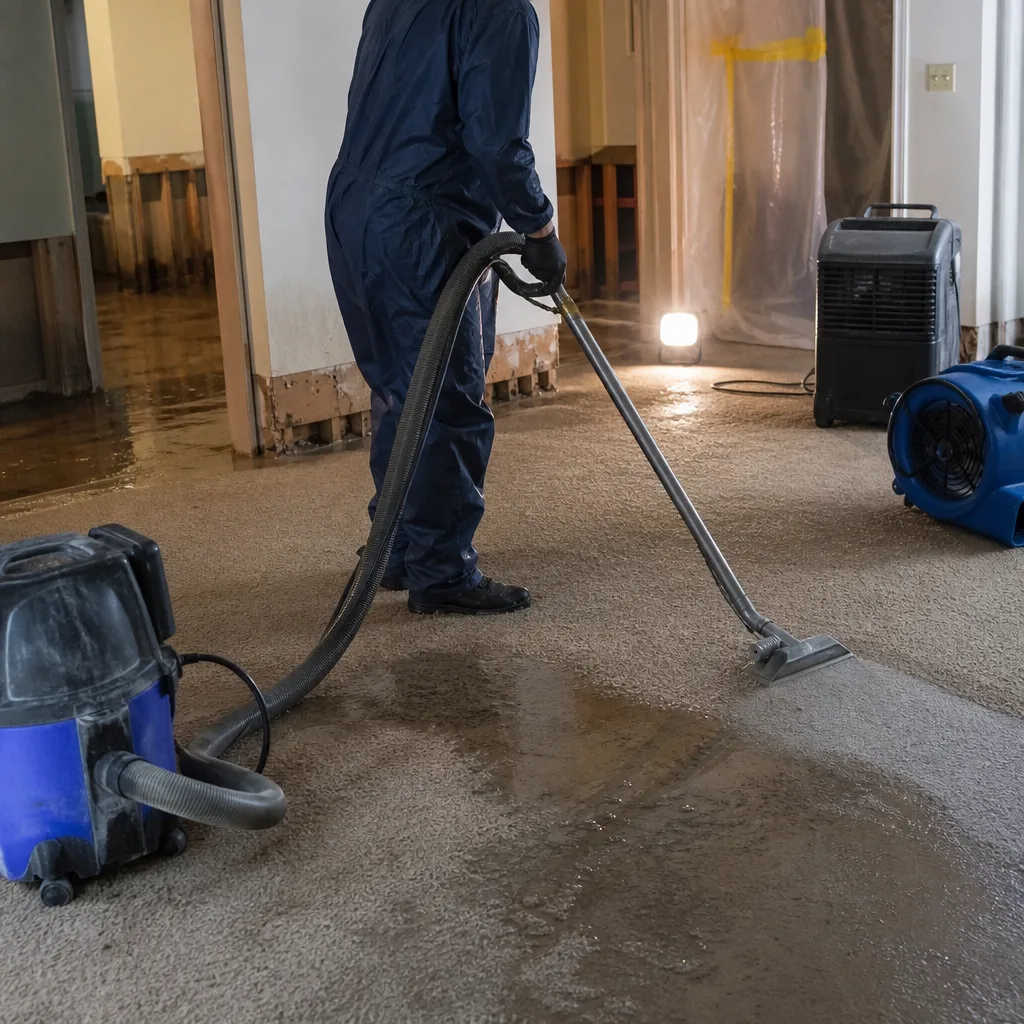
Theater District is not an industrial zone, but it has industrial-scale systems: central mechanical plants, boiler rooms, and loading docks beneath hotels and theaters. Floodline Restoration Co.’s Commercial Restoration crews handle deep sub-basement extractions, confined-space drying, and heavy debris removal in spaces most restoration companies never see.
Large-Loss Response
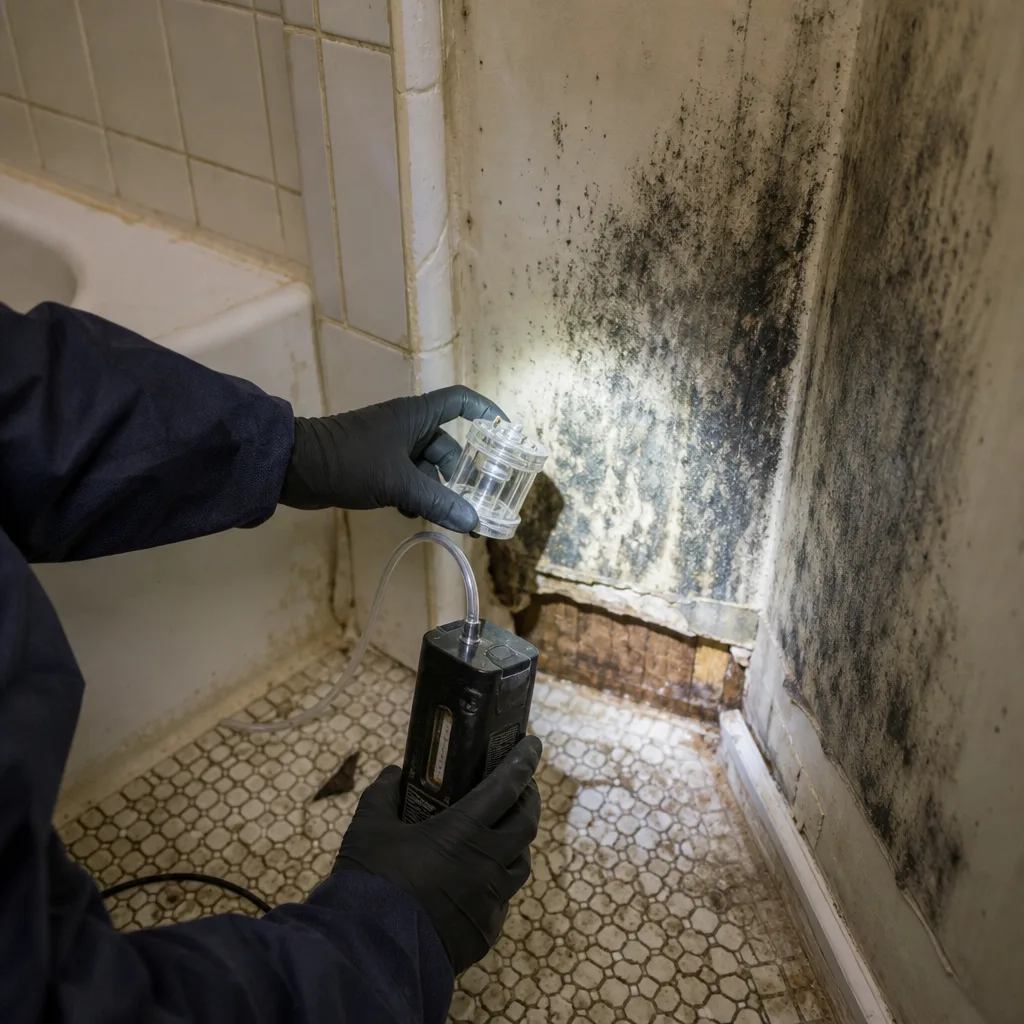
When a main sprinkler riser lets go or a roof drain freezes and backs up an entire seating level, the loss is measured in floors, not rooms. We stage equipment by the truckload, set up multiple containment zones, and run drying operations around the clock with dedicated project managers and daily logs for every zone.
Business Interruption Minimization
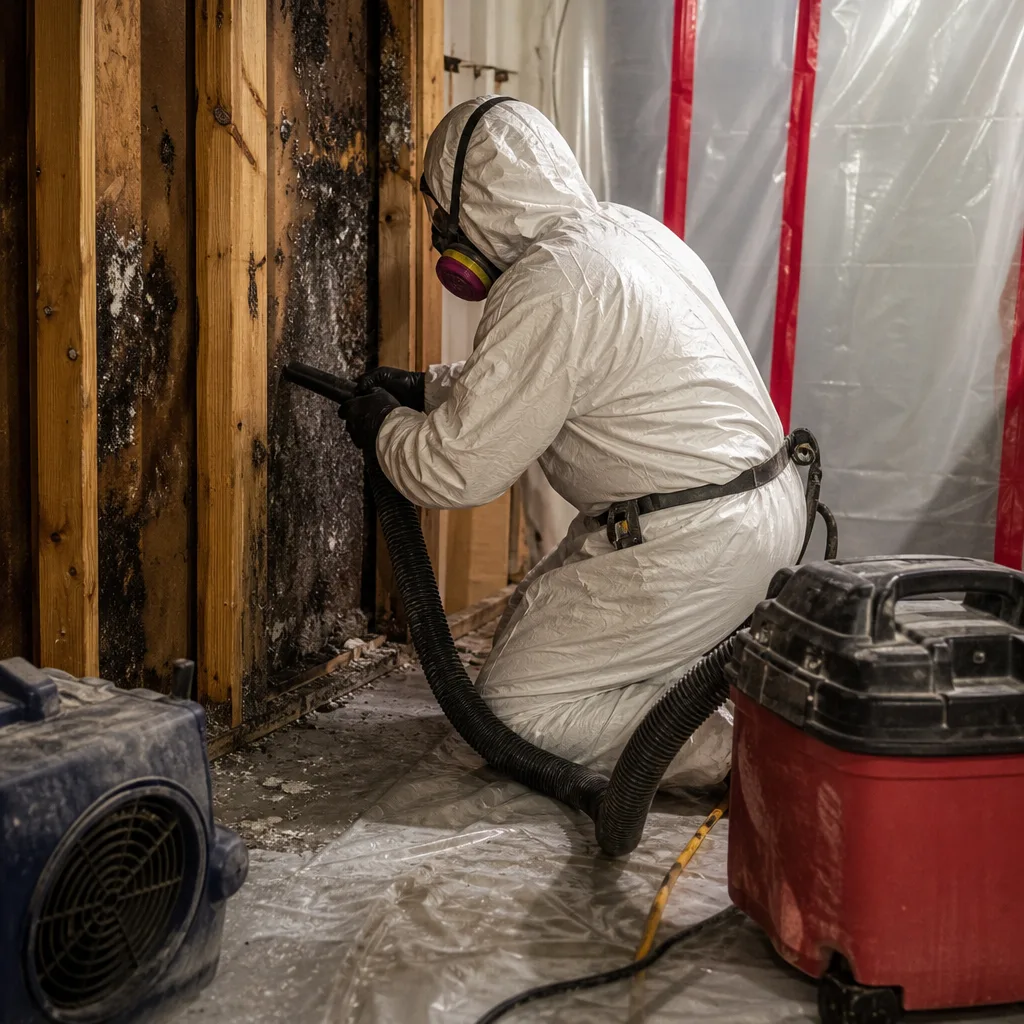
This is the service that matters most in Theater District. Every hour a Broadway house, restaurant, or hotel is dark is an hour of revenue gone. We prioritize drying and decontamination that allows partial or full reopening while repairs continue, with containment separating active work zones from revenue-generating spaces. The goal is always the same: keep the show running.
What happens when you call
- 1
A real person answersNo phone trees - you reach a local pro.
- 2
You get an upfront price rangeHonest numbers before anyone is dispatched.
- 3
A background-checked tech heads outLicensed & insured, dispatched right away.
- 4
You approve before work beginsNothing starts until you say go.
Commercial Restoration Costs in Theater District, NY
Commercial restoration in Theater District runs higher than other Manhattan commercial districts, and the reason is structural. An office water extraction with drying in a typical midtown suite runs $4,000 to $12,000. A flooded Restaurant Row basement with Category 3 water runs $15,000 to $40,000, largely due to disposal costs and the speed required to reopen. A large-loss event in a Broadway theater, with staged containment, hydraulic pit drying, and around-the-clock monitoring, commonly runs $75,000 to $250,000 or more. The variables are simple: category of water, square footage affected, number of concealed cavities, and whether landmark finishes are involved. Insurance covers most of these losses when documentation is done properly. We provide a free visual inspection and a written scope with line-item pricing before any work starts. Call (917) 924-4221 to schedule one. The estimate is free and firm.
We Also Serve Cities Near Theater District
Floodline Restoration Co. of Manhattan runs crews into every borough. Commercial restoration clients in Fairview, Harrison, East Bronx, and Hunts Point get the same live answer, the same certified crews, and the same written guarantee. Theater District is our home grid, but the trucks roll wherever the water goes.
Serving Theater District, NY - Our Local Coverage Area
We’re based in the Theater District area and know this community well. Use the map below to see our service coverage - if you’re nearby, we can almost certainly help.
Theater District Commercial Restoration Questions, Answered
How can restoration be done overnight in a theater without forcing a performance cancellation?
Overnight restoration in a working Broadway house relies on containment, silence, and speed. We set up negative-air containment around the affected zone, run equipment sized for low acoustic output, and schedule extraction and drying between the 11 PM curtain call and the 10 AM rehearsal.
What are the landmark compliance issues when drying a Broadway theater?
Any historic fabric we touch, including ornamental plaster, terra-cotta, and original millwork, must be documented before work begins and restored to Landmarks Preservation Commission standards. We coordinate with LPC directly and include compliance documentation in every claim packet.
How do you dry the hydraulic lift pit under the stage without shutting down productions?
We drain the pit, treat it for the appropriate water category, and run desiccant or Injectidry systems into the enclosed cavity. Daily readings are logged, and the pit is inspected against manufacturer spec before the lift returns to service.
Can you dry a flooded costume vault and document recovery for insurance?
Yes. We triage inventory by material and damage class, dry what can be dried, and document every item with photos and condition notes. That documentation becomes the backup file for the insurer’s contents claim.
What is the fastest way to reopen a flooded restaurant on Restaurant Row without losing revenue?
The fastest path is extraction within the first hour, followed by targeted drying in the back-of-house and containment between the damage and the dining room. If the damage is localized, we can often keep the front of house open while the kitchen or basement dries.
How fast can you get to Theater District?
Our response commitment is 45 minutes or less to any address in Theater District, with crews staged around Midtown and dispatched from our New York City office the moment you call.
Will insurance cover commercial restoration in Theater District?
Most commercial policies cover water, fire, and storm restoration, and many include business interruption coverage. We bill the carrier directly and provide the documentation needed to support the claim.
Do you handle the Landmarks Preservation Commission paperwork?
We prepare the documentation LPC requires for any work touching historic fabric and coordinate with the commission throughout the restoration. The goal is a restoration that passes inspection without delays.
Written by Curt Bowman, Owner at Floodline Restoration Co. of Manhattan, serving Theater District since 2010.