
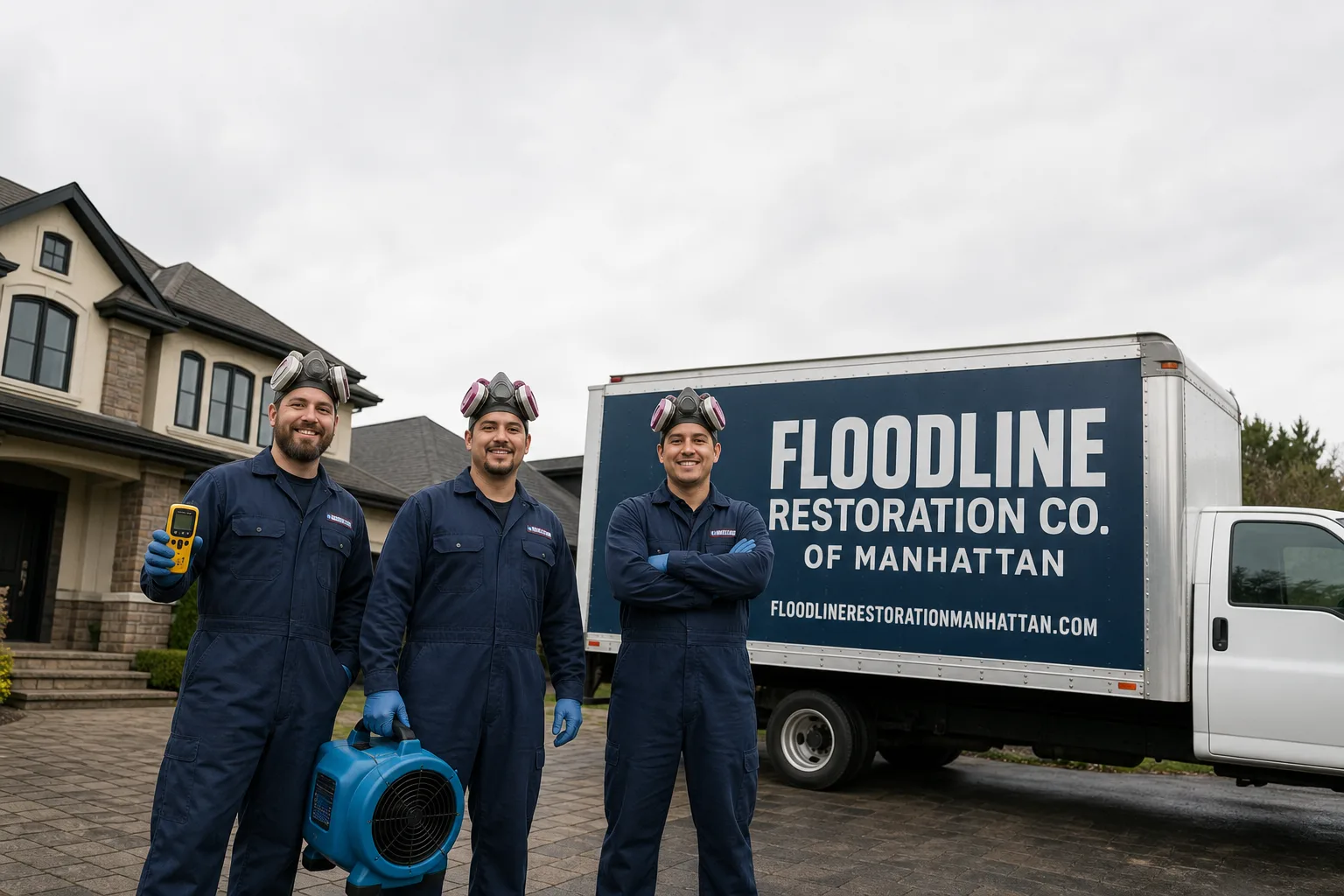
Free visual inspection and a written scope of work before any mitigation begins - photos, moisture readings, and drying logs go in your claim file
The scope we write is the scope we bill. Anything new gets shown to you, in writing, before we touch it.






 Before
 After
After Before
 After
After Before
 After
After24/7 Emergency Mold Remediation in Theater District
Mold remediation in Theater District typically costs $1,800 to $7,500 depending on the square footage affected, the water source, and whether Landmarks Preservation Commission approval is required before historic materials can be touched. Most jobs inside pre-war masonry buildings between 42nd and 53rd Streets are completed in three to seven days, with containment running around the clock so the space stays usable where possible. Call (917) 924-4221 any hour and a live dispatcher answers. Not a recording. We’ll have a certified crew at your Theater District building the same visit, because mold that started behind a burst supply line at midnight has already begun spreading by morning rehearsal.
We answer the phone at 2 a.m. because water behind a plaster wall doesn’t wait for business hours. The first hour matters: the faster we set containment and start pulling moisture from the air, the less original lath-and-plaster we have to remove, and the less likely a small leak becomes a production-interruption problem. Every Theater District job starts with a free visual inspection and an honest read on what we’re dealing with. If it’s a five-foot patch behind a concession stand drain, we’ll tell you that. If it’s a category 3 release that has wicked into sub-basement storage, we’ll tell you that too, in plain English, before any equipment comes off the truck.
Understanding Mold Remediation Severity in Theater District Properties
Mold mitigation breaks into three practical tiers, and Theater District’s building stock decides which one you’re in faster than almost anywhere else in the metro. A contained surface bloom, under 10 square feet, usually comes from a slow leak at a cast-iron supply line or a condensation problem at a mechanical room wall. We scrub it with antimicrobial treatment, dry the cavity, and you’re done in a day or two. A moderate water-borne colonization, typically 10 to 100 square feet, is what we see after a failed sprinkler head or a restroom drain backup saturates plaster or subfloor. That requires full containment, HEPA air scrubbing, and removal of damaged material. The third tier is what makes Theater District different: hidden-cavity mold inside hydraulic lift pits, fly-system counterweight pockets, and deep sub-basements where moisture mapping misses it on a standard residential protocol. Those cavities channel water in patterns no residential mold crew is trained to look for. Left alone, they re-release humidity into the theater for months after the visible bloom is gone.
Containment on these jobs means negative air pressure, 6-mil poly barriers, and daily clearance testing until spore counts drop to baseline. We don’t skip the air scrubber on day three because the job looks dry. Pre-1930s masonry framing means plaster and wood lath drink water like a sponge, and a terra-cotta facade building on 45th Street won’t dry on the same timeline as a drywall-and-steel commercial fit-out. Knowing the difference is why our techs train to IICRC S520 standards and why they carry moisture meters calibrated for masonry substrates, not just drywall.
Why Theater District Property Owners Choose Floodline Restoration Co. of Manhattan
- Fast local response. Our dispatch board is built around Theater District response times, with crews minutes away from 42nd Street, Times Square, and 8th Avenue at any hour, so we come and inspect rather than schedule-a-window scheduling.
- A live person answers at 3 a.m. Not a phone tree, not a callback service. You explain the situation once, and the crew arrives with the right equipment the first trip.
- Certified mold remediation techs. IICRC AMRT and WRT certified, background-checked, uniformed, and trained to work inside occupied performance venues without disrupting adjacent operations.
- Free visual inspection with no obligation. We’ll walk the affected area, read moisture levels, and tell you honestly whether you need full remediation or a targeted cleaning and drying job.
- Direct insurance billing. We document everything from hour one and bill your carrier directly. You never carry a claim packet between us and the adjuster.
- One crew from first extraction to final rebuild. If mold-damaged walls need reconstruction, the same Floodline team that set containment does the carpentry and finish work. No mid-job handoff to an unknown subcontractor.
Our Mold Remediation Process
Inspection & Assessment
We start with thermal imaging and moisture meters to find every wet cavity, including lift pits and counterweight pockets that standard mapping misses. You get a written scope with clear pricing before work starts.
Containment Setup
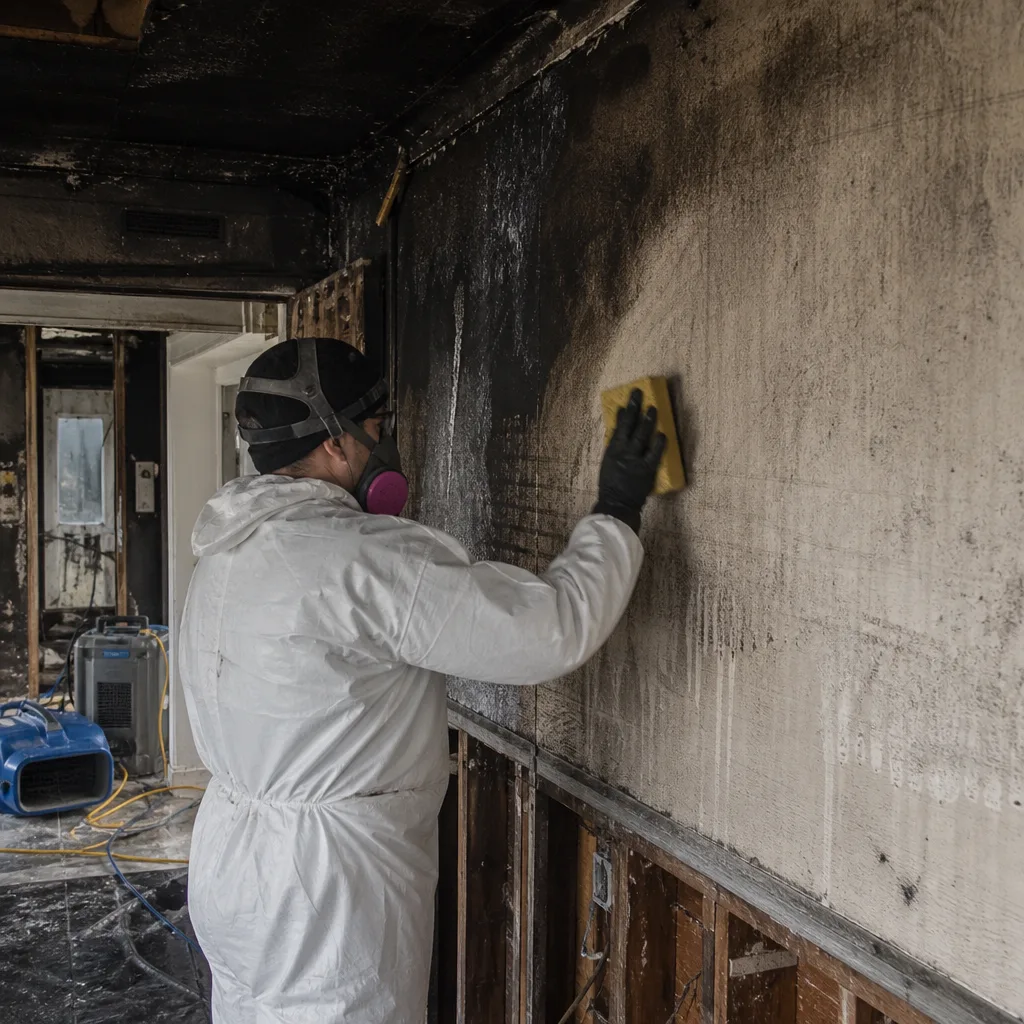
HEPA-rated negative air machines and 6-mil poly containment seal the affected area so spores don’t migrate into seating, wardrobe storage, or adjacent retail. The rest of the building keeps operating.
Drying & Dehumidification
Phoenix dehumidifiers and XPOWER air movers run continuously, with daily moisture readings logged until masonry substrates hit the dry standard. We hand you the log; we hand it to your adjuster too.
Cleaning & Sanitization
Antimicrobial treatment hits affected surfaces, and HEPA scrubbing removes airborne spores. Original lath-and-plaster we can save gets treated in place, not stripped.
Specialty Treatment for Theater District Structures
When Landmarks approval is required, we coordinate with the Landmarks Preservation Commission and document original fabric before touching it. The goal is pre-loss condition, not demolition by default.
Repairs & Restoration
The same crew rebuilds what had to come out, matching plaster profiles and historic trim when needed. We stand behind the work with our 90-Day Done Right Promise in writing.
Need Emergency Mold Remediation in Theater District Now?
Crews minutes away, answering live 24 hours a day. The sooner we start, the less it costs.
Working With Your Insurance Company
Mold claims get denied more than they should, usually because the documentation wasn’t built from day one. We build it from the first hour on site. Our techs photograph every affected area, log moisture readings daily, and document the category of water involved using IICRC classification standards. When your carrier asks whether the mold predated the leak, our drying logs and containment records give the adjuster something concrete to work with. We also bill your insurance directly, so you’re not floating a five-figure remediation bill while the claim works through the system. If your policy excludes mold remediation but covers the water damage that caused it, we’ll walk you through exactly what that means for out-of-pocket costs before you sign a scope.
What We Provide Your Insurer
- Thorough documentation of the loss
- Photos of all damage, room by room
- Moisture readings and drying logs
- A detailed, line-item scope of work
- Direct coordination with your carrier
Built for Theater District’s Loss Calendar
January and February are our busiest mold-origination months in Theater District. Midtown freeze-thaw cycles stress rooftop mechanical penthouses and the ornate terra-cotta facades that define the district’s pre-war buildings, and when a roof penetration fails during a thaw, water follows the path of least resistance down into plaster ceilings, stage rigging lofts, and sub-basement storage. That water sits behind walls for weeks before anyone notices a musty smell in the costume vault. Spring brings its own pattern: aging gravity-fed sprinkler systems and cast-iron supply lines, weakened by decades of pressure fluctuations, start showing pinhole leaks as the building expands. Summer thunderstorms push water through roof drains already taxed by the heat, and a single clogged drain above a mezzanine can saturate the plaster below in an afternoon.
The Theater District twist is timing. A leak discovered at 6 p.m. on a two-show day doesn’t get a normal remediation schedule. It gets a same-night assessment, containment before the next morning’s rehearsal, and drying running through the matinee if we can keep it silent enough. We’ve done it. The equipment runs quieter than you’d expect, and containment keeps the smell out of the house.
Mold Remediation Across Theater District’s Neighborhoods
The buildings change block by block, and so do the failures. Around Times Square, we see high-rise hotels and retail conversions from the 1920s where cast-iron risers have been patched for forty years and a pinhole leak in a bathroom wall migrates down three floors before it shows. Along 42nd Street between 7th and 8th Avenues, the active Broadway houses have the hydraulic lift pit problem: water from a sink drain or a failed sprinkler head finds the lowest point, and the pit holds it against original masonry for weeks. West of 8th Avenue toward the Hell’s Kitchen edge of the district, the buildings shift to smaller mixed-use walkups where post-war renovations covered original plaster with drywall, creating a cavity that hides mold until the drywall crumbles. Around the 50th Street theater cluster, sub-basements full of set storage and mechanical rooms are the recurring theme: humid air trapped below grade, no vapor barrier in a 1925 foundation, and mold blooming on stored scenery and wardrobe racks.
Response routes matter here. We dispatch crews who know that a job at 45th and 8th means parking restrictions and freight elevator scheduling, not just a truck roll. The same crew that does containment at a landmarked theater on 44th Street can handle a hotel mechanical room on Broadway without a learning curve.
Specialized Mold Remediation Services We Offer in Theater District
Mold Inspection & Testing
Before we remove anything, we identify the species and the moisture source. In Theater District buildings where original plaster and wood lath are common, that means air sampling, surface swabs, and moisture mapping across multiple floors. We test inside wall cavities where a cast-iron supply line leaks invisibly, not just where the stain shows. The written report tells you what we found, what it means, and what we’d do about it. No scare tactics. If you don’t need remediation, we’ll tell you that plainly.
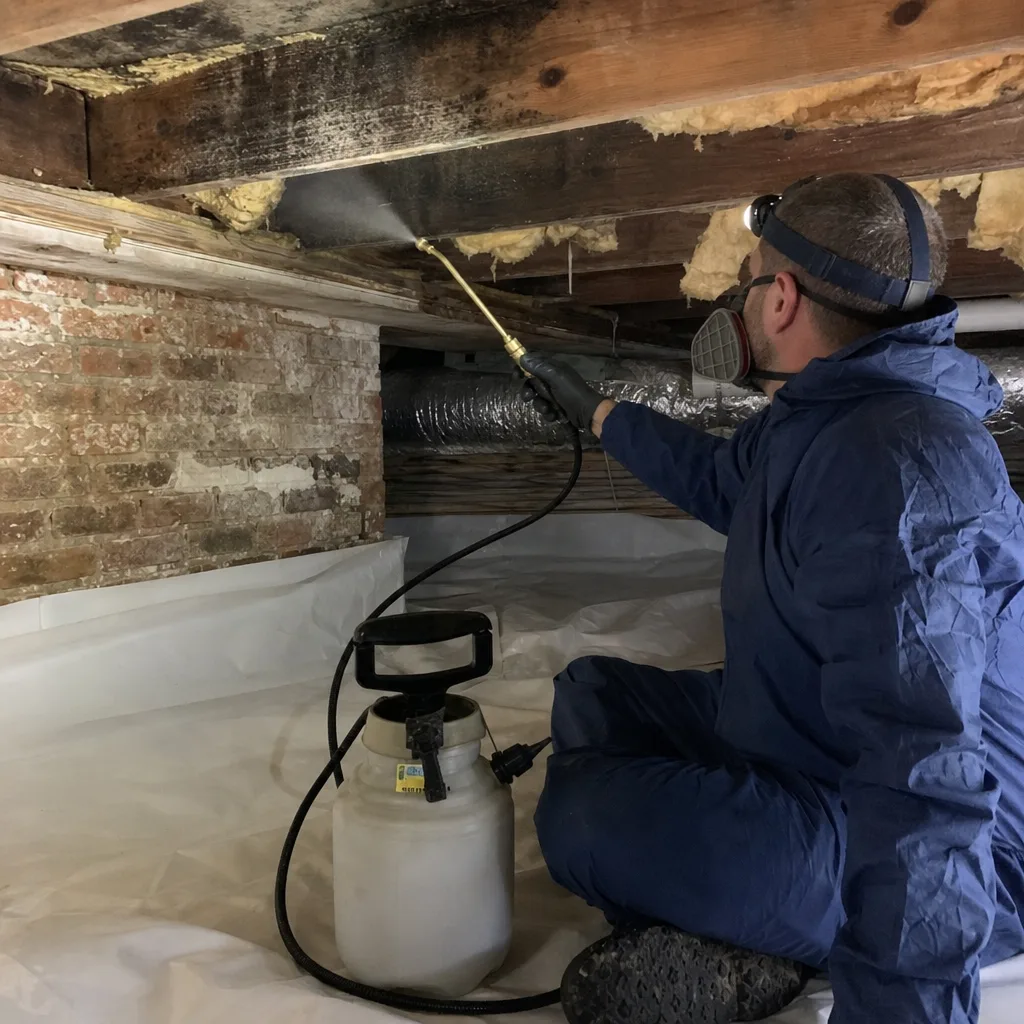
Black Mold Remediation
Stachybotrys gets the headlines, and it does appear in Theater District buildings where category 3 water has sat in a sub-basement or behind a stage wall for weeks. Full containment is non-negotiable with black mold: negative air, HEPA scrubbing, and removal of saturated porous materials. What we don’t do is strip original plaster that tests show can be saved. A landmarked theater on 46th Street isn’t a strip-to-studs situation. We treat in place where the material is sound and the moisture source is fixed.
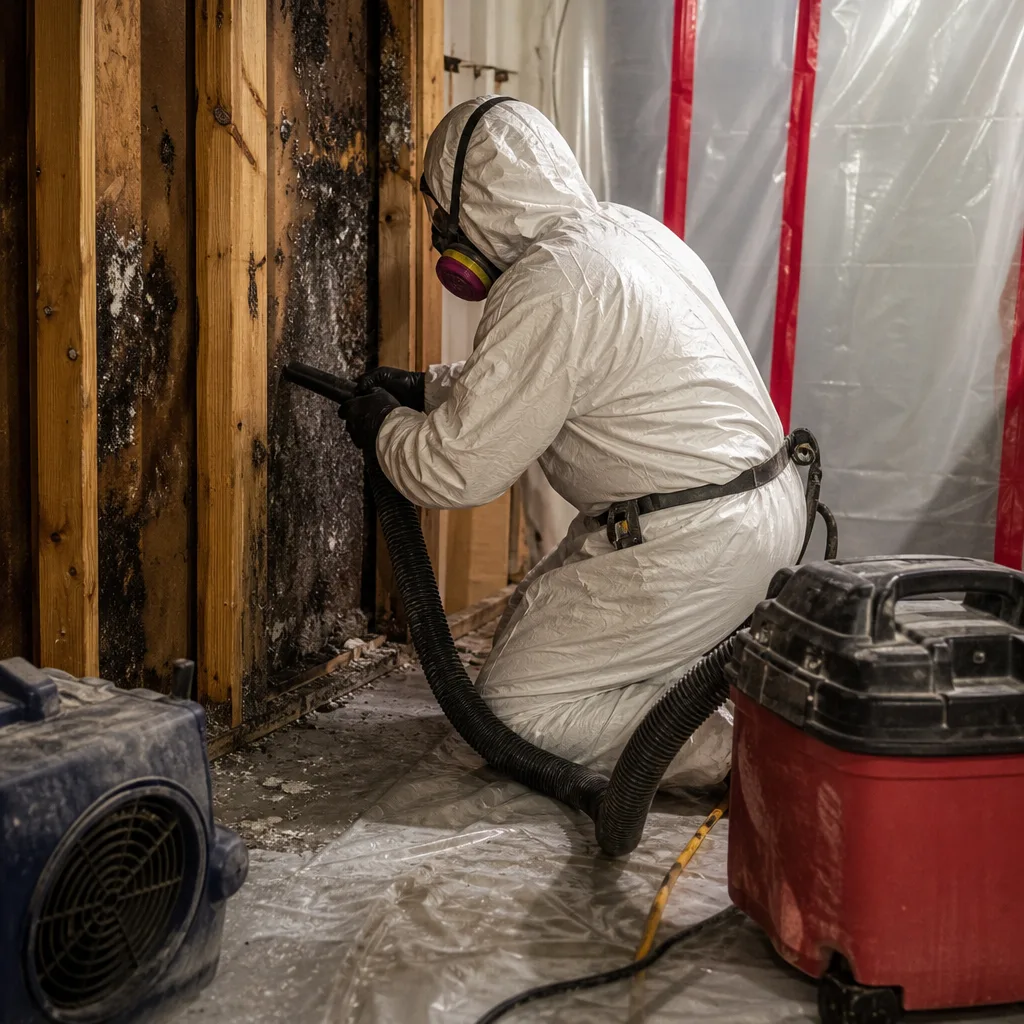
Air Quality Restoration
Even after visible mold is removed, spore counts in a theater’s HVAC system can keep the problem alive. We run HEPA air scrubbers continuously during remediation, then clean the ductwork and air handlers that serve the affected zone. In pre-war mechanical rooms, that often means cleaning decades of accumulated dust and spores off fan blades and coils. The goal is clearance testing that shows indoor air at or below outdoor baseline before we break containment.
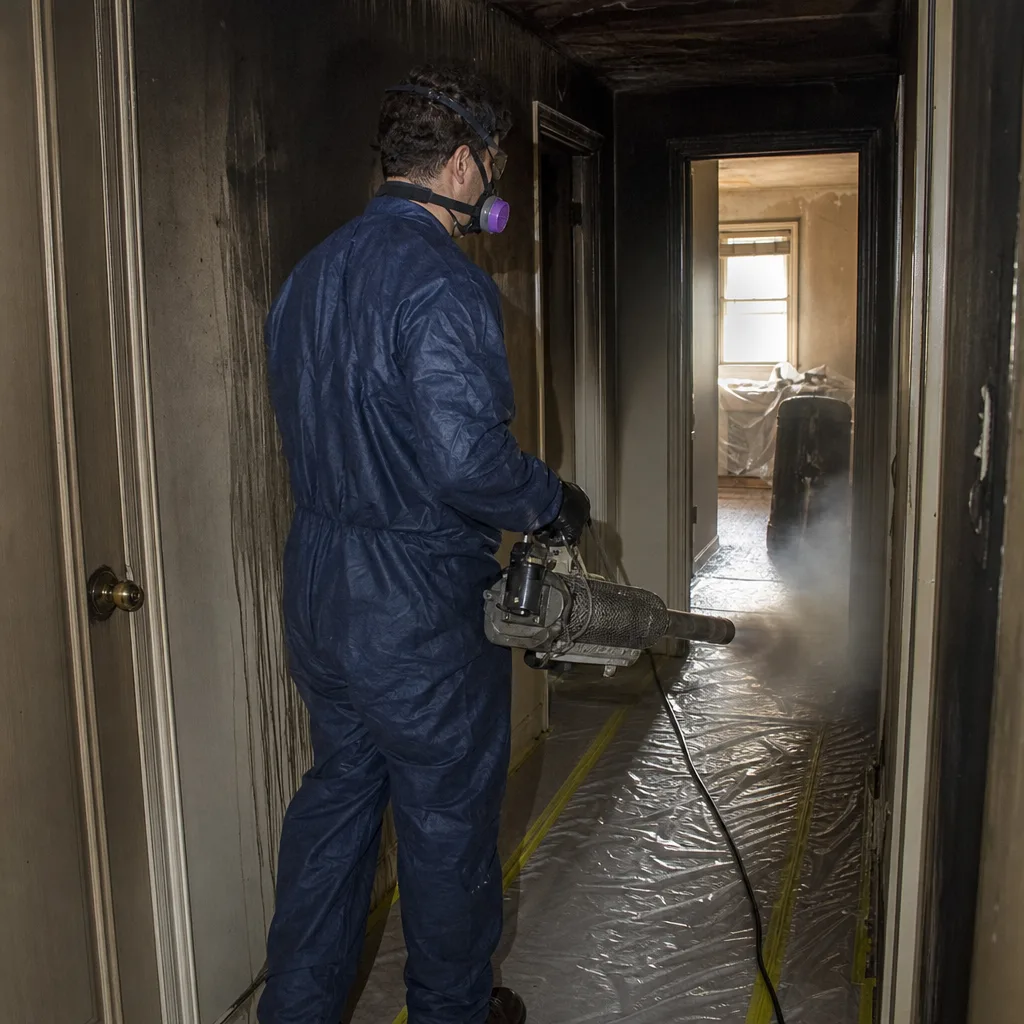
Crawl Space Treatment
Most Theater District buildings don’t have residential crawl spaces, but the sub-basements serve the same function: dark, humid, rarely inspected, and full of whatever water finds its way down. We treat exposed masonry with antimicrobials, install vapor barriers where the structure allows, and set dehumidifiers sized for the space. A sub-basement under a 1923 theater on 49th Street holds a lot of cubic feet of air. Undersized equipment won’t dry it.
What happens when you call
- 1
A real person answersNo phone trees - you reach a local pro.
- 2
You get an upfront price rangeHonest numbers before anyone is dispatched.
- 3
A background-checked tech heads outLicensed & insured, dispatched right away.
- 4
You approve before work beginsNothing starts until you say go.
Mold Remediation Costs in Theater District, NY
For planning purposes, here’s what we see in this market. A contained surface mold job under 10 square feet in Theater District runs $1,800 to $3,200, including antimicrobial treatment and drying verification. A moderate remediation of 10 to 50 square feet with full containment and HEPA scrubbing runs $3,500 to $6,500. A large-scale job involving sub-basements, lift pits, or multiple floors runs $7,000 to $15,000 or more depending on how much historic fabric must be preserved or replaced. What moves the price: whether Landmarks Preservation Commission review is required, whether the water was category 2 or category 3, how many floors the moisture traveled, and whether drying can run on normal power or needs portable generators for occupied performance spaces. Most jobs can be scoped after a free visual inspection, and we’ll put the number in writing before any work begins. Call (917) 924-4221 for an exact quote.
We Also Serve Cities Near Theater District
Floodline Restoration Co. of Manhattan serves the neighborhoods around Theater District, including Fairview, Harrison, East Bronx, and Hunts Point. If you’re in one of those areas and dealing with a mold situation, same process applies: a live person answers, a certified crew arrives fast, and we document everything for your carrier. Our Mold Remediation team handles the full scope, from first inspection to final reconstruction, across the metro.
Serving Theater District, NY - Our Local Coverage Area
We’re based in the Theater District area and know this community well. Use the map below to see our service coverage - if you’re nearby, we can almost certainly help.
Theater District Mold Remediation Questions, Answered
How do you perform mold remediation inside a Theater District landmark building without damaging original plaster or terra-cotta?
We treat original materials in place wherever they test sound, removing only what saturation has structurally compromised. When Landmarks Preservation Commission approval is required before touching historic fabric, we document the pre-loss condition, file the appropriate applications, and coordinate the sequence so remediation doesn’t stall while mold keeps growing. The goal is pre-loss condition, not demolition by default.
Can you complete a mold mitigation between an 11 PM curtain call and a 10 AM rehearsal without interrupting a Broadway production?
Yes, when the affected area is contained and accessible. We’ve done exactly that with a flooded orchestra pit on 44th Street. The crew works through the night, containment goes up first, drying runs continuously, and by morning the stage is usable. Not every job fits that window, but the dispatch board is built around performance schedules, not business hours.
Why do hydraulic lift pits and fly-system counterweight pockets cause hidden mold in Theater District venues?
Both are below-grade voids that standard moisture mapping doesn’t flag because they’re outside the floor plan of normal living or working spaces. When water from a supply line or sprinkler discharge enters the pit or pocket, it sits against masonry for weeks, raising humidity in the whole theater. If remediation doesn’t address these cavities, the mold returns within months. Our techs map them specifically because we’ve learned to look for them on Theater District jobs.
What category of water from an aging sprinkler system in a Theater District hotel requires full mold remediation?
Category 2 water from a sprinkler system, which contains contaminants but no sewage, requires antimicrobial treatment and often full mold remediation if the affected materials can’t be dried within 48 hours. Category 3 water, like a sewer or waste line release, triggers full containment, removal of saturated porous materials, and comprehensive mold remediation. The age of the system matters: a 1930s gravity-fed sprinkler system may have standing water in low sections that never moves until a valve opens, meaning the water has been sitting in the pipe long enough to grow things. Call (917) 924-4221 and we’ll classify the water source and tell you what’s actually required.
How fast can mold grow on wet plaster ceilings above orchestra seating in a pre-war theater?
Mold colonization can begin within 24 to 48 hours on wet plaster and wood lath, especially in a theater environment where temperature and humidity stay elevated. In a landmarked pre-war house with original plaster, that means the window for drying in place closes fast. If water has been sitting for more than two days, we typically recommend removal of the affected plaster rather than attempting to dry it, because the lath behind it is almost certainly colonized. A free inspection gives you a clear answer on whether you can save the ceiling.
How long does mold remediation take in a Theater District building?
Most contained jobs finish in three to five days. Larger jobs involving multiple floors, sub-basement drying, or Landmarks review can run seven to fourteen days. The drying phase is what dictates the timeline: masonry walls and lath-and-plaster ceilings dry slower than drywall, and we won’t close out the job until daily moisture readings hit the dry standard. You’ll see the log, and so will your insurance carrier.
Will my insurance cover mold remediation in Theater District?
It depends on the source of the water and the terms of your policy. Sudden and accidental water releases are usually covered for the water damage component; mold remediation may be covered up to a stated sub-limit, commonly $5,000 to $10,000, or excluded entirely. We document the loss from hour one and bill your carrier directly. If mold remediation is excluded, we’ll tell you before you sign anything, and we’ll work with you on a scope that addresses what the policy does cover.
What should I do in the first 30 minutes after discovering mold in a Theater District building?
Stop the water source if you can safely do so. Don’t disturb the mold or run fans that could spread spores into clean areas. Close the door to the affected space, clear occupants if there’s a musty odor, and call (917) 924-4221. A live dispatcher answers, and a certified crew arrives the same visit. The first 30 minutes aren’t about doing the remediation yourself; they’re about not spreading the problem and getting containment in place before spores move into the HVAC system.
Written by Curt Bowman, Owner at Floodline Restoration Co. of Manhattan, providing mold remediation and full-cycle restoration services to Theater District since 2010.