
Free visual inspection and a written scope of work before any mitigation begins - photos, moisture readings, and drying logs go in your claim file
The scope we write is the scope we bill. Anything new gets shown to you, in writing, before we touch it.






 Before
 After
After Before
 After
After Before
 After
After24/7 Emergency Fire & Smoke Damage Restoration in East Village
A kitchen fire on the fourth floor of an East Village tenement will push smoke through shared pipe chases into six apartments within minutes. That’s not a hypothetical. It’s what this neighborhood’s 1880s-1920s building stock does. We answer the phone live at (917) 924-4221, twenty-four hours a day, every day, and we can have a certified crew setting up containment and starting smoke and soot removal in East Village within about 45 minutes of your call. The first hour matters because soot is acidic. It etches glass, corrodes metal fixtures, and permanently sets into painted plaster if it sits. A free visual inspection gets you a straight answer on what needs done, what can be saved, and what it will cost before anyone touches a wall. Done right, and backed in writing.
Understanding Fire & Smoke Damage Restoration Severity in East Village Properties
Fire damage in East Village tenements and pre-war walk-ups rarely stays in one room. Smoke follows the same uninsulated vertical pipe chases and open wall cavities that make these buildings distinctive, and it does so fast. We classify damage on a standard scale: light soot residue on surfaces (what a small stovetop fire leaves behind), moderate smoke migration into adjacent rooms and shared walls, and heavy charring with deep carbonization of plaster, lath, and structural wood. The building stock matters here. Old-law tenements built before 1901 and new-law buildings from 1901-1929 have plaster-and-lath walls over original wood joists. Plaster is porous. Soot penetrates it, and the odor doesn’t come out with a surface wipe. Because many East Village buildings still contain asbestos-era pipe wrap and ceiling texture, a proper severity assessment has to include hazmat testing before demolition starts. Skip that step and you get a stop-work order and a much larger bill. Our crews are trained to IICRC FSRT standards for fire and smoke restoration, and we read every job through the building’s actual age and construction, not a generic checklist.
Why East Village Property Owners Choose Floodline Restoration Co. of Manhattan
- 45-minute response commitment. We dispatch from our New York City office and crews reach East Village fast. A live dispatcher takes your call, not a recording.
- 24/7 live answer. At 2 a.m. on Avenue B, you talk to a person who can send a crew. We have never had an answering machine, and we don’t plan to start.
- IICRC-certified fire and smoke crews. Our technicians hold FSRT certification and are background-checked and uniformed. You know who’s walking in your building.
- Free visual inspection. We look before we quote. You get a written scope with line-item pricing so there are no surprises on the bill.
- Direct insurance billing. We coordinate with your carrier and your adjuster. You never play messenger between us and them.
- One team from containment to reconstruction. No handoff to a subcontractor you’ve never met. The same certified crew handles smoke removal, odor treatment, pack-out, and rebuild.
Our Fire & Smoke Damage Restoration Process
Inspection & Assessment
We walk the full affected area, identify soot type and severity, check for hidden smoke migration through shared walls and pipe chases, and order hazmat testing on suspect materials before any demolition. East Village tenements require this step every single time.
Extraction and Stabilization
We remove unsalvageable materials, set up containment at stairwell doors and common hallways, and stabilize the structure. Emergency board-up and tarping happen here if the fire department opened the roof or windows.
Drying and Dehumidification
Fire department hose lines leave water behind. We run Dri-Eaz and Phoenix dehumidifiers with XPOWER air movers, and we take moisture readings behind plaster and lath walls daily until the building is dry. Hidden water turns into mold fast in East Village’s summer humidity.
Cleaning and Sanitization
HEPA air scrubbers run throughout the affected units while our crews clean soot from walls, ceilings, floors, and fixtures. We use dry chemical sponges on porous plaster and wet cleaning on hard surfaces, and we treat every shared wall, not just the unit where the fire started.
Smoke Odor Removal and Deodorization
Odor molecules lodge deep in plaster, wood joists, and insulation. We use hydroxyl generators and thermal fogging calibrated to the specific materials in your East Village building, combined with sealing of charred wood where needed. A surface spray will not fix a tenement smoke problem.
Repairs and Restoration
We rebuild what was removed: plaster patching, paint, flooring, trim, and any structural wood replacement. Because we ran the mitigation, our repair crew already knows the building. No new contractor, no re-explaining the layout.
Need Emergency Fire & Smoke Damage Restoration in East Village Now?
Crews minutes away, answering live 24 hours a day. The sooner we start, the less it costs.
Working With Your Insurance Company
We have been doing this for over 42 years across New York City, and we know the claim process inside and out. The key is documentation from the first hour. We photograph every affected room, log moisture readings daily, and write a detailed line-item scope that your adjuster can read without asking twenty follow-up questions. You have enough to deal with. You should not have to translate between a restoration crew and an insurance carrier, and with us you won’t. Flooodline deals with the adjuster directly, bills the carrier directly, and you hold the leverage. If the carrier pushes back on scope, our documentation backs it up. You get a square deal: the scope is agreed in writing before work starts, and the 90-Day Done Right Promise stands behind the result.
What We Provide Your Insurer
- Thorough documentation of the loss
- Photos of all damage, room by room
- Moisture readings and drying logs
- A detailed, line-item scope of work
- Direct coordination with your carrier
Built for East Village’s Loss Calendar
East Village fire losses follow a pattern we’ve watched for years. January and February cold snaps bring space heaters into pre-war apartments where the radiators are barely warm, and overloaded circuits in 100-year-old wiring start fires. Spring brings the thaw, and with it, water intrusion into basements and sub-grade units, but the bigger spring risk is electrical: aging cloth-insulated wiring gets wet from nor’easter rains and shorts behind plaster walls. Summer adds heat and humidity, which accelerates mold growth in any wall cavity where fire department water or a burst pipe left moisture behind. August is convection oven month in a top-floor walk-up with no mechanical ventilation. Fall brings the annual boiler startup, when old gas lines under East Village streets get stressed for the first time since spring. The March 2015 gas explosion on Second Avenue between 7th and 8th Streets leveled three tenements and killed two people. Every local contractor remembers it. So do we. Before any fire restoration in East Village, our crews assess the gas line condition early, and we know which block faces have had ConEd emergencies in recent years. That memory is not something a national franchise can bring to your building.
Fire & Smoke Damage Restoration Across East Village’s Neighborhoods
East Village is not one building type. Alphabet City, from Avenue A through D, is dense rows of old-law tenements with narrow stairwells, shared air shafts, and pipe chases that run from basement to roof without fire stops. A smoke event on East 4th Street between Avenues C and D behaves differently than one in a larger new-law building on East 10th Street near Tompkins Square Park. The old-law buildings have more combustible wood framing, and the apartments are smaller, so smoke migration runs faster. Around St. Mark’s Place and the blocks between Second and Third Avenues, you get a mix of tenements, converted loft spaces, and newer multi-unit buildings. There, the challenge is access: narrow doorways, tight stair landings, and street parking that complicates equipment staging. Second Avenue storefronts have their own pattern. A fire above a restaurant or shop means board-up must be coordinated around active businesses, and smoke often travels down into commercial spaces through floor penetrations. Along Avenue B near East 6th Street, we have seen multiple fires start in kitchens at the rear of units and smoke pour into the shared stairwell because the rear windows were the only ventilation. We run response routes based on these patterns. The crew that serves Alphabet City knows the stairwell widths and the building access quirks before they arrive. East Village is a neighborhood where local knowledge is the difference between a contained job and a building-wide claim.
Specialized Fire & Smoke Damage Restoration Services We Offer in East Village
Smoke & Soot Removal
We remove soot from plaster walls, original wood trim, metal fixtures, and every shared surface before it etches permanently. In East Village tenements, that means working apartment by apartment and treating the pipe chase voids where smoke traveled between floors. We use dry chemical sponges on porous surfaces and wet cleaning on hard surfaces, and we seal charred wood so the odor cannot outgas later.
Emergency Board-Up & Tarping
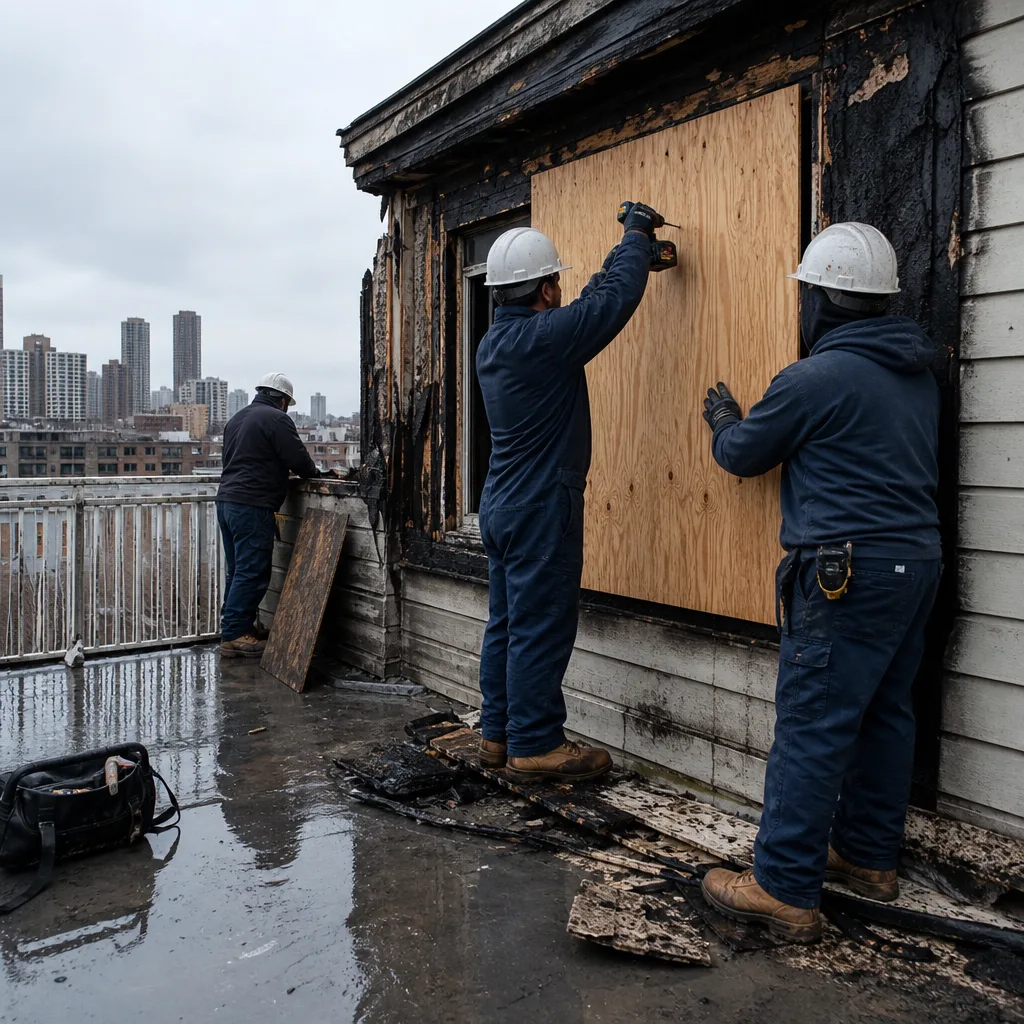
When the fire department opens a roof or takes out windows on a Second Avenue storefront, the building is exposed. We board and tarp immediately, often within hours of your call. Property owners sometimes wait for insurance approval before securing the building. That’s a mistake. A secured building prevents further loss, and insurance policies require mitigating further damage. We can be on site and handling board-up before your adjuster returns the call.

Odor Removal & Deodorization
Smoke odor in pre-war buildings does not come out with a mop and some air freshener. It saturates plaster, lath, and the void spaces behind walls. We use hydroxyl generators and thermal fogging matched to the specific construction materials in your building, and we treat every shared wall and floor cavity. In old-law tenements, that often means addressing the pipe chase as a channel, not just the unit where the fire started.

Contents Cleaning & Pack-Out
Salvageable contents get packed out, taken to our cleaning facility, and returned after the unit is restored. In an East Village walk-up, that means carefully moving furniture down four flights of narrow stairs. Our crew knows how to do it without scraping the stairwell walls or damaging the banister. Every item gets inventoried in writing, and your insurer gets that inventory directly.

Fire Damage Cleanup
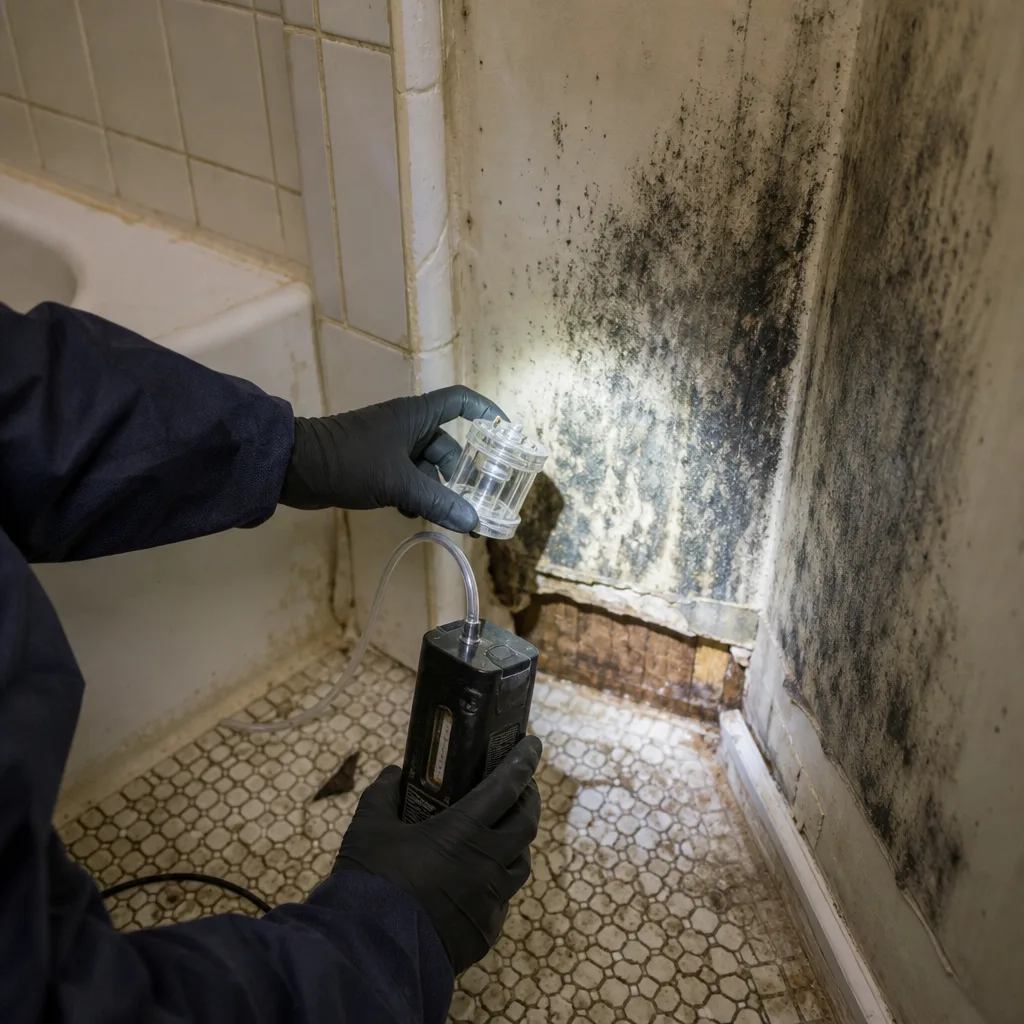
This covers the full removal of charred debris, damaged materials, and the safe disposal of hazardous waste. It almost always follows hazmat testing for asbestos in East Village buildings. We coordinate that testing, handle the containment, and get the demo work moving as soon as the lab clears the materials.
Structural Fire Repair
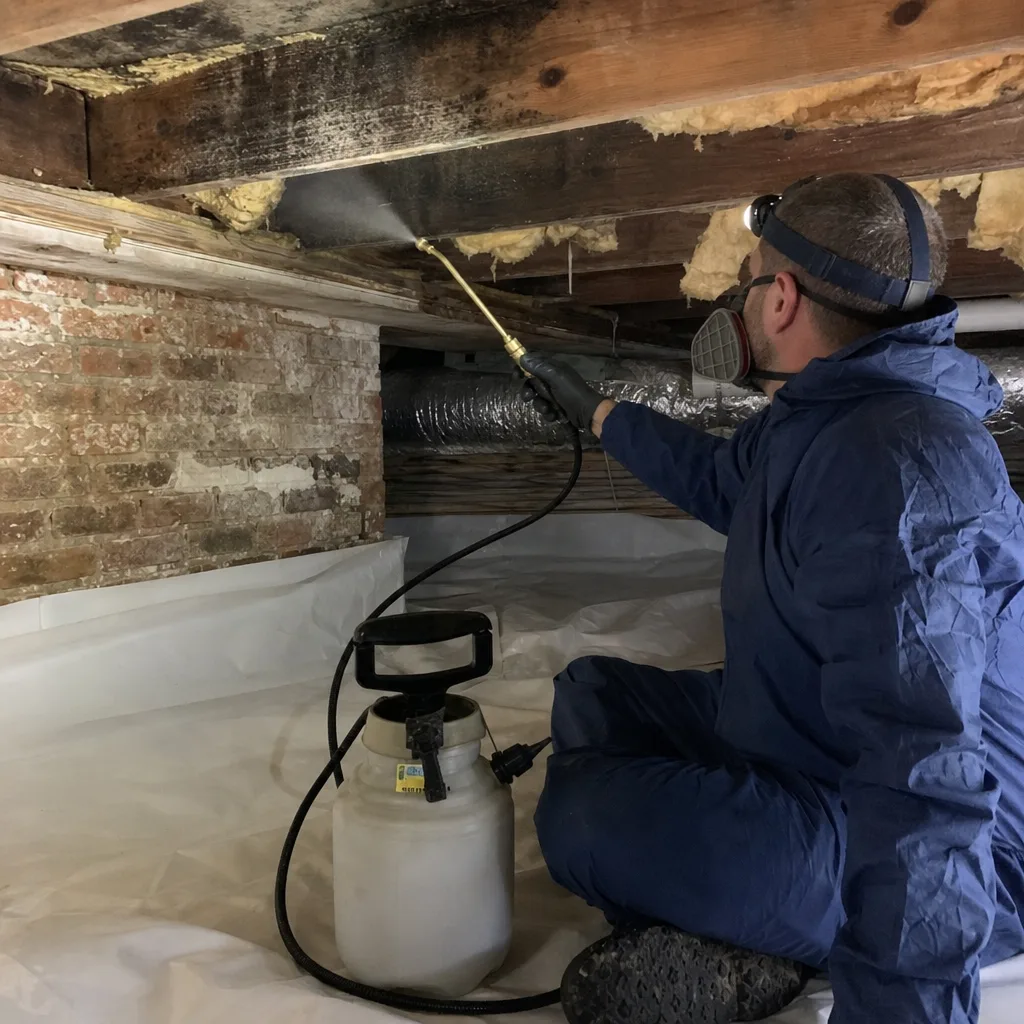
When wood joists are charred or a wall must be rebuilt, our same crew handles it. We do not hand you off to an outside general contractor. The crew that ran your mitigation knows the building, knows the subfloor, and rebuilds to match the original pre-war character. That’s the full-cycle difference: our Fire & Smoke Damage Restoration team stays on the job from first containment to final coat of paint.
What happens when you call
- 1
A real person answersNo phone trees - you reach a local pro.
- 2
You get an upfront price rangeHonest numbers before anyone is dispatched.
- 3
A background-checked tech heads outLicensed & insured, dispatched right away.
- 4
You approve before work beginsNothing starts until you say go.
Fire & Smoke Damage Restoration Costs in East Village, NY
Every job gets a written scope before work starts, so you’re not guessing. For a small kitchen fire with light soot in a single East Village apartment, smoke and soot removal typically runs $1,800 to $4,200. If smoke migrated through shared walls into adjacent units, that pushes the job into the $6,000 to $14,000 range once containment, air scrubbing, and multi-unit cleaning are included. Odor removal with hydroxyl treatment and thermal fogging adds $800 to $2,500 depending on building size and material type. Contents pack-out and cleaning usually runs $1,500 to $5,000. Emergency board-up on a storefront or a blown-out window runs $500 to $1,800 for the initial secure. If structural wood replacement is needed, you’re looking at $8,000 to $25,000 or more, driven by engineering requirements and hazmat handling. Most of these costs are covered by insurance, and we bill the carrier directly. Call (917) 924-4221 and get a free visual inspection, a firm written scope, and a straight answer before you commit to anything.
We Also Serve Cities Near East Village
Beyond East Village, our crews cover Fairview, Harrison, East Bronx, and Hunts Point. The same live 24/7 dispatch, the same 45-minute response commitment, and the same 90-Day Done Right Promise apply in every neighborhood we serve.
Serving East Village, NY - Our Local Coverage Area
We’re based in the East Village area and know this community well. Use the map below to see our service coverage - if you’re nearby, we can almost certainly help.
East Village Fire & Smoke Damage Restoration Questions, Answered
How soon after a fire in an East Village tenement can you start smoke and soot removal?
We can typically have a crew on site within 45 minutes of your call, and smoke and soot removal starts the same visit once containment is set. In a tenement, that means sealing the stairwell door and any shared wall openings first so smoke residue does not spread into more units. Call (917) 924-4221 and a live dispatcher will get the process moving.
Do you coordinate with the NYC Department of Buildings and rent-stabilized tenants on fire damage jobs?
Yes. East Village fire restoration jobs frequently require DOB sign-off before demolition can begin, and rent-stabilized tenants have legal rights that must be respected. We coordinate with building ownership, the DOB, and individual tenants throughout the job. We have done this in dozens of East Village walk-ups and know the paperwork and the sequencing.
My neighbor’s fire smoke came through our shared wall. Can you clean just my unit without getting the whole building involved?
In most cases, yes. If smoke came through the shared wall into your unit, we can set containment at your entry door, run HEPA air scrubbers, and clean your apartment independently. You don’t need the whole building’s permission to clean your own unit. The caveat is that if the shared wall itself requires sealing or repair, that work may need building coordination. We’ll tell you the truth on the inspection.
Why do East Village fire jobs often need hazmat testing before demolition?
Because most East Village tenements were built before 1990 and contain asbestos in pipe wrap, floor tiles, or ceiling texture. Cutting into those materials without testing is a violation and a health risk. We order hazmat testing before any demo work, and we handle the containment and remediation if asbestos is found. It does not slow the job as much as you’d think, and it keeps everyone legal and safe.
Can you do emergency board-up on a Second Avenue storefront after a fire without waiting for insurance approval?
Yes. Board-up is a mitigation step, and insurance policies require you to take reasonable steps to prevent further damage. We can board the storefront immediately, photograph everything, and document the work. Your adjuster gets the photos and scope afterward. Waiting for approval before securing a broken storefront is how you end up with weather damage, theft, and a denied claim.
How long does smoke and odor removal take in a typical East Village apartment?
For a single-unit light soot job, one to three days. For multi-unit smoke migration with odor removal in shared walls and pipe chases, seven to ten days on average. Drying adds time if the fire department’s water saturated walls or floors. We give you a written timeline at the inspection, and we stick to it.
What should I do in the first 30 minutes after a fire in my East Village building?
Get everyone out. Call 911 first if it’s still active. Then call (917) 924-4221. Don’t wipe soot off walls yourself. It smears and makes removal harder. Don’t turn on any electrical systems until they’ve been checked. Don’t leave windows open in winter; rapid freeze-thaw can crack plaster and burst pipes. Secure the unit, then let our crew assess the damage.
Will my insurance company cover full fire and smoke restoration in East Village?
Most standard homeowner and coop/condo policies cover fire and smoke damage restoration, including soot removal, odor treatment, pack-out, and structural repair, minus your deductible. The key is documentation. We provide photos, daily moisture logs, and a line-item scope your adjuster can process without friction. Call (917) 924-4221 for a free inspection and we’ll help you navigate the claim from hour one.
Written by Curt Bowman, Owner at Floodline Restoration Co. of Manhattan, serving East Village and the surrounding neighborhoods for over 15 years.