
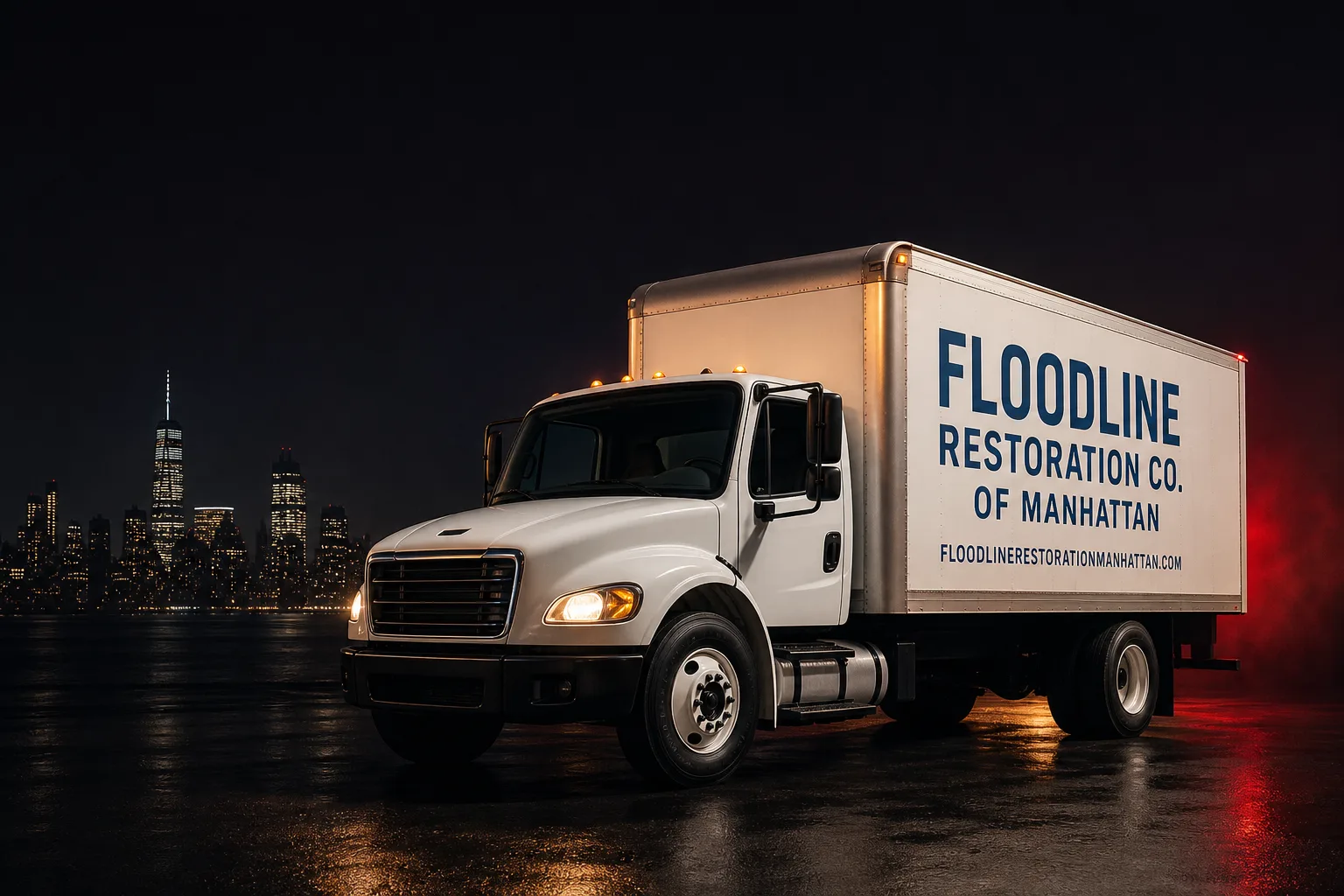
Free visual inspection and a written scope of work before any mitigation begins - photos, moisture readings, and drying logs go in your claim file
The scope we write is the scope we bill. Anything new gets shown to you, in writing, before we touch it.






 Before
 After
After Before
 After
After Before
 After
After24/7 Emergency Fire & Smoke Damage Restoration in Greenwich Village
A kitchen fire in an 1840s rowhouse off Hudson Street doesn’t wait for business hours, so neither do we. Our Fire & Smoke Damage Restoration crews are dispatched into Greenwich Village around the clock, with a live person answering at (917) 924-4221 no matter the hour. The first 60 minutes after a fire matter most: soot is acidic and begins etching glass, corroding metal fixtures, and bonding to plaster within hours. We arrive fast, assess what’s burning and what’s just wet, and start mitigation before permanent damage sets in. Call now and we’ll walk you through the first steps while the truck is rolling.
Understanding Fire & Smoke Damage Restoration Severity in Greenwich Village Properties
Fire damage in Greenwich Village follows patterns tied directly to the age and construction of the buildings. Most of the housing stock dates from 1820 to 1910: Federal and Greek Revival rowhouses with horsehair plaster walls, old-growth heart pine floors, and shared party walls between units. Soot behaves differently on these surfaces than on modern drywall. Dry sponges lift loose soot from sealed surfaces, but porous horsehair plaster absorbs smoke deep into its matrix, requiring soda blasting or sealed encapsulation rather than simple wiping. Smoke also migrates laterally through party wall chases and floor cavities, which is why a small fire in one unit can leave odor in the apartment two floors up. We classify soot residue by type: dry soot from paper and wood, protein soot from kitchen fires (nearly invisible but highly corrosive and foul-smelling), and wet soot from smoldering synthetics. Each requires different chemistry and dwell times. In Greenwich Village, the real complication is that charred original millwork and LPC-protected plaster cannot simply be torn out and replaced with modern materials, so restoration has to be preservation-minded from hour one.
Why Greenwich Village Property Owners Choose Floodline Restoration Co. of Manhattan
- 45-minute response commitment: Crews stationed near the Village reach most addresses between Houston and 14th Street within the hour, day or night.
- 24/7 live answer, never an automated system: A dispatcher picks up at 2 a.m. and knows the streets from Washington Square to Abingdon Square.
- IICRC-certified crews: Our technicians carry FSRT (Fire & Smoke Restoration Technician) and WRT (Water Restoration Technician) certifications, with RIA and IFA training requirements met on every hire.
- Free visual inspection: We document what we see, give you a written scope, and never begin work without your approval.
- Direct insurance billing: We talk to your adjuster, submit the documentation, and get paid by the carrier where coverage applies.
- One team from extraction to reconstruction: The same Floodline crew that sets up containment and runs HEPA scrubbers is the crew that rebuilds the charred wall. No mid-job handoff.
Our Fire & Smoke Damage Restoration Process
Inspection & Assessment
We arrive, walk the property, and map every affected surface. Thermal imaging identifies heat migration into walls and floors. We photograph everything before touching a single surface, because the documentation matters as much as the cleanup.
Extraction & Stabilization
Fire suppression water is extracted immediately using truck-mounted and XPOWER extraction units. We identify where runoff has traveled through floor cavities and into lower units, then stabilize the structure so it’s safe to work in.
Drying & Dehumidification
Dri-Eaz and Phoenix dehumidifiers with hygrometer monitoring pull moisture from plaster, subfloors, and framing. We log daily readings until the dry standard is met, because wet plaster in an old rowhouse stays wet for weeks without mechanical drying.
Cleaning & Sanitization
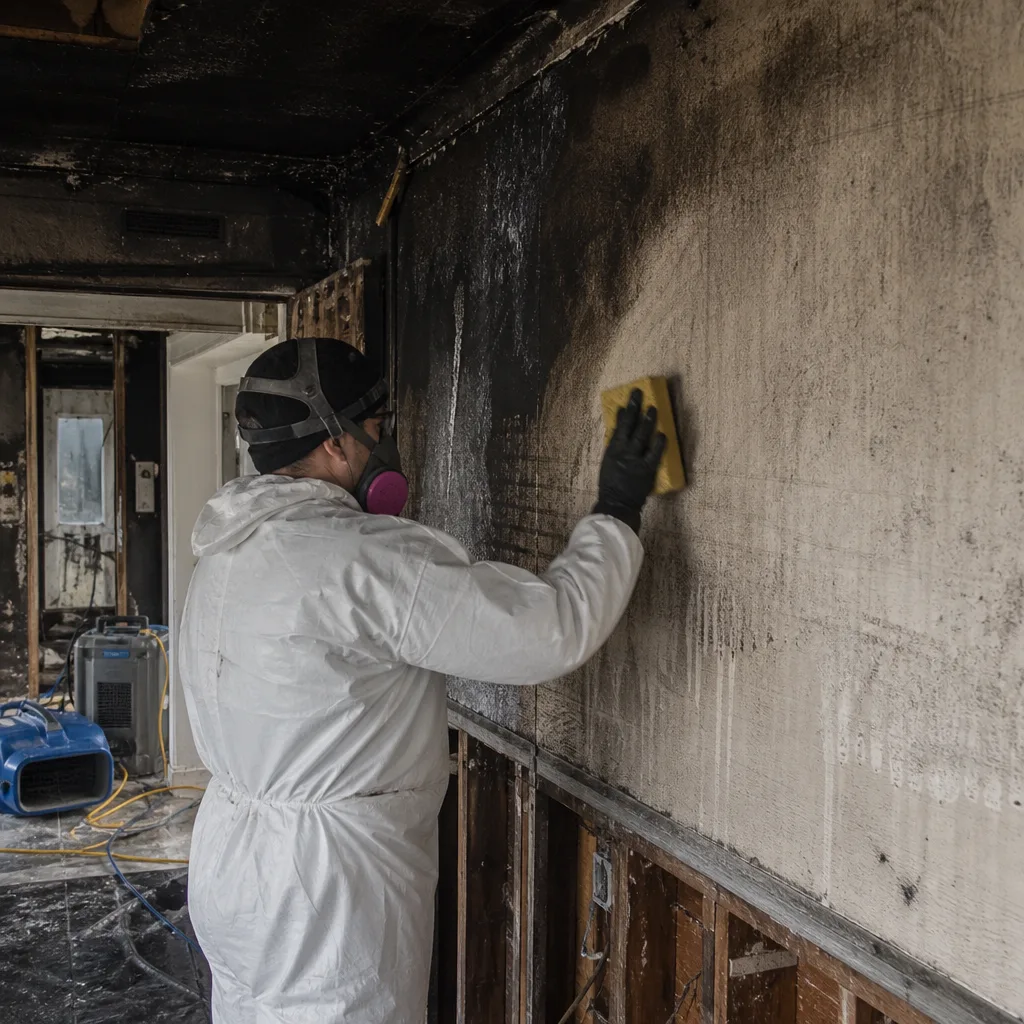
Soot removal uses dry sponge methods on sealed wood, soda blasting on masonry and heavy char, and HEPA vacuuming on textiles. We treat every surface with antimicrobial solutions appropriate for the material.
Odor Removal & Air Scrubbing
HEPA air scrubbers run continuously while thermal fogging or ozone treatment neutralizes smoke particles embedded in porous surfaces. In horsehair plaster and party walls, this step runs longer than it would in a modern building.
Repairs & Restoration
We rebuild what was lost: matching plaster profiles, reproducing millwork profiles, refinishing floors, and repainting. If LPC review is required, we coordinate that process and handle the paperwork.
Need Emergency Fire & Smoke Damage Restoration in Greenwich Village Now?
Crews minutes away, answering live 24 hours a day. The sooner we start, the less it costs.
Working With Your Insurance Company
We’ve walked through hundreds of fire claims in Greenwich Village co-ops and rowhouses. The claims process starts with documentation from the first hour: photos before demolition, moisture readings, and a room-by-room inventory of damage. Our team writes estimates in the same Xactimate format your carrier uses, so the numbers match up. You don’t play messenger between us and the adjuster. We speak directly with them, send the evidence, and answer their questions. Where coverage applies, we bill the carrier directly and keep you informed on what’s covered and what isn’t before any work begins.
What We Provide Your Insurer
- Thorough documentation of the loss
- Photos of all damage, room by room
- Moisture readings and drying logs
- A detailed, line-item scope of work
- Direct coordination with your carrier
Built for Greenwich Village’s Loss Calendar
Greenwich Village has a distinct loss calendar, and fire damage follows it. January and February bring frozen steam lines in uninsulated tenement walls, and when a radiator supply line bursts, the water cascades through stacked railroad apartments before anyone notices. That water then meets mineral-insulated wiring from the 1920s, shorting out and starting secondary electrical fires. Spring brings basement seepage along the far-western blocks near the Hudson, where historically filled land holds groundwater against foundation walls. Summer thunderstorms overwhelm flat-roof drains on 19th-century buildings, sending water through ceiling assemblies and into the electrical chases. Nor’easters in the fall push wind-driven rain into brick façades along West 4th and Hudson Streets, saturating party walls. When fire follows water, the restoration job doubles. We’ve learned to dry fast, treat for smoke simultaneously, and never assume the fire was the only event.
Fire & Smoke Damage Restoration Across Greenwich Village’s Neighborhoods
The Village isn’t one neighborhood; it’s a patchwork of distinct building types, and each responds to fire differently. Along Barrow Street and Commerce Street, the Federal rowhouses from the 1820s and 1830s have thin party walls with original lime mortar, which crumbles under thermal stress and lets smoke travel between homes. Around Washington Square Park, the Greek Revival townhouses carry wide plank heart pine floors that hold smoke odor stubbornly and need aggressive HEPA treatment and floor-refinishing coordination. West of Hudson Street, the early tenements built after 1880 have cast-iron staircases and stairwells that act as vertical flues, spreading smoke from basement fires to upper floors in minutes. The blocks near Abingdon Square and Bethune Street include converted industrial buildings where heavy timber framing burns slowly but produces deep char that requires structural assessment before cleanup can begin. Every pocket of the Village has its own failure modes, and crews that treat them all the same leave jobs half-done.
Specialized Fire & Smoke Damage Restoration Services We Offer in Greenwich Village
Fire Damage Cleanup
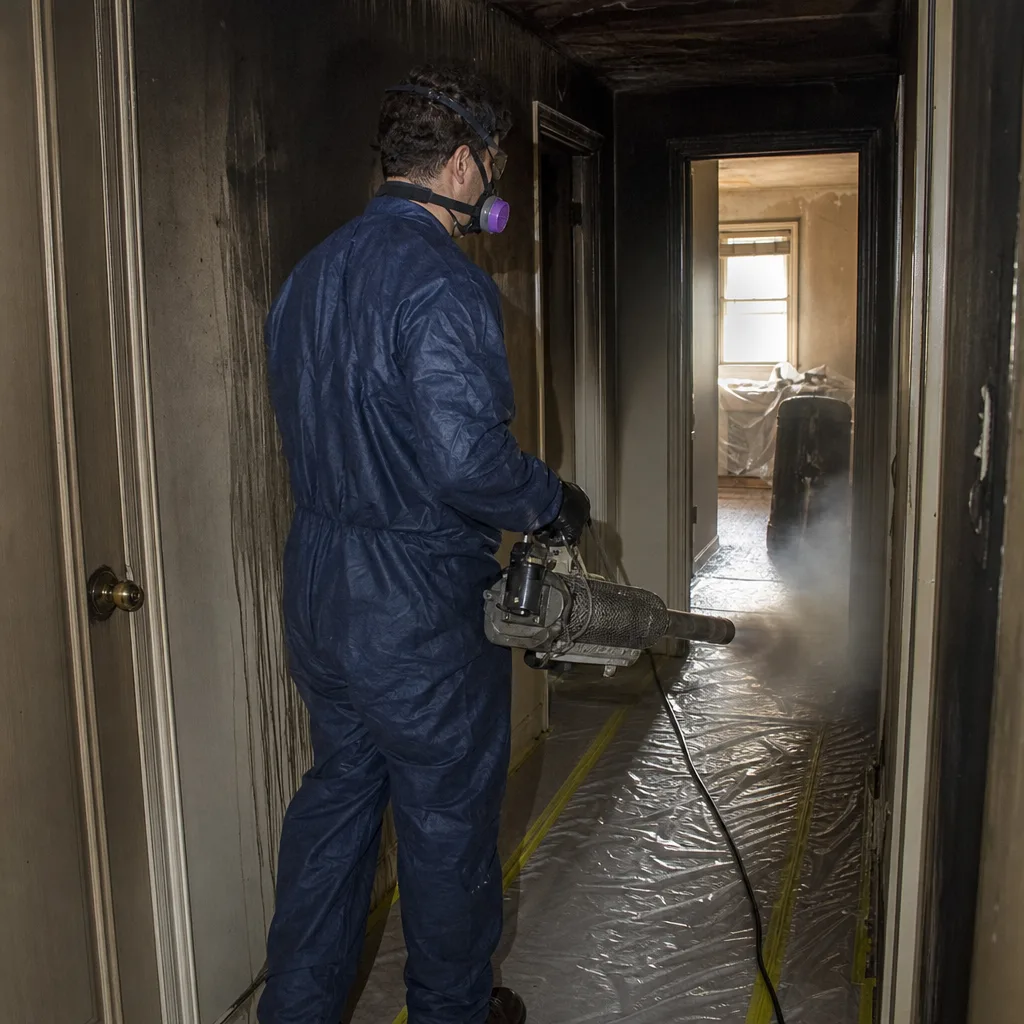
We remove charred debris, extract fire suppression water, and stabilize the structure. In Greenwich Village rowhouses, this often means shoring joists that were burned through and protecting original trim that can be salvaged rather than dumped.
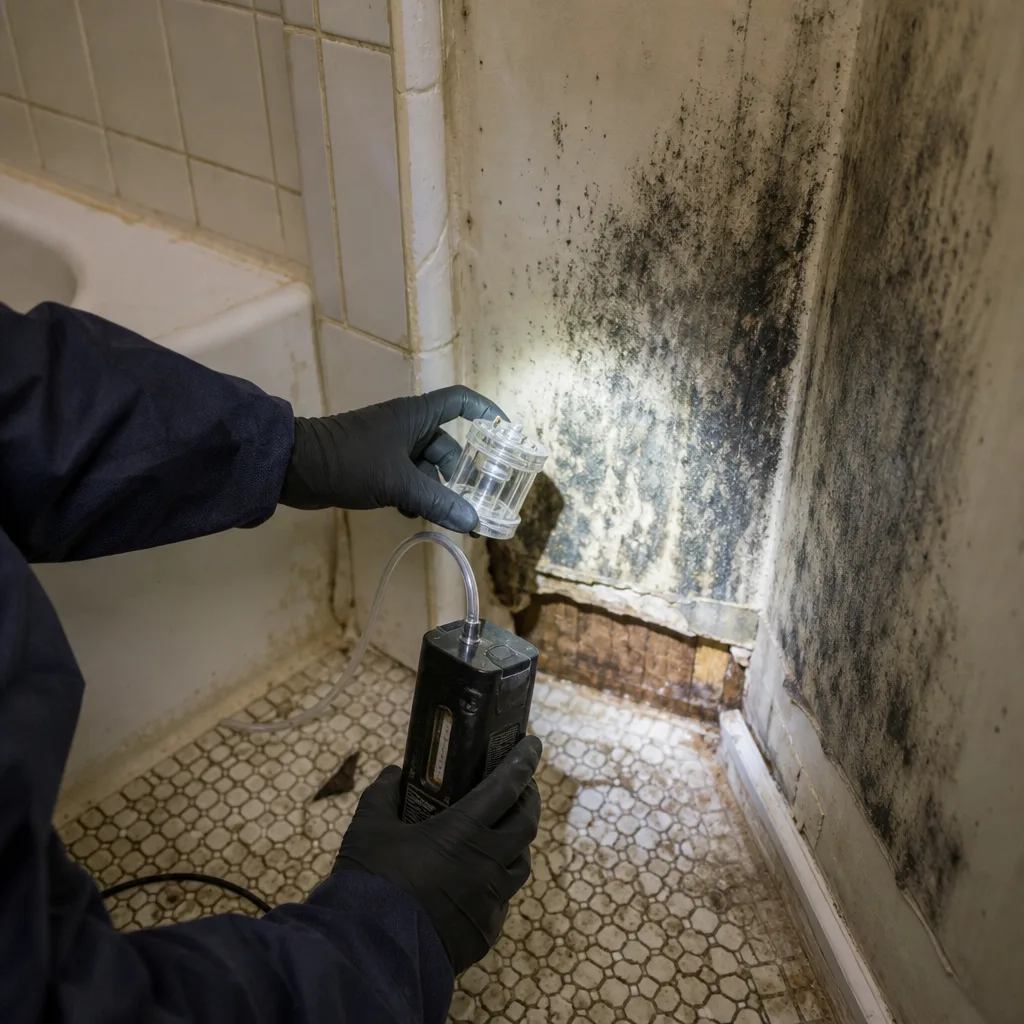
Smoke & Soot Removal
Soot removal in a 19th-century rowhouse is different from a modern condo. Horsehair plaster absorbs soot deeply, and dry chemical sponges only reach the surface. We use soda blasting on heavy deposits and seal with vapor-barrier primers where necessary.
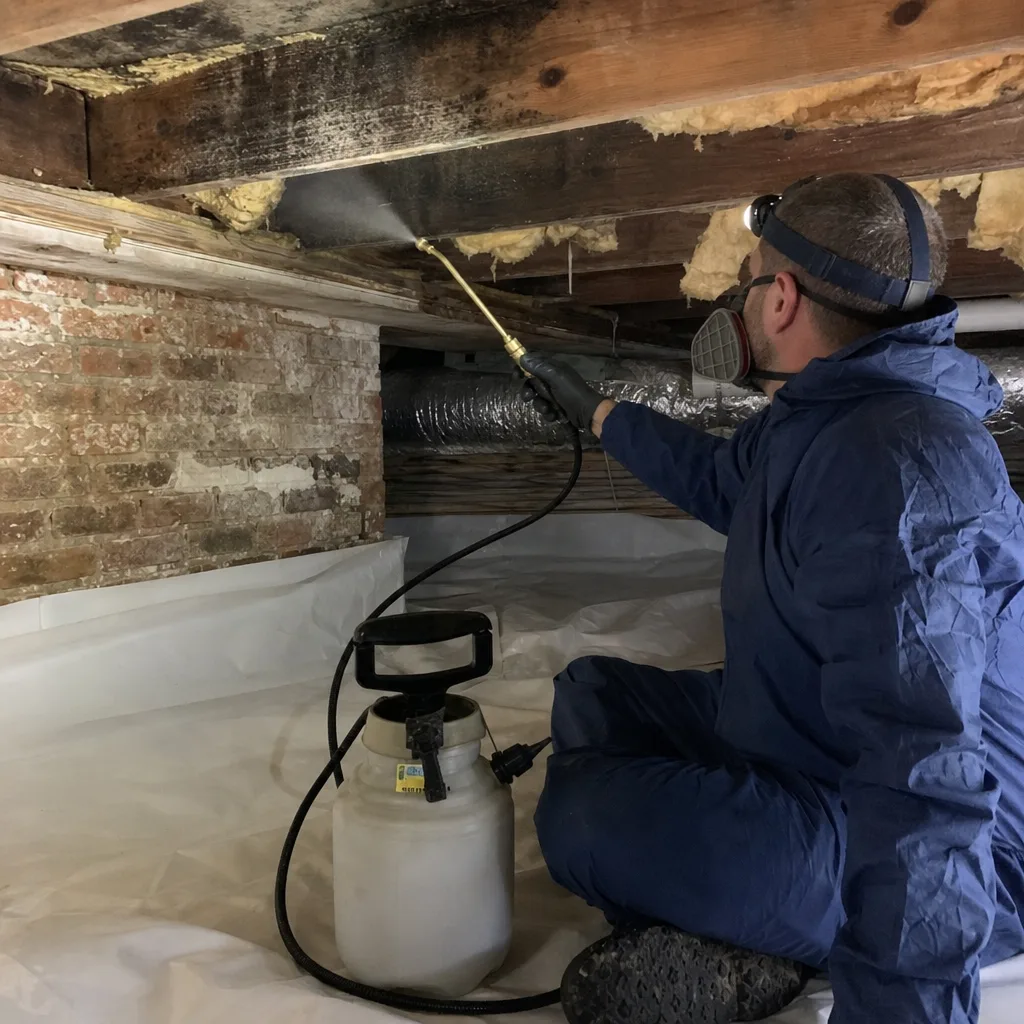
Odor Removal & Deodorization
Ozone and thermal fogging work best when paired with source removal. In shared party walls, we coordinate with the neighboring unit to treat their side too, because the smell doesn’t respect property lines.
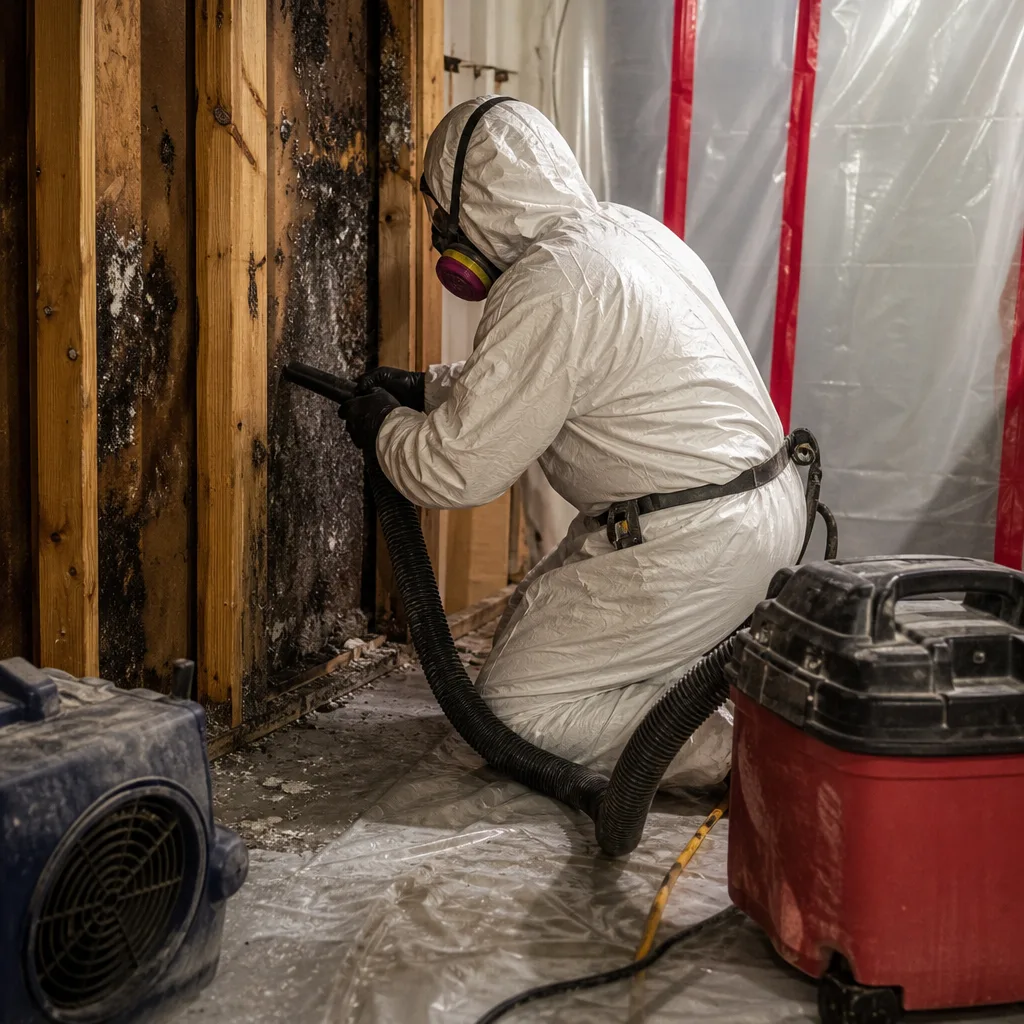
Contents Cleaning & Pack-Out
Books, clothing, and furniture from a Village apartment carry smoke residue that keeps off-gassing for months. We pack out, clean, and store contents off-site when the home requires structural work, then return them when the rebuild is done.
Emergency Board-Up & Tarping
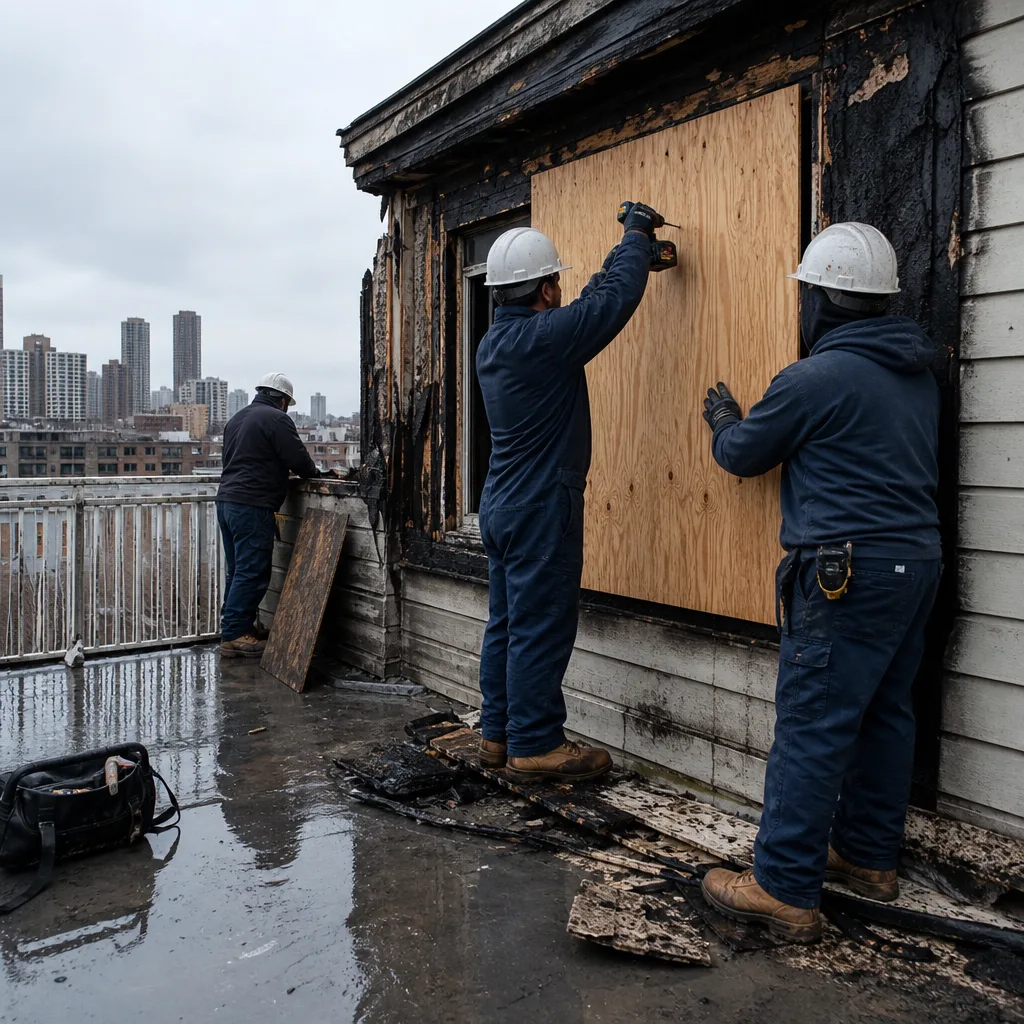
A fire often leaves windows broken and roofs open. We board up and tarp immediately to protect the property from weather, vandals, and curious passersby. In the Village, LPC approval isn’t required for temporary protective measures, but we still document everything for your file.
Structural Fire Repair
When a beam burns through or a stair stringer is charred, we bring in structural engineers and carpenters who match the original profiles. In the Greenwich Village Historic District, matching in kind isn’t optional. It’s the law.
What happens when you call
- 1
A real person answersNo phone trees - you reach a local pro.
- 2
You get an upfront price rangeHonest numbers before anyone is dispatched.
- 3
A background-checked tech heads outLicensed & insured, dispatched right away.
- 4
You approve before work beginsNothing starts until you say go.
Fire & Smoke Damage Restoration Costs in Greenwich Village, NY
Most Greenwich Village fire and smoke damage restoration jobs run between $4,500 and $28,000, with the range driven by square footage, soot type, and whether structural repair is required. A small kitchen fire with light smoke throughout a one-bedroom co-op typically runs $4,500 to $9,000. A whole-floor fire with heavy char, water extraction, and structural repair in a Federal rowhouse can reach $25,000 to $60,000. Contents cleaning and pack-out adds $2,500 to $8,000 depending on volume. The variables: how much horsehair plaster needs treatment, whether party wall coordination is required, and what the LPC requires. Insurance typically covers most fire damage restoration, but deductibles and policy limits apply. Call (917) 924-4221 for a free visual inspection and a written scope before you commit to anything.
We Also Serve Cities Near Greenwich Village
Our crews regularly run calls in Greenwich Village and the surrounding communities of Fairview, Harrison, East Bronx, and Hunts Point. If you’re in one of those areas, the same live dispatch line connects you to the same certified crew.
Greenwich Village Fire & Smoke Damage Restoration Questions, Answered
After a small kitchen fire in our 1840s Greenwich Village rowhouse, do we need Landmarks Preservation Commission approval before repairing the smoke-damaged interior walls?
For interior smoke damage that doesn’t alter the building’s appearance or structure, LPC approval is generally not required. However, if any repair touches exterior walls, changes window or door openings, or alters original plaster details, you’ll need LPC review before work proceeds. Our team has handled LPC coordination on dozens of Village properties, and we’ll tell you in the first inspection whether your scope triggers review. Call (917) 924-4221 for an assessment.
Our building shares a party wall with the unit next door that had a fire. How do we know if smoke and soot migrated into our apartment?
Smoke moves through party walls via gaps around floor joists, abandoned chimney flues, and the open cavities between wall studs. We inspect the shared wall with thermal imaging and borescopes, and we test your air with a particle counter. Brown staining on your side of the wall, a persistent campfire smell, or soot streaks around electrical outlets are tells. If smoke is present, we treat both sides of the partition, because treating only the fire unit guarantees the odor returns. Call (917) 924-4221 to schedule a party wall inspection.
A steam pipe froze and burst in our 1880s tenement, soaking the plaster. Will the fire and smoke restoration process also address the water damage?
Yes. Fire and water damage are handled together, because fire suppression water and burst pipes create the same Category 1 water problems, and that water accelerates soot corrosion on metals and feeds mold behind plaster. We extract, dry with Dri-Eaz dehumidifiers, and log moisture readings daily until the dry standard is met, then proceed with soot removal and odor treatment. The written scope covers both events. Call (917) 924-4221 if you’re dealing with either one.
Can we stay in our Greenwich Village co-op while smoke odor removal is being done after a fire in the adjacent unit?
In most cases, yes, but it depends on the extent of smoke migration and the odor treatment method. HEPA air scrubbing and dry sponge cleaning are non-toxic and you can remain in the unit. Thermal fogging or ozone treatment requires you to vacate for 4 to 8 hours, and we’ll schedule that window explicitly. If heavy soot is airborne or there’s structural damage, we recommend relocation during the worst of the work. We’ll tell you honestly at the inspection, and we’ll never downplay a health risk to keep the schedule moving.
The fire department used a lot of water to put out a basement fire in our Hudson Street building. What category of water is this, and does it change how we restore?
Fire suppression water starts as Category 1 (clean), but within hours of passing through charred materials, soot, and building debris, it becomes Category 2 or 3 depending on what it contacted. In a basement fire on Hudson Street, the runoff typically carries oils, chemicals from burned synthetics, and decades of accumulated dust and debris. We treat fire suppression runoff as Category 3 if it contacted sewage or chemical residues, which means full extraction, antimicrobial treatment, and containment during demolition. It’s not a simple mop-up. That’s why the first hour matters. Call (917) 924-4221 and we’ll start before the water spreads further.
How fast can a fire damage restoration crew actually get to Greenwich Village?
Our dispatch center is within the metro area, and we commit to a 45-minute response for emergency calls in Greenwich Village, including the blocks between Houston Street and 14th Street. A live person answers 24/7 at (917) 924-4221, and the crew leaves immediately. If we’re already on another Village job, the dispatcher tells you exactly when to expect us, not a vague “soon.”
Will my co-op board or landlord’s insurance cover fire damage restoration in Greenwich Village?
A co-op’s master policy typically covers the building’s structure and common areas, while your personal policy covers interior improvements, contents, and loss of use. The details depend on the proprietary lease and policy language. We’ve worked with dozens of Village co-op boards and managing agents, and we can read your policy during the first inspection to tell you what’s covered before any work begins. We’ll also bill the appropriate carrier directly where coverage applies.
What should I do in the first 30 minutes after a fire in my Greenwich Village apartment?
Get everyone out and call 911 if you haven’t already. Then call Floodline at (917) 924-4221. Don’t touch or wipe soot-covered surfaces, because the oils in your hands set the soot permanently. Don’t turn on ceiling fans or HVAC, which spreads smoke. Don’t run water. Don’t enter rooms that the fire department hasn’t cleared. Open windows if it’s safe, take photos of everything, and wait for our crew. The less you disturb, the easier the restoration.
Serving Greenwich Village, NY - Our Local Coverage Area
We’re based in the Greenwich Village area and know this community well. Use the map below to see our service coverage - if you’re nearby, we can almost certainly help.
Call Floodline Restoration Co. of Manhattan for Fire & Smoke Damage Restoration in Greenwich Village
Fire damage in Greenwich Village is never just a cleanup job. It’s a preservation problem, an insurance problem, and sometimes a co-op board problem all at once. We’ve handled enough Village fires to know the LPC procedures, the shared-wall complications, and the steam-pipe water events that follow. We show up fast, document everything, and stand behind the work with the 90-Day Done Right Promise in writing. One crew handles your fire damage from first board-up to final coat of paint, and we bill your carrier directly where coverage applies. If you’re standing in a soot-covered living room reading this, call (917) 924-4221 now. A live person answers, and the truck is already rolling.
Written by Curt Bowman, Owner at Floodline Restoration Co. of Manhattan, serving Greenwich Village and the surrounding neighborhoods.